Tuesday, September 08, 2009

Anti-Zimbabwe Lobby Fails at SADC Council of Ministers in DRC

Anti-Zim lobby flops

From Mabasa Sasa in KINSHASA, DRC

THE Sadc Council of Ministers shot down attempts by some lobbyists to have Zimbabwe on the agenda of the Heads of State and Government Summit that opened here yesterday with member-states saying the region was faced with more pressing issues than discussing the ‘‘staffing situation in Zimbabwe’’.

The summit agenda is essentially set by Foreign Affairs Ministers sitting as the Council of Ministers, who met this past weekend to review recommendations made by committees of experts who, in turn, converged here last week.

Officials from at least three countries yesterday revealed that Sadc member-states generally felt that the situation in Madagascar — which was said to be on the verge of forming a transitional government — was more urgent than a review of the Global Political Agreement and the inclusive Government in Zimbabwe.

"Zimbabwe will most likely not be a main agenda item. Yes, the Heads of State (and Government) will receive a brief from ex-Sadc chair President (Jacob) Zuma (of South Africa) and from your own President, but it seems this will not be within the context of the main agenda but as ‘any other business’.

"The situation in Madagascar is more urgent. We don’t feel we as Sadc should act as a staffing officer who determines who should occupy which office in your administration. You will have to sort that out yourselves with the full knowledge of our collective goodwill," said an Angolan minister after the official opening.

In a separate interview, an official from Namibia’s delegation added: "The most pressing issue from a peace and security perspective was that we wanted the (Global Political) Agreement signed and the unity Government created. It is there now and the people of Zimbabwe must learn to resolve other internal issues without running to their neighbours all the time."

A South African delegate to the summit said their country was not pleased by the "attempts to lobby other countries ahead of Cde Zuma’s briefing" as this made it appear that elements within Zimbabwe’s inclusive Government did not trust him.

"The general feeling right now is that the attempt to lobby individual Sadc members as if Cde Zuma’s briefing is already public reflects distrust. President Zuma has been in close contact with what has been happening in Zimbabwe.

"Sending a non-government delegation to lobby against a Sadc president at a Sadc summit means that these people don’t trust Cde Zuma’s integrity and they have not done themselves any favours by this. They are shooting themselves in the foot," he said.

Information doing the rounds at the African Union City — the summit venue — was that MDC-T has sent a delegation here to lobby Sadc leaders to take a hardline stance against President Mugabe and Zanu-PF over the implementation of the GPA.

It was also intimated by two reliable Sadc secretariat sources that MDC-T had lobbied hard, albeit unsuccessfully, for the summit to be moved from the DRC to — "most likely" — Botswana because the party "does not trust President Kabila".

"What they told some very senior colleagues of ours in the secretariat was that the DRC did not have the technical capacity to host the summit. The idea is that, we believe, they didn’t want President Kabila to chair Sadc because they feel he is too close to President Mugabe because Zimbabwe sacrificed a lot for the DRC. But then as a secretariat we are not dictated to by mere political parties and even President Mugabe’s party cannot determine who will host the next summit," they said.

At the time of writing, it was understood that President Mugabe — who is the Head of State and Government and Commander-in-Chief of the Zimbabwe Defence Forces — would brief his colleagues on the progress of the GPA and how best to follow up pledges made by fellow Sadc leaders to assist the country when they met in Swaziland earlier this year.

On the issue of the Sadc Tribunal, The Herald understands that the summit would be brought up to speed on the opposing arguments surrounding the contested legality of the court but would in all likelihood thereafter refer the matter back to regional Justice Ministers and Attorneys-General to thrash out the technical issues.

In his welcome remarks at the official opening of the summit here yesterday, host President and new Sadc chair, Joseph Kabila thanked Sadc member states — led by Zimbabwe — who contributed troops to safeguard his country’s territorial integrity after it was besieged by Western-backed rebel forces from Uganda and Rwanda.

The DRC operation code-named Operation Sovereign Legitimacy, was spearheaded by Zimbabwe in its capacity as chair of the Organ on Politics, Defence and Security Co-operation.

President Kabila lauded the intervention of the Sadc contingent — in which Zimbabwe had the largest deployment of troops and equipment — saying such unity augured well for Southern Africa’s development.

He urged the regional bloc to build from its past achievements to foster greater regional development through unity of purpose.

"We will always be grateful to Sadc members who deployed troops to defend our territorial integrity in our time of need."

He reiterated these remarks in his acceptance speech after taking over the Sadc chairmanship from President Zuma.

In reference to the political challenges facing various member states, President Kabila said: "We have been there before and faced similar challenges. We owe it to the support of Sadc member states for the stability we enjoy today.

"We hope that we can still count on your solidarity in this time of consolidation of our peace because a peaceful DRC is important for the Southern Africa region . . . I am happy that in Zimbabwe you have signed an agreement and formed a unity government. I encourage you to implement this agreement."

Congolese musicians emphasised this message by performing a song in which they sang the praises of the countries that had sent soldiers to sacrifice life and limb in the DRC, while also thanking President Kabila for his fortitude in the face of the strife of the past decade.

In his farewell address, President Zuma appeared to borrow from the words of one of his predecessors, Cde Thabo Mbeki, when he was accepting the chairmanship of the bloc in Sandton last year, by reminding Sadc that it was the progeny of the Frontline States and must draw from this rich past to engender greater unity for development and enhanced regional integration.

"We are built on a solid foundation and therefore cannot fail in our mission of people-oriented development. We should build on the achievements of the past for the economic and social development of our people."

He said Africa had not played a part in the triggering of the current international economic meltdown but was suffering from it acutely all the same, and there was need for the region to create more mutually beneficial ties with the South instead of concentrating unduly on the North.

Zambia’s President Rupiah Banda, representing the outgoing Sadc Organ Troika on Politics, Defence and Security, said the summit presented an excellent opportunity to review the bloc's operations and chart a sustainable way forward.

"Although the achievements we have made in the past 29 years are commendable, we have here an opportunity to energise and emphasise the importance of regional integration to improve the welfare of Sadc citizens.

"We are still faced with the daunting challenge of eradicating poverty . . . The prospects of mobilising resources from the West are doubtful in the present global financial crisis and there is an urgent need to intensify the mobilisation of domestic resources," he said.

Nine heads of state and government from the DRC, Zimbabwe, Botswana, Lesotho, Mozambique, Namibia, South Africa, Swaziland and Zambia are here for the summit that ends today.

Apart from peace and security matters, Sadc leaders will also be seized with the global financial crisis, food security, climate change and how to speed up regional economic integration.

President Mugabe is accompanied by Foreign Affairs Minister Simbarashe Mumbengegwi, his Justice and Legal Affairs counterpart Patrick Chinamasa and several senior Government officials.


KINSHASA 7 September 2009 Sapa-dpa

REGIONAL BODY TO DELAY TALKS ON ZIMBABWE, SAY SADC SUMMIT DELEGATES

Heads of state attending a Southern African Development
Community (SADC) summit in the Democratic Republic of Congo were Monday expected to defer discussion on Zimbabwe's power- sharing deal, two sources within the Zimbabwean delegation said.

The 15-member body, which kicked off a two-day ministerial
meeting in Kinshasa, was due to discuss a raft of issues relating
to the deal between Morgan Tsvangirai's Movement for Democratic
Change (MDC) and President Robert Mugabe's ruling Zanu-PF.

However, the MDC wants a separate summit to deal with Zimbabwe
in the coming weeks.

The power-sharing government was established to try to end
Zimbabwe's twin political and economic crises. An estimated 100 MDC supporters were murdered in disputed presidential elections last year, while the economy hit rock bottom and inflation hit 500
billion per cent.

The MDC and Zanu-PF have asked the SADC to resolve outstanding
issues, including a dispute over Mugabe's unilateral appointment of
the attorney general and central bank governor and the ongoing
arrest and imprisonment of MDC politicians.

Should discussion on Zimbabwe be postponed, the summit would
focus on Madagascar, which is trying to set up a power-sharing
government to resolve a political crisis sparked by interim
President Andry Rajoelina's ouster of ex-president Marc
Ravalomanana.

At talks in Maputo last month, Rajoelina, Ravalomanana and two
other former presidents, ex-dictator Didier Ratsiraka and
ex-president Albert Zafy, agreed to form a power-sharing government
in a bid to restore stability to the vast Indian Ocean island of 20
million people.

The deal gave them 30 days from August 9 to agree on the
composition of the government. Until now, they have failed to agree
on who should become president, vice-president and prime minister.

Cholera Hits Ethiopia

Cholera hits Ethiopia

Reuters

ADDIS ABABA--CHOLERA and other diarrhoeal diseases have infected 18 000 people in many parts of Ethiopia over the last three weeks, including the capital Addis Ababa, according to a document seen by Reuters.

The document — minutes of a meeting attended by international health charities and UN agencies last Tuesday — said half of moderate-to-severe cases of the 18 000 infections were cholera. It did not say how many were moderate-to-severe.

Most of the diarrhoeal illnesses that were not cholera were acute watery diarrhoea, health workers said.

"To date there are approximately 14 000 cases of AWD/Cholera (in the regions) and an additional 4 000 from Addis Ababa," the minutes of the meeting said.

Addis Ababa usually suffers less from diarrhoea epidemics than other parts of the country, but the city’s health authorities are investigating the hygiene standards of hundreds of hotels and restaurants, according to local media.

Health workers, who declined to be named, said the fatality rate was two percent when the outbreak began but that it had been reduced as local and international agencies stepped up their response.

"The case fatality rate is falling as the response matures," the minutes of the meeting said.

"The epidemic is now in its second phase, case load taking the form of a series of peaks over a protracted period."

Ethiopia’s Health Ministry said last week that 34 people had died from AWD but it had not yet confirmed any cholera cases.

The government and international charities are distributing antibiotics and emergency treatment centres have been opened across the country — including under tents in the grounds of several hospitals in the capital.

Cholera is contracted from contaminated water and food and it causes extreme diarrhoea and vomiting.

It can spread quickly and kill an adult in one day, but it is easily treated when detected in its early stages.

Aid agencies now fear a religious festival scheduled for this month will worsen the outbreak of AWD and cholera.

"The Meskel religious festival (is a) major cause for concern," the document said.

"Up to 500 000 people are expected to gather from 15 to 30 September with poor access to safe drinking water and sanitation facilities." — Reuters.

Sunday, September 06, 2009

The South African National Question and Nation-Building

ANC Today Viewpoint

by Buti Manamela

The national question and nation-building

The issues of nation-formation and nation-building will remain in our society for a while given the fact that racism was and still is, rooted in all institutions of society. However, the resolution of the national question cannot remain a permanent feature of our society. If this were to be the case, the historic mission and mandate of the National Liberation Movement (NLM) would be defeated, mainly because it is about attaining a non-racial, non-sexist and democratic society.

The 2007 Strategy and Tactics document of the ANC says:

"The main content of the National Democratic Revolution (NDR) is the liberation of Africans in particular and Blacks in general from political and socio-economic bondage." It goes further to declare that this, "…means uplifting the quality of life of all South Africans, especially the poor, the majority of whom are African and female."

It is important to emphasise that the target for the NDR is the poor because the objective of our struggle is to unite all the oppressed in our country for the formation of one nation.

The 1969 ANC Morogoro Conference succinctly confirmed the need for the unity of the oppressed and their drive towards defeating Apartheid in the following lines:

"The African…is not the only oppressed national group in South Africa. The two million strong Coloured community and three-quarter million Indians suffer varying forms of national humiliation, discrimination and oppression. They are part of the non-white base upon which rests white privilege. As such they constitute an integral part of the social forces ranged against white supremacy. Despite deceptive and, often, meaningless concessions they share a common fate with their African brothers and their own liberation is inextricably bound up with the liberation of the African people."

The objective linked to this is not only the defeat of white supremacy, but also that if we were to advance nation building and nation formation - we also have the task of "…liberating the white community from the false ideology of racial superiority and the insecurity attached to oppressing others". It is important to note that this is not merely a tactical consideration but a strategic objective to liberate the most oppressed of all "in the league of the oppressed" whilst in the process "liberating the oppressor".

"But none of this detracts from the basically national context of our liberation drive. In the last resort it is only the success of the national democratic revolution which - by destroying the existing social and economic relationships - will bring with it a correction of the historical injustices perpetrated against the indigenous majority and thus lay the basis for a new - and deeper internationalist - approach." (Morogoro: 1969)

Therefore, the attainment of a national democratic society can only lie in the destruction of Apartheid's social and economic relations and the continued existence of such relations. There are clear signs that the form and content of our national democratic revolution is still facing a long path towards attainment.

Historically, the twin threats to this strategic objective in our society and our movement have been "white racism" on the one hand; and narrow African chauvinism on the other hand. These twin threats have always manifested themselves in the super-structural institutions of our society. It would be suicidal to deny the continued presence of racism in our society, but even more dangerous for the attainment of national unity and nation-formation is the denial of narrow African chauvinism.

The danger of these twin threats is articulated in Nelson Mandela's famous Statement from the Dock:

"I have fought against white domination, and I have fought against black domination. I have cherished the ideal of a democratic and free society in which all persons live together in harmony and with equal opportunities. It is an ideal which I hope to live for and to achieve. But if needs be, it is an ideal for which I am prepared to die."

These twin threats are not on an equal pedestal. The dominant contradiction that faces our society is national contradiction, whilst the fundamental one is class contradiction. Emphasis should also be made that the reason why we need to deal with both in almost equal terms is that the narrow African chauvinism is not an effective tool of defeating racism, but can also act to reinforce racial tensions as people may withdraw into their racial cocoons.

In essence, the task of "liberation of Africans in particular and blacks in general" lies in the success of the movement in using the platform of building a non-racial society. The two, meaning, the task and the platform, are mutually inclusive and interconnected and failure to maintain this interconnection exposes the inability to
overcome white racism, on the one hand, and black chauvinism, on the other.

Let us look at both threats each in turn. In our society there still exists white racism that we should confront, expose and deal with. The figures released by Commission on Employment Equity (CEE) shows that white people occupy 74% of senior positions in the private sector. This is a serious indictment on white capital's commitment to honour their role in nation-building and nation-formation.

Fraught race relations will remain for some time in a nation where everything, from division of labour, composition of national sporting teams, political preferences, cultural preferences and every social facet of our life was historically determined on the basis of race. We need to intensify progressive nationalism and ensure that it triumphs against this.

This means affirming blacks in the economy, changing the division of labour at both junior and senior level in both the public and private sector; transforming social relations in education, access to health, shelter and also ensuring that we begin to confront problems of equality and wealth distribution by breaking the back of racism and racial exclusion.

Narrow African chauvinism is a tendency and dangerous phenomenon of seeking to redefine the objective of the movement at different periods as installation of African majoritarianism. The National Liberation Movement has always been able to transcend beyond this narrow perception and strategic objective of the NDR as it recognised that ours is Colonialism of a Special Type.

Those who held this "elitist" view always combined their narrow objective with an anti-communist agenda that sought to isolate and distinguish between "white revolutionaries and white reactionaries". This elitist tendency has always hid its narrow objective under the veil of seeking to represent the interests of the black majority. The tendency emerged with the breakaway of the PAC from the ANC by Leballo; the expulsion of the Group of Eight immediately after the Morogoro Conference; and now recently, the breakaway by Shikota. (For more on this, see Mavimbela's article titled "The Shikota Phenomenon - A Counter-Revolutionary Tendency").

Thus, the Strategy and Tactics of the ANC from Morogoro declared that:

"Those belonging to the other oppressed groups and those few white revolutionaries who show themselves ready to make common cause with our aspirations, must be fully integrated on the basis of individual equality. Approached in the right spirit these two propositions do not stand in conflict but reinforce one another. Equality of participation in our national front does not mean a mechanical parity between the various national groups."

It further went on to declare that the "Coloured and Indian people have often in the past, by their actions, shown that they form part of the broad sweep towards liberation."

Morogoro further declared the elitist nature of those who opposed the main content of the NDR by declaring that "our nationalism must not be confused with chauvinism or narrow nationalism of a previous epoch. It must not be confused with the classical drive by an elitist group among the oppressed people to gain ascendancy so that they can replace the oppressor in the exploitation of the mass."

This tendency can only lead to, and may even strike concessions for, either modernised forms of black or white Bantustans . They may not see the need to break the barriers, economic or political that is entrenched in many localities in our country. They may even seek to promote some of these tendencies. The main reason why it would seek to do so would be to lazily assume elitist leadership of society by wishing away whites in order to easily attain a "nation".

Equally, this tendency stems from the narrow definition of nation as being defined through language, race and culture whilst undermining progressive elements and the realistic challenges of the national formation in our society. Because of its backward nature, like its twin of white racism, it may pretend and sugarcoat some of its more conservative demands with legitimate demands for nation building.

But this tendency is even more dangerous for us as the youth as we face the challenge of nation building for a future South Africa. Our role as youth formations is to lead all young people, irrespective of their culture, without patronising them into constituting quotas or seeking to attain parity. The Progressive Youth Alliance has, for instance, the task of winning the coloured and white population in the Western Cape over to the objectives of the NDR instead of seeking to outgrow them by importing young black South Africans from the Eastern Cape.

It is a challenge also for us to win over, and not to hate, young white South Africans in our universities to appreciate our objectives of a national democratic society as a way of "liberating [them] from white supremacist ideology". We also have the task of winning over the Indian youth in KwaZulu Natal on the same objective. We need to accept them into our fold without question their credentials or scaring them off with limited, narrow and elitist "black paranoia".

The progressive and epochal Morogoro (1969) document states that:

"Until then [the attainment of liberation], the national sense of grievance is the most potent revolutionary force which must be harnessed."

And what will easily constitute the national sense of grievance remains the class question. This, of course, is the debate for another time.

Buti Manamela is an ANC Member of Parliament and the National Secretary of the Young Communist League of South Africa

G20 Clash Over How to Stop Another Banking Crisis

G20 clash over how to stop another banking crisis

MATT FALLOON AND PAUL CARREL | LONDON, UNITED KINGDOM - Sep 05 2009 06:54

Finance leaders clashed on Friday over how to stop banks plunging the world into another crisis.

While new International Monetary Fund forecasts obtained by Reuters showed the world economy looks finally on the mend, G20 policymakers gathered in London are divided on how to ensure any recovery lasts and bankers don't run riot with risk again.

They all agree economic life-support packages have to stay in place for now, but a G7 source told Reuters France and Germany oppose a United States plan to get banks to hold more capital. The Europeans also want much tougher curbs on bankers' pay and France is pressing for strict limits.

"Public opinion in most European countries, including at home, here in the UK and in the United States, has been flabbergasted, horrified by the amount of compensation paid," French Economy Minister Christine Lagarde said.

US Treasury Secretary Timothy Geithner has called for strengthened bank capital requirements aimed at curbing some of the risky lending practices blamed for the crisis. Lagarde said she could not see the point.

British finance minister and meeting host Alistair Darling told Reuters he supported the US plan but admitted there were differences between policymakers. He said it was more important that no country was complacent about the recovery despite signs the world economy is healing.

The IMF now forecasts the world economy to shrink 1,3% in 2009, a shade less than its April forecast of a 1,4% contraction, and grow 2,9% in 2010, revised up from 2,5% previously.

But policymakers are cautious about declaring victory yet, especially given most major economies are only expected to post sluggish growth next year, with Germany remaining in recession, while layoffs are set to increase.

"People are at risk of saying the job's done, now we can throttle back," Darling told Reuters. "We've made those mistakes before -- most notably, in America, in the late 1930s, [they] called it wrong and got themselves back into a recession again."

Scars
More than two years of financial upheaval have left deep economic scars in many countries. With unemployment high and banks reluctant to lend, growth may be subdued for a while, putting pressure on governments to maintain supports.

What financial markets want to know is when they can expect governments to start withdrawing the trillions of stimulus pumped into economies, or raise interest rates. For now officials are only willing to talk about developing strategies with little clarity on when they may be applied.

G7 sources have told Reuters that the G20's communiqué, due on Saturday, will likely maintain the pledge to keep policy accommodative for as long as was needed.

"Unwinding the stimulus too soon runs a real risk of derailing the recovery, with potentially significant implications for growth and unemployment," IMF chief Dominique Strauss-Kahn said at a conference in Berlin.

Leaders from Brazil, Russia, India and China, the four emerging markets that comprise the "BRIC" economies, met with Geithner on Friday, They called in a communiqué for a more powerful voice in the global financing agencies -- the IMF and World Bank -- than the United States and EU have so far offered.

Regulatory environment
Once the recovery is firmly on track, banking regulations are likely to become more restrictive. Geithner called on Thursday for higher capital levels at all banks and even more stringent requirements for those that could pose a threat to overall financial stability.

He wants international agreement by the end of next year, with new standards implemented by the end of 2012.

ING analyst Rob Carnell said that while tighter capital rules were probably "not a bad idea", clamping down could constrict lending and put a heavy burden on banks struggling to recover from heavy losses.

"Raising capital requirements for banks to levels that will provide a much deeper buffer against future asset crises may also make it harder for a repeat of this crisis, but when capital is still being eaten up with rising default and delinquency rates, it is a very tough hurdle for banks to clear," he said.

"It is also totally at odds with governments' other demands that banks increase lending," he added. - Reuters

Source: Mail & Guardian Online
Web Address: http://www.mg.co.za/article/2009-09-05-g20-clash-over-how-to-stop-another-banking-crisis

Zimpapers Launches New Newspaper

Zimpapers launches new newspaper

Herald Reporter

Zimpapers yesterday launched a new newspaper — H-Metro — that reports on issues and events in Harare’s the Metropolitan province.

The tabloid hits the streets on Monday and will cost US50 cents. The launch also coincided with the fifth anniversary of the Southern Times — a joint venture regional newspaper between Zimpapers and New Era of Namibia.

Speaking at the launch and anniversary celebrations, Media, Information and Publicity Minister Webster Shamu said the H-Metro would indeed dominate the Harare market.

"Zimpapers have identified a niche market in which this popular tabloid is set to occupy and, I am sure, it is set to dominate when competition eventually comes," he said.

Minister Shamu stressed the need for journalists and marketers to have a feel of the people, write objectively and to avoid sensationalism.

"It cannot be a vehicle for profitable decadence and ruination of personalities. This is the balance, which Zimpapers is now being called upon to establish and maintain, particularly given the niche market it is now about to enter," he said.

Minister Shamu said the Southern Times would be strengthened and would enter into new markets, particularly Botswana and Mozam-bique, where the paper would be printed in Portuguese.

"The Southern Times expresses the determination by our two governments to deepen and expand relations beyond historical and political foundations. The two sister companies are one on many matters. We need to validate this openness in our small way," he said.

Minister Shamu said the founding of the Southern Times represented a correct reading of the world situation and an attempt to manage the flow of information by those in Southern Africa.

Former Namibian Information and Broadcasting Minister Nangolo Mbumba, former Minister of Information and Publicity Professor Jonathan Moyo, chairman of NamZim board Mr Mathew Goeseb and various business partners from Zimbabwe, South Africa and Zambia attended the function.

Also present were Zimpapers CEO Mr Justin Mutasa, Zimpapers Group Editor-in-Chief Pikirayi Deketeke, editors of other Zimpapers publications and managers and representatives of other sister companies.

Zimbabwe Traditional Leaders, Legislators Off to Libya for Anniversary of September 1 Revolution

Chiefs, legislators off to Libya for anniversaries

Herald Reporter

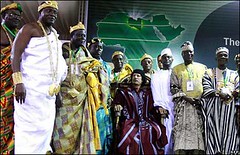
A delegation of local chiefs and three legislators left the country yesterday for Libya to join in the commemoration of the 40th anniversary of the September 1 Revolution and the 10th anniversary of the African Union.

The September 1 Revolution toppled the Western backed King Idris.

The delegation is led by the president of the Chief’s Council, Chief Fortune Charumbira, and comprises 10 other traditional leaders and three legislators.

"We are going there as part of the Sadc delegation on the invitation by the brother leader to participate in the anniversary of their revolution. Apart from participating in the commemoration, the trip will afford us an opportunity to meet with other delegations of traditional leaders from other sub-regions of the continent," he said.

Chief Charumbira said that as chiefs, they hoped to share experiences with other traditional leaders.

"We are very keen to share experiences and practices with other countries with respect to their institutions as traditional leaders," said Chief Charumbira.

The Chief’s Council president said this interaction was important given that Zimbabwe had embarked on constitutional making exercise.

"The interaction with other traditional leaders will also inform our input into the constitutional review process with respect to the status of the institution, legal and other institutional frameworks and development in the realm of culture and customs," he said.

The chief’s delegation includes Chief Charumbira’s deputy, Chief Mtshane Khumalo, Chief Ntabeni, Chief Masaraure, Chief Ngungumbane, Chief Gampu, Chief Chitanga, Chief Nembire, Chief Nebiri, Chief Masendu and Chief Chimombe.

Meanwhile, the three other legislators who are members of the Pan-African Parliament are attending the celebrations, but will also take part in the 10th anniversary celebrations of the AU and discuss results of the AU Summit held in Sirte, Libya, in July.

The three are Kadoma Central legislator, Editor Matamisa, Bikita Senator Rugare Kokera and Patrick Dube of Gwanda Central.

African, Asian, Latin American Majority Maintain Solidarity in Geneva

African, Asian, Latin American Majority Maintain Solidarity in Geneva

(Naomi Klein’s ‘Minority Death Watch’ Disappoints)

On its face, Naomi Klein’s article, “Minority Death Match”[1], does a disservice to both the movements for reparations and redress for crimes against people of African dissent and for self determination for the Palestinian people. But, given her reputation as an anti-imperialist thinker and recent high-profile visit to Palestine, where she endorsed the international campaign for boycott, divestment and sanctions against Israel, we want to give her the benefit of the doubt.

It is no mean feat to publish an article in a corporate magazine that includes any reportage that exposes Israel’s lies.

She reports well on the case for reparations

She provides an insightful narrative on aspects of the African reparations movement
She recognizes the synergy of interests between US, Israel and Europe
She points out that Obama betrayed Black people by waffling on reparations and boycotting the UN’s anti-racist efforts in Geneva.

But the critical failures of the article sabotage her good intentions. At first glance, one might forgive the title “Minority Death Match” as an editor’s attempt to sensationalize Klein’s material. Unfortunately, the theme of “Jews against Blacks” – or more precisely “Blacks must choose between Jews and Palestinians” recurs throughout Klein’s article. This theme takes different forms in Klein’s account of the April 2009 UN Conference on Racism, Xenophobia and Related Intolerance held in Geneva. But regardless of the form, the conclusion is the same: Ahmedinejad, Muslims and by implication: Palestinians,-- not Israel, the US and other Western Countries—have primary responsibility to preventing the UN from holding a conference that would advance a pro-reparations/anti-racist agenda.

Here are the steps Klein takes to let Israel, US and Western imperialism off the hook.

First: She presents Navi Pillay, the UN High Commissioner for Human Rights and main organizer of the Conference, as a naïve champion of African peoples’ struggle against racism. Pillay, according to Klein, attempted to negotiate a shifting array of demands from the United States—most in direct conflict with pressure from Muslim countries—while a phalanx of pro-Israel pressure groups did their best to sink the gathering.

Yet, with the assistance of her lieutenants—none of whom were African or from the African Diaspora or accountable to an African constituency—long before the Conference convened, Pillay capitulated to all the demands of the US. For example, Yuri Boychenko, Pillay’s right-hand man and Chair of the Intergovernmental Working Group secured Muslim—including Iranian—capitulation to US demands. He told one of the authors of this article that the Obama Administration had nothing to fear from the endorsement of either the 2001 Program of Action or the 2009 Consensus Document. The 2001 commitment to reparations was “vague”, Boychenko emphasized and, moreover, Obama could have easily signed the Consensus document with “conditions” that would exclude the US from commitment to the 2001 Program on the grounds the US never signed it in the first place.

Klein also neglects to mention Zionist influence within Pillay’s High Commission Office. For example, Pierre Hazan, a staff member of the Office of the High Commissioner for Human Rights, author of a pro-Israel book on the Six Day War and fellow of the Congressionally-funded US Institute of Peace, mocked the Durban Review Conference as “an immense ritual of collective atonement and social purification”. (quoted by http://www.news24.com April 17, 2009).

While only a handful of European countries followed the lead of US and Israel, the threat of a wider boycott accomplished another objective. On March 17, Conference organizers announced their attempt to appease Israel, the United States and their fence-sitting allies by revising the Draft Outcome Document. They removed all references to Israel as a perpetrator of racial discrimination, cut out any mention of the Palestinians’ Right to Self Determination and also excised all language related to reparations, any acknowledgement that the Transatlantic slave trade was a crime against humanity; and a proposal to strengthen the Working Group of Experts on People of African Descent. But fearing open rebellion from Non-Aligned Countries, African countries and other Islamic Countries—who repelled Zionist and US machinations break their solidarity--Conference organizers balked at Obama’s final demand to totally renounce the hard-won Durban Declaration and Programme of Action (DDPA) of 2001.

Second, Klein makes the superficial observation that there was a “synergy of interests between Ahmadinejad, US, Israel and Western Europe”. Here she embraces the ahistoric and false assumption that settler colonial states and Ahmadinejad all shared an equal stake in derailing a serious anti-racist agenda. While Ahmadinejad represents an oppressive regime, within the context of the history of colonialism and imperialism, he has both materially and politically, supported Palestinian liberation and other struggles for self-determination of African peoples. Also, this observation falsely implies an equal and independent status of each of these four forces. Although she recognizes the stake of settler colonial regimes in rejecting reparations and other measures to rectify the crimes of slave trade etc, by equating Iran and the US, she obscures the main contradiction and provides an argument against solidarity among African, Palestinian and all people oppressed by settler colonial regimes.

Third, Klein fails to identify Israel as a settler colonial regime that is occupying Palestinian land and, in several places, equates anti-zionism and anti-semitism. This weakness in her understanding of Israel’s role in relation to Palestine and, historically, in support of oppressive regimes, is the most basic problem with her article.[2] She refuses to acknowledge that Zionism is racism. Instead, she hedges. First she states, “There is a strong argument to be made that Israel’s legal system…meets the international definition of apartheid” (p. 59) And then she concludes the same paragraph with the Zionist red herring— that the 2001 Durban document, in spite of its explicit renunciation of anti-semitism and the holocaust, “carried an unmistakable whiff of denialism.” In the next paragraph, in an inexcusable display of victim-blaming, Klein blames the Islamic states for “upstaging African demands” and giving the U.S. government a perfect excuse to flee the scene.

But she contradicts herself because she has already recognized there was no level of appeasement the Obama Administration would accept. The very Islamic states she blames for upstaging African demands had allied with African countries on every issue and had given up their main demands for a repudiation of Islamophobia. As Obama has shown in his pattern of pandering to Wall Street, Health Insurance Companies, and the US military establishment currently leading policy in Iraq and Afghanistan, he needs no excuse to sell out Black and other oppressed people.

In her most extreme capitulation to the Zionist narrative, Klein excuses the two-year comprehensive campaign waged by Israel and its Zionist supporters against the UN Conference. She excuses it as an “illusory correlation”. According to Klein, “Zionists” –which she sometimes uses interchangeably with “Jewish people” were so traumatized by the anti-semitism at the 1st UN Conference in Durban, and the possibility that Israel might be treated like apartheid South Africa on the international stage, combined with the “shock of September 11, that they acted irrationally when it came to the 2nd UN conference. Here she never mentions the creation and manipulation by the Israeli state and it’s US backers of this “illusory correlation”. The well-organized, military style organization of Zionist activists that invaded the Conference and gloated over their disruption of any sincere discussion of racism is reduced to the presumably misguided actions of traumatized Jews. The well-documented Israeli campaign to protect its status as a settler colonial nation doesn’t seem to matter in Klein’s psychological framework.[3] In fact, Israel launched a campaign using similar tactics against the 2001 Conference in Durban.

And just to emphasize her denial of the critical geo-political role Zionism plays in maintaining settler colonialism in Israel and US hegemony in the Middle East, she implies that all the Zionist mobilization against the UN Conference was about to fizzle for lack of a psychological enemy. (page 62) Such psychological reductionism that conveniently echoes the Zionist narrative leads Klein to conclude that Ahmadinejad saved the day for the Zionists and others opposed the UN’s anti-racist agenda—at least in the PR arena. (It is telling that she misreports the order: the Zionist activist clowns disrupted Ahmedinejad’s speech, at least ten minutes before some of the European representatives walked out.)

Again, Klein succumbs to victim blaming. As she must know, corporate media echo and reinforce the dominant narrative. Whether they define the enemy as “communists”, “terrorists”, “anti-semites”, “welfare queens” or “criminals”—they are never at a loss to demonize oppressed people and find justifications for perpetuating the status quo.

Without question the corporate media won the propaganda war over the UN conference. But that should hardly be the main take-home message for progressives. Klein concludes that after the brouhaha over Ahmedinejad, the press left and “inside the main Assembly Hall low-level bureaucrats were delivering meaningless speeches to an empty room.” (p.64) This statement, along with the characterization of the Black Liberation Movement as merely a “civil rights movement”, is arrogant, insulting and myopic. Like the corporate press Klein often criticizes, this article succeeds in ignoring the real accomplishments of the Conference.

At least 145 UN member states endorsed The Outcome Document by consensus. The very first paragraph reaffirmed the Durban Declaration and Program of Action as it was adopted at the World Conference against Racism in 2001. Moreover, delegate after delegate reiterated the praise that the South African Foreign Minister and spokesperson for the Africa Group gave to the DDPA:

“The DDPA is viewed as an inspiration that would define the 21st century as the century that restored to all their human dignity. It provides a solid and concrete basis for every country to develop its own measures to combat all forms of racism, and to strengthen the protection regime for victims of racism, racial discrimination, xenophobia and related intolerance.”

In the end, only 10 countries—all European or European-settler States—boycotted the DRC. At least 17 State delegates[4] expressed disapproval of the boycott in their official statements. Despite the diplomatic language, they clearly denounced the boycotting countries for their lack of commitment to overcoming racism. More than 100 remaining delegates implicitly criticized the boycott orchestrated by Israel and the U.S.

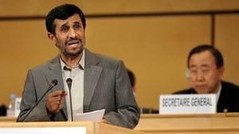
Yet, pressure from the US and Israel did succeed in preventing serious strengthening of the 2001 DDPA. For example, most delegations from Africa and the Africa Diaspora had been working for the DRC to adopt measures to provide effective tools for implementing a commitment to reparations[5] and establishing a “racial equality index” and timetables by which specific progress could be assessed. They also called for a Permanent Forum for People of African Descent, not simply a “panel of experts”. But in the end, perhaps in order to prevent the majority of European countries from following the boycotters, the Outcome Document was silent on these issues. Moreover, Ban Ki-Moon and Navi Pillay explicitly repudiated Ahmedinejad’s speech which had affirmed Palestine’s right to self-determination. Pillay admitted in her press conference on April 24th that she believed her denunciation of Iran was the price the EU demanded not to join the boycott. Except for Argentina, the 15 countries that explicitly denounced Iran were all European.[6]

Some 18 countries—none of them European- explicitly supported the Palestinian people’s right to self determination and criticized to varying degrees, Israel’s denial of Palestinian rights.[7] Most of these, plus Azerbaijan and Pakistan, were among the 15 that called for stronger measures against Islamophobia. Finally, 16 countries – all from the Global South (except Japan)--expressed concern for protecting migrants against racist attacks and the final Outcome document included protections for migrants that most European countries had opposed.[8] In sum, about half the delegates took progressive stands in their speeches on the most controversial issues of the Conference. Their stands demonstrate the endurance of North-South/oppressor-oppressed relations.

Israel is a bastion of “European civilization”, a settler colonial state, on the edge of the African continent. To survive as a Jewish State – by definition, an apartheid state--Israel is perpetually consolidating and expanding its narrative that turns the reality of its racist colonial project on its head. The global hegemony of US-led imperialism is cracking. US and European complicity with Israel demonstrates how white supremacist States will continue to join forces, and viciously attack when their positions and privileges are threatened.

The UN’s Durban Review Conference once again dramatized a lesson many learned long ago: appeasing settler colonial, neo-colonial and imperialist powers only emboldens them. The Palestinian Authority and other Muslim States (including Iran) agreed to a “consensus” document that omitted any mention of Israel or Palestine. The African and Caribbean States signed onto a “consensus” document that omitted mention of reparations.

But the US never compromised in its unconditional support for Israel and opposition to reparations. Hopefully those NGO’s and others who argued, “Let’s just focus on our issues. The Palestine/Israeli conflict is just a distraction from the real struggle against racism” learned from Israel’s campaign to destroy the Conference. Just as the US, Europe and others bribed by them are united in their project to maintain their hegemony, African and African Diaspora people, Asian and indigenous people-- all colonized and formerly colonized people -- need unity.

By Arlene Eisen and Kali Akuno—both of whom attended the UN Conference against Racism, Xenophobia and Related Intolerance in Geneva, April 2009 as part of the United against Racism Delegation. Arlene can be reached at arlenesreport@yahoo.com and Kali can be reached at kaliakuno@mxgm.org.
--------------------------------------------------------------------------------

[1] Harper’s Magazine. September 2009. pp. 53-67

[2] Klein’s refusal to identify Israel as a settler colonial regime in the widely-distributed Harpers article is especially perplexing in light of her June 29, 2009 speech at the Friends School in Ramallah.. There, where her audience was much more critical of Israel, she explicitly explained why she thought Israel was “settler colonial” project.

[3] See http://www.sfbayview.com/2009/the-facts-how-israel-orchestrated-the-real-geneva-%E2%80%98hate-fest%E2%80%99-against-black-and-brown-people/ for documentation of Israel’s two-year campaign to torpedo the UN Conference in Geneva

[4] Brazil, China, Cuba, Ecuador, Organization of Islamic Councils, Indonesia, Iran, Lesotho, Namibia, Nigeria, Norway, Spain, Sri Lanka, Swaziland, Tanzania, Uganda and Uruguay. The UN Secretary General, Ban Ki-Moon, the UN High Commission for Human Rights, Navi Pillay and a number of others explicitly criticized the boycott.

[5] Twelve countries explicitly advocated for Reparations: Angola, Barbados, Cuba, Guyama, Haiti, Iran, Jamaica, Libya, Namibia, Suriname, Tanzania and Zimbabwe. Many others suggested that former colonial countries had the responsibility to ease poverty, forgive debt and assist in the economic development of the Global South.

[6] Argentina, Austria, Belgium, Denmark, France, Ireland, Lithuania, Luxenburg, Norway, Portugal, Slovenia, Spain, Sweden, Switzerland, and United Kingdom.

[7] Bahrain, Cuba, Egypt, Guyana, Indonesia, Iran, Kuwait, League of Arab States, Lebanon, Libya, Morocco, Nicaragua, Palestine (PLO), Qatar, Saudi Arabia, Sudan, Syria, United Arab Emirates

[8] Argentina, Burkina Faso, Cuba, Ecuador, Greece, Haiti, Honduras, Japan, Jordan, Mauritius, Mexico, Nigeria, Philippines, Senegal, Tanzania and Turkey.

In Unemployment Report, Signs of a 'Jobless Recovery'

September 5, 2009

In Unemployment Report, Signs of a Jobless Recovery

By PETER S. GOODMAN and JACK HEALY
New York Times

The unemployment rate surged to 9.7 percent in August, signaling that joblessness and financial anxiety were likely to endure in millions of American homes for many months.

The Labor Department’s latest employment report, released Friday, added weight to a growing belief that, at least technically, the economy had already escaped the grip of recession. Though 216,000 net jobs vanished in August, the losses continued to moderate from their worst numbers of the year.

Yet the report also lent credence to a deepening consensus that, even as the economy resumes expansion, the recovery was likely to be weak, prompting most companies to hold back from aggressive hiring.

“In the context of a full-blooded recovery, this report is disappointing,” said Alan Ruskin, an economist with the Royal Bank of Scotland in Stamford, Conn. “We’re still clawing our way back.”

Many experts envision a jobless recovery, in which the economy grows but job losses persist. That would reprise the end of the last recession in 2001, when payrolls continued to decline for nearly two years afterward.

Such an outcome would confront the Obama administration with a potentially nettlesome political problem heading into next year’s midterm elections. After the government unleashed $787 billion to stimulate economic growth, and after it bailed out financial institutions and the auto industry, the unemployment rate exceeds worst-case projections envisioned by the administration early this year.

On Friday, Jared Bernstein, the top economic adviser to Vice President Joseph R. Biden Jr., said the picture would look far worse were it not for the stimulus spending. He added that more help was on the way as the government distributed the remaining two-thirds of the package.

“Our interventions have contributed to significant cuts in the rate of job loss,” Mr. Bernstein said. “We’re headed in the right direction, but we’re far from out of the woods. There are simply too many Americans seeking work.”

If the jobless rate continues to climb, as is widely expected, that could generate pressure for another stimulus spending package. But given intensifying concern about the size of federal budget deficits — now projected to exceed $9 trillion within a decade — any new spending could be politically perilous.

The latest snapshot of the nation’s labor situation testified to the drastic improvement since early this year, when nearly 700,000 jobs a month were disappearing. Yet it also underscored the continued bleakness of the economic landscape.

“It’s a good picture compared to where we were, which was just a free fall,” said Dean Baker, a director of the Center for Economic and Policy Research in Washington. “But compared to anything else, this is just a horrible report. The rate of decline is slowing, but it’s not going to stop. We’re likely on a path toward more than 10 percent unemployment.”

Most economists see recent improvements as the result of pulling away from the disaster of last fall — when the investment giant Lehman Brothers collapsed, spreading fear throughout the financial system — and not a sign of vigorous growth ahead.

After years of borrowing against soaring home values, tapping credit cards and harvesting stock market winnings to spend in excess of their incomes, millions of households are being forced to conserve. That limits consumer spending, which makes up 70 percent of the nation’s economy. And that makes businesses that might otherwise hire and expand more inclined to hunker down.

“Household balance sheets are shot,” Mr. Ruskin said. From here, spending “has to come from income, and income has to come from employment, and at this juncture it looks like employment will only improve very slowly.”

The unemployment rate is up from 9.4 percent in July, when the economy lost 276,000 jobs.

The jobs report underscored the broad reach of the labor crisis, which has imposed austerity even on those still employed. In the last year, average weekly earnings have increased by only 0.8 percent — a decline, after factoring in the rising cost of goods. So many companies have trimmed working hours that paychecks have shrunk.

The so-called underemployment rate — which counts the jobless along with those working part time because their hours have been cut or they cannot find full-time jobs — reached 16.8 percent in August.

In recent months, the economy has benefited from a slowdown in the pace at which businesses have slashed inventories, prompting factories to expand production. Auto sales have been aided by the cash-for-clunkers program, which gave buyers incentives to trade in cars. Home sales have been stimulated by a tax credit for first-time homebuyers, an inducement that expires in November.

After those programs wear off, the nation may again confront a fundamentally weak economy.

“Everybody is looking around saying, ‘Where is a robust recovery going to come from?’ and not finding it,” said Heidi Shierholz, an economist at the labor-oriented Economic Policy Institute in Washington. “We’re going to have elevated unemployment for four years to come.”

In Williamsburg, Va., Ginny Hoover, 49, has remained unemployed since she lost her job at a pharmaceutical company in November 2007. She has maxed out her credit cards and borrowed money from friends. She broke her apartment lease and moved in with her boyfriend. But other than an offer to sell insurance door-to-door for commissions only, she has found no work.

“I thought maybe a month or two and I’d have another job,” Ms. Hoover said. “I never would have guessed that it would be as brutal as it was out there.”

Despite increased factory production, manufacturing shed 63,000 jobs in August. Construction lost 65,000 jobs. Health care remained a rare bright spot, adding nearly 28,000 jobs.

“I don’t think businesses will hire back anytime soon,” said Allen Sinai, chief global economist at Decision Economics. “Companies are rewarded by the stock markets for not hiring and keeping their costs down. We will see another jobless recovery.”

In Delray Beach, Fla., Donna Angelillo lost her job as a property manager in May and quickly exhausted her savings. Her $1,000 monthly unemployment check does not cover her $1,030 monthly rent.

Jobs are scarce, she said. Past-due bills are abundant.

“I don’t have September rent, but right now I’m more concerned about the electricity,” she said. “Either today or tomorrow, they’re going to shut it off. I’m getting desperate.”

States Cut Back and Layoffs Hit Even Recipients of Stimulus Aid

September 5, 2009

States Cut Back and Layoffs Hit Even Recipients of Stimulus Aid

By MICHAEL COOPER
New York Times

ST. CLOUD, Minn. — It was just five months ago that Vice President Joseph R. Biden Jr. made the New Flyer bus factory here a symbol of the stimulus. With several cabinet secretaries in tow, he held a town-hall-style meeting at the factory, where he praised the company as “an example of the future” and said that it stood to get more orders for its hybrid electric buses thanks to the $8.4 billion that the stimulus law devotes to mass transit.

But last month, the company that administration officials had pictured as a stimulus success story began laying off 320 people, or 13 percent of its work force, having discovered how cutbacks at the state level can dampen the boost provided by the federal stimulus money. The Chicago Transit Authority did use some of its stimulus money to buy 58 new hybrid buses from New Flyer. But Chicago had to shelve plans to order another 140 buses from them after the state money that it had hoped to use to pay for them failed to materialize. The delayed order scrambled New Flyer’s production schedule for the rest of the year, and led to the layoffs.

One of those laid off was David Wahl, 52, who had worked there for a decade and who sat behind the vice president at the town-hall-style meeting, soaking up the optimism of the moment. “With mass transit being pushed so hard,” Mr. Wahl recalled, “I figured I’d be able to work until I was 75.”

The layoffs at New Flyer are a vivid illustration of the way that some of the economic impact of the $787 billion federal stimulus law is being diluted by the actions state and local governments are taking to weather the recession.

While the stimulus law cut federal taxes to inject money into the economy quickly, at least 30 states have raised taxes since January, according to the Center on Budget and Policy Priorities, a liberal fiscal policy group. The stimulus will spend $27.5 billion in federal money on highway projects, but at least 19 states are planning to cut their highway spending this year, according to the American Road & Transportation Builders Association, a trade group. And as the stimulus devotes $8.4 billion to mass transit, transit systems across the nation have been forced to cut service, raise fares and delay capital spending.

Dean Baker, an economist who was an author of a paper called “The State and Local Drag on the Stimulus,” said that while the stimulus had undoubtedly helped states, the cutbacks and tax increases at the state and local level threaten to offset much of its economic impact.

“The economy doesn’t care whether the dollars are coming from the federal or the state and local level,” said Mr. Baker, a co-director of the Center for Economic and Policy Research.

Mr. Biden did not respond directly to news of the layoffs at New Flyer, but another administration official said the stimulus money was expected to help transit agencies buy almost 8,000 new buses, which would help New Flyer and its competitors. Sasha Johnson, a spokeswoman for the Department of Transportation, said stimulus dollars had helped bus companies survive the economic downtown, and would have an increasing effect through the year.

“Without the boost provided by Recovery Act orders, bus companies like New Flyer would be even harder hit than they have been,” Ms. Johnson said.

In St. Cloud, though, all that red ink from the states dimmed the hopes for more federally financed green jobs, for now. Chicago transit officials — who noted recently that their older buses had enough miles on them to have gone to the moon and back — estimated that they needed $7 billion for capital improvements. But the State of Illinois, facing budget pressure, agreed to spend only $2.7 billion, and not all of that will go to Chicago. The city’s hopes for another 140 buses from here were put off.

New Flyer Industries, which is based in Winnipeg, Manitoba, said over the summer that it still had a large backlog of bus orders, including some from California, Milwaukee, Philadelphia and Rochester, that would use stimulus money. But because its buses are engineered to order for each customer, the company said in a statement, it cannot easily switch its production schedule to fill the gaps left by the delayed order.

So the company plans to cut 320 jobs, to reduce its production schedule to 36 units a week from 50, and to close its plants during the last two weeks of the year. Glenn Asham, New Flyer’s chief financial officer, declined to comment further.

Even before New Flyer announced its layoffs, St. Cloud’s mayor, David Kleis, was critical of the stimulus law. He said the two small road projects that were approved by the state were low on the city’s list of priorities, while the city’s top priority — widening a busy, accident-prone intersection in a commercial area — did not make the grade. Neither did his applications for money to pay for more police officers, or for the city’s wastewater treatment plant. “The expectations were just very high here after that town hall meeting,” Mr. Kleis said.

Mr. Wahl said the loss of his job was still sinking in. He joined New Flyer soon after it opened the St. Cloud plant in 1999 — he was the 118th employee, he said — and worked on everything from power steering to putting on side panels to installing engines. When the work force unionized, he became president of the local. Last November, he moved to a nonunion job working with transit systems as they prepared to take delivery of the buses.

“It was a lot easier on the body,” he said. But the switch to a nonunion job also made it easier for him to be in the first round of layoffs, despite his 10 years with the company.

“First it’s shock, and then you get angry,” Mr. Wahl said. “And then you wonder, What am I going to do?”

So far he has filed for unemployment benefits, and a couple of days after his 52nd birthday, he drove to the Workforce Center in Crow Wing County to see if he might qualify for help getting a driver’s license allowing him to become a long-haul truck driver.

The stimulus law may have failed to save Mr. Wahl’s job, but it is helping him out in a way that he hoped he would never need: thanks to a provision in the law that pays 65 percent of the cost of continuing health insurance for the unemployed under the Cobra law, Mr. Wahl’s health insurance bills will now be closer to $400 a month instead of the $1,200 they would have been otherwise.

North Korea 'At Final Uranium Stage'

Friday, September 04, 2009
12:19 Mecca time, 09:19 GMT

N Korea 'at final uranium stage'

US officials have long suspected North Korea has been operating a parallel uranium weapons programme

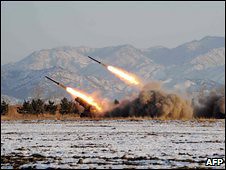
North Korea is in the final stages of enriching uranium, the country's state media has said, a process that could give it a second way to make nuclear bombs.

According to the official Korean Central News Agency (KCNA), North Korean officials have informed the UN Security Council that the process of enrichment was entering "the completion phase".

The senior US envoy to North Korea, Stephen Bosworth, said the enrichment claim was "of concern".

"I think for all of us, it reconfirms the necessity to maintain a coordinated position on the need for complete, verifiable denuclearisation of the Korean peninsula," Bosworth said.

The country has already tested two plutonium-based nuclear weapons and has long been suspected of running a parallel effort to develop uranium-based weapons.

Reaction to sanctions

KCNA said the North's decision to push ahead with its nuclear programs was a reaction to Security Council's moves to tighten sanctions against the country following its second test of a nuclear weapon in May.

The report called the resolution a "wanton violation" of North Korea's sovereignty and dignity.

"We are prepared for both dialogue and sanctions," the report quoted a letter to the head of the Security Council as saying.

"If some permanent members of the [council] wish to put sanctions first before dialogue, we would respond with bolstering our nuclear deterrence first before we meet them in a dialogue."

The letter pointedly blamed the Security Council's decision to impose sanctions following its April rocket launch, while taking no action following one by South Korea last month.

"Had the UNSC, from the very beginning, not made an issue of the DPRK's (North Korea's) peaceful satellite launch in the same way as it kept silent over the satellite launch conducted by South Korea on August 25, 2009, it would not have compelled the DPRK to take strong counteraction such as its 2nd nuclear test," the letter said.

Agreements scrapped

The US, China, Japan, Russia and South Korea have been negotiating with North Korea for years in an effort to persuade North Korea to abandon its nuclear program in exchange for aid and other concessions.

However, North Korea walked away from the talks earlier this year, saying the so-called six-party process was dead and announcing that it was scrapping all previous agreements.

North Korea has said it needs nuclear weapons as a security guarantee against what it sees as the "hostile policies" of the US, which has 28,500 troops based in South Korea.

Balbina Hwang, a former US assistant secretary of state for East Asia and Pacific affairs, told Al Jazeera that North Korea's announcement was "reiterating the same message they have been sending since January, which is that they are not interested in six-party talks".

She said the North had decided the talks were not working for them, because it was going to force them to "a very critical step – namely were they going to give up their nuclear weapons or not?"

"What they're doing is telling the UN that sanctions will not work, that they will continue with weapons development of weapons of international rules, and instead that they'd rather deal bilaterally with South Korea, the US and China – because that's their best way of keeping the regime going and also being able continue with their nuclear weapons."

'Provocative'

South Korea's foreign ministry has expressed regret over the North's announcement, urging Pyongyang to return to the stalled disarmament talks.

"The North's move to continue provocative steps... can never be tolerated. We will deal with North Korea's threats and provocative acts in a stern and consistent manner," the ministry said in a statement.

Al Jazeera's Nick Spicer, reporting from the United Nations, said the North Korean statement will likely be seen as a defiant move, especially given that the US has just taken on the rotating presidency of the Security Council.

The US has said it will make non-proliferation the top priority of its time in the presidency.

Our correspondent says the North Korean announcement will also likely be seized upon by critics of the Obama administration to say policy that the White House's policy of engagement with North Korea and other so-called rogue regimes is a failure.

Source: Al Jazeera and agencies

Friday, September 04, 2009

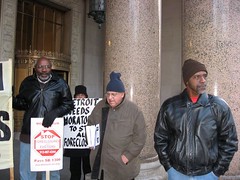
Emergency Demonstration At DTE Energy: Turn Power Back On At Highland Towers, Friday, September 4 at Noon

For Immediate Release

Media Advisory

Event: Emergency Protest at DTE Energy: Turn Power on at Highland Towers!
Location: DTE Headquarters, Bagley at Third, Across From MGM Casino
Time: Noon-1:00pm
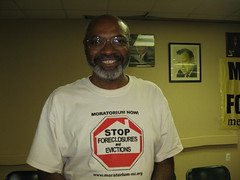
Sponsor: Moratorium NOW! Coalition to Stop Foreclosures, Evictions & Utility Shut-offs
Contact: 313.671.3715 or 887.4344
E-mail: moratorium@moratorium-mi.org
URL: http://www.moratorium-mi.org

Emergency Demonstration at DTE Energy Headquarters to Demand the Restoration of Service at the Highland Towers Apartments; Gather at Bagley and Third at Noon on Friday, September 4

On August 31, the residents of the Highland Towers apartments, located at 12850 Woodward avenue in Highland Park, had their lights and natural gas services cut off by DTE Energy. The owners of the apartment complex, which has been neglected for years by the landlords, had not paid over $100,000 in utility bills. Since Monday, DTE Energy has refused to restore the services despite the fact that there are hundreds of tenants in the building who were not notified of the impending shut-offs.

Every day that DTE Energy refuses to turn the electricity and gas services back on a worse humanitarian situation is being created at Highland Towers. The apartment building has women with small children, people with disabilities and tenants of all ages who have medical problems that require electricity and gas services.

Latonya Lloyd, who has lived in the Highland Towers for two years, suffers from asthma and needs electricity for the use of breathing equipment. Her husband has sent their eight-year-old daughter to her grandmother's home pending the restoration of their energy services. Mrs. Jene Weiss, 88, has lived in the apartment for thirty years. She is blind in one eye and walks with a cane.

Other people in the apartment suffer from kidney problems, diabetes, hypertension and other serious diseases. Their lives are literally being jeopardized by continuing to reside there under these distressed circumstances. The failure of the owners, who are reportedly having financial difficulties, to pay utility bills is not the fault of the tenants. They have paid their rents which included money for electricity and gas services.

A delegation of tenants from the Highland Towers along with members of the Moratorium NOW! Coalition to Stop Foreclosures, Evictions and Utility Shut-offs, went to DTE Energy headquarters on Thursday, September 3 to demand a meeting with the corporate executives in charge at the company. Although the delegation was told that they would have someone from DTE come out to meet with them, after waiting for 75 minutes, a security officer walked into the lobby and informed the tenants and their supporters that there was no one to talk with them.

Therefore, the Moratorium NOW! Coalition is putting out a call for activists, advocates for working people and the poor as well as all people of goodwill, to come out to a demonstration outside DTE on Friday, September 4 at Noon. We must demand that DTE take responsibility for this crisis and turn the power back on for the residents at Highland Towers to avoid further pain and suffering.

The Moratorium NOW! Coalition is calling for an immediate moratorium on utility shut-offs in the metropolitan Detroit area and throughout Michigan. With the rising unemployment, poverty rates, the budget deficits plaguing the cities, counties and the state, there is an urgent need for Governor Granholm to declare an economic state of emergency in order to avoid further suffering among working people and the poor.

The declaration of an economic emergency would provide the ability of the state government to appeal directly to Washington for federal funds designed to provide for the needs of the people. The Governor could impose an immediate moratorium on foreclosures, evictions and utility shut-offs pending the outcome of the present crisis.

The failure of the city, county and state governments to take immediate action to provide relief to millions of people in the region, requires a mass struggle on the part of the people in this area. We must mobilize the people to fight against the cut backs and the elimination of essential services such as housing, food, water, utilities and jobs. To join our efforts contact the Moratorium NOW! Coalition at the numbers listed above.

Abayomi Azikiwe,
Media Liaison

Despite Racist Attacks in the U.S., Libya Celebrates 40th Anniversary of the Revolution

Despite Racist Attacks in the U.S., Libya Celebrates 40th Anniversary of Revolution

Qaddafi to visit New York amid corporate-generated hysteria

by Abayomi Azikiwe
Editor, Pan-African News Wire

Libyan leader Mummar Qaddafi will attend the annual United Nations General Assembly in New York City later this month amid a corporate-media provoked racist campaign to prevent him from staying in Englewood, New Jersey on a plot of land owned by the country's UN Mission. Libya announced on August 31 that the leader, who is also chairman of the continental African Union, would not stay in Englewood but remain in New York City during the General Assembly gathering of over 150 heads-of-state from around the globe.

This campaign of anti-Libyan hysteria is part of the fallout emanating from the decision by the Scottish government to release Abdel Basset al-Megrahi from prison on August 20. Al-Megrahi was convicted in connection with the bombing of Pan Am Flight 103 over Lockerbie in December 1998. The Libyan, who is a former airline executive has always maintained his innocence and was in the process of appealing his conviction when he was released. Recently al-Megrahi was diagnosed with terminal prostate cancer and was released by the Scotland government on humanitarian grounds.

In response to the release of al-Megrahi, the U.S. government has resumed political attacks on the Libyan government. President Barack Obama said that the Libyan government should have placed al-Megrahi under house arrest and the welcoming of him by the people of this North African country was a "mistake."

Some Englewood residents and the mayor of this city stated that they would protest Qaddafi's visit and even block him from setting up a tent on the land owned by the Libyan Mission to the United Nations. These efforts represent the renewed attacks on the Libyan government which had been for years labelled as a "terrorist state" by U.S. imperialism.

The U.S. under former President Ronald Reagan bombed Libya in April 1986 killing scores of people. The African country had been subjected to economic sanctions and a ban on flights from other nations.

In a letter published in the New York Times on August 30, Saif Al-Islam El-Qaddafi, the son of the Libyan leader, disputed western press reports that the former political prisoner's return was given a "hero's welcome." He said that the people who welcomed al-Megrahi were largely his relatives and clan members.

Saif Al-Islam El-Qaddafi stated that "Libya has worked with Britain, the United States and other Western countries for more than five years now to defuse the tensions of earlier times, and to promote trade, security and improved relations. I believe that clarifying the facts in the Lockerbie case can only further assist this process." (New York Times, August 30)

Libya Commemorates 40 Years of Revolution

On September 1, 1969, Col. Mummar Qaddafi led a popular coup against the western-backed monarchy of King Idris. The country had been colonized by Italy during the early part of the 20th century and even though it was granted formal independence in 1951, the state remained largely under the influence of the West.

Qaddafi headed a group within the military calling itself the Revolutionary Command Council in 1969 which proclaimed the state as the Libya Arab Republic. The motto of the RCC was "freedom, socialism, and unity and the group pledged itself to eliminating injustice and backwardness. The RCC government negotiated with the United States to evacuate their base in Libya. As a result, U.S. military forces were told to leave Libya and close Wheelus Air Base.

Libya began to provide assistance to various national liberation movements and progressive governments throughout the Arab world and Africa. The government headed by Qaddafi has utilized the vast oil reserves in the country to build up the national infrastructure and to provide education to the Libyan masses and other visitors from throughout the world.

According to the Energy Information Administration "Libya, a member of the Organization of Petroleum Exporting Countries (OPEC), holds the largest proven oil reserves in Africa, followed by Nigeria and Algeria. The Oil and Gas Journal (OGJ) says that Libya had total proven oil reserves of 43.7 billion barrels as of January 2009, up from 41.5 billion barrels in 2008. About 80 percent of Libya’s proven oil reserves are located in the Sirte basin, which is responsible for 90 percent of the country’s oil output." (Energy Information Administration, Official Energy Statistics From the U.S. Government)

The 40th anniversary celebrations were marked by a special African Union meeting in Libya as well as the erection of large-scale housing developments. According to the British Broadcasting Corporation (BBC), "In recent years the entire country has slowly begun to resemble one massive construction site. 'Flats are going up all over Libya,' says business consultant Sami Zaptia. 'After September 1 we expect some announcements as to who exactly is going to get the houses'" (BBC, August 31)

In recent years Libya has emerged from the forced U.S. and British imposed sanctions and isolation. The former colonial power of Italy will honor the 40th anniversary celebration with a display from their Air Force's aerobatics team. Trade between Libya and Italy has expanded significantly over the last few years. Italian Prime Minister Silvio Berlusconi had announced plans to attend the commemoration.

This visit marks a tremendous turnaround in Libyan-Italian relations since 1969. After the seizure of power by the Revolutionary Command Council some 20,000 Italians living and working in Libya were expelled.

Business interests and properties controlled by the Italians were confiscated and turned over to the state. The RCC said that this was compensation for the Italian colonization of the country. The Italian government had pledged to pay $5 billion in reparations to the Libyan people for the crimes committed during colonial rule. They also later issued an apology for their conduct during the period of colonialism and neo-colonialism in Libya.

Libya has also extended its economic cooperation agreements with other countries throughout the European continent. The country provides 20 percent of the natural gas supplies to Switzerland. It also has agreements to supply natural gas to Spain and Italy as well.

The Libyans have also held discussions with Britain and the United States about resuming economic cooperation. It was reported that the release of al-Megrahi was related to ongoing negotiations involving oil exploration and importation.

Libya's celebrations of the 40th anniversary of the revolution has been acknowledged by governments throughout the African continent and the world. President Robert Mugabe of Zimbabwe traveled to Libya to participate in the AU meeting being held there as well as to recognize the achievements of the country over the last four decades.

Libyan special envoy Mr. Mukthar Ganas visited Zimbabwe in early August in order to invite President Mugabe to the AU summit and the revolutionary festivities.

Detroit Administration Rescinds Proposed Cuts in Bus Transportation

Detroit Administration Rescinds Proposed Cuts in Bus Transportation

Thousands attend public hearings to voice opposition

by Abayomi Azikiwe
Editor, Pan-African News Wire

After mass outrage throughout the city, the corporate-backed administration of Mayor Dave Bing has suspended plans to make large-scale cuts in public transportation. Several thousand workers, youth, people with disabilities and seniors attended a series of eight public hearings on the proposed cuts in bus services that were held between August 24-27.

Two hearings were held each day sponsored by the Detroit Department of Transporation (DDOT) at various locations throughout the city. It is estimated that 40% of the population in Detroit is dependent upon the buses to get back and forth to work, schools, markets, retail outlets, churches, mosques, medical clinics, hospitals, visits to family and friends as well as social activities.

These hearings were attended by many angry workers who said that they would lose their jobs if the bus transportation cuts were enacted. DDOT plans consisted of proposals to extend wait time, the elimination of at least four routes, the discontinuation of service on certain routes between midnight and 5:00 a.m. and the suspension of all service between Saturday at 6:00 p.m. until Monday mornings at 5:00 a.m.

Over the last several weeks the Bing administration has stated that the city is facing a $300 million deficit. The administration's program to address the shortfall is to layoff 1,000 city workers, to trim benefits for public employees, slash services for residents, including the much needed bus transportation and at the same time escalate police operations aimed at the unemployed and the youth.

Bing recently traveled to Chicago to hold secret discussions with the bond agencies of Standard & Poor, Moody's and Fitch Ratings. In January 2009, the city's bond ratings were reduced to junk status, making it more expensive for the municipality to repay existing loans and acquire additional credit.

During the week of August 24 the bond ratings were lowered again. According to the Detroit Free Press Standard & Poor "dropped tlhe city's ratings from BBB and BBB to BB for two kinds of debt because the city had failed to meet promises to eliminate its deficit and turn in its annual audit on time, because of the local economy and because of perceived instability in the city with multiple mayoral elections this year." (Detroit Free Press, August 30, 16A)

Also during the last week in August unemployment figures were release for the city of Detroit indicating that the current rate of joblessness was officially at 29.4%. This number does not reflect the growing ranks of the discouraged workers who see no prospects for finding employment in the city. In addition, the figures do not reflect the level of underemployment where workers are not earning enough money to meet their basic obligations for maintaining a household.

Foreclosure rates are escalating as well as evictions from rental properties. Vacant homes, apartments, abandoned factories and small businesses can be seen throughout the city of Detroit and to a growing degree, the suburbs are facing the same problems.

The Detroit Free Press reported on August 30 that "Detroit began its fiscal year (July 1) with less than $20 million in the bank--not even enough of a surplus to pay the roughly 13,000 employees who cost the city $50 million a month in salaries and benefits." Bing, a former Detroit Pistons basketball star and later businessman who owns a Steel corporation on the city's east side, is allowing the bond rating agencies, banks and corporations dictate the terms of how the deficit should be addressed.

Public transporation and city workers targeted

In a document issued by DDOT at the public hearings held during the week of August 24, it paints a grim picture of how the current economic crisis will impact transportation services in Detroit and throughout the United States. Rather than maintain services for workers, students, people with disabilities and seniors, the banks and corporations are demanding that they bare the brunt of layoffs and cuts so that the financial sector can be paid extortise interests rates on loans and municipal bonds.

An executive summary of the DDOT report explaining the Bing administration's rationale for the cuts, states that "The securement of funding to provide critically needed public transportation services has become a challenge for transit agencies across the country. The Detroit Department of Transportation (DDOT) and many other transit agencies have reduced or eliminated service, raised fares, and laid off workers." (DDOT Proposed Service Changes Effective September 26, 2009)

This report continues by stressing that "The economic downturn faced by the nation is a contributing factor, but there are other factors that have affected the services that are provided to public transit users." The document then goes on to cite revenue shortfalls, the city budget deficit, a decrease in state transportation funding, no dedicated funding source for public transportation, the restrictions placed on federal transportation dollars, and higher operating costs as key factors in the crisis facing the city of Detroit.

Despite all of these reasons given for cutting bus services, the thousands who rallied and testified at the public hearings were not accepting the city's proposals as legitimate or warranted. People pointed to the fact that banks and corporations have been bailed out to the tune of trillions of dollars. They asked where was the economic recovery funds that were supposed to be sent to the state and city by the Obama administration.

By the second day of the hearings, it became quite obvious that there would be political repercussions to cutting bus service at this juncture in the city. Bing must stand for re-election in November for a four year term of office. His opponent, Tom Barrow, made appearances at the hearings and was cheered by the people in attendance. Yet most workers realize that Barrow, who is also a businessman, does not have a real alternative to the current crisis facing the city of Detroit.

However, the outpouring of militant anger is relfective of the broad discontent existing among working people in Detroit and throughout the country. The Obama administration and the majority Democratic Congress in Washington was elected through the popular anger of people who are tired of permanent war and government for the rich and powerful. Yet, absent in this scenario is a strong mass independent working class movement dedicated to improving the conditions for the majority of people throughout the country, which are in fact worsening.

More Attacks on the Workers in the Pipeline

There have been vicious attacks launched against the city unions and the Detroit Federation of Teachers over the last several weeks. Workers are being portrayed by the corporate press and the Bing administration as overpaid, receiving to many benefits such as healthcare, vacation time, paid sick days and pensions. However, in comparison to other sectors of the economy, city employees and teachers have suffered tremendous losses over the last few years.

According to the media, the salaries and benefits won by city workers and school employees as a result of years of protracted struggles are the underlying causes for the economic crisis facing Detroit. Such arguments could not be further from the truth. The city of Detroit has suffered immensely as a result of the economic policies carried out by the ruling class and the government in the U.S. Even the corporate media admits that the proposed cuts by the city administration would only result in savings of less than $10 million.

Trillions of tax dollars and federal reserve credit lines have been extended to the banks, corporations and insurance companies since 2008. The ongoing wars in Iraq, Afghanistan, Pakistan, Colomiba, Somalia and other geo-political regions have cost the working class additional trillions in public money. There is no refernce in the corporate media to the tremendous watse in implementing the programs of the capitalist ruling class and the Pentagon.

The corporate press which is backing the Bing administration is constantly holding the threat of bankruptcy and receivership over the workers. They are telling the unions everyday that if they do not accept the broad concessions and layoffs that the city will become insolvent.

In the Detroit Free Press on August 30, the ruling class press put forward the following alternatives as the only "possible remedies" to the crisis. According to the newspaper "Detroit's financial options remain limited, experts say. Two options are bankruptcy with a receiver being in charge, and having the state appoint an emergency financial manager."

The "Emergency Financial Manager" would be appointed by Governor Granholm and would be tasked with solving the financial crisis. The appointee would be mandated to renegotiate union contracts. In addition, with state approval the state manager could force the city into bankruptcy.

In regard to bankruptcy, a judge typically appoints a receiver who acts under the guidelines of federal bankruptcy law. The receiver would be tasked with preserving private property during the bankruptcy period. Also, in bankruptcy, union contracts can be abrogated in favor of the creditors and the city administration.

There has been resistance to these proposals by the workers. Leamon Wilson, chairman of the AFSCME locals, told the Free Press that "You can't lay us off and then privatize the work. He's (Bing) doing it with an attitude and not giving a damn." (Detroit Free Press, August 30)

Even though the Bing administration backed away from the public transportation cuts, 205 workers received pink slips on August 28. The administration refused to say in which departments the workers would be laid off.

In regard to the DFT, the Detroit Board of Education in an effort to avoid a strike, extended the existing contract until the end of October. At least two thousand teachers and school employees have been threatened with layoffs. An Emergency Financial Manager, Robert Bobb, has already been appointed for the Detroit Public Schools. Bobb also has been attacking the school employees and accusing the workers of being corrupt. A number of employees have been indicted for petty crimes. These efforts by Bobb are being backed up by Governor Granholm and Wayne County Prosecutor Kim Worthy.

The Moratorium NOW! Coalition to Stop Foreclosures, Evictions and Utility Shut-offs attended the public hearings on the proposed transporation cuts. Coalition members distributed thousands of flyers inviting the people to a mass organizing meeting on September 12 at the Central United Methodist Church downtown at 11:00 a.m. The purpose of the meeting is to declare an economic state of emergency in order to demand a halt to the use of working people as scapegoats in the current capitalist meltdown.

Members of the Moratorium NOW! Coalition are proposing further mass actions targeted at the financial district in downtown Detroit. The Coalition is saying that the banks should impose a moratorium on debt service payments until the financial crisis abates, allowing city workers to maintain their jobs during the current period.

The September 12 mass meeting will also mobilize people for the upcoming National March for Jobs scheduled for September 20 in Pittsburgh. The march, which is being organized by the Bail Out the People Movement (BOPM), will kick off a week of protests surrounding the G20 Economic Summit being held later that week in Pittsburgh.
-----------------------------------------------------------------------------------------
Abayomi Azikiwe is the editor of the Pan-African News Wire. The writer attended the public hearings on the proposed cutbacks in public transportation in the city of Detroit.
-----------------------------------------------------------------------------------------