Friday, August 31, 2012

Deep Read: A World Upside Down

Deep Read: A World Upside Down

30 Aug 2012 11:37 - Jonathan Faull
Reprinted From the South African Mail & Guardian

In the wake of the Marikana massacre, the victory of the miners who ended SA's largest-ever industrial strike 25 years ago today rings all too hollow.

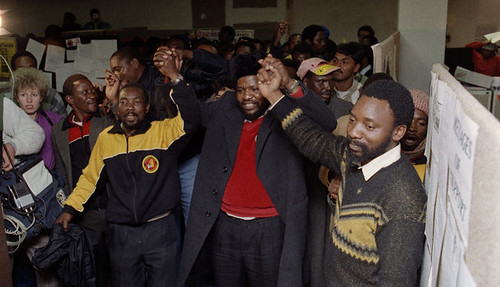
Today – Thursday, August 30 – marks the 25th anniversary of the conclusion of South Africa's largest industrial strike.

For three weeks in August 1987, South Africa's gold and coal mining sectors were crippled as 360 000 workers heeded the call of the National Union of Mineworkers (NUM) to down tools and walk off the job.

Led by a formidable general secretary, Cyril Ramaphosa, the NUM struck at the core of South Africa's minerals complex, highlighting the plight of poor, black mine workers, and underlining the political and social unsustainability of inequality and pervasive poverty in South African society.

Twenty-five years later, the world has turned upside down: 270 striking platinum miners now face charges of murder in relation to the deaths of 34 fraternal workers killed under a police fusillade in three deadly minutes at Lonmin's Marikana mine.

Ramaphosa, unshackled from the struggle against apartheid and its racist economy, is worth an estimated R1.9-billion (2010), a significant owner of the means of extractive production, overseeing and managing a network of multinational mining interests that orchestrate the working lives of tens of thousands of black mineworkers.

The strike at Marikana is framed by the interconnected realities of widespread poverty, deep inequality, the contemporary politics of trade unions and the ANC, and a continuum of structural violence visited upon the rural poor of Southern Africa.

To turn our world the right side up, the killing at Marikana must serve as a catalyst for re-examining what constitutes "leadership" in South Africa's business community, and the relationships between elites forged so quickly in the name of "transforming" South Africa's economy.

Ramaphosa sits, inter alia, on the board of Lonmin PLC, the British domiciled, contemporary incarnation of the London and Rhodesian Mining and Land Company, once branded the "unpleasant and unacceptable face of capitalism" by then British Prime Minister, Edward Heath. In the face of an antecedent wildcat strike, Lonmin sacked 9 000 workers in 2011, an action deemed acceptable in South Africa.

It is easy to romanticise the leadership of the South African struggle for freedom. Even our leaders were, no doubt, naïve to the task ahead, and the changes that would be visited upon them and their comrades. A scene in the remarkable film "The Long Journey of Clement Zulu" documenting the lives of ANC leadership in the aftermath of exile and imprisonment, is instructive: Nelson Mandela sits at Ahmed Kathrada's kitchen table in Lenasia, surrounded by his political confidantes in the process of negotiating a democratic and inclusive South Africa – a literal kitchen Cabinet at home in, and alive to the communities that projected into the ANC the legitimacy and authority that powered the heady days of transition.

In Mangaung a very different leadership will preside, and face re-election, at the ANC's national conference. Millionaires will crowd the VIP lounge with cheque books and brown envelopes, extracting influence and bagging the networking opportunities presumed to guarantee government contracts; Porches, BMWs and Mercs will be waved through crowds of bussed-in comrades to overwhelm parking lots; and bodyguards will scythe through the assembled masses to ensure their principal's presence at overflowing buffets: The ANC, a self-styled custodian of the interests of the poor, at sea in the competing concerns and grievances of billionaires and the indigent.

The perversions of the apartheid economy had architects who protected and advanced the interests of white workers, and white bosses. Policies and personages could be identified and struggled against, and small victories won. The mining strike of 1987 should be celebrated as one such victory on the path to inclusive democracy and dignified work.

But South Africa's transition to democracy largely absolved the champions of industry of complicity in the impoverishment of millions.

The reproduction of material indigence and inequality now appear spontaneously in an authorless economy, the product of "labour rigidity", "selfish" trade unions, and voluntary sloth.

A recent, and prescient, interrogation by Roger Southall of the idea of a "South African power elite", traces the contours of an economy still "overwhelmingly representative of white wealth and controlled by white managers", wherein "five corporations [are] responsible for over a third of total [JSE] market capitalisation[,] the top ten … over half", and black people own between 7% and 18% of share capital on the national bourse.

Multimillionaire ANC national executive committee members Cyril Ramaphosa, Tokyo Sexwale, Mathews Phosa, Valli Moosa and Jeff Radebe (through the business interests of his wife), demonstrably did not struggle to be poor, but neither should anyone else. It is incumbent to ask what the presence of these ANC denizens in South Africa's boardrooms has contributed to the structural transformation of South Africa's economy. In short, what social dividend has their leadership delivered?.

Southall concludes that the ANC is not (yet?) in thrall to private capital, but that "[power] remains grossly unevenly distributed [and] continues to favour the powerful [while South Africa] remains one of the most unequal in the world … Whether elites have the political will and economic guile to respond creatively to pressures from below by promoting socially and racially inclusive growth will determine the future course and fate of South African democracy".

In a world upside down, the victory of August 30 1987 rings too hollow, and the challenge to realise the democratic imperatives of equality of opportunity and human dignity, looms all too ominously.

Jonathan Faull is an independent political and public policy analyst resident in Washington, DC.

Suspicion Circles Israeli Diamond Maven Who 'Understands Negroes'

Suspicion circles Israeli diamond maven who 'understands negroes'

24 Aug 2012 08:12 - James Wood, Craig McKune, Stefaans Brümmer
South African Mail & Guardian

"Yossi, you don't get it. I understand the politics of negroes," Dan Gertler once bragged of his talent for cutting audacious deals with the DRC.

Recorded in about 2000, the revealing slur was made during the early days of the Israeli diamond ­scion's ambitious Democratic Republic of Congo venture.

It is a venture that gained him an unsavoury reputation after he ingratiated himself with two successive DRC presidents and a shadowy presidential adviser and kingpin while laying claim to a host of sought-after mining concessions – in often shady circumstances and on often questionable terms.

Now Gertler is dogged by investigations in Israel, where it is alleged he made large payments to companies said to have been controlled by Foreign Minister Avigdor Lieberman while Lieberman held other public positions.

Gertler denied the claims, whereas Lieberman declared that he had sold his shareholdings. Prosecutors and police remain suspicious.

An ultra orthodox Jew, Gertler hails from an influential line of diamond traders. His grandfather, Moshe Schnitzer, founded Israel's Diamond Exchange and Gertler established his own firm when he was just 22. He arrived in Kinshasa soon afterwards.

Military training

This was in about 1999. The DRC was tied up in a civil war and then-president Laurent Kabila needed money. Gertler made short work of befriending the president and bagged his first big deal: exclusive rights to export the country's artisanal diamonds. In return, Gertler was said to have promised Kabila $20million on unclear terms and it was alleged that he had promised to organise arms and military training for Kabila's fighters.

However, the details of whatever military assistance was discussed with Kabila senior have been fiercely disputed in Israeli courts after Yossi Kamisa – a former Israeli border policeman said to have been roped in for the task – sued Gertler for breach of contract in 2004 after he was cut from the deal.

In Kamisa's version, he was summoned to Lieberman's Jerusalem office in July 2000 and told that he and Gertler were "partners" in "future transactions with tremendous economic potential". In court papers Kamisa claimed: "Gertler explained that paying bribes is very accepted in Congo and that his stay in the country, connected with making the transaction, had already cost him more than a million dollars."

Gertler has consistently and vehemently denied Kamisa's claims and he and Lieberman later reached a settlement with Kamisa retracting his allegations, causing the court to reject the case outright.

In his appeal against the dismissal of the case, which was also rejected, Kamisa presented a transcript of a disturbing conversation between the two. Gertler, who was removing Kamisa from the deal, offered his version of African politics, as reported by the Israeli newspaper Haaretz: "A kushi [a derogatory Hebrew term for a black person] who wants something from you 'sits on your vein' … A negro likes to talk and make promise after promise, blah blah blah …"

Politics of negroes

Kamisa then claimed that, if it was not for him, Gertler would not have landed the concession, to which Gertler responded: "Yossi, either you are mentally ill or I don't know what. Are you saying that the diamond contract was signed because of you?" And then: "Yossi, you don't get it. I understand the politics of negroes."

Lieberman has strenuously denied his role as described by Kamisa.

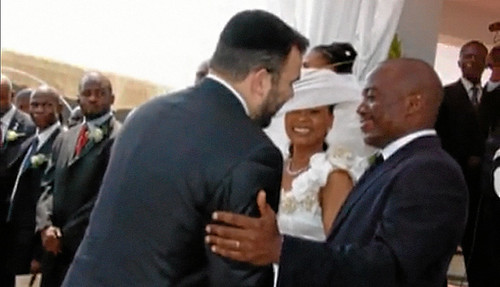
After Kabila senior was assassinated in 2001 and succeeded by his son, Joseph, Gertler was able to rekindle relations with the new incumbent as well as his notorious adviser, the late Augustin Katumba Mwanke. Gertler then moved on to claim more lucrative mining concessions in the country.

More recently, Gertler has been hammered by human rights campaigners and international media for "secretly" acquiring mining assets from the DRC government using a complex web of offshore companies. Whereas Gertler's role in these companies has either been deduced or acknowledged, the companies' full lists of beneficiaries remain unknown.

The most infamous example was the Kolwezi copper and cobalt tailings project, "grabbed and flipped" from First Quantum through a Gertler company to Eurasian Natural Resources Corporation (ENRC) in 2010.

Others described by human rights campaigner Global Witness include:

• SMKK copper and cobalt mine: A Gertler-linked company acquired a stake in this mine from the DRC for $10million in February 2010 and sold it to ENRC for $75million that June.
• Kansuki copper and cobalt mine: The DRC transferred a stake to a Gertler company in July 2010. A month later, Glencore took control of half the stake but is financing the entire mine development.
• In May 2011 the DRC government transferred the remaining 25% stake in Kansuki to another Gertler "associated" company for $17million. Global Witness cited valuations suggesting the stake was worth between $86million and $209million.
• Mutanda copper and cobalt mine: The DRC sold an allegedly undervalued 20% stake to another offshore Gertler company in March 2011.

Gertler does not deny that he "enjoys a close friendship" with Joseph Kabila and he openly attended Katumba's funeral early this year. He also claimed to have served in the mysterious role of the Congo's "honorary consul" in Tel Aviv.

But through a spokesperson he ­stridently rejected all claims of impropriety.

According to him, his proximity to the Kabilas and Katumba had no bearing on his business deals. And, he said, the mining assets were purchased, not "grabbed", at a fair price and sold – "not flipped" – thus bringing significant investment into the DRC.

Gertler prefers to draw attention to such investment, claiming to have spent millions on "community support and environmental programmes" in the DRC, as well as the Chabad House he finances in Kinshasa, advancing his orthodox views.

* Got a tip-off for us about this story? Email amabhungane@mg.co.za

The M&G Centre for Investigative Journalism (amaBhungane) produced this story. All views are ours. See www.amabhungane.co.za for our stories, activities and funding sources.

1962-2012: Two Trips to Monroe, N.C.

1962 and 2012 – two trips to Monroe, N.C.

By Deirdre Griswold on August 29, 2012
Workers World
workers.org

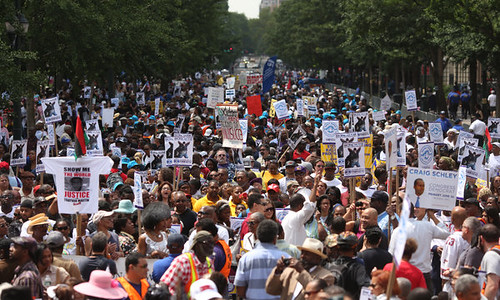
Monroe, N.C. — What has changed? What has remained the same?

That’s what we asked ourselves as the four of us — two African Americans, two whites — piled into a car in mid-August and drove to Monroe from Charlotte, N.C. We had been helping to build the March on Wall Street South taking place during the Democratic National Convention in early September. We’d also participated in a one-week school on Marxism attended by a great group of young activists, most from the South.

This writer had last been in Monroe in 1962, when it was a hot spot in the Black Freedom struggle. Freedom Riders had come through there the summer before. Most challenging to the racist power structure was the stand taken by the head of the local NAACP branch, Robert F. Williams, in motivating and organizing for armed self-defense of the Black community.

Steve Millies wrote in a 1996 obituary of Williams for Workers World: “On too many Saturday nights, KKKers would drive through the Black community, shooting it up. … When North Carolina Gov. Luther Hodges did nothing to stop the attacks, Williams and the local NAACP chapter formed a National Rifle Association chapter and trained its members in using firearms. In the summer of 1957, a Klan motorcade attacked the home of NAACP member Dr. Albert E. Perry. An armed defense squad drove them off. Klan night riding came to a sudden stop in Monroe.”

Williams also preached what he practiced. He became known nationally for politically defending the right of self-defense — a right that, even though it is acknowledged by law, had in fact been denied the oppressed Black nation.

In 1961, racist violence against the Freedom Riders was at its peak. Williams and several others were hit with a bogus charge of kidnapping. One of those indicted was Mae Mallory, whom I had met earlier that year in New York while protesting the assassination of Congo leader Patrice Lumumba. Both Williams and Mallory, in fear of their lives, escaped from Monroe.

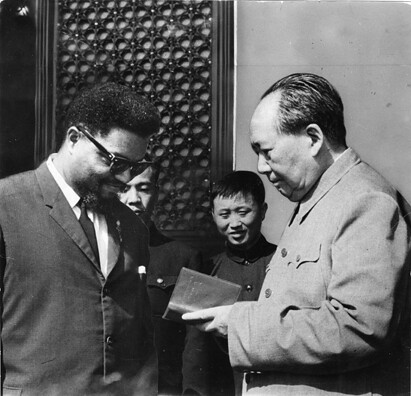
Williams made it to Cuba and then to China. Decades later, he came back to the U.S. and the state dropped the phony charges against him. Mallory spent almost two years in jail in Cleveland, where the Monroe Defense Committee carried out a vigorous campaign against her extradition to North Carolina. It was representing the MDC that three of us — two Black, one white — had driven from New York to Monroe in 1962 to support Williams and Mallory.

Twenty-first century racism

Unlike that trip of half a century ago, this year we didn’t have to conceal the fact that Blacks and whites were traveling together in the same car. On the approach to Monroe, everything looked different. Where a winding country road had once bordered the town, there was now a new four-lane divided highway flanked by endless chain stores and bank branches.

I was looking for something familiar, something to jog my memory. We found it when we got to an older neighborhood next to the railroad tracks. There was the Monroe I remembered from 1962 — small, white clapboard houses, now 50 years older but still with neat front lawns. Inside had been only the barest sticks of furniture. At that time, the only jobs Black men could get in the textile mills were as sweepers. The only jobs for Black women were as domestic workers for $15 a week.

Today, the mills are shuttered and crumbling. We asked an African-American man in a fish store about jobs. He shook his head, “There are no jobs.”

On the other side of the tracks, the houses are larger, newer, some made of brick. We found the library, a new building with a section on Monroe’s history. A white librarian told us proudly of being on a march last year to commemorate the 50th anniversary of the Freedom Rides. How much has changed? She lowered her voice. “There are still some who won’t let go.”

Those “some” wield a lot of power. So much so that recent efforts to commemorate enslaved people who died while being forced to serve their “masters” in the Civil War ran into fierce resistance. The “some” didn’t want any monument to Black people in Union County, N.C., including for those who fought for the Confederacy.

There may not be cross-burnings in Monroe today, but the African-American community still knows terror. It’s the economic terror of a white boss deciding whether you work or not.

And it’s the police terror that upholds the bosses and fills the jails with people of color. There won’t be any “post-racial society” in the U.S. until this terror has been eradicated.

Thursday, August 30, 2012

NATO Secretly Authorizes Syrian Attacks

NATO secretly authorizes Syrian attack

By Gordon Duff
Thu Aug 30, 2012 5:1PM GMT
presstv.ir

On Monday, August 27, 2012, in a meeting in Brussels, NATO military leaders in consultation with “telephonic liaison” with officers of military forces in several former Soviet Republics, major African states, Israel, Saudi Arabia and the Persian Gulf states came to a combined decision to act against Syria.

Two issues were on the agenda:

1. How climate change in Greenland will effect geopolitics, immigration and military affairs for the EU

2. Syria and the potential for Russian and Chinese intervention.

3. Iran was not an official agenda item but it is an unspoken conclusion that, if China and/or Russia stand aside for interference by NATO in Syria’s internal affairs, this will be seen as an authorization for incursions into Iran, a systematic “Balkanization” based on a prescribed formula of “manufactured and simulated internal political and social strife.”

No announcement was made, no plans or timetable published, simply a vote on authorization of force which passed unanimously by member and included non-member states unanimously.

News stories throughout North America and Europe earlier in the day were filled with reports of mass killings by the Syrian Army and the presence of Iranian troops in Syria. True or not, these stories represent a pre-staging for the NATO conference.

The critical reporting issue involves rhetoric. We moved, yesterday, from discussions of “fighting” to “systematic execution of hundreds of civilians.”

No video nor photos were included to verify neither claims nor sources given other than reports from “rebel forces.”

Recent consultation with friends in the Pentagon as to Syria’s air defense system indicated that the US has, in place, a play to destroy the command and control capability of Syria’s system.

The problems are twofold:
1. Russian technicians man the Syrian system

2. The S300P2 system Syria uses is extremely “robust”

An additional political consideration is a simple one, there is no UN authorization. Both Russia and China have vetoed even sanctions against Syria much less authorized an attack.

Thus, there is no existing authority capable of justifying an attack.

In an interview this week at the NAM (Non-Aligned Movement) conference in Tehran, attended by 120 member states, a huge defeat for NATO interests in the area, this interview yielded some substantive and surprising facts.

Press TV: Certain powers have been trying to isolate Iran, actually, by not holding such a conference at such a high ranking level. As you said, this all has failed.

Now tell us about all the sanctions against Iran which have propagated against Iran, that Iran should be isolated, but as you said it’s all been failed. What is really important is that the agenda of the 688-point draft document which talked about, as you call and urge all countries to make the world free from any nuclear weapons.

You were a senior expert in the IAEA as an inspector. Tell us about that and also with the particular focus on Israel which has not yet signed up to the NPT.

Abu Shadi: I oppose strongly any kind of accusation on any state based on intelligence information. All the accusations given to the nuclear program in Iran is based only on intelligence information. There is no single proof that Iran is deviating from its commitment from the Non-Proliferation Treaty.

I am very surprised that the Security Council took four decisions, sanctions against Iran just because of rumors that the intelligence source may think there is something.

I think this policy should be changed. The Security Council and its way of veto, and its limited number only to the big powers should be changed. I think that will also be one of the points to be addressed in this conference. I believe strongly that that situation, which is actually politically influenced by the West, should be changed.

With respect to your second part about the NPT, in fact, almost all the states in the world respects the Non-Proliferation [Treaty] except the five weaponized states, which they should reduce their weapons which didn’t happen up until today, and the three or four states which did not sign the NPT including Israel. Israel is the only state in the Middle East who did not sign the NPT.

None of the Western countries who are accusing not only Iran but before also Iraq, Libya, Syria and even Egypt, did not consider any accusation to what the Israelis are doing. I believe this bias in the international organization should be stopped.

Shadi makes some particularly interesting points and raises some concerns few had noticed. His most damning statement, of course, is that the Security Council, a carryover from a war 70 years ago, certainly a demonstration of oligarchic rule at the United Nations, has been directed at Iran.

In particular, he notes that the council’s unilateral and undemocratic decisions, followed by nations, China and Russia, who defended Syria, were aimed at Iran but backed by no presentation of facts or even qualified intelligence assessments. In fact, since Colin Powell’s humiliating WMD presentation before the UN, no “American fact” has been taken seriously nor is likely to.

CNN quotes a top Powell aid:

A former top aide to Colin Powell says his involvement in the former secretary of state's presentation to the United Nations on Iraq's weapons of mass destruction was "the lowest point" in his life.

"I wish I had not been involved in it," says Col. Lawrence Wilkerson, a longtime Powell adviser who served as his chief of staff from 2002 through 2005. "I look back on it, and I still say it was the lowest point in my life."

Actual risks and ramifications

Top intelligence analysts in private consultation fear a larger Middle East war. “Russia and China won’t stand back, not with the US planning a unilateral move on Africa and its resources. It’s like 1947 again with Truman and the Marshall plan, encirclement, but a war over, not just resources but a world war against what has now seen as the real threat, what Americans call the “middle class.”

Thus, taking Syria without taking Iran is “not in the cards.” Here I return to the words of H. G. Wells, in his War of the Worlds. His grasp in this fiction well over a century old reflects on our times in a curious and wonderfully literate manner:

“No one would have believed in the last years of the nineteenth century that this world was being watched keenly and closely by intelligences greater than man's and yet as mortal as his own; that as men busied themselves about their various concerns they were scrutinised and studied, perhaps almost as narrowly as a man with a microscope might scrutinise the transient creatures that swarm and multiply in a drop of water.

Yet across the gulf of space, minds that are to our minds as ours are to those of the beasts that perish, intellects vast and cool and unsympathetic, regarded this earth with envious eyes, and slowly and surely drew their plans against us.

The immediate pressure of necessity has brightened their intellects, enlarged their powers, and hardened their hearts. And looking across space with instruments, and intelligences such as we have scarcely dreamed of...

And we men, the creatures who inhabit this earth, must be to them at least as alien and lowly as are the monkeys and lemurs to us. The Martians seem to have calculated their descent with amazing subtlety--their mathematical learning is evidently far in excess of ours--and to have carried out their preparations with a well-nigh perfect unanimity.”

Martians, this is how NATO and Israel look on the world, as expressed through the prose of Wells. Their gaze “cool and unsympathetic,” as drone warfare and their plans, calculated acts of false flag terror, kidnappings, assassinations, the abomination of mythical news reporting.

The end of the road, this path of “hubris” could well be world war, least of all fuel price increases that collapse the currencies and economies.

Talking of death is nothing as we are now pre-staged to look on life as nothing, all victims are “militants” if you want them dead or “collateral damage” when you err.

Iran’s position chairing NAM makes them a harder target. The general criticism by many NAM members, the dictatorial rule of the United Nations by the Security Council, has not prevented the Syrian conflict from becoming a threat to world peace.

For Iran, their choice seems, on the surface, to be in aiding Syria, negotiations, using oil leverage with India, China and others and predicting how the west is plotting.

If Iran falls, it will be only another domino.


Triple blasts kill 2, injure 11 in Damascus suburb

Thu Aug 30, 2012 8:20PM GMT
presstv.ir

Explosions have killed two people and injured 11 others on the outskirts of Damascus as clashes intensify between armed men and government troops across the country.

The casualties were caused late on Thursday when three blasts struck the Dahiet al-Assad area in the capital’s countryside.

Separately, two car bombs hit the mainly-Druze-and-Christian-populated suburb of Jaramana on the city’s southeastern outskirts, failing to leave any casualties.

Earlier in the day, seven Syrian government forces and at least 47 insurgents were reportedly killed in heavy clashes that erupted in the flashpoint city of Homs in the country's west.

The Syrian Army has also killed hundreds of insurgents, among them large numbers of foreign nationals, in and around the northern city of Aleppo over the past days.

Syria has been experiencing unrest since March 2011.

Damascus blames the violence on outlaws, saboteurs, and armed terrorists, funded and instructed by elements outside the country. It also blames Turkey, Saudi Arabia, and Qatar for funding and arming the insurgents.

There are reportedly a large number of foreign nationals and al-Qaeda militants in the armed groups fighting the government of Syrian President Bashar al-Assad.


Seven Syria soldiers, 47 insurgents killed in Homs

Thu Aug 30, 2012 6:26PM GMT

Seven Syrian government forces and at least 47 insurgents have been killed in heavy clashes that erupted the flashpoint city of Homs in the country's west.

The deaths occurred on Thursday in the city's Bab Hood neighborhood.

Elsewhere, two insurgents were killed and another 13 were arrested when they attempted to attack Syrian army checkpoint in the Mliha area of in the Damascus countryside.

In the northwestern city of Idlib, intensified clashes broke out between Syrian Army forces and the Liwaa al-Umma Brigade insurgents. One senior militia member identified as Abu Naser al-Libi was killed in the fighting.

Four armed men were also killed by a Syrian Army unit while attempting to enter the Seif al-Dawla neighborhood of the largest city of Aleppo.

The Syrian Army has also killed hundreds of insurgents, among them large numbers of foreign nationals, in and around the northern city of Aleppo over the past days.

Syria has been experiencing unrest since March 2011.

Damascus blames the chaos on outlaws, saboteurs, and armed terrorists funded and instructed by elements outside the country. It also blames Turkey, Saudi Arabia and Qatar for funding and arming the insurgents.

There are reportedly a large number of foreign nationals and al-Qaeda militants in the armed groups fighting against the government of Syrian President Bashar al-Assad.


Syria Army kills several insurgents in Aleppo, Idlib

Thu Aug 30, 2012 2:29PM GMT

Syrian Army forces have killed a number of insurgents in the northwestern cities Aleppo and Idlib as clashes continue between government soldiers and foreign-backed insurgents.

The Syrian Army was closing in on the insurgents on Thursday, one day after Syrian soldiers killed a group of armed men who had kidnapped a number of civilians.

Syrian government forces were also clearing the area of insurgents in Idlib, where they have managed to retake control of six areas held by the so-called Free Syrian Army.

In the capital, Syrian troops killed and arrested a number of armed men in the Damascus countryside and seized large amounts of arms and ammunitions -- among them Israeli-made weapons.

Syria has been experiencing unrest since March 2011. Damascus blames the chaos on outlaws, saboteurs, and armed terrorists funded and instructed by elements outside the country.

There are reports indicating that a large number of the armed militants are foreign nationals.

Afghanistan Resistance Torch NATO Tankers

Taliban torch NATO tankers in Afghanistan, killing 4

Thu Aug 30, 2012 9:51PM GMT
presstv.ir

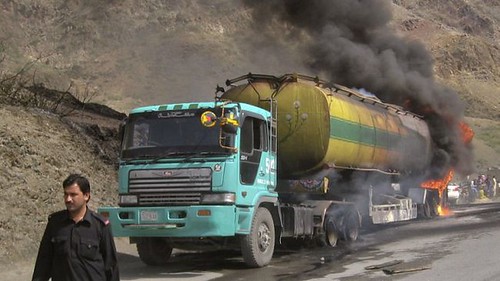
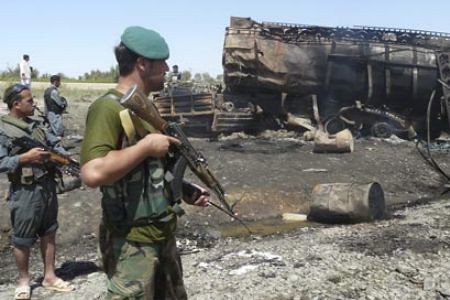
Taliban militants have set fire to at least two NATO oil tankers in western Afghanistan, killing four people and injuring two others.

The fatalities of the attack, which was carried out in the Farah province on Thursday, were identified as those guarding the convoy.

The trucks, carrying supplies from Pakistan to the US-led forces, deployed in Afghanistan, come under frequent attacks in the latter country.

Also on Thursday, a rocket attack killed at least five civilians in the eastern Afghanistan province of Logar.

On Wednesday, 12 villagers were killed in an airstrike, conducted by US-led foreign forces, in the province of Ghor.

The United States and its allies invaded Afghanistan in 2001 as part of Washington’s so-called war on terror.

The offensive removed the Taliban from power, but, years into the invasion, insecurity continues to rise across the country, despite the presence there of thousands of foreign troops.

The US-led war in Afghanistan, which has caused record-high civilian and military casualties, has become the longest military conflict in the American history.

Smith Says Australia Will Stay the Course In Afghanistan

Smith says Australia will stay the course in Afghanistan

Defence Minister Stephen Smith says Australia remains committed to "staying the course" in Afghanistan, after the ADF suffered its worst day in combat operations since the Vietnam War.

Five Australian soldiers died in Afghanistan on Wednesday - three when an Afghan army sergeant shot them at close range as they rested at a patrol base in the Baluchi Valley in Uruzgan.

Another two special forces soldiers died in an unrelated helicopter crash in Helmand Province.

Mr Smith returned to Australia early this morning after being told of the soldiers' deaths during a visit to the Vietnamese capital Hanoi.

Seven Australians have now been killed in so-called 'green on blue' attacks, while 12 have been wounded.

Speaking to reporters in Perth this morning, Mr Smith said Australia remained unshaken in its commitment to the 2014 pull-out date set by United States president Barack Obama.

"It doesn't do anything to my resolve to stay the course because staying the course is absolutely the right thing to do," he said.

"Through the Lisbon summit and through the Chicago summit we have set a path for transition to Afghan-led responsibility for all of these matters.

"We can't stay in Afghanistan forever, we don't want to stay in Afghanistan forever, and equally it would be wrong to leave prematurely or to leave tomorrow as some people suggest.

"The Government's view is if [an early withdrawal] were to occur we would add to the risks. We would increase the risks. We would increase the prospect of Afghanistan again returning to a breeding ground for international terrorism.

"And so we remain very firm in our resolve, we remain very clear that we will see through the transition strategy.

"To leave now would be to increase the risk to the international community and as a consequence increase the risk ultimately to Australians.

"We have been, in addition to suffering the terrible pain of fatalities in war, we've also been on the receiving end of terrorist activity, whether that's been in the United States, in Indonesia or in Europe."

Gunman named, on the run

The Afghan who shot the Australian soldiers has been named as Sergeant Hikmatullah, who was working as a guard at the base, 20 kilometres north of the main Australian base at Tarin Kowt.

After shooting the Australians, killing three and wounding two more, he climbed over the base's fence and ran away.

Afghan and Coalition forces are currently hunting for him, and Mr Smith said an investigative team from the Afghan National Security Force would arrive in Tarin Kowt today to start investigating the incident.

"He's known to us and the Afghan security forces, including, not in a personal sense, but known to the chief of police of Uruzgan who has publicly identified him, and we have no qualms with that public identification," Mr Smith said.

"In terms of what is behind his motivation, when we have examined previous terrible events we have found it very difficult to come to a conclusion as to what the motivation has been.

"On two occasions of course, that was because the culprit, the murderer, was killed by International Security Assistance Forces or by Australian forces either subsequent to the event or in the aftermath.

"So there's been no chance to interrogate the person concerned.

"The person who wounded three Australian soldiers is on the run, he's not in our area of operation, we know that, but he continues to be pursued."

The dead men were all from the 3RAR Task Group based at Brisbane's Gallipoli Barracks.

Mr Smith would not be drawn on reports that there was no guard on duty at the time of the shootings, but said Australian forces in the area had adopted a 'guardian angel' policy - where one soldier in each group is tasked with keeping watch on Afghan soldiers and stopping any green on blue attacks.

"The Acting Chief of the Defence Force put on the record yesterday, and I was happy for him to do it and I'm happy to do it myself today, we do utilise the so-called 'guardian angel' approach, that has been one of the force protection measures that we and ISAF have put into place in recent times," he said.

Mr Smith said he had received calls from US defence secretary Leon Panetta and from his New Zealand Jonathan Coleman to express their condolences over the deaths.

"To use Secretary Panetta's phrase, every Australian feels the pain. This is a terrible blow to a group of families," he said.

"It's a terrible reminder to other families who have lost loved ones and it's a terrible blow to the morale of all of the Australian Defence Force."

Asked whether the green on blue killings would lead to increased security at Australian bases, he said: "We will leave no stone unturned to see if there's anything more that we can do."

Imperialists Continue to Use United Nations to Promote War Against Syria

UN all talk on Syria aid as West mulls military action

5:37am IST

* France, Britain: contingency plans for range of options

* Turkey says U.N. has nothing new for Syrian people

* UN says experience shows safe havens not always effective

* Paris, London boost humanitarian assistance for Syria

By John Irish and Michelle Nichols

UNITED NATIONS, Aug 30 (Reuters) - A U.N. Security Council meeting on Syria's aid crisis achieved nothing new on Thursday except to highlight global paralysis on the 17-month conflict as western powers warned that military action to secure civilian safe zones was still an option.

While the Security Council impasse between western nations and Russia and China means a resolution to approve such a move appears impossible, countries could act outside the authority of the world body and intervene, as happened in Kosovo in 1999.

"How long are we going to sit and watch while an entire generation is being wiped out by random bombardment and deliberate mass targeting?" Turkish Foreign Minister Ahmet Davutoglu asked the Security Council.

"I was expecting this meeting to produce tangible solutions to the suffering of the Syrian people," he said. "We don't have anything new to say to thousands of Syrians who suffer at the hands of the regime as the U.N. is entrapped by inaction."

The meeting produced neither a resolution nor a statement approved by the 15 Security Council members.

Ankara has repeatedly urged the United Nations to protect displaced Syrians inside their country as the number of refugees swells in neighboring states.

France and Britain said ahead of the meeting that civilian safe havens were being considered.

"We're ruling nothing out and we have contingency planning for a wide range of scenarios," said British Foreign Secretary William Hague. "We also have to be clear that anything like a safe zone requires military intervention."

Creating a buffer zone for displaced Syrians would be difficult because a U.N. Security Council resolution would be needed to set up a no-fly zone to protect the area, and Russia and China would not approve such a move, diplomats said.

However, the Security Council could be bypassed to take action. The United States and its European allies did this in 1999 when they turned to NATO to halt a Serbian onslaught in Kosovo with a bombing campaign against Serbia.

The United Nations warned that the idea of buffer zones raised serious questions and had not always proved effective.

"Bitter experience has shown that it is rarely possible to provide effective protection and security in such areas," said U.N. High Commissioner for Refugees António Guterres.

AID FOR REBEL ZONES

As Syria spirals deeper into civil war, the 15-member council is paralyzed as Russia and China have blocked three Western-backed resolutions that criticized Syrian President Bashar al-Assad and threatened sanctions.

France, which is council president for August, had hoped the body could unite to deal with a shortfall in humanitarian aid and convened Thursday's meeting, which was attended by ministers from Syria's neighbors Turkey, Lebanon, Jordan and Iraq.

"If sadly the conflict continues then we have to examine various solutions. We have to be realistic," said French Foreign Minister Laurent Fabius.

But the absence of the U.S., Russian and Chinese foreign ministers at the meeting highlights the Security Council's failure to end Syria's conflict, which the United Nations says has killed nearly 20,000 people.

Less than half the council members sent ministers, and of the permanent members - the United States, China, Russia, Britain and France - only Fabius and Hague attended.

The two countries announced an increase in their humanitarian aid - 3 million pounds ($4.74 million) from London and 5 million euros ($6.25 million) from Paris - and called on other states to boost their commitments.

Fabius said Paris was channeling some aid to areas of Syria no longer under government control so that local communities can self-govern, encouraging people not to flee the country.

"The opposition has taken strong positions in the country," Fabius said after the meeting. "We need to help them financially, administratively and in terms of supplies."

Aid groups say as many as 300,000 Syrians have poured out of Syria since the uprising against Syrian Assad's rule began last year, while up to 3 million have been displaced. Turkey has seen the highest refugee influx.

SYRIA SAYS HELP NEEDED

Syria's U.N. Ambassador Bashar Ja'afari said Syria did need humanitarian assistance, but its sovereignty should not be undermined in the process. He described refugee camps in neighboring countries as "detention camps."

"Syria feels a great bitterness and sorrow when we see some of our brothers living in tents on the border in dreadful conditions being dissuaded by attempts at intimidation from returning home," Ja'afari told the council. "They are turned into refugees, prisoners of these camps."

He said they were fleeing Syria because "terrorists" were using them as human shields.

Russian U.N. Ambassador Vitaly Churkin blamed economic sanctions imposed on Syria by the United States and the European Union for worsening the humanitarian crisis.

"We fundamentally oppose such practices," Churkin told the council. "They simply complicate the life of simple citizens and deny them the opportunity to meet their elementary needs and fully enjoy basic human rights."

U.S. Ambassador to the United Nations, Susan Rice, said no amount of aid would end the bloodshed and suffering. "That day will come only once Assad has departed and a peaceful Syrian-led transition to democracy has begun," she said.

Algerian diplomat Lakhdar Brahimi, who will replace Kofi Annan as the U.N.-Arab League Syria mediator on Saturday, also attended but did not brief members. Annan blamed the Security Council impasse for hampering his six-month bid to broker peace and leading to his decision to step down.

"It is essential that the international community, and this Council in particular, unite behind him and his efforts," U.N. Deputy Secretary-General Jan Eliasson said. "Separate diplomatic tracks will only prolong the violence, the human rights abuses and the humanitarian crisis."

Iran said on Wednesday it will form a team with other non-aligned countries to explore solutions to the crisis, while the United States has said it will turn to alternatives such as the "Friends of Syria" grouping of allied countries to pressure Assad after the Security Council's failure to act.

"If we do not act against such a crime against humanity happening in front of our eyes, we become accomplice to the crime," Turkey's Davutoglu told the council.

Jobless Claims Remain High in US

Jobless Claims in U.S. Unchanged Last Week at One-Month High

By Lorraine Woellert - Aug 30, 2012
Bloomberg

More Americans than forecast filed applications for unemployment benefits last week, a sign that progress in the labor market is faltering amid a slowing economy.

Jobless claims were little changed at 374,000 in the week ended Aug. 25, matching the upwardly revised figure from the prior week, the Labor Department reported today in Washington. The median forecast of 50 economists surveyed by Bloomberg News called for 370,000. The four-week moving average, a less volatile measure, climbed to a six-week high.

Companies will probably remain concerned about the possibility that taxes will rise and government spending will be cut unless lawmakers act by January. Fiscal turmoil in the 17- member euro area and a slowdown in China may also prompt employers to keeping payrolls lean.

Claims have “moved sideways most of the year,” said Tom Porcelli, chief U.S. economist at RBC Capital Markets LLC in New York. “Hirings are what’s lacking at this point.”

U.S. stocks retreated, trimming the third straight monthly advance for the benchmark Standard & Poor’s 500 Index, as reports from Europe, Japan and South Korea intensified concern the global economy is cooling. The S&P 500 fell 0.8 percent to 1,399.18 at 10:29 a.m. in New York.

Estimates in the Bloomberg survey ranged from 363,000 to 380,000. The Labor Department revised the previous week’s figure up from an initially reported 372,000.

Other reports today showed consumer spending climbed in July for the first time since April and an index of consumer confidence held close to a seven-month low last week.

Consumer Spending

Purchases increased 0.4 percent after being little changed in June, Commerce Department figures showed today in Washington. The median estimate of 76 economists surveyed by Bloomberg called for a 0.5 percent gain in so-called nominal sales. Incomes climbed 0.3 percent for a third month.

A spokesman for the Labor Department said there was nothing unusual in the jobless claims data last week.

Employers added 163,000 workers in July, the biggest gain since February, according to the Labor Department jobs report issued earlier this month. At the same time, the unemployment rate climbed to a five-month high of 8.3 percent.

Unemployment has been above 8 percent since February 2009, the longest stretch in the post-World War II era.

Today’s report showed the number of people continuing to receive jobless benefits declined by 5,000 in the week ended Aug. 18 to 3.32 million.

The continuing claims figure does not include the number of Americans receiving extended benefits under federal programs.

Extended Benefits

Those who have used up their traditional benefits and now are collecting emergency and extended payments decreased by about 52,150 to 2.28 million in the week ended Aug. 11.

The unemployment rate among people eligible for benefits held at 2.6 percent, today’s report showed.

Twenty-two states and territories reported an increase in claims, while 31 reported a decrease. State data are reported with a one-week lag.

Initial jobless claims reflect weekly firings and tend to fall as companies accelerate hiring.

Federal Reserve Chairman Ben Bernanke is scheduled to speak tomorrow in Jackson Hole, Wyoming, where he may discuss the economic outlook. Policy makers have said they are prepared to provide new stimulus “fairly soon” unless there is evidence of “substantial and sustainable” improvement in the recovery, according to minutes of the Federal Open Market Committee’s July 31-Aug. 1 meeting. Policy makers are set to meet again in September.

Getting ‘Nervous’

“When people get nervous about the macroeconomic environment, they slow down spending,” said William Sullivan, president and chief executive officer of Agilent Technologies Inc. (A) in Santa Clara, California.

“It’s not supply and demand. It’s not a normal recession,” Sullivan said on an August 15 earnings call. “Given the issues of the euro and what’s going to happen and then you have this financial cliff in the U.S. in January, complete political disagreement in Washington, people are really nervous.”

“If somebody agreed tomorrow to say that Europe is going to do a euro bond and the U.S. was not going to have a financial cliff in January, you would have a different outlook,” Sullivan said. “It’s as simple as that.”

To contact the reporter on this story: Lorraine Woellert in Washington at lwoellert@bloomberg.net

To contact the editor responsible for this story: Christopher Wellisz at cwellisz@bloomberg.net

U.S. Economy Hardly Moved in Second Quarter

U.S. economy hardly moved in 2nd quarter

August 30, 2012
By Martin Crutsinger
Associated Press

WASHINGTON -- The U.S. economy grew at a tepid 1.7% annual rate in the April-June quarter, suggesting growth will stay weak in the second half of the year.

Slightly stronger consumer spending and greater exports were the main reasons the Commerce Department reported Wednesday that growth was better than its initial estimate of 1.5%. Still, growth has slowed from the 2% annual rate in the January-March quarter and the 4.1% rate in the fourth quarter of 2011.

Economists say they expect only modest improvement in the second half of the year. Most say the economy will keep growing, but at a subpar rate of around 2%.

"The economy was sluggish in the second quarter and the slight upward revision ... does nothing to change that picture," said John Ryding, an economist at RDQ Economics, in a note to clients.

The report was the government's second look at gross domestic product for the second quarter. GDP measures the country's total output of goods and services, from the purchase of restaurant meals to construction of highways and bridges. A third and final estimate of second-quarter growth will be released next month.

Growth at or below 2% is not enough to lower the unemployment rate, which was 8.3% in July. Most expect the unemployment rate to stay above 8% for the rest of this year.

A weak economy and high unemployment could hurt President Barack Obama's re-election chances and bolster Mitt Romney's campaign. Republicans are in Tampa this week to formally nominate Romney and have pointed to the dismal growth in making the case to elect their candidate.

Economist Robert Brusca said the various changes in the second estimate should be positive for growth going forward. He noted more consumer demand in the spring than previously thought, which drives 70% of economic growth. And he pointed to less restocking of shelves, which suggests businesses could replenish their stockpiles in the current quarter. Faster inventory growth increases factory production, which boosts growth.

But Paul Dales, senior U.S. economist at Capital Economics, said the small revision to second-quarter growth "offers little comfort."

"We are already two months through the third quarter and more up-to-date figures show that the economy is still struggling," Dales said.

Slow growth could prompt the Federal Reserve to take greater steps to boost the economy when policymakers meet again Sept. 12-13. In late July, Fed policymakers spoke with increased urgency about the need to provide more help for a weak U.S. economy.

Chairman Ben Bernanke could offer some clues Friday to what the Fed might announce when he speaks at a Fed conference in Jackson Hole, Wyo.

Some suspect the Fed will wait to see how the economy performed in August, especially after July's data was better than expected.

Employers created 163,000 jobs in July, the most since February. Consumers stepped up retail spending, factories produced more goods and the housing recovery continued with increases in both new and previously occupied homes.

The upward revision to second-quarter growth was largely because consumers spent at a slightly faster pace than first estimated. Consumer spending grew at a 1.7% rate, better than the 1.5% initially estimated.

US Drone Attack Kills 26, Injuries Dozens in Somalia

US drone attack kills 26, injures dozens in Somalia

Wed Aug 29, 2012 2:30PM GMT
presstv.ir

At least 26 people have been killed and dozens wounded in an air strike carried out by a US assassination drone in Somalia, Press TV reports.

The incident happened in Kismayo, located 528 kilometers southwest of the Mogadishu on Wednesday.

The attack also destroyed many houses in the area, said local sources.

The US military uses remote-controlled drones in Somalia for reconnaissance operations and targeted killings.

Washington has been carrying out assassination attacks using the unmanned aircraft in other countries including Afghanistan, Libya, Pakistan, and Yemen.

The United States claims the CIA-run strikes are aimed at militants. But witness reports and figures offered by local authorities indicate the attacks have led to massive civilian deaths.

The UN has condemned the US assassination drone strikes, saying they pose a challenge to international law.

The weak Western-backed transitional government in Mogadishu has been battling al-Shabab fighters for the past five years, and is propped up by a strong African Union force from Uganda, Burundi, and Djibouti.

Strategically located in the Horn of Africa, Somalia remains among the ones generating the highest number of refugees and internally-displaced persons in the world.

16th Non-Aligned Movement Summit Starts in Tehran

16th NAM Summit kicks off in Tehran

Thu Aug 30, 2012 6:15AM GMT
presstv.ir

The meeting of the heads of state at the16th summit of the Non-Aligned Movement (NAM) has kicked off in the Iranian capital, Tehran, with an inaugural speech by Leader of the Islamic Revolution Ayatollah Seyyed Ali Khamenei.

More than 100 countries are partaking in the NAM summit, which kicked off at the expert level in Tehran on Sunday.

The two-day foreign ministerial meeting at the NAM summit wrapped up on Wednesday with member states finalizing a draft document after two days of deliberations.

The meeting of the heads of state will discuss the draft document, which mainly focused on the Palestinian issue and the Syria unrest.

NAM, an international organization with 120 member states, is considered as not formally aligned with or against any major power bloc. It represents nearly two-thirds of the UN members.

Many Civilians Reported Massacred in Congo Violence

Many civilians massacred in fresh Congo violence: UN

Wed Aug 29, 2012 11:14PM GMT
presstv.ir

The Office of the United Nations High Commissioner for Human Rights (OHCHR) says it has received reports of new rounds of massacres in eastern Democratic Republic of Congo (DRC).

UN High Commissioner for Human Rights Navanethem Pillay said in a statement issued on Wednesday that preliminary findings indicate that a large number of people had been massacred in Masisi region in North Kivu province since early August, AFP reported.

She said that the investigations, which are still being verified by four fact-finding missions, “suggest that a significant number of people -- most of them women and children -- were slaughtered” in the region near the border with Rwanda.

“The sheer viciousness of these murders is beyond comprehension. In some cases, the attacks against civilians may constitute crimes against humanity," the UN official added.

Dozens of victims and witnesses were interviewed and more than 45 attacks on almost 30 villages and towns in the province were recorded as part of the UN investigations.

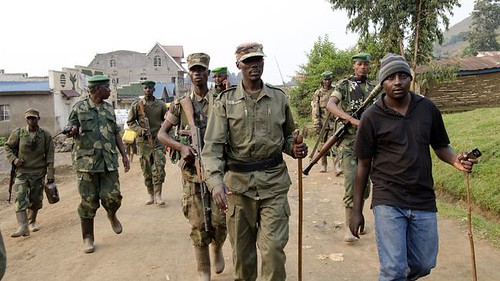
According to the UN, some of the attacks had been conducted by two rival armed groups dubbed Democratic Forces for the Liberation of Rwanda (FDLR) and Raia Mutumboki, which have taken advantage of the security vacuum caused by the March 23 movement (M23) mutiny.

The M23 rebel fighters allegedly have ties with the Rwandan government. However, Rwandan President Paul Kagame denies that his government is backing the M23 rebels.

The rebels defected from the Congolese army in April in protest over alleged mistreatment in the Armed Forces of the Democratic Republic of Congo (FARDC).

They had previously been integrated into the Congolese army under a peace deal signed in 2009. The mutiny is being led by General Bosco Ntaganda, who is wanted by the International Criminal Court on a charge of recruiting child soldiers.

On August 18, the 15 member states of the Southern African Development Community denounced Rwanda for backing rebel groups in the east of the DRC, saying Rwandan "interference" in the eastern Congo has threatened regional peace and stability.

The DRC recently asked the UN peacekeeping mission in the country to eliminate rebel groups in the east of the country.

Since early May, as many as 200,000 civilians have fled their homes. Most of them have resettled inside Congo, but tens of thousands have crossed into neighboring Rwanda and Uganda.

Congo has faced numerous problems over the past few decades, such as grinding poverty, crumbling infrastructure, and a war in the east of the country that has dragged on for over a decade and left over 5.5 million people dead.

Activists Call for Rally Against NYPD's Racial Profiling

Activists call for rally against NYPD's racial profiling

Wed Aug 29, 2012 9:51PM GMT
presstv.ir

A group of US activists have called for a huge protest march in New York against city's controversial stop-and-frisk policy, which they believe mainly targets low-income communities of color.

The activities made their announcement outside the New York Police Department (NYPD) headquarters on Wednesday and asked opponents of the policy to join them in a demonstration on September 13 to voice their opposition to the racist policies and practices of the city's police, AFP reported.

“It (stop-and-frisk policy)'s wrong and it's immoral and racist and unconstitutional," Princeton professor and leftwing activist Cornel West said, noting, "We don't want to amend it, we want to end it.”

Mayor Michael Bloomberg and other city officials argue that stop-and-frisk gets guns off the street and reduces crime. Critics, however, maintain that the program has caused a two-tier system of justice that excessively targets black and Latino communities.

"It's going to be thousands and thousands of people across New York City blowing the whistle," said Carl Dix, another civil activist.

"When the whistles blow, people are gonna turn their heads. Windows are gonna open," he said, adding, "There's gonna be a whole different level of resistance. People are gonna stop suffering in silence.”

In June, thousands of New Yorkers took to the streets in a silent march to protest against the stop-and-frisk policy and condemned NYPD for its unfair treatment of minorities.

The policy allows police officers patrolling in the heavily black or Latino neighborhoods to stop any individual based on the slightest suspicion of illegal activity.

According to the Center for Constitutional Rights, which has studied police data, the NYPD stopped nearly 700,000 people, mostly black or Hispanic young men last year. The center said that only two percent of all stops found illegal contraband and only in one percent of cases were weapons found.

Sudanese President Arrives In Tehran for Non-Aligned Summit

Sudanese president arrives in Tehran for NAM summit

Wed Aug 29, 2012 3:15PM GMT
presstv.ir

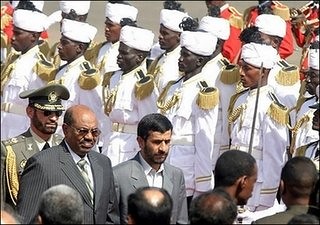
Sudan’s President Omar al-Bashir has arrived in the Iranian capital Tehran to participate in the 16th summit of the Non-Aligned Movement (NAM).

The Sudanese president was welcomed by Iran's Minister of Culture and Islamic Guidance Seyyed Mohammad Hosseini upon his arrival in Tehran’s Mehrabad Airport.

Al-Bashir is in Iran to take part in the meeting of the NAM heads of state which will open on Thursday with an inaugural speech by the Leader of the Islamic Revolution Ayatollah Seyyed Ali Khamenei.

More than 100 countries are partaking in the NAM meeting which kicked off at the expert level in Tehran on Sunday.

At the opening ceremony of the NAM expert-level meeting, Iran assumed the rotating presidency of the movement for three years. Egypt's Ambassador to the United Nations Mootaz Khalil formally handed over the presidency to Iran.

South Sudan Criticizes Jonglei Human Rights Reports

Thursday 30 August 2012

SPLA criticises Jonglei human rights reports despite dismissing over 30 soldiers

August 29, 2012 (JUBA) – The commander of South Sudan army (SPLA) forces in Jonglei State has criticised a recently released report by the Human Rights Watch report that blames soldiers for rape, torture and killing of civilians in Pibor county.

Gen. Kuol Diem Kuol told Radio Miraya in an interview broadcast on Wednesday that “we [SPLA] are protecting the human rights of people because this is what our constitution tell us.” Gen. Kuol told the UN sponsored radio that the Human Rights Watch findings “are not credible".

However, he said more than thirty soldiers have being dismissed from the army since the disarmament began in March 2012, for failing to observe set of military rules. “If a soldier fails [to respect human rights], then his commander arrests him and this is what I am doing,” said Gen. Kuol.

The General said that “everybody in Jonglei" knew the actions he was taking. He said that Human Rights Watch "don’t tell the truth" and described them as "not people who are credible.”

Human Rights Watch wrote a letter to President Salva Kiir listing the violations its research team had recorded between July 19-26 this year urging him to take action to ensure that victims received justice.

The last week report, conducted and published by the United Nations Mission in South Sudan, says the Murle tribe in Jonglei State were the victims of rape, torture and killing by some of the strong 15,000 forces carrying out the disarmament in Jonglei.

Kiir launched the ongoing “Operation Restore Peace” in Jonglei in March following violent tribal attacks between the Nuer Lou and Murle tribes, which killed hundreds and affected over 100,000 people. When launching the process Kiir warned soldiers against committing crimes and urged them to run a responsible operation, to be disciplined and to avoid tribalism.

A report by the United Nations Mission in South Sudan (UNMISS), also released last week, found "serious human rights violations" allegedly committed by "undisciplined" soldiers who are part of the contingents participating in the disarmament programme in Jonglei.

Between 15 July and 20 August, the Mission said that the SPLA soldiers allegedly killed one person. It further said there are "27 allegations of torture or ill-treatment, such as beatings, and simulated drowning in some cases, 12 rapes, six attempted rapes and eight abductions."

The Mission underscored that the victims are generally women and in some cases children and the "Communities in Pibor County" are worried about the vulnerability of the civilians there. The UN report highlighted the significant efforts of the South Sudanese army to calm tensions and to protect civilians after the inter-communal violence which claimed the lives of hundreds there.

However, cases of rape and torture in Bor county during the earlier stages of disarmament as well as the killing of armed civilians in Nyirol county in Lou Nuer areas when the army clashed with self-proclaimed prophet Dak Kueth in March were not included.

In the UN radio interview, Gen. Kuol said military courts had been established in Boma, Pibor, Waat, Canal and Bor to look into cases of human rights violations. He said at least thirty soldiers are serving sentences ranging from two to seven years in Bor Prison after being convicted and dismissed from the army, adding that soldiers are only sent to civilian prison after being relieved of their army duties.

Four soldiers accused of rape are being detained in Pibor prison, Gen. Kuol says.

The UNMISS report highlighted the significant efforts of the South Sudanese army to calm tensions and to protect civilians after the inter-communal violence which claimed hundreds of lives. The peacekeeping mission said the SPLA had ordered to probe the alleged human right violations and to recall those who are involved in criminal incidents.

The peacekeeping mission said the SPLA had ordered to probe the alleged human right violations and to recall those who are involved in criminal incidents. Further the South Sudanese army, according to UNMISS, have taken some steps "to strengthen investigations, with some arrests in recent rape cases and some older cases going to trial."

Human Rights Watch said it collected accounts of victims and witnesses from four villages in Pibor county - of Manyirang, Tangajon, Be, and Likuangole- where SPLA soldiers shot at civilians, ill-treated them by beating, tying them with rope, and submerging their heads in water to extract information about the location of weapons.

Noth UNMISS and HRW called on the South Sudanese authorities to hold accountable those who committed these abuses against civilians stressing such violations undermine the confidence and collaboration of local communities in the disarmament process.

SPLA DENIES TRIBALISM ALLEGATION

South Sudan’s Army (SPLA) on Tuesday denied allegations that disarmament process in Jonglei State has targeted specific communities, specifically members of Murle tribe of Pibor County. Pibor is inhabited mainly by the Murle, Kachipo and Jie tribes but the county is ethnically diverse compared to other counties in Jonglei State.

“Generally there is a feeling with local population that the disarmament process has been concentrated in specific areas. It is actually generating feelings and fears that it is targeting certain tribes”, Jody Joshua, a member of Murle Youth Council in Juba told Sudan Tribune.

He claimed that disarmament exercise by the operation was concentrating operation only in areas under Greater Pibor County.

However, General Peter Biar Mading, commissioner of police in Jonglei dismissed the reports, describing them as divisive and unfounded allegations by enemies of peace to destabilize the area.

“There is nothing like that. From where do you get such information? These are baseless and unfounded allegation. The disarmament exercise is not targeting any tribe”, General Mading said on Tuesday

The senior police officer said the exercise was only targeting those holding illicit weapons to engage in cattle raiding, women and child abduction. Disarmament, he said, has been peaceful and voluntarily because state authorities have carried out a campaign to sensitize, educate people about the process since it begun.

He explained that the reason for using the army to carry out the exercise was because community members claimed most of the firearms had been given by some members of their communities in police, fire brigade, prison services or the wildlife police units.

He said the army will exhaust all means available to recover guns from the civilians.

Mading said the army had created buffer zones. “There are some areas where the Murle, Dinka and Nuer do not cross. These are red line places. They have tried to cross but army was able to block and asked them to voluntarily give them weapons, he said explaining the mission of the army was to make Jonglei free from illegal firearms scattered into the hands civil population during the civil war.

(ST)

Non-Aligned Summit Signals Thaw in Iran-Egypt Relations

NAM Summit signals thaw in Iran-Egypt relations

English.news.cn
2012-08-30 11:32:04

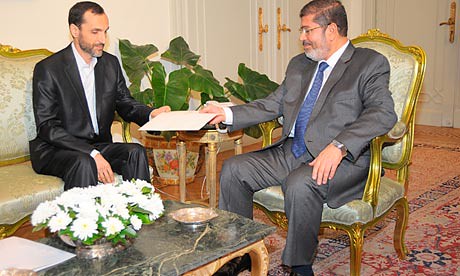
BEIJING, Aug. 30 (Xinhuanet) -- All eyes are on Iran as the Non-Aligned Summit is currently underway. Front and center, an historical visit by Egyptian President Mohammed Morsi. Iran is also taking the opportunity to initiate a peace proposal on the Syrian crisis.

Iran is putting its best face forward making the most of the international spotlight as it shines on the country this week. While Western powers attempt to increasingly isolate Iran over a controversial nuclear program, the country is playing host to the Non-Aligned Summit-a gathering of 120 nations- second only to the United Nations General Assembly.

Among the visiting dignitaries, the first by an Egyptian leader in more than 30 years, the visit is seen by some analysts as a thawing of otherwise frosty relations between Cairo and Tehran.

Dr. Abdulkhaleq Abdulla, Poli. Sci. Prof., UAE University, said, "We should not minimize this visit. This is a four hour visit by President Morsi of Egypt to Iran, but this four-hour meeting or visit is going to change 30 years of Egypt’s foreign policy towards Tehran."

A chance also for Egypt to show a new post-Hosini Mubarak era-different to that of the ousted leader.

Dr. Abdulkhaleq Abdulla also said, "Egypt is a very important regional power and it has stayed out of regional politics for so long. Now Egypt is trying to take its right position in the region. Second, more important than that, I think Egypt is signaling it’s becoming independent of America. It’s becoming independent of foreign powers and it’s setting up its own agenda."

An agenda that includes setting up a contact group comprising Iran, Egypt, Turkey and Saudi Arabia to seek an end to the conflict in Syria, a proposal with its share of skeptics.

Riad Kahwaji, CEO, Inst. For Near East & Gulf Mil. Analysis, said, "It’s all PR moves just to say we’re regional players, we have a role over here. The situation in Syria is too big for just a number of regional countries to attempt to solve it. This is something at the scale of the UN Security Council to be able to resolve."

Despite the skepticism, Iran is still trying its best to assert itself on the world stage as a dominant regional power, and this time around by spearheading a peace initiative-be a part of the solution and not the problem.

(Source: CNTV.cn)

With Millions Impacted by Bank Seizures of Homes, Feds Falsely Claim Progress in Mortgage Settlement Scheme

Mortgage settlement with banks starts to ease foreclosure crisis

Nearly 140,000 homeowners have received a total of $10.6 billion in mortgage debt relief from March through June, a federal report on the banks' progress says.

By Jim Puzzanghera, Los Angeles Times
August 30, 2012

WASHINGTON — The nation's five largest banks are off to a good start on their promise to help ease the foreclosure crisis, providing nearly 140,000 struggling homeowners with a total of $10.6 billion in mortgage debt relief, according to a government report.

But the banks have much more work to do to fulfill their requirements under a $25-billion agreement reached in February to settle federal and state foreclosure abuse investigations, key officials said.

And to keep the pressure on, the government released the preliminary report Wednesday — the first look at how Bank of America Corp., JPMorgan Chase & Co., Wells Fargo & Co., Citigroup Inc. and Ally Financial Inc. were carrying out their commitments.

"We will continue holding the banks' feet to the fire in the months ahead, and we will be watching like hawks to make sure they live up to the requirements under this settlement," Housing and Urban Development Secretary Shaun Donovan said.

The report from the Office of Mortgage Settlement Oversight showed that Bank of America had faltered in one key area. It did not complete a single modification of a first mortgage from the settlement's start date of March 1 through June 30.

The other four banks had completed a total of 7,093 modifications of first mortgages worth $749 million during that same period. JPMorgan Chase completed the most, 2,920, with the highest value, $367 million.

Bank of America quickly responded to the report with updated numbers, saying that from July 1 to Aug. 21 it had completed 3,823 first-mortgage modifications, worth $596 million. Bank spokesman Dan Frahm said the modifications were difficult to complete by June 30 because each homeowner must first go through a three-month trial period.

Overall, 137,846 borrowers nationwide received some type of monetary relief from the banks during the four-month period for an average of about $76,615 each. Californians received about $4.6 billion in relief, by far the most of any state.

"We are happy with California's share of the pie, but the pie needs to get bigger," said Shum Preston, spokesman for California Atty. Gen. Kamala D. Harris, who was a key player in the settlement. "There's a lot of hurt out there."

The banks voluntarily provided the preliminary data before the first required report, due in November, and the data were not audited, said Joseph A. Smith Jr., the government-appointed monitor of the settlement. He released the information so the public could track the progress of the banks and the oversight of his office.

"Now that the information is out, it is going to facilitate a conversation, so to say, about how they're doing that will have an impact on the banks' motivation," Smith said. "I'm encouraged by where we are. But we're not going to declare victory."

The five largest mortgage servicers agreed to provide the relief to struggling homeowners as part of a settlement with federal officials and 49 states to end lengthy investigations into alleged "robo-signing" and other foreclosure abuses.

The banks have set aside about $20 billion to lower loan rates and principals and provide other relief directly to consumers, and $5 billion to the states, primarily for foreclosure relief and prevention programs.

The banks get credits for various types of homeowner relief. Each dollar forgiven in a short sale, for example, results in a credit of 45 cents if the bank owns the loan and 20 cents if it is held by investors.

The report did not say how much the $10.6 billion provided as of June 30 would reduce the $20-billion obligation. The largest amount of relief came in debt forgiveness as part of short sales, in which the bank allows a homeowner to sell a home for less than what is owed on the mortgage. The banks forgave about $8.7 billion in first- or second-mortgage debt as part of short sales.

In addition to the $749 million in principal reductions on first mortgages, the banks provided $231 million in principal reductions or outright forgiveness for second mortgages.

The banks also are adopting 304 servicing standards required by the settlement, with four of the banks saying that they implemented more than half the standard as of July 5. The report did not identify those banks.

Overall, Bank of America had provided the most relief to homeowners for the report period — $4.9 billion, nearly all in the form of short sales.

Kevin Stein, associate director of the California Reinvestment Coalition, a housing advocacy group, said he was concerned that most of the relief from the banks was in the form of short sales instead of principal reductions, which allows people to keep their homes.

"It's still early, and we want to be hopeful that will turn itself around," Stein said.

Donovan said short sales were easier to complete in the first few months of the settlement than principal reductions. But he said short sales are capped and are not as attractive to banks because they result in less credit toward fulfilling the settlement terms.

Katie Porter, a UC Irvine law professor who is monitoring the settlement compliance for the state attorney general, said the report showed that the banks had moved quickly to start providing relief, though their performance was uneven.

"We need to see more, but the trend is in the right direction," she said.

jim.puzzanghera@latimes.com

Three Australians in US-led Occupation Force Killed in Afghanistan

Australian Soldiers Killed in Afghanistan

CANBERRA, Australia
abcnews.go.com

Australia says soldiers have died after NATO reports 3 killed by man in Afghan uniform

The Associated Press

Australia says it has suffered fatalities in Afghanistan after the U.S.-led military coalition there reported that a man in an Afghan army uniform had killed three of its troops.

The Australian Defense Force said in a statement Thursday that Australian soldiers have been killed in an incident in Afghanistan.

It did not say how many. More details are to be released after the families of the soldiers are notified.

NATO said in a statement Wednesday that the latest attack came a day earlier in southern Afghanistan.

Before the latest fatalities, 33 Australian soldiers had been killed in the Afghanistan war. Australia has 1,550 troops in Afghanistan and makes the largest military contribution of any country outside NATO.

Wednesday, August 29, 2012

Syria President Bashar Assad Appears Confident of Victory

latimes.com/news/nationworld/world/la-fg-syria-violence-20120830,0,675040.story

latimes.com

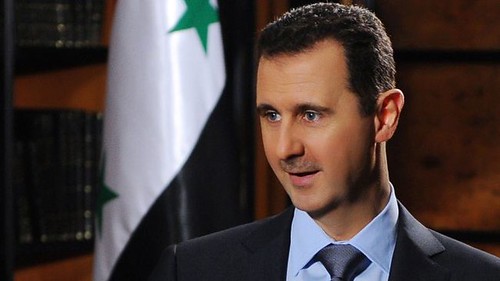
Syria President Bashar Assad appears confident of victory

Syria President Bashar Assad says in a televised interview that his forces are pushing back the rebels.

By Patrick J. McDonnell, Los Angeles Times
8:22 PM PDT, August 29, 2012

BEIRUT — He flashed a smile and seemed at ease. He vowed victory even though it wouldn't happen any time soon.

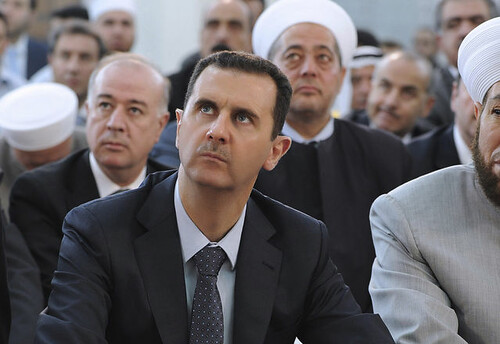
Syrian President Bashar Assad looked confident in a televised interview aired Wednesday, his first since escalating attacks by opposition forces last month seemed to threaten his hold on power. The interview appeared aimed at conveying an image of strength and steadfastness to a jittery populace, as Assad made the case that government forces had broken the rebels' momentum and were now pushing opposition forces back.

"We are engaged in a regional and global battle, so we need some time to win it," Assad said, adding, "We are progressing. The situation on the ground is better. But we have not yet won. This will take more time."

Defeating opposition forces, he said, would entail a long, grueling struggle.

"I am here with you in Damascus, in the presidential palace," he pointedly told the interviewer with the pro-government Addounia channel, who ventured to inquire why the president hadn't been seen publicly more often during these trying times.

Opposition activists immediately dismissed Assad's comments as misguided and misleading, if not delusional.

Significant swaths of the country, including parts of the three major metropolitan areas, Damascus, Aleppo and Homs, remain essentially under rebel control or are contested terrain. Assad's once-imposing army is weary, over-extended and suffering from a high number of casualties and large-scale desertions. Major highways are cut off and the nation's economy is in free-fall.

For Syria's embattled president, however, there may be some positive developments that transcend the now-familiar video images of bombarded cities, maimed civilians and charred border posts and police stations

The interview showed that he had not been chased from the capital, as rumors had suggested since the bombing last month that killed four of his top security aides, including his brother-in-law. The crackle of gunfire and the rumble of artillery may now be part of the capital's daily soundtrack, but the president boasted that he had not run away.

In addition, neither Damascus, the capital, nor Aleppo have fallen to the rebels, as some suggested could happen when insurgent offensives erupted in the two major cities last month. A brutal counter-offensive in the capital appears to have beaten rebels back to the suburbs, where Assad's troops are now relentlessly pursuing them and their civilian supporters.

In Aleppo, the military, using air power and artillery, appears to have pushed back opposition brigades that seemed to slip into city neighborhoods so seamlessly six weeks ago, confidently proclaiming that victory was imminent. Many Aleppo residents have been outwardly hostile to the rebellion, a fact that seems to have surprised some opposition fighters.

Some Syrians still view Assad's continued presence as the only hope to avoid Iraq-style anarchy and sectarian slaughter, a fear his government has worked hard to spread.

"The fate of Syria is in the hands of the Syrian people," said Assad, who also lauded the "heroic" military.

He scoffed at a slew of recent high-level defections as "self-cleansing" and positive. He even seemed to display a forgiving side, urging citizens to encourage wavering rebels to return to the government fold.

"The nationalistic and good person does not rebel or go against his nation," said Assad, who reiterated his long-held contention that a foreign conspiracy was behind the uprising, now in its 18th month. The Syrian leader, surveying the international landscape, may see other signs of hope.

The specter of foreign intervention — the one action that could decisively tip the battle in the rebels' favor — seems ever more remote.

On Thursday, the United Nations is scheduled to talk about Turkey's request that a buffer zone be declared in Syria to house the increasing flow of fleeing Syrians. But neither Washington nor its allies seem inclined to provide the military support, such as a no-fly zone, that is essential to maintain such a haven.

"Talk about a buffer zone is not practical, even for those countries that are hostile to Syria," Assad said with confidence.

He seemed almost relieved to acknowledge the absence of outside diplomatic pressure, now that the United Nations-proposed peace plan has collapsed. Few in the opposition ever realistically expected Assad to withdraw troops and armor from population centers, as Kofi Annan's six-point peace plan had mandated. This is the same president who, in personal emails later made public, dismissed democratic reforms as "rubbish."

"The truth is that Syria doesn't need a green light when dealing with its internal affairs, neither from our allies or our enemies," Assad said.

In his comments Wednesday, the president seemed to exude a confidence that the worst had past.

"Bashar is essentially saying that it is not in the opposition's power to topple the regime, and that the fighting force the regime has become is in it for the long run," Peter Harling with the International Crisis Group think tank, said via email. "He has a point."

The Syrian leader professes to see victory as inevitable. The rebels, too, say they will not be defeated.

patrick.mcdonnell@latimes.com