Tuesday, December 31, 2013

Barclays Loan Trial Lifts Lid on Banks' Looting of Detroit

Trial lifts lid on banks’ looting of Detroit

By Kris Hamel on December 30, 2013
Workers World

Something unexpected happened in the city of Detroit bankruptcy case in court on Dec. 18.

Judge Steven Rhodes adjourned the trial, which had been called to get approval for a settlement on “termination fees” that the city allegedly owes to Bank of America and United Bank of Switzerland. The banks claim they’re owed the money because of a deal in 2006 involving “interest rate swaps.” The fees would eat up money needed for retired city workers’ pensions and other vital services.

Rhodes ordered the parties back to the table to come up with something better because it was clear that Emergency Manager Kevyn Orr had not established that the deal with the banks was in the best interests of the people of Detroit. Orr’s undemocratic appointment by Republican Gov. Rick Snyder has rendered powerless the city government elected by the people of Detroit.

Under the deal EM Orr made with the banks, the city would have to pay Bank of America and UBS approximately $200 million to $230 million, or 75 percent of the termination fee for the swaps. This amount would be financed by a Barclays loan, which would then charge the city up to 8.5 percent interest.

This swap termination loan would be guaranteed by city income tax revenue. That means for the first four or five years after bankruptcy, the people of Detroit would be turning over 20 percent to 40 percent of their income taxes to pay off the banks for this deal.

The Detroit interest rate swaps were tied to pension obligation certificates the city had purchased in 2005 and 2006. Of these POCs, $948 million was subject to a floating interest rate tied to the Libor index, which is set daily in London, and has since been exposed as fraudulent. Under the swaps, however, the city was obliged to pay the banks a fixed interest rate of 6.3 percent, while the banks were allowed to pay the floating rate. If the fixed interest rate was higher than the floating rate, the city had to pay the difference between the two amounts to the bank, and vice versa.

In 2008, after the crisis and the potential collapse of financial institutions caused by their fraudulent subprime mortgage lending practices, interest rates charged the banks by the U.S. Treasury went down to about 0 percent. In this way the federal government bailed them out with trillions of dollars of taxpayers’ money.

The effect of this bailout was that the same banks which precipitated the crisis in Detroit and destroyed the city’s neighborhoods with their lending practices, began in 2008 claiming a $50 million yearly payout from the city on the interest rate swaps. These annual payments to Bank of America and UBS were a major factor in precipitating the crisis that led to Detroit’s bankruptcy filing.

In addition, there were all sorts of “termination events” built into the swaps that allowed the banks to terminate the deal while the city would still be liable for the interest projected over the 25-year term of the swaps. Among the termination events were downgrading the city’s bond rating, which occurred in 2009 and made borrowing more costly, and naming the emergency manager.

Similar interest rate swaps foisted on public entities became losing deals for many cities throughout the United States. A report published by the Service Employees union in February 2010 noted that $1.25 billion in swap payments for that year were draining the treasuries of city and state governments across the U.S. (This report can be found at detroitdebtmoratorium.org.)

Finance capital versus the people

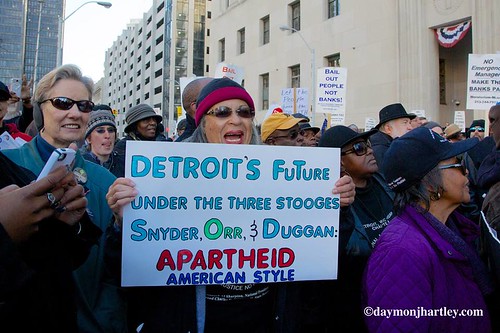
The Moratorium NOW! Coalition to Stop Foreclosures, Evictions & Utility Shutoffs has consistently exposed how these usurious swaps — a form of predatory lending to the city treasury — were perpetrated by the same banks that destroyed Detroit’s neighborhoods and drove more than 200,000 people out of the city through their racist, subprime lending practices and subsequent foreclosures. The coalition won a Freedom of Information Act lawsuit filed in February 2013 and obtained copies of the city’s bond documents that verify this perspective.

At the court hearing on Dec. 17, municipal retiree and Moratorium NOW! activist David Sole, whose pension is now threatened, was represented by people’s attorney Jerry Goldberg. Goldberg grilled Kenneth Buckfire, the Emergency Manager’s banker, on these issues. Goldberg’s questioning and Buckfire’s responses exposed how Orr and Buckfire never for one moment considered the banks’ deliberate role and possible criminal actions in the destruction of Detroit.

In the face of this testimony, even Judge Rhodes, the same judge who approved the attack on city retirees’ pensions in the bankruptcy process, could not immediately rubber stamp the deal. (A link to Goldberg’s questioning of Buckfire can be found at preview.tinyurl.com/ltabpc8.)

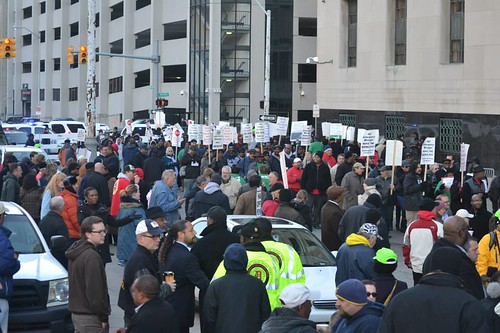
At the hearing on Dec. 18, Rhodes ordered the banks and the city of Detroit to enter mediation. On Dec. 24, the banks and the city announced a new deal that reduced the swap termination fee by $35 million. But those objecting to the swap fee are continuing to fight this new deal. A continuation of the trial is scheduled for Jan. 3. Leaders of Moratorium NOW! say there will be a demonstration and pack-the-courtroom action beginning at 8:30 a.m. that day.

An article in the New York Times business section on Dec. 24 heralded this renegotiation as cracking the bankruptcy code’s special “safe harbor” for interest rate swaps. The article was accompanied by a picture of a Moratorium NOW! demonstration outside the courthouse, implicitly crediting the demonstrations for forcing the banks back to the table.

Organizers say it is the mobilization of the people, not the machinations in the courtroom, that will stop the robbery of the working class and the destruction of cities and neighborhoods by finance capital. All out Jan. 3 in Detroit to continue to press the struggle forward!

Monday, December 30, 2013

Demonstrate Outside Detroit Federal Building to Oppose Barclays Swap Deal, Friday Jan. 3, 8:30am

For Immediate Release

Media Advisory
December 29, 2013

Event: Demonstrate Outside Federal Court on Friday January 3, 8:30 a.m.
Location: 231 W. Lafayette in Downtown Detroit
Contact: (313)-671 3715, 680-5508
E:mail: info@moratorium-mi.org
URL: http://moratorium-mi.org
Oppose Barclays Swap Deal Which Will Cost the City of Detroit Its Future

A bad deal crafted by emergency manager Kevyn Orr and his multi-million dollar tax-paid consultants rewarded Bank of America and UBS, two financial institutions which have been implicated in the sub-prime mortgage debacle that devastated Detroit, over $200 million to terminate interest rate swaps that the banks have used to swindle cities across the U.S.

On December 24, the corporate media attempted to sell the public on a revised form of this same deal saying that it will save the city tens of millions of dollars. In fact, the revised deal still pays the banks $165 million to terminate these swaps that already netted these banks $250 million in profit from 2008-2012.

We must not believe these stories. These swap deals signed in 2005 and renewed in 2009, are the worst possible financial arrangements imaginable with questions still looming in regard to their legality.

Barclays Bank, another questionable firm connected with the LIBOR interest-rate rigging scandals, would pay off Bank of America and UBS through a loan to the city which nets the bank at least $4.4 million in fees.

When Judge Rhodes adjourned the trial examining the swap deals and Barclays loan on December 18, it was with the suggestion to Orr, Snyder, Jones Day and the corporate interests they work for, to come back with a better deal. But the arrangement they have arrived is still horrendous for the residents of Detroit. It means the City’s residents will pledge 20% of their income tax dollars for the next 5 years to pay off the banks, rather than improve services in the city.

We in the Moratorium NOW! Coalition feel that justice can only be served by the cancellation of the purported debt to Bank of America and UBS and that any funds they have collected be turned over to the people of the Detroit in an attempt to begin to repair the damage they have done to the city.

We have opposed the imposition of austerity, emergency management and forced bankruptcy over the recent period. Our organization will continue to demand that all pensions, salaries, jobs, city services and assets, including the DIA and the DWSD, remain under the ownership and control of the people of this city who have paid for them through decades of labor and taxes.

The objective of the banks including Barclays, Bank of America and UBS is to rob the city and state of Michigan even further through the imposition of usurious interests rates, the slashing of salaries and pensions and the complete disregard and disenfranchisement of the people of the city and the state.

Please join us in front of the Federal Courthouse downtown when the trial on the swaps resume on Friday morning January 3. We will gather at 8:30 a.m. for a mass demonstration demanding that the illegal bank debt be canceled and the democratic rights of the people of Detroit be immediately restored.

We are also encouraging people to pack the courtroom of Judge Rhodes at 9:00 a.m. in order to witness the operations of the banks and their agents in federal bankruptcy court. Only the workers, retirees and community residents of Detroit can reverse the current crisis.

In addition, we are requesting that people around the United States and the world hold demonstrations in solidarity with the working people of Detroit on January 2 and 3 at the offices of Bank of America, UBS, Merrill Lynch and Barclays. The outcome of the struggle to save pensions, jobs, public assets and the right to vote in Detroit will set a precedent for people throughout the country.

Cancel Detroit's Debt --Make the Banks Pay, They Owe Us
Hands Off Our Pensions
Save City Services and Assets
Make the Banks Fund a Jobs Program

40 Killed As Army Storms Buildings in DRC Capital

DR Congo: 40 Killed As Army Storms Buildings

Government troops from the Democratic Republic of the Congo regain the state TV building and international airport from gunmen.

5:23pm UK, Monday 30 December 2013

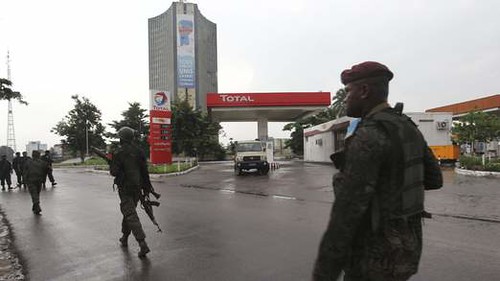
Forty gunmen have reportedly been killed in fighting in the Democratic Republic of Congo capital Kinshasa a month after a peace deal was agreed with rebels.

Government spokesman Lambert Mende said 40 of the gunmen had been killed by security forces, adding: "We have total control of the situation."

Police had earlier put a security cordon around the state television building where gunmen had taken several hostages.

Witnesses also reported shooting at the Tshatshi military camp.

There were also reports of clashes between the army and supporters of Mr Mukungubila in the eastern mining city of Lubumbashi.

The Democratic Republic of the Congo (DRC) has struggled to emerge from decades of violence and instability. It is home to a 21,000-strong UN peacekeeping mission.

Before transmission was shut down at state television, two gunmen appeared on camera to deliver a political message against President Joseph Kabila, who took office in 2001 after the assassination of his father Laurent.

The message said: "Mukungubila has come to free you from the slavery of the Rwandan."

Mr Mukungubila, who calls himself "the prophet of the Eternal", ran unsuccessfully for the president against Mr Kabila in 2006.

He has been an outspoken critic of a peace deal signed this month with the Tutsi-led M23 rebel group in eastern Congo.

Heavy Fighting Takes Place in Kinshasa, DRC

Kinshasa: Heavy gunfire, hostage scenario wreaks panic among residents

Residents in the capital of the DRC have been left to feel uneasy after gunfire erupted throughout the city and several reporters were taken hostage.

30 Dec 2013 13:50 AFP

Heavy gunfire erupted in several areas of the Congolese capital Kinshasa on Monday, including the international airport and the military headquarters, causing panic among residents.

Police also said armed youths had taken hostage several reporters from the state television station RTNC in Kinshasa.

"There's panic in the city, people are asking what is happening," a local resident said, adding that he had seen police and military officers deploy around the RTNC building and the nearby Parliament of the Democratic Republic of Congo (DRC).

Shooting was heard near the Tshatshi military camp as well as the international airport at Ndjili, residents and a local journalist said.

Police officers, soldiers and the president's Republican Guard fanned out across the capital to restore security, an Agence France-Presse reporter saw. Traffic was slowed down and security forces were restricting the movements of civilians in some areas.

A smell of gunpowder hung in the air, the reporter said.

A police spokesperson said earlier that journalists at RTNC had been taken hostage by armed youths, and the television feed had been cut.

'Armed with machetes and guns'

"They are armed with machetes and guns. They have taken reporters hostage. An operation is under way to dislodge them," spokesperson Colonel Mwana Mputu said.

Before the station's television feed was cut, two young presenters were seen on screen, appearing frightened but calm, with a young man standing behind them seemingly threatening them.

The DRC is a vast country rich in a wide range of minerals, where eastern provinces have been in turmoil since even before President Joseph Kabila took office in wartime in January 2001, following the assassination of his father, Laurent-Desire.

The western capital has by contrast remained relatively calm, apart from an apparent coup bid in 2003 blamed by police on troops loyal to ousted dictator Mobutu Sese Seko, who was overthrown by Laurent-Desire Kabila in 1997. The uprising was rapidly quashed.

A second coup bid attributed to renegade forces in the presidential guard took place in June 2004, but was also swiftly put down, according to the government and the large UN mission in the troubled country.

Troops and tanks were deployed in the city seven years later, when Kabila was sworn in for his second term as elected president in December 2011, after a vote that led to widespread unrest.

His rival to lead the country, veteran opposition politician Etienne Tshisekedi, proclaimed himself the winner of the election and Kabila's victory was marred by international reports of electoral fraud.

Source of trouble in Kinshasa

The main persistent source of trouble in Kinshasa comes from gangs of unemployed armed youths known as "kuluna" who murder, rob and assault residents of the city. Kinshasa police on November 15 launched a three-month operation to tackle these gangs, raising UN complaints of summary executions.

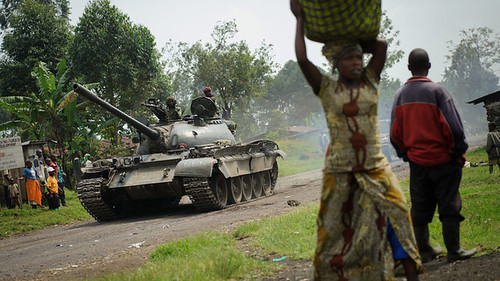
The latest insurgency in the capital comes the month after the national army, or FARDC, achieved a rare and striking military success in the strife-torn eastern North Kivu province over a powerful armed movement, the M23, which surrendered in neighbouring Uganda.

Kabila's troops were backed by a special intervention brigade of UN African soldiers, which had in March been given an unprecedented offensive role by the UN Security Council to neutralise the various armed movements – rebels, army mutineers and tribal militias – that have plagued eastern DRC for more than two decades.

– Sapa-AFP

AbaThembu Royals Tell Mandela Family to Keep Calm Over Estate

AbaThembu royals tell Mandela family to keep calm over estate

Madiba's family are reported to have been fighting over his estate and wanting to evict Graça Machel amid renewed infighting over family leadership.

29 Dec 2013 18:30 Sapa

The AbaThembu royal family has urged the Mandela family to keep calm when the estate of former president Nelson Mandela is discussed.

"We understand that there is a process for the allocation of the estate," said royal family spokesperson Daludumo Mtirara on Sunday.

"We advised the family members to remain calm, respect the administration of the estate and ensure that all the assets remain where they are until processes are finalised."

Mtirara said this call was made during a meeting between the AbaThembu royal family and the elders of the Mandela house in Qunu, Eastern Cape, on Friday.

The members of the royal family shared their concern about instability in the Mandela house, he said.

Mtirara said it was reiterated at the meeting – to which Mandela's grandsons, Mandla and Ndaba were invited – that Mandla, who is the eldest grandson, was to be considered the head of the family.

"Nkosi Zwelivelile Mandla Mandela is the only point of entry to the Mandela house and he remains the head of this house ... In his absence, Zweliyajika Ndaba Mandela must take over," said Mtirara.

Renewed feud

Reports emerged that the family was fighting over Mandela's estate and wanted to evict Mandela's widow Graça​ Machel from the house she and Mandela shared.

Shortly after Mandela's death, his ex-wife Winnie Madikizela-Mandela described reports of a renewed family feud as "mischievous innuendos" and "apartheid-style" tactics.

She released a controversial statement at the time through her spokesperson, Thato Mmereki, saying that in accordance with tradition, eldest daughter Makaziwe Mandela would head the family and make decisions with the support of her two sisters.

It was reported that Makaziwe ordered the locks at the family homestead in Qunu changed just days after Madiba died, and that Mandla be locked out.

Leadership spat

Mandla and Makaziwe have been involved in a bitter public spat over the control of Mandela's legacy and leadership of the fractured family.

Mtirara said last week that the world icon had pronounced to the Thembu nation six years ago that Mandla was the head of the family and a traditional spear was handed over to him.

He said on Sunday that it was decided at the meeting that Madikizela-Mandela did not have a mandate from the elders or the authority to discuss "our culture, custom and tradition in the media".

No firm evidence could be found that proved Machel was ill-treated by the family, Mtirara said. "She must be respected by each and every family member as she is the only wife of Madiba who supported him until the last moment."

He said Machel was to be informed of anything happening in Mvezo, Qunu and Houghton.

Ribbonless

Mandla and Ndaba were not wearing traditional mourning ribbons, known as amaqhosha, at the meeting, Mtirara said. And we became aware that "there are also other members of the families who do not have them".

It emerged that the family member tasked with making and distributing the ribbons had not given them to all family members.

"It is unacceptable and against our tradition to witness the isolation of the core of the Mandela family and other members of the family," Mtirara said.

It was ordered that all family members be issued with ribbons by January 4.

Mandela died at his Houghton home on December 5 and was buried 10 days later in Qunu, the rural area in which he spent most of his boyhood.

– Sapa

Assault Accused ANC, EFF Members In Court

Dec 30 2013 5:50PM

Assault accused ANC, EFF members in court

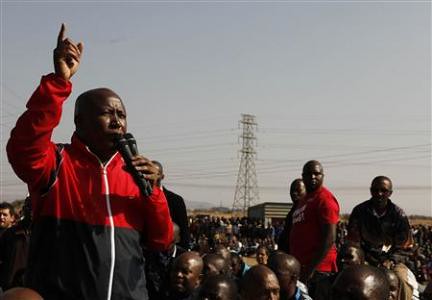
Tensions ran high when members of the EFF and ANC appeared in court on Monday on charges of common assault.

Five members of the African National Congress and seven of the Economic Freedom Fighters appeared in separate courtrooms at the Tonga Magistrate's Court, south of Komatipoort, in connection with a fight on Friday, a Sapa correspondent reported.

The EFF members, including Nkomazi sub-regional convenor Caleb Sibitane, were not asked to plead and the case was postponed until February 28. They were released on warning.

The ANC members, including Tonga ward councillor Nomsa Maphanga, were also not asked to plead and the case was postponed until February 28. They were also released on warning.

The cases were postponed for the National Director of Public Prosecutions' decision on how to proceed.

The EFF has accused Maphanga of mobilising members to stop an EFF meeting on Friday.

EFF national elections co-ordinator Godrich Gardee said the case was being heard in two courts to reduce the risk of confrontation.

"We asked the court not to allow the mixing of the members from both parties in one court, because there might be fights," he said.

ANC provincial secretary Lucky Ndinisa could not be reached for comment.

Sapa


Dec 17 2013 10:43AM

‘Burglar prayed for Malema’

Plot thickens: Julius Malema was said to be a target of an assassination plot by the ANC by a burglar who woke the EFF leader’s grandmother after he had broken into her home.

Julia Madibogo

A 50-year-old Zion Christian Church member who allegedly broke into Julius Malema’s grandmother’s home in Seshego last week will appear in court today.

But his claim that he went to the house to pray for Malema as he was being targeted for assassination by the ANC was denied by the ruling party in the province yesterday.

The man, who was dressed in his khaki ZCC attire and a badge, allegedly jumped over a security fence, went inside the house and woke up Malema’s grandmother.

When she asked him what was he doing there, he said he had to come to pray for the EFF president and commander-in-chief.

He reportedly told Malema’s grandmother that he had been informed by angels of God that he had to come pray for Malema because the ANC was planning to assassinate him.

It is not yet clear how the ANC would supposedly assassinate Malema.

The man has since been arrested and has been remanded in police custody until his court appearance.

Provincial police spokesperson Hangwani Mulaudzi said the suspect would appear in the Seshego Magistrate’s Court on a charge of housebreaking.

Malema was reportedly at his Johannesburg house and on his way to former boxing champion Jacob “Baby Jakes” Matlala’s funeral at the time of the incident.

He had to make a U-turn and rushed to his grandmother’s home to attend to the matter.

Malema was the leader of the ANC’S Youth League before he was expelled last year.

He has since formed a new political party, the Economic Freedom Fighters, which has registered for the polls next year.

In its reaction, the ANC in the province has dismissed the assassination claim made by the accused.

ANC spokesperson in the province Sipho Dikgale said: “We are very sorry to hear about what happened to the family but we as a party don’t have Malema on our agenda.

“We are only focused on winning the elections next year right now,” Dikgale said.

juliama@thenewage.co.za

Murky Lines Between US Friends and Foes in Occupied Libya

Murky lines between friend and foe in Libya

The death of US diplomat J Christopher Stevens has been blamed on an angry mob or al-Qaeda but an investigation shows his killers enjoyed Nato support

Mon, Dec 30, 2013, 01:00
Irish Times

A boyish-looking US diplomat was meeting for the first time with the Islamist leaders of eastern Libya’s most formidable militias. It was September 9th, 2012. Gathered on folding chairs in a banquet hall by the Mediterranean, the Libyans warned of rising threats against Americans from extremists in Benghazi.

One militia leader, with a long beard and mismatched military fatigues, mentioned time in exile in Afghanistan. A US guard discreetly touched his gun.

“Since Benghazi isn’t safe, it is better for you to leave now,” Mohamed al-Gharabi, leader of the Rafallah al-Sehati brigade, recalled telling the Americans. “I specifically told the Americans myself that we hoped that they would leave Benghazi as soon as possible.”

Yet as the militiamen snacked on sponge cakes with their American guests, they also gushed about their gratitude for President Barack Obama’s support in the CIA-Pentagon-NATO war of regime and counter-revolution against Muammar Gadafy. They emphasised they wanted to build a partnership with the US, especially in the form of more investment.

The diplomat, David McFarland, a former congressional aide who had never before met a Libyan militia leader, left feeling agitated, according to colleagues. But the meeting did not shake his faith in the prospects for deeper involvement in Libya.

Two days later, he summarised the meeting in a cable to Washington, describing a mixed message from the militia leaders.

More engaged

Despite “growing problems with security”, he wrote, the fighters wanted the US to become more engaged “by ‘pressuring’ American businesses to invest in Benghazi”. The cable, dated September 11th, 2012, was sent over the name of McFarland’s boss, ambassador J Christopher Stevens.

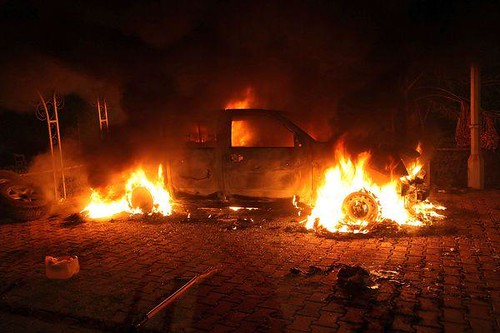
Later that day, Stevens was dead, killed with three other Americans in Benghazi in the most significant attack on US property in 11 years, since September 11th, 2001. The cable was a last token of months of American misunderstandings and misperceptions about Libya and especially Benghazi, many fostered by shadows of the earlier September 11th attack.

The US waded deeply into post-Gadafy Libya, hoping to build a beachhead against extremists, especially al-Qaeda. It believed it could draw a bright line between friends and enemies in Libya. But it ultimately lost its ambassador in an attack that involved both avowed opponents of the West and fighters belonging to militias the Americans had taken for allies.

Months of investigation by The New York Times, centred on extensive interviews with Libyans in Benghazi who had direct knowledge of the attack there and its context, turned up no evidence that al-Qaeda or other international terrorist groups had any role in the assault. The attack was led, instead, by fighters who had benefited directly from Nato’s extensive air power and logistics support during the uprising against Gadafy.

And contrary to claims by some members of the US Congress, it was fuelled in large part by anger at an American- made video denigrating Islam.

Wider lessons

A fuller account of the attacks suggests lessons for the US that go well beyond Libya. It shows the risks of expecting US aid in a time of desperation to buy durable loyalty, and the difficulty of discerning friends from allies of convenience in a culture shaped by decades of anti-western sentiment.

The attack also suggests that, as the threats from local militants around the region have multiplied, an intensive focus on combating al-Qaeda may distract from safeguarding US interests. In this case, a central figure in the attack was an eccentric, malcontent militia leader, Ahmed Abu Khattala, according to numerous Libyans present at the time. US officials briefed on the criminal investigation into the killings call him a prime suspect.

Abu Khattala declared openly and often that he placed the US not far behind Gadafy on his list of infidel enemies. But he had no known affiliations with terrorist groups, and he had escaped scrutiny from the 20-person CIA station in Benghazi that was set up to monitor the local situation.

Abu Khattala, who denies participating in the attack, was firmly embedded in the network of Benghazi militias before and afterwards.

Many other Islamist leaders consider him an erratic extremist. But he was never more than a step removed from the most influential commanders who dominated Benghazi and who befriended the Americans. They were his neighbours, his fellow inmates and his comrades on the front lines in the fight against Gadafy.

Fifteen months after Stevens’s death, the question of responsibility remains a searing issue in Washington, framed by two contradictory story lines. One has it that the video, which was posted on YouTube, inspired spontaneous street protests that got out of hand. This version, based on early intelligence reports, was initially offered publicly by Susan E Rice, who is now Obama’s national security adviser.

The other, favoured by Republicans, holds that Stevens died in a carefully planned assault by al-Qaeda to mark the anniversary of its strike on the US 11 years before.

Republicans have accused the Obama administration of covering up evidence of al-Qaeda’s role to avoid undermining the president’s claim that the group has been decimated.

The investigation by the New York Times shows that the reality in Benghazi was different, and murkier, than either of those story lines suggests. Benghazi was not infiltrated by al- Qaeda, but nonetheless contained grave local threats to US interests.

The attack does not appear to have been meticulously planned, but nor was it spontaneous or without warning signs.

Abu Khattala had become well known in Benghazi for his role in the killing of a rebel general, and then for declaring that his fellow Islamists were insufficiently committed to theocracy. He made no secret of his readiness to use violence against Western interests.

One of his allies, the leader of Benghazi’s most overtly anti- Western militia, Ansar al-Shariah, boasted a few months before the attack that his fighters could “flatten” the US mission.

The violence, though, also had spontaneous elements. Anger at the video motivated the initial attack. Dozens of others joined in, some of them provoked by the video and others responding to fast-spreading false rumours that guards inside the US compound had shot Libyan protesters.

Looters and arsonists, without any sign of a plan, were the ones who ravaged the compound after the initial attack, according to more than a dozen Libyan witnesses, as well as many US officials who have viewed the footage from security cameras.

The Benghazi-based CIA team had briefed McFarland and Stevens as recently as the day before the attack. But the US intelligence efforts in Libya concentrated on the agendas of the biggest militia leaders and the handful of Libyans with suspected ties to al-Qaeda, several officials who received the briefings said.

Like virtually all briefings over that period, the one that day made no mention of Abu Khattala, Ansar al-Shariah or the video ridiculing Islam, even though Egyptian satellite television networks popular in Benghazi were spewing outrage against it.

Members of the local militia groups the Americans called on for help proved unreliable, even hostile. The fixation on al- Qaeda may have distracted experts from more imminent threats. Those now look like intelligence failures. More broadly, Stevens, like his bosses in Washington, believed the US could turn a critical mass of the fighters it helped oust Gadafy into reliable friends. He died trying.

After the attack, Obama vowed retribution. “We will not waver in our commitment to see that justice is done for this terrible act,” he said in a televised address from Washington on the morning of September 12th. “And make no mistake, justice will be done.”

But much of the debate about Benghazi in Washington has revolved around statements made four days later in television interviews by Rice, who was then ambassador to the United Nations.

“What happened in Benghazi was in fact initially a spontaneous reaction to what had just transpired hours before in Cairo,” she said on NBC’s Meet the Press, “almost a copycat of the demonstrations against our facility in Cairo, prompted by the video.”

Cover-up

Republicans, pouncing on the mis-statement, have argued that the Obama administration was trying to cover up al-Qaeda’s role. “It was very clear to the individuals on the ground that this was an al-Qaeda-led event,” Republican Mike Rogers, the chairman of the house intelligence committee, said last month on Fox News.

But the Republican arguments appear to conflate purely local extremist groups like Ansar al-Shariah with al-Qaeda’s international terrorist network.

The only intelligence connecting al-Qaeda to the attack was an intercepted phone call that night from a participant in the first wave of the attack to a friend in another African country who had ties to members of al-Qaeda, according to several officials briefed on the call.

But when the friend heard the attacker’s boasts, he sounded astonished, the officials said, suggesting he had no prior knowledge of the assault.

Al-Qaeda was having its own problems penetrating the Libyan chaos. Three weeks after the attack, on October 3rd, 2012, leaders of the group’s regional affiliate, al-Qaeda in the Islamic Maghreb, sent a letter to a lieutenant about efforts to crack the new territory. The leaders said they had sent four teams to try to establish footholds in Libya.

But of the four, only two in the southern Sahara “were able to enter Libyan territory and lay the first practical bricks there”, the letter said.

The letter, left behind when the group’s leaders fled French troops in Mali, was later obtained and released by the Associated Press.

In the days after the Benghazi attack, meanwhile, Abu Khattala was still at work on construction sites and moving at ease around the city, even mocking the US political debate about the ambassador’s death. “It is always the same two teams, but all that changes is the ball,” he said in an interview.

“They are just laughing at their own people.”

He suggested the video insulting the prophet Muhammad might have justified the killing of four Americans. “From a religious point of view, it is hard to say whether it is good or bad,” he said. By summer, US investigators had interviewed hundreds of witnesses and formally asked the Libyan government to arrest Abu Khattala, along with about a dozen others.

The US military also prepared a plan to capture him on its own, officials said. But the administration held back, fearing that unilateral US military action could set off a backlash that would undermine the fragile Libyan government.

Revenge rumours

Hearing rumours that a revenge-seeking mob was threatening to come after Abu Khattala this fall, dozens of his neighbours sprang to his defence. Fighters raced to erect checkpoints around his house, and they pulled out Kalashnikovs, grenade launchers, truck-mounted artillery and even a tank.

Al-Gharabi said Libya’s prime minister, under pressure from the Americans, had asked a Benghazi army commander for help apprehending Abu Khattala. Al-Gharabi quoted the commander as replying, “You will be lucky if he does not apprehend you.” (New York Times service)

Abou Iyadh Arrested in Libya

REUTERS December 30, 2013, 7: 35 AM

Tunisia militant leader Saifallah Benahssine arrested in Libya, local media says

Last Updated Dec 30, 2013 8:38 AM EST

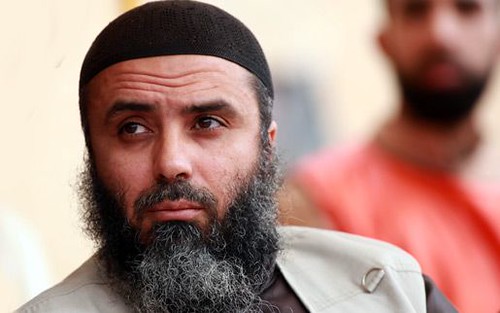
TUNIS -- U.S. and Libyan forces captured Saifallah Benahssine, the leader of Tunisia's Islamist militant group Ansar al-Sharia, in the Libyan city of Misrata on Monday, Tunisia's state news agency TAP said, citing a security source.

The U.S. embassy in Libya and Libyan government officials did not immediately respond to a request for confirmation of the arrest of Benahssine, also known as Abu Iyadh.

But the capture of such a high-ranking Tunisian Islamist militant in Libya would indicate close ties among Islamist groups across North Africa. In October, U.S. forces captured a top al Qaeda suspect in a raid in Tripoli.

A former fighter in Afghanistan, Benahssine had declared loyalty to al Qaeda and was accused of inciting an attack on the U.S. embassy in Tunisia in September 2012.

Ansar al-Sharia was one of the hardline groups to emerge after the Tunisia's revolt against its autocratic leader three years ago. Militant violence has increased in Tunisia since the government began a crackdown on the group this year.

Pan-African Journal: Special Worldwide Radio Broadcast for Sunday December 29, 2013--Hosted by Abayomi Azikiwe

For Immediate Release

Media Advisory
Sunday December 29, 2013

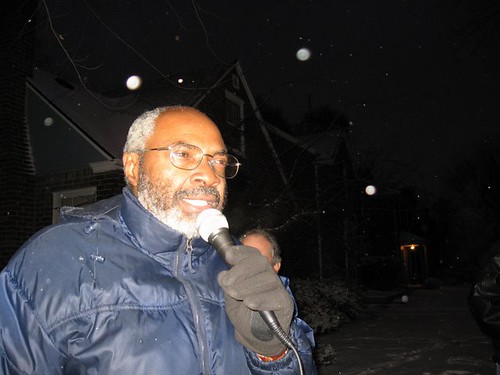
Pan-African Journal: Special Worldwide Radio Broadcast for Sunday December 29, 2013--Hosted by Abayomi Azikiwe

To listen to this special broadcast of the Pan-African Journal hosted by Abayomi Azikiwe just click on the website below:
http://www.blogtalkradio.com/panafricanjournal/2013/12/29/pan-african-journal-special-worldwide-radio-broadcast

Tens of thousands of people have demonstrated in the West African state of Niger against the policies of the current President Mahamadou Issouf. The protests demanded higher wages and better working conditions.

There have been ongoing demonstrations in Egypt at the Al-Azhar University where students are resisting the new restrictions on political activity among those opposed to the military-backed regime. Several attacks have been launched against government and police installations in recent days.

A New York Times report on the destruction of the United States compound in Benghazi, Libya on September 11, 2012 rejects the claim that the organizers had links to the Al-Qaeda network. A U.S. diplomat and several intelligence officials were killed in the attacks launched by over 100 armed combatants.

Detroit Jazz artist Yusef Lateef passed away in his adopted home of Massachusetts on December 23 at the age of 93. Lateef was a pioneer in the field of African American and world music beginning during the 1940s and 1950s. He would later teach music at the University of Massachusetts at Amherst.

Pan-African Journal: Worldwide Radio Broadcast for Saturday December 28, 2013--Hosted by Abayomi Azikiwe

For Immediate Release

Media Advisory
Monday December 30, 2013

Pan-African Journal: Worldwide Radio Broadcast for Saturday December 28, 2013--Hosted by Abayomi Azikiwe, Editor of the Pan-African News Wire

To listen to this broadcast hosted by Abayomi Azikiwe just click on the website below:
http://www.blogtalkradio.com/panafricanjournal/2013/12/28/pan-african-journal-worldwide-radio-broadcast

Ban Ki-moon, the Secretary General of the United Nations, has ordered the deployment of nearly 14,000 troops to the Republic of South Sudan in response to factional fighting between groups loyal to President Salva Kiir and ousted Vice President Riek Machar.

The Inter-Governmental Authority on Development (IGAD) has held a meeting in Nairobi, Kenya where East African leaders have stated that they will not tolerate any seizure of power by armed opposition forces inside the world's newest nation.

France has requested that the United Nations enhance its participation in the Central African Republic. Fighting inside the mineral-rich state has escalated since Paris deployed 1,600 troops to the country. Several Chadian and French troops have been killed in recent clashes. There have been mass demonstrations against French involvement in the country.

In Egypt the Muslim Brotherhood has been officially designated as a "terrorist" organization amid ongoing demonstrations against the military-backed regime. There have been two bomb attacks on the security directorate in Mansoura as well as an explosion near a bus in Nasr City, Cairo.

Finally, a new film on the life South African leader Nelson Mandela has been released across the U.S. The biopic covers "Mandela: Long Walk to Freedom", an autobiography published by Madiba in 1995.

Trolley Bus Blast in Volgograd Kills At Least 10 in Second Terrorist Attack

Trolley bus blast in Volgograd kills at least 10 in terrorist attack

December 30, 2013 04:51
Rt.com

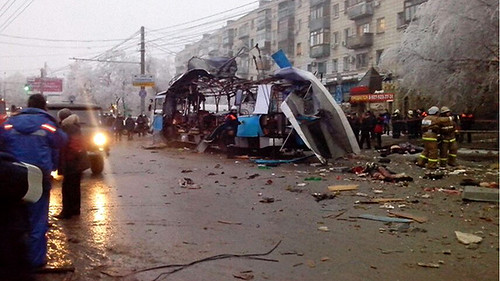
A terrorist attack in the Russian city of Volgograd has killed at least 10 passengers on a trolley bus. The explosion comes a day after a suicide bombing in the city which killed 17 people and injured scores of others.

Health officials reported 10 fatalities in Monday morning’s blast and 28 injured, including 22 being treated in hospital, according to the latest update.

The Investigative Committee gives the casualty numbers as 10 people killed and 19 injured.

An infant aged around five to six month is among the injured. Doctors are fighting for the baby’s life.

The explosion was apparently set off by a suicide bomber, spokesman for the Russian Investigative Committee, Vladimir Markin, confirmed.

The bomb may have been planted in the central part of the trolley bus rather than brought in by a suicide bomber, said the National Antiterrorist Committee.

Investigators believe that Monday’s blast and the previous day’s terrorist attack may be connected.

The blast wave was powerful enough to shatter some windows in nearby buildings.

“I woke up because of an enormous blast I heard. I heard the glass shattering in the first two stories of the building. I looked out of the window, it was still dark, and I saw a bus that was ripped by a blast and people were running away from it screaming,” Alina Averyasova, an eyewitness, told RT.

The bus was near one of the city markets when the explosion happened. The site has been cordoned off, with traffic diverted to other streets.

Investigators said they are questioning blast witnesses and collecting footage from CCTV cameras around the scene. The trolley bus itself was not equipped with a camera, they said. Police are offering witness protection to anyone if needed when offering information on the perpetrators of the terrorist attack.

First images from the scene showed a damaged vehicle partially reduced to its metal carcass and dead bodies scattered around.

All the people injured by the blast are in serious condition, Health Minister, Veronika Skvortsova, said.

“They have burns, multiple traumas, blast-injuries. If needed, they will be airlifted to Moscow,” she told Rossiya24 TV.

The Emergencies Ministry said it is preparing a flight from Moscow to Volgograd with medical equipment and personnel for possible transportation of the blast victims to the capital.

Morale in Volgograd appears to be badly damaged by the terrorism spree the city has experienced.

“It’s scary. Everybody left buses and trams and are walking. People won’t use public transport,” a resident told Ria Novosti.

Less than an hour after the news of the blast broke, Russian twitter post started spreading reports of a new explosion at a tram station. The rumor was not confirmed. Journalists called on social media to stop spreading panic.

Moscow is beefing up security in the wake of the Volgograd bombings, head of the regional security department of the mayor’s office, Aleksey Mayorov, reported. This comes in addition to increased police presence ahead of the planned New Year celebrations in the city.

“We will recheck our focus on the approaches to the sites of mass gatherings, both for pedestrians and for surface and underground transport,” he said.

The new deaths in Volgograd come just a day after a suicide bomber targeted the city’s railway station, killing 14 people on the spot and injuring more than 30 others. Three of those injured succumbed to their wounds in hospital.

And in October the city witnessed yet another terrorist attack, when a suicide bomber set off an explosion in a bus heading to Moscow, killing 6 people and injuring almost 40.

The trolley bus blast near a marketplace happened in Volgograd a day after a suicide bombing at the city’s railway station. Image from maps.google.comThe trolley bus blast near a marketplace happened in Volgograd a day after a suicide bombing at the city’s railway station. Image from maps.google.com

Volgograd was chosen as the target for the series of bombings due to its proximity to the troubled region of North Caucasus, believes Gordon Hahn from the Center of International Strategy.

“Suicide bomb attacks are carried out in Russia by mujahidin. It’s very likely that a group affiliated with the ‘Caucasus Emirate’ could be involved and we talked about ethnic Russian suicide bombers, which these organizations try to recruit,” he told RT.

The attacks in Volgograd are part of a terrorist campaign to derail the Olympic Games in Sochi, believes Aleksey Popov, former member of the Alpha special forces unit.

“Terrorists are trying to spread fear ahead of the Winter Olympics so that people become scared to go to Sochi. No wonder they have chosen the holiday season to make it even more painful for the people and to draw plenty of world attention,” he told RT.

He added: “I believe it won’t have any effect on the Olympics and the people who were planning to come will still do it. They are safe because almost $2 billion was allocated to security measures; that’s even more than the sum for the London Olympics.”

Rebels Demand Observers for Talks in Mozambique

Renamo demands observers for talks

December 30, 2013

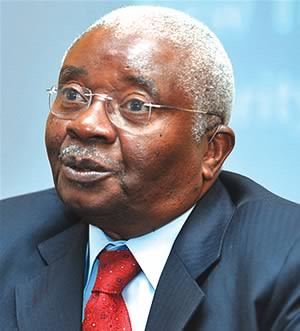
MAPUTO. — In the unlikely event of the Mozambican government ever accepting the demand from the former rebel movement Renamo for Mozambican and international mediators and observers at the dialogue between the government and Renamo, it would need a much larger table.

The latest Renamo letter on the subject, addressed to president Armando Guebuza, and dated December 5, proposes a total of 14 mediators and observers.

The letter, a copy of which is in AIM’s possession, wants the dialogue (which Renamo insists on calling “negotiations”) to be mediated by Mozambican constitutional lawyer Gilles Cistac, Italian bishop Matteo Zuppi, former South African president Thabo Mbeki, and an unnamed representative of the European Union.

This line-up — one Mozambican and three foreign mediators — is, not coincidentally, the same as the composition of the mediating team in the peace talks held in Rome from 1990 to 1992. (The Mozambican mediator in those days was the bishop of Beira, Jaime Goncalves, and the three foreigners were all Italians — Mario Raffaelli representing the Italian government, and Andrea Riccardi and Matteo Zuppi of the Catholic Sant’Egidio Community. Zuppi has subsequently been promoted to the post of Auxiliary Bishop of Rome).

As for observers, Renamo is proposing four Mozambicans — Anglican bishop Dinis Sengulane, prominent academic and vice chancellor of the Polytechnic University, Lourenco do Rosario, the former vice chancellor of Maputo’s Eduardo Mondlane University, Filipe Couto and Alice Mabota, chairperson of the Mozambican Human Rights League.

Six foreign observers are proposed, but all are countries rather than individuals. They are: the United States, China, Portugal, Cape Verde, Kenya and Botswana.

Ever since September, the government has repeatedly made it clear that it is not prepared to internationalise its discussions with Renamo and so will not agree to invite any foreign observers, much less mediators.

The Renamo proposal is thus a non-starter and Renamo must have known that when it submitted it.

The letter, signed by Augusto Mateus, political advisor to Renamo leader Afonso Dhlakama, does not state whether Renamo has contacted all its proposed mediators and observers.

The letter lists the tasks Renamo wants mediators and observers to undertake. The mediators, it says, should “propose the methodology of the talks”, “mediate, moderate the discussions, accompany and coordinate the talks”, and “draw up a synthesis of each session of talks, indicating the points agreed and those where there is disagreement”.

The observers, Mateus adds, would “accompany the talks, and may give their opinions on them, if they deem fit”. They would also report back to the countries they represent.

They are instructed “to maintain the strictest impartiality in their duties”, “refrain from making personal or premature comments about their observations” and must not “interfere in the negotiations”.

Since none of the proposed mediators and observers will attend talks without an invitation from the government, and the government has made it very clear that no representatives of foreign governments will be invited, all these provisions are just a waste of breath.

The list presented by Mateus on December 5 is quite different from the proposal made by the head of the Renamo delegation to the dialogue, parliamentary deputy Saimone Macuiana, just a week earlier.

In a letter dated November 29, Macuiana said nothing about mediators. He called for Mozambican observers (without advancing any names), and observers from SADC, the African Union, the European Union, the US and the United Nations.

Three days later, Macuiana had changed his mind, and sent a letter, dated December 2, demanding “national and international mediators”, but without naming any individuals or countries.

In fact, the government had already made one concession to Renamo. In November it accepted that there could be Mozambican (but not foreign) observers at the talk. In particular, the government was willing to welcome Bishop Sengulane and Lourenco do Rosario to the dialogue table.

These two men had already acted as go-betweens, ferrying messages between Dhlakama and president Armando Guebuza earlier in the year.

— Agencia de Informacao de Mocambique.

The Heirs of the Revolution

The heirs of the revolution

December 30, 2013 Opinion & Analysis
Akinyemi Adeseye

It is very vital to look at the role that we Africans play in our own liberation, and the role of the “liberal” Western imperialisms in thwarting them.

Nobel Prize Winner James Watson made some racist comments, where he alleges that Africa is underdeveloped because Africans are more stupid.

He is of course exploiting his celebrity status to put more weight to ideas that run counter to the overwhelming scientific accord, although the topic is not even within his own area of professional capability.

However, his offensive views do create a popular reverberation, because Africa and Africans are nearly always reported as victims, and African affairs are typically factually reported or fictionally portrayed only as they impact on white people.

In 1987 the French government engineered a coup d’état that overthrew Burkino Faso’s socialist government led by Captain Thomas Sankara: one of the most progressive governments that Africa has ever seen.

A week prior to his death on October 15, Sankara had made a speech in which he said: “While revolutionaries as individuals can be murdered, you cannot kill ideas.”

Captain Sankara was a left-wing and popular army officer with a captivating charismatic lifestyle and politics also driving a motorcycle and playing the guitar in a jazz band: He was a prominent national figure.

In 1981, the government run by the military invited Sankara to take up the position of Secretary of State for Information. A short while after he discovered that the government was not working in the interest of the people, he resigned.

A subsequent coup in 1982 gave Sankara the office of Prime Minister.

In May 1983 during Jean-Christophe Mitterrand’s alleged visit to Ouagadougou, Sankara and two other ministers were arrested and placed under house arrest, all of them being members of the Communist Officers’ Group” (Regroupement des officiers communistes — ROC).

A popular uprising in Sankara’s support resulted in a coup led by ROC member, Blaise Compaoré, made Sankara President in August that year.

A record of remarkable progress was experienced in the subsequent four years within the country, including Sankara renaming the country from the colonial name of Upper Volta to Burkina Faso, “The Land of Upright Men’’.

The government’s main policies were centred around fighting corruption and government privileges (selling most of the government’s fleet of Mercedes Benz cars and making the Renault 5, the cheapest car sold in Burkina Faso at that time, the official car), averting famine, encouraging reforestation, education, health and women’s rights.

“The revolution and women’s liberation go together. We do not talk of women’s emancipation as an act of charity or because of a surge of human compassion.

“It is a basic necessity for the triumph of the revolution. Women hold up the other half of the sky,” he noted.

It is worthwhile to note his great accomplishments in the area of women’s rights, including a large number of women in his socialist government, banned female circumcision, condemned polygamy, promoted contraception and improved the status of the average woman, which was and still is an unprecedented policy priority in West Africa.

His government, the Rassemblement Démocratique et Populaire, was also the first African government to publicly recognise that Aids was a major threat to Africa. It is very essential to recognise that the emphasis on reforestation made Burkino Faso’s socialist government one of the world’s pioneers in encouraging and promoting sustainability and defending the environment.

Earlier In October 1984, Sankara used the avenue of the United Nations General Assembly to speak on behalf of and for the exploited, subjugated and oppressed of the world.

“I am here to bring you fraternal greetings from a country . . . whose seven million children, women, and men refuse henceforth to die from ignorance, hunger, and thirst,” Sankara said.

“I make no claim to set forth doctrines here. I am neither messiah nor prophet. I possess no truths.

“My goal is . . . to speak on behalf of my people . . . to speak for the great, disinherited people of the Earth so disparagingly named the Third World.

“I wish to explain the reasons for our revolt, even though I may not succeed in making you understand them.”

As Mary-Alice Waters noted: “Speaking before the United Nations in 1984, he linked the freedom struggle of the people of Burkina Faso to the centuries of revolutionary struggle from the birth of capitalism to today — from the American and French revolutions at the end of the 18th century to the great October Revolution of 1917 that “transformed the world, brought victory to the proletariat, shook the foundation of capitalism, and made possible the realisation of the Paris Commune’s dreams of justice.”

“We are the heirs of those revolutions,” he said. Sankara voiced the determination and dignity of the people of one of the poorest countries of imperialist-ravaged Africa — one that then had the highest infant mortality rate in the world, an illiteracy rate approaching 98 percent, and an average life expectancy of 40 years.

He reached out to, and spoke on behalf of, all those the world over who refuse to accept the economic bondage of class society and its consequences, including ecological devastation, social disintegration, racism, and the wars of conquest and plunder inevitably and lawfully wrought by the workings of capitalism itself.

Sankara knew such conditions are not “natural” phenomena, but the products of today’s imperialist world order.

He explained that the world order and imperialism can be fought and must be destroyed.

He believed like Che Guevara did, in the men and women so proudly and haughtily dismissed by the rulers of the imperialist world, as a revolutionary he did not think that man is “an incorrigible little animal, capable of advancing only if you feed him grass or tempt him with a carrot or whip him with a stick”.

A world built on different economic and social foundations can be created not by “technocrats, politicians or wise men’’ but by the masses of workers and peasants whose labour, joined with the riches of nature, is the source of all wealth, by the ordinary human beings who transform themselves as they become an active, conscious force, transforming their conditions of life.

The revolutionary government he led set out along this course, mobilising peasants, workers, craftsmen, women, youth and the elderly, to carry out a literacy campaign, an immunisation drive, to sink wells, plant trees, provide housing, and begin to eliminate the oppressive class exploitation on the land.

Sankara stood out among leaders of the struggles for national liberation in Africa in the last half of the 20th century because he was a socialist.

“We are open to all the winds of the will of the peoples and their revolutions, and we study some of the terrible failures that have given rise to tragic violations of human rights,” he said.

“We take from each revolution only its kernel of purity, which forbids us to become slaves to the reality of others.

“The battle against the encroachment of the desert is a battle to establish a balance between man, nature, and society.

“As such, it is a battle that is above all political, one whose outcome is not determined by fate . . .”

As Karl Marx said, those who live in a palace do not think the same things, nor in the same way, as those who live in a hut. This struggle to defend the trees and the forests is above all a struggle against imperialism.

Imperialism is the arsonist setting fire to our forests and savannahs, Sankara noted. On Che Guevara he said, Che Guevara taught us “we could dare to have confidence in ourselves, confidence in our abilities”.

He instilled in us the conviction that “struggle is our only recourse”.

He, Sankara insisted, was “a citizen of the free world that together we are in the process of building.

“That is why we say that Che Guevara is also African and Burkinabè”.

On October 15, 1987 Thomas Sankara was assassinated along with 12 other officials in a coup d’état organised by his former colleague, Compaoré.

Referring to Sankara’s assassination, Ulises Estrada said he was “convinced that the hand of his assassins was guided by imperialism, which could not allow a man with the ideas and actions of Sankara to lead a country on a continent so exploited for hundreds of years by international imperialism, colonialism, and neo-colonial governments that do their bidding”.

Furthermore, he said “Sankara’s political ideas will endure, like those of Patrice Lumumba of Congo and Amílcar Cabral of Guinea-Bissau, also assassinated by traitors at the behest of the empire”. Estrada concluded by saying that someday the peoples of Africa will realise “the dreams of Agostinho Neto, Sékou Touré, Julius Nyerere, Gamal Abdel Nasser, and so many others who left an indelible mark on history”.

— thomassankara.net

The Economic Impact of Land Reforms In Zimbabwe

The economic impact of land reforms in Zim: Part III

December 30, 2013 Opinion & Analysis
Zimbabwe Herald

Zimbabwe has so much land and resources that more than half of its population can catapult itself to middle class status very quickly

Pranjal Bajaj

After the events of 2000 the US government placed Zimbabwe under serious and crippling sanctions, the trade deficit and forex shortages grew and inputs for agriculture and manufacturing industry could not be imported.

Since the year 1999-2000 Zimbabwe has been a food deficit country as small-scale farms could not produce enough to compensate the loss of production from big farms.

More than a million people have lost jobs in the last 15 years from private and public sectors, and currently unemployment for the formal sector is estimated to be over 80 percent.

Government spends almost US$2.5 billion on paying wages to its bloated workforce taking away more than 70 percent of budget revenue.

Almost half a million people were displaced as a result of the cleaning up exercise of cities (Operation Murambatsvina) in Zimbabwe and started living on periphery of large cities.

More than a million who lost jobs in cities or even more migrated to South Africa and Botswana.

The total maize production in 2012 was approx 1.7 million tonnes and 2013 is even less. The perils are many and have been very already widely been reported.

To my mind the real issue to deliberate is why same fertile land could not produce what it used to produce, just upon changing hands. And what have been the gains, if any from such redistribution of massive land area apart from political.

Commercial farmers before 1999-2000 were mainly of European decent and had title of land with them and could monetise the title.

They had access to cheap finance and Western technology and easy market access. They had Government support with loan guarantee schemes and funding for agricultural research.

The excellent infrastructure of rural roads built by racist regime in white-only areas remained intact after independence.

The abundant supply of cheap labour force constituted of oppressed indigenous people created the magic of record harvests by fusion with organisational and management skills of experienced white farmers, who were equipped with all required resources.

However, post-1999/2000 and after redistribution of land the farming situation in Zimbabwe was diametrically opposite.

New small-scale A1 farmers or even big A2 farmers were not given title to the land. So the land could not be monetised to get loans.

The Government revenue in post-1999/2000 dried up due to several factors.

Commercial farming had constituted one-third of GDP prior to 1999/2000 so it was impossible to replace this portion of GDP in a short span of few years after land redistribution.

The mining sector is still owned by multinationals and there are unverified reports of externalisation of earnings by the mining sector.

The support from IMF and World Bank dried due to sanctions and unserviced foreign debt. Bank coffers were empty.

So the window of loans to farmers was not available and new farmers had no money to buy inputs.

Production of food crops like maize got significantly reduced.

The hyperinflation and rapidly devaluing currency scared away investors.

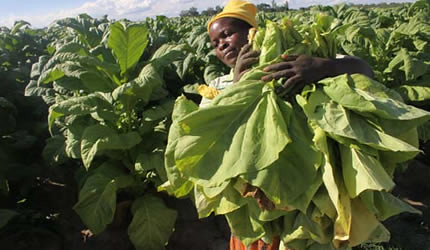
The few private investors in cotton and tobacco saved these two sectors from total collapse by funding the A1 and A2 farmers with inputs and extension support.

Just after 1999/2000 the whole agricultural support infrastructure collapsed. The suppliers of agricultural equipments and manufacturers of fertilisers almost vanished or were running their plants at less than viable capacity due to lack of balance of payment support.

The decline in Government revenue resulted in support to agricultural research by Agritex and funding to rural infrastructure getting almost drying up.

In nutshell just after the massive land redistribution which happened in a very short span of time, the whole agricultural sector collapsed and resulting in drastic change in financial situation of Government due to sanctions, lack of credit lines due to unserviced foreign debts and loss of revenue brought about by the sudden decline of an extremely flourishing agricultural sector of Zimbabwe.

Zimbabwe’s turnaround from a bread basket of Southern Africa to net importer of food grains is a tragic story.

In my opinion fast track land reforms were too fast. Reforms should have been done slowly and should have kept pace with ability of Government to support them.

Secondly, there is need to shift focus from using land reform for political gain and/or to control of politics of the farm inhabitants to commercialisation of the acquired land through issuance of title deeds and/or transferable leases so that the farmers can access private finance through monetization of the title or lease.

One can get into the unending political blame game, that is whether this disaster happened due to fast track land reforms or due to apathy of the international community.

But I think one should now look for a way forward and identify gains from land reforms.
There are several books written by reputable authors describing the gains from land reforms, that is increase in numbers for food and cash crop production.

There are also very strong critiques written by equally eminent writers denouncing such claims. This dispute is raging and will go on.
However, what I found during my very regular visits to rural Zimbabwe is that the sense of dignity which is now being enjoyed by farmers due to ownership of land has boosted their confidence and inspired them to achieve.

There is no doubt that an inspired person can do wonders provided the circumstances are right and the required support system is in place.

I also saw a noticeable change in human capability.

A farmer, who earlier worked as farm labourer and merely followed the dictates of white masters, now knows how much fertiliser is to be applied and when it is to be applied to his crop.

He now knows and understands the economics of his business and is able to do back of the envelope calculation.

My personal experiences during distribution of inputs by my father’s company to cotton farmers proved this point.

Many a time a farmer would come with detailed calculation of costs of his inputs and expected kilogrammes of seed cotton production per hectare and the average price of seed cotton in last three years to bring home the point that his net return would be so much.

Farmers calculated the net return on the investment of capital and labour and compared it with how much they would make in cash annually if they worked in my father’s factory instead of farming.

They had gained freedom of choice as well and their valuable labour could go where it earned maximum returns.

Such comparisons prompted them to look for ways and means to increase returns from farming. Such changes in human capability and resultant discussions led to very interesting business models being offered to farmers.

For example, my father’s company offered to some farmers a package deal of growing cotton with input support as well as employment during farming off-season in a cooking oil factory.

I personally saw a farmer bringing New York futures printout for July while he was selling his seed cotton in May with a proper calculation as to how much profit my father’s company will make and used that calculation to negotiate prices with buyers.

The field managers at our factory informed me that when my father first invested in Zimbabwe in 2003, the seed cotton was being bought by few white-dominated companies from mainly communal indigenous farmers at 15 US cents per kg.

The same seed cotton is now being bought by cotton companies at 50 US cents per kg with 2013 international lint prices being not very different from what they were in 2003.

Such positive change to revenue of farmer has been brought about by freedom of choice available to farmers and increase in competition brought about as a side effect of land reforms.

The other important change I noticed as a direct effect of land reforms has been the use of democratic practice in rural areas while taking economic decisions and the significant empowerment of women.

Farmers regularly participate in meetings to take collective decisions and exchange news and information about issues related to farming.

Rural district councils have become a forum for farmers to mutually discuss and decide levies on farmers and private companies.

Such fora are used by farmers to discuss and decide the conditions of doing business with private companies and collective bargaining on cost of inputs and produce prices.

They also act in a very democratic manner and discuss the terms of contract farming with private companies.
Once a majority takes a decision the decision is implemented.

The addition of women in the category of farmers and small-scale entrepreneurs has given a completely new perspective to the farming business and this change is a direct result of land reforms.

Women beneficiaries of land are much less in number than men but are more vocal in deciding the issues during council meetings.
The attempt towards gender equality has received the biggest boost from land reforms.

It is well-known that the contribution of women, who constitute more than 50 percent of population, in the economic activity, can uplift the fortunes of a country.

The awakening has happened in Zimbabwe and its benefits need to be harnessed.
The final issue is how such changes in human capability, democratic practice, women empowerment, sense of dignity, freedom of choice and action could be used for economic growth.

The experiences of rapid and sustained economic growth in Western nations, growth in BRICS, and especially in China, clearly prove that it is extremely necessary to have the above changes for rapid and more importantly, sustained economic growth.

The ground for rapid and sustained economic growth is ready in Zimbabwe and if there could be a fusion with other much needed factors, Zimbabwe can again become bread basket of Southern Africa much sooner than many people would anticipate.

Zimbabwe has so much land and resources that more than half of its population can catapult itself to middle class status very quickly.
There are a very large number of steps required to be taken by Government, its people, NGOs and the international community in order to achieve massive transformation of agricultural production in Zimbabwe and this is a very wide area of research.

However, I feel that just two important steps, that is transfer of title of land for farmers and blanket free permission to private companies to engage farmers in contract farming without Government interference, can yield immediate results.

I shall spend the next few months in Zimbabwe to explore further steps required for economic growth and will also attempt to devise and suggest practical and sustainable models of land redistribution.

Pranjal Bajaj is an Indian who was spent much time in Zimbabwe between 2003 and the present. He can be reached at pranjalbajaj95@gmail.com. His blog is pranjalbajaj95.blogspot.in

'Shape Up or Ship Out' in Zimbabwe Diamond Industry

‘Shape up or ship out’

December 30, 2013
Martin Kadzere and Golden Sibanda
Zimbabwe Herald

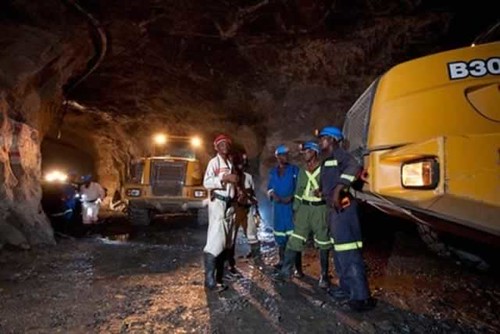
GOVERNMENT has laid strong terms on its demands that diamond mining companies extracting the gems in Chiadzwa should invest more funds to exploit deep seated conglomerates or risk losing their mining licences.This comes as diamond mining firms have requested to be allocated more claims to extract alluvial gems after exhausting surface diamonds, arguing the now remaining deep seated conglomerates were expensive to mine.

Officials at the seven diamond mining companies licensed to extract the gems made the claims during a familiarisation tour of the mines by Mines and Mining Development Minister Walter Chidhakwa early this month.

Minister Chidhakwa said that the diamond mining companies must balance between exploitation of both the alluvial and conglomerate diamonds, and that they should have also planned for this possibility a long time ago.

It appears, the companies, largely bent on making quick profits without proper geological survey to determine how long the surface reserves would last, never had foresight or long term vision as to plan for requisite future investment.

Despite investing very little to extract alluvial diamonds and exploiting the precious metal for a number of years it appears most of the firms do not have readily available funds to immediately invest in extraction of conglomerates.

Mines and Mining Development Deputy Minister Fred Moyo last Friday said the diamond miners should look for the requisite resources and start extraction of conglomerates or risk losing their licences to other investors.

“They should look for capital to mine the conglomerates, all the diamonds, but if they don’t want other people will come and mine,” said Mr Moyo. “We have a lot of diamonds in Chiadzwa and more investment is needed.”

He likened the miner’s situation to the harvesting of low hanging fruits whereby a farmer would claim that there are no more fruits as soon as he is no longer able to reach the ones at a much greater height from the ground.

Alluvial diamonds are gems that are mainly found on the surface (sand, gravel and/clay) as a result of natural erosive action that even small scale miners can use basic equipment like sieves, shovels and pans to dig out.

To the contrary, conglomerate diamonds are gems found in deep seated rock consisting of individual stones (larger than sand) that have been cemented together and require highly mechanised machinery to extract.

Ostensibly, the diamond mining firms took advantage of Government’s benevolence in allowing them to simply start the extraction of alluvial gems without them first providing plans on how they would latter exploit conglomerates.

The companies, licensed to mine the diamonds — Mbada Diamonds, Marange Resources, Anjin Investments, Diamond Mining Company, Jinan, Kusena and Gye Nyame requested further allocations of untapped diamond fields, promising to revert to current claims when they get efficient technology, meaning no financial resources have been set aside for reinvestment, neither was their foresight that could have seen them prepare in advance for such an eventuality.

Zimbabwe cannot afford to compromise on the potential contribution of diamonds to economic development at a time when Government expects the mining sector to anchor economic growth, especially over the period 2014 to 2018.

And diamonds have a big role to play in this regard, particularly considering that it is believed that Zimbabwe has potential to account for a fifth of the billions of dollars generated annually from the sale of gems globally.

Zimbabwe Fiscal Policy More of Stabilization Than Stimulant Policy

Fiscal policy more of stabilisation than stimulant policy

December 30, 2013

FISCAL policy should be a tool used to either decelerate or stimulate the gross domestic product growth rate depending on the economic situation and in Zimbabwe’s case there was a need to stimulate the economy and this budget falls short on achieving that goal, but rather is a cocktail of stabilisation packages that should lay the foundation for future economic growth.

The 2014 National Budget was in some way admittance and acceptance by our government of the key challenges facing the nation away from the usual sanctions rhetoric. Finance and Economic Development Minister Patrick Chinamasa in a way tried to balance the aspirations of the new economic blue print, the Zimbabwe Agenda for Socio-Economic Transformation, which seeks to foster economic growth buttressed by increased public and private investment in the economy.

With a little sacrifice anything that is broken can be fixed, and Zimbabwe is no exception. The budget maintains the Government’s strategies and sets out the direction to maintain a stable macro-economic environment especially when one considers the sluggish global economic outlook characterised by low commodity prices, declining growth rates, and problems in the Euro-Zone among others.

It was important that the minister set the record straight concerning the use of multiple currencies and must continue to do so as and when the need arises, as in the past few months after the election a lot of rumours about the re introduction of the Zimbabwe dollar have been causing a lot of uncertainties and affecting consumer and business confidence.

Chief among the economic challenges is the prevailing environment of tight liquidity which the Minister Chinamasa rightly put, is weakening aggregate demand (total demand for goods and services in an economy) hence slowing down economic growth.

This saw a downward revision of projected economic growth from 5 percent to 3,4 percent for the 2013 financial year. Although the normal course of action would have been to introduce tax cuts in order to stimulate aggregate demand; however given our current circumstances the government needs every cent in its coffers and it comes down to affordability of the Government to finance the tax cuts.

The focus of this budget was to create a certain level of confidence that could bring in the much need investment to stimulate economic growth. The government should realise that we live in a world of scarce capital and therefore capital always flows where it is in the best interest of owners of such capital, unless of course a country has a resource that can allow the bending of the rules, the Chinese have over a billion people which translates into a large market and the Arabs have oil and these become exceptions.

The reduction in money supply and credit, exacerbated by a decrease in Government and private investment spending as well as a threats of more bank failures has now ushered in a new threat to the economy. Zimbabwe is now at risk of falling into a period of price deflation, as explained by the minister.

This could mean further job losses, falling profits, shrinking incomes, and increasing defaults on loans; further shrinking the tax base as deflation always idles production capacity.

With deflation comes the loss of value in stocks, property, and commodities. Such a scenario will see a lot of people holding cash. With the multiple currency system the ability of printing more money as a preventive measure against deflation is non-existent.

It was surprising however that the minister did not detail the preventive measures; maybe he is leaving that to the Reserve Bank of Zimbabwe’s monetary policy statement, but at least some statement would suffice. A number of measures should therefore be put in place including recapitalising the banks, and obviously improving investment inflows.

One of the key points set out in the budget is the issue to do with the resolution of Zimbabwe’s external debt which the minister said is an impediment to normalising the relationship with international creditors, and undermining the country’s creditworthiness.

Strict implementation of the Zimbabwe Accelerated Arrears Clearance Debt and Development Strategy becomes a priority and this would be the key in convincing international lenders about the country’s level of seriousness in resolving the country’s obligations.

At this juncture it is very important that the government does not deviate from the staff monitoring programme as well as working in strategic partnership with the IMF and World Bank.

It is a fact that the world will never change so as to accommodate Zimbabwe’s demands, and our present situation will never have a bearing on the global economic system, thus unfortunately we have to adhere to the demands of that system.

It is clear that the Government’s policy agenda in this budget going forward focuses on growing the economy, creating jobs in the process and providing social security for Zimbabweans as can be seen by the proposal to set up a Sovereign Wealth Fund, as well as the restructuring of National Social Security Authority to focus more on investments that create value for policy holders.

However we believe that rather than create a new SWF altogether a more appropriate scenario would have been transforming NSSA itself into a Sovereign Wealth Fund. NSSA already has the assets, cash flows, infrastructure, investment expertise, a decent balance sheet, and it is the only quasi-government entity with the ability to go onto the international market for a bond issuance.

The critical question is how will a new SWF going to be funded? The National Indigenisation and Economic Empowerment Fund is already highly leveraged and will definitely take a number of years to get it to be cash positive.

The budget is also targeted at improving the livelihoods of the people through the provision of improved social services like health care; education and training; and early childhood development.

Indications are that improvements have already been registered in most of these areas and this is rightly an indication of progress. One thing the minister highlighted which is of concern to the majority of Zimbabweans in general is the lack of accountability in diamond mining, with zero diamond revenue being received by treasury.

What seems to be the case is the awarding of diamond mining concessions to entities lacking both the requisite expertise and capital. An ideal scenario would have been the auctioning of diamond mining concessions to investors, with the concession going to the highest bidder. This process is in itself transparent and would have at least guaranteed revenue to the government.

The process could also include other minerals like platinum, tungsten, gold, coal, and iron ore. The auction process would to a certain extent include securitisation of these resources, with repayments offset by future revenues and royalties expected from the eventual sale of the commodities. If this is done in transparently, the economy will benefit tremendously.

The truth of the matter is resources no matter their value, are useless so long as they remain in ground. The current selection criterion for Zimbabwe Mining Development Corporation partners is questionable and inefficient. It is therefore critical that the proposed policy guidelines on joint ventures be gazetted by the proposed February deadline and these should be enforced to the later.

The minister is right in highlighting the need to support productivity in the manufacturing sector as any other measures to curtail imports could potentially be catastrophic for the economy as there is no adequate capacity by local manufacturers to fill the demand-supply gap that has necessitated the increase in imports.

The minister should have earmarked more financing to support low cost financing for the manufacturing sector by re-looking and repositioning the distressed companies fund, into a fund that invests in distressed debt. While some imports are luxuries, the bulk of them are food items.

Guaranteeing food security will also reduce our food imports. The planned national irrigation development fund is a good start towards increasing the total hectares under irrigation from the present 200 000 hectares.

The fund should play a key role in improving the production of crops locally, but given that Agriculture is the main driver of the economy the funding earmarked in our opinion is inadequate.

The Government is taking a step in the right direction by resolving the issues surrounding the RBZ. The focus will be on capitalisation, assumption of RBZ debt, and restoration of lender of last resort. It is important that the minister adheres to his own set targets in regards to the RBZ, as this in a way is a confidence booster.

The minister also proposed a US$100 million interbank programme supported by the African Export Import Bank, which is a good initiative, but the quality of assets sitting on the balance sheets of some banks might hinder the programme.

Bringing confidence to the banking sector in our opinion takes more than an interbank programme. What is needed and critical at the present momentum is a realistic solution as to the way forward regarding the toxic assets sitting on most banks balance sheet which is potential future problem that is brewing.

At 15 percent the non-performing loans are too high and a drag on the performance of the financial services sector, and this needs to be corrected at the earliest as the domino effect of bank failures could be catastrophic to an economy.

Failure to rectify this issue will only save to worsen the liquidity situation with banks failing to honour deposits on demand leading to bank runs and more failures.

While the minister was correct in his assessment of the bearish sentiments of the local stock market and the limited participation of local investors. The lack of investment by local investors is as a result lack of domestic savings including pension arrears and to a certain extent low levels of disposable incomes.

One of the major concerns in the budget statement is the resumption of the Fidelity Printers and Refineries as the sole buyer and exporter of gold. Monopolies never work and in most cases distort the market. This policy shift in the long term will lead to depressed local gold prices thereby we shall see an increase in the smuggling of the precious minerals.

The minister reiterates the allocation of resources to curb smuggling but at what cost? This could defeat the whole purpose of growing the economy as we shall witness a reduction in investment in gold mining as historically Fidelity Printers and Refineries has failed the gold industry. An ideal situation is promoting competition in gold buying so as to promote fair pricing and enhancing the development of the sector.

The long term desire of this government is to reduce recurrent expenditure to 30 percent of the budget by 2018 down from 70 percent and to achieve a GDP growth rate of 6 percent for the 2014 fiscal year. This is a major shift from a focus on recurrent expenditure to a growth oriented policy promoting infrastructure projects, with a strong emphasis on power generation, which in turn creates employment and over the long term increases aggregate demand.

The action taken by the finance minister in the Government’s first budget post Government of National Unit is aimed at maintaining stability, restoring confidence and sets out a strategy to put the economy on a course to long term growth. It is why one of the most critical comments to come from the minister is what he termed as confidence building measure to try and turnaround the economy.

What would be crucial in boosting confidence would be transparency, policy consistency, and strict adherence by ministries to budgetary allocations. In the long run this will help the country develop a positive track record in governance, economic management and restore investor confidence.

It is worth mentioning that the government has taken the doing business reforms seriously, however in our opinion the need to have an organisation like Zimbabwe Investment Authority itself goes against the grain as it is not necessary to have a parallel approval process?

ZIA should just focus on investment promotion and facilitation.

Going forward it is then imperative that over the next five years the government’s fiscal policy should work on achieving the following:
Over the long term reduce donor dependency of the National Budget by replacing these with funding from royalties received by treasury in the mining sector. This means vigorous promotion of investment in the mining sector.

Prioritise agriculture expenditure on priority crops and smallholder farmers focusing more on irrigation to avert food imports
Increase capital expenditure on technology, equipment and machinery in agriculture that benefit smallholder farmers.

— FinX.