Wednesday, June 29, 2022

Amhara, Oromia States Toil in Unison to Counter Terrorism

ADDIS ABABA – Chief Administrators of the Amhara and Oromia states expressed firm stance to counter the terrorist and extremist forces’ attempts to disrupt the peaceful balance that exits between the two largest ethnic groups of the country.

Amhara State Chief Yilkal Kefale (PhD) and his Oromia State counterpart Shimeles Abdissa exchanged views on ways to deter the Terrorist-Shene’s ethnic- motivated killings of civilians in different parts of Oromia on Sunday. Accordingly, they came to terms to strengthen the law enforcement operation to neutralize the criminal faction.

As to Yilkal, Shene’s ethnic-motivatedkillings of civilians aim to create dismemberment and disrupt the age-old peace of the country. “In collaboration with the Oromia State, we will work to ensure peace and order and not allow similar atrocities to be committed on the defenseless people.”

The leadership should bear common understanding to prevent such kinds of atrocities and ensure peace and stability. Leadership at all levels should guarantee the safety of civilians and take appropriate measures to prevent future problems. “All Ethiopians also expected to support the law enforcement efforts across the country.”

 As to Yilkal, both states have been exchanging information in the border areas and forming a joint committee to fight the common enemy. “Shene is not only the enemy of the people of Amhara, it is the enemy of all Ethiopians.”

Oromia State Chief Administrator Shimeles Abdissa said for his part T-Shene has been employing violence, killing, attacking and abducting of civilians as the means of achieving its ill-intended goal. As a result, the leadership and security forces of the Oromia State paid noble sacrifices while defending their people.

Shimeles further highlighted that Shene’s frequent attacks on ethnic Amharas targeted to create a hate and suspicion between the people of Amhara and Oromo. “The hearts of the people of Oromo have been broken by the radical element’s recent killings of ethnic Amharas in Wollega though the attack will never break our unity and brotherhood. We should not only condemn the act, but also work together to maintain our country’s unity and will take merciless actions against the terrorist group.”

The two states reached consensus to work together for the successful conduct of the law enforcement operation and consolidate the military, political and security apparatus, he remarked.

BY TSEGAYE TILAHUN

The Ethiopian Herald  28 June 2022

Ethiopia Says Sudanese Defense Force Misrepresented Facts About Border Incident

June 27, 2022

The Ethiopian government tends to believe that the recent incident along the Ethio-Sudan border area is a “concocted” one. 

Disputed Al-Fashaga area between Ethiopia and Sudan border ( Map : Institute For Security Studies)

Borkena 

After Sudan accused Ethiopia of capturing and executing seven Sudanese soldiers,  the Ministry of Foreign Affairs of Ethiopia on Monday said that the Sudanese Defence Forces misrepresented facts about the border incident which is said to have occurred on June 22, 2022. 

On the date mentioned above, the Sudanese forces, with support from the TPLF terrorists,  made additional incursions into the Ethiopian territory along the border –  a development that triggered a skirmish with the local militia. 

Sudan made claims, according to a report by Reuters, that its soldiers were taken from within the Sudanese territory and executed in Ethiopia. 

The update from the Ministry of Foreign Affairs of Ethiopia admitted that there were losses [unspecified number] of lives during the clash between local militia and Sudanese forces. 

“The Ethiopian Government regrets the loss of life as a result of a skirmish between the Sudanese army and a local militia of which an investigation would be carried out soon,”  said the statement from the MFAE. 

As to the narrative from the government of Sudan regarding what it called “execution”, Ethiopia rejected it as a “misrepresentation of facts.” 

The Ministry said, “Whereas the above was what has transpired at the common border, the Government of Ethiopia categorically rejects the misrepresentation of these facts by the Sudanese defense forces that unjustly put the blame on Ethiopia while it was the Sudanese army unit that has crossed into the Ethiopian border provoking the incident.” 

Sudan invaded Ethiopian territories in November 2020 soon after the Ethiopian troops posted in the area were relocated to Northern Ethiopia to carry out what the Ethiopian government called at the time “law enforcement operation” against the Tigray People’s Liberation Front (TPLF) after the latter attacked the Northern Command of the Ethiopian Defense Force in the same month. 

It appeared that Sudan was coordinating with the TPLF. This month,Simo Parviainen,  a former Finnish diplomat warned that TPLF is working with partners in Sudan and Egypt as part of its preparation for the next round of war. 

There were also reports that over 20,000 TPLF troops were in Sudan poised as asylum seekers. Despite talks for peaceful negotiation, the TPLF government has been making preparations to launch another round of war against Ethiopia. 

Sudan is recalling, according to an Aljazeera report, its Ambassador to Ethiopia. 

For the government of Ethiopia, the latest incident along the Ethio-Sudan border area is a manufactured one with the intention to distract Ethiopia from its effort to attain development. 

“The Government of Ethiopia believes that the incident was deliberately concocted to undermine the deep-rooted relations between the peoples of Ethiopia and the Sudan. On top of that, the incident was designed to destruct [distract] Ethiopia from its path of peace and development,” said the statement from the Ministry. 

Meanwhile, Egyptian News sources are reporting that Sudanese forces took control of territories in Ethiopia. 

 In breaking news coverage, Daily News Egypt reported ” Sudan’s army says it took control of “Frankincense Fortress” military camp in Al-Fashaga after intense fighting with Ethiopian forces. This comes as the Sudanese army vowed to avenge the 7 Sudanese soldiers who were executed in Ethiopia.” 

The Ethiopian government did not remark on that at this writing. 

Ethiopia Says it is Ready to Cooperate with Investigation of Sudanese Soldiers “Execution”

June 28, 2022

Sudan news sources claim a large-scale offensive in retaliation for soldiers killed within the Ethiopian border. Ethiopian Defense Force said there were no troops deployed to the area into which the Sudanese Forces made an incursion last week    

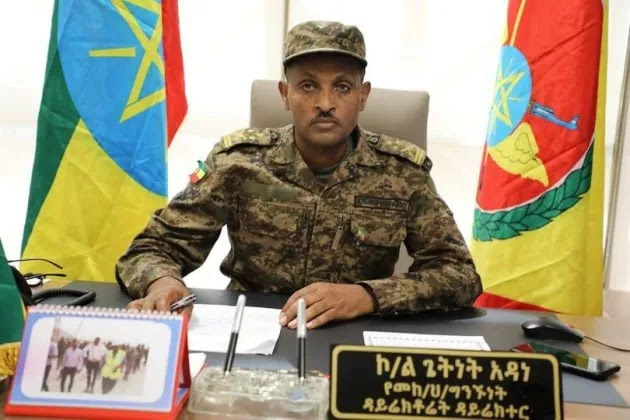
Colonel Getnet Adane , Ethiopian Defense Force Public Relations Director ( Photo credit : ENA

Borkena 

Ethiopian Defense Force Public Relations Director, Colonel Getnet Adane, on Tuesday, said that the Ethiopian Defense Force is ready to cooperate in the investigation of claims of execution of seven Sudanese soldiers.

“Regarding the attack, if there is any entity interested in investigating it, Defense Force representatives from the two countries could form a committee and the Ethiopian Defense Force is ready to cooperate,” he said, as cited in an Ethiopian News Agency report.  

The claim, on the part of Sudan, that the Ethiopian Forces executed soldiers in a way that violates war captive treatment is baseless, it was said. 

Colonel Getnet said that the Ethiopian Defense Force was not posted in the parts of Ethiopian border areas into which the Sudanese force made incursions last week. 

He added that Sudanese Forces who made incursions into the Ethiopian area “clashed with local militias[from the Ethiopian side]”, and that there were casualties on both sides. 

“The Ethiopian army does not operate like a bandit. It has a strict command system and will not act without orders from the government,” Colonel Getnet said.  

The Ministry of Foreign Affairs of Ethiopia on Monday issued a statement saying Sudan misrepresented the facts about the death of seven Sudanese soldiers inside the Ethiopian border in the Al-Fashga area. 

Claims of large-scale military offensive by Sudanese Forces 

Meanwhile, Sudan news sources are making claims that the Sudanese  Defense Force launched an extensive attack on the Ethiopian Defense Force positions in the Al-Fashaga area. 

Sudan Tribune on Tuesday said, “Sudanese army launched a large-scale attack on the Ethiopian troops remaining inside the disputed border area of Al Fashaga on Tuesday.” 

It also cited a reporter in Gadaref to report that “the Sudanese army retook Kala-Leban and Barkhat settlements and Tesfai Adawi Hills in the Fashaga.” 

The number of casualties from this operation is unspecified but it said that “dozens of Ethiopian troops” were captured. 

The Ethiopian government has not yet remarked on the claims of the Sudanese Forces victory in Al-Fasgaga following the incident on June 22. 

Ethiopian analysts and activists related the latest crisis along the Ethio-Sudan border to a move made to obstruct the third filling of the Grand Ethiopian Renaissance Dam.

The Ethiopian government on Monday said the crisis was a concocted one.

Al Burhan’s government of Sudan has been supporting the Tigray People’s Liberation Front (TPLF) after the latter attacked the Northern command of Ethiopian Forces in November 2020.

Ethiopia Dialogue Forum Statement on Amhara Genocide

June 26, 2022

Ethiopian Dialogue Forum Board calls for an end to deliberate and Accelerated Amhara Genocide. Appealed to the international community and to all Ethiopians

From the Ethiopian Dialogue Forum Board (EDF) 

The 1994 Rwandan Genocide that claimed the lives of hundreds of thousands of ethnic Tutsis shocked the entire world. Yet, the Ethiopian census of 2007 that showed 2.5 million ethnic Amhara missing did not draw attention at all. It became local news for a brief time. Ethiopians and the rest of the world forgot this ominous episode quickly. Since the replacement of the Socialist regime by the Meles-led TPLF/EPRDF regime in 1991, a pre-planned destruction of the Amhara people was set in motion using different methods-mass killings, displacements, and dispossession of Amhara everywhere in the country, the burning of Amhara-majority towns, villages, and places of worship, and the relentless expulsion of Amhara from their homesteads, localities, jobs, and enterprises. The culprits behind this synchronized and recurrent action intended to kill the will of Amhara to live.

Despite this extreme oppression, the Amhara fought for change for more than 27 years at great human sacrifice. Amhara paved the way for Abiy Ahmed’s rise to power in 2018. Amhara celebrated his rise with hope. But since the coming to power of Abiy Ahmed’s regime in 2018, atrocities against the Amhara accelerated through the agency of Oromo ethno-nationalists who felt empowered. Tens of thousands of Amhara killed. Regional and local ethnic elites displaced millions from regions of Ethiopia now named Oromia and Ben Shangul-Gumuz. These displaced millions are slowly dying from lack of food, abysmal shelters, and absence of any medical care. Victims live in extremely overcrowded concentration camps. These concentration camps abound around many Amhara-region towns like Bahir Dar, Debre Tabor, Dessie, Debre Berhan, and tens of others.

In addition to the wars that have been unleashed on the Amhara from the Tigray People’s Liberation Front (TPLF) in the north and east and the Oromo Liberation Army (OLA) in the South and West of the Amhara majority regional state, regional Special forces and militia as well as Ethiopian federal government forces and security initiated and commanded target Amhara and attack forces everywhere are carrying out unceasing mass murder of Amhara peasants and poor people in the so called Oromia and Ben Shangul-Gumuz regions in full view of the world.

Surviving victims have provided eyewitness accounts to the international and local media that local government authorities, police, militia, Special Forces, and others have participated in mass killings and the eviction of Amhara. Documentary evidence, eyewitness accounts and other testimonies are available in video recordings in the Ethiopian Diaspora media and other archives. Videos showing bulldozer-assisted burials of hundreds of Amhara in mass graves are also available in different YouTube archives.

The most recent gruesome Rwanda-like genocide of more than 1,500 Amhara infants, children, pregnant women, the elderly, men, and women of all ages occurred on June 18-19, 2022. This latest figure differs from the locally reported figure of four hundred. This time, the international media woke up and reported this latest genocide like massacre targeting Amhara solely because they are Amhara.

Most international media– BBC, Guardian, NBC, AP, AFP, NPR, PBS New Hour, New York Times, Washington Post, and other media reported on June 19 and June 20, the early estimates of those murdered in a single day at two hundred. Tragically, this initial number continues to rise rapidly as local surviving residents uncover hundreds of dead bodies each hour and each day scattered in several locations and, in many cases, decomposed. On June 20, 2022, the BBC reported on “Ethiopia Violence in Oromia” and wrote “about villages full of dead bodies.” Its investigation showed those slaughtered were all Amhara bodies.

EDF joins other Ethiopian groups in urging that the United Nations, the African Union, the USA, members of the European Union, specialized UN agencies, all human rights organizations, and all members of Ethiopia’s huge Diaspora across the globe express moral outrage and condemn this latest Amhara genocide perpetrated by the Oromo Liberation Army/Shine and its regional and federal government enablers.

EDF also urges Western and African Governments as well as the UN High Commissioner for Human Rights in partnership with the Ethiopian Human Rights Commission to demand that the federal government of Ethiopia establish a credible and independent investigation body promptly and charge it to conduct a thorough investigation of Amhara genocide and bring the culprits to a court of law. We believe accountability is imperative.

EDF joins Ethiopians around the globe in demanding accountability at the highest level of the Federal Government of Ethiopia led by Prime Minster Abiy Ahmed Ali as well as the regional state administration of Oromia led by Mr. Shimelis Abdissa. There cannot be justice or peace or development without accountability for crimes of genocide.

Finally, the EDF Board and members urge the Ethiopia Diaspora to conduct peaceful demonstrations across the globe using the hashtag “Stop Amhara genocide now.”

The sponsor of this appeal, the, Ethiopian Dialogue Forum (EDF) is a USA based think-tank duly registered as a 501 (C) (3) non-profit organization. Since its formation more than a decade ago, EDF has engaged prominent scholars, academics, activists, political leaders, legal and other experts; and sponsored one hundred forums; and disseminated findings on institutional and structural policy issues that affect Ethiopia and the rest of Africa.

Ethiopian Dialogue Forum (EDF) 

Ethiopian Police Attacked University Students in Addis Ababa

June 26, 2022

Abiy Ahmed came to power following prevalent protest in the country about four or five years ago. Now he is himself facing protest in many parts of Ethiopia over the massacre of ethnic Amhara 

One of the Addis Ababa University students who was attacked by Federal Police on Saturday June 26, 2022 in the capital Addis Ababa. (Photo: Social Media)

Borkena 

Ethiopian Federal Police attacked Addis Ababa University students who were protesting against genocide on Amhara in the Wollega region of Ethiopia. 

Hundreds of Students gathered from the Addis Ababa University campuses on Saturday morning to add their voices against what many Ethiopians believe is an orchestrated genocide against unarmed ethnic Amhara communities in the Wollega region of Ethiopia. 

Addis Ababa University Students’ Protest came a day after Gondar University Students took to the street to protest against the periodic and seemingly unending massacre of ethnic Amhara communities in the Oromo region of Ethiopia. 

No students are reported dead from police brutality in the capital Addis Ababa. However, some students were severely beaten by the Federal Police. 

Pictures circulating on social media (like the one featured above) show students soaked in blood after they were attacked by police. 

About 200 Addis Ababa University students made it to the street for the protest, according to the source.  

The Federal police had received information earlier and did not allow many students to leave campus to join the protest, DW Amharic reported, on Saturday, citing university Students. 

The students reportedly told the source that they were within their constitutional rights and were marching with bare hands. 

They did not chant offensive slogans blaming the government. They chanted slogans calling for an end to the ethnic-based killing. 

Federal police members were seen near Addis Ababa University campuses right after they dispersed the hundreds of students who attempted to march on the streets. 

There were also defence force members in a pickup and armed with snipers, according to DW Amharic report. 

Local sources say as many as 1500 ethnic Amharas were savagely massacred in the latest string of attacks in the Wollega region of Ethiopia. 

Hundreds of others were wounded and thousands dispersed in the jungles hoping to escape from the attackers. 

The military wing of the Oromo Liberation Front (the government calls it Shane) has been launching a recurrent attack against Ethnic Amhara communities in the rural area of the Wollega region over the past four years (since Abiy Ahmed became Prime Minister). 

Some government authorities in the area where the massacre took place are said to have been involved in facilitating the attack. Government security forces were not, according to local sources, deployed for several hours to the area as the radical Oromo nationalist armed groups were roving the villages for a killing spree. 

An increasing number of Ethiopians now tend to believe that Prime Minister Abiy is either weak with no ability to tackle the security crisis or that he has sympathy for the radical ethnic nationalist group.

Amhara Region Police Arrest Six Over Alleged Terror Plot

June 28, 2022

A total of 20 arrests including those who are said to have collaborated in what police call the Bahir Dar terror plot. Federal and regional authorities involved in investigating it 

Bahir Dar City (Photo /File. Source: social media)

Borkena 

The Amhara regional state on Tuesday said it has arrested what it called suspects who were on the move to launch a terrorist attack in Bahir Dar city, the seat of the regional administration. 

Fourteen others who are said to have collaborated with the suspects, according to the regional police, are also arrested. Residents of the city are said to have collaborated with security forces in making the arrest possible. 

Authorities say that the suspects exploded grenades in four locations in the city on Monday evening. 

A report by Amhara Media Corporation (AMC) indicated that police searched the residences of suspects on the same day.  

Police made further claims that it had seized a sniper, two grenades, a machine gun, and more than 3700 ammunition during the search operation in the residences of the suspects. 

It is unclear whether the suspects are linked to organised groups or if their move was politically motivated. 

AMC, government-owned media, cited Commander Debalke as saying that Federal and regional authorities are undertaking an investigation on the suspects ( whose identities are undisclosed at this point in time), and the result will be made public. 

The Amhara regional state had been undertaking a crackdown since last month. It was claiming that it is targeting groups who are operating in the region under the guise of FANO but working either for enemies of Ethiopia or to achieve a criminal purpose. 

Over 4500 residents were arrested in the operation. 

Opposition parties and activists have criticised the government crackdown. Many believed that it was intended to weaken FANO – a  volunteer militia group that played a key role in reversing the TPLF military invasion of the Amhara region. 

Ethiopia Names Negotiators for Looming Tigray Peace Process

Tesfay, center, sits with his wife and grandchildren, who have been displaced for 18 months, as they receive food assistance for the first time in 8 months from the World Food Programme (WFP), in the town of Adi Mehameday, in the western Tigray region of Ethiopia, Saturday, May 28, 2022. Hunger is tightening its grip on millions of people in Ethiopia who are facing a combination of conflict in the north and drought in the south while dwindling resources mean food and nutrition support may run dry from next month, the World Food Programme (WFP) warned Thursday, June 23, 2022. (Claire Nevill/WFP via AP)

NAIROBI, Kenya (AP) — Ethiopian authorities have named a team of seven negotiators for possible peace talks with Tigray forces.

The announcement comes after Ethiopian Prime Minister Abiy Ahmed announced earlier in June the formation of a committee to handle negotiations with Tigray’s ruling party, which the government declared a terrorist group last year.

“The ruling Prosperity Party has laid out plans to settle the war in northern Ethiopia peacefully,” Justice Minister Gedion Timothewos told state media late Monday.

The government’s negotiating team will be led by Deputy Prime Minister Demeke Mekonnen, he said.

Tigray’s leaders have not yet commented on the latest announcement by the federal authorities of the East African nation. But the region’s top official, Debretsion Gebremichael, said in an open letter to the international community on June 15 that his side is open to peace talks. He also warned that his group’s “readiness to go the extra mile for peace must not be misunderstood as a readiness to abandon our principles from weakness or greed.”

The African Union special envoy, former Nigerian President Olusegun Obasanjo, has been traveling within Ethiopia in recent weeks as he tries to get both sides to talk.

It remains unclear where the peace talks would happen. Tigray officials have said they are prepared to meet in Nairobi, the Kenyan capital, in negotiations hosted and facilitated by the Kenyan president.

Ethiopia’s deadly war in the northern part of the country has caused tens of thousands of deaths and displaced millions more.

Tigray has been mostly cut off from the rest of Ethiopia after Tigray forces re-captured the regional capital a year ago and federal forces withdrew. A truce declared by the government in March has led to a significant increase in aid reaching Tigray by road after months of deprivation.

Spanish PM Blames Traffickers, Migrants for Deaths at Border

By JOSEPH WILSON and ARITZ PARRA

FILE - Riot police officers cordon off the area after migrants arrive on Spanish soil and crossing the fences separating the Spanish enclave of Melilla from Morocco in Melilla, Spain, on June 24, 2022. Spain's prime minister on Monday, June 27, 2022, defended the way Moroccan and Spanish police repelled migrants the week before as they tried to cross the shared border into the north African enclave of Melilla, depicting the attempt in which at least 23 people died as “an attack on Spain's borders.” (AP Photo/Javier Bernardo, File)

MADRID (AP) — Spain’s prime minister has defended the way Moroccan and Spanish police repelled migrants last week as they tried to cross the shared border into the north African enclave of Melilla, depicting the attempt in which at least 23 people died as “an attack on Spain’s borders.”

“We must remember that many of these migrants attacked Spain’s borders with axes and hooks,” Prime Minister Pedro Sánchez said during an interview Monday with The Associated Press. “We are talking about an attempt to assault the fence that was evidently carried out in an aggressive way, and therefore what Spain’s state security forces and Moroccan guards did was defend Spain’s borders.”

Authorities in Morocco have blamed the deaths on a “stampede” of people that formed early Friday as hundreds attempted to scale or break through the 12-meter (29-feet) iron double fence.

The barrier surrounds Melilla, a town of 85,000 separated from the Spanish mainland by the Strait of Gibraltar.

United Nations Secretary-General Antonio Guterres was “shocked” at the images of violence, U.N. spokesman Stephane Dujarric told reporters at U.N. headquarters in New York.

Dujarric said the use of “excessive force” by authorities on both sides of the border “needs to be investigated because it is unacceptable.”

“States have obligations under international law, and international human rights law and refugee law” which “must be upheld,” he said.

Nonprofits working in northern Africa and human rights organizations have deplored the treatment the migrants received from police on both sides. But they have also directed their blame at Spanish and European Union officials who they say have essentially outsourced border controls to Morocco and other states.

Sánchez, whose left-to-center government is trying to improve ties with Morocco following an acrimonious diplomatic dispute over Western Sahara, has refused to criticize the crackdown.

Speaking at the palace on the outskirts of Madrid that hosts his office and residence, Sánchez told AP that his thoughts were with the families of those who died. But he blamed the tragedy on “international human trafficking rings who are profiting from the suffering of human beings who only want to seek a better life.”

“I insist, these are international mafia groups that are not only damaging the territorial integrity of Spain but also that of Morocco, which is a country suffering that irregular migration.”

Sánchez spoke to AP on the eve of hosting NATO leaders in a summit that aims to redraw the defense alliance’s strategy for the next decade. While Russia’s invasion of Ukraine will take center stage at the Wednesday and Thursday meeting, the group will also debate its posture on Africa, where Russian mercenaries are adding to concerns about migration, extremism and the impacts of poverty and climate change.

Footage uploaded to social media shows how a large number of migrants approached a section of the fence and began scaling it. Some of the migrants hurled rocks at Moroccan anti-riot police trying to stop them. At one point, the fence collapses, sending many of the migrants to the ground from a height of several meters.

In at least one video released by Spanish online news website eldiario.es, Spanish guards can also be seen escorting migrants back to the Moroccan side, a practice that human rights activists say denies the right of refugees to apply for asylum on European soil.

More gruesome videos and photos posted online appear to show the aftermath of the crossing attempt, with scores of young men, some of them motionless and others barely moving and bleeding as Moroccan security forces stood over them.

At least 76 civilians and 140 security officers on the Moroccan side, and 60 National Police and Civil Guard officers on the Spanish side, were injured, according to their respective governments. A small group of African men who did make it across the fence were taken to a migrant holding center in Melilla.

Moussa Faki Mahamat, head of the continent’s largest grouping of countries, the African Union, has called for an investigation into the deaths. In a tweet, Mahamat said he wanted to “express my deep shock and concern at the violent and degrading treatment of African migrants,” adding that all countries have “obligations under international law to treat all migrants with dignity and to prioritize their safety and human rights while refraining from the use of excessive force.”

While Moroccan authorities say 23 people died in addition to scores of injuries both among the migrants and border guards, activists claim that the death toll is higher and denounce the EU’s policy of striking deals with Morocco and other states like Turkey to control migration flows.

A group of 51 human rights groups said Monday in a joint statement distributed by Spanish NGO Walking Borders that the deaths “are the tragic example of the European Union’s policies of externalizing its borders, with the complicity of a southern country, Morocco.”

“The death of these young Africans at the borders of ‘Fortress Europe’ is a warning of the deadly nature of the security cooperation on immigration between Morocco and Spain,” the statement added.

Spanish authorities in Melilla, meanwhile, are using the most recent attempt by migrants to cross over in mass numbers to make an appeal for even greater guarantees on their territorial security. Last year, when relations between Spain and Morocco were frayed, Moroccan border guard let thousands of people cross in a few hours in Ceuta, Spain’s other enclave city in Africa.

Since then, the Spanish media has been rife with debate about whether NATO would help Spain out if its hold of Melilla and Ceuta was ever in jeopardy.

“Melilla is Europe’s southern frontier, and that is why Europe must look to the south,” Melilla chief Eduardo de Castro said Monday.

___

Edith M. Lederer at the United Nations contributed.

Tuesday, June 28, 2022

Cameroon’s Separatists Suspected of Rural Attack Killing 30

By Edwin Kindzeka Moki

YAOUNDE, Cameroon (AP) — Suspected separatist rebels in western Cameroon attacked rural villages, killing at least 30 people, say health workers in the Akwaya district.

Injured survivors are being treated at the Presbyterian Hospital in Akwaya, according to Samuel Fonki, a Presbyterian Church moderator.

“We community leaders and clerics were planning peace talks to end the matter (conflict with separatists) and then this unfortunate incident took place where 30 people including children, women, young girls, men and the old were massacred by some armed men,” said Fonki.

“Some civilians were even burned in their houses. We want to plead that the government should put a very strong military base in Akwaya since that area is also near Nigeria,” Fonki said.

Separatists have denied claims their fighters are responsible for the Akwaya massacre. They blame armed groups operating across the border in Cameroon and Nigeria.

Hundreds of frightened civilians fled their villages to safer spots near the border with Nigeria, said Fonki.

Among the dead were 5 Nigerian citizens doing business in Cameroon, said Fonki. Some of the wounded died while being evacuated to Nigeria for treatment in better-equipped hospitals, he said.

Cameroon troops are being deployed to protect civilians in Akwaya, said a local government worker who spoke on condition of anonymity for fear of retaliation by separatists.

Injured victims are still being rushed to hospitals in the district, said Enow Daniel Keyong, the highest government health official in Akwaya.

“Since the incident was very horrific, we medical staff members never had the courage to go to the field, so the injured were actually transported by relatives and villagers to the Presbyterian Hospital where we attended to them,” Kewong said.

He said most of the injured rushed to hospitals had severe head and chest injuries, from gunshots and machete cuts while a few had minor injuries.

“The severely injured were stabilized by Cameroon health workers and referred to neighboring Nigeria for continuation of care,” he said.

Cameroon’s English-speaking separatists launched a rebellion in 2017, with the stated goal of breaking away from the area dominated by the French-speaking majority country and setting up an independent, English-speaking state. The government has accused them of many of the atrocities committed against English-speaking civilians.

The separatist conflict has killed more than 3,300 people and displaced more than 750,000 others, according to the U.N.

Sudan’s FFC Strongly Reject Military’s Demand to Participate in New Transition Cabinet: Mariam

Mariam al-Mahdi

June 26, 2022 (KHARTOUM) – The military component demands to participate again in the transitional government but the Forces for Freedom and Change are strongly opposed to repeating the past mistakes, said Mariam al-Mahdi Deputy Head of the National Umma Party (NUP).

On June 9, the facilitation panel including the UNITAMS, the IGAD and the African Union suspended a dialogue process after the boycott of the FFC, while the U.S. and Saudi diplomats managed to hold direct talks between them and the military component to ensure the participation of the key political coalition in the political process.

The backchannel talks were slammed by the National Consensus of Darfurian groups allied with the coup leaders. They went to threaten to return to war if their participation in the government is ended.

In an interview with Al-Jazeera TV on Saturday, the FFC leading member stated that the coalition calls for the establishment of a fully civilian government that could include some qualified politicians while the government forces “play their role in protecting the homeland through a Supreme Council of the Armed Forces.”

She added that the military component explicitly proposed to them the re-establishment of a civil-military partnership again, but they rejected it.

“The military component talks about a civil-military partnership as it was before or a formula close to it. But we consider that this partnership was a mistake, weakening the Sudanese army and keeping it away from its duties.”

“The military are saying clearly that they should be part of the government, and we tell them clearly that you should not be part of the government”. She further stressed,

Al-Mahdi who recently met with a delegation from the National Consensus stated that the peace signatory groups aback the demand of the military to participate in the upcoming government.

Further in response to threats by former Darfur groups to return to war, the FFC leading member said that the participation of some Darfur movements in the coup generated bitterness among the Sudanese people.

However, she denied that the aim of the current dialogue is to exclude the signatory groups, despite the participation of some of them in the coup.

Also, she emphasized that issues of the war-affected regions are national issues after the revolution and are not the monopole of a specific political group or an armed movement.

The FFC official pointed out that they are considering the participation of the Resistance Committees in the next step saying “they are the entity that protects the revolution.”

She said that they need the Sudanese to continue to demand the removal of the military component from power.

“Dialogue alone is not enough and the role of the street is important and crucial,” she stressed.

Ethiopia Says Sudanese Soldiers Were Killed by Local Militia Group

Al-Burhan addressing troops in Al-Fashaga after the killing of 7 Sudanese soldiers on June 27, 2022

June 27, 2022 (KHARTOUM) – Ethiopia said that the Sudanese soldiers were killed by militiamen inside the Ethiopian territory but the head of the Sudanese army stated they would revenge for their killing.

Seven Sudanese soldiers and a civilian were killed and their bodies were displayed to the public, said the Sudanese army said on Monday.

The executed Sudanese military personnel went missing after fierce clashes with Ethiopian forces along the contested border on June 22, further said the military statement.

But the Ethiopian foreign ministry said the “tragic incident” took place inside the Ethiopian territory following an attack carried out by Sudanese troops with the support of “elements of the terrorist TPLF”.

“The Ethiopian Government regrets the loss of life as a result of a skirmish between the Sudanese army and a local militia of which an investigation would be carried out soon,” added the statement.

The Ethiopian government called on Sudan to “restrain itself from any escalation” of the incident and would take measures that could de-escalate the situation.

“The incident was designed to destruct Ethiopia from its path of peace and development,” said the statement.

During a visit to the area where the attack took place, General Abdel Fattah al-Burhan vowed revenge for the killed soldiers.

“I would not talk a lot about that but our response would be on the ground. We would show them that the blood of our martyrs will not be in vain,” said al-Burhan.

Despite the political crisis with the army, Sudanese political forces issued statements expressing support for the Sudanese army and denouncing the Ethiopian attack.

Sudan and Ethiopia have been at odds since November 2020, when the Sudanese army recovered Sudanese territory on the border area, particularly the Fashaga fertile triangle.

(ST)

Ethiopia Kills 7 Sudanese Soldiers, Civilian in Border Area

By SAMY MAGDY

CAIRO (AP) — Ethiopia killed seven Sudanese soldiers and a civilian in a border area in the latest sign of deteriorating ties between the east African nations.

A Sudanese military statement late Sunday described the killings as a “cowardly act” and said Khartoum would retaliate.

The killings violated “all laws and customs of war and international humanitarian law,” the statement said. It said Ethiopia displayed the bodies out in the open. It did not provide further details including how a civilian farmer was involved.

Sudanese media outlet Monte Carro posted a graphic photo online purportedly showing the bodies of seven dead in military uniforms lying motionless as a group of people looked on. It said the bodies were of the dead soldiers.

Sudan’s Foreign Ministry said in a statement Monday the eight had been taken into Ethiopia after the soldiers were held captive in an area inside Sudan on June 22.

The ministry said it was recalling the Sudanese ambassador from the Ethiopian capital of Addis Ababa and summoned the Ethiopian envoy in Khartoum to protest the killings. It also said it would complain to the United Nations.

Ethiopia’s Foreign Ministry confirmed the killings in what it described as “a tragic incident.” It said in a statement that a Sudanese military unit crossed into Ethiopia with the support of rebels from the Tigray region and suggested that’s when they were killed.

“The Government of Ethiopia, therefore, hopes that the Sudanese Government would restrain itself from any escalation of the incident and would take measures that could de-escalate the situation,” the statement said without elaborating.

Ties between the two neighbors have deteriorated in recent years amid a long-running border dispute over large swaths of agricultural land in the al-Fashaqa area. Sudan insists the lands are within its borders, according to an agreement that demarcated the boundary between their territories in the early 1900s.

Sporadic clashes have erupted over the past two years there, after Sudan said it reclaimed most of its territory and called on Ethiopia to withdraw troops from at least two points it says are inside Sudan.

In November, Sudan said six of its troops were killed in an attack by Ethiopian military and militia forces in the area. The two nations have held talks, most recently in Khartoum in December 2020, to settle the dispute over al-Fashaqa, but have not made progress.

Ethiopia, in turn, says Sudan took advantage of the deadly conflict in Ethiopia’s northern Tigray region to enter Ethiopian territory. It has called for Sudanese troops to return to positions they held before the Tigray fighting erupted in November 2020, pitting Ethiopia’s federal forces against regional fighters.

A controversial dam Ethiopia is building on the Blue Nile, the main tributary of the Nile River, is another point of dispute between Ethiopia and Sudan as well as between Ethiopia and Egypt. Both Sudan and Egypt are downstream.

The yearslong dispute now centers on how quickly Ethiopia should fill and replenish the reservoir and how much water it should release downstream in case of a multi-year drought.

Egypt, which relies on the Nile for more than 90% of its water, fears a devastating impact if the dam is operated without taking its needs into account. Ethiopia says the $5 billion dam on the Blue Nile is essential, arguing that the vast majority of its people lack electricity.

Sudan wants Ethiopia to coordinate and share data on the dam’s operation to avoid flooding and protect its own power-generating dams on the Blue Nile.

Egypt and Sudan say they want a legally binding agreement to regulate the filling and operation of the dam, but the three nations have failed to reach a compromise in their yearslong negotiations.

They Danced and Died: Tragic Teen Party Mystery in South Africa

By GERALD IMRAY

Yandiswa Ngqoza, with family members after identifying her daughters at the Woodbrook Mortuary in East London, South Africa Monday, June 27, 2022. South African authorities are seeking answers after 21 underage teenagers celebrating the end of school exams died in a mysterious weekend incident at a nightclub. The bodies of many of the victims were discovered by police lying on tables, slumped over chairs and sprawled on the floor of the club in the early hours of Sunday morning. (AP Photo)

CAPE TOWN, South Africa (AP) — South African authorities were seeking answers Monday, a day after 21 underage teenagers partying after the end of school exams died in a mysterious incident at a nightclub. The bodies of many of the victims, the youngest a 13-year-old girl, were discovered by police lying on tables, slumped in chairs and couches, and sprawled on the dancefloor of the club in the early hours of Sunday morning.

“They died as they danced,” Police Minister Bheki Cele said. “They dance, fall, and die. Literally.”

“Others would just feel dizzy, sleep on the sofa, (and) die. It tells you the story that they were all kids because somebody should have taken note.”

Speculation has swirled over the cause of the tragedy, starting with a stampede — that has now been ruled out — to a possible gas leak. Police have sent forensic samples from the victims to a toxicology laboratory to investigate if the teens ingested poison or a toxin at the party.

Police said they were called to the Enyobeni Tavern in the city of East London in Eastern Cape province at around 4 a.m. Sunday morning after receiving a report that there were “lifeless bodies” there. Officers responding to the call walked in on a grim scene: 17 of the teenagers were found dead in the nightclub. Two more died at a local clinic, one died on the way to another hospital and one at that hospital. Their ages were between 13 and 17, police said.

Police spokeswoman Col. Athlenda Mathe said an investigation was ongoing and no cause of death had yet been established.

But Cele said forensic samples were being sent to an advanced toxicology laboratory in Cape Town, indicating that police were looking at the possibility that poison or a toxin was involved. Cele said the toxicology tests might take “a lot of time.”

Provincial safety official Unathi Binqose told the Daily Maverick newspaper that the victims may have ingested a toxic substance through alcohol they were drinking or through hookah pipes, which were being smoked at the party. Initial reports speculated that the victims — 12 boys and nine girls — may have died in a crush because of overcrowding at the party, but authorities found no visible signs of injuries on the bodies and police have now ruled that out.

The teenagers were reportedly celebrating the end of mid-year exams, a local DJ’s birthday and the relaxing of some of the last COVID-19 restrictions in South Africa, which was announced earlier in the week.

Parents were asked to come to a mortuary to identify their children. The Eastern Cape health department said there were survivors being treated in the hospital for backache, tight chests, vomiting and headaches.

Police Minister Cele said the teenagers died between 2 a.m. and 4.30 a.m. Sunday morning. He had also visited the nightclub and the mortuary on Sunday and choked back tears as he spoke to reporters outside the mortuary.

“The sight of those bodies sleeping there ... when you look at their faces you realize that you’re dealing with kids, kids, kids,” Cele said. “You’ve heard the story that they are young but when you see them you realize that it’s a disaster. Twenty-one of them. Too many.”

South African President Cyril Ramaphosa, who is in Germany for the G-7 summit, offered condolences to the families of the victims in a statement but also said he was concerned why “such young people were gathered at a venue which, on the face of it, should be off limits to persons under the age of 18.”

It’s illegal for anyone under 18 to consume or buy alcohol in South Africa and the Eastern Cape Liquor Board said it was revoking the nightclub’s liquor license and would pursue criminal charges against the club’s license holder. The tragedy will put renewed scrutiny on the many bars and nightclubs operating in the backstreets of poor neighborhoods in South Africa and which are often criticized for not abiding by liquor laws.

‘I Want My Son Back’: Moroccan’s Father Pleads with Putin

By TARIK EL-BARAKAH

Taher Saadun, father of Moroccan Ibrahim Saadun, who was captured and sentenced to death in Russian-held eastern Ukraine, speaks to the media in a press conference in Rabat, Morocco, Monday, June 27, 2022. (AP Photo)

RABAT, Morocco (AP) — The father of a Moroccan man facing execution after being captured by Russia-backed separatists in Ukraine appealed Monday to Russian President Vladimir Putin to intervene, “as a father,” to spare his son from the firing squad.

“I want my son back, just like any father would,” Taher Saadoun told reporters in the Moroccan capital, Rabat.

Saadoun also called on Morocco’s government to pursue negotiations on behalf of his 21-year-old son, Brahim, who was sentenced June 9 to the death penalty alongside two Britons, Aiden Aslin and Shaun Pinner. They are the first foreign fighters sentenced by Ukraine’s Russian-backed rebels.

A court in the self-proclaimed Donetsk People’s Republic convicted all three of terrorism and trying to overturn constitutional order. They were given a month to appeal, and could be executed as soon as early July if they don’t.

The proceedings were denounced by the West as a sham and a violation of the rules of war, but the sentence was supported by Russian officials.

While the court claimed Saadoun was a mercenary, his father insisted that he was enlisted in Ukraine’s regular army and that when he was captured, he was wearing an official Ukrainian army uniform and carrying a weapon with serial numbers belonging to the Ukrainian government.

The Donetsk republic’s self-styled “foreign minister,” Nataliya Nikonorova, told Russian state TV on Monday that none of the three condemned men have filed yet for pardons.

The father said his son’s local lawyer will submit the appeal when things calm down a bit, without providing a date. A lawyer for Aslin said the Briton is pessimistic about his prospects and that British authorities have not contacted the DPR about an appeal.

Saadoun’s father said he wrote to Putin and the leader of the Donetsk Republic, and pleaded for intervention on his son’s behalf.

“I’m appealing to Russian President Putin to step in as a father, by using NGOs and humanitarian organizations” to seek dialogue, Taher Saadoun said. “Russia is accountable because it supports the Donetsk Republic.”

Brahim Saadoun’s mother visited the Russian Embassy in Rabat, “which welcomed us warmly and gave us the case summary,” Taher Saadoun said. The father said he had “faith” in the Donetsk court and that he was “grateful” to Russia for sparing his son’s life when he was captured.

The father, a retired member of Morocco’s Royal Gendarmerie, said he hasn’t heard from anyone from the Moroccan government about his son’s situation, but they ought to get in touch “because I pay taxes and I am military man who carried weapons to defend my country.”

“I call on the prime minister of Morocco to step in and engage in dialogue through all formal and informal channels,” he said.

The Moroccan foreign ministry said in a statement earlier this month that Saadoun obtained Ukrainian citizenship and enlisted in the Ukrainian army “of his own free will,” and is imprisoned by “an entity which is recognized neither by the United Nations nor by Morocco.” It has not commented on eventual efforts for his release.

The family is seeking to provide Brahim Saadoun with its own lawyer, and to visit him in prison. They haven’t spoken to him since his arrest.

“I am ready to board the first flight to see him and bring him home,” his father said.

Born in the city of Meknes, Brahim Saadoun read a lot and did well in school, and attended flying and skydiving clubs, his father said. In addition to Arabic, he studied English and French, and started Russian at age 12, notably watching cartoons and news channels like Russia Today, according to his father.

The family hoped for him to pursue space and aviation sciences in Russia after high school, but chose Ukraine over Russia because it was more affordable.

Brahim moved to Ukraine in 2019, picked up Ukrainian and started studying at the Institute of Aeronautics and Space Sciences in Kyiv the next year.

While there, he used to have regular communication with his sister in Finland and his family in Morocco, his father said. He noted shifts in Brahim’s behavior in 2020, after he began purchasing military garb. Brahim stopped video chatting with his family in 2021, apparently to “hide these changes,” his father said.

The family learned of his arrest by pro-Russian forces after a brief pause in communications.

The father said he felt a little relieved when his son was apprehended by pro-Russian forces: “At least I knew where he was,” and that he was alive.

In the first video taken after his arrest, the father said Brahim appeared to be in good health, but expressed concern that in a later video it seemed like he was getting less sleep and had lost weight.

To Combat Coral Bleaching, Kenya Turns to Reef Nurseries

By WANJOHI KABUKURU

https://apnews.com/article/climate-africa-corals-e35730bb19b65a9cfa76e4d010d18a27

WASINI, Kenya (AP) — Minutes away from the Kenyan mainland, the densely forested island of Wasini is one of several starting lines for coral reef restoration efforts in the western Indian Ocean. On a rare calm day during the normally turbulent monsoon season, four divers, carrying measuring equipment, shoes and toothbrushes descended in turns to the sea-bed reef restoration site on the Shimoni channel.

“We use coral fragments collected from wild populations to establish the nurseries,” said diver Yatin Patel, before slipping into the turquoise waters. “After growing, they’re taken to the coral garden.” Patel and his team, who are part of the REEFolution foundation, clean the coral nurseries and measure the sizes of the growing corals, which are supported by plastic pipes and pyramid structured steel nets.

The marine area, jointly managed by the foundation and the island’s community, has been planting over 8,000 corals a year since 2012 and placed about 800 artificial reef structures in the channel in a bid to restore Wasini’s coral gardens. But the project is threatened by growing costs and a planned fishing port in Shimoni, a mere 3 kilometers (1.9 miles) away on Kenya’s coast.

The United Nation’s Ocean Conference, which begins Monday in Lisbon, Portugal, is set to put protection and restoration efforts for coral reefs back on the agenda. Small island states and coastal African nations will be following up on access to “blue financing” mechanisms, including a $625 billion coral reef funding scheme aimed at protection and restoration efforts as well as cushioning communities who rely on oceans for their livelihoods. Previous commitments to reef restoration by the European Union and coral reef insurance will also be discussed.

The threat of waning fish populations due to dying corals adds to the woes of east African communities, millions of whom are already facing a worsening food crisis because of a prolonged drought in the east and Horn of Africa, as well as ripple effects from the war in Ukraine. In early March, the Intergovernmental Panel on Climate Change issued a dire warning on the threats faced by African coastal and island nations and a complete collapse of corals in the western Indian Ocean.

The Wasini Island coral initiative is one among many dotted across the Africa’s western shores, after a series of severe coral bleaching bouts due to warming ocean waters. After a particularly devastating year in 1998, due in large part to the natural weather phenomenon El Nino, huge stretches of the Indian Ocean’s corals — from Somalia to the South Africa — were badly affected.

Coral bleaching occurs when extreme temperatures and sun glare simultaneously trigger corals to flush out algae, causing them to turn white. Corals can survive bleaching events, but are under greater stress and can’t effectively support marine life, threatening the populations that depend on them.

Tim McClanahan, a senior conservation zoologist at the Wildlife Conservation Society said that 1998 wasn’t the first such event — there was one in 1983, and since then there have been three in the past two decades, in 2005, 2010 and 2016. The prevalence of mass coral bleaching along the western Indian Ocean has worried scientists for decades and intensive studies to understand and map out interventions to curb the phenomena are ongoing. Many of these bleaching events are directly linked to climate change, McClanahan said.

The Wasini coral restoration project followed in the footsteps of Nature Seychelles, a conservation non-governmental organization in the Seychelles archipelago which initiated the western Indian Ocean’s first coral replanting exercise in the same year and is still ongoing over a decade later. A similar project was undertaken in Tanzania.

But Wasini’s corals in particular are in bad shape, said McClanahan.

“There are some areas in Tanzania, Mozambique and Madagascar that are in better condition. We are working to protect those reefs,” he said. He argued that protection programs are much more successful than those that aim to restore badly bleached corals.

“We found it expensive and also over the long term many of the corals we planted died,” he said of the Wildlife Conservation Society’s coral restoration attempts. “The restoration efforts will not solve this big scale problem.”

The Wasini reefs restoration project also faces the threat of destruction and pollution from the proposed construction of a deep sea fisheries port in Shimoni. The port is one of the key pledges that the Kenyan government made at the first U.N. ocean summit in Nairobi in 2018 and will be reiterated during the follow-up summit in Lisbon on Monday.

According to the environmental impact assessment report obtained by The Associated Press, the construction of the port will undermine corals, fish and other marine organisms due to the massive plumes that will be generated through dredging.

___

Associated Press climate and environmental coverage receives support from several private foundations. See more about AP’s climate initiative here. The AP is solely responsible for all content.

UN Urges Libya’s Rivals to Agree on Elections This Week

By EDITH M. LEDERER

UNITED NATIONS (AP) — The U.N. political chief urged Libya’s rival factions on Monday to agree on measures governing the transition to elections during talks in Geneva later this week, expressing hope this will lead to long-awaited voting “at the earliest possible date.”

Rosemary DiCarlo told the U.N. Security Council that during talks in Cairo from June 12-20 the rivals reached “a broad consensus on most of the contentious articles” in the proposed 2017 constitution, which she called “commendable.”

Oil-rich Libya has been wrecked by conflict since a NATO-backed uprising toppled and killed longtime dictator Moammar Gadhafi in 2011. The country was then split by rival administrations, one in the east, backed by military commander Khalifa Hifter, and a U.N.-supported administration in the capital of Tripoli. Each side is supported by different militias and foreign powers.

The Cairo meeting was the first to see Libya’s east-based parliament, the House of Representatives, and west-based High Council of State in Tripoli engage in “a serious review” of the constitutional proposal since its adoption in 2017, DiCarlo said.

“We are encouraged that the leaders of both chambers have accepted the invitation of (U.N.) special adviser Stephanie Williams to meet in Geneva from June 28-29 to discuss and reach agreement on the measures governing the transitional period leading to elections,” she said.

DiCarlo urged the Security Council’s 15 member nations and all of Libya’s international partners “to call on the leadership of the two chambers to seize the opportunity presented by the agreement reached in Cairo” and “make elections happens.”

Libya’s plan for elections last Dec. 24 fell through after the interim administration based in Tripoli, headed by Prime Minister Abdul Hamid Dbeibah, failed to go ahead with the vote. The failure was a major blow to international efforts to end a decade of chaos in Libya.

Dbeibah refused to step down, raising questions over his mandate. In response, the country’s east-based lawmakers elected a rival prime minister, Fathy Bashagha, a powerful former interior minister who is now operating a separate administration out of the city of Sirte.

The rival administrations are now claiming power, after tentative steps toward unity last year.

DiCarlo called for national reconciliation efforts, warning that “continued political divisions are contributing to a tense security environment in and around Tripoli.”

The issue of Libya’s chief executive has not been resolved and she warned that as armed group position themselves to support Debebah or Bashagha “the risk of escalation increases.”

After the recent Cairo meeting, Libyan media reports claimed that the main contested topic was the criteria for a presidential candidacy.

According to the reports, the Tripoli-based council insisted on banning military personal from running for the country’s top post — apparently a move directed at Hifter, a divisive military leader who announced his bid to run in December’s elections, while the east-based lawmakers called for allowing military personnel to run.

U.S. deputy ambassador Richard Mills called it “appalling that small cabals of men, in most cases backed by weapons rather than popular legitimacy, have spent the last six months cutting deals and crafting schemes to determine who will be in power, and who will get which spoils – while some three million Libyans are still waiting to exercise their right to vote for Libya’s leaders.”

“Libya has reached a critical moment,” he said, “and its leaders must choose a trajectory – whether to build consensus and foster unity that can lead to free and fair elections and stability or to wallow in the status quo and consign the Libyan people to uncertainty, stagnation, and potential violence.”

Russia’s deputy U.N. ambassador Dmitry Polyansky blamed “the Western aggression in 2011 which caused the Libyan state to collapse” for the ongoing political crisis.

He welcomed the progress at the Cairo meeting and expressed hope that this week’s Geneva talks will resolve differences between the political rivals. But he warned that “due to the persistent inter-Libyan differences and the egotism of our Western colleagues, the situation in Libya is liable to spiral out of control.”

Nigeria’s Chief Justice Resigns amid Corruption Allegations

By CHINEDU ASADU

ABUJA, Nigeria (AP) — Nigeria’s highest judicial officer has resigned, an aide said Monday, a week after the country’s Supreme Court justices accused the top-ranking judge of corruption. Justice Tanko Muhammad denies the allegations.

Justice Muhammad resigned as the Chief Justice of Nigeria on Sunday night, his spokesperson told The Associated Press. But he didn’t provide an explanation for his decision, though local Channels Television cited health reasons, quoting unnamed sources.

The 68-year-old was appointed Nigeria’s chief justice in July 2019, replacing Walter Onnoghen who was prosecuted on corruption charges.

Muhammad’s resignation comes a week after 14 Supreme Court judges drafted a rare letter accusing him of graft.

The letter claimed that judges “were not accorded the privilege of travelling with accompanying persons as was the practice.” It also said the chief justice “totally ignored” the judges’ demand but travelled with his “spouse, children, and personal staff.”

The judges said that although the country’s National Assembly approved a budget increase for the Court, “we find it strange” that the “Court cannot cater for our legitimate entitlements. This is unacceptable!”

The new Chief Justice of Nigeria is expected to be announced and confirmed for office from among the Supreme Court judges in the coming days.

Nigerian Governor Lets Residents Carry Guns for Self-defense

By CHINEDU ASADU

June 26, 2022

ABUJA, Nigeria (AP) — A Nigerian governor has ordered the issuing of licenses so citizens can carry guns to defend themselves against armed groups, a first among the measures drawn up to defeat gunmen blamed for the deaths of thousands in the West African country’s troubled northern region.

Zamfara state Gov. Bello Matawalle announced Sunday through the state commissioner for information that the directive to issue gun licenses follows “the recent escalating attacks, kidnapping and the criminal levies being enforced on our innocent communities.”

Armed groups known locally as bandits have targeted remote communities in Nigeria’s northwest and central regions. Kidnappings for ransom took place last year in Zamfara, one of the worst-hit states in the armed violence.

Gun permits for self-defense are very rare in Nigeria, and Zamfara could be the first state to offer mass approvals. It was not yet clear how arming citizens would help prevent the attacks; authorities have admitted that even the Nigerian police are sometimes overwhelmed during violent attacks.

Nigeria also is fighting a decade-long war against Islamist extremist rebels in the northeast region.

“This act of terrorism has been a source of worry and concern to the people and government of the state,” Ibrahim Dosara, the Zamfara information commissioner, said in a statement. He said the government has arranged for 500 licenses to be distributed to those “who qualify and are wishing to obtain such guns to defend themselves.”

Past measures, including telecommunications blackouts, blocks of millions of unregistered phone lines and a series of curfews, have not achieved the long-sought peace.

As gun permits are rolled out in Zamfara, the local information commissioner also urged residents to report informants working for the armed groups. Analysts have told The Associated Press that such informants are usually recruited by the attackers and acquiesce because of economic hardship and fear for their safety.

The state government has ordered the recruitment of 200 additional local guards in each of Zamfara’s 19 emirates “to increase manpower and strengthen its force and capacity to deal with the bandits,” Dosara, the information commissioner, said.

Markets and gas stations in some volatile areas were also closed. In addition, motorcycles were banned; groups of bandits numbering in the hundreds often attack communities while riding motorcycles.

“Government is hereby directing the military, police, civil defense and other security agencies to mobilize their operatives and take (the) fight to the enclaves of the criminals with immediate effect,” the commissioner added.

Monday, June 27, 2022

Germany Returns Artifacts Taken from 3 African Nations

BERLIN (AP) — German officials said Monday that numerous priceless artifacts taken from African nations during colonial times will be permanently returned.

Among the artifacts is a shell-studded statue of the mother goddess Ngonnso’, which holds great spiritual significance for the Nso’ people of northwest Cameroon, the Prussian Cultural Heritage Foundation said.

The statue has been part of the collection of Berlin’s Ethnological Museum since 1903, after it was “donated” by a German colonial officer who had taken it from the Nso’ by force.

The foundation said its board recommended the statue be returned following lengthy talks between museum representatives and delegations from Cameroon.

The board also approved the permanent return of 23 artifacts, including jewelry, tools and fashion items, to Namibia. The objects, also stolen during the colonial period from 1884 to 1919, were sent to Namibia last month for research purposes and will now remain there.

The foundation said that its president has also been authorized by the board to sign an agreement on the return of objects Germany looted from Tanzania during the Maji Maji Rebellion and other conflicts during the early 20th century colonial rule.

Sunday, June 26, 2022

West Unwilling to Answer Questions About its Mercenaries in Ukraine - Russian Diplomat

According to Maria Zakharova, the West is doing its utmost to continue the conflict in Ukraine as long as possible

Russian Foreign Ministry Spokeswoman Maria Zakharova Russian Foreign Ministry/TASS

© Russian Foreign Ministry/TASS

MOSCOW, June 26. /TASS/. Western countries are reluctant to answer Russia’s questions about their mercenaries in Ukraine, Russian Foreign Ministry Spokeswoman Maria Zakharova said on Sunday.

"As [Russian Ambassador to London Andrey] Kelin said, they [Western countries] are writing some provocative, boorish things. They don’t want to answer the question we ask about their activities," she said in an interview with the Voskresny Vecher (Sunday Evening) with Vladimir Solovyov on the Rossiya-1 television channel, when asked whether the United States and the United Kingdom have contacted Russia concerning their nationals who are taking part in combat operations in Ukraine.

According to Zakharova, the West is doing its utmost to continue the conflict in Ukraine as long as possible. "They are sparing no effort so that the conflict in Ukraine continued as long as possible. We remember what US 43rd President George Bush Jr said: Ukraine’s mission is to kill as many Russians as possible. <…> They have endowed Ukraine and the Kiev regime with this duty. They are using (Ukraine - TASS) as an instrument and the entire logistics are centered round that - weapons supplies, sending people, anything to keep the conflict burning, as [UK Prime Minister] Boris Johnson told [French President Emmanuel] Macron today, to prevent the settlement of this situation. Otherwise, their plan will fail," she added.