Thursday, November 28, 2019

Belgium Works to Strengthen Cooperation with Angola
Luanda, ANGOLA, November 27 - The Kingdom of Belgium intends to strengthen cooperation with Angola in the port, diamond, university scientific research and environmental protection sectors.,

The intention was expressed today (Wednesday), in Luanda, by the Belgian ambassador to Angola, Jozef Smets, following an audience granted  to him by the Speaker of the National Assembly, Fernando da Piedade Dias dos Santos.

The diplomat said that his country considers these sectors "fundamental" in a new era of cooperation with Angola.

He announced the arrival in March, 2020, of researchers from the University of Liege to work with the Huambo Faculty of Agronomy.

He said Belgium should also work with the Angolan government to mitigate the drought problem in the south of the country.

Jozef Smets, who has been Belgium's diplomatic representative in Angola since September this year, said that his country will also start a permanent dialogue with the Angolan government on the Great Lakes region.

"The Kingdom of Belgium welcomes the way Angola, a strong and stable country, is contributing significantly to the stability of the Great Lakes region," he said.

At the meeting with the Angolan Speaker of Parliament, issues related to the implementation of local power authorities in Angola, parliamentary cooperation, approval of the Angolan Penal Code and the State Budget (OGE) 2020 were also raised.

Political-diplomatic relations between the Republic of Angola and the Kingdom of Belgium began in 1979.

Four agreements, two memoranda and three business contracts are the result of cooperation between the two countries.

At the top of this partnership is the Economic, Scientific and Cultural Cooperation Agreement signed on 26 April 1983.

Founded in 1817, the University of Liège is a leading public education institution in the Kingdom of Belgium.

The Angolan Head of State, João Lourenço, paid an official visit to the Kingdom of Belgium in June this year, during which he had a meeting with King Philip and Prime Minister Charles Michel.

Meanwhile, the third specialized work committee of the National Assembly also met with a delegation from the Duma Foreign Relations Committee, lower house of the Russian Federal Assembly.
Angola Emphasizes Greater Cooperation for Gulf of Guinea's Security
Luanda, ANGOLA, November 28 - Angola defends a coordinated action between the Gulf of Guinea states to reinforce maritime security in the region, said the Angolan Foreign Affairs Ministry (MIREX)’s director for multilateral affairs, Mário Constantino last Wednesday.

The official made this statement to the press, on the second day of the experts session, in preparation for the 49th meeting of the United Nations Permanent Advisory Committee on Security Issues in Central Africa (UNSAC).

He said the Guinea Gulf (GG region has eight percent of the world's oil resources, according to official data, as well as significant fishing activity and maritime traffic.

This picture, according to Mario Constantino, makes the area one of the most dangerous places for sailors.

Mário Constantino, also Angola's Focal Point at UNSAC, understands that while countries have national strategies to combat piracy in the Gulf of Guinea, only international cooperation can make the region safer, more effective and peace-oriented.

He noted that during Wednesday’s maritime safety-dominated session, participants advised countries to seek funding to improve safety conditions.

"Angola attaches importance to security in the Gulf of Guinea because of the importance the sea has for our economy," he said.

Regarding disarmament, which was another theme of the day, the source explained that the degree of implementation of the conventions on the adhesion of countries to the arms trade treaty was assessed, which, for the time being, most of the countries of the Economic Community of Central African States (ECCAS) have not yet joined.

He clarified that adherence to this instrument is fundamental for maintaining security in the region, as it prohibits the illegal circulation of small arms.

Angola is guiding the work of the 49th UNSAC meeting, after taking over on Tuesday the rotating chair of the committee, created in 1991.

The Gulf of Guinea members are Angola, Ivory Coast, Ghana, Togo, Benin, Nigeria, Cameroon, Equatorial Guinea, Gabon, Sao Tome and Principe, Democratic Republic of Congo and the Republic of Congo.

The experts work continues this Thursday.
Endiama Invests to Increase Diamond Production from Angola
25 November 2019

Angola’s national diamond prospecting, exploration, cutting and trading company Endiama plans to invest US$200 million in 2020 to increase national production from 11.3 million to 13.8 million carats per year, chief executive Laureano Paulo said in Luanda.

The chief executive also said that the investments already made allowed the extraction of 6.1 million carats in 2017, 8.8 million in 2018 and 11.3 million carats in 2019, with Endiama investing US$1 billion over the next five years to start capital intensive projects.

Speaking during the closing ceremony of the 1st International Conference and Exhibition on the Mining Sector, the CEO said it was essential that the purchasing companies make use of credit lines for exports and pre-financing of mining projects. .

Judging by the number of investors attracted, especially foreign investors, the number of contracts signed and other projects, the financial needs may be between US$2 billion and US$3 billion per year, according to Paulo, quoted by the Angop news agency.

The Angolan Development Bank and VTB Africa, of Russian group VTB, are among the few in Angola that focus on financing projects in the diamond sub-sector. The Endiama executive mentioned the need to approach foreign banks to secure the capital needed to increase Angola’s diamond production.

(Macauhub)
Angolan Diplomatic Representations Have Trade Attachés Again
27 November 2019

Some Angolan diplomatic representations will once again have trade attachés, which had been suspended since August for financial reasons, Trade Minister Joffre Van-Dúnem said on Tuesday in Luanda as he addressed members of parliament.

The Ministry of Foreign Affairs, based on the proposal of the Ministry of Trade, closed the trade offices and terminated the duties of 10 Angolan trade representatives and attachés abroad, a decision made as part of the process of restructuring, reorganisation, and re-aligning Angola’s diplomatic and consular network.

The Minister of Trade told MPs, as he considered the draft State Budget for 2020, that the Ministry of Foreign Affairs had already agreed to reinstate some of the trade attachés.

The new trade attachés, he said, will work in Angola’s diplomatic offices with the World Trade Organization (Switzerland), the Southern African Development Community (South Africa), the African Continental Free Trade Area (Accra) and Belgium, the United States of America and China.

Van-Dúnem also said that the trade offices mentioned will have a total of 12 employees, “one or two per attaché,” a significant reduction from the previous 60, according to the Angop news agency. (Macauhub)
Russia Wants to Grant Angola Credit for Infrastructure Projects
26 November 2019
Angola

Russia has US$10 billion available to fund infrastructure projects in Angola, the deputy chairman of the Russian Federation’s Parliamentary Committee on International Relations said on Monday in Luanda.

Chepa Alexey said that the projects are mainly related to the energy sector, namely the construction of hydroelectric dams, wind power generation, solar panels and power transmission lines, as well as the financing of roads, homes and other infrastructure.

Speaking on the eve of a hearing given by the President of the Republic, João Lourenço, Alexey also said that the amount available was from a credit line jointly established by the Russian Federation, the Russian private sector and international investors, Angolan news agency Angop reported.

Angola and Russia have had privileged relations since 8 October, 1976, when the Treaty of Friendship and Cooperation was signed in Moscow, the capital of the former Union of Soviet Socialist Republics (USSR).

Cooperation is most significant in the energy, geology and mining, higher education, staff training, defense and security, telecommunications and information technology, fisheries, transport, finance and banking.

(Macauhub)

Wednesday, November 27, 2019

More Countries Are Beginning to See US Double Standards
By Li Qingqing
Global Times
2019/11/27 21:48:41

To refute US fears that Huawei would send sensitive data records to the Chinese government, German Minister for Economic Affairs and Energy Peter Altmaier said on Sunday that "Germany still did not impose any boycott" on the US despite the US National Security Agency's surveillance of German Chancellor Angela Merkel in 2013.

Then, US Ambassador to Germany Richard Grenell hysterically fought back by saying that equating the US government action with that of the "Chinese Communist Party" was "an insult" to the US troops who "help ensure Germany's security" and "the millions of Americans committed to a strong Western alliance." He said there is "no moral equivalency" between China and the US.

First of all, Grenell's remarks were an insult to China and the 1.4 billion Chinese people. It was an extreme statement full of discrimination against another kind of value, race and civilization. Indeed, it is not equivalent to compare China with a hegemonic and inconsistent government full of double standards.

Grenell was also insulting and despising Germany and Europe by forcing European countries to choose sides between China and the US. Washington has been forcing Europe to divide on many issues, and this is completely against European countries' interests. More and more countries have seen US double standards: While the US is hyping Huawei's unfounded spying concerns, it is also spying on its European allies. As time passes by, fewer countries will follow the US. 

The US will insist on targeting Huawei worldwide. However, Germany's reaction shows that the results may not be as optimistic as the US had expected. During the Christian Democratic Union of Germany's convention on Friday and Saturday, Merkel said Germany should not rule out any company due to political problems. Indeed, countries should focus more on objective factors, such as companies' technological security and standards, instead of ideology or political system.

Despite US provocation of China-Europe relations, China is determined to promote relations with Europe. For example, Chinese President Xi Jinping and French President Emmanuel Macron expressed on November 6 their support for early conclusion of an ambitious and balanced China-European Union investment agreement. Many leaders from Central and Eastern European countries have expressed their will to deepen cooperation with China. As Merkel said in 2017, Europe has to take its destiny in its own hands.

China has never told Europe to follow China's steps and fight the US. It is the US that has been trying to rope in European countries to oppose China. Washington should not turn Europe into a battlefield of China-US disputes. This is contempt for Europe.

It seems that some US politicians can never get rid of their Cold War mind-set. But 21st century conditions are different from those in the Cold War era, and today's China is not like the Soviet Union decades ago. China is not a threat to any country. China and Europe are victims of US hegemony and protectionism, and neither of them can bear multilateralism breaking down. When facing the US government's words and deeds, China and Europe must jointly maintain the free and open global investment environment to deal with the challenges.
HK Act Reveals US 'Sinister Intention,' to Complicate Trade Talks
By Chen Qingqing in Hong Kong and Leng Shumei in Beijing
Global Times
2019/11/28 10:04:07

Chinese Foreign Ministry voices strong opposition to the signature of the Hong Kong Human Rights and Democracy Act by the US, which seriously interferes in the internal affairs of China and violates international laws and basic principles of foreign relations.

The White House on Wednesday signed the act, a move set to complicate the ongoing trade talks between China and the US as the US president is likely to selectively implement the act’s provisions by evaluating trade negotiations.

“Such an act will make Chinese people including Hong Kong compatriots understand the sinister intention and hegemonic nature of the US, and make Chinese people united,” the Foreign Ministry said in a statement issued on Thursday.

US President Donald Trump announced he had signed the act into legislation on Wednesday, according to a statement.

Chinese analysts who closely observe the Hong Kong situation told the Global Times that “the signature of the act is not out of our expectations,” as the US would “swim with the current” while adding more legal tools to contain China.

The bill was passed in both chambers of Congress, showing that the hawkish political power in Washington is strong, Tian Feilong, associate professor at Beihang University in Beijing, told the Global Times.

“Trump lacks the political power to veto the bill, while it’s believed that a veto is unnecessary. The signature is within expectations,” he said. 

However, the US president may selectively implement provisions of the act as leverage for ongoing trade negotiations, but he may also hold sanctions that are unfavorable for the talks, the analyst noted.

By emphasizing that the US president reserves the right to exercise this legislature, it is implied that Trump is dissatisfied with politicians in Congress who interfere with his own foreign affairs authority, “and he pledged to reserve the right to make further moves in accordance with the law,” Li Xiaobing, an expert on Hong Kong, Macao and Taiwan studies at Nankai University in Tianjin, told the Global Times on Thursday.

The Hong Kong Special Administrative Region (SAR) government said it strongly opposes the signature of the bill, which meddles in China’s internal affairs, according to a statement issued on Thursday morning. The bill is unnecessary and groundless, and will damage exchanges between the region and the US, the statement showed.

The act was signed after the US ignored warnings from the Chinese authorities. In an unprecedented move, seven Chinese institutes – the National People's Congress, the National Committee of the Chinese People's Political Consultative Conference, the Ministry of Foreign Affairs, the Hong Kong and Macao Affairs Office of the State Council, the Liaison Office of the Chinese Central People's Government in the Hong Kong SAR, the Office of the Commissioner of the Chinese Foreign Ministry, and Hong Kong SAR government – last week condemned the bill passed by Congress.

The US is adding weight to its attempt to fully contain China by signing the bill. It means that the US would officially interfere into Hong Kong affairs, which China does not want to see, Fan Peng, a research fellow at the Chinese Academy of Social Sciences' Institute of Political Sciences, told the Global Times on Thursday.

The US intends to use Hong Kong as a political card, just like Xinjiang, to force China to sign extremely unfair agreements in the trade negotiations. By doing so the US can interfere in China’s domestic affairs from all sides, including its judicial system, Fan said, noting that the US will by no means succeed.
AfDB Stumps Up Cash for Mozambique LNG
by Ed Reed
Energyvoices.com
 27/11/2019, 9:42 am

Deepwater Millennium flaring offshore Mozambique

The African Development Bank (AfDB) has approved a $400 million long-term senior loan to support the Total-led Mozambique LNG project.

The bank said financial close for the project was expected in the first half of 2020. The total cost of the project is expected to be around $20 billion. The US’ Export-Import Bank approved $5bn of lending for the facility in September. Mozambique LNG should be the largest foreign direct investment in Africa to date.

Signing up to the Mozambique LNG work is in line with the AfDB’s work to support Africa’s transformation, said the head of the bank Akinwumi Adesina, from developing to developed.

“Working closely with the Government of Mozambique, we can ensure that the local population reaps the benefits from its nascent natural gas value-chain, thus creating growth opportunities and widespread industrialization, while at the same time accelerating regional integration across Southern Africa,” Adesina added.

AfDB paid particular attention to the local benefits, which in addition to employment opportunities also include an amount of gas going to local consumption. In particular, the Mozambique LNG project aligns with three of its “High 5” priorities. The work will help industrialise the continent, it will provide fuel for power generation and it will improve the quality of life through the creation of jobs and related industries.

The bank also noted the impact beyond Mozambique, with benefits likely also to be felt throughout the wider region. South Africa, for instance, has talked of securing LNG from the projects in the northern Rovuma Basin and also expects there to be opportunities for its companies to play a part in developing the facility.

AfDB and the US’ EXIM bank support for the LNG plan stand in contrast with the recent decision taken by the European Investment Bank (EIB) to move away from oil and gas financing, from the end of 2021. There is broad pressure on the banking sector focused on eroding support for hydrocarbons as part of the world’s efforts to tackle climate change.

Total acquired Anadarko Petroleum’s assets earlier this year, via Occidental Petroleum, closing its purchase of the Mozambique assets in September. It acquired a 26.5% stake in the facility for $3.9bn. The final investment decision (FID) for Mozambique LNG was taken in June. The plan involves bringing gas onshore from Area 1.

Other participants in the project include Mitsui, Oil India, ONGC Videsh, Bharat Petroleum, PTT Exploration and Mozambique’s state-owned Empresa Nacional de Hidrocarbonetos (ENH).

ExxonMobil is working on an adjacent project, involving an onshore plant in the same Afungi LNG Park and with gas coming from Area 4. There had been discussion that FID for the Rovuma LNG plant would be reached in the summer but this was delayed, with the partners only reaching an initial investment decision. FID is now expected in 2020.

The 12.88 million tonne per year Mozambique LNG was first tipped to reach FID in 2014 but was delayed as the project backers needed long-term offtake deals in order to secure financial support from banks. The partners in the 15.2mn tpy Rovuma LNG have opted to take export volumes themselves, making the process substantially faster.
Demands Grow for 'Global Justice' on Climate Damage at U.N. Talks
Megan Rowling | @meganrowling | Thomson Reuters Foundation
Wednesday, 27 November 2019 17:01 GMT

BARCELONA, Nov 27 (Thomson Reuters Foundation) - Droughts, floods and storms are nothing new to poor communities in Mozambique - but in recent years, the weather has become so extreme that neither the people nor the state can cope, said an international charity head in the southeast African nation.

After two powerful cyclones battered swathes of the country in March and April, its north now faces floods, while the south struggles with drought, said Gaspar Sitefane, Mozambique director for ActionAid.

In some inland areas hit by the fierce storms, which swamped fields and destroyed homes, people now risk dying of hunger, he told the Thomson Reuters Foundation, calling on climate change negotiators meeting in Madrid next week to act fast to help.

"If we are not able to get funding specifically for this (climate stress)... the government will be forced to get loans or increase the taxes the public should pay, and it will also create a cycle of poverty because the country will not improve," Sitefane warned from the storm-ravaged city of Pemba.

ActionAid and scores of other green and development groups want this year's U.N. climate change talks to agree to set up a fund to bail out countries on the frontline of "loss and damage" as a hotter planet brings wilder weather and rising seas.

Sven Harmeling, who leads on climate change policy for aid agency CARE International, said U.N. science reports in the past year had made clear that worsening damage will happen.

"This is a reality that many people on this planet already confront today," he told journalists.

In efforts to avoid such harm, "many years" had been lost due to insufficient efforts to cut climate-heating emissions and scant support for people to adapt to growing disaster risks, he said.

Loss and damage - and finance to help avoid and repair it - is expected to be a hot topic at the Dec. 2-13 U.N. conference, both as losses mount and as a six-year-old body created to tackle the problem comes up for review in Madrid.

NO MONEY

The Warsaw International Mechanism for Loss and Damage (WIM) has advanced knowledge on key points like ways to help people forced from their homes by rising seas or degrading farmland.

But the WIM has yet to lead to concrete action, especially on providing new sources of finance to deal with climate-related damage, developing countries and humanitarian agencies say.

Ever since talks to establish the mechanism started, there has been push-back from governments, including the United States and Australia, against paying money to mend the rising damage in poorer nations.

That is despite rich countries having emitted, over the decades, most of the heat-trapping gases that are driving the losses in parts of the world that have contributed little to the problem - and which have few resources to respond to it.

Richer states fear compensation claims could soar in the future if emissions continue to increase, fuelling more extreme weather and rising seas.

"It's the wealthier countries who have been emitting for longer that really should be providing the overwhelming share of the resources needed to deal with loss and damage," said Sivan Kartha, senior scientist at the Stockholm Environment Institute.

He worked on a report, released this week, that calculated countries' "fair share" of responsibility for loss and damage, based on their historic emissions and their capacity for climate action, as defined by their national income levels.

The study found the United Stated owes at least 30% of the bill and the European Union about a quarter, compared to 0.5% for India.

It used estimates of loss and damage costs in developing countries to suggest that new finance of at least $50 billion a year should be provided by 2022, rising to $300 billion by 2030.

"A fair arrangement among countries is not just something it would be nice to have, but it's really the only way that we're going to get to an effective arrangement," Kartha said.

DEBT RELIEF CALL

While the sums of money required may seem eye-wateringly large, such amounts could be raised through measures including levies and taxes on polluting air travel, financial transactions and the fossil fuel industry, research suggests.

Rich countries have mainly backed insurance as a solution, so that countries hit by climate disasters can receive payouts to help them bounce back and protect themselves better.

But at September's U.N. Climate Action Summit in New York, the Barbados prime minister said Hurricane Dorian, which devastated the Bahamas earlier that month, showed a decade-old Caribbean insurance pool would not provide enough to help those displaced nor to rebuild after increasingly extreme events.

ActionAid, CARE and other aid groups argue insurance is not a "silver bullet" to tackle loss and damage.

They say any new finance facility set up under the U.N. talks should provide money from a range of sources, including government grants and debt relief.

In a statement due to be issued this week, more than 155 organisations plan to call for an automatic moratorium on debt payments for developing nations experiencing climate disasters, to free up budgets for response and to avoid "lengthy pledging exercises".

Harjeet Singh, who leads climate change work for ActionAid, said the U.N. negotiations provided the right framework for such issues of "global justice".

"Loss and damage finance is going to be an indicator of how the global system respects and protects poor people and countries who have no fault or role in causing the (climate) crisis)," he said.

(Reporting by Megan Rowling @meganrowling; editing by Laurie Goering. Please credit the Thomson Reuters Foundation, the charitable arm of Thomson Reuters, that covers humanitarian news, climate change, women's and LGBT+ rights, human trafficking and property rights. Visit http://news.trust.org/climate)
You Can't Be Neutral About the Racist Coup d'état in Bolivia
Another Trudeau, another Canadian-backed coup in Latin America

Opinion by
Derrick O'Keefe
NOVEMBER 18, 2019

The Trudeau minority government has failed to condemn a coup d'état against a democratically elected progressive leader in Latin America, even as the newly installed regime massacred people in the streets, hunted elected socialist leaders, and expelled accused subversives from the country.

I’m writing, of course, about the Sept. 11, 1973, overthrow of the Allende government in Chile. Despite protests, and repeated NDP motions in Parliament, in the days following the coup, Pierre Trudeau’s government quickly recognized the military junta that became one of the most notorious and murderous dictatorships of the 20th century. (Only after sustained protest did the Liberal government of the day reverse its position of excluding most Chilean refugees, a change in policy that saw thousands fleeing the coup eventually settle here.)

History now repeats itself, and the tragi-farce of Liberal claims to progressive internationalism is exposed again.

Áñez and the right-wing are now moving to fundamentally alter the balance of forces on the ground before allowing any new elections.

Last week’s coup d'état in Bolivia, which forced President Evo Morales into exile in Mexico, saw the installation of self-declared “interim” president Jeanine Áñez, a Christian extremist who has contempt for the country’s secular constitution and is overtly racist towards Bolivia’s Indigenous peoples. Áñez, to take just one example, has referred to the New Year’s celebrations of the Indigenous Aymara nation as “satanic.” She represents a political party whose presidential candidate finished fourth, with less than five per cent of the vote, in the recent elections. Morales’ party has a majority of the representatives in both elected chambers of Bolivia’s legislature.

Despite acknowledging Áñez’s history of anti-Indigenous statements, the Canadian government announced they would support Bolivia’s “interim” regime — on the pretext of helping Áñez in her caretaker role as new elections are organized.

But of course Áñez and the right-wing are now moving to fundamentally alter the balance of forces on the ground before allowing any new elections. And they’re also moving to change the continental balance of forces, reversing alliances and partnerships built up over the past 13 years. They’ve already announced the expulsion of 700 Cuban doctors from Bolivia and cut ties with the government of Venezuela. Needless to say, these are not the actions of a caretaker administration merely overseeing new elections.

Given the narrow base and explicit racism of those who have claimed power, and Bolivia’s history of militant and highly organized union and Indigenous movements, it should come as no surprise that the coup has been met with mass resistance. And the regime, predictably, has responded with mass repression. On Friday at least nine people were killed and over 100 injured in Cochabamba alone.

The massacre came one day after self-proclaimed President Jeanine Áñez issued a decree protecting the military from prosecution for violent acts. Amid this escalating violence and reports of widespread anti-Indigenous racism, protesters are demanding the resignation of Áñez, a right-wing Bolivian legislator who named herself president at a legislative session without quorum last week.

While Trudeau’s Liberal government moved to support the Áñez regime, opposition politicians and groups across Canada have begun to speak out against the coup. NDP leader Jagmeet Singh issued a statement on Twitter denouncing the anti-Indigenous racism of the new regime, while the Canadian Labour Congress and other civil society organizations condemned the coup.

In 2004 in Haiti and 2009 in Honduras, the removal of the elected president was followed by years of repression targeting progressive political forces and social movements.

In addition to lethal violence against those protesting the coup, there are many indications the regime has begun the process of systematically targeting the most popular party in Bolivia and its elected representatives. Áñez has stated that Evo Morales will face arrest if he returns to complete his term of office, even though the majority in the chamber of deputies has not accepted his resignation because it was forced by the military and abetted by paramilitary violence targeting Morales’ family and those of other government ministers. The coup regime is not content just to ban the most popular political figure in the country; it’s targeting his whole party.

This is a dynamic that has played out in recent coup d'états backed by Canadian governments, both Liberal and Conservative. In 2004 in Haiti and 2009 in Honduras, the removal of the elected president was followed by years of repression targeting progressive political forces and social movements. (Far from the mainstream media’s radar, a months-long popular rebellion in Haiti continues to call for the ouster of that country’s corrupt and discredited president.)

As of Monday evening, thousands remained on the streets of La Paz and other cities demanding the restoration of the democratic and constitutional government of Bolivia. Many of the chants note the failure of the international media to cover their opposition to the coup.

Some in Canada have declined to condemn events in Bolivia as a coup, and failed to press the Trudeau government for a reversal of its support for the racist, self-declared interim president. This has in many cases been presented as “nuance,” or as acknowledging wrongdoing on “both sides.” In reality it is a failure to provide the most basic solidarity required, especially from those of us living in a country backing the coup. Just as there were many valid critiques of Aristide in Haiti, or of Zelaya in Honduras, the important and good faith analyses of the contradictions and mistakes of the MAS government in Bolivia must not be weaponized as an excuse not to call a coup a coup. It’s cowardly and just plain wrong to remain silent or neutral in the face of blatant right-wing and revanchist racism, violence, and repression.

While Canada’s Liberal government continues its long ignoble tradition of backing regime change in Latin America, the least we can do here is to speak out and amplify the ongoing resistance.
African American Scholar: We're Not as Rare as You May Think, President Daniels
Deanna McMillan, For the Journal & Courier
10:54 a.m. ET Nov. 27, 2019
Purdue University (Photo: J&C file photo)

The J&C's Nov. 23 article referencing Purdue President Mitch Daniels feeling "misunderstood" prompted me to respond to the perceived scarcity of African American faculty (and I will add administrators) on campus.

The presence of people of color in the academy may be numerically low and at the same time extremely significant. I hold three earned engineering degrees from predominantly white institutions. I have never had a professor of African descent. I can only imagine how much that experience would have made a difference in my studies.

Last I checked, I am the second of three African Americans in the country with a doctorate in the construction sub-discipline of civil engineering, according to the American Society of Civil Engineers. While that may occur as rare from a statistics standpoint, it's important to note that the first African American to achieve this distinction is also on Purdue's campus. That would make us a national majority that was neither recognized nor celebrated. One of many misses of the accomplishments and achievements of the academicians of color at Purdue.

In my short time as director of construction engineering internships at Purdue I participated in the AALANA group — the African American, Native American, Latino American Women of Color in the STEM disciplines.  Under the direction of a white woman, we exchanged stories, experiences, trauma and on occasion triumphs in our daily interactions in stark comparison to those of our white male colleagues — some of whom were our spouses.

In that same time frame, as many of us realized a dream deferred, we scattered to alternate institutions in the hopes of recouping the loss on our investment in our current situations. (The empirical gestation period for make vs. break careers for African Americans at Purdue is approximately three years.)

There are a number of reasons each of us left that I can't speak to, but my primary frustration as someone who holds three engineering degrees was being told that only tenure track faculty members could do research. As an accomplished professional, noting in my area of research and expertise that I had no opportunity to make a significant impact on the academy is unfortunate.

Before leaving Purdue, I pointed to several of my colleagues when I asked former Purdue Provost Tim Sands — how many people have Purdue sent to the moon and in contrast how many people of color have left Purdue with distinction?

No one knows the answer and it's widely presumed that the former exceeds the latter. Hence the reference "rare creature."

President Daniels, if — and that's a big if — you want to see those numbers change and those results altered for the good of the academy, then Purdue’s administration would do well to engage in conversation with those rare, gifted, phenomenal human beings who have forged their way through a system that was not designed with us a mind and celebrate our achievement at a level that equals those who are in the current majority. The National Society of Black Engineers is proof of that.

I have offered and am available to discuss my personal experience at Purdue or thoughts on the overall dilemma of people of color in the academy, at any time. I am not hard to find — three miles west of campus. Just down the road.

McMillan lives in West Lafayette.
Yes, African American History Will Improve Texas Schools
It is vital that students, regardless of race, see themselves in the important parts of history.

Pioneer aviator Bessie Coleman stands on the wheel of a plane in this 1920s photo. Coleman gave exhibition flights in the United States as well as Europe earning the name 'Queen Bess' and tried her best to become famous. But outside the segregated black world in which she lived, few people ever paid attention.

By Dallas Morning News Editorial
3:00 AM on Nov 25, 2019

Taught properly, history offers insight into a society as an archive of what we consider important enough to pass on to future generations. So we were elated to learn that the state Board of Education is ready to approve African American studies electives for high school students in Texas.

Over the years, we’ve criticized the State Board of Education for promoting ideology over facts in Texas history during their often contentious discussions of what students should learn in classrooms. And this resulted in major omissions, and even distortions, of the roles that Texans of color played in making this a great state.

Our hope is that this is about to change. Less than two years after the state board approved Mexican American studies, the board early next year is expected to approve its first African American studies course. "We will be passing this," said Pat Hardy, a Fort Worth Republican member of the 15-member board responsible for setting curriculum standards and adopting textbooks for Texas public schools.

We applaud Hardy for her emphatic support, and a board that now understands the need to update curriculum to chronicle African American achievements. In 2014, many Republicans on the panel defeated a proposal to create a Mexican American studies course, arguing it would divide instead of unite students. Only after more board fights in subsequent years did the SBOE finally relent and approve the course in 2018.

It is important for high school students to learn that the history of Texas — and the United States — includes the experiences and contributions of Mexican Americans, African Americans and other people from diverse backgrounds. To tell the history of our diverse state with scant attention to trailblazers of color tells only part of a complex story. Plus it is vital that students, regardless of race, see themselves in the important parts of history.

This isn’t a squishy, feel-good wish. There’s research to support the academic benefits of ethnic studies. Between 2010 and 2014, Stanford University researchers studied the impact of an ethnic-studies curriculum on struggling ninth-grade students who had been identified as at high risk for dropping out. Attendance increased by 21 percentage points and grade-point average by 1.4 points. The largest gains occurred among boys and Hispanic students, and in the subjects of math and science.

No single study is definitive. Nonetheless, there is a growing body of evidence that minority students benefit from having a role model either in the classroom or in the course materials, and that students of other races also appreciate learning additional perspectives on history.

Such courses allow students of all backgrounds an opportunity to learn who they are and how they and their classmates connect to the broader society. Some education experts also contend the role model effect helps minority students debunk stereotypes that often impede academic performance.

The state board will create curriculum standards for the course based on the African American studies class in the Dallas Independent School District and is expected to take a final vote in April.

The African American experience is more complex than slavery and the civil rights movement. Now students all over the state will have an opportunity to gain insight into people, incidents and accomplishments that haven’t gotten their proper due in classrooms. As a state, we will be better for it.

Influential African Americans in Texas history
A sampling of Texans worth knowing

Bessie Coleman

Born in 1892 in Atlanta, Texas, no one would ever have expected Bess Coleman to achieve the things she did in her short life. The daughter of a Cherokee father and an African American mother, Coleman defied all odds when she became the first black woman aviator (as well as the first Native American woman aviator). She is pictured here.

Walter R. McMillan

McMillan established McMillan Sanitarium in what is now the Dallas area called Uptown. McMillan Sanitarium was a clean, two-story complex at 2322 Hall St. It boasted surgical stations, offices for several doctors, waiting rooms, a druggist, an insurance company, a barbershop and other businesses. Pictured on the far left in this photo.

Richard Arvin Overton

Born in 1906 in Bastrop Country, Overton was the oldest living World War II American veteran when he died at 112 years old in 2018. He served in the military from 1941 to 1945, and his unit — made up of African American soldiers — was one of the first to arrive at Pearl Harbor after the Japanese attack. As a gift, the city of Austin renamed the street where he lived “Richard Overton Avenue.” He is pictured here.

Hattie Mae White

Hattie Mae White was the first African American elected to significant public office since Reconstruction. A former schoolteacher, she won a place on the Houston school board in 1958, a time when the city’s schools remained segregated despite the ruling of Brown vs. Board of Education.

George T. Ruby

In 1866, George Ruby joined the Freedmen’s Bureau at Galveston and began administering the agency’s schools while simultaneously serving as a correspondent for the New Orleans Tribune. He briefly published the Galveston Standard. Between 1866 and 1867, Ruby was a traveling agent for the bureau, visiting Washington, Austin, Bastrop, Fort Bend, and other cities and counties to establish chapters of the Union League and temperance societies. He was elected to the Texas Senate in 1869 from the mostly white 12th District and introduced successful bills on railroads, banks and insurance companies.

Dallas Morning News Editorial. Dallas Morning News editorials are written by the paper's Editorial Board and serve as the voice and view of paper. The board considers a broad range of topics and is overseen by the Editor of Editorial Page.
St. James Church, Heart of ‘the Scrub,’ Will be African-American Museum
The black neighborhood razed during urban renewal is now home to the Tampa Housing Authority’s Encore development.

The St. James Episcopal Church in Tampa opened in 1921 in the African-American neighborhood known as The Scrub. St. James is being restored again, to serve a community center and museum in an area that has become the Encore community. [JAMES BORCHUCK | Times]

By Paul Guzzo
Published Nov. 25
TampaBay.com

TAMPA — St. James Episcopal Church once was a hub for the African-American community known as the Scrub.

Besides regular services, St. James hosted picnics, holiday events and other gatherings for the community located between downtown and Ybor City.

Then, the Scrub was razed, the congregation moved, and the original brick St. James building fell into disrepair.

The Tampa Housing Authority began restoring the century-old St. James structure three years ago and the the work is nearly complete.

The housing authority hopes the building at 1202 Governor St. resumes its role as epicenter of the community, this time the community known as Encore — the authority’s $425 million redevelopment of property known earlier as the Central Park Village public housing project.

The old church will reopen in mid-2020 as a community center for Encore residents. In the next two to three years, it will take on another role — as home to a local African-American history museum.

“This has cost way north of a million bucks,” said David Hollis, the Housing Authority’s neighborhoods grant administrator. “The easy fix, the quick fix, would have been to tear it down and build something modern. But the right thing to do is what we are doing. The history needs to be saved."

St. Petersburg has the Dr. Carter G. Woodson African American Museum, where there is an ongoing debate over whether it should stay at 2240 9th Ave S or move elsewhere.

The history of African-Americans in the Tampa area is featured in places, such as the Tampa Bay History Center and the Robert W. Saunders Sr. Public Library. But there’s no museum dedicated solely to the subject.

“This is the right spot,” Hollis said during a visit to St. James church, "because this dirt was the epicenter of the African American community as it developed in Tampa.”

The Scrub was founded by freed slaves after the Civil War and grew into a thriving business and entertainment district that included Central Avenue, known as the Harlem of the South. Central Avenue is where top black musicians of the day went to perform — Ray Charles, Cab Calloway and Ella Fitzgerald among them.

St. James was established in a wooden building during the early-1890s to serve the black Bahamians and Afro-Cubans who moved to Tampa to work in the cigar industry. Construction of a brick sanctuary for St. James began in 1918, according to news archives, and the church held its first service there March 20, 1921.

Other churches served the community then, too. St. Paul AME, built in 1913 at 510 E Harrison St., is one of them.

Still, in 1925, the Tampa Tribune wrote that St. James was the most “most pretentious and best equipped” black church in Tampa and its central location within the Scrub made it the top destination for community events.

“A big section of Tampa’s colored population attended the annual street dance and carnival held” outside St. James, the Tampa Times wrote in July 1931. “A parade forming at Central Avenue and Scott Street will be held prior to the dance. Two orchestras will furnish the music.”

But by the late 1950s, the city of Tampa had declared the Scrub a slum and most of it was demolished to make way for segregated Central Park Village.

The new development “abolished Tampa’s greatest eyesore, the Scrub, 29 acres of ramshackle unpainted dwellings in the heart of the city,” the Tampa Tribune reported Oct. 21, 1954, the day Central Park was dedicated.

Urban renewal took away the Central Avenue entertainment district in the 1970s.

The St. James congregation moved in 1980, first to North Boulevard and later to 2708 N. Central Ave., where it remains today as St. James House of Prayer Episcopal Church.

The Housing Authority used the original church building as a medical clinic until vacating Central Park Village 12 years ago so the site project could be redeveloped into Encore.

The Tampa Bay History Center’s Rodney Kite-Powell said less than a dozen structures from the Scrub remain standing.

They include the St. Paul AME Church building, re-purposed as the clubhouse for the Metro 510 apartment complex.

“When we started preserving St. James, it was pretty much shot,” grant administrator Hollis said. “Everything is new except the brick and the bell."

The original 1,800-pound bell is too heavy for the restored tower so it will be sand blasted, cleaned and mounted in front of the building as “an art piece for the neighborhood," Hollis said.


“This is going to be an amazing historically restored building,” he said. “When we commit, we commit. We don’t put a big toe in the shallow end. We jump into the deep end. We’re doing this right."

PAUL GUZZO
General Assignment/Vintage Tampa Bay Reporter
A ‘Rare Case Where Racial Biases’ Protected African-Americans

Fewer opioid prescriptions meant fewer deaths (possibly 14,000), but the episode also reveals how prevalent and harmful stereotypes can be, even if implicit.

By Austin Frakt and Toni Monkovic
New York Times
Nov. 25, 2019

When the opioid crisis began to escalate some 20 years ago, many African-Americans had a layer of protection against it.

But that protection didn’t come from the effectiveness of the American medical system. Instead, researchers believe, it came from racial stereotypes embedded within that system.

As unlikely as it may seem, these negative stereotypes appear to have shielded many African-Americans from fatal prescription opioid overdoses. This is not a new finding. But for the first time an analysis has put a number behind it, projecting that around 14,000 black Americans would have died had their mortality rates related to prescription opioids been equivalent to that of white Americans.

Starting in the 1990s, new prescription opioids were marketed more aggressively in white rural areas, where pain drug prescriptions were already high. African-Americans received fewer opioid prescriptions, some researchers think, because doctors believed, contrary to fact, that black people 1) were more likely to become addicted to the drugs 2) would be more likely to sell the drugs and 3) had a higher pain threshold than white people because they were biologically different.

A fourth possibility is that some white doctors were more empathetic to the pain of people who were like them, and less empathetic to those who weren’t. Some of this bias “can be unconscious,” said Dr. Andrew Kolodny, a director of opioid policy research at Brandeis University.

This accidental benefit for African-Americans is far outweighed by the long history of harm they have endured from inferior health care, including infamous episodes like the Tuskegee study. And it doesn’t remedy the way damaging stereotypes continue to influence aspects of medical practice today. “The reason to study this further is twofold,” Dr. Kolodny said. “It’s easy to imagine the harm that could come to blacks in the future, and we need to know what went wrong with whites, and how they were left exposed” to overprescribing.

The prescription-opioid-related mortality rates of black and white Americans were relatively similar two decades ago, but researchers found that by 2010, the rate was two times higher for whites than for African-Americans.

Because African-Americans were less likely to receive those prescriptions, they were less likely to become addicted (though they were more likely to endure unnecessary and excruciating pain for illnesses like cancer).

The researchers, Monica Alexander, a statistician with the University of Toronto; Mathew Kiang, an epidemiologist at Stanford; and Magali Barbieri, a demographer at the University of California, Berkeley; published their study in the journal Epidemiology.

With additional analysis at The Upshot’s request, Mr. Kiang calculated that had the African-American population’s mortality rates caused by prescription opioids been equivalent to those of whites, black Americans would have experienced 14,124 additional deaths from 1999 to 2017.

It’s a counterfactual analysis that relies on some large assumptions. Among other things, the projection assumes that the public health and medical response to the epidemic would have remained the same even if the African-American mortality rate had been higher. And it doesn’t take into consideration any potential changes in overdoses from heroin and fentanyl had African-Americans had greater access to prescription opioids. Still, Mr. Kiang found the results “fairly remarkable in at least two ways.”

“First, it’s a good example of how more medical care is not necessarily a good thing,” he said. “Second, it’s an extremely rare case where racial biases actually protected the population being discriminated against.”

A crackdown in recent years has reduced opioid prescribing over all, “and the racial/ethnic gap in opioid prescribing has narrowed,” said Mr. Kiang, but he said it was unclear whether the gap had closed entirely.

In recent years, drug overdoses have risen sharply among black Americans, particularly among older heroin users in places where fentanyl has become widespread. One reason that the death rates from heroin and fentanyl have converged between black and white people may be simple: Heroin and fentanyl are readily available outside the health system, so they’re less affected by bias within it.

The public response to drug epidemics also tends to diverge along racial lines. During the crack epidemic, there was a greater emphasis on punishment and incarceration. With the opioid crisis primarily affecting white people, there has been more emphasis on empathy and rehabilitation. (This same disparity was seen in crack versus powder cocaine.) Race played an obvious role in the policy response, Dr. Kolodny said: “From ‘Arrest our way out of it’ to, ‘It’s a disease.’”

The response to drug epidemics also cuts along class lines, said Dr. M. Norman Oliver, Virginia’s health commissioner. “At the beginning, the opioid epidemic was centered in rural Appalachia, and as long as it involved poor rural whites, it did not get much attention,” he said. “When those prescription opioids hit the more affluent white suburbs around big cities, that’s when people started paying attention.”

Race-based physiological myths have long influenced medical practice, he said. Even today, some doctors believe that African-Americans are more tolerant of pain. One study found that relative to other racial groups, physicians are twice as likely to underestimate black patients’ pain.

Several years ago, researchers at the University of Virginia, including Dr. Oliver, probed the beliefs of 222 white medical students and residents and published results in the Proceedings of the National Academy of Science. Half held false physiological beliefs about African-Americans. Nearly 60 percent thought their skins were thicker, and 12 percent thought their nerve endings were less sensitive than those of white people.

The medical students and residents who endorsed false beliefs like these were more likely to rate the pain of a black patient as less severe than that of an otherwise identical white patient and less likely to recommend treating black patients’ pain.

Other studies show that physicians, white ones in particular, implicitly prefer white patients, falsely viewing them as more intelligent and more likely to follow professional advice.

In 2013, the American Medical Association — the largest medical association in the United States — published a review of the relationship between pain and ethnicity in its Journal of Ethics. It concluded that variations in treatment stem in part from racial misconceptions about heightened pain tolerance among African-Americans and from the (false) notion that blacks and Hispanics are more likely than whites to abuse drugs.

In turn, nonwhite patients receive less pain treatment, just as there are discrepancies in how they are treated for heart disease, cancer, diabetes, kidney disease, among many other illnesses.

Dr. Oliver said the bias problem in medicine was “not intractable — I’m actually hopeful that we can change the way people think.”

He is African-American and said he was old enough to remember when racism was commonly overt and direct. “It’s primarily unconscious biases today,” he said, but he didn’t want to minimize those biases either. “They can lead to death.”

It’s a bias that is overwhelmingly harmful to minority patients, even as it may have spared some from the worst outcomes of the early opioid epidemic.

Austin Frakt is director of the Partnered Evidence-Based Policy Resource Center at the V.A. Boston Healthcare System; associate professor with Boston University’s School of Public Health; and adjunct associate professor with the Harvard T.H. Chan School of Public Health. He blogs at The Incidental Economist. @afrakt

Toni Monkovic is an editor for The Upshot, based in New York. He joined The Times in 2000. He was previously the copy desk chief for the sports department and created and managed the Fifth Down, a statistics-based Times football blog. @MonkovicNYT
Barbara Hillary, a Pioneering African-American Adventurer, Dies at 88
At 75, Hillary became the first black woman to set foot on the North Pole

Barbara Hillary shows off the parka she wore on her trip to the North Pole. (Richard Drew/Associated Press)

By Brigit Katz
SMITHSONIAN.COM
NOVEMBER 27, 2019 2:06PM

After traveling from New York to Norway, camping out on a moving ice floe, and taking a helicopter ride to a remote, frigid landscape, Barbara Hillary skied into the North Pole on April 23, 2007. At age 75, she became the first African-American woman in history to make it to this icy region on top of the earth.

“I have never experienced such sheer joy and excitement,” Hillary told the New Yorker’s Lauren Collins shortly after her record-breaking trip. “I was screaming, jumping up and down, for the first few minutes.”

Five years later, the explorer made a groundbreaking journey to another one of the planet’s geographic extremes, becoming the first African-American woman to stand on the South Pole.

Hillary died Saturday at the age of 88 after several months of ill health. She retained her adventurous spirit until the end: “There were still so many things she wanted to do,” Hillary’s friend, Deborah Bogosian, tells 1010 WINS.

Born in New York City in 1931, Hillary was raised by her mother, Viola Jones Hillary, following her father’s death when she was 2 years old. According to Katharine Q. Seelye of the New York Times, Viola brought her children up in Harlem, supporting the family by working as a cleaner.

“We were poor,” Hillary said while delivering the commencement address at her alma mater, the New School, in 2017. “We were sub-Depression-poor, but there was no such thing as mental poverty in our home.”

Hillary earned her Bachelor of Arts and Master’s degrees from the New School and became a nurse with a specialty in gerontology. According to her website, Hillary focused on “staff training in the concepts of patient aging and their service delivery systems in nursing homes and similar facilities.” She was also the founder and editor-in-chief of the Peninsula Magazine, a “non-profit and multi-racial” publication based in Queens.

After 55 years in the nursing field, Hillary retired. Although many individuals at a similar stage in life head to warm climates, she set out for Canada, going dog-sledding in Quebec and photographing polar bears in Manitoba. Hillary became enthralled with the icy beauty of the region, and when she discovered that no African-American woman had ever reached the North Pole, she resolved to become the first to make the journey.

The goal was a lofty one, not only because of Hillary’s advanced age, but also because she had lost around 25 percent of her breathing capacity after undergoing lung cancer surgery in her 60s. (This was, in fact, her second battle with the disease; she had also survived breast cancer in her 20s.) Still, she threw herself into the plans with gusto, and, according to Collins, prepared for the trip by “taking her vitamins, hoarding fleece, and enduring grueling treadmill runs at Rockaway Park’s Cyberzone gym.” She also learned how to ski, and raised $25,000 to help cover the cost of the journey.

Hillary’s travels to the North and South Poles required discipline and determination. But she allowed herself to indulge in some vices. In a 2011 interview with Henry Alford of the New York Times, Hillary confessed that she had eaten too much milk chocolate while exploring the South Pole at the age of 79.

“If I had frozen to death down there, wouldn’t it be sad if I’d gone to hell without getting what I want?” she asked.

Her experiences in polar climates, which have been hard-hit by climate change, transformed Hillary into an environmental activist; according to Seelye, she even delivered lectures on the subject.

“I think we’re hellbent on blowing ourselves up into hydrogen particles,” Hillary told the New Yorker’s Collins earlier this year.

Most recently, the 87-year-old Hillary travelled to Outer Mongolia, where she spent time with nomadic groups whose way of life is being threatened by climate change, among other factors. She also met a female falconer, or someone who hunts using birds of prey—a custom that is “exceedingly rare” among women, Hillary told 1010 Wins in February.

By the time she reached Mongolia, Hillary’s health had already started to decline. But she was still making plans for her next trip.

“I’ve discovered a place, but it’s in Russia,” she explained to Collins, “and I have to figure out how to get permission from the Russian government to go there.”

Given how sick she had been, Hillary knew the journey might never happen. But “dreams,” she told Collins, “even if they don’t come true, are important.”

Brigit Katz is a freelance writer based in Toronto. Her work has appeared in a number of publications, including NYmag.com, Flavorwire and Tina Brown Media's Women in the World.

Read more: https://www.smithsonianmag.com/smart-news/barbara-hillary-pioneering-african-american-adventurer-has-died-180973663/#5E6VOe9RPAUoZurD.99
Give the gift of Smithsonian magazine for only $12! http://bit.ly/1cGUiGv
Follow us: @SmithsonianMag on Twitter
African-American Homebuyers Still Feeling Impact of Great Recession
Melanie Gamble
DS News

An October article from The Washington Post revealed that black homeownership has been hit hardest by rising student debt. Additionally, the homeownership gap between black and white homeowners is at its highest level in over 50 years, according to research by the Urban Institute.

“African Americans are already being left out of the housing market and that’s exacerbating levels of inequality in this country,” said Lawrence Yun, Chief Economist and SVP of research at the National Association of Realtors. “There’s a kind of urgency now within the housing community to bring younger African American buyers into real estate.”

However, according to Melanie Gamble, Broker/Owner of 212 Degrees Realty in Upper Marlboro, Maryland, that only tells half the story. Gamble chronicled the struggle communities of color have faced since the Great Recession in her book, Unintended Consequences.

Gamble said minority homeownership is nearing record lows, even dating back before the 1960s when people of color were able to purchase homes. The U.S. Census Bureau reported that the African-American homeownership rate for Q3 2019 was 42.7%—far below the national average of 64.8%.

The homeownership rate for white Americans was 73.4%, 47.8% for Hispanics, and 58.8% for Asians.

“Of course the entire nation was impacted,” Gamble said of the effects of the Great Recession, “but it impacted communities of color a lot worse. And unfortunately, we have not been able to recover at the same rates as other communities.”

Gamble cites many reasons for African-Americans not being able to bounce back at the same rate as others and one of those reasons is the net worth of African-Americans as a whole. 

“Unfortunately, a lot of people of color purchased homes with loans that were later deemed to be predatory. Homes were appreciating at a rapid rate and purchasers were being told, don’t worry, you can always refinance,” she said. “Once the recession hit and the market started to shift, you saw home values decline by as much as 50% in some communities and the possibility of refinancing vanished.  Without any other real wealth, the net worth of African-Americans essentially disappeared as a lot of homeowners found themselves upside down on their mortgage.”

Forbes revealed earlier this year that the average, non-retired, African-American had $13,460 in wealth in 2016—just 9.5% of reported wealth of $142,180 for white Americans. The average wealth for African-Americans in 2007 was 13.7% of the median-white wealth—$24,841.

Gamble said one of the best things to happen to African-American homeowners over the past decade was President Barack Obama’s HARP program. The HARP program allowed people the opportunity to refinance who were underwater. She also said the Mortgage Forgiveness Act was beneficial in not double penalizing people who may have lost their home.

“It was just really, really unfortunate that a lot of the lenders in the beginning of the crisis were not as flexible as they are today and working with people,” she said.

Gamble, while noting current foreclosure rates are at historical lows, said that we’re witnessing a “super inflated, insulated market.”

“It's all kinds of smoke and mirrors,” she said. “I don't think too much will happen next year because we're in an election year—but I believe after the election we'll see some changes and unfortunately I think we'll start to see interest rates rise again and we'll really start to see affordability coming into play.”

In her book, she continues, takes a historical look at housing laws, and found that communities of color lacked financial literacy.

“If all you had was the equity you were building in your home and then that disappears, there you go,” Gamble said. “One of the biggest things I found was that there is such a lack of financial education.”

In her book, Gamble said her passion for real estate began nearly two decades ago when her grandmother, or as she called her, “Bigmama,” passed away and left her land in Daphne, Alabama.

However, Gamble was never able to enjoy that land as her grandmother forgot to pay the property taxes on it. An investor purchased it for just $1,000 during an auction. Gamble said she was “heartbroken.”

“I channeled my frustration into something positive,” she said. “By June, I was taking my first real estate course at Professional Development Institute in Silver Spring, Maryland. By September I was a licensed agent.

“I knew if the loss of property could happen so easily to my family in Daphne, Alabama, it could likely happen just about anywhere to anyone.”

Gamble said that it has now become her “mission” to educate people about homeownership, and that REO has allowed her to be in the community and reach people still feeling the effects of the Great Recession.

“I do my best to make sure that they have a dignified transition and that they don't feel any less than what they may already be feeling,” she said. 

Tuesday, November 26, 2019

Death Toll from Kenya's Landslide Reaches 52 as Rescue Intensifies
Xinhua
2019/11/26 11:19:34

The photo shows a section of the flooded River Sebit in West Pokot County, Kenya, Nov. 23, 2019. (Xinhua/Fred Mutune)

The death toll from landslides that struck villages in Kenya's northwestern county of West Pokot last Friday after heavy downpour has reached 52, officials said on Monday.

"The number of people confirmed dead is now 52," John Lonyangapuo, governor of West Pokot told local media.

He said there is a possibility of a rise in the number of casualties as the search and rescue for the missing victims of the landslide intensifies.

The governor said that both the national and county governments were coordinating efforts to provide emergency aid to victims of massive landslides that tore through hillsides in the county.

"It is with great sadness that I learned of the lives lost after landslides following heavy downpours in West Pokot County in Kenya." The African Union Commission Chairperson expressed his deep sadness.

Nomadic communities living in arid counties located in northern Kenya require emergency support to cope with displacements and disease outbreaks triggered by massive flooding.

Kenya Red Cross Society said on Monday it had scaled up emergency support for communities affected by flooding and landslides in the wake of heavy rainfall pounding many parts of the country.

"We are worried about families that have been cut off from lifesaving support. They are without food, water and may require medical care," said Asha Mohammed, secretary general designate at Kenya Red Cross Society.

"Our teams are doing everything they can to reach these areas, including using boats and treading deep waters to evacuate families in high-risk areas, conducting search and rescue efforts and providing basic health services," she added.

Mohamed warned that flooding that might intensify in the coming days, will lead to loss of crops, livestock and property among communities in Kenya's semi-arid counties. The floods could also trigger an outbreak of diseases like malaria and cholera.

According to Kenya's Meteorological Department, the above-normal rains are expected to subside in December. 
At Least 23 Killed in Plane Crash in Eastern DR Congo
Xinhua
2019/11/25 10:18:41

Bodies of the victims of a plane crash are sent to the local hospital in Goma City, eastern Democratic Republic of Congo (DR Congo), Nov. 24, 2019. At least 23 bodies found at the crash site of a plane in a peripheral area of Goma City, North Kivu province in eastern DR Congo, officials dealing with the accident told Xinhua on Sunday. The plane, operating by a local company Busy Bee, crashed into houses a few minutes after taking off from Goma airport for a flight to the city of Beni, according to the governor of North Kivu in eastern DR Congo. (Photo by Cedrick Manja/Xinhua)

At least 23 bodies found at the crash site of a plane in a peripheral area of Goma City, North Kivu province in eastern Democratic Republic of Congo (DR Congo), officials dealing with the accident told Xinhua on Sunday.

The plane, operating by a local company Busy Bee, crashed into houses a few minutes after taking off from Goma airport for a flight to the city of Beni, according to the governor of North Kivu in eastern DR Congo.

No passengers survived, including the two crew members, according to Xinhua sources close to the governor's office of North Kivu province and Hospital General De Goma.

According to sources close to the company Busy Bee, a loud detonation of one of the engines was heard a few moments after the takeoff of the aircraft. The pilot was reportedly tried to return to his starting point.

Airport and UN peacekeeping mission MONUSCO tried to extract the bodies of the victims trapped in the debris of the aircraft that was completely burned by the impact of the crash.

Busy Bee is one of the few local aviation companies serving the North and South Kivu province for many years. According to sources within the company, the engine of the plane that crashed had been changed and it was the first flight after the maintenance of the aircraft.

This airline company organizes scheduled flights in the northeastern part of the country, especially the city of Beni, Butembo and its peripherals. 
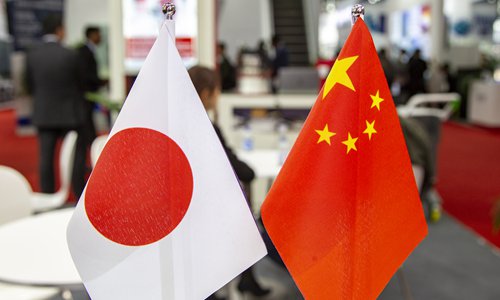
China, Japan Agree to Further Improve Ties, Strengthen People-to-people Exchanges
Xinhua
2019/11/25 15:54:47

Japanese Prime Minister Shinzo Abe and Chinese State Councilor and Foreign Minister Wang Yi on Monday agreed that both sides should work together to further improve bilateral ties and strengthen people-to-people exchanges.

Japan and China have witnessed frequent high-level exchanges and positive progress in the improvement of bilateral relations recently, said Abe, adding that the Japanese side is eagerly looking forward to Chinese President Xi Jinping's state visit next spring and believes that it will be a major opportunity for promoting bilateral relations in the new era.

A stable Japan-China relationship is the cornerstone of peace and prosperity in Asia, and is also crucial to addressing current global challenges. Japan is ready to work with China to usher in a new future of bilateral relations, he said.

Japan welcomes the launch of the high-level consultation mechanism on people-to-people exchanges between the two countries and stands ready to work with China to continuously boost the affinity between the two peoples and properly handle sensitive differences so as to create a favorable atmosphere and conditions for the improvement and development of bilateral relations, he added.

Abe also said he is looking forward to further in-depth communication with Chinese leaders on bilateral ties during his visit to China next month to attend the China-Japan-ROK (Republic of Korea) leaders' meeting.

Wang, for his part, said that with the political guidance of the two leaders and joint efforts of both sides, China-Japan relations have returned to the right track and have seen a sound momentum of improvement and development. The top leaders of the two countries had a successful meeting in Osaka in June and reached important consensus on building bilateral relations that meet the requirements of the new era.

The China-Japan relations have gone through twists and turns and the present situation has not come easily and should be doubly cherished, Wang said.

The two sides should push for continuous improvement and development of China-Japan relations from a longer-term and broader perspective, he said.

He called on the Japanese side to meet China halfway, take more positive actions, properly manage and handle differences so as to create a favorable atmosphere and conditions for the proposed major political and diplomatic agenda of the two countries.

The improvement and development of China-Japan relations not only conform to the interests of the two countries and peoples but also has great positive significance to regional peace and stability, injecting stability into the current world situation which is full of uncertainty, said Wang.

The Chinese side welcomes Abe to attend the China-Japan-ROK leaders' meeting in China next month. China is willing to work with Japan to give full play to the role of the high-level consultation mechanism on people-to-people exchanges, usher in a new era of exchanges between our peoples, localities and youth, and create a brighter future for bilateral relations, he said. 
Xi Stresses Implementing Major Measures of Key CPC Session
Xinhua
2019/11/26 19:34:42

Xi Jinping, general secretary of the Communist Party of China (CPC) Central Committee, presided over the 11th meeting of the central committee for deepening overall reform Tuesday.

Xi, also Chinese president, chairman of the Central Military Commission, and head of the central committee for deepening overall reform, stressed implementing the important measures adopted at the fourth plenary session of the 19th CPC Central Committee.

The session created a clearer top-level design for deepening overall reform in the new era, Xi said, urging reform efforts to focus on upholding and improving the system of socialism with Chinese characteristics and modernizing China's system and capacity for governance.

Li Keqiang, Wang Huning and Han Zheng, all members of the Standing Committee of the Political Bureau of the CPC Central Committee and deputy heads of the central committee for deepening overall reform, also attended the meeting.

The meeting reviewed and approved a series of documents concerning market-based allocation of factors of production, systems for supporting and protecting agriculture, medical insurance system reform, labor education in primary and secondary schools and colleges, modernization of the environmental governance system, education supervision system reform, and agricultural technology services.

The meeting also reviewed and approved an action plan on implementing the important measures adopted at the fourth plenary session of the 19th CPC Central Committee, and an evaluation report on China's overall reform progress in recent years.

It demanded efforts to remove institutional obstacles and secure the market-based allocation of production factors to provide an institutional foundation for promoting high-quality growth and building a modern economic system.

The meeting stressed establishing and improving systems for supporting and protecting the agricultural industry and giving priority to the development of agriculture and rural areas.

Efforts should be made to promote the supply-side structural reform of medical services, optimize public management of medical insurance, and accelerate the building of a sustainable and multi-tier medical insurance system that covers all residents in urban and rural areas.

The meeting underscored that labor education should be incorporated into the whole process of talent cultivation, including primary and secondary schools, higher learning and home education to help students cultivate the right worldview, outlook on life, and values we should embrace.

It also called for efforts to enhance the enthusiasm of market entities and public participation and establish an environmental governance system to provide institutional guarantee for promoting the fundamental improvement of ecology and environment as well as building a beautiful China.

Reform of the education supervision system in the new era should be further deepened to continuously improve the quality of education supervision and promote various entities to perform their duties.

To provide better agricultural technology services, efforts should be strengthened to increase the effective supply of such services and prompt the innovations of services offered by agricultural technology promotion agencies.

The decision adopted at the session has offered fundamental guidance for strengthening the synergy, coordination and efficiency in advancing overall reform, and China needs to advance the reform toward the goal of forging more mature systems, according to the meeting.

It also called for efforts to accelerate the formulation of plans on implementing major measures decided at the session with a clear timetable and roadmap.