Thursday, April 08, 2010

Western Media Lies About Zimbabwe, Says Malema

Western media lies about Zim: Malema

CAJ News-Herald Reporter.

AFRICAN National Congress Youth League president Cde Julius Malema says the world needs to be told the truth about the root cause of Zimbabwe’s problems instead of relying on lies from the Western-sponsored imperialist media.

Addressing journalists at the ANC headquarters at Luthuli House in Johannesburg yesterday about his recent visit to Harare, Cde Malema blasted the international media for misrepresenting facts about Zimbabwe.

He urged Africa to seriously consider its own destiny without depending much on "colonialists".

Cde Malema hailed President Mugabe for remai-ning resolute, steadfast and unshaken against imperialist forces that have imposed illegal economic sanctions on Zimbabwe.

"I think we need the same fearless leadership in the ANC that will represent the people’s interests instead of pushing interests of the minority imperialists.

"South Africa needs militant, courageous but non-violent leaders to tackle our land reform issue once and for all. We are going to take the land, minerals and transfer them to our majority blacks.

"Here in South Africa the so-called willing buyer, willing seller is not paying results . . .

"Our own people are still living in abject poverty yet the minority, who are not producing much for the country, continue to challenge us in the courts."

Cde Malema accused MDC-T of being a stumbling block to Zimbabwe’s efforts to defend its sovereignty.

He described it as a "popcorn and mushrooming" political party.

Cde Malema said while the ANC Youth League would not interfere in President Jacob Zuma’s facilitation in Zimbabwe, the youths would never socialise with "puppets" and "unpatriotic" political parties trying to reverse the gains of the liberation struggle.

"It has to be known that as the ANC Youth League we are not power-sharing mediators in Zimbabwe and we should seriously work with our fellow liberation movements like Zanu-PF and President Mugabe without fear.

"We would like Zanu-PF to retain its rural support and lead again without sharing power with anyone.

"We don’t care about popcorn opposition parties, mushrooming political parties which address its meetings in offices full of air conditioners in expensive Sandton hotels.

"We don’t associate with popcorn opposition parties, but work closely with our liberation movements to achieve our aims and goals of redistributing resources to the people."

Cde Malema blasted the Voice of America pirate broadcast, Studio 7, for invading Zimbabwean airspace.

"We know that VOA are operating illegally in Zimbabwe while disseminating falsehoods. We hope you won’t do the same here in South Africa, otherwise we don’t take such nonsense," he said.

Cde Malema also ejected a British Broadcasting Corporation journalist, Johan Fisher, for interfering during the Press briefing.

"Whites have tendencies of undermining blacks, here you can’t do as you please. You covered rubbish about Zimbabwe, and you would like to keep doing the same here, nonsense, bastard, bloody agent!

"When you are here, you are in our terrain and should know that this is the ANC head office. You should respect our own home. In Rome you do as Romans do, not as you please.

"You must behave according to our rules, not yours. We do not even care if you don’t come for our Press conferences, we have our own SABC."

Fisher had tried to defend MDC-T rallies held in Sandton.

"The MDC should go to Zimbabwe to face challenges with fellow Zimbabweans, not addressing meetings in air-conditioned hotels in Sandton."

Meanwhile, the ANC Youth League has hailed Zimbabwe’s land reform and economic empowerment programmes.

In a statement yesterday, the ANC Youth League said the "courageous and militant" land reform programme has contributed substantially to the empowerment of Zimbabweans.

"From the 4 000 white farmers who used to own farms and land in Zimbabwe, there are currently more than 350 000 Zimbabweans who are in farms. Young African people are involved in agriculture and not reliant on few white farmers who do not have the interests of the people of Zimbabwe at heart.

"In essence, the State’s greater role in land redistribution and mechanisation will contribute a lot in durably empowering the people of Zimbabwe."

The ANC Youth League also hailed the indigenisation and economic empowerment drive as a "very brave, militant but correct method of transferring wealth from the minority to the majority".

"There will be challenges in the implementation of these policies, but they have a potential to give the people of Zimbabwe real economic power as they will be in ownership of more than 51 percent of Zimbabwe’s wealth.

"The resilience, dedication, courage and fearlessness of the Zimbabwean political leadership, particularly the Zanu-PF leadership has far much greater potential to bring Zimbabwe to stability."

Cde Malema was in Zimbabwe on a four-day solidarity visit hosted by the Zanu-PF Youth League.

During the visit he had an opportunity to learn more about Zimbabwe’s land reform programme and economic empowerment drive.

He also met President Mugabe at State House. — CAJ News-Herald Reporter.

Former U.S. President Carter Arrives in Khartoum to Monitor General Elections

Former U.S President Carter arrives in Khartoum to monitor general elections

10:00, April 09, 2010

Former U.S. President Jimmy Carter on Thursday arrived in Khartoum to take part in monitoring Sudan's General elections, slated for April 11.

He expressed regret over pulling out of candidates of some opposition parties from the elections, especially Yassir Arman of the Sudan People's Liberation Movement (SPLM).

"I regret that some of the parties decided not to participate", Carter told reporters upon arrival at Khartoum airport Thursday.

He refused to describe his impression about the preparations for the electoral process and said that the final assessment would be after the elections.

The U.S.-based Carter Center, which was founded by Jimmy Carter, have sent 65 observers to Sudan elections to monitor the general election in this African country besides the European Union observation team which includes 130 observers.

The Sudanese National Elections Commission (NEC) said over 100 national and foreign observers will be monitoring the elections at all stages.

Sudanese President Omar al-Bashir on Wednesday said he welcomes the Carter Center, and pledged to facilitate its movement in all states of the country.

Multi-party elections, the first of its kind in more than 20 years, are scheduled to be held in Sudan on April 11, 2010.

Source:Xinhua

At Detroit City Council Meeting Plan to Steal Pensions Opposed

At Detroit City Council meeting

Plan to steal pensions opposed

By Cheryl LaBash
Detroit
Published Apr 7, 2010 3:02 PM

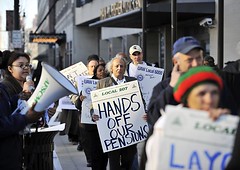
On March 29 more than 500 Detroit workers, retirees and community members filled the Detroit City Council’s auditorium to oppose the $6 billion giveaway of city pension assets initiated by Mayor Dave Bing. They shouted out, applauded each other’s one- minute public comments and challenged the City Council to stand up against the backdoor maneuver. Bypassing not only the City Council but the elected pension boards and unions, the mayor secretly initiated state legislation for “distressed pensions” that, if passed, will allow him to transfer the control of the city’s two fully funded pension plans to a state-authorized Municipal Employees Retirement System. In a unanimous rebuke, the City Council demanded the mayor reverse his action. But it cannot be withdrawn, only blocked in the legislative committees.

Councilmember JoAnn Watson pointed out, “It is not our pension systems which are ‘distressed,’ It is Detroit that is distressed. We need a state of emergency declared so we can enact a moratorium on foreclosures and sell city-owned homes to Detroiters for a dollar.”

This majority African-American city has suffered racist disinvestment for decades as auto plants closed, moving jobs to rural areas. Automation increased productivity and profits using fewer workers. Highly profitable new housing construction spread suburbs farther and farther from the city center while insurance and mortgage redlining disadvantaged city residents. Underfunded schools deteriorated. Freeway construction destroyed Paradise Valley, the historic Black business center, and then bypassed neighborhood businesses on major city streets. During the housing mania, subprime loans were disproportionately forced on African-American homeowners in Detroit fueling foreclosures and causing the transfer of assets built through generations of homeownership. More than 50 percent of Detroiters are unemployed, especially youth, whose futures are being stolen. It is a crisis imposed on Detroit residents.

Now a substantial concentration of pension capital — $6 billion — controlled by Detroiters is on its way to being handed over to be controlled by a nine-person pension board assembled from small towns across the state. Detroit pension funds have subsidized hotel and other development in Detroit, where its residents now work. It’s like having an absentee landlord, said a firefighter at the council meeting.

Certainly the most concerned about this shock and awe attack are city workers and retirees who gave up wage increases to lock in some security for their post-work years. Currently the American Federation of State County and Municipal Employees is resisting the imposition of a 10 percent pay cut through furlough days. AFSCME represents the lowest paid job classifications; many of their members are women single heads of households.

The city administration claims the move is to protect the pensions of city workers — still traditional, defined-benefit, life-time pensions for most — and also save the city $20 million per year to help offset a much publicized $350 million budget deficit. Although no reduction of current pensions has been suggested yet, the practice of distributing earnings in excess of 7.9 percent to retirees, which especially helps pensioners and survivors whose income has been eroded by inflation — termed thirteenth check — will disappear. Instead, the mayor proposes to reduce the city’s required contribution to the pension fund. And it is the mayor’s stated position that new hires will be forced into defined contribution, 401(k) type retirement plans instead of the “for-life” pensions for current workers and retirees.

Banks deepen debt crises

The global capitalist economic contraction is exposing the ruthless rule of the banks, which demands more and more from local and state governments, forcing them to borrow to cover debts incurred before the crash as the tax base is eroded by unemployment and foreclosures and capitalist laws that prohibit unbalanced budgets for any but the federal government. In one transaction, a full one-seventh of Detroit’s reported budget deficit — $50 million annually — is mandated to pay international financial giant UBS and other banks and financiers for pension obligation certificates and an interest rate swap that crashed. In the renegotiation, payment is essentially garnished from the city just like creditors take part of a worker’s pay before it is even received. All of Detroit’s proceeds from casino taxes are currently deposited with a third-party bank to pay $4.2 million per month before the remainder goes to the city accounts. How much of the “deficit” is owed to the banks remains an unanswered question. The pension obligation certificates fully funded the two Detroit pension funds that the mayor is giving away.

Detroit and the state of Michigan are not alone. “California, New York and other states are showing many of the same signs of debt overload that recently took Greece to the brink — budgets that will not balance, accounting that masks debt, the use of derivatives to plug holes, and armies of retired public workers who are counting on benefits that are proving harder and harder to pay.” (N.Y. Times, Mar. 29) The banks were bailed out with tax dollars, are paid full value by federal mortgage insurance for inflated mortgages in foreclosure, and squeeze cities and states to cut budgets, wages and benefits to transfer wealth from the workers who created it to capitalist financiers as production for profit contracts.

Squeezing wealth from the working class and our communities is not the only possible solution. The urban Marshall Plan advocated by Councilmember Watson calls for massive federal funding for jobs and community-driven economic development. In 1935 the Works Progress Administration provided jobs for more than eight million unemployed. The WPA in Detroit dismantled blighted buildings, and constructed roads and schools. More than 33,000 Detroit structures are on the city’s demolition list, providing enough work to absorb every unemployed Detroiter immediately in a deconstruct/recycle program. The Rev. Martin Luther King Jr.’s last struggle was for jobs or income for all. It is still an urgent task that calls out for completion now. Pension benefits are deferred wages.
--------------------------------------------------------------------------------
Articles copyright 1995-2010 Workers World. Verbatim copying and distribution of this entire article is permitted in any medium without royalty provided this notice is preserved.

Workers World, 55 W. 17 St., NY, NY 10011
Email: ww@workers.org
Page printed from:
http://www.workers.org/2010/us/pensions_0415/

Photos Released in Aftermath of the FBI Assassination of Detroit Imam Luqman Ameen Abdullah

Photos released in imam slaying

By ERIC D. LAWRENCE
FREE PRESS STAFF WRITER

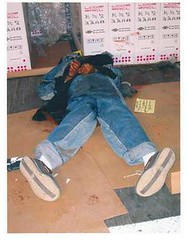
A Muslim group released five photos today taken as part of the investigation into the fatal shooting of a cleric during a raid by FBI agents in Dearborn last year.

The Michigan chapter of the Council on American-Islamic Relations (CAIR) released the five photos of the body of Imam Luqman Ameen Abdullah to the media from among 75 photos obtained from the Wayne County Medical Examiner’s Office. The photos were released to CAIR after the imam’s widow, Amina Abdullah,and one of his sons, Mujahid Carswell, approved the request.

Three of the photos are close-ups showing missing teeth as well as cuts, gashes and other injuries on Abdullah’s face and head. CAIR questions whether the latter injuries are from the police dog that the FBI says was fatally shot by the imam.

Two photos show Abdullah on the ground after he was killed. One shows him lying face down with his hands cuffed behind his back — something authorities have said is standard procedure.

Dawud Walid, the council’s executive director, said nationally known forensic pathologist Dr. Cyril Wecht has been asked to review both the autopsy report and the photos.

“There are a lot of questions, and the photos raise more questions,” Walid said, adding that other photos were deemed too graphic by the family and CAIR to release to the media. The Free Press is only showing the photo of the imam handcuffed and face down because of similar concerns.

According to the autopsy, Abdullah was shot 20 times, with one bullet causing two wounds.

The FBI has said it acted appropriately in the two-year investigation, raid and shootout that left Abdullah dead. Agents on the Oct. 28 raid wanted to arrest the cleric and 10 other people on suspicion of dealing in stolen goods.

Delays in the release of the autopsy report and completion of a Dearborn Police investigation have fueled criticism of the case’s handling. The FBI and the Department of Justice are also reviewing the matter.

FBI spokeswoman Sandra Berchtoldsaid today that the agency had no comment on the release of the photos.

Omar Regan, one of Abdullah’s 13 children, said he washed his father’s body after he was killed, but was still troubled seeing the photos.

“It’s clear that something went wrong,” he told the Free Press.

Livonia Police Chief Robert Stevenson recounted today a run-in with Abdullah in 1980 when the imam was known as Christopher Thomas. Stevenson, who was a patrol officer at the time, stopped a car in which Abdullah was a passenger because its brake lights weren’t working.

Abdullah, who was carrying a gun in a shoulder holster, fought with then-Officer Stevenson outside the car and tried to grab the gun, he said. Abdullah was arrested after Officer David Wilkie arrived and pointed his own gun at Abdullah.

Contact ERIC D. LAWRENCE: 313-223-4272 or elawrence@freepress.com.


April 7, 2010 http://detnews.com/article/20100407/METRO01/4070405

Autopsy photos released of slain imam

SANTIAGO ESPARZA
The Detroit News

Southfield --The Council on American-Islamic Relations Michigan office released photos today that it says show evidence not detailed in official reports of the Oct. 28 fatal shooting of an imam during an FBI sting.

As result of preliminary government reports, CAIR has called for an independent investigation of the slaying of Imam Luqman Ameen Abdullah, saying his body had injuries not detailed in an autopsy report and that the new photos back their claims.

CAIR says it believes the photos capture injuries that could have come from an FBI dog also killed in the incident despite the autopsy report listing the cause of those injuries as inconclusive. CAIR obtained the photos from the medical examiner.

Federal authorities have said that Abdullah shot the FBI dog and fired at agents during the raid on an FBI-controlled Dearborn warehouse in October, warranting the return fire that ultimately killed the Muslim cleric. FBI officials have alleged Abdullah was part of a ring fencing stolen goods.

The five photos show numerous cuts and scratches on the face of Abdullah. One shows the cleric handcuffed on a floor that's stained with what appears to be blood.

CAIR has maintained since October that Abdullah may have been attacked by the FBI dog, prompting the fatal shooting that left Abdullah struck 20 times.

The Dearborn Police Department and U.S. Department of Justice are investigating the shooting but have not completed their probes.

The FBI was not available for comment this morning.

Due to their graphic nature, The Detroit News and detnews.com have decided not to run the photos.

sesparza@detnews.com">sesparza@detnews.com (313) 222-2320

Wednesday, April 07, 2010

Diezani Allison-Madueke Appointed as Oil Minister in Nigeria

Female minister directs Nigeria oil overhaul

By Tom Burgis in Lagos
Financial Times
April 7 2010 17:55

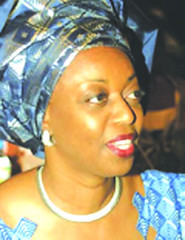
Nigeria’s first female oil minister has been in her post barely 24 hours, but already the demands on her allegiances are many and conflicting.

Diezani Allison-Madueke was the surprise choice to take the helm in sub-Saharan Africa’s biggest oil and gas exporter when Goodluck Jonathan, acting president, unveiled his cabinet on Tuesday.

The team has 12 months to make its mark before the next election. The new minister’s principal task is to bring the long-delayed Petroleum Industry Bill – the most ambitious overhaul in the industry’s 50-year history – into law.

At stake are tens of billions of dollars of potential investments, and reforms that could breathe new life into an industry that provides 80 per cent of the government’s income and one in eight barrels of crude that the US imports.

Yet such is the scope for renewed lobbying from foreign companies, including Royal Dutch Shell, Exxon Mobil and Chevron, and opponents of reform that senior industry figures fear more delays.

“The PIB is definitely unlikely to pass [through the national assembly] in its current form before the elections,” Osten Olorunsola, Shell’s regional vice-president for gas, told the Financial Times. “Not passing anything would magnify the overall level of uncertainty.”

Shell’s competitors suggest the Anglo-Dutch group should be feeling smug. Ms Allison-Madueke is the daughter of a Shell employee and spent some 14 years working for its Nigerian joint venture, rising to become head of external relations.

Some industry groups are said to have lobbied for her appointment, reasoning that her background would make her sympathetic to oil companies’ claims that the bill’s tougher terms would jeopardise $50bn of planned investment.

Yet many of Ms Allison-Madueke’s advisers will argue that the country has made enough concessions to the companies already and the proposed law would simply bring Nigeria’s over-generous terms into line with those of other oil producers.

Mr Jonathan’s cabinet changes owe much to the succession struggle sparked by the prolonged illness of Umaru Yar’Adua, who remains the nominal president despite having been incapacitated since November.

Many Yar’Adua allies have been removed, among them the outgoing oil minister, former Opec boss Rilwanu Lukman, and Mohammed Barkindo, erstwhile head of the national oil company that reformers hope to transform from a byword for patronage to a commercially-driven profit-machine.

Her detractors say the Cambridge-educated Ms Allison-Madueke lacks her predecessor’s clout, noting the limited impact she had in two previous ministerial posts. Critics say that she was promoted because she comes from Mr Jonathan’s home state of Bayelsa, in the heart of the delta.

Some in the delta, where militants have long demanded a greater share of the oil revenues, expect a daughter of the region to look after her own.

Dimieari Von Kemedi, a senior Bayelsa official, said activists would push the new minister to go ahead with a proposal to grant 10 per cent of the net profits of petroleum ventures to the delta’s communities.

Foreign oil groups, seeking to renew leases to prime oil blocks, are locked in tough negotiations. A bidding round for oil assets is planned. Cnooc, a Chinese oil group, is seeking swathes of Nigeria’s crude. From Bayelsa to Beijing, Ms Allison-Madueke’s next moves will be closely watched.

US Approves Targeted Killing of American Cleric

April 6, 2010

U.S. Approves Targeted Killing of American Cleric

By SCOTT SHANE
New York Times

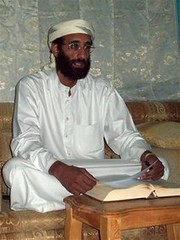
WASHINGTON — The Obama administration has taken the extraordinary step of authorizing the targeted killing of an American citizen, the radical Muslim cleric Anwar al-Awlaki, who is believed to have shifted from encouraging attacks on the United States to directly participating in them, intelligence and counterterrorism officials said Tuesday.

Mr. Awlaki, who was born in New Mexico and spent years in the United States as an imam, is in hiding in Yemen. He has been the focus of intense scrutiny since he was linked to Maj. Nidal Malik Hasan, the Army psychiatrist accused of killing 13 people at Fort Hood, Tex., in November, and then to Umar Farouk Abdulmutallab, the Nigerian man charged with trying to blow up a Detroit-bound airliner on Dec. 25.

American counterterrorism officials say Mr. Awlaki is an operative of Al Qaeda in the Arabian Peninsula, the affiliate of the terror network in Yemen and Saudi Arabia. They say they believe that he has become a recruiter for the terrorist network, feeding prospects into plots aimed at the United States and at Americans abroad, the officials said.

It is extremely rare, if not unprecedented, for an American to be approved for targeted killing, officials said. A former senior legal official in the administration of George W. Bush said he did not know of any American who was approved for targeted killing under the former president.

But the director of national intelligence, Dennis C. Blair, told a House hearing in February that such a step was possible. “We take direct actions against terrorists in the intelligence community,” he said. “If we think that direct action will involve killing an American, we get specific permission to do that.” He did not name Mr. Awlaki as a target.

The step taken against Mr. Awlaki, which occurred earlier this year, is a vivid illustration of his rise to prominence in the constellation of terrorist leaders. But his popularity as a cleric, whose lectures on Islamic scripture have a large following among English-speaking Muslims, means any action against him could rebound against the United States in the larger ideological campaign against Al Qaeda.

The possibility that Mr. Awlaki might be added to the target list was reported by The Los Angeles Times in January, and Reuters reported on Tuesday that he was approved for capture or killing.

“The danger Awlaki poses to this country is no longer confined to words,” said an American official, who like other current and former officials interviewed for this article spoke of the classified counterterrorism measures on the condition of anonymity. “He’s gotten involved in plots.”

The official added: “The United States works, exactly as the American people expect, to overcome threats to their security, and this individual — through his own actions — has become one. Awlaki knows what he’s done, and he knows he won’t be met with handshakes and flowers. None of this should surprise anyone.”

As a general principle, international law permits the use of lethal force against individuals and groups that pose an imminent threat to a country, and officials said that was the standard used in adding names to the list of targets. In addition, Congress approved the use of military force against Al Qaeda after the Sept. 11, 2001, terrorist attacks. People on the target list are considered to be military enemies of the United States and therefore not subject to the ban on political assassination first approved by President Gerald R. Ford.

Both the C.I.A. and the military maintain lists of terrorists linked to Al Qaeda and its affiliates who are approved for capture or killing, former officials said. But because Mr. Awlaki is an American, his inclusion on those lists had to be approved by the National Security Council, the officials said.

At a panel discussion in Washington on Tuesday, Representative Jane Harman, Democrat of California and chairwoman of a House subcommittee on homeland security, called Mr. Awlaki “probably the person, the terrorist, who would be terrorist No. 1 in terms of threat against us.”

Remember Chris Hani in 2010: Waging a Relentless Struggle Against Corruption!

Red Alert

Remember Chris Hani in 2010: Waging a relentless struggle against corruption!

29 March - 1 May: 34 days of activism against corruption

Blade Nzimande, General Secretary

The SACP Politburo has declared the 29 March to May Day 2010 a period within which to intensify our campaign against corruption, beginning with our highly successful seminar against corruption on 29 March 2010 in Braamfontein and culminating on 1 May 2010, the workers' historic May Day. This is the 34 Days of Activism against corruption!

The end of the 34 days of activism does not mark the closure of the campaign, but is only a period during which we heighten mass awareness and lay the foundations for sustained mass mobilization thereafter.

We must carry this message of the fight against corruption into every voting district, municipal ward, workplace, community and into all corners of our country, reaching out to the workers, the poor, our youth, women, traditional leaders. Let every SACP branch, district and province ensure that we have an explosion of red forums and red cards against corruption in every locality and workplace where the workers and the poor are!

In all this we are informed by our own analysis, and indeed by that of the alliance as a whole, that corruption currently poses one of the most serious threats to the consolidation and deepening of the national democratic revolution.

It is against this background that we must locate the commemoration of the 17 anniversary of the assassination of our late General Secretary, Cde Martin Thembisile 'Chris' Hani.

The SACP, joined by its alliance partners, will over the next of couple of weeks be holding commemorative events, starting with a gathering at the graveside, and followed by a number of other important events.

This coming Saturday we will also be joining the Hani family in the unveiling of the tombstone of the late Nomakhwezi Hani, daughter of Cdes Chris and Limpho Hani.

Let's do it like Chris, let's remain focused

The principal challenge of the national democratic revolution in this conjuncture is to remain focused on the key strategic objectives of the revolution. Cde Chris, throughout his life, understood the different challenges facing our movement in different conjunctures, and threw in all his energies into those conjunctural challenges.

When our movement launched the armed struggle in the early 1960s, cde Chris joined our glorious army, Umkhonto WeSizwe at a very young age and dedicated the rest of his life into this. Indeed there were many distractions in that period, including from those who were doubtful about the viability of an armed struggle in South Africa. When the movement launched the Wankie-Sipolile campaign Cde Chris was amongst the first to join.

When we embarked on negotiations, despite some doubts from amongst many of us, including Cde Chris himself, about some of the modalities of those negotiations, he led the SACP delegation to the CODESA talks with energy and enthusiasm. At the same time during this period, he also dedicated his energies into building self-defence units and joined in the wave of mass and worker mobilization of the early 1990s. In addition he dedicated a lot of time into organizing in the rural areas, informed by the dangers of a struggle that has a predominantly urban bias.

There are a number of things that can easily distract us during this period. Our primary task at the moment is to transform the current growth path and break the back of the colonial type economic trajectory so that we can have a new, developmental path capable of meeting the needs of millions of our people.

Within this context we also need to mobilize the workers and the poor to be at the centre of the realization of the 5 key priorities of government. Just like during the negotiations period where mass mobilization was the necessary foundation for driving forward the negotiations process, today, government alone, without sustained mass mobilization will not be able to achieve the key priorities of the ANC-led alliance.

The last ANC NEC meeting, preceded by an important bilateral with the SACP, took important resolutions on many issues that had the potential to derail us on our key revolutionary objectives, including public spats, insults and premature pronouncements on our forthcoming 2012 congresses. We must build on this momentum by ensuring that we mobilize to focus on the key strategic and programmatic issues facing our movement. This is a lesson from Cde Chris' exemplary life, staying focused.

Of late, our detractors are trying to divert our energies by claiming racial tensions in the wake of the murder of the AWB leader, Eugene Terreblanche and exaggerating the meaning of some of our liberation struggle songs.

The SACP strongly condemns the opportunistic grandstanding by Helen Zille by trying to escalate these matters to the point of seeking an urgent meeting with the President. We wish the ANC can tell Zille where to get off and expose her opportunism, as the President has already dealt with these matters adequately. We must not allow the office of the President to be used to seek cheap political publicity from parties that have no interests of the overwhelming majority of our people.

The SACP also wishes to reiterate its support for the ANC's actions to challenge the High Court ruling about some of our liberation struggle songs. The courts must not allow themselves to be used in attempts to rewrite our history in favour of those who benefitted immensely from the apartheid era, including elements that were in the forefront of sustaining the criminal apartheid regime. Our songs are not just about our past, but they are also about today going into the future. These songs are about us, about our dignity, about who we are and what we want to be!

Remember Chris Hani: Escalate the fight against corruption

During this period of 34 days of activism against corruption we will be commemorating a number of very significant events - the 17th anniversary of the assassination of our late General Secretary, Cde Chris Hani, on 10 April 2010, our Freedom Day on 27 April 2010, a day extracted from the apartheid regime in the wake of the assassination of Cde Hani, our national day of action against corruption in KZN on 30 April, all culminating on May Day 2010.

All the above activities are also inspired by President Zuma's declaration of 2010 as the year of action. Let us make sure that, in line with this call, let us also make 2010 the Year of Action against Corruption.

Cde Hani, amongst his many roles and achievements in the liberation struggle, was a principled and consistent fighter against corruption. In the early exile years he co-signed a memorandum sent to the leadership of the ANC complaining and pointing out, amongst many others, creeping corrupt practices and patronage networks within our own movement. This memorandum, amongst other things, led to the convening of the first ANC conference since its banning in 1960, the famous Morogoro Conference in Tanzania.

Were Chris Hani alive today he would have been in the forefront in the struggle against corruption and tenderpreneurship!

Whilst the struggle against corruption should in the current period be led by the ANC, the SACP will nevertheless be expected to play a special vanguard role in this regard. This is because the SACP is best placed to articulate the capitalist foundations of all corruption. And there is no other political formation in our country today that is best capable to articulate this reality, other than the SACP.

The struggle against corruption cannot be separated from a struggle against capitalism and its corrupting ideology and practices. The very existence of a system which allows a small elite to exploit workers in the private accumulation of wealth, instead of societal accumulation of wealth to be shared amongst all, creates opportunities for corruption.

Therefore a struggle against corruption must also be a struggle against capitalism and its market. This is what Cde Chris lived and died for. In his memory and in his name, the SACP will be escalating its mobilisation to fight corruption wherever it occurs, whether in the public or private sector.

The SACP is not the only political formation, or the only organization concerned about threat posed by the scourge of corruption to the attainment of a better life for all, but that there are many citizens and organizations out there who share our outrage at the pillaging of resources and theft, thus depriving the workers and the poor of our country what is due to them. That is why we have taken the initiative to organise the widest range of forces opposed to corruption even if they may not share all of our ideological perspectives.

The working class as the vanguard of the struggle against corruption

The working class, by virtue of its revolutionary potential and traditions, is best placed to be at the head of the various forces fighting against corruption. It is the working class and the poor that stands to lose the most in the pillaging of public and private resources. Its own jobs and other means of livelihood are at stake.

The working class also has a presence in both private companies, public institutions and in the state in particular. It can act as the eyes and ears of the whole population, and indeed it must act as such. Let us follow the example of unions like SATAWU, which blew a whistle on potential corruption at SAA. It is the revolutionary duty of the working class fight corruption as a necessary struggle to defend, consolidate and deepen the national democratic revolution.

The media tends to foster the idea that corruption is more rife in the public sector than in the private sector or that corruption in the public sector is more serious than corruption in the private sector. This is of course not true!

There is also large-scale corruption in the private sector, except that it is often ignored or be called by a respectable and seemingly innocuous description 'white collar crime'. Crime and corruption has no colour, it is just crime.

It is the working class that is best placed to confront corruption in both the public and private sectors simultaneously.

In the coming May Day the SACP will be calling upon the organised working class in particular to intensify its struggles against corruption.

The struggle against corruption must be intensified as we intensify the struggle against labour brokers and price-fixing. Corruption, on the one hand, and labour brokerage and price-fixing, on the other hand, are not two separate things, but two sides of the same coin.

What is to be done?: 2010 the year of action against corruption

The SACP calls upon all our people and organisations opposed to corruption to develop a mass movement to defeat the scourge. This must include the following:

-mobilise in their own localities to expose all forms of corruption, and broaden the scope of CPF to deal with matters of corruption as well

-Strengthen the progressive labour movement to build its capacity to fight corruption

-Call upon all public and private institutions to develop clear anti-corruption strategies

-Government tender processes to be more transparent through the publication of those shortlisted and awarded tenders in order to allow for public comment as well as prevention of the same culprits getting tenders all the time

-Prevent the tenderisation of the state by ensuring that where community organisations are able to benefit directly from government programmes these should not always be turned into tenders often grabbed by 'middlemen', but instead to be given directly to organised communities

-Mobilisation of the youth in particular to fight against corruption as it is targetted by tenderpreneurs, druglords and 'get rich quick' schemes aimed at corrupting our young people and promises of short cuts to wealth.

Acknowledge and honour the men and women in both the public and private sectors who hate and act to expose corruption and are only interested in serving their people honestlyIn the public service in particular we can highlight and salute the role of the thousands of public servants who do their work honestly and are totally dedicated to serve our people, whatever it takes. Similarly in the private sector there are many workers and professionals who are only interested in doing an honest and good day's work.

We must strengthen the capacity of our entire criminal justice system, including SARS and Chapter 9 institutions to fight the scourge of corruption.

Must call for action against those found with their fingers on the till, even if they are within our own ranks. We must protect our organisation from being refuges for the corrupt!

Working together we can end corruption!

The SACP says: a red card to corruption!

Asikhulume!!
US Expands War Front Throughout the Globe

US expands war front

IN his latest column for the New Statesman, JOHN PILGER describes the increasing American war front across the world: from Afghanistan to Africa and Latin America. This is the Third World War in all but name, waged by the only aggressive "ism" that denies it is an ideology and threatened not by introverted tribesmen in faraway places but by the anti-war instincts of its own citizens.

HERE is news of the Third World War. The United States has invaded Africa. US troops have entered Somalia, extending their war front from Afghanistan and Pakistan to Yemen and now the Horn of Africa.

In preparation for an attack on Iran, American missiles have been placed in four Persian Gulf states, and "bunker-buster" bombs are said to be arriving at the US base on the British island of Diego Garcia in the Indian Ocean.

In Gaza, the sick and abandoned population, mostly children, is being entombed behind underground American-supplied walls in order to reinforce a criminal siege.

In Latin America, the Obama administration has secured seven bases in Colombia, from which to wage a war of attrition against the popular democracies in Venezuela, Bolivia, Ecuador and Paraguay.

Meanwhile, the secretary of "defence" Robert Gates complains that "the general (European) public and the political class" are so opposed to war they are an "impediment" to peace. Remember this is the month of the March Hare.

According to an American general, the invasion and occupation of Afghanistan is not so much a real war as a "war of perception". Thus, the recent "liberation of the city of Marja" from the Taliban’s "command and control structure" was pure Hollywood.

Marja is not a city; there was no Taliban command and control. The heroic liberators killed the usual civilians, poorest of the poor. Otherwise, it was fake.

A war of perception is meant to provide fake news for the folks back home, to make a failed colonial adventure seem worthwhile and patriotic, as if The Hurt Locker were real and parades of flag-wrapped coffins through the Wiltshire town of Wooten Basset were not a cynical propaganda exercise.

"War is fun"; the helmets in Vietnam used to say with bleakest irony, meaning that if a war is revealed as having no purpose other than to justify voracious power in the cause of lucrative fanaticisms such as the weapons industry, the danger of truth beckons.

This danger can be illustrated by the liberal perception of Tony Blair in 1997 as one "who wants to create a world (where) ideology has surrendered entirely to values" (Hugo Young, the Guardian) compared with today’s public reckoning of a liar and war criminal.

Western war-states such as the US and Britain are not threatened by the Taliban or any other introverted tribesmen in faraway places, but by the anti-war instincts of their own citizens.

Consider the draconian sentences handed down in London to scores of young people who protested Israel’s assault on Gaza in January last year. Following demonstrations in which paramilitary police "kettled" (corralled) thousands, first-offenders have received two and a half years in prison for minor offences that would not normally carry custodial sentences.

On both sides of the Atlantic, serious dissent exposing illegal war has become a serious crime.Silence in other high places allows this moral travesty.

Across the arts, literature, journalism and the law, liberal elites, having hurried away from the debris of Blair and now Obama, continue to fudge their indifference to the barbarism and aims of western state crimes by promoting retrospectively the evils of their convenient demons, like Saddam Hussein.

With Harold Pinter gone, try compiling a list of famous writers, artists and advocates whose principles are not consumed by the "market" or neutered by their celebrity. Who among them have spoken out about the holocaust in Iraq during almost 20 years of lethal blockade and assault?

And all of it has been deliberate. On January 22, 1991, the US Defence Intelligence Agency predicted in impressive detail how a blockade would systematically destroy Iraq’s clean water system and lead to "increased incidences, if not epidemics of disease".

So the US set about eliminating clean water for the Iraqi population: one of the causes, noted Unicef, of the deaths of half a million Iraqi infants under the age of five. But this extremism apparently has no name.Norman Mailer once said he believed the United States, in its endless pursuit of war and domination, had entered a "pre-fascist era".

Mailer seemed tentative, as if trying to warn about something even he could not quite define. "Fascism" is not right, for it invokes lazy historical precedents, conjuring yet again the iconography of German and Italian repression.

On the other hand, American authoritarianism, as the cultural critic Henry Giroux pointed out recently, is "more nuance, less theatrical, more cunning, less concerned with repressive modes of control than with manipulative modes of consent."

This is Americanism, the only predatory ideology to deny that it is an ideology. The rise of tentacular corporations that are dictatorships in their own right and of a military that is now a state with the state, set behind the façade of the best democracy 35 000 Washington lobbyists can buy, and a popular culture programmed to divert and stultify, is without precedent. More nuanced perhaps, but the results are both unambiguous and familiar.

Denis Halliday and Hans von Sponeck, the senior United Nations officials in Iraq during the American and British-led blockade, are in no doubt they witnessed genocide. They saw no gas chambers.

Insidious, undeclared, even presented wittily as enlightenment on the march, the Third World War and its genocide proceeded, human being by human being. In the coming election campaign in Britain, the candidates will refer to this war only to laud "our boys".

The candidates are almost identical political mummies shrouded in the Union Jack and the Stars and Stripes.

As Blair demonstrated a mite too eagerly, the British elite loves America because America allows it to barrack and bomb the natives and call itself a "partner". We should interrupt their fun. — www.johnpilger.com

Germany: A Historical Hotbead of Western Imperialism

Germany: Hotbed of imperialism

By Itai Muchena, in OREGON, USA
Courtesy of the Zimbabwe Herald

THE hodgepodge of geometric boundaries that today divide Africa into 50 plus irregular nations under Eurocentric subjugation all started in Berlin, Germany on November 15, 1884.

The infamous Berlin Conference still remains Africa’s greatest undoing in more ways than one, where colonial powers superimposed their domains on the African continent and tore apart the social, political and economic fabric that held the continent together.

By the time independence returned to Africa between 1956 and 1994, the African realm had acquired a colonial legacy of political fragmentation that could neither be eliminated nor made to operate wholly independent from the former colonial masters.

Some Africans had been too much battered, some bruised, some undignified and others brainwashed so much that up to today, Africa is battling to remain united due to continued and uncalled for interference, at every opportunity, by the imperialist hawks.

Today, the same Germany — the womb that gave birth to colonialism — is unashamedly hosting and developing AFRICOM, the United States of America superior military command formed to superintend on America’s milking of African resources, at the expense of not only Africa but other fair dealing countries of the world.

There is no doubt that Germany is seeking re-colonisation of Africa, this time, creating space for its big brother, the United States of America.

The giant military project is not only an affront to African democracy but an insult to African humanism as it seeks to reverse all the gains brought about by independence — from sovereignty to control of natural resources and self governance.

Africa will not forget that in 1884 at the request of Portugal, German chancellor Otto Von Bismarck called together the major western powers of the world to negotiate questions and end confusion over the control of Africa. Africa itself was not invited because Europe believed Africans had no meaningful contribution to make towards shaping their own destiny.

Bismarck saw an opportunity to expand Germany’s sphere of influence over Africa and desired to pitch Germany’s rivals to struggle with one another for territorial integrity. Today, current Chancellor Angela Mickel is playing exactly the same role, pitching America against other economic powers in a battle to control Africa’s strategic natural resources.

Before the Berlin Conference 80 percent of Africa and its natural resources had remained under traditional and local leadership but thereafter the new map of the continent was superimposed over the one thousand indigenous cultures and regions of Africa. Concurrently, Africa’s wealth — as pronounced by its vast human and natural resource base — was appropriated by the colonisers.

As a result, the new countries lacked and still lack rhyme or reason and divide coherent groups of people and merged together disparate groups that really did not get along.

All in all, 14 countries were represented: Austria-Hungary, Belgium, Denmark, France, Germany, Great Britain, Italy, the Netherlands, Portugal, Russia, Spain, Sweden-Norway (unified from 1814-1905), Turkey, and the United States of America.

France, Germany, Great Britain, and Portugal were the major players in the conference, controlling most of colonial Africa at the time.

At the Berlin Conference the European colonial powers scrambled to gain control over the interior of the continent. The conference lasted until February 26, 1885 — a three-month period where colonial powers haggled over geometric boundaries in the interior of the continent, disregarding the cultural and linguistic boundaries already established by the indigenous African populace.

By 1914, the conference participants had fully divided Africa among themselves into 50 countries.

Great Britain targeted a Cape-to-Cairo collection of colonies and almost succeeded through its control of Egypt, Sudan (Anglo-Egyptian Sudan), Uganda, Kenya (British East Africa), South Africa, and Zambia (Southern Rhodesia), Malawi (Nyasaland), Zimbabwe (Northern Rhodesia), and Botswana. They also controlled Nigeria and Ghana (Gold Coast).

France took much of western Africa, from Mauritania to Chad (French West Africa) and Gabon and the Republic of Congo (French Equatorial Africa).

Belgium and King Leopold II controlled the Democratic Republic of Congo (Belgian Congo) while Portugal took Mozambique in the east and Angola in the west.

Italy took Somalia (Italian Somaliland) and a portion of Ethiopia while Germany took Namibia (German Southwest Africa) and Tanzania (German East Africa). Spain claimed the smallest territory — Equatorial Guinea (Rio Muni).

Today, Africa has stood firm against the hosting of AFRICOM and the same Germany has offered an alternative and will host AFRICOM until 2012, when it is envisaged the US would have found a suitable base in Africa.

Sadc in particular and the African Union in general, have said no to this project but the Americans are not resting on their laurels. They are still working out ways of penetrating African governments in order to get a strategic African country to host AFRICOM.

The truth, however, remains that once Africa allows the hosting of AFRICOM, it will have subcontracted all its powers to AFRICOM, to USA and its exploitative military ventures.

After a review of numerous potential locations for the establishment of AFRICOM headquarters, US Defence Secretary Robert Gates has elected to keep the new command in Stuttgart, Germany at least for now, Pentagon officials say.

‘‘Secretary of Defence Gates decided to delay a decision on the permanent location of US Africa Command headquarters until early 2012,’’ said Defence Department spokeswoman Lt. Colonel Elizabeth Hibner, last week.

Until then, AFRICOM’S headquarters will remain in Stuttgart, ‘‘the decision has been delayed until US Africa Command has more experience in working with partner nation militaries and thus a better understanding of its long-term operational requirements,’’ wrote Hibner.

After fierce resistance from Africa, which should continue through experienced leaders like President Mugabe, Hosni Mubarak, Omar al-Bashir, Teodoro Obiang Nguema Mbasogo and new but progressive thinking ones like Jacob Zuma, Bingu waMutharika and Rupiyah Banda, AFRICOM seems to have hit a brick wall on finding an African host.

‘‘We certainly looked at a number of alternatives,’’ Pentagon spokesman Bryan Whitman said in a news release. ‘‘But at the end of the day, it was determined that for now, and into the foreseeable future, the best location was for it to remain in its current headquarters.’’

In Stuttgart, AFRICOM officials say the focus now is on building up the new command.

Though it was officially activated on October 1, there has been a steady stream of speculation worldwide about where AFRICOM would eventually set up its headquarters. Potential sites have ranged from Charleston, SC, to Morocco and Monrovia, to other locations in Europe such at Rota, Spain.

‘‘It’s become a phenomenon that the discussion of AFRICOM always hinges on where it’s going. Where we’re going is here (Stuttgart). What’s important for us is to build the command,’’ said Vince Crawley, AFRICOM spokesman. ‘‘Looking for office space stateside is something that is well-intended, but something way down the road.’’

But whether the Pentagon’s latest statement on AFRICOM will quell the speculation remains to be seen. For instance, despite repeated statements that the initial plan to place AFRICOM headquarters in Africa was shelved, reports routinely crop up asserting otherwise. The most recent case occurred a couple weeks ago with Moroccan media outlets reporting that a deal was struck for AFRICOM to locate its headquarters in the port city of Tantan.

It will be folly for Africa to think that AFRICOM commanders have rested their case on finding a compliant African country to host them because keeping the new command in Stuttgart will allow it to gain greater operational experience and foster relationships with both African and European partners.

Once AFRICOM moves to African soil, Africa is doomed and finished. It will have to religiously follow the American exploitation gospel and the founding fathers of the African revolution will turn and wince in their graves from anger and disappointment.

--Itai Muchena is reading politics at Ohio State University, US. He can be reached on: Itaimuch@yahoo.com

Egypt Hosts Antiquities Meeting

Wednesday, April 07, 2010
11:36 Mecca time, 08:36 GMT

Egypt hosts antiquities meeting

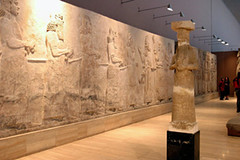
Iraqi officials are seeking to get back antiquities looted from the National Museum in 2003

Antiquities officials from around the world have gathered in Cairo to map out a strategy to bring back artefacts they say have been taken away from their countries and displayed abroad.

Antiquities officials, deputy culture ministers and museum directors from 16 countries are attending the two-day meeting.

Egypt's Supreme Council of Antiquities (SCA) said the forum will discuss "the protection and restitution of cultural heritage".

Delegates will also draw up lists of artefact's missing from their countries and displayed in museums abroad, treasures they have been demanding be returned, the SCA said.

The conference will also call on the United Nations cultural body Unesco to amend a convention that bans export or ownership of stolen antiquities acquired after 1970.

The convention deals with the "means of prohibiting and preventing the illicit import, export and transfer of ownership of cultural property", but stipulates there will be no "retroactive" measure for artefacts acquired before the convention was signed in 1970.

Retrieving 'loot'

Over the years, Egypt's antiquities supremo Zahi Hawass has made the return of looted Egyptian artefact's the hallmark of his tenure and won many battles to bring home Pharaonic items and other ancient relics.

Thirty countries were invited to attend but only 16 are attending: Bolivia, China, Cyprus, Greece, Guatemala, Honduras, India, Iraq, Italy, Libya, Mexico, Nigeria, South Korean, Spain, Sri Lanka and Syria.

Officials from Iraq, whose national museum saw one of the biggest lootings in modern history following the US-led invasion in 2003, will attend the conference.

Fawzi al-Atroshi, Iraq’s deputy culture minister, told Al Jazeera: "The number of antiquities stolen from the Iraqi national museum in 2003 is estimated at 15,000 pieces. Many of them date back to the third millennium BC.

"We have recovered around 7,000 pieces and we are still chasing the rest in neighbouring countries, Europe, Americas and Israel. The Israelis were interested in antiquities written in Hebrew."

In March, Egypt said it retrieved from Britain some 25,000 ancient artefacts, including a stone axe dating back 200,000 years and pottery from the seventh millennium BC.

Egyptian efforts

But Hawass is still eyeing two high profile objects: the Rosetta stone held by the British Museum for more than 200 years and the 3,400-year-old bust of Queen Nefertiti on display at the Neues Museum in Berlin.

The iconic Rosetta stone, which dates back to 196 BC, was found by French forces in Egypt in 1799 and given to the British under a treaty two years later.

As for the Nefertiti bust, Germany has repeatedly rebuffed Egyptian claims to the rightful ownership of it and says the priceless sculpture was acquired legally nearly a century ago. Egypt says it was spirited out of the country.

Last year Egypt broke off relations with the Louvre Museum until France finally returns stolen steles chipped off a wall painting in the ancient tomb in Luxor's Valley of the Kings.

Greece, one of the countries attending the conference, will chair a session devoted to "problems facing the countries in their attempt to retrieve their antiquities," Hawass has said.

Athens has been locked in a 30-year antiquities "war" with London to retrieve the Elgin Marbles from the British Museum.

Source: Al Jazeera and agencies

Detroit Continues Fight Against School Closings, Demolitions & Illegal Medical Center Takeover

Detroit Continues Fight Against School Closings, Demolitions & Illegal Medical Center Takeover

Parents, community rally to save schools while state halts federally-funded downsizing

By Abayomi Azikiwe
Editor, Pan-African News Wire

A new round of rallies and demonstrations began during the week of March 29 in efforts to halt the closing of 45 schools and other attacks involving the downsizing of the city and the sale of the non-profit Medical Center. Residents of the city came out in the hundreds to community meetings seeking answers and methods of struggle to stop the escalating attacks on the largely African-American and working class municipality.

On March 29, 200 students, staff and alumni from Cooley High, located on the northwest side, rallied in front of the building requesting that the plan to shut down the school be reversed. The state-appointed Detroit Public Schools (DPS) emergency financial manager Robert Bobb has scheduled to close the school at the end of the semester in June.

Alumni extending back to the 1950s and 1960s attended the rally and voiced their concerns to the media that the closing of the school would be devastating to the community. State Rep. Leslie Love, a Cooley alumni, was present and played a leading role in the gathering.

After the rally, the crowd took the streets and marched along the business district on Fenkell. Even though traffic was blocked along the way, motorists honked their horns and gave the black power salute and thumbs-up in support of the demonstration to save the school.

This demonstration lasted for an hour and drew people out of their homes and small businesses to join in the protest. Residents of the neighborhood were unanimous in their sentiment that the closing of Cooley would further damage the social fabric of the community which has been severely impacted by the deepening economic crisis in Detroit.

Later that same evening the first in a series of community meetings called by the DPS emergency financial manager to discuss the closings was held at Henry Ford High School also located on the northwest side. 400 people showed up at the meeting representing Coffey, Holcomb, Langston Hughes, McKenny, Taft and Charles Wright schools.

Both parents and students gave detailed and impassioned presentations in support of keeping their schools open. In addition, Detroit Federation of Teachers President Keith Johnson spoke as well as in opposition to the closings.

The school closings are being promoted in the corporate media as a cost-cutting mechanism for the cash-strapped district which is facing a deficit of over $300 million. Yet since the appointment of the emergency financial manager by Democratic Gov. Jennifer Granholm one year ago, the red ink has increased by $100 million.

When the emergency financial manager for DPS took control in 2009, he laid-off 1,500 employees but was forced to bring back 1,100 because personnel shortages were so acute that many schools could not even operate. Due to the financial mismanagement by the state-appointee, the district was forced to take out a short-term loan of $256 million in order to meet payroll and other expenses. (Detroit News, April 4)

Even the Detroit News, whose editorial stance is in support of the emergency financial manager and state control of the school district, was forced to admit that “Now the district is so broke it has had to plead to state officials for permission to take on yet another short-term loan.” (Detroit News, April 4) Despite threats by Robert Bobb to put the school district into receivership or bankruptcy last year if the unions did not accept huge pay and benefit cuts, this plan is no longer advocated because of the damage it has done to the overall bond ratings for both the city and the state of Michigan.

At present the state Superintendent Michael Flanagan is attempting to force a deal between the elected Detroit School Board and the emergency financial manager in order to secure a $115 million grant from the federal government. The board has filed suit against the emergency financial manager in an effort to win an injunction to stop the school closings.

Robert Bobb wrote to Otis Mathis, the Detroit Board of Education President, asking for the elected body to drop its lawsuit against his office in exchange for some compromise over control of the district. The Detroit board had sued earlier to stop Bobb from exercising academic control over the district as well.

Yet the question of academic control of the district is superfluous with the impending closure of 45 schools, the possible lay-off of over 2,000 employees and the burgeoning deficit. Vice-President of the Detroit board Anthony Adams said on April 1 that “The board has been ignored. The issue is whether he’s prepared to accept us as a partner.” (Detroit Free Press, April 2)

However, the question is what will the board and the emergency financial manager be partnering to accomplish? The community is demanding that all of the school closings be rescinded and that funding be supplied by the state to maintain personnel levels in the district.

In a leaflet being circulated at the anti-school closing rallies and demonstrations as well as among the people throughout the city, the Moratorium NOW! Coalition to Stop Foreclosures, Evictions and Utility Shut-offs states that “Both Robert Bobb, the unelected DPS emergency financial manager, and Mayor Dave Bing are serving the rich who are responsible for creating the worse economic crisis this city, state and country has seen since the Great Depression.”

The leaflet continues by pointing out that “In order to defeat the banks, corporations and the private foundations like Kresge and Skillman, who are really behind these dictatorial measures to further impoverish the people and deny their right to self-determination, we must build a city-wide coalition to demand a moratorium on all foreclosures, evictions, utility shut-offs, layoffs, school closings and mass dislocation.”

This statement concludes in an appeal to the masses to “Tell Mayor Bing to declare a state of economic emergency and suspend debt-service payments to the banks and demand that the federal government immediately establish public works programs to create jobs for hundreds of thousands of unemployed and poor people in Detroit.

In regard to the DPS deficit and its relationship to the banks, the Detroit News revealed on April 4 that “80 percent of Detroit’s state aid will go to debt payment instead of classrooms. That is extraordinary, given the students’ dire academic needs.”

Downsizing Efforts Halted Over Environmental Concerns

Illustrating the undemocratic and chaotic character of the corporate-engineered plans to “rightsize” Detroit during the census year, a much trumpeted plan to utilize $20 million in federal dollars to demolish vacant homes in the city was halted on the first day by state officials due to the failure of the Bing administration to have the buildings inspected for untreated asbestos.

When the first house was being bulldozed, the project was stopped leaving the home as a gaping eyesore and possible environmental hazard. “I don’t want to have to breathe this stuff,” said Alex Alexander, 73, who lives next door to the abandoned home. (Detroit News, April 3)

Alexander continued by saying that “I am worried I am going to get sick.” The Detroit News reported that “State officials only learned of the city’s federally funded demolition blitz—which Mayor Bing touted in his “State of the City” speech last week—through the media. The state said the city didn’t file a required 10-day notice with the Department of Natural Resources and Environment over its plans to raze the house. Such a notice would include whether the house has asbestos.”

The demolition blitz is slated to carry out large scale destruction of abandoned homes, many of which are owned by the banks, in the neighborhoods of Brightmoor, Herman Gardens, Southwest, Kettering, North End, North Central, Osborn and Far East/East English Village. The deputy director of the city’s Building Safety and Engineering Department said on April 2 that 160 houses have already been torn down without the necessary environmental permits.

Private Takeover of Detroit Medical Center Challenged

In other efforts aimed at stopping the privatization of the city, a coalition of non-profit organization have declared that the proposed sale of the Medical Center located in the Wayne State University area is illegal under state law. The three groups, calling themselves the Coalition to Protect Detroit Health Care, wrote a letter to the Michigan Attorney General Mike Cox, who must approve the sale, stating that the possible takeover by the Nashville-based Vanguard Health Systems would violate laws that prohibit non-profit “assets to be used, conveyed or distributed for non-charitable purposes.” (Fiercehealthcare.com, April 1)

“We want to make sure the sale reflects the long-term best interests of the city of Detroit versus the short-term interests of Vanguard,” said Marjorie Mitchell, the executive director of Michigan Universal Health Care Access Network.

The Moratorium NOW! Coalition is calling for a mass demonstration at City Hall on April 20 to unite the forces fighting around all the major issues in Detroit. In the call for the demonstration downtown, the Coalition says that “Corporate interests are moving rapidly to privatize public education, break the Detroit Public Schools unions, seize the municipal pension funds, sell the Detroit Medical Center and drive tens of thousands of people from their homes so that the banks can prosper at the expense of working people and youth.”

Imperialist Interference Continues as Sudan Prepares for National Elections

Imperialist Interference Continues as Sudan Prepares for National Elections

EU maintains sanctions while U.S. attempts to set terms for upcoming vote

By Abayomi Azikiwe
Editor, Pan-African News Wire

Despite widely publicized claims that the opposition parties in Sudan will boycott the elections scheduled for April 11-13, President Omar al-Bashir has reiterated that the national poll will not be derailed.

Moktar Al-Ahsan, a member of the of Sudan’s National Election Commission says “We are confident that the elections will be completed on time and they will be supported by the people to vote. The official maintains that the people are “keen to participate in the process.”

Election Commission officials pointed out that 84 percent of the people in Sudan of voting age have registered to participate. One opposition party, The Democratic Unionists, who before had withdrawn, are now back in the race.

The presidential candidate for the Sudanese People’s Liberation Movement (SPLM), Yasir Arman, withdrew from the elections saying that the process has not been fair. However, Al-Ahsan of the National Election Commission says that “There is nothing new in what the opposition is saying. We have reviewed their complaints, and accepted some of their objections and others, the opposition went to court and we were obliged to make changes. But now, we are bound by the timetable as it is.” (Christian Science Monitor, April 5)

A spokesman for the ruling National Congress Party (NCP) of President al-Bashir noted that there is no basis for the withdrawal of the SPLM from the elections. Rabbie Abdelatti Ebaid, a NCP official, indicated that “Until this time there was no information that the opposition parties will withdraw. I think the political parties are not justified to withdraw. They feel that if they enter these competitions, they will lose. So instead of losing, they start to make chaos.” (Christian Science Monitor, April 5)

The Role of the U.S. and E.U.

Even though both the United States and the European Union have imposed sanctions on Sudan over the conflict with rebel secessionist groups in the western Darfur region, efforts have been made under the Obama administration to open up dialogue with the government in Khartoum. The U.S. special envoy to Sudan Scott Gration visited the country in early April in order to assess the political situation leading up to the national elections.

Gration stated on April 4 that “They (the National Election Commission) have given me confidence that the elections will start on time and they would be as free and as fair as possible. These people have gone to great lengths to ensure that the people of Sudan will have access to polling places and that the procedures and processes will ensure transparency.” (Sudan Tribune, April 5)

These statements by the special envoy Gration has angered various political elements in the country who saw the upcoming elections as a means to weaken and destabilize the NCP government. The northern-based Umma Party met with the government on April 2 and later said that their participation was contingent upon the fulfillment of eight conditions which included access to the media and electoral funding.

Nonetheless, the State Department pointed out that the U.S. wanted the Sudan National Election Commission to make changes in the way the upcoming vote is organized. Philip Crowley, a State Department spokesman, said that Washington was still “concerned with troubling developments including serious restrictions on political freedom.” (AFP, April 5)

Crowley also said that it was “important for the government of Sudan to immediately lift restrictions on political parties and the civil society.”

Sudan presidential assistant Nafie Ali Nafie expressed his belief that the major opposition parties will agree to participate in the elections. In an article in the Sudan Tribune, Nafie was quoted from an interview held at the NCP headquarters saying that “opposition parties will have no choice but to take part in the elections after losing external support.”

The April 11-13 elections are crucial in the success of the 2005 peace deal signed between Khartoum and the southern-based SPLM and other parties in the region. The success of a projected 2011 referendum on the future of the southern region will probably be determined by the outcome of the April poll.

Sanctions Remain in Force by the U.S. and E.U.

President al-Bashir’s government is hoping that with the advent of national elections existing sanctions imposed by the imperialist countries against this central African state will be lifted.
These sanctions were recently highlighted when the European Commission announced again its ban on Sudanese carriers landing at airports controlled by the E.U.’s 27-country bloc.

“We cannot accept that airlines fly into the EU if they do not fully comply with international safety standards,” said European Transport Commissioner Siim Kallas. In a March 30 Reuters report it says that the European Commission would continue to place restrictions on aircraft that did not meet certain safety standards.

Reuters reported that “In many airports in Sudan, travelers are greeted by the sight of a crashed plane lying beside the runway. Sudan blames U.S. sanctions, imposed in 1997, for difficulties in obtaining spare parts.” (Reuters, March 30)

Sudan has been at odds with the U.S. since the first military invasion of Iraq in 1991. The Sudan government refused to support the coalition led by the U.S. and Britain whose military actions resulted in the withdrawal of Iraqi forces from Kuwait and the imposition of more than a decade of draconian United Nations sanctions against the previous government of the late President Saddam Hussein.

With Sudan emerging as a major oil-producing state during the previous decade, the country has moved closer to the People’s Republic of China. Consequently, Britain, the European Union and the U.S. have given political support to the Darfur rebel groups fighting the Sudan government in the western region near the border with Chad, a state which is backed by the conservative government in France.

Sudan is often accused by Israel of supplying arms to the Hamas government in Gaza. During 2009, reports indicated that the Israeli Air Force bombed a number of convoys in Sudan alleging that they were smuggling arms from Iran into Egypt and across the border into the Gaza region of occupied Palestine. The government in Khartoum has denied these allegations of arms smuggling although it does openly support the struggle of the Palestinian people for national liberation and statehood.

President al-Bashir earlier this year signed a peace agreement with one of the leading rebel groups in Darfur, the Justice and Equality Movement (JEM). However, leading up to the elections the JEM has charged the NCP government with violating the agreements.

On April 5 the JEM accused the Sudan Air Force of bombing areas inside the Darfur region. “The bombing started at midnight and continued this morning…These people (the government) are not interested in finding a political solution to the problem,” said JEM spokesman Ahmed Hussein Adam, who responded to questions from the Reuters press agency by telephone from Qatar. (Reuters, April 5)

The NCP government denied the allegations by the JEM saying that “The Sudan Army is committed to the ceasefire it has signed with JEM. It has not bombed any JEM positions,” a military spokesman said.

Ghazi Salaheddin, the government’s negotiator for Darfur said that the JEM rebels are really the party violating the peace agreement by moving into territories prohibited in the truce. “They (JEM) have been fanning out in the area and trying to establish themselves in Kulbus and Jabel Moun which is a violation of the ceasefire declaration.” (Reuters, April 5)

The International Criminal Court (ICC) based in The Hague has issued several indictments calling for the arrests of President al-Bashir and other leading officials of the government. The ICC indictments have been rejected by the government in Khartoum and their position is supported by both the African Union and the Arab League.

Both of these regional organizations representing Africa and the Arab world oppose the ICC actions saying that it has complicated the ongoing peace process that is making progress in curbing the fighting within the Darfur region as well as in the border areas with neighboring Chad.

Multiple Explosions Rock US Occupied Iraq

Tuesday, April 06, 2010
22:35 Mecca time, 19:35 GMT

Multiple explosions rock Baghdad

A number of buildings were destroyed by the powerful blasts in different parts of the capital

At least eight explosions have rocked the Iraqi capital, killing at least 35 people and injuring more than 140 people.

The blasts targeted residential buildings in a mix of Sunni and Shia areas of Baghdad on Tuesday morning.

Police said two car bombs were detonated in Chkook, Khadamiya district, killing at least five people.

In Baghad's western Shula district, another car bomb exploded, causing some buildings to collapse. Several people died in the explosion, Iraqi security sources said.

Al Jazeera's Zeina Khodr, reporting from Baghdad, said those attacks occurred in residential neighbourhoods of the capital.

"[Shula] is a mostly Shia neighbourhood. It used to be a former stronghold of the Mahdi Army, the armed wing of the Sadr movement," our correspondent said, referring to supporters of Moqtada al-Sadr, a Shia leader.

Target not clear

Shula has been a relatively quiet neighbourhood, having not seen been the target of attacks in recent months.

Police said another of the blasts was carried out by a suicide bomber, who detonated explosives on Haifa street in the central Salhiya neighbourhood, near the national museum.

The attacks come as political uncertainty remains following last month's election.

Our correspondent said it was not yet clear what the target of that attack was.

"We're getting conflicting reports on the target. Some reports say it was the public works ministry, other reports say he [attacker] blew himself up outside a popular restaurant," she said.

Iyad Allawi, the former prime minister whose coalition won a narrow victory in the country's March 7 poll, sharply criticised the attacks.

"Government officials hold responsibility for not achieving security," Allawi said as he gave blood for the wounded in Baghdad.

"I don't know what they have been doing in these (last) four years."

"They have been saying 'we are ready,'" Allawi said. "Where is this readiness? Nothing is ready."

Political unrest

Tuesday's co-ordinated strike follow similar attacks just two days earlier. On Sunday, three suicide car bombsnear foreign diplomatic missions killed at least 30 people and wounded hundreds more.

In the past five days, four attacks have left more than 100 people dead.

The spate of violent attacks comes as Iraqi politicians continue wranglings to form a coalition government following last month's general elections. No clear winner emerged from the poll.

The Sadr political bloc was expected to announce who it would back for prime minister on Tuesday after holding an unofficial referrendum among its supporters, but said late on Monday night that the decision was being postponed.

Nouri al-Maliki, the incumbent prime minister, is reported to have met the group last night, but no details of any agreement have emerged. The Sadr bloc has in the past indicated it would not support al-Maliki staying on for another term as prime minister.

Our correspondent in Baghdad said a lot of negotiations are taking place, but "no agreements so far, no progress, and there is a real fear that the security situation will deteriorate".

"Over the past few days we've been seeing car bombings, shootings, mortar round being fired, as well as improvised explosive device attacks".

Source: Al Jazeera and agencies

Tuesday, April 06, 2010

President Obama to Meet at the White House With African-American Church Leaders

Obama to meet at the White House with black church leaders

By Hamil R. Harris and Krissah Thompson
Washington Post Staff Writer
Tuesday, April 6, 2010; A03

President Obama will sit down Tuesday with about 20 black religious leaders, including representatives of the major African American denominations, in the second White House meeting in three months to discuss the needs of the black community.

The president has faced growing questions about whether he has done enough to help African Americans deal with the nation's economic downturn. Blacks have been hurt more than other communities by the lack of jobs and the difficulty in obtaining bank financing, among other issues, and some -- including political commentator Tavis Smiley and some members of the Congressional Black Caucus -- say that Obama has not responded urgently.

As the criticism intensified last month, the White House paid little public attention to the critics while aides privately pushed back, citing examples of the president's agenda, such as health care and education, that specifically benefit African Americans.

Tuesday's meeting appeared to be a clear sign that Obama has heard the complaints, especially because it precedes a gathering with a larger group of ministers in the East Room for an Easter prayer breakfast. But a White House spokesman rejected the conclusion.

"This meeting is not about politics," spokesman Corey Ealons said. "It is about connecting with key faith leaders on the challenges impacting our nation. President Obama appreciates the acute challenges facing African Americans across the country and respects the work these pastors are doing to support the communities they serve."

The preachers, who represent some of the largest African American churches in the country, have written an open letter to the president that praises the job Obama has done and encourages him to "stay the course."

"President Obama has pursued policies that are crucial for our communities and the nation as a whole, and we cannot afford to lose courage and fortitude at this juncture," reads the letter, which more than 30 ministers signed. "President Obama has fought for us -- and we must fight for him. . . . We have been troubled by the trivial debates that have become more prominent in Washington and across the country, while at the same time our families are facing historic challenges."

The public show of support and its welcome by the White House is a shift from Obama's seeming detachment from the question of whether he should have a "black agenda." In the past, he has responded by saying that "a rising tide lifts all boats" and that his job "is to be president of the whole country." This time, he is letting the ministers sing his praises.

"He is the president of the United States, not just the president of black people, the president of Latino people," said Bishop Vashti Murphy McKenzie, a leader of the African Methodist Episcopal Church. "We expect him to put together policies and an agenda that will impact all of America and not just one special interest."

The letter, to be presented to Obama by the Rev. T. DeWitt Smith Jr., president of the 2.5 million-member Progressive National Baptist Convention, outlines Obama's accomplishments on behalf of "the least of these," citing changes in education policy, health care and financial regulation.

"We are in the mix here," McKenzie said. "If you are talking about health care, you are talking about African Americans. If you talk about unemployment, African Americans are losing jobs disproportionately."

Joshua DuBois, director of the White House Office of Faith-Based and Neighborhood Partnerships, said that the president "is honored to have deep support in the African American church."

Tuesday's meeting is the second at the White House this year to discuss issues primarily affecting blacks. Two months ago, Obama sat down with NAACP President Benjamin Jealous, National Urban League President Marc Morial and the Rev. Al Sharpton, who had requested the visit.

Afterward, the civil rights leaders said Obama had been willing to hear their ideas, and they restated their support for the administration. But in the days after, Smiley criticized the men for not putting more pressure on Obama to carve out a specific black agenda.

Smiley then held a forum in Chicago -- attended by the Rev. Jesse Jackson and academics Cornel West and Michael Eric Dyson, among others -- where a number of African American speakers said that Obama needs to do more for blacks.

"The bottom line is the president needs to take the issues of black America more seriously because black folks are catching hell, number one," Smiley said after the forum. "Number two: This theory that a rising tide lifting all boats -- that theory was soundly dismissed. Thirdly, because black people are suffering disproportionately, it requires a disproportionate response."

Smiley's forum drew criticism from Sharpton, who accused Smiley of being a "critic of the president" and creating unnecessary division.

A similar tug of war has occurred between the president and some members of the Congressional Black Caucus, who have said that Obama should do more to target aid and jobs for poor blacks. Caucus members have said that key people in the Obama administration have taken them for granted.

Despite such fissures with black political leaders, the president's popularity among black voters remains sky-high, said David Bositis, a pollster with the Joint Center for Political and Economic Studies, a think tank focused on black issues.

"Obama couldn't be doing better among African Americans," Bositis said. "There's absolutely nothing there in terms of a problem in terms of African Americans. The opposition from Southern white conservatives . . . just makes African Americans more strongly bonded to Obama."

Staff writer Michael D. Shear contributed to this report.

President Obama to Restrict United States Use of Nuclear Weapons

Barack Obama to restrict US use of nuclear weapons

The Obama administration is poised to adopt a new policy that would restrict America's use of nuclear weapons

London Daily Telegraph
Published: 6:00AM BST 06 Apr 2010

The policy review, expected to be released later today, is likely to include language reducing US reliance on nuclear weapons for its national defence.

The move away from nuclear arms reflects President Barack Obama's pledge to work towards a nuclear-free world, and could strengthen US arguments that other countries should either reduce stockpiles of nuclear weapons or forego developing them.

Sensibly, Barack Obama follows the George W Bush line on terror
Russia drops plans to deploy missiles next to Poland after Barack Obama takes officeThe White House also planned to urge Russia to adopt limits on shorter-range, less powerful nuclear weapons, an arena in which Russia holds an advantage, according to officials.

The administration's new policy would stop short of renouncing the use of nuclear weapons except in retaliation to atomic attack, as some activists have advocated. But it would describe the weapons' purpose as "primarily" or "fundamentally" to deter or respond to a nuclear attack.

That wording would rule out the use of such weapons to respond to an attack by conventional, biological or chemical weapons. Previous US policy was more ambiguous.

In an interview with the New York Times, Mr Obama said his administration was explicitly committing not to use nuclear weapons against non-nuclear states that are in compliance with the Nuclear Non-Proliferation Treaty, even if they attacked the United States with biological or chemical weapons. Those threats, he told the newspaper, could be deterred with "a series of graded options" - a combination of old and newly designed conventional weapons.

Mr Obama said he would make exceptions for "outliers like Iran and North Korea," but that his new strategy was aimed at eliminating Cold War ambiguities about when such weapons could be used.