Monday, October 30, 2006

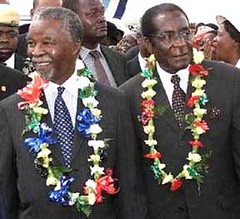
President Thabo Mbeki Plans to Visit Beijing for China-Africa Summit

Mbeki to attend Beijing Summit on China-Africa cooperation

South African President Thabo Mbeki will lead a senior government delegation to China on November 3 for the Forum on China-Africa Cooperation (FOCAC) Summit of Heads of State and Government in Beijing scheduled from November 4 to 5.

Ronnie Mamoepa, spokesman for the Department of Foreign Affairs, said in a statement issued here on Sunday that Mbeki will participate in this Summit within the context of South Africa's commitment to consolidate the African agenda through South-South cooperation including cooperation projects through the New Africa- Asia Strategic Partnership (NAASP).

He said that South Africa and the Peoples' Republic of China are in addition, members of the Group of 77 + China, which is the largest coalition of developing countries outside of the United Nations. South Africa currently chairs the G-77 + China.

The Summit will include a Roundtable discussion in addition to a High-Level Dialogue between Chinese-African Leaders and Business Communities. The Roundtable will be chaired by Chinese President Hu Jintao and Ethiopian Prime Minister Meles Zenawi.

The Summit is expected to explore opportunities for concrete and practical cooperation on NEPAD implementation and to explore the linkages with the Sino-Africa process in the 18 economic and social development fields identified in the "Beijing Declaration" of 2000 and "Programme for China and Africa Cooperation in Economic and Social Development (2000)", as well as the areas of cooperation identified in the "Forum on China-Africa Cooperation - Addis Ababa Action Plan 2004-2006" document adopted in 2003.

The spokesman said that the Summit is expected to adopt a Declaration and an Action Plan (2007-2009).

Speaking about China-South Africa Relations, he said, South Africa's strategic engagement with China is located within the country's key foreign policy priorities, which are shaped by our domestic priorities and include such as poverty alleviation, the equitable distribution of wealth, peace and security, and the creation of a better life for all.

Countries in the Southern Hemisphere share many of the same social and developmental challenges, including those induced by globalization and historic inequity. The interdependent global order with a multipolar dimension means that like-minded countries have to form alliances on common issues, he added.

He said that South Africa's relations with China are an example of such an alliance that advances South Africa's bilateral, regional, trilateral and multilateral agendas.

In this regard, he said, China represents an enormous opportunity for South Africa and Africa, but at the same time poses certain challenges. The sheer size of the Chinese market, its untapped potential, its population size, its explosive growth, its membership of the UN Security Council and its emergence as a major global power all present opportunities.

"China is also a key player in the expansion of South-South cooperation as we seek to maximize the opportunities presented by globalization and reduce the negative effects. China can be a key ally in the fight to reform the international political, financial and trade architecture (in the UN, IMF, and WTO)," he said.

Source: Xinhua

Saturday, October 28, 2006

South African Government Announces Shift in ARV Drug's Policy

SA government ends Aids denial

Johannesburg, South Africa
28 October 2006 08:04

The South African government on Friday announced a dramatic reversal of its approach to the country's HIV/Aids crisis, promising increased availability of drugs and endorsing the efforts of civic groups battling the disease.

"We must take our fight against Aids to a much higher level," Deputy President Phumzile Mlambo-Ngcuka told a conference of Aids activists, who until recently had been ignored and even denounced by the government.

"We must tighten up so that ARV [antiretroviral] drugs are more accessible, especially to the poor. Education and prevention of HIV infection must be scaled up. Our people want us to unite on this issue in the best interests of the health and wellbeing of our nation. Working together we can defeat this disease," she said to cheers from a crowd of health professionals, church leaders and labour officials.

Experts said the government's policy change could save thousands of lives. An estimated 5,4-million of South Africa's 47-million people are infected with HIV, one of the highest ratios in the world. "This is a sea change," said Mark Heywood, director of the Aids Law Project. "We're not across the ocean yet, but now the government is sailing in the right direction."

Activists fought a prolonged legal battle that forced President Thabo Mbeki's government to distribute the life-saving ARV drugs through the public health services. "The government is finally acknowledging that Aids is a serious national problem and is taking a scientific approach to tackling it. It's long overdue, but it is worth celebrating," said a senior doctor working in a government hospital.

Mbeki had questioned that Aids was caused by HIV and said it was not certain that ARV drugs were safe and effective. He denied knowing anyone who had died of Aids, despite several prominent South Africans succumbing.

After a 2003 court ruling, the government reluctantly rolled out a public programme to make ARV drugs available to people with Aids. About 200 000 people receive the government drugs, making the public programme one of the biggest in the world. But they are reaching just one quarter of the estimated 800 000 in need.

Confusion over what is effective Aids treatment was spread by Health Minister Manto Tshabalala-Msimang, who adamantly promoted a diet of beetroot, lemons and garlic as an alternative treatment. At the Toronto Aids conference in August, she sparked an uproar with a South African government display of the fruits and vegetables but no ARV drugs.

The South African government's position on Aids was denounced as "wrong, immoral and indefensible" by the United Nations's top official on Aids, Stephen Lewis.

Mbeki has been silent on Aids issues recently and has not sacked Tshabalala-Msimang as demanded by international and domestic Aids campaigners. But significantly, the president marginalised the health minister by making his deputy president the head of an Aids taskforce and it appears he authorised her to change government policies.

In recent weeks the soft-spoken but savvy Mlambo-Ngcuka had signalled the change by privately meeting Aids specialists whom the government had previously refused to consult. She has accepted that Aids is caused by HIV and emphasised that ARV drugs are central to fighting the disease.

A month ago, Aids activist Zackie Achmat and 40 members of the Treatment Action Campaign (TAC) were arrested for demonstrating in government offices for the sacking of Tshabalala-Msimang.

On Friday Achmat, in his trademark "HIV-positive" T-shirt, walked arm in arm with the deputy president and was kissed and hugged by other top officials.

"This is a serious, significant change. The government wants to work with us, not against us," he said. "By increasing the availability of drugs, particularly for preventing mother to child transmission, the government is going to save lives."

'Tremendous efforts'

In her speech, Deputy Minister of Health Nozizwe Madlala-Routledge was frank about the government's progress on fighting the disease. She said while "tremendous efforts" are being made and resources invested to fight HIV/Aids, there are still unacceptably high levels of new infections and deaths.

While a lot of money has gone into condom distribution, the impact this is making is not known. The implementation of programmes to prevent mother-to-child transmission has been "most uneven". Some provinces showed positive trends while others had performed dismally, she said.

A high teenage pregnancy rate also reveals the "huge challenge" of changing the behaviour of young people.

The strain resulting from a growing burden of disease and staff shortages will require honesty in speaking about problems. These include a shortage of doctors, nurses and pharmacists, infrastructure problems and collaboration with other departments -- particularly correctional services. The Traditional Healers' Council has also not been established and marketing the "comprehensive plan" is inadequate.

A recent study by the Health Systems Trust also showed a very low level of HIV treatment literacy among South Africans.

In a briefing after her speech she told journalists that her ministry has had an "up and down" relationship with the TAC. "We cannot afford to antagonise anybody and are taking steps to improve relationships with civil society."

She said the government is "very clear" that nutrition could not replace medicines, but is interested in learning how alternative remedies could help fight opportunistic infections. "We have started the process of putting these so-called remedies under scientific scrutiny."

Cosatu's general secretary, Zwelinzima Vavi, said Madlala-Routledge's speech was "brilliant". Although the country is now "marching behind a single message", he said the days of toyi-toying are not over.

He said the union federation will no longer hold marches complaining about "potatoes and other matters", but will instead focus its public actions on greater access to Aids treatment and cheaper medicines.

Mbeki's U-turn

Several factors convinced Mbeki to change his policies. Official statistics show an alarming rise in deaths among South Africans in their 20s, 30s and 40s.

Supporters of the ruling African National Congress such as trade unions have criticised his policies and the resulting shortages of antiretroviral drugs. Civic groups were joined by 81 leading scientists in demanding the sacking of the health minister who suggested eating beetroot as a cure. And South Africa has fallen behind its neighbours in cutting the infection rate.

Guardian Unlimited
http://www.mg.co.za/articlePage.aspxarea=/breaking_news/breaking_news__national/&articleId=288029

On the Suez Canal Crisis Fifty Years Later

Op-Ed Contributor

By DAVID FROMKIN
Published: October 28, 2006

FIFTY years ago tomorrow — on Oct. 29, 1956 — Israeli paratroops were dropped deep behind Egyptian lines in the Sinai peninsula, opening the way for the ground troops that followed. In a lightning campaign lasting less than five days, the Israelis took control of the entire peninsula. The Israelis had a rendezvous at the Suez Canal with the armed forces of Britain and France. But the British and French stopped short of their goal. Like out of shape ex-champions attempting a comeback, the Europeans were unable to get past the first round in their effort to return to the Middle East.

The Suez crisis was a divide in the history of the Middle East. It was the moment when America pushed out the Europeans and then tried to take their place — and the reverberations are still felt today. The road that led to Suez began in 1947, when the British Foreign Office notified the American Department of State that Britain could no longer afford to hold its positions in Greece and Turkey against pressure from Russia. Soon the United States was engaged in an effort to hold the line against Russia — there, but also all around the world.

The Middle East was essential to this policy of containment. The Arabic-speaking Muslim world had been taken in hand by Britain and France after the First World War, and though they had since achieved independence, the countries of the Middle East remained predominantly Western-influenced. European and American oil companies played an important role in Middle Eastern affairs. Britain retained a presence at the strategically vital Suez Canal in the form of a major military base and a garrison of more than 80,000 men. Not until the autumn of 1954 did Britain agree to withdraw from this installation.

The United States had always deplored European — especially British — imperialism. In the First World War, President Woodrow Wilson seemingly hesitated as to which side to join (or whether to at all), and in the end joined Britain and France only as an “associated power” rather than as an ally, thus making clear that our country did not share the goals of the other belligerents — goals that Wilson claimed were imperialistic.

As the United States accepted the responsibility, therefore, of defending the Middle East against possible Soviet aggression, its government was conflicted. In the interest of cold war containment, the United States should have wanted to shore up whatever remained of British and French presence and power in the Middle East, but at the same time the worry was that any association with the Europeans would drag America down.

As early as 1952, the C.I.A. was searching for an Arab leader to support, someone who would make hard, unpopular decisions. Recognizing that such a leader could be expected to have an agenda of his own, the agency needed him to take the lead in defending against Soviet expansionism.

Initially Allen Dulles, director of central intelligence, proposed Gamal Abdel Nasser, the emerging Egyptian dictator. John Foster Dulles, Allen’s brother and the secretary of state, agreed. But it soon became evident that Nasser had little or no interest in fighting communism or the Soviet Union. A charismatic figure, he aimed to unite the Arab peoples, and he exploited resentment of Western imperialism to win support. Secretary Dulles then turned to create an alternative anti-Soviet force: the Baghdad Pact, a northern-tier alliance of Turkey, Iran, Iraq and Pakistan. The only Arab state in the lot was Iraq, led by its pro-British prime minister, Nuri as-Said, who was widely perceived as the Anglo-American candidate for leadership of the Arab world, and as such the rival of Nasser.

In putting Nuri as-Said up, Secretary Dulles had in effect challenged Nasser to a duel. Nasser, a military man whose objective was to build his army, showed his independence of the West by ordering arms in large quantity from the Soviet bloc. Dulles took this at first as a bluff; then, when he could not stop it, he took it as a mortal insult — but he floundered, unable to find the right reply.

He offered to finance the Egyptian leader’s favorite project: the Aswan High Dam. Then, puzzlingly, he canceled the offer, apparently intending to humiliate Nasser publicly. The Egyptian trumped that. He nationalized the Suez Canal, transferring to Egypt the shares of the company that owned it. Nasser announced that Egypt would finance the dam itself, using the income from the canal. This bold move was a public challenge to Britain, the canal’s biggest user and shareholder, and to France, which had created the canal in the 19th century.

President Dwight D. Eisenhower and Secretary Dulles believed that Nasser should be overthrown — some day. Repeatedly they told the British and French that it would be a mistake to use force, at least at the moment. But Britain and France were already planning how they might use force. Frenchmen imagined that Algeria’s revolt against them, launched in 1954, was inspired by Nasser, and that without him it would collapse. Britons found themselves losing control of Jordan because of Nasser, and believed that without him they could regain control.

There was more to it. The Western leaders had irrationally come to regard Nasser as dangerous, a Hitler or a Mussolini. Prime Minister Anthony Eden of Britain was typical: a Foreign Office Arabist by background who moved in circles where it was felt that Arabs loved Englishmen, Eden believed that Nasser had somehow stolen that love. It was Nasser, he thought, who had taken away Jordan’s famed Arab Legion from its British officers. “I want him killed,” Eden said. So for months the allies had been conspiring. They would return to the Middle East, and they would invade Egypt. The confiscation of the canal company spurred them into action.

Eden, Prime Minister Guy Mollet of France and his foreign secretary, Christian Pineau, joined by a number of colleagues, hatched a plot based on an earlier plan for France and Israel to act together, and in which Britain now joined. In October 1956, Israel attacked Egypt through Sinai and drove to Suez. Britain and France then invaded, occupying the canal and claiming to be separating the Egyptian and Israeli Armies. The British, French and Israelis stuck to their prefabricated story, but their collusion was evident; soon they had to admit the truth.

The Americans had been kept in the dark, and they took it personally. Eisenhower in particular was angered by British wartime colleagues who had lied and deceived him. “What does Anthony think he is doing?” Eisenhower demanded. “Why is he doing this to me?” He refused to listen to excuses, claiming that “nothing justified double-crossing the United States.”

The Soviet leader, Nikita Khrushchev, grandstanded, threatening the Western imperialists. That enabled him to take credit for stopping the Europeans — even though it really was America that did it. The United States acted quietly but effectively. The Treasury Department threatened to withdraw support of the British currency unless the British Army left Egypt. Within 10 days, England would have collapsed financially. The British — and the invasion — stopped. To keep from being thought imperialists, the Eisenhower administration saved Nasser. The Suez crisis was over.

Britain and France had gone to war in order to keep their empires; instead, they lost them. The United States had aimed to keep Russia out of the Middle East, but the Suez crisis, and Khrushchev’s rhetoric, brought the Russians in. Eisenhower and Dulles believed that by their actions at Suez they were showing the nonaligned nations that, unlike the British and French, Americans were not imperialists — but the third world remained unconvinced. And in Europe, skeptics claimed the episode showed that the Americans intended to steal the empires of Britain and France.

Britain and France drew opposite conclusions from the Suez experience. Britain noted that it was dependent on the United States and would, for the most part, have to act accordingly and follow wherever America led. France decided that the United States would not protect France’s interests, and immediately, under Guy Mollet, began to build the atomic bomb — the result of American policy.

Israel compromised itself through its partnership with European imperialism — providing evidence to enemies who had asserted all along that Israel was no more than a European imperialist itself. And its victory in the Sinai campaign — one of many dazzling triumphs — illustrated the paradox that the more Israel won on the battlefield, the further it got from achieving the peace that it sought.

THE undoing of the British-French-Israeli alliance was that it rested on a lie. It is difficult to re-create the shock felt around the world when it became apparent that these supposedly honorable countries, and the principled statesmen who led them, would stoop to such a ridiculous fabrication. It was disgraceful: that they lied, and that the lie was so childish.

Scenarios had been prepared at various levels of the American government in the event that the Europeans acted against the Nasser regime. So far as I know, none of them envisaged the United States intervening to stop them. Had the allies fully and honestly informed Washington of their intentions, either the Eisenhower administration would have persuaded them to adopt an alternative strategy, or the allies would have convinced Washington to let them go ahead, or the United States would have explained to London how America’s control of the British currency gave it a veto power over British policy. One way or another, America’s angry reaction would have been avoided.

Though it cannot be proved, the lies of the allies weakened their cause in another important way. It outraged public opinion in France and, especially, Britain. A message was delivered: decision-makers in European governments were on notice that they no longer were free to initiate colonial wars.

The Europeans, to their credit, understood the message. Within years of the Suez crisis, Britain and France began decolonization programs in which they released territories they had held around the world. The winds of change had begun to blow — and they had come from Suez.
-------------------------------------------------------------------------------------
David Fromkin, a professor of history and international relations at Boston University, is the author of “A Peace to End All Peace: The Fall of the Ottoman Empire and the Creation of the Modern Middle East.”
-----------------------------------------------------------------------------------------

Rebellion Erupts on First Anniversary of African Youth Uprising of 2005

Fresh violence hits Paris suburbs

Saturday 28 October 2006, 5:32 Makka Time, 2:32 GMT

Tensions have been high ahead of the anniversary

Two buses have been set alight in a Parisian suburb as France's interior minister deployed 4,000 extra police to prevent a repeat of last year's rioting.

The latest bus burnings came just hours after hundreds of people marched in silence through the rundown suburb of Clich-sous-Bois on Friday to commemorate the deaths of Bouna Traore and Zyed Benna which triggered the riots a year ago.

A police source in the Seine-Saint-Denis suburb said two hooded men boarded one bus in front of a train station in in the early evening and ordered around 15 passengers and the driver to get off before setting it alight.

The second bus was attacked in a similar way by two armed men in another area of the suburb, a local official said.

At least five buses have been attacked in poor suburbs around the capital since Sunday and police have said violence could spiral out of control once again.

The fresh violence came despite the deployment of 4,000 extra policemen to prevent a repeat of last year's disturbances.

Anger

Hundreds of people had marched earlier in the day to commemorate accidental deaths of two young immigrants in an electricity substation last year.

Soumeya Ata, who travelled to Clichy-sous-Bois from the distant southwestern town of Pau to attend the commemoration, said: "You can really feel the anger and the suffering of the people who live in Clichy-sous-Bois."

Around 500 mainly young people from immigrant families marched on Friday.

Traore and Benna were killed after being electrocuted when they hid in an electrical substation while fleeing from the police, according to witness reports.

Their deaths triggered the worst riots to hit the French capital in nearly 40 years.

Marchers, many sporting T-shirts with the slogan "Dead for Nothing", passed the electrical substation where the two died and their families wept as they laid flowers at its gate.

Organisers called for quiet reflection to mark the tragedy, although some television crews pulled out after their staff were threatened by local youths.

No change

Tensions remain high in France's rundown suburbs, where poor job prospects, racial discrimination, a widespread sense of alienation from mainstream society and perceived hostile policing incited a wave of violence 12 months ago.

Rafika Benguedda, a 21-year-old student and marcher, said: "Nothing has changed."

An upsurge in attacks on buses on the eve of the anniversary prompted Nicolas Sarkozy, the interior ministor, to draft in extra police late on Thursday after transport chiefs warned they could pull services if the arson continued.

Law and order could again play strongly in 2007 presidential elections in which hardliner Sarkozy, the conservative frontrunner, is likely to run.

The 2005 riots were the worst in the Paris area since student riots in 1968.

Reuters


Police deployed in Paris suburbs

Extra police have been ordered into suburbs in the French capital, Paris, on the first anniversary of two deaths which sparked riots across the country.

An additional 4,000 officers were deployed amid reports two more buses had been attacked and set ablaze.

Earlier, at least 500 people marched in memory of the two teenage boys, both from immigrant families, who died.

Their deaths and the suggestion they had been running from police triggered three weeks of suburban clashes.

During the violence - between youths of mainly North African origin and police - more than 10,000 cars were set ablaze and 300 buildings firebombed.

Ahead of the anniversary police had reported an upsurge in violence. On Thursday, two buses were set ablaze.

Buses attacked

In the latest incidents, at least two more buses were set on fire.

Two armed men forced passengers from a bus in the northern Parisian suburb of Blanc Mesnil, before burning it.

A second similar attack took place in the same suburb shortly afterwards, police said.

"What happened is four guys attacked Bus 346," witness Thierry Ange told the Associated Press news agency.

"They made everyone get off, then they hit a woman and dragged out the bus driver by his tie," he said.

Both vehicles were destroyed, but there were no reported injuries.

Appeal for calm

Earlier, several hundred people marched through the suburb of Clichy-sous-Bois, where the riots started.

The families of the two dead youths, Bouna Traore and Zyed Benna, laid wreaths at the electricity sub-station where they were electrocuted.

A monument to the boys was unveiled and the local mayor appealed for calm.

"Last year we crossed Clichy by weaving between the burnt-out wrecks of cars, creating an image of our city that we didn't want to see," said mayor Claude Dillain, quoted by the Associated Press.

"Once again France, and even the world, is watching us and waiting to see what we do. So I appeal solemnly for calm and dignity to prevail here."

But others have warned that factors which played a key part in the riots - high unemployment, discrimination and youth alienation from mainstream society - remain unchanged.

"What is being done in order to ensure Clichy does not have three times as many unemployed as the rest of France?" Mr Dillain's deputy, Olivier Klein, asked.

Story from BBC NEWS:
http://news.bbc.co.uk/go/pr/fr/-/2/hi/europe/6093276.stm
Published: 2006/10/27 20:40:27 GMT


French riots: Is history repeating?

LA COURNEUVE, France -- Cars set ablaze, police patrols ambushed, a bus torched.

One year after three-week long riots shocked France, new attacks in ethnically-mixed suburbs have put police on alert and led locals to warn that violence will explode in poor neighborhoods if poverty and unemployment persist.

"For several weeks, we have seen escalating violence," said Frederic Lagache from the Alliance police union.

"We have the impression that some people in difficult neighborhoods want to mark the anniversary of the November 2005 violence ... by attacking police."

Weekend pictures of youths setting cars ablaze in the Grigny suburb south of Paris brought back memories of last year's riots, which kicked off in a Parisian suburb before spreading across the country in the worst civil unrest in some 40 years.

Police have warned the new violence risked spiraling out of control as politicians geared up for next year's presidential and parliamentary elections.

The conservative presidential frontrunner, Interior Minister Nicolas Sarkozy, reiterated this month the tough stance he took after last year's troubles, promising harsher punishment for young offenders.

But many youths charge that Sarkozy, who called the rioters "scum", is using them as a scapegoat without addressing the causes of the crime, such us poverty and discrimination.

Sarkozy's likely Socialist challenger, Segolene Royal, has also made more headlines with her strict proposals on crime than with plans on how to boost employment in the rundown estates.

'This is the ghetto'

"Nothing's been done to integrate us. Crime won't go away if there are no jobs," said Cameroonian Alain Roger, 30, repairing a friend's car on a parking lot surrounded by bleak estates.

"In Paris the nobility rules. Here, it's the ghetto," Roger said of his La Courneuve suburb, which is just a 30-minute drive from the Eiffel Tower and French parliament.

"As soon as they see '9-3' on your address, you're out," said Cyril Nzok from Cameroon, referring to the postcode of the crime-ridden suburbs north of Paris.

Unemployment in the poor high-rise estates often hits 40 percent -- more than four times the national average.

Conservative Prime Minister Dominique de Villepin last year promised better schooling, help for job seekers and more money for local associations in response to the riots.

France's Minister for Equal Opportunities Azouz Begag says the government has done more than any other to fight discrimination, organizing meetings around France to encourage firms to hire youths from diverse background.

"Now it's up to each French person -- white, black, Arab, man or woman, to ... demand to be treated equally," Begag, a son of Algerian immigrants, told Reuters in a recent interview.

But Sherifa Kasdi, who teaches French to immigrant children and adults, said her association had received no extra money or help since the riots although demand for her classes was rising.

"We had to turn some people away this year, because we just can't handle them all," Kasdi said, sitting in a small classroom set in a former restaurant in a housing estate.

"It's cold in here and we cannot even afford a photocopier," she said. "But the classes are crucial to integrate people."

"A boy who wakes up, has nothing to do, is doing badly at school and has no job prospects -- It's all setting the stage for future riots," said Kasdi.

'Live like ants'

The mayor of Clichy-Sous-Bois, where the riots began after two French teenagers of African descent were electrocuted while escaping the police, said the suburbs needed concrete projects, not just good intentions.

Clichy still had no tramway, no unemployment office and not even a police station, Socialist mayor Claude Dilain said.

"All conditions are there for it to blow up (again) if people feel nothing has changed," he told Reuters.

On a more upbeat note, he said voter registration in many suburbs had risen, and some youths had created their own jobs.

Kader Latreche, a 36-year old of Algerian origin, started his photo equipment repair shop in the La Courneuve suburb north of Paris in March and said he had just employed two new people.

"I'd rather work for myself than be treated as 'the Arab' by a boss," he said, standing outside his small shop.

"Our main problem is this," he said, pointing at a 15-storey housing estate. "We live like ants on top of each other."

Find this article at:
http://edition.cnn.com/2006/WORLD/europe/10/24/tbr.france.reut

50th Anniversary of the Suez Canal Crisis

Pride recalled

After 50 years, only limited attention has been given to one of the nation's most memorable events. Dina Ezzat reports
--------------------------------------------------------------------------------

In the heart of Al-Mansheya Square, where Gamal Abdel-Nasser declared the historic nationalisation of the Suez Canal 50 years ago, many Egyptians walk by with very little knowledge of the significance of the site or the story.

On the eve of the 50th anniversary of the day when President Nasser said, to the cheers of millions around the country, "in the name of the nation, I issue the presidential decree announcing the nationalisation of the Suez Canal Company as a stock holding company", not many people in Al-Mansheya Square had vivid recollections of 26 July 1956.

"Why is this square supposed to be of any significance? It's a marketplace with some old building that foreigners are interested in taking pictures of," said 26-year-old Tamer, a street vendor.

Tamer added, "it's a crowded place, that's for sure. And this park is not good enough. There should be a bigger park."

The park that Tamer wants to see enlarged is the venue of the Bourse building where Nasser declared the nationalisation of the Suez Canal.

In a two-day seminar hosted by the Bibliotheca Alexandrina and co-sponsored by the bibliotheca with the Suez Canal Authority to celebrate the 50th anniversary of the Suez Canal's nationalisation, Mohamed Awad, a dedicated Alexandrian architect who chairs the Mediterranean Studies Centre based in Alexandria, indicated an interest in rebuilding the venue to revive the city's history.

Awad's endeavour, if fulfilled, might help refresh the memories of those who have forgotten what is often described as the glorious day of national pride celebrated by Egypt upon the canal's nationalisation.

Of over 10 people of different age groups and socio- economic backgrounds interviewed by Al-Ahram Weekly on the nationalisation's 50th anniversary, only one remembered that Al-Mansheya was the venue which witnessed the moment. Many, especially the younger generation, were not especially aware of the episode. They tended to confusingly link the canal's nationalisation to the movie, Nasser 56, without much awareness of the details.

The declining awareness of this part of Egyptian history was touched upon during the seminar. Historian Yunan Labib Rizk argued the need to bring back awareness to the nation of the history of nationalisation, expressing particular concern about the younger generation. This generation, Rizk warned, does not seem to be aware of the details of history and they are subjected to brainwashing campaigns that aim to reduce the significance of moments of pride. "When three young journalists ask me in one week whether or not it was wise of Gamal Abdel-Nasser to nationalise the Suez Canal rather than to have waited for 12 years after which the canal was supposed to be Egypt's by law, I have to wonder what is going on."

"In an environment so inhospitable to the rationale and heroism of the act of nationalisation, it was necessary for the Suez Canal Authority and the Bibliotheca Alexandrina to remember the fifth anniversary and to exert an effort to celebrate it," said Qassem Eilawa, a writer from Port-Said.

Like Rizk and Eilawa, other participants complained about the declining interest in the recent history. Ample evidence was offered by participant historians, political scientists and professors of law who argued that Egypt could not have expected the canal to be peacefully and effectively transferred in 1968 in accordance with the text of the relevant agreements.

For many participants, the big question was who was behind this growing sense of scepticism about the value of the nationalisation. Some attributed the decline to prevailing anti-Nasser sentiments in certain quarters by the authors of history school curricula and editors who select the relevant documentaries and TV material for viewers. Others attributed it to sheer insensitivity to the importance of maintaining a high-level of awareness of national sacrifices.

There was sufficient agreement among participants that much more needed to be done to educate the public, especially the young, not just about nationalisation but about Egypt's long history in fighting colonisation.

Speakers at the seminar included the chair of the Suez Canal Authority, Ahmed Fadel, who expressed determination to keep the "Suez legend" alive through continued hard work. They also included the director of the Bibliotheca Alexandrina Ismail Serageddin who expressed commitment of his bibliotheca to document the history of the Suez Canal.

Participating likewise was a host of engineers and writers who had a shared history of the canal. Engineers insisted that the canal was not being threatened by an Israeli-proposed canal to link the Red Sea with the Dead Sea. They said it would not be economically feasible to do so because the proposed canal would be much longer than the Suez Canal.

For their part, participating writers insisted that much more literary infusion needed to be offered about that moment that was somehow eclipsed by the subsequent Tripartite Aggression on Egypt in October 1956.

Political Science professor Hoda Abdel-Nasser, daughter of President Nasser, was present with her account on the political significance behind the nationalisation.

But by far the most interesting speaker during the two-day seminar was Adel Ezzat who took part in the nationalisation.

"Only three of us were in the know. President Nasser had chosen us to carry out the nationalisation," he said.

A 30-year-old engineer working with Nasser's advisor Mohamed Younis at the time, Ezzat insisted that nationalisation was not just about retrieving Egypt's long overdue rights but also about standing in the face of colonisation across the Arab region. He insisted that nationalisation was not just about providing resources for the construction of the High Dam or other developmental projects as such but about the right of Egypt to be totally liberated and independent.

"On 23 July 1956, I met Nasser for the first time during celebrations marking the fourth anniversary of the revolution. The president whispered something in Younis's ear. The next day Younis was clearly agitated and preoccupied," Ezzat recalls.

The next day, Ezzat was summoned with a colleague of his, Abdel-Hamid Bakr, to be given the assignment. "The president has tasked me with the nationalisation of the Suez Canal."

In 48 hours, as Nasser was making his annual speech on the anniversary of the revolution and as he uttered the words "De Lesseps", in reference to Ferdinand de Lesseps who in 1869 persuaded Said, Egypt's ruler, to build the canal, Younis, Ezzat and Bakr, unarmed, and working parallel with two other groups, acted promptly in Port Said, Suez and Ismailia to return the canal back to Egypt.

After the mission was accomplished, Ezzat remembered with much pride, Nasser declared nationalisation.

The clapping of the audience to Ezzat's words was a genuine expression of a remaining sense of pride, at least on the part of some people, of the nationalisation of the Suez Canal.

Copyright Al-Ahram Weekly. All rights reserved


50 Years After Suez, U.S. Hegemony Ebbing Fast

Analysis by Jim Lobe

WASHINGTON, Oct 26 (IPS) - As the Middle East prepares to mark the 50th anniversary on Oct. 29 of the Suez Crisis that effectively ended European colonialism, a half century of U.S. hegemony in the region also appears to be coming to an end, according to a growing number of analysts here.

The observation is based primarily on the serious damage done to Washington's position in the Middle East by its 2003 invasion and subsequent occupation of Iraq, where more than 140,000 of its troops remain bogged down in what seems likely an increasingly futile effort both to crush a Sunni insurgency that it failed to anticipate and prevent a larger sectarian civil war.

In addition, however, the passivity -- or obstinacy -- of the administration of President George W. Bush in failing to revive any kind of Arab-Israeli peace process, particularly in the wake of last summer's war between Israel and Hezbollah or the ongoing deterioration of the Palestinian Authority, appears to have brought both Washington's image and influence in the region to an all-time low.

"American foreign policy in the Middle East is approaching a very serious crisis," noted Zbigniew Brzezinski, national security adviser under former President Jimmy Carter, at a dinner this week in which he noted the imminence of the 1956 crisis that he said marked "the beginning of (Washington's) domination of the region".

"We are facing the possibility of literally being pushed out of the Middle East," he warned, suggesting that only a major change in U.S. policy, particularly regarding the Israeli-Palestinian peace process, can reverse the current trend.

While other analysts insist that Washington's status as the world's military hyperpower and its continued heavy reliance on Middle Eastern oil -- let alone its continued presence in Iraq -- ensure its continued relevance to the region, the consensus among regional specialists here is that its ability to affect events there has indeed been substantially diminished.

"The age of U.S. dominance in the Middle East has ended and a new era in the modern history of the region has begun," wrote Richard Haass, president of the influential Council on Foreign Relations (CFR) and a top Middle East adviser to the George H.W. Bush administration, in a remarkably downbeat article in the latest edition of Foreign Affairs journal.

"The U.S. will continue to enjoy more influence than any outside power, but its influence will be reduced from what it once was," according to Haass, who sees the new era as being one "in which outside actors have a relatively modest impact and local forces enjoy the upper hand -- and in which the local actors gaining power are radicals committed to changing the status quo."

That this "New Middle East", as Haass titled his article, should be dawning 50 years after the Suez Crisis is particularly poignant, according to long-time observers of the region who note that, more than any other event, it was Washington's role in the crisis that boosted its image as a force for liberation and positioned it as an honest broker between Arabs and Israel.

On Oct. 29, 1956, Israel invaded Gaza and the Sinai Peninsula and within a few days occupied the Suez Canal zone that had been recently nationalised by the government of Egyptian President Gamal Nasser. Pursuant to a plan worked out in advance with the two European governments, Israel then invited Britain and France to send their forces to the area as a buffer. When Nasser rejected their offer to do so, they invaded anyway.

U.S. President Dwight Eisenhower, who had not been informed of the three countries' plans in advance, responded by threatening to "pull the plug" on the British pound and even to remove the U.S. nuclear umbrella from all three countries if they did not cease fire and commit themselves to a speedy withdrawal, one that was completed by early 1957.

To most historians, the crisis -- and the humiliation inflicted on the invading powers -- spelled the effective end of western European colonialism in the region and the advent of U.S. pre-eminence, a pre-eminence that was successively enhanced by the aftermath of the 1973 Arab-Israeli war, the 1978 Camp David accords, and the end of the Cold War a decade later.

"Certainly, in terms of the prestige and image of the U.S. in the region, it goes without saying that Suez was the high point," according to Chris Toensing, editor of the Washington-based Middle East Report (MER). "The U.S. was seen not only as country that had itself not only thrown off the yoke of colonialism, but was willing to stick its neck out to help other countries do so as well."

If that helped establish Washington's "soft power" in the region, it also demonstrated to Arabs that the U.S. not only had influence over Israel, but was prepared to use it, even over the objections of both Tel Aviv and the increasingly influential "Israel Lobby" in Washington.

"It is the fact that we made Israel withdraw from Sinai that established us an honest broker [between Israel and the Arabs]," according to Richard Parker, a retired foreign service officer who served as U.S. ambassador to Algeria, Morocco and Lebanon during the 1970's. "Since Sinai, that has always been our trump card in the region."

Fifty years later, however, both U.S. soft power and its status as an honest broker -- the two greatest achievements of the Suez crisis -- are at their lowest ebb and, in Toensing's words, "sinking ever lower".

As of 2002, when the U.S. acquiesced in Israel's military campaign against the Palestinian intifada, disapproval of the United States skyrocketed across the Arab world, according to public opinion polls which showed an even greater deterioration after the 2003 Iraq invasion and the Abu Ghraib prison scandal the following year.

"The U.S. has come to be seen as the quintessential colonial power, and, if anything, worse than the old (European) ones, because they were viewed as having an economic agenda -- resource extraction -- while the U.S. is seen as having both a resource-extraction and an ideological agenda," according to Toensing.

In addition, the Bush administration's failure to exercise any demonstrable pressure on Israel to seriously engage the Palestinians in a peace process, its transparent support for Israel's military offensive and bombing campaign in Lebanon last summer's war with Hezbollah, and its rejection to date of renewed Arab efforts to promote the 2002 Saudi peace plan in the wake of the Lebanon conflict have effectively destroyed the image of Washington as an honest broker.

"Our strongpoint was always that we were the only power that could do anything with the Israelis," according to Parker. "We still have that influence, but the key is whether we're prepared to use it. If not, it's going to waste away."

Friday, October 27, 2006

President Thabo Mbeki of South Africa Calls For Regional Unity in the Sub-continent

Southern Africa must unite!

The last Ordinary Summit Meeting of the Southern African Development Community (SADC) held in Maseru in August resolved that our region was moving too slowly with regard to the objective of regional economic integration.

It therefore asked a Task Team made up of the SADC Trade, Industry, Planning and Finance Ministers to meet as a matter of urgency to make proposals in this regard, for consideration by an Extraordinary Summit Meeting of SADC. This Extraordinary Meeting took place at Gallagher Estate, Midrand, a few days ago, on 23 October.

After detailed discussions, the Summit confirmed previous SADC decisions that we should still aim to transform the SADC region into a Free Trade Area (FTA) by 2008. This means that products and services originating from within the region would be traded among the SADC Member States free of tariffs.

The Summit also agreed that we should still aim to create a SADC Customs Union (CU) by 2010. This would mean that in addition to the duty free tariff regime within the FTA, the SADC region would maintain a common external tariff with regard to goods and services originating from the rest of the world. This means that the customs revenues collected by the Member States would be put into a common pool and then shared out according to an agreed formula.

It is obvious that these developments, the FTA and the CU, would represent major steps forward towards the economic integration of the SADC region. Of course, we must make the point that this integration is not an end in itself.

It is an important part of the objective shared by the SADC Member States, as rapidly as possible to reduce poverty and underdevelopment, improve the lives of all our people and achieve balanced and shared growth and development for the countries of our region.

It therefore follows that the steps we must take along the path to integration cannot be measured just against technical indicators but by the extent to which they contribute to our shared developmental goals.

Regional integration is rightly being pursued not just in our own region, but across our Continent, as a critical instrument to boost economic growth and raise living standards. But we need to recognise that regional integration in the developing world has all too often been a graveyard of failed expectations. It is therefore important that our region carefully prepares the ground to make any integration steps it takes sustainable.

Currently available figures indicate that in the six or so years up to 2003, intra-regional SADC trade increased from 20% to 25% of total regional trade. Undoubtedly, this represents progress. But a critical question we must answer is - what is the pattern of this trade?

All indications suggest that much of it continues to be made up of exports of manufactured goods from South Africa to the rest of the region, with a much smaller volume of imports into our country from the rest of the region. In reality, the trade imbalance in our region remains virtually unchanged, despite the measures that have been taken to implement the 1996 SADC Trade Protocol that directed that we should create the FTA.

Why is this so? It cannot be fundamentally because of tariffs. This is because our country has, as a result of the implementation of our obligations under the SADC Trade Protocol, already removed duties on over 90% of goods originating from SADC countries.

Unquestionably, the fundamental reason for this imbalance is due to underdeveloped production capacity and inadequate infrastructure in the sister SADC Member States - in other words, the historically evolved supply side capacity constraints. (This underlines the importance of ensuring that as we work to promote the economic integration of our region, the obviously dominant position of the South African economy does not serve further to entrench the underdevelopment of the other SADC Member States.)

What this highlights is that any programme to promote greater trade integration in a region such as ours must be complemented by programmes of sectoral cooperation focused on the creation of the conditions that will enable producers to emerge in the SADC countries who would be able to take advantage of the additional market access opportunities that regional integration would create.

Practically, this means that we need to give clear guidelines for an FTA Work Programme to identify and implement a range of complementary programmes that are necessary to make a SADC FTA function effectively as a tool to promote equitable and mutually beneficial developmental economic relations among us.

Among other things we need to ensure that:

we are on track to promote macro-economic convergence around agreed indicators;
our infrastructure development cooperation programmes, Spatial Development Initiatives and sectoral programmes make the necessary progress;
we begin to achieve some level of harmonisation of industrial development strategies and competition policies, as called for in the 1996 SADC Trade Protocol; and,
in general, we carefully elaborate a detailed and realistic but muscular Activity Matrix necessary actually to create the FTA, with the processes in place to achieve the objective of balanced, mutually beneficial regional economic integration.

Everything we know from global experience, our actual regional reality, as well as general economic postulates, has convinced us that only by laying a solid basis for a properly functioning FTA will we be in a position to advance towards a Customs Union (CU).

Without establishing a proper basis for duty free trade within the SADC region, and putting in place programmes that will boost the capacity of our partner SADC countries to produce tradable goods, resulting in better trade balances within our region, a common Customs Union external tariff would be meaningless.

The Summit agreed to authorise a study to identify an "appropriate model" for a SADC Customs Union. Necessarily, the study will have to canvass thoroughly all issues and options. Obviously, afterwards, we will have to allow time and space for all our countries to participate in the elaboration of a practical programme of action for the creation of a SADC Customs Union, based on the necessary analytical rigour to ensure that we do not make a false start.

Inevitably, among others, these negotiations will have to answer such questions as:

how do all of us disengage from all regional economic structures outside SADC;
how do we relate to all other extra-SADC trade and economic agreements into which we might have entered; and,
how do we ensure that the Economic Partnership Agreements currently being negotiated with the European Union (EU) by all SADC Member States except South Africa, do not serve as an obstacle to the envisaged SADC Customs Union?

Once again, a series of complementary measures in areas of sectoral cooperation and macro-economic convergence would need to be identified and implemented to achieve the developmental objectives of a SADC Customs Union.

The timeframes we set ourselves earlier, relating to the FTA and the CU, were based on our estimation of the time it would take us, based on perceived objective reality, to achieve these outcomes. It is only logical that our experience, or dynamic objective reality mediated by practice, will serve as our teacher, telling us whether the circumstances necessitate any changes in our target dates.

With regard to the CU, because of our commitment to balanced and shared economic development in our region, our government acknowledges and accepts the need for an asymmetrical distribution of the common customs revenues that would accrue to the Customs Union, using, inter alia, such new institutions as a development fund to enhance the trade capacity of all our Member States, especially the most disadvantaged.

To avoid unnecessary tension and conflict among ourselves in future about such compensation for various Member States as may be necessary as a result of the establishment of the SADC CU, it would be important that the Member States agree upfront that these costs would be shared among the Member States on an agreed basis, and strictly defined in terms both of timeframes and relative dimension, taking into account the interests of all Member States.

Fundamental to our approach with regard to all the issues we have discussed, we must also emphasise that we would prefer options that would allow us to maintain the unity of SADC. In this regard, we can never forget that SADC was forged in struggle for freedom from colonial and apartheid rule, among a group of countries that have been part of one region that has had meaning in more than a mere geographic sense since, at least, the third quarter of the 19th Century.

It is clear that we have major tasks ahead of us, to elaborate and implement the organically related measures that will enable us to achieve the critically important, balanced and equitable regional integration that is a fundamental condition for:

the sustained and sustainable development of the SADC region;
our shared success in freeing the ordinary working people of our region from the scourges of unemployment, poverty and underdevelopment;
creating a firm basis for our region successfully to respond to the challenges of globalisation, including strengthening South-South relations of equitable and mutually beneficial cooperation;
the creation of the possibility for us to make our necessary contribution as a region to the vitally important project of African integration and unity; and, our related capacity to contribute to the emergence of a new world order that would fully restore Africa and the African Diaspora to their rightful place among the world community of nations.

Our regional organisation, SADC, faces the critically important task to respond to these historic challenges. I am certain that our regional leadership will not fail our peoples and the peoples of our Continent and the African Diaspora in this regard, as it did not fail them in the difficult struggle to defeat colonialism and apartheid.

Centrally, success in this regard must also include the development of our own indigenous regional capacity, including in the SADC Secretariat and other structures of the Community, actually to help us design and implement correct and realistic programmes, setting ourselves realistic timeframes, determined as we have always been, to achieve regional and continental integration and unity as speedily as possible.

There is a well-known and apparently contradictory Latin saying - festina lente! - make haste slowly! With regard to the strategically and historically important matter of the economic and other integration of the SADC region of Africa we must, wisely, consciously, and on a sustained basis, make haste slowly, consistent with our firm determination to realise the objective of regional unity.

After a fruitful and focused discussion, informed by this perspective, the SADC Extraordinary Summit Meeting directed that the Ministerial Task Team should continue its work and prepare the necessary and realistic work programmes to advance both the FTA and the CU, as well as the related areas, making certain that our region carefully prepares the ground to make any integration steps it takes sustainable.

Undoubtedly, all participants at the Summit Meeting will always remember it for the important contribution it has made to respond to the shared desire to accelerate the process of regional integration, and thus put in place one of the critical building blocks we need to achieve the historic objective of African unity.

A Visit to a Lawless Prison: Legal Parody in Guantanamo

GRANMA
October 26, 2006

A visit to a lawless prison

Legal Parody in Guantanamo

YOLANDA MONGE

In Guantanamo, the iguanas have more rights than the detainees in
this gulac of our time.

Being a protected species, it is obligatory to drive at a speed of
less than 40 km/h on roads inside the US base in Cuba in order not to run over the animals. If by haste, absentmindedness or cruelty any
soldier goes beyond that limit and kills one of these reptiles, the
offender must pay a fine of $10,000 dollars USD.

By an idyllic Caribbean seashore, there is a detention center where
for four years now some 800 kidnapped people from around the world have been held. "A bit over 430 or a bit under that figure are still
here now, the rest have been released," said the enigmatic General
Edward Leacock, second in command of the nightmare called Guantanamo.

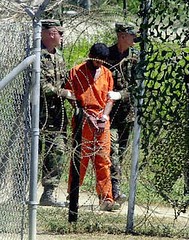
THIS IS HOW PRISONERS ARE TAKEN TO THE PRISON WITHOUT LAWS

No photos. No recorders. No names of those present can be used. One can only enter the room with pen and paper. Credentials must be left outside so detainees cannot identify you. But the parody of justice that the militaries show in Guantanamo is about to begin. The
entrance door to the room announces "Trial in Session." The judge's
armchair, a table for defense attorneys and one for the prosecutor. A
place for reporters. Additional seats for the witnesses. The walls
are white. There are no windows. It can be day or night outside.
Outside it is daytime and it is hot, this is Cuba. But it is cold
inside. The air-conditioning makes teeth chatter and sheets of paper
fly. The furniture is shabby. There is a camera on every corner to
record the process and the images are being monitored by other
military or intelligence agents in the next room. The US flag
presides over the room.

CAGES FOR CELLS

"Stand up," a US Navy Lieutenant calls out in a combative tone, a
prisoners stands up. He has a stout figure (the daily food ration in
GITMO -the abbreviation Americans use for the long and complicated
pronunciation of Guantanamo- consists of 4,200 calories, and with
minimum physical exercise it's easy to get fat.

The man has a long beard; he is a 27-year-old Afghan. Once again the militaries demand total discretion about his name and force those present in the room to sign a document accepting not to reveal the prisoner's identity. The interpreter stands up, the US military
personnel who represents the detainee stands up, and so do the only reporters that have been granted the grace of attending this circus function. "Court is in session" says a solemn female US Navy Captain, who has just entered the room and will play the role of judge. Except for the defendant, the journalists and the interpreter, the rest of the people on hand are actors; they are all military people
performing roles.

THE PRISONERS HAVE LESS RIGHTS THAN THE IGUANAS

Two young soldiers had left the room a little while before -a man and
a woman. They were wearing navy uniforms and aseptic, green plastic gloves. They had just handed over the prisoner and before going away they had left him tied up to the floor with chains tightly adjusted around his ankles.

Everything has been designed in detail. The detainee sits in a cheap,
white plastic chair -"that doesn't represent a danger for him or the
others"- says Capt. Waddingham as he explains to the two reporters
the scene that will unfold. A ring is anchored to the floor to which
the prisoner is chained in order to thoroughly impede his mobility.

His handcuffed wrists are chained down to his lap. His uniform is
white, which means that he holds the lowest degree of badness in the scale used by the US military in Guantanamo.

If the detainee is considered to be of medium dangerousness, then his clothes are beige. Orange covers the body of those who, even after years of being behind bars, have not bowed.

Those who behave properly have toothbrushes, toilet paper, soap,
shampoo, sheets, blankets, and underwear. The unruly wash their teeth with their fingers, receive a strip of paper to clean after
defecating, and sleep on a hard shabby bed. Those who have attempted suicide are dressed in a kind of dark green straightjacket over their naked bodies.

But every cell, be it punishment cell or not, has a stamped cross
pointing to Mecca.

CAMP DELTA: THE PRISON IN THE ILLEGAL GUANTANAMO BASE

With her hair combed up in bun, the skin on her face looks stretched.
Her uniform is thoroughly ironed; a pair of huge glasses covers
almost half of her face. She is the US Navy captain that has been
given the script to play the judge. Inside a white plastic file, she
has a document with each and every word that she is to say from that
moment on.

And the defendant's interpreter also has the words written in advance
in Pashto. Nothing is spontaneous for the military actors. For the
prisoner, everything is so nightmarish that it may not seem real
either.

"Do you swear to tell the truth, the whole truth, and nothing but the
truth?" the captain asks the defendant. Then, the interpreter, an
Afghan with a US passport appointed for this job by the US
government, repeats the question in Pashto. The accused replies in a very low voice: "I have already sworn that twice, I swear it again."
Twice. Since he was captured by the US army in its fight against
terrorism in mid-2002 in Afghanistan, the man -whose name cannot be revealed- has sat twice before in front of those with the power to
decide on his imprisonment or freedom.

On the two previous occasions his jailers must have thought that he
had not redeemed, because he is still here, he is here again sitting
in front of the fake court that is trying him.

"Yes or No?" asks impatiently another high-ranking officer, this time
from the Navy. The interpreter with a nervous chuckle translates the
question adorned with kindness or with a suggestion to answer
affirmatively so that everything ends at once.

Finally, the prisoner says "yes, I swear it to Allah."

Q: Were you a member of Al Qaeda, Osama Bin Laden's terrorist
organization?

A: When the Taliban arrived, we fled to Pakistan.

"Yes or No," repeats the same officer. Again the interpreter who
looks uneasy, almost frightened and red in the face is trying to
advise his "client". Then comes the result of his mediation: "No".

Q: Why do you consider that you are no longer a danger to the United
States?

A: I repeat for the third time that I have never said a word against
America; I am a friend of America and the Americans.

His statement is mechanically articulated.

For half a minute, the defendant stares in the eyes of the reporter.
He does not know the crime for which he is being tried because he has never been shown any evidence against him. No legal charge has ever been filed against him before a judge. He has never had a lawyer represent him. The detainee knows that if he does not convince the court today, he will have to wait for another year until his case is reviewed.

He looks both ways and realizes that he is alone. No one is by his
side. Besides the reporters and the interpreter, he is the only
civilian in the courtroom. He is in front of seven military officers,
one of whom is trying hard not to fall asleep in this soporific Cuban
afternoon.

There is no witness. There is no lawyer. The look on his face shows
that he may be trapped for a lifetime in the black hole of Guantanamo
or until the new world order that George W. Bush has established
crumbles.

"I'm innocent," he mumbles. "I'm innocent." And he looks around
again, searching for someone who might tell his tragedy once out of
those four walls.

The captain with the hair in a tight bun stares at him and states.
"The court will decide, this session is adjourned."

She leaves the courtroom at a martial pace. What session was she
referring to, if this is not a trial? What court was she speaking of,
if there are no magistrates? What conviction, if there is no charge?

"No one has believed him," comments the soldier with the green gloves to his sergeant. The defendant will soon be unfastened from the ring on the floor and taken at a slow pace (as fast as the short chains gripped around his ankles permit) to his cell.

What no one would believe, if they were able to see it, is what
occurred inside a white room at the Guantanamo base in Cuba on
Thursday, October 18, between 13:00 and 14:27. A sign that read "Mock Trial in Session" should have been posted at the door.

Gen. Leacock says: "I'm going to give you today's headline: There is
no detention camp around the world as transparent as Gitmo."

That same transparency makes Tajik Zen Ulabedin Merozhev tell his
interpreter that he has not seen his own face for five years now.

Imagine this for one moment: five years without being able to look at
yourself in a mirror. For five years, he has been abducted in a
detention camp located thousands of miles from his home. Five years deprived of any right.

It is worth recalling that more than 800 people, including children,
have been held in Guantanamo ever since it was set up as a detention facility for the war on terrorism in 2002. That about 430 of them are still confined there. That formal charges have been filed only against 10 prisoners. That the reports of physical and psychological torture are non stop. That the Geneva Convention has been violated and misused by the US military, who cite it as an excuse to prohibit photographs.

It is necessary to recall these details; otherwise, one might think
they are visiting a Caribbean recreation resort after making the tour
of the premises that the US Army presents to visitors, where there is
a dental clinic and the Arabic translation of Harry Potter books for
the prisoners to read.

"They are lying," a prisoner calls out.

Camp V. The last prison facility set up by the US military. It is as
cold as steel, as aseptic as a morgue and as invulnerable as a
fortress. The marine recites its advantages. "It can hold 100
prisoners. State-of the-art technology. There are cameras in every
cell. It was built to resemble Indiana's top security prison. And he
is right. As soon as the automatic door that separates the prison
from the street closes, one feels as if one was buried alive and
feels an urge to escape. And only five minutes have passed. The ghost that are surviving in the four-meter-long-by-three-meters-wide cells have been here for four years.

"Madam, you cannot stand behind me," warns a soldier. You cannot snap pictures of my soldiers nor the control center in my prison. The use of possessives makes one shiver.

"You can take photos of the interrogation armchair, it is as
comfortable as anyone in any house," he says as he leads the
reporters into the room. At the feet of the velvet-upholstered
armchair a couple of handcuffs emerge from the floor. They are used
to hold the prisoner.

Next are the cells. When the door of the cell is closed, the cage is
sealed. This helps avoid the uncomfortable "cocktails" that the
prisoners prepare for the guards. In Camp Delta, where only a barbed wire fence separates the detainees from the jailers, the prisoners throw "bodily fluids" -urine and excrement.

But a wall that can contain the cries of desperation has not been
built in Guantanamo. It is Ramadan. It is prayer time. And in the
midst of the prayers when a detainee realizes the presence of a
reporter, he cries out in poor English: "They are lying to you."

(Taken from the Spanish newspaper El Pais)

Afghan Resistance Accuses US/NATO Of Genocide Amid Civilian Bombing Deaths

Taliban accuse NATO of genocide, vow more attacks

Fri 27 Oct 2006 5:45 AM ET
By Saeed Ali Achakzai

SPIN BOLDAK, Afghanistan, Oct 27 (Reuters) - The Taliban accused NATO forces of genocide on Friday after the latest in a series of civilian combat deaths, and said they would step up already rising suicide attacks.

The strict Islamist group's one-legged military commander, Mullah Dadullah, also denied NATO charges the guerrillas used villagers as human shields in combat against foreign forces.

The warning came as a provincial official said a bomb had killed at least 14 civilians in the rugged southern province of Uruzgan on Friday.

"We want to inform the foreign forces and their slaves that their defeat is inevitable in Afghanistan," Dadullah told Reuters by satellite phone from a secret location.

"The Taliban's mujahideen are ready to fight until death and in the coming days will increase their activities and suicide attacks to such an extent that the infidel forces will not get a chance to rest.

"The Taliban will not let the the killers of Afghan women and children rest in peace and will continue to target them."

Witnesses and officials say NATO air strikes in neighbouring Kandahar province, where the Taliban began and remain strong, killed at least 50 civilians this week in an area the alliance had said it had cleared of insurgents in a recent offensive.

The Defence Ministry, NATO and a team of local elders appointed by President Hamid Karzai are investigating.

Fighting, mainly in the Taliban's southern stronghold, is the worst since U.S.-led forces drove the group from power in 2001.

More than 3,000 people have died this year, mostly rebels but including hundreds of civilians and about 150 foreign soldiers.

Recent Taliban video shows a robust Dadullah walking the mountains of Uruzgan and firing a machine gun.

Karzai this week appealed to fellow ethnic Pashtun leaders in neighbouring Pakistan to help quell the Taliban insurgency.

The mainly Pashtun Taliban freely cross the porous border. Afghanistan accuses Pakistan of not doing enough to stop them, or even of continuing to support its former protege.

Islamabad and most Western nations reject this.

Karzai sought help from Maulana Fazal-ur-Rehman, leader of the opposition in the National Assembly and a leading pro-Taliban cleric, and Pashtun nationalist leader Asfandayar Wali Khan.

Khan, head of the Pashtun nationalist Awami National Party, said Karazi wrote to him and spoke with him on Thursday.

"Right now two forces are operating in the region. One is promoting war, hatred and isolation while the other is trying for peace and harmony," Khan said. "We are in the latter camp."

Kabul and Islamabad, key U.S. allies in its war on terrorism, last month agreed to call tribal gatherings, or jirgas, on both sides of the border to win support against the Taliban.

But the border issue and the division of the Pashtuns by frontiers drawn by British colonisers has long been a source of tension.

As NATO deals with the fallout of the civilian deaths, Germany said on Friday it has suspended two soldiers for their part in the desecration of human skulls in Afghanistan.

Images of soldiers striking a variety of poses with skulls were published in a major German newspaper and on television, sparking anger and condemnation in Afghanistan and Germany.

Germany, with 3,000 troops here as part of the NATO operation, has boosted security at its embassy in Kabul and missions across the Middle East in case of a backlash.


Nato confirms Afghan raid deaths

Nato has confirmed that at least 12 civilians were killed in an air strike targeting Taleban militants in southern Afghanistan on Tuesday.

Reports suggest at least 40 civilians died when a nomad camp was hit in Kandahar province's Panjwayi district.

A team of tribal and community elders will hold an inquiry, Afghan President Hamid Karzai's office said.

On Friday, at least 14 people died in Uruzgan province when their bus struck a roadside bomb, officials said.

It was not immediately clear what kind of the bomb caused the blast, or who planted it.

'Things go wrong'

Nato has said 48 Taleban fighters were killed in three raids in Kandahar province, but the Taleban have denied losing any men.

Local police and officials confirmed more than 40 people were killed in one of the Nato raids, Afghan interior ministry spokesman Zmarai Bashiry told the BBC.

Other local officials put the death toll at between 60 and 85.

One Afghan survivor told the BBC that those attacked were nomads who had been living outside a village in tents. Nato forces are the main component in Isaf, the international force deployed in Afghanistan.

A spokesman, Capt Andre Salloum, told AFP news agency:

"As soon as the battle ended, troops on the ground were able to identify 12 civilians."

Nato forces were working with the Afghan defence ministry to conduct further investigations, he added.

Another Nato spokesman, Mark Laity, said the troops sought to take maximum care to avoid civilian casualties.

"We've got tight rules of engagement but sometimes things go wrong..." he said.

"President Karzai quite understandably and correctly wants us to show maximum care - that's what we do."

Deadly 'mistakes'

Residents in Panjwayi say the bombing began on Tuesday and continued into the night.

Local people as well as district officials have described buildings destroyed by aerial bombings during the Eid al-Fitr festival marking the end of Ramadan.

"The planes came and were bombing 3am," one man said.

"And, in the morning, they started hitting our village with mortars and rockets. They didn't allow anybody to come to our help."

People told the BBC that the bodies of many locals had been pulled from the rubble of their homes and buried.

One local man who did not want to reveal his name said 20 members of his family had been killed and 10 injured.

He said that a nomad camp with no connection to the Taleban had been attacked:

"There are no Taleban here. We live outside the village in an open area in tents.

"Anyone can come here to see our homes and area. There are no Taleban here. We all are nomads living in tents.

"Each time they say that it was a mistake. They have destroyed us all in such mistakes. For God's sake, come and see our situation."

Karzai under pressure

President Karzai's office said his investigators would make suggestions on how to prevent such "unfortunate" incidents in future and ensure better co-ordination with foreign forces.

Mr Karzai has been under mounting pressure over civilian deaths and has urged foreign forces to exercise more caution.

Last week, up to 21 civilians were killed in two Nato operations in Kandahar and neighbouring Helmand province.

Hundreds of people have been killed in Afghanistan this year, the bloodiest since the Taleban were removed from power by US-led forces in 2001.

The UN mission in Afghanistan has voiced serious concern about the Panjwayi deaths.

Story from BBC NEWS:
http://news.bbc.co.uk/go/pr/fr/-/1/hi/world/south_asia/6089862.stm
Published: 2006/10/27 08:38:34 GMT


NATO, Afghans dispute civilian death toll in bombing

Last Updated: Friday, October 27, 2006 10:34 AM ET
CBC News

Canadian soldiers in southern Afghanistan are working with NATO and Afghan officials to investigate claims by local people that dozens of civilians died in heavy fighting Tuesday between NATO and Taliban forces.

Local villagers have fled districts outside of the city of Kandahar and there were angry scenes Thursday at funeral services for some of the victims.

A NATO spokesman says 12 civilian bodies have been seen so far and it's likely that many of the other casualties were Taliban fighters.

Local officials say between 40 and 80 civilians were killed in three separate incidents involving aerial bombardment and artillery shelling.

Canadian troops have been meeting tribal leaders and Muslim clerics in the area to look into the claims and to attempt to mollify growing anger about the deaths, according to the CBC's Stephen Puddicombe, who is travelling with a Canadian military convoy in the area.

NATO and Afghan army units came under heavy attack from Taliban fighters during operations Tuesday and called in air and artillery strikes. U.S. aircraft dropped several 500-kilogram bombs on what were thought to be "Taliban strongholds," Puddicombe reported.

Continue Article

Meanwhile, there were more civilian casualties in southern Afghanistan Friday. At least 14 people villagers travelling to Eid-al-Fitr celebrations in a nearby town were killed when an explosion tore apart their vehicle.

Three people were also wounded in the blast, which occurred north of Tirin Kot, the capital of Uruzgan province, said Abdul Qayum Qayumi, a spokesman for the provincial governor.

Qayumi told the Associated Press that police have not yet determined if the explosion was caused by a mine left on the ground from previous conflicts in Afghanistan or by a bomb that had been planted by insurgents who are currently battling NATO forces in the country.

Capt. Andre Salloum, a spokesman for NATO's International Security Assistance Force, blamed the blast on an anti-tank mine, but said it wasn't clear who had planted it.

Canada has more than 2,000 troops in Afghanistan, the majority stationed in the volatile southern province of Kandahar. Forty-two Canadian soldiers have been killed in Afghanistan since Canada first sent troops there in early 2002.


Travelling with the Taleban

The BBC's David Loyn has had exclusive access to Taleban forces mobilised against the British army in Helmand Province in southern Afghanistan.

There is no army on earth as mobile as the Taleban.

I remember it as their secret weapon when I travelled with them in the mid-1990s, as they swept aside rival mujahideen to take most of the country.

Piled into the back of open Toyota trucks, their vehicle of choice, and carrying no possessions other than their weapons, they can move nimbly.

The bare arid landscape of northern Helmand suits them well.

After one hair-raising race across the desert last week, patrolling the large area where they can move at will, they screamed to a stop at a river bank.

It was sunset, and time to pray before breaking the Ramadan fast they had kept since sunrise.

Before praying, they washed in a dank-looking pool at the side of the almost-dry river bed.

Afghanistan has been in the grip of a severe drought for several years, but the lack of clean water does not seem to concern these hardy men.

They clean their teeth with sharpened sticks taken from trees, and sleep with only the thinnest shawls to cover them.

They have surprised the British by the ferocity of their fighting and their willingness to take casualties.

Their belief in the imminence of paradise means that few exhibit fear.

When we stopped for the night, they would break into groups to eat in different houses in a village.

They demand and get food and shelter from places where they stop, but it is impossible to say how enthusiastic the villagers really are.

Power base

These remote villages, scattered across the huge expanse of the northern Helmand desert, are very poor, and made poorer by the drought.

The food we shared was just a bowl of rice, a vegetable stew made only of okra, and flat roughly-ground country bread.

The failure of aid policies to make a difference in southern Afghanistan and increasing corruption in the government and the national army, are spreading the power base of the Taleban.

The trucking companies, who backed them first in 1994 when they emerged to clear illegal checkpoints on the roads, are now backing them again.

This time the checkpoints are manned by Afghan government soldiers, who demand money at gunpoint from every driver.

The failure of the international community to stop this makes the military task of the British-led Nato force in the south much harder.

The Taleban official spokesman, Mohammed Anif, explained: "When the Islamic movement of the Taleban started in the first place, the main reason was because of concern among people about corruption.

"People were fed up with having to bribe governors, and other authorities.

"We rose up and saved almost the whole country from the evils of corruption and corrupt commanders. That's why people are supporting the Taleban again now."

Civilian casualties

The intensifying conflict itself also plays into their hands. It is hard for Nato to promote its mission as humanitarian given the inevitable civilian casualties of conflict.

The Taleban deny British claims that hundreds of their soldiers have been killed.

They say that since they wear only the loose long cotton shirts and trousers - shalwar kameez - of any local villager, then the British cannot easily tell them apart.

In a village damaged by a British attack on the night of 7 October, some people were too angry to talk to me because I was British.

One merely pointed to the torn and bloody women's clothing left in the ruins of the house and said bitterly, "Are these the kind of houses they have come to build - the kind where clothing is cut to pieces?".

Nato sources describe this village as being heavily defended by the Taleban, who fired on their forces throughout the operation.

British soldiers landed in helicopters, arrested a suspect and flew away.

But they left six dead in one family, including three young girls, and partially demolished the mosque.

Thousands of people have fled the fighting, many seeking refuge in Kandahar city, where they are putting severe pressure on the ability of the UN's World Food Programme to help.

They fear for the homes and farms they have left behind, and while not active Taleban supporters, it is clear that most blame Nato more for the worsening violence.

Folk memory

One man, Nazar Mohammed, now squatting with his family in a building site in Kandahar, said the Taleban have most to gain in the continuing conflict.

"It's very obvious. Right now we see foreigners with tanks driving through our vineyards. They destroy people's orchards.

"They break through the walls and just drive across. When they take up positions in the village like this, nobody can cooperate with them."

There is one other factor that increases Taleban morale.

Few have any education beyond years spent in the madrassas, the fundamentalist religious schools in Pakistan that have produced an endless supply of Taleban for more than a decade.

But all know the story of Afghanistan's past victories over the British.

Engraved in their collective folk memory of Afghanistan's warrior history are tales of the defeat of the British in 1842 and 1880 along with the defeat of the Russians in the 1980s.

The Taleban disappeared to the mountains after their defeat in 2001, and found it hard to recruit.

Five years on they are back, and regrouping against an old enemy.

David Loyn's TV report on Afghanistan was broadcast on Newsnight Wednesday, 25 October at 2230 (BBC Two).

Story from BBC NEWS:
http://news.bbc.co.uk/go/pr/fr/-/1/hi/world/south_asia/6081594.stm
Published: 2006/10/24 23:11:53 GMT


Tories criticise BBC over Taleban

The BBC has been criticised by the Conservative Party after it broadcast an interview with a Taleban spokesman.

Dr Mahammed Anif told Newsnight that the UK and US had wanted an "excuse" to invade Afghanistan, and foreign armies would be thrown out of the country.

Shadow defence secretary Liam Fox said the interview was
"obscene" and accused the BBC of broadcasting propaganda on behalf of Britain's enemies.

The BBC said it was "entirely legitimate" to air the Taleban's views.

During the interview, with the BBC's David Loyn, other members of a Taleban group in Helmand province were also filmed vowing to fight to the death against the British troops.

In the film, broadcast on Wednesday, a Taleban fighter who gave his name as Mullah Assad Akhond said: "We see the English as our enemy since the time of the Prophet Mohammed. They are our enemies now and they were then.

"We will fight them to our death. We will not let them into our country. They can't deceive us about their propaganda that they are here for reconstruction or rebuilding this country."

Another member, Hajimullah Wahidullah, warned that the militant group planned to step up suicide bombings, which until recently had been rare in Afghanistan.

Meanwhile, Dr Anif - who the BBC said was giving his first broadcast interview as an official spokesman for the group - said: "Americans used force and attacked us. They invaded our country and occupied it.

'Disgusted'

"They killed our women and children. That's why mujahideen want to throw them out of the country.

The spokesman also denied claims that the Taleban had burnt down many schools which they accuse of teaching children non-Islamic values.

Dr Fox said the entire interview had been "obscene".

"I am disgusted that the BBC should broadcast an interview with a Taleban 'adviser' while our troops are being murdered by them," he said.

"The brave men and women of our armed forces rightly feel nothing but revulsion at the BBC's actions.

"We have become used to a non-stop anti-war agenda from the BBC but broadcasting propaganda on behalf of this country's enemies - at a time when our armed forces are being killed and maimed - marks a new low."

In a statement, the BBC said: "It was entirely legitimate for BBC News to broadcast the Taleban's views.

"Reporter David Loyn made the Taleban's intention to increase suicide attacks patently clear.

"BBC News also regularly reports on the British troops and have interviewed their officers and soldiers on many occasions."

'Bringing peace'

Also on Newsnight, defence minister Adam Ingram was asked whether the government believed the war in Afghanistan could be won.

"Of course we do. There are many indications that it is being won," he said.

"Our brave soldiers are bringing peace and stability to that country."
British forces have been in the country since 2001, when they took part in the US-led invasion designed to destroy the al-Qaeda terrorist network.

The Taleban was swept from power and UK troops remained in the country to assist the transitional government as part of the Nato-led International Security Assistance Force (Isaf).

UK forces are now leading Isaf in the volatile southern province of Helmand, where their duty to make the area secure for reconstruction regularly brings them into conflict with Taleban fighters.

Story from BBC NEWS:
http://news.bbc.co.uk/go/pr/fr/-/1/hi/uk/6086276.stm
Published: 2006/10/26 10:01:38 GMT
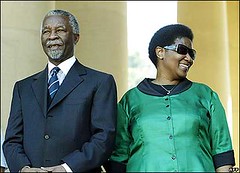
Barbara Becnel on the Death Penalty and Why She Left the Democratic Party

Death penalty opponent Barbara Becnel explains...
Why I left the Democratic Party

October 27, 2006 | Page 8
http://www.socialistworker.org/20062/607/607_08_BarbaraBecnel.shtml

BARBARA BECNEL is a journalist who was an advocate for and co-author with Stan Tookie Williams, the former gang leader-turned-peacemaker put to death by the state of California on December 13, 2005.

After leading a struggle to save Stan that involved thousands of people--and touched many more--around the country, Becnel ran for governor of California in the Democratic primary. Based on her experience with a party machine that tried to ignore the political issues she raised in her campaign, Becnel left the Democrats after the primary, and is supporting the Green Party campaign of Peter Camejo for California governor.

Here, Becnel explains to Socialist Worker why she left the Democratic Party.
- - - - - - - - - - - - - - - -

THE DEMOCRATIC Party disappointed me mightily on a number of fronts, regarding Stan and also regarding my own run for governor of the state of California in the Democratic primary.
Early on, I had an opportunity to directly talk to the person who since won the Democratic primary--Phil Angelides. I asked him in a public setting in front of about 300 people what his position was on the death penalty, and he sounded no different in his answer than Arnold Schwarzenegger. He stated on the record that he supported the death penalty--end of story. So there’s no reason for me to believe that he would have done anything differently than Schwarzenegger.

He said that he supported the death penalty because the people of the state of California support the death penalty--so what he was essentially saying is that the polls say people want it, so I want it.

There are all kinds of implications in that. If the people of the state of California supported slavery, would he support slavery? All laws aren’t correct laws, and all laws aren’t moral laws, and the people aren’t always right. So leadership means to fight for what’s right, and educate people and bring them along.

Now Angelides is just one particular individual in the Democratic Party, though a significant one since he’s now running against Arnold Schwarzenegger. But the California legislature, both the state assembly and the state senate, is majority Democrat. It’s run by the Democratic Party.

There’s a major player in the Democratic Party--a Latina state senator named Gloria Romero. I got her to go visit Stan. She spent two or two-and-a-half hours with him, and she said that it changed her life. She promised Stan that she would talk to the members of the Democratic majority to get their support, and send a letter to Arnold Schwarzenegger asking for clemency.

There are 73 Democrats total in the state senate and state assembly, and she was only able to get a total of nine Democrats to sign.

They were cowards. Some of these Democrats are against the death penalty, but they didn’t have the courage to go public and support Stan. So that was another indication of the weakness of the Democratic Party--certainly in the state of California, but it’s true nationally.

My next experience with the Democratic Party and its unworthiness to represent the majority of the Black vote or Latino vote or working-class vote is when I ran. A second-class citizen would have been treated better than I was treated.

I was making history. It turns out that I was the first Black woman to ever run for governor in the Democratic Party in the state of California. You’d think they could have at least taken some pride in that. Instead, I was treated as if--I’ll paraphrase Ralph Ellison’s book The Invisible Man-- I was the invisible woman.

I likened my situation to a 21st-century version of Fannie Lou Hamer’s experience with the Democratic Party in the mid-1960s, when her delegation from Mississippi wasn’t permitted to be seated at the Democratic national convention in 1964--because the segregationist wing of the Democratic Party said they would walk out.

The reason I compare my situation to that is that when the state Democratic Party had their state convention at the end of April, I was invited to speak. The progressive caucus of the Democratic Party sent me an e-mail and invited me to speak, and the day before I was to speak, I got a phone call that, with a lot of hemming and hawing, essentially uninvited me. I was offered instead the so-called opportunity to man the information table of the progressive Democratic caucus for 30 minutes.

What it really came down to is that the Dixiecrats, who discriminated in 1964 based on race, have become the Richiecrats, and now they’re discriminating on the basis of class and race. They just added another bias--it’s race and class bias now.

There are some good human beings in the Democratic Party. However, to succeed in their party, they have to allow themselves to be co-opted. What I witnessed is that for the most part, the decent human beings were simply not willing to give up their upwardly mobile political careers to challenge the Democratic Party.

To that end, even the decent human beings are allowing themselves to be co-opted by a party that has become pretty indistinguishable from the Republican Party.


We do not have a humane and peaceful way of killing prisoners

Barbara Becnel discusses the death of Crips founder

by Rick Claypool
October 25th 2006
http://www.toledocitypaper.com/view_article.php?id=96

Barbara Becnel was a friend and advocate of Stanley Tookie Williams, III. Williams, a co-founder of the well-known West Coast gang, the Crips, was sentenced to death in California for four murders in 1979. On December 13, 2005, Williams was executed. In the meantime, Williams co-authored 9 children’s books with Becnel and wrote his autobiography, "Blue Rage, Black Redemption" (2005), and was nominated for a Nobel Prize for Literature and a Nobel Peace Prize for his work to stop gang violence.

Becnel, the Executive Director of Neighborhood House, a non-profit organization, spoke with TCP about her involvement with Williams, his legacy and the death penalty.

TCP: How did you first become involved with the case of Stan Tookie Williams?

I was working on a book about the history of the Crips and the Bloods, so I wrote him asking for an interview. At that interview, he told me that he was not the same man who had arrived on death row in 1981. He said he had changed and that he wanted to change his legacy to that of steering kids away from gangs as opposed to having been the co-founder of the Crips. He wanted to do that by writing books. So that got me started with him. That was in 1993.

TCP: Describe for me, in your own words, what makes his case special?

He had told me from the beginning that he was innocent. I didn’t assume that was true. I just kept working with him. The conclusion I came to in terms of whether I should move forward to work with him was, if he was sincere about wanting to turn kids away from gangs and violence, then that was valuable independently of whether he was innocent or not.

Stan demonstrated over and over again that he was a man of integrity who didn’t lie. Then it occurred to me after a couple years of working with him on these anti-gang, anti-violence youth projects, that if he wasn’t lying about any of that, then why should I assume he’s lying about his case?

So I began to read the transcripts and the many, many boxes, over 70 at the time, of legal material associated with his case. It was pretty amazing, because it was obvious there had been some corruption on the part of law enforcement on obtaining his conviction. It just seemed so obvious, it was befuddling to me how he could be convicted and on death row based on such weak and contrived evidence.

TCP: For example?

Let me give you a few things that caused my eyebrows to hit my hairline. First of all, he was convicted based on 5 witnesses. Of these witnesses, four were people who said he volunteered a confession to them. One of the five was in fact the original suspect who admitted he was there and involved with the crime and who was the first person arrested. This guy traded not one day in jail, let alone prison, for saying that Stan was with him and that Stan did it. That was the circumstantial evidence.

The one piece of physical evidence that they used at the trial was the ballistics evidence. A ballistics expert said that at one of the crime scenes, not both, that one or two shells were found from a shotgun that had been registered to Stan 5 years earlier. The shotgun was not in his possession – it was in the possession of one of the witnesses to whom Stan had supposedly volunteered his confession.

The ballistics report shows that the ballistics expert tested this shotgun. They tested the shotgun, came back and said the bullet that was found at the crime scene did not indicate that the shotgun that was registered to Stan had shot the bullet that was found at the crime scene.

A couple weeks pass, and the report has an addendum. The DA came back to the ballistics expert and said that what he’d found was unacceptable, so he told him try again. So he goes back, and the addendum says he shot the gun 16 times. After 16 times, he got two shells that were "similar" to the one shell that was found at the crime scene. That’s in the written record.

When he testifies, he says that the shells were exactly the same. That’s not what he wrote. That was the physical evidence against Stan.

The physical evidence that was suppressed against Stan that didn’t come out until 13 or 14 years into his appellate process, there were fingerprints at both crime scenes. None of them were Stan’s. At one of the crime scenes, the murderer stepped in the victim’s blood and left a bloody boot print. That boot print wasn’t Stan’s. Lastly, one of the crime scenes was a motel. Apparently the murderer pretended like he was going to rent a motel room because he started filling out a motel guest card. So we actually have the hand writing of the murderer. It’s not Stan’s. All this stuff got repressed. And I’m only telling you some of the issues. It seemed pretty amazing that Stan was even convicted, let alone put on death row.

TCP: Then why do you think he was convicted and on death row?

The particular DA who got Stan’s case had a history of targeting low income black or Latino males to prosecute. Therefore, if there were five murder cases to be tried and two were by white guys, two were by black guys, and one by a Latino, he made sure he got assigned to the black or Latino guys. He had a history of this.

The next thing that he would do, he would transfer the trial from the downtown LA court, which has a very diverse ethnic pool of jurors, to the virtually all white blue-collar LA suburb of Torrance, California. And the City of Torrance is notoriously known for its racism.

Once he got them into the Torrance court, he would then kick all of the blacks or Latinos off the jury. The proof of this is, in two trials, one trial before Stan’s and one after Stan’s, he was challenged and taken all the way to the Ca. State Supreme Court, and they found in favor of the death row inmate.

TCP: But why wasn’t this ruling used to help Stan?

Stan’s attorney wasn’t good. He didn’t object, didn’t challenge. He was later kicked off the LA County Death Penalty Panel. That’s a panel of pre-qualified and approved lawyers who have experience handling capital cases.

Those are the key reasons why Stanley Tookie Williams was found guilty based on such flimsy evidence.

So as I looked into all this, I thought "Oh my God!" He’d been telling me for two or three years that he was innocent, and I’d been sort of hearing it and not hearing it. And then I finally did my research and thought, this man looks innocent. What it came down to was that he was the co-founder of the Crips, and they wanted him off the street. Any way they could do that, that was OK with them.

TCP: Why did he begin writing children’s books, his autobiography and other works that encouraged finding solutions to gang violence?

He always said there was no one thing that caused him to change overnight. He went through a process of rehabilitating himself and ultimately redeeming himself. He was thrown into solitary confinement in the late 1980s, and he wound up staying there for 6 and a half years, That became one of those important moments in life. My words for it would be "progress or perish." He had an opportunity there to look at himself and look at his life.

He was barely literate, so he started reading black history. At first it took him quite a while to read a book, because in almost every sentence there was word he didn’t know. And he would stop and open up the dictionary and look the word up and then keep gong. After reading a book about black history, he realized that all of these black people who had done extraordinary things had been ordinary people. It then occurred to him, he’s an ordinary person who could do something extraordinary in terms of making a contribution to humanity. He wanted to undo the creation of the Crips, to undo that destructive legacy. He decided to do that by writing books for kids with the core message, "do not join a gang."

He went from being barely literate to very literate. Here was this brilliant guy, born in Louisiana, raised in South Central. If he had been raised in Beverly Hills, he would be the head of some major corporation right now. He was a natural leader. He became the leader of what was available to him in South Central. He was just a brilliant man.

TCP: How has Tookie’s message of peace been received by gang members?

It’s been powerful. He had a web site, which we still have, prior to his death (www.tookie.com). Hundreds of thousands of people sent him e-mails, young people saying, "I read your books." He ended up co-authoring 9 children’s books with me. Eight were for elementary school kids, the ninth for middle school kids, and then he wrote his autobiography for young adults and adults. It’s called "Blue Rage, Black Redemption." Those books are in schools and used in juvenile correction worldwide.

For the most part, his work and his life have been taken quite seriously. The day after his memorial service, a group of Crip leaders in LA who had attended the memorial service said, "The Governor [Schwarzenegger] wouldn’t give our homey clemency, but we have the power to give each other clemency by agreeing not to kill each other."

They formed a cease fire committee, and that now includes approximately 300 leaders of Crip factions in Southern California. It all started because they wanted to honor Stan’s peacemaker legacy.

TCP: What would you say to those who argue he wouldn’t have done this noble work were it not for his death sentence?

He was asked this, so I can tell you what his answer was. He said that the prison, and being on San Quentin’s death row, in no way contributed to his rehabilitation or redemption. San Quentin did everything it could in order to undermine his positive efforts. There is no program or anything that is offered to death row prisoners that supports rehabilitation. But growing older and having an opportunity to stop and look at himself, that did make a difference.

TCP: What, in your opinion, is the greatest myth about the death penalty?

That it’s not cruel and unusual punishment. Not just in the death chamber, but a death row prisoner’s life is about one of the worst lives that you can imagine. The system has already counted them as dead, so they don’t warrant treatment as human beings from the system as they get closer to execution. The medical care that they get is enough to keep them alive, because they don’t want them to die – the State wants to be able to kill them. You get a cavity, and you get a tooth pulled – you don’t get a filling. There’s no such thing as heat in the winter or a fan in the summer at San Quentin. It’s filthy. It’s rife with diseases. It’s an awful environment.

And then there’s what I saw. I saw Stan’s execution, and I saw him tortured and murdered, and it took them 35 minutes to do it. When I came out and spoke the truth about what I saw, I was called hysterical and minimized and diminished by the state attorney general’s office and law enforcement.

About two or three weeks ago, there was a federal hearing in San Jose, Ca. The same people who tried to diminish what I said, when they were under oath, had to admit that Stan’s execution was in fact bungled. Based on the rest of the testimony, he died a horrible, horrible death, paralyzed and unable to scream out or show us the excruciating pain. I think that’s the myth. We do not have a humane and peaceful way of killing prisoners. There is no such thing. I can testify to that. I was there, I saw it and it was the most horrific experience of my life. The death penalty is synonymous with cruel and unusual punishment.