Wednesday, May 28, 2008

The Iraq War and the Ever Increasing Price of Oil

Iraq War May Have Increased Energy Costs Worldwide by a Staggering $6 Trillion

By Geoffrey Lean, The Independent
Posted on May 27, 2008
http://www.alternet.org/story/86515/

The invasion of Iraq by Britain and the US has trebled the price of oil, according to a leading expert, costing the world a staggering $6 trillion in higher energy prices alone.

The oil economist Dr Mamdouh Salameh, who advises both the World Bank and the UN Industrial Development Organisation (Unido), told The Independent on Sunday that the price of oil would now be no more than $40 a barrel, less than a third of the record $135 a barrel reached last week, if it had not been for the Iraq war.

He spoke after oil prices set a new record on 13 consecutive days over the past two weeks. They have now multiplied sixfold since 2002, compared with the fourfold increase of the 1973 and 1974 "oil shock" that ended the world's long postwar boom.

Goldman Sachs predicted last week that the price could rise to an unprecedented $200 a barrel over the next year, and the world is coming to terms with the idea that the age of cheap oil has ended, with far-reaching repercussions on their activities.

Dr Salameh, director of the UK-based Oil Market Consultancy Service, and an authority on Iraq's oil, said it is the only one of the world's biggest producing countries with enough reserves substantially to increase its flow.

Production in eight of the others -- the US, Canada, Iran, Indonesia, Russia, Britain, Norway and Mexico -- has peaked, he says, while China and Saudia Arabia, the remaining two, are nearing the point at of decline. Before the war, Saddam Hussein's regime pumped some 3.5 million barrels of oil a day, but this had now fallen to just two million barrels.

Dr Salameh told the all-party parliamentary group on peak oil last month that Iraq had offered the United States a deal, three years before the war, that would have opened up 10 new giant oil fields on "generous" terms in return for the lifting of sanctions. "This would certainly have prevented the steep rise of the oil price," he said. "But the US had a different idea. It planned to occupy Iraq and annex its oil."

Chris Skrebowski, the editor of Petroleum Review, said: "There are many ifs in the world oil market. This is a very big one, but there are others. If there had been a civil war in Iraq, even less oil would have been produced."

At just under 86 million barrels per day, global oil production has, essentially, stagnated since 2005, despite soaring demand, suggesting that production has already reached its geological limits, or "peak oil".

Recession in the West may not provide relief on prices. There is increasing demand from countries such as China, Russia and the Opec countries, whose consumers are cushioned against rising prices by heavy subsidies. The future could unfold in a number of ways:

Oil price collapses

Fuel subsidies could suddenly be scrapped, dousing demand. Cost pressures have forced Malaysia, Indonesia and Taiwan to cut them, but China is hardly strapped for cash. Opec producers are under no pressure to abolish subsidies; as the oil price rises they get richer. Prospect: very unlikely.

Peace could break out in Iraq, the long-disputed oil law agreed, and international oil companies start work on the world's largest collection of untapped oil fields. Prospect: vanishingly unlikely.

Oil price stabilises or moderates

Deep recession in the West might cut oil consumption enough to offset growth in the developing world and Opec, or even engulf them too, softening prices. Prospect: unlikely in the short term.

Oil price soars

Russian oil output has gone into decline; Saudi Arabia has shelved plans to expand production capacity, and advisers to the Nigerian government predict its output will fall by 30 per cent by 2015. More news like this, expect oil at $200 a barrel. Prospect: likely.

Big oil producers will increasingly divert exports for home consumption. Opec, Russian and Mexican exports expected to fall, pushing oil to $200 by 2012. Prospect: highly likely.

The writer is author of 'The Last Oil Shock', John Murray, lastoilshock.com

Peak oil

After 150 years of growth, the oil age is beginning to come to an end. "Peak oil" is the common term for when production stops increasing and starts to decline. At that point what have been ever-expanding and cheap supplies of the resource on which all modern economies depend become scarcer and more expensive, with potentially devastating consequences.

Pessimists believe that production has passed its peak. Optimists say it may be 20 years or so away -- which would give us some time to prepare -- but are now muted. Last week the hitherto optimistic International Energy Agency admitted that it may have overestimated future capacity. Chris Skrebowski, editor of 'Petroleum Review' and once an optimist himself, believes that the world is now in "the foothills of peak oil". Prices may ease a bit over the next few years, but then the real crunch will come. The price then? "Pick a number!"

Travel

Oil provides 95 per cent of the energy used in transport, so this will be hit hard and soon. People are likely to go on using their cars, but airlines are expected to be the first to suffer. On Thursday, British Airways' chief executive Willie Walsh declared that the era of cheap flights was over, suggesting that those environmentalists who have made them their main target for combating climate change may have been wasting their breath.

At least three carriers have already gone bust this year. Last week, American Airlines said it was cutting routes, laying off staff, and charging US passengers $15 to check in a bag because of a $3bn rise in its fuel bills. Even Michael O'Leary, chief executive of Ryanair, says the oil price is "really hurting". On Thursday, Credit Suisse analysts said his company would slip into the red if oil prices rose just a little more, to $140 a barrel.

Cars

The world's biggest oil well, it is said, lies beneath Detroit. US vehicles get an average of only 25 miles per gallon. Dramatically improving this would do more to ease the oil crunch than any likely new discovery. But new measures recently approved by Congress would increase the average only to the 35mpg already being achieved by China. Europe does better, if not well enough, at 44mpg.

Rising fuel prices are already beginning to drive change. Sales of 4x4s are plummeting in both the US and Britain, and those of hybrids -- which do 60mpg are soaring. As the price climbs further, manufacturers will unlock long-prepared plans for much more efficient vehicles. "Plug-in" hybrids, charged up with electricity overnight, save another 45 per cent in petrol consumption. Further down the line is the "hypercar" -- made of tough, light plastic -- which could cross the US on a single tankful.

Houses

All new houses in Britain will have to be zero carbon -- burning no fossil fuels such as oil -- by 2016, the Government announced, and housebuilders are struggling to meet the target. At present the standard can be reached only at great expense, but the industry is confident of bringing the cost down as mass production kicks in. It is even more important to adapt existing homes.

The key step is to super-insulate the house to make it as energy-efficient as possible -- and only then to provide renewable energy sources. Solar water heaters, ground source heat pumps and boilers powered by wood pellets are favourites. Rooftop windmills do not work well enough yet. Photovoltaic panels, which get electricity from the sun, are expensive but their price should come down. Britain has lagged behind other countries. Soaring energy prices should shake things up.

Shopping

Effectively, almost everything is partially made of oil, and so is going to get more expensive. About 10 calories of oil are burned to produce each calorie of food in the US, and farming a single cow and getting it to market uses as much as driving from New York to Los Angeles. Some 630g of fuel is used to produce every gram of microchips.

The cult of local, seasonal produce will enter the mainstream, as everyone learns about food miles and a modern-day Dig for Victory grips gardeners -- bad news for the farm workers overseas who provide 95 per cent of our fruit and half our vegetables. Trips to out-of-town supermarkets will seem extravagant, heralding a high street renaissance and a new surge in online grocery shopping, and soon we'll all be eating our own potatoes.

Third World

Poor countries and their peoples will be hit by a devastating double whammy as both their fuel and food prices increase. Last year, when oil cost only about half as much, countries from Nepal to Nicaragua were hit by fuel shortages. At least 25 of the 44 sub-Saharan nations are facing crippling electricity shortages.

As oil is used in agriculture, its increased cost will also drive up the price of food, making more and more people go hungry. Worse, expensive petrol is bound to increase the drive towards biofuels made from maize and other crops, which then brings the world's poorest people into competition with affluent motorists for grain -- a contest they cannot win. Just one fill-up of a 4x4's tank with ethanol uses enough grain to feed one person for a year.

Emerging economies

China and India and other developing countries will help to drive up demand for oil and compete for scarce supplies. This has already helped to raise prices: demand for oil from Western countries has actually fallen over the past two years, but the emerging economies have more than made up the slack. And they have the money to do so.

Chinese and Indian consumers have so far been insulated from the effects of the price increase by heavy government subsidies, and their industrial revolutions and rapid growth are largely fueled by oil. There is little sign that the growth in demand will slacken These countries are also likely to follow the time-honored Western tradition of making deals with oil-exporting countries -- and backing unpleasant regimes -- to try to secure supplies.

2008 The Independent All rights reserved.
View this story online at: http://www.alternet.org/story/86515/


Paying for War at the Pump

By Robert Scheer, Truthdig. Posted May 21, 2008.

Five years after we invaded Iraq, the American taxpayers who paid for this grand imperial adventure are rewarded with skyrocketing gas prices

What's it got to do with the price of gas?

Would some reporter with access to the Republican presidential candidate please ask John McCain why he wants to continue President Bush's Mideast policy when it has proved so ruinous for American taxpayers? Because McCain is determined to ignore our economic meltdown and shift the debate to foreign policy, shouldn't he have to explain why an open-ended military presence in the Mideast will make us economically and militarily more secure when the opposite is clearly the case?

Let's not waste too much time on the military side of the equation. The argument that troops on the ground have made us militarily more secure is absurd on its face. American resources and lives have been squandered in an inane effort that McCain aptly criticized before becoming a presidential candidate.

As a Senate watchdog, he distinguished himself by sharply denouncing one defense contractor boondoggle after another in cases involving hundreds of billions for modern weapons that had nothing to do with fighting cave-based terrorists. But as a presidential candidate, McCain now unabashedly apologizes for every twist of the downwind spiral of the Bush administration foreign policy, from wasteful weapons to inhuman torture.

McCain's strategy is clearly that of distracting attention from the calamitous economy by sounding the demagogue's alarm about enemies at the gate. This week, McCain again blasted Democratic presidential candidate Barack Obama on the grounds that he underestimated the threat from Iran while ignoring the vast increase in Iran's power -- an increase actually resulting from Bush eliminating Iran's only effective enemy, Saddam Hussein.

The other winners in this folly have been the oil kingdoms that Hussein periodically threatened, led by the Saudi royal family. Seizing upon the opportunity presented by the 9/11 attacks, Bush knocked off not the Saudis, who had produced Osama bin Laden and 15 of his hijacker minions, but rather the royal family's sworn enemy in Iraq, who had absolutely nothing do with 9/11.

And how did the Saudis thank us? Just check the price of oil, which has increased more than sixfold since 9/11. On Friday, Bush went to dine at Saudi King Abdullah's bizarrely opulent horse farm and pleaded for an increase in oil production, but to no avail. Bush received the same rebuff in April 2005, when oil was selling for $54 a barrel.

On Tuesday, it sold for $129, and the price rise is a good measure of Saudi gratitude for the Bush family's unwavering support over past decades. Saudi Arabia's oil minister, Ali al-Naimi, couldn't have been more condescending when he turned down Bush's request with the observation that "presidents and kings have every right, every privilege, to comment or ask or say whatever they want." He added at a press conference, "How much does Saudi Arabia need to do to satisfy people who are questioning our oil practices and policies?"

Enough to get the price back down to where it was when we saved your sorry oil-well excuse for a country, you ingrate, Bush might have retorted. But our bold leader was too polite for anything like that. "He didn't punch any tables or shout at anybody," said Saudi Foreign Minister Saud al-Faisal. "I think he was satisfied." Why? Instead of pointing out that the Saudis could easily open their spigots in gratitude for our keeping them in power, the president threatened the Saudi king not with an invasion but with a U.S. recession.

"My point to His Majesty," Bush warned in an interview with The New York Times before encountering the great man himself, "is going to be, when consumers have less purchasing power because of high prices of gasoline -- in other words, when it affects their families, it could cause this economy to slow down. If the economy slows down, there will be less barrels of oil purchased."

He'll show them -- we'll have a recession, our families will suffer and, boy, will the Saudis be sorry. A regular Teddy Roosevelt. There is no better measure of the failure of Bush's foreign policy than that, five years after we conquered the second-most important pool of oil in the world, the American taxpayers who paid for this grand imperial adventure are rewarded with skyrocketing prices at the pump.

At least when Bush first hyped his Iraq invasion plan, he had Paul Wolfowitz telling Congress that Iraqi oil would more than pay for it all. Not so McCain, who is so charged with imperial hubris that he is willing to commit to a 100-year lease on Iraq without expecting a penny in oil revenue in return.

Robert Scheer is the co-author of The Five Biggest Lies Bush Told Us About Iraq. See more of Robert Scheer at TruthDig.

Barack Obama and the National Question in the United States--An Essay by Kali Akuno

Free the Land Comrades,

This paper was written for a School of Unity and Liberation (SOUL) Sunday School session to be held at the East Side Cultural Arts Center in Oakland on Sunday, May 25th.

I hope it may be of some use theoretically and programmatically.

In Unity and Struggle,
Kali
--------------------------------------------------------

Barack Obama and the New Afrikan(1) "National Question".
Are We Free Yet?

Written by Kali Akuno
Saturday, May 24th, 2008

*In Honor of the 83rd Birthday of Malcolm X and the clarity he brought to the New Afrikan revolutionary movement

Since the stunning Iowa victory of Senator Barack Obama in January, a great deal has been said and written about the declining or ongoing significance of "race" and "racial prejudice" in US society and the prospect of a person of Afrikan descent being its President as proof of its substantive social transformation.

While this discussion must be regarded as an advance over the conservative moralistic and race-coded discussions that have dominated political debate in the US since the 1980's, we must acknowledge its critical limitations.

In the main, these discussions individualize the issues and only engage the behavioral and subjective aspects of inequality and oppression. What is fundamentally missing is a critical discussion of the structural and systemic nature of oppression and exploitation within the US and how the Obama campaign "phenomenon" relates to these structures and dynamics.

This paper seeks to investigate the strategic relationship of the Obama campaign to the structural dynamics of oppression and exploitation within the US. In particular, it will focus on the question of New Afrikan or Black national oppression within the US and how the Obama campaign addresses this oppression.

It also seeks to address certain strategic questions that progressive forces within the national liberation and multi-national working class movements must struggle with over the course of the next six months in order to ensure that our demands and interests are advanced – regardless of whether Obama wins or loses the Presidential election in November.

Some of the strategic questions this paper seeks to address are:

1. What is Obama's organic relationship to the New Afrikan or Black nation?
2. What class position, alignment and program does Obama represent?
3. How does Obama's campaign strategy and program relate to the historic interests and demands of the Black nation?

What is the "National Question"?

In summary, from a dialectical materialist framework, the "national question" refers to a) the unequal structural relationship of colonized and oppressed peoples to international capital, oppressor nations, imperialism, and white supremacy and b) to the historic struggles of colonized and oppressed peoples to liberate themselves from these oppressive systems and forces, either in whole or in part (as not all of these "peoples" or "national liberation" struggles have sought to remove themselves from capitalist relations of production).

The inequalities between peoples produced by capitalism are historic. They are rooted in the development of the capitalist world system through the colonization and/or subjugation of the globe and its non-European peoples by the ruling classes of the western European states (i.e. Portugal, Spain, France, England, the Netherlands, Germany, Belgium, and Italy) beginning in the 15th century.

In order to facilitate the process of capital accumulation they initiated on a world scale, the ruling classes of Europe developed a social system and ideology that divided world production along several lines, some of which predated capitalism, some of which developed specifically to suite capitals historic needs.

The pre-capitalist social divisions that were exploited were religion, ethnicity, nationality and patriarchy. The new and fundamentally principal divisions developed by and with capitalism are race and state-bound nationality.

The purpose of exploiting and/or developing these inequalities is a) to facilitate the control of the land, labor, and (material and immaterial) resources of the subject and oppressed peoples and b) to foster competition between and amongst these peoples for the material and social rewards conferred by this exploitative and alienating system.

In the United States the "national question" specifically addresses the structural relationship of colonized, oppressed, and subject peoples to the European settler-colonial project and the imperial national-state apparatus that reinforces it.

This project is premised on the genocide and dispossession of indigenous peoples (the First Nations); the enslavement and colonial subjugation of Afrikan peoples and their descendents; and the dispossession and colonial subjugation of Xicanas/os.

The New Afrikan National Question

Throughout the history of the US settler-colonial project New Afrikans have fundamentally been concentrated in the southeastern portion of the projects possessions. The foundation of this concentration was historically premised on the utilization of enslaved Afrikan labor to produce cash-crops like tobacco, cotton, rice, dyes, and sugar, for international consumption.

During the early mercantile stages of capitalist development the climatic conditions, soil quality, and strategic location of these possessions facilitated them being incorporated into the world-capitalist system as a zone of mono-crop commodity production. This population concentration and the relations of production exercised in this zone facilitated the formation of the New Afrikan people as a colonized diasporic Afrikan nation subject to will of the European settler-colonial project and its capitalist-imperialist regime between 1619 and 1865.

The mechanization of agriculture in the Southeastern portion of the settler-colonial state in the late 19th and early 20th centuries, combined with an intense program of labor control and repression during this period, displaced millions of New Afrikans.

In the search for refuge and jobs, displaced New Afrikans re-concentrated in the urban industrial centers of the East Coast, Mid-West, and West Coast between the 1910's – 1960's. In the process of this resettlement, millions of New Afrikans joined the ranks of the industrial working class.

However, they did so fundamentally on an unequal structural basis. Exploiting the subject status of New Afrikan people, capital, the labor bureaucracy, and the various European settler communities relegated New Afrikans to the lowest strata's of the working class, where they were concentrated in the lowest paid and most hazardous occupations that restricted their ability to earn and accumulate.

This process of development established the social and economic terms of New Afrikan national oppression throughout the entire expanse of the US settler-colonial project.

Simultaneously, the vast majority of New Afrikans who remained in the New Afrikan national territory (i.e. the Southeastern portion of the settler-colonial project) became subject to a new regime of accumulation and distorted national development.

Reacting to the gains made in the industrial "north" by the multi-national working class movement between the 1930's – 50's, industrial capital "outsourced" production to New Afrika to exploit the subjugated status of the New Afrikan working class.

Although the New Afrikan working class was kept from effectively organizing itself into labor unions, this development did expand the overall circuit of capital within the New Afrikan nation, which helped stimulate the rise of the civil rights movement and its petit bourgeois program of civil inclusion within the legalistic confines of the settler-colonial project.

The limited social and economic gains of the Civil Rights and Black Power movements set the present terms of national development for the New Afrikan nation. New Afrika, like all nations and nationalities, is a class stratified social formation. Like all the peoples and nations subjugated and colonized by the European colonial powers, capital and capitalist social relations have articulated New Afrika's social development.

Throughout it's nearly 400 years of development, the overwhelming majority of New Afrikans have been and are members of the working classes (either as chattel slaves, peasants, or proletarians). However, a very limited New Afrikan bourgeoisie has existed since at least the mid-19th century.

Throughout much of New Afrikan history, this extremely small, typically service based petit-bourgeoisie has tended politically to be more progressive than reactionary in its political outlook and program. In the main this bourgeois class has provided leadership to and support for the primary historical demands of the New Afrikan national liberation movement. In summary these demands have been and are:

1. Land for self-determining or autonomous development and accumulation.
2. Equal treatment before the law of the settler-colonial state.
3. Equitable distribution of the social surplus distributed throughout the settler-colonial state.
4. Self-determining political power.
5. Self-reliant and self-sustaining economic development.
6. Reparations.

However, the accumulation gains (meager as they were) of the Civil Rights and Black Power movements combined with major shifts in the relations of production on a worldwide scale, transformed the relationship of the New Afrikan bourgeoisie to the whole of the New Afrikan nation from the 1970's to the present.

The two dominant features of this process of transformation are a) the phenomenal rise of the comprador bourgeoisie in the 1970's and 80's, and b) the rapid transformation of this comprador bourgeoisie into a trans-national bourgeoisie from the 1980's to the present. As will be argued throughout this paper, this transformation not only changed the overall structural composition of the New Afrikan bourgeoisie, it has forever altered its political worldview and program.

Part 1 – The Interrogations

Interrogating the "National" Question

Barack Obama has asserted on several occasions a) that race doesn't matter and b) that there is only "one" America.

The implication of these statements, even if only stated for strategic affect, is that the national contradictions within the US settler-colonial project have been negated and resolved. Even a cursory glance at the socio-economic inequalities between the various nationalities in the US reveals that these assertions are blatantly false.

However, the unprecedented success of Obama's campaign and the ground it has broke as it relates to a "Black" candidate appealing to white voters on a national level revels that something qualitative has changed in this country. The question is what is it?

I argue that the source of the qualitative change lies in the changing composition of class throughout the US settler-colonial project. The advance of global capital and its transformation of production and accumulation throughout the capitalist world-system generated this compositional shift.

I posit that the process of transformation popularly called "globalization" has created a trans-national bourgeoisie and growing multi-national or "cosmopolitan" trans-national service and working classes. It is my position that Barack Obama is a member of and represents the political and economic interests of the trans-national bourgeoisie and the social interests of the growing trans-national classes.

More specifically, Barack Obama is a product of the New Afrikan trans-national bourgeoisie, which emerged in the main from the comprador or neo-colonial sector of the New Afrikan bourgeois class between the 1970's to the present.

The fundamental question regarding this new class composition for progressive and revolutionary forces within the New Afrikan national liberation movement is how to strategically relate to Barack Obama and this trans-national bourgeois class? Is this class (or class fraction) a friend or a foe of the New Afrikan national liberation movement? I argue three things:

1. That the material basis for the traditional class collaboration theory of the united and/or national liberation front strategy of oppressed peoples and nations in general, and of its historic application to the New Afrikan national liberation movement in particular, no longer applies.
2. That the left has not developed a general or particular theory of how to strategically relate to these new class forces.
3. As a result, we are presently ill equipped theoretically and programmatically to address the Obama phenomenon and seize the historic opportunities it presents to advance the interests of the national liberation and multi-national working class movements.

How does the trans-national bourgeoisie differ from other bourgeoisie classes, particularly amongst oppressed nations like the New Afrikan nation? The general theory of national liberation maintains that there are two primary fractions of the capitalist or bourgeois class (that is the class that owns and controls the means of production). These are 1) the national, progressive, or "anti-imperialist" bourgeoisie and 2) the comprador or "sell-out", "Uncle Tom", or neo-colonial bourgeoisie.

The national or anti-imperialist bourgeoisie is theoretically a progressive force drawn from the organic, inner driven life of the oppressed nation that is materially compelled to promote the development of the productive forces of the nation for its own self-interests and to resist the incursion of imperialism and its suppression of this autonomous national development for these self-same interests.

The comprador or sell-out bourgeoisie is theoretically a reactionary force also drawn from the organic, inner driven life of the oppressed nation, which is conversely compelled to collaborate with imperialism to retard the autonomous or self-determining development of the oppressed nation.

The fundamental difference between these two bourgeois fractions and the transnational fraction is their organic relationship to the oppressed nation. The national and comprador bourgeoisies are dependent upon relations of production within the social and political life of the oppressed nation.

Meaning they are both dependent on the working masses of the oppressed nation for their very existence, and hence can be held accountable to the working classes within it in various ways. The trans-national bourgeoisie on the other hand, even though it emerged primarily from the comprador fraction in New Afrika and elsewhere, is not dependent for its existence upon the oppressed nation and its relations of production.

The trans-national bourgeoisie, as its name implies, is not a national or national-state bound entity. Its basis for existence lies in exploiting the peoples and working classes of the globe, and it is generally only accountable to or held in check by its fractional partners and rivals (largely through their financial control of various capital markets as exhibited by their deflation of various national-state markets like Mexico in the early-1990's; Thailand, Indonesia, Malaysia, and South Korea in the late 1990's; and Brazil and Argentina at the turn of this century).

Now, while I posit that this understanding of Obama's positioning helps us to understand his relationship with the New Afrikan nation and its historic demands, I argue that we still do not completely understand at this point, how it relates to his mass appeal to white voters in many instances who are not part of this trans-national formation. This I argue, we as progressives and revolutionaries, have to interrogate further to gain a deeper understanding of its strategic potential.

Interrogating the Campaign

Despite what one may personally think of Obama and the principle merits of his campaign, what we have to acknowledge is that his actions and his campaign are deeply rooted in a particular analysis of how to address national oppression in the US.

This analysis is rooted in the "integrationist" and "beloved community" narratives of the New Afrikan petit bourgeois leadership of the Civil Rights Movement and its white liberal bourgeois patrons. The strategy behind this narrative appeal is to highlight the commonalities between the oppressor and oppressed peoples, rather than address their contradictions and differences.

This strategy is rooted in the reality that the road to victory goes through the white electorate and its sheer numerical strength. Based on this reality, I argue there are two historical dynamics that have fundamentally shaped the Obama campaign and its strategy:

1. No Democratic candidate has won a majority of white voters since 1964. For a Democratic candidate to win, they are going to have to win a sizeable portion of, if not the majority of, the white settler vote.
2. The Jesse Jackson campaigns of 1984 and 1988. These two campaigns serve as the primary negative examples for the Obama campaign. They illustrate what NOT to do as an Afrikan candidate running for President, which has determined key aspects of his strategy, particularly his methods of appeal to white and Jewish voters in particular.

Based on these realities, the Obama campaign made a deliberate and strategic choice NOT to base his candidacy in the institutions (like the Black church, civic organizations, unions, and the media) or historic demands (see demands) of the New Afrikan nation.

In order to give himself the opportunity to win, Obama must avoid being viewed as a "Black" candidate buy any and all means. This explains in part, why he has distanced himself from the likes of Jesse Jackson, Louis Farrakhan, and Jeremiah Wright – the "traditional" representatives of the "progressive" New Afrikan bourgeoisie.

However, his campaign has also relied upon the staunch support of the Democratic Party by New Afrikan people. New Afrikans have been the most consistent base of support for the Democratic Party since the 1964 election of Lyndon B. Johnson. In fact, New Afrikans have voted consistently for Democratic Presidential candidates in the range of 80 – 90% since 1956. This fact however, should not be surprising.

Democratic candidates can and do take the New Afrikan vote for granted because in the main, New Afrikans have no other genuine political option to represent their interests. Knowing this, Obama and his campaign know that they have to make few special appeals to New Afrikans and most of the other oppressed peoples within the "traditional" Democratic Party coalition to garner their votes (certain "Latino" populations it can be argued might constitute exceptions).

Interrogating the Popular Forces

Regardless of how marginalized New Afrikan demands and institutions are to the Obama campaign, the fact is that since Obama's Iowa victory in January, New Afrikans have turned out in near record numbers to support his campaign for the Democratic nomination. How do we explain this outpouring of support despite his lack of engagement with New Afrikan demands and institutions?

Further, how do we explain his victories in states like Iowa, Kansas, Oregon, Colorado, Connecticut, Nebraska, Vermont, and Wyoming where the vast majority of the electorate are white settlers who are not substantively incorporated into the trans-national nexus of production?

Part of the answer I believe lies in the trans-national class developments spoken of earlier. The other part of the answer I believe lies in the popular response to the last 7 years of the Bush regime. As a direct result of the failed occupations of Iraq and Afghanistan, the accumulation of unprecedented debt, the partisan management of the economy, the exposed lies and deceit, and the hostile, belligerent, and dictatorial "style" of management, this election is in many ways serving as a popular anti-Bush referendum.

The popular, multi-national, multi-class forces engaging the Obama campaign are clearly clamoring for a change of management. This was first evidenced in the elections of 2006 and has been further illustrated in several off-term Congressional elections in Illinois, Louisiana, and Mississippi where Democrats took elections in long-held Republican districts.

Barack Obama, for reasons of personal history (including his newness to Capital Hill), style (particularly his cultivated charisma and flair for the optimal, however programmatically empty it may be), and strategy (including a tacit exploitation of cultural stereotypes about New Afrikan people being good listeners and empathizers) has thus far demonstrated that he would be a profoundly different manager than either of his remaining Democrat or Republican rivals.

What I think progressives and revolutionaries have to be clear on in relating to these popular forces is that a clamoring for a change of management does not equate to a clamoring for a fundamental change of program. It is on the question of program that I would argue that the national question strongly reenters the fry and could perhaps fracture the broad multi-national, multi-class alliance thus far mobilized by the Obama campaign.

For instance, the historic demands of New Afrikan people are not going to go away without a revolutionary transformation of the US settler-colonial state. In fact, as the mortgage crisis deepens over the course of the next 2 to 4 years, some of the demands, like economic development and reparations perhaps, are only going to become stronger.

Likewise, the trans-national capital interests supporting Obama's campaign have no intentions of stopping their accumulation mission. Rather, they are trying to expand it through the application of a friendlier management approach of their primary regulating instruments – namely the US military, treasury, and Federal Reserve Bank.

And further, many of the white service and working class voters who are supporting Obama are not demanding an end to imperialism and globalization, but a return to the high standards of living they are accustomed and feel entitled to as settlers, i.e. "Americans".

Interrogating the Moment

This is an extremely unique moment in human history, one that should not be slept on by progressives and revolutionaries anywhere, let alone in the US.

There are three general things that make this moment particularly unique:

1. The rapid collapse of the ecological systems that support human civilization as a direct consequence of the capitalist world-systems need for constant growth and expansion and its dependence on a petro-chemical driven system of mass industrial production to stimulate and sustain this growth.
2. The declining hegemony (in both its geo-political and Gramscian connotations) of the US imperial state and the shift to a multi-polar, geo-political world order.
3. The comparative weakening of the US national economy and the deepening of trans-national production and accumulation.

In order to be properly contextualized, the Obama campaign and corresponding "phenomenon" must be situated as a direct response to this unique moment in history. As has been argued earlier, his campaign is clearly a factional response, one fundamentally serving the interests of the trans-national bourgeoisie and its means and instruments of accumulation and rule.

The two fundamental questions stemming from this assessment are, 1) is this class and the alliance of forces it has amassed strong enough to contain the contradictions it has unleashed and 2) can it continue its accumulation program and political project without a major transformation away from petro-chemical dependent production?

I argue that the answer to both questions is emphatically, NO. Returning to our focus of analyzing the Obama campaign in relation to the New Afrikan national question, there are several examples that clearly illustrate why.

The trans-national program of accumulation is fundamentally driven by a finance driven post-Fordist, intelligence dominated system of production. The intense mechanization of this production regime is rapidly dislocating millions, if not billions, of workers, worldwide. The New Afrikan working class was one of the first and most devastated sectors of the international proletariat hit by this accumulation regime.

Since the 1970's, millions of New Afrikans have been economically dislocated and physically displaced by this transformation, which is only set to worsen with the crisis of finance (witnessed with the mortgage crisis that robbed millions of New Afrikans of their merge capital equity) and the deepening of global production.

What is also clear is that the options of absorbing this surplus labor into the low-wage service economy or warehousing (i.e. incarcerating) it, is reaching its political and financial limits. The likely outcomes of the escalating crisis are:

1. More intense economic dislocation
2. More intense physical displacement and forced relocation (New Orleans being a clear precedent)
3. More intense and concentrated New Afrikan resistance
4. An escalation of the demands made on the state and capital by New Afrikans

As a representative of the trans-national bourgeoisie, its production regime, and the US imperial state, how would Obama be compelled to address these contradictions? I argue that he would fundamentally have to exercise the Nixon option as it related to the New Afrikan nation (and other oppressed nations within and beyond US national-state boarders).

Plainly stated the Nixon option is the calculated employment of "carrot and the stick" stratagems. Obama's carrot would be to ameliorate or buy off a sectors of the New Afrikan bourgeoisie and working class by offering a set of concessions, primarily in the realm of loan forgiveness (for the mortgage crisis) and job training programs (more than likely for "Green Jobs" and the like).

The stick would be the strategic application of state repression against resistant and non-compliant forces within the New Afrikan working class. The purpose of the Nixon option now, as during his Presidency in the late 60's and early 70's, would be to fracture the political unity of the New Afrikan nation against the trans-national bourgeoisie and its program.

Staying with our analysis, it is also clear that the Green transformation option is a dead end for the trans-national bourgeoisie and its program. Although elements of the trans-national bourgeoisie are clearly leading the charge for the development of "green" capitalism, it is not, and in fact cannot, advocate for the transformation of scale needed to curb the production of greenhouse gases to stall or reverse climate change without bankrupting itself. As a result, it cannot and will not generate enough "Green Jobs" to reincorporate the millions of New Afrikans that have been economically dislocated by trans-national production.

Yet in still, what we can posit with confidence at this moment is that capital is going to go to extreme lengths to extend its life and barbaric domination over human civilization. Conversely, as the events of the last 7 years have illustrated, we should also expect to see an escalation and diversification of resistance.

Part 2 - Outlining a Framework to Seize the Moment

So, how should the New Afrikan and multi-national liberation and working class movements strategically engage this historic campaign and critical moment?

One of the first priorities of engagement is theoretical development. One of the principle things the New Afrikan and multi-national left movements must figure out is how to engage to the trans-national bourgeoisie. As stated earlier, as of now, our movements do not have a general, let alone united, perspective on this question. In fact, I would argue that most of our forces are still utilizing the traditional united or national liberation front theory to determine their positions and courses of action.

I argue that because the trans-national bourgeoisie cannot be easily pressured by the national liberation and working class movements within the US setter-colonial project, these movements should not invest the majority of their time and energy engaging an "inside" strategy of critical engagement with the Obama campaign.

I argue that thinking strategically, these forces should concentrate their energy on building autonomous political movements and institutions (like the Reconstruction Party) within the US national-state that seek to build a broad multi-national united front of oppressed peoples and workers that makes a principle of building strategic links and alliances with the autonomous national liberation, international working class, global justice, and environmental movements throughout the world. As the trans-national bourgeoisie thinks and acts globally, we must also think and act globally to advance our own interests.

However, as the vast majority of our peoples and forces are going to support the Obama campaign and potential Presidency, in the short-term we tactically have to invest a critical degree of time and energy engaging them, if only to try an win a considerable portion of these forces to a left perspective and program.

And it is here that we need theoretical clarity. How do we offer a radical critic of Obama, his class position, interests, and program without alienating ourselves from the popular masses? How do we move these forces to engage in autonomous self-determining action outside of the Democratic Party? How do we educate and move the white settler forces mobilized by Obama to actively engage an anti-racist, anti-imperialist perspective and program?

To these ends, a hard-pressed counter campaign against Obama I would argue is not the most effective or productive way to engage these popular forces from this point forward. Rather, I think the multi-national left must seek to highlight the contradictions of Obama's campaign and program through a combined "outside-inside" strategy that seeks to advance a coherent set of principle demands and push him and the forces he has mobilized sharply to the left.

Again, I think the formation of an autonomous "outside" political force should be primary. However, what is perhaps most tactically critical is that both the "outside" and "inside" forces aggressively promote and propagate these common demands; vigorously dialogue and debate in a principled, non-sectarian manner; and openly communicate and collaborate whenever and wherever possible.

Some of the primary strategic demands that must be raised are drawn from the historic demands of oppressed peoples, particularly New Afrikans, combined with the demands of the multi-national working class, women's, and environmental justice movements.

The combination of these demands will expose not only the limits of the trans-national bourgeoisie and its production regime, but of US imperialism itself and its inability to make good on its democratic promises, either at "home" or abroad. Some of the most critical of these demands include(2):

1. The full and immediately ending of the occupations of Iraq and Afghanistan.
2. The full and unqualified support for Palestinian self-determination and the Right to Return.
3. The full and immediate Right of Return for the more than 250,000 New Afrikans displaced from their homelands in New Orleans and the Mississippi Gulf Coast.
4. The repeal of the "war on drugs" and mandatory minimum sentencing that has resulted in the imprisonment of more than 2.5 million people, the vast majority of whom are New Afrikans.
5. The full support for the rights of women and the LGBTQ communities, including full support for initiatives like the Equal Rights Amendment and "gay" marriage.
6. The full and immediate repeal of the various Patriot Acts and other undemocratic anti-terror laws and Executive Orders.
7. The full, complete, and unconditional amnesty for the millions of migrant and displaced workers in the US.
8. The full and unqualified commitment to reduce the carbon imprint of the US by 80% or more by 2016 to stem the production of climate changing greenhouse gases.
9. The commitment to the public financing of alternative solar, wind, aquatic, and organic energy to sustain the economy, and the elimination of all nuclear energy and hard metal extraction.
10. Reparations for Indigenous, New Afrikan, Xicano, Puerto Rican, Hawaiian and other peoples and nations colonized by the US (including Guam, Alaskan natives, etc.).

By Way of Conclusion

Although the road ahead may not be clear, and the outcome of our actions far from certain, the New Afrikan national liberation movement, and the movements of all oppressed and exploited peoples, must seize this critical moment. The survival of humanity demands that we must act, and act in our own interests. Barack Obama nor any other bourgeois messiah is going to liberate us. We must liberate ourselves.

Reference Materials and Resources

1. "The New Imperialism: Crisis and Contradictions in North/South Relations", by Robert Biel. Zed Books, 2000.
2. "Saviors or Sellouts: The Promise and Peril of Black Conservatism, from Booker T. Washington to Condoleezza Rice", by Christopher Alan Bracey. Beacon Press, 2008.
3. "We Are Not What We Seem: Black Nationalism and Class Struggle in the American Century", by Rod Bush. New York University Press, 1999.
4. "Locked in Place: State-building and late industrialization in India", by Vivek Chibber. Princeton University Press, 2003.
5. "Reviving the Developmental State? The Myth of the 'National Bourgeoisie'", by Vivek Chibber. Printed in Socialist Register 2005, edited by Leo Panitch and Colin Leys. Published by Monthly Review Press, 2004.
6. "A Brief History of Neoliberalism", by David Harvey. Oxford University Press, 2005.
7. "Revolutionaries to Race Leaders: Black Power and the Making of African American Politics", by Cedric Johnson. University of Minnesota Press, 2007.
8. "Colin Powell and Condoleezza Rice: Foreign Policy, Race, and the New American Century", by Clarence Lusane. Praeger Press, 2006.
9. "The Darker Nations: A People's History of the Third World", by Vijay Prashad. The New York Press, 2007.
10. "A Theory of Global Capitalism: Production, Class, and State in a Transnational World", by William I. Robinson. John Hopkins University Press, 2004.
11. "Transnational Conflicts: Central America, Social Change, and Globalization", by William I. Robinson. Published by Verso, 2003.
12. "Global Capitalism: the New Leviathan", by Robert J. S. Ross and Kent, C. Trachte. State University of New York Press, 1990.
13. "The Transnational Capitalist Class", by Leslie Sklair. Blackwell Publishers, 2001.
14. "Double Trouble: Black Mayors, Black Communities, and the Call for a Deep Democracy", by J. Phillip Thompson, III. Oxford University Press, 2006.
15. "A Nation within a Nation: Amiri Baraka and Black Power Politics", by Komozi Woodard. University of North Carolina Press, 1999.

Footnotes:

1. A New Afrikan is a person of Afrikan descent, particularly those historically enslaved and colonized in the Southeastern portion of the North American continent, that presently live under the colonial subjugation of the United States government. New Afrikan is the connotation of the national identity of this Afrikan people that recognizes their political aspirations for self-determination and independence.
2. See also the demands articulated in the "Draft Manifesto for a Reconstruction Party" by the National Organizing Committee for a Reconstruction Party and "Hillary and McCain: the White Block that must be stopped" by Eric Mann.

Send all feedback and commentary to kaliakuno@gmail.com.
Canada Must Support Cuba's Right to Self-Determination

CANADA MUST SUPPORT CUBA'S RIGHT TO SELF-DETERMINATION!

-Statement by the Nova Scotia Cuba Association, May 24, 2008 -

The Nova Scotia Cuba Association (NSCUBA) is outraged at the May 21, 2008 statement made by Maxime Bernier, Minister of Foreign Affairs.

Released on the same date as the odiously misnamed "Day of Solidarity with the Cuban People," organized and sponsored by the Bush regime, this statement is an open endorsement of the U.S. campaign of destabilization against the sovereign and legitimate government of Cuba.

This act has nothing to do with genuine solidarity with the Cuban people, but all to do with Washington's goal of re-converting Cuba into a neocolony under U.S. control and tutelage. The Bush regime wishes to turn back the wheel of history to before 1959.

Since the overthrow of the US-backed police state of Fulgencio Batista, the Cuban people, by means of the Cuban Revolution, embarked on the path that established their national project of independence, social justice and dignity. In the almost fifty years since the triumph of the Cuban Revolution, the Cuban people have resisted all attempts to return them to vassals of the U.S. Empire.

Bernier has thrown the weight of the Canadian state behind the Bush scheme to reestablish U.S. domination of Cuba. The Minister of Foreign Affairs stated: "Canada engages Cuban society through our diplomatic presence which is aimed at helping to lay the groundwork for a Cuba that upholds freedom, democracy, human rights and the rule of law... It is our hope that recent shifts will open the way for the Cuban people to pursue a process of political and economic reform."

Bernier is blatantly parroting the disinformation that is spread about the Cuban political system. Is Bernier announcing that the Canadian Embassy is to become an extension of the U.S. Interests Section in Havana by augmenting and engaging in Washington's organized and sponsored subversive activities?

With overwhelming evidence, the Cuban government has exposed the direct links and payments by the U.S. Interests Section to the so-called "dissidents". It is important to underscore that it is not only Washington who has been exposed as a funder and organizer of mercenary activity in Cuba.

Canada has not been a disinterested party, an innocent bystander. Canada's shameful hand has also been revealed. In 1963, at the request of Washington, the Pearson government used the Canadian Embassy in Havana as an instrument of espionage. This activity continued into the 1970s.

During the 2003 trials of the 75-individuals, who were justly arrested at the time of the U.S. invasion of Iraq, it was revealed that their activities were externally financed. According to the extensive documentation in the book "The Dissidents", a number of contacts maintained by the U.S. Interests Section with its surrogates in Cuba depended on the anti-Cuba exile communities in Montreal and Toronto. Ottawa has now converted this clandestine policy into open collusion and collaboration.

The open alignment of the Canadian state with criminal policy of the U.S. is deeply disturbing and alarming. This stance of the Canadian state is a flagrant violation of Cuba's right to self-determination.

It is an unconscionable interference in the internal affairs of Cuba. NSCUBA resolutely reaffirms the inalienable right of the people of Cuba - and all other peoples - to determine their future and their political, economic and social system without external interference: a right enshrined in the United Nations Charter, the International Covenant on Economic, Social and Cultural Rights, the International Covenant on Civil and Political Rights and the Declaration on Principles of International Law Concerning Friendly Relations and Co-Operation Among States in Accordance with the Charter of the United Nations.

Washington has waged an unceasing assault against Cuba, both military and economic, against the Cuban people: organizing an armed invasion, assassinations, terrorist attacks against civilians, systematic economic sabotage and an economic embargo - in reality an economic blockade - that has persisted for more than 45 years.

The underlying goal of U.S. policy is to restore the neo-colonial domination of the island, which was exercised during the first half of the twentieth century. In short, the U.S.endeavours to extinguish the right of the Cuban nation to self-determination and to control its own destiny.

In the midst of the de facto war waged against it by the United States, this small poor country has made very significant advances in human development and dignity.

Indeed, Cuba is a society with one of the highest indices of social justice in the world. Cuba has and continues to make admirable strides in the social and economic spheres in what are recognized in international law as fundamental and inviolable human rights such as, among others, healthcare, education and social security.

It is a country with impressive social indicators that - despite the severe economic crisis of the 1990s - compare very favourably with the developed countries.

If Minister Bernier is truly interested in assisting the Cuban people then he would insist on the end of U.S. aggression - which includes sponsoring and giving safe haven to anti-Cuba terrorists - and the economic war being waged against the island. NSCUBA calls on the Canadian government to immediately retract and repudiate Minister Bernier's statement and to respect international law.

Canada's relations with Cuba should be based on mutual respect and equality, not on outmoded colonialist ideas and practices. NSCUBA expresses its resolute solidarity with the Cuban people, the Cuban government and the Cuban Revolution as they defend themselves against the unrelenting and all-sided aggression from the United States.

NSCUBA is confident that Canadians, who have traveled to Cuba in their hundreds of thousands and have witnessed Cuban reality for themselves, will reject all schemes whose aim is to aid and facilitate Washington’s goal of eliminating Cuba's example of independence, justice and human dignity.

For more information contact Isaac Saney. Tel: (902)449-4967.

Guinean Army to Receive Back Pay After Mutiny

Guinea army to 'receive back pay'

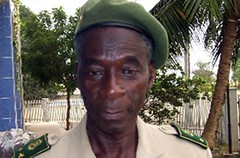
The authorities in Guinea, faced with mounting protests by soldiers demanding back pay, say they will pay the arrears, some of which go back to 1996.

Each soldier will receive up to GNF5m ($1,140), and subsidies for army rice will be increased, Prime Minister Ahmed Tidiane Souare announced.

Earlier, the defence minister was sacked a day after troops kidnapped the army's deputy head in the pay dispute.

One person was killed but the capital, Conakry, is now reported calm.

On Tuesday shots were fired and shops looted by soldiers based at the Alpha Yaya Diallo base in the capital, Conakry, BBC correspondents reported.

Prisoner release

PM Souare, who was only appointed by President Lansana Conte last week, promised that none of the mutinous soldiers would be punished.

He added that he had freed all soldiers who had been detained after a general strike in early 2007 against President Conte's rule.

"I appeal to all our compatriots, and particularly our armed forces: consolidate the foundations of our state and our democratic achievements," said the prime minister in a televised statement.

On Monday, protesting troops had captured Gen Mamadou Sampil when he tried to negotiate with them at the Alpha Yaya Diallo base.

The BBC's Alhassan Sillah in Guinea says shots were also heard in two other garrisons in Kindia, north-east of Conakry, and N'Zerekore in the south east.

There were unconfirmed reports that several people had been injured in the violence.

Following the unrest President Conte summoned senior government officials including Mr Souare for a meeting that lasted more than four hours.

Later a presidential decree read out on public radio announced that Defence Minister Gen Mamadou Bailo Diallo had been fired.

The protests come the week after President Conte also sacked Lansana Kouyate as prime minister.

Mr Kouyate was appointed as part of a deal in 2007 to end deadly riots that paralysed the country, and left at least 130 dead.

He was replaced by Mr Souare, a former minister of mines and ally of Mr Conte.

The dismissal of Mr Kouyate was reportedly one of the soldiers' complaints, as they said they had no-one left to petition.

His sacking sparked protests in Conakry last week.

President Conte, who took power in a coup in 1984, bought off a similar revolt and general strike last year.

Story from BBC NEWS:
http://news.bbc.co.uk/go/pr/fr/-/2/hi/africa/7421236.stm
Published: 2008/05/27 23:54:31 GMT


Guinea soldiers revolt over pay

Lansana Conte, Guinea's president, has called for calm

Guinean soldiers claiming years of unpaid wages have seized General Mamadou Sampil, their deputy army chief, during protests.

Soldiers carried out their anger on Monday in the streets of Conakry, Guinea's capital, in a repeat of anti-government protests staged by troops in May 2007 over the same issue.

The latest mutiny broke out at the Alpha Yaya Diallo army base, the capital's largest military base.

Lansana Conte, Guinea's president, sacked Lansana Kouyate as the prime minister last week, infuriating opposition unions and political parties.

"The soldiers are saying that they no longer have an intermediary now that Kouyate is gone," Sekou Toure, a witness who lives near the Alpha Yaya Diallo camp, said.

Gunshots

Witnesses said the mutinous troops fired gunshots into the air, terrifying local residents.

General Sampil was captured when he tried to negotiate with the soldiers over their demands for the payment of back pay promised by the outgoing government.

"General Sampil went down there to try to convince the soldiers to stop firing in the air in protest. The young troops took him ... they even stripped off his rank badges," a junior officer said.

Another military source said General Mamadou Bailo Diallo, the defence minister, had also tried to reason with the protesting soldiers but was chased off by a hail of stones.

Conte later met his ministers and top military officers at the presidential palace.

The four hour session concluded with Conte calling for calm on the streets and asking soldiers to open dialogue and negotiations.

Summing Up the Pan-African Tribute to Fidel Castro in Toronto

Summing Up Tribute to Fidel Castro

By Norman (Otis) Richmond

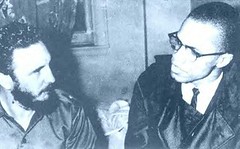
The Pan-African Tribute to Fidel Castro in Toronto was a success. Despite the fact that only Omme Rahemtullah of CKLN-FM 88.1 and CHRY-FM 105.5 and Phil Taylor of CIUT-FM 89.5 promoted the event, about 30 people of all ages and nationalities came out to pay tribute to Castro. The event took place at the Trane Studio, 964 Bathurst St., Toronto, Canada on Monday, May 26th.

This event was organized to coincide with the 45th anniversary of Afrikan Liberation Day. There was a panel discussion featuring Heather Kere of United Black Students @ Ryerson and Dr. Keith Ellis. The film “Cuba! Africa! Revolution!” was screened after the panel discussion.

The idea for a Pan Afrikan Tribute for Castro came from the Baffour Ankomah, the editor, of the London based “New African” magazine. Ankomah wrote: “In the 1970s and 1980s, Fidel Castro sent 350,000 Cuban soldiers, civilians and doctors to support the African liberation struggle, especially in Angola, Namibia, Mozambique, Guinea-Bissau, Cape Verde, and Sao Tome & Principe. It has been estimated that 2,077 Cubans died fighting in struggles to attain and preserve independence in Africa.”

Elombe Brath, Professor Ron Wilkins, Kali Akuno, and Abayomi Azikiwe endorsed the idea. Brath and Wilkins represent the Patrice Lumumba Coalition in New York City and Los Angeles respectively. Akuno is with the Malcolm X Grassroots Movement and Azikiwe is the editor of the Pan African News Wire.

The Detroit based Azikiwe screened the film Cuba! Africa! Revolution! on February 23 to commemorate the 140th anniversary of the birth of W.E.B. DuBois.

A copy of Muhammad Ahmad (Maxwell Stanford Jr.’s), “We Will Return In The Whirlwind: Black Radical Organizations 1960-1975” was raffled at the event.

Azikiwe pointed out that: “Fidel Castro should not only be honoured on African Liberation Day but every day we live and breathe on this earth.”

Ankomah also suggests that people study Castro’s life. According to Ankomah: “Interestingly, in his memoirs, Castro talks about Cuba’s love affair with Africa with such gusto and passion that you might think it happened only yesterday.” Titled “My Life, Fidel Castro”, this is a literary work that every African must get a copy and read!”

For more information email norman@ckln.fm or call Norman Richmond, 416 979-5251 ext 2372.

Tuesday, May 27, 2008

US Housing Crisis: Contractors Are Kept Busy Maintaining Abandoned Homes

May 27, 2008

Contractors Are Kept Busy Maintaining Abandoned Homes

By VIKAS BAJAJ
New York Times

JACKSONVILLE, Fla. — The house on East 24th Street was the worst of the six that David Law and Trey McCallister worked on the other day here. The front door had been kicked in so many times that the dead bolt was exposed and bent. Trash littered the front and back yards. A copper pipe was gone.

“Somebody has been trying to destroy this place,” said Mr. McCallister, eyeing the door.

But the two men have seen far worse as they go from one deserted house to another in northern Florida, where the foreclosure crisis has struck particularly hard.

Mortgage companies hire contractors like these men to inspect and maintain houses that once-proud owners can no longer afford and no one else wants. These days, business is brisk.

These contractors and thousands like them see first hand the detritus of the subprime era: peeling paint, gutted interiors, family dogs left behind to starve, overgrown lawns infested with snakes.

In Florida, the crisis can seem overwhelming at times.

It can take months, even years, for some homes to wind through foreclosure in the backlogged local courts.

The longer a home sits vacant, the more vulnerable it becomes.

After a few months, the Florida weather starts to takes a toll. Mold and mildew creep. Algae chokes forsaken swimming pools. Sometimes vandals strike. And sometimes wiring or plumbing just give out.

The home on East 24th Street has been vacant for several years, said Gloria Roberts, a next-door neighbor.

Another home that Mr. McCallister and Mr. Law visited in the affluent Sawgrass golf community in the oceanside city of Ponte Vedra Beach was last occupied in December 2006, according to a neighbor there.

Local and state governments have become concerned about the upkeep of foreclosed homes, which can drag down real estate values in neighborhoods and provide havens for drug users and gangs. Over the last year, localities have stepped up code enforcement by levying fines on mortgage companies for the degradation of homes they are repossessing.

The problem of vacant homes is all the more striking when considered against predictions by economists that a couple of million more homes will enter foreclosure in the next two years, said Cheryl Lang, president of Integrated Mortgage Solutions, a company based in Houston that contracts with Mr. McCallister and Mr. Law on behalf of mortgage companies.

“We still have two million more people that need to go through this process,” she said. “That’s like the entire town of Tampa going through foreclosure.”

Nearly 3 percent of homes that were once occupied by their owners in the country were vacant in March. That is up from less than 2 percent three years ago and is the highest since the Census Bureau began publishing the number in 1956.

For people like Mr. McCallister and Mr. Law, the surge in foreclosure has been good for business. Tim Doehner, executive director of the National Association of Mortgage Field Services, a trade association based in Ohio, estimates that most of his members have doubled their revenue in the last year. Individual contractors can bill as much as $5,000 every two weeks, said Jimmy Lyons, one of the partners in the firm, Landwise Inspection Services of Lake City, Fla., that Mr. McCallister and Mr. Law work for.

But the rising price of diesel fuel, wood and other supplies cuts sharply into their earnings. Mr. Law said he often spent $140 a day filling his pickup truck, which tows a large trailer that carries a riding lawnmower and other supplies. The contractors cannot easily pass rising costs to lenders because they work under contracts or, in the case of some loans, at rates set by federal agencies.

Still, business is growing and drawing in newcomers.

Mr. Lyons, a former deputy sheriff, entered the home inspection business years ago but branched out into field service work for mortgage companies two years ago when a friend suggested the housing boom would soon give way to a housing bust.

Back then, “I just couldn’t see it,” Mr. Lyons, 56, said. “It fell exactly like he said it would.”

After a quarter century in law enforcement, he still looks and plays the part of the easygoing rural county sheriff and is a reserve officer in Columbia County west of Jacksonville. At one home this month, he scrambled through an open window when the door was bolted while his younger colleagues looked on in amazement.

Mr. Law left a field sales job with the Kellogg Company, the cereal maker, to join Landwise, because he said he was tired of the corporate world. He said taking care of vacant houses could be grueling but also rewarding and allowed him to work by himself, which he said he enjoyed. He often works seven days a week because his employer is often flooded with orders.

“It occupies a lot of my time,” he said and added with a laugh, “I don’t have much of a life outside of this.”

When he arrives at houses, Mr. Law reaches for his digital camera and starts snapping pictures to document his presence and problems that need attention. Mortgage companies require before and after photos to be sent to them electronically before paying for work done to the home.

If it is their first visit to a vacant home, the contractors change the locks on at least one door so the mortgage company can have access. They use locksmith’s tools to gain entry to the house, though on some occasions they use open windows, as Mr. Lyons recently did. The contractors board up broken windows, cut the grass and record significant damage. Depending on the extent of the destruction, mortgage companies will commission the contractors to repair the home.

At the home on 24th Street, Mr. McCallister, 39, who had worked in the timber business until last year, wedged open the back door with pliers and Mr. Law installed a new lock. The interior of the house was mostly empty and musty. The outside was another story. A large tree branch shared the back yard with an empty propane tank, Styrofoam containers and food wrappers.

After surveying the trash and photographing it, Mr. Law and Mr. McCallister concluded they could not cut the grass without cleaning up the yard. They would have to ask the mortgage company whether it wanted them to remove the trash and how much it would pay for the work.

Contractors say the damage at vacant homes can be significant, though it is not always clear who the culprit is. It could be an angry homeowner upset about losing a home, but it also could be vandals and thieves scouring homes for copper plumbing, which they can sell. To limit losses, a few mortgage companies are making offers called “cash for keys” to delinquent borrowers if they leave their homes quickly and in good shape.

Two of the six homes the contractors visited in the Jacksonville area appeared to be pristine. The two also had for-sale signs from real estate agents, suggesting the borrowers were trying to sell but could not find a buyer before they had to leave.

For the contractors, foreclosures can strike close to home. Mr. Law recently inspected a home across the street from his residence and Mr. McCallister was sent to a home formerly occupied by a family whose daughter was friends with one of his three daughters.

“I was fortunate that everyone was gone,” Mr. McCallister said, so he did not have to see his daughter’s friend.

In most cases, the contractors do not interact with the homeowners, but sometimes the contractors are present during evictions that are conducted by county sheriffs. Mr. McCallister recalled the eviction of a 60-year-old man who had misread his eviction notice and thought he had one more week to leave.

“He fell down on the floor and started crying,” Mr. McCallister said. “We gave him 24 hours and he had his stuff moved out and he found another place to live.”

In their work, the contractors come across the everyday debris of human life, from old microwave ovens to couches and a child’s cherry-red tricycle. Sometimes they discover abandoned pets. Mr. Law recently found three kittens that he took to a friend who is an animal lover.

Though homes were found for all three of the kittens, many other pets meet a worse fate. Ms. Lang of Integrated Mortgage Solutions has started a nonprofit group, No Paws Left Behind, to find homes for abandoned pets and to offer help with pets to homeowners in foreclosure. She said contractors working for her company had found abandoned animals from birds to horses.

While business may be good for firms like hers, Ms. Lang said it was difficult not to be disenchanted when the housing bust is seen from the street level, as many of her contractors do. Just a few years ago, policy makers and the mortgage industry were celebrating record home ownership rates in the country — a sign that the American dream was within reach for a large majority of the population.

Speaking on the phone two days after Mr. Law and Mr. McCallister’s visit to the home on 24th Street, she said the home’s condition stuck with her.

“Somewhere along the line someone wrote that property off,” she said. “There were birthdays celebrated there and anniversaries and there were lives that were lived there. And now the door is bolted shut.”

Despite Federal Consent Decrees Detroit Still Struggles Against Police Brutality

Despite Federal Consent Decrees Detroit Still Struggles Against Police Brutality

City administration fails to meet reform deadlines in reducing deadly force and cleaning up the deplorable conditions in the lock-ups

by Abayomi Azikiwe, Editor
Pan-African News Wire

DETROIT--When New York City police were absolved of criminal culpability in the murder of Sean Bell, the continuing problems of law-enforcement misconduct and criminality gained nation-wide attention. In an obvious response to mass protests and condemnation of the acquittal of these cops, the New York City Police Department announced that there would be an internal investigation into the conduct of the officers who were found not guilty in a bench trial.

In subsequent weeks a videotaped beating of several African-American men by police in Philadelphia brought about the termination of some of the officers involved. Similar to the Rodney King incident of 1991, if there had been no videotaping of the beating, it is highly unlikely that any action would have been taken against these officers.

A trial in Atlanta involving another egregrious case of police terrorism, when a 92-year-old woman, Kathyrn Johnston, was gunned down by the police when they mistakenly raided her home in a purported search for illegal drugs. One of the officers connected to this killing plead guilty to perjury.

African-Americans, Latin@s, young people, LGBT communities and other oppressed groups in the United States know and understand the dangers of police brutality. In most cases, police are allowed to get away with blatant violations of the law when they insult, rob, assault, maim and kill people without provocation and walk free absent of any fear of prosecution or the loss of their jobs.

In the city of Detroit, police brutality has been important part of the repressive apparatus of the ruling class. In 1967, the community rose up in rebellion after police raided a private party being held for a soldier returning from Vietnam.

During the 1970s the ascendancy of the first African-American mayoral administration of Coleman A. Young (1974-1993) was in response to a mass struggle for the abolition of a racist police decoy unit known then as STRESS (Stop Robberies and Enjoy Safe Streets). Young, a state senator in 1973, had been a left-wing labor organizer for the National Negro Labor Councils in the aftermath of World War II. He had been brought before the House Un-American Activities Committe during the early 1950s where he defied their attemtpted interogation and became a respected activist in the city.

Under the Young administration there was at least a perception that police brutality was on the decline. However, during the second black administration in the city under Dennis W. Archer (1994-2001), a more moderate political figure, there was a sharp rise in police killings of Detroit residents.

A Detroit Coalition Against Police Brutality (DCAPB) was formed in 1996-1997. The organization documented acts of law-enforcement misconduct and brutality, held demonstrations outside police precincts and the main headquarters downtown. The DCAPB created an atmosphere where the City Council was forced to hold a public hearing on police misconduct in late 1997.

By 2000 the situation involving police-community relations became so outrageous that activists began to call for the resignation of Mayor Archer and the then police chief Benny Napoleon. That summer a deaf man, Errol Shaw, Sr., was shot down dead in front of his mother on the northwest side of the city while she pleaded for the white police officer to refrain from firing his weapon.

Failure of the Justice Department to enforce civil rights law

Several months later Mayor Archer announced that his administration would welcome a Justice Department investigation of the police department. Archer did not seek a third term in 2001. Kwame Kilpatrick was elected that year and in 2003 the Department of Justice announced its finding which indicated that there were serious violations of federal civil rights laws taking place through the operations of the Detroit Police Department in the areas of the use of lethal force and the deplorable conditions found in the city lock-ups.

Judge Julius Cook was appointed to enforce two federal consent decrees which mandated drastic reforms in the operations of the police department in Detroit. A private firm Kroll, Inc. was appointed to monitor the city's compliance over a five year period with what was required by the Justice Department. A motion to intervene in the monitoring process was filed by the Detroit Coalition Against Police Brutality in 2003, however, the motion was denied by Judge Cook.

Since 2003, the city has failed to implement the reforms mandated by the two federal consent decrees. Members of the Detroit Coalition Against Police Brutality continue to emphasize that it will require a mass struggle against law-enforcement misconduct to effectively address the need for ending abusive behavior by local area cops.

Assessing the ongoing struggle to end police brutality

In a recent interview with Ron Scott and Sandra Hines, leaders of the Detroit Coalition Against Police Brutality, it was acknowledged that the federally-appointed monitor Kroll Associates, had not taken any effective action to force the local police department to finally resolve the issues uncovered by years of harassment, abuse, assault and murder.

Pointing to the successes of the DCAPB's work, the organization stated that there had been advancements made in mobilizing large numbers of people to fight police misconduct and terrorism. In addition, Scott and Hines stated that "we have broadened our political analysis, effectively utilized the mass media to increase awareness and consciousness about police brutality. Moreover, we have educated our constituency about the origins and character of police violence against people and that they have been effective in court monitoring, legislative advocacy and the pressuring of the local Board of Police Commissioners which is appointed by the Mayor."

The DCAPB representatives also stated that "we have defeated a City of Detroit panhandling ordinance, publicized the necessity of ending police chases that endanger peoples lives, defeated on a state level a legislative effort to impose the death penalty in Michigan, supported cab drivers' rights to equitable access to passengers in the city and to end police intimidation and harrassment of taxi drivers."

Hines and Scott went on to say that "the DCAPB challenged the Greektown Merchants Association downtown and their so-called 'Men-in-Black' private security guards who were actively engaged in assaulting the homeless population in the entertainment district. We have worked in conjunction with several organizations to establish a Ten Year Plan to End Homelessness."

Through its weekly radio broadcast entitled "Fighting For Justice", which is heard over the local Air America affiliate on 1310 AM, WDTW, the DCAPB utilizes this access to the mass media to both inform the public about the ongoing problems of police terrorism and to effectively mobilize the public to fight law-enforcement, the city administration and the courts which provide no justice for the victims of this state sanctioned violence.

According to Ron Scott, "it is necessary for us to build a real parallel institution focusing on more research, discipline, and resource-gathering. We must balance the nationalization of policing with stronger organizational and political efforts which counter government agencies."

Scott and Hines concluded by emphasizing that "police and governmental agencies are responding by centralizing and transforming their approach. We must be smart and agile enough to respond and extend our program beyond what we have been able to achieve in the current situation."

--------------------------------------------------------
Editor's Note: For more information on the activities of the Detroit Coalition Against Police Brutality, people locally can listen to the "Fighting for Justice" radio program every Sunday morning from 10:00-11:00 a.m. over WDTW, AM 1310. You can also write to the DCAPB at 220 Bagley Avenue, Suite 808, Detroit, MI 48226. In addition you can call 313.963.8116 or e-mail detcoalition@sbcglobal.net. To read the quarterly reports of Kroll's monitoring of the Detroit Police Department's lack of compliance with the federal consent decrees just log on to the following URL: http://www.kroll.com/about/library/detroit/
-----------------------------------------------------------

Zimbabwe News Update: ZANU-PF Raring to Go; War Veterans Speak; President Mugabe Meets Mufamadi

Zanu-PF raring to go: Manyika

Herald Reporter

ZANU-PF provincial executives are geared up and raring to go in a campaign that would ensure a resounding victory for President Mugabe in the presidential run-off set for June 27, the ruling party’s secretary for the commissariat, Cde Elliot Manyika, has said.

Speaking after a meeting of party leaders, provincial executives and March 29 harmonised election candidates at the Zanu-PF headquarters yesterday, Cde Manyika said the provinces had been urged to go out on a full throttle campaign for the party’s presidential candidate.

"Our candidate, the President and First Secretary of Zanu-PF, Cde Mugabe, yesterday (Sunday) issued an order for all our supporters to go out and campaign vigorously for a resounding victory.

"That order should be taken seriously and the provinces, including candidates who won or lost in the March 29 harmonised elections, should cover every corner and inch of the country with our message for victory in the presidential run-off," he said.

"We would want to urge everyone in the party to go out, campaign for President Mugabe and remind voters that this country is ours.

"The land is ours. The economy is ours and white people who are trying to usurp our powers should only come and work with us as our partners," he said.

Cde Manyika said people attending the meeting had been very enthusiastic and raring to go out and campaign to ensure a victory against MDC-T candidate Morgan Tsvangirai.

"They are eager to go for an all-out victory for President Mugabe in the presidential run-off," he said.

Cde Manyika said although the country was going through its own challenges, the provincial leadership should let people understand that Zimbabweans alone can solve these problems.

"Voters should not expect our challenges to be solved by voting in a puppet government trying to serve the interests of imperialist forces.

"The people should accept that we are Zimbabweans and our sovereignty is of paramount importance. We should solve our own problems and Government is trying its best to solve all the challenges the country is currently facing," he said.

President Mugabe, speaking at the party’s official launch of the presidential run-off campaign, urged party supporters to be united and avoid divisions and power struggles that affected the party’s performance on March 29.

He said the people should send a message through their vote, a vote that will not be doubted by anyone, which should be raised in the province for a massive victory.

Although there were differences of opinion in Zanu-PF stemming mostly from primary elections held before the March 29 polls, Cde Mugabe said, these should be set aside for the common good and be dealt with conclusively when victory has been secured.

President Mugabe faces Tsvangirai in a presidential election run-off after none of four presidential aspirants got more than 50 percent of valid votes cast in the March 29 poll to be declared a winner.


Governor urges electorate to rally behind President

Midlands Bureau

THE forthcoming presidential election run-off to be held on June 27 is a battle not between President Mugabe of Zanu-PF and Morgan Tsvangirai of MDC-T but between Zimbabwe and Britain, Midlands Provincial Governor, Cde Cephas Msipa, has said.

Speaking at victory celebrations for the Zvishavane-Runde Member of the House of Assembly elect, Cde Larry Mavhima at Matambe Business Centre under Chief Mazvihwa, the governor urged the electorate to vote with their senses and rally behind President Mugabe in the run-off. He said the electorate should decide their fate on the day whether to return the country into the hands of Britain or defend their sovereignty through the candidature of Cde Mugabe.

"It has become clear that Britain is using the MDC frontier in her bid to re-colonise Zimbabwe and it is our duty as united Zimbabweans to decide our fate on June 27.

"The opposition with its leader, Tsvangirai represents the British while Cde Mugabe represents Zimbabwe. I therefore urge all people to rally behind Cde Mugabe’s candidature because he is an illustrious son who fought for our rights through the land reform programme which has irked the British," he said.

Cde Msipa described President Mugabe as a hero who remained steadfast and firm against pressure from some Western countries bent on reversing the fruits of an independent Zimbabwe.

He said people should not be brainwashed into voting for the opposition party whose leader Tsvangirai had since become the servant of Britain.

"We must come back to our senses and overwhelmingly vote for President Mugabe in defence of our sovereign nation. Your vote should not be a sell-out vote. This country did not come through an X but was fought for. We should therefore consider the credentials of the people whom we vote for.

"What credentials does Tsvangirai have that can make him the right candidate for the presidential office?" asked Cde Msipa amid applause from a gathering of over 2 000 people who attended the celebrations.

He said while people should appreciate that the current economic hardships were a result of recurrent droughts, they should realise that the situation had been compounded by the imposition of illegal sanctions by Britain and her allies.

"These sanctions were imposed on this country through Tsvangirai and we should consider this when voting. There is nothing that can make Tsvangirai rule this country courtesy of the British who are bent on reversing the land reform programme," he said.

Speaking at the same occasion, Cde Mavhima said the celebrations were premature until the June 27 run-off.

"I urge all people to go out and vote overwhelmingly for President Mugabe and send off the opposition leader Tsvangirai.

"After sending the opposition and their Western masters off our independent Zimbabwe, then we have everything to celebrate," he said.


President meets SA minister Mufamadi

Herald Reporter

PRESIDENT Mugabe yesterday held talks with South African Provincial and Local Government Minister Mr Sydney Mufamadi at State House in Harare amid growing regional concerns over xenophobic attacks that have left 56 people dead so far.

Secretary for Information and Publicity Cde George Charamba confirmed the closed-door meeting.

"Yes, they held a meeting but I am not privy to the issues that were discussed," he said.

Mr Mufamadi was one of the negotiators of the talks between Zanu-PF, MDC-T and MDC that were brokered by South African President Thabo Mbeki.

The meeting comes amid growing concerns on anti-migrant violence in South Africa that has displaced more than 35 000 people, mostly Zimbabweans and Mozambi-cans.

President Mbeki made a rare address on Sunday appealing for peace while chairing a meeting of a taskforce comprising 11 cabinet ministers set up to deal with the unrest.

In his address, President Mbeki called the violence against foreigners "an absolute disgrace" that had blemished the reputation of the country.

His speech came after government heavyweights had descended on informal settlements around the country in an attempt to appease angry locals.

Although the overall picture was one of calm after a crackdown by police, intelligence services and the army yesterday, flare-ups were still being reported and the atmosphere remained tense.

A parliamentary special taskforce set up to investigate the attacks was set to brief reporters later yesterday amid confusion about how authorities plan to reintegrate and care for the thousands of people sleeping rough.

Although Safety and Security Minister Mr Charles Nqakula said the situation was now under control, aid groups warned about health problems and the difficulty of dealing with such a vast number of people, with the Red Cross complaining of lack of national co-ordination.

"The big problem is co-ordination of information between authorities and NGOs (non-governmental organisations). It’s not very well-organised," Francoise Le Goff, director of the Red Cross in Southern Africa, told AFP.

"The government is still looking for shelters for people and we’re still in an emergency situation."

Muriel Cornelius, programme co-ordinator for South Africa for aid group Medecins Sans Frontieres (Doctors without Borders), told AFP:

"The situation is about to get worse. People have still not received aid and they’re not even under tents. The reaction of civil society is incredible but it is not enough," she added.

Police spokesman for Gauteng province Govindsamy Mariemuthoo was quoted by AFP saying apart from a few empty shacks set alight in Katlehong (east of Johannes-burg), the atmosphere was peaceful.

In the coastal city of Durban, five Mozambicans were seriously injured after being attacked on Sunday night, police said.

In Cape Town, police reported calm and in Johannesburg it was quiet with only a few shacks burnt.

Mr Mufamadi’s meeting also came after President Mbeki’s visit to Zimbabwe early this month where he held closed-door talks with Cde Mugabe for about three hours.

Sadc heads of state last year mandated South Africa to mediate in the talks between the ruling party and the opposition.

Zimbabweans go to the polls on June 27 to vote in a presidential run-off pitting President Mugabe against MDC-T leader Morgan Tsvangirai.

The run-off will be held concurrently with House of Assembly elections in Pelandaba-Mpopoma, Gwanda South and Redcliff.


We are not violent, says war vets leader Sibanda

Herald Reporter

ZIMBABWE National Liberation War Veterans’ Association chairman Cde Jabulani Sibanda has dismissed reports that his members were leading a terror campaign against Zimbabweans, saying war veterans were instead victims of the post-March 29 election violence.

In an interview in Harare yesterday, Cde Sibanda said ZNLWVA members were well aware that violence or any statement that incites violence was counter-productive in an election.

"War veterans are not a violent people and it is very clear that our responsibility as an association is to educate the masses so that they will not be gullible to the opposition’s propaganda and hunger caused by sanctions and their violent activities," he said.

Cde Sibanda said ZNLWVA members were not responsible for the violence but "were victims — psychologically and physically — of MDC violence promoted and sustained by American Ambassador to Zimbabwe James McGee, their commander."

"If you had a chance to see the MDC-T working document which puts it clearly that they want to eliminate, ideologically and physically, their opponents, surely you will then see who is responsible for the violence," he said.

Cde Sibanda urged all voters to go and vote for the Zanu-PF presidential candidate, President Mugabe, in the run-off set for June 27.

"Now each vote should be cast for Zanu-PF, for President Mugabe. He is the only representative of a sovereign Zimbabwe, a free people and, above all, to further the aims of our revolution and freedom for the people.

"Voting for President Mugabe will ensure the development of our health infrastructure, development of roads, education system and assurance of our food security," he said.

Cde Sibanda called for unity of purpose ahead of the presidential run-off.

"We need unity in the party among our membership, but the unity should be symbolised by the participation of each member on the ground," he said.

Cde Sibanda pledged his association’s support for President Mugabe in the run-off and said they would use all their resources to ensure victory for the Zanu-PF candidate.

"War veterans are a serious people, serious to defend the revolution, sovereignty and independence," he said, urging the people to go out and campaign with any resources they have in their possession.

"In a campaign, people are not posed to move forward by resources but on the country’s interests.

"Revolutionaries must realise that people are an enough and complete resource to move forward with the revolution. Any other material resource becomes an enabling factor."

Cde Sibanda expressed confidence that President Mugabe would turn around the tide against MDC-T presidential candidate Morgan Tsvangirai in the run-off.

"We are moving towards victory and looking forward for every Zimbabwean not only to pledge their votes but to cast them for the Zanu-PF candidate, President Mugabe, a revolutionary leader, visionary and person of impeccable integrity.

"President Mugabe is a man who stands not only for the sovereignty of Zimbabwe but of other peoples all over the world," he said.

Cde Sibanda said Zimbabweans should approach the presidential run-off with the knowledge that behind the secret ballot and vote is the blood of a freedom fighter.

"Voters should know that there are people who served time in prison for them to be able to vote and lives were sacrificed.

"People should know that it also means each vote is no longer secret, but a responsibility put in the hands of each Zimbabwean by pain and death so that we can preserve our being as blacks in our black Africa."

Officially launching the party’s campaign in Harare on Sunday, President Mugabe said the nation had seen for itself that reactionary elements were waiting in the wings to reverse the gains of independence and halt the empowerment of citizens.

He said this was evidenced by the manner in which white former farmers had threatened resettled black farmers when they thought the MDC-T had won the elections.