Monday, March 30, 2009

Rising Powers Challenge US on Role in IMF

March 30, 2009

Rising Powers Challenge U.S. on Role in I.M.F.

By MARK LANDLER
New York Times

WASHINGTON — Barely six months ago, the International Monetary Fund emerged from years of declining relevance, hurriedly cobbling together emergency loans for countries from Iceland to Pakistan, as the first wave of the financial crisis hit.

Now, with world leaders gathering this week in London to plot a response to the gravest global economic downturn since World War II, the fund is becoming a chip in a contest to reshape the postcrisis landscape.

The Obama administration has made fortifying the I.M.F. one of its primary goals for the meeting of the Group of 20, which includes leading industrial and developing countries and the European Union. But China, India and other rising powers seem to believe that the made-in-America crisis has curtailed the ability of the United States to set the agenda. They view the Western-dominated fund as a place to begin staking their claim to a greater voice in global economic affairs.

Treasury Secretary Timothy F. Geithner, who once worked at the fund, has called for its financial resources to be expanded by $500 billion, effectively tripling its lending capacity to distressed countries and cementing its status as the lender of last resort for much of the world.

Japan and the European Union have each pledged $100 billion; the United States has signaled it will contribute a similar sum, though its money will take longer to arrive because of the need for Congressional approval. China, with its mammoth foreign exchange reserves, is the next obvious donor.

Yet officials of China and other developing countries have served notice that they are reluctant to make comparable pledges without getting a greater say in the operations of the fund, which is run by a Frenchman, Dominique Strauss-Kahn, and is heavily influenced by the United States and Western Europe.

A senior Chinese leader, Wang Qishan, said Friday that Beijing was willing to kick in some money, but he called for an overhaul of the way the fund is governed. China wants its quota — which determines its financial contribution and voting power — adjusted to reflect its economic weight better.

China’s contribution, Mr. Wang said, should not be based on the size of its reserves but on its economic output per person, which is still modest. Some American officials now expect a pledge on the order of $50 billion from China.

“Their arms may yet be twisted, but they simply do not want to pony up based on vague promises of governance reform,” said Eswar S. Prasad, a professor of economics at Cornell University who has discussed the matter in recent days with Chinese and Indian officials.

Given the inevitability that these countries will have a growing influence, the London summit meeting, which begins Thursday, is likely to be remembered “as the last hurrah for the U.S. and Europe rescuing the world economy,” said Simon Johnson, a professor at M.I.T. and a former chief economist of the fund.

One reason the I.M.F. has emerged as such a popular cause is that the United States has been unable to rally countries behind its other major priority: economic stimulus. The European Union opposes further stimulus packages in 2010, arguing that its social safety net makes an increase in government spending unnecessary.

European and American officials are also still divided, to a lesser degree, on how to rewrite international financial regulations. France and Germany are more receptive than the United States to giving regulators supranational authority to scrutinize global banks and other financial companies.

“The United States is desperately trying to assert leadership, as if it were 10 years ago, when the U.S. set the agenda,” said Kenneth S. Rogoff, an economist at Harvard and another former chief economist of the fund.

With more countries slipping into crisis by the week, there is general agreement that the fund needs additional resources. Since last year, the I.M.F. has made nearly $50 billion in loans to 13 countries. It is streamlining the process for making loans and loosening its strings, hoping to counter the resentment that built up against it during past crises because of its stringent demands.

At a preparatory meeting two weeks ago, finance ministers of the Group of 20 agreed to “very substantially” increase financing, though the Europeans favored an extra $250 billion, not $500 billion.

Whatever their reservations about financing, the Chinese have seized on the fund for another purpose: to tweak the United States. The governor of China’s central bank, Zhou Xiaochuan, recently proposed that the American dollar be phased out as the world’s default reserve currency. As a replacement, he suggested using special drawing rights, or S.D.R.’s, the synthetic currency created by the fund that is used for transactions between it and its 185 member countries.

Few economists view that idea as a realistic one, at least for years to come. But the mere assertion that the dollar’s pre-eminence is waning — a theme picked up by Russian officials as well — sends a message.

“I don’t think the Chinese or Russians really believe the S.D.R. is a viable currency,” said Mr. Prasad, the Cornell economist. “But they’re laying down a very clear marker that they’re going to be much more assertive about their role.”

Mr. Geithner took the remarks seriously enough that he publicly reaffirmed the primacy of the dollar.

The United States will address China’s status this week, when it announces details of a new high-level strategic and economic dialogue with Beijing, led by Mr. Geithner and Secretary of State Hillary Rodham Clinton, according to a senior administration official, who spoke anonymously because the information was not yet public. The announcement will come after the first meeting between President Obama and the Chinese president, Hu Jintao, in London.

The Obama administration has personal reasons to support the fund. Mr. Geithner was the I.M.F. director of policy planning from 2001 to 2003, after his first stint in the Treasury Department. He recruited Edwin M. Truman, another former Treasury official and a longtime advocate of the fund, as a temporary adviser to develop policies for the Group of 20 meeting.

Just before leaving his academic position at the Peterson Institute for International Economics, Mr. Truman proposed that the fund issue $250 billion in S.D.R.’s on a one-time basis to be allocated to all its members, as another way of increasing its resources. Western European countries, he said, could use their S.D.R.’s to lend money to their troubled Eastern neighbors.

That proposal is in a current draft of the statement to be issued at the Group of 20 meeting. If all the American proposals for the fund are adopted, its resources will approach $1 trillion — a big number, even in these extraordinary times.

Yet for Mr. Johnson of M.I.T., it merely shows how difficult it is for the United States to marshal support for anything else.

“They can’t agree on fiscal policy; they can’t agree on regulations,” he said. “The only thing left is the I.M.F.”

Tens of Thousands Demonstrate Outside the G20 Summit in London

http://www.latimes.com/news/nationworld/world/la-fg-britain-protests29-2009mar29,0,7112513.story

From the Los Angeles Times

London economic protest draws 35,000

In a message for the G-20 summit in London, protesters call for sustainable development, help for the poor and punishment for those responsible for the economic crisis. More protests are planned.

By Henry Chu and Janet Stobart
March 29, 2009

Reporting from London — Thousands of people marched through London on Saturday to demand punishment for bankers, power to the poor and protection of the environment at a protest meant as a wake-up call to world leaders gathering here this week for an economic summit.

It was one of the largest demonstrations this city has seen since massive rallies six years ago against the invasion of Iraq. The turnout, estimated at 35,000, reflected the depth of popular anger over Britain's economic crash and the perceived greed of bankers and other high-fliers whom many people blame for it.

Beneath a sea of banners, marchers representing trade unions, charities, environmental groups and churches snaked through the streets to converge on Hyde Park. Placards called for "People Before Profits" and "Jobs, Not Bombs," in a nation suffering its worst unemployment in more than a decade.

"It's people that make changes, not governments," said Gail Cartmail, assistant general secretary of Unite, one of Britain's largest unions. "There should be more investment in public services and housing, not less, [and] greater help to get people back into work."

The leaders of the Group of 20 nations, representing the world's largest developed and emerging economies, will meet here Thursday to discuss ways to pull the global economy out of its hole. The G-20 meeting will be the first major summit for President Obama, who is hugely popular in Europe but is having trouble reaching an agreement with European leaders on how best to combat the global recession.

In Berlin, raucous protests drew thousands of demonstrators Saturday, and hundreds congregated in Paris. About 6,000 students, union members and others marched in Rome to protest a meeting of the Group of 8 industrial nations' labor ministers there. The London demonstration attracted participants from across Europe, such as 11.11.11, an umbrella organization of Belgian volunteer groups.

"We want governments to give a voice to poorer countries," said Benedikt Raets, who runs the organization's website. "The poorest countries are paying the highest price."

Saturday's protest here offered a foretaste of demonstrations planned for this week -- and of the security nightmare they present for London police. Several activist organizations have scheduled events Wednesday, when many of the G-20 leaders are set to arrive, and some underground anarchist groups have threatened to storm buildings in the financial district.

All leave has been canceled for police officers in order to mount a full-scale security operation that could cost more than $10 million. Anti-terrorist and intelligence agencies are also on high alert.

But critics accuse the police of overstating the threat of violence to justify heavy-handed tactics. Last week, influential members of Parliament expressed concern that the police have bullied and harassed peaceful demonstrators, including filming them and invoking anti-terrorism laws against them.

"I'm worried about the spectacular smear stories that the police are putting out in advance of the day," said Peter McDonald, an activist with the environmental organization Climate Camp.

Previously, "there have been similar tactics used to get everyone a little hysterical in the run-up, and they've never come true in practice," he said.

McDonald agreed that both the global economy and the global climate are in urgent need of attention, but he said that the recovery of one should not worsen the other.

"Telling people to consume more to get the economy back on track, in an age of climate change, is frankly obscene," he said. "There's a very widespread sense that things can't go on the way they were before. There's an opportunity for something new to emerge from this." The group is planning to hold its annual camp Wednesday in the city center, with the slogan "Nature doesn't do bailouts!"

Many activists agree that the crisis offers perhaps the best chance in years to get across their pleas for greater social justice and environmental vigilance, brushed aside in the rush to buy stocks and SUVs during the boom times.

"All the cards are in our favor now. The true nature of the economic system is revealed; the true quality of political leadership is revealed," said Mark Barrett of G-20 Meltdown, a left-wing group that embraces noisy street theater to spread its gospel of decentralization and anti-capitalism.

It is organizing a "Financial Fools' Day" protest Wednesday outside the Bank of England, and has called on members to descend on the summit venue and knock on visiting leaders' and officials' hotel-room doors in the middle of the night to disrupt their sleep.

"We have a chance to get some really great ideas into the public realm," Barrett said. "And it's mainly, completely, because of the financial crisis."

That openness was sorely tested last week, however, when one G-20 Meltdown leader, Chris Knight, an anthropology professor at the University of East London, told a radio show that bankers could wind up "hanging from lampposts" and "things could get nasty" if change did not come to Britain. The university has suspended him pending an investigation.

henry.chu@latimes.com


G20 demonstrators march in London

Tens of thousands of people have marched through London demanding action on poverty, climate change and jobs, ahead of next week's G20 summit.

The Put People First alliance of 150 charities and unions walked from Embankment to Hyde Park for a rally.

Speakers called on G20 leaders to pursue a new kind of global justice.

Police estimate 35,000 marchers took part in the event. Its organisers say people wanted the chance to air their views peacefully.

Protesters described a "carnival-like atmosphere" with brass bands, piercing whistles and stereos blasting music as the slow-paced procession weaved through the streets.

Police said one man was arrested during the march for being drunk and disorderly.

Unite union, general secretary Derek Simpson said: "I think it's an important message but whether it will get through to the people meeting in London I don't know. Anyone who sees the numbers on this march should realise how important it is."

Families with children in pushchairs were among those marching along the 4.2-mile route under banners with slogans including 'capitalists - you are the crisis' and 'justice for the world's poor'.

As protesters passed the heavily-policed gates of Downing Street, there were chants and jeers with one person shouting "enjoy the overtime".

BBC News reporter Mario Cacciottolo said people were clearly angry, but the atmosphere was not tense.

Milton McKenzie, 73, from Essex, told him: "How the hell can we have a situation here in Britain where we have people out of work and the bankers just cream it off and are helped by the government."

G20 LONDON SUMMIT

World leaders will meet next week in London to discuss measures to tackle the downturn.

The G20 countries are Argentina, Australia, Brazil, Canada, China, France, Germany, India, Indonesia, Italy, Japan, Mexico, Russia, Saudi Arabia, South Africa, South Korea, Turkey, the United Kingdom, the US and the EU.

Italian trade unionist Nicoli Nicolosi, who had travelled from Rome, said: "We are here to try and make a better world and protest against the G20."

Glen Tarman, chairman of the Put People First co-ordination team, said: "An exciting alliance has been born today. We will keep up the pressure on world leaders and the UK government to address our demands and put people first."

TUC general secretary Brendan Barber said he wanted to see G20 leaders agree a plan of action to deal with the financial downturn.

"Where I hope we will see a consensus emerge is in the recognition that unless they act together, then the problems are only going to get worse.

"This, unlike any other recession, is a recession right across the world."

The Energy and Climate Change Secretary Ed Miliband said it was important for the G20 to make commitments on helping the environment as well as the economy.

"There are some people who will say you can either tackle the economic crisis or the climate crisis.

"But the truth is that both come together with this idea of a Green New Deal, of investing in the jobs of the future, which are going to be in the green industries of the future."

The director of the the Adam Smith Institute, Dr Eamonn Butler, said governments have caused the economic crisis.

"The world market economy is actually a very moral system that raised a billion people out of poverty in the last 10 years," he said.

A huge security operation is under way in the run-up to the G20 summit, at which world leaders will discuss the global financial crisis and other issues.

There have been fears that banks and other financial institutions could be the focus for violent protests.

Commander Simon O'Brien, one of the senior command team in charge of policing security, said: "It's fair to say that this [the march] is one of the largest, one of the most challenging and one of the most complicated operations we have delivered.

"G20 is attracting a significant amount of interest from protest groups. There is an almost unprecedented level of activity going on."

Saturday's march will be followed by a series of protests on Wednesday and Thursday by a variety of coalitions and groups campaigning on a range of subjects, from poverty, inequality and jobs to war, climate change and capitalism.

Berlin march

Ahead of the summit, Prime Minister Gordon Brown has been visiting a number of countries seeking support.

On Friday, during a visit to Chile, he said people should not be "cynical" about what could be achieved at next week's summit, saying he was optimistic about the likely outcome.

However, in an interview with Saturday's Financial Times, German Chancellor Angela Merkel dampened expectations of a significant breakthrough.

She said one meeting would not be enough to solve the economic crisis and finish building a new structure for global markets.

In Berlin, thousands of protesters have also taken to the streets with a message to the G20 leaders: "We won't pay for your crisis".

Another march took place in the city of Frankfurt. The demonstrations attracted as many as 20,000 people.

Banners accused the Germany government of being too willing to spend billions bailing out financial institutions and too slow to protect ordinary workers, the BBC's Steve Rosenberg said from Berlin.

Story from BBC NEWS:
http://news.bbc.co.uk/go/pr/fr/-/2/hi/uk_news/7968721.stm
Published: 2009/03/28 17:19:48 GMT


March 29, 2009

Obama Will Face a Defiant World on Foreign Visit

By HELENE COOPER
New York Times

WASHINGTON — President Obama is facing challenges to American power on multiple fronts as he prepares for his first trip overseas since taking office, with the nation’s economic woes emboldening allies and adversaries alike.

Despite his immense popularity around the world, Mr. Obama will confront resentment over American-style capitalism and resistance to his economic prescriptions when he lands in London on Tuesday for the Group of 20 summit meeting of industrial and emerging market nations plus the European Union.

The president will not even try to overcome NATO’s unwillingness to provide more troops in Afghanistan when he goes on later in the week to meet with the military alliance.

He seems unlikely to return home with any more to show for his attempts to open a dialogue with Iran’s leaders, who have, so far, responded with tough words, albeit not tough enough to persuade Russia to support the United States in tougher sanctions against Tehran. And he will be tested in face-to-face meetings by the leaders of China and Russia, who have been pondering the degree to which the power of the United States to dominate global affairs may be ebbing.

Mr. Obama is unlikely to push for specific commitments from other countries on stimulus spending to bolster their own economies, White House officials acknowledged Saturday in a teleconference call, despite the fact that administration officials would like to see European countries, in particular, increase their spending to try to prompt a global economic recovery.

“Nobody is asking any country to come to London to commit to do more right now,” said Michael Froman, deputy national security adviser for international economic affairs. Instead, world leaders at the meeting will try to “do whatever is necessary to restore global growth,” Mr. Froman said.

The challenges stem in part from lingering unhappiness around the world at the way the Bush administration used American power. But they have been made more intense by the sense in many capitals that the United States is no longer in any position to dictate to other nations what types of economic policies to pursue — or to impose its will more generally as it intensifies the war in Afghanistan and extracts itself from Iraq.

“There is a direct challenge under way to the paradigms that America has been trying to sell to the rest of the world,” said Eswar S. Prasad, a former China division chief at the International Monetary Fund. The American banking collapse, which precipitated the global meltdown, has led to a fundamental rethinking of the American way as a model for the rest of the world. Yet even as his presence stirs opposition to particular American policies, Mr. Obama is being welcomed by many Europeans as an embodiment of American ideals.

In Prague, where Mr. Obama will stop later in the week, local officials are installing a hot line for residents to find out about street closings. In Strasbourg, France, site of a NATO meeting, protesters are planning an “international resistance camp” with antiwar actions designed to press Mr. Obama to get American troops out of Afghanistan. In Istanbul, his last stop, workers are polishing up the Hagia Sophia basilica-cum-mosque-cum-museum for the expected visit.

“The rest of the world is yearning for him,” said Kenneth Rogoff, a Harvard economist. “On the one hand, they’ll all be criticizing him, and criticizing the American model. But they all want to hear that he does have a miracle to deliver.”

The quandary has left senior advisers to Mr. Obama scrambling to come up with a way for him to project both American power and the new cooperative international model that his aides have been promising.

Mr. Obama will try to show confidence that his stimulus and economic program will work, administration officials said, while conceding that it may take time. He will say that he has put all the pieces in place to fix the American economy, while acknowledging that in a global system nations cannot put up walls to protect their individual economies.

Robert D. Hormats, vice chairman of Goldman Sachs International, said the president “must demonstrate to the world that he understands that it’s not just about saving ourselves.”

And Mr. Obama must try to do all of that in the middle of a global recession for which most of the world blames the United States. “The U.S. brand name has clearly suffered from this crisis, and the rest of the world is no longer willing to sit quietly and be lectured by the United States on how they should conduct economic policy,” Mr. Rogoff said.

A senior Obama administration official acknowledged that it would be harder for Mr. Obama to exhort other countries to adopt the American model. But Robert Gibbs, the White House spokesman, said Saturday in the conference call that Mr. Obama “is going to listen in London, as well as to lead.”

“Many of the things we’ve done in the past week demonstrate that America is leading by example,” he said.

In the past, American officials traveled to India, Brazil, China and South Africa and lectured government officials on the need for open markets, free trade and deregulation. But now some of those very policies — particularly deregulation — are viewed as the culprits for the recent economic collapse.

“Emerging markets now think they can do what they want without hectoring from the United States,” said Mr. Prasad, the former monetary fund official.

Compounding the problem for Mr. Obama is that the route that he has chosen to lead the United States out of the mess — heavy government spending — is not available to many other countries. European governments, for instance, are far more lukewarm about enormous stimulus programs because they already have strong social safety nets, and more fears of inflation, than does the United States.

So when Mr. Obama meets with other world leaders in London, he will be confronting a philosophical divide, with the United States on the defensive not just on economic issues like trade and financial regulation but also on a variety of national security and diplomatic matters.

After he leaves London, Mr. Obama will go to the French-German border for a NATO meeting at a time when European governments, under pressure from their populations, are looking for the exit doors in Afghanistan even as the United States sends more troops and money.

Administration officials had initially said they hoped to get more troop contributions at the NATO meeting; now they do not even talk about securing more troops from the Europeans, in a tacit acknowledgment that the forces will not be coming.

“I hope that Afghanistan will not be Obama’s war, because it should be owned by all of us,” said NATO’s secretary general, Jaap de Hoop Scheffer.

But there are already twice as many American troops as NATO troops in Afghanistan, and “Europe will never be able to match the numbers of the Americans in Afghanistan,” Mr. de Hoop Scheffer said. The NATO summit meeting, he said, “will not be about troop contributions.”

In Prague, Mr. Obama will confront an Eastern Europe nervous about Russian attempts to reassert itself in an area that Moscow views as its backyard. Mr. Obama has taken pains to reassure Russia that his administration will tread carefully regarding Bush administration plans to locate a missile defense system in Poland and the Czech Republic.

Yet in placating Russia, Mr. Obama has raised hackles in Poland, where officials seek closer ties to the United States.

Sunday, March 29, 2009

Pages From History: Malcolm X When He Came To Ghana In 1964

MALCOLM X WHEN HE CAME TO GHANA

New African, May 2005
by Duodu, Cameron

Forty years ago, the African-American civil rights leader, Malcolm X, was assassinated in New York. Here, Cameron Duodu takes us through memory lane, to when Malcolm X came to Ghana and had lunch with him in his home in Accra. After Malcolm had talked about his future plans over lunch, Duodu reveals, "I said to him: Brother Malcolm, they will kill you! He didn't answer, but I was sure the thought had crossed his mind. His silence meant that he was prepared to pay the price for his beliefs." This is a collector's item.

I cannot believe that it is already 40 years since Malcolm X, the African-American civil rights leader, died. But it is true - he was gunned down on 21 February 1965, as he addressed a meeting in the Audubohn Ballroom in Manhattan, New York. He had attained worldwide fame at the time of his death. Yet he was only 39 years old. What could he have achieved had he been allowed to live longer?

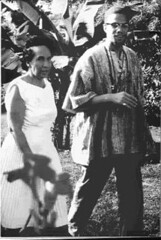
Personally, I am still traumatised by Malcolm's murder. For in May 1964 - a few months before he died - he had been my luncheon guest at my home in Accra, Ghana.

At the time, Ghana was at a most interesting point in its political development. Seven years had passed since the country achieved its independence, and President Kwame Nkrumah had definitely decided that his government was going to be a "socialist" one. But what brand of socialism were we to adopt? This was the subject of a heated debate inside and outside Nkrumah's Convention People's Party (CPP).

The CPP was a nationalist movement, which had wrested power from the British colonialists by mobilising almost the entire population against imperialist rule. So although Nkrumah and a few of the CPP leaders were socialists, or even Marxists, there were also many in the party who possessed what the Marxists would call a "bourgeois" outlook on life.

These people attempted to make socialism acceptable to Ghanaians by likening it to African communalism. The most banal articulation of this position was made by Krobo Edusei, Nkrumah's former minister of the interior. Krobo had been a strong propagandist for the CPP, especially in Asante, where a powerful movement opposed to Nkrumah and calling for the establishment of a federal government in Ghana, had nearly derailed the struggle for independence. When Nkrumah and his ideologues decided to introduce socialist propaganda into their speeches, Krobo Edusei also jumped on the bandwagon, for, he claimed, socialism only meant, in Twi (his language) "Dt bi ma minni hi (you eat some [of the money] and let me too eat some of it).

Well, the Marxists weren't buying that and Krobo Edusei and several of the leaders of the pre-independence CPP lost influence in the party.

But even those who were true socialists were divided by ideology. Some advocated scientific socialism and wanted Ghana to become a Soviet-style country. Others were wary of developments in Eastern Europe and wanted to follow the Chinese pattern of socialism.

Yet others were pure Marxists who regarded both Eastern Europe and China as mere followers of the state-capitalism route, and not the path to true socialism. Then there were those who wanted to create a brand new "African socialism". So Accra was seething with debate.

The Ghana Press Club was the centre of some of these debates and when Malcolm X arrived in Ghana and was brought there by an African-American writer and very good friend of mine, Julian Mayfield, with the intention of getting him to address us, there was immediate murmuring against the idea.

"The man is a racist. We don't want any racist ideas," someone said.

"Marx said religion is the opium of the masses," another interjected. "We have enough problems without having to add those of so-called 'Black Muslims' to our own."

At that time, there was quite a large colony of Africa-Americans in Ghana and some were sitting with us as this debate occurred. This embarrassed me, for Ghanaians are known for their hospitality and it seemed to me odd that we should seem to be refusing a hearing to one of our brothers from the US who was a guest in our country. So I intervened:

"Listen guys," I said, "we are supposed to be newsmen, are we not? Let me tell you, Malcolm X is big news indeed wherever he goes. Do you realise that Playboy magazine gave him about 20 pages worth of space when it interviewed him recently? Plaboy, which I am sure many of us regard as a frivolous magazine devoted to publishing centrefolds of beautiful nude girls, thought him worthy of that much space, how much more we serious journalists? Can't we at least give the man a hearing? Do we want to give the impression that Playboy has a better news sense than us?" That killed the murmuring stone dead and within a short time, Malcolm was talking to us.

The man was impressive, both as regards physical presence and oratorical prowess. Physically, he was tall and handsome and his skin colour showed that he had inherited the best of both the black and white worlds. No one could accuse him of mindless racism, for he indisputably belonged to both the black and white races - if they exist.

But striking though his physique was, it was when he opened his mouth that his personality shone through. He had a deep voice, and through preaching at mosques, he had acquired a modulation of tone that was absolutely musical. Unlike many African-Americans, he had managed to discard the twangy accent and swallowing of words that often makes it difficult for non-Americans to catch what they are saying. Malcolm's diction was quite clear, and this, added to the obvious sincerity with which he spoke (an almost beatific intensity settled on his face when he got going) gave his discourse a magnetic quality.

We sat mesmerised as he sketched out in detail for us, the struggles that African-Americans faced in the US, and warned us to be wary of the US government, which condoned the maltreatment of our brothers in the US, yet came down to us in Africa, grinning at us as if it was our greatest friend.

Malcolm developed his arguments for us in full in a speech he gave at the Great Hall in the University of Ghana. The place was packed and he skillfully elucidated every aspect of the life that blacks were constrained to live in the US and explained why, when we met them in Africa, they sometimes surprised us with their actions.

We should not blame African-Americans if they did not rise to our expectations because, he said: "We have no roots - we are the only people who do not have a language of our own. Our slave master took out our tongue when he took us away from you. So we speak with our slave masters voice. How can someone looking just like you but speaking with another person's tongue make sense to you?"

Malcolm continued: "The American Negro' is the only American who brings America first when he wants to name himself. We have Polish Americans, Italian Americans, Irish Americans. They all put their ancestry first before America. Only the American Negro' mentions America first. That shows you that he has no sense of identity. And you in Africa have to understand that and help him get his identity back.

"The strange thing is that although the 'American Negro' puts America first, America always puts him last. They send us to World War II, and we're the best soldiers they've got. They send us to Korea and we're the best soldiers they've got. They send us to Vietnam and we're still the best soldiers they've got. But when we come back home after fighting their wars, they tell us we're not fit to ride with them on the same side of the bus; we must sit at the back of the bus! We are fit to die for America but not fit to sit with America in the same bus."

And then he added: "Mind you, I have not come here to condemn America. But if what I say condemns America, then America stands condemned!"

There were wild cheers!

Malcolm also talked about the emphasis that the world press constantly placed on the Holocaust in Germany, in which six million Jews were killed. Why wasn't a similar fuss made about the 20m Africans who had died on the high seas after being seized as slaves in Africa and put in horrible ships bound for North America and the Caribbean

"I am sometimes asked why I don't talk about the Holocaust but only about Africans who were killed during the slave trade," Malcolm said. "If I don't talk about the Holocaust, it's because after I've wept for the 20m Africans, I have no tears left."

Malcolm stressed that it was important that Africans should get together with their "22m black brothers in America. We should not allow the white man to use us against each other. The white man would send African-Americans to Africa and give them assignments that would hurt Africa, but because they had a black skin, we wouldn't realise they were dangerous.

"Similarly, the white man could send Africans to America who would carry the message that Africans have no memory of their brothers who were carted off as slaves, and that the Africans and the American blacks therefore had nothing in common. But we're one people, divided by the effects of the white man's wickedness towards us - slavery and colonialism."

That was Malcolm's public message. When he was brought to my house by Julian Mayfield, he revealed to me his future plans.

He told me that his recent pilgrimage to Mecca had shown him that the people in the world who were against racial discrimination far outnumbered the racists. He had seen in Saudi Arabia and Egypt, people whose skin was every bit as white as that of white Americans, but these people were completely opposed to racial discrimination and would fight alongside the blacks against it.

So when he got back to America, he would start a new organisation to be called the Organisation of Afro-American Unity (OAAU), which would work closely with its near-namesake, the Organisation of African Unity (OAU). Just as the OAU contained both white and Arab Africans as well as black Africans, the OAAU would seek coalitions with all areas of the world where the people, irrespective of their colour, were opposed to racial discrimination and imperialist domination.

The OAAU would establish fraternal relations with the Arab League and with the Afro-Asian People's Solidarity Organisation. The African-Americans would keep these organisations informed of what the American government was doing, or not doing, about racial discrimination in the US, and in that way, the US government would not be able to lie to the rest of the world that it wanted friendly relations with all peoples, irrespective of colour- the message the US State Department sought to convey to the world.

In the immediate future, the OAAU would seek the assistance of its friends in the UN to lay a complaint against the US, for its violation of the human rights of African-Americans. I could see immediately that with his charismatic personality, Malcolm X could bring this off. Such a magical coalition of forces around the globe could embarrass the US tremendously, and I was convinced that that he would never be allowed by the US government to put his plan into action. So I said to him: "Brother Malcolm, they will kill you!" He didn't answer, but I was sure the thought had crossed his mind. His silence meant that he was prepared to pay the price for his beliefs.

Who killed Malcolm X in the Audubon Ballroom on 21 February 1965? There is no doubt that the evil deed was done by black men who had somehow managed to get to the hall carrying guns, past the bodyguards Malcolm had employed.

The speculation is that these bodyguards, whom Malcolm took with him when he broke away from Elijah Muhammad's Nation of Islam, were bribed by Elijah Muhammad's followers to assassinate Malcolm.

But evidence has emerged that the FBI had infiltrated Malcolms entourage, and may well have sown the seed amongst its black agents close to Malcolm, so that if Malcolm were to be assassinated, the Nation of Islam would be blamed.

Certainly the FBI, under J. Edgar Hoover, targeted the relatively more meek Martin Luther King and would have been totally hostile to the "fiery" Malcolm X.

The police were able to retrieve from the scene of the assassination a sawn-off, 12-gauge shotgun and over 30 cartridges from a .45 pistol, as well as a 9-millimeter automatic, possibly a Luger. The Luger was never found.

The initial report made by the New York City police, and local newspapers, stated that two men were arrested and taken to the police station. Later, that report disappeared and its existence was vehemently denied by the police, who stated that a Talmadge Hayer was the only person arrested after the shooting.

One Gene Roberts, an undercover agent of an organisation known as Boss, was known to have been present at the Audubohn but faded from the entire scenario. It was suspected that he was the second man detained and was quickly and quietly released to protect his cover as an undercover operative for Boss. Just who Gene Roberts was has never been found out. Boss was so secretive an agency that even the police were not aware of the organization and its agents.

Three men were eventually tried for the murder - Talmadge Hayer, Butler and Johnson. During the trial, Hayer confessed to having fired shots from the .45 into Malcolm's body, yet he testified that Butler and Johnson were not present at the assassination and were not involved in the shooting. All three men were, however, accused, tried and convicted.

It is still widely believed that Hayer, with four other men, (not including Butler and Johnson) actively took part in the assassination. It is still not known to this day who those four suspected assassins were and how they vanished from the scene.

Karl Evanzz, a staff writer for The Washington Post, researched more than 300,000 pages of declassified FBI and CIA documents for his book, The Judas Factor. He concluded that Malcolm X was set up for the assassination by a former friend of his, John Ali, who was an agent/informer for a secret US intelligence agency. Malcolm had previously commented that Ali had been responsible for his ouster from the Nation of Islam. Ali eventually rose to the position of national secretary of the Nation of Islam.

Declassified documents have now revealed that the US government and law enforcement agencies planted infiltrators in Malcolm's OAAU, the Nation of Islam and almost all of the other civil rights movement organisations. Some of these agent/informers were highly placed. Their assignments were not only to report on all of their activities, plans and members, but to create disruption, distrust and to frighten away supporters.

Apparently, at the time of the assassination, fear had been growing, amongst secret US government agencies (which tapped the telephone conversations of Dr Martin Luther King) that Malcolm X was gaining the support of Dr King to make the struggles of African-Americans an international issue by presenting a petition of human rights violations to a Conference of the International Court of Justice at The Hague. Malcolm's assassination took place just two weeks before this conference.

But suspicion also reigned that Louis Farrakhan, who had risen to be spokesman for Elijah Muhammad in the Nation of Islam, in place of Malcolm X, masterminded the assassination, having been accused of writing the following words in the Muslim newspaper, Muhammad Speaks: "Only those who wish to be led to hell, or to their doom, will follow Malcolm. The die is set, and Malcolm shall not escape, especially after such evil, foolish talk about his benefactor. Such a man is worthy of death."

Farrakhan has denied writing this, however, and he later declared his love for Malcolm X in the following words: "He was my mentor, my teacher, a marvelous example to me of what a man should be." Indeed, Farrakhan eventually made a public apology to Malcolms late wife, Betty Shabazz.

Whatever the truth about his murder, there is no doubt that in death, Malcolm X has achieved almost as much as if he were alive, or probably more than he could have achieved. From baseball caps and T-shirts marked "X", worn by the cool youngsters of America and the world, to films by Spike Lee and others, the Malcolm X brand is one that just keeps growing and growing, year after year. His explanation of why he called himself "X" - because he said his surname was an "unknown factor", taken not from his ancestors' names but from that of his ancestors' slave masters - still makes perfect sense to the youth of today.

Would Condoleezza Rice or Colin Powell have got their positions in the American government if Malcolm X had never lived? We cannot know. What is indisputable is that even though he lived in an age when there was neither CNN nor the internet, Malcolm X reached so many people with his simple message that we can only marvel at what he achieved. My own abiding tribute to him is that he was a wonderfully generous man. On his way from Africa back to the US, he stopped over in Switzerland in transit. Although he had very little time on his hands, he managed to write a postcard to me. In red ink, he had written:

Mr Cameron Duodu

Your Brothers in Harlem remember you.

Malcolm X

And in his autobiography, which was written with Alex Haley (the author of Roots), he took the trouble to mention my name as one of the journalists he met in Ghana.

I was impressed that my surname, which is often misspelt even by those who work regularly with me, was correctly spelt in his book: The Autobiography of Malcolm X (Penguin Books ISBN 0-14-002824-2). Full marks, Brother Malcolm; full marks.

Saturday, March 28, 2009

Former Guyana President Janet Jagan Dies at 88

Former Guyana President Janet Jagan dies at 88

GEORGETOWN (Reuters) – Former Guyana President Janet Jagan, a major political force in this small South American nation, died on Saturday at age 88, officials said.

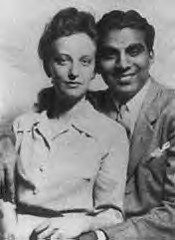
She became Guyana's first white and first female president in 1997 after the death of her husband, former President Cheddi Jagan.

Health Minister Leslie Ramsammy said she died of an abdominal aneurysm after being admitted to a hospital in the capital, Georgetown.

"Her life story and her work will inspire generations of Guyanese for a long time," Ramsammy said.

Born Janet Rosenberg in Chicago in 1920, she married Jagan and moved to Guyana in 1943. The former journalist was an advocate for the rights of women and workers throughout the Caribbean and in Guyana, an ex-British colony.

She was sworn in as prime minister in March 1997 after her husband died. Later that year she won the presidential election in a country long divided between Guyanese of ethnic African and Indian descent.

She resigned at age 79 in 1999 due to poor health.

"As a principal figure in Guyana's successful struggle for independence, she embodied the fight for the right of people to choose their own destiny," the U.S. Embassy in Guyana said in a statement.

Officials said she would be cremated on Tuesday at a site in eastern Guyana where her husband was cremated in March 1997.

(Reporting by Sharief Khan; Writing by Brian Ellsworth; Editing by Xavier Briand)

Brazilian President Lula da Silva Says Global Financial Crisis Caused by "White People With Blue Eyes"

Brazilian president: Global financial crisis caused by "white people with blue eyes"

http://www.chinaview.cn
2009-03-27 07:13:46

LONDON, Mar. 26 (Xinhua) --Brazil's President Luiz Inacio Lula da Silva said on Thursday that "the global financial crisis was caused by white people with blue eyes."

The Brazilian president made the comments while meeting Gordon Brown, who is visiting Brazil as part of his tour to try to forge a global consensus on how to save the worldwide economy.

The Brazilian president's comment was described by Downing Street as remarks "meant for domestic consumption."

Brown told reporters after the meeting that he will urge G20 leaders to back a multi-billion pound fund to reverse a slide in world trade.

"I'm going to ask the G20 summit next week to support a global expansion of trade finance of at least 100 billion U.S. dollars to help revive trade in all parts of the world," Brown said.

Along with the trade stimulus plan, the Prime Minister said he wanted to see global standards on salaries in the finance sector.

The British prime minister's visit to Brazil where he listened to the "white people with blue eyes" comments came just one day after Czech Prime Minister Mirek Topolanek criticism of President Barack Obama's fiscal stimulus package.

The Czech leader said on a European Parliament meeting on Wednesday that the financial bail-out is "a way to hell."

Topolanek said that the biggest success of last week's EU summit was its refusal to copy the U.S. example.

At the end of EU summit in Brussels last week, EU leaders insisted that the EU's existing stimulus measures -- put at about 400 billion euros -- had to be given time to kick in, while President Obama is facing a tough fight to win support from the Congress for his draft 3.6 trillion U.S. dollar budget.

Zimbabwe News Update: Women Call For Zero Tolerance to Violence

Women call for zero tolerance to violence

By Tendai Hildegarde Manzvanzvike
Courtesy of the Zimbabwe Herald

IT was not coincidental that for a whole week before the official launch of International Women’s Day on March 20 by the Ministry of Women Affairs, this writer continually played Pastor Shirley Caesar’s Grammy award hit song "I remember Mama".

She sings: "Kneeling by her bed side, I can still hear Mama say, ‘The people are depending on you, Shirley, don’t you let them down’."

The whole time this writer was at the City Sports Centre capturing the mood and feeling of this unique and historic event, Shirley Caesar’s song started to make sense.

This writer has been to a number of such events in the past two decades, but this one felt different. Let me however, express my disagreement with many sisters who said women from all walks of life and different political persuasions were coming together to celebrate IWD for the first time.

We have to be very careful about these kinds of perceptions lest we are labelled revisionists of history. Women have a responsibility socialising children, including passing on accurate information.

Women representatives of political parties, women parliamentarians, women in business, agriculture, mining, the civil service, the diplomatic corps, parastatals, local authorities, uniformed forces, health section, civil society, church organisations including the Islamic group Fatima Zahra were there.

Ordinary women also came in their hundreds as well as young girls and boys.

Men were also there in various capacities, with Padare sharing the podium with the women.

Cde Angeline Masuku, Honourable Sekai Holland, Mrs Betty Mutero, Mrs Sarah Kachingwe, Mrs Georgina Gombera, two of the country’s top academics in Dr Hope Sadza (Vice Chancellor of the Women’s University in Africa) and Dr Primrose Kurasha (Vice Chancellor of the Zimbabwe Open University) were all there.

We learnt that Vice President Joice Mujuru and Deputy Prime Minister Thokozani Khupe are products of the two universities, with the Vice President already reading for her doctoral degree.

As DPM Khupe said, it was a joyous moment for the women of Zimbabwe.

She reminded everybody that Zimbabwean women constitute 52 percent of the population and contribute 80 percent to GDP.

They are heads of households and caregivers, and they have demonstrated that it is possible to work together. She also asked a poignant question: notwithstanding the statistics, who are we as women?

Shirley Caesar sings that "some Christians play church". However, the women who gathered at the Sports Centre were not playing womanhood, girlhood, motherhood and sisterhood.

They were not playing unity, peace building, national healing, reconciliation, sharing and caring. Neither were they playing games of inclusivity.

At the political leadership level, they demonstrated that they were not being double minded nor confused about women’s roles in shaping the destiny of this country.

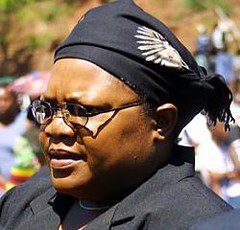
The symbolic gestures displayed by VP Mujuru, DPM Khupe and Dr Jackie Mutambara, wife of DPM Arthur Mutambara’s, were indications that as women we should share and care not only about violence perpetrated against us, but in all spheres of life, for we share a common identity — womanhood.

In issues of such magnitude and gravity, you display a spirit of oneness, seriousness, sobriety, commitment and confidence.

They showed that they were ready to take Zimbabwe to higher and better levels, working with men.

Their calls for zero tolerance for violence not only against women and girls, but across the length and breadth of Zimbabwe starting at household levels were not mere words.

They meant it.

Their coming together at such a time like this gave meaning and value to calls for unity, reconciliation and national healing.

Sekai Holland underscored the importance of national healing and said that President Mugabe had made it clear that national healing should be a priority.

Women were also clear that they want Zimbabwe to succeed and prosper through unity and harmony.

They said that in order for Zimbabwe to be successful, peace must begin with the individual and in the home.

Their messages were also loud and clear: No to violence in the home, no to violence at national level, violence retards development, it dehumanises both the victim and the perpetrator, and that collectively, the nation can end violence.

Padare, a male pressure group called for women’s empowerment arguing that they have a numerical advantage over their male counterparts, and they emphasised that when women are empowered, then the nation is empowered.

To the cynics, last Friday’s solidarity march and gathering should not just be seen as a political event where some dismiss them as "kubatana kwemaZambia", for IWD is not a political event.

Not every woman who took part is affiliated to any political party. Politics was a means to an end, used to achieve the desired result.

Fortunately also, this is not the thinking in Government.

To demonstrate how seriously Government views women’s issues, the Short Term Economic Recovery Programme launched on March 19 by President Mugabe has a section focusing on de-marginalisation of women through specific and concrete gender mainstreaming policies and programmes in every sector and facet of Zimbabwean life.

In STERP, programmes that target women and vulnerable groups would receive resource mobilisation priorities, given the special and decisive role of women in community development.

However, as this writer listened to the speeches and comments, she realised that people spoke about different forms of violence, with some putting emphasis on political violence while others targeted violence against women and girls across board.

Maybe it was correct to have both perspectives, although there is need to have a wider scope of what violence means.

If we confine it to political violence then it is a job half done, for there are many forms of violence perpetrated against women and vulnerable members of society.

There was also one constituency that was conspicuous by its absence — women and girls children living with disabilities. People living with HIV and Aids are now well organised, but their constituency was missing as group.

Also, a people without a history are gullible to various belief systems, some of which are harmful, and incompatible with our social norms and values.

Women should use occasions such as IWD to network even with women at grassroots levels. They should be given the opportunity to express their sentiments, in their "grassroots" way. It is not an "us" and "them" event.

Agreed, we need sponsorship, but let it not be sponsorship that kills the essence and value of Zimbabwean womanhood.

Mature, experienced and knowledgeable women should also take this opportunity to engage with the young women and pass on precious titbits.

In fact any occasion where women gather should be used to bridge the gap between classes.

When Sekai Holland made reference to some of the mothers of the women’s movement, instead of hearing thunderous applause from the bays, there was silence.

The same, when Ms Sarah Kachingwe was introduced as the first black woman to obtain a degree from the College of Rhodesia and Nyasaland.

Some women also thought that Dr Olivia Muchena was revealing "embarrassing" information when she introduced Vice President Joice Mujuru.

It was easy to note that many women do not actually know her track record.

Why?

Because as women we do not take time to know and appreciate each other, and neither do we know our past with the exception of narratives written and recorded by Westerners.

These are challenges for women are in the forefront of women’s issues about their methods of sharing and caring about the rest of women’s issues.

The documentation of our narratives is an area that should receive immediate attention from the Ministry of Women Affairs, women academics and other stakeholders. Let us use whatever resources we have to do this, and look for funding to properly record them later.

I also pursue an issue very close to my heart, that of Mbuya Nehanda.

When we are at such gatherings, not paying tribute to this gallant daughter of the soil is unfortunate.

Nehanda is not a Zanu-PF figurehead, and neither does she just belong in the realm of spirit mediums and religion. Her name should not also be confined to street names and buildings.

As much as she was relevant to the Zimbabwe of the 19th Century, she remains relevant to the Zimbabwe of the 21st century, especially to today and tomorrow’s woman.

Women are fighting for spaces in a "male dominated" Zimbabwe, but Nehanda was brave enough to fight for spaces not only for women, but also for every Zimbabwean.

She is our pioneer.

Thus it is our responsibility to ensure that the goals and objectives that resulted in her execution are fulfilled and passed on from generation to generation.

For Nehanda’s execution was one of the first forms of political violence perpetrated against women to be documented.

Historical women in the West are still being highly recognised and they have been elevated to international figure heads e.g. Florence Nightingale, "The Lady with the Lamp".

Nurses know that.

Is it also an oversight that rural women and their heroic exploits against issues like violence do not feature in our discourses, and instead it is the urban, elite women who have to educate them about these?

How many rural and/or urban poor women sit on boards of most civil society organisations? Do they speak for themselves or the urban, elite and intellectual women speak on their behalf? It is high time that realistic synergies are made amongst women themselves despite social class.

Notwithstanding the violence women encounter, women should now find ways of departing from the victim syndrome, and concentrate their efforts on their victories.

The theme song at the celebration, "Tozeza baba," does not portray a victor mentality since it seeks to draw a wedge between, men, women and children; husbands and wives; fathers and children.

As crucibles of life, women did a remarkable job, laying the foundations of nationhood whose pillars are sharing and caring irrespective of gender, colour, creed, religion and political affiliation.

Therefore, our children should remember us in a happy way.

And, future generations should fuse this day with other landmark events in our national history and remember them in a happy way.

They should remember the day when women came together to make a commitment to peace building, and to shun all forms of violence in society.

Cde Joice Mujuru’s summed it up very well when she used the Rugare (covo or collard greens) vegetable and cabbage as symbols to signify continuity and stagnation, life and death, and she emphasised that peace should be shared across every facet of our lives.


STERP key to stability

By Tichaona Zindoga

ZIMBABWE’S Finance Minister Tendai Biti on Wednesday told visiting Norwegian Environment and International Development Minister Erik Solheim that the international community should give Zimbabwe some breathing space so that Government could deal with pressing issues.

He challenged the West to remove the benchmarks for aid extended to Zimbabwe as they stood in the way of Zimbabwe’s development.

Zimbabwe, which has been ravaged by a serious economic decline attributed to both internal and extraneous factors, requires, according to Hon Biti, up to US$8 billion for reconstruction and developmental purposes.

But European Union countries and America, which had been presumed ready to assist Zimbabwe in the wake of a new government in Zimbabwe have been literally tying strings to their re-engagement with Zimbabwe after they severed ties with the country early this decade.

Norway, which had appeared to follow suit in isolating Zimbabwe, has however shown willingness to close ranks with Zimbabwe, becoming the second European country after Denmark recently announced its willingness to engage Zimbabwe, to show an urge to work with this nation.

In effect, Hon Biti’s challenge to Norway was an attempt to disabuse the West of the Robert Cooper idea that discourages the developed world from engaging developing world countries on an equal, sensitive and co-operative basis, that has been applied, but not exclusively to Zimbabwe by the West.

In 2002 Cooper, chief policy advisor of then British prime minister Tony Blair wrote an essay that drew intense criticism for his perception of developing world countries in the advent of "new liberal imperialism".

As a senior British diplomat, Cooper also helped to shape Blair’s calls for a new internationalism and a new doctrine of humanitarian intervention which would place limits on state sovereignty.

In an essay, he challenged the "post-modern" states to get used to the idea of double standards.

"Among ourselves, we operate on the basis of laws and open co-operative security," he wrote.

"But when dealing with more old-fashioned kinds of states outside the post-modern continent of Europe, we need to revert to the rougher methods of an earlier era — force, pre-emptive attack, deception, whatever is necessary to deal with those who still live in the 19th century world of every state for itself.

"Among ourselves, we keep the law but when we are operating in the jungle, we must also use the laws of the jungle."

Britain has since 2000 tried to internationalise its differences with Zimbabwe over the latter’s resolve to repossess land that British colonists stole from the indigenous peoples.

This has led to the European Union bloc, the US and Canada — which Cooper describes as post-modern states — to try to isolate Zimbabwe.

Japan, named as another post-modern state, also bought into Britain’s agenda and issued travel warnings against Zimbabwe, which prejudiced the country of millions of dollars in tourist revenue.

Thankfully, these have just recently been lifted.

The isolation of Zimbabwe, which has been coupled with economic sanctions against the country, has led to an unprecedented strain on the ordinary man, woman and child.

Despite growing pressure from Sadc right up to United Nations Security Council permanent members China and Russia, who have called for an end to Zimbabwe’s isolation, no significant change has been registered in this regard.

Although pledging to give humanitarian aid to Zimbabwe, the European Union and the United States have not ventured to help Zimbabwe with developmental aid, which move has been perceived to have set the wrong vibes for the Bretton Woods institutions’ hoped-for re-engagement with Zimbabwe.

The IMF and the World Bank froze budgetary support and credit lines to Zimbabwe a few years ago and there have been recent efforts, epitomised in the recent visit by a delegation from the organisation, to weigh options for resumption of relations with Zimbabwe.

But the institutions’ insistence on conditions for re-admission of Zimbabwe does nothing to dispel fears that they are also Cooper-bound on Zimbabwe.

In the essay Cooper opines that post-modern imperialism takes two forms.

"First, there is the voluntary imperialism of the global economy. This is usually operated by an international consortium through international financial institutions such as the IMF and the World Bank — it is characteristic of the new imperialism that it is multilateral.

"These institutions provide help to states wishing to find their way back into the global economy and into the virtuous circle of investment and prosperity.

"In return they make demands which, they hope, address the political and economic failures that have contributed to the original need for assistance. Aid theology today increasingly emphasises governance.

"If states wish to benefit, they must open themselves up to the interference of international organisations and foreign states."

And it would seem the minister has finally acquainted himself with this doctrine and is prepared to challenge it through calling for the removal of these "walls" of imperialistic conditions.

But it is not just this area in this regard that he has acquainted himself with.

When he recently reviewed the expenditure proposals of the National Budget announced by then Acting Finance Minister Patrick Chinamasa, and tabled the new economic blueprint Short-Term Economic Recovery Plan, he finally put to rest largely unrealistic expectations that new players in Government would conjure up an inexhaustible stash of funds.

This was mainly due to the presumption that "the international community" was waiting by the door with lofty alms to help Zimbabwe rebuild after a decade of economic decline.

The expectations appeared confirmed when, shortly after taking office, Prime Minister Morgan Tsvangirai announced to the world the Chinamasa-proposed measure to award civil servants US$100 allowances.

But Biti chopped a massive US$900 million of the proposed $1,7 billion expenditure and immediately announced the launch of the Short-Term Economic Recovery Plan the Government would pursue until the end of the year.

The economy, he said, was going to operate on a "We eat what we gather basis" with Government expenditure being determined by its revenue receipts.

For the month of February and part of March, he noted, such receipts were only US$25 million and US$30 million respectively, against a projected US$140 million and this was not even enough to review upwards the "modest" US$100 allowances for the civil service.

On the other hand, fiscal demands were "high and limitless" and this was not helped by the existence, he said, of perennial vehicles of fiscal drainage such as Air Zimbabwe, which required vast amounts from the fiscus.

And because of the economic downturn that has resulted in the world nose-diving into a recession unmatched in the last seven decades, aid has not been coming Zimbabwe’s way.

In apparent reference to the Western donor community that had been assumed would take the leading role in mobilising funds for Zimbabwe, Hon Biti said that "where financial linkages to the affected countries are stronger" the impacts of the downturn "have been more pronounced".

But there has been a glimmer of light, though, with the Southern African Development Community, led by South Africa, working on a rescue package for Zimbabwe.

South Africa has pledged a US$2 billion package to Zimbabwe and has taken the lead in encouraging the West to re-engage Zimbabwe and extend not only humanitarian but also developmental support to Zimbabwe.

In the review, Biti hinted that the Government would dispose of its "family silverware", with reference to selling off some of its parastatals such as NetOne, a mobile telephone provider.

And this was just about the confirmation that with the inclusive Government Zimbabwe might be even moving into a macrobiotic lifestyle, after all.

Macrobiotics, found in early classical writings of the likes of Herodotus, Aristotle, Galen and Hippocrates, is more than an eating regimen but a way of life characterised by the desire for longevity and nourishment.

It is about a simple diet of food that is found and processed locally.

It seeks to avoid the consumption of too much and over-processed foods.

It is a philosophy that emphasises on watching what one eats as this has a bearing on health.

And with no indications of a deluge of Western money and aid, Hon Biti seems to have set the country on a path of macrobiotics.

STERP, which he calls a capacity-based rehabilitation programme, meaning basically operating on what the Government can fund and achieve, is set to lay a foundation for future Government programmes to stabilise the economy.


IMF hails Zim fiscal reforms

By Fanuel Kangondo and Michael Padera

THE International Monetary Fund has commended Government for taking positive steps towards restoration of relations with the Bretton Woods institution while Denmark and the World Bank have given Harare a total of US$18,7 million to refurbish water and sewage treatment plants with the African Development Bank pledging 2 million euros for the same purpose.

In its report released this week after an Article IV Consultative Mission from March 9-24, the IMF mission led by Mr Vitaliy Karamenko noted that Zimbabwe had taken steps towards re-integration in the international financial system and potentially new loans for reconstruction.

The mission’s report to assess economic conditions and the country’s policy response will be tabled for an IMF board discussion on Zimbabwe in May amid growing optimism that this could pave the way for restoration of the country’s voting rights.

This would enable Zimbabwe to use IMF resources and ultimately open doors for the resumption of much-needed standby arrangements for balance of payments support.

The Article IV mission report paid tribute to the inclusive Government’s commitment to fiscal discipline through the adoption of the multiple currency system which would eliminate the monetisation of the budget deficit.

"The mission welcomes the authorities’ commitment to eliminate quasi-fiscal activities and implement cash budgeting (matching monthly expenditure to monthly revenue) in 2009. To ensure an improvement in the delivery of public services, the Government would need to mobilise significant donor financial support and contain the wage bill.

"The credibility of the Government’s commitment to fiscal discipline is reinforced by the adoption of the multiple currency system because under such a system it is not possible to monetise the budget deficit.

"To facilitate transactions and improve credit availability, there is an urgent need to attune the payments system and banking supervision to the needs of the multiple currency system.

"Accountability and transparency of the Reserve Bank of Zimbabwe should be strengthened. Moreover, the RBZ should refrain from quasi-fiscal operations and focus on core central bank activities."

The report further stated that some structural changes that had earlier been recommended by the IMF had already been implemented and these included price liberalisation, removal of surrender requirements and most exchange restrictions on current account transactions.

The report also hailed the imposition of hard budget constraints on parastatal enterprises and the elimination of the Grain Marketing Board’s monopoly.

"Going forward, strengthening the investment climate, ensuring protection of property rights, and maintaining wages at competitive levels will be essential for increasing domestic and foreign investment."

The report also acknowledged the efforts of the recently launched Short-Term Emergency Recovery Programme which focuses on macroeconomic policy and supply-side measures aimed at achieving low inflation, arresting economic decline and improving social conditions.

The positive report comes in the wake of reports from some quarters suggesting that Zimbabwe would never be able to restore relations with the IMF unless it cleared outstanding arrears with the Bretton Woods institution.

It is anticipated that the Sadc summit set for Swaziland on Monday, at which the regional grouping will consider a US$2 billion rescue package for Zimbawbe, will set the tone for future engagement with Harare.

This will most probably help the country settle its arrears with the IMF and outstanding obligations with other multilateral institutions.

Meanwhile, Denmark has committed US$8,7 million to Harare City Council for the refurbishment of the city’s water and sewage treatment

Mr Muchadeyi Masunda has confirmed.

The African Development Bank has also pledged 2 million euros while the World Bank last week gave US$10 million to the city for the same purpose.

Harare and other urban local authorities have traditionally relied on the donor community to keep the water and sewer facilities working.

Mr Masunda said Danish Minister of Co-operation Development Ms Ulla Tornaes, who was in Zimbabwe recently, announced during meetings with city officials that her government would immediately give US$4,7 million to revamp the Morton Jaffray and Prince Edward water treatment works as well as the Firle and Crowborough sewage treatment plants.

"We took her to Budiriro where she pledged US$4,7 million. She said she would commit another US$4 million when she returned to her country," he said.

Mr Masunda said the city had impressed on all the donors the need to fund the rehabilitation of the city’s water and sewer infrastructure.

Mr Masunda said the Firle and Crowborough sewage treatment works had been down for the past two and half years which meant that raw sewage has been finding its way into the city’s water reservoirs hence the huge water treatment bill.

The funds would be channelled to the city through Unicef.

Ms Tornaes was in Zimbabwe to assess the situation following the formation of the inclusive Government, making Denmark the first EU country to engage in dialogue with Zimbabwe.
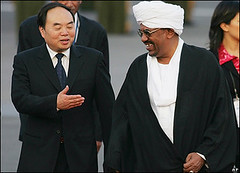
China Urges UN-AU Joint Action in Sudan

China urges UN-AU joint action in Sudan

China said on Friday that the right solution for the Darfur problem would be to push forward a joint operation between the United Nations and the African Union, but not arrest the Sudanese president.

"Currently, the international community should push forward the joint operation and political process to ensure humanitarian intervention goes on wheel in the Darfur region," Vice President Xi Jinping said, at a meeting with Awad Al-Jaz, special envoy of the Sudanese President Omar al-Bashir, in Beijing.

The joint operation in Darfur, coded UNAMID, was authorized by UN Security Council resolution 1769 on July 31 2007.

The mobilization and deployment of the UNAMID is scheduled to run till July 31 this year.

Xi urged the rest of the world to "listen carefully" to the AU and the Arabic countries, so as to not "harm" peace and stability in Sudan.

In response Al-Jaz said his home country would be cooperative in the deployment of UNAMID's peacekeepers, but won't accept the International Criminal Court's (ICC) arrest warrant against President al-Bashir.

"Sudan will continue cooperation with the UN and the AU, and take concrete measures to improve the humanitarian situation in the Darfur region," Al-Jaz said, wishing an early solution to the problem.

Al-Jaz's visit is part of the efforts made by Khartoum to defy the ICC's arrest warrant earlier this month.

Sudanese President Omar al-Bashir was charged with war crimes and crimes against humanity in the country's restive western region of Darfur between 2003 and 2008.

(China Daily 03/28/2009 page2)

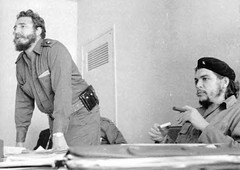
Fidel Castro Bestowed Top South African Order

Fidel Castro Bestowed Top South African Order

HAVANA, Cuba, March 27 (acn) Fidel Castro, historic leader of the Cuban Revolution was awarded on Friday the Order of the Companions of O.R. Tambo, South Africa’s highest distinction.

South African President Kgalema Motlante handed over the order, materialized in a gold medal, to Cuban Ambassador in Pretoria, Angel Fernandez, Itar-tass news agency reported.

In announcing its initiative some days ago, the government of South Africa explained that the order was given to Fidel Castro in recognition of his friendship towards South Africa and for his key support of the struggle against the former Apartheid system, racism and colonialism in the African nation.

The Companions of O.R. Tambo order was established in 2002 by the South African government, headed by the African National Congress (ANC), to honor O.R. Tambo, former exiled leader of that organization during the apartheid era.

Other personalities who have been awarded the top South African order include Martin Luther King Jr, Salvador Allende and Mohandas Mahatma Gandhi, all posthumously.

Friday, March 27, 2009

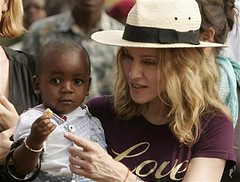
Madonna Applies to Adopt Girl in Malawi

Madonna applies to adopt girl in Malawi

Fri Mar 27, 2009 3:11pm EDT
By Mabvuto Banda

LILONGWE (Reuters) - Madonna's bid to adopt a second Malawian child, a girl called Mercy James, will be examined by a court in the southern African country next week, officials said Friday.

The 4-year-old would be a sister for Madonna's three children including David, whose adoption by the U.S. pop star aroused controversy, and comes from the same orphanage.

"Her name is Mercy James from Mchinji Home of Hope orphanage. She has no father and mother, they both died... We finished the assessment yesterday in readiness for the courts next week," an official at the ministry of Gender and Child Development told Reuters.

Court clerks confirmed the name of the child and said that Madonna or her associates were expected to appear in court next Monday for the adoption proceedings. She is expected to arrive in Malawi over the weekend, officials said.

Some Malawians opposed David's adoption, accusing the government of skirting laws that ban non-residents from adopting children in Malawi, which has been badly hit by an AIDS epidemic.

Mavuto Bamusi, national coordinator for the 60-member Human Rights Consultative Committee, told Reuters that this adoption would also violate the country's laws.

"As far as we are concerned, nothing has changed in terms of adoption laws in the country," he said.

The local Nation newspaper this month quoted Madonna, 50, as saying that Malawian friends had told her David needed a brother or sister and that she would consider adopting another child, but only with the support of the Malawian people.

David's life with the global pop star is worlds away from his village of Lipunga, where his relatives eat maize meal as a staple food and meals are cooked on open fires. His father, Yohane Banda, told Reuters that he may see his son next week.

Madonna, who was divorced last year from British film director Guy Ritchie, is one of the most successful singers of all time, with album sales of more than 200 million.

(Editing by Gugulakhe Lourie)

Obama Unveils New Afghanistan Strategy

Friday, March 27, 2009
22:19 Mecca time, 19:19 GMT

Obama unveils new Afghan strategy

Obama ordered a review of Afghan and Taliban policy after taking office

Barack Obama has unveiled his administration's new strategy in Afghanistan, including the deployment of an additional 4,000 US troops to train Afghan forces, following a review of policy on Afghanistan and Pakistan.

The new strategy includes proposals to counter a persistent Taliban and al-Qaeda campaign that spans the two countries' shared border, and additional development aid for both nations.

Obama, who ordered the review of Afghanistan and Pakistan shortly after taking office in January, said a new strategy was essential because intelligence indicated al-Qaeda was "actively planning attacks" on the US from Pakistan.

"This is not simply an American problem, it's an international security problem of the highest order," he said on Friday.

"If the Afghanistan government falls to the Taliban or allows al-Qaeda to go unchallenged, that country will again be a base for terrorists.''

But Obama also hinted that the US may be willing to talk to some members of the Taliban, saying there would be "no peace without reconciliation among former enemies".

"In Iraq, we had success in reaching out to former adversaries to isolate and target al-Qaeda," he said.

"We must pursue a similar process in Afghanistan, while understanding that it is a very different country."

However the Taliban told told Al Jazeera in a statement on Friday: "Obama is repeating the mistakes of [former Russian president Mikhail] Gorbachev.

"If more troops are going to win the war [in Afghanistan], the Russians would already have done so."

Development

Obama proposed an additional $1.5n in funding for infrastructure development in Pakistan - to be voted on in the US congress - in addition to setting a goal of building an Afghan army of 134,000 and a police force of 82,000 by 2011.

There would also be a "substantial increase" in the number of civilians deployed on the ground in Afghanistan for development Obama said, and the US government would also seek "a new compact" with the Afghan government to halt corruption.

Al Jazeera's Rob Reynolds in Washington says the new strategy combines military action with civilian development, a more comprehensive approach than simply putting "more boots on the ground".

On Friday the leaders of both Afghanistan and Pakistan praised the strategy shift, with Hamid Karzai, the Afghan president, saying in a statement the move "will bring Afghanistan and the international community closer to success".

Asif Ali Zardari, the Pakistani president, also praised efforts to increase civilian aid to his country, state news reported.

However Al Jazeera's Kamal Hyder in Islamabad says the speech will not go down well amongst others in Pakistan, where there is considerable anger over drone attacks in the nation's troubled North-West Frontier province.

"Any attempts by the US to try to enlarge the 'theatre of war' into Pakistan is not likely to recived well by the people and the government," he said.

US officials have said success in Afghanistan is impossible without tackling Taliban enclaves in Pakistan, whose government is beset by political turmoil.

Obama made the issue of Afghanistan a cornerstone of his foreign policy, appointing Richard Holbrooke, a diplomatic veteran, as special representative to Afghanistan and Pakistan in addition to ordering the strategic review.

The US currently has about 38,000 troops in Afghanistan, in addition to the 17,000 US forces Obama ordered to be deployed in February and around 42,000 Nato troops.

Source: Al Jazeera and agencies

Japan to 'Intercept' North Korea Rocket

Friday, March 27, 2009
12:41 Mecca time, 09:41 GMT

Japan to 'intercept' N Korea rocket

Japan is expected to deploy two warships armed with missile interceptors

The Japanese government has approved the deployment and use of missile interceptors as it moves to counter any threat from North Korea's planned rocket launch.

The announcement comes amid rising tensions in the region, as intelligence agencies say North Korea is pressing ahead with the planned launch, expected between April 4 and 8.

Japan's defence minister said on Friday that the government approval clears the way for use of interceptors if the rocket is considered a threat to Japanese territory.

"I issued the necessary order after the security council this morning decided to issue a destruction order in advance," Yasukazu Hamada said after a meeting with Taro Aso, the prime minister, and other cabinet ministers.

"We will do our best to handle any flying object from North Korea in order to assure the Japanese people's safety and security."

Against this backdrop of rising tensions, Russia urged North Korea to refrain from its planned rocket launch.

"North Korea would be better off refraining from it," Alexei Borodavkin, Russia's deputy foreign minister, said in Moscow, according to Russian news agencies.

Planned deployment

As part of its preparations, Japan is expected to deploy two warships to the Sea of Japan (East Sea), as well as land-based interceptors in its the northern Akita and Iwate prefectures.

Officials in Pyongyang have warned the rocket's first booster would land in the Sea of Japan, while the second stage would drop into the Pacific Ocean between Japan and Hawaii.

While the North Korean government claims the rocket launch is aimed at space development, there are international concerns that it is a cover for a long-range missile test.

Japan has developed a missile defence system with the US in recent years, and has previously warned it will attempt to shoot down any missile or debris that threatens to hit its territory.

Pyongyang said it would regard any attempt to shoot down or otherwise interfere with its rocket as an act of war.

US-South Korean talks

With tensions rising, South Korea's chief nuclear negotiator travelled to Washington on Friday to discuss strategies aimed at countering the North's planned rocket launch.

"As North Korea's rocket launch preparations gather pace, I will have consultations on the issue and the six-way talks [on the North's nuclear programme]," Wi Sung-lac said before his departure.

He is expected to meet Stephen Bosworth, the US special representative for North Korea, and Sung Kim, his assistant.

Wi said that he will also meet Akitaka Saiki, his Japanese counterpart, who will also be in Washington.

North Korea has threatened to pull out of the six-nation talks on its nuclear programme if any moves are made to punish it for the rocket launch.

Dennis Blair, the US national intelligence director, said North Korea was trying to disguise the continued development of its long-range missile programme by using a Taeopodong-2 missile to place a small satellite into orbit.

"I think North Korea is attempting to demonstrate an ICBM (intercontinental ballistic missile) capability through a space launch,'' he told reporters in Washington on Thursday.

"That's what they are up to - trying to use the rationale of a legitimate space launch for a missile which is, in its foundation, a military missile - the Taepodong."

'Opprobrium'

Blair also said North Korea risks "international opprobrium and hopefully worse if they successfully launch or launch it at all".

Speaking during a visit to Mexico on Thursday, Hillary Clinton, the US secretary of state warned that Washington would take the issue to the United Nations if the launch goes ahead.

She also said the plans are in violation of a Security Council resolution passed in 2006.

The resolution prohibits North Korea from conducting long-range missile tests, or using a rocket to send a satellite into space.

Source: Agencies

African American Historian John Hope Franklin Joins Ancestors at 94

Wednesday, March 25, 2009

John Hope Franklin, Scholar Who Transformed African American History, Dies at Age 94

DURHAM, N.C. – John Hope Franklin, the scholar who helped create the field of African-American history and dominated it for nearly six decades, has died at the age of 94.

Franklin died of congestive heart failure at Duke Hospital this morning. He is survived by his son, John Whittington Franklin, daughter-in-law Karen Roberts Franklin, sister-in-law Bertha W. Gibbs, cousin Grant Franklin Sr., a host of nieces, nephews, great-nieces and great-nephews, other family members, many generations of students and friends. There will be a celebration of his life and of his late wife Aurelia Franklin at 11 a.m. June 11 in Duke Chapel in honor of their 69th wedding anniversary.

“John Hope Franklin lived for nearly a century and helped define that century,” said Duke President Richard H. Brodhead. “A towering historian, he led the recognition that African-American history and American history are one. With his grasp of the past, he spent a lifetime building a future of inclusiveness, fairness and equality. Duke has lost a great citizen and a great friend.”

Franklin, James B. Duke Professor Emeritus of History, was a scholar who brought intellectual rigor as well an engaged passion to his work. He wrote about history – one of his books is considered a core text on the African-American experience, more than 60 years after its publication – and he lived it. Franklin worked on the Brown v. Board of Education (1954) case, joined protestors in a 1965 march led by Martin Luther King, Jr. in Montgomery, Ala. and headed President Clinton’s 1997 national advisory board on race.

He is perhaps best known to the public for his work on President Clinton’s 1997 task force on race. But his reputation as a scholar was made in 1947 with the publication of his book, “From Slavery to Freedom: A History of African-Americans,” which is still considered the definitive account of the black experience in America.

“My challenge was to weave into the fabric of American history enough of the presence of blacks so that the story of the United States could be told adequately and fairly,” he said when the 50th anniversary of the book was celebrated in 1997. “That was terribly important.”

In January 2005, he spoke at Duke at the celebration of his 90th birthday, displaying the fire that motivated him throughout his long life. While others at the event talked about the past and reminisced about his accomplishments, Franklin focused squarely on the future. He described the event, held the same day as President George W. Bush’s second inauguration, as a “counter-inaugural,” and gave a talk in the form of a letter to a fictional white man he called “Jonathan Doe.”

He recounted some of the historical inequalities in the United States and recalled some of his own experiences with racism. He said, for example, that the evening before he received the Presidential Medal of Freedom from President Bill Clinton, a woman at his club in Washington, D.C., asked him to get her coat. Around the same time, a man at a hotel handed Franklin his car keys and told him to get his car.

“I patiently explained to him that I was a guest in the hotel, as I presumed he was, and I had no idea where his automobile was. And, in any case, I was retired,” Franklin said. Both of these incidents occurred when he was in his 80s.

“What these experiences will do to me in the long run, I do not know. My cardiologist says that they are not good,” he said, continuing with the letter.

“I very much doubt, Mr. Doe, that you have had such experiences. Your race and your consequent position of power and privilege have doubtless immunized you from the experiences that a black person confronts daily, regardless of his age, education, position or station in life.”

At the time From Slavery to Freedom was published, there were few scholars working in African-American history and the books that had been published were not highly regarded by academics. To write it, he first had to give himself a course in African-American history, then spend months struggling to complete the research in segregated libraries and archives – including Duke’s, where he could not use the bathroom.

Franklin accumulated many honors during his long career, including the Presidential Medal of Freedom, the nation’s highest civilian honor. He shared the John W. Kluge Award for lifetime achievement in the humanities and a similar honor from the American Academy of Arts and Sciences and the American Philosophical Society, the nation’s two oldest learned societies.

But he also was revered as a “moral leader” of the historical profession for his engagement in the pressing issues of the day, his unflagging advocacy of civil rights, and his gracious and courtly demeanor.

Virtually all of the many articles written about “John Hope,” as he was called by friends and colleagues, include the words “distinguished” or “elegant.” His devotion to his wife, Aurelia, who died in 1999, was legendary, as was his love of orchids, which he raised in his Durham home. He even had one named after him: Phalaenopsis John Hope Franklin.

Franklin recounted the events of his long life in his autobiography “Mirror to America: The Autobiography of John Hope Franklin,” which was published in 2005. To read and hear an interview with Franklin about his book, go to http://www.dukenews.duke.edu/2005/11/jhf_qa.html .

The grandson of a slave, Franklin’s work was informed by his first-hand experience with injustices of racism -- not just in Rentiesville, Okla., the small black community where he was born on Jan. 2, 1915, but throughout his life.

Named after John Hope, the former president of Atlanta University, Franklin was the son of Buck Colbert Franklin, one of the first black lawyers in the Oklahoma Indian territory, and Mollie Parker Franklin, a schoolteacher and community leader.

The realities of racism hit Franklin at an early age. He has said he vividly remembers the humiliating experience of being put off the train with his mother because she refused to move to a segregated compartment for a six-mile trip to the next town. He was 6. Later, although an academic star at Booker T. Washington High School and valedictorian of his class, the state would not allow him to study at the state university because he was black.

So instead of the University of Oklahoma, in 1931 Franklin enrolled at Fisk University, a historically black college in Nashville, Tenn., intending to study law.

However, a white history professor, Theodore Currier, caused him to change his mind and he received his bachelor’s degree in history in 1935. Currier became a close friend and mentor and when Franklin’s money ran out, Currier loaned the young student $500 to attend graduate school at Harvard University, where he received his master’s in 1936 and doctorate five years later.

He began his career as an instructor at Fisk in 1936 and taught at St. Augustine’s and North Carolina College for Negroes (now North Carolina Central University), both historically black colleges.

In 1945, Alfred A. Knopf approached him about writing a book on African-American history – originally titled From Slavery to Freedom: A History of American Negroes -- and he spent 13 months writing it.

Then in 1947, he took a post as professor at Howard University, where, in the early 1950s, he traveled from Washington to Thurgood Marshall’s law office to help prepare the brief that led to the historic Brown v. Board of Education decision.

In 1956 he became chairman of the all-white history department at Brooklyn College. Despite his position, he had to visit 35 real estate agents before he was able to buy a house for his young family and no New York bank would loan him the money.

Later, while at the University of Chicago, he accompanied the Rev. Martin Luther King Jr. on the march from Selma to Montgomery, Ala. in 1965.

He spent 16 years at the University of Chicago, coming to Duke in 1982. He retired from the history department in 1985, then spent seven years as professor of legal history at the Duke Law School.

Franklin was a prolific writer, with books including The Emancipation Proclamation, The Militant South, The Free Negro in North Carolina, George Washington Williams: A Biography and A Southern Odyssey: Travelers in the Antebellum North. He also has edited many works, including a book about his father called My Life and an Era: The Autobiography of Buck Colbert Franklin, with his son, John Whittington Franklin. Franklin completed his autobiography in 2005, which was reviewed favorably in many media outlets across the country.

He received more than 130 honorary degrees, and served as president of the Phi Beta Kappa Society, the American Studies Association, the Southern Historical Association, the Organization of American Historians and the American Historical Association.

Franklin’s best-known accomplishment in his later years was in 1997, when he was appointed chairman of the advisory board for President Clinton’s One America: The President’s Initiative on Race. The seven-member panel was charged with directing a national conversation on race relations.

When he was named to the post, Franklin remarked, “I am not sure this is an honor. It may be a burden.”

The panel did provoke criticism, both from conservatives who pressured the panel to hear from opponents of racial preference and others who said it did not make enough progress. Franklin himself acknowledged in an interview with USA Today in 1997 that the group could not solve the nation’s racial problems.

But Franklin said the effort was still worth it.

In 2007, lent his formidable effort to the issue of reparations for African Americans. Franklin returned to Oklahoma to testify in a hearing urging Congress to pass legislation that would clear the way for survivors of the Tulsa Race Riots of 1921, one of the nation's worst race riots, to sue for reparations.

At Duke, Franklin’s legacy has been honored in many ways. In 2006 he delivered Duke’s commencement address. After celebrating his 90th birthday in January 2005, Duke held a symposium celebrating the 10th anniversary of the John Hope Franklin Collection of African & African American Documentation in the Rare Book, Manuscript, and Special Collections Library at Duke University. The event also marked the publication of his autobiography. A portrait of Franklin was hung in Perkins Library in 1997.

And, in 2001, Duke opened the John Hope Franklin Center for Interdisciplinary and International Studies, (jhfc.duke.edu) where scholars, artists and members of the community have the opportunity to engage in public discourse on a variety of issues, including race, social equity and globalization. At the heart of its mission is the Franklin Humanities Institute, which sponsors public events and hosts the Franklin Seminar, a residential fellowship program for Duke faculty and graduate students.

For Franklin, who continued his scholarly work and public appearances full-bore into his 90s, the work he began in the 1940s still was not finished.

In a statement to the American Academy of Arts and Letters in 2002, Franklin summed up his own career: “More than 60 years ago, I began the task of trying to write a new kind of Southern History. It would be broad in its reach, tolerant in its judgments of Southerners, and comprehensive in its inclusion of everyone who lived in the region. ... the long, tragic history of the continuing black-white conflict compelled me to focus on the struggle that has affected the lives of the vast majority of people in the United States. ... Looking back, I can plead guilty of having provided only a sketch of the work I laid out for myself.”

In lieu of flowers, the family has asked that contributions be made to the Aurelia W. and John Hope Franklin Endowed Scholarship Fund at Fisk University, c/o Office of Institutional Advancement, 1000 17th Street North, Nashville, TN 37208.

For more information on John Hope Franklin, please visit the Franklin Center web site at http://www.duke.edu/johnhopefranklin