Tuesday, March 30, 2010

Detroit City Council Opposes Plan to Dissolve Pension Systems

Council opposes plan to dissolve pension systems

By NAOMI R. PATTON
FREE PRESS STAFF WRITER

The Detroit City Council unanimously voted to oppose state legislation that would dissolve the city’s pension systems.

The council and Mayor Dave Bing's administration butted heads earlier today over the legislation that would turn the city's pension systems over to a Lansing-based nonprofit.

Today’s activity began with council resolutions opposing the legislation with dozens of firefighters, city workers and former mayoral candidate Tom Barrow speaking against the legislation.

Council members blasted the administration for taking the plan to Lansing before bringing it to the council.

"You shouldn't put the cart before the horse," Council President Charles Pugh said.

Councilwoman JoAnn Watson called the plan "very flawed."

"It's not a takeover; it's a giveaway," Councilman Kwame Kenyatta said, calling the legislation "unfortunate" and "disrespectful."

"What you're saying and what you're representing here is two different things," he said to Bing group executives Saul Green and Norm White.

Today’s council vote came on a resolution proposed by Pugh, but the vote alone won’t prevent the bills from making their way through the Legislature. The legislation does not require City Council approval.

Under the proposed legislation, the general pension fund and the police and fire pension fund would be managed by the Municipal Employees’ Retirement. In the first year of MERS managing the city's retirement systems, city officials have said, the city could see a $20-million reduction in its contribution to the pension boards. Green said earlier this week that the transition to MERS would not adversely affect retirees’ pension.

The city's general pension board and its police and fire pension board — with assets of about $5 billion — for years have made questionable investments, allowed lavish travel and lacked ethics policies, all chronicled all in a yearlong investigation by the Free Press.

Councilman Ken Cockrel Jr. today pointed out that pension board members are elected by city workers.

"If this gets transferred to MERS where is the accountability," Cockrel said.

Green said the administration thought state legislation was the best approach to reforming the city's pension system.

"If we don't get the costs under control, our ability to pay them is in dire, dire jeopardy," he said.

President Obama's Demands Mark Dramatic Shift in US Policy Towards Israel, Says Some Analysts

Obama's demands mark dramatic shift in US policy towards Israel

Analysts say Tel Aviv worried as American diplomacy changes tack
By Habib Toumi, Bureau Chief
Published: 00:00 March 31, 2010

Demands tabled by US President Barack Obama last week during a meeting with Israeli Prime Minister Benjamin Netanyahu mark a dramatic change in US policy towards Israel, Israeli political sources have said.

The demands are the tip of the change iceberg and indicate an intention to impose a permanent peace deal on Israel and the Palestinians in less than two years, the Haaretz newspaper reported on Monday.

Four of Obama's demands deal with occupied Jerusalem. These include moves to open a Palestinian commercial interests office in occupied east Jerusalem; halt the destruction of structures in Palestinian neighbourhoods in occupied Jerusalem; end construction work in Jewish neighbourhoods in occupied east Jerusalem; and scrap plans to build the neighbourhood of Ramat Shlomo, the Israeli daily said.

Problematic

However, the key demand to discuss the core issues at the centre of the dispute, during the planned indirect talks, has been perceived as "problematic" in Tel Aviv.

Such a development would set up a framework through which the Americans would be able to impose a final deal to resolve the dispute.

It is not just Obama's demands that are perceived as problematic, but also the new modus operandi of American diplomacy.

The fact that the White House and State Department have been in contact with Israel's European allies is seen as part of an effort to isolate Israel and put enormous political pressure on it, the unnamed sources were quoted as saying.

Israeli officials say that the Obama administration's new policy contradicts commitments made by previous administrations, as well as a letter from George W. Bush in 2004 to the prime minister at the time, Ariel Sharon.

According to them, the new policy is also incongruous with a framework tabled by Bill Clinton in 2000.

Senior Israeli sources say that as a result of the US administration's policies, the Palestinians will toughen their stance and seriously undermine the success of the peace process.

Russia Vows to 'Destroy Terrorists'

Tuesday, March 30, 2010
21:55 Mecca time, 18:55 GMT

Russia vows to 'destroy terrorists'

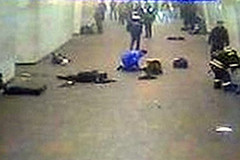
Russian leaders have pledged to "find and wipe out" those behind twin suicide bombings at metro stations in Moscow that killed 39 people and left scores injured.

"They are simply beasts," Dmitry Medvedev, the Russian president, said of the bombers after laying a wreath of red roses at Lubyanka metro station, one of the sites targeted.

"I don't have the slightest doubt: we will find and wipe out all of them," Medvedev said.

Russia held a day of mourning on Tuesday, with flags at half-mast and Muscovites leaving flowers and lit candles at the stations hit by the rush-hour blasts

'Heinous' crime

Neave Barker, Al Jazeera's correspondent in Moscow, said many people in the capital were "still nervous about venturing underground".

"The Kremlin is now under mounting public pressure to review its security policy," he said.

Medvedev's predecessor, Vladimir Putin, who is now prime minister, has also vowed that those responsible for the attacks would be "destroyed".

The death toll from the bombings rose on Tuesday to 39 after a young woman died in hospital, a Russian health official said.

Andrei Seltsovsky, the chief of Moscow's health department, said 71 other people were still in hospital, five of them in critical condition.

Putin, who cut short a visit to Siberia to return to Moscow, said "a crime that is terrible in its consequences and heinous in its manner has been committed".

"I am confident that law enforcement bodies will spare no effort to track down and punish the criminals. The terrorists will be destroyed," he said before visiting survivors in hospital.

Caucasus rebels blamed

No group has claimed responsibility for the bombings, but Russian authorities, who have blamed separatist fighters from the North Caucasus region for previous attacks, once again pointed the finger at the region's fighters.

Barker said Russian intelligence services remain convinced that two female suicide bombers with links to separatist fighters were responsible.

"Even before the death toll became official yesterday, the head of the intelligence service already made it very clear that they felt the links were obvious, this after only a few months the main line between Moscow and St. Petersburg was targeted by attackers," he said.

Officials said the attacks, at Lubyanka in the city centre and Park Kultury in the southwest, were carried out by two women wearing belts packed with the explosive hexogen and metal shrapnel.

"Body parts of two terrorists - female suicide bombers - were found at the scenes of the blasts," Alexander Bortnikov, the chief of Russia's Federal Security Service (FSB), said in a televised meeting at the Kremlin.

The headquarters of the FSB, the successor to the Soviet-era KGB, is located just above Lubyanka station.

"According to preliminary information, these people had links to places of residence in the Northern Caucasus," Bortnikov said.

Afghanistan link

Sergei Lavrov, Russia's foreign minister, said foreign involvement in the attacks had not been ruled out.

"We all know very well that clandestine terrorists are very active on the border between Afghanistan and Pakistan," the Interfax news agency quoted him as saying at a Group of Eight ministers' meeting in Canada.

"We know that several attacks have been prepared there, to be carried out not only in Afghanistan, but also in other countries.

"Sometimes, these journeys go as far as the Caucasus," he said, although he did not offer any evidence or explain the links.

Russian police are searching for two women who accompanied the suspected suicide bombers, plus a man who may also have been an accomplice, after identifying them and the suspected bombers through surveillance footage, Interfax reported, citing a security source.

'Politically motivated'

Our correspondent said the bombings have "to be seen as a politically motivated attack targeting what is perhaps one of the most symbolic signs of Russian authority in the capital".

In February, Doku Umarov, the leader of a Chechen separatist group, said in an interview on a rebel-affiliated website that "the zone of military operations will be extended to the territory of Russia".

Umarov, who claimed responsibility for the bombing of a passenger train travelling between Moscow and St Petersburg in November, warned that "the war is coming to their cities".

Russian forces fought two wars with Chechen separatists, and last year declared that the conflict was over.

However, the violence has spread from Chechnya to the neighbouring regions of Dagestan and Ingushetia.

Source: Al Jazeera and agencies

Africa Jobs Recovery Lags Economic Rebound, Says UNECA

Africa jobs recovery lags economic rebound - UN

Tue Mar 30, 2010 5:52pm GMT
By Phumza Macanda

LILONGWE, March 30 (Reuters) - Africa's economy is likely to grow by an average 4.3 percent this year from just 1.6 percent in 2009, but poverty could still increase as there may not be an similar increase in employment, a U.N. report said on Tuesday.

The United Nations' Economic Commission for Africa report predicted that oil exporting countries in the sub-Saharan region, which excludes North Africa, would grow by 5.1 percent in 2010 while oil importers would expand by 4.9 percent.

The projections are well short of the 7 percent needed to achieve the U.N.'s Millennium Development Goals of halving poverty by 2015, it said, adding that the growth rates were not enough to create large numbers of jobs.

"This means that unemployment and vulnerable employment as well as working poverty in Africa are likely to increase in 2010," said the report, released at an African Union finance and economics ministers conference.

The Commission also said inflation in southern African countries could rise to double-digit figures because of lagged effects from high oil and food prices in the region.

"Malawi's headline inflation for 2010 is forecast to rest at 10 percent, Zambia, the Democratic Republic of Congo and Angola would rest at 10.2 percent, 14.6 percent and 15.4 percent, respectively," it said in its report.

The issue of creating good jobs to lift millions out of poverty dominated the two-day meeting of senior government officials in the Malawi capital, Lilongwe.

Despite growth averaging 5 percent or more in much of the previous decade, millions of Africans still live below the breadline as the economic gains have failed to translate into more and better jobs.

Fallout from the global economic crisis last year has only exacerbated the situation.

"The problem is widespread; of the four countries studied, economic growth was accompanied by increasing unemployment in three of them, while the fourth showed a drastic rise in informal sector employment," the report said.

"The problem of high and rising unemployment persists, making it difficult for the continent to reduce poverty rapidly."

Growth will be driven by demand for African exports -- in most cases oil and minerals -- and continued fiscal and monetary stimulus.

While the developed world has started raising interest rates, many African economies are still easing monetary policy.

South Africa, the continent's biggest economy, cut interest rates by a shock 50 basis points last week, taking its repo rate to the lowest in decades. Ghana has also cut rates and indicated further monetary loosening as inflation moderates.

The report also said Africa needed to look at ways of mobilising its own capital to finance investment and growth.

"The current global economic crisis has demonstrated the vulnerability of Africa to the fortunes of the global economy. It has also demonstrated that Africa cannot rely on external sources to finance its development in a sustainable way." (Additional reporting by Mabvuto Banda, Editing by Ed Cropley and Stephen Nisbet)

Gaza War Fuels UK Arms Review Call

Tuesday, March 30, 2010
20:55 Mecca time, 17:55 GMT

Gaza war fuels UK arms review call

Israel's war on Gaza led to the deaths of 1,400 Palestinians and 13 Israelis

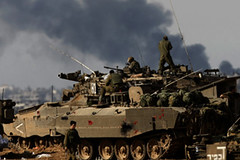
A committee of British members of parliament has called for a review of future arms sales after it emerged that components supplied by Britain to Israel were highly likely to have been used during the war on Gaza last year.

The parliamentary committee on strategic export controls expressed regret after discovering that arms exports from the UK were "almost certainly" used by Israel during Operation Cast Lead.

In a report released on Tuesday, the MPs said: "It is regrettable that arms exports to Israel were almost certainly used in Operation Cast Lead.

"This is in direct contravention to the UK government's policy that UK arms exports to Israel should not be used in the Occupied Territories."

'Lessons' learnt

The report recommends that the British government "set out clearly the longer term lessons learnt post Operation Cast Lead and how they will impact in practice on the issuing of future licences for arms exports to Israel."

After the attack on Gaza, David Miliband, Britain's foreign minister, told parliament that British made components were "almost certainly" used in F-16 fighter planes and Apache helicopters sold by the US to Israel.

Parts of armoured personnel carriers and Israeli naval vessels used in the conflict were also said to have been sourced to British producers.

Israel's offensive on Gaza resulted in the deaths of about 1,400 Palestinians, mostly civilians.

It also left the impoverished territory in virutal ruins followed sustained Israeli air raids.

Thirteen Israelis, mostly soldiers, were killed in the 22-day conflict.

After the Israeli assault on Gaza, the British government reviewed more than 180 pending arms licences destined for the country.

Five licences for equipment to be supplied to the Israeli navy were revoked as a result of the review.

But campaign groups in the UK are calling for a complete embargo on British arms sales to Israel.

The Campaign Against the Arms Trade says that "the only effective action would be the immediate imposition of embargo on arms and components going to Israel, whether directly or through incorporation into weaponry produced in third countries".

During 2008, the year running up to the war on Gaza, the UK approved arms licences to Israel worth $41.3m, as well as providing the components for US-made weapons destined for Israel.

This figure fell after the conflict, with the MPs noting that the UK currently provides less than one per cent of all military supplies exported to Israel.

Most of the equipment Britain supplies to Israel is components, rather than full weapons systems, although recently approved licences have included small arms ammunition and parts for sniper rifles.

Source: Al Jazeera and agencies
-----------------------------------------------------------

Sudan President Warns Southern Politicians That Referendum May Be Affected

Sudan's south given poll warning

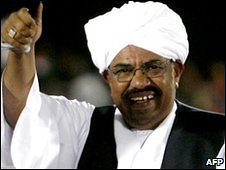
Sudan's President Omar al-Bashir has warned that any delay to April elections could affect next January's referendum on secession for the south.

His comments come amid rumours that the former southern rebels, the SPLM, will call for a delay of the elections - the first national vote in 24 years.

Other northern opposition parties have already called for a delay, saying the polls will not be free and fair.

The referendum was part of a 2005 deal ending a 21-year north-south civil war.

The conflict between the mainly Muslim north and the Christian and animist south claimed the lives of some 1.5 million people.

Correspondents say the idea of secession is popular in the south - and while Mr Bashir's party would prefer the country to remain united, the president has said he would honour the outcome of the referendum.

Ballot paper concerns

On Monday, the Sudan People's Liberation Movement's deputy secretary general in the south said the party did not want a delay if a free vote could be guaranteed by the election commission.

But Anne Ito said there were concerns that ballot papers for April's parliamentary and presidential elections were being printed on government printing presses.

The BBC's James Copnall in Khartoum says the northern opposition parties and the SPLM are due to meet on Wednesday to discuss a common position.

A meeting between Mr Bashir and SPLM leader Salva Kiir - who is also president of the south - to discuss the crisis was called off on Tuesday.

Last week, Mr Bashir threatened to expel foreign election monitors after they suggested the elections should be delayed.

Our correspondent says President Bashir needs an electoral victory to give him credibility.

Violence between rival ethnic group continues to claim hundreds of lives each year in the south, making it difficult to ensure security during the election.

In Darfur, hundreds of thousands of people still live in refugee camps after a separate conflict.

Story from BBC NEWS:
http://news.bbc.co.uk/go/pr/fr/-/2/hi/africa/8595443.stm
Published: 2010/03/30 15:29:41 GMT

Monday, March 29, 2010

Alabama Representative Wants to Become Governor

Rep. Artur Davis seeks to become Alabama's first African American governor

By Perry Bacon Jr.
Washington Post Staff Writer
Wednesday, March 24, 2010; 2:17 PM

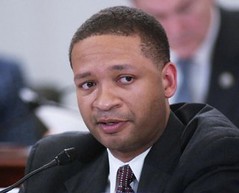
Rep. Artur Davis, long regarded as one of the most promising of a younger generation of black politicians that has emerged over the past decade, took a bold stance this week as he seeks to become the first African American governor of Alabama: distancing himself from the biggest legislative achievement of the first black president.

The four-term lawmaker joined 33 other Democrats, most of whom hail from the South, in opposing the health-care legislation that President Obama signed into law Tuesday. Davis originally voted against the House version of the legislation in November, and Democratic leaders did not spend much time trying to get him to change his vote, perhaps in a nod to the political dynamics of his state, where Obama won only 38 percent of the vote in 2008.

But in opposing the health-care bill, Davis, a longtime Obama ally who was one of the first lawmakers to back his White House run, split from the other 41 members of the Congressional Black Caucus. They not only all voted for the legislation, but cast it in historic terms as an extension of the policies of the civil rights era.

Davis drew criticism for his vote from some on the left, as well, who accused him of abandoning the interests of his majority-black district in Birmingham. In Davis's congressional district, 19 percent of people are uninsured -- a figure higher than the national average -- and Obama won 72 percent of the vote, his biggest margin of victory in any district where a House member opposed the health-care legislation.

The congressman's opponent in the June Democratic primary in Alabama, Ron Sparks, said Davis's vote was an example a politician willing to "blatantly ignore the will of the people in his district," although Davis's campaign says Sparks has given conflicting statements on whether he would have backed the overhaul.

Roland Martin, a influential black commentator who hosts a show on TV One devoted to African American issues, also criticized the vote. "He was elected to represent the people in his district in Congress, not a future position that he may or may not get," Martin said. Davis, who declined an interview request for this article through a spokesman, said in a statement, "A comprehensive, 2,000 page, near $1 trillion dollar overhaul of the health-care system is just too cumbersome and too costly in a time of trillion-dollar deficits."

"I believe the no vote I cast tonight was the right one, and a significant number of other Democrats joined me in casting that no vote," Davis said Sunday. "Going forward, I hope for the good of our country that this legislation ends up working and that my reservations are proved wrong."

Davis, in an interview with the Birmingham News on the eve of the vote, said "I just don't see this as a racial vote or a racial issue," and he noted that he supported the principle of health-care reform -- just not this bill.

"I vigorously reject the insinuation that there is a uniquely 'black' way of understanding an issue, and I strongly suspect that most Alabamians will as well," Davis said late last year when he was first criticized for his health-care stance.

His aides dismiss the view that his health-care vote was cast simply because of politics, noting he has opposed other Democratic initiatives, such as a climate-change bill the House pushed through last year.

And in his years in Congress, Davis has stood apart from his black colleagues at times, most recently when he called for Rep. Charles B. Rangel (D-N.Y). to step down as chairman of the House Ways and Means Committee this month. He has not been a prominent figure in the CBC, instead playing a major role in recruiting and advising candidates for House seats in 2006, working closely with then-Democratic Congressional Campaign Committee head Rahm Emanuel, who is now the White House chief of staff.

It's not clear that his vote will affect his bid for governor in Alabama. All seven of the state's House members voted against the bill, including Democratic Rep. Bobby N. Bright. And when Rep. Parker Griffith switched to the GOP in December, he cited the health-care bill as one of the reasons.

The seven GOP candidates for governor -- including former chief justice of the Alabama Supreme Court Roy Moore, who famously refused to remove a monument of the Ten Commandments from the state courthouse seven years ago -- are not supportive of the legislation. And political observers in the state say Democrats are unlikely to move toward Sparks, the congressman's only Democratic opponent, simply because of Davis's vote on this one issue.

"Davis is the most progressive member of the Alabama delegation. It's just very a conservative group of folks, and he's been with us on a lot of things. He voted for SCHIP (a children's health care bill), the stimulus bill, the jobs bill. Folks give a lot of weight to that," said Sherry Walker, publisher of liberal blog Left in Alabama.And she added, "we are all just glad the bill passed," referring to health care.

Davis is favored in the Democratic primary, in part because of his support among African Americans, who are expected to constitute more than half of the voters in the June contest. A rift remains between Davis and some of the older establishment black leaders in the state, who have criticized his health stance. But polls Alabama have shown Davis winning upward of 80 percent of the black vote in the primary over Sparks, who is white.

At the same time, political analysts in the state say that even with his opposition to the health-care bill, Davis faces an uphill climb in the general election. The state is traditionally Republican and has never elected an African American as governor or senator. (Nationwide, only three blacks, including Obama, have been elected to the U.S. Senate in the past century, and only two have won governor's races.) Davis has played down the impact of race in his run but acknowledged that being a Democrat is a challenge in Alabama.

"Artur Davis is running to the right because he believes that's the only way he can get elected," said Natalie Davis, a political science professor at Birmingham-Southern College. "But it's a tough to row to hoe [for a Democrat] in this climate. Add to it the person is African American."

View all comments that have been posted about this article.

Sunday, March 28, 2010

Answers Are Sought in Killing of Muslim Cleric in Detroit

Answers are sought in killing of Muslim cleric

Supporters say it was police brutality

BY L.L. BRASIER
FREE PRESS STAFF WRITER

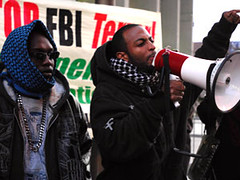
African-American community called for answers at a rally Saturday afternoon to the killing of a Muslim cleric during an FBI raid in Dearborn in October.

More than 200 people gathered at New Bethel Baptist Church in Detroit to protest the controversial shooting of Imam Luqman Ameen Abdullah, 53. Abdullah was the target of a two-year investigation by federal agents who said he was a radical Sunni leader preaching the overthrow of the government from his small mosque.

Abdullah was shot 21 times during the raid. FBI agents, in their official account of the event, said they chased Abdullah, then caught up with him and demanded that he show his hands. Instead, they say, he pulled a gun and fired it, prompting agents to fire back.

Abdullah's supporters contend it was an act of police brutality aimed at a black Muslim. Agents in the raid were searching the warehouse for stolen items they say Abdullah was using to raise money for the mosque.

Saturday's event, co-sponsored by the Detroit branch of the NAACP, the Detroit Coalition Against Police Brutality and others, was held in one of Detroit's most famous Baptist churches, a sign, organizers said, that Abdullah's death was of concern beyond the Muslim community.

The Rev. Robert Smith of New Bethel said he welcomed the rally -- and likened the killing to those committed by police during the civil rights movement and Detroit riots.

"Something is happening here that is an awful and dangerous thing," Smith said.

Dearborn police are investigating the shooting and are expected to release their findings soon. The FBI did not return phone calls Saturday afternoon.

"This is a human concern, not a Muslim concern," said Imam Dawud Walid, executive director of the Michigan chapter of the Council on American Islamic Relations, one of the sponsors of the event. "The African-American community has had a long history of this kind of experience in Detroit."

Those sitting in the church Saturday recalled Abdullah as a peaceful man and disputed the government's contention that he was a radical.

"He was a very humble man of meager means," said Sheara Ibraaheem, 56, of Dearborn Heights, who said she knew him for many years and was married in his mosque. "I want to know what happened here. We can't let this fade away."

Contact L.L. BRASIER: 248-858-2262 or lbrasier@freep.com

South African President Zuma Urges Lifting of Sanctions Against Zimbabwe

Saturday, March 27, 2010
21:50 Mecca time, 18:50 GMT

Zuma urges lifting Zimbabwe curbs

Zuma was in Uganda as part of a business delegation from South Africa

Travel restrictions applied by the West to Zimbabwean officials from the Zanu-PF, should be lifted, Jacob Zuma, South Africa's president, has said.

The South African leader made his comments, which echo earlier calls, at the tail-end of a visit to Uganda.

Zuma is mediating in a dispute between Zanu-PF, the political party of Robert Mugabe, Zimbabwe's president, and its rival, the Movement for Democratic Change (MDC), headed by Morgan Tsvangirai, Zimbabwe's prime minister.

"What's happening is that one part of unity government, the MDC, can travel all they want, around the world and do what they want while the other part, the Zanu-PF, cannot," Zuma said on Friday.

"That's impeding the functioning of the unity government and so the international community that supported the power-sharing agreement must also lift the sanctions to allow the unity government to function to its full capacity."

Slow progress

Both the European Union and the US maintain a travel ban and asset freeze on Mugabe, his wife and inner circle in protest at disputed 2008 elections and alleged human rights abuses by his government.

A power-sharing agreement between Zanu-PF and MDC has failed to make major headway since it was installed two years ago.

Zuma, who has urged Western powers to lift sanction in the past, said that should sanctions be lifted "we can make faster progress".

Yoweri Museveni, the Ugandan president, endorsed Zuma's position in a joint statement.

Zimbabwe has been mired in a political and economic crisis for years, with much of its economic woes blamed on Mugabe's policies.

Zuma was in Uganda as part of a delegation of cabinet ministers and business men.

While there he and his host also discussed the situation in Democratic Republic of Congo.

In a statement they said they had agreed that while security there was improving, the United Nations' peacekeeping mission there, known as Monuc, was still needed to provide stability.

Source: Agencies

Illegal Capital Outflows Undermine Africa, Study Says

Illegal capital outflows undermine Africa -study

2010-03-29 05:30:00

About $854 billion flowed out of Africa illegally in the 39 years to 2008, and such continued capital flight will undermine gains from faster economic growth, perpetuating poverty, a study published on Sunday showed.

The study by Global Financial Integrity (GFI) showed illicit capital outflows, including proceeds from bribery, theft, human trafficking, drugs and tax evasion, grew at an average 11.9 percent between 1970 and 2008.

"Africa lost an astonishing $854 billion in cumulative capital flight, enough to not only wipe out the region's total external debt outstanding ... but potentially to leave $600 billion for poverty alleviation," the study presented at an African Union conference of economic and finance ministers in Malawi showed.

It said economic growth without credible reform could lead to more capital flight.

"Policy measures must be taken to address the factors underlying illicit outflows and also to impress upon the G20 the need for better transparency and tighter oversight of international banks and offshore financial centres that absorb these flows," the report said.

The study showed fuel exporters such as Nigeria lost capital at the rate of nearly $10 billion a year, far outstripping the $2.5 billion lost by non-fuel primary commodity exporters.

GROWTH OUTPACES DEVELOPED COUNTRIES

Economic growth in many African countries has outpaced that in developed countries, partly due to firm commodity prices, but a majority of people on the continent live below the poverty line.

The GFI said the high rate of illicit capital outflow had undermined donor-driven efforts to end poverty and boost economic growth and was the main stumbling block to development.

"So long as illicit capital continues to haemorrhage out of poor African countries over the long term at a rapid pace, efforts to reduce poverty and boost economic growth will be thwarted," the research found.

Prudent macroeconomic policies such as lower fiscal deficits, more conservative monetary policy, positive real interest rates and appropriately valued exchange rates would help improve the attractiveness of domestic investments, especially if complemented by strong institutions and the rule of law.

"If the problem of illicit flows is not addressed as a matter of high priority, the poor will likely experience a further decline in access to basic services in the face of grinding poverty," the GFI said.

(Editing by Stella Mapenzauswa and Will Waterman)

Massive Capital Flight Hits Nigeria as Deposit Rates Crash

Massive capital flight hits Nigeria as deposit rates crash

Mar 29, 2010

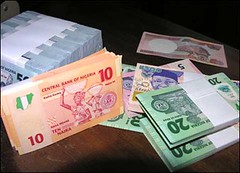
LAGOS—THE unattractive rates in the Nigerian fixed income market have begun to take its toll on the country’s economy, as investors are moving their funds en masse to alternative investment destinations, particularly to neighbouring West African countries.

Investigations by Vanguard showed that the movement of the funds was in response to falling deposit rates which crashed to three per cent in the last two months, despite the fact that the CBN monetary policy rate currently stands at six per cent.

The move is informed by the quest for higher return on investment on cash and near cash assets which Vanguard gathered, is now more attractive in Ghana and West African countries where interest rate on deposit is about 14 per cent compared to the three per cent or even less Nigerian banks are offering depositors.

Capital out flow from the country further rose to $1.740 billion for the week ending, February 12, and moved downward to $1.091 billion for the week ending February 26 and a little further down to $1.061 billion on March 5.

This has resulted in the crash of interest rates in the money market as customers are moving out their deposits.

Bank treasurers have attributed the crash of interest rates to the ongoing CBN reforms where over N600 billion of bank deposits are in the CBN vault at one per cent interest rate as banks have refused to lend just as investors are holding back their investment decisions.

The movement of funds out of the country comes by way of Nigerian residents buying up dollars with their naira and moving it off-shore.

A survey of banks’ deposit rates by Vanguard last week showed that the average deposit rate for 30 days term deposits of below N100 million is about four per cent.

In the last five weeks of January 22, 2010 to March 5, a total of $6.734 billion went out of the country, while about $1.383billion went out in the week ending January 22. The amount of foreign exchange flowing out of the country rose to $1.457billion for the week ending February 4.

Western Democracy Fails Africa

Western democracy fails Africa

Courtesy of the Zimbabwe Herald

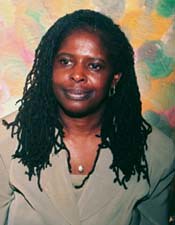
Zimbabwean writers, especially the young and upcoming have found it very difficult to get published, with some publishers demanding a particular type of story. Our columnist EDMORE ZVINONZWA (EZ) spoke to publisher SARUDZAYI CHIFAMBA-BARNES (SCB) about this, her works and Zimbabwean writing in general.

EZ: Hello, Sarudzayi. It is good to talk to you after such a long time. In fact, this is the first time I am hearing of the name Sarudzayi. I have always thought you were Elizabeth since the days I used to meet you in the Special Collections section of the UZ library where, I recall, you were a regular visitor.

SCB: Hello, Eddie. First and foremost I would like to thank you for giving me this opportunity for an interview. You are right; many people do not know me or remember me with the name Sarudzayi. Elizabeth is more popular in Zimbabwe even with my own family. Sarudzayi is my beautiful African name, my officially registered first name. Chifamba is my father’s surname, whereas Barnes is my husband’s name. Sarudzayi gives me a sense of identity; otherwise I would become very foreign even to myself if I were to be called Elizabeth Barnes.

EZ: Would you like to tell readers briefly about yourself then?

SCB: I am an African woman, a Rastafarian, an author, a publisher, a wife and a mother. I was born in Zimbabwe, but currently live in the UK. I did my BA studies at the University of Zimbabwe (1992-1994) after which I worked at the National Archives of Zimbabwe as an archivist for four years before coming here. I am currently doing an MA in Social Work. It is my dream to one day set up community-based orphan-care centres in one rural area in Zimbabwe to give orphans a place where they can have meals everyday; where those who are on any medication can go and have their medication administered by trained people rather than relying on elderly grandmothers to do so.

EZ: When exactly would we say you started writing? Any inspiration or motivation? I am looking here at the fact that you were more of a potential history person at university and even worked for the National Archives of Zimbabwe at some point.

SCB: I can say I started writing in 1990 because that’s when I entered my first short story in a Curriculum Development Unit competition and won a prize. It wasn’t the main prize though. I was advised to develop my story further, but I never bothered. In 1995, I wrote a play I called Sarudzayi (not named after me), but it was about students’ expectations after graduating from UZ. The play was set on the UZ campus and I focused on some of the issues that affected students then, especially female students. The story was mainly influenced by the realisation that as UZ students, we lived in an ideal world far removed from reality. In the play, my main character dumped her childhood sweetheart simply because he did not pass A-Level with enough points/grades to get him a place at the university. Nonetheless, he went on to do an apprenticeship and ended up with a financially rewarding job compared to my protagonist (the girl who dumped him). She had left university with a degree, which was deemed theoretical and irrelevant to employers. However, my play was never published because no one was interested in it.

In 2002, I became very homesick and began to write folktales that I had heard from my elders when I was young. I was writing them for my daughter, but when I thought of publishing them, it was like looking for a needle in a pile of rubbish. The only publisher who gave me feedback felt the stories were violent and she did not hide her feeling that Africa was a violent and unstable continent because we told our children such violent stories, which always ended with the wrongdoer being punished. I said to myself; hold on, what about all those Western films which children in the Americas and Europe watch, the guns and the shooting? Aren’t they violent enough? I gave up writing. In 2007, touched by the plight of women who left their husbands and children for very long periods to come and work in the UK, I felt I needed to write something that highlighted the risk of HIV/Aids in absentee relationships, the risk of child abuse for those child-headed families where parents migrated to work elsewhere. I also wanted to highlight some Diaspora issues of how some educated people end up doing menial jobs they had never dreamt of in Zimbabwe, issues like Gatwick — maenzanise, you know. So I wrote The Endless Trail.

EZ: Again, you are about 40 years old now and should obviously have got some first-hand experiences with colonial Zimbabwe — the segregation, disenfranchisement, unequal opportunities in educational institutions, among a number of other injustices of the supremacist white minority regime.

SCB: Yes, I am 40 years now, having been born during the days of Rhodesia. My birth certificate was issued at Charter District and my birthplace was entered as Mfushwa Kraal in Sabi North Tribal Trust Land. I remember clearly the war, the soldiers (Rhodesian Front Forces) bombing entire villages and beating parents in front of their children. The race relations were tough. There were very limited opportunities for black people. There was a bottleneck system of education. As black people, our rights and opportunities were limited. I was 11 years old when the war ended. I never thought that the thing called Rhodesia would come to an end one day. Chisingaperi chinoshura. I hear many people saying Rhodesia was better. Better, for whom?

I am working on a serial, Generations, in which, I write about colonialism as it affected one particular family from generation to generation. It’s a massive project, which requires a lot of research, but I am almost done with Book One. It’s a project I initially wanted to do as a supervised MA writing project with the University of Warwick two years ago, but I decided to withdraw from the course.

EZ: Any comment on contemporary Zimbabwean writing in general and Zimbabwean women’s writing in particular? You could also refer to earlier generations of Zimbabwean writers.

SCB: Zimbabwean writing is growing rapidly. Zimbabwean writers are claiming their rightful place in African literature which has been dominated by Nigerian and Kenyan writers. With Petina Gappah’s collection of short stories, An Elegy for Easterly winning the Guardian Fiction Prize, Ignatius Mabasa being appointed Writer-in-Residence and Storyteller at a university in Canada and Chris Mlalazi going to California for nine months as a Writer-in-Residence, I think Zimbabwean literature is doing very well.

Of course, there are earlier authors whose names deserve to be mentioned; who I also believe had a great influence on most of the contemporary authors. I was personally influenced by Tsitsi Dangarembga’s Nervous Conditions (which won the Commonwealth Writers’ Prize in 1989) and The Book of Not. I also read a lot of Dambudzo Marechera’s work and at one time I was so obsessed with his writings that I spent a lot of time reading his unpublished works at the National Archives of Zimbabwe.

There are now many more women writers from Zimbabwe, which is a very good thing, because writing was usually perceived as a man’s field. Women were not comfortable with writing as they feared they would be judged because of what they wrote. If you write about commercial sex workers for example, it will be assumed that muzivi wenzira yeparuware ndiye mufambi wayo, which is not the case. There are now young writers like Sarudzai Mubvakure, whose book Amelia’s Inheritance I published in January. I like Sarudzai’s writing in particular because she ventures into those subjects that many people are not comfortable with; or which we are conveniently forgetting. Sarudzai writes about the injustices of race relations in Rhodesia.

Yvonne Vera was also a great writer. Joyce Jenje Makwenda (Gupuro/Divorce Token) and Valerie Tagwira (The Uncertainty of Hope) write about gender issues. They are very impressive. Petina Gappah’s book is a must-read. She is leading the way. Her success is also a success for Africans, Zimbabweans and women.

EZ: As a female writer, what challenges have you faced?

SCB: I don’t think I have faced any setbacks that can be attributed solely to my gender. I have faced challenges that affect most upcoming authors. You write your manuscript, you are unknown and no publisher is interested in you, you hide your manuscript in your wardrobe or in a suitcase somewhere. FULL STOP.

EZ: How would you characterise your style of writing and major concerns and what were the influences.

SCB: I just write ordinary simple English. There is no major style. As I have already said, I was greatly impressed and influenced by Tsitsi Dangarembga. However, my main influence came from writers like Ngugi wa Thiong’o, Chinua Achebe, Chimamanda Ngozi Adichie and Jamaican authors like Kei Miller and Andrea Levy (British-born but with Jamaican parents). I only go for a specific type of literature.

EZ: How have your works been received and are they available in Zimbabwe?

SCB: There is a poor reading culture among Africans in general and Zimbabweans in particular. The Village Story-Teller: Zimbabwean Folktales does well with people from other cultures. The same applies to The Endless Trail. I have not made my books available locally in Zimbabwe. I am still in the process of registering Lion Press in Zimbabwe and once that is concluded, I will explore the Zimbabwean and Southern African market.

EZ: And now, how did you get into publishing?

SCB: After publishing The Endless Trail with a Vanity Press, which you pay handsomely to self-publish, I realised that the quality of the book wasn’t good. What Vanity Press does is to just "publish" what you send them and there is no quality control, no editing! You spend a lot of money "publishing" the book only to realise that you are the main customer of your book. That’s when I realised I had to do something if I was to have my writings published properly. I registered the Lion Press in July 2008. The motive was to help other Zimbabwean authors to have their writings published. I have published 15 books since 2008. Three of the books, Many Rivers, The Fading Sun and The Man, Shaggy Leopard and Jackal were shortlisted for the 2010 Nama awards. Two of them, The Man, Shaggy Leopard and Jackal by Ignatius Mabasa and The Fading Sun by David Mungoshi won the Nama 2010 awards. Many Rivers and The Fading Sun were in the same contest.

EZ: You are in the Diaspora and you publish mostly Zimbabwean and other black writers. How is this and how are you managing?

SCB: I realised that there were many more upcoming writers among the Zimbabwean community in the Diaspora who were probably going through difficult times to have their writings published like myself. You realise you live in Britain, you are now a British citizen and yet your writing cannot penetrate the English market and publishers. Because you live in Britain, you cannot access the publishers in Africa. You realise you are in limbo. That is why I set up and registered the Lion Press mainly to work with Zimbabweans in the Diaspora. However, I work with authors from the Caribbean and other African countries. I am publishing Desise Hall (Jamaican British), I am publishing Paul Henry (a.k.a. Ras Ichy who is a Jamaican-born poet), and I am also publishing Cherry Williams who has written poems in tribute to Bob Marley. Cherry is also Jamaican. I have also published Moses Osekyere’s book and Bernard Antwi. They are both Ghanaians.

EZ: Any challenges associated with publishing that you would want to highlight?

SCB: Publishing is not a very easy thing. To begin with, the readership is very small. Books are costly to produce. You need at least £800 to come up with a good book and this fee does not include printing. Because I am a small publisher, I do all the administration and typesetting myself. I also do all the marketing on my own because I cannot afford to pay someone to do the marketing. I sub-contract editors and proofreaders to help with quality control. It’s not easy. I also use my own resources in most cases. I don’t get any funding. I tried to apply for the Arts Council grants here in England, but gave up because it’s too bureaucratic. Some of my authors fund their publishing projects, which is really good. But their books go through editing and proofreading and I also guide them on storyline development if there is any need for that. I get a lot of help from Wonder Guchu and David Mungoshi in that respect.

EZ: ZIBF is one of the biggest book fairs in the world, are you attending this year?

SCB: I am not planning to exhibit at the ZIBF this year because I will be exhibiting at the Goteborg Book Fair in Sweden. This year’s theme for the Goteborg Book Fair is Focus on Africa. I don’t want to miss that opportunity. Maybe next year, I will attend the ZIBF.

EZ: As a publisher, there have been complaints from readers who feel that most books by Zimbabwean writers, including those published in Zimbabwe, are priced way beyond the reach of many potential readers. Any comments on that?

SCB: I certainly agree with that. A paperback should cost in the region of £6 and a hardback usually costs £12. However, I think the problem is with the printing costs. There is not much competition for printers so they charge very high fees. My intention is to make Lion Press books affordable in Zimbabwe. I don’t pay much for printing in the UK. There are too many printers so there are always bargains.

EZ: What is your opinion of the future of Zimbabwean writing especially that we have a number of literary works from fairly younger writers like Memory Chirere, Ignatius Mabasa, Ruby Magosvongwe, Petina Gappah, among others.

SCB: I think it is quite promising. I have just published Memory Chirere’s book, Toriro and his Goats. It’s a great book.

EZ: What advice would you like to share with upcoming Zimbabwean writers?

SCB: Keep writing. Write what you like. Don’t allow a publisher to dictate what you should write. It’s not about the publisher’s interests. It’s about you. Write something you can defend 50 years from the day you write it, assuming we live long enough. If publishers refuse your work because they think it’s not marketable, try self-publishing although you will need a good editor, but that way you will stay in control of your books. I have one question to upcoming authors. Why are we abandoning our African languages?

EZ: Is there anything you find pertinent, like your pan Africanist stance, the current political and economic potential that our country has, given the inclusive dispensation?

SCB: Zimbabwe is a very beautiful country blessed with natural resources. We have a wonderful culture too. We need to be united and work together to improve our country and, above all, we need to give the inclusive Government a chance. There are some people who are good at criticising others. I think the European Union, the United States and other Western countries should support the inclusive Government. It’s the best thing to happen to Zimbabwe after a decade of political tension.

I beg to differ when it comes to Western democracy. Western democracy failed millions of Africans who were taken into slavery. It also failed our ancestors who died fighting to free our countries, our brothers and sisters too who died in the struggle for independence, at Nyadzonia and Soweto, among a host of other places. However, we need to forgive and move on, and not to kill each other because those who arm us want us to fight while they plunder our resources.

--Feedback: edmore.zvinonzwa@zimpapers.co.zw
Israel Condemned at Arab League Summit in Libya

Sunday, March 28, 2010
06:00 Mecca time, 03:00 GMT

Israel condemned at Arab summit

Gaddafi, whose country is hosting the summit, wants the Arab League meeting to be one of unity

Regional leaders meeting in Libya have been united in their condemnation of Israel's settlement activity in occupied Palestinian land.

The Arab League summit began on Saturday in the Libyan city of Sirte, with Amr Moussa, the Arab League chief, warning that continued Israeli settlement building would end efforts to revive the Middle East peace process.

"We have to study the possibility that the peace process will be a complete failure," Moussa said in his opening speech to the two-day annual summit.

"It's time to face Israel ... We have accepted an open-ended peace process but that resulted in a loss of time and we did not achieve anything and allowed Israel to practise its policy for 20 years."

Jerusalem, which the Palestinians want as a joint capital for a future state, has been a particular point of focus for delegates.

Jerusalem's significance

Ban Ki-moon, the UN secretary-general, reiterated that Israel's settlements were illegal under international law, and called for Jerusalem to be part of peace negotiations.

"Jerusalem's significance to all must be respected, and it should emerge from negotiations as the capital of two states," he said at the meeting's opening session.

Ban also called for Arab leaders to support US-led efforts to facilitate indirect "proximity" talks between Israel and the Palestinians.

The Palestinians pulled out of the talks in reaction to Israel's announcement it would build 1,600 settlements on occupied land.

The Israeli move has also caused a rift between Israel and Washington as it came during a visit to Israel by Joe Biden, the US vice-president.

"I urge you to support efforts to start proximity talks and direct negotiations. Our common goal should be to resolve all final status issues within 24 months," Ban said.

But Mahmoud Abbas, the Palestinian president, ruled out taking part in the talks unless Israel stops building settlements.

"We cannot resume indirect negotiations as long as Israel maintains its settlement policy and the status quo," he said in his speech.

The warnings over Jerusalem were echoed by Recep Tayyip Erdogan, the Turkish prime minister, who called Israel's policy of considering Jerusalem as its united capital "madness".

"Jerusalem is the apple of the eye of each and every Muslim ... and we cannot at all accept any Israeli violation in Jerusalem or in Muslim sites," he said.

'Playing with fire'

Many Arab leaders have also been angered by the opening of a restored 17th century synagogue near the al-Aqsa mosque compound in Jerusalem, home to Islam's third holiest site.

They see such acts as a clear intention by Israel to "Judaise" Jerusalem and undermine chances for a peace agreement with the Palestinians who consider East Jerusalem the capital of their future state.

Jordan's King Abdullah warned that Israel was "playing with fire" and trying to alter the identity of Jerusalem.

Bashar al-Assad, the president of Syria, described tensions with Israel as a "state of no-war, no-peace", and said his country was ready if "war is imposed" by Israel.

Muammar Gaddafi, the Libyan leader, opened the summit with an unusually short speech in which he said that Arabs were "waiting for actions, not words and speeches".

The Libyan leader, whose country is hosting this year's summit, has said he wants the meeting to be one of unity and the issue of Jerusalem has proved a unifying factor.

"The whole issue of Israeli actions has been under intense discussions, particularly in light of what has happened in that region in recent days," Mike Hanna, Al Jazeera's correspondent reporting from Sirte, said.

"Very clearly the issue of Jerusalem has been brought up and focused on because it is the one issue that would be very difficult for the international community as a whole to ignore.

"If, for example, resolutions would go to the UN General Assembly or the Security Council ... on the question of East Jerusalem and Israeli occupation, it is very difficult for international bodies - or countries such as the US - to veto or abstain over something they've already condemned."

Arab leaders are expected to ratify an agreement drafted by their foreign ministers to raise $500m in aid to improve the living conditions for Palestinians in Jerusalem as part of a "rescue" plan for the city.

A senior Palestinian official said the money would go towards improving infrastructure, building hospitals, schools, water wells and providing financial support to those whose houses have been demolished by Israeli authorities.

The leaders are also due to discuss a number of strategies, including keeping a record of what they consider to be Israeli "violations" in Jerusalem to refer them to higher bodies such as the International Criminal Court, based in the Hague in the Netherlands.

The last Arab League summit, held two years ago, was hosted by Qatar.

Source: Al Jazeera and agencies

ANC to Challenge 'Shoot the Boer' Ban

ANC to challenge 'shoot the boer' ban

JOHANNESBURG, SOUTH AFRICA Mar 27 2010 06:33

A high-court ban on the words "shoot the boer" was met with mixed reaction on Friday.

While the African National Congress was shocked at the ruling and vowed to challenge it in the Constitutional Court, the Afrikanerbond and Freedom Front Plus welcomed it.

The South African Broadcasting Corporation reported on Friday that the Johannesburg High Court had ruled the use of the words "dubul' ibhunu [shoot the boer]" was unconstitutional and unlawful.

Delmas businessman Willem Harmse had applied for an urgent interdict to prevent his colleague Mahomed Vawda from using the words on banners and singing them during a planned march against crime.

Hate speech or symbolic killing of apartheid?

While Harmse argued that the words perpetuated hate speech and incited hatred, Vawda contended that they referred to the symbolic killing of apartheid.

The ANC, which reportedly intends appealing against the judgement, expressed astonishment at the court's failure to approach it for input on the history and purpose of the struggle song Ayesaba Amagwala [The Cowards are Scared].

The song's lyrics include the words: "aw dubul' ibhunu [shoot the boer] 'a magwala [the cowards are scared] dubula dubula [shoot shoot]".

'Erasing history'

The ANC believed that, had its input been sought, the court would have reached a different conclusion.

Earlier this month, ANC secretary general Gwede Mantashe cautioned against "systematically erasing history", and said the interpretation of the song had been "vulgarised".

"It's an old struggle song. Anybody who relegates it into hate speech today ... I will regard that as a serious attempt to erase our history. If you try to erase the history through courts, that would be unfortunate to the country."

Complaints have recently been laid against ANC Youth League president Julius Malema with the Equality Court and the SA Human Rights Commission (SAHRC) over his repeated singing of the song in public.

'Malema never part of the struggle'

The Freedom Front Plus viewed the ANC's contention that the words be seen in the struggle context as "totally unacceptable".

"Mr Malema was nine-years-old when [former president Nelson] Mandela was freed. He was never really part of the 'struggle'. If he sang the song today, it has to be judged in the context of 2010 and the fact that farmers are being killed weekly," the party said in a statement.

The Afrikanerbond now wants the SAHRC to decide whether the song constitutes incitement to violence and hate speech.

Its chief secretary Jan Bosman said it hoped the ruling was "a first step in forcing politicians to think about pronouncements that create the potential for conflict". - Sapa

Source: Mail & Guardian Online
Web Address: http://www.mg.co.za/article/2010-03-27-anc-to-challenge-shoot-the-boer-ban

321 Civilians Killed in 2009 Massacre in Congo

321 civilians killed in 2009 massacre in Congo

By RUKMINI CALLIMACHI, Associated Press Writer
Saturday, March 27, 2010 at 4:28 p.m.

DAKAR, Senegal — At least 321 civilians were killed in a previously unreported massacre in Congo in late 2009, while villagers that escaped their rebel captors were sent back with their lips and ears cut off as a warning to others of what would happen if they tried to talk, according to an investigation by a human rights group.

New York-based Human Rights Watch said in its report released Saturday that at least 250 more people were abducted by the Lord's Resistance Army rebels during the attack in the Makombo area of northeastern Congo, including no less than 80 children.

Human Rights Watch's senior Africa researcher, Anneke Van Woudenberg, called the massacre "one of the worst ever committed by the LRA in its bloody 23-year history."

Yet the killing spree, which occurred from Dec. 14 to 17 in at least 10 villages, had gone unreported for months.

The majority of those killed were men who were tied up, some bound to trees, before being hacked to death with machetes or having their skulls crushed with axes. A 3-year-old girl was burnt to death, according to the report.

The rebels then abducted many of the children and women, who were forced to march to a town over 60 miles (96 kilometers) away. Those that walked too slowly were executed and villagers told the rights group that they found bodies all along the trail from Makombo to the town of Tapili in northern Congo.

The Lord's Resistance Army is considered one of Africa's most brutal rebel armies, and its leaders are the subject of an International Criminal Court arrest warrant. Originally based in Uganda, the rebels were pushed into the area straddling the northern Congolese border with Central African Republic. The 2009 massacre is only the most recent of a pattern of atrocities.

Exactly a year earlier, after the governments of the region attacked an LRA position, the rebels retaliated by killing at least 865 civilians during the Christmas 2008 holiday season, according to Human Rights Watch.

The attack three months ago was especially horrific. Children abducted by the rebels were forced to execute other children who had disobeyed the rebels. In several instances documented by the rights group, the children were ordered to form a circle around their victim and take turns hitting the child on the head with a heavy object until the child died.

Adults were mutilated and sent back to their villages to act as a visual warning to those that might have considered alerting authorities.

In one instance the rebels cut off the lips and an ear of six victims who were sent back "with a chilling warning to others that anyone who heard or spoke about the LRA would be similarly punished," says the report.

The Associated Press
Find this article at:
http://www.signonsandiego.com/news/2010/mar/27/321-civilians-killed-in-2009-massacre-in-congo

Saturday, March 27, 2010

Sudan Looks to the Saharan Sun for Power

Sudan looks to the Saharan sun for power

Web posted at: 3/28/2010 2:3:34
Source ::: AFP

KHARTOUM: Spread across central Africa as the continent’s largest country, Sudan plans to exploit the relentless Saharan sun to power its underdeveloped regions and green its deserts.

Harnessing the sun’s energy for vast regions such as war-torn Darfur, which itself is the size of France, is costly. But the country’s ministry of energy and mining believes that advances in solar technology will lower the costs.

“The costs are high compared to other conventional energy resources but we think that with the technology advances going on there will be a substantial decrease,” the ministry’s secretary general, Omar Mohammed Kheir, said. The plan, he said, was to develop solar energy in regions not linked to the national grid, such as North Darfur.

By harnessing clean solar power impoverished Sudan could be setting a global example in a world worried about climate change.

Sudan is the continent’s fifth largest oil producer — three fifths of its product is exported to Asia — and is multiplying its hydroelectric projects along the Nile.

But conventional energy sources alone will not meet the increasing demand of this country of 40 million people.

Earlier this month, the French company Solar Euromed signed an agreement with Sudan to build and run solar power plants over the next decade.

“Our country is developing very, very fast and we think there is a need for more electricity. That is why we have a master plan to generate about 20.000 megawatts within the coming 20 years,” Kheir said.

“The hydro power may contribute to 20 to 25 percent at maximum. The rest will come from other sources, all renewable energy including biofuel, solar energy, gas and maybe even nuclear energy.”

Sudan has already launched a plant to produce biofuels, with a target of two million litres (528,000 gallons) in two years.

WFP Says No Evidence Exist of Food Aid Diversion in Somalia

No evidence of food aid diversion in Somalia: WFP

AFP, GENEVA
Saturday, Mar 27, 2010, Page 6

The World Food Program (WFP) said on Thursday that it had seen “zero evidence” to back up claims made by a UN monitoring group that food aid was being routinely diverted in Somalia.

“We have had no evidence and have not been presented with any evidence of any wide-scale diversion at any level,” Josette Sheeran, director of the WFP, told reporters.

A letter on Tuesday addressed to the Security Council by the UN Coordinator in Somalia, Mark Bowden, also noted that the monitoring group’s report lacked facts to back it up and that some sections were “completely misleading.”

“We are concerned that the report recently submitted to your committee was not prepared with the same level of consultation and that many of the statements made in the humanitarian section were not adequately documented,” he wrote.

Bowden added that the UN team on the ground was “concerned that these estimates of diversion are not apparently based on any documentation but rather on hearsay and commonly held perceptions.”

The report by the UN Monitoring Group on Somalia, originally tasked with tracking violations of the arms embargo, found that up to half of the food aid intended for needy Somalis is diverted.

It also noted that while access to WFP contracts should in theory be subject to tender, there has been “little or no scope for genuine competition.”

“Preliminary investigations by the Monitoring Group indicate the existence of a de facto cartel, characterized by irregular procedures in the awarding of contracts by the WFP country office, discriminatory practices and preferential treatment,” the report said.

WFP spokeswoman Emilia Casella stressed that these were “allegations” and that there were “no facts to support them.”


EU force frees Somali 'pirates'

The EU's naval force has freed six Somali pirate suspects, a day after they were captured trying to hijack a vessel off the East African coast.

Cmdr John Harbour said the men had to be released because the crew of the cargo vessel refused to give evidence.

The suspected pirates were allegedly part of a gang who attacked the Panamanian-flagged ship MV Almezaan.

Security guards on board the ship opened fire, killing one of the attackers before an EU warship arrived.

It is believed to be the first time that private security guards have killed a pirate in recent years.

It has sparked a debate about whether more ships should travel with guards.

Some say it might encourage pirates to use more violence, while others say it would help deter attacks.

Cmdr Harbour told the BBC that the case against the suspects captured on Tuesday was "clear-cut".

"We intercepted the pirates, we destroyed their mother-ship and we went on board the cargo ship to get statements," he said.

"But we had to release them because the master of the ship would not testify."

The guards who shot the pirate suspect were also likely to avoid any censure, with Cmdr Harbour saying nothing could be done without statements from those involved.

Body discovered

The EU force, known as Navfor, received a distress signal early on Tuesday from the MV Almezaan.

Navfor said members of an "armed private vessel-protection detachment" on board the ship had been involved in a fire-fight with pirates.

The EU force sent the Spanish warship Navarra to the area and found the pirate suspects trying to flee the area in two skiffs.

When a team from the Navarra boarded the vessels, they found three men in one skiff and three in the second, along with the body of a fourth man.

The authorities have struggled to find a solution to the problem of piracy - both stopping the attacks, and how to punish captured suspects.

War-wracked Somalia has no functioning central government and the chaos there has allowed the pirates to function with relative impunity.

The suspects are often sent to Kenya, where dozens are languishing in jails awaiting trial in a chronically overburdened legal system.

But there is no consensus on how to prosecute the suspects, and moves to set up an international tribunal have foundered.

Story from BBC NEWS:
http://news.bbc.co.uk/go/pr/fr/-/2/hi/africa/8586729.stm
Published: 2010/03/25 11:36:40 GMT

Friday, March 26, 2010

Former South African Police Commissioner Files for Acquittal

Selebi files for acquittal

Fri, 26 Mar 2010 10:21

Former police chief Jackie Selebi has filed the first papers in his application for acquittal, The Star reported on Friday.

His lawyer Wynanda Coetzee said the heads of argument had been submitted to the trial judge and the State prosecutors.

When the trial resumes on 7 April the application will begin.

Such applications are intended to convince a judge that the State has failed in proving its case.

Generally, Selebi's defence would argue that the evidence presented by the State failed to prove the allegations on the charge sheet.

He is facing a charge of corruption and defeating the ends of justice and has pleaded not guilty.

Alicia Keys Performs at the Verizon Center in Washington, D.C.

In concert: Alicia Keys

Alicia Keys showed a different side but stuck to what made her famous at Verizon Center Thursday

By Sarah Godfrey

Alicia Keys is a self-help-spouting, love song-singing force of positivity, delivering messages of hope and peace with the help of a grand piano. At her show at the Verizon Center on Thursday, however, the Bronx-born singer/songwriter wasn't her usual dervish of pedals and hammers, big ballads and motivational speechifying.

Instead, she treated the packed crowd (which included First Lady Michelle Obama along with daughters Sasha and Malia) to interesting arrangements and some of the weirder tracks from her latest album, 2009's "The Element of Freedom." She sang more and preached less, and spent more time standing at a synthesizer set-up than she did glued to her piano bench.

The concert revealed a slightly edgier side of Keys: there's not exactly a razor blade buried beneath all that candy coating, but definitely a hidden thumbtack or staple.

After Jermaine Paul, Melanie Fiona, and Robin Thicke kicked things off, Keys appeared on a video monitor and stated "I am a renegade," along with a few other unexpected declarations of fierceness. Then, from behind projections of barbed wire, she surfaced - not sitting behind a piano, but locked in a cage.

Keys sung most of "Love is Blind," on the new album, from that prison cell, before bending back the "bars" and ambling out onto the stage. It was a nifty, if not quite subtle, way of letting the crowd know that on her tour (as on "The Element of Freedom") she's shrugging off some of her stylistic trademarks and doing come creative wing-spreading.

After her figurative emancipation, Keys launched into a version of "You Don't Know My Name," which scrapped much of the girl group-style of the version on 2003's "The Diary of Alicia Keys," in favor of a more aggressive approach. During "Fallin'," a giant heart throbbed and bled on a video screen while Keys stripped away the song's pretty melody, and put in some dark key work.

Despite a crowd that seemed equally stocked with youngsters and adults who fell in love with her back when she was a straight-forward, earnest soul singer, the audience stayed with her the entire night. Fans even rocked out to "Another Way to Die," her Jack White collaboration from the "Quantum of Solace" soundtrack - an unexpected choice for her live show, considering the large body of well-known hits she has to draw from.

Keys utilized different keyboard set-ups while making "The Element of Freedom," and on Thursday she showed off her newfound skills by fiddling with knobs and creating echo effects for "Try Sleeping With A Broken Heart."

That's not to say Keys has completely broken out of her box. She still said such things as "I want you to know you can be free to be yourselves under this roof tonight," and "We are truly unstoppable beings," along with other platitudes one would normally hear during some sort of Saturday-morning seminar held in a Holiday Inn ballroom.

And, naturally, the piano eventually appeared and Keys used it for regular old versions of "Diary,"" and "If I Ain't Got You," and "Superwoman" that were safe, but definitely seemed to satisfy. Because while experimentation is nice and all, alienating long-time fans definitely isn't.


Michelle Obama does Alicia Keys concert

March 25, 11:43 PM

First Lady Michelle Obama did it big this week. She wins my female baller award for the month. From city to city, the First Lady did her jet set thing. Tonight my sources tell me she was at the Alicia Keys concert at the Verizon center in Washington D.C.. Makes sense, her and Keyes have been hanging out this month. The concert is part of The Freedom tour.

Meanwhile Professor Obama kept it real. He showed up in Iowa where his health care reform announcement all started. Obama popped into a book store and purchased some children's books. He left the bookstore with Journey to the River Sea by Eva Ibbotson and The Secret of Zoom by Lynne Jonell, for his daughters Malia and Sasha. Star Wars: A Pop-Up Guide to the Galaxy by Matthew Reinhart, for Press Secretary Robert Gibbs' son Ethan. Now thats how you do it.

Obama even found time to show some love while at the bookstore. Letting pictures be snapped of him holding interesting books. President Barack Obama smiled as he held up copies of Karl Rove and Mitt Romney's books during unannounced stop at Prairie Lights book shop in Iowa City, Iowa. he fought the urge to throw them.

Despite National Housing Crisis Govt. Programs Fail to Stem Tide of Foreclosures

March 25, 2010

Households Facing Foreclosure Rose in 4th Quarter

By DAVID STREITFELD
New York Times

The ranks of those facing foreclosure swelled by a quarter-million households in the fourth quarter, new government data shows.

Households that are at least 90 days delinquent on their mortgage payment now number at least 1.6 million, according to a report Thursday issued by the Office of the Comptroller of the Currency and the Office of Thrift Supervision.

Though more people are in worse trouble, the good news is that fewer households are entering delinquency. The number of people who were only one payment behind actually dropped in the quarter by 16,000.

One reason for the ballooning number of seriously delinquent borrowers is that foreclosure, for better or worse, is becoming an increasingly lengthy process. Many delinquent borrowers are in trial modifications, which keeps the final stages of foreclosure at bay.

The number of foreclosures completed in the fourth quarter rose 9 percent, to 128,859. Another 38,000 owners disposed of their house in a short sale, where the lender agrees to accept less than it is owed.

Starting this month, the Treasury Department is promoting new rules to facilitate short sales. Borrowers who are trying to sell their house in a short sale can also put off the endgame for many months.

Both lenders and the Treasury are under pressure to save many of the homeowners now in foreclosure limbo. Bank of America, the country’s biggest bank, announced this week that it would forgive principal balances over a period of years on an initial 45,000 troubled loans.

Lenders began offering principal forgiveness last year on loans they held in their own portfolios. In the fourth quarter, however, this process abruptly reversed itself. The number of modifications that included principal reduction fell by half.

The Treasury is expected to announce soon adjustments to its mortgage modification plan that will do more to promote principal forgiveness. On Thursday, it detailed smaller changes to improve the program. Loan servicers are now required to pre-emptively reach out to borrowers who have missed two payments and solicit them for a modification.

The quarterly regulators’ report is one of the broadest surveys of loan performance, covering 34 million first-lien loans. It shows about 4.6 million borrowers qualify as distressed, ranging from only one payment behind to those within days of being evicted by the sheriff.

Since the report only covers about two-thirds of American mortgage loans — and the higher quality loans at that — the actual number of the distressed is about seven million households.


March 25, 2010

U.S. Plans Big Expansion in Effort to Aid Homeowners

By DAVID STREITFELD
New York Times

The Obama administration on Friday will announce broad new initiatives to help troubled homeowners, potentially refinancing several million of them into fresh government-backed mortgages with lower payments.

Another element of the new program is meant to temporarily reduce the payments of borrowers who are unemployed and seeking a job. Additionally, the government will encourage lenders to write down the value of loans held by borrowers in modification programs.

The escalation in aid comes as the administration is under rising pressure from Congress to resolve the foreclosure crisis, which is straining the economy and putting millions of Americans at risk of losing their homes. But the new initiatives could well spur protests among those who have kept up their payments and are not in trouble.

The administration’s earlier efforts to stem foreclosures have largely been directed at borrowers who were experiencing financial hardship. But the biggest new initiative, which is also likely to be the most controversial, will involve the government, through the Federal Housing Administration, refinancing loans for borrowers who simply owe more than their houses are worth.

About 11 million households, or a fifth of those with mortgages, are in this position, known as being underwater. Some of these borrowers refinanced their houses during the boom and took cash out, leaving them vulnerable when prices declined. Others simply had the misfortune to buy at the peak.

Many of these loans have been bundled together and sold to investors. Under the new program, the investors would have to swallow losses, but would probably be assured of getting more in the long run than if the borrowers went into foreclosure. The F.H.A. would insure the new loans against the risk of default. The borrower would once again have a reason to make payments instead of walking away from a property.

Many details of the administration’s plan remained unclear Thursday night, including the precise scope of the new program and the number of homeowners who might be likely to qualify.

One administration official cautioned that the investors might not be willing to volunteer any loans from borrowers that seemed solvent. That could set up a battle between borrowers and investors.

This much was clear, however: the plan, if successful, could put taxpayers at increased risk. If many additional borrowers move into F.H.A. loans, a renewed downturn in the housing market could send that government agency into the red.

The F.H.A. has already expanded its mortgage-guarantee program substantially in the last three years as the housing crisis deepened. It now insures more than six million borrowers, many of whom made minimal down payments and are now underwater.

Sources said the agency would use $14 billion in funds from the Troubled Asset Relief Program, some of which it could dangle in front of financial institutions as incentives to participate.

Another major element of the program, according to several people who described it, will be to encourage lenders to write down the value of loans for borrowers in modification programs. Until now, the government’s modification efforts have focused on lowering interest rates.

Lenders began offering principal forgiveness last year on loans they held in their own portfolios. In the fourth quarter, however, this process abruptly reversed itself, for reasons that are unclear. The number of modifications that included principal reduction fell by half.

Bank of America, the country’s biggest bank, announced this week that it would forgive principal balances over a period of years on an initial 45,000 troubled loans.

Another element of the White House’s housing program will require lenders to offer unemployed borrowers a reduction in their payments for a minimum of three months.

An administration official declined to speak on the record about the new programs but said they would “better assist responsible homeowners who have been affected by the economic crisis through no fault of their own.”

The new initiatives would expand the government’s current mortgage modification plan, announced a year ago with great fanfare. It has resulted in fewer than 200,000 people getting permanent new loans. As many as seven million borrowers are seriously delinquent on their loans and at risk of foreclosure.

While fewer people are beginning default, the number of borrowers who are seriously distressed is rising. In the fourth quarter, the number of households at least 90 days past due on their mortgages swelled by 270,000, according to a report issued Thursday by the comptroller of the currency and the Office of Thrift Supervision.

“The government is seeking to persuade people to stay in their homes by aligning the mortgage debt with the asset value, which is the only viable path to real housing stability,” said one person who was briefed on the government’s plans.

The number of foreclosures in the fourth quarter rose 9 percent, to 128,859. An additional 38,000 owners disposed of their homes in short sales, where the lender agreed to accept less than it was owed.

A person briefed on the new plan said the number of underwater borrowers who qualified for the plan could be in the millions. The government is not planning to solicit loans for the program, stressing that it is voluntary.

The administration recognizes that some people’s finances have deteriorated so far that they are beyond help, the person said. People in that situation simply cannot afford the houses they are living in, the person said, even if the mortgages were reduced.

“All these programs are geared toward people for whom it makes sense, for whom it’s workable when all is said and done,” the person said. “Some people are too far gone.”

Sewell Chan and Louise Story contributed reporting.