Wednesday, February 27, 2013

South African Ministers Absent From Crucial Gender Debate

Ministers absent from crucial gender debate

Cabinet ministers have come under fire from opposition MPs for missing a crucial debate in Parliament on gender-based violence.

26 Feb 2013 20:05 - Andisiwe Makinana

Parliament held a special debate on Tuesday on "the growing rate of gender-based violence in our society" but a number of ministers, including those whose departments work with abused women and children, were absent from the House.

Ministers Lulu Xingwana of women, children and people with disabilities, Justice Minister Jeff Radebe, Police Minister Nathi Mthethwa and Social Development Minister Bathabile Dlamini were all missing in action.

Democratic Alliance (DA) MPs criticised the ministers' absence with its deputy justice spokesperson Debbie Schafer saying that it was symptomatic of a lack of leadership on the issue.

Another DA MP Mike Waters rhetorically asked: "Where is the minister of social development in this debate? I know where she is – she is in Potchefstroom attending a council meeting.

"Where is the minister of women and children? She is probably out buying more furniture with the tax payer's money."

The ANC took over the control of the Tlokwe municipality from the DA earlier in the day when it passed a vote of no confidence in the DA's Annette Combrink, who was elected mayor by the council, after a similar no-confidence vote on the ANC's Maphetle Maphetle in November. Maphetle has been reinstated as mayor.

Xingwana reportedly spent more than R2-million on office furniture and the DA has asked the auditor general to investigate this expenditure.

Absentees

The ANC was not concerned about the minister's absence from the debate.

Spokesperson for ANC caucus Moloto Mothapo told the Mail & Guardian that the discretion on who participates in debates "doesn't normally ... follow government titles".

Mothapo said this was not a debate on a portfolio like a budget vote, but a political debate.

"You look at the cluster and select appropriate speakers who can speak on a wide range and overarching issues," he said.

Xingwana's spokesperson Cornelius Monama said the minister had addressed a press briefing in Pretoria at 1pm and was probably delayed somewhere.

Motshekga speaks out

Minister of Basic Education Angie Motshekga, who is also the president of the ANC Women's League, compared the abuse of women to slavery.

"By the look of things, a woman's life seems far cheaper than a black life in the days of slavery. Gender as an ideology, in patriarchal societies, normalises cruelty against women," she said.

Motshekga said it cannot be right that women, who are in the majority at 51.7%, continue to be wantonly abused, defiled, raped and murdered as if they are subhuman.

Motshekga said the barbaric mutilation and defiling of the body of Anene Booysen in Bredasdorp, followed by the killing of Reeva Steenkamp, showed why the women's league wanted to see accelerated mechanisms for the protection and respect of women's lives.

"In certain circumstances, and with no disregard for the laws we've made together, it should be possible to deny bail to those charged with heinous crimes against women.

"We need a radical message for other villains. We're not saying necessarily that we must resuscitate the archaic role of punishment as a public spectacle as we have it in French philosopher Michel Foucault's text, Discipline and Punish.

"But you tell me, what do we say when the disembowelled body of Anene brings to mind gory images of Shakespeare's Lavinia, from the most violent and bloodiest of his tragedies, Titus Andronicus?"

King Zwelithini Speaks Out Against Rape In South Africa

Rapists embarrass me, says Zwelithini
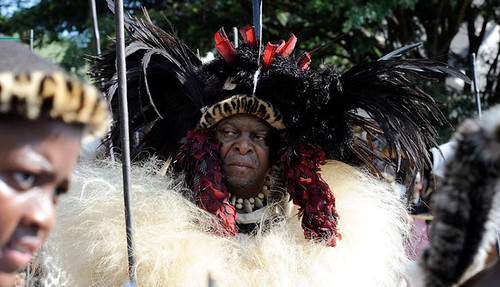
King Goodwill Zwelithini has decried levels of rape in KwaZulu-Natal and the country.

26 Feb 2013 16:43 - Sapa

King Goodwill Zwelithini and his Zulu warriors celebrate the annual Umkhosi Wokweshwama ceremony. (Gallo)
He has called on people to stand up and report the crime to the authorities.

A recent spate of attacks against the elderly, women and children were not a good reflection on the nation, Zwelithini said in his opening address in the KwaZulu-Natal legislature on Tuesday.

"This makes me feel embarrassed to be called the king of the people who commit such disgraceful acts."

He said only united action, involving all sectors of the community, would bring an end to rapes, abuse and murder.

"As a society we can prevent this, since we know the perpetrators.

"To all communities where such distasteful incidents happen, I urge you to exonerate yourselves and hand these thugs to the police."

Unemployment

The opening was attended by, among others, MPLs and former premier and Correctional Services Minister Sbu Ndebele.

Zwelithini said the authorities needed to take drastic action about unemployment in the province.

"The truth is that as a province we are sitting on top of a volcano that could erupt at any time," he said.

He also said there was a need for the equitable sharing of resources and benefits, especially when it came to mining.

Tension between mines and communities was caused by an absence of plans to ensure communities benefited from the mines in their areas.

Zwelithini said he would call for a KwaZulu-Natal mining dialogue to prevent future tensions. The opening of the legislature marks the official start of government activities in the province.

KwaZulu-Natal Premier Dr Zweli Mkhize will deliver his state of the province address on Thursday. – Sapa

Gender Violence: Creating a New Normal for South Africa's Men

Gender violence: Creating a new normal for South Africa's men

The solution lays in addressing 'how we raise our boys' and "how we equip parents to be parents". But there's a long way to go.

22 Feb 2013 00:00 - Mia Malan

'If disrespecting women was not considered so normal in my community, I would most probably not have raped that girl," said Dumisane Rebombo.

"I was 15 years old when I raped her. I grew up seeing half-naked women in my village running away from violent men all the time. No one talked about it. No one addressed it. It was just the way it was."

Thirty-seven years ago, Rebombo and two other boys sat down and came to a decision: they would gang rape a girl – "a girl who thought she was better than us boys, to prove we are men". They wanted to show that they could "control a woman" and "put her in her place". To rape her would give them the status of "brave boys" who would be respected because "we knew what we wanted and were brave enough to take it".

It took Rebombo, who now works for the gender equality organisation Sonke Gender Justice Network, 20 years of introspection and a considerable amount of counselling to realise "I was wrong".

But in his home village of Blinkwater in Mpumalanga, there has been no such revolution. "Just the other day I was there and talked to 12 women, including a very young girl, who had been raped or physically assaulted by men. The community doesn't want to talk about it."

Blinkwater is no anomaly. Research shows that the tiny settlement represents normality in South Africa. A study in 2009 by the Medical Research Council shows that almost one out of three South African men admitted that they had raped a woman. About half admitted they had raped more than once. More than 40% said they had been violent with an intimate partner.

According to the study, the average rapist looks more or less like this: he's younger than 30, comes from a single-parent home, doesn't perceive his parents to have been particularly affectionate and has experienced childhood trauma.

"Research shows that children raised by one parent are far more likely to experience emotional or physical abuse than those who have two parent figures," said the chief study author, Rachel Jewkes. "In South Africa, more than half of children come from homes with absent fathers, which makes them extremely vulnerable to abuse."

Abusers

Jewkes said studies had repeatedly shown that children who have been abused are more likely to become abusers themselves.

In Pinky Promises, a book by the photographer Pierre de Rosemond on the accounts of both victims and perpetrators of sexual abuse, a clinical social worker, Marcel Londt, said: "Many child victims [of abuse] are entering adolescence and adulthood with pervasive coercive sexual behaviours."

Londt, who works with sex offenders, said: "These children link their sexual aggression to emotions such as fear, loneliness or anger."

She said that not every child who "matured" into a sex offender was sexually abused during childhood but "we can safely assume that most children who become dangerous adults have experienced some form of emotional or physical abuse and maltreatment".

In Rebombo's case, he was constantly "jeered at" and often physically beaten by his peers for being a "sissy". Rebombo, a Tsonga, hadn't been circumcised according to tradition and he helped with chores at home: "This was something a real man was not supposed to do … I had a low self-esteem and felt lonely and rejected, and raping a girl … made me feel more accepted."

Londt said boys' sexually abusive behaviour was "often rooted in the world view that life consists of the abused and the abusers … and that you either are abused or you own the necessary power and control by becoming the abuser yourself."

Jewkes said children of parents who used physical punishment, such as beating them to discipline them, were likely to experience it as abuse and, as a result, were at risk of becoming abusers as adults.

Assert dominance

South Africa's high rate of teenage pregnancies also contributes to the number of single-parent households. But, according to experts, the single biggest contributing factor to men mistreating women is South Africa's "gender hierarchy" and males' perception of what it means to be a man: to assert dominance and control over women – and other men.

According to Jewkes, this is partly rooted in South Africa's "disturbed" past and the way that South African men have been "socialised into forms of masculinity that are predicated on the idea of being strong and tough".

Some experts have dubbed this "flawed African masculinity".

An independent gender violence expert, Lisa Vetten, said that especially black men's "manhood" was damaged during apartheid.

They were called "boys", separated from their families as a result of migrant labour and disrespected. This led to a "failed sense of themselves". They felt powerless and the only sphere where they still perceived themselves to have any influence was at home. "It's easy to displace your anger on [to] your wife at home because she's accessible and vulnerable," said Vetten.

White men, on the other hand, had an "overinflated sense of their own importance" during apartheid and that often led to violence at home.

The University of the Free State rector Jonathan Jansen said that South Africa "sadly only responds at the tail end" of sexual violence.

Long way to go

"Extreme forms of domestic violence are determined by what we are willing to tolerate every day," he said. "When I was a child growing up on the Cape Flats, no woman was able to walk past a group of men in the street without them shouting something abusive or sexual at her. That is still happening. We accept it as normal and don't do anything about it. But then we cry out at men murdering and raping women and wonder why it's happening."

Jansen said the solution lay in addressing "how we raise our boys and teach them to socialise" and "how we equip parents to be parents".

But there's a long way to go.

When Rebombo wanted to visit the woman he raped, he discussed it with his pastor. The pastor considered violence against women to be "so normal" that he discouraged Rebombo from apologising. "You were just a boy; you don't have to pay for it now," he said.

His two accomplices heard about his intentions and threatened to kill him if their names were mentioned. "We are married men now. No one needs to know about what we did so many years ago," they said.

When he finally visited the woman he had raped to apologise, she said: "Do me a favour: teach your son not to do what you did to me."

Rebombo agreed. "I've told my sons and daughter what I did. It was wrong. Women are people, not animals. If only I had a role model when I was 15. But all those I had around me were perpetrators of violence."

Tuesday, February 26, 2013

Zimbabwe Women's Affairs Minister Clarifies COPAC Campaigns

Muchena clarifies Copac campaigns

Wednesday, 27 February 2013 00:00
Herald Reporters

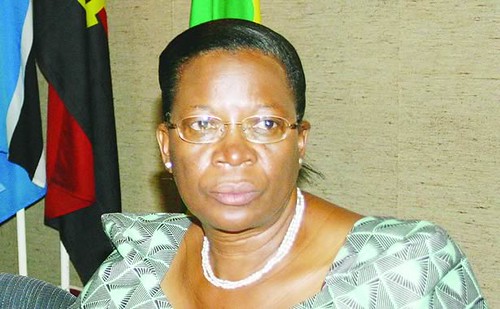
PUBLICITY campaigns on the draft Constitution are not platforms for political parties to advertise their manifestos, but to educate Zimbabweans on provisions of the proposed supreme law, the Minister of Women’s Affairs, Gender and Community Development Cde Olivia Muchena said yesterday.

Minister Muchena, who is part of Copac officials going around the country raising awareness on the draft and canvassing for a
“Yes” vote, said this at Dema council offices where they addressed scores of residents on the draft constitution.

“We are here as Copac to advise you on what came out from the views we collected during the outreach programme. I am here as representative of Zanu-PF for Mutoko South and my colleague honourable Ian Kay from Marondera.

“Our purpose in coming to you as Copac is to explain the draft and not to sloganeer or anything to do with our parties,” she said.

Mr Kay added that the constitution was a product of the collective efforts of Zimbabweans.

“This constitution was written by us as Zimbabweans which is why you find that its preamble talks about us as Zimbabweans and our aspirations,” he said.

Turning to the contents of the draft, Minister Muchena said it was a progressive constitution that now contained a comprehensive Bill of Rights and promoted women’s rights.

The team also held another meeting in Hwedza.

Copac co-chairperson Cde Munyaradzi Paul Mangwana said meetings were going on well countrywide ahead of the March 16 referendum.

“I attended meetings in Murombedzi and Mt Hampden in Mashonaland West and from what I observed the people are excited about the draft.

There has not been any incidents at the various centres from the reports we have received except that we have a challenge in providing enough copies of the draft to the public. We are still running around to see if we can get resources to increase the copies,” Cde Mangwana said.

The meetings went on well in Harare at Zimbabwe Hall in Highfield and at Kuwadzana High School. Both meetings were fully packed and were addressed by Zanu-PF’s Copac member Cde Flora Buka and her MDC-T counterpart Mr Innocent Gonese.

In Bulawayo, residents turned out in large numbers for the meetings. The two meetings in Bulawayo were in Barham Green and Small City Hall that saw residents engaging Copac facilitators on contentious provisions within the draft Constitution.

The residents were interested in the clarification of the provision on dual citizenship, which is enshrined in Chapter 3 of the draft Constitution.

Lupane West Member of Parliament Cde Martin Khumalo (Zanu-PF), who was heading the Bulawayo team, said it was important for residents to note that the Draft Constitution had more strengths than weaknesses.

“We are here to make you understand the core issues that this draft addresses. I have to mention to you that we can’t change anything at this stage, but all your concerns will be noted and recorded,” said Mr Khumalo.

His counterpart from MDC, Mr Gifford Sibanda said it would have been difficult for the country to produce a flawless constitution and the draft Constitution was the best they could arrive at.

“A good constitution is one document that one can look at and say ‘this is a good constitution, but . . .’ and someone else will be saying the same thing somewhere. This is because it is hard to balance all the diverse views of the people under one document,” said Mr Sibanda.

The Zimbabwe Herald Maintains Dominance

The Herald maintains dominance

Wednesday, 27 February 2013 00:00
Felex Share Herald Reporter

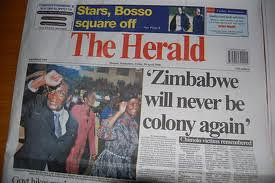
THE Herald continues to rule the roost as Zimbabwe’s most-read daily, despite a further decline in readership in most stables.

Latest Zimbabwe All Media and Products Survey results released yesterday show that overall newspaper readership dropped from 47 percent to 44 percent between 2011 and 2012.

The results are for the last quarter of last year.

The Herald maintained pole position with a 25 percent readership, down from 31 percent in the survey conducted between July and Septem­ber last year.

Its readership stood at 1 681 939 in the past three months with 936 430 of those being in urban areas while 745 509 readers are in rural areas.

The Herald is followed by H-Metro whose readership rose from 14 percent to 17 percent, with a readership of 1 173 244.

Readership for both the Daily News and NewsDay dropped from 22 percent in the last survey to 13 percent.

The Daily News’ readership was at 872 605 while the Newsday had 901 148 readers.

The Herald’s sister paper, Chronicle had a readership of eight percent from 13 percent in the last results.

The Chronicle had 566 712 readers for the period under review.

In the last four weeks, 555 904 people have been tuning to Star FM with Power FM still the most popular urban station with 2 138 221 listeners, which is 32 percent of total listenership.

ZiFM has 391 223 listeners (six percent) and Radio Zimbabwe is the most popular station countrywide with 2 688 403 listeners (40 percent).

National FM has 698 320 listeners (10 percent), Spot FM had 214 330 (three percent) while Studio 7’s listenership stood at 133 843 (two percent).

Overall, there has been an increase in the number of people who listen to the radio during the past month, at 61 percent.

The growth has come from the new stations Star FM and ZiFM.

In urban areas, 15 percent tune in to Star FM and nine percent to ZiFM while they both enjoy listener-ship of four percent out of town.

The Sunday Mail remains the most-sought-after weekly paper.

It attracts 1 075 078 (16 percent) readers countrywide while Manica Post is a distant second with 316 089 (five percent) readers.

They were followed by the Sunday News and Kwayedza with 208 091 (three percent) and 201 539 (three percent) readers countrywide.

For the period under review, The Standard has 203 610 (three percent) readers while B-Metro has 186 958 (three percent) readers.

Financial Gazette had a readership of 100 913 (one percent) while Zimbabwe Independent had 76 988 readers.

Umthunywa and the Daily News on Sunday were tied on one percent, but the former had more readers than the latter.

The Bulawayo paper had 86 593 readers as compared to the Daily News on Sunday’s 43 351.

The Voice’s readership stood at 3 431.

The survey revealed that despite the reduction in the free-to-air footprint, satellite TV viewership rose three points to 41 percent of the population.

ZTV has a viewership of 32 percent while urban homes with a satellite dish rose from 68 percent to 70 percent.

People watching ZBC TV2 increased significantly, rising from four to nine percent nationally.

It also rose from eight to 17 percent in towns and cities.

Audiences watch the news most - 16 percent nationally and 17 percent in towns - after which they enjoy local drama, watched by seven percent of the population.

SABC channels remain the most popular satellite, down three percent to 29 percent.

Satellite TV is watched by half the urban population and 16 percent of rural folk.

Supersport enjoyed a two percent rise to seven percent of Zimbabweans.

Urban Internet use is growing fast with 42 percent of people having access to it, up from 34 percent a year ago.

Total internet access is 22 percent recording a four percent rise.

The most common vehicle is smart-phones, 16 percent nationally and 32 percent in towns.

Facebook is the most popular website, visited by 15 percent of Zimbabweans and 31 percent of city dwellers, followed by Google (10 percent) and Yahoo (four percent).

Cellphone usage continues to grow – 85 percent of Zimbabweans having one while rural access has increased to 80 percent from 66 percent in the same quarter in 2012.

Research Bureau International carried out the survey on behalf of the Zimbabwe Advertising Research Foundation.

ZARF, whose board includes representatives from the media and advertising industries, is funded by a 1,5 percent surcharge on all advertising and is independent of control by any media house or agency.

The foundation then hires an independent market research company to do the actual survey.

Major advertising agencies set up the system to find out how many people read each newspaper, watch television, listen to radio or access the Internet.

The Herald has consistently come out tops in the survey carried by various organisations.

French Imperialists Meeting Stiff Resistance in Adrar des Ifoghas Mountains In Northern Mali

French defence minister: Tough fighting under way in mountains of northern Mali

Published on February 26, 2013

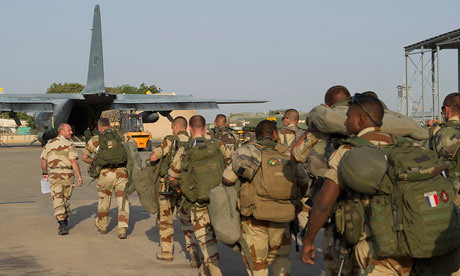
PARIS (AP) — France’s defence minister said Tuesday that French troops are involved in “very violent fighting” in the mountains of northern Mali and that it’s too early to talk about a quick pullout from the West African country, despite the growing cost of the intervention.

The fighting against Islamic extremists in the Adrar des Ifoghas mountains has been going on for days. A clash in the area killed 23 soldiers from neighbouring Chad on Friday, according to a letter from French President Francois Hollande expressing condolences to his Chadian counterpart.

Soldiers from Chad and a few other African countries have joined the French-led operation to help Mali’s weak military push back extremists who had imposed harsh rule on northern Mali and started moving toward the capital last month.

On Tuesday, the Obama administration imposed sanctions on an Islamic rebel leader whose extremist group seized much of northern Mali last year and prompted the French military intervention. The U.S. State Department designated Iyad Ag Ghali, head of the Islamic group Ansar Dine, a global terrorist. The action blocks any assets he holds in the U.S. and prohibits Americans from doing business with him. The U.N. also added Ag Ghali to its global sanctions list.

Ag Ghali’s armed Islamic extremists conquered much of northern Mali after a military coup in Mali’s capital, aided by al-Qaida’s North Africa wing. In Timbuktu, he imposed strict Shariah law and forced thousands to flee; others were tortured and executed. But the French-led intervention in January has turned the tide, forcing back Ag Ghali’s rebels to mountainous hideouts near the Algeria border.

French Defence Minister Jean-Yves Le Drian said on France’s RTL radio Tuesday that the French intervention in Mali has cost more than (euro)100 million ($133 million) since it started Jan. 11.

In the first weeks of the campaign, French and Malian forces easily took back cities in northern Mali. But the fighting is rougher now that it has reached more remote terrain in the mountains of the southern Sahara.

“We are now at the heart of the conflict,” in protracted fighting in the Adrar des Ifoghas mountains, Le Drian said. While some have suggested starting a pullout of the 4,000-strong French force next month, Le Drian said he couldn’t talk about a quick withdrawal while the mountain fighting goes on.

Hollande’s letter to Chadian President Idriss Deby said the deaths of Chadian soldiers “illustrate the dangers of this mission.” It gave no details. The Chadian army had initially said that 13 soldiers and 65 Islamic extremist rebels were killed in the fighting Friday.

Egypt Prosecutor-General Opens Investigation Into Air Balloon Accident

Egyptian prosecution opens investigation into air balloon accident

Dalia Farouk, Ahram Online
Tuesday 26 Feb 2013

Egypt's prosecutor-general dispatches a team to investigate the hot air balloon accident in Luxor, as tourism chief blames ministry of civil aviation

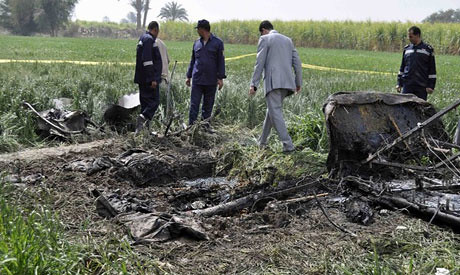
Egypt's prosecutor-general Talaat Abdallah has launched an investigation into the hot air balloon accident that left 18 people dead in Luxor on Tuesday.

A team of prosecutors arrived in Luxor to look into the case on Tuesday afternoon, and visited the morgue in Luxor International Hospital.

The Egyptian ministry of tourism said in a statement on Tuesday morning that it had formed a committee to follow developments and determine the cause of the accident.

Tourism minister Hisham Zazou, who is currently in Tehran, said that "those proven responsible for the accident will receive severe punishment", according to the statement.

A technical committee from the ministry of civil aviation has also arrived at the site of the accident.

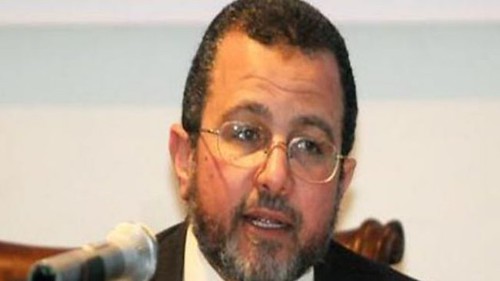
In addition, Luxor's governor Ezzat Saad said that he received phone calls from President Mohamed Morsi and Prime Minister Hisham Qandil, checking on the situation.

Meanwhile, the chairman of the chamber of tourism companies in Luxor, Tharwat El-Agami, held the ministry of civil aviation responsible for the accident.

He said that it is the ministry's duty to implement measures for preventing air balloon accidents and to ensure that they are safe to fly.

The last hot air balloon accident in Luxor, which left 16 people injured in 2009, led to a halt in all air balloon activity for six months until security measures were implemented.

Other accidents took place in 2007 and 2008, but did not cause deaths.

Egypt's ministry of health said that 18 people were killed on Tuesday morning, including 17 tourists and one Egyptian woman, when a hot-air balloon exploded in mid-air near Luxor, Upper Egypt. Reports by other news agencies said that 19 people had died.

According to the ministry of health, three people, including the balloon's pilot, were sent to Cairo for medical treatment.

http://english.ahram.org.eg/News/65642.aspx

Key Opposition Forces Boycott Egyptian Presidential 'National Dialogue'

Egypt's Morsi opens 'national dialogue' in run-up to parliamentary polls

Zeinab El Gundy, Tuesday 26 Feb 2013

Egyptian president hosts first 'national dialogue' session to discuss guarantees for free parliamentary polls; Handful of opposition parties, figures decline invitation to attend

President Mohamed Morsi on Tuesday evening launched the first session of his 'national dialogue' initiative with representatives of political parties and groups to discuss guarantees for free and fair parliamentary elections slated for April.

"I hold the main responsibility for holding fair and transparent elections," Morsi declared at the session, which was moderated by presidential aide Pakinam El-Sharqawy. He added that upcoming polls represented the "most important elections" in Egypt's modern parliamentary history.

The president stated that the elections, to be held on 22 and 23 April, would be organised by Egypt's Supreme Elections Commission (SEC) and supervised by judicial representatives. "The police and army will secure the elections, as was the case in previous elections and referendums over the last two years," he said.

Morsi also said that 50 civil society organisations from Egypt and abroad had requested permission to observe the polls, including the UN, the EU and the US-based Carter Centre. "No fewer than 90 observers have been granted permission to observe the elections," the president said.

He went on to urge parties and movements that were absent from Tuesday's meeting to join upcoming dialogue sessions. "We are open to suggestions," Morsi said, adding that the SEC was awaiting any recommendations to come out of the ongoing dialogue initiative.

Answering questions about the current relationship between Egypt's presidency and armed forces – in light of recent speculation about tensions between the two – Morsi stressed that there were "no problems" between his adminstration and any other state institution, including the military, intelligence apparatus or police force.

The 13 political parties that accepted the president's invitation to hold talks on Tuesday included the Muslim Brotherhood's Freedom and Justice Party (FJP); the Salafist Watan Party; the Salafist Nour Party; the moderate-Islamist Hadara Party; the moderate-Islamist Wasat Party; Al-Gamaa Al-Islamiya's Building and Development Party; and the liberal Ghad El-Thawra Party.

At the session, Nour Party leader Younis Makhioun criticised Morsi's decision to announce a date for elections without consulting his party or considering the latter's recent initiative for ending Egypt's current state of political polarisation. Makhioun also accused the Muslim Brotherhood of attempting to monopolise state institutions.

Makhioun went on to demand that the president delay the upcoming polls and refer a draft elections law to Egypt's High Constitutional Court (HCC) so as to avoid any future court rulings against the elected assembly's constitutionality.

Morsi answered by saying that the Shura Council (the upper house of Egypt's parliament, currently endowed with legislative powers) had already amended the elections law in accordance with the HCC's recommendations. "After I issued the law, it was immediately sent to the HCC for revision," the president said.

FJP leader Saad El-Katatni, for his part, slammed the National Salvation Front opposition umbrella group, which has continued to demand the delay of parliamentary polls, formation of a new government, and snap presidential elections. El-Katatni also criticised the Egyptian media for "attacking certain political parties" and attempting to influence Egypt's voting public.

Mohamed Anwar El-Sadat, head of the Reform and Development Party, stressed the importance of establishing credible guarantees for free and transparent elections so as to encourage reluctant parties to participate in the electoral process.

Attendees also discussed other issues of relevance to the upcoming polls, including campaign funding, the use of mosques and churches for electioneering, and the use of private and state media in electoral campaigning.

A number of opposition figures and parties boycotted Tuesday's dialogue session. These included the Constitution Party, the Popular Socialist Alliance Party, the Egyptian Social Democratic Party and the Wafd Party.

Public figures who declined the invitation to attend the meeting, meanwhile, included activists Gamal Eid, Abdel-Rahman Youssef, Mostafa El-Naggar and Wael Ghoneim.

The moderate-Islamist Strong Egypt Party also boycotted Tuesday's session, stating: "The presidency insists on issuing important decisions unilaterally without any social or political discussion with other political powers." The party nevertheless sent a list of 20 recommendations to the presidency regarding upcoming parliamentary polls.

http://english.ahram.org.eg/News/65687.aspx

100 Million Join General Strike In India

100 million join general strike in India

By Gene Clancy on February 25, 2013
Workers World

The working and oppressed classes of India showed their strength and determination on Feb. 20-21 with a general strike that completely shut down many parts of the country and deeply affected many more.

The All-India General Strike was called jointly by 11 Central Trade Unions and Independent Federations of Workers and Employees, many of which are affiliated with progressive or leftist parties. The demands include many items that will be familiar to workers around the world: protect the right to organize (end retaliation against organizing workers), stop using contract labor, raise the minimum wage and stop outsourcing jobs.

In a press release issued on Feb. 20, the unions stated that “the unprecedented response to the call of strike throughout the country, much beyond our expectations, reflects truly the anger of the people against the persistent increase in the prices of diesel, gas, coal, electricity and other essential goods for the bare need of the common people.” There were also reports that many unorganized workers took part in the strikes and demonstrations. (beforeitsnews.com, Feb. 21)

Although largely ignored by the bourgeois world media, the strike had a significant impact. It virtually shut down the banking and insurance sectors, industrial production and educational institutions in many parts of India, despite threats of reprisals by the national and state governments. Workers from private industries, including in the special economic zones, participated alongside public sector workers.

The southern state of Kerala was largely shut down, with no buses or open shops and educational institutions and factories closed, despite threats by the state government to deduct two days’ pay from strikers. More than 200,000 garment workers in the industrial city of Tirupur, in the state of Tamil Nadu, went on strike. Coal miners from the state-run Singareni Collieries Company walked off the job in the state of Andhra Pradesh.

In northern India, the states of Haryana, Punjab and Chandigarh were all heavily affected. In the city of Ambala in Harayana, Narender Singh, a bus driver and treasurer of an affiliated union, was killed Feb. 20 when a bus hit him as he was picketing. Angry protesters clashed with the police after the incident. More than a dozen union activists were injured, five of them seriously.

Auto workers in the Gurgaon-Manesar industrial belt, including at Maruti Suzuki, Hero MotoCorp and Suzuki Motorcycle India, joined the second day of the strike. In the western state of Gujarat, nearly 8,000 state-owned buses were off the road, and much of the banking sector was hit.

The capital of New Delhi was virtually paralyzed. In the industrial areas of Noida, near New Delhi, hundreds of factories and vehicles, including more than a dozen police cars, were damaged after workers blocked roads and clashed with police. Authorities were forced to bring in police from outside the city, along with the Provincial Armed Constabulary, to suppress protesting workers.

‘Total strike’ in most populous state

Across the country’s most populous state, Uttar Pradesh, the local media reported that the strike was total in the cities of Meerut, Ghaziabad, Noida, Kanpur, Varanasi, Lucknow, Saharanpur, Unnao, Moradabad and Allahabad. Major markets in Lucknow, like Aminabad and Hazratganj, were deserted, and operations at post offices and state-run banks were disrupted.

Thousands of rail and road passengers were stranded in the eastern states of Odisha and Bihar as protesters blocked the movement of trains, buses and auto rickshaws.

“Protesters are squatting on the railway tracks or capturing the locomotives. We’re just helpless,” Amitabh Prabhakar, a public relations officer for Indian Railways’ east-central zone, said by telephone. (Reuters, Feb. 20)

According to Reuters, “The Associated Chambers of Commerce and Industry said … the two-day strike was expected to cause a loss of 150 billion-200 billion rupees ($2.8 billion-$3.8 billion), hurting sectors such as banking, insurance and transport.”

The workers and oppressed people of India have shown that they will resist both government austerity and increased capitalist exploitation. They deserve the support and solidarity of progressives around the world.


All-India union statement on general strike

By Editor on February 25, 2013

The following abridged press statement of the All-India Committee of the All-India United Trade Union Center was issued by Comrade Sankar Saha, general secretary, on Feb. 21.

We once again congratulate the working millions of our country for their spontaneous massive participation in the two-day nationwide general strike that took place on 20th and 21st February at the call of all the Central Trade unions to press the long-pending 10-point demands.

Starting from Meghalaya, Assam to Andhra Pradesh, Kerala and Karnataka, and again from West Bengal, Odisha, Bihar and Jharkhand to Uttar Pradesh, MP [Madhya Pradesh], Delhi, Punjab, Rajasthan, Gujarat, Maharashtra, Haryana and Himachal Pradesh — everywhere the workers took to the street in thousands, voicing their demands, defying all sorts of threats, intimidations, arrests, organized armed attacks and even a brutal killing of a striker of Haryana.

The principal trend which was reflected in the slogans raised by the employees — be they in bank, insurance, coal, steel, power, port and dock, central and state services, engineering, or jute, as well as in various schemes like ICDS [Integrated Child Development Services], ASHA [Accredited Social Health Activist], etc., or millions of workers who are in unorganized sectors, including contractual employees — was finally against the policy of capitalist globalization being pursued by the successive central and state governments, without exception, for the interest of domestic and foreign monopolists throughout the last two decades.

The two-day strike also brought to the fore the growing urge of the working people to come closer to each other and build up united sustained militant struggle, adhering to “unity-struggle-unity” against the anti-people and anti-worker policies until such are reversed.

In view of the above, we urge the entire working-class fraternity of the country to remain on guard against any sorts of conspiracy to foil or frustrate or misdirect the ongoing movement, and to pledge to intensify the united movement further in the right direction to achieve final victory.

Sudan's United Nations Voting Rights Restored

Sudan's U.N. voting rights restored

Feb. 26, 2013 at 10:58 AM

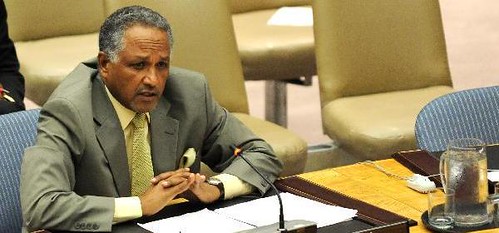
KHARTOUM, Sudan, Feb. 26 (UPI) -- Sudan has paid $516,085 -- slightly more than half of what it owes -- to have its voting rights restored at the United Nations, officials say.

It's the second time since 2012 the country's ability to vote at the international body had been suspended, the Sudan Tribune reported Monday.

Sudan was reinstated after it made the payment, said Eduardo del Buey, deputy spokesman for the secretary-general.

The East African country had owed $1 million and had to pay at least $347,879.

The decision to suspend Sudan's voting rights was "politically motivated," Mohamed al-Hassan, head of the Sudanese Parliament's Foreign Relations Committee, said earlier this month.

Sudan's Foreign Ministry said the country's delinquent status was a temporary condition.

Payment of the funds was complicated by U.S. sanctions against Sudan that bar it from having a bank account in the United States. Sudan made the payment to the U.N. Development Program, which transferred the money to U.N. headquarters in New York.

Sudan was among 15 member countries of the United Nations whose voting rights were suspended earlier this year.

Read more: http://www.upi.com/Top_News/World-News/2013/02/26/Sudans-UN-voting-rights-restored/UPI-56281361894312/print#ixzz2M3z1JV2t

Israel Secretly Repatriated 1,000 to Sudan, Without Informing the United Nations

Israel secretly repatriated 1,000 to Sudan, without informing UN

Though Israel claims the people's return was voluntary, this claim was rejected by UNHCR, which says there is no 'free will from inside a prison.'

By Talila Neshe
Feb.26, 2013 | 4:31 AM | 40

Israel has "voluntarily" returned at least 1,000 people to Sudan, an enemy country that has vowed to punish any of its citizens who ever set foot in Israel. The repatriation was done secretly, via a third country, over the last few months, without the knowledge of the UN High Commissioner for Refugees.

Haaretz knows the name of the third country, but is withholding it to avoid harming those who returned via this route.

Though Israel claims the people's return was voluntary, this claim was rejected by UNHCR, which says there is no "free will from inside a prison."

Under a recent amendment to Israel's infiltration law, asylum seekers can be jailed for years without trial. Testimony from within prisons indicates that detainees were also denied access to UNHCR, in violation of the UN convention on the status of refugees, which Israel has signed.

All the Sudanese who left "voluntarily" already had Sudanese passports: Since their presence here was being kept secret, Israel couldn't coordinate their departure with Sudan. An official source said Israel paid for their plane tickets.

In the past, the state has said in court that Israel doesn't deport Sudanese nationals, because "Sudan and Israel are enemy states, such that a Sudanese national who has set foot in Israel can't return to his country for fear of his life, or so he claims." This is in contrast to residents of South Sudan, with which Israel does have relations, and to which it began repatriating people after the country gained its independence from Sudan in 2011.

Aside from the fact that Israel and Sudan are enemies, Sudanese law explicitly forbids its citizens to enter Israel. Its passports even state that they are valid for entry to every country except Israel.

Senior Sudanese officials have also made public threats against Sudanese nationals who fled to Israel. In July 2007, for instance, Sudan's interior minister said that any Sudanese living in Israel would be punished.

Shortly afterward, Sudan's refugee commissioner accused Sudanese refugees in Israel of carrying out a "Zionist agenda" against Sudan, and urged the Egyptian authorities to punish Sudanese who try to enter Israel via Egypt.

In September 2007, Sudan's foreign minister said that for a Sudanese to reside in Israel was a criminal offense.

The UN's stance on the issue is also clear. Michael Bavli, UNHCR's representative in Israel, warned the Population, Immigration and Border Authority that "deporting Sudanese to Sudan would be the gravest violation possible of the convention that Israel has signed - a crime never before committed."

The UN refugee convention explicitly states that even someone who wasn't a refugee when he first left his country can become one thereafter, if subsequent events - in this case, entering an enemy country - make it impossible for him to return to his country without risking his life.

Such people, known as "refugees sur place," enjoy all the same protections under the convention as people who originally fled their country due to a "well-founded fear of persecution."

This interpretation has been upheld by Israel's Supreme Court. "All governmental powers - including the power to deport under the Entry into Israel Law - must be exercised on the basis of recognition 'of the value of the human being, and the sanctity of his life and his freedom,'" wrote former Supreme Court President Aharon Barak in one verdict, quoting the Basic Law on Human Dignity and Freedom. "This is the great principle of non-refoulement, under which a person cannot be deported to a place where his life or liberty would be in danger. This principle is enshrined in Article 33 of the refugee convention. It is part of the domestic legislation of many countries ... This is a general principle that isn't limited solely to 'refugees.' It applies in Israel to every governmental authority that deals with deporting someone from Israel."

Harel Locker, director general of the Prime Minister's Office, has also said previously that Sudanese nationals can't be deported back to Sudan, though they could be deported to another country "that agreed to absorb them" and would "guarantee their safety."

Aside from the fact that Sudan and Israel are enemy states, many of the Sudanese in Israel come from the province of Darfur, where they were allegedly victims of ethnic persecution and genocide by the regime.

Due to these alleged crimes, the International Criminal Court has issued an arrest warrant on charges of genocide against Sudanese President Omar al-Bashir and other senior Sudanese officials.

Others come from other areas of Sudan, such as the Nuba Mountains or other parts of Kordofan, that have been subjected to brutal attack by the Sudanese government - including aerial bombing, the destruction of entire villages and mass arrests of hundreds of thousands of people - in an effort to suppress what the government terms rebellions. Still others fled Sudan due to religious or ethnic persecution.

The Population, Immigration and Border Authority (part of the Interior Ministry ) responded that "the government's policy of not deporting north Sudanese has not changed."

The Foreign Ministry said: "Since overall responsibility for this issue rests with the Population Authority, we are barred from commenting independently on this issue and refer you to the responsible party - that is, the Population Authority."

The Justice Ministry declined to comment.

Europeans Rush In: Somalian Regime Accredits Five Ambassadors

Somalia Accredits Five European Ambassadors

by Naharnet Newsdesk 26 February 2013, 18:22

Somalia accredited ambassadors from five European nations Tuesday, a move hailed by the president as sending a signal that the war-ravaged nation was "becoming a normal country."

Ambassadors of Belgium, France, Germany, Spain and Finland presented their credentials to Somali President Hassan Sheikh Mohamud, who said he hoped Somalia would "soon see many international flags flying over Mogadishu".

All the ambassadors are based in Nairobi, the capital of neighboring Kenya due to security concerns.

Somalia has been ravaged by conflict since 1991 but a new U.N.-backed government took power in September, ending eight years of transitional rule by a corruption-riddled administration.

Many have said the new government offers the most serious hope for stability since the fall of dictator Mohamed Siad Barre in 1991.

Few countries have an ambassador based in Mogadishu, with those that do including Ethiopia, Iran, Turkey and Yemen.

From Europe, ambassadors from Britain and Italy are also accredited but are based in Nairobi.

Large parts of Somalia have been carved up by rival militia forces who have developed autonomous regions that pay little, if any, heed to the weak central government.

However Shebab Islamist insurgents are on the back foot, having fled a string of key towns ahead of a 17,000-strong African Union force, which is fighting alongside Somali government troops to wrest territory from the extremists.

Ethiopian troops are also battling the Shebab in the southwest of Somalia.

Source: Agence France Presse

JPMorgan Says It Will Layoff 19,000 Workers

JPMorgan says it will trim 19,000 jobs, including many it added to deal with problem mortgages

By Associated Press
Tuesday, February 26, 7:01 PM

NEW YORK — JPMorgan will trim about 19,000 jobs over the next two years but cast a positive spin on the news: It is shrinking the unit it had beefed up to handle troubled mortgages.

The bulk of the cuts, about 15,000, will come at the mortgage unit, which had swelled to about 50,000 workers from a pre-financial crisis roster of 20,000 because the bank needed more people to process defaulted mortgages. The bank said it hopes to find jobs in other parts of the company for displaced workers through a “redeployment” program.

The rest of the cuts, about 4,000, will come from the consumer banking business, mostly the branches. JPMorgan said those cuts will come through attrition, not lay-offs.

The bank noted that it’s also adding jobs in certain areas, such as commercial banking and asset management. Overall, it expects its payroll to be down by about 17,000 at the end of 2014. That means it would fall to about 242,000 from its current 259,000, a 6.5 percent reduction.

The cuts were revealed in a presentation to investors Tuesday and are part of the bank’s bigger cost-cutting campaign. JPMorgan increased its profits and revenue in 2012 and has weathered the financial crisis and its aftermath better than most.

But like its peers, it’s facing a host of challenges. Banks are navigating new government regulations that have crimped some old sources of revenue, like issuing credit cards to students. The banks have also said that complying with the new regulations is costing them more money.

The move could signal a new direction for staffing: JPMorgan already shed about 1,200 jobs in 2012, after adding jobs in 2011 and 2010.

Bank of America, Citigroup, Morgan Stanley and Goldman Sachs all trimmed jobs in 2012. Morgan Stanley’s current round of job cuts has focused on senior ranks and investment bankers. Bank of America has also said it needs fewer people to work through problem mortgages, though it has cut jobs in other areas. Citigroup is scaling back in countries that it no longer sees as growth engines.

Shares of New York-based JPMorgan Chase & Co. ended Tuesday down 10 cents at $47.60. The stock has gained about 24 percent in the past year.

Zimbabwe to Hold National Elections Despite Continuing Western Sanctions

Zimbabwe to Hold National Elections Despite Continuing Western Sanctions

ZANU-PF and opposition parties campaign for new constitution and positions within government

By Abayomi Azikiwe
Editor, Pan-African News Wire

On March 16, the Southern African state of Zimbabwe is scheduled vote on whether to accept or reject a draft constitution which is the product of four years of collaboration between the ruling Zimbabwe African National Union-Patriot Front and the two Movement for Democratic Change (MDC) parties. Later in July, national presidential and parliamentary elections will be held in order to form a new government inside this country which gained its independence from British colonial settlers in 1980.

Zimbabwe is still facing sanctions by Britain, the United States, the European Union and their allies. The sanctions were designed to isolate the ruling ZANU-PF party headed by President Robert Mugabe, which launched a comprehensive land redistribution program in 2000 that seized the most productive farms and turned them over to the African masses.

In recent years, a national reconciliation process has led to the lessening of tensions inside the country. The establishment of a Global Political Agreement and a coalition government since 2008 has resulted in broad-based discussions and the formulation of a draft constitutional document.

Millions are expected to vote on the draft that will ostensibly solidify the national reconciliation process. President Mugabe and other leading governmental officials have appealed to the citizens of the mineral-rich state to maintain the peace throughout the campaigning and election period.

During the lead up to the land redistribution program, the imperialist states imposed draconian sanctions and financed the formation of the opposition Movement for Democratic Change headed by Morgan Tsvangirai. The MDC later split into two factions with one headed by Arthur Mutambara and the other by Tsvangirai.

The country underwent years of destabilization efforts by the opposition forces. These political developments along with the land seizures provided a rationale for the governments in Washington, London and throughout Europe to impose and maintain an economic blockade on the country.

Propaganda against the land reform program was spread widely within the corporate media throughout the world. Allegations of corruption and inefficiency in implementing land reform were designed to discredit the policies of ZANU-PF under President Mugabe.

Yet several studies conducted by western researchers and journalists, including Prof. Ian Scoones of the Institute of Development Studies in Britain, suggested that the land redistribution policy had taken large-scale acreage under the control of a small number of white settler agricultural businessmen and broken them up creating tens of thousands of African small farmers who have increased production and raised incomes.

In addition to the increase in agricultural production, Zimbabwe has made significant new discoveries in the diamond and gold industries. To sabotage the renewal of the sanction-riddled economy, the imperialist states attempted to prevent Zimbabwe from marketing its diamonds internationally.

A campaign launched by the government with the support of the Southern African Development Community (SADC) regional organization, defeated these attempt to place a ban on Zimbabwe diamonds. Over the last few weeks additional gold resources have been discovered inside the country as well.

Another strategic resource that exists in abundance in Zimbabwe is platinum. Along with neighboring South Africa, this region of Africa encompasses over 80 percent of the world’s known sources of this mineral.

In addition to land redistribution, the government in Zimbabwe is implementing what it calls the indigenization of the mining industries. The objective of this policy to transfer the ownership of mining corporations to Zimbabweans so that the revenue generated can be reinvested into the national development of the country.

Western Observers Not Welcome During Elections

To minimize the imperialist intervention into the internal affairs of Zimbabwe, a leading official announced on February 23 that the countries which have been attempting to undermine the independence process in the country will not be allowed monitor the upcoming elections. Despite the creation of a government of national unity, a global political agreement and the scheduling of elections, the western states have maintained sanctions against the country.

In an article published by the Zimbabwe Sunday Mail it reported that only observers from the Southern African region will be allowed to monitor the upcoming elections. The statement was made by Vice-President Joice Mujuru, a longtime member of the ZANU-PF party.

Mujuru asked “Why should we be monitored by other countries outside the Southern African Development Community (SADC) when we are a sovereign state? Let us be wary of foreign interference in our internal politics.” (Sunday Mail, February 24)

The Vice-President went on to stress that “Some countries, particularly those which have imposed illegal sanctions on us, wish to pursue their interest at our expense by imposing themselves on our national election processes so as to influence the outcome in their favor.”

She emphasized that “As Zimbabweans, we have demonstrated our unity in diversity as we relentlessly pursued the Constitution-making process in the last few years. There is therefore, no reason why we cannot demonstrate our maturity, our sense of patriotism and our unity of purpose by conducting the forthcoming referendum on March 16 and harmonized elections thereafter in a peaceful environment.”

Alliance with the People’s Republic of China Enhanced

The ruling ZANU-PF party has maintained a long relationship with the People’s Republic China (PRC) that extends back to the days of the national liberation war of the 1960s and 1970s. In addition to the support Zimbabwe received from the SADC regional states during the worse period of the sanctions-regime against the country, the PRC has also played an important role both economically and politically in alliance with the Mugabe government.

This alliance has opened up a new chapter with the signing of three bilateral agreements in the fields of information communication, agriculture and transport. A delegation from China headed by the Minister of Commerce, Chen Deming, signed the agreements with Zimbabwean officials led by Vice President Mujuru and Finance Minister Tendai Biti.

Deming told Mujuru that China wants to further build upon its economic relations with Zimbabwe. “The Chinese President will next month attend the BRICS (Brazil, Russia, India, China and South Africa) summit in South Africa, a clear indication that the Asian country values Africa.” (Sunday Mail, February 24)

The signing of these new agreements are building upon existing projects which include the Sino-Zimbabwe Cement factory in Gweru and Anjin Diamonds that is developing the Chiadzwa diamond fields. Also the state-owned Chinese company Shandong Taishan Sunlight Group is planning to invest up to $US2 billion to develop coal mines, coal-bed methane extraction and other power projects located in the western province of the country.

The former Chinese ambassador to Zimbabwe, Xin Shunkang, reported during 2012 that trade between Zimbabwe and China had increased by 100 percent to $US800 million over a two year period. To help facilitate further growth, the China Development Bank is planning to invest $10 billion over the next five years in the Southern African state.

A Chinese corporation Sinotex is currently developing a $US 500 million cotton production project in partnership with more than 300,000 rural farmers.

These agreements will contribute towards resolving what the African Development Bank says is the need for Zimbabwe to invest $US14 billion into projects that will enhance its infrastructural capacity.

UNAC Holds Educational Conference Call on the Imperialist War In Mali

UNAC Holds Educational Conference Call on the Imperialist War in Mali

Activists from across the U.S. and Canada participate while imperialist war intensifies

By Abayomi Azikiwe
Editor, Pan-African News Wire

An educational conference call was convened by the United National Anti-War Coalition (UNAC) on the evening of February 24. Participation came from across the United States from California to New York involving UNAC activists as well as other political forces.

Ana Edwards, a leader of the Virginia Defenders for Freedom, Justice and Equality based in Richmond, was the first speaker on the call which was chaired by UNAC administrative committee member Joe Lombardo who is based in upstate New York.

Edwards was in Mali as part of ongoing solidarity work through the Friends of Mali when the French military invasion began on January 11. Since early 2010, she has worked to develop people-to-people ties with the West African state.

At the time of the intervention Edwards was in the city of Segou some 150 miles northeast of the capital of Bamako. Reports reached her and other members of their delegation that for safety reasons they should be re-located to the capital of Bamako in the south of the country.

Edwards witnessed the French military build-up that was facilitated by Pentagon warplanes. Mali’s government under former President Amadou Toumani Toure had been a participant in the U.S. Africa Command’s (AFRICOM) joint training operations ostensibly designed to enhance the national security capability of the country.

The leader of the military coup in Mali last March 21-22, Capt. Amadou Sanogo, was trained in several military academies in the U.S. Sanogo orchestrated the coup under the guise that the Toure government was failing in efforts to defeat the advances of the Tuareg rebellion in the north of the country which was led at the time by the National Movement for the Liberation of Azawad (MNLA).

Yet despite these allegations by the coup-makers, the military putsch set off a national and regional crisis. The Economic Community of West African States (ECOWAS) called for the isolation of the military junta and the U.S. and other countries said they were suspending ties with Mali pending a political resolution to the seizure of power by these army officers.

Edwards, who drafted a statement put out by UNAC opposing the intervention in Mali by France and other imperialist states, acknowledged that many within the country believed that the intervention of France would halt the reported advances by the Islamist groups who had taken several towns in the North including Gao, Timbuktu and other areas.

These Islamist organizations, Ansar Dine, the Movement for Oneness and Jihad in West Africa (MOJUWA) and the Al-Qaeda of the Islamic Maghreb (AQIM), had taken the military initiative from the MNLA in the north. The presence of these organizations provided a pretext for France and the U.S. to militarily intervene and to extend their involvement into neighboring Niger.

Another presenter during the UNAC conference call was Glen Ford, executive editor of Black Agenda Report, an online news agency encompassing written articles, research reports, a radio broadcast and television outlet. Ford has been broadcasting commentaries highly critical of the Obama administration’s foreign policy toward Africa as well as the relative inactivity of the Congressional Black Caucus in defending the interests of the African continent.

Ford examined the widening role of AFRICOM where most states within Africa have been lured into joint military operations with the Pentagon. Ford said that only the governments in Zimbabwe, Eritrea and the Republic of Sudan were refusing to have a relationship with AFRICOM.

A number of the activists on the call raised questions about the current situation in Mali in regard to resistance to French intervention, the role of the U.S. and the need to develop an action plan that can be taken up by broad sections of the anti-war movement to halt and rollback Pentagon interventions on the continent.

War Escalates In Mali

Although France claims that it will withdraw its forces from Mali in April, the situation on the ground indicates that the war is intensifying. Paris has admitted that two of its soldiers have been killed in the operations while the government in Chad, which has troops operating alongside the French, has announced that 23 of its soldiers died in fighting during February 22-24 around the mountainous Ifoghas region near the border with Algeria.

Reports are emerging from the war despite an attempt to block news from coming out of the country. Clashes have taken place in Gao, Kidal, and Tessalit where MOJUWA has engaged both French and Malian units.

With the escalation in the ground war, Human Rights Watch has called upon the Malian government to investigate allegations of violations carried out by their military forces. In a statement issued by HRW on February 22, it said that the government in Bamako should “urgently investigate and prosecute soldiers responsible for torture, summary executions, and enforced disappearances of suspected Islamist rebels and alleged collaborators.” (HRW Report)

Yet France’s bombing of the country, particularly in recent weeks around the Ifoghas Mountains, has drawn less scrutiny from western-based human rights organizations. France and Chad have admitted that its operations have resulted in the deaths of hundreds of people who they claim are all so-called “al-Qaeda linked” fighters.

Considering the worsening situation in Mali, it will remain to be seen if France withdraws its ground forces and warplanes from the country. An article published by Colum Lynch on February 22 may provide a glimpse into the character of France’s long term military plans for Mali.

According to Lynch, “When France eventually ends its military operations in Mali, the French military intends to position a rapid reaction force somewhere in West Africa to support African peacekeepers facing serious challenges to their authority by Islamist insurgents, according to U.N.-based diplomats familiar with the plans. Paris has not informed its allies where this new force would be deployed, but diplomats said it would most likely be in Senegal, Niger, or Chad, where France maintains military bases.”

This same article goes on to say that “France’s U.N. ambassador Gerard Araud, has sought to assure his counterparts that Paris will not abruptly pull out of Mali in the coming weeks, saying that the French military presence will be phased out gradually to allow time for a new U.N. peacekeeping mission to get its bearings.”

France says that it is working on a new resolution to go before the U.N. Security Council to formally establish an African-led peacekeeping force to be based in Mali. At present there are 5,000 troops from Chad, Niger, Nigeria and other regional countries inside Mali, however, it is being reported that most of them have not been deployed to the frontlines.

Since the intervention of France and its allies in Mali, the humanitarian situation has deteriorated. A recent report by the United Nations Children’s Fund (UNICEF) notes that 1.2 million people have been directly impacted by the fighting and approximately 700,000 children have been forced from schools due to the closing of educational institutions and the displacement of teachers.

At the same time as the war in Mali escalates, French President Francois Hollande has been awarded the United Nations Educational, Scientific and Cultural Organization (UNESCO) peace prize for his unilateral intervention in this West African state. Many people throughout the international community have questioned the UNESCO choice for the award in light of the growing militarism of Paris.

Finian Cunningham, an African affairs correspondent, wrote on February 22 that “France’s claim of combating terrorism in Mali does not add up. Re-conquest of this former French colony and control of rich natural resources in West Africa are some of the more plausible reasons for this criminal offensive that began on January 11.” (Press TV)

U.S. Deploys 100 Troops to Niger

On February 22 President Obama announced that he was deploying 100 troops to the West African nation of Niger, which borders Mali. The placing of troops in Niger is related to the conduct of unmanned reconnaissance flights over Malian territory in an effort to share intelligence with the French military. (Reuters)

The U.S. and the government of Niger signed a Status of Forces Agreement during January which is designed to govern the presence of Pentagon troops in the uranium-rich nation. The Pentagon and the Central Intelligence Agency (CIA) already have many drones and other surveillance aircraft stationed in several regions of the African continent in addition to a permanent base in the Horn of Africa state of Djibouti.

This announcement by Obama is in line with the December declaration by the White House that 3,500 troops would be dispatched to nearly three dozen states around the continent. These policy decisions will further destabilize Africa and create more resistance among the masses of the people struggling to win a better life free of imperialism and national oppression.

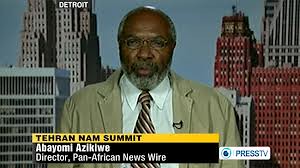
Abayomi Azikiwe, PANW Editor, Featured on Press TV World News: 'French Invasion Worsens Humanitarian Crisis Inside Mali'

French invasion worsens humanitarian crisis inside Mali: Abayom'i Azikiwe

To watch this interview with Abayomi Azikiwe, editor of the Pan-African News Wire, just click on the website below:
http://www.presstv.com/detail/2013/02/25/290740/nato-and-france-worsen-crisis-in-mali/

Mon Feb 25, 2013 1:23PM GMT

NATO and its supporters are actually worsening the humanitarian crisis in Mali though their intervention was claimed to be aimed at stabilizing the region, a political analyst tells Press TV.

On January 11, France launched a war on Mali under the pretext of halting the advance of fighters who had taken control of the north of the African nation. The United States, Canada, Britain, Belgium, Germany, and Denmark have voiced support for the move. The French-led war on Mali has caused a serious humanitarian crisis in northern areas of the country, displacing thousands of people, who now live in deplorable conditions.

Press TV has conducted an interview with Abayomi Azikiwe, editor of the Pan-African News Wire (Detroit), to further discuss the issue of the colonial war of France in Mali.

A rough transcription of the interview with Abayomi Azikiwe follows.

Press TV: The numbers really hone in the human cost of France's war in Mali, doesn't it? What do you make of it?

Azikiwe: It is a very serious revelation that has come out in this United Nations' Children's Fund report. It indicates altogether that some 1.2 million people have been impacted by the fighting in Mali which is the direct result of the Pentagon and NATO's bombing of Libya in 2011.

Of course this fueled the historic conflicts that are taking place between the Tuareg in northern Mali and the central government based in the south of the country in Bamako.

Specifically in regard to this United Nations' report, it indicates that it is very difficult for the United Nations humanitarian organizations to carry out their work inside the country due to the increased militarized situation that exists on the ground. They are trying to open up a corridor between Niamey which is located in Niger and the northern Malian areas that are most severely affected.

And of course, this is extremely difficult with ordinances being dropped, with ground forces operating from France, as well as the Malian military and their allies from numerous countries throughout West Africa.

This is a situation in which people are in desperate need of food and as a result of this, school children are the most severely impacted by the crisis.

I think this report is an important contribution so people in the international community can actually see what the impact France's intervention has done and also the intervention that took place in 2011 in regard to the situation in Libya.

Press TV: Indeed. Now also what is interesting is that UNICEF's report says two hundred thousand children have been left without education, i.e. access to schools. It is not just limited to the north of the country. It is also happening in the south.

This is the whole of Mali being embroiled in a catastrophe as many have pointed out and under this media blackout by the French forces, it does beg the question what is actually going on down there?

Azikiwe: Well even the French defense ministry has announced that hundreds of people have been killed just in the last several weeks in fighting inside of Mali.

It also indicates that the gross human rights violations that are taking place inside the country, most of these violations are being attributed to the Malian military. But it is obvious that the French bombs that are being dropped on the various cities inside of northern Mali as well as the bombing of the Ifoghas mountainous regions in the north on the border with Algeria have resulted in this dislocation as well as large scale casualties.

So it indicates that despite the fact that France and its supporters within the United States and NATO, who are saying that the intervention on January 11th was designed to stabilize the situation inside the country, has actually worsened the humanitarian crisis inside of Mali.

There are over five hundred thousand refugees who have been displaced. Also a large number of those five hundred thousand people have been displaced internally inside the country.

So it is a very serious crisis and it needs to be exposed for people all around the world to actually see the impact of what France and the other countries are actually doing inside of Mali.

Zimbabwe President Mugabe Stresses Commitment to Peaceful Elections

President stresses commitment to peaceful polls

Tuesday, 26 February 2013 00:00
Herald Reporters

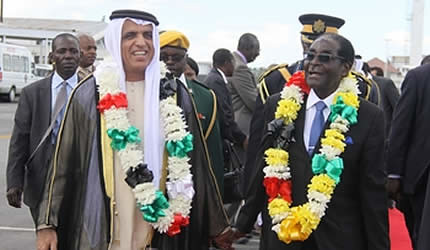
ZIMBABWE’S political leadership is committed to the holding of smooth and peaceful elections as the country’s internal political processes proceed smoothly, President Mugabe has said. Speaking at a
banquet he held in honour of visiting United Arab Emirates Member of the Supreme Council and Ruler of Ras al Khaimah, Sheikh Saud bin Saqr al Qasimi at State House yesterday, the President said Zimbabwe had vast investment opportunities that could be exploited in a conducive political environment.

Sheikh Saud arrived in Harare yesterday afternoon and was met at the Harare International Airport by President Mugabe, Vice President Joice Mujuru, Cabinet ministers, service chiefs and other senior Government officials.

He arrived to the beat of the traditional Zimbabwe drum from two dance groups.

The Sheikh received the highest honour for a visiting Head of State, including a 21-gun salute.

He also inspected a guard of honour mounted by the Presidential Guard.

Addressing guests at the banquet, President Mugabe said Government was committed to fostering investment relations with the people of Ras Al Khaimah.

He said while Zimbabwe was resource-rich, it came short on the beneficiation of its resources.

“It would thus be natural, logical and strategic for us to forge a relationship with your Emirate since we have a lot of synergies which are complementary.

“For that reason, it is the desire of the Government and people of Zimbabwe to tap into your rich knowledge and expertise in the management and utilisation of natural resources.

“We want to see economic co-operation between our two sides grow to higher levels across all the sectors of our economies. The relationship, if well-calculated, should see mutual benefit accruing to both parties,” he said.

President Mugabe said Zimbabwe had a well-diversified economy.

“Zimbabwe is largely agro-based and this creates numerous opportunities for investment in agriculture which include horticulture, cotton, tobacco, supply of agricultural produce.”

He said Zimbabwe was also open to investment in irrigation and mechanisation.
He said Zimbabwe’s mining sector was endowed with a vast range of minerals.

“This sector is also currently in a growth phase, buoyed by strong international market prices and increasing demand from developing nations such as China and India.”

The President said Zimbabwe had, besides the Victoria Falls, several natural tourist attractions such as unique rock formations, flora and fauna as well as man-made attractions.

“Just like you, we have an impressive archaeological heritage and rich cultural history. The sector has immense growth potential.”

He said Zimbabwe’s manufacturing sector was well-diversified, possessing strong linkages with other productive sectors of the economy, especially agriculture.

“This diversified industrial base therefore provides potential investors with a number of investment opportunities . . . Above all, Zimbabwe has the necessary educated and skilled workforce.

“For all these opportunities to be exploited there is need for a conducive political environment. On that score, I would like to say that Zimbabwe enjoys peace and tranquillity,” he said.

President Mugabe said major political players in Zimbabwe have agreed to a new draft Constitution, which will be subjected to a referendum on March 16, followed by general elections.

In his response, Sheikh Saud said he was in Zimbabwe to explore business opportunities for the Emirates.

“We have come here to extend our hand to all of you people of Zimbabwe . . . We have come here not to teach you, but rather put to you what we have learnt . It is up to you to take what you like,” he said.

Sheikh Saud said it was important for Zimbabweans to work together for the prosperity of the nation.

He said the United Arab Emirates population had learnt to replace hatred with love, fighting with peace.

Sheikh Saud said such a phenomenon was not a dream but a reality in the United Arab Emirates. As such, he said, United Arab Emirates had become a hub of several economic activities.

“Now we have more than 10 million tourists, our country is now a place to make business, work and a place to find hope,” he said.

The Sheikh said he was prepared to partner local business communities for the development of Zimbabwe.

“We want to see our friends in Africa experiencing the same success we have. Your country is blessed with everything you want - beautiful scenaries, lovely places and lots of minerals. Nothing is impossible if we put our minds together. There is no magic solution but step by step,” he said.

The banquet was attended by Vice President Mujuru, Deputy Prime Minister Thokozani Khupe, Harare Mayor Muchadeyi Masunda, Senate president Edna Madzongwe, diplomats and several Cabinet ministers.

Egyptian Prime Minister Qandil Tells Opposition to Stop Providing Cover for 'Vandals'

Qandil tells opposition to stop providing cover for 'vandals'

Ahram Online, Monday 25 Feb 2013

Prime minister Qandil said that people take time to understand democracy

Prime Minister Hisham Qandil demanded that Egyptian political powers and parties end "their political cover" for "vandals" during a meeting on Monday with Egyptian newspaper editors-in-chief to discuss economic developments.

The prime minister also stated that economic stability in the country will provide the youth with more job opportunities.

Qandil said that the country was currently facing a lot of challenges and that Egypt should look to other countries' experiences in similar circumstances when considering how to move forward.

He also said that the values of democracy are not limited to elections, and that democratic values take a long time to be understood by everyone in society.

In a television interview on Sunday, President Mohamed Morsi said that the protests and strikes Egypt is currently experiencing, despite being part of freedom of expression, were hurting investments and the Egyptian economy.

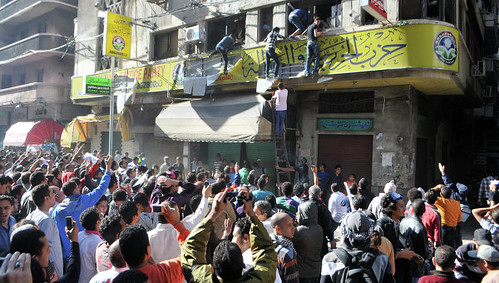
A number of anti-government protests have been taking place in Egypt recently, including a large-scale civil disobedience campaign in Port Said which started last week, and similar campaigns in the Delta cities of Mansoura and Mahalla starting this weekend.

The Egyptian stock market dropped on Monday for the second consecutive day following the protests.

http://english.ahram.org.eg/News/65571.aspx

Clashes Over Calls for Civil Disobedience In Egypt's Nile Delta

Clashes over calls for civil disobedience in Egypt's Nile Delta

Ahram Online, Monday 25 Feb 2013
http://www.youtube.com/watch?feature=player_embedded&v=cRYxNFqG07o

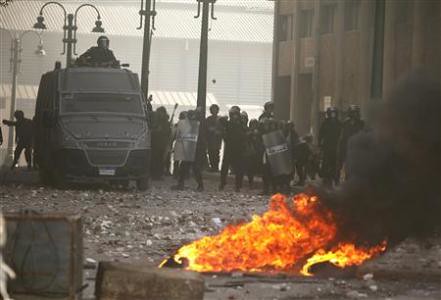
Security forces fire teargas in Nile Delta city of Mansoura as clashes continue amid calls for civil disobedience

Clashes between security forces and both opponents and supporters of calls for civil disobedience continued for the third day in the Nile Delta city of Mansoura on Monday.

The clashes took place in front of the governorate headquarters, as protesters attempted to stop employees from entering the building.

Security forces used large amounts of teargas, leaving several protesters with breathing difficulties.

The calls for civil disobedience in the Nile Delta city started on Saturday when anti-government protesters blocked off the main roads in the city, including building a wall in one place to stop traffic.

Flyers were distributed across the city calling for the campaign, although those behind the calls did not identify themselves. The flyers stressed that the campaign is a legitimate way for citizens to peacefully express their grievances.

The governor of Daqahilya, Judge Mohamed Abdel-Qader, denied that civil disobedience had been taking place in Mansoura, stressing that the work is moving smoothly in all the cities of the governorates and all governmental institutes.

Prime Minister Hisham Qandil, speaking on Sunday, also denied any incidents of civil disobedience in any Egyptian city.

Last week, residents of the Suez Canal city of Port Said launched a civil disobedience for almost a week in protest as what they described as increased marginalisation as well as the death sentences handed to 21 locals in the Port Said football killings trial.

In the Nile Delta city of Mahalla, in Gharbiya governorate, hundreds went on strike and blockaded the main routes into the city on Sunday as part of a campaign of civil disobedience.

A campaign of civil disobedience was also carried out in the village of Tahsin in Daqahliya governorate in September 2012, in protest at government neglect and a lack of infrastructure.

http://english.ahram.org.eg/News/65584.aspx