Thursday, April 05, 2012

In 5-4 Vote, Stage Set for Further Exploitation and Oppression in Detroit

Stage Set For Further Exploitation and Repression in Detroit

The dreaded Financial Stability Agreement was passed by a narrow 5-4 vote by the Detroit City Council today. This vote provides a green light for greater privatization and the busting of the unions.

It appears that the only recourse people have is to take to the streets in protest actions aimed at disrupting business as usual in the city and the state.

This process is totally undemocratic and even violates bourgois democratic law. The members of the Detroit City Council who voted in favor of the agreement will face the political disfavor of the people.

Over 100 people protested several hours later at the Rosa Parks Transit Center against drastic cutbacks in bus services. Further public hearing will be held today, April 5.

Wednesday represented the 44th anniversary of the assassination of Dr. Martin Luther King, Jr. in Memphis. He was murdered while supporting a sanitation workers strike that had paralyzed Memphis.
-------------------------------

Detroit City Council approves consent agreement in 5-4 vote

7:17 PM, April 4, 2012
Detroit Free Press

After weeks of meetings, rallies, and court battles, the Detroit City Council voted this evening to approve a consent agreement with the State of Michigan, thus potentially warding off the threat of an emergency manager to oversee the city's finances.

Under the consent agreement, a financial advisory board whose members would be appointed by Gov. Rick Snyder, Mayor Dave Bing and the City Council would advise and review all fiscal matters. The governor would appoint three members, the state treasurer would appoint one, the mayor would appoint two and the City Council would appoint two.

The 5-4 vote today came just 24 hours before Snyder’s deadline for appointing an emergency manager, who would have broad powers to cut union contracts, oversee budgets and cancel contracts with city vendors, among other powers.

•Council members who voted against the agreement: Andre Spivey, Brenda Jones, JoAnn Watson and Kwame Kenyatta.

•Council members who voted in favor of it: James Tate, Saunteel Jenkins, Ken Cockrel Jr., Gary Brown and council President Charles Pugh.

Gov. Rick Snyder issued a statement shortly after the council vote.

“The council has acted responsibly to put Detroit on the path to financial stability. Approval of the consent agreement is a positive opportunity for the city and our entire state. It’s a clear message that we will move forward – and win – as one Michigan. We all want Detroit to succeed. This agreement paves the way for a good-faith partnership that will restore the fiscal integrity taxpayers expect and ensure the delivery of services that families deserve.

“While the council’s action is a positive step, there’s no doubt that much work remains. The magnitude of the city’s financial challenges means that many difficult decisions lie ahead. We must build on this spirit of cooperation and be willing to act in the city’s long-term interests.

“I appreciate the countless hours that Mayor Dave Bing and his staff, the City Council, the Financial Review Team, state Treasurer Andy Dillon and the rest of my team have devoted to achieving this agreement. Because of their tireless work, Detroit is poised to move toward being a great city again with improved services for its citizens and a foundation for future growth.”

Calling the debate on the consent agreement one of the most crucial decisions in the city's history, Deputy Mayor Kirk Lewis said Tuesday that if the process isn't completed soon, "Mayor Bing and the administration believe Gov. Snyder will act on Thursday, April 5, according to law, regardless of any related, current legal challenges to the process."

The council opted to not vote on the proposed deal Tuesday as questions swirled about legalities and challenges from the city's powerful unions, delaying again an agreement that could keep an emergency manager out of the debt-riddled city.

Earlier today, the state-appointed financial review team, which declared the city to be in a severe financial emergency, voted to accept the Snyder-proposed agreement. The review team is part of the process of allowing state intervention in to the city's finances.

And just minutes after the review team approved the consent agreement, a federal judge in Detroit denied a request by unions representing Detroit city workers to block the implementation of a city-state consent agreement to restructure the city's finances an agreement that would effectively nullify concessionary contracts the unions negotiated earlier with Bing.

U.S. District Judge Arthur Tarnow said in his four-page ruling that court intervention would be an extraordinary and unwarranted intervention given that the contracts remain unratified by the City Council.

The agreement approved by the council was the third version. The first was delivered to Bing by Snyder on March 9. Bing said he and his executives immediately rejected that version and on March 13, a revised version was delivered with the most noted change being the removal of specific language regarding future action involving the Department of Transportation, the Lighting Department and other city assets.

The vote came after two hours of impassioned pleas from Detroiters who wanted the council to reject the consent agreement. Many of them noted the debate was happening on the anniversary of the date when the Rev. Martin Luther King Jr. was assassinated.

"Do not support your own demise,” said a resident.

"If this passes, don't pay another property tax, a parking ticket or any income taxes. Don't pay nothing that is going to support this nonsense.”

Community activist the Rev. Malik Shabazz said that anyone who voted for the agreement was either "too stupid, retarded or traitorous for the people to allow you to stay in office.”

But the sentiment was not unanimous. The influential Council of Baptist Pastors said they favored the consent agreement rather than the appointment of an emergency manager who would be able to run the city without any oversight.

"Our support for an agreement is not to be construed as support for of Public Act 4,” said the Rev. Dr. Michael Andrew Owens, pastor of Bethel Baptist Church, East and president of Council of Baptist Pastors, referring to the state law that created the emergency managers.

But an agreement than contains cash from the state, an orderly exit plan of the financial advisory board and the continued involvement of the mayor and City Council in the city's business was preferable, he added.

Councilwoman JoAnn Watson said she was "stunned and shocked" by their endorsement of a consent agreement, adding they were being hypocritical by opposing Public Act 4 while still supporting a consent agreement.

Wednesday, April 04, 2012

30 Pepper-Sprayed Outside Santa Monica Board of Trustees Meeting

30 Pepper-Sprayed Outside Santa Monica College Board of Trustees Meeting

About 30 students were treated for pepper spray, and two were transported to the hospital

By Samantha Tata and Robert Kovacik| Wednesday, Apr 4, 2012 | Updated 12:33 PM PDT

Video from Tuesday night's altercation at Santa Monica College shows officers coming face-to-face with a crowd outside a board meeting. Annette Arreola reports from Santa Monica.

Crowd Clashes With Officers
TweetLinkEmbedEmailCopyCloseLink to this video

http://www.nbclosangeles.com/video/#!/on-air/as-seen-on/Crowd-Clashes-With-Officers/146092495CopyCloseEmbed this video


View more videos at: http://nbclosangeles.com.
Replay
More videos (3 of 9)

At least one campus police officer pepper-sprayed a crowd protesting outside a board of trustees meeting at Santa Monica College Tuesday night after demonstrators attempted to enter the meeting room, according to witnesses.

About 30 people were treated for pepper spray, and two were transported to the hospital. No arrests were reported.

Priscillia Omon, 21, said she was standing behind a police officer when he pulled out the pepper spray and fired it in the mouths and eyes of people standing arm’s length away. She described a man next to her convulsing and spitting up foam after being hit with the pepper spray.

Roughly 200 students were involved in the demonstration, and 12 were allowed in the boardroom where officials were scheduled to discuss a controversial tiered payment program. Access to meeting was a point of contention among demonstrators, who said they requested last month that the trustees gather in a larger room to accomodate the crowd.

"The crowd was getting out of hand," said college spokesman Bruce Smith. "There was a safety issue. A couple of students had sort of broken into the boardroom. It was a judgement call and a question of safety."

Santa Monica police were not immediately available for comment.

Campus police tried to limit the number of students inside the board room to about a dozen, Santa Monica College counselor Patty Del Valle told City News Service.

The crowd assembled at the steps of the Liberal Arts building at 6 p.m. for a rally, Omon said. From there, they marched to the front of the Business Administration building, where the trustees meeting was scheduled to begin at 7 p.m.

"They began without us," Omon said.

Some students, including Christine Deal, said police roughly handled many of the students in the front lines of the crowd. Deal, whose story was supported by at least two other students, said a police officer grabbed her by the neck during the clash.

A family, including a 4-year-old, were in the crowd when the officer used the pepper spray, Omon said.

A crowd of more than 100 people gathered in a hallway outside the door of a 60-person capacity room in the business building, said Omon, member of the activist group Student Organizing Committee of Santa Monica College. An overflow room with a closed-circuit video link was opened to students.

The subject of Tuesday's meeting has drawn the ire of students and professors claiming that the tiered payment plan would make in-demand summer classes -- like English, math, history and biology -- staggeringly expensive.

"The students wanted to be heard and we wanted to be in the room where we could fairly discuss this topic, and be seen by them," said Aura Chavez, 18, who was standing in the back of the crowd when the pepper spray incident happened. "We wanted to let them see how many students care about their education."

The program in question would cost $180 per unit during the summer session, up from the usual $46 per unit. That means a high-demand 3-unit course would run about $540, more than most students pay for an entire semester in the fall or spring.

"This program, only a selective few can afford that," Chavez said. "What about the rest of us?"

Demonstrators moved their protest to the Santa Monica College police department, where a few dozen people gathered outside the building.

Officials said medical bills will be reimbursed for those who required medical attention.

Police Kill Another African American Youth in Pasadena

Police shooting of another African-American teen shocks US

Mon Apr 2, 2012 7:9AM GMT
presstv.ir

The killing of another African-American teenager by police has shaken the US, as Americans were already angered over the earlier controversial murder of 17-year-old Trayvon Martin by a volunteer watch guard.

The 19-year-old college student, Kendrec McDade, was shot and killed by two Pasadena police officers on March 24.

The incident occurred when a Pasadena resident, Oscar Carrillo, called the police to report that two armed men had robbed him of his computer and backpack and that one of them had pointed a gun at him.

Moments later, two police officers encountered McDade, who was running on the street at the time. When he made a move at his waistband, one of officers opened fire and killed the student.

However, no weapons or any of the stolen items were found on him.

Two days after the shooting, police arrested Carrillo on charges of involuntary manslaughter, blaming his false claim about his assailants brandishing a gun for the police shooting.

The incident came as public protests continue across the US over the killing of another unarmed 17-year-old African American by an armed neighborhood-watch volunteer.

On February 26, George Zimmerman shot dead Trayvon Martin outside his father’s house, claiming he killed the teen in self-defense after being severely beaten by Martin. However, the police video footage of Zimmerman’s arrest showed no sign of injuries on him.

Meanwhile, Human rights groups insist that the shooting of Martin was racially motivated.

Trayvon's case has once again stirred serious concerns over a growing trend of racial discrimination against African-American communities in the US.


Parents of slain African-American teen, Kendrec McDade, sue police

Wed Apr 4, 2012 5:28AM GMT
presstv.ir

The parents of an unarmed African-American teenager fatally shot by the police in the US city of Pasadena have filed a lawsuit against the city’s police department.

The 19-year-old college student, Kendrec McDade, was shot and killed by two Pasadena police officers on March 24.

His parents have filed lawsuits against the Pasadena police chief, the two police officers who shot McDade and a detective.

The lawsuit alleges that the Pasadena police acted unlawfully, arguing the officers never saw anything resembling a gun, never yelled any commands to identify themselves before opening fire and handcuffed the dying man.

It also refers to other officer-involved shootings, beatings and harassment of African-American men in Pasadena during the last three years, alleging that the police department routinely tries to cover up such incidents.

The lawsuit seeks a jury trial to determine unspecified punitive and monetary damages.

The fatal incident occurred when a Pasadena resident, Oscar Carrillo, called the police to report that two armed men had robbed him of his computer and backpack.

Moments later, two police officers encountered McDade, who was running on the street at the time. When he made a move at his waistband, the officers opened fire and killed the student.

However, no weapons or any of the stolen items were found on him.

Police arrested the 911 caller last week on suspicion of involuntary manslaughter after he admitted lying to police about the men having guns.

Ecuador to Boycott Summit of Americas Protesting US,UK Policies

Ecuador to boycott Summit of Americas protesting US, UK policies

Tue Apr 3, 2012 9:59AM GMT
presstv.ir

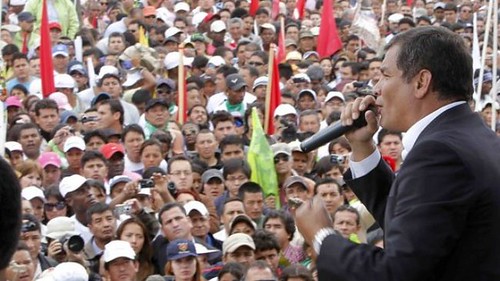
Ecuador has announced that it will boycott the Summit of the Americas in response to a 1959 veto by the US against Cuba’s participation in the meeting as well as the “colonization” of the disputed Malvinas Islands by the UK.

“It is unacceptable [that] in these summits fundamental topics are avoided such as the inhumane blockade of Cuba and the aberrant colonization of the Malvinas Islands,” Ecuadorean President Rafael Correa wrote in a letter to Colombian President Juan Manuel Santos, the summit’s host, on Monday.

“There has been talk of lack of consensus, but we all know that this is the veto of foreign powers,” Correa wrote.

Because of the US veto, Cuba has not been able to take part in the summit, which has been held every three years since 1962.

The US claimed in 1959 that Cuban leaders did not meet the charter requirements of the Organization of American States (OAS).

Only members of the OAS receive invitations to participate in the Summit of the Americas, and the US veto of Cuba’s membership in the OAS effectively barred the Caribbean nation from participating in the summit.

The other declared reason for the Ecuadorian boycott of the Summit of the Americas concerns the Malvinas Islands, which are located some 300 miles off Argentina's coast and home to about 3,000 inhabitants. The islands have been declared as part of the British Overseas Territories since Britain established its colonial rule in the islands in 1833.

However, Argentina has repeatedly dismissed the British claim, saying that London must concede the sovereignty of the islands.

The Summit of the Americas is set to convene in the Colombian city of Cartagena on April 14 and 15.

Mali News Update: AU Adds Sanctions to Mali; Thousands Flee Northern Region

African Union adds to sanctions in Mali

By the CNN Wire Staff
2012-04-03T04:30:20Z

(CNN) -- International pressure built Tuesday for leaders of the military group that seized power last month from Mali's democratically elected president to restore the nation to civilian rule.

The African Union said Tuesday it will impose more sanctions on the country, one day after the Economic Community of West African States slapped the ruling military junta with travel and economic restrictions after last month's coup.

The AU supports the sanctions imposed by the ECOWAS in Mali and "further decided to impose their own sanctions, with asset freezes and travel bans against leaders of the military junta and all those involved in contributing to the 'destabilization' of Mali," said Ramtane Lamamra, commissioner for peace and security.

The AU also condemned recent attacks in the north by Tuarag rebel groups and declared "null and void" any of their statements or demands, adding them and all those involved in attacks in the region to the sanctions imposed.

On Monday, ECOWAS imposed a travel ban on the coup leaders and imposed a diplomatic and financial embargo that regional leaders discussed last week, ECOWAS Chairman Alassane Ouattara said.

"All diplomatic, economic, financial measures and others are applicable from today and will not be lifted until the re-establishment of constitutional order," said Ouattara, Ivory Coast's president.

He said ECOWAS leaders will meet again this week in Ivory Coast's main city of Abidjan to discuss the possible activation of troops from member states.

ECOWAS had given the officers until Monday to hand over power or face sanctions.

Under the sanctions, the five neighboring ECOWAS members will close their borders to landlocked Mali except for humanitarian purposes. Its member states are to deny Mali access to their ports, freeze Mali's accounts in regional banks and suspend Mali's participation in cultural and sporting events.

Hours after ECOWAS' announcement, the U.S. Department of State announced that it was imposing sanctions on travel to the United States on those people "who block Mali's return to civilian rule and a democratically elected government" and on their immediate relatives. Included are "those who actively promote Captain Amadou Sanogo and the National Committee for the Restoration of Democracy, who seized power from democratically elected President Amadou Toumani Toure on March 21," it said in a statement.

The United States released a statement earlier Tuesday in support of the West African states, saying it is "deeply concerned about the ongoing political crisis in Mali."

"We also urge all armed rebels to engage in dialogue with civilian leaders in (the capital city of) Bamako to find a nonviolent path forward for national elections and a peaceful coexistence," said Victoria Nuland, spokeswoman for the State Department.

The department warned U.S. citizens against all travel to the country and authorized the departure of non-emergency personnel and all eligible relatives.

Senou International Airport in Bamako remained open but "the availability of flights in the future is unpredictable and depends on the overall security situation," the department said in a statement.

Before Tuareg and Islamic rebels took control of northern Mali, it had been hailed as a shining example of African democracy, having experienced more than 20 years of democratic government. The impoverished country now has no access to the sea and is heavily dependent on foreign aid.

The coup leaders pledged Sunday to hold talks toward the establishment of a transitional government, which they said would organize "peaceful, free open and democratic elections in which we will not participate." But the statement did not specify when the talks or the elections would be held.

"The measures taken by the junta are in the right direction, but are not sufficient," Ouattara said Monday.

Amnesty International has raised concerns about the safety of civilians in the area, citing reports of violence and looting.

The warning came as international pressure increased on the military junta that grabbed power last month in Bamako.

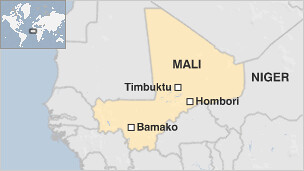
The Tuareg, who seek a separate homeland in northern Mali, announced over the weekend that they had seized control of the northern regional capitals of Timbuktu and Gao, a major blow to the military government. Both towns are hundreds of miles north of Bamako.

"The armed groups who seized these towns in the last three days must ensure human rights abuses do not occur and where they do, they must take action and remove anyone implicated from their ranks," Gaetan Mootoo, Amnesty's West Africa researcher, said in a statement on the organization's website.

The Islamist group Ansar Dine seized control of Timbuktu after the military stepped down on Monday, said Yehye Tandina, a broadcaster in the city.

The streets of Timbuktu were quiet Tuesday, though the city was cut off from the rest of the world; shops and banks had been looted. "We are surviving on hope," Tandina said. "In reality, there is nothing in Timbuktu."

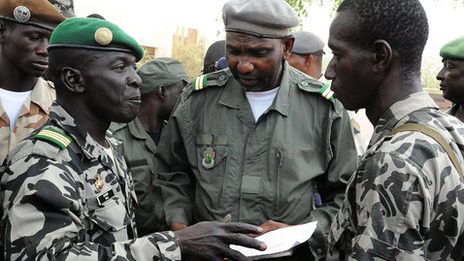
Military officers led by Sanogo seized power on March 22, overthrowing President Amadou Toumani Toure. The junta said Toure had failed to properly equip soldiers battling the growing Tuareg insurgency.

Moussa Ag Assarid, a spokesman for the main Tuareg rebel group, the National Movement for the Liberation of the Azawad, has said the group now "controls all of northern Mali."

"We are proud and ready to declare our homeland free from the south," he said. "Now the MLNA wants a nation."

Amnesty said it had received reports from witnesses in Gao of armed men looting homes and a hospital.

"The looting must be halted to ensure that the civilian population can safely go about their lives," said Amnesty's Mootoo.

In another northern city, Kidal, residents were fleeing their homes, Amnesty reported. According to the organization, more than 200,000 people had fled the north of Mali since the Tuareg uprising began in January.

Timbuktu was a thriving commercial hub and a center of Islamic scholarship in the 14th and 15th centuries, and it's home to three clay mosques that date back more than 700 years. The U.N. Educational, Scientific and Cultural Organization urged the combatants to avoid damage to the sites, which were added to the agency's World Heritage List in 1988.

"UNESCO stands ready to share its expertise and experience to help Mali ensure the safeguarding of Timbuktu," Director-General Irina Bokova said in a statement Monday.

CNN's Joseph Netto and Journalists Nick Loomis and Tom Walsh contributed to this report


Tuareg non-combatants flee Mali fighting

03/04 15:43 CET

Many refugees have fled northern Mali for Mauritania. There are some 200,000 like them who have left Mali, going to the countries around it. One of the relatively safe havens is Niger. The danger brought by the Tuareg offensive drove Zoulfa and her four children there.

Zoulfa said: “We are nomads so we move and live in different places. Where we were, in our village, armed men attacked and came to steal our belongings, so we decided to leave. We joined a nomad camp, but we were still attacked.”

The northern Mali region of Azawad is populated by Tuareg tribes who have traditionally moved across borders freely, sometimes over great distances.

These three million people or so live mostly in Mali, speaking one of the Berber languages: Tamachec. They are Sunni Muslims.

The National Movement for the Liberation of Azawad (MNLA) wants to set up an independent secular republic in this part of Mali.

Mauritania-based leader Hama Ag Mahmoud said: “The MNLA does not have any link with al-Qaeda in the Islamic Maghreb (AQIM), and none with the Islamist group Ansar Dine. They are jihadist movements, Islamist movements. Ours is a secular movement whose ambition is to deal in the best possible way with the interest of Azawad.”

The Tuareg rebels launched their offensive against the Malian Army In mid-January, many of the Tuaregs having fought for Libyan ex-leader Muammar Gaddafi. Previous Tuareg rebellions were put down by Mali. Now sufficiently re-armed, they moved to establish supremacy in Azawad.

But they have to contend with other groups active across this vast expanse, where states have little control over those such as the jihadists of AQIM and Ansar Dine, which is led by a former Tuareg rebel, Iyad Ag Ghaly.

It is feared that the fighting could damage the World Heritage Site of Timbuktu, nearly 1,000 years old. It is home to a unique style of mud and wood architecture, and hundreds of thousands of ancient manuscripts, including Arabic Islamic writing, science, maths and history, whose knowledge represents a tangible challenge to western misconceptions about this part of Africa.


UNHCR deeply concerned by deteriorating situation in Mali

03 Apr 2012 13:38

GENEVA, April 3 (UNHCR) - The UN refugee agency said Tuesday it is "deeply concerned" by the deteriorating political and security situation in Mali, where thousands of people continue to flee their homes.

"The north of the country is becoming more and more dangerous due to the proliferation of armed groups in the region," UNHCR's chief spokesperson Melissa Fleming said. "Refugees pouring into neighbouring countries are reporting the presence of armed militiamen and home guards units set up by local communities to defend themselves," she added.

Fleming told journalists in Geneva that more than 2,000 people had fled to Burkina Faso and Mauritania over the past five days because of the insecurity and the political instability stemming from the military coup of 22 March in Mali.

Malian refugees have been crossing into Burkina Faso and Mauritania at an average rate of 400 people per day in the past week. The majority of the refugees are Tuaregs, but there are also ethnic Peuls, Arabs and Bambara.

Malians fleeing to Mauritania are mainly from the Timbuktu region, while those heading to Burkina Faso come from Gao and Timbuktu. Most tell UNHCR staff that they fled because they were worried about armed robbers and feared there would be more heavy fighting in the north, while some said they left their homes due to lack of food.

Others told UNHCR teams that they decided to leave Mali when hopes for a negotiated peace between the government and Tuareg rebels in the north faded after the coup. The displacement crisis in Mali began in January after fighting erupted between government troops and the rebels. To date, the violence has uprooted more than 200,000 people, including around 100,000 who have fled the country.

The refugees also tell of armed men taking cars, money and other personal belongings from people fleeing towards Burkina Faso. They say that large numbers of Malians are on the way to Burkina Faso and Mauritania.

Meanwhile, the number of Malians crossing into Niger appears to have dropped recently. UNHCR has only heard of one group of 300 people crossing last week into Niger and seeking shelter in the village of Ayrou. UNHCR staff are monitoring the border with local authorities.

"We are stepping up our assistance to Malian refugees across the Sahel region who face acute water and food shortages," Fleming said. "We'd like to reiterate that UNHCR is committed to helping neighbouring countries and host communities which have been providing safety and shelter to the refugees despite these shortages and the difficult conditions."

The influx of large numbers of mostly nomadic refugees and their cattle is straining the limited resources in many arrival areas. We are working with specialized agencies to rehabilitate wells and boreholes across the region to benefit the refugees and host communities.

Of the 200,000 people displaced by the fighting, more than 23,000 have found shelter in Burkina Faso, 46,000 are in Mauritania and a further 25,000 are being hosted in Niger, together with nearly 2,000 Niger nationals who had been living in Mali for decades. More than 93,000 people believed to be internally displaced in Mali.

The situation has worsened since the Tuareg fighters captured several big towns in the north last week, preventing UNHCR and other aid agencies from reaching those in need of assistance. UNHCR is calling on all parties to refrain from any action that could put fleeing populations in danger or hamper their movement to safer areas.


Mali's Tuareg-Uranium Conspiracy

By Moeen Raoof
Global Research, April 3, 2012

The recent Coup in Mali by a Army Officer Captain while all the Generals, Brigadiers, Colonels and Majors are nowhere to be seen or heard should not be seen in isolation or simplistically.

The Tuaregs living in Northern Mali, Northern Niger, Southern Algeria and southern Libya are a Nomadic Pastoral People with no ambitions for statehood, only recognition of their particular culture and freedom to travel without hindrance in the Saharan Region.

The conflict in Libya has had a devastating effect in Niger and Mali where the nomadic Tuareg peoples in the Sahara Desert regions of northern Niger and Mali and southern Libya have been involved in a spate of kidnappings and armed uprisings known as the ‘Tuareg rebellion’. This is especially dangerous for northern Niger in and around the town of Arlit, an industrial town located in the Agadez region, where uranium is mined by French companies in two large uranium mines (Arlit and Akouta).

Arlit was the subject of the Niger uranium forgeries when President George W. Bush, in the build-up to the (illegal) Iraq war, in his 2003 State of the Union address stated, ‘The British Government has learned that Saddam Hussein recently sought significant quantities of uranium from Africa,’ when it was alleged that Saddam Hussein had attempted to purchase ‘yellowcake’ uranium powder from Niger during the Iraq disarmament crisis.

These 16 words and the intelligence in this regard were later found to be baseless and rubbished by US intelligence agencies, albeit too late for innocent Iraqis who lost their lives over a lie during the war years.

Ambassador Joseph Wilson, who travelled to Niger to investigate the Iraq/yellowcake plot, concluded that it was highly doubtful that any such transaction had ever taken place, thus clearing Saddam Hussein of any re-starting of Iraq’s WMD (weapons of mass destruction) programme. Ambassador Wilson was punished for this by the outing of his wife, Valerie Plame, as a CIA agent, allegedly by an official working in then vice-president Dick Cheney’s Oofice in the White House, which was also the plot of the movie ‘Fair Game’ released in 2010.

Put simply, this is about Uranium to be found in the Tuareg areas of Mali, Niger and Libya, the next step will be UN/ECOWAS/NATO Peace-keepers, Military intervention and killing of thousands of Tuaregs.

Moeen Raoof is a Humanitarian & Emergency Aid Consultant and Conflict Analyst. He undertook an investigation of the Bush Yellowcake/Iraq claim prior to the Iraq invasion by traveling to Niger at the same time as Ambassador Wilson's Mission. ,

Mali Junta Facing Increased Pressure to Relinquish Power

Mali junta facing increased pressure to relinquish power

Mali's junta was facing increasing pressure to give up power on Wednesday, with world powers tightening the diplomatic screws as Islamists consolidate their grip on the north.

6:14AM BST 04 Apr 2012

UN Security Council members were hammering out a joint statement on the Mali crisis, with agreement expected later Wednesday on a strong message but without any firm actions proposed.

France called the emergency discussions of the 15-nation council to negotiate a statement condemning last month's coup against President Amadou Toumani Toure and the advance of Tuareg rebels and Islamist militants into towns in the north of the country.

The United States took action on Tuesday, joining the African Union in imposing travel bans on coup leaders as international efforts were redoubled to restore democratic rule in a country descending into chaos.

The US State Department said it would restrict travel to the United States of those "who block Mali's return to civilian rule and a democratically elected government, including those who actively support Captain Amadou Sanogo," the coup leader.

Feeling the bite of the mounting sanctions and pressure from all sides, the soldiers who seized power on March 22 proposed a national meeting on Thursday and dispatched a team to Nigeria for talks on an exit from the growing crisis.

Sanogo told journalists that Thursday's meeting would determine "what will be best for the country in a consensual, democratic fashion."

Since the coup, ostensibly over the government's failure to stamp out a northern rebellion, the junta has lost more than half the country's territory – an area the size of France – in a matter of days to the rebel juggernaut.

Islamists seized control of the ancient trading hub Timbuktu over the weekend alongside Tuareg rebels and have since chased out their allies and declared to residents and religious leaders that they were imposing sharia law.

This sparked alarm abroad ahead of the emergency UN Security Council meeting, with former colonial power France expressing concern over the Islamist threat in a country considered a democratic success until the coup.

The Tuareg rebels want an independent state while Ansar Dine, under notorious Commander Iyad Ag Ghaly, wants to impose Islamic law and has linked up with al-Qaeda in the Islamic Maghreb (AQIM).

Three of the four leaders of al-Qaeda's north Africa branch, Abou Zeid, Mokhtar Belmokhtar and Yahya Abou Al-Hammam, were in Timbuktu on Tuesday, security and religious sources in the city said.

Residents reported women in the normally secular city that hosted a major music festival in January were on Tuesday wearing headscarves.

A day after being slapped with sanctions by its neighbours, Mali's embattled military rulers came under travel bans and an asset freeze from the African Union for failing to restore constitutional order, before the US imposed its own travel ban, which will also apply to immediate family members of the coup leaders.

The 15-nation Economic Community of West African States (ECOWAS) already cut off the landlocked country which depends heavily on imported fuel, also freezing access to its bank account in Dakar.

In Bamako, long lines formed at petrol stations as panic set in over the impact of the sanctions.

"We hear there is an embargo, we are afraid of shortages so we are taking precautions," said a youth who wanted to fill half a dozen empty bottles.

The junta on Tuesday sent a delegation to Nigeria, where ECOWAS officials could offer an amnesty in exchange for relinquishing power, a foreign ministry source in Abuja said. However, it appeared a deal was not reached.

Coup leader Sanogo said in Bamako the junta wanted to prosecute ousted President Toure for "high treason and financial wrongdoing."

As the junta struggled with the intensifying crisis, armed Islamists in the north handed out food and supplies that they seized from humanitarian organisations to residents of Timbuktu, sources said.

Officials from the regional food security office linked to the agriculture ministry and local Red Cross confirmed that the goods being distributed were forcibly taken from their stocks.

The fighting in northern Mali began in mid-January by the Azawad National Liberation Movement (MNLA), which wants independence for its homeland in the northern triangle of the bow-tie shaped nation.

A powerful player in northern Mali, Ag Ghaly and his fighters have placed their black jihadist flag around Timbuktu, which was a leading trading and intellectual capital up until the 16th century.

The UN cultural agency UNESCO called on the Malian authorities and the warring factions to respect the desert country's heritage and the "outstanding architectural wonders" in Timbuktu.

More than 200,000 people have been forced from their homes by the fighting and aid groups have warned that the combination of civil war and drought could lead to one of the continent's worst humanitarian emergencies.

Source: agencies

Macky Sall Sworn In As Senegal's New President

Macky Sall sworn in as Senegal’s new president

Mon Apr 2, 2012 4:41PM GMT
presstv.ir

New Senegalese President Macky Sall
Mon Apr 2, 2012 4:41PM GMTShare | Email | PrintI swear to faithfully fulfil the office of president ... to observe and enforce the constitution, to devote all my efforts to defending constitutional institutions, territorial integrity and national independence."
Senegalese President Macky Sall

Macky Sall has been sworn in as Senegal’s new president after the country’s outgoing leader Abdoulaye Wade conceded defeat in the presidential elections.

"I swear to faithfully fulfill the office of president ... to observe and enforce the constitution, to devote all my efforts to defending constitutional institutions, territorial integrity and national independence," Sall said during his oath ceremony.

The ceremony was attended by some 2,000 people, including African leaders from nations such as Liberia, Gambia, Ivory Coast, Burkina Faso, Guinea, and Sierra Leone.

This comes after a crushing victory over long time president Wade last month.

Tensions escalated on January 27 after the Constitutional Council, appointed by Wade and known as the five wise men, gave the president the green light to run in the election.

Outgoing Wade, was first elected in 2000, ending 40 years of rule by the Socialist Party, revised the constitution in 2001 to impose a two-term limit for the president. He argues that he is exempt because he was elected before the new law was drafted.

Sall is Senegal’s fourth president since the country gained independence from France in 1960.

Tuesday, April 03, 2012

Pro-Palestinian Groups Plan April 15 Mass Arrival in Israel

Published 02:31 04.04.12
Latest update 02:31 04.04.12

Pro-Palestinian groups plan April 15 mass arrival in Israel

'More than 1,000 activists with European and other passports intend to fly to Israel's Ben-Gurion Airport for a Land Day event,' organizer tells Haaretz.

By Jack Khoury

Hundreds of pro-Palestinian activists and their families plan to fly to Israel in mid-April to commemorate Land Day, a member of the event's organizing committee told Haaretz. "On April 15, more than 1,000 activists with European and other passports intend to fly to Israel's Ben-Gurion Airport for a Land Day event entitled 'Welcome to Palestine,'" he said.

Last Friday's protests in the Arab community in Israel and the neighboring states, which marked the 36th anniversary of the March 30, 1976, demonstrations during which Israeli security forces killed six Israeli Arabs, have opened a local and international popular Palestinian campaign, the activist said.

"The activists will bear a message of peace, not weapons, and ask to travel to the West Bank. We intend to raise the Palestinian issue with an emphasis on al-Quds [Jerusalem] as the Palestinian state's future capital, and on Israel's attempt to sever it from the West Bank," he said.

He said Israel knew of their plans and has asked foreign airlines not to allow some 370 pro-Palestinian activists onto the Israel-bound flights, calling the move a provocation.

The activists also intend to lay the cornerstone for an international educational institution near Bethlehem, the organizers said in a newsletter.

Last year more than 300 activists were prevented from boarding flights to Israel to commemorate Land Day and 140 others were detained on arrival and deported.

"Netanyahu called us terrorists. We say we are activists visiting the West Bank like any other tourist, with a message of peace," an activist said.

Somalia: Reports of Divisions Within Al-Shabaab

Somalia: Is Al Shabaab Cracking Under the Pressure?

By Simon Allison, 3 April 2012
analysis

Al Shabaab has never been the united, cohesive movement it likes to portray. Divisions exist between the ideologues and the pragmatists, the radicals and the even more radical, the jihadis and the freedom fighters. It has done a pretty good job of managing these - until a top cleric exposed the cracks for the world to exploit.

A fault line runs through Al Shabaab. It's well-understood, but rarely acknowledged by the Islamist militant group that still controls most of southern Somalia in the face of the slow but inexorable advances of the African coalition.

Ethiopia, Kenya and the African Union Mission in Somalia (Amisom) have all made impressive gains in recent weeks, ratcheting up the pressure on Al Shabaab. And as they've advanced, this fault line has slowly deepened, until a leading Al Shabaab cleric this weekend cracked it wide open. The unprecedented outburst from Sheikh Hassan Dahir Aweys might just mark where the previously unified movement began to unravel.

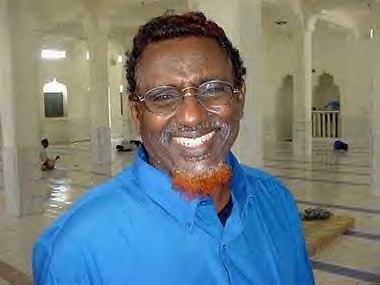
"Wake up and open your eyes," Aweys said on a public radio station. He said Al Shabaab claimed to speak for all Muslims when even in alliance with al Qaeda it represented just "a fraction" of Muslims in the world. Al Shabaab's use of violence and oppression to ensure obedience was a tactic Aweys described as mirroring the treatment meted out by hated dictator Siad Barre. And, he questioned, Al Shabaab's refusal to countenance other Somali groups with similar objectives and its claim on a monopoly on jihad.

Aweys is no ordinary cleric, which makes his outburst all the more explosive. Considered by many to be Al Shabaab's spiritual leader, he is a behemoth of the Somali Islamist movement, and was at one stage head of the Islamic Courts Union which governed Somalia before being displaced by the 2006 Ethiopian invasion. From the ashes of the Islamic Courts Union arose Al Shabaab, which initially did not include Aweys, who instead tried to launch a couple of armed Islamist opposition movements.

But after his Hizbul Islam militia lost a turf war with Al Shabaab in 2010, Aweys did the obvious thing and merged his militia with Al Shabaab, strengthening both their hands. Although the mechanics of the leadership of Al Shabaab is a little murky, it's obvious Aweys is one of the most important men in the group. So why is he launching broadsides at his own movement?

The answer to this lies somewhere in that fault line. As much as they'd like to portray themselves as an ideologically unified movement, Al Shabaab is not. Broadly speaking there are two strands to the group, and they don't always see eye to eye. Most obviously, there's the strongly Islamist element, whose primary motivation is to impose Sharia law in Somalia. Seeing themselves as Muslims first and Somalis second, they cultivate strong links with international Islamist groups, most prominently Al Shabaab. Chief of this faction is Ahmed Abdi Godane, who also goes by the pseudonym Mukhtar Abu Zubeyr. He's angling to be al Qaeda's main man in East Africa and was behind the Al Shabaab-al Qaeda merger last month.

The other faction is more nationalist: they are Somalis first, Islamists second. They're fighting against foreign occupation of their country, seeing the transitional federal government in Mogadishu as mere puppets with themselves as freedom fighters rather than jihadis. Most prominent in this group is Sheikh Mukhtar Robow Abu Mansour, important because it is his militia that constitutes a large part of Al Shabaab's fighting force. With him is Sheikh Aweys. His outburst makes sense when you realise it was directed not at Al Shabaab in its entirety, but at the other faction within the movement.

These differences were of little relevance while everything was going well and everyone shared the same end goal - ruling over as much of Somalia as possible. But as troops from Ethiopia, Kenya and Amisom have started to squeeze Al Shabaab out of some of its strongholds, decisions have become a bit more difficult, and the differences between the two factions more apparent.

Most controversially, as Al Jazeera journalist Abdi Aynte reports: "In recent months, Aweys and Robow have been sending signals that suggest, with the right conditions, they are willing to open a dialogue with the TFG and the international community. Their main demands are the withdrawal of Amisom troops, imposition of Sharia as the law of the land and a comprehensive amnesty scheme that would include the removal of their names from the US and UN terror lists. They've also hinted that they don't oppose replacing Amisom troops with peacekeepers from Muslim countries."

Obviously, negotiations were never going to go down well with Godane and his fellow hardliners. Aynte argues that this was the motivation behind the al Qaeda merger - while changing little on the ground, Godone knew that the al Qaeda connection makes it very difficult for the international community to negotiate with any elements of Al Shabaab, forcing Robow and Aweys to remain in the fold.

So what now? Is this the end of Al Shabaab as we know it? Will it split into various factions, leaving Godane to fight the jihad, and allowing Aweys, Robow and Robow's sizeable militia to enter into negotiations? Has the pressure of fighting on three fronts finally splintered the organisation from the inside?

Unfortunately, it's too early to make any solid conclusions. All that's clear is that there are very clear cracks in Al Shabaab's unified front, and that the best way to hasten Al Shabaab's demise is to exploit them.

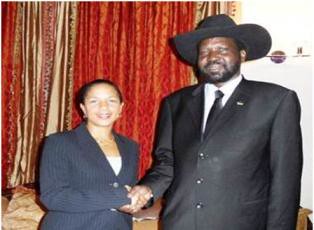
South Sudan President Kiir Talks With Obama

Government of South Sudan (Juba)

South Sudan: President Kiir Talks With President Obama

By Thomas Kenneth
3 April 2012
press release

Talks between Sudan and South Sudan have stalled as both sides accuse each other of being responsible for last week's violence on the border. ( Resource: Fears of War as Sudan Talks Stall Juba — The President of the Republic H.E Gen. Salva Kiir Mayardit briefed President of the United States of America H.E Obama on the current political situation with Khartoum, recent clashes along the border between SAF and SPLA, status of the negotiations between Juba and Khartoum and the expected summit with President El-Bashir.

This was in a phone conversation yesterday evening. In his briefing President of the Republic appreciated steps taken by the US administration in providing assistance to the people of South Sudan and for pushing the negotiations forward for peace and stability in the two neighboring states.

President Kiir told his counterpart H.E Obama that he is still expecting President El-Bashir on 3rd April, 2012, in spite of the fact that El-Bashir announced publicly that he will not come to Juba, adding that if President Bashir proposed any place for the summit he is ready to go there.

H.E Kiir disclosed that the summit was for signing the agreement on citizenship and border demarcation, and it was also for discussing some issues to be recommended by the negotiating team.

H.E Kiir also explained to President Obama that SAF is invading oil fields so that Khartoum can export the oil of South Sudan by force. The SPLA repulsed SAF and captured Hijlij on self-defense. SPLA Forces were ordered immediately to pull out from Hijlij and they are now away from Hijlij by 10 km. President Kiir assured President Obama that until yesterday SAF aerial bombarding in the territories of South Sudan has not ceased.

"South Sudan is for peace and is not ready to go back to war, the people of South Sudan have suffered much and this is time for them to enjoy the fruit of peace with the resources they have", he said.

Concerning the situation in South Kordufan and other areas in the north, he said it was created by the Khartoum Government and it can be resolved. "Should our support is needed we are ready provide it", H.E Kiir explained.

President Kiir also told his US counterpart that he is ready to cooperate with the USA Ambassador on all these issues. President Kiir called on President Obama to put pressure on President El-Bashir saying that of President Bashir accepts not to take unilateral decision of taking South Sudan oil, then South Sudan is ready to resume oil production. H.E Kiir also called on President Obama to provide technical people to help building South Sudan institutions.

In conclusion H.E Kiir told President Obama that disarmament is going well in Jonglei state and that the process will cover all the ten states of South Sudan.

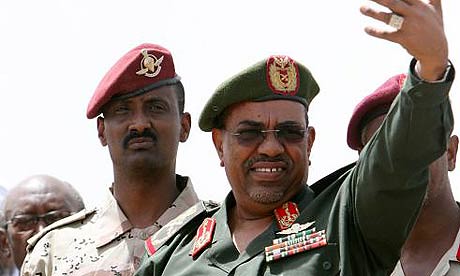
Sudan Foil SPLM Plot Targeting Its Economic Stability

Sudan Foils SPLM Plots Targeting Its Economic Stability: Ghandour

Sudan Vision - April 03

Khartoum – The ruling National Congress Party (NCP) has revealed a plot by the Sudan People’s Liberation Movement (SPLM) to strangle Sudan’s economy through the use of dilatory tactics at the negotiations especially on the oil dossier.

“The plot to derail Sudan economy is orchestrated to coincide with a military offensive and support to Darfur rebel movements” chairman of the NCP Foreign Relations Sector, Prof. Ibrahim Ghandour, has said in an interview by smc, adding “but their plots have been foiled and they were forced to change their tactics by showing goodwill in the form of extension of an invitation to President Al Bashir to attend a summit in Juba.”

He said the Sudanese Government signed the “Four Freedoms Agreement” in Addis Ababa in order to support peace and development for the benefit of the two nations but, he added, with every new day the SPLM is showing us that it is racist and malicious movement seeking to implement foreign agenda without consideration to the region and the interests of the two countries.

Ghandour said the SPLM attacked Higlig to stop oil production to ruin Sudan’s economy and create difficult life for citizens.

With regard to voices suggesting a union between the North and the South, he said, “this is not on the table”.

Ghandour said the South secession did not encourage separatist tendencies but it availed the opportunity for the SPLM to make the South a springboard to support rebel movements in Darfur, Southern Kordofan and the Blue Nile regions.

The US is now reconsidering, though very slowly, its anti-Sudan drive including economic sanctions he said, adding “ the US also tried to consider the issue of lifting Sudan name from the list of countries sponsoring terrorism but it backed away due to pressures exercised by lobbyists, institutions and companies.

Ghandour went on to say that the US since a long time has been seeking regime change in Khartoum and this is still the desire of some hawks in the US Administration. But, he said, some of them are convinced that regime change by force is impossible but they have not abandoned attempts to change the Government by other means.

According to Ghandour pre-secession oil revenues did not exceed $12 billions out of which 50% used to go to the Government of Southern Sudan and the rest to taxation, customs and production.

He denied the existence of pressure groups within the NCP, saying the ruling party membership is 5 millions. He said the NCP relations with the Umma Party are normal like with all other parties but, comparatively, it is the best relationship between a ruling party and opposition party.

By Al-Sammani Awadallah

A Look at North Korea's Rocket Technology

A look at North Korea's rocket technology

By Mike Wall
4/3/2012 5:29:42 PM ET
MSN.com

North Korea says it is gearing up to launch a satellite to orbit this month, a move that has drawn widespread international condemnation.

The satellite launch is expected to take place between April 12 and April 16 aboard an Unha-3 rocket, from a new site called Tongchang-ri in the northwest part of the country. Officials in the United States, South Korea, Japan and other nations view the liftoff as a thinly disguised military missile test.

The concern stems in large part from North Korea's famous unpredictability, along with its status as a nuclear-armed nation. And the unease is heightened by North Korea's secrecy, which makes it hard for the West to figure out just what the country is up to, and what it's capable of.

That uncertainty extends to North Korea's Unha-3 rocket and the nation's other rockets and missiles. That being said, here's a brief rundown of what experts think they know about the Hermit Kingdom's long-range rockets, which could be outfitted with either satellites for space launches or warheads for military duty:

The beginning: Soviet Scuds

North Korean missile technology traces its origins to Soviet Scuds, which apparently entered the country via Egypt in the 1970s. North Korean scientists soon began building their own versions of the Scud, which they called the Hwasong-5 and Hwasong-6, along with a scaled-up model known as the Nodong, which boasted a greater range and payload capacity.

The next step was the 83-foot-tall (25-meter) Taepodong-1 booster, which experts believe is a two-stage missile with a Nodong first stage and a Hwasong-6 second stage.

The Taepodong-1 rocket has flown once, in a modified space launch configuration that added a third stage. In August 1998, it blasted off carrying a small satellite called Kwangmyongsong-1 ("Bright Star 1"). Western observers say the launch failed, but North Korean officials claim the satellite made it to orbit and broadcast patriotic songs into space.

Analysts believe a two-stage Taepodong-1 rocket could deliver a 1-ton payload up to 1,500 miles (2,500 km) away. But additional modifications could bring more distant targets into range.

"Some analysts speculated that a reduced-payload configuration could deliver a 200 kg warhead into the U.S. center and a 100 kg warhead to Washington, D.C., albeit with poor accuracy," missile defense specialist Steven Hildreth wrote in a 2009 Congressional ResearchService report.

The Taepodong-2

After the Taepodong-1 test, North Korean rocket scientists continued their research and came up with the Taepodong-2, which is believed to be a two-stage missile about 115 feet (35 m) tall, according to Hildreth.

Like its predecessor, the Taepodong-2 has launched only once. That July 2006 test flight also did not go well, with the missile exploding just 40 seconds after liftoff.

Analytical Graphics, Inc.

An illustration of North Korea's attempt to loft an experimental satellite to Earth orbit in 2009. North Korean officials claim success, but Western observers say the effort failed.

Experts are even less certain about this missile's capabilities than they are about the Taepodong-1 booster. Most estimates for its maximum range vary from 3,000 to 5,400 miles (5,000 to 9,000 km). If the longer-range estimates are accurate, the Taepodong-2 could conceivably reach the western coast of the United States.

North Korea has developed another missile called the Taepodong-X, which is also called the Musudan. Little is known about this rocket because it apparently hasn't been tested publicly, but Western observers suspect that its maximum range may be around 2,000 miles (3,300 km) or so. [ Top 10 Space Weapons ]

The Unha line

In April 2009, North Korea attempted its second satellite launch when it lofted the Kwangmyongsong-2 ("Bright Star 2") atop a rocket called Unha-2 ("Galaxy-2"), an advanced, three-stage variant of the Taepodong-2. But the Unha-2's third stage apparently failed to ignite, experts say, and the satellite ended up at the bottom of the Pacific Ocean.

Like North Korea's previous launches in 1998 and 2006, the Unha-2 blasted off from the Musudan-ri pad in the northeastern part of the country, then traveled east toward Japan. Rockets lifting off from the new Tongchang-ri site on the country's west coast will likely travel south, experts say, avoiding provocative low flyovers of other nations' airspace.

Unha-2 is about 100 feet (30 m) tall and weighs 80 to 85 metric tons, according to physicists David Wright and Theodore Postol, who published an analysis of the rocket in the Bulletin of the Atomic Scientists a few months after the failed launch.

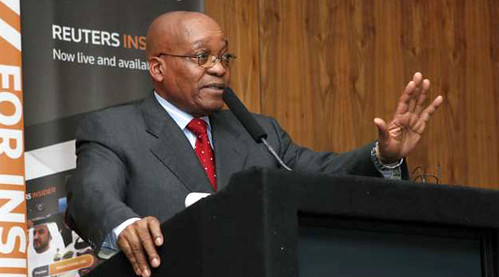
It's Not JZ's Party, He Can't Dictate Even If He Wants To, Says ANC Leaders in South Africa

It's not JZ's party, he can't dictate even if he wants to

NICKOLAUS BAUER | JOHANNESBURG, SOUTH AFRICA - Apr 03 2012 20:11

The ANC's top six leadership on Tuesday reprimanded the youth league for sowing disunity within the ruling party.

"The time has come to put an end to these remarks and actions. The ANC constitution encourages members not to take part in actions that will lead to sowing divisions within the movement," Mantashe told journalists who packed the entrance to Luthuli House in Johannesburg.

"The assertion made by Julius Malema that new ideas were suppressed is not only disingenuous, but also a deliberate falsehood," Mantashe said.

The secretary general argued the ANC would never allow Zuma to be a dictator, and any idea suggesting otherwise is "insulting".

"We are not a leadership of dwarves. Even if Zuma wanted to be a dictator he has no chance. The national executive committee won't allow that. They are constantly debating the president on his views and decisions," Mantashe said.

He was joined by ANC president Jacob Zuma, his deputy Kgalema Motlanthe, treasurer Mathews Phosa, national chairperson Baleka Mbete and deputy secretary general Thandi Modise.

"These alien remarks and actions are used to create the impression the national officials of the ANC are divided. It's sad this type of foreign behaviour occurs in the year of the centenary of the ANC," said Mantashe.

The briefing comes in the wake of a sustained attack on the top leadership of the ANC by the league -- the most recent in which its president Julius Malema accused Zuma of being dictatorial in his leadership style.

"It is under President Zuma that we have seen a critical voice of the voiceless being suppressed we have seen Zuma democracy being replaced with dictatorship. We have seen intolerance, people becoming impatient with the youth," Malema told more than 1 000 supporters at the University of the Witwatersrand on Friday.

Malema was sharing the stage with Phosa at the time.

In a separate incident, Malema criticised the Zuma's style of leadership when he was addressing a rally with Motlanthe in Limpopo.

Investigations

Mantashe said all utterances against the ANC leadership to date would be investigated and those responsible could face disciplinary sanction.

"Anyone using the ANC centenary celebrations to divide the organisation is treading on thin ice," he said.

Mantashe said unity would prevail within the ANC through discussion and debate, and not through "careless and reckless remarks".

In an attempt to quell rumours the top leadership is split in the ongoing disciplinary action against Malema and other members of the league, Mantashe said the ANC's top officials are united on matters of discipline.

"National officials are not at odds with each other. We remain loyal to all decisions taken and respect the overall disciplinary processes of the ANC," Mantashe said.

Malema was expelled from the ANC in February after initially appealing a five-year suspension from the organisation when he was found guilty in November of sowing divisions within the ANC.

The league has repeatedly painted the disciplinary charges against Malema as a witch hunt by senior ANC members wishing to suppress the youth of the leading party.

He is currently preparing to argue against his expulsion in front of the ruling party's national disciplinary appeals committee on April 12.

Leadership disputes

Besides lambasting the league and "other counter-revolutionary elements" within the ANC, Motlanthe and Phosa used the opportunity to show their support for the current ANC leadership under Zuma.

Both Phosa and Motlanthe are thought to be the main challengers to Zuma when he stands for re-election at the ANC elective conference in Mangaung later this year.

Phosa dispelled reports he was underhandedly supporting Malema by not publicly chastising him during last Friday's address at Wits.

"I didn't have the urge to respond in kind but I did break from my prepared speech to warn against ANC leaders engaging in public spats," said Phosa.

This was echoed by Motlanthe, who said the ANC is working against factionalism.

"The ANC leadership is working on clamping down on unruly elements and those who use our name to cause divisions," Motlanthe said.

The ANC said while they had not requested to or agreed to meet the youth league to discuss disciplinary matters, it would constantly engage with the youth of the ruling party.

"You always have problems with your teenagers. We've given some guidance and will continue to educate the league," said Modise.

Source: Mail & Guardian Online
Web Address: http://mg.co.za/article/2012-04-03-its-not-jzs-party-he-cant-dictate-even-if-wants-to

South Africa's Oil Imports From Iran Surge Defying US-led Embargoes

South Africa's oil imports from Iran surge defying US-led embargoes

Tue Apr 3, 2012 6:29AM GMT
presstv.ir

South Africa has increased its crude imports from Iran to USD 364 million in February, up from zero in the previous month, firmly ignoring the US-led oil embargo on the Islamic Republic, an official report says.

South Africa’s Revenue Service revealed on Monday that the country imported 417,000 tons of Iranian crude in February, indicating a dramatic change of a declining trend seen since October, when the country last imported 467,000 tons of the commodity, according to Reuters.

In January, trade and customs figures showed that South Africa’s crude imports from Iran stood at zero, compared with a monthly average of USD 280 million last year.

The US and the European Union have imposed financial and oil sanctions against Iran since the beginning of 2012, in persisting efforts to halt the Islamic Republic's increasingly self-sufficient nuclear energy program.

Meanwhile, US President Barack Obama gave a green light last week to further sanctions against foreign banks and other financial institutions by or through which Iran’s oil is purchased.

He claimed that there is enough oil on the global market to ensure that the move will not trigger an oil shock affecting US consumers.

Iran has rejected the Western and Israeli allegations that its nuclear energy program involves non-civilian diversions, arguing that as a committed signatory to the nuclear Non-Proliferation Treaty and a member of the International Atomic Energy Agency, it has every right to use nuclear technology for peaceful purposes.

Mali in Crisis: Timbuktu Taken by the MNLA

Mali in Crisis: Timbuktu Taken by the MNLA

ECOWAS imposes sanctions as tension escalates in Bamako

By Abayomi Azikiwe
Editor, Pan-African News Wire

Timbuktu, the ancient city in northern Mali, has been taken by the Movement for the Liberation of Azawad (MNLA). The ongoing war for the control of the northern regions of this West African state has created a strong reaction from throughout the region.

A military coup took place in the capital of Bamako on March 21 deposing President Amadou Toumani Toure. The coup has drawn condemnation from the regional Economic Community of West African States (ECOWAS), the United States, the European Union and other international bodies.

Under pressure from outside and inside the country, the military junta headed by Capt. Amadou Sanogo announced on April 1 that they would re-instate the national constitution and hold elections aimed at a transition back to civilian rule. This came in the aftermath of a failed trip to Bamako by a group of ECOWAS leaders headed by Blaise Compaore of Burkina Faso.

The ECOWAS airline carrying a delegation of West African leaders was returned in mid-air amid reports of demonstrations in the capital in favor of the military regime. Later on April 2, the ECOWAS regional organization met in Dakar, Senegal for several hours to discuss the situation in Mali.

According to the Associated Press, “The head of the body representing West African nations says the bloc is imposing financial sanctions on Mali because the junior officers that seized power in a coup 12 days ago have failed to restore constitutional order.” (April 2) After the meeting, the regional ECOWAS leader Alassane Ouattara emerged stating “that sanctions, including the closing of Mali’s land borders and the cutting off of the nation’s access to the regional central bank, would go into effect immediately.”

Significance of the Seizure of Timbuktu

With the capture of Timbuktu by the MNLA, the consolidation of their forces in the north of the country appeared to have been completed. The MNLA is led by the Tuareg people who have been marginalized since the post-independence period of the last five decades.

Since the war began in Libya during February 2011 and the intervention of the U.S. and NATO who imposed regime change and the rule of the National Transitional Council (NTC) rebel army, the situation in North and West Africa has witnessed greater instability. Many Tuaregs had lived in Libya for years and maintained close ties with former Jamahiriya leader Col. Muammar Gaddafi, who was brutally assassinated at the aegis of Washington on October 20. With the political and economic situation in Libya becoming extremely hostile towards Black Libyans and Africans from other parts of the continent, thousands of Tuaregs relocated back inside of Mali.

These Tuaregs were well armed and trained having fought alongside the Libyan government in the war to protect the sovereignty of the North Africa state. Upon re-entering northern Mali, a new re-configured movement was formed known as the MNLA which made rapid gains in their aims of taking control of the north of the country.

The impact of the fighting in northern Mali since January has created even greater instability and dislocation of civilians. It is estimated that some 200,000 Malians have been displaced, many of whom are fleeing the country.

Although the military junta in Bamako said that the precipitating factor in their seizure of power from President Toure was the inadequate performance of the administration in handling the war in the north against the MNLA, since March 21, the Tuareg fighters have made tremendous gains on the battlefield. Malian troops have abandoned their posts in Gao and were easily overrun in Timbuktu.

In an article published in the Associated Press on April 2, it states that “In Gao, the largest city in the north which fell to the amalgam of rebel groups on Saturday (March 31), residents said that they no longer know who is in charge.”

One student in the city, Ahmed Ould Fneiny, said that “In Gao, its chaos. We don’t even know who controls the city, and who is doing what. We see Ansar Dine with their flag. We see the MNLA. We are seeing other Tuareg and Arab groups which deserted from the Malian army.”

Fneiny went on to say “There are people in military uniforms who have stolen all the cars, even the private cars of civilians. We can’t leave the city. One liter of gasoline is now 1,000 franc ($2) whereas it was 650 francs ($1.3) yesterday.”

Ansar Dine, an Islamic group in the north of Mali, is said to have links with al-Qaeda. It has been characterized by its belief in sharia law.

The relationship between Ansar Dine and the MNLA is not yet clear. It appears that the MNLA includes both secular and religious factions.

Reports indicate that Ansar Dine have been seen in a convoy of 10 cars carrying the Black Flag, its symbol. At the Cheikh Fort Sidi Elbakaye military camp in Timbuktu they are said to have planted their flag as well.

An Associated Press article stated that “In Kidal and Gao, the Islamist faction took the lead early on, and shopkeepers reported that the rebels went from business to business telling merchants to take down pictures deemed un-Islamic. A hairdresser said he was made to take down the photographs he had put up showing different hairstyles because the images showed uncovered women.” (April 2)

A Reuters journalist indicated that “in the northern city of Gao, seized by rebels on Saturday (March 31), Islamists there were ransacking bars and hotels serving alcohol. In Kidal, the third main city of the region, one resident told reporters that music had been barred from radio stations and Western-style clothes had been banned.” (Reuters, April 2)

Timbuktu is an ancient city of African culture and Islamic education. It has also been a tourist attraction for westerners seeking to witness the historic center of traditional Africa prior to the intervention of European slavery and colonialism.

The changing of its character will have a profound impact on the nation of Mali. It remains to be seen what effect the ECOWAS sanctions and the backtracking of the rebel military junta will have on the political will of the people of the south to re-group their forces to take back the cities in the north of the country.

Also if the sanctions are imposed on Mali by ECOWAS and other western states, will this further exacerbate the conflict inside the country?

Is ECOWAS prepared to send a regional military force into Mali aimed at both quelling the rebellion in the north as well as putting down the military coup in Bamako?

Prospects for Malian Security and the Role of Imperialism

Since the war in Libya has brought about greater instability inside the country as well as in neighboring Mali, it demonstrates clearly the failed character of imperialism in North and West Africa. Inside of Libya, the country remains lawless with efforts underway in the east and the south which could lead to the partitioning of the country.

In Mali, the fighting intensified after the war in Libya created massive dislocation of several million people including thousands of Tuaregs who had supported the Gaddafi government. The Malian government under President Toure was a strong participant in the U.S. so-called “anti-terrorism” initiatives in West Africa.

The U.S. has provided training, joint-military exercises, military education and direct payments to soldiers in Mali. It has been reported that approximately $140 million in annual assistance is provided to the country.

The aims of the Tuaregs organizations may vary between the MNLA and Ansar Dine. The MNLA in a statement indicated that they want a separate homeland for the people of the north of the country. The MNLA said that their “mission is defending and securing the territory of the Azawad for the happiness of the people.”

Two major figures in the MNLA are General Secretary Bila Ag Cherif and Mohamed Ag Najim, who leads the military wing. Inside the Ansar Dine, the leading personality appears to be Iyad Ag Ghali who has been active in Tuareg resistance efforts for many years.

The Ansar Dine may not want a separate homeland for the Tuareg people but have indicated their desire to impose sharia law on the entire country. There may be increased tensions between both the MNLA and Ansar Dine as the political and military situations unfold inside the north as well as throughout Mali as a whole.

France, which is the former colonial power in Mali, has stated that it is not interested in engaging in a direct military intervention in the country. Nonetheless, France is involved in other African states such as Ivory Coast, Gabon, Libya and Somalia.

Alain Juppe, the foreign minister in Paris, said that he would consult with the United Nations Security Council about developments in Mali.

Based on the recent history of France, the U.S. and the United Nations in Africa, it would not be wise to rule out possible direct or indirect military intervention by the imperialist states in Mali.

BRICS Summit Opposes Military Intervention in Syria & Iran

BRICS Summit Opposes Military Intervention in Syria & Iran

Conference of emerging economies seeks greater cooperation outside the West

By Abayomi Azikiwe
Editor, Pan-African News Wire

New Delhi, India was the venue for the fourth BRICS Summit which convened on March 29. BRICS stands for Brazil, Russia Federation, India, China and South Africa, states which are playing a greater role within the world economic system that is still dominated by the capitalist mode of production and social relations.

The organization incorporated the Republic of South Africa in 2010, the only African state among the group. Brazil is the only country from Latin America.

In New Delhi the gathering was held under the theme of “BRICS Partnership for Global Stability, Security and Prosperity.” The member countries of this body represent 43% of the world’s population.

Russia, which is in its post-socialist phase of development, has sought greater linkages with developing regions of the world and often blocs with post-colonial nations on foreign policy issues related to the affairs of Africa, Asia and Latin America.

One of the key points of departure for the BRICS Summit was its disagreement with the United States and the NATO over the resolution of the current situation in Syria. The New Delhi gathering categorically opposed western military intervention in Syria and also made statements related to the ongoing threats against the Islamic Republic of Iran.

The New Delhi Declaration read by Russian President Dmitry Medvedev said that “We express our deep concern at the current situation in Syria and call for an immediate end to all violence and violation of human rights in that country. Global interests would best be served by dealing with the crisis through peaceful means that encourage broad national dialogues that reflect the legitimate aspirations of all sections of Syrian society and respect Syrian independence, territorial integrity and sovereignty.” (Delhi Declaration, March 29)

In further discussion on Syria, the statement indicated that “Our objective is to facilitate a Syrian-led inclusive political process, and we welcome the joint efforts of the United Nations and the Arab League to this end. We encourage the Syrian government and all sections of Syrian society to demonstrate the political will to initiate such a process, which alone can create a new environment for peace.”

In section twenty-two of the Delhi Declaration the BRICS Summit took up the current threats being made by the U.S. and other western states toward Iran. In relationship to Iran it states that “The situation concerning Iran cannot be allowed to escalate into conflict, the disastrous consequences of which will be in no one’s interest. Iran has a crucial role to play for the peaceful development and prosperity of a region of high political and economic relevance, and we look to it to play its part as a responsible member of the global community.”

BRICS further stresses that “We are concerned about the situation that is emerging around Iran’s nuclear issue. We recognize Iran’s right to peaceful uses of nuclear energy consistent with its international obligations, and support resolution of the issues involved through political and diplomatic means and dialogue between the parties concerned, including between the IAEA and Iran and in accordance with the provisions of the relevant UN Security Council Resolutions.”

This Declaration contrasts with the proceedings of the so-called “Friends of Syria” meeting in Istanbul on March 31-April 1, when the U.S. and other imperialist countries escalated their threats against Syria. At this meeting, the U.S. and other imperialist states along with their allies openly admitted that they would supply military assistance to Syrian opposition groups that are fighting the government in Damascus.

Character of the BRICS States

These states that comprise BRICS are playing a greater role in the areas of manufacturing and world trade. All of the states, with the exception of the People’s Republic of China, are capitalist in their economic orientation.

Brazil, the only country represented from Latin America, is ruled by the Worker’s Party, but its economy is mixed and heavily dominated by private industry and investments. India, which has made tremendous strides in industrial and technological development over the last three decades, is still a class dominated society.

South Africa, which made a historical contribution to the global struggle against racism, when the masses overthrew the apartheid system in 1994, has remained integrated into the world capitalist system. Nonetheless, the ruling African National Congress (ANC) maintains strong links with the masses organized within the trade union movement and strong civil society and youth organizations.

Although capitalism has been restored in Russia there remain serious contradictions between Moscow and the United States as well as other imperialist states in Europe. Russia opposed the U.S.-NATO war against Libya which began in March of 2011 and has vetoed similar efforts to provide a pseudo-legal rationale for war against Syria and Iran.

Economic Agreements of BRICS Summit

The BRICS states have laid out ambitious plans to coordinate economic development strategies that are designed to lessen dependence upon the imperialist states. There are efforts underway to facilitate trade outside the dollar and euro zones.

Section five of the New Delhi Declaration points out that “While the BRICS recovered relatively quickly from the global crisis, the growth prospects worldwide have again got dampened by market instability, especially in the euro zone. The build-up of sovereign debt and concerns over medium to long-term fiscal adjustment in advanced are creating an uncertain environment for global growth.”

Although the notion of recovery within the BRICS states is of a relative nature considering the large-scale unemployment rates in South Africa and the prevalence of poverty in Brazil, India and Russia in addition to the recent problems of a slowdown in the manufacturing sector in China, the Summit placed the blame for the ongoing economic crisis on the western industrialized states. It was within the U.S., the UK and the Eurozone that the economic crisis had its origins during 2007-08 where problems of high unemployment, increasing poverty and austerity continue to plague the workers and oppressed of these regions.

Section six of the New Delhi Declaration points out that “We believe that it is critical for advanced economies to adopt responsible macroeconomic and financial policies, avoid creating excessive global liquidity and undertake structural reforms to lift growth that create jobs… We call for further international financial regulatory oversight and reform, strengthening policy coordination and financial regulation and supervision cooperation, and promoting the sound development of global financial markets and banking systems.”

Also the BRICS Summit will examine the feasibility of establishing a “New Development Bank” in order to mobilize resources and facilitate development programs within the emerging states. A joint working group will be established to initiate this process and further discussion will be held at the next annual summit in South Africa during 2013.

BRICS and the Imperialist Crisis

As the crises in the capitalist states heighten, there will be increasing efforts among the developing countries and Russia to distance themselves from the disastrous policies of imperialism.

Despite the numerous bailouts of financial institutions and the imposition of cuts in social benefits and wages within the U.S., UK and the EU, the problems of austerity and escalating class struggle will intensify.

Within the capitalist states themselves, the workers and youth are becoming more class conscious and active. The general strikes in Greece, Portugal and Spain, along with mass demonstrations and rebellions in Britain and France, illustrate that the crisis is not subsiding.

Inside the U.S., the Occupy Wall Street movement and struggles against cutbacks in the public sector will strengthen the working class and the oppressed for the looming battles to come. The only solution for the ruling class is further imperialist war which will only rob the workers of their jobs, social benefits, and the right to housing, healthcare, education and pensions.