Thursday, February 08, 2007

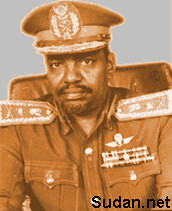
Bush Adopts Plans to Further Pressurize Sudan; US Treasury Would Block Transactions

Bush Approves Plan To Pressure Sudan

Treasury Would Block Transactions

By Glenn Kessler
Washington Post Staff Writer
Wednesday, February 7, 2007; A12

President Bush has approved a plan for the Treasury Department to aggressively block U.S. commercial bank transactions connected to the government of Sudan, including those involving oil revenues, if Khartoum continues to balk at efforts to bring peace to Sudan's troubled Darfur region, government officials said yesterday.

The Treasury plan is part of a secret three-tiered package of coercive steps -- labeled "Plan B" -- that the administration has repeatedly threatened to unleash if Sudan continues to sponsor a campaign of terror that has left as many as 450,000 dead and 2.5 million homeless. But the administration has held back on any announcement of Plan B, even after setting a Jan. 1 deadline, in hopes of still winning Khartoum's cooperation.

The delays have increased skepticism that the administration is willing to risk potential diplomatic and commercial fallout from targeting Khartoum.

The U.S. plan would put pressure on Darfur rebel leaders who have refused to participate in peace talks or who have targeted humanitarian groups operating in the region, officials said. The information on Plan B was provided by officials in four government agencies on the condition of anonymity because the administration had not planned on releasing details yet.

Some aspects of Plan B have already been stealthily launched, such as stationing four U.S. Army colonels last month as observers on the Sudan-Chad border in full view of Sudanese intelligence. The unannounced move was intended as a signal to Khartoum, which the administration accuses of launching a "quiet war" against Chad's government to widen the Darfur conflict.

"I find this all very dubious. They have talked about Plan B, but they have never explained what Plan B is," said J. Stephen Morrison, director of the Africa program at the Center for Strategic and International Studies. "The deadlines have come and gone, and the Sudanese have thumbed their noses."

Andrew Natsios, Bush's special envoy to Sudan, tomorrow will testify before the House Foreign Affairs Committee that the administration has set three triggers that would result in the enhanced sanctions: one, renewed attacks on displacement camps or driving nongovernmental organizations from Darfur; two, stonewalling peace negotiations with rebel forces; and three, refusing to implement a plan pushed by then-U.N. Secretary General Kofi Annan to expand a poorly equipped 7,000-person African Union force into a hybrid A.U.-U.N. force of 17,000 troops and 3,000 police.

"Treasury's plan to block commercial bank transactions connected to the Khartoum regime, even those involving oil revenues, will be only a minor, short-term inconvenience," said Eric Reeves, a Sudan expert at Smith College, who noted that Khartoum has already violated the three triggers since the start of the year. "This element of Plan B only reveals more fully its vacuous nature."

The Darfur conflict broke out in 2003, when African rebel groups attacked police stations and military outposts. The United Nations and human rights groups accuse Sudan's government of supporting a militia known as the Janjaweed in an effort to crush the rebellion. About 2,000 villages have been destroyed across Darfur, and the administration more than two years ago accused the government of engaging in genocide. But the United States has made little progress in ending the conflict or the humanitarian crisis.

Buoyed by booming oil wealth and a close relationship with China, Sudan has shrugged off repeated threats of action. Bush, increasingly frustrated by the impasse, approved key aspects of the plan last month, directing Treasury to come up with a menu of options that would directly affect the government in Khartoum, officials said. Sudan's Arab leadership has fought multiple civil wars with regional groups over the country's oil and other resources, and U.S. officials believe Sudan's leaders are fearful of any moves that might threaten their grip on power.

Sudan's economy is largely dollar-based, meaning many commercial transactions flow through the United States and making it especially vulnerable to Treasury actions. Indeed, U.S. intelligence, which has stepped up reporting on Sudan in recent months to prepare for a confrontation, believes Khartoum set up a government committee to explore ways of obtaining oil revenues that did not involve dollars, such as barter deals, one official said. Sudan's government has also unsuccessfully sought new oil contracts that would provide for large upfront payments.

The core of the Treasury plan rests on an executive order issued by President Bill Clinton in 1997 that blocked all Sudanese government assets, including companies connected to it, and curtailed financial dealings with Sudanese entities. Bush last year issued a second executive order that blocked the property of people connected to the conflict in Darfur. The existing orders already result in regular freezes or rejections of some Sudanese transactions, but U.S. officials believe they also give the Treasury the authority for an aggressive crackdown on a much larger group of companies connected to Sudan.

Officials hope a ripple effect of Treasury's actions would extend to other countries and companies doing business with Sudan, forcing them to reconsider whether they want to be tainted or, more troubling, subjected to Treasury's scrutiny. "Anything that is controlled by the government we can go after," a senior administration official said. "But the effectiveness will be driven by the participation of our partners," meaning other countries.

Sudan produces about 500,000 barrels of oil a year, which at current market rates is worth about $10 billion. As much as 200,000 barrels are kept for internal consumption, Morrison said, with about 75 percent of the rest sold to China. Partly because some aspects of the plan are still classified, administration officials yesterday were vague about how the plan would cripple Sudan's oil revenues. One official said Treasury will "have the ability to touch things that touch oil revenues."

The regional government of South Sudan, created through a peace deal two years ago, is supposed to get 50 percent of oil revenues. Officials said they think they had designed the plan so it would harm Khartoum but without impacting the government in the south.

Pentagon Creates New Command for African Continent

Pentagon sets its sights on Africa

Simon Tisdall
Thursday February 8, 2007
Guardian Unlimited

This week's decision by the US to create a new Pentagon command covering Africa, known as Africom, has a certain unlovely military logic. Like Roman emperors of old, Washington's centurions already arbitrarily divide much of the world into Middle Eastern, European and Pacific domains.

Now it is Africa's turn, although whether Africans will welcome (or were consulted) about this latest geo-strategic power play seems doubtful.

Practical more than imperial considerations dictated the White House move. With Gulf of Guinea countries including Nigeria and Angola projected to provide one quarter of US oil imports within a decade, with growing Islamist terrorism worries in the Sahel and Horn of Africa regions, and with China prowling for resources and markets, the US plainly feels a second wind of change is blowing, necessitating increased presence and leverage.

Africom's advent also follows a pattern of perhaps unparalleled military expansion under President George Bush, not all of which is explained by the 9/11 trauma. The American military-industrial complex that so troubled Dwight Eisenhower in 1961 has morphed into a boom business with truly global reach. It makes China's business-oriented People's Liberation Army look like a corner store.

The Pentagon's total budget requests for fiscal year ending September 2008 have swollen to $716.5bn (£365bn). That is more than double Clinton-era spending. In contrast, Russia will spend $31bn on defence this year and China, according to the International Institute for Strategic Studies, an estimated $87bn. With Mr Bush as head of the police academy, the US is becoming, de facto, the self-appointed global policeman it said it never wanted to be.

In Africa as elsewhere, this could have the unintended effect of creating US-secured regions that are safe for rival countries to do business in - and exploit. Beijing, for example, has cause to be thankful. Sino-African trade, boosted again by the grand continental progress of President Hu Jintao this week, has risen from about $3bn in 1995 to $55.5bn last year, according to the independent Power and Interest News Report (PINR). And Chinese political cooperation is also growing, not only with "rogue regimes" such as Sudan and Zimbabwe but with more mainstream governments, potentially undercutting US-promoted governance standards.

"One of the main reasons that the African Development Bank agreed to hold its next meeting in Shanghai was that the member states would like to learn more about how China has achieved its rapid economic growth while maintaining a corrupt and non-representative political system," said PINR analyst Adam Wolfe. Yet many of these same countries are potential beneficiaries of Washington's proposed security umbrella.

At the same time, the limits on what the new command will actually do there are arguably too strict. Africom will advance "our common goals of peace, security, development, health, education, democracy and economic growth," Mr Bush said this week. But officials say that will not involve the stationing of extra combat troops. Nor will it mean US soldiers reinforcing badly stretched UN and African Union peacekeeping forces in Congo, Somalia or Darfur.

In practice much of Africom's work is likely to involve oversight of already extensive, US-funded African capacity-building programmes, including good governance-related assistance schemes and training of security forces. In many ways it may be modelled on the Horn of Africa Taskforce set up in Djibouti after 9/11. Like smaller US military units working temporarily in countries such as Rwanda, Botswana and Liberia, the taskforce undertakes a laudable range of humanitarian and infrastructure projects including, recently, the collation of Somali folk tales.

But like Africom, the Djibouti base's raison d'etre remains American security and counter-terrorism, as seen in its training of Ethiopian troops and its air and sea support for the recent Ethiopian intervention in Somalia against Islamist militants. By coordinating and expanding similar operations, such as US special forces in Algeria and the 10-country "Trans-Saharan Counter-Terrorism Partnership", Africom marks the official arrival of America's "global war on terror" on the African continent. It is a wonder they took so long.

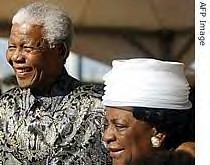
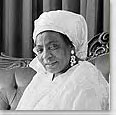
Mama Adelaide Tambo Will Be Laid to Rest Saturday, February 10

ARRANGEMENTS FOR THE FUNERAL OF THE LATE ADELAIDE TAMBO

8 FEBRUARY 2007

The late ANC stalwart Mama Adelaide Tambo will be laid to rest on Saturday, 10 February, in Wattville, Ekurhuleni.

Mama Tambo lived in Wattville with her husband, the late ANC President Oliver Tambo, before they left the country to set up the ANC mission in exile.

The community of Wattville will be joined by thousands of mourners from around Gauteng and from different parts of the country in paying their final respects to a much loved and widely respected servant of the South African people.

Around 10,000 people are expected to attend the funeral, most of whom will come from Ekurhuleni and other parts of Gauteng. Groups from other provinces include members of the ANC Women's League who will be travelling by train from the Western Cape.

Mourners will also include the Tambo family and friends of the family; the leadership of the ANC, Women's League, Youth League and Alliance structures; members of parliament and provincial legislatures; representatives of various sectors; and members of the diplomatic corps.

The day's proceedings will begin with a Valedictory Service at the Tambo home in Sandhurst, Johannesburg at 07h00. This will be a private service for the family.

The cortege will leave the house at 08h00 and proceed to the Wattville Stadium, where the service is scheduled to start at 09h00.

The funeral service will be a fitting tribute to an outstanding patriot and a heroine of the nation. It will include tributes by family, friends and comrades. These will be interspersed with musical tributes by various artists and choral groups.

The sermon will be delivered by Archbishop Njongonkulu Ndungane, and the funeral oration will be delivered by President Thabo Mbeki.

At the conclusion of the service, the cortege will proceed to the Tamboville Cemetery. Members of the Wattville community will form a guard of honour along the streets to the cemetery.

The committal and burial ceremony will include a musical tribute by a group from the Adelaide Tambo School in Jabavu, White City. This school, which caters for physically-challenged learners, was very close to Mama Tambo's heart, to which she dedicated much of her energy in recent years. Mama Tambo will be laid to rest beside her late husband, Oliver Reginald Tambo, at approximately 13h00.

The ANC joins the Tambo family in once more extending its deepest gratitude to the many thousands of people who have sent messages of condolence and who have paid tribute to Mama Tambo in memorial services across the country.

We would also want to extend thanks to all those who have dedicated time and energy over the last few days to ensure that Mama Tambo is a fitting farewell. We also want to express appreciation to members of the media who have helped to celebrate and pay tribute to a remarkable South African.

The details of the programme are as follows:

FRIDAY, 9 FEBRUARY 2007

Eucharist
Wattville Anglican Church
Cnr Dube and Mokone St, Wattville
17h00

SATURDAY, 10 FEBRUARY 2007

Valedictory Service
Tambo home, Sandhurst
07h00

Funeral Service
Watville Stadium
Cnr Dhlomo and Mndengetongo Streets
09h00 (Guests to be seated by 08h30)

Committal and Burial Service
Tamboville Cemetery
Cnr Xaba and Mamkele Streets, Wattville
12h30

Parts of the funeral proceedings will be broadcast live on SABC 2 from 11h00-13h00 and on Radio 2000.

Members of the public are invited to make contributions to the Adelaide Tambo School. To make SMS contributions, people can text 'mama tambo' to 36933. Each SMS costs R5 and proceeds will go towards the Adelaide Tambo School for the physically challenged.

Anyone wishing to make contributions to the funeral should contact Kim Hulett on 082 776 1688.

Issued by:
African National Congress
PO Box 61884
Marshalltown
2107

8 February 2007

More information: Smuts Ngonyama 082 994 2112

NOTE TO MEDIA:

Media accreditation is required for all members of the media wishing to cover the proceedings. Media tags can be collected on:
* Friday, 9 February (13h00-17h00) : Luthuli House, 54 Sauer Street, or
* Saturday, 10 February (07h30-08h30) : Ephes Mamkele Secondary School (adjacent to Wattville Stadium).

Press cards need to be presented on collection.
----------------------------------------------------------

JOHANNESBURG 7 February 2007 Sapa

CRIME, POVERTY DISCUSSED AT WOMEN'S LEAGUE LEKGOTLA

Poverty and crime were key issues the African National Congress Women's League (ANCWL) dealt with at its annual lekgotla in February, it said on Wednesday.

The ANCWL national executive committee held its annual lekgotla from February 4-6 in Benoni.

Spokeswoman Charlotte Lobe said the league draw up a 2007 plan
of action "aimed at intensifying the struggle against poverty."

ANCWL branches would monitor poverty alleviation programmes at
ward level and would forge partnerships with other women's and
community-based organisations to assist.

"This strategy must continue to target the poorest of the poor, especially the vulnerable groups such as women, children, the elderly and the physically challenged, thereby building social cohesion, strengthening families and building human capital."

Lobe said the ANCWL also addressed the problem of crime and
decided it was "critical" to develop partnerships to combat the problem.

"The ANCWL will continue with its mass campaign to mobilise
women to be at the forefront of the struggle against women and
children abuse, human trafficking, and the struggle for peace,
stability and safer neighbourhoods."

The ANCWL would convene its national general council (NGC) in
March. There, it would asses progress made in implementing
decisions of the last national conference, held in 2003.

It would also prepare the ANCWL ahead of the ANC's national
policy conference and the party's 52nd national conference, at
which a new party president will be elected.

Lobe said the ANCWL would launch NGC papers for discussions.

"Let us deepen the debates ahead of the ANCWL NGC, the ANC
policy conference and 52nd national conference," she said.

The NGC papers - available on the ANCWL website within two
weeks - were on economic transformation and international
relations.

In addition, there would also be a discussion paper focusing on the war against poverty for discussions at the NGC.

The ANCWL offered their condolences to the family, friends and
comrades of Adelaide Tambo, who died last week.

"The passing on of Mama Adelaide Tambo, must unleash new impetus in the women of our country to attend to the unfinished and yet complex struggle of the total emancipation of women," said Lobe.

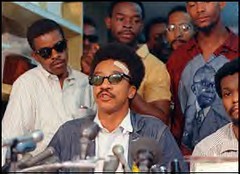
Jamil al-Amin (formerly known as H. Rap Brown) Is Scheduled for An Appeal Hearing on February 27

From Sis. Kiilu
=============
For those of you who don't recognize Jamil Al-Amin, this revolutionary
brother was known as H. Rap Brown, a Sixties revolutionary, former
Chairman of SNCC, Minister of Justice of the BPP, and author of "Die
Nigger Die!"

In order to capture him the first time in the 60s, a new bill was introduced in Congress that became known as the Rap Brown anti-riot act (crossing state lines to incite a riot). Obviously, he was a fiery speaker who coined the phrase, "Violence is as American as cherry pie." More recently, the Imam was framed for the murder of a sheriff's deputy in Georgia.

------------------------------------------------------------------------------------------
Subject: Imam Jamil's upcoming Habeas Corpus hearing
Date: Tue, 23 Jan 2007 15:08:19 -0800 (PST)

As-Salaamu alaikum wa Rahmatullah--
The habeas corpus hearing for Imam Jamil Abdullah Al-Amin will be on February 27, 2007 in Reidsville Ga--inshALLAAH.

Anyone interested in attending this hearing is encouraged to contact either Amir Sahib Abd Salaam at 2489437540(cell) or e-mail at sahib1@bellsouth.net or Yahya AbdusSabur at 2162150165(cell) or akiyahya@hotmail.com in order for a coordinated effort to be made in this endeavor.

Also, special permission forms to visit with Imam Jamil at Georgia State Prison are available. Please contact the aforementioned brothers for the forms.....and hold fast, all of you together, to the rope of ALLAAH. masalaam
------------------------------------------------------------------------------------------

The Government Holds A Grudge: The Case Against Jamil Al-Amin

By S. Tomlinson

Jamil Abdullah Al-Amin, formerly known as H. Rap Brown, has spent a lifetime fighting racism. Now, in the ultimate irony, it appears that racism's most powerful weapon will be turned against him.
The district attorney of Fulton County, Ga., announced in early May that he intends to seek the death penalty against Al-Amin for the March 16 shooting death of a Fulton County sheriff's deputy.

Approximately 90 percent of those whom U.S. prosecutors seek to execute are African American or Latino. A recent study showed that Black people in Philadelphia are nearly four times as likely to get the death penalty as other defendants under similar circumstances.

The case against Al-Amin is tangled with unanswered questions, police misconduct and outright lies. Yet the prosecutors feel confident enough to make this a capital case and pursue the death penalty against a respected community leader.

The only identified eyewitness is a second deputy, who was wounded in the incident. He initially could not identify the shooter, but he identified Al-Amin the next day.

This deputy said that he clearly wounded the assailant in the shootout. Investigators first on the scene that night found a trail of fresh blood. However, after Al-Amin's arrest, it became apparent that he had not been wounded. So now the authorities consider the blood trail irrelevant to the case.

This will to ignore evidence in cases against former Black Panthers is nothing new. Former Panther Geronimo Ji Jaga Pratt recently settled his false imprisonment and civil-rights lawsuit against the FBI and the city of Los Angeles for $4.5 million. Activist, writer and former Black Panther Mumia Abu-Jamal is on Pennsylvania's death row for a crime he did not commit.

Is the case against Al-Amin just another chapter in the long history of the government's attempt to annihilate revolutionary Black leaders?

In the late 1960s, Al-Amin was known as H. Rap Brown, chairman of the Student Nonviolent Coordinating Committee. It was during these turbulent times that Al-Amin emerged as a true leader in the fight against racism. His fiery rhetoric stirred the people and troubled the authorities.

In July 1967, after a speech in Cambridge, Md., he was ambushed and shot by assailants he later came to learn were Black police officers. After the shooting, the crowd began to rebel. He was charged with inciting to riot.

By 1968, he had joined the Black Panther Party, where he served briefly as minister of justice. The FBI treated the Black Panthers as "the most dangerous and violence-prone of all extremist groups" and used every oppressive weapon against them.

He was eventually arrested and sent to prison. There he served five years.

During the first year of his incarceration, the freedom fighter converted to Islam and changed his name to Jamil Abdullah Al-Amin. Released on parole in 1976, Al-Amin settled in Atlanta and began to build a Muslim community.

So, did the government still think Al-Amin was a threat, or was he forgotten? On the 25th anniversary of the Cambridge rebellion, Al-Amin was interviewed for a local Washington paper. He spoke of the ongoing struggle for justice for Black people in the United States. He defined various movements in that struggle. Then he spoke of Islam.

"In Islam, we're not talking about getting the poor to vote. We're not talking about empowering poor people with money. We're talking about overturning that whole thing, man."

Those words appeared in 1992. If the government had forgotten about Al-Amin, his words may have served as a stark reminder. Al-Amin was a revolutionary. That same year, the FBI and Atlanta police began investigating Al-Amin in connection with everything from domestic terrorism to gunrunning to murder.

In 1995, Al-Amin was charged in the shooting of a man in his neighborhood. After the victim revealed that he was coerced into naming Al-Amin as the shooter, all charges were dropped.

The FBI investigation is said to have ended in February 1996. Atlanta police say their investigation ended in August 1997. Despite the lengthy investigations by both agencies, no charges were ever filed against Al-Amin.

For 25 years, Al-Amin has been considered a pillar of his community. These are the sentiments of those who know Al-Amin, those with whom he cleaned up his formerly drug-infested neighborhood in Atlanta. Throughout the nation, even the world, Al-Amin is Imam Al-Amin, a respected Muslim prayer leader.

Years of government scrutiny failed to yield that information. The investigator saw Al-Amin's status in the community simply as a cover for criminal activities. To the government, Al-Amin is just another violent Black revolutionary with a target on his back. If, in seeking the death penalty against another Black revolutionary, the government looks to end a movement that they consider a threat, then they would do well to heed the words of Al-Amin.

"Many times, people mistakenly identify movement as struggle. Movement is only a phase of struggle ... the struggle goes on."

Wednesday, February 07, 2007

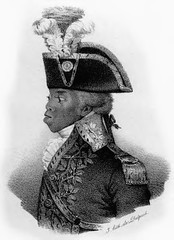
MECAWI Meeting to Focus on Haitian Solidarity, February 7

Actions in 15 countries and 4 continents planned for Feb.7th

35 Cities Join International Day in Solidarity with Haiti
-----------------------------------------------------------
PANW Editor's Note: In Detroit the Michigan Emergency Committee Against War & Injustice (MECAWI) has dedicated its weekly meeting in solidarity with the Haitian people. The meeting will feature a video, "Once There Was a Country: Haiti Revisited," and a discussion on the struggle of the Haitian masses for genuine democracy. The meeting will be held on Wednesday, February 7 at 7:00 p.m. at the MECAWI office located at 5922 Second Avenue near Antoinette. Admission is free and open to the public.
--------------------------------------------------------

So far 35 cities -- in South Africa, South America, the Caribbean, Europe and North America -- have joined hands in the February 7th International Day in Solidarity with the Haitian People. They are answering the call of the popular movement in Haiti, which is mobilizing people for February 7, as they have been continually since the February 29, 2004 coup d'etat.

From street demonstrations and marches to vigils, film showings and public meetings, people in 15 countries (so far!) are uniting around the 6 demands and the central theme: Stop the War Against the People of Haiti -- End the Foreign Military Occupation -- Respect Haiti's Sovereignty!

Protests are being organized in Brazil, Chile, Peru, Bolivia, the US and Canada -- countries that provide troops for the UN military force in Haiti -- as well as in South Africa, Ireland, England, Mexico, Guyana, Venezuela and the Caribbean. Cities with large Haitian communities in the US and Canada will be mobilizing. New York will see a Haiti solidarity demonstration at United Nations headquarters on Feb. 7th. San Francisco and Los Angeles will target the consulate of Brazil, whose UN military commander in Haiti is responsible for the massacres and the almost daily, heavy-caliber attacks on the men, women and children who live in Cite Soleil..

This is a critical moment for Haiti. Repression is intensifying, but the people's resistance continues strong. Our practical solidarity can play a key part in this life-or-death struggle.

Here is what you can do:

1. Organize an activity for Haiti on or around Wednesday, Febuary 7 in your city or town.
2. Let us know now what you are planning -- date, time, location, type of activity, contact information -- so we can build the campaign. [Call +1-510-847-8657 or email sub@sonic.net]. After your event, please call or email us a report immediately so we can publicize each city's protest activity while the news is still fresh.
3. Circulate key documents [sent separately]:
a. The "Call to Action - International Day in Solidarity with the Haitian People - Coordinated International Protests on Feb. 7, 2007." In English, French, Spanish and Portuguese.
b. Sept. 30th Foundation Declaration: "No to Occupation -- No to Trusteeship" - in Kreyol and English. And recent article: "The Coup d'Etat Continues" - in French.
c. Reports on the December 22 "Christmas massacre" in Cite Soleil; on the role of the UN since the Feb. 29, 2004 coup; and on the current situation in Haiti.

Thank you, brothers and sisters.

The February 7th Organizing Committee

A Call to Action – Join the International Day in Solidarity with the Haitian People
Coordinated International Protests
on February 7, 2007

*** End the Foreign Military Occupation of Haiti!
*** Stop the War against the People of Haiti!
*** Respect Haiti's Sovereignty!

Dear Activists for Haiti,

The United Nations forces in Haiti (MINUSTAH) – backed to the hilt by the US, France and Canada – are continuing their bloody assault on the poor majority, targeting especially leaders and supporters of the Lavalas grassroots democracy movement.

On December 22, 2006, some 400 UN troops conducted another day-long raid in Bois Neuf, Cite Soleil – an operation on the scale of the July 6, 2005 UN massacre in the same neighborhood – with many civilian residents dead and wounded. Since the "Christmas massacre," UN forces have repeatedly raided Cite Soleil shooting off their weapons.

In response, Fondasyon Trant Septanm, an 11-year-old organization of victims of the 1991 and 2004 coups d'etat in Haiti, has issued a call for renewed protests in many cities of the world on February 7, 2007. This is the anniversary of the overthrow of the Duvalier dictatorship in 1986. Haiti will be demonstrating on that day – so should we!

The February 7th call is supported by representatives of these grassroots organizations in Haiti: + Comite de Defense des Droits du Peuple Haitien (Committee in Defense of the Rights of the Haitian People) + Confederation des Travailleurs Haitiens (Confederation of Haitian Workers) + Femmes Victimes Debout (Women Victims Stand Up) + Collectif des Parents et Amis des Prisonniers Politiques (Collective of Relatives and Friends of Political Prisoners) + Coordination Nationale des Organisations de Droits Humains (National Coordination of Human Rights Organizations).

The February 7th International Day is part of a campaign against the US/UN Occupation by the popular movement in Haiti, leading up to February 15th when the UN Security Council is due to renew its Haiti mandate.

We need to act now in solidarity with our Haitian sisters and brothers, whose unbreakable spirit, in the face of severe repression, just won’t stop.

Building on the 2005 international demonstrations for Haiti

The July 6th massacre by UN troops in Cite Soleil sparked an international campaign, culminating in a day of solidarity actions in 15 cities and five countries on July 21, 2005. The campaign succeeded in breaking through the media blockade, exposing the massacre.

This was followed by the first International Day in Solidarity with Haiti on September 30, 2005, when coordinated actions in 47 cities in 17 countries on 4 continents condemned the bloody US/UN occupation and demanded that Haiti's sovereignty and democracy be respected.

Today, violent repression continues against grassroots activists and communities – by UN forces and paramilitary death squads [like the Little Machete Army] created by the Haitian National Police. We're talking not only about killings, but sexual abuse, beatings, house burnings, arbitrary arrests, and the prolonged, illegal detention of people without any charges. UN forces have been repeatedly implicated in these activities.

Our call is for each city to organize its own Haiti solidarity activity on or around Wednesday, February 7,
2007 –to be coordinated as a single worldwide mobilization.

It could be a march, rally, public meeting, vigil, house meeting or civil disobedience – whatever you are able to do – in support of the following demands:

End the brutal US/UN Occupation – Respect Haiti’s sovereignty
Stop the killings, sexual abuse and massacres of the poor by UN troops, police and paramilitaries under police control
Free the political prisoners – No more illegal arrests & detentions
President Aristide must be free to return to Haiti – Respect the Haitian Constitution
Launch an independent inquiry into the February 29, 2004 coup and forced removal of President Aristide
Perpetrators of the coup and massacres of the poor must be brought to justice – Reparations for the victims

Join us in this important mobilization. Let us know by phone or email what solidarity activity you are organizing for on or around February 7th, so we can build the campaign. Use your contacts in other cities and countries to spread this movement.

For the February 7, 2007 International Day of Solidarity with the People of Haiti,

Lavarice Gaudin, Veye Yo
Lovinsky Pierre-Antoine, Fondasyon Trant Septanm
Margaret Prescod, Global Women's Strike
Dave Welsh, US Labor/Human Rights Delegation to Haiti

Contact the Feb. 7th Organizing Committee at 510-847-8657 or sub@sonic.net

Update on Morales/Shakur Center in New York City

FROM:

PROLIBERTAD
3 February 2007

--- --- --- --- --- --- --- --- ---
MORALES/SHAKUR CENTER UPDATE

YOUNGBLOODS, ELDERS AND FRIENDS:

Yesterday about 80 students and several elders attended a forum on the history of the GUILLERMO MORALES / ASSATA SHAKUR COMMUNITY AND STUDENT CENTER at Harlem University (a/k/a CCNY) and to give students returning to classes an overview of the controversy over the Community Center's name. The panelists included ABIODUN OYEWOLE of the Last Poets, Esperanza Martel, a Puerto Rican activist and former City College faculty member who was purged for supporting student activists, and myself.

City Council member Charles Barron has called for a press conference on Thursday, February 8th at 1 PM outside the MORALES / SHAKUR COMMUNITY CENTER located in room 3/201 in the North Academic Center (NAC Building) at City College.

Council Member Barron has been outspoken in his support of the right of community members and students to name the Community Center in honor of GUILLERMO MORALES and ASSATA SHAKUR and he has condemned the decision by CUNY to remove the sign bearing the name of the Community Center from the room's entrance. Mr. Barron has called for the sign to be restored and for CUNY to officially designate the room in honor of GUILLERMO and ASSATA.

The controversy over the name of the Community Center erupted in December after the New York Daily News published a prominent article and editorial condemning the decision to name the Community Center in honor of GUILLERMO MORALES and ASSATA SHAKUR, two former City College student activists who live in Cuba where they have been granted political asylum. A day after the Daily News article was published the City College administration removed the sign bearing Guillermo and ASSATA’S names from the entrance of the Community Center and threatened students who work at the Community Center with disciplinary action if they replaced the sign.

Yesterday's panel was organized by the students working at the Community Center to introduce City College students to the history of the Center that was founded in 1989 and the importance of the decision to name the Center in honor of GUILLERMO and ASSATA.

I spoke on Guillermo Morales' role as one of the leaders of the historic 1969 student strike that forced CUNY to implement Open Admissions and to establish departments and programs in ethnic studies. Esperanza spoke on the Puerto Rican independence movement which Guillermo was a part of and of the importance of supporting freedom fighters held as political prisoners in the United States for participation in the movements for Black Liberation, Puerto Rican independence and Native American sovereignty. ABIODUN recited poetry and spoke of his experiences with ASSATA and the importance of opposing the terrorism being perpetrated by the U.S. government.

Students at the forum peppered the panel with questions and displayed enthusiastic interest in supporting the ongoing work of the MORALES / SHAKUR Community Center and defending work and the name of the Community Center.

Yesterday's panel was ably moderated by Hank Williams, a CUNY Graduate Student and long time activist at the Community Center and CUNY graduate student David King.

The MORALES / SHAKUR Community Center needs volunteers to help in the Center's projects and activities, including the campaign to save the Community Center.

The MORALES / SHAKUR Center is located in room 3/201 in the NAC Building at City College at 137th Street at either Convent of Amsterdam Avenues.

The phone number is 212-650-5008.

For information about the press conference contact Charles Barron's office at 212-788-6957 or 718-649-9495.

Hands off ASSATA and GUILLERMO!
Hands off the Community Center!
Ronald B. McGuire

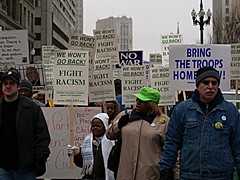
GOP Senators Block Debate on Iraq Policy

February 6, 2007

G.O.P. Senators Block Debate on Iraq Policy

By CARL HULSE and JEFF ZELENY
New York Times

WASHINGTON, Feb. 5 — Republicans on Monday blocked Senate debate on a bipartisan resolution opposing President Bush’s troop buildup in Iraq, leaving in doubt whether the Senate would render a judgment on what lawmakers of both parties described as the paramount issue of the day.

The decision short-circuited what had been building as the first major Congressional challenge to President Bush over his handling of the war since Democrats took control of Congress last month, and left each party blaming the other for frustrating debate on a topic that is likely to influence the 2008 presidential and Congressional races.

At issue is a compromise resolution drawn up chiefly by Senator John W. Warner, Republican of Virginia, that says the Senate disagrees with President Bush’s plan to build up troops and calls for American forces to be kept out of sectarian violence in Iraq.

The deadlock came after Democrats refused a proposal by Senator Mitch McConnell of Kentucky, the Republican leader, that would have cleared the way for a floor fight on the Warner resolution in return for votes on two competing Republican alternatives that were more supportive of the president.

One of those alternatives, by Senator Judd Gregg, Republican of New Hampshire, would declare that Congress should not cut off any funds for forces in the field. That vote was seen as problematic for Democrats because many of them opposed any move to curtail spending, raising the prospect that it could have attracted the broadest support in the Senate.

The procedural vote, which divided mostly along party lines, left the Democratic leadership 11 votes short of the 60 needed to begin debate on the bipartisan resolution. Forty-seven Democrats and two Republicans voted to open debate on the resolution; 45 Republicans and one independent were opposed.

The Republicans run a risk with their resistance in the event Democrats are able to persuade the public that Mr. Bush’s allies are stonewalling in the Senate and shielding the president from criticism over an unpopular war. But their show of unity, with war critics including Mr. Warner of Virginia and Senator Chuck Hagel, Republican of Nebraska, siding with the leadership, lent some credibility to Republican claims that Democrats were being unfair. “I am confident that somehow this matter will be worked out,” Mr. Warner said.

But Senator Harry Reid of Nevada, the majority leader, said that “time was tenuous” and that he would not guarantee that Democrats would try again to bring up the resolution. He did promise that there would be more clashes over Iraq policy as the Senate turned to measures like the president’s request for $100 billion in emergency Iraq spending.

“You can run but you can’t hide,” Mr. Reid told his Republican colleagues on the floor. “We are going to debate Iraq.”

The results left the future of the Iraq fight unsettled, though Senate leaders indicated that they would continue to negotiate over ways to restart the debate. Lawmakers on all sides of the issue said they anticipated that the Senate would ultimately approve a resolution of some kind because of intense public interest in the issue. Mr. Reid changed his vote and sided with Republicans at the end, a procedural move to allow him the option to reopen the issue.

Still, as they jousted over the terms of debate, senators provided a taste of what a floor fight over the resolution would look like as they traded tough words about the meaning of a resolution challenging Mr. Bush and what would happen if Congress remained silent.

Senator Joseph I. Lieberman of Connecticut, the independent who sided with Republicans in agreeing not to take up the resolution, called the proposal “a resolution of irresolution,” saying it criticized the president’s plan but did nothing concrete to stop it. He goaded colleagues who opposed the buildup to take more definitive action if that was their view. “Have the courage of your convictions to accept the consequences of your convictions,” he said.

Senator Ben Nelson of Nebraska, a Democratic co-author of the resolution who typically promotes comity in the Senate, accused Republicans of stalling. “If not now, when?” he said. “If not now, do we wait for more troops to die before we oppose the president’s plan?”

In addition to the resolution introduced by Mr. Gregg, declaring that Congress should not cut off financing for forces in Iraq, Republican leaders had sought a Democratic commitment for a vote on another alternative, one introduced by Senator John McCain, Republican of Arizona. That measure would set 11 conditions for the Iraqi government if it wanted to retain American support. The Republican approach would need 60 votes for passage.

Democrats said that the Gregg initiative was meant as a distraction and that they wanted to focus on the question of whether senators supported Mr. Bush’s plan or opposed it. “We are witnessing the spectacle of a White House and Republican senators unwilling even to engage in a debate on a war that claims at least one American life every day and at least $2.5 billion dollars a week,” said Senator Richard J. Durbin of Illinois, the No. 2 Democrat.

Some Republicans admitted that they were unsure how long the unity would last and whether Republicans could continue to make a case against the resolution on procedural grounds. And two Republicans facing re-election in 2008, Senators Susan Collins of Maine and Norm Coleman of Minnesota, joined Democrats in voting to begin the debate.

Democrats tried to immediately pounce on the vote, with Mr. Reid saying Republicans had given Mr. Bush the green light to begin his buildup. They also warned of political consequences for Republicans given public frustration with the war.

“Senator McConnell led his Republican troops off the cliff,” said Senator Charles E. Schumer of New York, chairman of the Democratic Senatorial Campaign Committee.

The White House welcomed the Senate vote. “All sides have a right to be heard in this debate, and we support Senator McConnell’s and the Republicans’ right to be able to offer the amendments they want to offer,” said a spokeswoman, Dana Perino.

Senator John Sununu, a Republican of New Hampshire who is also up for re-election next year, acknowledged that voters were likely to be unhappy with the procedural wrangling over an issue as grave as Iraq.

Mr. Sununu, who sided with Republicans, but declined to say whether he would ultimately vote to oppose the Iraq plan, said, “It may come as a surprise to my colleagues, but most voting members of the American public think that the Senate spends all too much time talking and not enough time casting votes.”

Monday, February 05, 2007

PANW Editor, Abayomi Azikiwe, To Speak on Contemporary Africa at Workers World Public Meeting February 10

For Immediate Release

Media Advisory

Event: Pan-African News Wire Editor, Abayomi Azikiwe,
Will Speak on Contemporary Africa and the Anti-
War Movement.
Location: 5920 Second Avenue at Antoinette, North of the
Wayne State University Campus in Detroit
Date: Saturday, February 10, 2007, 5:00 p.m.-7:30 p.m.
Contact: Tel. (313) 831-0750, URL: http://www.mecawi.org
http://panafricannews.blogspot.com

PANW Editor to Speak on Contemporary Africa and the Anti-War Movement on Saturday, February 10 at Workers World Public Meeting

On Saturday, February 10, Pan-African News Wire editor Abayomi Azikiwe will be a featured speaker at a public meeting sponsored by the Detroit offices of the Workers World newspaper.

Azikiwe, a co-founder of the Michigan Emergency Committee Against War & Injustice (MECAWI), has been a student of African history and politics for more than three decades.

His talk will examine recent events in Somalia, where the United States government has backed and coordinated an invasion and occupation of this Horn of Africa nation. He will also speak on the ongoing conflict in the Darfur region in Sudan and the role of American and British imperialism in destabilizing this oil-rich central African state.

In addition, Azikiwe will discuss the history of the land redistribution program in Zimbabwe and why the US and the UK have waged a campaign to isolate this southern African nation.

Finally, the PANW editor will look at the two major continental organizations, the African Union, based in Addis Ababa, Ethiopia and the Pan-African Parliament, located in Midrand, South Africa and some of the challenges facing these institutions amid growing political interference by the United States.

Abayomi Azikiwe has contributed articles to the Workers World newspaper as well as dozens of other publications throughout the international community. He can be heard twice a week on radio at WDTW, 1310 AM in Detroit (Sundays from 10:00 a.m.-11:00 p.m.) as well as CKLN, 88.1 FM in Toronto (Thursdays from 9:30 p.m.-10:00 p.m.).

Sunday, February 04, 2007

Bird Flu Outbreak: UK Orders the Slaughter of 160,000 Turkeys; First Human Death Reported in West Africa

February 4, 2007

Deadly Bird Flu Confirmed in British Turkeys

By ALAN COWELL
New York Times

LONDON, Feb. 3 — British authorities confirmed Saturday that an outbreak of bird flu discovered among turkeys at a poultry farm in eastern Britain had been caused by the deadly A(H5N1) strain, which has killed humans in other parts of the world.

The disease has killed 2,500 turkeys near Lowestoft since Thursday, making it the biggest outbreak of the strain reported in Britain since concern about its global spread began to take root in 2003.

An additional 160,000 birds will now be culled in an effort to contain the outbreak, government officials said.

The prospect of a mass slaughter recalled Britain’s battle with foot-and-mouth disease in 2001, when nearly four million animals, mainly sheep, pigs and cows, were burned.

The Department for Environment, Food and Rural Affairs said that veterinary authorities had imposed restrictions in areas within six miles of the infected farm in eastern England, owned by the Bernard Matthews company, one of Europe’s biggest poultry businesses.

The department also said all bird shows and pigeon racing was banned while scientists tried to establish more detail about the virus and the level of risk it presented to humans. The department did not say what had caused the outbreak.

Fred Landeg, a senior government veterinarian, said there was no public health concern. “Avian influenza is a disease of birds,” he said, “and whilst it can pass very rarely and with difficulty to humans, this requires extremely close contact with infected birds, particularly feces.”

Britain’s last brush with the virus was last April, when a dead swan that washed up in Scotland tested positive for the strain. Government scientists said it had probably carried the infection from Germany and posed no threat to humans.

Later that month, chickens in another part of eastern England — a center of poultry farming — died of a different strain of avian influenza, H7, which can cause mild symptoms in humans. At that time, a poultry farm worker fell ill with conjunctivitis, which was attributed to the virus.

The disease is commonly transmitted to farmed birds by infected migrating birds.

But since 2003, 164 people, most of them in Asia, have died of the A(H5N1) strain, and authorities worry that the virus could easily become transmissible among humans to create a global pandemic. About 200 million birds have either died or been killed in the same period.

On Saturday, the World Health Organization confirmed that the strain had killed a 22-year-old Nigerian woman, making her the first known human fatality in sub-Saharan Africa, Reuters reported.

Tests carried out at a laboratory in London confirmed the findings of Nigerian health authorities, who announced on Wednesday that the woman had died after catching the virus from an infected chicken.


Bird flu claims first human life in West Africa

By Tume Ahemba

LAGOS (Reuters) - Nigeria confirmed the first human death from the H5N1 virus in sub-Saharan Africa on Wednesday after tests on a dead woman showed she had contracted bird flu.

The 22-year-old died after feathering and disembowelling an infected chicken. She was from Lagos, the commercial capital of Africa's most populous country, Information Minister Frank Nweke said.

Test on three other victims, one of them the woman's mother, were inconclusive.

Nigeria was the first African nation to detect the H5N1 virus in poultry last year and had conducted tests on 14 people suspected of having the virus.

Although bird flu remains essentially an animal disease, experts fear it could mutate into a form that could pass easily among humans, possibly killing millions.

In Africa, 11 people have died in Egypt from bird flu since 2003 and there has been a single non-fatal human case in Djibouti, in the eastern Horn.

The H5N1 virus has killed at least 164 people worldwide, most of them in Asia, and Indonesia has the world's highest death toll - 63.

Six Indonesians have died in 2007 from bird flu, which is endemic in poultry in most of the country's provinces, and Planning Minister Paskah Suzetta said this flare-up meant bird flu would now be categorised as a national disaster.

This will trigger additional funding for a focussed fight against the virus.

"It is an epidemic, the funding will be allocated from a disaster fund in the state budget," Suzetta said on Wednesday.

"The handling of this will no longer be on an ad hoc basis, but it will be done comprehensively." Indonesia said in December it planned to tackle the virus more forcefully and hoped to beat it by the end of 2007.

NO SURPRISE

Nigeria is among countries regarded by experts as the weakest links in the global attempt to stem infections of birds.

The virus has spread to 17 of Nigeria's 36 states over the past year despite measures such as culling, quarantine and bans on transporting live poultry.

World Health Organisation spokesman Gregory Hartl said a human case of bird flu in Nigeria was to be expected because of the experience in other countries, such as Indonesia, with huge poultry populations where chickens and hens live in close proximity to humans.

"It does not change anything from a public health point of view," Hartl said. "It had to happen sooner or later."

In Japan, the Agriculture Ministry confirmed an outbreak of bird flu in the western prefecture of Okayama, the third in the country since the beginning of the year.

Another outbreak is suspected at a poultry farm in the southwestern prefecture of Miyazaki. There have been no reported cases of human infection from the virus in Japan.

More than 200 million birds have died from bird flu or have been killed to prevent its spread since 2003.

(Reporting by Tume Ahemba in Lagos, Muhamadd Al Azhari in Jakarta, Linda Sieg in Tokyo and Richard Waddington in Geneva)

13 Central Intelligence Agents Indicted in Germany

From the February 05, 2007 edition
http://www.csmonitor.com/2007/0205/p01s04-woeu.html

In Europe, pushback against US 'war on terror'

German solidarity with the indictment of 13 CIA operatives underscores a shifting tone across Europe

By Robert Marquand
Staff writer of The Christian Science Monitor
PARIS

Reaction in Germany was hardly neutral when a prosecutor in Munich indicted 13 CIA officials last week for kidnapping a German of Lebanese descent and interrogating him in Afghanistan before apparently realizing they had the wrong man. Germans solidly backed the prosecutor.

Since Christian Schmidt-Sommerfeld took the unprecedented step, both the right and left in Germany have supported the "rule of law" principles he articulated.

The media have been unified as well. Typical is the centrist Süddeutsche Zeitung: "The justice system has stood up for the rule of law. Whether the government will do so is a different matter. Berlin must push for the kidnappers to be extradited, or ... tried in the USA. But it is unlikely to have that much courage."

The solidarity underscores a shifting tone in Europe. As changes of leadership loom in Britain and France, and capitals contemplate relations with a post-Bush US, Uncle Sam may expect stronger "pushbacks" from Europe, experts here say. Public disapproval of the US-led "war on terror" is also growing, spurring the change.

"There is a deep gap between government policy and public opinion in Europe, and that opinion may be shaping the direction here right now," says Frederic Bozo, professor of European Studies at the Sorbonne in Paris. "Europe doesn't want to upset the careful balance with the US. I don't think there is a united opposition against the US at all. But Europe is setting the groundwork for its own identity."

Gordon Brown, who is shortly expected to take over as prime minister in Great Britain, opposed the Iraq war from the start, and has made no secret that he plans to carve out an independent line on the venerable "special relationship" with the US. Many anticipate that British troops will leave Iraq by the end of the year.

In France, even the avidly pro- American Nicolas Sarkozy, current front-runner in the French elections this spring, stated in an interview taped in New York last week that Americans need to "get interested in the world, and the world will learn to love you."

To be sure, European cooperation with the US on a wide range of areas, including counterterrorism, is extremely strong, even in France, where the Chirac government has steadily gone it alone in Europe in opposition to the Iraq campaign.Yet Europeans have steadily refused to accept the concept and phrase, "war on terror," a sentiment that extends to its application to Iraq.

Last week, European Union officials in Brussels sought to reduce the amount of information given to US agencies on air passengers leaving Europe. An official in charge of data protection for the European Central Bank similarly advised that millions of pieces of financial information being sent regularly to the US after Sept. 11 were in violation of EU privacy codes.

The "secret, routine, and massive access" by US agencies to banking SWIFT codes – needed to transfer in and out of European financial institutions – is "unacceptable," stated Peter Hustinx, the Brussels official responsible for EU data oversight.

Boosting this sentiment is Europeans' recognition that the US is also in flux with an election season starting up, and that President Bush's term appears to be winding down with the United States in a vulnerable position overseas.

The US legal basis for conducting interrogation centers at Guantánamo Bay, for example, has long rankled in Europe.

"Most of the French opinion, many of the German people, a large share of the Labor constituency in the UK, the Spanish, and now Italy, don't just oppose the policy, but the basis of US policy," says Georges Le Guelte, of the Institute for International and Strategic Relations in Paris. "You can't have renditions and Guantánamo and talk human rights at the same time. That is more clear to many of us."

In Italy, prosecutors put out warrants several months ago for 25 members of a CIA team that abducted a Muslim cleric in Milan.

Nor is Europe alone in its willingness to speak more pointedly to the White House about its foreign affairs. On page 1 of last Thursday's People's Daily, a newspaper of record in China, a Chinese official criticized Mr. Bush for inflammatory rhetoric that turned the war in Iraq into a "religious war."

The comment was unprecedented in a state where official decorum is rigidly maintained. (For nearly a decade, China has conducted a brutal campaign of summary executions of Muslims in its far-west Xinjiang region, as documented in human rights reports.)

In the case of the Munich renditions, announced Jan. 31, 13 American CIA operatives allegedly apprehended German citizen Khaled el-Masri in Macedonia in 2004 and whisked him to an Afghan prison called "the Salt Pit." Realizing he was the wrong man, they left him on a hillside in Albania five months later, warning him never to talk of his experience. Mr. el-Masri instead filed suit in a Virginia court. Masri's case was dropped in Virginia after arguments that a trial would jeopardize US security operations.

But with help from Spanish police, the Munich prosecutors discovered the identity of the operatives through flight and hotel records in Palma de Mallorca, where they stopped to relax.

On Friday, in Washington, German foreign minister Frank-Walter Steinmeier told US Secretary of State Condoleezza Rice that the Munich warrants were only valid in Germany at present, but that Berlin felt the local court might issue an international warrant, according to German papers.

Ms. Rice said the warrants would not harm US-German relations. Justice Department officials have not responded to approaches by the German prosecutors.


Germany seeks arrest of 'CIA agents'

By Hugh Williamson in Berlin
February 1 2007 02:00

German prosecutors on Wednesday issued arrest warrants for 13 suspected Central Intelligence Agency agents in connection with the alleged kidnapping of a German citizen in a forced renditions case that diplomats said could further strain relations between Washington and Berlin.

Christian Schmidt-Sommerfeld, the Munich prosecutor, said the unnamed people were wanted on suspicion of false imprisonment and causing serious bodily harm in the case of Khaled al-Masri, a Lebanese-born German detained in December 2003 in Macedonia and allegedly held until May 2004 by the CIA in a secret prison in Afghanistan.

The prosecutor said the 13 people were "clearly identifiable" based on information from authorities in Spain, Italy and the European Union. He noted, however, that the "personal details contained in the arrest warrants are, according to our current knowledge, aliases of CIA agents".

The US was not informed in advance of the arrest warrants, according to officials in Berlin. This could have "serious consequences" for bilateral anti-terror co-operation, diplomats said.

The German justice ministry was also not informed in advance of the warrants being issued, a ministry spokesperson said.

The 13 people comprised the crew of the aircraft that, according to Mr Masri, flew him from Macedonia to Afghanistan, the prosecutor said. German public television reported that many of the 11 male and two female suspects live in North Carolina.

The crew operated out of Majorca, Spain, and worked for Aero Contractors, the successor to the CIA's former secret airline Air America, the television channel said.

Forced renditions by the CIA – the capture and removal to secret locations of alleged terror suspects – have caused a political outcry in Europe, with reports of hundreds of secret flights and dozens of abductions fuelling resentment of US anti-terror tactics.

Frank-Walter Steinmeier, German foreign minister, in December told a German parliamentary inquiry into Mr Masri's case that it was a prime example of "differences [with Washington] on which methods are acceptable in fighting terrorism and which are not".

The German government says Condoleezza Rice, US secretary of state, apologised for Mr Masri's abduction on a visit to Berlin in December 2005, although US officials said no formal apology was given.

Mr Masri's lawyer said the issuing of the arrest warrants was a "major success" in his client's case.

● A Spanish judge has asked the country's defence ministry to declassify all documents the intelligence services might have that deal with the use of the country's airports to transfer terror suspects secretly, AP reports from Madrid.

Judge Ismael Moreno, who began probing the alleged flights last June, asked for "all data, documents, notes, reports, information, analyses, studies and investigations" that the National Intelligence Centre has relating to flights made in 2004 and 2005.

Spain denies the government knew of any illegal activity by the CIA to transport terror suspects on secret flights through Spanish territory.

Additional reporting by Hubert Wetzel in Berlin

Copyright The Financial Times Limited 2007


German foreign minister criticised over Guantanamo

By Hugh Williamson in Berlin
February 4 2007 11:21

German foreign minister Frank-Walter Steinmeier’s standing as one of the country’s most popular politicians has fallen sharply in a controversy over the release of a former Guantanamo prisoner.

Public support for Mr Steinmeier fell from 69 per cent to 47 per cent, according to a poll, reflecting concern over the controversy, which is weighing both on the minister’s reputation and on unity in chancellor Angela Merkel’s coalition government.

Opposition parties and human rights groups have called for the minister's resignation if it is proven that in 2002 he helped block the early release from the US prison camp of Murat Kurnaz, a 24-year-old German-born Turk who was held there with out charge until his return to Germany in 2006.

Legislators agreed this week that Mr Steinmeier should on March 8 appear before a parliamentary inquiry into Mr Kurnaz's case, several weeks earlier that previously envisaged.

Senior Christian Democrat allies of the chancellor have also criticised Mr Steinmeier, a Social Democrat, leading to tensions in the coalition. The controversy has in Germany also cast a shadow over the minister's role in guiding Berlin's presidency of the European Union.

The minister, who handled the case until 2005 as ex-chancellor Gerhard Schröder's chief of staff and intelligence co-ordinator, said he was pleased he would "relatively soon [in the inquiry] get the chance to clarity points that need to be clarified".

Ms Merkel, who has publicly backed Mr Steinmeier, held talks this week with Kurt Beck, SPD party leader, to avoid further coalition strains on the issue.

Mr Schröder on Thursday defended Mr Steinmeier and accused CDU legislators of hypocrisy, since they had previously criticised his government for “doing too little for national security”.

In the same poll in which Mr Stienmeier’s standing fell a majority of respondents nevertheless supported Mr Steinmeier's argument that it was correct at the time, soon after the September 11 2001 terrorist attacks, to cite security concerns as a reason against Mr Kurnaz's possible return to Germany.

Mr Kurnaz was detained in Pakistan in late 2001, and transferred by the CIA to Guantanamo in early 2002 under suspicion of being an al-Qaeda activist.

Leaked German government documents indicate that US officials in October 2002 raised the issue of returning Mr Kurnaz to Germany, possibly to be placed as an informer within Germany's radical Islamic community.

Mr Steinmeier attended meetings where the offer was rejected, according to the documents - sparking the claims that he helped prolong Mr Kurnaz's suffering in the US prison. Mr Steinmeier argues that no formal US release offer was made and in any case Mr Kurnaz could have returned to Turkey.

Copyright The Financial Times Limited 2007

Friday, February 02, 2007

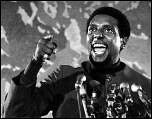
A Review of Stokely Speaks: From Black Power to Pan-Africanism


A Review of Stokely Speaks: From Black Power to Pan-Africanism

Collection of writngs and speeches by Stokely Carmichael (Kwame Ture) republished with continued significance

Title: Stokely Speaks: From Black Power to Pan-Africanism, With Forward by Mumia Abu-Jamal. Lawrence-Hill Books. Published by Chicago Review Press, Incorporated, Chicago, Ill, 2007.

By Abayomi Azikiwe
Pan-African News Wire

This remarkable collection of speeches and essays originally published in 1971 by one of the significant figures to emerge during the civil rights struggle of the 1960s in the United States, has been re-issued in a time period where the ideas put forward between 1965-1971 are just as important today as they were then. The questions of who is qualified to run society and government, the role of resistance in the struggle for genuine democracy, the Arab-Israeli conflict, the role of people in the west in regard to revolutions taking place in the so-called Third World and Pan-Africanism.

With a forward by award-winning journalist from death row, Mumia Abu-Jamal, the book illustrates that it is not only a historical document but a living work in the service of not only understanding the past but bringing its weight to the contemporary challenges faced by conscious people in the 21st Century. In addition, Bob Brown's preface to this new issue lends the credibility needed from someone who was influenced heavily by Carmichael (Ture) and worked closely with him for over three decades.

Mumia's points to the importance of the book from someone who was younger than Carmichael but who was influenced by the political tendencies that he was instrumental in developing. Jamal was a member of the Philadelphia Chapter of the Black Panther Party from 1968. He admits that the split within the Black Panther Party in 1969 tainted his earlier view of Carmichael. However, he regrets that things were not different and that how much stronger the revolutionary movement may have been if these differences had not become antagonistic:

" ...what would history have been if Ture did not leave the Party? What if the Party was big enough, strong enough, mature enough to include his insights into their own? Ture writes (in "Pan-Africanism") of the "ideological issues" that separated him from the Party. Although he is not explicit, the issue was working with white radicals, something Ture found untenable. Ironically, the ideological positions between Huey P. Newton and Stokely Carmichael were perhaps closer than first thought. As early as 1971, Newton recognized that the Party's work with white radicals was unproductive, for "White radicals did not give us access to the White community." One cannot read Stokely's trenchant analysis of white liberalism without coming to the same conclusion (see his January 1969 speech, "The Pitfalls of Liberalism")."

As early as 1966, Carmichael was articulating a view that foresaw the protracted nature of national and class politics in the United States. During the recent period there have been vicious attacks on the political gains made by Africans in America during the civil rights and black power movements of the 1950s through the 1970s. Illustrating this clearly is the recent passage in the state of Michigan of a ballot initiative that changed the constitution to effectively outlaw affirmative action. This took place in the aftermath of a Supreme Court decision in 2003 upholding in principle of the use of race as a deciding factor in both undergraduate and graduate/professional school admissions.

The central role of education in the process of national discrimination or institutional racism is pointed out in the essay entitled: "Who Is Qualified?" originally published in the January 8, 1966 issue of the New Republic. It was written at a time when Carmichael was organizing in Lowndes County, Alabama where the first Black Panther Party was formed with the explicit purpose of building an independent political force backed up by the armed will of the people to defend themselves against racist terror.

In regard to the undemocratic character of the distribution of educational resources in the United States, Carmichael writes that: "The panacea for lack of opportunity is education, as is the panacea for prejudice. But just how available is it? If every sixteen-year-old in the nation were motivated to attend high school, he could not: there are not enough schools, not enough physical space. As for college, less than one-quarter of the population ever gets there. The financial barrier is too high; even the cheapest state college charges fees which are impossible for the poor. Scholarships serve only the gifted. To make matters worse, many universities and colleges are already fighting off the mob by making entry more difficult. It is getting harder, not easier, for the poor to be included here. For the Negro, there is an additional problem. He is not psychologically attuned to think of college as a goal. Society has taught him to set short sights for himself, and so he does."

In the essay entitled: "Power and Racism", which initially appeared in the New York Review of Books in September of 1966, explains how this structural oppression of African people spawns resistance. He criticizes the purported non-violent character of the civil rights movement in the early 1960s. He points to the dialetical relationship between the government's response to the demands of the movement during its early phase to the eruption of urban rebellions which he explains are the natural outcome of the lack of response to peaceful protests:

"None of its so-called leaders could go into a rioting community and be listened to. In a sense, I blame ourselves--together with the mass media--for what has happened in Watts, Harlem, Chicago, Cleveland and Omaha. Each time the people in those cities saw Martin Luther King get slapped, they became angry; when they saw four little black girls bombed to death, they were angrier; and when nothing happened, they were steaming. We had nothing to offer that they could see, except to go out and be beaten again. We helped build their frustration."

In providing a working definition of black power as an ideology and political program to counter the perceived weakness of the civil rights movement, Carmichael says later on in this same essay "Power and Racism" that: "This is what they seek: control. Where Negroes lack a majority, Black Power means proper representation and sharing of control. It means the creation of power bases from which black people can work to change statewide or nationwide patterns of oppression through pressure from strength--instead of weakness. Politically, Black Power means what it has always meant to SNCC: the coming together of black people to elect representatives and to force those representatives to speak to their needs. It does not mean merely putting black faces into office. A man or woman who is black and from the slums cannot be automatically expected to speak to the needs of black people. Most of the black politicians we see around the country today are not what SNCC means by Black Power. The power must be that of a community, and emanate from there."

Some four decades later Africans in America have not realized this form of politics which is first and foremost designed to serve the immediate interests and needs of the community. In addition, to the domestic agenda involving education, political power and self-organization, the foreign policy of the United States reflects the internal racism and national oppression against Africans and other oppressed peoples. This is why Carmichael would accept an invitation to address the First Conference of the Organization of Latin American Solidarity in Cuba during July of 1967.

Carmichael begins this chapter entitled: "Solidarity With Latin America", by stating forthrightly that Africans in the United States share common interests with the peoples of South America and its environs. He says that: "We share with you a common struggle, it becomes increasingly clear; we have a common enemy. Our enemy is white Western imperialist society. Our struggle is to overthrow this system that feeds itself and expands itself through the economic and cultural exploitation of non-white, non-Western peoples--of the Third World."

These words are still relevant today in light of the continuing threats by US imperialism against the sovereignty of the Cuban Revolution. This lack of respect for Cuban independence is also represented by the continuing occupation of Guantanamo Bay as a naval base on that Caribbean island. One of the most egregious violations of human rights and the dignity of people has been the existence of torture camps where hundreds are held without charge or trial.

In the continental United States a burgeoning immigrant rights movement during 2006 has exploded and opened new avenues for solidarity and mass struggle. The resurrection of May Day in the country where it was formed has once again in the 21st Century been made a reality by recent immigrants as it was during the 19th Century with immigrants from Germany, Ireland and other European nations.

In another significant solidarity effort that has remained essential from the 1960s to the 21st Century is of course the question of the Palestinian's right of return as well as national independence through the realization of a independent state for the Palestinian people. Carmichael in his address to the Organization of Arab Students in Ann Arbor, Michigan in August of 1968, he lays out the case for African-American solidarity with the Palestinian Revolution. He offers a serious critique of Zionism and the role of the propaganda put forward by this movement that seeks to win sympathy for the continued occupation of Palestinian land and the denial of self-determination for this oppressed and colonized people.

Carmichael says that:"Zionists have a very effective, offensive propaganda. They state their propaganda and everyone accepts it as the truth and they put on the defensive anyone who tries to even question their propaganda by calling him anti-Semitic. It's a very, very good trick: nobody wants to be anti-Semitic, nobody wants to hate people merely because of their race. The way we found to counteract the offensive propaganda of the Zionists is to state our propaganda, and state it offensively, and state ours as the truth, and not bow down or question or quibble with the Zionists' propaganda; that is the only way we have found to be able to deal with them. If the Zionists assert that they have a right to Israel, then we assert that the Palestinians have a right to Palestine. And once we assert that, there is never room for discussion. But once we assert that the Palestinians have a right to Palestine because it belongs to them, then there can be room for discussion in this country. That is precisely what we did: try very hard to calculate assertions that would for once put the Zionists on the defensive in this country and let them back up their so-called State of Israel, which we all know to be an unjust and certainly immoral state."

In 2006 there was the blanket bombing of southern Lebanon by Israel. The United States Senate passed a resolution without opposition supporting this military action that was condemned by people throughout the region and to an increasing degree by popular organizations inside this country. It is the funding from American taxpayers that supply the F-15 and F-16 fighter planes which bomb Lebanon under the guise of fighting the falsely-labelled Hezbullah Party as terrorists.

Even a former US President is attacked by the pro-Israeli lobby and sections of the ruling class for publishing a book describing the social system in occupied Palestine as apartheid-like in its character. Consequently, the notion of solidarity between Africans in the United States and Palestinians goes to heart of challenging the imperialist's aim of dominating the middle-east through the notion of protecting the security of Israel, a settler-colonial state.

By 1969, Carmichael had re-located in the west African nation of Guinea-Conakry, then under the leadership of the Democratic Party of Guinea (PDG) headed by President Ahmed Sekou Toure. Pan-Africanism utilizes as a principle tenet the international character of the black struggle, the identity of these peoples as Africans and the unity of peoples of African descent around the world.

In a "Message from Guinea" sent in the form of a letter to the founding meeting of the Malcolm X Liberation University in Durham, North Carolina in October of 1969, Carmichael states that: "Now, we must recognize that black people, whether we are in Durham, San Francisco, Jamaica, Trinidad, Brazil, Europe or on the mother continent, are all an African people. We are Africans, there can be no quesiton about that. We came from Africa, our is African.... We have all suffered the same oppression at the hands of white folks, whether in Lynchburg, Virginia; Money, Mississippi; Accra, Ghana; or Johannesburg, South Africa."

Carmichael views Pan-Africanism as the highest expression of Black Power. Here the evolution is complete from civil rights and black power to the realization that the liberation of Africa is key to the world-wide freedom of all peoples who share the continent as a homeland.

The reprinting of this book comes as an enormous contribution to the ongoing ideological and political discussion among African peoples related to their continuing quest for genuine human emancipation. This book provides the opportunity for an ancestor to speak from the whirlwind, to provide encouragement and guidance to the developing struggle for qualitative change and social transformation.

Bogus Charges Against Former Panthers Exposed

Committee for the Defense of Human Rights

Former Panthers Arrested on 30-year Old Charges

"The same people who tried to kill me in 1973 are the same people who are here today, in 2005, trying to destroy me. None of these people have ever been charged with anything." John Bowman - 1947-2006

Murder Charges Against Former Black Panthers Based on Confessions Extracted by Torture

Eight former Black Panthers were arrested January 23rd in California, New York and Florida on charges related to the 1971 killing of a San Francisco police officer. Similar charges were thrown out after it was revealed that police used torture to extract confessions when some of these same men were arrested in New Orleans in 1973.

Richard Brown, Richard O'Neal, Ray Boudreaux, and Hank Jones were arrested in California. Francisco Torres was arrested in Queens, New York. Harold Taylor was arrested in Florida. Two men charged have been held as political prisoners for over 30 years – Herman Bell and Jalil Muntaqim are both in New York State prisons. A ninth man -- Ronald Stanley Bridgeforth – is still being sought. The men were charged with the murder of Sgt. John Young and conspiracy that encompasses numerous acts between 1968 and 1973.

Harold Taylor and John Bowman (recently deceased) as well as Ruben Scott (thought to be a government witness) were first charged in 1975. But a judge tossed out the charges, finding that Taylor and his two co-defendants made confessions after police in New Orleans tortured them for several days employing electric shock, cattle prods, beatings, sensory deprivation, plastic bags and hot, wet blankets for asphyxiation.

Support the Defendants
Join the e-mail list for news updates:
http://cdhrsupport.org

Sign up for the new CDHR mailing list for news and announcements about the case, the defendants, and support activities.

Write the defendants – they need the support, and the state should see they are supported. Addresses for each are below.
Donate. Write your check to CDHR/Agape and mail to CDHR, P. O. Box 90221, Pasadena, CA 91109.

Profiles of the Nine

Herman Bell, 59, of Louisiana, a political prisoner in New York since 1978. Cointelpro's "pattern of manipulation and lies, continuing into the present, indicates something more than the ordinary corruption and racism of everyday law enforcement. It can be understood only in terms of the power of the political movement that [we] were part of, and the intensity of the government's efforts to destroy that movement and to disillusion and intimidate future generations of young activists." Write to him - # 79C-0262, Sullivan Correctional Facility, Box 116, Riverside Drive, Fallsburg, New York 12733-0116. More about Herman.

Ray Boudreaux, 64, of Altadena. "Actually for the last 25 years I've lived a pretty peaceful and quiet life. My politics are still the same. It's just that I'm not active. People come to me sometimes as a peacemaker. And all of that has to do with all of my experience." Write to him - 2301300, 850 Bryant Street, San Francisco CA 94103.

Richard Brown, 65, of San Francisco. "For the past six years I have been a Community Court Judge Arbitrator working with the San Francisco District Attorney's office. We place a lot of emphasis on restorative justice, so most of the community service done will be done in our own community where the offender can give back to the community." Write to him - 2300819, 850 Bryant Street, San Francisco CA 94103.

Henry W. (Hank) Jones, 70, of Altadena. "I [have lived] under the constant threat of another ... incarceration. In essence I have been robbed of peace of mind, life, liberty and the pursuit of happiness. I am therefore compelled to resist these tactics and inform the public of my recent experience, feeling that something similar could happen to anyone given the climate of fear, paranoia, and abuse of authority that is rampant in our country today." Write to him - 2301301, 850 Bryant Street, San Francisco CA 94103.

Jalil Muntaqim (Anthony Bottom), 55, of San Francisco, a political prisoner in New York since 1978. "The United States does not recognize the existence of political prisoners. To do so would give credence to the fact of the level of repression and oppression, and have to recognize the fact that people resist racist oppression in the United States, and therefore, legitimize the existence of not only the individuals who are incarcerated or have been captured, but also legitimize those movements of which they are a part." Write to him - # 77A4283, Auburn Correctional Facility, 135 State Street, P.O. Box 618, Auburn, NY 13024. More about Jalil.

Richard O'Neal, 57, of San Francisco. Richard works as a custodian for the city. He had previously worked at the city's Hall of Justice and has been a city employee for more than 25 years. Write to him - 2300818, 850 Bryant Street, San Francisco CA 94103.

Harold Taylor, 58, of Panama City. "In 1971, two brothers and I were set up by the FBI. We didn't learn about COINTELPRO until years later. In 1973 I was arrested in New Orleans and was beaten and tortured for several days. In 2003 the detectives that were responsible for my torture came to my house to try and question me. I have not been the same since." Write to him - M502, 5600 Nehi Road, Panama City, FL 32405.

Francisco Torres, 58, of New York City. Address coming later.

Ronald Stanley Bridgeforth, 62, has not been found by the police.

About the Committee for Defense of Human Rights

The mission of the Committee for Defense of Human Rights is to draw attention to human rights abuses perpetrated by the government of the United States and law enforcement authorities which were carried out in an efforft to destroy progressive organizations and individuals. By building coalitions with organizations and groups that advocate for human and civil rights CDHR hopes to bring an end to these abuses. CDHR's basic principles are set forth in the Universal Declaration of Human Rights and the United Nations Convention against Torture.

Committee for the Defense of Human Rights
P.O. Box 90221
Pasadena, CA 91109
(626) 345-4939

Thursday, February 01, 2007

ANC Statements on the Transition of Mama Adelaide Tambo

ANC STATEMENT ON THE DEATH OF ADELAIDE TAMBO

31 January 2007

It is with deep regret and a profound sense of loss that the African National Congress has learnt of the death this evening (31 January 2007) of Adelaide Tambo, widow of the late ANC President Oliver Tambo and an outstanding stalwart of our movement.

Adelaide Tambo collapsed at her home in Johannesburg this evening.

The ANC joins all South Africans in mourning the loss of a true heroine of our nation, a daughter of our soil who dedicated her life to the freedom of our people.

Together with all South Africans, the ANC extends heartfelt sympathies and condolences to the Tambo family on this great loss.

Throughout the most difficult times of the struggle for democracy, Adelaide Tambo's strength, compassion and determination served as inspiration to generations of freedom fighters.

In a lifetime dedicated to the achievement of South Africa's liberation, Adelaide Tambo demonstrated fortitude in the face of adversity and responded selflessly to the sacrifices demanded of her and her family.

A political activist from a young age, Adelaide Tambo fought to ensure that women were an integral part of the liberation struggle and should assume their rightful place in society.

Adelaide Tambo was born on 18 July 1929 in Vereeniging's Top Location.

Her political life started at the age of 10 after a police raid following a riot in Top Location, in which a police officer had been killed. Tambo's ailing grandfather, aged 82, was among those arrested and marched to the town square. Here the old man collapsed. As she waited for him to regain consciousness, she swore to fight against the brutal treatment meted out against her grandfather.

At the time she was a primary school pupil at St Thomas Practising School in Johannesburg. Five years later, she started working for the ANC as a courier, while studying at Orlando High.

At the age of 18, Tambo joined the ANC Youth League and was almost immediately elected chairperson of the George Goch branch. Her early work involved opening branches of the Youth League in the Transvaal. Later, as a student nurse at Pretoria General Hospital, she started a branch of the Youth League with the help of people like Sheila Musi, Mildred Kuzwayo and Nonhle Zokwe.

She met the late Oliver Tambo at a meeting of the Eastern Township branch of the ANC and married him in December 1956, during the marathon Treason Trial.

Oliver and Adelaide Tambo were asked by the ANC to leave the country in 1960 and to carry on the work of the organisation outside South Africa. Based in London until the unbanning of the ANC, Tambo was a founder member of the Afro-Asian Solidarity Movement and the Pan-African Women's Organisation (PAWO). She also worked with International Defence and Aid Fund (IDAF) to identify and financially assist some of the families whose children left South Africa after 1976.

After her return to South Africa, Adelaide Tambo continued to serve the ANC, undertaking various responsibilities as a senior leader of the movement.

Issued by: African National Congress

More information: Smuts Ngonyama 082 994 2112


STATEMENT OF THE ANC WOMEN'S LEAGUE ON THE PASSING ON OF 'MAMA' ADELAIDE TAMBO

1 February 2007

The ANC Women's League has learned with a deep sense of sadness of the passing on of Mama Adelaide Tambo.

The League lowers its revolutionary banner in honour of this extraordinary leader and cadre of our movement.

Mama Tambo participated in ANC activities at a very tender age of 10 and rose within the movement and served in various capacities in the ANC and the ANCWL, but above all will be remembered for her service as the Treasurer General of the ANC Women's League from 1993 to 1997.

She has always been a source of inspiration and a pillar for our cadreship and leadership in the League and of course to ordinary women. Her love for her people defined her character as a person who was a Mother to all of us.

Mama Tambo was also an internationalist and will be remembered for her role in the Pan African Women Organisation and the World Federation for Democratic Women and United Kingdom Anti-Apartheid Movement.

She also assumed a role of a voice of women within the ANC. In this regard she will be remembered as one of the champions of 30% women representation in the structures of the ANC. Mama Tambo passes on as South Africa prepares to host the Conference of the Pan African Women's Organisation this year.

The ANC WL sadly yet fondly bids her farewell. We wish to extend our heartfelt condolences to her family, friends and our glorious movement, the African Nation Congress.

Issued by:
ANC Women's League
3rd Floor, Albert Luthuli House
54 Sauer Street
Johannesburg

Contact: Charlotte Lobe - 0824968025
mndimande@anc.org.za


ANC YL STATEMENT ON THE DEATH OF MA TAMBO

01 February 2007

It is with sadness, shock and feels with immense regrets to learn of the passing away of Mama Adelaide Tambo.

She was our mother,a founder of the ANC YL,a leader,a teacher and heroine of South Africa's struggle against oppressive regime,who inspired many young people in particular young women to join the struggle against apartheid. Ma Tambo was the only woman in attendance during the launch of ANC YL on the 10th September 1944, in Johannesburg, and since, she remained an active member of ANC YL as a young woman.

Our sincere condolences to the Tambo family,her children and friends, her death is a great loss to youth and to the nation

Lala ngoxolo Qhawekazi

More information contact
Zizi Kodwa @ 082 3304 910

The ACLU Confronts the National Security Agency

ACLU Confronts the National Security Agency

Dear Friend,

Yesterday, ACLU attorneys from our Michigan office and the national ACLU went head-to-head with the National Security Agency (NSA) over its illegal spying program. In a federal court room in Cincinnati, we argued that President Bush broke the law by authorizing the NSA to engage in warrantless surveillance of Americans.

The hearing was the next step in our ACLU v. NSA case in which a federal court ruled that the Bush administration’s program is unconstitutional and must be stopped. It’s up to each and every one of us to hold the president accountable and put an end to this disregard for the Constitution. Ask Congress to investigate the president and those responsible for authorizing and implementing the illegal surveillance.

Our lawsuit and pressure from the public and Congress are making a difference. Two weeks ago, the Bush administration-flip-flopping on its repeated claims that the NSA spy program is legal -- was forced to concede that the FISA court has a role in overseeing spying done by the NSA. Now that the FISA court is belatedly involved, the government is trying to get our case thrown out of court, because it claims the illegal spying has ended.

As Jim Bamford, one of our clients in this case, noted in an op-ed piece in yesterday’s New York Times, “That’s a bit like a bank robber coming into court and arguing that, although he has been sticking up banks for the past half-decade, he has agreed to a temporary halt and therefore he shouldn’t be prosecuted.”

Because the president claims he has the “inherent authority” to violate the law at any time in the future, we argued yesterday that the appeals court must still rule on our case. Now the court must exercise its proper authority and require the president to follow the law. The inherent powers of the president do not include the ability to conduct an indefinite and unlimited domestic surveillance campaign.

Lawmakers are only beginning to assert necessary and long-delayed leadership on this issue, and fundamental questions remain unaddressed. How many Americans had their private conversations listened to over these past five years? What role did telecom and internet companies play? The administration thinks it can throw us a bone and we’ll go away but we won’t.

Those responsible must be held accountable. Our democracy requires intense constitutional and congressional scrutiny to ensure it endures. Congress must conduct an immediate and thorough investigation into the NSA domestic spying program to uncover the truth about the illegal program. Ask Congress to investigate the president and those responsible.

You and the ACLU have been working so hard on this because you understand that this case is about more than putting an immediate end to the Bush administration's warrantless spying program; it is an important step in the battle to curb the Bush administration’s relentless disregard for the Constitution. Let’s be sure we keep the pressure on. Ask Congress to investigate the president and those responsible for authorizing and implementing the illegal surveillance.

Thank you for standing with us,

Kary L. Moss, Executive Director
ACLU of Michigan