Thursday, February 15, 2007

The Role of Dr. Carter G. Woodson: The History Behind African-American History Month

The history behind Black History Month

Reprinted From the Covington Leader
February 2, 2007 Edition

In February 1926, Dr. Carter Godwin Woodson, the director of the Association for the Study of Negro Life and History (now the Association for the Study of African-American Life and History), launched the celebration of Negro History Week (now Black History Month/African American History Month) — a short period set aside to emphasize salient facts of history influenced by Negroes — mainly facts brought to light by the researches and publications of the Association during its first 11 years.

This observance, Negro History Week, was regarded as timely, and the enlightened public responded warmly to the proclamation of the celebration.

The effort was widely supported among Negro schools, churches and organizations. The movement gradually found support among institutions of other races in America and abroad. Today the celebration has grown from one week in February 1926 to the entire month of February.

When Dr. Woodson launched Negro History Week in 1926 the observance came about the second Sunday in February.

The objective being to select the week which embraced both Feb. 12 (Abraham Lincoln's birthday) and Feb. 14 (calculated birthday of Frederick Douglas).

Sometime the chosen week could include only one date. At such times the selected dates had to include Frederick Douglas.

In subsequent years the observance changed from Negro History Week to Black History Week/ African-American History Week; changed from one week in February to the entire month of February in 1976. Accordingly, from 1976 forward the month of February is observed as Black History Month/African-American History Month throughout America and abroad.

Each year the Association for the Study of African-American Life and History sets the theme for the month long celebration. The 2007 theme: " From Slavery to Freedom."

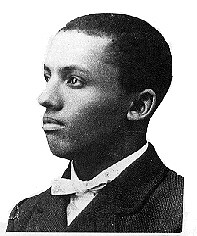
About the founder: Carter Goodwin Woodson

Carter Godwin Woodson, the son of former slaves, James and Eliza (Riddle) Woodson, was born December 19, 1875, at New Canton in Buckingham County, Va. One of a large poor family, he could not attend regularly such schools as were provided, but he was able, largely by self-instruction, to master the fundamentals of common school subjects by the time he was 17.

Hoping to further his education, Carter and his brother, Robert Henry, moved to Huntington, W. Va. But he was forced to earn his living as a miner in the Fayette County coal fields. Not until 1895 was he able to enter the Douglass High School in Huntington, where he won his diploma in less than two years. He received his high school certificate with creditable grades. It is thus easy to understand that he earned the degree of Litt.B. from Berea College, Ky., in 1901, after two years of study.

In his career as an educator, he served as principal of the Douglass High School, Supervisor of schools in the Philippines, teacher of languages in the high schools of Washington, DC, and Dean of the Schools of Liberal Arts at Howard University and West Virginia State College. Ever a seeker for more knowledge, he earned the B.A. degree in 1907, and the M.A. degree in 1908 from the University of Chicago, and the Ph.D. degree in 1912 from Harvard University. A year of study in Asia and Europe, including a semester at the Sorbonne, and his teaching and travels abroad, gave him a mastery of several languages.

Convinced by this time that among scholars the role of his own people in American history and in the history of other cultures was being either ignored or misrepresented, Dr. Woodson realized the need for special research into the neglected past of the Negro. The Association for the Study of Negro Life and History, founded in Chicago September 9, 1915, is the result of this conviction. In the same year appeared one of his most scholarly books, The Education of the Negro Prior to 1861. In January the following year, Dr. Woodson began the publication of the scholars Journal of Negro History which, despite depressions, the loss of support from Foundations and two World Wars has never missed an issue.

A chronicle of Dr. Woodson’s far-reaching activities must include the organization in 1921 of the Associated Publishers to make possible the publication of valuable books on the Negro not then acceptable to most publishers; the establishment of Negro History Week in 1926; the initial publication of the Negro History Bulletin, the voice of the Association which has maintained continuous publication since 1937; the direction and subsidizing of research in Negro History by the Association; and the writing of numerous articles, monographs and books on the Negro. The Negro in Our History, now in its 11th edition, has sold more than 90,000 copies. Dr. Woodson’s most cherished ambition, a six volume Encyclopedia Africana, was not completed at the time of his death April 3, 1950. Nevertheless, any encyclopedia of the Negro will have to rely heavily upon the writings of Dr. Woodson, upon the Journal and the Bulletin and upon the other publications of those whom he encouraged and inspired.

For his scholarly works and publications, Dr. Woodson is accorded a place among ranking historical schools of the nation and the world.

Tuesday, February 13, 2007

Ethiopian & African-American Relations: The Cases of Melaku E. Bayen and John Robinson

Ethiopian & African American Relations: The Case of Melaku E. Bayen and John Robinson

February 7th, 2007
By Ayele Bekerie
Tadias Magazine

Seventy two years ago, African Americans of all classes, regions, genders, and beliefs expressed their opposition to and outrage over the Italian invasion of Ethiopia in various forms and various means. The invasion aroused African Americans – from intellectuals to common people in the street – more than any other Pan-African-oriented historical events or movements had. It fired the imagination of African Americans and brought to the surface the organic link to their ancestral land and peoples.

1935 was indeed a turning point in the relations between Ethiopia and the African Diaspora. Harris calls 1935 a watershed in the history of African peoples. It was a year when the relations substantively shifted from symbolic to actual interactions. The massive expression of support for the Ethiopian cause by African Americans has also contributed, in my opinion, to the re-Africanization of Ethiopia. This article attempts to examine the history of the relations between Ethiopians and African Americans by focusing on brief biographies of two great leaders, one from Ethiopia and another one from African America, who made extraordinary contributions to these relations.

It is fair to argue that the Italo-Ethiopian War in the 1930s was instrumental in the rebirth of the Pan-African movement. The African Diaspora was mobilized in support of the Ethiopian cause during both the war and the subsequent Italian occupation of Ethiopia. Italy’s brutal attempt to wipe out the symbol of freedom and hope to the African world ultimately became a powerful catalyst in the struggle against colonialism and oppression. The Italo-Ethiopian War brought about an extraordinary unification of African people’s political awareness and heightened level of political consciousness. Africans, African Americans, Afro-Caribbean’s, and other Diaspora and continental Africans from every social stratum were in union in their support of Ethiopia, bringing the establishment of “global Pan-Africanism.” The brutal aggression against Ethiopia made it clear to African people in the United States that the Europeans’ intent and purpose was to conquer, dominate, and exploit all African people. Mussolini’s disregard and outright contempt for the sovereignty of Ethiopia angered and reawakened the African world.

Response went beyond mere condemnation by demanding self-determination and independence for all colonized African people throughout the world. For instance, the 1900-1945 Pan-African Congresses regularly issued statements that emphasized a sense of solidarity with Haiti, Ethiopia, and Liberia, thereby affirming the importance of defending the sovereignty and independence of African and Afro-Caribbean states. A new generation of militant Pan-Africanists emerged who called for decolonization, elimination of racial discrimination in the United States, African unity, and political empowerment of African people.

One of the most significant Pan-Africanist Conferences took place in 1945, immediately after the defeat of the Italians in Ethiopia and the end of World War II. This conference passed resolutions clearly demanding the end of colonization in Africa, and the question of self-determination emerged as the most important issue of the time. As Mazrui and Tidy put it: “To a considerable extent the 1945 Congress was a natural outgrowth of Pan-African activity in Britain since the outbreak of the Italo-Ethiopian War.”

Another of the most remarkable outcomes of the reawakening of the African Diaspora was the emergence of so many outstanding leaders, among them the Ethiopian Melaku E. Bayen and the African American John Robinson. Other outstanding leaders were Willis N. Huggins, Arnold Josiah Ford, and Mignon Innis Ford, who were active against the war in both the United States and Ethiopia. Mignon Ford, the founder of Princess Zenebe Work School, did not even leave Ethiopia during the war. The Fords and other followers of Marcus Garvey settled in Ethiopia in the 1920s. Mignon Ford raised her family among Ethiopians as Ethiopians. Her children, fluent speakers of Amharic, have been at home both in Ethiopia and the United States.

Pan-Africanists in Thoughts & Practice

Melaku E. Bayen, an Ethiopian, significantly contributed to the re-Africanization of Ethiopia. His noble dedication to the Pan-African cause and his activities in the United States helped to dispel the notion of “racial fog” that surrounded the Ethiopians. William R. Scott expounded on this: “Melaku Bayen was the first Ethiopian seriously and steadfastly to commit himself to achieving spiritual and physical bonds of fellowship between his people and peoples of African descent in the Americas. Melaku exerted himself to the fullest in attempting to bring about some kind of formal and continuing relationship designed to benefit both the Ethiopian and Afro-American.” To Scott, Bayen’s activities stand out as “the most prominent example of Ethiopian identification with African Americans and seriously challenges the multitude of claims which have been made now for a long time about the negative nature of Ethiopian attitudes toward African Americans.”

The issues raised by Scott and the exemplary Pan-Africanism of Melaku Bayen are useful in establishing respectful and meaningful relations between Ethiopia and the African Diaspora. They dedicated their entire lives in order to lay down the foundation for relations rooted in mutual understanding and historical facts, free of stereotypes and false perceptions. African American scholars, such as William Scott, Joseph E. Harris, and Leo Hansberry contributed immensely by documenting the thoughts and activities of Bayen, both in Ethiopia and the United States.

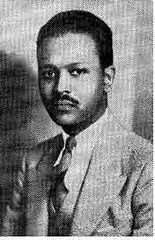
Melaku E. Bayen was raised and educated in the compound of Ras Mekonnen, then the Governor of Harar and the father of Emperor Haile Selassie. He was sent to India to study medicine in 1920 at the age of 21 with permission from Emperor Haile Selassie. Saddened by the untimely death of a young Ethiopian woman friend, who was also studying in India, he decided to leave India and continue his studies in the United States. In 1922, he enrolled at Marietta College, where he obtained his bachelor’s degree. He is believed to be the first Ethiopian to receive a college degree from the United Sates.

Melaku started his medical studies at Ohio State University in 1928, then, a year later, decided to transfer to Howard University in Washington D.C. in order to be close to Ethiopians who lived there. Melaku formally annulled his engagement to a daughter of the Ethiopian Foreign Minister and later married Dorothy Hadley, an African American and a great activist in her own right for the Ethiopian and pan-Africanist causes. Both in his married and intellectual life, Melaku wanted to create a new bond between Ethiopia and the African Diaspora.

Melaku obtained his medical degree from Howard University in 1936, at the height of the Italo-Ethiopian War. He immediately returned to Ethiopia with his wife and their son, Melaku E. Bayen, Jr. There, he joined the Ethiopian Red Cross and assisted the wounded on the Eastern Front. When the Italian Army captured Addis Ababa, Melaku’s family went to England and later to the United States to fully campaign for Ethiopia.

Schooled in Pan-African solidarity from a young age, Melaku co-founded the Ethiopian Research Council with the late Leo Hansberry in 1930, while he was student at Howard. According to Joseph Harris, the Council was regarded as the principal link between Ethiopians and African Americans in the early years of the Italo-Ethiopian conflict. The Council’s papers are housed at the Moorland-Spingarn Research Center at Howard University. At present, Professor Aster Mengesha of Arizona State University heads the Ethiopian Research Council. Leo Hansberry was the recipient of Emperor Haile Selassie’s Trust Foundation Prize in the 1960s.

Melaku founded and published the Voice of Ethiopia, the media organ of the Ethiopian World Federation and a pro-African newspaper that urged the “millions of the sons and daughters of Ethiopia, scattered throughout the world, to join hands with Ethiopians to save Ethiopia from the wolves of Europe.” Melaku founded the Ethiopian World Federation in 1937, and it eventually became one of the most important international organizations, with branches throughout the United States, the Caribbean, and Europe. The Caribbean branch helped to further solidify the ideological foundation for the Rasta Movement.

Melaku died at the age of forty from pneumonia he contracted while campaigning door-to-door for the Ethiopian cause in the United States. Melaku died in 1940, just a year before the defeat of the Italians in Ethiopia. His tireless and vigorous campaign, however, contributed to the demise of Italian colonial ambition in Ethiopia. Melaku strove to bring Ethiopia back into the African world. Melaku sewed the seeds for a “re-Africanization” of Ethiopia. Furthermore, Melaku was a model Pan-Africanist who brought the Ethiopian and African American people together through his exemplary work and his remarkable love and dedication to the African people.

Another heroic figure produced by the anti-war campaign was Colonel John Robinson. It is interesting to note that while Melaku conducted his campaign and died in the United States, the Chicago-born Robinson fought, lived, and died in Ethiopia.

When the Italo-Ethiopian War erupted, he left his family and went to Ethiopia to fight alongside the Ethiopians. According to William R. Scott, who conducted thorough research in documenting the life and accomplishments of John Robinson, wrote about Robinson’s ability to overcome racial barriers to go to an aviation school in the United States. In Ethiopia, Robinson served as a courier between Haile Selassie and his army commanders in the war zone. According to Scott, Robinson was the founder of the Ethiopian Air Force. He died in a plane crash in 1954.

Scott makes the following critical assessment of Robinson’s historical role in building ties between Ethiopia and the African Diaspora. I quote him in length: “Rarely, if ever, is there any mention of John Robinson’s role as Haile Selassie’s special courier during the Italo-Ethiopian conflict. He has been but all forgotten in Ethiopia as well as in Afro-America. [Ambassodor Brazeal mentioned his name at the planting of a tree to honor the African Diaspora in Addis Ababa recently.] Nonetheless, it is important to remember John Robinson, as one of the two Afro-Americans to serve in the Ethiopia campaign and the only one to be consistently exposed to the dangers of the war front.

Colonel Robinson stands out in Afro-America as perhaps the very first of the minute number of Black Americans to have ever taken up arms to defend the African homeland against the forces of imperialism.”

John Robinson set the standard in terms of goals and accomplishments that could be attained by Pan-Africanists. Through his activities, Robinson earned the trust and affection of both Ethiopians and African Americans. Like Melaku, he made concrete contributions to bring the two peoples together. He truly built a bridge of Pan African unity.

It is our hope that the youth of today learn from the examples set by Melaku and Robinson, and strive to build lasting and mutually beneficial relations between Ethiopia and the African Diaspora. As we celebrate Black History Month in the United States, let us recommit ourselves to Pan-African principles and practices with the sole purpose of empowering African people. The Ethiopian American community ought to empower itself by forging alliances with African Americans in places such as Washington D.C. We also urge the Ethiopian Government to, for now, at least name streets in Addis Ababa after Bayen and Robinson.

I would like to conclude with Melaku’s profound statement: “The philosophy of the Ethiopian World Federation is to instill in the minds of the Black people of the world that the word Black is not to be considered in any way dishonorable but rather an honor and dignity because of the past history of the race.”

To further explore the history of Ethiopian & African American relations, consult the following texts:

Joseph E. Harris’s African-American Reactions to War in Ethiopia 1936-1941(1994).

William R. Scott’s The Sons of Sheba’s Race: African-Americans and the Italo- Ethiopian War, 1935-1941. (2005 reprint).

Ayele Bekerie’s “African Americans and the Italo-Ethiopian War,” in Revisioning Italy: National Identity and Global Culture (1997).

Melaku E. Bayen’s The March of Black Men (1939).

David Talbot’s Contemporary Ethiopia (1952).

Monday, February 12, 2007

Cong. Holt's Election Reform Bill HR 811 Still Has Flaws

Cong. Holt Election Voting Reform HR 811 still has flaws, call our Reps

Friends,

Some efforts have been passed that improve the security and accountability of our voting procedures. However, much more is needed to prevent the stealing of elections in 2000, 2002, 2004 and again in 2006. Please review this analysis, contact our Members of Congress and US Senators, and urge them to close the loopholes that are presently included in the improved version of Cong. Holt's HR 811.

The Michigan Elections Reform Alliance is coordinating efforts to improve voting machines and procedures here in Michigan and nationally. Please contact me if you want to get involved with this crucial effort. Bob Alexander, 517-351-0965

Holt Elections HR 811 Flaws

Shirley Smith: Election Reform -- Analysis of Holt's HR811 Flaws

By BuzzFlash, Created 02/09/2007 - 4:18pm
Source URL: http://www.buzzflash.com/articles/articles/smith/142

Too many loops spoil the soup! What's the use of passing bills that are full of the same loopholes that have caused the trouble in the first place? Going through the motions without accomplishing anything is not good government and should not be tolerated.

[The following is from Kathy Dopp, National Election Data Archive]

Analysis of Holt's HR811 Flaws

Holt's New HR811 is a big improvement over his former HR550 because it takes the audit away from the US EAC and goes about as far as possible in federal legislation to eliminate DRE voting machines, but it still has a few critical flaws that need to be fixed. Here is my personal opinion after reading HR811 and then reading it again after reading some of the comments of other election activists.

Critical changes are needed to Holt HR811
http://www.oregonvrc.org/files/HOLT_FINALxml%20(2).pdf [1]

1. Section 327 is a LOOPHOLE ALLOWING MANUAL AUDITS TO BE BYPASSED. HR811 permits states to avoid any manual audits when conducting state "recounts". Many state "recounts" involve no manual counts of voter-verified paper ballots, or involve fewer manual counts than HR811 requires or, like Utah, involve limited manual counts but never compare the manual counts with the electronic tallies used to count votes on the central tabulator. This exemption permits states to avoid independent audits altogether by redefining when they'll do "recounts". Independent audits should "always" be required, no matter whether election officials do "recounts" or not.

2. NO RECOGNITION OF CITIZEN RIGHT TO OVERSIGHT. HR811 provisions do not require timely citizen or candidate access to election records necessary to verify electoral integrity, voter roll accuracy, or manual audits. Some states, like Utah, prohibit access to all election records, even records that the National Voting Rights Act requires to be publicly available; and other states only release election records long after election results are made official. Candidates have nothing to judge the integrity of their election outcomes with, when access to election records is lacking.

3. EQUIPMENT REQUIREMENTS ARE UNDER-FUNDED: $300 million is not enough to fund the purchase of precinct-based op-scan machines and ballot printers for voters with disabilities and non-English-language voters, for all precincts who currently have voting machines which lack paper ballots. (although the amount may be enough to purchase new machines for jurisdictions with paperless DREs like MD, GA, FL,..) If there are approximately 185,000 U.S. polling places, and even if only approximately one-third of them are defined as remedial and it costs $10,000 per polling location for a ballot printer and op-scan device, then it would cost approximately $650 million to replace all the electronic ballot voting systems which currently do not cast votes on archival quality paper ballots, are not fully auditable, and violate voter anonymity. It also seems to require text conversion technology in every polling place for voters with disabilities to independently verify their ballots. At up to
$7000 per machine for 185,000 polling places, you do the math.

4. INSUFFICIENT AUDIT AMOUNTS: Fans of audit solutions recognize that Holt's audit amounts (10% audits for races with margins under 1%, 5% audits for races with margins between 1% and less than 2%, and 3% audits for races with margins 2% or greater) are inadequate. These numbers were pulled out of thin air, often giving under 50% chance for detecting even one vote corrupt vote count (count with error) in cases where just enough vote counts are corrupt to alter outcomes in U.S. House races. (I would need to know the number of precincts in all US House districts to do a thorough mathematical analysis of this.)

5. UNDER-QUALIFIED COMPOSITION OF STATE AUDIT BOARDS: HR811 proposes a composition for state audit board members that does not allow much-needed mathematicians, computer scientists, election activists, and gaming experts to be on the election audit boards, and does not allow smaller party members of the Green, Libertarian, Constitution, or other small parties to be on the state audit boards. The mathematics of election audits is quite different than in other industries and can be quite complex due to the variations in the margins between candidates, size variation in the numbers of ballots in each vote count, and other factors.

6. EXCEPTION ALLOWS LOSS OF SECRET SECURE BALLOTS for the Military voters, who are "allowed" to vote via email.

7. LOOPHOLE ALLOWS MACHINE COUNTS TO SUPERCEDE VOTER VERIFIED PAPER when fuzzily described circumstances arise. Legislation should instead say that: "In the event of any inconsistencies or irregularities between any electronic records and the voter-verifiable paper records, the paper records shall be the true and correct record of the votes cast, except in the case where evidence exists that indicates that the paper record has been tampered with or damaged, in which case, if an outcome is in question, then a court will decide."

8. LOOPHOLE ALLOWS INTERNET CONNECTIONS for central tabulators and ballot definition software. This is unnecessary since portable media can be used to transfer vote counts from the central tabulator or to the ballot programming devices.

9. NEGLECTS TO OUTLAW ELECTRONIC POLL BOOKS. Having paper ballots for voters in case of power failure or electronic failure does little good if there are electronic poll books. Voters can be disenfranchised, and have been disenfranchised in both MD and CO due to the use of electronic poll books.

10. LOOPHOLE ALLOWS MANUAL AUDITS TO BE GAMED: Vote miscounts could be hidden and have a higher chance to escape detection in two or more large-size counts of absentee, mail-in, overseas, or military ballots. Must change "and" to "or" in Holt's language, or simply require that all mail-in ballots are to be counted in batches of the same size as a median-sized precinct.

To read it for yourself, go to:
http://www.oregonvrc.org/files/HOLT_FINALxml%20(2).pdf [2] and select "bill" and type in HR811.

It has many good points too.

P.S. This letter to Congress is in its final form. Please send copies to your own representatives -- by fax would be best.

http://electionarchive.org/ucvInfo/US/Letter2Congress.pdf [3]
http://www.govtrack.us/congress/bill.xpd?bill=h110-811 [4]

Best Regards,
Kathy Dopp
http://electionarchive.org [5]
National Election Data Archive
Dedicated to Accurately Counting Elections

Thanks BuzzFlash,
Shirley Smith

Links:
[1] http://thomas.loc.gov/cgi-bin/thomas
[2] http://thomas.loc.gov/cgi-bin/thomas
[3] http://electionarchive.org/ucvInfo/US/Letter2Congress.pdf
[4] http://electionarchive.org/ucvInfo/US/Letter2Congress.pdf
[5] http://electionarchive.org/

Angola Government Official Happy With Chinese-Funded Projects; FM Report

Government Official Happy With Pace of China-Funded Projects

Angola Press Agency (Luanda)
February 10, 2007
Malanje

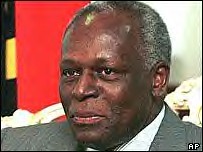
Angolan Finance deputy minister, Severim de Morais, Friday in northern Malanje province considered as satisfactory the pace of the projects being implemented under China's credit line.

Severim de Morais who paid a few hours working visit to the province, said the works of construction and rehabilitation of sanitary and education infrastructures are going within planned timings.

"We have no reasons to think that the works will not be surrendered within established timing, that is why we have also brought the director general of Eximbank (creditor bank) of China, so that together we analyse the implementation of the projects and application of the funds," he said.

On the other hand, Severim de Morais said he received from the province's government information about other actions awaiting implementation within the framework of the credit line.

The deputy minister gave instructions concerning the improvement of the Malanje/Quéssua road, where the former medium agrarian institute (IMAM) will be rehabilitated.

He spoke of the need for rehabilitation of the road that links to Quessua sector because IMAM has a profile of quality.

China government's credit line in the region is covering the construction of Malanje district hospital, two primary and one secondary schools, the rehabilitation of the future regional hospital and IMAM, all visited by the deputy minister.

The credit is also covering works of restoration of sanitary infrastructures, schools, roads and houses for nurses, teachers and government officials in the districts of Kangandala, Caculama, Kalandula, Cacuso and others.


Chinese FM says President Hu's African tour successful

12/2/2007 9:07

Chinese President Hu Jintao's eight-nation African tour was a great success in promoting friendly and cooperative ties between China and Africa, Foreign Minister Li Zhaoxing said on Saturday.

It was a journey of friendship and cooperation and another major event in Sino-African relations following the Beijing Summit of the Forum on China-Africa Cooperation (FOCAC) last November, Li told Chinese journalists accompanying Hu during his African trip.

The huge success of President Hu's African tour will have a far-reaching influence on the future development of relations between China and Africa, Li said.

The trip, which began on Jan. 30, has taken the Chinese president to Cameroon, Liberia, Sudan, Zambia, Namibia, South Africa, Mozambique and Seychelles.

CHINA SEEKS FRIENDSHIP FOR GENERATIONS WITH AFRICA

Li said the China-Africa friendship is deep-rooted and forged in years of mutual support.

It is symbolized by Tazara, a railway linking the land-locked Zambia with a port in Tanzania in the 1970s. It is reflected in warm feelings between Chinese medical teams in Africa and their patients. It is embodied by African nations' steadfast support for the restoration of China's legal rights in the United Nations.

The entire trip was characterized by the sincere friendship between China and Africa, Li added.

The Chinese leader pointed out on many occasions that the Chinese people will always remain a good friend, good partner and good brother of the African people, said the foreign minister.

President Hu also promised that the Chinese people will never impose its ideology, social system or mode of development on others and will never do anything detrimental to the African people and their countries. His remarks invariably drew warm applause from the audience, said China's top diplomat.

President Hu's successful African tour shows people are fully convinced that the China-Africa friendship will be passed on from one generation to another, according to the Chinese minister.

IMPLEMENTING BEIJING SUMMIT OUTCOME, BENEFITING AFRICAN PEOPLE

During his African visit, President Hu briefed African leaders on China's efforts to carry out the eight steps unveiled during the FOCAC.

The measures will be carried out in accordance with the principles of mutual benefit, friendly consultations, high efficiency and pragmatism, the Chinese president said, adding that they must cater to the needs of the African people.

During the trip, more than 50 cooperation agreements were signed, most of them involving ways of implementing the outcome ofthe FOCAC, the Chinese minister said.

The eight steps include China's pledge to double its assistance to Africa by 2009. China will provide 3 billion U.S. dollars of preferential loans and 2 billion dollars of preferential buyer's credits to Africa. China will also establish a development fund of 5 billion dollars to encourage Chinese firms to invest in Africa. Debt cancellation is among other major steps.

NEW TYPE OF CHINA-AFRICA STRATEGIC PARTNERSHIP HAS A BRIGHT FUTURE

At the the Beijing Summit of the Forum on China-Africa Cooperation, Chinese and African leaders unanimously agreed to forge and develop a new type of China-Africa strategic partnership featuring political equality and mutual trust, economic win-win cooperation and cultural exchanges, Li said.

During his African tour, President Hu and African leaders jointly laid out plans for future development of China-Africa relations.

Hu said China will adhere to the principles of sincere friendship, equality and mutual benefit, solidarity and cooperation, and common development.

China will join hands with Africa in seriously implementing the outcome and consensus reached at the Beijing summit, enhancing political mutual trust, expanding economic and trade cooperation, strengthening personnel and cultural exchanges, and deepening cooperation in international affairs, so as to push the development of China-Africa relations to a higher level and wider scope, Hu said.

Hu proposed that China and Africa should enhance exchanges, promote common development, jointly safeguard the interests of thedeveloping countries and strive to build a harmonious world of lasting peace and prosperity, according to Li.

African leaders spoke highly of China's Africa policy, hailing it as "a new practice in international cooperation," and a model for cooperation between different nations, said Li.

African leaders agreed to President Hu Jintao's proposals for developing China-Africa relations. They said that strengthening relations with China is a strategic choice for Africa and serves the fundamental interests of the African people, according to Li.

China and Africa have reached wide-ranging consensus on strengthening all-round friendly cooperation and promoting a new type of China-Africa strategic partnership, said Li.

He quoted President Hu as saying in South Africa that the new type of China-Africa strategic partnership will surely have a bright future, through joint efforts of China and Africa.

African leaders spoke highly of President Hu's African tour, calling it a "historic visit" and "a milestone" in bilateral relations between their countries and China, according to Li.

The visit has achieved the goals of cementing the traditional China-Africa friendship, implementing the outcome of the Beijing summit, expanding pragmatic cooperation between China and Africa, and promoting common development, Li said.

It is an important chapter in the history of China-Africa relations, he said.

Grammy Awards Represent Repudiation of Neo-Conservative Views on American Culture

February 12, 2007

Defiant Dixie Chicks Are Big Winners at the Grammys

By JEFF LEEDS and LORNE MANLY
New York Times

LOS ANGELES, Feb. 11 — After death threats, boycotts and a cold shoulder from the country music establishment, the Dixie Chicks gained sweet vindication Sunday night at the 49th annual Grammy Awards, capturing honors in all five of the categories in which they were nominated.

They were the top winners during a night when the Recording Academy spread the wealth, even handing out ties in two categories, as it bestowed four awards on the Red Hot Chili Peppers and three on Mary J. Blige. Carrie Underwood, Justin Timberlake, Tony Bennett, John Mayer, Ludacris and the late jazz musician Michael Brecker were among those who also received multiple awards.

The Dixie Chicks took home Grammys for the top three awards: record, song and album of the year. Their “Taking the Long Way” (Open Wide/Columbia) won best country album and “Not Ready to Make Nice” also captured best country performance by a duo or group with vocal. That song is an unapologetic response to the furor set off in 2003 when the band’s lead singer, Natalie Maines, made an off-the-cuff antiwar remark to London concertgoers: “Just so you know, we’re ashamed the president of the United States is from Texas.”

But Sunday’s awards were the Recording Academy’s rejoinder to the country music radio establishment, which ignored the album. Accepting the award for song of the year, Ms. Maines joked, “For the first time in my life, I’m speechless.” But she found her voice on later trips to the stage. “I’m very humbled and I think people were using their voice the same way this loudmouth did,” she said, self-referentially, after “Taking the Long Way” was named album of the year. The Dixie Chicks’ sweep of the major Grammy categories served as a sharp counterpoint to their shut-out at the Country Music Association awards in November. The Recording Academy consists of members across the nation who work in all genres of music. The Country Music Association’s membership is concentrated among artists, engineers and executives tied to the Nashville establishment.

The Red Hot Chili Peppers, whose enduring punk-funk hybrid has recently captured critical acclaim to go along with its longstanding commercial success, took three Grammys before the nationally broadcast show began at the Staples Center (97 of the 108 awards were not televised). It was an auspicious beginning on a night when the band was up for as many as six awards. “Dani California,” set like many of the band’s songs in Los Angeles and its environs, won for best rock performance by a duo or group with vocal and best rock song. The band’s double album “Stadium Arcadium,” the first of that veteran group’s albums to reach No. 1, won best boxed or special limited edition. And on the televised portion of the proceedings, right after it performed, the band captured the Grammy for best rock album.

Soon after the live telecast began on CBS, Ms. Blige’s album “The Breakthrough” (Geffen) won for best R&B album and best female R&B vocal performance, complementing the Grammy for best R&B song that she and three co-writers won before the broadcast (“Be Without You”).

While most of the acceptance speeches paid tribute to the usual managers, producers and family, one winner, the rap star Ludacris, veered off the beaten track when his “Release Therapy” (Disturbing tha Peace/Def Jam) was named best rap album. In addition to a litany of music executives, Ludacris thanked the Fox News personality Bill O’Reilly and Oprah Winfrey, who have criticized him in the past.

Mr. Timberlake, whose album “FutureSex/LoveSounds” (Jive/Zomba) was nominated for the most prestigious category of album of the year, won best rap/sung collaboration with T. I. for “My Love,” while he and Timbaland, the go-to producer of the moment, won for best dance song. T. I. also captured the Grammy for best rap solo performance for “What You Know.”

Mr. Dylan’s “Modern Times” (Columbia) picked up the award for best contemporary folk/Americana album, while Bruce Springsteen’s “We Shall Overcome: The Seeger Sessions” (Columbia) won best traditional folk album.

Another music-industry veteran, Mr. Bennett, won two early awards, including one for his duet with Stevie Wonder (“For Once in My Life”) in the category of best pop collaboration with vocals.

And Mr. Brecker, who died last month, also received two Grammys, for jazz instrumental solo and large jazz ensemble album on his brother Randy’s album, “Some Skunk Funk” (Telarc Jazz/BHM).

The country category offered up at least one more surprising twist, as the New Jersey arena rock band Bon Jovi won best country collaboration with vocals for “Who Says You Can’t Go Home” with Jennifer Nettles. Less surprising were the awards to Ms. Underwood, an “American Idol” victor turned commercial superstar, who won for female country vocal performance with “Jesus, Take the Wheel.” (That song, which she did not write, received the best country song award.) Ms. Underwood also won for best new artist.

Continuing a Grammy tradition, the polkameisters Jimmy Sturr and His Orchestra won for best polka album, “Polka in Paradise” (Rounder). It was their 16th Grammy. And former president Jimmy Carter, whose recent book, “Palestine Peace Not Apartheid,” has encountered a storm of opposition, won for a less contentious but as pointed production. His “Our Endangered Values: America’s Moral Crisis” (Simon & Schuster Audio) tied in the best spoken word category with Ossie Davis and Ruby Dee’s “With Ossie and Ruby: In This Life Together” (Time Warner).

This year’s nominations had a heavy R&B and neo-soul flavor, with a dash of topical antiwar sentiment.

Ms. Blige and her unvarnished, hip-hop-tinged brand of rhythm and blues led with eight nominations, but her album “The Breakthrough” did not receive a nod for album of the year. Ms. Blige, who has previously won three Grammys, has made the demand for respect a recurring songwriting motif. She emerged more than a decade ago with a style that departed from the slick R&B in vogue at the time, making her survival of a rough childhood and abusive relationships an integral part of her songs. But her nominated song in the record of the year category, “Be Without You,” testifies to a resilient relationship and perhaps a more hopeful state of affairs.

Amid the melodramatic neo-soul of James Blunt (five nominations), there was also some pointed antiwar commentary in the work of other nominees. The title of Neil Young’s work nominated for best rock album, “Living With War,” and best rock solo vocal performance, “Lookin’ for a Leader,” made that clear. And Mr. Mayer’s “Waiting on the World to Change,” which comes at the war in a more oblique manner, despairing of his generation’s seeming apathy, won for best male pop vocal performance.

The Grammys would not be complete without a little controversy. Mr. Dylan, whose “Modern Times” garnered impressive reviews (Blender compared him to Yeats and Matisse), received no nominations in any of the most prestigious categories. Rascal Flatts’s album, though one of the best selling of the year, was snubbed in the country album category. And Timbaland, who guided much of Mr. Timberlake’s “FutureSex/LoveSounds” and produced “Promiscuous” for Nelly Furtado, was shut out.

Another of the year’s biggest musical influences, the hirsute producer Rick Rubin, did win the Grammy for producer of the year, but given his aversion to these sorts of record industry social gatherings, he stayed away from the pre-telecast ceremony, held at the Los Angeles convention center, next to the Staples Center.

Mr. Rubin, who produced nominated albums for the Red Hot Chili Peppers and the Dixie Chicks, as well as tracks for Mr. Timberlake’s album, has been less nimble at avoiding another uncomfortable situation: he has been at the center of a tug-of-war between two record companies. Sony BMG Music has recruited him to become co-chairman of its Columbia Records label, but his boutique label, American Recordings, is still under contract to a rival, the Warner Music Group’s Warner Brothers label.

Last year’s ceremony, held on a Wednesday, bumped up against the juggernaut that is “American Idol,” and the Grammys paid the price in the ratings. Slightly more than 17 million people tuned in to the telecast, down 10 percent from the 18.8 million who watched in 2005 and the lowest tally since 1995, according to Nielsen Media Research.

In this digital-cable universe of hundreds of channels, few awards shows attract the hoopla and ratings they used to. But the Grammys have fallen more than most. They once hit a high of 51.6 million (in 1984), but even in the last decade they have reliably drawn audiences in the mid-20-million range.

Executives of the National Academy of Recording Arts and Sciences, best known as the Recording Academy, were hoping that a little bit of the old razzle-dazzle would reverse this trend. The Police, who are likely to announce a national tour on Monday, opened the show with a blistering rendition of “Roxanne.” Earth, Wind & Fire, whose funkadelic sound reached its heights in the 1970s, joined Ms. Blige and Ludacris for a performance of “Runaway Love.”

And the Recording Academy even tried to co-opt a little of the “American Idol” magic by holding a “My Grammy Moment” contest for one lucky unsigned artist to perform with Mr. Timberlake during the show. Fans voted online at Yahoo!Music, and the winner, Robyn Troup of Houston, was announced live on the show.

But even if the casting stunts goose the ratings, the larger travails of the music business will still loom over any good vibes emanating from the festivities. Even a doubling of sales of digital albums failed to make up for the continued downward trek of CD sales. Album sales last year dropped almost 5 percent, to 588 million, following a 7 percent drop the year before, according to Nielsen SoundScan.

One worrisome trend was the decline in sales of hip-hop albums, which had been among the stronger performers in recent years. (Hip-hop acts also received little love from the Recording Academy; no rap album received a nomination in any of the major categories.)

The best-selling album of 2006 was the soundtrack to the Disney Channel movie “High School Musical,” which sold 3.7 million copies. And Daniel Powter’s song “Bad Day” was the best-selling digital song, selling more than 2 million copies thanks in large part to its prime positioning on “American Idol.” Neither recording received a Grammy nomination.

To be eligible for an award, a recording had to have been released between Oct. 1, 2005, and Sept. 30, 2006. The winners were selected by the academy’s more than 11,000 voting members, who are recording industry professionals with creative or technical credits on at least six albums or songs.

This article was reported by Jeff Leeds in Los Angeles and Lorne Manly in New York.

Sunday, February 11, 2007

Some Aspects of the Politics of Contemporary Africa in the Era of Continuing Imperialism

Some Aspects of the Politics of Contemporary Africa in the Era of Continuing Imperialism

A review of developments in Somalia, Sudan, Zimbabwe and the role of the African Union and the Pan-African Parliament

By Abayomi Azikiwe, Editor
Pan-African News Wire
-----------------------------------------------------------------------------
Editor's Note: The following address was delivered at a Workers World public meeting in Detroit on Saturday, February 10, 2007. The talk was dedicated to the memory of the late Mama Adelaide Tambo, the African National Congress Women's League leader and widow of the late Oliver R. Tambo, the longtime Acting President of the ANC while Nelson Mandela was imprisoned in South Africa. Adelaide Tambo's funeral was held on the same day in South Africa.
--------------------------------------------------------------------------------

Since the middle of the 15th century the African continent has been pivotal in the rise of western capitalism and imperialism. The nations of Spain and Portugal began to conduct expeditionary operations in west Africa resulting in the beginning of the slave trade. The trafficking in Africans as slaves resulted in tens of thousands of people being transported to Europe.

With the advent of Columbus who was commissioned by the monarchy in Spain, Europeans began to seek mineral resources and trade routes in the areas that became known as the western hemisphere.

Columbus landed in the Caribbean in 1492, setting off an historical process that would last for over five centuries. The indigenous peoples of the Caribbean were negatively effected by this process of European exploration in their search for gold and other natural resources. By the 16th century a genocidal campaign against the indigenous peoples of the Caribbean was well underway. The Spanish colonialists enslaved the inhabitants of these islands, working many to death while millions would perish from infectious diseases brought from western Europe. Others, who were not able to escape the slavemasters, took their own lives rather than live under such deplorable conditions.

As a result of the deaths of millions of Caribbean Indians, tremendous labor shortages existed in the colonial outposts that spread into the South American and North American continents. Consequently, the Spanish and later Portuguese, French, Dutch and English monarchies began to intensify the capture and export of slaves from Africa. Forts were established on the African coasts to facilitate the growing trade in human beings. Haiti, originally known by the colonialists as Hispanola, and Brazil in South America, became two of the most prosperous colonial outposts in the hemisphere. Both colonies required the importation of millions of African slaves to work the sugar plantations.

In North America, the Spanish, French and British colonialists competed vigorously for control of the land originally occupied by the Native Americans. From the latter part of the 16th century under Spain through the 17th and 18th century under the British and the French, millions of Africans were brought into the continent as slaves while the Native Americans were driven off their land systematically resulting in the worst genocidal onslaught in recorded human history.

It has been well documented that the profits accrued from the Atlantic slave trade spawned the rise of the industrial age in England and North America. This was illustrated clearly in the works of historians such as CLR James (The Black Jacobins and A History of Negro Revolt, 1938), WEB Dubois (Black Reconstruction in America, 1860-1880, 1935), Eric Williams (Capitalism and Slavery, 1944), Anna Julia Haywood Cooper (Slavery and the French Revolutionist, 1926), William Alpheus Hunton (Decision in Africa, 1957), Kwame Nkrumah (Neo-Colonialism: The Last Stage of Imperialism, 1965) and Walter Rodney (How Europe Underdeveloped Africa, 1972).

With the rise of industrial production and shipping in England and the United States, a fierce struggle arose over the future of what form of economic organization would dominate these mercantile and imperialist states. As a result of this divergence of interests between fuedal states that dominated the colonies and the burgeoning industrialists, it became necessary to eliminate chattel slavery as the dominate mode of production in favor of mass production which required a more free movement of labor.

Consequently, slavery was eliminated in England in 1776 and the trade was outlawed in 1806. In the British colonies it was ostensibly abolished in 1833 leading to a period of apprenticeship. In the United States a bloody civil war was fought between 1861-1865 leading to the abolition of slavery after decades of slave revolts. At the time of the beginning of the civil war approximately four million Africans were in bondage in the United States with another 500,000 that were technically free. Some 176,000 Africans fought in the civil war to end slavery, with 68,000 losing their lives.

However, in other parts of the hemisphere, slavery did not end until years later. In Cuba, slavery did not end until 1878, some thirteen years after it concluded in the United States. In Brazil, where millions of slaves were taken by the Portuguese, their captivity did not end until 1888-89, after the collapse of the monarchy in this South American nation.

The Rise of Colonialism in Africa

After four centuries of the slave trade in Africa, the stage was set for widespread colonization of the continent. Although the Portuguese had colonies in Mozambique, Angola, Guinea-Bissau, Cape Verde, Sao Tome and Principe since the 16th century and the Dutch had settled in South Africa beginning in 1652, large sections of Africa remained outside the complete control of colonization. The slave trade had so weakened African societies that colonialism became inevitable. By the 1870s, the Belgians had moved into Congo in order to secure rubber and other mineral resources. In 1884-85, the Berlin Conference was held in Germany to divide the continent into spheres of economic and political influence.

Colonialism in Africa involved the settlement of more Europeans who ruled the continent as political outposts of various nation-states. The most successful colonies were operated by Britain, France, Portugal, Germany, Belgium, Spain and Italy. However, World War I resulted in the loss of colonies by Germany, which had controlled Namibia, Tangayika and Togoland. These outposts were taken over by Britain (Namibia where the Union of South Africa took control) and France (Togo).

Somalia: Division, Independence and Occupation

Prior to the advent of European colonialism the center of world economic activity heavily centered around the so-called Indian Ocean basin. It was the necessity of Europe to break out of this isolation that provided incentives for the expeditions and the slave trade. Mogadishu, the capital of Somalia, was a major link in the Indian Ocean basin. This area was connected through trade, culture and transport with Mombasa, Beira, Aden, leading into Asia Minor, China, Malaysia and Japan.

During the colonial era in Somalia, the people resisted the onslaught of several western European powers. The people of Somalia were eventually divided into five different nations: Italian Somaliland, British Somaliland, French Somaliland, Kenya, which was colonized by the British and Ethiopia as a result of the expansion of the Abyssinian monarchy. When the country gained its independence in 1960, it resulted in the unification of the sections that had been controlled by Britain and Italy. However, the areas controlled by the French eventually became Djibouti as an independent nation. Somalis living in Ethiopia and Kenya remained under the control of these states despite a longing for total re-unification.

In 1969, a group of military officers responding to popular pressure seized control of the government in Mogadishu. Their politics were left leaning in an effort to break with the legacy of colonialism that was imposed by the British and the Italians. By 1974, a Mogadishu Declaration was issued pledging to pursue a non-capitalist path and expressing solidarity with the overall struggle against imperialism and neo-colonialism in Africa and the world.

Meanwhile in neighboring Ethiopia a general strike beginning in early 1974, led to the eventual collapse of the monarchy under His Imperial Majesty (H.I.M.) Haile Selassie. A group of young military officers called the "Dergue" seized power in the absence of a well-developed nationalist or socialist political party that was capable of taking control of the state. By 1977, the Dergue had declared itself socialist and moved towards an alliance with the Soviet Union and Cuba. The government sent students into the country side to engage in a literary and development program. A military base controlled by the United States in Ethiopia was abandoned as the country brought in advisers from Cuba to help build up its security.

Unfortunately, when Jimmy Carter became President of the United States in 1977 a concerted campaign was launched to bring Somalia back into the western sphere of influence. The government of Siad Barre was armed by the Carter administration and encouraged to attack Ethiopia in the Ogaden region, purportedly in support of ethnic Somalis suffering national oppression inside Ethiopia.

In the early months of 1978, the Ethiopian military along with Cuban internationalists forces, entered the Ogaden region and put down the rebellion as well as defeating the Somalian military troops who had crossed over into Ethiopian territory. Despite promises by the US to intervene on behalf of Somalia, they did not dare do so remembering the tremendous defeats during 1975 in Vietnam, Laos and Cambodia as well as Angola. By the early 1980s, famine had swept through large sections of Somalia. In 1991, the government of Siad Barre fled leaving the country stateless.

When the administration of George H.W. Bush invaded Somalia in December of 1992, this appeared to many as an effort to exert American imperialist influence in the Horn of Africa. When Bill Clinton inherited this occupation under the guise of providing humanitarian assistance from United Nations coordinated sources, the stakes became greater due to efforts aimed at disarming political factions hostile to America's desire to establish permanent bases in this region of the continent. After the United States military massacred over 50 Somali elders holding a meeting in Mogadishu on July of 1993, the Americans were on a collision course with large sections of the population. A clash on October 3, 1993 in Mogadishu resulting in the deaths of many US soldiers sent shockwaves through the country and lead eventually to an American withdrawal from Somalia in 1994.

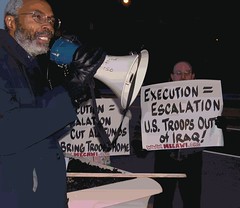
Today the Americans have intervened once again in Somalia. They are using the pretext of the involvement of al-Qaeda or other Islamic so-called "terrorists" as the cause of their involvement in Somalia. As anti-imperialists and organizers within the anti-war movement we realize that any statement of cause for American military involvement must be held to strict scrutiny on the basis of the many falsehoods utilized to justify invasions and occupations. This is why the Michigan Emergency Committee Against War & Injustice (MECAWI) has raised the question of American involvement in Somalia right alongside the occupation of Iraq and Afghanistan as well as the role of the US in the overthrow of the Aristide government in Haiti in February of 2004.

Sudan: The Legacy of British Colonialism and US Interference

This nation was also colonized by Britain during the late 19th century. The imperialist's methodology of divide and conquer was employed where the peoples of the south, north and west were taught that they were separate entities. Some of the earliest nationalist movements on the continent took place in Sudan with rebellions after the conclusion of World War I extending through the early 1920s.

Some of the elements within the nationalist movement pushed for a unification plan with Egypt. Others sought a solution to the colonial problem through the breaking down of the barriers erected by British colonialism. On the eve of independence, which took place in 1956, the people in the south mutined within the para-military colonial forces hampering the potential for a national identity in the country. The conflict with the southern region of the country lasted from 1955 through 1972 when a negotiated settlement was reached.

However, a decade later, the conflict re-emerged in 1983 and lasted for twenty years until a peace agreement was reached in 2003. The Sudan Peoples Liberation Movement/Army led the southern rebellion under John Garang. A government of national unity was established with the understanding that the people in southern Sudan would eventually vote whether the people would remain in the unity government or establish an autonomous region in the south. It was after the agreement between Khartoum and the SPLA was reached that the conflict in the Darfur region erupted. Two rebel groups surfaced: the Justice and Equality Movement (JEM) that had links with the National Islamic Front (NIF) that became an opposition force in northern politics. The NIF initially played a pivotal role in the Omar al-Bashir government inside the country. However, a split occured placing the NIF in opposition to the president.

Also the Sudan Liberation Movement/Army (SLM/A) that appeared to be independent of northern influences. Since 2003, the Darfur rebel movement has further fragmented with splits inside the SLM/A largely over a peace agreement with Khartoum.

The imperialist nations and their allied press agencies have sought to portray the conflict in Darfur as an African/Arab conflagration with fundamental racial dimensions. Nonetheless, Darfur is predominately Islamic like the population in the north. There is no pronounced racial difference between the peoples of the country. It is the legacy of British imperialism and US interference that is at the root cause of the current conflict. These divisions are politicized in an effort to provide a rationale for possible military intervention. Consequently, anti-imperialists should look at the struggle in Darfur in light of American and British imperialists' aims in the region.

China has stepped-up its economic investments in Sudan. The country is rich in oil and consequently provides the American government with an incentive to seek dominance over the resources. The only true and lasting solution to the Darfur crisis lies within the Sudanese people themselves and does not require a military occupation by the west.

Zimbabwe: Land Redistribution and Western Sanctions

Britain was also the nation that colonized Zimbabwe during the last decade of the 19th century. Mutapa was an ancient kingdom in Zimbabwe which has been traced back to the 15th century. By the 19th century the Kingdoms of Matebeleland and Mashonaland ruled most of what is known today as Zimbabwe. There were strong efforts aimed at anti-colonial resistance led by Lobengula of Matebeleland and Nehanda and Kagubi of the Mashonas. However, the use of superior weapons by the British resulted in the consolidation of a vicious colonial system in what became known as Rhodesia (named after Cecil Rhodes).

Beginning in the mid-1960s, the people of Zimbabwe launched an armed struggle to overturn the settler-colonial system. The British settlers ostensibly broke with the mother country and proclaimed an Unilateral Declaration of Independence (UDI) in 1965. The act of defiance angered the pan-africanist and anti-imperialist government of Kwame Nkrumah in Ghana, who broke diplomatic relations with Britain over its refusal to put down the rebellion in Rhodesia. Nkrumah was overthrown in a Central Intelligence Agency (CIA) backed coup in February of 1966 after he had taken such a strong position over the Rhodesia question.

Prior to the granting of national independence to Zimbabwe in 1980, both the United Kingdom and the United States had agreed to provide monetary assistance for a major land redistribution program in Zimbabwe. The debate over land reform would intensify in Zimbabwe during the 1990s after no assistance from the western nations was materializing. In 1998, when the government of the Zimbabwe African National Union-Patriot Front (ZANU-PF) under President Robert Mugabe made it clear that there would be radical land re-distribution sooner than later inside the country, a series of political attacks were launched against this southern African nation.

White land owners, who were citizens of Zimbabwe but at the same time held British passports, joined in with opponents of the Zimbabwe government to form the Movement for Democratic Change (MDC). This organization saw the existence of the ZANU-PF government as the main problem in Zimbabwe. With funding from United States and Britain, the MDC embarked upon a disruption campaign aimed at derailing the land redistribution program. A series of strikes launched by the Zimbabwe Congress of Trade Unions (ZCTU) and the MDC were designed to further weaken the country economically.

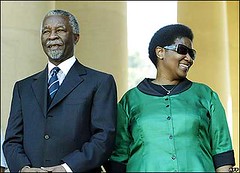
The United States, Britain and the European Union (EU) have imposed sanctions on Zimbabwe. After the country withstood two major attempts during election campaigns in 2000 and 2002 to overturn the ZANU-PF government, these western imperialist nations set out to isolate Zimbabwe. They pressured the government of President Thabo Mbeki in South Africa to place a blockade on Zimbabwe. The South African government under the leadership of the African National Congress (ANC) refused to establish a blockade of Zimbabwe and instead extended the country a loan that prevented a further deepening of its economic problems.

Despite the attempts by the west to cripple Zimbabwe and topple the government of President Mugabe, the nation has survived. They have developed a "Look East" policy aimed at increasing trade with nations in Asia, Africa and Latin America. The land redistribution program in Zimbabwe has sparked vigorous debate in both South Africa and Namibia, where similiar situations exist with Europeans still controlling most of the arable and mineral rich land years after national independence.

The Role of the African Union and the Pan-African Parliament

The African Union was established in 2003 in an effort to implement the Nkrumaist vision of a unified African continent. The Organization of African Unity, which was formed in May of 1963, had agreed to dissolve in favor of a more effective continental organization that would move towards a continental assembly, a peacekeeping force, a single currency, transport and communications systems.

The African Union has been involved in the conflicts in the Horn of Africa between Ethiopia and Eritrea, the Darfur conflict in Sudan, the situations in Ivory Coast, Zimbabwe, Liberia and the Democratic Republic of Congo (DRC). The current chair of the African Union, John Kufour, gained the seat because of the controversy in western circles surrounding the Darfur conflict prevented President Omar al-Bashir of Sudan from taking the seat for two years in a row. Consequently, the AU faces the same challenges as the former OAU with persistent interference by the United States in the internal affairs of African nations.

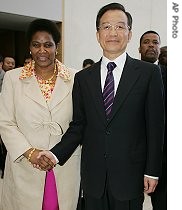
The Pan-African Parliament (PAP) based in Midrand, South Africa, was established by the African Union in 2004. Its ultimate aim is to become a continental-wide legislative body that will be elected by popular vote. The President of the Pan-African Parliament is Gertrude Ibengwe-Mongella of Tanzania. In order for both the AU and the PAP to become political forces in the international community, it will require an independent foreign policy on the part of significant numbers of African governments. Alliances with US imperialism have proven to be extremely detrimental to African states. The role of Ethiopia and Kenya in the US-backed invasion and occupation of Somalia will have long term implications for these east African nations.

Africa will become a greater focus for US imperialism

In an article released recently by the Guardian newspaper in London, it states that the Pentagon has established an African Commmand called "Africom." This is designed to intensify US military operations on the continent. Africa's role as an oil supplier to the US and other western imperialist nations will create potential conflict within African states. The formidable resistance in Iraq against the American occupation will be sparked in Africa at an even greater level if the Americans pursue their plans of re-colonizing the continent. Africa has a long tradition of waging successful popular and armed struggles against colonial forces including Portugal, France, Britain, the Boers in South Africa, Italy and the United States in Angola and Somalia.

The anti-war movement must be equipped politically to take on the challenges of United States foreign policy aims in Africa as well as other parts of the world including Latin America, North Korea, Iran, China and the Caribbean. A broader and deeper study of the ever increasing role of the United States in oil exploration and trade in Africa as well as the attempt to stifle independent political iniatives such as the Union of Islamic Courts (UIC) movement in Somalia must be a main focus of attention. The $620 billion to $716 billion estimated annual defense budget in the United States, that is greater than all other nations combined, should be utilized to solve the problems of hunger, homelessness, health care, racism, education and senior services.

When people in the United States begin to focus their attention on solving the national and international crises of poverty and inequality, then perhaps the declining image of the world's most powerful imperialist nation will change. It is up to the people of this country and the world to fight against all attempts to reimpose colonialism and to reverse the course of history.
----------------------------------------------------------
Abayomi Azikiwe is the editor of the Pan-African News Wire. He is a co-founder of the Michigan Emergency Committee Against War and Injustice (MECAWI). He can be heard on radio weekly on WDTW, 1310 AM on Sundays from 10:00 a.m.-11:00 a.m. in Detroit. In Toronto, he can be heard on Thursdays on CKLN, 88.1 FM from 9:30 p.m.-10:00 p.m. This broadcast can be heard online at http://www.ckln.fm
-------------------------------------------------------------

Saturday, February 10, 2007

Pan-African News Wire Editor Speaks Today at Workers World Public Meeting

For Immediate Release

Media Advisory

Event: Pan-African News Wire Editor, Abayomi Azikiwe,
Will Speak on Contemporary Africa and the Anti-
War Movement.
Location: 5920 Second Avenue at Antoinette, North of the
Wayne State University Campus in Detroit
Date: Saturday, February 10, 2007, 5:00 p.m.-7:30 p.m.
Contact: Tel. (313) 831-0750, URL: http://www.mecawi.org
http://panafricannews.blogspot.com

PANW Editor to Speak on Contemporary Africa and the Anti-War Movement on Saturday, February 10 at Workers World Public Meeting

On Saturday, February 10, Pan-African News Wire editor Abayomi Azikiwe will be a featured speaker at a public meeting sponsored by the Detroit offices of the Workers World newspaper.

Azikiwe, a co-founder of the Michigan Emergency Committee Against War & Injustice (MECAWI), has been a student of African history and politics for more than three decades.

His talk will examine recent events in Somalia, where the United States government has backed and coordinated an invasion and occupation of this Horn of Africa nation. He will also speak on the ongoing conflict in the Darfur region in Sudan and the role of American and British imperialism in destabilizing this oil-rich central African state.

In addition, Azikiwe will discuss the history of the land redistribution program in Zimbabwe and why the US and the UK have waged a campaign to isolate this southern African nation.

Finally, the PANW editor will look at the two major continental organizations, the African Union, based in Addis Ababa, Ethiopia and the Pan-African Parliament, located in Midrand, South Africa and some of the challenges facing these institutions amid growing political interference by the United States.

Abayomi Azikiwe has contributed articles to the Workers World newspaper as well as dozens of other publications throughout the international community. He can be heard twice a week on radio at WDTW, 1310 AM in Detroit (Sundays from 10:00 a.m.-11:00 p.m.) as well as CKLN, 88.1 FM in Toronto (Thursdays from 9:30 p.m.-10:00 p.m.).

Friday, February 09, 2007

70% of South Africans Happy With President Mbeki's Performance

70% of SA happy with Mbeki – survey

Fri, 09 Feb 2007

Seven out of 10 South Africans are happy with the performance of President Thabo Mbeki, marketing survey company Markinor revealed on the eve of his State of the Nation address.

Mbeki was trusted by many poor, black people, the principle beneficiaries of his anti-poverty drive, SABC news reported.

Mbeki is expected to call for a greater national effort in the fight against poverty when he delivers his speech in Parliament on Friday.

According to the Markinor report, land, crime and unemployment are still a major concern.

However, close to 600 000 jobs were created last year and unemployment is down to around 26 percent. The R370-billion infrastructure investment plan could bring it down even further, the report added.

Sapa


Slow land reform a 'concern'

Fri, 09 Feb 2007

Slow land and agrarian reform was an area of concern, the Agriculture and Land Affairs Department said after a day-long review of the fast-tracking programme, Operation Gijima.

The project was launched more than a year ago to speed up land and agrarian reform and overhaul delivery systems, the Department said in a statement.

MECs said that while some people would be disgruntled and seek confrontation because of fast-paced land reform, Agriculture Minister Lulu Xingwana should not "release the pressure pedal".

"... That will not be in the interest of work and progress-loving people in the system and the sector as a whole," they told Xingwana, who was part of the discussions.

Sapa
-------------------------------------------------------------------------------------

Community Survey 2007: Measuring the state of our nation

A massive survey got underway this week, as Statistics South Africa launched Community Survey 2007, a 'mini-census' that aims to understand the living conditions and life circumstances of the nation. It will help to measure, in the words of Statician-General Pali Lehohla, "what has been achieved, what has not been achieved and what remains to be done against set targets".

The survey is different from a census because it does not aim to count the entire population. From 7-28 February Statistics South Africa (Stats SA) is deploying at least 5,800 employees to the streets of the country's towns, cities and villages to administer at least one million questionnaires in an effort to collect new statistical data about our people.

The community survey will bridge the gap created by the move from a census conducted every five years to one conducted in intervals of ten years. The first two censuses conducted in a democratic South Africa were five years apart, in 1996 and 2001. However, a decision has been taken that the country should now only conduct a census once every ten years.

Lehohla explained: "Owing to the magnitude and challenges of among others, recruitment, training, appointment, deployment, and decommissioning of 100,000 people in a space of six weeks, it was decided that a census be held in 2011 and a community survey covering 284,000 households be conducted instead in 2007. The census undertaking held regularly could weigh heavily on the capacity of the organisation to deliver on other core areas such as socio economic time series."

The Community Survey will provide small area data at the level of municipalities. This is critical for municipal Integrated Development Plans (IDPs), their planning, implementation, monitoring and assessment.

The survey will provide information similar to that provided by the censuses of 1996 and 2001 at a lower geographical level of municipality. This cannot be provided by current surveys, because they only cover 30,000 households. The community survey covers almost ten times what the current household surveys cover.

The nature and form of the data that will be required by the enumerators from Stats SA will include questions on the movement of people, which will provide information on the flow, direction and volume of movements. This will assist in understanding whether populations have grown or decreased in provinces and localities relative to each other.

The survey should produce some important information against which to assess progress in implementation of social policies intended to deal with poverty and underdevelopment. These policies range from free basic electricity and water to social grants and housing.

The community survey is part of the arsenal of tools intended to evaluate South Africa's progress since 1994, especially the impact of private sector and government policies and decisions. It should also help to answer questions about progress towards the achievement of the UN Millennium Development Goals.

Once the data has been gathered through the household visits, all questionnaires will be sent to Stats SA head office in Tshwane where they will be processed. All information will be confidential and personal details cannot be traced. The data will be released in aggregates.

"Through the survey we will be exposed to the living conditions of the population. So open your doors and hearts and welcome your partner in information. Remember the power of information," Lehohla said.

The community survey fieldworkers will ask questions that help understand the number of years that people live, and the number of years of working life, schooling and childhood.

But, as Lehohla notes: "To receive answers to these questions is always a problem among many South Africans. Some citizens always feel that we are intruding into their privacy once we ask as many important question of a personal nature as this. It must however be pointed out that society is made up of individuals, before they become a group; and therefore understanding individual dynamics are important to understand the group as a whole..."

"Once this data is available, it is going to be possible for all in government to be able to see the scientific impact of policies that have been undertaken since the dawn of democracy in South Africa."

China, Mozambique Issue Joint Communique to Uplift Ties

China, Mozambique issue joint communique to uplift ties

9/2/2007 9:39

Chinese President Hu Jintao yesterday began his state visit to Mozambique, and the two countries on the same day issued a joint communique on bilateral cooperation and international affairs of common concern.

The communique was released after Chinese President Hu Jintao and his Mozambican counterpart Armando Emilio Guebuza held talks in the Mozambican capital.

The two leaders exchanged views and reached a broad consensus on implementation of the results reached at the Beijing Summit of the Forum on China-Africa Cooperation (FOCAC), bilateral cooperative relations and international and regional issues of common concern, the communique said.

The two nations hailed the traditional friendship, the sound development of bilateral ties since the establishment of diplomatic relations 31 years ago, and the cooperation in economic and social fields, according to the communique.

Mozambique reaffirmed its commitment to the one China policy, and its opposition to "Taiwan independence" in any form, including "de jure Taiwan independence," and to Taiwan's accession to any international organization of sovereign states, it said.

In a written statement released at the airport upon arrival in Maputo, Hu said that the Chinese and Mozambican peoples have forged a deep friendship during the country's liberation struggle and the national construction after its independence.

President Hu arrived here on Thursday after wrapping up a two-day state visit to South Africa.

On Wednesday, President Hu delivered a speech at the University of Pretoria in South Africa.

Hu said that strong China-South Africa relations of all-around cooperation serve the fundamental interests of both countries and peoples.

The Chinese government and people will work closely with the South African side to enhance mutual political trust and practical cooperation, as well as to steadily strengthen the bilateral strategic partnership to benefit both peoples, he said.

Hu also said that China will consolidate traditional friendship and expand practical cooperation with the whole of Africa.

Both China and Africa are important forces for peace and development and to deepen their friendship is the shared desire of the people of both countries, Hu said in his speech.

The Chinese president said that China's development is peaceful, open, cooperative and harmonious in nature.

"We aim to build a harmonious society at home, and work with other countries to build a harmonious world of enduring peace and common prosperity," he said.

Also on Wednesday, President Hu met with the South African Deputy President Phumzile Mlambo-Ngcuka for discussions on ways of deepening mutually-beneficial and practical cooperation between their two countries.


Chinese leader's almost triumphal trip to Africa

Growing skepticism met President Hu the further south he went as leaders signaled the end of the China-Africa honeymoon

By Scott Baldauf
Staff Writer of The Christian Science Monitor
and Joseph J. Schatz
Correspondent of The Christian Science Monitor

JOHANNESBURG, SOUTH AFRICA AND LUSAKA, ZAMBIA - Chinese President Hu Jintao's visit to Africa started out last week with the usual manly handshakes, red-carpet strolls, factory visits, and displays of African dance and music.

This tour – which includes Cameroon, Liberia, Sudan, Zambia, Namibia, South Africa, Mozambique, and the Seychelles, – serves to fulfill promises China made at a glitzy Beijing summit in November, where 48 African heads of state heard Mr. Hu pledge to double aid to Africa by 2009 and create an investment fund of $5 billion in the next three years.

By the end of 2006, China had already invested nearly $8 billion in Africa, mainly for extracting minerals and oil to fuel its booming economy, and during this trip, Hu has brought with him more loans and a veritable army of Chinese investors.

But the farther south Hu traveled this week, the more skepticism he met. Hu canceled a visit to Zambia's copper belt, fearing protests over low pay and poor working conditions at Chinese- run mines. In the lead-up to Zambia's Sept. 28 elections, runner-up presidential candidate Michael Sata promised to kick out the Chinese if he had won. In South Africa, President Thabo Mbeki recently warned his fellow African leaders not to allow Chinese investment to become a "colonial relationship."

At least one message of this trip: President Hu, the African honeymoon is over.

"Mbeki's speech reflects a deeper concern that is more addressed to Africans than to the Chinese," says Francis Kornegay, a senior researcher at the Center for Policy Studies in Johannesburg. "The Africans have to set the parameters of the relationship and know what they are getting out of the relationship."

Such caution on the part of a few African countries – concentrated in the south of the continent – doesn't mean that African leaders are ready to give China the boot. To the contrary, Hu's visit has been a rather triumphant follow-through on promises made during the Beijing summit.

At his first stop in Cameroon, Hu pledged $100 million in grants and soft loans. Last week, Hu and Zambian President Levy Mwanawasa launched a new copper-mining partnership, which, they say, will produce thousands of jobs, $800 million in investment – and plenty of copper for China's growing economy.

"It is in China's national interest and in Africa's interest to have a trading partnership," says Pieter Snyman, director of The Beijing Axis, a consultancy that helps South African companies do business with China. "African leaders find China to be more sympathetic to African needs than the West. Africa does not need just money or somebody to get infrastructure projects. It has to be a sustained relationship, and that's up to the Africans to get what they want out of it."

What Africans want, of course, differs from country to country. In Sudan, where Hu visited last week, leaders sought more investment in the oil industry and in refining. In South Africa, business and political leaders seemed eager to push China to accept more African imports into their markets. And in resource-rich but impoverished countries like Zambia, political leaders and workers alike were pushing for better wages, and a bigger cut in the profits from mining.

Anger in Zambia

"They are just using us – we are like tools. They come here to invest, but at the end of the month they just pay us peanuts," says Likezo Mukumbi, a security guard at a shopping complex in Zambia's capital, Lusaka. Mr. Mukumbi says the Zambian government should do more to ensure that the Chinese are treating Zambians fairly.

Sentiments like that fueled the presidential bid of Mr. Sata, a shrewd and charismatic former government minister, during September's national elections. Sata threatened to run "exploiter" Chinese investors out of town, drawing cheers from many of Zambia's urban poor. Sata said he would recognize Taiwan as an independent nation if elected, and drew a rebuke from China's ambassador in Zambia, who suggested that China would cut ties with Zambia if Sata was elected – calling into question China's avowed policy of noninterference in local politics.

Low wages and safety concerns at Chinese-run mines have drawn the ire of Zambian labor unions and mining communities. Concern built to outrage when an explosion at a Chinese-run Chambishi mine killed 51 Zambian miners in 2005. Hu's delegation canceled plans to visit Chambishi during his visit amid rumors of potential protests.

Mining accidents are not the only aspect of the Chinese presence that irks many Zambians. In recent years, an influx of Chinese traders and other small-businesspeople have begun operating in local markets, selling inexpensive Chinese clothes and other imports, and putting pressure on local entrepreneurs.

It is this same issue of competition that has begun to irk South African manufacturers and retailers, says Raymond Louw, editor of the Southern African Report, in Johannesburg. But unlike Zambia, the pressure has not built to the point where it spills out into street protests.

China's ability to launch business partnerships, and also to offer massive loans for infrastructure clearly gives it the advantage over multinational corporations, who come just to do business. It also comes without all the colonial baggage that British, French, and even US companies carry.

"Africa has a long history with colonial powers, and the colonial powers ripped off Africa, period," says a former South African diplomat, speaking on condition of anonymity. "Then along comes China, this emerging giant, and they play a very clever game. They want certain things from certain parts of the world, and they say, 'We will not interfere in local issues.' That is attractive to Africa; when you look at Zimbabwe and at Darfur, those are controversial places to do business, but the Chinese are there, and they don't interfere."

Like other African leaders, Zambian officials maintain that the Chinese government treats them with respect – and understands the social and political environment they deal with, as opposed to many Western donors.

"They know what it means to go to bed without a meal.... There is more understanding between the Chinese and ourselves," says Vernon Mwaanga, Zambia's minister of information and broadcasting.

Yet increased trade is bringing increased public discontent in places, and that's something African and Chinese leaders will have to address. Responding to South African fears about imports undercutting the local market, Hu last year cut textile imports to South Africa by one-third. Trade between the two countries still roared ahead another 36 percent this year.

Hu Jintao's trade safari

China's President Hu Jintao and a 130-strong delegation is concluding an eight-nation tour of the African continent with trips to Mozambique and the Seychelles on Friday and Saturday. As part of China's bid for Africa's mineral resources, Mr. Hu inked trade and economic assistance deals in each nation.

Here's what Hu did during his 12-day swing:

Cameroon: Canceled Cameroon's debt (amount unspecified), pledged $100 million in grants and soft loans, and signed agreements to build two schools and a hospital in the capital of Douala.

Liberia: Signed a memo canceling all of the $15 million of debt Liberia owed to China and announced a tax exemption on all Liberian exports to China.

Sudan: Signed seven documents on economic and technological cooperation and canceled debts amounting to $19 million.

Zambia: Inaugurated the Zambia-China Economic and Trade Cooperation Zone, including a massive mining partnership in the country's copper belt, to spur development in the smelting, construction, home-appliance, and food-processing industries.

Namibia: Signed a $139 million soft loan (of which $59 million was interest free), a grant, and dozens of scholarships. Made a four-point proposal to boost political and cultural ties between the two nations.

South Africa: In his first state visit and his ninth meeting with President Thabo Mbeki, Hu pledged a "new strategic partnership" including opening the Chinese market to local fruit exports and assistance to South African development programs.

Mozambique: Expected to announce the cancellation of $15 million in debt Mozambique owes China.

Seychelles: This 110-island archipelago is of strategic importance to oil routes and military bases in the Indian Ocean – two areas China has a significant interest in developing.

Compiled by Leigh Montgomery from wire reports


The Japan Times
EDITORIAL

China's courtship of Africa

Chinese President Hu Jintao is near the end of an eight-nation tour of Africa, which has renewed anxieties associated with "China's rise." Yes, the trip is proof of Beijing's expanding interests and its global reach. And yes, China's readiness to ignore misbehavior by its African friends and trade partners undermines global norms. But the criticism is proof that China's behavior is coming under increasing scrutiny as well.

The attention China pays to Africa reflects several core national interests. The first is economic: China is increasingly reliant on the continent for raw materials. Africa supplies one-third of China's oil: Angola is China's No. 1 source, and China imports substantial supplies from Sudan and Nigeria too. Beijing gets bauxite from Guinea, copper from Zambia, uranium from Namibia and rare metals from Congo.

The economic relationship goes both ways: China is investing heavily in Africa and sending products to Africa. The result has been a quadrupling of trade since 2002; last year, China-Africa trade hit $ 55.6 billion and is expected to reach $ 110 billion by 2010.

Economic ties grease diplomatic relations. Last year, Mr. Hu hosted a summit for nearly 50 African leaders, the largest diplomatic event of its kind in postwar Chinese history. During the meetings, Chinese companies signed deals worth nearly $ 2 billion and Mr. Hu pledged $ 5 billion in loans and credit to Africa and a doubling of aid by 2009. The first tranche of that aid -- $ 3 billion -- was announced prior to Mr. Hu's recent departure.

Diplomatic support pays other dividends. Beijing has been relentless in its efforts to woo the remaining countries that recognize Taiwan, several of which are in Africa. Africa is also an arena of diplomatic competition with Japan, as Tokyo and Beijing seek to expand their influence and find supporters for their various international initiatives.

China engages these countries in markedly different ways than does the West. It is less likely to scrutinize its partner governments' behavior. For example, Beijing has been unwilling to criticize the Sudan government's appalling actions in Darfur where hundreds of thousands are estimated to have been killed and millions displaced; the United Nations calls it genocide.

China's blindness is partly a result of the oil rights it has acquired from the government in Khartoum, but it also reflects different thinking about sovereignty and the appropriate development model for a nation.

China maintains that economic development should precede political development and, more importantly, that those priorities should not be challenged by outsiders. That approach -- which has been called "the Beijing consensus" in contrast to the "Washington consensus" that has been embraced by most international lending institutions -- has many supporters in Africa. Some argue it is a source of "soft power" and an increasingly valuable asset for China.

China's growing presence has disadvantages as well. There is a growing view in Africa that China is the latest in a long line of colonialists. South African officials charge that local high unemployment rates are the result of cheap Chinese imports. There are increasingly widespread reports of shoddy -- and sometimes dangerous -- Chinese goods throughout the region. Chinese oil workers in Nigeria have been kidnapped, and more such incidents are likely as the Chinese presence expands throughout the continent.

In Zambia, a Chinese mining company was accused of banning unions and cutting corners on safety. An explosion at the explosives company affiliated with the mine killed dozens of people; protesters were shot by a manager a year later. In last year's election, one Zambian presidential candidate charged his country was becoming "a province of China" and pledged to throw out Chinese companies if he won. While he did not, the fact that he could make China an issue in the election shows the depth of the ill feeling toward Beijing -- and unleashed similar complaints in other countries.

China's growing presence also focuses attention on how Beijing uses its influence. Beijing is coming under pressure for shielding Khartoum and Mr. Hu urged that the government be flexible toward the U.N. and the African Union's initiative aimed at realizing peace in Darfur. Mr. Hu's failure to urge Khartoum would have lent credence to the charge that Beijing is not the responsible nation that it claims to be. China's behavior will be increasingly scrutinized by Africans and outsiders. Therein lies the best hope for ensuring that "China's rise" is truly in the interests of all countries, not just the Chinese.

The Japan Times: Friday, Feb. 9, 2007
All rights reserved