Saturday, January 02, 2010

US Imperialism Declares Yemen a Threat; Gen. Petraeus Arrives to Announce Increased Military Involvement

latimes.com/news/nation-and-world/la-na-terror-yemen3-2010jan03,0,4202516.story
latimes.com

Yemeni groups pose new set of terrorism threats

President Obama declares a new counter-terrorism partnership with the country, already battling poverty and a civil war. Gen. David H. Petraeus arrives there to announce new aid.

By Josh Meyer
6:55 PM PST, January 2, 2010
Reporting from Washington

As the war on terrorism turns toward the Al Qaeda threat from Yemen, U.S. intelligence officials say that the country's strategic location, lawlessness and instability may make it an even more problematic battleground than Pakistan or Afghanistan.

The impoverished nation, already struggling with civil war, has become a far more inviting haven for Al Qaeda fighters than even Afghanistan before the Sept. 11 attacks, the officials say.

The severity of the threat -- and the United States' deepening involvement -- were underscored by President Obama on Saturday as he declared a new counter-terrorism partnership with Yemen that will include more intelligence sharing, training and possibly joint attacks against the rising Al Qaeda affiliate in the region, known as Al Qaeda in the Arabian Peninsula.

Obama's top commander in Iraq and Afghanistan, Gen. David H. Petraeus, arrived in Yemen on Saturday to meet with President Ali Abdullah Saleh and announce that the U.S. will sharply increase its counter-terrorism aid in the coming year.

The Yemeni government also deployed hundreds of troops into the mountainous Mareb province and other Al Qaeda strongholds as a show of its commitment.

Obama, offering new details on the attempted Christmas Day bombing of a Detroit-bound airliner, said that the Yemen branch of Al Qaeda trained, equipped and dispatched the 23-year-old Nigerian man accused of trying to blow up the Northwest Airlines plane.

The rise of Al Qaeda in Yemen is, in part, a product of the country's central location. It lies at the heart of the Arab world and is far more hospitable than other militant strongholds in South Asia and Africa, where Arab operatives stick out from the locals.

But added to the combustible mix is a weak government that successive U.S. administrations have accused of being corrupt and reluctant -- at best -- to go after Al Qaeda. That has been the case not only in the country's chaotic expanses, but also in the capital, where U.S. officials believe Yemeni authorities have aided numerous suspicious jailbreaks and outright releases of detained senior Al Qaeda members.

The result has been an intense -- and mutual -- distrust between Washington and Yemen's capital, Sana, that has limited economic aid to a trickle, further exacerbating efforts to combat terrorist cells.

A senior Yemeni official cautioned that even the new military aid will not quickly alter the situation since it would take months, if not years, to produce results.

"It takes time to order the equipment and set up the programs," he said.

While the group in Yemen still lacks the training and recruiting infrastructure to become as dangerous a global threat as the "core" Al Qaeda along the border of Pakistan and Afghanistan, U.S. officials believe it may be only a matter of time.

"If left unaddressed, that will happen," said Kenneth Wainstein, President Bush's top counter-terrorism advisor. "It is right there in the middle of everything, and right where Al Qaeda wants to be, on the Arabian peninsula, near Mecca," the Saudi Arabian city that is Islam's holiest place.

The ancestral homeland of Osama bin Laden, Yemen has long been a haven for a small group of Al Qaeda fighters, including the suicide bombers who blew a hole in the U.S. destroyer Cole in October 2000, killing 17 sailors.

U.S. officials said those cells had largely been dismantled after the Sept. 11, 2001, terrorist attacks with the intermittent cooperation of the Yemeni government.

But they have returned in recent years, along with new fighters that include battle-hardened veterans from Iraq, Afghanistan, Pakistan, Somalia and neighboring Saudi Arabia, as well as detainees released from Guantanamo Bay, senior administration and intelligence officials say.

Over the past two years, those officials say, the cells have coalesced into a well-equipped and well-funded network capable of launching many more attacks in Yemen and the region.

The growing capabilities and aspirations of the network were demonstrated in the Christmas Day bombing attempt. The suspect, Umar Farouk Abdulmutallab, had studied in the country and had been in contact with Al Qaeda leaders there.

Al Qaeda in the Arabian Peninsula later claimed responsibility for the attempt.

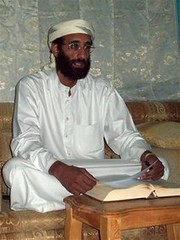
U.S. officials are also growing concerned about the increasing power of clerics in Yemen to recruit and radicalize Muslims worldwide. American-born cleric Anwar al Awlaki is believed to be a key player in the Al Qaeda affiliate.

The FBI is investigating connections between Awlaki and both Abdulmutallab and Maj. Nidal Malik Hasan, the U.S. Army psychiatrist accused of killing 13 at Ft. Hood, Texas, in November.

Yemeni clerics are also believed to have influenced Abdulhakim Mujahid Muhammad, a Muslim convert who lived in Yemen before allegedly shooting two soldiers at a U.S. Army recruiting center in Little Rock, Ark., last June, killing one of them.

"Yemen has a huge problem with terrorism, a heavy presence of Al Qaeda and we are fighting them," said the senior Yemeni official, who spoke on condition of anonymity because of the sensitivity of relations between the U.S. and Yemen. "We need to do more, but the world community, I think, also needs to do more."

How to do that is still unclear. The country is riddled with so much governmental corruption that Washington fears U.S. aid and counter-terrorism money would simply disappear, according to U.S. officials and formal findings by government and nonprofit watchdog groups.

Those suspicions, in part, resulted in no money for direct military assistance and only $9 million in U.S. economic aid in 2008, the senior Yemeni official said. More U.S. aid was given in 2009, along with stepped-up military coordination.

Yemeni President Saleh, who has run the country since it was declared a republic in 1990, is already fighting a long-running and expensive civil war in the south and a rebellion by Shiite Houthi fighters in the north.

That has made him reluctant to go after Al Qaeda in the Arabian Peninsula, U.S. intelligence officials say, particularly because its leaders are protected by powerful tribes that have governed the region for thousands of years.

Any concerted effort to go after them, especially with military force, could provoke the tribes to turn on Saleh's government, they say.

The situation has made the Obama administration unwilling to repatriate the dozens of Yemeni detainees still held at Guantanamo Bay, for fear that they will quickly return to the battlefield.

Wainstein, who met several times with Yemeni leaders, said there have been "some bright spots" in a joint effort to solve the growing Al Qaeda problem in the region.

"But this isn't a matter of just turning on a switch," he said. "They have a number of threats they are juggling. It's our job to encourage them to focus their energies and provide them the support they need to sustain an effort to root out Al Qaeda."

The Obama administration has not said publicly how it plans to attack Al Qaeda in Yemen, but several U.S. and Yemeni officials said direct U.S. military action is not being contemplated.

"They don't need to do that, because we are doing the work," the senior Yemeni official said.

But he acknowledged his government has grave concerns about its lack of authority in the remote areas where tribal leaders are protecting Al Qaeda.

He said the best solution would be to build roads, schools and hospitals to connect them with the rest of the country. Yemen has pleaded for such help for years, but was told Washington could not afford to help because of the wars in Iraq and then Afghanistan, he said.

The United States also has focused more of its own intelligence and military assets on the country -- with some success.

Just before Christmas, U.S. intelligence analysts listening in on Al Qaeda leaders in Yemen intercepted communications indicating a gathering of the masterminds of the Yemen network, who were discussing several imminent suicide bombings against Western targets in that country.

The intercepts gave analysts the tip they had been waiting months for, and Yemen launched an attack, killing as many as 30 suspected militants. Top leaders and Awlaki, however, apparently survived.

U.S. and Yemeni officials said in interviews that the strike thwarted several attacks.

"The action that was taken stopped those particular threats. That was a success," said one U.S. counter-terrorism official, who requested anonymity because he was not authorized to discuss the strike publicly. "But the danger in that country by no means has evaporated."

But other military efforts have been less successful. In July, Yemen sent tanks and artillery into Mareb province -- and they were routed, according to some analysts.

The Yemeni official would not discuss the outcome of that campaign, but Awlaki later exulted on his website that the military effort had backfired, and that tribesmen had protected the Al Qaeda fighters and seized truckloads of weapons.

"May this be the beginning of the greatest Jihad, the Jihad of the Arabian Peninsula that would free the heart of the Islamic world from the tyrants who are . . . standing between us and victory," he wrote.

josh.meyer@latimes.com

Copyright © 2010, The Los Angeles Times

New Bedford Church Traces Roots to Africa

New city church traces roots to Africa

By REBECCA AUBUT
CONTRIBUTING WRITER
January 02, 2010 12:00 AM

NEW BEDFORD — Faith has transformed a small storefront on Pleasant Street into the Chapel of Mercy City of Joy, and while the church may be located in New Bedford, it can trace its roots back to Africa.

Pastor Ebenezer Oyebamiji was only in his teens when he moved to Jos, Nigeria, to stay with an elder brother, a minister of a local church.

"When I met this great man of God," said Oyebamiji, "my own brother asked me if I was born again? And that day he led me into Christ, and since then my life has never been the same."

He dove headfirst into his work within the church, learning every aspect of the ministry. Having already earned a degree in business management through a university, Oyebamiji spent 18 months studying at Eleos Bible Institute in Nigeria. After finishing his studies, he continued to serve at his brother's church.

Working as a missionary in Lagos, Nigeria, Oyebamiji met a pastor from New Bedford.

"When I met her, I told her I wanted her to be connected to us in Nigeria," he said. "She came after five months with two other people to see me, and to see what we are doing with the children in Africa. We work with destitute, less privileged children."

The three missionaries, all nurses, were able to offer medical care, and for the next three weeks the group traveled, helping meet the needs of many of the children in the area. What Oyebamiji could not have known was that there was supposed to be a fourth member of that group who was unable to make the trip due to an injury.

And that with a simple exchange of e-mail addresses, the fourth member would soon become his wife.

"I lived a rough life as a youth," said New Bedford native Shalonda Oyebamiji. "I knew who God was, but I just didn't follow him at that time."

In her mid-20s, Shalonda attended an event held by a local church, and then gave herself over to Christ, she says. After spending the better part of a year doing missionary work in Los Angeles, Jamaica and Arizona, she came back to New Bedford but didn't feel complete.

"I felt like I wanted to do something else for God," she said; "and my heart was burning for Africa — I just needed to get to Africa."

An injury sidelined a scheduled trip, but incredibly there was already a piece of her in Africa, says Shalonda, she just hadn't met him yet.

"My spiritual mother said I have a daughter in the states that has the same heart and compassion as Pastor Ebenezer," said Shalonda, who began to communicate through e-mails. "We were encouraging each other as a brother and sister through Christ; we didn't know anything like this would come out of it."

In 2007, Shalonda traveled to Africa to meet Oyebamiji and shortly thereafter got married. Three weeks later, Shalonda was back stateside and began the nine-month process to get Oyebamiji to New Bedford. On July 11, 2008 — exactly a year to the day of their marriage in Africa — Oyebamiji and Shalonda held a second marriage ceremony in New Bedford. Within weeks of that ceremony, the newlyweds felt a new calling.

"We knew we were going to start a church eventually, but we didn't think it would be this soon," said Shalonda, who personally wanted to concentrate on a home and having children. "But God told us that it was time. We were scared, but we walked in faith. God told us we needed to build His house and fill it with His children, and then he would give us our house with our children."

The church grew from holding Bible studies out of friends' homes to taking out a lease to a small storefront.

Opening the doors Nov. 1, the church was official dedicated in mid-November.

Chapel of Mercy City of Joy, 486 Pleasant St., holds Sunday service at 10:30 a.m. and Bible study from 6:30-8:30 p.m. Thursday. All are welcome. For more information, call (774) 849-0137.

Western Imperialist States to Convene Summit on Yemen

Leaders call Yemen terror summit

Financial Times
By Jean Eaglesham in London and Anna Fifield in Washington
Published: January 1 2010 19:07

Western governments have convened a top-level meeting for this month to discuss strategies to counter Yemen’s growing role as a recruitment base for terrorists, in the wake of last’s week failed attack on a US-bound airliner.

The decision to hold the meeting, called on the initiative of Gordon Brown, the British prime minister, came amid urgent efforts by the Obama administration to try to close holes in its intelligence system.

Mr Brown will host the talks in parallel with the conference on Afghanistan being held in London on January 28.

The Yemen summit has “strong support” from the US and European Union, and the UK hopes to secure the backing of Saudi Arabia and Gulf states, the premier’s office said on Friday.

British and American security services believe Umar Farouk Abdulmutallab, the 23-year-old Nigerian who boarded a Christmas day flight to Detroit with 80 grammes of explosive in his undergarments, was recruited by al-Qaeda in Yemen after leaving the UK in 2008.

“Abdulmutallab has told the FBI that he was radicalised and trained in Yemen, apparently in the last six months,” a UK insider said on Friday. “We believe this account to be true.”

The London talks are designed to raise global financial support for Yemen and improve co-ordination of anti-terrorist efforts in the region, according to the British government. “The international community must not deny Yemen the support it needs to tackle extremism,” Mr Brown said.

But analysts have warned that the west must be careful in how it approached Yemen’s unstable government, as al-Qaeda extremists could use foreign intervention as propaganda to recruit new members.

Separately, President Barack Obama will this weekend study early reports on intelligence lapses that allowed Mr Abdulmutallab on to the flight.

He has received a preliminary briefing on the incident and will discuss “security enhancements and intelligence-sharing improvements in our homeland security and counter-terrorism operations” with agency heads on Tuesday.

Intelligence agencies had been warned in August of a plot being planned from Yemen that involved a Nigerian man.

The “human and systemic failures” described by Mr Obama have forced intelligence agencies on to the backfoot.

Admiral Dennis Blair, director of national intelligence who oversees the National Counterterrorism Center, a database of suspicious individuals created on the recommendation of the 9/11 Commission, said in a memo to staff that “this is a tough message for us to receive”.

“The president was direct in his assessment that intelligence failures were a contributing factor in the escalation of this threat,” Admiral Blair said. ”I have no doubt in our ability to close the gaps that these attacks exposed.”

Copyright The Financial Times Limited 2010. Print a single copy of this article for personal use. Contact us if you wish to print more to distribute to others.

OPEC Agrees to Keep Oil Quotas

Tuesday, December 22, 2009
20:32 Mecca time, 17:32 GMT

Opec agrees to keep oil quotas

Opec's secretary-general said that the group's stocks of crude oil were 'a bit high'

Members of the oil producers' body Opec have agreed to maintain their production restrictions in a bid to maintain oil prices.

Ministers from the 12-member Organisation of Petroleum Exporting Countries (Opec) announced their decision at a meeting in Luanda, Angola's capital, on Tuesday.

The group instituted its emergency quotas a year ago after oil prices tumbled amid the global economic crisis.

Oil prices have risen from a low of $40 a barrel to just short of $74 a barrel since the group imposed its restrictions.

David Strahan, a London-based energy strategist, said that there was no real justice for any move other than maintaining the status quo.

"Opec could hardly cut production at the moment as it is enjoying quite substantial prices, oddly high prices I think given the fundamentals of the market at the very minute," he told Al Jazeera.

"$70 to $80 a barrel, that's great for them, state budgets are balanced at that price, they are making quite a bit of money.

"There was also no incentive for them to increase production and the economic recovery, such as it is, seems able to survive these current prices."

Low demand

But Manouchehr Takin, a senior analyst at the Centre for Global Energy Studies, said the world economy was still struggling and likely downward pressure on prices could lead to more restrictions.

"It could be, if this trend of low demand continues towards the end of 2010, there could be great [downward] pressure and the price will come down to maybe $60 or so - and before that time Opec might have to cut production [to raise prices]," he told Al Jazeera.

Experts say stockpiles of crude could weaken the market when demand falls in the spring.

Abdullah El-Badri, Opec's secretary-general, said earlier that raising production levels next year is "not on our radar at this time".

"But if you look at fundamentals, especially inventory ... the stocks, they are a bit high," Badri said. "So we have to do something about this."

Opec ministers are also likely have one eye on Iraq's recovering oil industry and its ambitious plans to ramp up its production to levels that could rival Saudi Arabia.

But Hussein al-Shahristani, Iraq's oil minister, said that he did not expect to tackle the question of production allowances for Iraq, which he said was a special case as it was recovering from war.

"I don't expect any discussion on setting quotas or even discussing till we reach the point when there is a significant increase of Iraqi production," he said.

That increases is not expected for another two or three years.

International profile

Iraq is currently exempt from the group's system of quotas, which seek to limit production by members in order to stabilise prices.

El-Badri also said a discussion of quotas for Iraq was unlikely to be on Tuesday's agenda.

"It will come, but not now," he said.

"One day ... we will discuss it and surely we will accommodate them."

Angola raised its international profile by joining Opec in 2007 and the country overtaken Nigeria as Africa's biggest crude producer, according to the International Energy Agency.

But the country still suffers from the legacy of three decades of civil war and millions of Angolans still live in poverty and hunger with little access to clean water.

Source: Al Jazeera and agencies

SABMiller Strike in South Africa Set to Spread to Beer

SABMiller Strike In South Africa Set To Spread To Beer

Dow Jones
December 31, 2009: 03:01 AM ET

JOHANNESBURG -(Dow Jones)- SABMiller PLC's (SAB.JO) beer division in South Africa has been handed a strike notice as a walkout over pay at the brewer's soft drinks unit looks set to escalate, a labor union said Thursday.

A seven-day notice to strike at South African Breweries Ltd. and three other bottlers of Coca-Cola Co. (KO) products in the country expires Jan. 6, after which workers will be able to picket and stage demonstrations, the Food and Allied Workers' Union said.

The union said that from the same date Coca-Cola workers worldwide, under the umbrella of the International Union of Food and Allied Workers Associations, will also mount actions in support of striking workers at SABMiller's Amalgamated Beverage Industries Ltd., one of the largest producers and distributors of Coca-Cola brands in the southern hemisphere.

Workers at ABI launched a strike Dec. 22 to press demands including a 9.5% pay increase, a 45-hour working week and overtime pay. ABI has offered a wage and benefits increase amounting to an 8.3% raise and has said there is an acceptance in principle of a 45-hour week and that work on Saturday's would be for overtime pay.

SAB, founded in 1895 and the root company of SABMiller, produces beers including Castle Lager, Carling Black Label, Miller Genuine Draft and Grolsch.

-By Robb M. Stewart, Dow Jones Newswires; +27 11 783 7848; robb.stewart@ dowjones.com

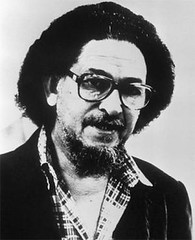
Dennis Brutus (1924-2009): Africa's Most Refined Poet--A Tribute

Dennis Brutus (1924-2009): Africa’s Most Refined Poet – A Tribute

By Kwame Okoampa-Ahoofe, Jr., Ph.D.

In the wake of his passing on Dec. 27 at the gloriously mature age of 85, Prof. Olu Oguibe, interim director of the African-American Studies Institute at the University of Connecticut, was quoted to be rather mischievously claiming that “[Dennis] Brutus was arguably Africa’s greatest and most influential modern poet after Leopold Senghor (1906-2001) and Christopher Okigbo” (1932-1967).

For my part, and I make bold to assert without fear of contradiction that, indeed, “Dennis Brutus was a poet of unbested refinement and the most delicate of esthetic sensibilities among Africa’s major poets of the twentieth century.”

Needless to say, it amounts to grossly and flagrantly shortchanging the truth and actuality of his esthetic poignancy for any critic to cavalierly claim Nigeria’s Christopher Okigbo to have esthetically subordinated the celebrated South African anti-Apartheid firebrand activist. I am, of course, fully cognizant of the source of the Okigbo Myth, a largely ethno-nationalist campaign geared towards perpetually preempting the vigorously contested landscape of both twentieth- and twenty-first century African poetry.

For starters Christopher Okigbo, nearly a decade the junior of Dennis Brutus, met what has been widely characterized as his “untimely death” in 1967, during the infamous Biafran War or the Nigerian Civil War (1967-1970), at a time that he was putatively beginning to clearly establish himself as a major poetic force on both a largely virgin African continent – vis-à-vis Europhone poetry and literature in general – and the global community at large. And so like an archetypal martyr, Okigbo remains largely a wistful symbolic figure eternally indicting callously preempted genius esthetic possibilities, rather than celebrating the veritably concrete and nonesuch esthetic achievements of the subject.

Dennis Brutus, on the other hand, represents the comprehensive gamut of the genius poet in his temporally panoramic splendor. Nonetheless, there may also, somehow, exist a modicum of substance, at least sympathetically speaking, on the part of those who are inexorably inclined towards a view of Okigbo as Africa’s perpetual, poetic enfant terrible. Even so, the fact of the imperative need to maintaining a balanced perspective on the richly diverse and splendorous breadth and depth of contemporary African poetry cannot be gainsaid.

At any rate, this tribute to Prof. Dennis (Vincent) Brutus or (Vincent) Dennis Brutus is one that is wholly personal, almost. For the volcanic passing of the renowned anti-Apartheid spearhead also constitutes the tectonic passing of an era of prismatically epic dimensions.

For such was the significance of that formidable human institution that created such esthetic and mnemonic landmarks as Sirens, Knuckles and Boots (1963), which eerily, inimitably and poignantly captured the immitigable evil that was the pathologically racist culture of the erstwhile Apartheid South Africa. Incidentally, if also logically, Dennis Brutus was to promptly and roundly reject Nigeria’s Mbari Poetry Prize specially earmarked for the creators of the best of Black-African poetry, as the judges deemed.

On the latter score, then, like Okigbo, Brutus healthily chose to recognize only the stark difference between good and atrocious poetry. For the epic battle against racial oppression was one that recognized nothing more or less than justice, in the realm of jurisprudence, and excellence in the esthetic and cultural arena.

The former inmate of Robben Island, together with ex-President Nelson Mandela, would go on to produce such period classics as Letters to Martha and Other Poems from a South African Prison (Heinemann, 1968), A Simple Lust (Heinemann, 1973), Stubborn Hope (Three Continents/Heinemann, 1978) and Airs and Tributes (1989), of which autographed latter copy this writer was a grateful recipient.

Anyway, my initial encounter with the poet Dennis Brutus occurred exactly twenty years ago at the City College of New York, while I was an undergraduate student. The occasion was the annual Langston Hughes Festival, a fiesta that had previously celebrated the renowned South African writer himself. On this particular occasion, however, the subject of festivity was the poet Margaret Walker-Alexander (renowned for her epic poem “For My People”), if memory accurately serves this writer. Dennis Brutus was simply there as a casual participant and, as usual, neatly decked in his trademark tie-die tee-shirt or jumper, I forget exactly which, a well-ironed pair of pants and sandals.

We had met during one of the intermissions of the two-day fiesta. I had approached a book stand in the East-Wing of the North Academic Center building (NAC), right in front of the Aronow Theater, and could not quite decide whether to purchase a copy of Masizi Kunene’s Emperor Shaka The Great when, almost as if out of nowhere, this decidedly European-looking elderly man started to lecture me about how Kunene’s book was a sui generis epic of indigenous African literature.

Being at the peak of my Black Nationalist phase (primarily the result of culture shock in America), I was a bit chary at first. Then I momentarily looked up, askance, to be certain, and muttered something like, “By the way, what is your name?” not really expecting any remarkable answer. “I am Dennis Brutus.” I was totally unprepared for his terse, soft and sonorous response. “Dennis Brutus! You must be kidding me. I read your poem ‘A Troubadour, I Traverse’ as part of my school cert.” I went on and on and on and on…. Looking back, I realize that my verbal profusion was palpably tinctured with a mixture of shame, surprise and outright embarrassment. Henceforth, I intended to no longer remain the proverbially superficial student who was always quick to judge a book by its cover.

That encounter also marked the beginning of, in retrospect, my sagacious walk away from the “Melanocentric” brand of Black Nationalism jihadistically propagated by the Neo-Pharaohs of City College and the Harlem Soap-Box Circuit. I would exchange addresses with Mr. Brutus and maintain a fairly steady and healthy correspondence with him at his base at the University of Pittsburgh, where he taught African and African-American literature and also directed the African-American Studies department.

I would also mail him several manuscripts of my poetry for critical review and evaluation; ironically, unlike some major “Black-African” litterateurs, Prof. Brutus would not only return my manuscripts promptly, he would also make extensive comments and suggestions on them. On the foregoing score, therefore, I suppose I could even legitimately claim to have been a bona fide student of the famous South African literary master.

In 1991 when Prof. Brutus vehemently called on the elder President Bush to forthwith cease his “barbaric” bombardment of Mr. Saddam Hussein’s Iraq, I studiously reported the same for the New York Amsterdam News for which weekly I then freelanced. That was a brave call, as nearly a decade earlier the Reagan-Bush administration had viciously dogged the Zimbabwean-born South African native with a deportation order.

In his 1991 call, from a lecture theater at the Community College of Philadelphia, the renowned anti-Apartheid activist highlighted the ironic twist entailed in Mr. Bush’s ordering of the targeted and systematic destruction of the holy land of Ur, the birthplace of Abraham, the widely acknowledged patriarch of the Judeo-Christian and Islamic religions.

As a poet, Prof. Brutus’ genius recognized no temporal or spatial bounds. For instance, I once sat right beside him at a conference at the Community College of Philadelphia when, within the fleeting moment of ten minutes, Prof. Brutus penned and edited a poem and handed it over to me and another attendee, seated to his left, to peruse, while proceedings were at full-throttle.

As a person, the renowned sonneteer was soft-spoken, reflective and uncharacteristically reticent for a formidable anti-Apartheid firebrand. I know his good friend and prolific novelist, as well as “comrade of the tie-die-sporting order” Prof. Ngugi wa Thiong’O, of Kenya, is not having an easy time with the passing of Prof. Dennis Brutus. We who knew, admired and respected the man do share the pain of his passing with his family and friends. His, indeed, was a reflective life worth recalling and heartily celebrating!

*Kwame Okoampa-Ahoofe, Jr., Ph.D., is Associate Professor of English, Journalism and Creative Writing at Nassau Community College of the State University of New York, Garden City. He is a Board Member of the Accra-based Danquah Institute (DI), the pro-democracy think tank, and the author of 21 books, including his latest and 16th volume of poetry “Intimations of Love” (Atumpan Publications/Lulu.com, 2009). E-mail: okoampaahoofe@aol.com.

Story from Myjoyonline.Com News:
http://news.myjoyonline.com/features/200912/39873.asp

Published: 12/30/2009

African-American Golf Pioneer Bill Powell Dies at 93

January 2, 2010

African-American Golf Pioneer Bill Powell Dies at 93

By RICHARD GOLDSTEIN
New York Times

Bill Powell, who was honored last summer as a racial pioneer in American golf more than 60 years after building a golf course while he was shunned by the sport he loved, died Thursday at a hospital in Canton, Ohio. He was 93.

The cause was complications from a stroke, the P.G.A. of America said.

In August 2009, when the P.G.A. of America held the 91st annual P.G.A. Championship in the Minneapolis area, it bestowed its highest honor, the Distinguished Service Award, on Mr. Powell.

According to the organization, Mr. Powell was the only African-American to build, own and operate a golf course in the United States.

When he returned to the Canton, Ohio, area from England in 1946 after serving in the Army Air Forces, Mr. Powell, a passionate golfer since caddying at age 9, was denied a chance to play on public courses. When he tried to get a bank loan to build his own course, he was rejected.

Jackie Robinson’s breaking of the color barrier in major league baseball was still a year away. The nation’s golf courses, like much of America, remained segregated. And the P.G.A. of America’s bylaws barred nonwhites from membership, a ban that remained in effect until 1961.

But Mr. Powell, a security guard for the Timken bearing and steel company in Canton, was undaunted.

“It’s distasteful when you get turned down,” he told The New York Times in 2009. “You have a little pride. You say the hell with them. You say I’m not going to badger. I’m not going to beg them. So I said I’ll just build a golf course.”

And so he did.

With financial help from two black physicians and a loan from a brother, Mr. Powell bought 78 acres on a dairy farm in East Canton.

Doing most of the labor by hand, helped by his wife, Marcella, Mr. Powell seeded pastures, tossed aside boulders and pulled up fence posts. In April 1948, what he called “this crazy dream” came true. He opened Clearview Golf Club with an initial nine holes and welcomed players of all races.

There were incidents of vandalism in the course’s early years — flag sticks were removed and ethnic slurs scrawled — but the course flourished, and Mr. Powell expanded it to 18 holes in 1978, having bought a total of 130 acres. The Department of the Interior designated Clearview as a national historic site in 2001.

“He was just obsessed,” Mr. Powell’s son, Larry, the Clearview course superintendent, told ABC’s “Good Morning America” in 2009. “He put all his efforts mentally, emotionally and physically into accomplishing his goal.”

When Mr. Powell, bent by age, was honored by the P.G.A. of America, he received congratulations from President Obama and former President George H. W. Bush. And he was accorded four standing ovations by the audience of more than 600 at the Pantages Theater in Minneapolis.

Seated in a large leather chair, he read an acceptance speech that his daughter, Renee, a pioneering figure in women’s pro golf, helped him craft. In it, he explained why he had built Clearview. “I did not want other people who wanted to play the game of golf to have to suffer the indignities that I had,” he said.

He closed with his credo: “Stand firm. Never give up. Never give in. Believe in yourself, even when others don’t.”

William James Powell was born in Greenville, Ala., then moved with his family to Minerva, Ohio, some 20 miles from Canton, as a youngster. He played golf and football in high school and attended Wilberforce University in Ohio, a historically black school, where he was a member of the golf squad.

With few decent job openings for blacks, Mr. Powell was hired at Timken as a janitor, but a few months later he became the company’s first black security guard. Returning to Timken after the war, he worked nights to support his family while building his golf course.

When Renee was 3 years old, Mr. Powell designed a miniature golf club and gave her lessons at Clearview. In 1967, Renee Powell became the second black woman, after Althea Gibson, to play on the Ladies Professional Golf Association Tour. She competed on the tour until 1980 and is now the head pro at Clearview.

In an e-mail message, Renee said of her father, “Early on we found that we had to share him with the world and what a gift he was!” In addition to his son and daughter, Mr. Powell, who lived in East Canton, is survived by twin sisters, Mary Alice Walker, of Akron, Ohio, and Rose Marie Mathews, of Minerva. His wife died in 1996.

The National Golf Foundation presented its Jack Nicklaus Golf Family of the Year Award to the Powells in 1992.

But Mr. Powell cherished a tribute beyond the spotlight as well. In 1997, as he told The Akron Beacon Journal, he was thrilled when two white women drove from Atlanta just to play his course.

“They shook my hand and thanked me,” he said. “They said I have a piece of history here, and they wanted to be a part of it. Can you imagine?”

Haitian President Marks Independence With Pledge of Fair Elections

Haitian President Marks Independence With Pledge of Fair Elections

VOA News 01 January 2010

Haitian President Rene Preval says the Caribbean country's upcoming legislative elections will be fair.

President Preval made the pledge Friday in the city of Gonaives in a speech marking Haiti's Independence Day.

The first round of voting is scheduled for February 28.

Haiti's electoral council has banned the political party, Fanmi Lavalas, of former President Jean-Bertrand Aristide from taking part in the vote, saying it submitted improper documents. The decision has drawn criticism from the former president, who was overthrown in a 2004 rebellion and is living in exile in South Africa.

The Fanmi Lavalas party - which is widely backed by Haiti's poor - has been barred from previous elections over other alleged failures to meet legal requirements.

The presidentially appointed electoral council also has disqualified more than a dozen political groups from the process.

Also Friday, Mr. Preval said he would use his last year of his five-year presidential term to boost agriculture and improve roads. The annual address in the city of Gonaives marked Haiti's independence from France on January 1, 1804, after a slave revolt.

Earlier this week, U.S. Secretary of State Hillary Clinton issued a statement congratulating the people of Haiti as they celebrate the 206th anniversary of the country's independence.

Secretary Clinton also saluted the many contributions Haitian-Americans have made to the culture and prosperity of the United States.

Some information for this report provided by AP and AFP.

Find this article at:
http://www1.voanews.com/english/news/americas/Haitian-President-Marks-Independence-With-Pledge-of-Fair-Elections-80488452.html

US Lawyers Knew About Legal Pitfalls in Blackwater Case

January 2, 2010

U.S. Lawyers Knew About Legal Pitfalls in Blackwater Case

By MATTHEW L. WALD
New York Times

WASHINGTON — The sudden blow to the case against the former Blackwater security guards over a shooting that killed 17 Iraqis and wounded at least 20 may have come as a surprise to the public in Iraq and the United States, but the legal problem that the judge cited Thursday when he threw out the indictments was obvious to American government lawyers within days of the shooting.

The issue was that the guards, as government contractors, were obligated to give an immediate report of what they had done, but the Constitution prevents the government from requiring a defendant to testify against himself, so those statements could not be used in a prosecution.

Less than two weeks after the shootings in Nisour Square in Baghdad in September 2007, lawyers at the State Department, which employed the guards, expressed concern that prosecutors might be improperly using the compulsory reports in preparing a criminal case against them, according to the decision.

The prosecutors were also concerned, even using what they called a “taint team” to try to prevent information in the guards’ compulsory statements from influencing the investigation, according to the 90-page ruling by Judge Ricardo M. Urbina of Federal District Court in Washington. The judge said the prosecutors had failed to take “common sense precautions” to avoid the problem.

The ruling led to disappointment in the United States as well as in Iraq.

“It is regrettable that the prosecutors didn’t have the foresight to be able to deal with this problem before the judge had to deal with it for them,” said Vincent Warren, the executive director of the Center for Constitutional Rights, a group based in New York that is bringing a civil suit against Blackwater, now named Xe Services, on behalf of the families of the dead and wounded.

Mr. Warren said Friday that he had not yet had time to read the decision, but that for the victims “it sends the wrong message to them about the seriousness with which this government is taking measures of accountability.”

A Justice Department spokesman, Dean Boyd, said Friday that his agency was “considering our options,” but would not comment further.

Judge Urbina’s decision would make it difficult for prosecutors to reinstate the original charges. Information that the guards were required to give immediately after the shootings was deeply woven into the government’s effort to secure the indictments, he wrote.

Winning a new indictment would require the government to prove it was not relying even indirectly on that information, the ruling said. Sometimes the government demonstrates that there is no contamination of the information used to an obtain an indictment by having it “canned,” or preserved, in a memorandum completed and dated before the prosecutors are exposed to suspects’ compulsory statements, but that was not done in this case, the judge said.

But the judge’s decision alludes to at least two routes through which the government could reinstate a prosecution.

Although the specifics of the guards’ statements cannot be used against them, the guards could be prosecuted for willfully providing false information in those statements.

In statements, the guards gave detailed information about what kinds of weapons they had used, including a sniper rifle and a grenade, and said they had believed that they were under attack and that they were taking small-arms fire. Investigators did not find physical evidence of an attack by Iraqis, the judge’s decision said.

The decision also points out that at one point, the government considered bringing obstruction of justice charges against Blackwater managers. It is not clear whether such charges are still being considered.

The rules limiting the use of the statements, the judge noted, are not intended to protect defendants from conviction, but to guarantee the integrity of the judicial system.

Soon after the government first sought indictments by bringing the case to a grand jury, in late November 2007, prosecutors decided that they had already erred by presenting the jurors with information that came from the off-limits statements.

So they took the case to a second grand jury, a year later, and used transcripts from the witness testimony at the first grand jury, with the tainted information removed.

But in their presentations to the second grand jury, the prosecutors also edited out evidence that suggested that the guards were firing in self-defense, the judge said, and those omissions were improper.

And the evidence presented to the second grand jury was still tainted by the initial statements, Judge Urbina said. Among the ways the guards’ inadmissible statements ended up in prosecutors’ hands was through television and newspaper reports that quoted from them, the judge said.

In a separate case, federal prosecutors in North Carolina, where the company is based, are investigating whether executives engaged in a broad array of criminal activities, including weapons smuggling, money laundering and tax evasion, according to lawyers and others familiar with the inquiry.

World Community, US Have Failed Afghanistan, Says Ahmed Rashid

Pakistan Daily Times - Site Edition
Saturday, January 02, 2010

World community, US have failed in Afghanistan: Ahmed Rashid

LAHORE: The international community and the United States have failed to work towards nation building and developing infrastructure in Afghanistan, Ahmed Rashid, a noted journalist, said on Friday at a seminar on “Pakistan-Afghanistan Relations: The Taliban Factor”.

The seminar was organised by the Punjab University’s (PU) Pakistan Study Centre. University Vice Chancellor Prof Dr Mujahid Kamran chaired the seminar.

Rashid said the Bush administration’s war in Iraq hampered the efforts to rebuild Afghanistan, consequently Al Qaeda and the Taliban have re-emrged. He said infrastructure and nation building in Afghanistan could not be achieved with a donor-driven economy and without focusing on developing agriculture and an indigenous economy.

Rashid said the Obama administration was focusing on these issues now, however, it was a little too late. He said the Karzai administration had been marred with allegations of corruption, bad governance and incompetence.

He believed that conciliatory talks between representatives of all sections, including the Taliban and NATO forces, was the only way out of the dilemma in Afghanistan and Pakistan’s military could play a positive and intermediary role in this regard. He said the Taliban were at their strongest right now and the environment was conducive for dialogue.

Rashid feared that the situation would get worse as Pakistan was facing major crises, including economic, political and extremist. He said the country was only dependent on the International Monetary Fund and the circular debt had nearly paralysed all government institutions.

The political crisis, he said, was a result of repeated martial laws and the failure of political leadership to relieve the masses of their miseries. The state also faced extremist challenges, he added.

Rashid said he believed that the borders with India and Afghanistan might create problems for Pakistan in the near future and another Mumbai-style incident may further damage ties between India and Pakistan. He hoped that the civil and military leadership would unite to face the challenges effectively.

Meanwhile, Dr Kamran urged the students to ponder over the issues facing the country. He urged the youth to acquire maximum knowledge of both national and international issues by developing a habit of reading.

staff report

Palestine News Update: Israeli Jets, Tanks Strike Gaza

Saturday, January 02, 2010
05:42 Mecca time, 02:42 GMT
Al Jazeera

Israeli jets and tanks strike Gaza

The Israeli offensive in the Gaza Strip marked the latest violence along Gaza's border

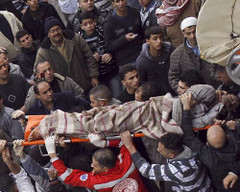
At least four people, including a child, have been wounded when Israeli war jets and tanks struck several targets in eastern and southern Gaza Strip, witnesses and medical sources have said.

Israeli F16 fighters fired two missiles and tanks fired two shells early on Saturday that landed at empty areas east and northeast of Gaza City, witnesses said.

Local ambulances took four people from eastern Gaza for medical treatment at Gaza hospitals, according to medical sources. The four were lightly injured.

Residents also said Israeli warplanes carried out a fifth raid on a post belonging to the Hamas movement in the southeast of the Gaza Strip. No injuries were reported.

An Israeli army spokesman confirmed aircraft had attacked Gaza, but gave no further details.

The offensive marked the latest violence along Gaza's border, which has been mostly quiet since a war Israel launched in Gaza on December 27, 2008 ended on January 18.

Source: Agencies


IAF pounds Gaza one day after rocket attacks

Jan. 2, 2010
JPost.com Staff, THE JERUSALEM POST

One day after Grad-type rockets landed in Netivot, the IAF attacked a number of targets in the Gaza Strip Saturday night.

The IAF bombed three sites in southern, central and northern Gaza. Specifically, Israeli forces attacked a number of tunnels around the Gaza Strip which were used for smuggling. Palestinian media sources reported that two people, including a child, were injured in the attacks.

According to eye witnesses in the Gaza Strip, IAF fighter planes attacked an open field near a neighborhood east of Gaza City. Earlier Saturday, IAF fighter planes also attacked an area near Khan Yunis, which is in the southern part of Gaza. No injuries were reported.

Also on Saturday, Israeli navy ships lobbed a number of shells at several targets at a refugee camp in the central part of the Gaza Strip. No injuries were reported.

Eye witnesses claimed that a group of armed Palestinians succeeded in avoiding the shells that were fired at them near the Jabilia refugee camp, in northern Gaza.

On Friday evening, a mortar shell fired from the Gaza Strip hit an open area near the Kerem Shalom border crossing at the southeastern end of the Gaza Strip.

No one was hurt in the attack and no damage was reported.

The IDF confirmed that its forces did indeed act in the Gaza Strip on Saturday, stating explicitly that the reason behind the targeting of Gaza was Friday's rocket attack on Netivot.

This article can also be read at http://www.jpost.com /servlet/Satellite?cid=1262339370326&pagename=JPArticle%2FShowFull


Last update - 18:26 01/01/2010

Anti-Zionist ultra-Orthodox Jews celebrate Sabbath in Gaza

By The Associated Press and Haaretz Service

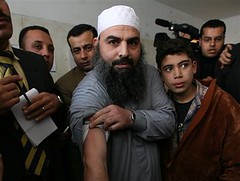
A small group of ultra-Orthodox Jews were preparing Friday to celebrate the Jewish Sabbath in Gaza, in an unlikely show of support for Palestinians in the Hamas-run coastal territory.

Bearded and wearing black hats and coats, the four members of a tiny Jewish group vehemently opposed to Israel's existence were a rare sight in the poverty-stricken Palestinian territory.

Members of the Neturei Karta group have expressed support for the Iranian regime and for others who oppose the Jewish state, which they believe was established in violation of Jewish law.

"It's crucial that the people of Gaza understand the terrible tragedy here is not in the name of Judaism," said one of the men, Rabbi Yisroel Dovid Weiss of New York City, as the four prepared to observe the Sabbath at a Gaza City hotel.

Israel's offensive in Gaza destroyed some 5,000 homes and, according to figures from a Palestinian rights group, killed over 1,400 people. Israel has challenged this figure, stating that a total of 1,166 Palestinians were killed in the operation, the majority of whom were Hamas militants.

The four men are American and Canadian citizens. Israel bans its citizens from visiting the blockaded territory. Weiss and his comrades entered Gaza through a border crossing with Egypt.

This was not the first time Neturei Karta members visited the besieged strip, after a brief visit to Gaza in July of last year, when they met with Hamas leader Ismail Haniyeh after crossing into the territory through Egypt.

Israel, which maintains a strict blockade of Gaza, would not let them cross through its passages with the territory.

"We feel your suffering, we cry your cry," Rabbi Weiss said at the time.

"It is your land, it is occupied, illegitimately and unjustly by people who stole it, kidnapped the name of Judaism and our identity," Weiss continued.

During their Thursday meeting, Haniyeh told them he held no grudge against Jews, but against the state of Israel, according to a Hamas Web site.

Neturei Karta, Aramaic for Guardians of the City, was founded some 70 years ago in Jerusalem by Jews who opposed the drive to establish the state of Israel, believing only the Messiah could do that. Estimates of the group's size range from a few hundred to a few thousand.

Representatives of the sect had previously visited Gaza when it was ruled by Fatah, Hamas' more secular rival.

One acted as Yasser Arafat's adviser on Jewish affairs, and a delegation traveled to Paris in 2004 to pray for the Palestinian leader's health as he lay dying in a hospital. Months later, a group participated in a conference in Lebanon with Hamas and Hezbollah militants.


Last update - 03:26 31/12/2009

Hamas: We foiled Israeli attempt to locate Gilad Shalit

By Avi Issacharoff

The internal security apparatus of Hamas claims to have foiled an Israeli attempt to collect intelligence on where kidnapped soldier Gilad Shalit is being kept. According to the head of Hamas' internal security service, Abu Abdullah, the Shin Bet security service has tried gathering intelligence through members of the rival Fatah organization who have operated in the Gaza Strip in the past.

The report appears to be mostly an attempt to smear the Palestinian Authority and its activities. Abu Abdullah said in an interview to a Web site affiliated with Hamas, Falastin Alan, that the Fatah operatives hired a house and cars in the eastern part of Gaza City and planned to kidnap a senior figure in the military wing of Hamas and bring him to Israel. He did not specify when the operation was to take place.

Meanwhile, the Hamas Web site reported that the negotiations for the release of Gilad Shalit have met with Israel's refusal to release four "senior" prisoners. The four are: Tanzim leader Marwan Barghouti, secretary general of the Popular Front for the Liberation of Palestine, Ahmed Sa'adat, and two of the heads of Hamas' military wing in the West Bank, Ibrahim Hamad and Abdullah Barghouti, who are responsible for the murders of dozens of Israelis in suicide bombings.

On the other hand, a member of the Hamas politburo, Izzat al-Rishq, stressed in an interview to the Arabic language TV station Al-Jazeera that the Islamist Palestinian group is continuing consultations on the proposal relayed to it by the German mediator.

Rishq rejected the report Tuesday by TV station Al-Arabiya that Hamas had turned down the proposal.

The Hamas official refused to offer details on the substance of the proposal from Israel or comment on problems that Hamas may have with it.


Last update - 08:51 01/01/2010

Comment/Settlers can stay, but only as citizens of Palestine

By Alexander Yakobson

The time has come to say to the settler leaders: Okay - you've convinced us. It seems that a mass evacuation of settlers is an impractical idea. You showed us clearly that you're prepared to turn such a removal into a national trauma. It's doubtful that any Israeli politician would chance it.

But whoever seeks to determine the country's fate with threats must know that the final result is likely to be disappointing. Giving up on evacuation doesn't mean giving up on dividing the land. Whoever concedes to this is giving up on Israel. In the end, the only alternative to the two-state solution is one state. This is usually called a "binational state," which is a bad joke. A binational state may exist in Belgium (perhaps; there, too, it barely works).

Here in our region, in real life, "one state" would be Arab, Muslim and Sunni (no matter what the constitution said), and much less binational than Israel.

If evacuation is not practical, the conclusion is to divide the land without removing settlers. Israel should formally adopt the suggestion by Palestinian Prime Minister Salam Fayyad: There is no need for an evacuation; settlers who are interested may stay where they are after an Israeli withdrawal and live as a Jewish minority in a Palestinian state. Israel will have sovereignty on one side of the border and the Palestinians on the other - over everyone living there. There will be no evacuation, and Israeli soldiers won't have to take people from their homes. They will simply retreat to the new border.

Adopting this position would create an opportunity for Israel to gain a more comfortable border. Discussions on border corrections and territorial exchanges have been undertaken under pressure to keep as many settlers as possible within Israeli borders to reduce the size of an evacuation. The map offered to Palestinians by former prime minister Ehud Olmert shows that in the end, Israel would have a border worse than the Green Line: an infinite line winding like a snake, without any logic to it, military or otherwise.

These corrections to the border are no good for either side. If you don't have to worry about decreasing the number of people evacuated, it's possible to draw a much more rational border; the number of settlers included in Israel would be much smaller in this case. Second, if there is no evacuation, there is no financial compensation. In our country, some payment will certainly be made, beyond the letter of the law, but we are talking about much smaller sums. The state does not have to compensate a person for a change in the territories' political status, and settlers' property rights will be insured by a peace treaty.

Adopting this position would make things easier for Israel from a political point of view. Europe and America will continue to oppose construction in the settlements, as a violation of international law, but the world takes such a dim view of settlement expansion because it is viewed as a permanent erosion of the territory of the future Palestinian state, which aims to make the occupation irreversible. If the settlers are irrelevant to the border, they turn into a much less important issue.

It is clear that the great majority of settlers does not want to live under a Palestinian government and would leave. If there is a sizable minority that prefers the commandment to settle the land over national sovereignty, this is a legitimate choice that should be honored. If only this experiment succeeds. The connection to Judea and Samaria is worthy of respect; what is unworthy is the attempt to rule over another nation (in effect, we are talking about the attempt to rule over two nations and determine their fates).

And yet, it is worth asking, without doubting Fayyad's intentions, if it is reasonable that Palestine be the only Arab state with a significant Jewish community. The Jewish imagination pictures mass slaughter, but these are exaggerations of anti-Arab rhetoric.

The Arab world emptied of Jews without such dramas and in most cases without government decisions, and still Jewish life became impossible there. It is more reasonable to assume that virtually all the settlers will find themselves on the Israeli side of the border. But after all, that's what the Law of Return is for.

Friday, January 01, 2010

'Your World News' Radio Broadcast Features Abayomi Azikiwe, Editor of the Pan-African News Wire

Your World News Features Abayomi Azikiwe, Editor of the Pan-African News Wire

Please join us for an in-depth dialogue with journalist, activist, editor of the Pan-African News Wire, and historian, Abayomi Azikiwe. This interview was broadcast live on Monday December 28, 2009 from 3:00 PM – 4:30 PM Eastern Standard Time.

However, if you did not catch the show LIVE, it is still available on ARCHIVE simply by visiting the following URL at:
http://www.blogtalkradio.com/your-world-news

When you arrive at the web site just go to the broadcast labeled 'Pan-African News, Views & Power.' The program is 90 minutes.

During the broadcast we discussed current events throughout the world including: the African Continent, the invasion of Afghanistan & Iraq, Latin America and the Caribbean. We placed news, commentary and events from a perspective that the Western Corporate media purposefully does not. Please join us and listen to the show on ARCHIVE. Knowledge is Power!

Abayomi Azikiwe is the founder and editor of the Pan African News Wire. To view this site just log on to (http://www.panafricannews.blogspot.com).

The Pan-African News Wire is one of the most reliable, diverse, progressive and thorough internet based news sources. The Pan-African News Wire is an international electronic press service designed to foster intelligent discussion on the affairs of African people throughout the continent and the world.

Your World News Host,
Solomon Comissiong

CIA Deaths in Afghanistan Illustrates Vunerability of Intelligence Operatives

January 1, 2010

C.I.A. Takes On Expanded Role on Front Lines

By MARK MAZZETTI
New York Times

WASHINGTON — The deaths of seven Central Intelligence Agency operatives at a remote base in the mountains of Afghanistan are a pointed example of the civilian spy agency’s transformation in recent years into a paramilitary organization at the vanguard of America’s far-flung wars.

The C.I.A. operatives stationed at Forward Operating Base Chapman in Khost Province, where Wednesday’s suicide bombing occurred, were responsible for collecting information about militant networks in Afghanistan and Pakistan and plotting missions to kill the networks’ top leaders. In recent months, American officials said, C.I.A. officers at the base had begun an aggressive campaign against a radical group run by Sirajuddin Haqqani, which has claimed responsibility for the deaths of dozens of American troops.

Even as the C.I.A. expands its role in Afghanistan, it is also playing a greater role in quasi-military operations elsewhere, using drone aircraft to launch a steady barrage of missile strikes in Pakistan and sending more operatives to Yemen to assist local officials in their attempts to roll back Al Qaeda’s momentum in that country.

Over the past year, the C.I.A. has built up an archipelago of firebases in southern and eastern Afghanistan, moving agency operatives out of the embassy in Kabul and closer to their targets.

But the push to the front lines carries great risk.

In 1983 in Beirut, it took a car bomb loaded with 2,000 pounds of explosives to kill eight C.I.A. officers stationed at the heavily fortified American Embassy in the city. In Khost on Wednesday, all it took was one man bent on martyrdom to slip into a remote base and inflict a similar toll on the spy agency’s relatively small work force.

Among those killed, officials said, was the chief of the Khost base, who was a mother of three and a veteran of the agency’s clandestine branch. Besides the seven C.I.A. operatives who died, the blast also wounded six agency employees, according to a C.I.A. statement.

Current and former intelligence officials said Thursday that early evidence indicated that the bomber, in Afghan military fatigues, might have been taken onto the base as a possible informant and might not have been subjected to rigorous screening. But details about the episode remained murky, and a NATO official said the bomber had managed to elude security and reach an area near the base’s gym.

C.I.A. personnel regularly take foreign agents onto the base before sending them on intelligence collection missions in eastern Afghanistan and across the border into Pakistan, said one Pentagon consultant who works closely with the C.I.A. in Afghanistan.

“You must to some degree make yourself known to people you don’t trust,” said one American intelligence official who, like others interviewed for this article, spoke anonymously to discuss classified information.

The bomber appears to have worn an explosives-laden suicide vest under an Afghan National Army uniform, two NATO officials said Thursday. The attack happened close to dusk, when some people at the base were relaxing before dinner.

In a statement to the C.I.A.’s work force, President Obama said that the spy agency had been “tested as never before,” and that C.I.A. operatives had “served on the front lines in directly confronting the dangers of the 21st century.”

Forward Operating Base Chapman sits in an isolated spot several miles from the town of Khost, but not far from Camp Salerno, a larger base used by Special Operations troops.

American officials said that the C.I.A. base had been a focal point for counterterrorism operations against the Haqqani network, a particularly lethal militant group that operates on both sides of the Afghan border.

“Those guys have recently been on a big Haqqani binge,” said the Pentagon consultant. “I would be really shocked if the bombing on Wednesday wasn’t some kind of retaliation.”

There was an air of defiance among intelligence officials on the day after the attack, and some spoke of their fallen comrades using military language.

“There is no pullout,” the American intelligence official said. “There is no withdrawal or anything like that planned.”

The C.I.A. has always had a paramilitary branch known as the Special Activities Division, which secretly engaged in the kinds of operations more routinely carried out by Special Operations troops. But the branch was a small — and seldom used — part of its operations.

That changed after Sept. 11, 2001, when President George W. Bush gave the agency expanded authority to capture or kill Qaeda operatives around the world. Since then, Washington has relied much more on the Special Activities Division because battling suspected terrorists does not involve fighting other armies. Rather, it involves secretly moving in and out of countries like Pakistan and Somalia where the American military is not legally allowed to operate.

The fact that the agency is in effect running a war in Pakistan is the culmination of one of the most significant shifts in the C.I.A.’s history. But the agency has at times struggled with this new role. It established a network of secret overseas jails where terrorist suspects were subjected to brutal interrogation techniques, and it set up an assassination program that at one point was outsourced to employees of a private security company, then known as Blackwater USA.

Some longtime agency officers bristled at what they saw as the militarization of the C.I.A., worrying that it was straying too far from its historical missions of espionage and intelligence analysis.

When he took office in January, President Obama scaled back the C.I.A.’s counterterrorism mission, but only to a point. He ordered that C.I.A. prisons be shut and that C.I.A officers no longer play a role in interrogating suspects accused of terrorist acts.

At the same time, the administration has accelerated the C.I.A.’s drone campaign, using Predator and Reaper aircraft to launch missiles and rockets against militants in Pakistan.

In early 2009, the White House approved a C.I.A. plan to expand the drone operations in Pakistan into Baluchistan, where top leaders of Afghanistan’s Taliban militia are thought to be hiding. The agency has also recently begun sending more operatives into Pakistan to, among other things, gather target intelligence for the drone program.

Alissa J. Rubin contributed reporting from Kabul, Afghanistan.

Bolivians Take Chinese Lessons to Strengthen Ties

Bolivians take Chinese lessons

By Candace Piette
BBC News, La Paz

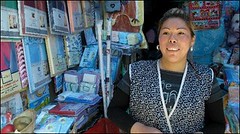
Norma Ramos has a bathroom and kitchenware stall in a busy commercial sector of La Paz, Bolivia's main city.

But she is no ordinary trader: she travels regularly to China to buy products to sell back home.

Proud of her new expertise, she has already made more than seven trips.

And, anxious to avoid the tyranny of translators and the expense of middlemen, she has taken Chinese lessons which, she says, have given her a great commercial advantage.

"I can now say - sell me this at the right price, and I want this kind of quantity, and I will return, and I will be able to speak more of your language next time," says Ms Ramos.

"And they have shown more interest and say they will give it to me cheaper next time."

Closer ties

A graduate from a language school in La Paz where class sizes for Chinese are growing each year, Norma Ramos believes the future will see ever closer ties with China.

"I think it would be great if we could cement our relations with China. We've seen how Peru has developed after it signed a free trade agreement with China," she says.

As ordinary Bolivians acknowledge the growing economic importance of China, China itself is noticeably increasing its programme of co-operation with Bolivia.

China has said it will construct Bolivia's first satellite, as well as build a fast electric trainline for the country. It is also collaborating on mining and energy projects.

But one of China's biggest interests is in Bolivia's rich natural resources, specifically its lithium deposits in the Uyuni desert, high in the Andes.

Technological thirst

Fifty per cent of the world's lithium is found in Bolivia.

Lithium - the lightest metal - is used in mobile phones and increasingly in the batteries of the new generation of environmentally friendly electric cars starting to come off the production lines.

Although China has its own deposits, it makes the batteries and has its own electric car industry, and will in the future need more lithium, analysts say.

But China has competitors in Bolivia. The push towards electric car development around the world has become a mad dash to lock in lithium mining deals with Bolivia.

Japan, France and Korea have been busy courting Bolivian President Evo Morales.

Mr Morales and his officials are talking to France's Bollore Group, South Korea's LG Group and Japan's Sumitomo and Mitsubishi.

Bollore has been asked to join the government's scientific commission on lithium.

The courtship of Bolivia by the rest of the world is particularly delicate because of Mr Morales's leftist ideology.

A former trade union leader of Aymaran Indian descent, Mr Morales has said he wants to unshackle Bolivia from dependence on foreigners.

Three years ago he nationalised the oil and gas industry, worrying foreign investors.

Mr Morales is insistent that profits and jobs from the country's rich mineral and natural resources should go to Bolivians and not foreign companies.

Guillermo Roelants, head of the government's lithium pilot project, says lithium is going to be key to Bolivia's future development.

"This resource is so big that it is of major importance to Bolivia, not only for this government, but for Bolivian history and Bolivian consciousness, the development of a project owned by Bolivia, developed by Bolivia and controlled by Bolivia," Mr Roelants said.

But there are concerns that Bolivia does not have the expertise to go it alone.

Open arms

Analyst Horst Grebe Lopez, who is a former mining minister, believes that the Bolivian government may be misguided in its plans.

"We don't have the technical know-how to work with lithium. You need hundreds of technicians and engineers and professionals. If we plan this right we will have the capacity to get to a certain level. But after that you need investment that currently Bolivia doesn't have. "

With its attractive, cheap products for export, and its growing portfolio of development projects within the country, China may be winning over the Bolivian government on one level, but is it winning on the question of lithium?

Although the Chinese media have made frequent visits to report on the lithium project, Bolivia has yet to receive a formal approach from China, Mr Roelants says.

But, he adds, this could change, and if it did, China would be greeted with open arms. "We would welcome them onto our scientific committee," he said.

The Bolivian government is playing hard to get. It has the upper hand with its vast deposits of a precious resource.

It believes it can afford to take a slow approach, building a home-grown industry of lithium extraction and battery production with a partner of its choice.

Story from BBC NEWS:
http://news.bbc.co.uk/go/pr/fr/-/2/hi/americas/8390614.stm
Published: 2009/12/24 09:38:31 GMT

Wen Jiabao's 60 Hours in Copenhagen

Wen Jiabao’s 60 hours in Copenhagen

Xinhua correspondents Zhao Cheng and Tian Fan, who covered Chinese Premier Wen Jiabao’s visit to the Copenhagen climate talks, recall in this report what they witnessed at the summit in the Danish capital.

Chinese Premier Wen Jiabao left Beijing for the climate summit in Copenhagen, Denmark, on December 16, when pessimism and disappointment were simmering among negotiators, who, after about 10 days’ bargaining, found a bridge to span their rift a mission impossible.

"It will be a tough task. Now I can feel how heavy my duty is to attend the meeting on behalf of the Chinese government," Wen told reporters aboard his plane en route to Copenhagen.

Nevertheless, Wen said he was confident that the talks would bear fruit. "As so many world leaders are gathered there, I believe there should come some achievements," he said.

"No matter what the result is, China’s action plan will not change, its voluntary reduction target will always be non-negotiable, and its determination in hitting the target will never waver."

Talks

Premier Wen’s schedule on December 17 was almost fully occupied by meetings with world leaders.

During the meeting with Danish Prime Minister Lars Lokke Rasmussen, Wen suggested that in order to achieve an outcome for the conference, all parties should stick to the consensus they had reached while leaving differences for future negotiations.

"Now it seems to be the only way out. If we can reach a resolution of such a kind, it could well be an achievement of the talks," Wen said.

In his talks with UN Secretary-General Ban Ki-moon, who said that a fruitless conference would be unacceptable, Wen proposed to formulate a political document that may reflect the consensus of different parties.

"It is unrealistic to hope to fill in the gap between nearly 200 countries in less than two days. China and the people of the world all wish for the success of the meeting, and the current priority is to crystallize a consensus," Wen said.

He told the UN chief it was important to fix on the political aspiration to deliver confidence and hope to the world.

The drafting of the final document must be transparent while concerns of different parties, especially developing countries, must be taken into consideration, Wen stressed.

Wen’s talks with Ban were followed by the meeting with Brazilian President Luiz Inacio Lula da Silva.

They agreed that the two major developing countries must firmly stand with other developing countries to safeguard their common interests.

The Chinese premier’s meeting with representatives of island countries and underdeveloped nations lasted for over two hours, the longest during his stay in Copenhagen.

Wen said although China had always urged developed nations to fulfil their funding commitments, China would not vie for even a cent with other developing countries if such a fund were available.

In addition, China would continue to assist those countries to cope with climate change, Wen told President of the Maldives Mohammed Nasheed, Prime Minister of Grenada Tillman Thomas, Ethiopian Prime Minister Meles Zenawi, Bangladesh Prime Minister Sheikh Hasina, and Sudanese Presidential Assistant Nafie Ali Nafie.

Wen’s whirlwind negotiations that afternoon involved British Prime Minister Gordon Brown, German Chancellor Angela Merkel and Japanese Prime Minister Yukio Hatoyama.

The three industrialized countries, though ambitious in leading international cooperation on climate change issues, lacked understanding of developing countries and had therefore raised some unrealistic and unfair requests.

Once again, Wen urged all parties to stop pointing fingers at each other or bargaining at the critical moment of the talks.

He said China’s commitment on mitigation actions is "unconditional and non-negotiable". It was not conditioned on or linked with commitments by any other country, Wen said.

On the transparency issue in self mitigation actions, Wen said China was willing to conduct talks and cooperation.

He stressed that developing countries' major tasks in eradicating poverty and developing economies should not compromise the environment.

But their development also required the developed world's understanding and support, both financially and in technology.

After the meetings, Wen immediately instructed Vice Foreign Minister He Yafei to hold a press conference to brief the world media on the talks, to fulfil his commitment to transparency.

Mysterious meeting

At a banquet hosted by Danish Queen Margrethe II on December 17, Premier Wen was told that the United States would hold a small-scope meeting between several countries' leaders after the dinner.

During his talk with a foreign leader, Premier Wen learnt China was on the list of the meeting’s participating countries while he himself was not invited and neither did the Chinese delegation receive a notice for the mysterious meeting.

Why was the Chinese delegation not informed? Premier Wen felt quite astonished and was vigilant after he confirmed the meeting with other foreign leaders.

During the conference, similar situations occurred when some countries proposed a draft resolution through clandestine negotiations, which went against the principle of openness and transparency and triggered strong discontent.

Premier Wen took the incident seriously and came back to his hotel immediately to call an emergent meeting to study countermeasures for the situation.

On behalf of the Chinese delegation, Vice Foreign Minister He Yafei came to the meeting and expressed strong dissatisfaction over the decision not to inform China of the meeting.

He said that the meeting should be transparent and no participants should impose their will on others. Any scheme in darkness would probably lead to a fruitless summit.

Unexplained delay

On the second morning of his stay in Copenhagen, hours before the final summit segment of the UN climate change conference, Wen met with Indian Prime Minister Manmohan Singh who had just arrived.

Both leaders held that no matter what happened, the two countries should keep in close touch and firmly defend the interests of developing countries.

At 9:45 am Premier Wen arrived at the main venue of the conference, 15 minutes earlier than the scheduled opening.

However, neither the host Danish Prime Minister Rasmussen nor the UN Secretary-General Ban Ki-moon was present, even at 10 am.

People were guessing what the problem was, but no one came to explain the reason for the delay.

Premier Wen made a prompt decision to propose a meeting of the BASIC countries.

The leaders just sat around a tea table in the hall and began exchanging views.

It was until 11:30 am that Rasmussen announced the opening of the summit.

Premier Wen was the first to deliver a speech, titled "Build Consensus and Strengthen Cooperation to Advance the Historical Process of Combating Climate Change."

In the speech with 2 000-odd Chinese characters, Wen made it clear what China thought, did and would do to cope with climate change.

At the end of his speech, Wen made a serious promise.

"It is with a sense of responsibility to the Chinese people and the whole mankind that the Chinese government has set the target for mitigating greenhouse gas emissions.

"This is a voluntary action China has taken in the light of its national circumstances. We have not attached any condition to the target, nor have we linked it to the target of any other country," Wen said.

"We will honor our word with real action. Whatever outcome this conference may produce, we will be fully committed to achieving and even exceeding the target."

Premier Wen’s speech won long-time applause at the conference venue. Some foreign leaders congratulated Wen on his speech by shaking his hand.

Last minute effort

After US President Barack Obama’s speech, Premier Wen held talks with him in a meeting room just behind the summit venue.

The two leaders agreed that the participating countries of the conference should achieve a political resolution as soon as possible and continue cooperation on climate change.

As soon as the talks ended, Wen asked members of the Chinese delegation to inform the Group of 77 and other BASIC countries of the Sino-American talks, aiming to speed up negotiations between developing and developed countries.

Developing and developed countries discussed the final document, but failed to make any progress as a result of divergence of views, even when the Copenhagen climate change conference was scheduled to conclude hours earlier.

Some countries were drafting announcement of the conference’s possible failure, and certain foreign leaders even made irresponsible criticism against China.

At the Bella Center, the venue of the conference, journalists started to pack luggage.

People around the world were wondering how and when the Danish government would declare failure of the largest and highest level climate change conference ever in human history.

It was Premier Wen who played a key role in the last-minute attempt to exchange ideas and reach consensus.

Wen believed that it was impossible to reach a legally binding agreement at that time, while no country was willing to be responsible for the failure if the conference yielded no result in the end.

"As long as there is hope of one percent, we should not give up and must instead make 100 percent of effort," he told the Chinese delegation.

Wen decided to meet other leaders of the BASIC countries again and make a final attempt.

At the same time, President Obama said he wanted to have a second meeting with Premier Wen. Wen agreed to meet him after the BASIC meeting ended.

The BASIC countries leaders agreed that the Copenhagen conference might fail and all-out efforts should be made to help achieve some results.

They agreed to reach consensus on key issues first and then negotiate with the United States and European countries on the basis of safeguarding interests for the developing countries and with the highest degree of flexibility.

Wen urged to keep contact and enhance cooperation with African countries, the Group of 77 and small island states.

At 6:50 pm when the BASIC leaders were reviewing their final common position, President Obama showed up, which was a bit of surprise for those in the room although the scheduled time for the Sino-American meeting was over.

Obama stopped with one foot outside the gate and asked Premier Wen with smiles if he should wait outside or join the discussion.

Premier Wen stood up and politely invited Obama to join them. Obama accepted and walked around the room to shake hands with all the people present, before taking a seat to the left of Brazilian President Luiz Inacio Lula da Silva and opposite to Wen.

The BASIC leaders knew very well the U.S. stance since they had all met before.

Premier Wen said efforts should be made to adopt a resolution in order to affirm the achievements of the meeting and build consensus. He then made clear the position of BASIC countries on several key issues.

Obama briefed the leaders of BASIC countries about the latest US stance, saying both sides were very close on the wording of these issues, before the leaders of the five nations started the negotiations.

While the leaders were discussing, journalists were anxiously waiting outside. Some of them even took photos through the window.

Applause was heard before long as the BASIC countries finally reached agreement with the United States on the wording of some key issues. The United States said it was willing to consult with the European Union.

The BASIC countries discussed with some other countries while the US — Europe talks went on. A few more countries reviewed the draft later.

An hour later, news came that the parties concerned had agreed on the draft and were ready to submit it for a voting at the conference.

It was already nine hours after the scheduled conclusion of the conference.

The achievement was a result of joint efforts by all the participating countries other than out of the will of one or two countries. — Xinhua.

Radio Basics Broadcast From Toronto (CHRY 105.5) on the Assassination of Imam Luqman Ameen Abdullah in Detroit

Monday, December 14, 2009

The FBI Assassination of Detroit Imam and Community Leader Luqman Ameen Abdullah

by Steve da Silva – Reporting from Detroit

Listen to the Radio Basics Broadcast From Toronto on the FBI Assassination of Imam Luqman Ameen Abdullah
http://radio4all.net/index.php/program/38133

On October 28, 2009, the 53-year-old Luqman Ameen Abdullah, the Imam of the Masjid Al-Haqq in Detroit, was shot 18-times by the American Federal Bureau of Investigation (FBI) and left for dead.

The FBI launched its attack on Imam Luqman after it had built up a formal criminal complaint against him using the statements provided by paid infiltrators of the mosque – who were themselves known criminals. But these documents contained neither charges of terrorism nor violations of federal law.

What the official 42-page indictment document did indicate, however, was that one FBI sources had tried to enlist Abdullah in a plan to attack the 2006 Superbowl in Detroit. Abdullah rejected the proposal by what he thought was a fellow member of the mosque (really an FBI agent) saying that he would play no part in hurting innocent people.

The charges listed in the criminal complaint were all constitutional rights of American citizens. Imam Abdullah was charged with possessing guns (which half of Americans own) and with preaching separatism (which is not only a matter of his freedom of speech, but has been a political position held by countless popular black, indigenous, Chicano, and Puerto Rican individuals and organizations in the face of systemic racism, barbarism, and exploitation in the U.S.).

According to the indictment document, built up from statements provided by the FBI infiltrators, Imam Abdullah had told his followers that if the police ever tried to take his weapon – again, a constitutional right – or tried to apprehend him, he would resist. With that information in hand, the FBI had the information they needed to construct a scenario where they Abdullah could be killed.

The FBI set up a warehouse of stolen goods, lured Imam Abdullah in through one of the infiltrators, and orchestrated a scenario were Abdullah would not come out alive. All that has been told to the public at this time is that Abdullah shot an FBI dog (which, if this is true, was most likely in self-defense after the animal attacked him. In response, we are told, Abdullah was shot 18 times and left to die while the dog was flown away by medical helicopter. Another telling detail is that Abdullah was handcuffed at some point throughout the affair – either before being shot 18 times, or after.

Representatives of the U.S. Attorney General’s office have confirmed that Imam Abdullah never fired on the federal agents.

As the National Lawyers Guild wrote on Novemebr 2: “By publicizing the killing and arrests as related to terrorism, absent any such allegations in the complaint, the FBI seems to be engaging in the same tactics used in its Counter Intelligence Program (COINTELPRO) [widely used in the 1960s and ‘70s] in which it spied on, infiltrated and disrupted political movements. Imam Abdullah had a close relationship with Imam Jamil Abdullah al-Amin, formerly known as H. Rap Brown, was a field organizer for the Student Nonviolent Coordinating Committee (SNCC) and later served as national chairman of the Black Panther Party (BPP).”

Director of the Masjid Al-Islam in Washington, D.C. told Press TV: “What the government is doing by assassinating Imam Luqman is trying to intimidate the Muslim community, especially the black community. And I say that because the immigrant community, which is about half of the Muslims in the United States and the African American Muslim community, which form the other half, have different views about Islam in America and how it should be fostered.”

“The immigrant community has been frightened since the 9/11 terrorist attack and they practice the kind of American-style Islam. Now, the killing of Imam Luqman is to intimidate us [African Americans]. But our message is different. We will not be intimidated by the United States government or by the FBI.”

Indeed, communities have not been intimidated by assassination, evidenced by the more than 1000 people in attendance at the Imam’s funeral on October 31, 2009, and the multiple demonstrations and events that have since been held.

Many organizations are calling for an independent investigation into the killing, which usually consists of the Civil Rights Division of the Justice Department to see if their were violations of federal law. Given the FBI is under the Justice Department – a Department that persistently targets Muslims and black community leaders on trumped-up charges – it would be naïve to the extreme to think that such an investigation could be independent.

A rally was held outside the federal building on November 5, 2009 to protest the assassination of Imam Luqman Ameen Abdullah of the Masjid al-Haqq.

Abayomi Azikiwe, Editor of the Pan-African News Wire, as well as the Detroit-based MECAWI (Michigan Emergency Committee Against War & Injustice), are calling for a truly indepdenent people’s commission on inquiry that would issue a report and demand sanctions and criminal charges against those involved in the shooting and in ordering the operation.

The only crime that Imam Luqman Ameen Abdullah has committed in the eyes of the U.S. government is in being a strong and inspiring community leader and organizer, like countless black leaders and vocal opponents of the U.S. government have been gunned down by the U.S. government for precisely the same reason.

Currently, at least thirteen other individuals have been arrested and charged because of their association with Imam Luqman Ameen Abdullah and his mosque, including his son Mujahid Carswell, ten other members of the Masjid al-Haqq, and two Canadians from Windsor. Although the mainstream media has painted their arrests and charges with the same “counter-terrorism” brush used to legitimize Imam Abdullah’s assassination, no terrorism-related have been laid on any of the other individuals.

More resources on the case available on the Pan-African News Wire [http://panafricannews.blogspot.com].