Monday, February 06, 2012

Why the West Killed Lumumba

Why the West killed Lumumba

Monday, 06 February 2012 00:00

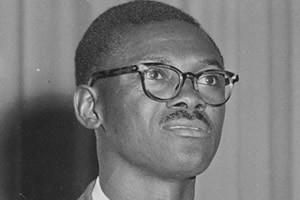
Later this year, the Belgian Parliament is due to report on the murder of the Congo's first prime minister after independence, Patrice Lumumba, in January 1961. The circumstances of Lumumba's death have been shrouded in mystery for 40 years, but as the Congo's vast mineral wealth is once again becoming a focus for imperialist rivalries, documents long hidden in official archives have been brought to light.

Last year, the BBC ran two documentaries on the tragic history of this central African state.
"Who Killed Lumumba?" was screened as part of the channel's Correspondent series.

It drew heavily on the forthcoming new book by Belgian historian Ludo de Witte ("The Murder of Lumumba", Verso Books, ISBN: 1859846181, published June 2001).

De Witte has put together the facts of the case from official Belgian archives and the documentary also used archive film footage and interviewed surviving witnesses, to show that Lumumba was murdered in a plot masterminded by Western governments.

Mobutu, from the BBC's "Storyville" documentary series, reveals how the Western powers put Joseph Sese Seko Mobutu in power after the death of Lumumba, keeping him there for 32 years while he systematically looted the country. Mobutu became the West's main Cold War ally in Africa, and the Congo formed the staging post for CIA operations against Soviet-backed African regimes.

The film reveals the very close personal and political relationship that existed between Mobutu and several Western leaders. We see film clips of Mobutu being embraced by Jacques Chirac (then President of France), and sitting next to the British Queen in the royal carriage.

For many years, until he fell out of favour at the end of the Cold War, Mobutu remained a friend of the Belgian king, but his closest friends were President George Bush (Snr) and his family. Between 1885 and 1908, some five to eight million people fell victim to King Leopold of Belgium's personal rule over the Congo, under a barbarous system of forced labour and systematic terror.

In 1959, the Belgian government finally decided to grant the Congo independence.

The first elections brought Patrice Lumumba to power as Prime Minister. But his government was an unstable coalition of regional interests, and collapsed within a week.

Sections of the army mutinied and the mineral-rich province of Katanga seceded.

"Who Killed Lumumba?" featured important new material about the Katanga secession.

Ludo de Witte has uncovered documents in the Belgian archives showing that Moise Tshombe, who led the secession, acted on orders from the Belgian government, which has always claimed that it only sent troops into Katanga to protect Belgian lives and property.

De Witte's research has shown that the Belgians plotted to dismember the Congo.

US Documents released last August reveal that President Eisenhower directly ordered the CIA to assassinate Lumumba. Minutes of an August 1960 National Security Council meeting confirm that Eisenhower told CIA chief Allen Dulles to "eliminate" Lumumba.

The official note-taker, Robert H Johnson, had told the Senate Intelligence Committee this in 1975, but no documentary evidence was previously available to back up his statement.

Larry Devlin, the CIA's man in the Congo at the time, told the BBC filmmakers how he had been told to meet "Joe from Paris", who turned out to be the CIA's chief technical officer, Dr Sidney Gottlieb.

"I recognised him as he walked towards my car," recalled Devlin, "but when he told me what they wanted done I was totally, totally taken aback."

Gottlieb gave him a tube of poisoned toothpaste, which Devlin was to smuggle into Lumumba's bathroom. He claims he never did so, because "I had never suggested assassination, nor did I believe it was advisable". Instead, "I threw it in the Congo River when its usefulness had expired."

The "usefulness" of the poison expired rather quickly because Lumumba was murdered very soon afterwards, at the hands of Belgian agents.

Eisenhower was not alone in coming to the conclusion that Lumumba must die. A British Foreign Office document from September 1960 notes the opinion of a top-ranking official, who later became the head of MI5, that, "I see only two possible solutions to the (Lumumba) problem.

"The first is the simple one of ensuring (his) removal from the scene by killing him."

What steps, if any, were taken to put this plan into action remain unknown. De Witte's work reveals the steps that the Belgian government took to remove Lumumba. Belgian military chiefs made nightly visits to Mobutu, then head of the army, and President Kasavubu, to plot Lumumba's downfall.

Colonel Louis Maliere spoke of the millions of francs he brought over for this purpose. The plot to kill Lumumba was called "Operation Barracuda" and was run by the Belgian Minister for African Affairs, Count d'Aspremont.

The Belgium government ordered Kasavubu to sack Lumumba, who turned to the new Parliament and won two votes of confidence.

Mobutu then led a coup d'état and Lumumba was placed under house arrest, from which he escaped only to be captured by troops loyal to Mobutu. Contemporary film shows UN troops standing by while Lumumba is first beaten in front of Mobutu, then paraded through the streets of Leopoldville (now Kinshasa) and finally beaten again.

When taken to Thysville prison, he almost provoked a mutiny among the guards. Count d'Aspremont ordered him to be taken to Katanga Province and certain death. On the flight there, he and two supporters - Maurice Mpolo and Joseph Okite - were beaten so badly the pilot complained the plane was in danger of crashing. All three were shot by a firing squad commanded by Belgian officers and watched by Moise Tshombe. The Belgian commander of the Katanga police force, Gerard Soete, was given the grisly job of destroying the bodies. Enlisting the support of a friend, they chopped up the corpses before dissolving them in acid. Soete recalls that they were drunk for the two days because, "We did things an animal wouldn't do."

Both these films do a valuable job in bringing to the attention of a wider audience the new evidence about Lumumba's death and in revealing the way in which the imperialist powers supported Mobutu's dictatorial regime.

However, what neither of them fully explains is why the West acted as it did. They present the assassination of Lumumba and the installation of Mobutu as simply part of the Cold War rivalry between the West and Moscow.

The central mystery of Lumumba's death remains. Why was he killed? Why was the might of at least three Western powers bent on eliminating this one man - even as he was held prisoner, reviled and beaten by his captors and was without military or political power?

Some say the answer is that he posed a threat to the West because he was a committed Pan-Africanist, and since his death he has certainly taken on the status of a Pan-African martyr.

By late 1959, Britain and America had concluded that, far from representing a threat, Pan-Africanism offered the best chance for preventing revolution in Africa. Pan-Africanists of much longer standing than Lumumba, such as Nkrumah, Kenyatta, Nyerere, Obote and Azikiwe had also come to power around this time. The experience of the Congo, with its million-strong working class - the largest on the continent outside South Africa, was a powerful factor in bringing them to that conclusion.

When strikes and demonstrations broke out in 1959, as the mineral boom ended, the Belgian government decided to grant its colony independence.

Their repressive apparatus was geared up to brutalising a divided and dispersed rural population, not an increasingly well-organised working class that was losing its local and communal loyalties.

When Lumumba showed that he could not be relied upon to control the Congolese working class, his fate was sealed. The West decided to make an example of him to the masses and to other African leaders, to show what would happen if they opposed imperialist dictates.

Mobutu, who had impressed the CIA on his brief visits to Brussels as Lumumba's secretary, was chosen as the better candidate to safeguard Western interests.

Through a mixture of brutality and political guile, Mobutu succeeded in ensuring that the Congo (renamed Zaire) did not become the flashpoint for an African socialist revolution.

Project Africa/Southern Times

Nuclear Threat or Propaganda War?

Nuclear threat or propaganda war?

Wednesday, 01 February 2012 21:07
Zimbabwe Herald

President Obama has frequently threatened Iran with "consequences" for its alleged nuclear ambitions. In his first ever State of the Union address, Obama said, "As Iran's leaders continue to ignore their obligations, there should be no doubt: they, too, will face growing consequences."

The fall of the Saddam Hussein regime in Iraq could have been a pre-occupation for the George W Bush administration, but for Israel the fall of Iraq coming without a complimentary demise of Iran was a worthless venture that failed to remove what Israel views as a "pressing danger." As Iraq continually got weakened by the disastrous effects of the 1991 Gulf War and the murderous economic sanctions regime that was coupled with the imposition of no-fly zones, Iran was growing stronger militarily and economically, recovering remarkably from the ruinous effects of the eight year war against the US-backed Saddam Hussein.

A confident Iran was seen by Israel and the US as behind the nurturing of Hezbollah in Lebanon, and Teheran's growing alliance with Syria was seen as a security threat in Israel, just like the suspected links between Iran and Hamas in the occupied Palestinian territories is viewed as a major threat "to the world order" by both the Israeli administration and Washington.

The US propaganda war against Iran that started from about 2003 has been nothing but a noticeable continuation of a similar but stronger propaganda blitz started by Israel during the 1991 Gulf crisis. Then Israel riotously rang alarm bells threatening the whole world saying Iran was only months away from developing a nuclear bomb, specifically for the purpose of not only destroying the "God-chosen nation," but indeed the whole world.

It must be noted that the genesis of Iran's nuclear program dates back to the time of the Gulf War, when Teheran openly solicited for a European partner to develop a civilian nuclear energy program, and this was a natural entitlement under the Nuclear Non-Proliferation Treaty, one would think. The United States vehemently opposed this move, threatening all European countries with all forms of punitive measures, if any one of them dared to partner Iran.

There has never been any trust between Teheran and Washington since the fall of the US-pliant Shah in 1979. From the time of Ronald Reagan it has always been politically expedient for aspiring US politicians to advocate war against Iran, and Obama's non-committal rhetorical threats are no different.

The US concerns over a nuclear Iran are nothing more than an extension of the Israeli sentiment. An Israeli political correspondent of the newspaper al-Hamishmar celebrated the murderous sanctions imposed by the West on Iraq, and he expressed his wish that "Iran needs to be treated just as Iraq (has) been."

In an interview with Daniel Leshem, a retired officer in military intelligence, Yo'av Kaspi asked how Israel and the US could launch an attack on Iran. In response, Leshem suggested that Iran was to be lured into some form of a trap - further hinting that

Mossad and the CIA could encourage Iran to do something as erroneous and disastrous as Saddam's ill-fated invasion of Kuwait - something that could justify high scale intervention from the Western coalition.

Should Iran "refrain from starting a war," Leshem suggested that there are always other options. "We should take advantage of their involvement in Islamic terrorism which already hurts the entire world," he opined. Of course there is no evidence whatsoever that Iran hasany links with terrorist groups, except when one adopts the Western line of labelling any known Iran ally "a terrorist group," the way Hamas was treated immediately after winning the 2006 Palestinian elections.

As pointed out by Aluf Benn of the Israeli publication Ha'aretz, dealing with Iran is supposed to be "the top priority" for the Israeli military. He explained: "Iran could aspire to regional hegemony and ruin the peace process by virtue of having nuclear weapons and long-range missiles, of building a modern air force and navy, of exporting terrorism and revolution and of subverting Arab secular regimes."

Stripped of the prism of Israeli security obsessions, what Benn was suggesting was a plain message that Iran could easily become a genuine military rival that could scuttle Israel's diktats and bullying tactics in the Middle East. So big was the threat of

Teheran, that Prime Minister Yitzhak Rabin and Shimon Peres, his deputy, began organising a well-orchestrated campaign against Iran through a newly formed government department named "Peace in the Middle East Department."

The department was instructed to make an official suggestion that Iran had become "a major threat to stability in the Middle East," through "its support for terror and sabotage and its attempts to become nuclearised."

Among Iran's alleged crimes was the unfounded charge of "being an exemplar not only for Islamic fundamentalists but for other resistance movements in Arab countries."

Fundamentalism is the most used word in the Israeli-US propaganda lexicon.

In true propagandistic attack, Ha'aretz dutifully once described Iran as "a danger to peace in the entire world and a threat to equilibrium between Western civilisation and Islam."

Ehud Barak concurred, adding that Iran "posed a danger to the very foundations of world order," because it "opposes the flow of oil to the developed world and because it wants to upset the cultural equilibrium between the West and Islam."

It is poignant to note that right now it is the EU that stands opposed to the flow of oil from Iran to Europe through unilateral illegal sanctions; particularly the flow to Spain and Greece, the major consumers of Iranian oil.

Iran has threatened to pre-empt the move by stopping the supplies before the six-month moratorium suggested to allow Spain and Greece time to find alternative suppliers.

Israel is paranoid about Iran getting a nuclear weapon and passing on the knowledge to Syria. It is this speculation that Israel fightsbehind the mantra of stopping Iran from "destroying the whole world."

It was a golden opportunity for Israel when the US experienced the sad but highly sensationalised 9/11 attack. Afghanistan could now easily provide a platform for a model attack to be adopted for the removal of Saddam Hussein - himself a remarkable US puppet who had apparently grown to mistake the strength of his master for his own, offering rhetorical support to Palestinians, and constantly criticising the brutalities of Israel in the region.

But Saddam Hussein was a nuisance Israel could put up with. The real threat to Israel's regional dominance has always been Iran, less for its alleged advancing nuclear technology and more for its links with the Shia Hezbollah, the Lebanese freedom fighters that triumphantly evicted the occupying Israeli army from South Lebanon in 2000, becoming an inspiring icon for Arab resistance in the region.

The 2003 invasion of Iraq was a half-backed approach to the Iran/Iraq "twin problem," as perceived by the military-minded Israel.

Weakening Iraq without doing the same to Iran is seen by Israel as an act of strengthening the hand of Teheran. Israel is still hoping that after Iraq the US and its Western allies can move in to launch an attack on Iran.

But Iraq has not been an impressive model to build another war upon. It was an embarrassing misadventure that was defined by the humiliating withdrawal of US troops who streamed out of Baghdad with crowds of Iraqis jeering in jubilation, well after nine years of unsuccessful efforts to install an effective puppet government.

Iran, Syria and Libya were mentioned as "irresponsible states" by Sharon in 2003.

He said they needed to "be disarmed of weapons of mass destruction," adding that "a successful American move in Iraq as a model will make that easier to achieve." Of course the Iraq model was nothing but a huge blatant lie that made the majority of the world hate the United States with the worst of scornful emotion humanity can ever muster. There simply was not even any sign of weapons of mass destruction in Iraq, and surely there was never any in Iran, Syria and the now destroyed Libya - just none.

Within months of Sharon's speculative suggestion, Muammar Gaddafi signed up on the side of the United States in what he and the West called "the war on terror," ditching his anti-imperialist allies like Venezuela's Chavez and Zimbabwe's Robert Mugabe. He conveniently announced that he was "not pursuing" unproven attempts at developing weapons of mass destruction. Washington promptly tasked Gaddafi with the primitive role of torturing scores of people largely kidnapped by the US on trumped up terror charges, or simply suspected of having contemplated carrying out "acts of terror."

The Al-Qaeda affiliated Libyan "terrorists" that fought to evict US-troops from Afghanistan were to become trusted allies of Washington, Paris and London in a ruthless 2011 raid on Gaddafi's Libya, with the triumvirate aggressors bombing every Libyan city to smithereens as they provided aerial cover for the advancing Al-Qaeda rebels.

This is the price that Gaddafi paid for signing up to Western allegiance, a price that culminated in his callous murder so infamously celebrated by Hillary Clinton, the US Secretary of State. She appeared on television laughing her lungs out, the way devils do in horror movies. Gaddafi became a signature addition to 50 000 Libyans bombed to abrupt death by NATO.

Israel tried in vain to torch the fires against Iran as the US invaded Iraq in 2003. Iran was portrayed as the epicentre of terrorism, as a twin problem to Iraq, the hand behind its co-religionists Hezbollah; and that is when the mantra claiming Ahmadinejad had called for Israel to "be wiped off the map" was popularised.

Syria's crimes include baseless allegations of stoking Sunni insurgency in post-invasion Iraq, assisting Iran in supplying Hezbollah with weapons, and also supporting the Palestinian cause. Israeli media repeatedly quoted Sharon suggesting to the US that Iran was "the real strategic threat," and that the US needed to deal with it "diplomatically or militarily, or both."

Columnist Nahum Barnea suggested that in the event the United States failed to deal with Iran, "Israel will have to do it alone." The point was reiterated by Uzi Benziman, a prominent Israeli media commentator. He suggested, "After the war in Iraq,

Israel will try to convince the US to direct its war on terror at Iran, Damascus and Beirut." He even hinted that there was "a good chance that America will be swayed by the Israeli argument."

It is important to note that the shift from the pretext of "war on terror" and that of "developing weapons of mass destruction" to the one of "stopping Iran from developing a nuclear weapon" is nothing based on any merit, but a blatant propaganda stint meant to evade the demerits now synonymous with the Bush lies on Iraq, as well as the hypocrisy of the latest alliance between the West and Libya's Al-Qaeda affiliates, apart from the irrelevance of the terror card after the demise of Osama bin Laden.

Israel and Washington hope that the "nuclear threat" mantra might appeal more in their scare campaign to hoodwink the world into ganging up against Iran. But it is Iran that stands untainted in this hopeless diplomatic war where it is pitted against an enemy it can convincingly label the "Great Satan."

When a pathological liar makes an accusation against a person of no known blame it is natural that listeners will burst into raucous laughter, if they do not want to take the vainglorious efforts seriously, or will be terribly disgusted if they take the appalling gesture for the tragedy it is. Africa must not be fooled into taking the Western side against other civilisations like China and Iran. We must not be dragged to stand on the side of imperialism simply because the nuclearised West claims to see nuclear weapons where nobody else does.

Africa we are one and together we will overcome. It is homeland or death!

Reason Wafawarova is a political writer based in SYDNEY, Australia

ANC Upholds Malema Suspension in South Africa

ANC upholds Malema suspension

Monday, 06 February 2012 00:00

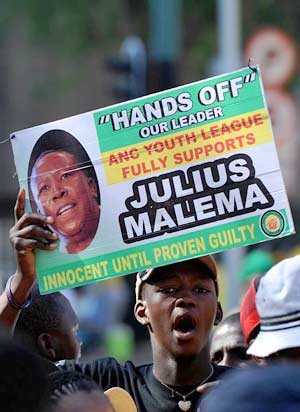
CAPE TOWN - A disciplinary appeals committee of South Africa's ruling African National Congress dismissed an appeal by Youth League leader, Julius Malema, against a charge that he brought the party into disrepute because of his comments relating to Botswana. The decision was announced by Cyril Ramaphosa, head of the committee, at a Press conference in Johannesburg on Saturday.

Malema, who has led calls for the nationalisation of South Africa's mines, was suspended by an ANC disciplinary hearing last November for indiscipline and bringing the party into disrepute. The ruling on his appeal was announced on Saturday.

The 30-year-old's controversial outbursts have seen him rise to become one of the country's highest profile and most divisive politicians as the ANC has been wracked by factionalism.

Malema was once a staunch supporter of Jacob Zuma, the president, but has more recently been seen as the public face of those perceived to be plotting against him.

Speculation has been rife that president Zuma could face a leadership challenge when the ANC holds a conference in December at which it elects its top leaders, but Malema's suspension may strengthen the president's position.

Malema's calls for the nationalisation of mines have unsettled investors in one of the world's top mining destinations, even though ANC and government officials have insisted that the youth leader's statements do not represent policy.

His comments have also put the spotlight on the high levels of poverty and youth unemployment in Africa's most advanced economy and the slow pace of economic transformation since the end of apartheid.

In reaction to the debate around nationalisation, as well as the gaping inequalities in South Africa's society and the country's urgent need to boost job creation, the ANC asked a team to look into the merits of greater state intervention in the economy.

Its findings were discussed by the ANC's National Executive Committee over the weekend ahead of a key policy conference in June.

South Africa's press has reported that the team will recommend against nationalisation, but could suggest changes to the mining sector's tax regime, while also looking at how the country can derive more benefit from its mineral wealth.

This week, mining executives will descend on Cape Town for the Mining Indaba, an important conference, against a backdrop of complaints that policy uncertainty is damaging investment confidence.

Financial Times

Zimbabwe Diamonds Share Market

Zim diamonds shake market

Monday, 06 February 2012 00:00
Takunda Maodza Senior Reporter
Zimbabwe Herald

MARANGE diamonds have brought stiff competition on the international market, causing prices to fall sharply, especially in India.

This has left traditional giants like De-beers in a quandary.

Zimbabwe Mining Development Corporation chairman Mr Godwills Masimirembwa yesterday said the development meant Zimbabwe was now a force to reckon with on the diamond market.

According to reports from India, prices of rough diamonds from De Beers and Alrosa of Russia fell last month in Surat easing up to 10 percent as a result of competition from the Zimbabwe gems.

India's Surat is the world's biggest diamond-cutting and polishing centre.

The market dominance by Zimbabwe's gems comes a few months after the Kimberley Process Certification Scheme gave Zimbabwe the green light to trade in its Marange diamonds despite resistance from the US and Europe.

But India opened up to the Marange diamonds soon after the KP allowed the country to sell its gems without hindrance at its meeting in DRC last year.

The reports said low range diamond boxes of the leading giant diamond mining companies were selling at discounted rates of up to 25 percent in Surat and Mumbai.

"Zimbabwe is set to rule the global rough diamond supply market in the next few years.

Right now, the country is offering its average goods at US$40 per carat, which is very cheap compared to other mining countries, whose diamonds are sold above US$100 per carat.

"Already, Indian cutters are aware that the Marange goods offer them best margins in the market," reported The Times of India, quoting a diamond analyst Anirudh Lidbide.

India is optimistic that Zimbabwe will influence the price and demand for rough diamonds this year in a market that was largely dominated by De Beers, Alrosa and Rio Tinto.

About 11 million carats of Marange diamonds are expected on the international market this year, ending supply shortages and price wars.

"Industry experts said Zimbabwe diamonds are expected to flow in the market in huge volumes throughout the year.

"This would further put an end to the price wars and the supply shortage experienced by Surat diamantaires post-recession," added The Times of India.

Mr Masimirembwa said: "Zimbabwe is a force to reckon with and let those who cry, cry. We are in the market and we are not getting out of it."

He was quick to state that Zimbabwe will not irresponsibly flood the market.

"We are responsible producers. We will not unnecessarily flood the market. We want the people of Zimbabwe to benefit from their diamonds.

"We will produce at that level that will make it viable for producers and generate adequate revenue for our people."

He said Zimbabwe will strive to sell its diamonds irrespective of the US embargo.

"We have a product wanted by people out there and we will sell it by all means possible.

"We are KP compliant, which is the most important thing, and we will continue to follow the KP rules but we will not be deterred by illegal sanctions," said Mr Masimirembwa.

The US administration imposed sanctions on Mbada Diamonds and Marange Resources, two major diamond miners at Chiadzwa, in a bid to frustrate Zimbabwe's efforts to sell its gems.

Maputo Threatens to Switch Off Power to Zimbabwe

Maputo threatens to switch off Zim

Monday, 06 February 2012 00:00
Reprinted From the Zimbabwe Herald

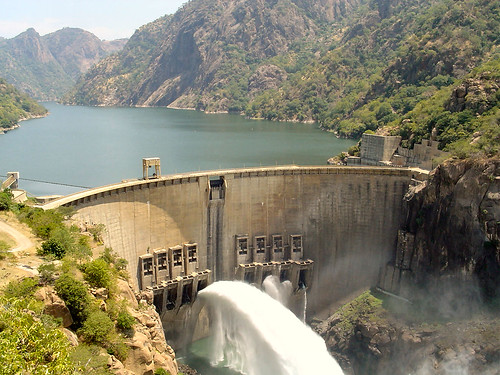
MOZAMBIQUE has threatened to cut off power supply to Zimbabwe over a US$5 million debt.
Hydro Cahora Basa supplies Zimbabwe with about 500 megawatts to cover shortfalls.

Zesa Holdings has capacity to generate between 900 megawatts and 1200 megawatts against a growing national demand of 1900 to 2200 megawatts.

To cover the shortfall, the company has been importing electricity from Mozambique and the Democratic Republic of Congo.

However, due to the shortage of capital, Zesa has had problems in repaying debts to the companies.

Local firms that were benefiting from the power imports confirmed that the Mozambican power utility had threatened to cut off supplies over the debt.

Zimbabwe's second largest platinum producer, Mimosa, said it was now working to ensure the supplies continue.

Mimosa clinched a deal with Zesa and Hwange Colliery for continuous power supply to its mines in Zvishavane.

"HCB has threatened to cut off supply to Zesa for non-payment and discussions are currently ongoing between the local power utility HCB and Mimosa management in order to arrive at a solution to this situation," the company said.

It noted that erratic power cuts have adversely affected production at the mine.

"Second quarter production performance was adversely affected by power outages as well as surface electrical breakdowns."

Mimosa also indicated that production decreased 4 percent to 577 932 tonnes last year.

Zesa spokesman Mr Fullard Gwasira, although non-committal on the debt, said demand for power was increasing and they were in the process of finding ways of boosting power generation.

"Zesa Holdings, through its subsidiary companies the Zimbabwe Power Company and the Zimbabwe Electricity Transmission and Distribution Company, are pursuing various projects and measures to boost the electricity supply situation in Zimbabwe to achieve security of power supply," he said.

Power usage in Zimbabwe is expected to grow by 29 percent this year in tandem with the steady growth in industrial capa-city.
Government estimates that the economy will grow by more than nine percent, buoyed by industrial capacity that is projected to reach around 60 percent by year end. - CAJ News.

Status of Regional Integration in Africa

Status of regional integration in Africa

Saturday, 04 February 2012 23:11
Reprinted From the Zimbabwe Herald

There has been very little or no attempt to articulate and present the status of regional integration in Africa in a way that captures the essence of numerous and diverse studies, meetings, writings and declarations by a host of actors and players in the field.

The need for such analysis has stimulated The United Nations Economic Commission for Africa (ECA) initiative to conduct a regular assessment of the process through a comprehensive status report called Annual Report on Integration in Africa (ARIA). The report was conceived to provide accurate and up-to-date information, to help to streamline actions towards the achievement of the ultimate goal of African economic and political union. Effectively knowing where we stand is a key factor affecting where we go next and where we end up.

The past two decades have witnessed a resurgence of regional economic integration groupings at a global level. The challenges of African development are compounded by the globalisation and liberalisation of the world economy, greater economic integration of financial and money markets, and a shift towards the creation of large trading and economic blocs. These developments offer not only challenges but also timely opportunities to Africa, and there is a need to broaden the concept of regionalism and to rethink Africa's regional integration strategy.

The fundamental objectives for the formation of Africa's regional economic communities (RECs) derive from the need of the member countries in such arrangements to achieve, individually and collectively, higher levels of development that would otherwise prove elusive under the autarchy approach. The treaty establishing the AEC/AU makes it very clear that the realisation of the African Union depends critically on the performance of the RECs, which are the building blocks of the continental body. Although regional co-operation and integration has been on Africa's development agenda for quite a while, this strategy, in general, produced very limited results for the African region considering the protracted efforts of governments, institutions and other players. The African economies remain largely disconnected from one another, relatively underdeveloped and most are stagnant. The overall integration process has been fraught with a number of difficulties, not least of which are the lack of a concerted approach and direction, dispersed interventions and intentions, and sometimes confused responsibilities among the myriad of players.

It came out clearly from the first ARIA assessment that a combination of factors constituted a significant drag on advancement towards integration objectives.

Major features can be summarised as follows:

Inadequate ownership and follow-up of integration at national level

Inadequate interface between the objectives and instruments of regional and overall national development framework noted. Thus, measures agreed in regional forums are rarely incorporated in national policies and plans. Their implementation at country level is therefore not carried out forcefully at the level of legislation and administration.

Low impact of trade liberalisation on intra-REC trade flows

It is striking to note that despite the efforts to liberalise trade which almost all of the RECs have been actively and extensively doing, the volume of intra-REC trade is very low. There is a high degree of concentration in the same commodities with very little product diversification. The trade facilitation, liberalisation and promotion instruments do not seem to have had a major impact in boosting intra-REC and intra-African trade. Furthermore, the investment environment has not been attractive enough to induce a significant degree of foreign investment, including indigenous cross-board flows.

Inadequate infrastructure a serious
bottleneck for physical integration

Limited infrastructure availability and networks, particularly in energy, transport and communications, emerges strongly as a key bottleneck contributing to the high cost of doing business. This undermines the competitiveness of African products domestically and internationally, and acts as a disincentive to foreign investment.

Macroeconomic policy convergence remains largely a mirage

The importance of macroeconomic policy convergence as a critical ingredient for deeper integration is given due cognisance in all the integration arrangements. Some RECs such as UEMOA and CEMAC are making significant headway on this front. Many RECs have established parameters on macroeconomic convergence to help orient their member states' efforts towards reforms and stability that ensure cohesiveness and unity of purpose.

RECs have very limited resources and capacities to handle sectoral issues
RECs are involved in many sectoral areas in which they have very little capacity, resources or comparative advantage. At best, interventions are peripheral and a lot still remains to be accomplished. Furthermore, the overlap of RECs operating within the same sub-regional spaces in Africa continues to undermine cohesiveness and unity. This has been an issue much debated and discussed. It is perhaps something that will never go and which will not be solved without hard political decisions on merging of one REC with another or closing down one in favour of the another. These are politically sensitive options.

Global exigencies add to the formidable challenges facing RECs

With the advent of the twin phenomena of world trade liberalisation and globalisation, it is obvious that the pursuit of African integration cannot ignore the exigencies of the multilateral trading system in the context of the World Trade Organisation (WTO). Openness towards world markets and removal of barriers to international trade and investment are key characteristics of the phenomena of globalisation and liberalisation of world trade. The majority of African RECs are still to be recognised by WTO in the context of the rules governing regional trading arrangements as stipulated under GATT Article XXIV. The interface between

Africa's integration agenda and the increasingly liberalising and globalising world economy needs to be adequately addressed as a priority for REC activities.
Abuja Treaty framework: A loose or strictly binding blueprint for action?

Finally, congruence between REC policies and programmes and the continental integration agenda leaves much to be desired. The REC treaties appear to take precedence over the Abuja Treaty as far as policy formulation and implementation are concerned. There are no hard and fast rules binding REC integration agendas with the continental framework. All depend on best endeavour efforts with no "supra-national" oversight authority.

The above clearly shows the need for more effort and commitment to promote regional integration as it remains the key solution to overcoming economic fragmentation and promoting economic diversification.

Ultimately, the African Union is a means of transforming the continent from a fragmented region of least developed and developing states into a strong and a unified federation of developed nations. The current emphasis on integration led the move to form the AU. The New Partnership for Africa's Development (NEPAD) is the major supporting international initiative. —www.uneca.org

Sunday, February 05, 2012

South Sudan Rebels Say They Will Release Kidnapped Chinese Workers

Sudan rebels "seeking way" to hand over abducted Chinese

Sat, Feb 4 2012

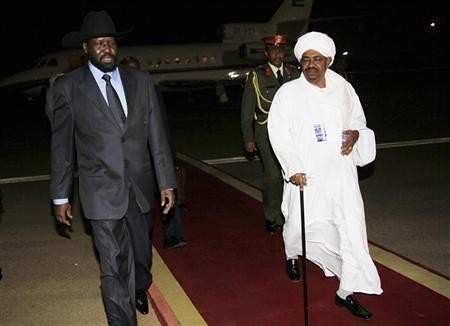
BEIJING, Feb 4 (Reuters) - Sudanese rebels said they are looking for ways to hand over 29 Chinese workers held in the border state of South Kordofan, Chinese state media said, as Sudan's government confirmed the death of one worker in a firefight.

The construction workers were captured last Saturday and are apparently being held as pawns in a dispute between Sudan and rebels allied with the newly independent and oil-rich South Sudan.

"Presently we are looking for a way ... to release these Chinese workers, set a date for their release and the party to which they are to be handed over," Arno Taloudy, a rebel spokesman, told China's state news agency Xinhua.

Chinese officials had returned to Khartoum from Juba, the capital of South Sudan, and had been urging the rebels through "various channels" to release the workers, beginning with two women being held, Xinhua reported late on Friday.

The case marks the third abduction of Chinese in Sudan since 2004 and highlights the risks to China's expanding economic footprint in Africa, particularly in troublespots often shunned by Western companies.

On Wednesday, China secured the release of two dozen Chinese cement factory workers who were kidnapped in Egypt's Sinai Peninsula, a day after being taken hostage by Bedouin tribesmen, Chinese and Egyptian media reported.

Beijing is facing immense pressure to secure the safe return of the workers. State-owned newspapers have called for more protection for its overseas workers as the world's second-largest economy expands its investments around the globe.

One worker, previously said to be missing after rescuers came under attack, had been killed by a stray bullet, a Sudanese official said, according to the mouthpiece of China's ruling Communist Party, the People's Daily.

The official said the body could not be recovered because the area was riddled with land mines, but that authorities had made an "initial determination" of the location of the other Chinese workers, as well as seven Sudanese also captured.

An earlier account from Xinhua quoted the Chinese embassy in Sudan as saying rebels from the Sudan People's Liberation Movement-North (SPLM-N) attacked a total of 47 Chinese workers last Saturday.

Eighteen managed to flee the scene of the attack and all but one of those were taken to safety after the rescue attempt on Sunday. One worker from that group, now dead, had been shot and deemed missing.

Abdalla Masar, a Sudanese government spokesman, told Xinhua that Sudan had not received terms for release and had had no communication with the rebels.

"We never deal with this movement because it is illegal and outlawed," he said.

Sudan and South Sudan, which seceded in July, are at odds over issues including oil revenues. Each accuses the other of supporting insurgencies.

China has sought to maintain good relations with Sudan, a long-time ally, and South Sudan, home to investments by state-owned Chinese oil giants China National Petroleum Corp and Sinopec. (Reporting by Michael Martina and Sabrina Mao; Editing by Nick Macfie)

Police Clear DC Occupy Site, Following Nationwide Pattern of Repression

Police clear DC Occupy site, protesters look to a new day

7:35pm EST
By Lily Kuo

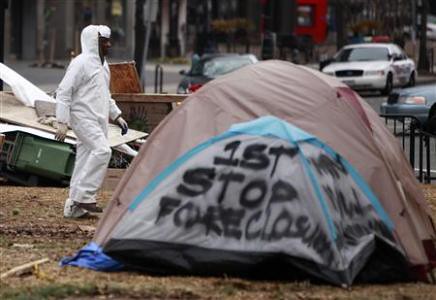
WASHINGTON (Reuters) - U.S. police officers cleared tents from an "Occupy" protest site in downtown Washington on Sunday, but demonstrators said even without the camp they would continue to fight for economic equality and other issues.

About two dozen protesters in Freedom Plaza, just blocks from the White House, watched calmly as the National Park police and sanitation workers in hazmat suits dismantled protesters' tents, packed bedding and personal belongings into plastic bags and cardboard boxes, citing violations of rules against living in the park. Police cruisers, police officers outfitted with shields and riot gear, and an armored vehicle waited on the outskirts of the plaza.

The National Park Service, which tends the grounds where the protesters have camped, issued a series of warnings to protesters after coming under pressure from U.S. lawmakers and city officials who cited unsanitary conditions and the cost of policing. The Park Service bans camping in Freedom Plaza and at another nearby site cleared by the police on Saturday.

Since October, more than 100 protesters allied with the Occupy Wall Street movement have taken over public grounds near the White House to protest the country's growing income gap, war and what they see as corporate corruption of democracy.

The police crackdown in Washington comes after police moved to disband other Occupy sites in Texas, Florida, and North Carolina. Some see the movement as dwindling since it was first sparked by protests in New York's Zuccotti Park in September.

In Washington, one protester sat cross-legged on the ground, holding a sign painted with the words, "Imagine Peace" while a group of women chanted, "This occupation is not leaving." A man handed out pins in the shape of ivy branches, symbolizing regrowth.

"Fall back, regroup, and fight another day," said Mike Sheffer, 54, who traveled from Vermont to be part of the anti-war demonstration in Freedom Plaza that kicked off the encampment in October. "The reasons why we came here haven't changed."

Protesters who were cleared out from a second Occupy site a few blocks from the White House returned on Sunday to a muddied, empty park.

They debated ways to continue their movement through community organizing and keeping a presence in the park, possibly by sleeping on sidewalks. In a statement issued Sunday, the group said: "This occupation is far from over. They can't evict an idea whose time has come."

On Saturday, dozens of U.S. Park Police cleared that location in a day-long operation, clashing with protesters. Sanitation workers removed tents, urine-soaked bedding and dead rodents from the park, police said.

On Sunday, only a handful of empty tents and a few scattered signs remained.

The police emphasized that the protesters can still demonstrate in the park as part of their constitutional right to free speech. They can maintain 24-hour vigils and use tents as part of their demonstration, but not for accommodation, U.S. Park Police spokesman Sergeant David Schlosser said.

"This is absolutely not an eviction," he said. "This is strictly a compliance issue."

(Reporting By Lily Kuo; Editing by Stacey Joyce)

U.S. Steps Up Pressure to Overthrow Syrian Government

U.S. Steps Up Pressure to Oust Assad

Clinton Calls for Coalition to Force Syria's Leader from Power, Says Russia-China Veto Lifts Chances for a 'Brutal Civil War

By CHARLES LEVINSON
Wall Street Journal

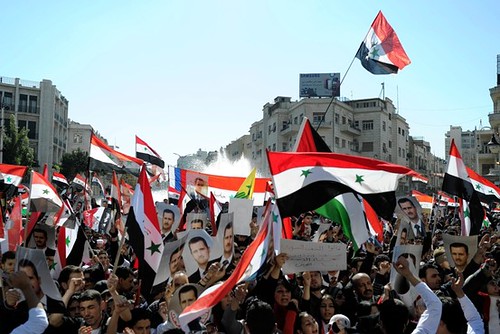
CAIRO—The U.S. called for a new international coalition to drive Syrian President Bashar al-Assad from power and end an 11-month uprising that looks poised to enter its bloodiest phase yet.

Government supporters attended a rally in Damascus to demand an end to unrest in the country. Another 30 civilians were killed in Syria on Sunday, a human-rights group said.
.Syria's opposition on Sunday said it had little choice left but an all-out armed struggle against the regime after Russia and China vetoed a United Nations resolution calling on Mr. Assad to step aside.

Damascus, meanwhile, appeared emboldened by the diplomatic support—cracking down harshly against opposition forces over the weekend—and is vowing to press on with its offensive.

The veto left Washington, European and Arab states grappling for an alternate plan, as U.S. Secretary of State Hillary Clinton on Sunday called the failure to pass the U.N. resolution a "travesty" and predicted it "will actually increase the chances for a brutal civil war."

She called for an international coalition to form a "friends of democratic Syria" group to ramp up pressure to force Mr. Assad from power by stiffening sanctions, working to cut off funding and arms shipments to the regime, and channeling humanitarian aide to besieged communities

"Faced with a neutered Security Council, we have to redouble our efforts outside of the United Nations with those allies and partners who support the Syrian people's right to have a better future," Mrs. Clinton said during a visit to Sofia, Bulgaria on Sunday.

With military involvement unlikely and diplomacy so far unsuccessful, Washington and its allies appear to have limited options for how to end the conflict.

The sort of coalition described Mrs. Clinton is unlikely to have much impact on the ground in Syria any time soon, analysts said.

Instead, it looks increasingly that Syria's rebel fighters will enter an increasingly violent and sectarian battle with the regime, say analysts and officials.

Before Saturday's vote, the opposition had an incentive to display peaceful resistance to try to draw in the U.N., while the regime, too, was motivated to restrain itself to hold off any U.N. resolution, said analysts.

"Now both sides are likely to move quickly toward a bloodier showdown," said Theodore Karasik, an analyst with the Institute for Near East and Gulf Military Analysis.

Indeed, the commander of rebel Syrian soldiers, known as the Free Syrian Army, told the Associated Press on Sunday that the only choice left was to oust Mr. Assad by force. "There is no other road," the commander, Col. Riad al-Asaad said.

The deadly shelling of Homs just before the U.N. vote on Saturday morning, which activists said left more than 200 people dead in one of the most violent episodes yet, may be an early taste of what is to come as a strained loyalist army struggles to quash a spreading rebellion.

On Sunday, rebel operations against Syrian forces killed 28 soldiers, most of them in the restive northern province of Idlib, said the Syrian Observatory for Human Rights, a U.K.-based opposition group. Syrian forces, meanwhile, killed 30 civilians, most of them dying in continued fighting in Homs, the group said.

More than 5,400 people have been killed in the Syrian conflict since March, says the U.N.

Though the regime has proved resilient and remains firmly entrenched in power in Damascus and other pockets of Syria, army defections, spreading unrest and international isolation appear to be wearing it down. Syrian security forces have proved in recent weeks that they can reclaim territory from rebel forces, but that they can't hold on to it once unrest sprouts elsewhere.

Mr. Assad's forces appear to be increasingly resorting to a brutal game of whack-a-mole by relying on increasingly heavy weaponry, said Andrew Tabler, a Syrian expert at the Washington Institute for Near Policy, referring to the carnival game where players bash a mole which rears its head from one hole, only to see it pop up from another.

Meanwhile, neighboring countries with stakes in Syria are seen stepping up financial or military support to one side or the other in the conflict.

The Western-allied Persian Gulf monarchies are increasingly assertive in trying to shape the region, even resorting to military action in Libya, after what they perceive to be gains by Iran in Iraq and elsewhere in the Middle East. They are eager to deliver a setback to Iran by helping topple the Assad regime, analyst say.

Turkey's government said the Russian and Chinese vetoes were "deplorable," while deputy Prime Minister Bulent Arinc said Ankara "could not just stand by and look" as violence intensified in Syria. Local press reported that the government was considering military intervention to help quell the violence, though state-run Anatolian News Agency said the foreign ministry denied it.

Turkey's government has previously floated the idea of setting up a "buffer zone" inside Syrian territory if fighting prompted refugees to flee toward Turkish territory, compromising national security. Ankara has stressed it wouldn't take such a step without U.N. backing.

"What's going to happen now is everyone is going to back whoever they want to back, with the Iranians and the Russians backing the regime, and the Turks and the Arabs betting on their guys in the opposition," Mr. Tabler said. "There is too much strategically at stake in Syria."

So far, Syria's rebel fighters appear to have obtained the majority of arms from inside Syria, or from gray arms markets in surrounding countries such as Jordan, Turkey, Lebanon and Iraq, according to analysts and officials. A major rise in arms shipments to Syria's rebels could set the conflict on an unpredictable course.

The Free Syrian Army is an army in name only. It is mostly a hodgepodge of local fighting groups with no clear chain of command, meaning it could prove difficult to rein in if Mr. Assad is driven from power, these people say. It also makes it difficult to pin down who should receive any arms.

"Clearly this force is not yet organized enough, or have any identifiable leadership that can easily be accessed by foreign powers," said Ayham Kamel, a Syria analyst at the Eurasia Group, a New York-based political risk consultancy. "It's just not clear how, or who you would want to support at this point. I don't think anyone has a clear picture in Turkey, Saudi Arabia or Qatar, on how to do this in a clear and strategic manner."

The best short-term hope for bringing resolution to the conflict may still lie with the Russians, who are dispatching Foreign Minister Sergei Lavrov to Damascus on Tuesday to meet with Mr. Assad.

Western officials say they don't know what message Mr. Lavrov will relay to Mr. Assad, but note that Russia's veto has handed it a diplomatic beating in recent days that could cost it lucrative business contracts in Qatar and other Gulf countries.

Russia has strong economic and military ties to Syria, and is Moscow's last Middle East ally. The Russian refusal to budge has played well with supporters of Russian President Vladimir Putin, who has cast it as a refusal to bend to Western pressure or sell out friends.

Russian diplomats have made scant efforts to meet with Syrian opposition figures and Moscow seems to accept Damascus' portrayal of the opposition as a group of armed criminal gangs, according to a Western official familiar with the Russian thinking.

Moscow, meanwhile, also harbors deep concerns about Islamists in the Syrian rebel ranks drawn from their experience fighting Islamist militants in the Caucasus, this official said. Russia and China both also likely fear the U.N. vote could set a precedent for U.N. and international intervention in their own internal disputes.

The official said that, despite the veto, Russia does appear to be growing impatient with Mr. Assad, and expressed hope that Moscow may be prepared to push its own transition plan during Mr. Lavrov's visit on Tuesday.

China's vote, meanwhile, appeared to find supporters and detractors in roughly equal numbers on China's popular Twitter-like microblogging site Sina Weibo, where "Syria" was among the top 10 most-searched terms late Sunday night.

In an unscientific user-generated poll that had attracted roughly 2,000 votes by Sunday night, 47% said they supported China and Russia vetoing the resolution while 44% said they opposed it. The rest where undecided.

Among those who supported the vote, many expressed satisfaction that China had decided to stand up to the rest of the Security Council rather than simply abstain from voting.

—Joe Parkinson in Istanbul, Bill Spindle in Dubai, Jay Solomon in Washington, Greg White in Moscow and Josh Chin in Beijing contributed to this article.

Write to Charles Levinson at Charles.Levinson@wsj.com

Section of Egypt-Israel Pipeline Blown Up

Section of Egypt-Israel pipeline blown up

Sun Feb 5, 2012 2:37AM GMT
presstv.ir

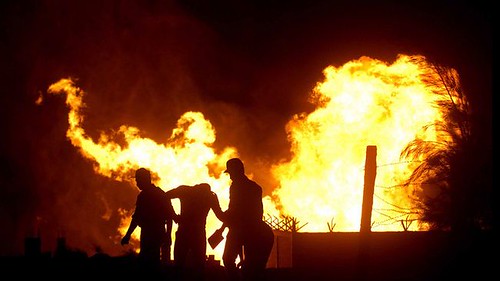
A section of an Egyptian pipeline supplying gas to Israel has been blown up in a bomb attack in the twelfth assault on the energy route over the past 12 months.

Egyptian security officials said several masked saboteurs planted explosives under a section of the pipeline located around 60 kilometers (about 40 miles) west of the town of al-Arish in the north of the Sinai Peninsula in the early hours of Sunday morning.

Witnesses said they heard a very loud explosion before a large fire broke out.

Emergency services workers rushed to the scene to contain the blaze. There were no immediate reports of casualties.

According to the results of an opinion poll conducted by Synovate for Press TV and published on October 3, 2011, an overwhelming majority of Egyptians oppose the terms of the country's gas deal with the Israeli regime.

In the poll, seventy-three percent of the respondents said they were opposed to gas exports to Israel. Only 9 percent said they approved of Egypt supplying gas to Israel, and 12 percent had no opinion.

For Egyptians, the issue of supplying gas to Israel has always been a contentious one. Egyptians view Israel as an enemy and oppose engaging in any form of business with the regime.

Egypt had to agree to supply gas to Israel as one of the main economic conditions of the US-sponsored 1979 peace treaty between the two sides.

According to a $2.5 billion export deal with Tel Aviv, signed in 2005, Israel receives around 40 percent of its gas supply from Egypt at an extremely low price.

Kenya Claims Bombing of Somalia Resistance Fighters

Sat, Feb 4 2012

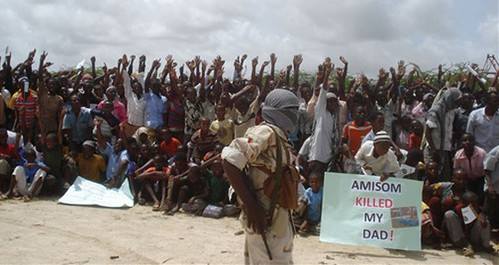
NAIROBI (Reuters) - Kenya's military has struck al Shabaab targets in one of the most devastating attacks against the al Qaeda-linked insurgents since it launched an operation in Somalia to crush the rebels last October, a Kenyan army officer said on Saturday.

Colonel Cyrus Oguna said two helicopter gunships hit a convoy of al Shabaab in Dalayat village in southern Somalia on Friday evening, following intelligence that the fighters were planning to attack Kenyan forces in nearby Bhadhadhe.

"This is one of the best attacks yet ever because we got them in their vehicles before they could disembark. Several al Shabaab were killed and many more injured," Oguna told a news conference.

Military spokesman Emmanuel Chirchir said the force estimated that more than 100 al Shabaab fighters were killed in the attack.

Oguna said nine vehicles mounted with weapons, known locally as "Technicals," and nine lorries were destroyed in the attack. There were no Kenyan casualties, he said.

Kenya began its military campaign against the rebels in southern Somalia after a series of cross-border raids by al Shabaab against targets on Kenyan soil, which threatened the east African nation's tourism business.

Al Shabaab dismissed the military statements as propaganda.

"Kenya has not destroyed or even attacked al Shabaab strongholds. It is propaganda" Sheikh Abdiasis Abu Musab, al Shabaab's spokesman, told Reuters.

The rebels said they attacked a convoy of Somali government troops on Saturday morning, near the border and close to El Wak town on the Kenyan side.

"We ambushed Somali troops near El Wak town today, then we fought them and killed one of their soldiers," Abu Musab said.

Hospital sources on the Kenyan side confirmed they were treating injured Somali soldiers after the attack.

It was not immediately clear if Kenyan troops, who are fighting alongside their Somali government counterparts, were in the convoy. It was also not immediately clear if al Shabaab suffered casualties in the ambush.

Oguna said the capture of Bhadhadhe and Hosungow town, which was also taken this week, would remove sources of revenue for the rebels because they were used for trafficking goods.

"We expect to see more ground being ceded by al Shabaab because they are weakened," he said.

The campaign against the rebels in the south, together with another by an African Union force in the capital Mogadishu, are aimed at stabilizing Somalia after two decades without an effective central government.

(Reporting by Duncan Miriri; Additional reporting by Feisal Omar in Mogadishu and Noor Ali in Isiolo)

Saturday, February 04, 2012

Zimbabwe News Update: Pathologists Differ on Retired General Mujuru's Death

Pathologists differ on Mujuru

Saturday, 04 February 2012 00:00
Innocent Ruwende Senior Reporter
Zimbabwe Herald

GENERAL Solomon Mujuru was alive when fire gutted his farmhouse and might have died from inhaling carbon monoxide, a local pathologist said yesterday. However, a South African pathologist hired by the Mujuru family said the autopsy was not adequately and professionally done.

The 36th witness in the inquest, Dr Gabriel Aguero-Gonzalez, who is part of the Cuban doctors' brigade who spoke in Spanish with Mr Lovemore Gwata interpreting, said the presence of carbon monoxide in Gen Mujuru's trachea showed that he inhaled the gas while he was still alive.

The pathologist, who has 29 years experience, concluded that Gen Mujuru died due to open fire whose origins were not known.

The Mujuru pathologist, Dr Reggie Perumel - through the family's lawyer Mr Thakor Kewada - argued that the post-mortem was not done properly because the local pathologist did not carry out an X-ray, examine skeleton structures, investigate the identity of the person and come up with the real cause of death.

He says the autopsy did not exclude traumatic death.

In his evidence-in-chief, Dr Aguero-Gonzalez, who has worked at Harare Central Hospital and Parirenyatwa for the past seven months, said on August 16 this year he was called by Inspector Viano at around 8am and told that a retired army general had died at his farm in Beatrice.

He said they got to Ruzambo Farm at around 9:30am and upon arrival, he saw people gathered outside the house.

Dr Aguero-Gonzalez said he was introduced to some policemen before he went to the spot where the remains of Gen Mujuru were in the company of Insp Viano who acted as an interpreter.

"We found the body was completely carbonised and burnt, it was partially covered with a cloth and we removed it completely.

"We found that the body was lying with the face looking downwards, part of the hand was under his chest and legs were spread apart," he said.

The expert said they tried to move the remains, but they were badly burnt and they realised that some of the parts were shifting.

"Taking into account the state of the body we decided that it should be carried to a place where an examination would be carried properly.

"I instructed them (police) to carry the body, ash and anything around it and in such a way that they did not disturb it," he said.

Asked what he meant by appropriate place by Mrs Sharon Fero of the Attorney-General's Office, he said the mortuary.

He said he did not state any specific place, but "we discussed that the body be taken to Parirenyatwa but taking into account the person (Gen Mujuru) they agreed that he be taken to a place where there were no other bodies".

The doctor said he was told that Gen Mujuru was to be taken to One Commando Barracks, which was a quiet place because it was a military place.

He said he accompanied the remains to One Commando Barracks.

The pathologist said they waited for some time for the mortuary to be adjusted into suitable conditions and their first challenge was that there were no instruments to examine the remains.

"Insp Viano went to Parirenyatwa and brought some tools we wanted," he said.

He said the tools were not adequate, but this could not affect the examination.

"We started by looking at the skull and observed that parts of the skull had broken due to the intensity of the heat. We did not see anything that was not normal on the skull, on the chest and abdomen it looked like the skins were open as a result of the fire," he said.

Dr Aguero-Gonzalez said some parts which include the walls of the abdomen were missing.

Asked if he established what happened, he said considering the way he found the body, he suspected that they might have been burnt.

He said the internal anatomy of the body was burnt and they could not find them.

Dr Aguero-Gonzalez said the body was stiff, but there was no indication that it was hurt.

Asked if it was possible to detect injuries with the state of the body, he said it was difficult but not impossible.

The doctor said some parts of the body were burnt to ashes.

He said there was carbon in the trachea, which was black and also dark blood and they cleaned the trachea to find out what it looked like without the carbon.

They also looked at the lungs and saw that they were badly burnt.

He said the presence of carbon monoxide in the trachea showed the General was alive when the fire started and he inhaled the carbon monoxide.

He said the stomach was burnt and destroyed while the teeth were affected by the fire and became fragile.

The pathologist said the aesophagus was destroyed by the fire.

Asked what the cause of death was, he said: "We concluded that death was caused by inhaling gases after fire broke out."

He said the type of gas inhaled was carbon monoxide.

"We could not establish completely that the inhalation of gases is the main cause of death because we did not have sufficient tools to come to that conclusion.

"We are taking into consideration that we were not able to study blood samples given the state of the body," he said.

He said if the quantity of carbon monoxide was not high, a person could be intoxicated or become unconscious but if it is high a person dies.

Asked by Mr Kewada if he was a registered medical practitioner in Zimbabwe, Dr Ageuro-Gonzalez said he was part of the Cuban medical brigade serving in the country.

He contended that they carried out a proper post-mortem.

However, he said an X-ray was one of the things to be carried out in an autopsy but it was not possible for him to carry out one because they did not have the equipment.

Mr Kewada suggested to him that a proper autopsy is carried out by removing body parts and examining each part individually and he said it was inconvenient in the case given the state of the body.

The Cuban doctor said they did not cut the skull because it would break into pieces.

Asked how he was going to see internal injuries if they did not open the skull, he said there could not be such injuries in the absence of external ones.

He said the brain was damaged by the fire hence he could not examine it.

The pathologist conceded that he saw a ring on Gen Mujuru's left finger, but he does not know what happened to it.

He said they could not remove teeth to check for DNA because they were fragile as a result of heat and it was not necessary at the time since everyone was convinced that the body was that of Gen Mujuru.

He said they later took the samples after doubts emerged.

Asked how he could tell that Gen Mujuru was alive when fire broke out he responded: "How then did he inhale the carbon monoxide."

He said he concluded that it was carbon monoxide because of the colouring that was a product of incomplete combustion when quizzed how he reached the conclusion.

Quizzed further, he said that he was not saying that death was caused by the inhalation of carbon monoxide, but it was a vital point.

He said there was, however, no doubt that Gen Mujuru inhaled carbon monoxide.

Mr Kewada suggested that his expert (Dr Perumel) disagrees that there was no blood to test for the presence of carbon monoxide.
Dr Ageuro-Gonzalez said the blood was contaminated.

Mr Kewada also suggested that Dr Perumel said it was not possible for the stomach to be destroyed considering that the General was lying facing downwards.

He also suggested that it was not possible because the carpet beneath was protected.

Dr Ageuro-Gonzalez said the intestines got out and were burnt and the kidneys were burnt, an assertion doubted by Mr Perumel who said kidneys are found in a protected area.

Mr Kewada said Dr Perumel feels the post-mortem was not properly conducted and the cause of death could not be ascertained in the absence of an X-ray, skeleton structure and brain examinations.

He said the doctor should have differentiated between injuries and heat by separating muscles from bones, adding that he could tell whether there were gunshots or wounds.

"The conclusion is my expert feels that the autopsy was not adequately and professionally done," he said.

The Cuban doctor maintained the autopsy was professionally done.

Mr Kewada submitted that if his expert was to give meaningful evidence, the body has to be exhumed but presiding magistrate, Mr Walter Chikwanha said exhumation had nothing to do with the inquest.

Mr Chikwanha said he needed to go through Dr Perumel's statement before he makes a decision to call him as a witness.

Mr Clemence Chimbare of the AG's Office said Vice President Joice Mujuru was the outstanding witness before agreeing that her evidence be accepted as part of the docket without her testifying.

Mr Chikwanha deferred the proceedings to Monday when he is expected to rule on whether or not to call Dr Perumel.

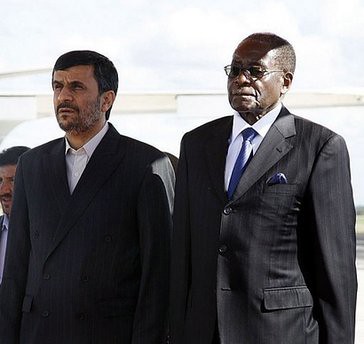
Zimbabwe, Iran to Strengthen Relations

Zim, Iran to strengthen relations

Saturday, 04 February 2012 00:00
Farirai Machivenyika Herald Reporter

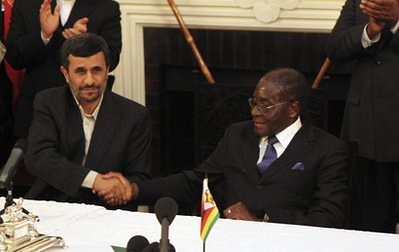
TWO visiting Iranian high-ranking officials have pledged to strengthen ties between their country and Zimbabwe. Iranian Vice President responsible for Management and Human Capital Development Dr Lotfollah Forouzandeh Dehkurdi yesterday paid a courtesy call on Vice President John Nkomo at his Munhumutapa Offices.

He said Iran will assist Zimbabwe in human resources management through scholarships.

He was accompanied by Iran's Acting vice president for international affairs Mr Behzad Sheikh and Iran's Ambassador to Zimbabwe Mohammad Pournajaf.

Speaking in an interview through Ambassador Pournajaf after the meeting, Dr Dehkurdi said Iran and Zimbabwe shared cordial relations.

"The Islamic Republic of Iran and Zimbabwe have profound relations and our meeting emphasised deepening of relations between the two countries and the implementation of various Memoranda of Understanding and agreed points," he said.

Dr Dehkurdi pledged to assist Zimbabwe with human resources development through scholarships for locals to study in Iran.

He said Zimbabwe and Iran faced similar challenges, especially attacks by the West saying Zimbabweans had the capacity to develop their country.

"Iran and Zimbabwe have shown resistance to global arrogance and only indigenous knowledge should provide basis for Zimbabwe's development," he said.

Zimbabwe has been slapped with illegal sanctions by the West for embarking on land reform to correct colonial imbalances in land ownership.

The West imposed the sanctions under the guise of alleged human rights violations.

Iran has been slapped with UN sanctions at the instigation of the US, Britain and their allies over its nuclear programme.

The West claims Iran intends to develop nuclear weapons although various inspections by the International Atomic Energy Agency have failed to substantiate these claims.

The US and EU have also imposed illegal sanctions on Iran.

Iranian Cleric Delivers Major Address Amid Israel and US Threats

Iranian Religious Leader Delivers Speech

TEHRAN, Iran — A fiery anti-Israel speech by Iranian leader Ayatollah Ali Khamenei, delivered shortly after a successful Iranian satellite launch, added to growing global tensions Friday, as Israel warned it might mount a pre-emptive strike against the Islamic republic's nuclear facilities despite U.S. objections.

"From now onward, we will support and help any nations, any groups fighting against the Zionist regime across the world, and we are not afraid of declaring this," Khamenei said during a rare Friday prayer lecture at Tehran University.

Most of Khamenei's rhetoric was not new. But the timing and setting of his speech hardened a standoff that some analysts say has the potential to spark military action. Such a development would disrupt the international coalition that has emerged to confront Iran over its nuclear program and jeopardize oil markets and the fragile global economy.

The Obama administration is increasingly concerned Israel will strike Iranian nuclear facilities in the coming months. The administration also has repeatedly refused to rule out U.S. military action as a last resort.

Israeli leaders delivered blunt new warnings Thursday about what they called the need to stop Iran's nuclear program. Israel, the U.S. and their allies fear Iran could use its uranium-enrichment labs — which make nuclear fuel — to eventually produce weapons-grade material. Iran insists it seeks reactors only for energy and medical research.

Khamenei's speech, which comes ahead of a planned resumption of nuclear talks with the West, exemplified his view of Iran as the flag-bearer in battles against the "arrogant powers," a term used in Iranian political discourse to describe the United States and its allies.

U.S. and European sanctions, Khamenei said, are helping Iran to develop and will never succeed in halting the country's nuclear-enrichment program. "These sanctions are aimed at making Iran back down, but Iran will not back down," he said.

Khamenei's tone Friday differed from that struck recently by President Mahmoud Ahmadinejad, who said last month that Iran is ready for talks with the West.

While Khamenei did not mention the upcoming nuclear discussions, he made clear that compromises, such as suspending uranium enrichment, are not on the table. Iran has the upper hand in its standoff with the West, he indicated, because its opponents are "fading powers."

Khamenei also said Israel has become "weakened and isolated" in the Middle East because of the revolutions — he called them "Islamic awakenings" — that have spread through the region.

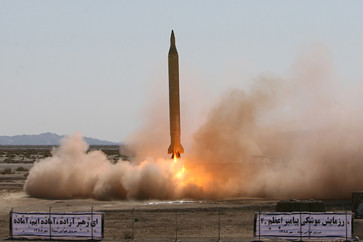
Khamenei's speech came hours after Iran's state-run media reported the country had launched a small satellite into space, carried by a homemade rocket.

The launch, planned and announced months ago, is part of a series of festivities celebrating the 33rd anniversary of Iran's Islamic Revolution, which culminated in the collapse of the monarchy Feb. 11, 1979.

State-run television reported the microsatellite carries camera and telecommunication devices and was designed and manufactured in Iran. It is the third small satellite Iran has built and launched in the past few years.

Material from The Associated Press is included in this report.

Fresh Clashes Erupt in Egypt's City of Suez

Fresh clashes erupt in Egypt's city of Suez

Fri Feb 3, 2012 2:53PM GMT
presstv.ir

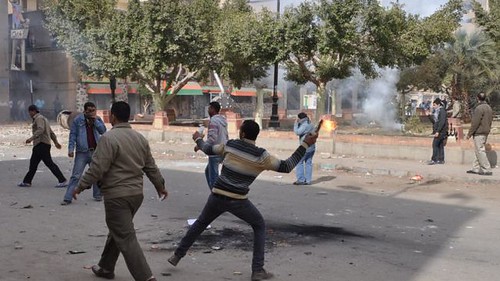
Fresh protests have erupted in Egypt's eastern city of Suez, with police forces using tear gas to disperse the crowd, after overnight clashes that claimed the lives of two people.

Police forces fired birdshot and tear gas to disperse angry protesters in Suez on Friday with the injured being ferried out of the city's central al-Arbaeen Square.

The new outbreak of violence comes amid general outrage across Egypt over football-related clashes that left scores of people dead on Wednesday.

The incident occurred when deadly clashes broke out in the northern city of Port Said between fans of home team al-Masry and Cairo's leading club al-Ahly after the visitors were beaten 3-1.

Fans stormed the pitch after the game and clashed with each other. At least 74 people died and more than a thousand were injured in the mayhem.

The ongoing protests continue on the second day of a public show of anger over what people view as the deadly mismanagement of the country's critical post-revolution period by the ruling military junta.

On Thursday, two protesters were shot dead during clashes with police and more than 30 people were injured after police used live rounds on angry protesters who refused to disperse despite clouds of tear gas.

In Cairo, one person was killed in clashes between the police and angry protesters who demonstrated in front of the interior ministry in the city center and pelted security forces with stones.

Friday, February 03, 2012

South African E.TV to Fight Fine Over Airing Gaddafi Lynching

SA Time: Saturday, February 04, 2012 3:53:47 AM

Gaddafi scenes: e.tv to fight R35 000 fine

February 3 2012 at 01:07pm
By STAFF REPORTER

TV channel e.tv has vowed to appeal against its R35 000 fine from the Broadcasting Complaints Commission of South Africa (BCCSA) for airing graphic footage of Muammar Gaddafi’s death on their news channel.

The BCCSA said scenes of the brutal attack on the late Libyan dictator, aired in October on e.tv’s eNews channel, was “violent” and contravened the code by
broadcasting “unnecessary detail” of the incident.

It also said the news service was in contravention of the subscription code clause because the channel had failed to show an advisory warning before the images were shown.

A fine of R10 000 was payable. The remaining R25 000 was for fines of R5 000 for each of the five time slots aired on October 22, during which scenes of the attack were repeated.

The channel has also been ordered to air the BCCSA’s finding on the footage before the end of this month.

Patrick Conroy, head of e.tv news, took to Twitter to explain the channel’s next move: “@eNewsChannel and e.TV reviewing BCCSA #Gaddafi ruling with our lawyers. Plan to appeal. Will not be commenting further ahead of appeal.”

janis.kinnear@inl.co.za - Cape Argus

Unmanned Drone Falls on IDP Camp in Somalia

Friday, February 3rd, 2012
06:44 pm

SOMALIA: Unmanned drone fell down in Mogadishu

By Abdalle Ahmed

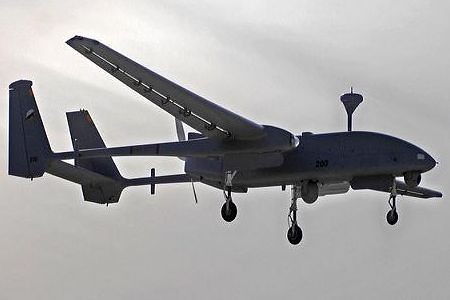
Mogadishu (RBC) Unmanned drone, which is thought to be American surveillance drones has fell down today on Friday in part of Somalia capital Mogadishu, residents told RBC Radio.

The unmanned drone knocked down at Badbado IDP camp which is on Dharkenley district, south of Mogadishu.

“It was this noon, we saw a white small aircraft flying over our camp and in minutes we saw it fell down here”, Ahmed Abdi a resident in Badbado IDP camp told RBC Radio.

No one was hurt at the crash.

Somalia government officials and the African Union forces [AMISOM] reached the camp who then took the crashed drone.

“After we realized that this was a drone we just called the government. They came and took it”, Nafisa Ali, health officer at Badbado camp also told RBC Radio.

There was no immediate comment from Somali government security and the AMISOM command. But local sources insist that the drone was belonged to United States.

It is the second drone crash in Mogadishu in three months time.

Last year Washington declared that it has set up new base for its surveillance drones in the neighboring Ethiopia.


Surveillance drone crashes in refugee camp in Somali capital, African Union soldiers remove weapon

By Associated Press, Updated: Friday, February 3, 6:43 AM

MOGADISHU, Somalia — Witnesses say a surveillance drone has crashed into a refugee camp in the Somali capital.

Drones have been used by the U.S. to attack or observe al-Qaida-linked militants in the Horn of Africa nation.

Refugees and soldiers in Mogadishu’s Badbado camp say they watched the drone crash Friday into a hut made of sticks, corrugated cans and plastic bags.

Sacdiyo Sheikh Madar, a refugee at the camp, says African Union peacekeepers came to remove it.

Police officer Ali Hussein says the drone was shaped like a small plane. A similar drone crashed into a house in Mogadishu last year.

John Hardy, Freedom Rider & SNCC Organizer, to Speak at MECAWI/Moratorium NOW! Meeting on Mon., Feb. 6, 7:00-9:00pm

For Immediate Release

Media Advisory

Event: Moratorium NOW! Coalition & MECAWI Weekly Meeting, Feb. 6, 7:00pm
Guest Speaker: John Hardy, Veteran Freedom Rider and SNCC Organizer, (1960-1963)
Location: 5920 Second Ave. Near Antoinettee, North of WSU Campus
Contact: 313-671-3715 or 680-5508
E-mail: panafnewswire@yahoo.com
Admission: Free and Open to the General Public

Veteran Freedom Rider, SNCC Organizer, John Hardy to Speak at MECAWI/Moratorium NOW! Coalition Weekly Meeting

The Michigan Emergency Committee Against War & Injustice (MECAWI) and the Moratorium NOW! Coalition to Stop Foreclosures, Evictions and Utility Shut-offs will hold its regular weekly meeting this Monday, February 6 from 7:00-9:00pm. This week's meeting will honor African American History Month with a talk and powerpoint presentation from John Hardy, a Detroit resident who was a leading figure in the Freedom Rides of 1961 and an organizer for the Student Nonviolent Coordinating Committee (SNCC) between 1960-63.

SNCC was the vanguard organization of the civil rights movement of the 1960s. Its organizers took over coordination of the Freedom Rides in May 1961 after the bombing of the Greyhound bus in Anniston, Alabama on Mother's Day that year. Hardy worked with SNCC in tearing down legalized segregation and winning the right to universal suffrage.

Please join us this coming Monday beginning at 7:00pm for this exciting and historically significant meeting. There will also be reports on the ongoing work of MECAWI and Moratorium NOW! related to the struggles against foreclosures and evictions, the need for a moratorium on evictions and the efforts to end all U.S. wars of aggression and occupation.

This event will be held at the MECAWI/Moratorium NOW! offices located at 5920 Second Ave. near Antoinette, just north of the Wayne State University campus.

For a Revolutionary Black History Month

For a Revolutionary Black History Month

[col. writ. 1/21/12] (c) '12 M. A. Jamal

As we once again approach February, the papers and TV stations will feature programming that shows more Black faces than usual. Some will show movies, some documentaries and some will feature history in celebration of Black History Month.

Undoubtedly, Martin Luther King Jr's epic "March on Washington" speech will be samples, its grainy, black and white videotape the very symbol of a bygone era, and it's key catchphrase....Thank God Almighty, we're free at last!" ~ a haunting and ironic mockery of the real state of most of Black America.

One tape that invariably will not be shown is one of the final press conferences of the nation's first (and perhaps only) Black U.S. Supreme Court Justice, Thurgood Marshall, aged and ill, yet with the presence of mind to announce, "I'm still not free."

For millions of Black Americans, this Black History Month, while perhaps rich in symbol, comes amidst the greatest loss of collective assets in our history, crippling joblessness, haunting home foreclosures, public schools that perform more mis-education than education, rabid police terrorism and perhaps the highest Black incarceration rates in U.S. history, and all that entails.

That we have Black History Month at all is due to the Black Freedom Movements of the '60's, and the dogged persistence of Black Historian, Carter G. Woodson, who began his efforts with Negro History Week, back in the 1920's! Yet, it begins, as do all struggles for progress, with the Movement.

If Black mothers and grandmothers, and later Black schoolchildren, didn't follow King, we wouldn't know his name, except perhaps as an Historical footnote. For, without followers, there is no movement - and thus no progress.

The late, great Marxist Revolutionary historian, C.L.R. James, in his finest work, Black Jacobins, a History of the Haitian Revolution, illustrates how the leadership - including Gen. Toussaint L'Ouverture - tried repeatedly to betray the Revolution, on to face two immovable forces -the racist recalcitrance of the French government of Napoleon (who wanted to restore slavery), and the militancy of the Black soldiers, who pushed onward to Revolution.

The point? People make history, by mass movements, often ones which go faster and further than the leaders want. And masses make and sustain revolutions - often against 'leaders' whose every instinct is to betray them.

In a forward to one of the many editions of Black Jacobins, James reminds us, "...that it was the slaves who had made the Revolution. Many of the slave leaders to the end were unable to read or write" (James, xvi)

But they sure knew how to fight.

Africans, by the tens of thousands, broke their chains, and though penniless, hungry, and scarred by the ravages of bondage, found weapons and the will to fight for freedom against the defenders of slavery: France, Britain, and Spain. They beat them all, because their hunger for freedom was greater than anything.

ANYTHING.

And by so doing they changed world history.

They shattered French dreams of an American Empire; and enabled the U.S. to double in size after it's purchase of Louisiana from Napoleon.

They also did what no 'slave' army had ever done in modern or ancient history. They defeated an empire.

That is Revolutionary Black History ---and it deserves to be remembered during Black History Month.

(c) '12 maj
==============
The Power of Truth is Final -- Free Mumia!

Mumia Abu-Jamal's Radio Essays - Subscribe at the website or on iTunes and get Mumia's radio commentaries online.
Audio of most of Mumia's essays are at: http://www.prisonradio.org

Mumia's got a podcast! http://mumiapodcast. libsyn.com/

Get your copy of the new book by Mumia and Marc Lamont Hill "The Classroom and The Cell: Conversations on Black Life in America"
at
http://twpbooks.com/catalog/ theclassroomandthecell-p-208. html