Tuesday, April 03, 2012

Nigeria: Next Front for Africom

Nigeria: Next front for Africom

Tuesday, 03 April 2012 00:00
Nile Bowie

On a recent trip to West Africa, the managing director of the IMF, Christine Lagarde, ordered the governments of Nigeria, Guinea, Cameroon, Ghana and Chad to relinquish vital fuel subsidies.

Much to the dismay of the population of these nations, the prices of fuel and transport have nearly tripled over night without notice, causing widespread violence on the streets of the Nigerian capital of Abuja and its economic centre, Lagos.

Much like the IMF-induced riots in Indonesia during the 1997 Asian Financial Crisis, public discontent in Nigeria is channelled towards an incompetent and self-serving domestic elite, compliant to the interests of fraudulent foreign institutions.

Although Nigeria holds the most proven oil reserves in Africa behind Libya, its people are now expected to pay a fee closer to what the average American pays for the cost of fuel, an exorbitant sum in contrast to its regional neighbours.

Alternatively, other oil producing nations such as Venezuela, Kuwait and Saudi Arabia offer their populations fuel for as little as US$0.12 per gallon. While Lagos has one of Africa’s highest concentrations of billionaires, the vast majority of the population struggle daily on less than US$2.

Amid a staggering 47 percent youth unemployment rate and thousands of annual deaths related to preventable diseases, the IMF has pulled the rug out from under a nation where safe drinking water is a luxury to around 80 percent of its populace. Although Nigeria produces 2,4 million barrels of crude oil a day, intended for export use, the country struggles with generating sufficient electrical power and maintaining its infrastructure.

Ironically enough, less than six percent of bank depositors own 88 percent of all bank deposits in Nigeria. Goldman Sachs employees line its domestic government, in addition to the former vice president of the World Bank, Ngozi Okonjo-Iweala, who is widely considered by many as the de facto Prime Minister.

Even after decades of producing lucrative oil exports, Nigeria has failed to maintain its own refineries, forcing it to illogically import oil from other nations. Society at large has not benefited from Nigeria’s natural riches, so it comes as no surprise that a severe level of distrust is held towards the government, who claims the fuel subsidy needs to be lifted in order to divert funds towards improving the quality of life within the country.

Like so many other nations, Nigerian people have suffered from a systematically reduced living standard after being subjected to the IMF’s Structural Adjustment Policies (SAPs).

Before a loan can be taken from the World Bank or IMF, a country must first follow strict economic policies, which include currency devaluation, lifting of trade tariffs, the removal of subsidies and detrimental budget cuts to critical public sector health and education services.

SAPs encourage borrower countries to focus on the production and export of domestic commodities and resources to increase foreign exchange, which can often be subject to dramatic fluctuations in value. Without the protection of price controls and an authentic currency rate, extreme inflation and poverty subsist to the point of civil unrest, as seen in a wide array of countries around the world (usually in former colonial protectorates).

The people of Nigeria have been one of the world’s most vocal against IMF-induced austerity measures, student protests have been met with heavy-handed repression since 1986 and several times since then, resulting in hundreds of civilian deaths. As a testament to the success of the loan, the average labourer in Nigeria earned 35 percent more in the 1970s than he would in 2012.

Working through the direct representation of Western Financial Institutions and the IMF in Nigeria’s government, a new IMF conditionality calls for the creation of a Sovereign Wealth Fund. Olusegun Aganga, the former Nigerian Minister of Finance, commented on how the SWF was hastily pushed through and enacted prior to the countries national elections. If huge savings are amassed from oil exports and austerity measures, one cannot realistically expect that these funds will be invested towards infrastructure development based on the current track record of the Nigerian government.

Furthermore, it is increasingly more likely that any proceeds from a SWF would be beneficial to Western institutions and markets, which initially demanded its creation. Nigerian philanthropist Bukar Usman prophetically writes, “I have genuine fears that the SWF would serve us no better than other foreign-recommended remedies, which we had implemented to our own detriment in the past or are being pushed to implement today.”

The abrupt simultaneous removal of fuel subsidies in several West African nations is a clear indication of who is really in charge of things in post-colonial Africa. The timing of its cushion-less implementation could not be any worse, Nigeria’s president Goodluck Jonathan recently declared a State of Emergency after 40 people were killed in a church bombing on Christmas day, an act allegedly committed by the Islamist separatist group, Boko Haram.

The group advocates dividing the predominately Muslim northern states from the Christian southern states, a similar predicament to the recent division of Sudan.

As the US’ Africa Command (Africom) begins to gain a foothold into the continent with its troops officially present in Eritrea and Uganda in an effort to maintain security and remove other theocratic religious groups such as the Lord’s Resistance Army, the sectarian violence in Nigeria provides a convenient pretext for military intervention in the continuing resource war.

For further insight into this theory, it is interesting to note that United States Army War College in Carlisle, Pennsylvania, conducted a series of African war game scenarios in preparation for the Pentagon’s expansion of Africom under the Obama Administration.

In the presence of US State Department Officials, employees from The Rand Corporation and Israeli military personnel, a military exercise was undertaken, which tested how Africom would respond to a disintegrating Nigeria on the verge of collapse amid civil war.

The scenario envisioned rebel factions vying for control of the Niger Delta oil fields (the source of one of America’s top oil imports), which would potentially be secured by some 20 000 US troops if a US-friendly coup failed to take place.

The US apparently carries out such studies as a matter of routine. The Southern Times has in the past published how Professor David P Fidler of the Centre on American and Global Security at Indiana University, and at least eight US Army lawyers, studied options for military intervention in Zimbabwe under “Operation Shumba” in 2007 — when the country had a general election the following year.

They submitted their report to the National Security Council on December 14, 2007.) At a Press conference at the House Armed Services Committee on March 13, 2008, Africom Commander, General William Ward, then went on to brazenly state the priority issue of America’s growing dependence on African oil would be furthered by Africom operating under the principle theatre-goal of “combating terrorism”.

At an Africom conference held at Fort McNair on February 18, 2008, Vice Admiral Robert T Moeller openly declared the free flow of natural resources from Africa to the global market”, before citing China’s increasing presence in the region as challenging to American interests. After the unwarranted snatch-and-grab regime change conducted in Libya, nurturing economic destabilisation, civil unrest and sectarian conflict in Nigeria is an ultimately tangible effort to secure Africa’s second-largest oil reserves.

During the pillage of Libya, its SFW accounts worth over US$1,2 billion were frozen and essentially absorbed by Franco-Anglo-American powers; it would be realistic to assume that much the same would occur if Nigeria failed to comply with Western interests. While agents of foreign capital have already infiltrated its government, there is little doubt that Nigeria will become a new front in the War on Terror.

— Global Research, Day Africa.com

Fresh Violence in Somalia Kills At Least 18 People

Fresh violence in Somalia kills at least 18 people

Mon Apr 2, 2012 9:44PM GMT
presstv.ir

At least 18 people have been killed and dozens more injured in the latest surge of violence that swept a village in the southwestern Somali region of Gedo, Press TV reports.

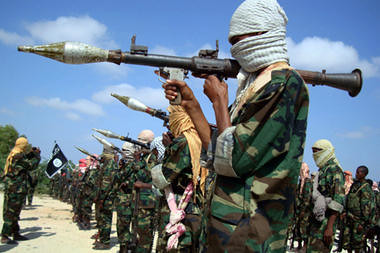
Heavy clashes accompanied by fierce aerial bombardment erupted Monday, pitting Somalia’s al-Shabab fighters against the Somali government and Kenyan forces near El-Ade village, 12 kilometers south of Garbaharey district, a Press TV correspondent reported.

Residents say the clashes forced Kenyan fighter jets to scramble for the rescue of the ground troops and push back the Somali fighters.

“It was heavy fighting that rocked the area. Ground troops were assisted by fighter jets which bombed al-Shabab fighters in the outskirts of the village, forcing them to retreat to inside the village,” said Farah Nur, a resident in Garbaharey.

Witnesses said the majority of those killed were from al-Shabab.

However, Sheikh Yunis Abu-Zeyd, an Al-Shabab official in the Gedo region claimed fighters pushed back the advancing allied troops.

“We have repulsed the invaders, inflicted them with heavy casualties. Even with aerial support, they were unable to advance into our positions,” Abu-Zeyd said.

Garbaharey is the capital of Gedo region near the borders with Ethiopia and Kenya, and had been under al-Shabab control since 2009.

The town is currently the focus of a Kenyan military offensive in southwest Somalia.

Kenya dispatched thousands of its troops across the border into Somalia in a bid to root out al-Shabab from the border regions.

Somalia has been without a functioning government since 1991, when warlords overthrew former junta ruler Mohamed Siad Barre.

Monday, April 02, 2012

North Korea Readying for Rocket Launch

April 02, 2012
New Images Show North Korea Readying for Rocket Launch

VOA News

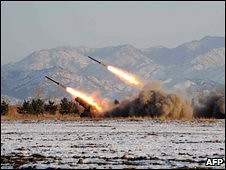
New satellite images of a North Korean rocket site show evidence of increased preparation for a space launch that Washington sees as cover for a long-range missile test.

The U.S.-Korea Institute at Johns Hopkins School of Advanced International Studies said Sunday that satellite photos taken last Wednesday show a mobile radar trailer, not previously present at the new Tongchang-ri site, and rows of what appear to be empty fuel and oxidizer tanks.

The Institute said the photos also show what appears to be activity near the launcher assembly building, where news reports indicate the stages of the Unha-3 rocket are located.

Pyongyang says the launch will put a functional satellite into orbit as part of the celebration of the 100th birthday of the late leader Kim Il Sung, the founder of the communist state and Kim Jong Un's grandfather.

The United States, Russia, South Korea and Japan all have condemned the planned launch. Even Pyongyang's long-time ally, China, has expressed rare disapproval, while U.N. Secretary-General Ban Ki-moon said he was "deeply concerned."

The Aspen Institute "think tank" in Berlin said Sunday that North Korean and American delegations had held informal talks in Germany. Charles King Mallory, executive director of the Institute, confirmed the meeting but did not comment in detail on the contents of the so-called "track two" talks or who participated in them.

"Yes there was a meeting," admitted Mallory, "it discussed the four principle areas of the September 15th 2009 joint statement, those would be: peace treaty, they would be economic cooperation and development, denuclearization and confidence building measures, that's what happened."

The North's official Korean Central News Agency said Monday that Pyongyang will hold a special Workers' Party conference on April 11, just days before the satellite launch. Analysts say the delegates are likely to appoint the country's new leader, Kim Jong Un, to the post of party general-secretary, previously held by his father Kim Jong Il, who died in December.

The North's announcement of the launch plan came just over two weeks after Pyongyang reached a deal with the United States to suspend operations at its Yongbyon uranium enrichment plant and impose a moratorium on long-range missile tests and nuclear tests in return for 240,000 tons of food aid.

Washington said last week it is suspending plans to start food deliveries as it can no longer trust the North to stick to arrangements on monitoring distribution.

Pyongyang criticized the U.S. move Saturday as an "over-reaction" that would kill the February 29 agreement.

Find this article at:
http://www.voanews.com/english/news/asia/New-Images-Show-North-Korea-Readying-for-Rocket-Launch-145732925.html

Judge Blocks Meeting of Detroit Financial Review Team

Judge blocks Tuesday meeting of Detroit financial review team

5:52 PM, April 2, 2012
Detroit Free Press

LANSING – An Ingham County judge issued a temporary restraining order late today, blocking Tuesday’s planned meeting of the state-appointed financial review team at which the team was expected to approve a consent agreement for the re-structuring of the City of Detroit’s financial management.

Acting on a request from attorneys for union activist Robert Davis, Circuit Judge Joyce Draganchuk ordered the review team to refrain from voting on an agreement or meeting to discuss it, Davis said.

Davis claimed in a lawsuit seeking the restraining order that the Detroit review team’s term of office expired March 26 and it no longer has the authority to enter into an agreement.

Davis had earlier sued over alleged violations by the Detroit review team of the state’s Open Meetings Act. But a restraining order issued by another Ingham County judge that temporarily suspended the board’s activity was dissolved by the state Court of Appeals.

The review team was scheduled to meet at 9 a.m. at the Cadillac Place state office building.

Pontiac 65-Year-Old Tased and Hospitalized

April 2, 2012

Man stunned with Taser, deputy injured in Pontiac confrontation

By MIKE MARTINDALE / The Detroit News

Pontiac— A 65-year-old man with apparent mental problems is hospitalized and an Oakland County Sheriff's deputy was injured in an incident Sunday in which the man was Tasered.

The man was committed for psychological treatment after the incident in the 200 block of West Columbia Street. According to a deputy's report, the man had not been taking his prescribed medication and was physically aggressive.

The man refused commands from deputies and lunged at them, according to the sheriff's office. The man was subdued after being stunned with a Taser and a deputy suffered a minor chin injury when falling to the pavement.

mmartindale@detnews.com
(248) 338-0319

Federal Judge Declines Detroit Union's Request to Block Consent Agreement

April 2, 2012

Federal judge declines unions’ request to block consent agreement

By CHRISTINE MACDONALD / The Detroit News

Detroit— A federal judge today declined to issue a restraining order sought by city union leaders to halt action on a proposed consent agreement between Detroit and the state.

Judge Arthur Tarnow instead set a hearing for 2 p.m. Tuesday for both sides to present their case.

AFSCME Council 25 sued Gov. Rick Snyder and state Treasurer Andy Dillon in federal court to stop them from executing a consent agreement or financial stability agreement and block them from appointing an emergency manager. The union, in seeking a temporary restraining order, also sought to stop Snyder and Dillon from opposing ratification of the AFSCME contract.

"The state is trying tostrong-arm the city," said Ed McNeil, with AFSCME. "We want the judge to say the state has no authority tointerfere with the situation."

The Attorney General's office today argued the union has not shown it has suffered irreparable injury or whether the injunction would serve the public interest.

"Under a 'balance of hardships' test, the harm to the city, the students, all employees and the public is greater than any harm plaintiffs would suffer if their request for an injunction is denied," Assistant Attorney General Frank Monticello wrote. The fiscal instability of the state's largest city that could result from issuance of a preliminary injunction does not and cannot serve public interest …"

cmacdonald@detnews.com

Foreclosures Slow Detroit's Rebirth

April 2, 2012
Foreclosures slow Detroit’s rebirth

Detroit riddled with repossessions from height of housing meltdown

By MIKE WILKINSON ANDCHRISTINE MACDONALD / The Detroit News

Detroit —More than a quarter of homes whose loans failed at the height of the foreclosure crisis in 2006 and 2007 have already been razed or are on the demolition list, becoming a huge obstacle to the city's rebirth, a Detroit News analysis shows.

In neighborhoods on the far west side and the northeast corner of the city, as many as two-thirds of the properties that went into foreclosure just five years ago are in the city's crosshairs or already on the ground. The worst-hit areas almost mirror perfectly parts of the city where the most subprime mortgages were issued before they helped trigger the collapse of the banking industry.

And more vacancies could be on the way: Although the rate has slowed, lenders have foreclosed on 28,000 more homes since 2007, according to records from RealtyTrac.

"I don't think you can engage in any credible program for economic recovery if you let this foreclosure crisis go unchecked," said Steve Babson, a retired Wayne State University labor professor and East English Village resident who is a local leader in an effort to halt bank takeovers.

Mayor Dave Bing has made reshaping the city one of his top priorities, and his Detroit Works Project is focusing on fixing targeted neighborhoods. But increasing vacancy squeezes the city's already feeble tax base, diminishes the quality of life and undercuts the city's recovery efforts.

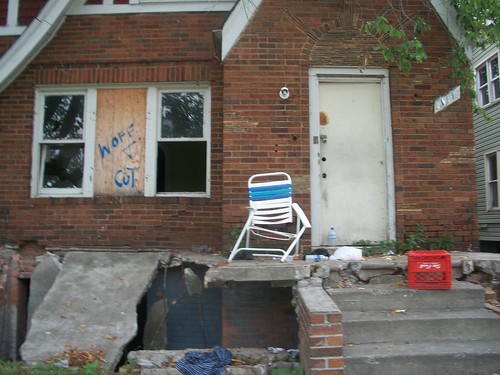
In parts of the city least able to absorb abandonment, evictions are almost instantly followed by strippers who can gut properties in days.

"It makes everyone want to leave," said Armando Wilson, 30, who lives on Vaughan Street, near McNichols and Evergreen roads. Vacant, burned-out homes dot his neighborhood, and home strippers appear almost daily. "Everybody is leaving Detroit. They feel there is nothing in Detroit anymore."

Detroit has struggled with abandoned homes for years, and its population fell 25 percent to 713,777 from 2000 to 2010. But foreclosures from 2006 and 2007 alone have added 7,600 homes to the demolition list. Now, there are an estimated 38,000 homes in some stage of demolition, a number equal to 10 percent of all housing units in the city.

Lee Rhymes also lives on Vaughan, a block north of Wilson. Many of the homes around Rhymes are vacant — more than a dozen worthy of demolition are within 100 yards and eight of those recently fell into foreclosure. Strippers appear almost the day a home is vacated, he and others say.

"It's a constant battle with them," said Rhymes, 65.

For a cash-strapped city well aware of the problem, razing homes has proven difficult.

The city has knocked down 4,200 homes since 2010 and hopes to get to 6,000 more, which could take another three years at its current pace. That doesn't take into account the 1,800 homes the Detroit City Council has targeted for demolition, or the 26,300 homes that are in the process of being considered for demolition.

If foreclosures continue to increase vacancies, the city will be hard-pressed to keep up with demolitions. City leaders are working with banks and other institutions to find ways to preserve occupancy, said Karla Henderson, Detroit's group executive of planning and facilities.

"Keeping the family or resident in the home is the No. 1 priority," she said. "It's like hemorrhaging; we've got to stop it."

Banks view foreclosure as a "last resort," particularly in Detroit, said Gail Madziar, a vice president at the Michigan Bankers Association. Banks try to modify mortgages and maintain homes that are foreclosed, but many are damaged during the foreclosure process that can take up to a year, Madziar said.

"It's not simple," Madziar said. "It's a very complicated process. If it's a situation beyond repair, it's almost impossible to secure it."

Subprime loans key

The News found that the worst-hit areas are those where mortgage lenders poured the most high risk subprime loans.

In Wilson's west side neighborhood, for instance, roughly four of every five loans in 2006 had an interest rate that was 6 percentage points higher than the average rate, according to federal mortgage data. Those rates — often part of adjustable-rate, balloon-payment mortgages that would trigger far higher payments — led to thousands of delinquencies.

For the past few years, critics have complained about the lenders who offered the subprime loans craved by Wall Street financiers, often issued with little documentation on income, employment and home values. A lapse in lending standards opened the gates to billions in loans in Detroit — and tens of thousands of failures.

"Detroit is like ground zero for all the devastation created by these terrible loans," said Ira Rheingold, executive director of the National Association of Consumer Advocates. "Nobody who made these loans cared if they performed."

After charges of improper lending and foreclosure were leveled against some of the nation's largest lenders, the five largest loan servicers agreed in February to a $25 billion settlement with 49 states, including Michigan. The lenders are to reduce loans for nearly 1 million homeowners and will distribute checks of $2,000 to Americans who lost homes in improper foreclosures over three years.

Michigan will get $790 million from the settlement that state Attorney General Bill Schuette said will help with foreclosure counseling, assist foreclosure scam victims and protect current homeowners.

The state — and Detroit in particular — were among the hardest hit by the recession and the foreclosure crisis. Its effect on Detroit is seen in the thousands of crumbling homes and empty lots all across the city.

Down the block from Rhymes, a home on Vaughan sits without a roof. A sign out front says it's for sale, but real estate agent Jason Megie said that was before a fire damaged the home. The asking price had been $648.

"We're selling them (foreclosed homes)," he said. "But they're selling low. "

Rhymes' neighbor, James Mack, 35, said he chases strippers away every day and is tired of living around so many abandoned homes. "It's crazy. They need to come out and take care of these homes," he said.

Henderson said the city is making difficult choices: It is working first in neighborhoods with some viability and stability. That may mean that a neighborhood like Mack's and Rhymes' will have to wait a little longer. But the city has no choice— with limited funding, it has to spend its money where it will have the most impact. "It's kind of like triage," Henderson said.

Stepping up to help

In many neighborhoods, residents are taking matters into their own hands.

On Berkshire Street on the east side, neighbors have shooed away the scrappers from one home, put up windows on it and continue to tidy up around several other abandoned homes.

On Manning Street in northeast Detroit, William Malone has mowed vacant lawns and called city officials to turn off water in abandoned homes. Malone said the foreclosures in the neighborhood near Eight Mile and Gratiot have held him "hostage to a no-win situation."

Five years ago, the block was entirely occupied, said the 62-year-old Chrysler retiree. Today, 18 of the 31 properties are vacant or demolished. That includes a dozen on the demolish list that went into foreclosure in the time period The News reviewed.

"If I did what the banks did, they would have called me a crook," said Malone, who has owned his brick bungalow with his sister for 20 years.

"Instead of working with people, they kicked them out and left the houses empty. Now the houses have been torn up."

mwilkinson@detnews.com
(313) 222-2563

Egyptian Copts Abandon Constitution Talks

Egyptian Copts abandon constitution talks

Mon Apr 2, 2012
5:57pm GMT

CAIRO (Reuters) - Egypt's Coptic Orthodox Church has announced it is withdrawing from talks on a new constitution, saying Islamist domination of the drafting body made its participation "pointless", Egypt's state news agency said.

The decision late on Sunday came after Egyptian liberals called for a boycott of the drafting committee, which is seen as failing to represent the nation's diversity.

"The Coptic Orthodox Church General Council agreed with the approval of all of the council's 20 members to withdraw from the constitutional assembly... as it found it was pointless for the church to be represented following the comments made by the national forces about the way the assembly was formed," the state news agency said, quoting a church statement.

The current constitution was suspended by the country's army rulers in February last year shortly after they took power from Egypt's long-serving autocratic president, Hosni Mubarak.

Selected by parliament, the 100-member constitutional assembly is dominated by Islamists, reflecting their victory in parliamentary elections.

Coptic Christians, who form Egypt's biggest minority group and constitute most of Egypt's 10 percent Christian population, have long had a difficult relationship with the country's overwhelmingly Muslim majority.

Egypt's Coptic Catholic and Evangelical churches also expressed their disapproval of the constituent assembly writing the constitution, state news agency MENA said.

The Coptic Catholic church on Monday notified Field Marshal Hussein Tantawi, the head of the ruling army council, that it had been "completely disregarded" in the assembly, it said.

The Evangelical church also announced it would not take part in talks on a new constitution because it did not approve of the way the assembly was formed, the news agency added.

Since Mubarak's removal, Christians have become increasingly worried after an upsurge in attacks on churches, which they blame on hardline Islamists, though experts say local disputes are often also behind them.

The death of Coptic Pope Shenouda last month has added to those worries as it left Christians wondering how to make their voices heard as Islamists rise to power.

The new constitution is eagerly awaited by many Egyptians. It is expected to include more freedoms and define rules for the authorities, including setting out the terms of presidential power. During the 30-year-rule of Mubarak, the post carried absolute power.

Many liberal parties and public figures along with the state's top Islamic authority of al-Azhar have previously announced their withdrawal from the assembly.

(Reporting by Ali Abdelattai, Yasmine Saleh and Shaimaa Fayed; Writing by Yasmine Saleh; Editing by Michael Roddy and Andrew Osborn)

Despite Government Programs, Foreclosures Continue Unabated

April 1, 2012

As Foreclosure Problems Persist, Fed Seeks More Fines

By JESSICA SILVER-GREENBERG
New York Times

Federal regulators are poised to crack down on eight financial firms that are not part of the recent government settlement over home foreclosure practices involving sloppy, inaccurate or forged documents.

Last week, a senior Federal Reserve official recommended fines for these additional firms, raising questions about how deep foreclosure problems run through the banking industry.

In addition, judges, lawyers and advocates for homeowners say that people are still losing their homes despite improper documentation and other flaws in the foreclosure process often involving these firms.

The eight firms cited by the Federal Reserve — HSBC’s United States bank division, SunTrust Bank, MetLife, U.S. Bancorp, PNC Financial Services, EverBank, OneWest and Goldman Sachs — should be fined for “unsafe and unsound practices in their loan servicing and foreclosure processing,” Suzanne G. Killian, a senior associate director of the Federal Reserve’s Division of Consumer and Community Affairs, told lawmakers last month in a House Oversight Committee hearing in Brooklyn.

The recommendation is the culmination of an investigation begun nearly two years ago over accusations that bank representatives had been churning through hundreds of documents a day in foreclosure proceedings without reviewing them for accuracy, a practice known as robo-signing.

Some see the Fed’s recommendation as an attempt to push these firms to agree to the terms of the broader mortgage settlement involving the state attorneys general and federal officials. During those settlement talks, federal regulators contacted other institutions in hopes that they would also agree to the terms, according to people briefed on the negotiations.

Much of the foreclosure attention has focused on the five largest mortgage servicers — Bank of America, Citigroup, JPMorgan Chase, Wells Fargo and Ally Financial — which agreed to the $25 billion settlement this year without admitting wrongdoing.

Despite the pledges of the giant servicers to amend their practices, there are signs that foreclosure cases with other companies remain problematic. An examination of dozens of court cases by The New York Times found questionable documents involving some of the eight institutions cited by the Fed.

Arthur M. Schack, a New York State Supreme Court judge in Brooklyn, has cracked down on fraudulent documentation and said he was concerned that foreclosures moving through the courts continued to be flawed. Even after mortgage servicers have been excoriated by a judge in one state, they still use similar documents in other cases in other states, according to the examination.

For example, last December, Judge Schack tossed out a foreclosure lawsuit filed by U.S. Bancorp after determining that a bank employee, Kim Stewart, had identified herself in two conflicting ways in documents throughout the lawsuit.

In 2008, Ms. Stewart signed an assignment of mortgage — which gives the mortgage servicer the right to foreclose — to U.S. Bancorp, identifying herself as assistant secretary of Mortgage Electronic Registration Systems. Yet in 2009, Ms. Stewart signed a separate document in the lawsuit as vice president of U.S. Bancorp, court records show.

The judge, in a derisive tone, suggested that perhaps the bank and its law firm “do not want the court to confront the conflicted Ms. Stewart,” according to a transcript. U.S. Bancorp strongly disagreed with the judge’s ruling and planned to appeal the decision, said Teri Charest, a spokeswoman for the bank. She added that Ms. Stewart was an officer of the bank and had “signed all documents appropriately.”

George Babcock, a lawyer in Pawtucket, R.I., who represents homeowners, estimated that roughly 300 of his clients were being threatened with foreclosures that included documents signed by Ms. Stewart.

A similar problem has cropped up on the West Coast, where an employee of a mortgage servicing firm whose signature appeared in a lawsuit filed by one of the eight firms had already been flagged as problematic.

Phillip Bennett, a retired schoolteacher in California, was evicted last month from the home he shared with his wife in Rancho Cucamonga.

Mr. Bennett said he thought he might be able to save his home, despite falling behind on his loan payments, because the mortgage assignment was signed by a mortgage company employee, Marti Noriega, who was previously involved in a foreclosure that had been halted.

In October 2010, Garr M. King, a senior judge with the United States District Court in Oregon, blocked a foreclosure after spotting a suspicious document from Ms. Noriega. In that lawsuit, Ms. Noriega, acting as vice president of Mortgage Electronic Registration Systems, signed an assignment of mortgage.

The problem, court records show, was with the date. Ms. Noriega’s signature transferring the mortgage from Mortgage Lenders Network USA to LaSalle National Bank (now part of Bank of America) was dated 15 months after Mortgage Lenders Network halted its operations.

Some foreclosures include documents from people who have testified to being robo-signers in other courts.

In July 2010, Erica Johnson-Seck, whose signatures appeared in foreclosure cases filed by OneWest, acknowledged, in a deposition in state court in Palm Beach County in Florida, having signed 750 mortgage documents a week, usually with only a cursory review.

Yet Carla Duncan, a social worker, is fighting a lawsuit over the foreclosure on her three-bedroom home in Cleveland Heights, Ohio. The lawsuit, which was filed in March 2010 in Ohio state court, includes a document signed by Ms. Johnson-Seck.

“It’s so totally unfair,” said Ms. Duncan.

A spokesman for OneWest declined to comment on Ms. Duncan’s lawsuit.

Last November, federal banking regulators forced the nation’s largest servicers, including the eight cited by the Fed, to comb through foreclosure records and to rectify any problems.

As part of that process, consumers who believe that they have experienced “financial injury” have until July 31 to request an independent review of their foreclosure and potentially receive compensation.

But Matt Englett, a lawyer in Orlando, Fla., who defends struggling homeowners, said that many people who had already lost their homes were focusing on simply staying afloat and did not realize they could ask for an independent review.

So far, more than 128,000 people have requested a review, according to the Office of the Comptroller of the Currency.

“These are the forgotten homeowners,” Mr. Englett said.

Zimbabwe Vice President Back Home After Visits to India and Dubai

VP Mujuru back home

Monday, 02 April 2012 00:00
Business Reporter
Zimbabwe Herald

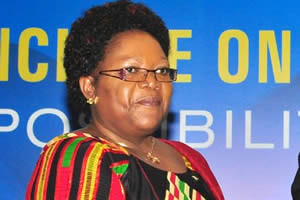
VICE President Mujuru returned home to a hero’s welcome yesterday from a two-weeks’ tour of Indian and Dubai which culminated in her receiving the Distinguished African Amazon Award on Saturday at the Burj Al Arab Hotel in Jameira.

Vice President Mujuru, who was accompanied by Small and Medium scale Enterprises Development Sithembiso Nyoni and her permanent secretary Mr Wusheunesu Munodawafa, was met at Harare International by Women’s Affairs, Gender and Community Development Minister Olivia Muchena and women drawn from business, politics and civil society.

Addressing the women, Vice President Mujuru paid tribute to her late husband General Solomon Mujuru for standing by her and encouraging her in her political career.

She also paid tribute to the women of Zimbabwe, especially the Zanu-PF women’s league for their support through out her career. Vice President Mujuru encouraged civil societies to organise themselves in order to partner Government in developing the country.

“I received this award as a result of the work of the Centre for Economic and Leadership Development, an NGO based in Nigeria. During the conference that they held in Dubai most of the delegates were crying about things that we have already managed to resolve, the issue of inadequate access to land.”

Vice President Mujuru said the award was partly in recognition of her fight to restore family dignity through an initiative called the Family Dignity /Hunhu Kumhuri programme being implemented by her office. During her visit to India Vice president Mujuru had an opportunity to attend and address the 8th India Africa conclave where she emphasized the need for African countries to ship their focus from traditional investors and markets to emerging economic power houses most of which are in the east. These include India and China amongst others.

She also had an opportunity to meet political and business leaders after which she toured some engineering and manufacturing plants in Pune and Bangalore after which she proceeded to Dubai for the International Conference on African women Development from March 27 to 31.

Zimbabwe Poll Decision by May, Says President Mugabe

Poll decision by May, says President

Saturday, 31 March 2012 00:15
Sydney Kawadza Assistant News Editor
Zimbabwe Herald

ZIMBABWE will go for a referendum in May, failure which it will revert to the Lancaster House Constitution and hold elections before the end of the year, President Mugabe has said.

He challenged Zanu-PF leaders afraid of elections to join the MDC formations that were trying to stall efforts to hold the polls.

Addressing the 88th Ordinary Session of the Central Committee at the party’s headquarters in Harare yesterday, the President said mem­bers of the South African government had no power to interfere in Zimbabwean affairs.

He said President Jacob Zuma, in his own capacity, was the only one with the privilege to facilitate dialogue between Zimbabwean par­ties.

“South Africa are not our facilitators, but President Zuma as was President Mbeki. We cannot be facilitated by the whole of South Africa.

“We are a sovereign State and we cannot be led by the government of South Africa. Let’s not be told that South Africa is our facilitator.”

President Mugabe instructed the party’s Global Political Agreement negotiators to advise their colleagues that the Constitution-making process should be concluded.

“Let’s conclude the process, whether we agree or disagree. The dance we have had for the past four years is over. Let us have an elec­tion and end this animal called inclusive Gov­ernment.”

The GPA, he said, was not signed to craft a new Constitution.

He said the parties had agreed to go for an election using the Kariba Draft, but changed after civil society complained it was left out.

“We decided to go for an outreach pro­gramme to get the people’s views. We are now trying to enunciate what the people said and we are not agreeing.

“They are delaying the process arguing on small matters, but we are saying no, no, no.

They are out of step.

“We must conclude this process. If they haven’t finished in time, we will do it our way.

“If they reject the Constitution, we will go back to the Lancaster House Constitution, which gave us our independence. That is what we are going to tell the facilitator.”

President Mugabe said the acceptance or rejection of the new Constitution will clear the way for an election.

“Their days are numbered and one should expect that by May we have a referendum. It is this referendum that should give us the way forward,” he said.

President Mugabe said Zimbabwe should go for elections as was resolved by the party’s National People’s Conference in Bulawayo last year.

“I am told that there are some among us who do not want elections this year. Kana varipo, endai munojoina MDC.”

He said elections will bring a Government that is not affected by divergent views.

“(Finance Minister Tendai) Biti said US$20 million had been given to distressed compa­nies in Bulawayo, but we understand that not even a cent has been sent there.

“This Government is a Government of nega­tives. It’s a Government of people who do not want to do things for the people.

“We want to move on unhindered by little thoughts and in some cases sheer ignorance,” he said.

The President said GPA principals were ready to take over the Constitution-making process.

“Bring the document we will complete it ourselves. We have done it before. There are many drafters who can do the job,” he said.

President Mugabe bemoaned the number of accidents that have claimed lives on Zim­babwe’s roads.

“The roads must be attended to, but it’s not only the bad roads but the way our drivers per­form on the roads.

“There are so many buses on our roads, so we must brace for more accidents,” he said.

President Mugabe said Zimbabwe will once again face food shortages due to erratic supply of inputs.

He, however, hailed Zimbabwean farmers for working hard in producing cash crops and food.

“I do not think in the whole of Southern Africa, I am even tempted to say the whole of Africa, there is a community of farmers that are ded­icated and focused as ourselves,” he said.

The President, however, bemoaned the lack of support for farmers from the inclusive Govern­ment.

“We are lacking, lacking in effort and spirit to the right thing. Lacking to the point of being irresponsible.”

He also castigated Zanu-PF lead­ers who abused the Presidential Inputs Scheme.

He said the indigenisation and empowerment drive was continu­ing.

“It is a beginning to chart an irre­versible path,” he said.

President Mugabe urged the banking sector to support people who wanted to start businesses.

Safeguard Zimbabwe's Independence, Says Former Women Combatants

Safeguard Zim’s independence, say female ex-combatants

Monday, 02 April 2012 00:00
Herald Reporter

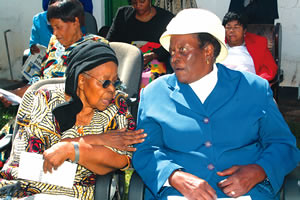
FEMALE ex-combatants and wives of the fallen liberation struggle heroes have urged Zimbabweans to safeguard the country’s independence.

They said this at a gathering at in Harare last week.

The meeting, arranged by former fighter Cde Raymond Mazorodze to allow the women to tell their stories, drew 22 women from all over Zimbabwe.

They included Amai Maud Muzenda, widow of Vice President Simon Muzenda; Zanu-PF MP for Chipinge Central, Cde Alice Chitima and the only surviving female ex-detainee at Gonakudzingwa Jane Lungile Ngwenya.

Amai Muzenda, who chronicled the challenges she went through as her husband was arrested or was outside the country, said: “Let us remain strong and shun these other parties that are bent on returning the country to the whites.”

Cde Chitima, who together with her husband Shadreck, were instrumental in helping cadres to get to Mozambique through Chipinge as well as providing food and medicines to fighters, castigated those advocating Western-driven regime change in Zimbabwe.

“We do not want to hear about selling out. These people are destroying the country that we fought for,” she said.

Cde Emmy Ncube from Bulawayo said Government had achieved what the country’s liberators fought for but such gains were being threatened with reversal.

She said: “We fought against oppression when we had no freedom in our own country. It pained us and we decided to take up arms.

“What pains me most is that some people want to return the country to the whites. I wish I was young again and I would go to war and defend the gains of the liberation struggle.

“We have the land that we fought for and for which some people died and some lie unburied but some people say they will reverse the land reform programme when they get into power.

“This will make me continue to talk about politics even when I had wanted to rest.

“Young people need guidance,” she said.
Cde Ngwenya castigated those who want a return to Rhodesia.

“It is a fool that takes a rope, walks to a tree and hangs himself,” she said.

“The white man that is sponsoring regime change laughs behind the walls because he knows he had succeeded in making fools. Whites can tell you to hit your mother because they would have killed your reasoning.”

Mr Mazorodze said it was important that women told their own stories, apart from the male dominated narrative.

“Women had an important role as they went to jails and collected information and they kept the party and families intact,” he said.

“There should be equality in narrating liberation war history,” said Mazorodze.

Somalian Sentenced to Life in US Prison For Piracy

Last Updated: Mar 31, 2012 - 6:24:48 AM

Somalia

Somalia: Somali pirate sentenced to life in US
31 Mar 31, 2012 - 6:23:13 AM

NORFOLK, US Mar 31 2012 (Garowe Online) – A Somali pirate has received a life sentence for his part in a hijacking that led to the death of 4 Americans, Radio Garowe reports.

Saeed Abdi Fooley pleaded guilty to piracy which serves a mandatory life sentence. Fooley and 10 other men have pleaded guilty to piracy after hijacking Jean and Scott Adam’s yacht last year. Two friends of the Adam’s were also on the yacht when it was hijacked. After negotiations broke down with the US Navy the four were shot and killed by the pirates. Two pirates were killed and 13 captured after the US forces took control of the yacht.

US Navy kill fishermen

An article released by Somalia Report states that two fishermen were killed by the US Navy. The US navy shot and killed the fishermen mistakenly according to Somalia Report.

According to the Minister of Fisheries Saeed Mohamed Rage, attacks on fishermen in Somali waters are commonplace. “We have had a countless number of coastal families that have approached the government telling us that foreign navy forces have targeted fishermen repeatedly in Somali waters,” said Minster Rage.

According to officials from the Puntland Development Research Center (PDRC), coastal communities are apprehensive of foreign naval forces patrolling Somali waters because of the number of missing fishermen and the foreign naval forces disregard for fishermen’s rights in Somali waters. ‘Operation Atlanta’ the EU Naval forces mission against piracy has not only extended its operations until 2014 but has amended their mandate to begin fighting piracy on Somali soil. The new mandate would allow warships or helicopters to fire at fuel barrels, boats, trucks or other equipment on beaches.

GAROWE ONLINE

Trayvon Martin's Family Seeks Federal Review of Prosecutor

Trayvon Martin's family seeks federal review of prosecutor

By the CNN Wire Staff
2012-04-02T05:36:36Z CNN.com

(CNN) -- Trayvon Martin's parents will ask the U.S. Justice Department on Monday to review a Florida prosecutor's interactions with police investigating the teen's shooting death, a lawyer for the family said.

The Justice Department launched an investigation into Martin's death on March 19, but the family is now asking it to look for possible interference by State Attorney Norm Wolfinger's office with a Sanford, Florida, police detective, attorney Ben Crump said.

Martin, 17, was fatally shot by neighborhood watch volunteer George Zimmerman, 28, after Zimmerman called police to report him as a "suspicious" person on the evening of February 26.

A police report filed hours after the shooting lists manslaughter under the offenses section. But police have cited Florida's "stand your ground" law, which allows people to use deadly force anywhere they feel a reasonable threat of death or serious injury, for not immediately arresting Zimmerman.

ABC News has reported that the lead homicide investigator, Chris Serino, filed an affidavit pushing for charges the night of the killing, but was overruled by the state attorney's office.

"It certainly confirmed all of my thoughts that this investigation had been botched from the beginning and that people other than me knew that there was supposed to be an arrest made," Martin's father, Tracy, told CNN after the ABC News report.

Zimmerman says he killed Martin in self-defense after the teen punched him and slammed his head on the sidewalk, according to an Orlando Sentinel report that was later confirmed by Sanford police.

Zimmerman's brother said medical records will prove that his brother was attacked and his nose was broken by Martin before he fatally shot the teen.

Martin's family and legal experts have questioned the Zimmerman family version after the recent release of surveillance videos from the Sanford police headquarters the night of the incident.

It shows Zimmerman, his hands cuffed, exiting a patrol car and being led into the police station. First broadcast Wednesday by ABCNews.com, the video does not provide close-ups, but also does not show clear signs of injuries on Zimmerman.

"We now have pictures of Mr. Zimmerman walking into the police station, and you see no injuries that would have come from abrasions on a sidewalk," said Lou Palumbo, a retired police officer who owns a private security firm.

"Anyone who's seen a broken nose is aware of the fact that the blood spurts. That leads to a lot of bleeding. You would have expected to see blood on the front of George Zimmerman's shirt collar. Blood -- you know, in many more places," said Marcia Clark, the former prosecutor in the O.J. Simpson trial.

Robert Zimmerman Jr. said his brother was treated at the scene before he was taken to police headquarters, and said it appeared to him that the surveillance tape shows that his brother had injuries.

Authorities have said Zimmerman was not immediately charged because there were no grounds, at the outset, to disprove his account that he'd acted to protect himself.

Martin's family and supporters say Zimmerman, who is Hispanic, racially profiled the teen, who was black, and ignored a police dispatcher's directive not to follow him.

Martin was unarmed, carrying a bag of Skittles candy and iced tea at the time of his death.

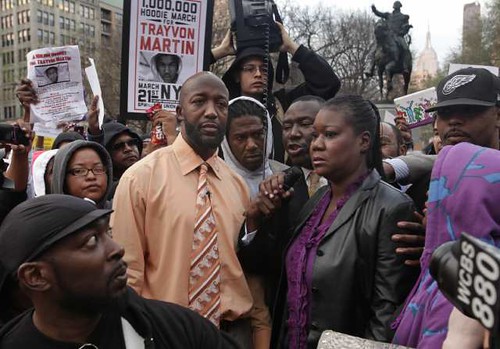
The killing sparked nationwide protests, including rallies Sunday in Indianapolis and Miami, where civil rights leaders and the slain teenager's parents among those repeating their call to have the teenager's killer arrested.

The Sanford police department has come under intense scrutiny for its actions following the shooting, and protesters renewed their call for the firing of police Chief Bill Lee, who stepped aside temporarily last month amid criticism.

Wolfinger has also stepped aside.

Gov. Rick Scott appointed a special investigator, Angela Corey, to decide if Zimmerman should be charged, cleared or if the case should be sent to the grand jury.

CNN's Anderson Cooper and Vivian Kuo contributed to this report.

Mali Military Regime Pledge to Cede Power As the MNLA Advances in the North

Mali junta pledges to cede power, rebels advance

12:21pm EDT
By Bate Felix and Adama Diarra

BAMAKO (Reuters) - Mali's junta leader promised to reinstate the constitution from Sunday, hours before a deadline set by West African neighbors to start handing over power, as northern rebels entered the ancient trading post of Timbuktu.

Amadou Sanogo, who led a military coup on March 22, also pledged to re-establish all state institutions before organizing a transfer of power back to civilians through democratic elections.

He made the promises after the 15-nation ECOWAS grouping threatened sanctions, including a crippling closure of borders around the land-locked state, if the junta did not begin handing power back by midnight.

The aim of the putsch by disgruntled soldiers was to step up the battle against the northern rebels. But the coup has backfired, emboldening the Tuareg-led rebellion to seize new ground in its quest for a northern homeland. On Sunday they entered their latest target, Timbuktu, after government forces fled.

"We are making the solemn commitment to re-establish, from today, the Malian constitution of February 25, 1992 and the institutions of the republic," Sanogo said in a statement read out at a barracks outside the capital Bamako.

Sanogo, a hitherto obscure U.S.-trained captain, said the junta had agreed to consult with local political forces to set up a transition body "with the aim of organizing peaceful, free, open and democratic elections in which we will not take part".

There was no immediate reaction from ECOWAS. However, the re-establishment of the constitution and state institutions were two measures named earlier by an envoy of Burkina Faso President Blaise Compaore, the crisis mediator, as essential preconditions for Mali to avoid sanctions.

"After that, we shall see what happens as regards the person of (Malian) President Amadou Toumani Toure," Burkina Foreign Minister Djibril Bassolet told Reuters by telephone minutes before Sanogo's statement. "We want to be careful, we have to go gradually," he said, warning of the risk of a power vacuum.

PLANTING FLAGS

Boosted by heavily armed Tuareg returning from Libya and tapping into frustrations over underdevelopment in the north, MNLA rebels launched a push for independence in mid January.

The rebels have fought alongside another rebel group seeking to impose sharia law, underscoring the complex web of gunmen in a zone which is home also to local al Qaeda groups and smugglers.

The northern administrative centre of Kidal fell on Friday, followed on Saturday by the garrison town of Gao. Timbuktu's capture would largely complete the rebels' plan of seizing Mali's north, a desert territory bigger than France.

"They have arrived in the town. They are planting their flag," El Hadj Baba Haidara, member of parliament for Timbuktu, told Reuters by telephone. A resident said the MNLA rebels had planted their flag at the governor's office, the mayor's office and the main military camp.

It was not immediately clear if the rebels were in full control as an Arab-led militia remained after government forces abandoned the town.

Both sources said the town was mainly quiet, except for sporadic gunfire and the looting of some government buildings by armed men and civilians. Another resident, who declined to be named, said she saw soldiers putting on civilian clothes.

Timbuktu, for centuries a major trading post in the Sahara, was fabled for its gold, slaves and other goods, but it fell into decline even before the French 19th century occupation. Attempts to develop tourism have been hit by rising insecurity, including kidnappings of Westerners by local al Qaeda agents.

Western and regional nations, already critical of Toure's soft approach towards the Islamists, are likely to fret over a security void which the rebel push has left in the Sahara.

While coup leaders won early support from many Malians weary of Toure's rule, the latest military defeats and the sheer scale of foreign disapproval have weakened their position.

"Everywhere it is burning. Mali cannot fight on all fronts at the same time ... Let us put our personal quarrels aside," Siaka Diakite, Secretary-General of the UNTM trade union, said in a statement backed by anti-putsch political parties.

Ivorian President Alassane Ouattara has said he expected Toure, who has said he is safe in an undisclosed location in Mali, to see out the remaining two months of his mandate before a transitional national unity government was named.

"Then elections should be held between 21 and 40 days later. It is up to the political class to see if that is possible," Ouattara, the ECOWAS head, told Ivorian television.

(Additional reporting by David Lewis in Dakar; Writing by Mark John and David Lewis; editing by David Stamp)

Somalia News Update: Tensions Escalate With Kenya; Clashes in Somaliland

Kenya casts suspicion on al Shabaab for blasts

Sun, Apr 1 2012

MOMBASA, Kenya (Reuters) - Kenya promised on Sunday to hunt down Somalia-based al Shabaab rebels following two blasts which killed one person and injured 31 in the coastal city of Mombasa, but stopped short of blaming the Islamist militant group outright.

Al Shabaab has staged attacks in Kenya since Nairobi sent troops into Somalia last October to pursue the group. However, Saturday's blasts were the first to target Mombasa, one of Kenya's top tourist destinations, and were staged just before the busy Easter tourist season in the coming week.

"We will not tire of hunting for these people (al Shabaab) until we finish them. They have ruined their country and now they have come here to ruin Kenya's economy," Internal Security Minister George Saitoti told reporters while visiting the scenes of the explosions.

Regional police commander Aggrey Adoli said al Shabaab was one line of inquiry, but not the only one. "Investigations are going on. Al Shabaab is among those being investigated," Adoli told Reuters.

Prime Minister Raila Odinga, who accompanied Saitoti, tried to reassure foreign visitors after the explosions whose victims were all Kenyans. "Kenya is safe. No one should threaten tourists. They should continue coming to Kenya and the government will protect them," he said.

A senior regional administration official told Reuters that makeshift bombs were used in the near-simultaneous attacks at an open air Christian meeting and a packed bar.

"These were what are known as Improvised Explosive Devices but investigations are still going on to establish exactly what type of IEDs," said Ernest Munyi, provincial commissioner for the coastal region.

Al Shabaab issued a statement that also fell short of claiming responsibility for the attacks, saying that Kenya's security depended on its military activities in Somalia.

"The more Kenyan troops continue to persecute innocent Muslims of Somalia, the less secure Kenyan cities will be; and the more oppression the Muslims of Somalia feel, the more constricted Kenyan life will be," it said.

Saitoti vowed that Kenya would chase members of al Shabaab, an al Qaeda-aligned group which controls large parts of Somalia, wherever they may hide to protect its people and economy.

The Kenyan military moved into south Somalia after two separate attacks on tourists in resorts on its northern coast.

Saturday's attacks created fears that the tourism business, one of the nation's big three hard currency earners, could be hit by cancellations during the Easter season.

(Writing by Duncan Miriri; editing by David Stamp)


Kenya blames Shabaab for Mombasa blasts

by LABAN WANAMBISI and CORRESPONDENT on April 1, 2012

NAIROBI, Kenya, Apr 1 – Prime Minister Raila Odinga and Internal Security Minister George Saitoti have linked Saturday’s twin blasts in Mombasa to the Somalia based, Al Shabaab terror group.

The leaders who visited one of the blast scenes in Mtwapa also called for increased vigilance among Kenyans.

“We shall not relax until we root out al Shabaab militia out of Kenya and their sympathizers,” said Saitoti. “I have directed the police commissioner to beef up security in all public places and increase their patrols.”

Odinga condemned the attacks and said the government will not allow a terror group to disrupt the nation’s security and economy.

“Our resolve to ensure safety prevails here forced us last year to send our security forces in Somalia to hunt and rid this country of terrorists that threaten our peace,” he said.

Odinga led a government delegation comprised of Saitoti, Special Programmes Minister Esther Murugi and Police Commissioner Matthew Iteere to visit the scenes of the Mombasa blasts on the island and at Mtwapa.

The leaders also visited those who were injured and were still admitted to hospital on Sunday.

Meanwhile Coast Provincial Director of Medical Service Dr Anisa Baghazal confirmed Sunday that those who remained in hospital were out of danger, although some were in a critical condition.

“We received 14 victims from the twin blasts. Five are in critical condition but out of danger while eight have soft tissue injuries,” says Baghazal.

She confirmed there were six male patients, who included a 12-year-old boy and a police officer.

The injured police officer from the Criminal Investigation Department suffered injuries to his face in the second blast at a restaurant near the Mombasa stadium.

At least one person was killed and 18 were wounded in the attacks on the restaurant and a church gathering in the nearby town of Mtwapa, the Kenya Red Cross said.

In Mtwapa, an explosive device that police said was likely a grenade was thrown at a Christian gathering.

“Sixteen people were injured, two critically, and one died,” Nelly Muluka, a Red Cross spokeswoman, told AFP Sunday, adding that all the injured remained in hospital.

A second attack, minutes later, in Mombasa in which a grenade was hurled at a restaurant injured three people, including the police officer.

Two of those three have since been discharged but one remains in hospital, Muluka said.

“Our team in Mombasa has set up a tracing and information desk at the Coast general hospital and at Oasis hospital,” she added.

No one immediately claimed responsibility for the attacks.

A survivor of the Mtwapa attack, Katana Kahindi, who sustained slight injuries to his right leg, said he saw a minibus swing towards the group of church goers before hearing a loud blast.

“I could not say whether the vehicle’s occupants had hurled the grenade that exploded,” he told AFP.

Top officials visited the victims in hospital, among them Environment Minister Chirau Ali Mwakwere, who is also a local MP.

“Its bad that innocent Kenyans have suffered at the hands of attackers and we wish them quick recovery,” says the minister.

Since Kenya sent tanks and troops into Somalia late last year, a whole series of grenade attacks and explosions have taken place, both in Nairobi and in eastern towns and camps housing Somali refugees close to the border.

Targets have ranged from police vehicles to local bars and churches. The Kenyan authorities often blame such attacks on Somalia’s Al Qaeda-affiliated Al Shabaab rebels.


Somalia’s al-Shabab threatens Kenya of revenge attacks

Sun Apr 1, 2012 9:31PM GMT

Somalia’s al-Shabab group has threatened Kenya with revenge attacks on Kenyan soil, as a consequence for sending tanks and troops across the border into Somalia to combat the group.

Kenya sent in additional troops last October to fight al-Shabab in southern Somalia.

“The Kenyan public must be aware that the more Kenyan troops continue to persecute innocent Somalians, the less secure Kenyan cities will be; and the more oppression the Somalians feel, the more constricted Kenyan life will be. Such is the law of retribution,” a statement by the fighters’ group said on Sunday.

The statement comes a day after attacks in the Kenyan coastal cities of Mombasa and Mtwapa killed one person and injured 24 others. The Kenyan government casts suspicion on al-Shabab for the blasts. But the group did not explicitly claim responsibility for the attacks.

The statement further said that “the worsening insecurity in Kenyan cities is an embodiment of Kenya's misguided policies that place foreign interests above its national interests and the security of Western nations above the security of its citizens”.

Al-Shabab has staged attacks in Kenya since Nairobi sent troops into Somalia to pursue the group. However, Saturday's blasts were the first to target Mombasa, one of Kenya's top tourist destinations, and were staged just before the busy Easter tourist season in the coming week.

Somalia has been the scene of a decades-long civil strife that erupted after the ouster of former junta ruler Mohammed Siad Barre, which has left the country without a functioning government since 1991.


Last Updated: Apr 1, 2012 - 1:52:17 PM

Somalia

19 killed in northern Somalia as Somaliland fights local militia

1 Apr 1, 2012 - 9:23:28 AM

BUHODLE, Somalia Apr 1 2012 (Garowe Online) – Clashes erupted in Buhodle and Las Anod towns in northern Somalia on Sunday between Somaliland forces and local militia, Radio Garowe reports.

Fighting erupted near Las Anod town and in the outskirts of Buhodle in two separate incidents involving Somaliland forces.

Somaliland media has reported that Somaliland authorities have in custody a minister of the newly formed "Khatumo" administration that claims ownership over Sool, Sanaag and Ayn (Buhodle) regions. The media did not release the name of the alleged minister in custody.

Khatumo officials claimed that they have confiscated soldiers and armed vehicles from the Somaliland forces.

Fighting at two locations

In Buhodle, local sources report that Somaliland forces attacked local militia. At least three Somaliland soldiers were killed, while Buhodle militia lost one fighter and one armed truck, sources added.

In Sool region, near Las Anod, armed clashes erupted in the east of the city.

According to local sources, self-declared "Khatumo" militia fought against Somaliland forces, whereby "Khatumo" militia reportedly sustained heavy losses. Sources reported that at least 15 persons were killed on both sides, while Somaliland forces reportedly arrested "over 40 civilians" near Las Anod.

“Heavy artillery could be heard throughout the city and telephone connections have been down all day,” said Mohamed Ahmed who spoke to GO after he left Las Anod Sunday afternoon.

Somaliland has faced armed resistance from residents opposing Somaliland's separatist administration in contested areas, in Las Anod and Buhodle areas. Clashes between Somaliland forces and local militia have been frequent in recent months.

Despite demands by Puntland government, Somaliland has failed to withdraw its troops from Las Anod town.

Somaliland, located in northwestern Somalia, unilaterally declared independence from the rest of the country in 1991 but has not gained international recognition.


Somaliland troops and separatists clash, five killed

Sun, Apr 1 2012

HARGEISA (Reuters) - At least four Somaliland troops and one rebel fighter loyal to the breakaway enclave's secessionists were killed during clashes on Sunday, both sides said.

The fighting first erupted in January after the leaders of the northern regions of Sool, Sanaag and Cayn decided to band together into a new state called Khaatumo and declared they wanted to be an independent region within Somalia.

Somaliland's troops have since clashed with militia fighters loyal to Khaatumo, with reports of dozens of casualties.

Somaliland is an internationally unrecognized state that declared independence from Somalia in 1991.

The newly declared Khaatumo state is near the border with Ethiopia and is a disputed area that Somaliland seized from Puntland in 2007, though relations between the two territories have improved since.

"Militia loyal to anti-Somaliland groups in Buhodle and South Sool simultaneously began (fighting) in the early hours of dawn. The army repulsed attacks on both fronts," said Osman Abdillahi, a spokesman for Somaliland's defense ministry.

Abdillahi said four Somaliland government soldiers were killed and 10 injured during the fighting. Mohamed Yousouf, a spokesman for the secessionists, said one of their fighters was killed and two were injured.

(Reporting by Hussein Ali Nur and Mark Anderson; Editing by Duncan Miriri and Karolina Tagaris)


Last Updated: Apr 1, 2012 - 1:43:00 PM

Somalia

Somalia: Tensions grow between senior Al Shabaab officials

1 Apr 1, 2012 - 8:56:34 AM

MOGADISHU, Somalia April 1 2012 (Garowe Online) – A senior Al Shabaab official has openly disagreed with a statement made by the leader of the Al Shabaab terrorist group and spoke against civilian deaths, Radio Garowe reports.

Sheikh Hassan Dahir Aweys a senior Al Shabaab official disagreed with a statement made by the Amir or leader of the Al Shabaab Ahmed Abdi "Godane" aka Mukhtar Abu Zubeyr in which he stated that no Islamist group other than Al Shabaab can wage jihad inside Somalia.

The response from Sheikh Aweys, a former prison colonel, was: “One cannot limit or make jihad a membership, jihad is open to everyone who is willing to fight.”

Sheikh Aweys went to on to say that the statement made by the leader of Al Shabaab Ahmed Godane is not credible adding that one should not pretend to be what he is not. The difference between the two officials has reiterated a sense tension within the terrorist faction.

During a Friday sermon at a mosque in the outskirts of Mogadishu, Sheikh Aweys also spoke about the civilian deaths saying that it Al Shabaab was not formed to spill the blood of civilians but rather to fight against crusaders. “Whoever does not agree with Al Shabaab’s ideology should be wiped out is not a method of Islam. The organization has made the killing of civilians lawful by making up their own laws.”

There have been no comments made by other senior Al Shabaab officials. Tensions in the organization have risen recently after U.S.-born foreign fighter Omar Hamami also known as Abu Mansoor al Amriki released a video where he says that he is afraid for his life because he and other officials had disagreed over ideology and strategic issues.

Some reports say Godane stepped down as Al Shabaab leader in December 2010 but remains a very influential figure in the organization. A power struggle within Al Qaeda member group Al Shabaab has raged since Hizbul Islam faction, led by Sheikh Aweys, joined Al Shabaab.

Reportedly Godane opposed Sheikh Aweys’ rise in the Al Shabaab organization and opposed him receiving a role of importance in the organization. Sheikh Aweys who is prominent figure in the group, has had in the past, the support of influential Al Shabaab members like Mukhtar Robow "Abu Mansur" and Fuad Mohamed Shongole and is known as the group’s spiritual leader.

Al Shabaab insurgents have taken heavy losses in recent days as AMISOM and TFG forces have taken over the Mogadishu district of Deynile which has been an Al Shabaab stronghold for many years. Al Shabaab have denied that AMISOM and TFG forces have took control of Deynile, locals on the ground fear the denial and the break in fighting means Al Shabaab is preparing for an onslaught.

GAROWE ONLINE

Sunday, April 01, 2012

Mixed View on China Manufacturing

Mixed view on China manufacturing

By CNNMoney
staff @CNNMoney
April 1, 2012: 8:52 PM ET

NEW YORK (CNNMoney) -- China watchers got a mixed view over the weekend of the country's all-important manufacturing sector.

China's government reported that manufacturing expanded in March, while a closely-watched private report said factories struggled with poor demand for their products.

The National Bureau of Statistics said Sunday that its official index of purchasing managers' sentiment rose to 53.1 in March from 51 in February. Any reading above 50 indicates expansion in the sector.

The March report marked the fourth consecutive monthly increase and the index's highest reading in a year.

At the same time, banking company HSBC issued a report that showed factory output fell in March for the fourth time in five months.

"Factory output was reduced largely in response to lackluster demand from domestic and external markets," the HSBC report said.

The contrasting reports follow a pattern of recent months, as the two indexes have diverged.

Investors and analysts have been concerned that China's extraordinary growth may be slowing too quickly.

Chinese Premier Wen Jiabao rattled investors recently when he said that China's new gross domestic product growth forecast for 2012 is 7.5%, down from an earlier prediction of 8%.

A "hard landing" by China could ripple throughout the world. Troubles in Europe, the largest market for China's goods, have intensified fears about a China slowdown.

Of course, China's growth far exceeds what many developed countries are experiencing. China's GDP rose 9.2% last year, while the U.S. economy grew 1.7%.

First Published: March 31, 2012: 11:05 PM ET

African American Farmers Denied Loans Are Applying Again for Settlements

[ DISCRIMINATION CLAIMS ]

Black Farmers Denied Loans Can Apply for a Settlement

By ADRIAN SAINZ
THE ASSOCIATED PRESS

Last Modified: Wednesday, March 28, 2012 at 9:53 p.m.

MEMPHIS, Tenn | When Roy James needed money to buy equipment and dig an irrigation well for his father's Mississippi farm, he applied for a loan from the U.S. Department of Agriculture — but was turned down.

The USDA said it denied the application filed in 1995 because James had inadequate education and didn't have farming experience — even though he had a college degree and had worked for years on the farm that grows soybean, wheat and cotton.

"I couldn't understand why they turned me down," James said. "It was confusing."

He became more frustrated when he found out he missed a deadline to take part in a settlement reached by black farmers with the USDA over discrimination claims. The 1999 settlement of the Pigford v. Glickman lawsuit provided about $1 billion to 15,000 farmers who say the agency unfairly turned them down for loans because of their race between 1981 and 1996.

James said he missed the deadline because he did not find out in time, but he still filed a late claim. Thousands of other black farmers did the same — a move that may result in a payout, after all.

A second settlement approved by a court in October 2011 is giving another chance to black farmers with discrimination claims from that era who were left out of the first Pigford settlement. Farmers who filed a late claim for the first settlement — or their relatives — have until May 11 to file a new claim for thousands of dollars.

Lawyers involved in the case believe that 40,000 to 65,000 black farmers are eligible to claim about $1.2 billion under a bill signed by President Barack Obama.

Thousands have already filed claims, and advocates say payouts could be as high as $250,000 in some cases. Factors that determine how much each claimant gets include the level of damages and losses they experienced, and, because there is a limited pool of money available, how many farmers end up applying.

A panel of people who are not part of the lawsuit or the USDA will decide if claimants are eligible.

The Pigford settlements are viewed as a victory by many. But one group that advocates for black farmers says they are a figurative slap in the face because they don't cover a long enough time period and claimants give up the right to appeal if they are denied.

LaSalle Dudley, 72, filed a claim on behalf of his deceased older sister and her husband, who were denied a loan in the early 1980s for their cotton farm near Senatobia, Miss. The loan was intended to buy machinery so Dudley's brother-in-law could give up manual farming and expand the business. Instead, because the loan was denied, they were unable to produce enough crops and had to close the farm.

Dudley said he hopes to get about $35,000 and would share any money with his brother. He said the claim is a good way to honor his sister.

"They owned the property for so long, and really I would have loved for it to have remained in the family," Dudley said. "I would tell people not to be ashamed or fearful coming forward with what they know happened."

Black farmers were prominent in the 1920s, when they owned 15 million acres of farmland, said John Zippert, director of program operations for the Federation of Southern Cooperatives.

But as years passed and they sought loans to maintain or expand their businesses, many faced adversity. Black farmers seeking loans from the USDA were often turned down for no explicit reason or were approved for much lower sums than they needed. As a result, they had to reduce the size of their farms or sell their properties.

"The USDA presented itself as the lenders of last resort, but in terms of black farmers, they didn't fulfill that promise in many cases," Zippert said. "Many small black farmers because they couldn't get access to USDA credit and other support, had to go out of the farming business."

Today, black farmers own between 3 and 4 million acres of U.S. farmland, according to Zippert, whose organization represented farmers in the Pigford settlements. Alabama, Mississippi, Georgia, North Carolina and South Carolina have the highest numbers of black-owned farms, Zippert said.

As properties have gotten smaller, many black farmers have abandoned traditional row crops such as corn, cotton and wheat. Now, many are growing fruits like watermelon and mangoes and vegetables such as peas and okra, which carry a higher income per acre, Zippert said.

To be eligible for money under the recent settlement, a black farmer needs to have sought a loan for his farm between 1981 and 1996. They also must have registered a written or verbal complaint about any discriminatory treatment they experienced.

Also, applicants must be farmers who missed the initial Sept. 15, 2000, deadline and filed a late claim for the first settlement. Zippert said that many did not receive adequate notice of their eligibility. In cases where eligible farmers have died, their heirs can make claims. In all, about 65,000 black farmers submitted a late claim for the original Pigford settlement, he said.

More than 20 firms are helping farmers file for the new settlement, said Greg Francis, an Orlando lawyer with Morgan & Morgan. He's placed ads in newspapers, magazines and on the Internet seeking potential claimants.

South African Black Farmers In Need of Dedicated Finance

Sunday, April 01, 2012 7:23:33 PM

Black farmers in need of dedicated finance

April 1 2012 at 12:18pm
South African Independent

Agricultural finance has always been an integral part of agricultural prosperity in South Africa. Since Jan van Riebeeck and the subsequent colonisation of the country, finance for farmers has always been an intrinsic aspect of agriculture and food security. Without proper credit paid back at reasonable interest rates, which were below market rates, the local 40 000 strong commercial farming sector would not exist as we know it today.

The first Dutch settlers that arrived in the Cape were tasked with providing vital supplies to the shipping fleets of the Dutch East India Company. These supplies included fresh agricultural produce.

The importance of financial support in agriculture is also evident in the fact that in African society, a neighbour in need of resources to engage in agriculture would receive a commodity in what was equivalent to a loan from a more prosperous member of society.

For instance, if a poorer member of the community needed milk and meat, a cow would be made available to that member. Once the cow produced offspring and the needy neighbour had plenty of milk for himself and his family, that cow would then be returned to its owner.

Fast forward to the present and finance in agriculture is still prevalent. The only difference is that it has changed form to suit the current macroeconomic conditions. For example, loans are provided through currency and people no longer use the barter system.

The question that lies at the heart of South Africa’s agricultural discourse is whether the current financing models for black emerging farmers is working.

Kosie van Zyl, 82, who has been in agriculture for decades and once served on the now defunct Agricultural Credit Board, believes that the story of finance in agriculture is a long and complex one with no clear answer.

After the Agricultural Credit Act 20 of 1966 was published, farmers had to apply to commercial banks for loans. However, if they did not access loans, they could approach the Land Bank and pay back their loans at interest rates of 5 percent to 8 percent. In addition, the Agricultural Credit Board could use commodities such as livestock and tractors as security.

However, the act was a whites only act that excluded black farmers who were banished to the homelands by the apartheid regime and forced to farm on unproductive and uneconomic lands. According to Van Zyl, the homelands had their own development co-operatives. The act turned into a general act in 1992.

“After that the credit board was flooded with applications from farmers across the board, mainly from the North West and KwaZulu-Natal,” he remembers.

What was most enticing to these farmers is that the deal presented by the Agricultural Credit Board provided a critical lifeline.

Farmers could purchase land and pay over 30 years, and purchase tractors and pay over 15 years.

The favourable interest rates relieved the pressure of having to worry about paying back large amounts of money from a business that had very low profit margins as is the case in most start up agricultural enterprises.

But in 1998, the Agricultural Credit Board closed under the recommendations of the Strauss Commission, which said the function of the board should be incorporated into the Land Bank. Van Zyl was critical of this move as it placed the burdens of a developmental bank on a commercial bank.

The implications of this move would be felt till the present day. It appears as though the fact that the Land Bank, as a commercial bank, had a mandate to serve the interest of its shareholders was never taken into account.

Research from the Land Bank suggests that the impact of the deregulation in the agricultural sector compelled institutions that supported emerging farmers to rethink their funding, marketing and support models.

“The government embarked on an aggressive land reform programme with a specific target of distributing about 30 percent of agricultural land to black South Africans. However, the transition from emerging farming to commercial agriculture remains a daunting challenge,” the research reads.

The Land Bank is the only government-owned entity that provides agricultural finance. It became a developmental institution in 2002.

According to Moraka Makhura, an executive at the Land Bank, the institution finds itself in a dilemma where it has to serve investors interests and play a developmental role at the same time.

“The Land Bank may be government-owned but it also needs money from the markets, and investors want to see returns based on market expectations,” he explained.

This was one of the reasons why the bank provided finance on market related interest rates, which places emerging farmers under strain as the first few years of farming are generally not profitable. While some of the successes of the Land Bank are commendable, the current financing models are not sustainable for black farmers.

White commercial farmers benefited from the Agricultural Credit Board in the past, but similar mechanisms need to be put in place for black emerging farmers. They need an institution that will focus on their needs and development without worrying about pleasing the markets. - Ayanda Mdluli

US Terror Drone Kills 18 in Southern Somalia

US terror drone kills 18 in southern Somalia

Sat Mar 31, 2012 2:16PM GMT
presstv.ir

At least 18 people have been killed and a dozen others injured in an attack by US assassination drones in southern Somalia, Press TV reports.

The causalities come after an unmanned aircraft fired several missiles at al-Shabab positions in the Daynile District in west Mogadishu on Saturday.

Hussein Mohamed Uraag, a Somali military official, confirmed the attack, saying the aerial strike happened early in the morning.

The US military uses remote-controlled drones in Somalia to carry out reconnaissance operations and targeted killings. The US has been using its drones in other countries including Pakistan, Afghanistan, Iraq, Yemen and Libya. The attacks have led to massive civilian deaths.

The UN has slammed the US drone attacks as targeted killing and says they pose a challenge to international law.

Somalia has not had an effective central government since 1991, when warlords overthrew former dictator Mohamed Siad Barre.

The weak Western-backed transitional government in Mogadishu has been battling al-Shabab fighters for the past five years and is propped up by African Union troops from Uganda, Burundi, and Djibouti.