Friday, May 04, 2012

Journalists Mark World Press Freedom Day

Journalists mark World Press Freedom Day

Friday, 04 May 2012 00:00
Herald Reporters

ZIMBABWEAN journalists yesterday joined the rest of the world in commemorating World Press Freedom Day amid calls for improved working conditions. There were also calls for the media to report responsibly while exercising freedom of the Press.

The Zimbabwe Media Commission, publishers and editors converged in the capital to commemorate the event under the theme: “Media Freedom: Helping to Transform Societies through Ethical and Professional Reporting.”

The Zimbabwe Union of Journalists marked the day under the theme “Journalists Against Sexual Harassment.”

ZMC chairman Mr Godfrey Majonga said his commission was worried with the low salaries paid to journalists, especially in small media organisations and freelance reporters.

Addressing delegates, who included chief executives and editors of local media organisations, Mr Majonga said poor remuneration compromised journalists’ coverage of stories.

“Some of the salaries are a real insult to this esteemed profession of journalism,” Mr Majonga said.

“Once journalists are lowly-paid, they become professionally compromised. The results will be there for us to see. The issue of freebies, free transport and other goodies extended to individual journalists to cover certain events of some organisations really compromises what the journalists would write about.

“We need to provide journalists with their tools of the trade and resources that help them discharge their duties without being compromised.”

Mr Majonga bemoaned operational challenges facing the media industry, among them the price of newsprint and duty levied on it.

He said there was too much media concentration in major cities while marginalising rural communities.

Media, Information and Publicity Minister Webster Shamu urged media representative organisations to regulate media organisations’ activities to avoid State interference.

He said media reforms introduced since 2007 were premised on promises and claims by media associations and activists that they would put their house in order by exercising more and better professional responsibility in exchange for the relaxation of direct State control.

As the country heads for the next harmonised elections, Minister Shamu said, the people expected the media to develop and enforce professional rules and standards that protected customers from injury and abuse with little or no Government involvement.

“If the last five years of change do not show the media industry and the journalism professional to have fulfilled their promises, then the sovereign people of Zimbabwe have no option but to intervene and protect themselves through the instruments of the State, that is to revert to the regulatory regime of 2001-2007,” Minister Shamu said.

He said the Access to Information and Protection of Privacy Act provided for editors to publish apologies, provide retractions and afford complainants space for rebuttals of wrong or incorrect stories without the involvement of the State or ZMC.

“But how many of you have in the last four years seen such apologies, retractions, corrections or rebuttals being readily provided through agreements between editors and their aggrieved readers?

“What we have witnessed is a disturbing tendency for the editors to immediately resort to their lawyers to intimidate complainants and force them to give up their complaints,” Minister Shamu said.

Zimpapers group chief executive officer Mr Justin Mutasa said media organisations were expected to operate under the confines of the law adding that there was no absolute Press freedom in the world.

He said absolute Press freedom could not be achieved because media organisations sometimes abused the freedom.

“The Rupert Murdoch scandal illustrates my point why the Press should not have 100 percent Press freedom, hacking my phone and bribing the police. That scandal has clearly demonstrated the hypocrisy from people who want to teach us about Press freedom.

Mr Mutasa said there was need for media organisations to define what national interests were so that they could be guided by them.

ZMC also launched its strategic plan for 2010 to 2015 with the objectives of upholding and developing Press freedom. At the ZUJ commemoration, there was a launch of a campaign against sexual harassment.

Women Affairs, Gender and Community Development Minister Olivia Muchena launched the campaign against sexual harassment in the media.

In a speech read on her behalf by the Ministry’s Secretary Dr Sylvia Utete-Masango, Minister Muchena said there was need to name and shame perpetrators of sexual abuse in newsrooms.

“I would like to encourage each and every journalist to speak out on issues of abuse and sexual harassment. Let us name and shame for it is the only way we can address it,” she said.

Other speakers included Deputy Minister for Women’s Affairs Ms Jessie Majome, police public relations officer Superintendent Jessie Banda, labour movement representatives and ZUJ secretary-general Foster Dongozi.

South Sudan Leaders Run to Uganda For Help

S. Sudan leaders run to Uganda for help

By David Livingstone Okumu
Posted Friday, May 4 2012 at 00:00

This follows fears of a possible resurface of the LRA rebels in northern Uganda, with claims that Sudan is financing the rebel group.

South Sudanese leaders have asked for Uganda’s help as war drums continue to be sounded between Africa’s youngest nation and Khartoum, warning a defeat of their military would have adverse security ramifications for their southern neighbour.

This newspaper understands that the Governor of South Sudan’s Western Equatoria State, Joseph Bakosoro Bangasi, sent emissaries to Northern Uganda last week to impress upon government officials there, the necessity for a pro-active intervention.

The State’s Youth minister, Gibson Bullen Wande, warned of the possibility of Joseph Kony’s Lord’s Resistance Army (LRA) fighters re-bounding to terrorise northern Uganda, as they did for two decades until 2005, if Sudan Armed Forces were to overrun Sudan People’s Liberation Army in an all-out war.

“You must be ready to face the LRA should Sudan defeat the SPLA forces,” he reportedly said during a talk-show on the state-owned Mega FM radio in Gulu. “LRA can easily come back to northern Uganda with the aid of the Sudan.”

Ugandan military officials in the past week pointed an accusing finger at Gen. Omar al-Bashir’s government that it alleged recently provided sanctuary to Kony in a part of Bahr el Ghazel under its military’s control.

Defence Spokesperson Felix Kulayigye said they learned from rescued abductees that Sudan also resumed arming and providing uniforms to the LRA, an allegation Khartoum denies.

The UPDF would not hold back fire if SAF attacked South Sudan, local media quoted the Chief of Defence Forces, Gen. Aronda Nyakairima, as having warned last week.

Sudan’s embassy in Kampala did not respond to the threat, but its envoy to South Africa said such military involvement would boomerang.

‘‘Countries that make such meaningless statements are playing with fire,” Dr Ali Yousif Ahmed, reportedly told Channel Islam International radio in Johannesburg. “Sudan is a sovereign country and does not accept such threats.’’

Ministry of Foreign Affairs Permanent Secretary James Mugume in response to the weekend appeal by South Sudan’s regional officials, said Uganda “does not receive requests through governors”.

“This is not a Ugandan issue; it is bilateral between Sudan and South Sudan,” Amb. Mugume said by telephone.

UN threatens

He added: “The matter is being handled through the Inter-governmental Authority on Development, the African Union and the United Nations Security Council. Our support to resolving the conflict through dialogue is within these regional and international frameworks.”

The UN Security Council this week voted unanimously to impose non-military sanctions on both Khartoum and Juba if both governments do not back off full scale war.

Gulu Resident District Commissioner Chris Odoi, who chairs the district security committee, earlier told this newspaper that he never met the visiting Western Equatorial State officials and that Uganda has no arrangement with the new nation to support it militarily.

“We are ready,” he said, “to assist South Sudan in terms of accommodating their refugees who will probably cross over to Uganda as a result of the conflict.”

Additional reporting by James Eriku.
editorial@ug.nationmedia.com


Sudan: Crisis Conditions In Southern Kordofan

Written by: Eurasia Review
May 4, 2012

The Sudanese government forces are conducting indiscriminate bombings and abuses against civilians in the Nuba Mountains area of Southern Kordofan, Human Rights Watch said today. Such attacks may amount to war crimes and crimes against humanity, and are creating a humanitarian crisis, exacerbated by the government’s denial of access to humanitarian agencies outside government-controlled towns, Human Rights Watch said.

Human Rights Watch researchers went to the region in mid-April 2012 and interviewed victims and witnesses in three areas. They consistently described almost-daily aerial bombardment by government forces, the destruction of grain and water sources that are critical to their survival, arbitrary detentions, and sexual violence against women.

“Civilians in Southern Kordofan have endured 11 months of terror,” said Leslie Lefkow, deputy Africa director at Human Rights Watch, who took part in the research mission to the area in mid-April. “Children have been maimed, women have been raped, and many people have no idea whether family members detained by Sudanese government forces are dead or alive.”

Sudan Armed Forces (SAF) and the Sudan People’s Liberation Army-North (SPLA-N) are locked in an armed conflict in Southern Kordofan state and neighboring Blue Nile state, both of which lie north of the border with South Sudan, which gained independence in July 2011. Communities in both states were aligned with the southern rebels during Sudan’s 22-year civil war.

The Sudanese government forces’ actions are serious violations of international humanitarian law, Human Rights Watch said. The government should immediately halt indiscriminate attacks in civilian areas, rein in abusive forces, and release civilians captured and now arbitrarily detained by its forces.

On May 2, the United Nations Security Council passed a resolution condemning recent cross-border violence between Sudan and South Sudan, but failed to condemn Sudan’s indiscriminate bombing inside its own territory in areas such as Southern Kordofan. The UN Security Council and the African Union should unequivocally condemn these attacks, insist that Khartoum free all civilians unlawfully detained and facilitate access for aid agencies, Human Rights Watch said.

The civilian deaths and injuries from aerial bombing investigated by Human Rights Watch occurred mostly in civilian areas, where witnesses indicated that there was no apparent military target or presence of rebel fighters at the time the attacks occurred.

In recent weeks, fighting between Sudanese and South Sudanese forces in the oil-producing area of Heglig has overshadowed the ongoing crisis in Southern Kordofan, where conflict between the Sudanese government and remnants of the Sudan People’s Liberation Army first erupted in June 2011, and in Blue Nile, where the conflict spread in September 2011. Human Rights Watch also visited Blue Nile State in April.

Human Rights Watch’s most recent research in Southern Kordofan builds on research in the region in August 2011. The April visits were to El Buram, Um Durein, and Heiban, three localities where the government bombing and humanitarian needs are severe. Human Rights Watch visited some areas that were particularly hard hit by fighting in December and February such as the towns of El Taice and Troji, where government soldiers destroyed boreholes and other sources of water and destroyed grain supplies as they withdrew.

Human Rights Watch found that Sudan’s bombing campaign across the Nuba Mountains has killed and injured scores of civilians over the past 11 months. In one such attack, a bomb from an Antonov plane hit Halima Kafi’s home in El Taice, in El Buram, in March. Her brother was inside. “The bomb fell on the house, and we couldn’t find a single piece of my brother,” she said. Her 9-year-old daughter, Asia, also died immediately. Her 8-year-old son Khamis lost an arm; and 14-year-old Nafisa had shrapnel wounds all over her body.

Thousands of Nuba civilians are hiding from bombs, shelling, and missiles in mountain caves, afraid to return home. Many displaced people interviewed by Human Rights Watch said their homes had been destroyed by the bombing and fighting, and they had lost all of their belongings, including cattle and other livestock looted by government soldiers. The fear of being hit by aerial bombardment prevents civilians from going about their normal lives, including preparing fields for cultivation.

Sudan Vows to End Fighting With South Sudan

3 May 2012
Last updated at 18:14 ET

Sudan vows to end fighting with South Sudan

Thousands of people have fled their homes as a result of the fighting

Sudan has promised to cease hostilities with South Sudan and comply with a UN Security Council resolution.

However the foreign ministry also said that Khartoum reserved the right to respond to "aggression" from the South.

The statement came hours after Juba alleged fresh bombing by the Khartoum government's forces.

A UN resolution on Wednesday backed an African Union plan demanding both sides cease hostilities, amid fears of an all-out war between the neighbours.

The Security Council called for a written commitment by both governments within 48 hours, and threatened sanctions if its terms were not met.

The South has already said it accepts the terms of the roadmap.

The BBC's James Copnall in Khartoum says that both sides appear to have been brought back to the negotiating table, but tension is still high.

In a statement, a foreign ministry spokesman said Sudan would "fully commit to what has been issued in the resolution about stopping hostilities with South Sudan according to the time limits issued".

It added that it hoped the "other party will commit to stop the hostilities completely and withdraw its troops from the disputed areas so as not to put SAF [Sudanese Armed Forces] in a situation where it has to defend itself".

Under the roadmap, the two countries have until next Tuesday to restart negotiations and three months to reach an agreement.

Our correspondent says that while both countries have now committed themselves to the roadmap, they have also accused each other of new attacks.

In its statement, he says, Sudan pointed out the numerous ways in which it considers it has been attacked by South Sudan in the last few days.

Meanwhile, South Sudan said that Sudanese warplanes had bombed a military position in Unity state, and said that there had also been a ground attack.

The latest crisis began last month when the south seized a disputed oil field at Heglig.

Disputes over the sharing of oil revenue is a major cause of conflict between Juba and Khartoum.

South Sudan took most of the oil reserves when it seceded in July 2011, but relies on pipelines to seaports in Sudan for distribution.

The South seceded from Sudan as part of a 2005 peace treaty following two decades of civil war in which some 1.5m people died.

Egyptians Call For Mass Protests Amid Election Controversy

Egypt: Call for mass protests amid election controversy

From Mohamed Fadel Fahmy , For CNN
updated 12:07 PM EDT, Thu May 3, 2012 CNN.com

Egyptians protest the interim military leadership outside the Defense Ministry in Cairo

Cairo (CNN) -- Hundreds of demonstrators extended their sit-in outside Egypt's defense ministry to a sixth day Thursday, as organizers called for mass protests following violence that killed at least 11 people.

The coalition of political and civil groups -- known as the Board of Trustees of the Revolution -- condemned the clashes in Cairo's Abaseya area Wednesday and demanded the resignation of the government.

The protests come against a backdrop of frustration over the pace of reform since Hosni Mubarak was ousted as president last year and amid concern that Egypt's military leadership is delaying the transition to civilian rule.

Many of the protesters taking part in the sit-in are voicing their anger over the disqualification of Islamist candidate Hazem Abu Ismael from the May 23 presidential election. They also want to disband the presidential election commission.

Abu Ismael was disqualified because of evidence that his late mother had U.S. citizenship, an assertion he has denied, prompting his followers to protest the decision by the election commission.

The election commission has disqualified some 10 of the 23 presidential contenders, its chief has said.

Meanwhile, three of Egypt's presidential candidates were referred to the general prosecutor for alleged violations of election campaign law Thursday.

The presidential election commission said it had referred leading independent candidate Abdel Monein Aboul Fettouh, Mohamed Mursi, of the Islamist Freedom and Justice Party, and Amr Moussa to the prosecutor for breaking the law by holding meetings on college campuses.

"These infringements by the presidential candidates will be taken very seriously and they will be questioned as soon as possible. They could be fined," Adel Saeed, the official spokesman for the general prosecutor, told CNN.

Egypt's Supreme Council of the Armed Forces said on its Facebook page Thursday that the clashes in Abaseya were aimed at delaying the presidential elections and stalling the formation of a constituent assembly.

The Supreme Council also said certain "unnamed" groups have used verses from the Quran calling for jihad, or holy war, to try to draw the military into an armed conflict.

The military had tried to convince the protesters to move from their position near the Ministry of Defense to Tahrir Square, the heart of Egypt's protest movement, but they refused, the Facebook statement said.

"Investigations into the clashes of Abseya Square have begun and some people have been arrested," Saeed said.

Two of the presidential candidates referred to the general prosecutor for investigation, Mursi and Fettouh, had announced Wednesday that they were temporarily suspending campaign activities because of the violence.

Amr Moussa said in a televised statement that he had canceled some of his campaign events out of respect for those killed.

Mursi said Wednesday he would suspend his campaign for two days to "mourn the souls of the martyrs" in the clashes, and blamed the military government for what he called a "massacre."

Fettouh said on his Twitter account that lawmakers must push the interior minister to investigate.

A "revolutionary march" toward the Ministry of Defense has been called for Friday by the April 6 Movement, which wants accountability from the Supreme Council for the Armed Forces over the deaths of protesters in the Abaseya clashes.

Western powers have been watching developments in Egypt closely.

Alistair Burt, UK Foreign Office Minister for the Middle East and North Africa, said Thursday he was deeply concerned by the recent bloodshed and called on all sides to show restraint.

"The right to peaceful freedom of expression and assembly is integral to Egypt's transition to democracy, and it is crucial at this stage of the presidential election process that it is not threatened by the return of such violence," he said in a statement.

"Such unrest reinforces the need to make progress on the transition to civilian rule, through a transparent and inclusive process which allows all voices to be heard, to the timetable already agreed by the Egyptian authorities."

"We're very concerned about the outbreak of violence," said U.S. Ambassador to the U.N. Susan Rice. The United States considers it "important for elections to go forward as planned," she added.

Assailants targeted the protesters in Cairo early Wednesday, medical sources said. At least 150 people were injured, Dr. Ahmed Thabet, a physician working in a field hospital near where the clashes took place, said Thursday.

It was unclear who the attackers were, but they were not wearing uniforms, witnesses said.

The mood in the city's Abaseya district appeared calm but tense, state media reported Thursday. Some shops closed their doors and some residents left their homes, fearing more clashes, according to Egypt's MENA news agency.

Protesters hurled rocks at the assailants, who responded with a steady barrage of rocks and Molotov cocktails.

"Down with military rule!" the protesters chanted.

Alaa Younis, who took part in the sit-in with some friends, said "dozens of military men dressed in plain clothes started pelting" them "with stones, cement blocks, and fired tear gas from rifles, so they were obviously security officers under cover."

The military dispatched a unit to attempt to restore calm.

A day before the clashes, state TV broadcast videos showing protesters chanting against the Supreme Council of the Armed Forces, which has ruled Egypt since Mubarak was forced from power last year.

The Freedom and Justice Party, the political arm of the Muslim Brotherhood, issued a statement Thursday blaming the Supreme Council for the death and injuries in the Abaseya clashes, saying it wanted to delay the transition of power.

A government official earlier denied reports that the military was involved in Wednesday's violence.

"There were no riot police or military that tried to evict the sit-in by force," said Gen. Marwan Mustapha, a spokesman for the Interior Ministry.

"We are not sure of the identities of the thugs that attacked the peaceful protesters. The military only protects the vicinity of the ministry and blocked some roads leading to it."

The epicenter of the violence was around a mosque in Cairo, but clashes continued in several streets.

Residents formed neighborhood watches to protect their streets as gunfire crackled for hours, according to witnesses. The military blocked some highways leading to the ministry and did not interfere in the fighting between protesters and the unidentified attackers.

Clashes have erupted in Egypt since an uprising led to the toppling of Mubarak in February of last year, with protesters demanding the military leaders who took over hand over power to a civilian administration.

CNN's Amir Ahmed contributed to this report.

Egypt Military Pledges No Violence Against Citizens

Egypt military pledges no violence against citizens

By Alastair Beach

CAIRO: Egypt’s military said it was committed not to use violence Thursday as details emerged of the possible murder of a man in a hospital emergency ward during deadly clashes Wednesday in Cairo.

At least 20 people were killed and scores more wounded during the riots, which began when anti-government protesters in eastern Cairo came under attack from plain-clothes assailants carrying guns and firebombs.

An Egyptian general urged activists Thursday to end their protest, which has been continuing for more than a week near the Defense Ministry in the capital’s Abbasiya district.

At a news conference, Major General Mohammad al-Assar also responded to allegations of army involvement by saying it was not military policy to target activists.

“We want to stress the commitment of the armed forces ... of not using violence against the people,” he said.

The exact cause of this week’s clashes is still unclear.

Politicians and activists pointed to paid thugs who have been responsible for previous flare-ups, but state media said locals angered by the disruption in their neighborhood could also have been involved.

A leading human rights group said it is investigating claims that a man was murdered in an emergency ward when angry residents stormed a Cairo hospital during the riots.

According to a researcher for the Egyptian Initiative for Personal Rights, a hospital dealing with victims of the rioting was stormed early Wednesday.

Doctors who spoke to the organization said a large group of people entered the emergency department of the Dar al-Shifa hospital at around 6 a.m., attacking relatives who were visiting patients and smashing equipment.

Medics from the hospital told the EIPR that at least one person had been killed, though none of them had seen the incident themselves.

“Someone definitely attacked the hospital,” said Amani Massoud, an EIPR researcher. “But we have to be careful before we say it was local families.” Massoud said it was possible that the attack was staged by pro-regime thugs.

A student doctor at a street clinic in Abbasiya told The Daily Star he had witnessed the attack, saying he saw two men attacked with knives by a gang who stormed into the hospital.

However, two senior doctors at the hospital denied the claim. “I am telling you this didn’t happen,” said one. This week’s violence erupted following an extended anti-government sit-in which was initially spearheaded by ultraconservative Salafist Muslims.

They had been camped close to the Defense Ministry in eastern Cairo to protest the exclusion of their favored presidential candidate, Abu Ismail, from the May 23 poll. Later their ranks were swelled by protesters from various other groups.

Of the 20 people killed, at least nine died of gunshot wounds to the head while others were stabbed or blasted by birdshot fired from shotguns.

The violence was the latest in a long line of bloody attacks on protesters and sparked an immediate wave of condemnation from various political factions.

The Muslim Brotherhood said it held the ruling Military Council responsible and urged Egyptians to rally against the regime in protests Friday.

Several presidential candidates, including moderate Islamist Abdel Moneim Abol Fotouh, suspended their campaigns in response to the deaths. Egypt’s first ever televised presidential debate, which was due to take place Thursday between front-runners Amr Moussa and Abol Fotouh, was cancelled in the wake of the unrest.

In a sign of the potential for further violence, a founder of the April 6 youth movement said his organization was planning a series of demonstrations which would culminate in a “siege” of the heavily defended Defense Ministry.

Thursday, May 03, 2012

Haiti: One Hundred Years is Enough!

One Hundred Years is Enough!

Citigroup Must Return to Haiti the Gold it Illegally Removed from the National Bank of Haiti in 1915-1934!

(A Contribution to the Preparation of the June 1, 2012 Continental Day of Action for the Immediate Withdrawal of the US-UN/MINUSTAH Troops from Haiti)

Overview

In 1915, the armed forces of the United States (US) militarily occupied the Republic of Haiti and even though the occupation officially ended in 1934, almost 100 years later Haitians are still reeling from military occupation as the Republic of Haiti barely continues to function under the power of the veto-wielding member-nations of the Security Council of the United Nations (UN).

The inability to prevent this military presence of external armed forces has been the greatest source of social instability among the 10 million Haitians that inhabit the western part of this island once known as Ayiti Kiskeya. Yet it is at the economic level that the impact of military occupation has been most devastating since in effect it continues to darken the future for the majority masses who face a living condition reminiscent of colonial life prior to January 1, 1804, the day Jean-Jacques Dessalines accompanied with his chiefs of staff proclaimed the independence of Haiti.

In 1825 twenty-one years following the Independence, France, the country's former colonial ruler, coerced Jean-Pierre Boyer, President of Haiti, to pay an indemnity of 150 million Francs through the threat of using military force. This debt, according to Gusti Klara-Gaillard, author, L'experience Haitienne de la dette exterieure ou une production caffeiere pillée (the Haitian experience of external debt or the pillage of a coffee production) became a double-debt since the Government of Haiti was obligated to take bank loans to pay compensation to France for losses suffered during the War of Independence won on the battlefield at Vertieres, Cap Haitien in November 1803.

The freedom to rob and steal

Often, the people of Haiti are proud to make it known that the country they inhabit is the first black republic; however, to this historical legacy must be added the world's first debtor nation. In other word, Haiti is the first casualty of capitalism; that is, capitalism, to function effectively, requires lots of debt. The function of this truth works for the many African, Caribbean, and Pacific nations that are as indebted as Haiti.

From this historical context it is clear that through this nexus of state-capital and/or finance the people of the Republic of Haiti were dispossessed and; eventually, scores of people from the rural sector have been displaced and the country has become marked by great inequities. For instance, the majority of the working-poor presently are at major risk for cholera from a strain brought by Nepalese soldiers that are part of MINUSTAH the UN Mission for the Stabilization of Haiti. The Security Council mandated this peacekeeping force after the forced removal of Jean-Bertrand Aristide, former President of Haiti, in 2004 the Year of the Bicentennial of the Independence. According to President Aristide, US military and/or paramilitary forces kidnapped him and then they exiled him to the Central Republic of Africa.

The collusion of Western heads of State and bankers to rob and steal resources from Haiti, and other countries might have a long history but it remains relatively unknown among common folk living and residing in the US. Alas, the US military occupation of Haiti illustrates this complicity beyond any shadow of a doubt. Indeed, the literature review indicates commercial as well as financial and banking interests were the primary reason the US military invaded the Republic of Haiti "Gwo zam fann fwa nan men" (with heavy weapons of mass destruction in their hands).

On this finding of State-Capital duplicity Suzy Castor, author, L'Occupation Americaine d'Haiti (The American Occupation of Haiti), is unequivocal. "On December 8, 1914, Roger Farham, an employee of the National City Bank (herein Citigroup), sent a cable to the American government requesting a transfer of Haiti's gold deposited at the Banque Nationale d'Haiti (National Bank of Haiti) to the US. On December 17th, from the Machias frigate, a detachment of Marines covertly disembarked, took 500.000 dollars in deposit from the National Bank of Haiti belonging to the Haitian State. This amount of money was transferred to Citigroup." Farham justified this military intervention on altruistic ground; however, Castor noted "This was a classic case of imperialism and it did not constitute an isolated case. Like all the republics of Central America and the Caribbean, Haiti was a victim of the US's policy of imperialist expansion."

Smedley Butler, US administrator of Haitian Gendarmerie (1915-1917), offers without a doubt one of the most vivid accounts of US imperialism.

"I spent 33 years and four months in active military service and during that period I spent most of my time as a high class muscle man for Big Business, for Wall Street and the bankers. In short, I was a racketeer, a gangster for capitalism. I helped make Mexico and especially Tampico safe for American oil interests in 1914. I helped make Haiti and Cuba a decent place for the National City Bank boys to collect revenues. I helped in the raping of half a dozen Central American republics for the benefit of Wall Street. I helped purify Nicaragua for the International Banking House of Brown Brothers in 1902-1912. I brought light to the Dominican Republic for the American sugar interests in 1916. I helped make Honduras right for the American fruit companies in 1903. In China in 1927 I helped see to it that Standard Oil went on its way unmolested. Looking back on it, I might have given Al Capone a few hints. The best he could do was to operate his racket in three districts. I operated on three continents."

The final analysis

At times, the small area that the Republic of Haiti occupies has led many observers to question the extensive interest it attracts from the Western powers. Undoubtedly, the dispatch of MINUSTAH is due to a real fear that the prevalent infrahuman condition the result of Washington Consensus and Structural Adjustment Policies (SAP) the Neoliberals from the US Treasury, World Bank and International Monetary Fund (IMF) imposed in the early 1980s could provoke unrest in other parts of the region.

Today, the working-poor cannot continue to be fooled by this Western interest since it is clear that all this attention is intended to ensure Haiti continues to be one of the many sources of cheap labor for the circulation of capital and unlimited profit. It then follows our struggle against imperialism cannot be won without a revolutionary theory. Thus this anxiety that Haiti causes is very real since it is the place whereupon indigenous folk achieved Confluence of Cultures to face the common enemy. For instance, it is reported that on the Bahoruco mountain the indigenous folk of Ayiti (Taino) and an unknown number of Africans, brought on the island to be enslaved, lived free away from the Colonial-Slave system. This resistance to Colonialism was not confined to the establishment of mountainous free communities in Ayiti alone. For example, it is recorded in the writings of Las Casas, portrayed as the protector of the Indians who suggested the enslavement of Africans, "circa 1511 Cacique (Chief and/or King) Hatuey and 400 of his followers climbed into canoes and headed to Cuba with the following message: The colonists worship gold, fight and kill, usurp our land and makes us slaves. For gold, slaves and land they fight and kill; for these they persecute us and that is why we have to throw them into the sea."

Cuba eventually became a country of tropical plantations worked by slave labor it was then a typical slave-holding society. "In defiance of the international agreements of the day, the number of slaves increased from year to year with the growth of the material wealth and prosperity of the ruling classes. Both commerce and administration were dominated by the Spaniards; rich Cubans owned the plantations. This social class, while having an interest in overcoming the colonial obstacles, which hindered economic development and its access to political power, could not do without the military force of the metropolis in order to keep the slaves in submission. It feared a repetition in Cuba of Haiti's heroic history, and did not hesitate to subordinate the question of national independence to its interests as a slave-owning class. In 1841, those who were subjected to this terrible form of exploitation numbered more than 400,000 in a population of just over one million.

That is why, although the Spanish monarchy came to regard this country as the "always loyal Island of Cuba," this class interest also generated, within a section of the rich Cubans the baneful trend toward annexation by the United States, because, among other reasons, they feared that Spain itself would give in to international pressures and abolish slavery. This trend was strongly supported by the Southern slave-holding states of the USA in their conflict of interest with the industrial states of the North, and in their hope of having another slave-holding state on the Island of Cuba.

"The urge to annex Cuba had been simultaneously strong among the leaders of the United States since the very beginning of the Republic and was voiced on many occasions by its various rulers and public figures as a logical expression of the principles of the "manifest destiny" which the United States believed itself called upon to realize in this hemisphere. This trend continued for years after the abolition of slavery in that country and throughout the history of the relations between the United States and Cuba."

The series of revolts throughout the 18th Century, winning the War of Independence in the 19th Century and subsequent efforts to further the cause of liberation with tangible aid provided to freedom fighters such as Simon Bolivar of Venezuela and; finally, the movement that led to Haiti's first free and fair elections in December 1990, which had deep roots in liberation theology prove the coming together that must be continued. Moreover, we would be remiss if we did not point out the existing cooperation between Haiti, Cuba, and Venezuela that the Government of Haiti deems more effective than the one with the Western powers. Indeed, thousands of Cuban doctors on any given day can be found providing health services to millions of Haitians throughout the country.

It is important to note the year 2012 marks the anniversaries of several defining moments in the histories of the Caribbean, particularly for people of African ancestry. For instance, August is the 50th anniversary of liberation from British rule in Jamaica and Trinidad and Tobago; the Cubans will be celebrating the Bicentennial of the Aponte slave and free black rebellion led by Jose Antonio Aponte in 1812 who was inspired by Haitian independence, and the Centennial of the Massacre of 1912 a devastating event for the Partido Independiente de Color that resulted in the mass execution of several thousand Black Cubans in Oriente province.

We undertook to write this short essay to educate the English speakers on the events and developments that led to the impoverishment of Haitians. Most importantly, we urge them to consider imperialism as the main cause of the poverty prevalent in many countries throughout the world. In the case of Haiti, we ask them to join and support the following actions steps, which are intended to achieve justice and equity for millions of Haitians:

1. End the military occupation of Haiti; and

2. Citigroup to return to the Government of Haiti the gold it illegally removed from the National Bank of Haiti.

-- Doumafis Lafontan, Miya X, and Roy Walker collaborated to write this article.

(April 25, 2012)

* * *

Related Articles and Books

1. Gaillard, Gusti, K. (1990) L'experience Haitienne de la dette exterieure ou une production caffeiere pillée. Henry Deschamps. Port-au-Prince, Haiti

2. Caston, Suzy (1988) L'occupation Americaine d'Haiti. Henry Deschamps. Port-au-Prince, Haiti

3. History of Haiti - Wikipedia, the free encyclopedia_en.wikipedia.org/wiki/History_of_Haiti_U.S. occupation and Duvalier regime ... The recorded history of Haiti began on December 5, 1492 when the European navigator Christopher Columbus ...

4. History of Haiti (1915-1986) - Military history of Haiti - Category:History of Haiti

5. United States occupation of Haiti - Wikipedia, the free
encyclopedia_en.wikipedia.org/wiki/United_States_occupation_of_Haiti_Template:Campaignbox US occupation of Haiti ... History of Haiti ... The United States occupation of Haiti began on July 28, 1915, when 330 US Marines landed ...

6. BBC News - The long history of troubled ties between Haiti and the US_news.bbc.co.uk/2/hi/8460185.stm_Jan 16, 2010 - US President Barack Obama has pledged one of the biggest relief efforts in recent US history following Tuesday's earthquake in Haiti.

7. Bill Quigley: Why the US Owes Haiti Billions -- The Briefest History_www.huffingtonpost.com/.../why-the- us-owes-haiti-bil_b_426260.ht..._Jan 17, 2010 - The current crisis is an opportunity for people in the US to own up to our country's history of dominating Haiti and to make a truly just response.

8. The history that "binds" the US and Haiti_www.wsws.org/articles/2010/jan2010/pers-j15.shtml_Jan 15, 2010 - In a statement on the earthquake in Haiti, President Obama spoke of the "long history that binds us together." Neither he nor the US media, ...

9. US-Haiti (1804-2005) - History Commons_www.historycommons.org ð ... ð Regions ð Caribbean ð Haiti_Robert V. Hayne, a senator from South Carolina, summarizes US policy toward Haiti: "Our policy with regard to Haiti is plain. We never can acknowledge her ...

10. Haiti in U.S. History: A Timeline_www.theroot.com/views/haiti-us-history-timeline_Mar 31, 2010 - A look at the complicated relationship between Haiti and the United States.

11. History of U.S. Intervention in Haiti_soc.hfac.uh.edu/artman/publish/article_94.shtml_Dec 2, 2010 - From 1804 until 1864, the United States refused to give diplomatic recognition to the world's first independent black republic, fearful Haiti might ...

12. History of Haiti - United States Occupation, 1915-34_www.travelinghaiti.com/history_of_haiti/united_states_occupation.asp _Representatives from the United States wielded veto power over all governmental decisions in Haiti, and Marine Corps commanders served as administrators in ...

13. US-Haiti, by Noam
Chomsky_www.chomsky.info/articles/20040309.htm _US-Haiti. Noam Chomsky. US-Haiti, March 9, 2004. Those who have any concern for ... two centuries of history in 1994, reflecting on the prospects for Clinton's ...

14. http://www.counterpunch.org/2012/02/01/the-first-american-freedom-fighter/

15. First Congress of the Communist Party of Cuba, Pages 18-9

U.S. Militarism in Africa: Humanitarian Missions or Imperialist Aggression?

U.S. Militarism in Africa: Humanitarian Missions or Imperialist Aggression?

Africom is spreading its activity throughout the continent

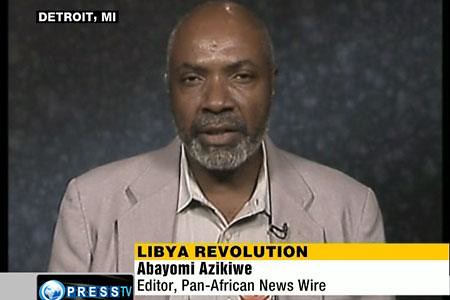
By AbayomiAzikiwe
Editor, Pan-African News Wire

Note: The following is a lecture delivered to the Adult Learning Institute held at Oakland Community College Orchard Ridge Campus in Farmington Hills, Michigan on May 2, 2012.
---------------------------------------------------------
Unbeknownst to the majority of people in the United States, the Pentagon is directing increased attention to the African continent. The formation of the United States Africa Command (Africom) in 2008 signaled this trend which had been developing for at least a decade.

This should not be surprising considering the history of the U.S. and its European antecedents. Since the mid-15th century Western European nations have been involved with Africa through the Atlantic Slave Trade and later the colonization of the continent. The profitability of the colonies of the Western hemisphere is directly related to the exploitation of African labor.

Although the official history of the U.S. prides itself on the notions of freedom of the individual, the capacity for reforms and amendments to the constitution, there is also the resistance to change embedded deeply in the fabric of political culture, law and the economic structures of society. The slave system in the U.S. was introduced by the British colonialists during the second decade of the 17th century in Virginia.

From the time of 1619 to 1865, some two-and-one-half centuries, slavery was a profitable economic system that provided the wealth and technology that sprung America to the industrial position that it occupied during the latter decades of the 19th century. By the turn of the 19th and 20th centuries, the so-called Spanish-American war would usher in a new era of imperialism that became increasingly dominated by the United States.

With specific reference to the economic system of slavery and its justification within the American legal system, African American historian W.E.B. DuBois wrote in his seminal work on the failure of Reconstruction in the aftermath of the civil war, that “Negro slaves in America represented the worst and lowest conditions among modern laborers.” (Black Reconstruction in America, 1935)

DuBois continued pointing out that “One estimate is that the maintenance of a slave in the South cost the master about $19 a year, which means that they were among the poorest paid laborers in the modern world. They represented in a very real sense the ultimate degradation of man (and woman). Indeed, the system was so reactionary, so utterly inconsistent with modern progress, that we simply cannot grasp it today. No matter how degraded the factory hand, he is not real estate.”

Exemplifying the total degradation of the African under the slave system in the U.S. was the infamous Dred Scott decision of 1857. DuBois recounts that “The whole legal status of slavery was enunciated in the extraordinary statement of a Chief Justice (Taney) of the United States that Negroes had always been regarded in America ‘as having no rights which a white man was bound to respect.’”

Within the sphere of the process of production under slavery in the U.S., DuBois emphasizes that “Under the competition of growing industrial organization, the slave system was indeed the source of immense profits. But for the slave owner and landlord to keep a large or even reasonable share of these profits was increasingly difficult. The price of the slave produce in the open market could be hammered down by merchants and traders acting with knowledge and collusion. And the slave owner was, therefore, continually forced to find his profits not in the high price of cotton and sugar, but in beating even further down the cost of his slave labor.”

Another historian who studied the impact of the slave system on the development of American civilization was Trinidadian C.L.R. James. He wrote in 1970 that “the triangular trade in sugar, rum and slaves in an instance of programmed accumulation of wealth such as the world has rarely seen. ‘American slavery’, says one author, ‘was unique in the sense that for symmetry and precision of outline, nothing like it had ever previously been seen.’ The element of order in the barbarism was this: the rationalization of a labor force upon which the whole process of colonization depended had the African at its most essential point. If he (or she) had not been able to work or sustain himself (or herself) or learn the language or maintain co-operation in his (or her) social life, the whole question of America as a distinct civilization could never have arisen. We might be then talking about a sort of New Zeland or perhaps Canada.” (James, The Future in the Present, 1980)

Yet even New Zeland and Canada could not have become capitalist states allied with imperialism without the forced subjugation and removal of the indigenous peoples of those lands. Canada, had been a slave territory under the British where the system was eliminated decades prior to the Civil War in the U.S. and consequently became a haven for runaway Africans fleeing the exploitative system to the south.

From Colonialism to the Cold War (1900-1990)

As a result of the Atlantic Slave Trade, colonialism was instituted in North America, the Caribbean and Latin America. The Haitian Revolution of 1791-1803 illustrated profoundly the fragility of the slave and colonial system and more importantly the capacity of human beings, no matter how degraded, oppressed and exploited, to organize, rise up, rebel and take power from the slave masters.

Between the period of the Spanish-American War, as we referenced earlier, to the conclusion of World War II, the industrial and technological advancement of the U.S. reached historic levels. The advent of the assembly line, speculative finance and the expansion of global markets for industrial products, placed the ruling class within the U.S. in a dominant economic and political position in relationship to its European counterparts and imperial Japan.

The character of the battles fought during World War II spared the U.S. from the destruction that destroyed the economic and social fabric of Europe and Japan. War production in the U.S. and the indebtedness of Europe catapulted the ruling elite in America to a dominate position within the world capitalist system.

After 1945, it was only the Soviet Union that was in a position to effectively challenge U.S. hegemony internationally. Other socialist-oriented revolutions in Korea (1945-48), China (1949), Vietnam (1945-54) and Yugoslavia (1945) provided additional challenges to the capitalist system both militarily as well as providing an alternative model for the organization of society, the planning of a national economy and the character of international relations.

This perceived threat to U.S. dominance resulted in the so-called Cold War. This war became hot in 1950 with the beginning of the Korean War that lasted for three years and involved the People’s Republic of China.

In Vietnam, the U.S. was keen to ensure French dominance which inevitably was defeated at Dien Bien Phu in 1954. By 1961, the U.S. would send advisers to Vietnam in an effort to stop communism. In 1965, hundreds of thousands of occupation troops entered southeast Asia and remained there for a decade.

The Cuban Revolution of 1959 soon became socialist-oriented and the U.S. response to this phenomenon in its so-called “backyard” almost led to nuclear war with the Soviet Union in 1962. The Cuban Revolution encouraged the U.S. to enter the Dominican Republic in 1965 in an attempt to prevent another socialist intervention.

That same year in Indonesia, the potential for the seizure of power by the Communist Party, the second largest at the time just next to China, brought about the deaths of hundreds of thousands of people.

With specific reference to Africa, the U.S. government after World War II paid lip service to the anti-colonial struggle, but in actuality supported the perpetuation of the status-quo. Although relationships between the U.S. administration and progressive African states were established in Ghana, Guinea, Algeria, Egypt, Tanzania and others, nonetheless, it became obvious even during the 1950s and 1960s, and was documented later, that successive Washington administrations were more concerned about containing Soviet, Chinese and Cuban influence than assisting a genuine process of de-colonization and independence.

Algeria, a former French colony that won its liberation through a protracted armed struggle between 1954-1961, sought relations with Washington. However, even under the Kennedy administration there were efforts to discourage Algiers from enhancing its cooperation with revolutionary Cuba. The invasion of Algeria by Morocco in 1963 was encouraged and engineered by the U.S. as a means of stifling and reversing the African Revolution.

In Ghana under Kwame Nkrumah in 1966, a police and military coup was masterminded by the Central Intelligence Agency (CIA) and the State Department. These facts came out during the revelations of the 1970s in the aftermath of the Watergate scandal and the declassification of intelligence documents.

In reference to South Africa, African National Congress (ANC) leader Nelson Mandela was thrown into prison in 1962 after he had traveled to Algeria for military training provided by the late Ahmed Ben Bella of the National Liberation Front (FLN). It was the CIA operating in league with the racist apartheid regime that brought about the arrest and prosecution of Mandela who spent over 27 years in prison.

The former Portuguese colonies of Angola, Mozambique and Guinea-Bissau represented a lifeline for Lisbon. Portugal was a member of the North Atlantic Treaty Organization (NATO) and enjoyed the support of the U.S. in its more than a decade of war against the liberation movements in these former colonies.

Even after the independence of Angola in 1975, the U.S. collaborated with the racist South African Defense Forces (SADF) and the reactionary UNITA and FNLA guerrilla groups in an effort to undermine the genuine and total liberation of this oil-rich Southern African nation. It was the intervention of Cuban internationalist forces in Angola between 1975-1989 that ensured the defeat of the SADF and consequently lead to the independence of Namibia. After the independence of Namibia in 1990, the apartheid regime, which benefited from hundreds of millions of dollars of U.S. corporate investment and military assistance, agreed to release Nelson Mandela and other political prisoners in South Africa and enter into serious negotiations with the liberation movements for a transfer of power.

U.S.-Africa Relations in the Post-Cold War Period

Beginning in the late 1980s, the socialist states of Eastern Europe unraveled. In 1991 the Soviet Union collapsed.

Yugoslavia, which had pursued an independent socialist path, broke-up over the course of the 1990s through civil war, partition and the eventual U.S.-NATO bombings of 1999.

China, although remaining socialist, shifted its domestic and foreign policy to accommodate large-scale trade and investment with the U.S. after the death of Mao Tse-Tung in 1976 and the ascendancy of Deng-Tsao-Ping. Many of the states in Africa which had proclaimed themselves socialist began to reverse policies related to state control of economic planning and anti-imperialist foreign policy.

Yet how has these developments impacted U.S. foreign policy toward Africa? If there is no real threat of socialist influence, why has the Pentagon increased its military involvement on the continent?

Why was the U.S. Africa Command (Africom) created in 2008? Has the establishment of a Pentagon base in the Horn of Africa nation of Djibouti increased instability in East Africa that could lead to a more unstable political situation in both East and Central Africa?

The answer to these questions lies within the actual developments in Africa over the last five years. Let us examine events in several African states and the role of the U.S. and its allies in the region.

Libya: A Humanitarian War?

The 2011 war against the North African state of Libya represented the first full project of the U.S. Africa Command (Africom). Since Libya’s Revolution in 1969, the U.S. had been at odds with the country and its leader Col. Muammar Gaddafi.

Libya is a former Italian colony and during World War II the U.S. moved in and began to construct the Wheelus Air Force Base. As the Cold War escalated after the War, Libya became an important outpost for the Pentagon.

When Gaddafi came to power the U.S. air base was closed and the country nationalized its oil resources. Later it was determined that Libya encompassed the largest known oil reserves on the continent.

In the early 1980s relations between the U.S. and Libya worsened with the shooting down of Libyan planes by the U.S. Air Force in 1981. In 1986, Libya was bombed in two cities, Tripoli and Benghazi, under the Reagan administration. The country’s government was accused of being behind an attack on a night club in West Germany that was frequented by U.S. troops stationed in the region.

Economic sanctions and a travel ban was imposed on Libya by the U.S. This state of affairs lasted until 2003, when on the eve of the war against Iraq, the U.S. moved to “normalize” relations with Libya in exchange for its purported disarmament of “weapons of mass destruction.”

Trade increased between Libya and the U.S. as well as several Western European states. This state of affairs continued until 2009 when a Libyan was released from a Scottish prison on humanitarian grounds.

He had been convicted during the 1990s for alleged involvement in the bombing of an airliner over Lockerbie, Scotland. Of the two Libyans put on trial for this action, only one was convicted. At the time of his release the case was under appeal and may very well have been overturned.

Relations worsened between the U.S. and Libya after 2009, and by February 2011, when a rebellion erupted in the east of the country, the U.S. and NATO intervened through an arms embargo, a naval blockade and a massive bombing campaign that resulted in 26,000 sorties and nearly 10,000 airstrikes. The rebel Transitional National Council (TNC) was installed as the “legitimate” government of the country.

Approximately two million Libyans and foreign nationals residing in the country were displaced, thousands died in the war and the consequent instability engendered by the rebel group, the air campaign, naval blockade and the freezing of over $160 billion in foreign assets has had regional implications that have spread to neighboring Mali, where a rebellion in the north of the country precipitated a military coup and the possible intervention of a regional armed force to ostensibly stabilize the situation.

Today Libya is more divided than during any period of its post-independence history with secessionist efforts in the east, increased fighting in the south and the failure of the NTC to reign in militias under a national army.

Somalia: Another War for Oil?

In Somalia in the Horn of Africa, the involvement of the U.S. has extended back at least until the late 1970s when the Carter administration encouraged the-then military government of Mohamed SiadBarre to invade the Ogaden region of Ethiopia. After Somalia’s defeat at the hands of the Ethiopian military and Cuban internationalist forces then in the country to bolster its socialist orientation, the state of Somalia spun into instability and horrendous food deficits.

By 1991, the SiadBarre regime had collapsed under internal pressures and since this time there has really been no stable internationally recognized government in Somalia. In late 1992, thousands of U.S. Marines entered the country in “Operation Restore Hope,” which it was claimed at the time, was designed to provide humanitarian relief from famine.

In just a few months a national uprising was launched against the U.S. and United Nations presence in Somalia resulting in the deaths of many Marines as well as thousands of Somalians. Both the U.S. and U.N. forces withdrew in 1994, not to return until the recent period.

Since 2006, the U.S. has attempted to control the situation inside the country. The Transitional Federal Government (TFG) is essentially bankrolled by the U.S. and the African Union Mission to Somalia (Amisom) largely consists of U.S.-backed forces from Uganda, Burundi and Djibouti.

In October 2011, the Kenyan Defense Forces (KDF) invaded the south of Somalia in a bid to crush the Al-Shabaab Islamic resistance movement which has been labeled by the U.S. as a “terrorist” organization. It turns out that this intervention, “Operation Linda Nchi,” had been planned for two years between Africom, the TFG and the Kenyan government.

Despite this intervention as well, Somalia is still not stable and the humanitarian situation remains dire. The Pentagon and the CIA has deployed drones in Somalia resulting in the deaths of hundreds of nationals. These drones have fallen in displaced persons camps killing innocent civilians.

These attacks on Somalia is coupled with a formidable naval presence by the Pentagon and the European Union off the coast of Somalia in the Gulf of Aden, one of the most lucrative shipping lanes in the world. This presence is ostensibly geared toward fighting piracy which has been deemed a major problem in the region.

Somalia has been determined to be a major source of oil reserves. Drilling and speculation are taking place in the breakaway region of Puntland in the north by Canadian and British firms. U.S. firms claim to have purchased concessions for oil drilling and like Libya, these projects will inevitably be conducted by private corporate interests.

Kony 2012: Special Forces and Advisors to the Rescue

Perhaps the most well publicized U.S. military adventure in Africa recently has been the so-called “Invisible Children” campaign. On October 14, 2011, the Obama administration announced that 100 Pentagon Special Forces and advisors were being dispatched to four states in East and Central Africa to track down Joseph Kony, leader of the Lord’s Resistance Army (LRA).

The LRA has been largely defeated in northern Uganda where it was founded. The remnants of the group have scattered into the Central African Republic, South Sudan and the Democratic Republic of Congo (DRC).

Uganda is emerging as another oil producing state and has close political, military and economic ties to the U.S. The DRC is a treasure trove of strategic minerals and South Sudan is awash with oil.

Whether Kony is captured or killed the U.S. involvement in the region will continue and be enhanced. The U.S. is becoming more dependent upon oil imports from Africa, now approximately 25 percent of its overall supply from outside the country.

The Role of China

We would be remiss not to mention the growing role of China in African affairs. As I wrote in 2010, “the strongest growth in trade has taken place between Africa and Asian states, with the People’s Republic of China being the most significant. China’s trade with Africa was recorded at $93 billion in 2008, making it the second largest partner after the U.S. In Nigeria alone, a recently signed oil cooperation agreement with China is reported to involve between $32 billion to $50 billion in trade and investment.” (Africa & Imperialism)

This same article continues noting a United Nations report indicating “that trade between Africa and China, had increased by 1,000 percent during the period between 2000-2008.” As of 2010, “China accounted for 11 percent of the continent’s external trade, with the bulk of transactions taking place in the sectors of primary products, including fuel and minerals.”

Conclusion

These are some of the important issues that must be evaluated when assessing U.S.-Africa relations. The source of this relationship has been economic since the Atlantic Slave Trade and the period of direct colonial rule.

With the U.S. and Europe facing the worst economic crisis since the Great Depression, we will see enhanced efforts aimed at the capturing and domination of foreign resources and trade relations that are clearly linked to the massive re-structuring of the labor market inside the U.S.

Whether this intervention in Africa will continue on its present course depends upon political developments inside the U.S. and the level of opposition in Africa. What is clear is that until a more balanced and equitable system of trade and international relations develops, people inside the United States will continue to pay a heavy price for the dependence upon oil and other strategic resources in Africa and other parts of the world.
Detroit May Day March Extends From Clark Park to Downtown; Police In Show of Force at Grand Circus

Protesters march in Detroit as part of May Day rallies

May 2, 2012
By Niraj Warikoo
Detroit Free Press Staff Writer

Approximately 300 to 400 protesters with Occupy Detroit and supporting groups walked through Detroit on Tuesday as part of the worldwide May Day rallies.

In contrast to other cities that saw clashes with police, the protests in Detroit were peaceful, and no arrests were made.

There was a brief standoff in Grand Circus Park with police as some protesters tried to set up a tent, but they relented after officers asked them not to pitch the tent.

The protesters started at noon in Clark Park in southwest Detroit, where immigrant and Latino advocates gathered with them to call for an end to deportations. The crowd then walked to the abandoned Michigan Central Station, the federal building in downtown Detroit, a bus station and then Grand Circus Park -- the site of an encampment last fall by Occupy Detroit. At the front of the crowd, protesters carried two big banners that read "Occupy Detroit" and "May Day 2012."

Chanting "banks got bailed out, we got sold out," they walked though city streets in a protest against growing income inequality and what they say is the excessive power of Wall Street, corporations and the top 1%. At Grand Circus Park, protesters ate hummus and tabbouleh served from a table as speakers and musicians addressed the crowd from a microphone. Four police officers on horseback and other officers were in the park keeping watch.

The Detroit rally was supported by some local unions, immigrant groups, environmental groups and leftist organizations. May 1 is a day that traditionally has seen demonstrations by labor or immigrant groups.

May 1 rallies are rooted in an incident in Chicago in 1886 called the Haymarket affair, which saw clashes between labor activists and police.

Contact Niraj Warikoo: 313-223-4792 or nwarikoo@freepress.com


May 2, 2012

May Day gets Occupy Detroit protesters revved up

By JOSH KATZENSTEIN AND LAUREN ABDEL-RAZZAQ / The Detroit News

Detroit — In October, Jessica Dawl was among the first volunteers to organize and serve food to the Occupy Detroit protesters camped out at Grand Circus Park.

On Tuesday, sporting a bandanna, sunglasses and a smile, she was back at the park taking donations and handing out cookies to people waiting in line for free food.

"This is a reminder," the 26-year-old said, "to let the public know that we are still here."

Dawl was one of about 200 protesters who converged on Grand Circus Park on Tuesday afternoon, clamoring for reform for immigration, education and other issues as part of a May Day celebration.

Members of Occupy Detroit and other groups gathered to listen to a live band, to enjoy vegetarian dishes and to pass out fliers. The occupiers' request for an overnight permit was rejected, said Inspector Don Johnson of the Detroit Police Department. When some protesters tried to set up a tent, police circled them and told them to remove it.

Grand Circus Park closes at 10 p.m. and protesters moved out of the area they had been camping at to comply with police warnings.

Four mounted police and six uniformed officers patrolled the area Tuesday evening. Police didn't expect the protesters to interfere with the Tigers game at nearby Comerica Park.

Thomas Mahler, an Occupy Detroit supporter, said: "Even if we can't stay here tonight, we will be camping this summer. We'll be back and the city will continue to waste money," the 24-year-old said. "Out of all the city's problems, Occupy Detroit setting up tables to feed the homeless shouldn't be one of them."

Earlier in the day, about 250 people walked from Clark Park to Maybury Elementary, one of two public schools in southwest Detroit in danger of closing.

Protesters also walked past Western International High School, shouting, "Save our schools," and "Education, not deportation."

"We have to be the change we want to see in this city," said 15-year-old Katinah Milligan, a ninth-grader at the Detroit School of Arts.

The group also walked through Mexicantown to the abandoned Michigan Central Station.

jkatzenstein@detnews.com
(313) 222-2019


Occupy Detroit Disperses After May Day Rally

The Huffington Post | By David Sands Posted: 05/ 2/2012 6:30 pm Updated: 05/ 2/2012 6:39 pm

After leaving Grand Circus Park Tuesday night, approximately 20 Occupy Detroit protesters moved to occupying the statue at Campus Martius Park around 11:15 p.m.

Detroit Police Department officers enforcing a 10 p.m. curfew cleared a group of about 20 Occupy Detroit members out of Grand Circus Park Tuesday night. Earlier that evening, members of the organization had pledged to spend the night at the park, where they had set up an earlier Occupy Wall Street-inspired protest encampment last fall.

The overnight protest came after a day of marching and activity to celebrate May Day, coordinated with protests and Occupy movement actions around the country.

There were no arrests, but Occupiers called the police presence dramatic.

"There were about 50 police lined up in a phalanx," said Occupy Detroit member Erik Shelley, who was present Tuesday night. "Police cars lined up entire length of the park. There was a black bus for taking people away."

The Detroit Police Department would not verify the number of officers deployed that evening, and a spokeswoman did not return a request for further comment.

Occupy Detroit member Mark Tucker said police pulled a device, which he thought was a sound cannon, from a suitcase and pointed it at a small crowd gathered by the Hazen S. Pingree statue at the corner of Woodward and Adams. (Shelley said he thought the device was a P.A. system.) Tucker said an officer then declared the gathering an illegal assembly and asked the crowd to disperse.

According to Tucker, members of the group told police they had a legal right to assemble on the public sidewalk, but were unable to persuade the officers to let them stay.

Attorney Kathy Murphy, who monitored the protest as a legal observer for the National Lawyers Guild, said it was her understanding that police refused to allow people to sit on the sidewalk because they considered it part of the park.

"It's my opinion, and that of the NLG, that people have a first amendment right to be on the sidewalk at any hour as long as they're not interfering with pedestrian traffic," she said.

The group took consensus and decided to leave the scene, even though some members had said they were willing to risk arrest. The two-dozen Occupiers then moved on to rally with signs at another nearby Campus Martius Park, then proceeded to march along Woodward Ave. until approximately 7 a.m. Wednesday morning. Tucker called a this activity a "mobile encampment."

Tucker said he's glad the group stuck up for members' constitutional right to assemble, even though they did not end up spending the night in the park.

Sarah Coffey, another member of Occupy Detroit who was present during the confrontation with police, said it was a learning experience for younger members about what to expect from law enforcement.

"They were definitely sending a clear message that things are not going to be the same as last year," she said.

Occupy Detroit had a largely positive relationship with the Detroit Police Department during its month-long encampment in Grand Circus Park last fall. Activists chose to leave the park voluntarily when their permit expired in mid-November.

BRICS' Sabres Rattle As Global Currency War Heats Up

Brics' sabres rattle as global currency war heats up

MATT QUIGLEY | JOHANNESBURG, SOUTH AFRICA - May 02 2012 12:44

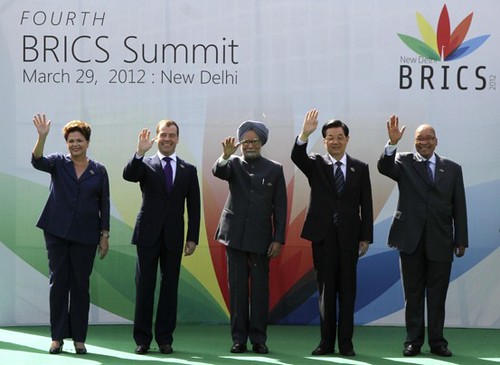
As political rhetoric heats up, fears are mounting that a global currency war may escalate -- concerns explicitly expressed by the Brics countries -- Brazil, Russia, India, China and South Africa -- in a recent communiqué.

"Excessive liquidity from aggressive policy actions taken by central banks to stabilise their domestic economies have been spilling over into emerging economies," they wrote following a summit in India, "fostering excessive volatility in capital flows and commodity prices".

In diplomatic speak, that's the equivalent of "knock it off". The implied threat -- particularly from Brazil -- is "or else".

Driving the point home, Brazil's President Dilma Rousseff reiterated the group's concerns to US President Barack Obama at meeting in Washington in April. "Expansionist monetary policies," she said, "ultimately lead to depreciation in the value of the currencies of developing countries, thus impairing growth outlooks."

What exactly is going on, and should South Africa worry? What is a currency war?

"The first point to note is that we use the term very loosely," John Cairns, a currency strategist at Rand Merchant Bank told the Mail & Guardian.

'More of a cold war than a hot war'

At the tamest end of the spectrum, currency wars are more a battle of words than a battle of actions. Politicians, concerned about their own countries' competitiveness in global markets, complained that other countries are gaining an unfair advantage by cheapening their currencies, making their exports cheaper than those of their competitors. Cairns characterised this type of conflict -- which he said is ongoing -- as "more of a cold war than a hot war".

Brazil's finance minister Guido Mantega first alleged that the developed world's monetary policies were hurting emerging markets, like his own, in 2010. Brazil has been complaining about the US ever since. Meanwhile, the US is peeved at China, as is Japan. And Switzerland is far from pleased with its European neighbours. The situation is tense, but manageable.

At the other end of the spectrum is an all-out currency conflagration. This can get ugly as governments across the world deliberately devalue their currencies in an attempt to gain a competitive advantage. The problem is that devalued currencies -- although they make exports cheaper -- make imports more expensive, diminishing purchasing power.

These race-to-the-bottom conflicts are rare. But when they occur, they can have disastrous consequences for international trade and, in turn, global growth. The most notable example of a truly global "hot" currency wars occurred during the Great Depression.

What could trigger an escalation?

What could turn a war of words into something more dangerous? A third round of quantitative easing (QE3) by the US Federal Reserve -- a programme that increases money supply by flooding banks with capital in an effort to promote increased lending -- is viewed as a particular threat by Brazilian and other emerging market officials.

In repeated drives to stimulate growth, the US's central bank has purchased $2.3-trillion in bonds in two previous rounds of quantitative easing. Most risk-sensitive emerging market currencies -- including the rand -- appreciated after the moves as money flowed into the developing world in search of higher returns.

Late last year, in a third bid to support the country's fragile recovery, the US federal reserve replaced $400-billion in short-term debt with long-term debt under a programme known as Operation Twist. This latest stimulus measure -- designed to lower long-term interest rates -- will end in June.

Speculation grew that, following a recent string of disappointing economic data, an announcement of a new stimulus initiative was increasingly likely sometime over the coming months. Figures released last week showed that economic growth in the US slowed to 2% in the first quarter of 2012 from 3% growth a quarter earlier. And a jobs report scheduled for release on Friday may show continued weakness in the US's labour market.

Cairns indicated that "QE3 would prompt an escalation in hostilities". Annabel Bishop, group chief economist at Investec, concurred via email. "Should QE3 occur then this is very likely," she wrote.

But QE3 is not the only possible flashpoint on the horizon. The European Central Bank (ECB) has a €1-trillion cheap money programme of its own, the long term refinancing operation (LTRO). Under this initiative, eurozone banks were allowed to borrow money from the ECB at a 1.0% interest rate, repayable in three years.

Foreign demand

In December 2011, European banks borrowed €489-billion from the ECB. In February, they borrowed an additional €529.5-billion in a second round LTRO. Many economists and investors are now speculating that, given Europe's continuing economic troubles, a third round is in the offing.

Speaking in Brussels last week, ECB president Mario Draghi called for a growth compact for the eurozone and said that, "growth should be supported by foreign demand, the very low short-term interest rates as well as out non-standard measures". Markets will be watching his comments at a press conference following Thursday's meeting of the ECB's governing council for hints at future policy actions.

As Annabel Bishop, group chief economist at Investec explained, "continued LTRO operations or any other cause of higher global liquidity, even from rising petro dollars" are amongst the developments people should watch.

What are the implications for South Africa?
A weaker dollar would result in a stronger rand. This would make South African exports more expensive, but would also help to ease domestic inflation -- rising prices.

"Rand strength would cause inflation to drop a lot more rapidly than expected," wrote Bishop. "Exports would likely weaken further, harming growth, and both [of] these outcomes would then push the timing of the first domestic rate hike out."

Andre Roux, an economics professor and director of the Institute for Futures Research at the University of Stellenbosch said a no-holds-barred conflict was unlikely. "If everybody engages in a race to the bottom," he said, "in relative terms, you're neither better nor worse off."

Cairns said continued policy uncertainty in the US and Europe, and the resultant volatility in the rand's exchange rate, was a bigger threat to South Africa than a deepening currency conflict.

Source: Mail & Guardian Online
Web Address: http://mg.co.za/article/2012-05-02-brics-nations-rattle-sabres-as-global-currency-war-heats-up

May Day Celebrated Globally

May Day celebrated globally

Wednesday, 02 May 2012 00:00

JOHANNESBURG/PARIS. — A majority of countries observed International Workers Day yesterday as a public holiday.

Workers’ Day, also known as May Day, originated within the historical struggles of workers and their trade unions for solidarity between workers and people, and in their struggles to achieve fair employment standards. In a show of unity,

South African President Jacob Zuma was expected to address Cosatu’s main Workers’ Day celebration in Bloemfontein alongside Cosatu president S’dumo Dlamini and SACP general secretary Blade Nzimande.

Thousands of peaceful protesters took to the streets across Greece for May Day rallies. In Athens, Greece’s two largest unions, representing private and public sector workers, marched towards parliament in anti-austerity rallies.

Five days ahead of the final round of France’s presidential election a battle for the hearts and minds of workers was underway yesterday with incumbent Nicolas Sarkozy and trade unions summoning to rival rallies on International Workers’Day. Each year, on May 1, trade unions hold a march in Paris to promote the rights of workers.

The far right National Front party also holds a “patriotic” rally in the capital on the same date each year. This May Day brought a third rally, as Sarkozy, who is fighting for a second term, called on supporters to gather in Paris in celebration of “real work.?”

His call caused controversy. Trade unions accused him of trying to drive a wedge between unionised workers, mostly civil servants who support Hollande, and “real” private sector workers, whom Sarkozy claims to champion.

Sarkozy later retracted the “real work” comment, saying what he wanted was a “real celebration” of work.

The union and pro-Sarkozy rallies, both planned for yesterday afternoon, were shaping up to be a numbers contest. Marine Le Pen’s morning rally was closely watched for signs of which of the two finalists she supports. She scorned Sarkozy’s overtures, damning him and Hollande equally as people she blames for France’s economic woes and loss of sovereignty to Europe and international finance.

“On May 6 it’s not a president who is to be elected, but a simple employee of the European Central Bank, a Brussels sub-controller of finance, charged with applying the Commission’s decisions without question,” she said.

In other parts of Europe also fed up with high unemployment and austerity, May Day protesters took to the streets in a wave of anger that threatened to topple leaders in Paris and Athens.

From the eye of the eurozone debt storm in Madrid to the streets of Paris and Athens marchers spoke of job losses, spending cuts and hard times. More than two years after the eurozone sovereign debt crisis erupted, frustration with austerity is boiling over across the continent as voters wait in vain for signs of the economic pay-off.

Thousands of Indonesian workers held Asia’s biggest May Day rally, demanding better pay and protection of job security, watched warily by a heavy police and army presence.

Carrying banners saying “raise our salaries” and “stop out-sourcing contracts”, more than 9 000 workers gathered at Jakarta’s main roundabout before marching to the state palace.

Raising the minimum wage was the main demand also for about 5 000 workers, domestic helpers and activists who held a noisy procession through central Hong Kong, clashing cymbals and chanting demands on the city’s incoming government.

In Manila, about 3 000 workers and activists marched to the presidential palace, bearing a giant effigy of Philippine President Benigno Aquino, which depicted him as a dog obedient to foreign capitalists. They carried banners saying “raise our pay now” and “fight for socialism”. .

Russia’s president-elect Vladimir Putin and out-going head of state Dmitry Medvedev yesterday joined over 100 000 people in a Soviet-style mass march through

Moscow to celebrate the May 1 labour day. Putin and Medvedev led a column of workers through central Moscow as participants unfurled banners for their factories and waved Russian flags to the sound of kitsch orchestral music. Putin will be inaugurated as president on May 7, after his March 4 election victory, which the opposition claims was de-legitimised by fraud. In Kuala Lumpur, Malaysia, some 500 people rallied, calling for a higher minimum wage than the one announced Monday by Prime Minister Najib Razak. Najib's plan for the country’s first-ever minimum wage calls for minimum monthly pay of US$297 for private-sector workers. — Sapa-dpa/AFP/AP.

Ex-Lebanese Information Minister Censures US Senator's Visit to Lebanon

Ex-Lebanese informatin minister censures US senator's visit to Lebanon

Thu May 3, 2012 4:29AM GMT
presstv.ir

Former Lebanese Information Minister Michel Samaha has censured a recent visit by US Senator Joseph Lieberman to Lebanon and its northern border with Syria, Press TV reports.

Samaha strongly criticized the visit by Lieberman, saying the trip was mainly aimed at making “connections with the armed terrorists inside Syria.”

“What does Mr. Lieberman have to do with the Lebanese-Syrian border?”

The former Lebanese minister made the comments in an interview with Press TV on Wednesday.

Lieberman arrived in Lebanon on Wednesday and met with Lebanese President Michel Sleiman, Prime Minister Najib Mikati and other senior officials.

He expressed support for the Syrian opposition in a press conference after the meetings in Beirut. The US senator claimed he was “concerned that people in the region and throughout the world have not done enough to be supportive of the opposition in Syria.”

Lieberman and Republican Senator John McCain have advocated the arming of the Syrian opposition against the government of President Bashar al-Assad.

Lieberman also visited the northern Lebanese region of Wadi Khaled, located near the Syrian border, on Wednesday. The region houses groups of those Syrians seeking refuge in Lebanon.

In addition to Lieberman, US Assistant Secretary of State for Near Eastern Affairs Jeffrey Feltman was also in Lebanon on Wednesday to hold talks with leaders of the March 14 coalition of Lebanon.

The Wednesday visit by the US officials to Lebanon comes at a time when armed groups continue random attacks in Syria despite a ceasefire that took effect on April 12.

The Syrian Observatory for Human Rights said on Wednesday at least 15 Syrian security forces were killed in an attack by armed groups in the northern province of Aleppo.

The ceasefire was part of a six-point peace plan proposed by UN-Arab League envoy Kofi Annan in March.

Michel Samaha also told Press TV that the countries “hosting terrorists and giving them arms, ammunition and money are undermining the peace plan.”

Lieberman and the delegation accompanying him visited Saudi Arabia and Qatar prior to the trip to Lebanon.

United Nations Security Council Threatens Khartoum, Juba With Sanctions

UN Security Council threatens Khartoum, Juba with sanctions

Wed May 2, 2012 11:33PM GMT
presstv.ir

The United Nations has threatened both Sudan and South Sudan with non-military sanctions if they fail to halt fighting on their common border.

On Wednesday, the UN Security Council unanimously approved a resolution, which calls on Khartoum and Juba to “immediately cease all hostilities" by giving a written commitment to end fighting by the end of 48 hours, and to resume negotiations within two weeks under an African Union (AU) roadmap to ultimately reach an agreement in the course of three months, AFP reported.

According to the resolution, if either side fails to abide by the terms, “additional measures" under Article 41 of the UN Charter, which obligates non-military sanctions, will be taken.

The Security Council condemns repeated cross-border conflicts between the two sides and the South's seizure of Sudan’s main oil-rich town of Heglig last month.

On April 24, the AU had also asked the two neighbors to end hostilities and engage in peace talks.

Heglig, located in southern Sudan, is internationally regarded as part of Sudan, something South Sudan disputes.

Juba’s troops occupied Heglig on April 10. Ten days later, Khartoum announced that the Sudanese Army had forced Southern Sudanese troops out of the town.

Earlier on Wednesday, Sudanese officials said they had begun pumping oil from Heglig again after repairing the town’s oilfield.

Sudan accuses South Sudan, which seceded from the Republic of Sudan in July 2011, of supporting anti-government rebels operating in the Darfur region and the southern states of Blue Nile and South Kordofan.

South Sudan’s independence took place after decades of conflict with the north. The new oil-rich nation is one of the least developed countries in the world, with one in every seven children dying before the age of five.