Saturday, May 04, 2013

Cuba Remains Committed to Socialist Development

Havana. May 3, 2013

Cuba remains committed to its irrevocable decision to advance its socialist, national, original, democratic and freely participative socialist development

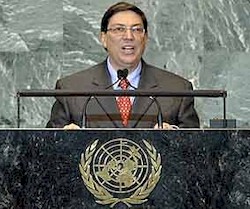
• Speech by Bruno Rodríguez Parrilla, Minister of Foreign Affairs of the Republic of Cuba, at the presentation of the national report to the Human Rights Council’s Universal Periodic Review

Geneva, May 1, 2013

Mr. President:

Cuba is honored to present its second National Report to the Human Rights Council Universal Periodic Review (UPR) mechanism. It does so proud of its humanistic work and its achievements in guaranteeing the exercise of all human rights for all its citizens.

The economic, political and media blockade imposed by the United States, which Cuba has resisted, undefeated, for more than 50 years, is a massive, flagrant and systematic violation of human rights which provokes damage, shortages and suffering, but it has not detained the country’s equal opportunities, equity in the distribution of wealth, or social justice.

Persistent efforts on the part of the United States to impose a "regime change" on Cuba are a serious violation of the nation’s right to self-determination. These efforts have been unable to prevent the active, democratic and direct participation of its citizens in the construction of constitutional order, in government decisions and in the election of its authorities.

Before this Council is a country without homeless persons or people deprived of dignity, in which no child lacks an education of quality, the sick enjoy sterling medical attention and the elderly social protection. A nation in which the rights of workers, farmers, intellectuals and students are protected by law. A country with citizens’ security, without organized crime, or drugs. Before this Council is a united people, with profound social cohesion. A state in which no one has been executed without trial, tortured or disappeared, and there are no kidnappings or secret prisons.

This exercise coincides with International Workers’ Day, joyfully celebrated in Cuba’s plazas and streets by millions of compatriots and hundreds of friends from all over the world. They do so as free women and men, in defense of rights that have been won. They are not masses of justly angry people, workers on strike, students besieged by education costs and debt, immigrants persecuted by self-interest, racism and xenophobia. We offer our solidarity to all those fighting – everywhere on the planet – for human rights for all, for peace, for development, for the survival of humanity, threatened by colossal military arsenals and climate change.

Mr. President:

This report is the result of a wide-ranging and participative consultation process which involved countless government institutions, Parliament, civil society organizations and other relevant institutions.

The follow up on the recommendations accepted in the first UPR cycle was the principal objective of the work of the National Group, which coordinated the process and prepared the report.

From Cuba’s first presentation to this mechanism in 2009 through today, significant changes have taken place in the economy and society. Advances have been made in the institutional perfection process, greater citizens’ participation and control as a fundamental aspect of our democracy, and the undertaking to achieve sustainable development with social justice has been maintained.

Cuba remains committed to its irrevocable decision to advance its socialist, national, original, democratic and freely participative socialist development.

We did not come here to present a completed task, nor do we pretend that the Cuban socialist model should be considered for anyone or everyone. Nor do we accept that there is a unique or universal model of democracy, and far less the imposition of the political system of Western industrialized countries which have entered into crisis. We likewise reject the political manipulation, hypocrisy and double standards frequently present in the debate on human rights issues.

Mr. President:

One of the most significant events since the previous session is the adoption by the National Assembly of People's Power of the Economic and Social Policy Guidelines, which constitute a body of decisions essential to the updating of the Cuban economic and social model and a government program.

The guidelines were adopted after an extremely wide-ranging popular debate in which millions of Cuban women and men formulated, with total freedom, more than 400,000 amendments modifying two thirds of the draft document, and voted on each one of its 12 chapters. This was a unique experience of citizens’ direct popular consultation in order to reach consensus on government economic, monetary and social policies, in con junction with measures to overcome the effects of the global economic crisis and problems of the Cuban economy without neoliberal austerity formulas, without saving banks at the cost of unjust social cuts.

Cuba has continued strengthening the democratic nature of its institutionality with laws, policies and programs of a popular and participative nature, in accordance with the people’s aspirations.

New regulations have been adopted to expand the legislative base of human rights, such as those related to social security, housing, employment and exclusively self-employed work, the granting of land in usufruct, among others. In parallel, advances are being made in perfecting and updating the country’s legal system, by implementing a number of modifications responding to the needs of Cuban society and the highest international standards in this context.

Outstanding among these amendments is the Migration and Travel Act, which has had a notable impact and has benefited the Cuban nation’s relations with its émigré community, despite constant manipulation of the migration issue.

Mr. President:

The legal system for the protection of human rights in Cuba is not confined to their constitutional drafting. The system is duly developed and implemented in other substantive, procedural regulations, in accordance with rights recognized in the Universal Declaration and other international human rights instruments.

Cuba has made significant advances in the realization of economic, social and cultural rights. Education has is universally accessible and is free of charge at all levels of teaching.

Through its various programs, the Cuban state guarantees every girl, boy and young adult the possibility and right to study within the National Education System and to continue in their education as far as their aptitudes and efforts allow them, with equality of opportunity. The First Vice President of the Council of State and Ministers was invested with the responsibility to protect and supervise children’s rights.

The right to education is assured for every child and young adult with any kind of mental or physical disability through the Special Education Program, in cases where the full integration of differently-abled children in general educational institutions is not possible. Attention is given to these children throughout the country in different forms and at all levels of teaching.

In the most recent UNESCO World Report on the follow-up of Education for All (2012), Cuba appears in 16th place, given its educational development indices. UNESCO recognized Cuba as the Latin American and Caribbean country to direct the highest proportion of its national budget to education.

Under the Martí doctrine of "being educated in order to be free," Cuba is outstanding in terms of its cultural development, its population’s full access to art and literature, for the preservation and defense of our culture and the enrichment of our spiritual values.

Cuba is equally recognized for its outstanding results and the high quality of its public health system, with universal coverage and free medical attention. With an infant mortality rate of 4.6 per 1,000 live births, Cuba has established indicators higher than those of many industrialized countries. With one doctor for every 137 inhabitants, Cuba is – according to the World Health Organization – the most endowed nation in this sector.

From 2009 through 2011, 19,371 mothers of children with severe disabilities received social security protection, thus giving them the possibility of personally caring for their children.

Attention to older adults is a priority and for that reason, multidisciplinary and cross-sector work is underway to guarantee quality of life for this growing population sector. Life expectancy at birth stands at an average of 78 years. In the next decade, more than 87% of Cubans will have exceeded 60 years of age.

Rights to life, freedom and personal security are sustained by the principle of respect for human dignity and constitute pillars in the conduct of Cuban authorities and the functioning of the entire society.

The five Cuban anti-terrorist fighters who are enduring unjust and long prison terms in the United States lack protection. They were tried without guarantees of due process, in an atmosphere of revenge and hatred, under a slanderous press campaign paid for by the District Attorney’s Office, subjected to prolonged solitary confinement, impediments to their legal defense, cruel, inhuman and degrading treatment, and a number of them have been deprived of visits from their families.

We are deeply concerned at the legal impasse which is sustaining the permanent and atrocious violation of human rights occurring on the illegal Guantánamo Naval Base, Cuban territory usurped by the United States, a center of torture and deaths in custody, where 166 detainees have been held for 10 years, without guarantees, a trial or defense. Currently, 100 of them are on hunger strike, with 17 of these, whose lives are in danger, being force fed through tubes. This prison and military base must be closed and this territory returned to Cuba.

Cuba recognizes, respects and guarantees religious freedoms without discrimination of any kind.

Approximately 400 religions and religious institutions exist in the country.

The freedoms of opinion, expression, access to information and the press are recognized for all citizens. The high educational and cultural level of the people; the social and public nature of communications media; the inexistence of giant for-profit media corporations which in other places impose economic and political interests; the absence of generally stultifying commercial publicity; and the exercise of popular power, all facilitate the material conditions which allow for the enjoyment of these freedoms.

The right to truthful information, free of charge, should be guaranteed by the state. The democratization of internet, the transference of resources and technology appropriate for social communication, is an urgent need. The technological and content monopoly; the political and military use of networks; linguistic and cultural discrimination must be ended. The digital gap must be closed.

The blockade prevents Cuba from connecting to nearby underwater cables, making services more expensive and access for the population more difficult. It prohibits international providers from supplying Cuba with services, software and technology. Our country is denied, for example, diverse Google services and access to international digital platforms.

Between 2010 and 2013, the United States has, as well, allocated 191.7 million dollars to finance organizations, paid agents, the subversive use of information technology and illegal radio and television broadcasts promoting regime change in Cuba. Additionally, millions more are channeled through special services and private groups. Some U.S. allies participate in this effort.

Mr. President:

In Cuba, equality and non-discriminatory policies are fully guaranteed. Advances in terms of gender equality are outstanding. The Cuban government continues to implement numerous laws, policies and programs directed toward reaffirming these.

The percentage of Cuban women in the National Assembly of People’s Power, our Parliament, has reached 48.86%. Cuba occupies second place on a world scale in terms of the percentage of female parliamentarians. For the first time, two women are now Council of State Vice Presidents, and women constitute 41.9% of this body. A third of our ministries are headed by women.

Institutional racism has been eradicated, ample opportunities for development and concrete benefits are provided for less favored sectors, and we are struggling to assure complete, effective equality of opportunity to sectors historically marginalized and to dysfunctional families. Not yet overcome are certain racial prejudices and stereotypes surviving from slavery during our colonial past and a neocolonial regime which institutionalized racism and racial segregation.

Complementary to government efforts and full protection under the law, a decision was made to assign a Council of State Vice President the task of following up on and supervising the struggle against racism and racial discrimination.

We are proud of our African heritage. We share, in a disinterested fashion, the fate of our African brothers and sisters in their battle against colonialism and apartheid.

Another area in which sustained progress is being made is the struggle against discrimination based on sexual orientation. The National Sexual Education Program has incorporated an ongoing educational strategy promoting respect for all sexual orientations and gender identities, establishing multiple opportunities for exchange based on the principles of equality and non-discrimination.

In relation to the promotion and protection of the rights of disabled persons, we have assured that the majority are able to access education and join the workforce. Support is offered in diverse arenas of social activity.

Mr. President:

Cuba’s penitentiary system is based on the principle of human betterment. Cuba fulfils all precepts of the Standard Minimum Rules for the Treatment of Prisoners and prioritizes a preventative focus through a number of social programs, among them those directed toward converting prisons into educational centers.

All inmates are guaranteed medical and dental attention free of charge, under the same conditions as the rest of Cuba’s population. They receive a wage commensurate with the work they perform.

In Cuba, 27,000,095 inmates, approximately half of the total, are studying at different levels in every penal institution in the country. Many of them are additionally learning a trade. This educational system has supported inmates’ reintegration into society and the workforce.

Mr. President:

Despite shortages and difficulties, in a disinterested fashion, our people have shared and share what we have with other nations, offering solidarity to contribute to the realization of human rights of other peoples around the world.

Since 2004, tens of thousands of citizens have regained their sight through Operation Miracle and 2.4 million ophthalmologic surgeries have been performed in 34 Latin American, Caribbean and African countries.

Since 2005, the (Henry Reeve) International Contingent of Doctors Specializing in Disaster and Serious Epidemic Situations has offered medical assistance to more than three million affected persons.

Cooperation with Haiti, a sister Caribbean country in need of resources for reconstruction and development, has been maintained. More than 12,000 Cuban collaborators have worked there.

Beginning in 2004, cooperation has expanded in literacy learning and development through the Cuban programs Yes, I can (UNESCO King Sejong Prize), I can read and write now and Yes, I can do more. As of November, 2012, 6.9 million people had completed the basic Yes I can literacy program and 976,000 had completed Yes, I can do more.

Mr. President:

Cuba maintains a high level of cooperation and interaction within procedures and structures established by the United Nations in terms of human rights, which are universally applicable, on a non-discriminatory basis.

We have always demonstrated out unequivocal openness to dialogue on all issues, with all states, on the basis of mutual respect, sovereign equality and recognition of the right to self-determination.

Cuba has established a positive dialogue with bodies created in accordance with international treaties in the area of human rights.

Since 2009, five National Reports have been prepared; three of which have been presented before the respective committees. Currently in the final stages of revision are Cuba’s Initial Report in accordance with the Optional Protocol of the Convention on the Rights of Children in relation to the sale of children, child prostitution and the use of children in pornography; as well as our Initial Report in compliance with the Convention on the Rights of Disabled Persons.

Cuba is a signatory to 42 international human rights treaties and has complied with all of their stipulations. Other human rights instruments, including two Pacts, are being studied by relevant authorities.

Our country maintains cooperative relations with diverse humanitarian and human rights organizations throughout the world, both within our own territory and in the development of collaborative missions internationally.

Mr. President:

We are open to constructive, respectful dialogue which adheres to the facts. We will provide necessary information and clarifications.

Thank you very much.

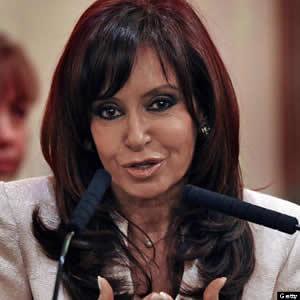
Argentine President Cristina Fernandez Visits Montana Garrison

Havana. April 25, 2013

Argentine President Cristina Fernández visits Montaña Garrison

I awoke on a cloudy day and am leaving in the sun. I have just visited the Montaña Garrison. It is surrounded by working class neighborhoods. You can see Miraflores in the distance. The head of the guard told me that Hugo always looked this way from his office there. How could he not! This is where he planned the insurrection against Andrés Pérez. The 4th Republic, the tragic epilogue to the Punto Fijo agreement, when the Caracazo broke out – or as Hugo liked to say, the Venezolazo – the final crisis of neoliberal policies.

Repression and death to the people. Coincidences in our history are no accident. Hugo rose up against this from the Montaña Garrison. He failed, "for now," as he announced upon surrendering.

They showed me a fully restored colonial era cannon. Every day at 4:25 pm the old cannon fires a salute to mark the time of his departure. 4:25? Eva died at 8:25. What capricious times! Don’t you think? When I returned to the broad, bright, outdoor patio, I could not avoid the infinite sadness. There were television cameras, reporters, commentators. Cilia, married to Nicolás, accompanied me. I politely asked all of them to withdraw. I wanted to be alone. Thank you, thank you very much. I hope you understand. I hope so.

The patio was left empty. I was accompanied only by the four hussars of Carbobo on duty, providing the permanent Honor Guard. From somewhere else, the sound of Hugo singing softly could be heard, as if it were floating. How he loved to sing! The sound of the water which surrounds his space could also be heard. But, for a moment, there was complete silence. Or at least, that is what I felt. I could only hear that some of the guards were crying with me. It is strange. Until today, I had not shed a single tear. Not on March 5, when I was informed. Not on March 6, when I attended the wake along with so many others. Florencia, on the other hand, cried so much, she had to leave, she couldn’t breathe. Me, nothing. It was as if I did not want to admit or accept it. I don’t know, some day, if I decide to, I’ll explain it to a psychologist.

I stayed there a while. I walked around the marble coffin, again and again. I see the carving of a phrase from one of Hugo’s speeches in which he mentions Alí Primera. Who is Alí Primera? A popular Venezuelan singer-songwriter, a member of the Communist Party, who died February 16, 1985. February 16, the day my son was born. Hugo departed the day my sister was born. Strange, when you get old, you start in with this business of dates.

His daughter, María brought it to me in Olivos, November 8, and she told me the story. As a young officer, her father would secretly listen to the songs, because they were prohibited in the military.

I read the speech excerpt and the date on which it was delivered. June 12, 2012. June 12, the date of Peron’s last speech. What is this with dates? I was in the Plaza de Mayo that day. 21 years old. The year, 1974. My mother! (She was there, too). So many things. So much history. Strange, the dates, the events. The visible connections. And the invisible ones, as well.

When I went down to see the portraits of Hugo in the galleries which surround the patio, Nicolás entered with those who were waiting outside and accompanied me around the area.

We entered a small, but precious, chapel. Two Virgins. One from the Valley and the other… Rosa Mística! The Virgin venerated in La Plata. I couldn’t believe it.

I told Nicolás that I was going to send an image of the Virgin of Luján to be placed in the chapel and I told them the story, of the Virgin, of course.

It was May, 1630. She was traveling on a wagon toward Brazil, carrying among other things, two boxes with contained images of Virgins. Attempting to cross the Luján River, in Buenos Aires, the wagon was stuck. They added more oxen, but no good. Finally, they removed of the boxes with the Virgins from the wagon, to no avail. They removed the second box and the wagon took off, with no difficulty at all. They loaded the box once more, and once again the wagon wouldn’t budge. The drivers were confounded and the Virgin stubborn. When they opened the box, the image of the dark skinned Virgin appeared. The wagon took off, but the Virgin stayed in Luján. She is now in the Basilica, where she is venerated as Argentina’s patron saint. They were fascinated by the story.

The restoration of the Basilica, was Nestor’s first act. I didn’t tell them that, but it’s true, too.

We continued touring the site. There are two halls with photographs which depict Hugo’s life. What most moved me was an immense mural. Hugo, from the back, walking in the rain, on October 4, his last and most glorious event, which was not, as some believe, the closure of his campaign. It was his last act of love. I understood that later, when I learned of his terrible, unbearable pain. Of his beyond-human sacrifice. My God!

I said to Nicolás, "This is the place. Don’t even think about taking him anywhere else, as magnificent as it might seem. This is where he began and this is where he must stay. In HIS place. In his garrison, in the humble neighborhood. Soldier of the people. Definitively and for ever.

Friday, May 03, 2013

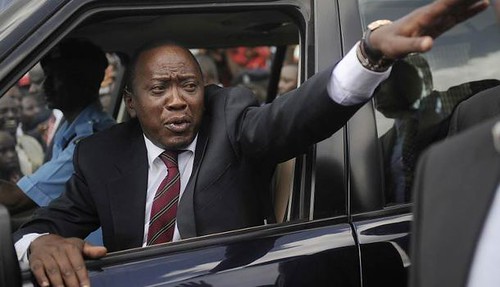
Kenya President Invited to London for Talks on Somalia

Kenyan president Kenyatta to join Somalia talks in London

The Guardian, Friday 3 May 2013 09.52 EDT

The Kenyan president, Uhuru Kenyatta, who faces charges of crimes against humanity at the international criminal court, is expected to visit London at Britain's invitation next week for a conference on Somalia.

It will be his first trip to a western capital since his election in March. Britain and other countries said before his victory it would have only "essential contacts" with him if he won because of the court case.

"Kenya is a vital partner on Somalia and we judge our contact according to the issue concerned," a spokesman for the Foreign Office said.

A source close to the president and a diplomat both said Kenyatta was likely to travel to the meeting, which aims to build support for Somalia. Kenya is an ally in the battle against Islamist militancy in the region and has sent 5,000 troops to Somalia as part of a western-backed African force that has driven back al-Shabaab fighters.

The charges against Kenyatta relate to post-election violence five years ago.

The British spokesman said the invitation was extended because he had committed to co-operating with the court in The Hague.


Kenyan leader charged with crimes against humanity invited to Somalia meeting in London

Reuters Published on Fri May 03 2013

NAIROBI- Kenyan President Uhuru Kenyatta, who faces charges of crimes against humanity at the International Criminal Court, is expected to visit London at Britain’s invitation next week for a conference on Somalia.

It will be his first trip to a Western capital since his election in March. Britain and other countries said before his victory it would only have “essential contacts” with him if he won because of the court case.

“Kenya is a vital partner on Somalia and we judge our contact according to the issue concerned,” a spokesman for Britain’s Foreign Office said.

A source close to the president and a diplomat both said Kenyatta was likely to travel to the meeting, which aims to build support for Somalia.

Kenya is an ally in the battle against Islamist militancy in the region and has sent about 5,000 troops to Somalia as part of a Western-backed African force that has driven back Al Shabaab Islamist fighters.

The charges against Kenyatta at the International Criminal Court relate to post-election violence in Kenya five years ago.

The British spokesman said the invitation was extended because he had committed to cooperating with the court in The Hague.

Portugal to Lay Off 30,000 Public Sector Workers

Portugal to lay off 30,000 public sector workers

Sat May 4, 2013 1:13AM GMT

Portuguese Prime Minister Pedro Passos Coelho has announced that the government plans to slash 30,000 public sector jobs as part of a sweeping package of spending cuts being implemented to mollify international creditors.

In a speech to the nation late on Friday, Coelho unveiled the contents of the center-right government's new "medium-term program," under which Portugal is hoping to save a total of six billion euros over the next three years. The prime minister also said that the full pension age would raised from 65 to 66 and that civil servants would be expected to work 40 hours per week instead of 35.

The decision on the new austerity measures was made in order to keep the small debt-ridden eurozone member eligible for another slice of its much-needed bailout.

The measures include plans for a special pensions contribution that would spare the least well-off.

In all, the package would bring in around 4.8 billion euros by 2015, the premier said.

"To hesitate now would harm the credibility that we have already won back," Coelho stated, adding that the move was necessary to avoid a second bailout.

With the cuts, Portugal's public deficit is anticipated to narrow to 5.5 percent of gross domestic product this year, to 4.0 percent in 2014, and finally to 2.5 percent in 2015.

However, the plan must also be approved by Portugal's troika of international lenders -- the European Union, the European Central Bank, and the International Monetary Fund. The troika granted Portugal a 78-billion-euro bailout loan two years ago.

Portugal is grappling with its worst recession since the 1970s, and the Portuguese economy is forecast to shrink by 2.3 percent this year, with unemployment expected to exceed the all-time high of 18 percent.

Last month, the government was forced to revise its 2013 austerity plans when the country's Constitutional Court rejected several proposed cuts.

Portugal’s UGT labor confederation says unions will reject any cuts that affect wages, pensions, or public sector jobs.

Reports of Israeli Airstrikes Against Syria

Israel strikes Syria to keep ‘game-changing weaponry’ from reaching Hezbollah

Nancy Cooper, @NancyCooperNYC
9:41 PM on 05/03/2013

Israeli officials acknowledged Friday evening that they had launched airstrikes that hit inside Syria, say U.S. officials. It is not clear whether any Israeli warplanes violated Syrian airspace in carrying out the strike.

“We can not comment on these reports, but what we can say is that Israel is determined to prevent the transfer of chemical weapons or other game-changing weaponry by the Syrian regime to terrorists, specifically to Hezbollah in Lebanon,” an Israeli spokesman in Washington said, according to Andrea Mitchell.

The Israeli government has been clear that for them, the “red line” would be the transfer of weapons to Lebanon. SCUD missiles in Lebanon could reach not just Israel but also NATO forces in the region.

The target of a strike would probably not be chemical weapons depots: that could cause deadly contamination. The more likely target would be weapon delivery systems or launch systems.

The Israelis had conducted a similar strike in January, when Israelis struck a weapons shipment of some kind that Israelis believed was headed for Hezbollah. In that instance, Israeli fighter jets attacked a convoy of sophisticated anti-aircraft missiles believed on their way to Hezbollah.

Israeli Defense Minister Moshe Ya’alon publicly acknowledged the January airstrike inside Syria in a joint press conference with Defense Secretary Chuck Hagel in Tel Aviv on April 22. Ya’alon said any Syrian delivery of sophisticated weapons to rogue elements like Hezbollah would be a “red line” for Israel and “when they crossed this red line, we operated. We acted.”

After the January strike, there was no regional expansion of the Syrian conflict. Andrea Mitchell said Friday that that was likely to be the case again, and that Friday’s strike was unlikely to unleash a wider conflict.

The Obama administration has moved very cautiously on Syria, waiting to verify the origins of a possible use of chemical weapons. Obama officials are conscious of mistakes the George W. Bush regime made in acting on unverified intelligence.

Earlier today, before the Israeli strike became public, President Obama said he did “not foresee a situation” which would put American boots on the ground in Syria.

It was not clear whether the Israelis had asked for or received tacit approval from the U.S. before launching the Friday strike.

White House officials referred all questions to Israel, who reiterated that they will take action to prevent weapons going to Hezbollah.

African Liberation Day in Washington, D.C., May 18

African Liberation Day 2013

Washington, United States ALD Celebration

Event Details

Saturday, 18 May 2013 - 4:30pm - 11:00pm
Emergence Community Arts Collective
733 Euclid St. NW, Washington DC 20001
Washington, DC
United States

Sponsoring Organization
All-African People's Revolutionary Party, National Black United Front, Revival of Pan-Africanism Forum, Students Against Mass Incarceration and PEACE

Contact: Sister Mjiba
Phone Number: 202-294-5593
Email Address: mjibaf@msn.com
Event Website: http://www.aaprp-intl.org

African Liberation Day 2013

ALD HISTORY

ALD was founded in 1958 when Kwame Nkrumah convened the First Conference of Independent States held in Accra, Ghana and attended by eight independent African states. The 15th of April was declared "African Freedom Day," to mark each year the onward progress of the liberation movement, and to symbolize the determination of the people of Africa to free themselves from foreign domination and exploitation.

Between 1958 and 1963 the nation/class struggle intensified in Africa and the world. Seventeen countries in Africa won their independence and 1960 was proclaimed the Year of Africa. Further advances were made with the defeat of U.S. imperialism in Asia and the Caribbean. Imperialism responded to this tide of victories by assassinating revolutionary leaders and sending U.S. troops to Viet Nam. On the 25th of May 1963, thirty-one African Heads of state convened a summit meeting to found the Organization of African Unity (OAU). They renamed African Freedom Day "African Liberation Day" and changed its date to May 25th.

Since then, the world has witnessed the assassination of Dr. Martin Luther King, Jr. and Malcolm X, the overthrow of Kwame Nkrumah, the US invasion of Cuba, the US move to crush liberation movements in Asia, Egypt, Syria, and Jordan; the overthrow of the Democratic Party of Guinea, the US invasion of Grenada, the US bombing of Libya, and the overthrow of Thomas Sankara in Burkina Faso. This period had marked a temporary setback for the Pan-African movement and since 1966, was characterized by a lull in ALD activities. Neo-colonialism was imposed upon the people as the new stage of the capitalist, imperialist strategy in Africa.

Out of the intensification of the nation/class struggle, a new generation of African youth emerged and reaffirmed their African personality, history and their Pan-African objectives. This youth was the product of Malcolm X, Sister M'balia Camara, Patrice Lumumba, Frantz Fanon and the countless generations before them. Links were made and maintained with Kwame Nkrumah. Understanding the need for clear and precise ideological and organizational direction for the Pan-African movement, Nkrumah published Consciencism: Philosophy and Ideology for Decolonization (1963), Handbook of Revolutionary Warfare (1968), and Class Struggle in Africa (1970). The ideas of Nkrumah infused the Black Power Movement (1960-1972).

Nkrumah taught us, "The total liberation and unification of Africa under an All-African Socialist Government must be the primary objective of all Black revolutionaries throughout the world. It is an objective which, when achieved, will bring about the fulfillment of the aspirations of Africans and people of African descent everywhere. It will at the same time advance the triumph of the international socialist revolution."

In 1970 the Pan-African Secretariat of Guyana made the call for the celebration of ALD in the western hemisphere. In response, a large demonstration was held in Georgetown, Guyana and smaller celebrations in the U.S., Canada, and Europe. The Pan-African movement was once again on the verge of taking a mass revolutionary character and educating and organizing the people. By 1971 Pan-Africanism had become the dominant discussion in every factory, home, school and church in the African world. In the 1990s, as a result of the people's struggle, we have witnessed the defeat of apartheid, the heroic decision of the OAU to break UN sanctions against Libya, and the Congo victory by pro-African forces over imperialist proxy forces, making an advance toward Nkrumah's call for an African High Command and representing a healthy day in line with the African Union. The African Union, and Africa's first continental holiday, "Africa Day," are clear signs that the struggle for African Unity will not stop until victory is achieved.

Today African Liberation Day is a permanent mass institution in the world-wide Pan-African movement. As an institution, it is stronger today because the masses of African people are stronger and ALD is their day. As a day of work in the area of political education and organization, it reflects the fact that we have not obtained our freedom, and thus it is a day to reaffirm our commitment to Pan-Africanism, the total liberation and unification of Africa under scientific socialism. At ALD we also deepen our understanding of other just struggles and affirm our role in the world socialist revolution. ALD has but one direction, forward to a unified socialist Africa. It is growing as the level of awareness about Pan-Africanism and the primacy of Africa grows. It is growing as progressive and revolutionary organizations grow. And lastly, it is growing as the masses make increasing victories against capitalism, neo-colonialism, racism, and zionism.

Citizen's Revolution Advances In Ecuador

Proletarian issue 53 (April 2013)

Citizens’ revolution advances in Ecuador

Correa’s re-election strengthens the progressive trend in South America.

The progressive forces in South America were further consolidated with the 17 February third-term presidential electoral victory of Ecuador’s Rafael Correa. (Due to constitutional changes, his first term lasted for just two years.)

Correa achieved a convincing first-round victory, securing 57 percent of the vote, against 24 percent for his closest rival, Guillermo Lasso, a right-wing former banker.

In his six years in office, Correa has carried out widespread and deep reforms in his country of 15.6 million people, aimed at achieving a fundamental shift in wealth and power in favour of working people and the poor and against imperialism and the local oligarchs. This accounts for his solid support among the masses of the people (prior to Correa’s first electoral victory, Ecuador had had seven presidents within a decade) as well as the hatred directed at him by the rich and US imperialism.

As a result of Correa’s popular, democratic policies, a number of major companies have been nationalised and unfavourable contracts with imperialist oil companies have been scrapped or renegotiated on more favourable terms. Ecuador is attempting to enforce a fine of $6.8bn on the oil monopoly Chevron for its despoliation of the country’s rainforest, which has had grave effects on communities of indigenous peoples, in particular.

Correa has pursued policies that have seen schools and health clinics built throughout the country, thousands of miles of roads built and improved in rural areas, low-cost or free education introduced, along with free school uniforms, the minimum wage regularly increased above the rate of inflation, mortgages subsidised, and monthly cash payments introduced for the country’s two million poorest people, especially among single mothers and the elderly.

In the sour words of the Economist, from whom, incidentally, a number of the above-cited facts are sourced:

“Mr Correa raised the government’s share of oil and other taxes as well. The result is that government revenues have almost tripled since 2006, with oil accounting for about half of the rise. Opportunistically, Mr Correa scrapped previous fiscal rules that required part of windfall revenues to be saved, and defaulted on $3.2bn in foreign bonds. He has lavished all this cash on public spending.” (‘The man with the mighty microphone’, 9 February 2013)

All this instead of salting it away in a private bank account in some tax haven – how unforgivable!

As a result of such popular policies, since Correa came to power in 2007, the number of Ecuadorians living in poverty has declined by 8 percent, while life expectancy, time spent at school and average income have all risen steadily over the period. In the last four years alone, 95,400 new jobs have been created.

Correa’s Ecuador has further enraged imperialism by forging close ties with Venezuela, Cuba, Bolivia and other progressive states in the region, taking a central role in Alba, the socialist-oriented trading bloc initiated by Hugo Chávez, and has also strengthened alliances with such countries as China, Belarus and Iran. In the words of President Correa: “Ecuador is no longer for sale. The country of despair has become one of hope.”

It is this combination of a solid social base among the mass of the poor, along with strong regional and global alliances with progressive forces (China has advanced Ecuador at least US$3.4bn to assist in its economic development) that has enabled the Correa government to resist reactionary pressures from within and without.

In 2010, a police mutiny and attempted coup placed his life in danger, but the reactionary putsch was crushed not only by Correa’s own courageous actions, in a confrontation that claimed the life of one of his supporters, but by tens of thousands of his supporters taking to the streets and forcing the army to uphold the constitutional order.

The following year, Ecuador expelled Heather Hodges, the US ambassador, after documents were released by WikiLeaks showing that the US maintained extensive covert connections with anti-Correa elements in the Ecuadorian national police.

Testifying to Ecuador’s strength in the face of reactionary pressure, last year, the country’s London embassy granted refuge to WikiLeaks founder Julian Assange, prompting the British government to threaten to rip up the Vienna Convention (which governs international relations among states) by launching an assault on the diplomatic mission. The strong reaction, not just from Ecuador but from the whole of Latin America, has, for now, forced the British government to back down, although it still refuses to grant Assange safe passage.

Previously, Correa had expelled a US military base. He told Oliver Stone in the documentary South of the Border that he had no objections to the US having a military base in his country – so long as Ecuador could have one in Florida.

Following his election victory, Correa announced his intention to continue with what is termed the Citizens’ Revolution, saying that the challenge of the next four years “is to go faster and deeper in the same direction”.

Correa’s victory was warmly welcomed by the government of Venezuela, which stated:

“The impressive re-election of President Rafael Correa for a new period, at the head of the process of democratic transformation [through] which Ecuador is living, constitutes a victory of dignity for the Ecuadorian people. It is a new lesson for those powers, which have failed in their attempt to put obstacles in the path towards the consolidation of independence, sovereignty, and well being of all Ecuadorians.

“The re-election of President Correa is a victory for Alba, for the Bolivarian and socialist forces of Our America.”

Correa dedicated his own victory to Hugo Chávez, declaring:

“It’s worth taking this opportunity to also dedicate this victory to this great Latin-American leader who has transformed Venezuela.”

US Is Stoking the Flames of War In Korea

The US is stoking the flames of war in Korea

The DPRK has been living under the threat of a US nuclear attack for more than 60 years.

By the CPGB-ML
Issued on: 03 April 2013

Tensions are currently extremely high on the Korean peninsula and a serious danger exists of a new war breaking out, whether by design or miscalculation.

The imperialist powers, their south Korean stooges and their compliant media are trying to paint the socialist Democratic People’s Republic of Korea (DPRK) as the source of the war danger, pointing to forceful, but often misquoted or distorted, statements from Pyongyang in an attempt to embellish their case.

Not only do they seek in this way to portray the victim as the aggressor; they would also have people believe that a nuclear issue exists in and around Korea solely due to the DPRK’s possession of nuclear weapons.

However, nothing could be further from the truth. Not only are the US imperialists, the south Korean reactionary regime and various of their allies currently engaged in a massive rehearsal for nuclear war on the Korean peninsula – in exercises that are due to last through the end of April and into May – but the DPRK has lived under a very real threat of a US nuclear attack for over 60 years.

It is for this reason, and this reason alone, that the DPRK finally decided that it had no alternative but to develop its own nuclear weapons for its self-defence.

Constant escalations by the US

In the context of the ongoing US-led military exercises, more and more deadly military equipment is being poured into the Korean tinderbox.

In mid-March, nuclear-capable US B-52 bombers practised bombing raids over Korea, awaking memories among the people of the DPRK of how every town and city in their country was flattened by US carpet-bombing raids in the genocidal war of 1950-53. Four million Koreans were killed as a result of imperialism’s barbaric assault on their country.

This was followed at the end of the month by the dropping of dummy ammunition by B-2 bombers, which flew non-stop from the US and home again. The B-2 is a strategic bomber, featuring low-observable stealth technology that is designed to penetrate dense anti-aircraft defences. It is able to deploy both conventional and nuclear weapons and this was the first time that the US has openly admitted deploying them in Korea.

The nuclear weapons carried by a B-2 are equivalent to 75 times the power of the atomic bombs dropped by the United States on the Japanese cities of Hiroshima and Nagasaki. If just two B-2 bombers dropped their payloads on the DPRK, every large and medium-sized city in the country would be completely obliterated.

Then, on 31 March, the US deployed F-22 stealth warplanes, normally based in Japan, to south Korea. The F-22 is a super-manoeuvrable fighter aircraft that uses stealth technology. Primarily designed as an air superiority fighter, its additional capabilities include ground attack, electronic warfare and signals intelligence roles.

Although the DPRK faces hostile military exercises several times a year, all this represents a qualitative escalation of the threats posed to the country – and consequently to the danger of war.

With exercises set to continue for more than a month, the US is openly stating its intention to heighten its military threat. A defence department official was quoted by Associated Press as stating: “The United States will continue to demonstrate unique advanced capabilities as these exercises continue.” He declined to be more specific, citing “operational security concerns”.

However, on 1 April, the US navy announced that it had sent the USS Fitzgerald, a hi-tech destroyer equipped with the Aegis anti-missile system, to waters just off Korea. It is being joined by the destroyer USS McCain, whilst the USS Decatur is reportedly en route from the Philippines.

Speaking of his observations of the exercises, and confirming their deadly intent, US deputy defence secretary Ashton Carter described his visit to Command Post Tango, the underground bunker in south Korea that houses the US-south Korean joint war command: “It was as if it could have been real ... [the exercises were] going through the options in a way that instils a lot of confidence.”

South Korean threats

Also last month, the US and south Korea agreed a so-called ‘counter-provocation plan’, whose exact terms remain secret, but which sets out a scale of possible attacks on the DPRK and fully commits the USA to participate in any south Korean provocation or act of aggression. South Korean newspaper Chosun Ilbo tells us that, according to the plan:

“The south Korean military will handle the initial response, while the US Seventh Fleet, including the aircraft carrier George Washington, will be mobilised, along with Japanese F-22 deployment of US Marines to handle joint missions.”

Emboldened by such pledges of US and Japanese support, new south Korean president Park Geun-hye, the daughter of the former military dictator and wartime collaborator with the Japanese occupiers Park Chung-hee, promptly gave the south Korean military the green light to attack the DPRK at any time. She told a defence ministry policy briefing:

“If the north attempts any provocation against our people and country, you must respond strongly at the first contact with them, without political consideration. As top commander of the military, I trust your judgement in the face of north Korea’s unexpected surprise provocation.”

According to south Korea’s Yonhap news agency, Park has authorised an “active deterrence” strategy, which will allow its military to launch a “pre-emptive strike” against the north.

South Korea is also boosting missile defences, which, in reality, are designed to facilitate a first strike capability.

Defence ministry plans announced on 1 April include accelerating the set-up of a missile system called ‘Kill Chain’, that is aimed at pre-emptively detecting, targeting and destroying missile and other military installations in the north as well as their command structure.

The ministry also said it plans to develop a separate missile-defence system to intercept incoming missiles “at the earliest possible time”. South Korea is already covered by US missile defences, which can launch anti-ballistic missiles from strategic points, such as US bases in Japan or warships near the peninsula.

A little earlier, on 15 March, defence secretary Chuck Hagel announced that the US would spend $1bn to install 14 more missile interceptors in Alaska, on top of the 30 already in place in Alaska and California. Hagel claimed this move to be in response to north Korea’s “irresponsible and reckless provocations”.

In fact, this move was already decided months ago and is less aimed at the DPRK, than at China. By denying China the ability to effectively retaliate, the country would effectively be at the mercy of a US nuclear first strike. (See ‘US imperialism steps up war plans against China’, Lalkar, September 2012, for full details on how this US plan was already in the works before the current crisis.)

History of US nuclear threats

The September 2006 edition of the US academic publication Bulletin of the Atomic Scientists documented four occasions when the US had threatened the DPRK with nuclear war: twice during the Korean war, first under Truman in 1950 and then under Eisenhower in 1953; in 1976, as a result of an incident in the demilitarised zone that keeps the two parts of Korea divided; and in 1994, when the Clinton administration took issue with the DPRK’s plans to develop nuclear energy for peaceful purposes. (See ‘Historical and political context of the nuclear issue on Korean peninsula’, Lalkar, January 2007.)

Starting from at least 2002, the Pentagon, in its periodic defence reviews, explicitly included the DPRK in a list of countries, a number of them non-nuclear, identified as candidates for a US nuclear first strike.

In April 2012, the Obama administration announced a ‘Nuclear Posture Review’, claiming to narrow the range of US nuclear first-strike targets, but Iran and the DPRK were specifically excluded. (See ‘US retains first-strike nuclear threat’, Proletarian, June 2010)

In contrast, a law passed by the DPRK’s Supreme People’s Assembly, the country’s parliament, on 1 April this year has made clear that “The nuclear weapons of the DPRK can be used only by a final order of the Supreme Commander of the Korean People’s Army to repel invasion or attack from a hostile nuclear weapons state and make retaliatory strikes.

“The DPRK shall neither use nukes against the non-nuclear states nor threaten them with those weapons unless they join a hostile nuclear weapons state in its invasion and attack on the DPRK.”

Both Russia and China have appealed for calm on the Korean peninsula, with Moscow’s foreign minister Sergey Lavrov complaining that “unilateral action is being taken around north Korea that is increasing military activity” and warning that “we may simply let the situation slip out of our control and it will slide into a spiral of a vicious circle”.

A war against Korea is not something British workers can afford to ignore. It is a war against all of us.

Not only would it be aimed at destroying one of our invaluable, pioneering socialist societies – a base for world revolution and an example to oppressed people everywhere of what can be achieved without capitalist exploitation – but it is bound also to escalate into a bloodbath that could suck in the whole world, as neighbouring China and Russia are targeted next.

Faced with this exceptionally serious escalation of military threats by the most powerful warmongering imperialist state in the world, the DPRK and the Korean people have every right to defend themselves by any means necessary. The anti-imperialist and peace-loving people of the world must give them their full and resolute support.

Hands off Korea!
Yankees go home!

Ground the Drones; No Cooperation With British War Crimes!

Ground the drones; no cooperation with British war crimes!

Issued by: CPGB-ML
27 April 2013

Since Nato invaded Afghanistan in 2001, unmanned drones have gone from being an untried technology to a primary means of warfare.

The US now operates 7,500 drones, and 40 other countries are buying or developing similar vehicles.

British pilots have operated thousands of missions over Afghanistan and Libya from US bases, and now Britain’s first homegrown drone base has become operational, with pilots at RAF Waddington in Lincoln flying armed Reaper drone missions over Afghanistan.

As a mass hunger strike by inmates brings Guantánamo back into the media spotlight once again, it is instructive to note that the imperialists’ chosen method of terror and intimidation has shifted since the advent of Obama and Cameron from seizing and locking up men of military age to murdering them (and often their families, too) instead.

A new kind of terrorism

Imperialist politicians claim that drone strikes can ‘surgically remove’ ‘high-value’ ‘al-Qaeda operatives’ from the ‘field of battle’.

In reality, while resistance fighters may sometimes be hit, anyone seems to be considered ‘fair game’ by the joystick-wielding mercenaries who operate the guns from the safety of their suburban bases.

These terrorist attacks kill at least 10 civilians for every resistance fighter. Just 1.5 percent of known Pakistani drone victims have been identified as ‘high-profile’ targets by the US. So much for ‘precision warfare’.

Although establishment critics are said to be upset at losing opportunities to ‘interrogate’ victims, Obama has clearly learned one lesson from his predecessor: the longer you keep innocent men locked up, the more likely it is that your lies about them being ‘dangerous terrorists’ will be exposed.

It is so much easier for the imperialists to order a kill, then slander their victims and move on. Particularly when they know that western journalists are trained to regurgitate their press releases as proven fact.

So who will listen to the protestations of a poor Pakistani, Afghan or Yemeni community that the latest ‘targeted killing’ of ‘militants’ has in fact massacred farmers, village elders, school children or wedding guests?

Far from being a ‘humane’ alternative to ground troops, remote-control operation simply allows imperialist soldiers to kill with total impunity – without having to take the risk of being hit back.

Meanwhile, the people who live under the shadow of these weapons are subject to daily terror, never knowing when a Reaper or Predator drone will stop overhead or where it will fire next.

Joystick wars

Preparation for this kind of warfare starts with the pornographically violent computer games and Hollywood blockbusters that glorify war, dehumanise imperialism’s ‘enemies’ and prepare our young people to slaughter without mercy.

This was perfectly illustrated by Prince Harry’s revealing admission that he saw killing Afghans from his helicopter as being similar to playing video games. Indeed, the prince even went so far as to call it “a joy” to have his finger on the trigger, since he was “one of those people that loves playing PlayStation ... with my thumbs, I like to think that I’m quite useful”.

Full marks for honesty, if not for tact and diplomacy. But while it may be in the interest of Harry and his parasitic family to inflict collective punishment on peoples who are resisting imperialist aggression, it is not in the interest of most British workers, who have been sold a pack of lies about the ‘dangers’ that our Afghan (or Pakistani, Iraqi, Libyan, etc) brothers and sisters pose to ‘us’.

Using drones against our own

The consequences of this new warfare are far-reaching indeed. As the imperialists continue to use drones to target anyone who they see as a threat, they are turning our whole world into a battlefield where nothing and no-one is off-limits.

Indeed, imperialist governments have already started using armed drones to wipe out their own citizens without recourse to any judicial processes.

The US has butchered at least three of its citizens in Yemen, and has not ruled out the possibility of a military drone strike against a US citizen on American soil.

Meanwhile, the ConDems have ramped up a secret programme, initiated by Labour, under which British ‘terror suspects’ are being quietly stripped of their citizenship before they are captured or assassinated abroad. At least two British men are known to have been murdered by US drones in this way.

Where the US nazis lead, their British counterparts are not shy to follow. In the States, use of both surveillance and armed drones by police and other agencies is set to rise exponentially as the technology becomes cheaper and more reliable.

Here at home, having tested out their use during the Olympic games, it is not difficult to believe that police might soon be using armed drones to control demonstrators or strikers, while the cheapness of surveillance drones is bound to make them ubiquitous among police, secret services, and all the ‘security’ contractors who do our rulers’ dirty work.

No cooperation

It is clear that we need to free ourselves from the disabling influence of the capitalists’ propaganda and realise where our real interests lie. The billionaires who order these incessant wars to be launched are not doing so to protect us, but to protect their profits.

They are the same billionaires who are dismantling education and health services here in Britain and kicking us out of our homes. They want to save their rotten system by making us pay for the capitalist crisis – and they want to trick us into blaming each other for the problems their beloved capitalist system creates.

But if we continue to accept the assassination of those deemed to be ‘enemies’ abroad, how long will it be before British leaders are asked to accept drone strikes against working-class leaders at home as being necessary for our ‘security’?

Instead of falling for the capitalists’ lies, we need to unite with all those who are standing up against British imperialism in Iraq, Afghanistan, Libya, Syria and elsewhere. We need to launch a mass campaign of non-cooperation with British imperialism’s war crimes. Together, we have the power to ground the drones and stop imperialism’s dirty wars, for it is workers who ultimately have to carry out these anti-worker actions.

If we refuse to fight in imperialist wars for profit or help with their logistics; if we refuse to broadcast imperialist propaganda in support of such wars; if we refuse to make or transport munitions or supplies, then the British war effort will collapse.

Moreover, taking such action would give workers a much-needed morale boost in the fight against capitalism here at home, helping us to see in practice that we really are on the same side as those fighting abroad, and that together we can defeat the bloodsuckers and build a new society!

Zimbabwe Welcomes Re-engagement Efforts, Says Vice-President Mujuru

Zimbabwe welcomes re-engagement efforts — VP Mujuru

Friday, 03 May 2013 00:00

Morris Mkwate in DUBAI, United Arab Emirates

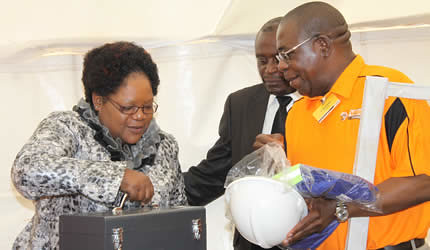
ZIMBABWE is looking forward to ending its long-standing bilateral dispute with Britain following re-engagement efforts initiated by London and the European Union, Vice-President Mujuru has said.

In a speech read on her behalf by the Minister of State in her Office, Cde Sylvester Nguni, at the Africa Global Business Forum here yesterday, Cde Mujuru said Zimbabwe hoped steps towards restoration of normal relations between the two countries would yield positive outcomes.

The reconciliatory message delivered to President Mugabe by United States special envoy Ambassador Andrew Young last month is also appreciated, she added while encouraging potential investors to consider the vast business opportunities Zimbabwe presents.

“Zimbabwe also welcomes the re-engagement efforts that were recently initiated by Britain and the European Union. It is our hope that these engagements will bear fruit and bring to an end over a decade’s isolation of Zimbabwe by Western countries.

“In the same breath, we also welcome the sending of a special envoy from the United States of America to Harare with a special message that the United States is keen to normalise relations with Zimbabwe ahead of harmonised elections scheduled to be held later this year,” she said.

The Vice-President urged foreign investors to activate their radars around Zimbabwe where business prospects abound in mining, agriculture and tourism, among other sectors.

She said Zimbabwe’s stable economy also provided a conducive investment environment, adding that the co-hosting of the United Nations World Tourism Organisation General Assembly with Zambia in August boosted on-going tourism marketing efforts.

“In mining, the investment opportunities spectrum include resuscitation of existing under-capitalised mines, prospecting and establishment of new mines in gold, coal, diamond, granite, platinum, just to mention a few.

“Opportunities also include beneficiation and polishing diamonds, jewellery and tile manufacturing.

“The tourism sector in Zimbabwe got global tourism confidence when Zimbabwe won the bid to co-host the United Nations World Tourism Organisation General Assembly in August this year at the majestic Victoria Falls.

“This has generated significant brand awareness and endorsement of Zimbabwe as a first choice tourist destination.”

VP Mujuru said Zimbabwe was working closely with the Comesa and Southern Africa to keep abreast with contemporary business trends and refining investment procedures.

“Among a host of factors that are fundamental to sustainable economic growth and development is the aspect of Foreign Direct Investment. This has seen countries, Zimbabwe included, liberalise their economies to facilitate easy flow of capital in and out of the country.

The Africa Global Business Forum, which ended here yesterday, brought together more than 3 500 policy-makers and business leaders to discuss investment prospects in Africa.

The interface also homed in on Dubai being the central hub linking the rest of the world to the continent.

It ended with delegates agreeing to jointly market five of the top investor-seeking areas of their individual countries.

Brazil Eyes Maputo Dam

Brazil eyes Maputo dam

Friday, 03 May 2013 00:00

BRASILIA. — Brazil is negotiating an agreement with Mozambique to finance the construction of a dam to provide drinking water for the city of Maputo, according to local news sources. It is expected to cost

US$500 million and the Bank of Brazil has funded an environmental impact study for the project.

With a population approaching two million and growing rapidly, Maputo needs an assured water supply. A successful agreement between Brazil and Mozambique means that construction on the dam could start as early as 2014.

The dam — known as Moamba Major — highlights Brazil’s expanded engagement in Africa. In November 2012, British think tank Chatham House published a highly useful briefing paper on Brazil’s growing role on the continent. It highlights Brazil’s African economic interests — notably, its trade with Africa has increased from US$4.2 billion to US$27.6 billion over the past decade. Africa is potentially an important export market for Brazilian manufactured goods.

But as the Chatham House briefer highlights, Brazil sees African engagement as more than economic. It is a key to Brazil’s recognition as a major world power, and close south-south relations focused on Africa could help build international support for a permanent UN Security Council seat for Brazil. Brazil seeks a partnership for development with an important political dimension rather than solely an economic relationship.

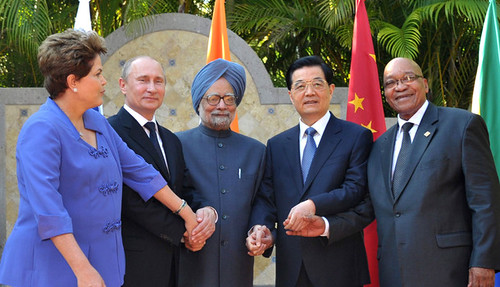
Brazil is one of the BRICS countries, joining Russia, India, China, and South Africa in the club of major emerging economies.

But Brazil’s expanding role in Africa is overshadowed in the international media by China and India’s larger role. (So, too, is the role of South Africa.) But, Brazil’s approach to Africa appears to be the more broadly based, with important political and developmental aspects, as well as economic. And there are important cultural ties between Brazil and the Lusophone Africa states such as Angola and Mozambique.

Brazil also has the diaspora’s largest population of African origin. Thus far, the Brazilians appear to have avoided the cultural and other mistakes of the Chinese. The Brazilian relationship with Africa may prove deeper and longer lasting than that of its higher-profile rivals among the BRICS.

— Christian Science Monitor.

Venezuelan President Sounds Warning to Europe

Maduro sounds warning

Friday, 03 May 2013 00:00

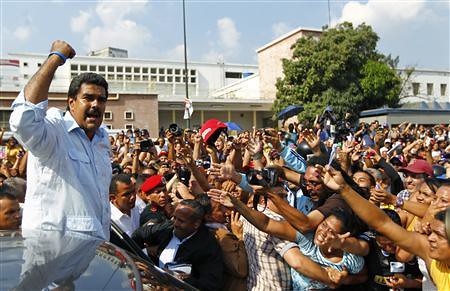
PARIS. — Venezuela’s newly elected President Nicolas Maduro yesterday warned Europe of the risks of “political explosions” as a result of growing economic tensions. In an interview with France’s Le

Monde, described by the newspaper as his first with Western media since last month’s election, Maduro said he saw echoes of 1990s Latin America in Europe’s on-going economic crisis.

“What is happening in Europe at the moment reminds me of what our region went through in the 1990s, all the social indicators were in decline and this led to political explosions, revolutions,” he said.

“Europe should be careful,” he added. Maduro, the hand-picked successor to the late fire-brand leftist Hugo Chavez, also blamed what he a called “an extreme-right group” for the tensions that have soared in Venezuela since the April 14 vote, which official results gave to Maduro by a 1.5 percent margin.

Venezuela opposition leader Henrique Capriles announced Wednesday that he would formally contest the result. Referring to the 1973 coup that brought Augusto Pinochet to power in Chile, Maduro said: “We will prevent a new Pinochet from rising in Venezuela. We will do this by democratic means.” He said he wanted to “move toward a relationship that can be positive” with the United States, but also hit out at US President Barack Obama.

“Obama smiles, but he bombs all the same,” Maduro said. “He just puts forward a different image from Bush. In this sense he better serves the United States’ interests in global domination.”

— AFP.

Mine Collapse in Darfur Region of Sudan Claims Dozens

Mine collapse in Darfur claims dozens

Friday, 03 May 2013 00:00

KHARTOUM. — Dozens of people have been killed in a gold mine collapse in Sudan’s Darfur, said the chief of the district where fighting over gold in January led to the region’s worst unrest in years

It is not known how many people may still be missing after Monday’s accident.
“The number of people who died is more than 60,” Haroun al-Hassan, the local commissioner in Jebel Amir, North Darfur, said on Thursday, adding that rescue operations were still taking place.

“I cannot give exact figures because no one got precise numbers of how many people were going inside the tunnel,” which went down 40 metres, he said. Rescuers were using traditional tools to try to reach the victims, he said, without specifying whether anyone might still be alive.

“We cannot use machines because if they came near, the ground will collapse. People are using traditional tools and because of this, the rescue is very slow,” Hassan said.

Seven weeks of clashes between two Arab tribes in Jebel Amir during January and February killed more than 500 members of the Beni Hussein tribal group, a Benni Hussein member of parliament for the area said earlier.

The violence uprooted an estimated 100,000 people.

Fighting erupted on January 5 between Beni Hussein and another Arab tribe, the Rezeigat, when a Rezeigat leader who is an officer in Sudan’s Border Guard force apparently laid claim to a gold-rich area in Beni Hussein territory, Amnesty International said.

Humanitarian sources said at the time that the incident was the worst example of inter-Arab violence to emerge in the past two years as government-linked Arab groups got “out of control” and turned on each other.

One humanitarian source said the Beni Hussein had refused to pay newly imposed government mining fees adding up to “huge, huge money”.

— AFP.

Coup Attempt Fails in Chad

Coup attempt flops

Friday, 03 May 2013 00:00

N’DJAMENA. — A foiled coup attempt in Chad has left several people dead while a number of others have been arrested in connection with what the government described as a “destabilisation plot”, police
sources said yesterday.

A shoot-out broke out on the outskirts of the capital N’Djamena on Wednesday when security forces came to arrest the alleged conspirators, leaving “several dead and around 15 injured”, a police source said on condition of anonymity.

Although no official death toll was immediately available, some police sources spoke of six deaths, while others said eight were killed, “three of whom were security forces”.

The government serving under President Idris Deby Itno, who himself came to power in a 1990 coup, on Wednesday said a “small group” had been planning the coup for months while police and opposition sources said one of the detainees was an opposition lawmaker.

The situation appeared calm in the Chadian capital yesterday, with residents going about their usual day-to-day activities normally.

“A small group of ill-intentioned individuals attempted to carry out a destabilisation plot against the institutions of the republic,” the government said in a statement Wednesday.
A police source said soldiers and civilians also took part in the alleged plot.

The government said the army had “neutralised” the group and that the arrested ring-leaders had been handed over to prosecutors for investigation. Between 2005 and 2010, the former French colony was wracked by civil war. On Saturday, Deby told Radio France Internationale that “mercenaries”, currently in Libya’s second largest city Benghazi, were trying to “re-group Chadians”.

A police source said that “several civilians and soldiers, including Saleh Makki,” an opposition lawmaker, had been arrested Monday.

— AFP.

Vavi Foe Claims Anti-ANC Conspiracy

Vavi foe claims anti-ANC conspiracy

South African Transport and Allied Workers Union leader says a plan to 'eliminate' union bosses is aimed at toppling the alliance.

03 May 2013 00:00 - Charles Molele, Matuma Letsoalo
South African Mail & Guardian

Zenzo Mahlangu says several union leaders now employ bodyguards. (Paul Botes, M&G)
The battle for the control of Cosatu has turned even dirtier. The general secretary of the South African Transport and Allied Workers Union (Satawu), Zenzo Mahlangu, told the Mail & Guardian this week that he feared for his life after receiving death threats.

In an interview, Mahlangu claimed to have evidence that some leaders in Cosatu were working with rival unions to "liquidate" the 2.1-million strong federation with the aim of toppling the ANC-led government in 2019. He said there were already splinter groups shooting off from four Cosatu unions – the South African Transport and Allied Workers' Union (Satawu), the Police and Prisons Civil Rights Union (Popcru), the South African Democratic Teachers Union (Sadtu) and the National Union of Mineworkers (NUM).

The splinter unions, according to Mahlangu, will soon form a new federation that will be opposed to the ANC and the tripartite alliance. He claimed the new federation would try to topple the ANC by organising a total shutdown in key sectors of the economy.

"We might go the Egypt-style route. They are planning an Arab Spring. They are talking to opposition parties. They are targeting 2019."

He believed the newly formed rival unions had identified him and other Cosatu leaders as an obstacle to achieving their goal of forming the new federation that would take on Cosatu and the ANC. He claimed these union leaders were using tactics such as leaking information to Corruption Watch and other law enforcement agencies to target opponents.

Mahlangu is out on bail after he was arrested earlier this year with two former national office bearers of Satawu, Ezrom Mabyana and Robert Mashego, on charges of theft and fraud amounting to R8-million. Corruption Watch has confirmed it investigated Mahlangu but has dropped the case since the Hawks began an investigation.

"To execute the plan, they must eliminate people who are standing between them and the workers," he said. "I am now being investigated. I had food poisoning in April last year. I have been followed more than five times. I no longer go home every day, for fear of being killed or attacked. In December, four gunmen ransacked my house. They questioned my uncle and the gardener, [asking] 'where is the ANC guy who lives here?'

Facilitation process

"We now move with bodyguards wherever we go because we are in danger. The reason we are targeted is because we are obstacles. Last week I was followed for an hour by an unknown assailant. I was forced to go and sleep at the hotel," he said.

Meanwhile, there are claims from within Satawu that Cosatu general secretary Zwelinzima Vavi was working with former Satawu president Ephraim Mphahlele to cast aspersions on the union's leaders. It is understood that Mphahlele, who has since formed a splinter union, the National Transport Movement, handed over a dossier implicating Mahlangu and others in corruption to Corruption Watch and the Hawks.

Mahlangu said Satawu was planning to raise their unhappiness about the conduct of "some Cosatu leaders" during the recently started "facilitation process" initiated by Cosatu to look at allegations made against Vavi.

Although Mahlangu refused to divulge details, the M&G understands that Satawu is expected to accuse Vavi of interfering in its internal affairs in its submission to the facilitation process. Leaders of the transport union claim that Vavi gatecrashed their meeting last year, at which they were discussing the future of Mphahlele with the intention of saving him from being sacked. The union will also accuse Vavi of providing Corruption Watch with information that seeks to implicate Mahlangu in alleged corruption.

Mahlangu said he and other leaders were currently visiting provinces to explain his arrest to ordinary members of the union. "A larger portion of Satawu leaders have questions [about the investigations]. There was supposed to be courtesy to say we [Corruption Watch] are investigating you. I expected them to say we must give a presentation. We are not afraid of being investigated."

Internal process

In a statement, Corruption Watch told the M&G that it did receive complaints regarding Satawu leaders but it had not pursued the case because the Hawks were now investigating financial irregularities within the transport union.

Asked to comment about the latest allegations made against him, Vavi said: "Allegations against the general secretary must be submitted to the Cosatu internal process. I don't want to even listen to the allegations in the media when there is an internal process."

Mphahlele, however, denied that he was working closely with Vavi to target Satawu's current senior leaders and leaking information to the Hawks and Corruption Watch. "I vehemently dispute that," he said. "It is a lie. Vavi has never been part of any investigation against Satawu. The information to Corruption Watch was sent by Satawu shop stewards based at SAA.

"With regard to the Hawks case, I was investigating financial irregularities at Satawu. I then hit a snag because I couldn't get the necessary financial information from Satawu leaders. That's when I reported the matter to the Hawks."

Mphahlele also denied that he was poaching Satawu's members, saying people abandoned Satawu because it was not properly servicing its members. He said his union joined the National Council of Trade Unions (Nactu) and that he was unaware of a new federation being formed.

"We're a proud affiliate of a federation, Nactu. I am a member of the ANC. I have never spoken to anyone from the DA. It is also a lie that I am close to the Cosatu general secretary. That's a lie. They are trying to vilify Vavi for malicious reasons but that has got nothing to do with me. I'm not close to him and I have never been close to him."

Mission Impossible?: AFRICOM Goes on a Media Charm Offensive

Mission impossible? Africom goes on a media charm offensive

The US Africa Command is determined to show the continent that they are the good guys. Mmanaledi Mataboge goes along for the ride.

03 May 2013 00:00 - Mmanaledi Mataboge
South African Mail & Guardian

We land at Stuttgart Airport in Germany on a cold Sunday afternoon in March and head straight to the comfortable four-star Pullman Stuttgart Fontana hotel. We've got the afternoon to ourselves. The next morning our week-long tour of the United States's Africa Command (Africom) begins, with flight, accommodation and briefings all courtesy of the US government.

This being a military operation, we are fetched promptly at 8.30am on Monday. Our first stop – the Kelley Barracks, home of the Africom headquarters and all US military operations here in Germany – is about 20 minutes away. As we approach the compound there are no obvious signs that this is a military base. It looks more like a luxury residential complex with well-groomed buildings and tidy gardens – only the tight security at the entrance and flags attract attention.

Our passports are collected and handed over to the military police manning the entrance. We're pointed to an area about 50 metres away, where our bus will park while security checks are done before allowing us to enter.

We're here on an Africom public relations exercise and we're told we're one of the last groups of African journalists – 10 South African reporters from eight media houses – to visit the Africa Command headquarters. In February, the Nigerians were on the same all-expenses paid tour.

This is no freebie shopping trip to Germany. Our days are packed with information-heavy briefings, some way too overloaded, we murmur to each other during brief breaks as we nearly overdose on caffeine in an effort to stay awake.

The military commanders we meet with each day make it clear that everything we're being told is "on background". In South African terms it refers to an off-the-record briefing – we are welcome to all the information, just not for attribution. Apart from the outgoing commander of Africom, General Carter Ham, we're only allowed to quote "US Africa Command officials."

Humanitarian assistance

In every discussion the message is delivered on point, and comes in no uncertain terms: the US is "in Africa by invitation; we don't impose ourselves on the continent" and "we believe in partnership instead of a unilateral action".

This effort, we are told, is to assist African militaries in capacity building, specialised training that includes fighting terrorism and any extremist groups that can destabilise governments, as well as training in specialised medical expertise, disease control and humanitarian assistance.

Africom has a presence in strategic points on the continent – Somalia, Djibouti, Liberia, Guinea, Uganda and Kenya – with the aim of building and sustaining democracy on the continent, the commanders assure us.

Back home, though, nobody seems to be buying what Africom is selling. If the South African government had a choice, US troops would not be camping anywhere in Africa.

"We are opposed to militarisation of African politics through the establishment of military bases in Africa as part of the US's Africom initiative," reads an ANC paper presented by its international relations subcommittee at last December's Mangaung congress. "We have to play an active role in African networks campaigning against Africom."

At its policy conference in June last year the ANC resolved to lobby African countries in opposing Africom, calling on the US and military organisations like Nato to respect the territorial integrity and sovereignty of fellow African countries. It noted that the Africom programme is more than just the building of American bases on the continent but rather the involvement of US and Nato military on African soil, either through the prosecution of the so-called "war on terror" or through "promotion of democratisation".

Which, of course, is why we are all here. The US government wants us to see it their way.

Probing questions

General Carter Ham, the outgoing Africom commander, who has visited 42 African countries in the two years he's led Africom, doesn't shy away from questions when we finally get to talk to him on Thursday afternoon. Ham is a well-built military man with broad shoulders, shiny grey hair and a clear deep voice that oozes confidence despite the probing questions. He greets each journalist by hand, walking from one corner of the U-shaped table to the other side.

It's a strict one-hour group interview, with his subordinates observing what we, the journalists, consider the most important part of our tour, the only on-the-record interview we are allowed. I ask Ham if the US has been able to change the negative way Africa's biggest economy views the American presence on the continent.

"With South Africa, no, not officially," he says. "But I think we do have a good relationship with the South African National Defence Force. We've done exercises with them, which was very productive and very helpful for us. But to speak frankly there remains a high degree of scepticism in South Africa about Africom.

"We, too, at Africom, firmly believe in African solutions for African problems." Ham insists the US has Africa's best interests at heart and can help when asked. "When invited by a government to help we can provide the needed assistance. That doesn't mean we need to be in every place all the time. When South Africa says not so fast, we want to keep our military-to-military engagement at a relatively low level and South Africa says we're more comfortable dealing with our military counterparts in Washington,DC as opposed to at Africom, that's okay with me. It's not what I want, it's what's right for South Africa and only South Africa can decide that. We've got no intention of pushing ourselves into any place where we're not invited."

Ham's commanders do their best to make us believe what they tell us, though they stick to the brief.

"We support things that are for the common good. The strategy is to send a small US team of about 10 members to train, for instance, a company of 200 soldiers on several military skills," says one Africom official, adding that they seek "a light footprint and low-cost innovative approaches."

Another official stresses that Africom is comfortable being headquartered in Germany: "If you move Africom to the continent I think it would regionally and continentally send the wrong message. We're not looking at any place in Africa for location. We're very effective here. Travelling to Africa is not so bad."

Extremist organisations

But at a few briefings, some get too relaxed and forget the memo.

"I don't think there are long-term plans for a military base in Africa, but there are talks," says one official. "It's really more about access. It's a long distance from here. We really need to have partners who can invite us to operate from their country."

Of the 5000 US forces currently in Africa, 2700 of them are in Djibouti, which is bordered by Eritrea, Ethiopia and Somalia. Americans started occupying the Camp Lemonnier military base in 2003 and it's used to run operations geared toward building security and stability in East Africa. It's home to Africom's Combined Joint Task Force – Horn of Africa.

The US believes violent extremist organisations in North Africa and in East Africa are "the biggest threat to stability in the continent."

But it's the Democratic Republic of Congo (DRC) that Africom admits has been a difficult task – and it's happy to have African countries taking care of that. The US supports the Southern African Development Community intervention force in the DRC.

"I said, what about the DRC? And the answer without hesitation was 'Sir, the DRC is really hard.' And that was the extent of the analysis because it is exceedingly complex," Ham says.

The American military is so settled here in Germany – they have been here since the end of World War II – that Kelley Barracks has its own hotel and petrol station, houses for 50 families and flats big enough to accommodate thousands of others. Several restaurants trade inside the main base and it's evident as we scout for the ideal lunch spot that they don't run short of customers.

Communications officials

Kelley Barracks is a mini America, with day-care services for military families, a theatre showing American, German and European productions, a fitness centre with a basketball court and a craft and hobby shop that sells pottery and woodwork. We're told there are 20 000 US military families living in Stuttgart.

At the German-American Centre, which is part of the James F Byrnes Institute in Stuttgart, those briefing us are at pains to convince us that, regardless of the previous "army go home" campaign, Germans don't have problems with the presence of American troops: "Even if there are darker sides the relationship is good. Right now it's getting so normal to be influenced by America. The sense of occupation is not that acute."

But during this presentation at the institute I notice that one of the American soldiers assigned to our group changed from his military uniform into civilian clothes.

"Why did he change clothes?" I ask one of the communications officials who travelled with us from South Africa. Because he didn't have an answer we ask the officer.

Members of the13th Marine Expeditionary Unit prepare to attach a Harrier engine to a CH-53D helicopter for transport to the USS Boxer for Camp Lemonnier in Djibouti. (SSgt Donald Bohanner,US Marine Corps )
It's because American troops are careful not to attract attention that might result in animosity towards them, he says. So it's not just the Africans who have trouble with an American presence in their country.

We leave Stuttgart on Friday with lots of information and only a handful of quotes that we can attribute to an actual name. Despite that, it's obvious the Americans are doing their best to be seen as the good guys. But the jury is still out on whether African politicians will buy into it.

A strong presence on the continent

The United States Africa Command (Africom) was established in 2007 as a combatant command responsible for all US department of defence operations, exercises, and security co-operation on the African continent. Africom gets involved in land, sea, air and intelligence operations together with militaries from countries that host US troops and provides skills training such as medical and technical training for operations.

Africom's subordinate commands include US Army Africa based in Vicenza Italy; US Air Forces Africa based in Ramstein Air Base in Germany; US Marine Corps Forces Africa in Stuttgart, Germany; US Naval Forces Africa in Naples, Italy; and US Special Operations Command Africa, also in Stuttgart.

Africom reports to the US secretary of defence and it's currently led by General David Rodriguez, who took over from General Carter Ham in April.

Its key focus is to counter ­al-Qaeda and affiliates as well as other extremists groups, advance regional co-operation and security sector reform and support initiatives to support peace and security in Africa.

Some activities on the continent include support to African partners countering the Lord's Resistance Army (LRA) in Uganda, Central African Republic and the Democratic Republic of Congo.

Africom's work also includes helping African partners to build capacity – from training them in how to conduct humanitarian response operations, to promoting HIV and Aids prevention programmes – so they can eventually conduct these missions on their own.

Africom's headquarters are in Stuttgart, Germany, but the command has a presence in Djibouti, where its main African military base is situated, as well as in Somalia, Uganda, Liberia, Guinea and Kenya. The command also does joint exercises with many African countries.

Four African countries with which Africom enjoys strong military relations include Ethiopia, the largest troop contributor for East Africa's regional peacekeeping; Kenya, a principal partner for regional security and diplomacy (and because Kenya has agreed to prosecute piracy suspects); Uganda, which, with the US, is hunting down Joseph Kony's LRA rebels; and Djibouti because of its strategic location.

Egyptian Lawsuits Authority Pushes to Hand Over Gaddafi Relative Despite Citizenship and Asylum Claim

Egyptian lawsuits authority pushes to hand over ex-Gaddafi aide

El-Sayed Gamal El-Din, Thursday 2 May 2013
Ahram Online

Claims of Egyptian citizenship and request for asylum do not convince the Egyptian Lawsuits Authority, who appeal a denial of extradition of former Gaddafi aide, Ahmed Gadhaf Al-Dam

The Egyptian State Lawsuits Authority filed an appeal on Thursday that would lead to the extradition of Ahmed Gadhaf Al-Dam, a close aide and cousin of former Libyan ruler, Muammar Gaddafi.

The Lawsuits Authority, an Egyptian judicialinstitution which represents the interests of the government in a variety of issues domestically and internationally, appealed a ruling issued early April against the extradition of Gadhaf Al-Dam to Libya.

The case was brought by Gadhaf Al-Dam after the Libyan administration demanded he be extradited to Libya for alleged crimes under Muammar Gaddafi’s rule.

On Sunday, Gadhaf Al-Dam was to be released after serving 30 days in provisional detention in accordance to a decision by the general prosecution, however, he was held on charges of possessing unlicensed weapons and illegal surveillance devices, resisting arrest and attempting to murder police officers. The former libyan strongman denied these charges.

Libya had demanded Egypt extradite Gadhaf Al-Dam, for alleged crimes under Muammar Gaddafi’s rule. He responded by filing a case with the Administrative Court requesting political asylum and an official document recognising what he says is his Egyptian nationality.

Late in March, Gadhaf Al-Dam's lawyer claimed that his client's parents are Egyptian, and therefore so is he.

Similarly, Gaddafi-era official, Mohamed Ibrahim, brother of former Libyan information minister Moussa Ibrahim asked for political asylum.

The plaintiffs argued that the extradition to Libya would put their lives at risk and, thus goes against international principles pertaining to refugees and targets of extradition.

In March, three former Libyan officials connected with the Gaddafi regime were arrested in Cairo, including Gadhaf Al-Dam, Ibrahim and Ali Maria, former Libyan ambassador to Egypt.

http://english.ahram.org.eg/News/70588.aspx

Egypt Court Order Morsi's Children to Attend US Citizenship Revocation Hearing

Egypt court orders Morsi's children attend US citizenship revocation hearing

El-Sayed Gamal El-Din, Thursday 2 May 2013
Ahram Online

President Mohamed Morsi's son and daughter to attend court hearing, scheduled for 30 May, on lawsuit demanding the revocation of their US citizenship

Egypt's Supreme Administrative Court's State Commissioners Authority on Thursday ordered that President Mohamed Morsi's son and daughter attend the hearing on a lawsuit demanding the revocation of their US citizenship.

This comes as part of a lawsuit filed in 2012 by Attorney Mohamed Salem —following Morsi's presidential election—to force his two children to renounce their US citizenship, which they acquired at birth in the 1980's when Morsi was a professor.

The state commissioners postponed the hearing until 30 May and issued a LE400 fine to the head of Egypt's Ministry of Foreign Affairs judicial department for delaying the document coordination process with the US State Department.

A similar case filed by lawyer Tarek Mahmoud in 2012 argued that their passport can be a means by which the US can conspire against Egypt.

http://english.ahram.org.eg/News/70592.aspx