Sunday, June 02, 2013

Al-Manar Television Interview With Syrian President al-Assad

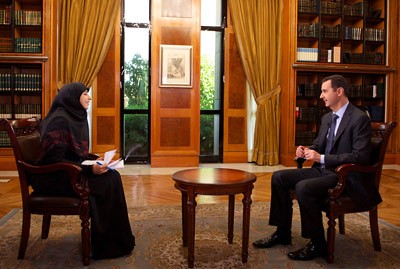
Interview Given by President al-Assad to Lebanese Al-Manar TV

May 31, 2013

DAMASCUS, (SANA)-President Bashar al-Assad gave an interview to al-Manar TV broadcasted on Thursday,

Following is the full text of the interview:

Al-Manar: In the name of Allah, the Compassionate, the Merciful. Assalamu Alaikum. Bloodshed in Syria continues unabated. This is the only constant over which there is little disagreement between those loyal to the Syrian state and those opposed to it. However, there is no common ground over the other constants and details two years into the current crisis. At the time, a great deal was said about the imminent fall of the regime. Deadlines were set and missed; and all those bets were lost. Today, we are here in the heart of Damascus, enjoying the hospitality of a president who has become a source of consternation to many of his opponents who are still unable to understand the equations that have played havoc with their calculations and prevented his ouster from the Syrian political scene. This unpleasant and unexpected outcome for his opponents upset their schemes and plots because they didn’t take into account one self-evident question: what happens if the regime doesn’t fall? What if President Assad doesn’t leave the Syrian scene? Of course, there are no clear answers; and the result is more destruction, killing and bloodshed. Today there is talk of a critical juncture for Syria. The Syrian Army has moved from defense to attack, achieving one success after another. On a parallel level, stagnant diplomatic waters have been shaken by discussions over a Geneva 2 conference becoming a recurrent theme in the statements of all parties. There are many questions which need answers: political settlement, resorting to the military option to decide the outcome, the Israeli enemy’s direct interference with the course of events in the current crisis, the new equations on the Golan Heights, the relationship with opponents and friends. What is the Syrian leadership’s plan for a way out of a complex and dangerous crisis whose ramifications have started to spill over into neighboring countries? It is our great pleasure tonight to put these questions to H. E. President Bashar al-Assad. Assalamu Alaikum, Mr. President.

President Assad: Assalamu Alaikum. You are most welcome in Damascus.

Al-Manar: Mr. President, we are in the heart of the People’s Palace, two and a half years into the Syrian crisis. At the time, the bet was that the president and his regime would be overthrown within weeks. How have you managed to foil the plots of your opponents and enemies? What is the secret behind this steadfastness?

President Assad: There are a number of factors are involved. One is the Syrian factor, which thwarted their intentions; the other factor is related to those who masterminded these scenarios and ended up defeating themselves because they do not know Syria or understand in detail the situation. They started with the calls of revolution, but a real revolution requires tangible elements; you cannot create a revolution simply by paying money. When this approach failed, they shifted to using sectarian slogans in order to create a division within our society. Even though they were able to infiltrate certain pockets in Syrian society, pockets of ignorance and lack of awareness that exist in any society, they were not able to create this sectarian division. Had they succeeded, Syria would have been divided up from the beginning. They also fell into their own trap by trying to promote the notion that this was a struggle to maintain power rather than a struggle for national sovereignty. No one would fight and martyr themselves in order to secure power for anyone else.

Al-Manar: In the battle for the homeland, it seems that the Syrian leadership, and after two and a half years, is making progress on the battlefield. And here if I might ask you, why have you chosen to move from defense to attack? And don’t you think that you have been late in taking the decision to go on the offensive, and consequently incurred heavy losses, if we take of Al-Qseir as an example.

President Assad: It is not a question of defense or attack. Every battle has its own tactics. From the beginning, we did not deal with each situation from a military perspective alone. We also factored in the social and political aspects as well - many Syrians were misled in the beginning and there were many friendly countries that didn’t understand the domestic dynamics. Your actions will differ according to how much consensus there is over a particular issue. There is no doubt that as events have unfolded Syrians have been able to better understand the situation and what is really at stake. This has helped the Armed Forces to better carry out their duties and achieve results. So, what is happening now is not a shift in tactic from defense to attack, but rather a shift in the balance of power in favor of the Armed Forces.

Al-Manar: How has this balance been tipped, Mr. President? Syria is being criticized for asking for the assistance of foreign fighters, and to be fully candid, it is said that Hezbollah fighters are extending assistance. In a previous interview, you said that there are 23 million Syrians; we do not need help from anyone else. What is Hezbollah doing in Syria?

President Assad: The main reason for tipping the balance is the change in people’s opinion in areas that used to incubate armed groups, not necessarily due to lack of patriotism on their part, but because they were deceived. They were led to believe that there was a revolution against the failings of the state. This has changed; many individuals have left these terrorist groups and have returned to their normal lives. As to what is being said about Hezbollah and the participation of foreign fighters alongside the Syrian Army, this is a hugely important issue and has several factors. Each of these factors should be clearly understood. Hezbollah, the battle at Al-Qseir and the recent Israeli airstrike – these three factors cannot be looked at in isolation of the other, they are all a part of the same issue. Let’s be frank. In recent weeks, and particularly after Mr. Hasan Nasrallah’s speech, Arab and foreign media have said that Hezbollah fighters are fighting in Syria and defending the Syrian state, or to use their words “the regime.” Logically speaking, if Hezbollah or the resistance wanted to defend Syria by sending fighters, how many could they send - a few hundred, a thousand or two? We are talking about a battle in which hundreds of thousands of Syrian troops are involved against tens of thousands of terrorists, if not more because of the constant flow of fighters from neighboring and foreign countries that support those terrorists. So clearly, the number of fighters Hezbollah might contribute in order to defend the Syrian state in its battle, would be a drop in the ocean compared to the number of Syrian soldiers fighting the terrorists. When also taking into account the vast expanse of Syria, these numbers will neither protect a state nor ‘regime.’ This is from one perspective. From another, if they say they are defending the state, why now? Battles started after Ramadan in 2011 and escalated into 2012, the summer of 2012 to be precise. They started the battle to “liberate Damascus” and set a zero hour for the first time, the second time and a third time; the four generals were assassinated, a number of individuals fled Syria, and many people believed that was the time the state would collapse. It didn’t. Nevertheless, during all of these times, Hezbollah never intervened, so why would it intervene now? More importantly, why haven’t we seen Hezbollah fighting in Damascus and Aleppo? The more significant battles are in Damascus and in Aleppo, not in Al-Qseir. Al-Qseir is a small town in Homs, why haven’t we seen Hezbollah in the city of Homs? Clearly, all these assumptions are inaccurate. They say Al-Qseir is a strategic border town, but all the borders are strategic for the terrorists in order to smuggle in their fighters and weapons. So, all these propositions have nothing to do with Hezbollah. If we take into account the moans and groans of the Arab media, the statements made by Arab and foreign officials – even Ban Ki-moon expressed concern over Hezbollah in Al-Qseir – all of this is for the objective of suppressing and stifling the resistance. It has nothing to do with defending the Syrian state. The Syrian army has made significant achievements in Damascus, Aleppo, rural Damascus and many other areas; however, we haven’t heard the same moaning as we have heard in Al-Qseir.

Al-Manar: But, Mr. President, the nature of the battle that you and Hezbollah are waging in Al-Qseir seems, to your critics, to take the shape of a safe corridor connecting the coastal region with Damascus. Consequently, if Syria were to be divided, or if geographical changes were to be enforced, this would pave the way for an Alawite state. So, what is the nature of this battle, and how is it connected with the conflict with Israel.

President Assad: First, the Syrian and Lebanese coastal areas are not connected through Al-Qseir. Geographically this is not possible. Second, nobody would fight a battle in order to move towards separation. If you opt for separation, you move towards that objective without waging battles all over the country in order to be pushed into a particular corner. The nature of the battle does not indicate that we are heading for division, but rather the opposite, we are ensuring we remain a united country. Our forefathers rejected the idea of division when the French proposed this during their occupation of Syria because at the time they were very aware of its consequences. Is it possible or even fathomable that generations later, we their children, are less aware or mindful? Once again, the battle in Al-Qseir and all the bemoaning is related to Israel. The timing of the battle in Al-Qseir was synchronized with the Israeli airstrike. Their objective is to stifle the resistance. This is the same old campaign taking on a different form. Now what’s important is not al-Qseir as a town, but the borders; they want to stifle the resistance from land and from the sea. Here the question begs itself - some have said that the resistance should face the enemy and consequently remain in the south. This was said on May 7, 2008, when some of Israel’s agents in Lebanon tried to tamper with the communications system of the resistance; they claimed that the resistance turned its weapons inwards. They said the same thing about the Syrian Army; that the Syrian Army should fight on the borders with Israel. We have said very clearly that our Army will fight the enemy wherever it is. When the enemy is in the north, we move north; the same applies if the enemy comes from the east or the west. This is also the case for Hezbollah. So the question is why is Hezbollah deployed on the borders inside Lebanon or inside Syria? The answer is that our battle is a battle against the Israeli enemy and its proxies inside Syria or inside Lebanon.

Al-Manar: Mr. President, if I might ask about Israel’s involvement in the Syrian crisis through the recent airstrike against Damascus. Israel immediately attached certain messages to this airstrike by saying it doesn’t want escalation or doesn’t intend to interfere in the Syrian crisis. The question is: what does Israel want and what type of interference?

President Assad: This is exactly my point. Everything that is happening at the moment is aimed, first and foremost, at stifling the resistance. Israel’s support of the terrorists was for two purposes. The first is to stifle the resistance; the second is to strike the Syrian air defense systems. It is not interested in anything else.

Al-Manar: Mr. President, since Israel’s objectives are clear, the Syrian state was criticized for its muted response. Everyone was expecting a Syrian response, and the Syrian government stated that it reserves the right to respond at the appropriate time and place. Why didn’t the response come immediately? And is it enough for a senior source to say that missiles have been directed at the Israeli enemy and that any attack will be retaliated immediately without resorting to Army command?

President Assad: We have informed all the Arab and foreign parties - mostly foreign - that contacted us, that we will respond the next time. Of course, there has been more than one response. There have been several Israeli attempted violations to which there was immediate retaliation. But these short-term responses have no real value; they are only of a political nature. If we want to respond to Israel, the response will be of strategic significance.

Al-Manar: How? By opening the Golan front, for instance?

President Assad: This depends on public opinion, whether there is a consensus in support of the resistance or not. That’s the question. Al-Manar: How is the situation in Syria now?

President Assad: In fact, there is clear popular pressure to open the Golan front to resistance. This enthusiasm is also on the Arab level; we have received many Arab delegations wanting to know how young people might be enrolled to come and fight Israel. Of course, resistance is not easy. It is not merely a question of opening the front geographically. It is a political, ideological, and social issue, with the net result being military action.

Al-Manar: Mr. President, if we take into account the incident on the Golan Heights and Syria’s retaliation on the Israeli military vehicle that crossed the combat line, does this mean that the rules of engagement have changed? And if the rules of the game have changed, what is the new equation, so to speak?

President Assad: Real change in the rules of engagement happens when there is a popular condition pushing for resistance. Any other change is short-term, unless we are heading towards war. Any response of any kind might only appear to be a change to the rules of engagement, but I don’t think it really is. The real change is when the people move towards resistance; this is the really dramatic change.

Al-Manar: Don’t you think that this is a little late? After 40 years of quiet and a state of truce on the Golan Heights, now there is talk of a movement on that front, about new equations and about new rules of the game?

President Assad: They always talk about Syria opening the front or closing the front. A state does not create resistance. Resistance can only be called so, when it is popular and spontaneous, it cannot be created. The state can either support or oppose the resistance, - or create obstacles, as is the case with some Arab countries. I believe that a state that opposes the will of its people for resistance is reckless. The issue is not that Syria has decided, after 40 years, to move in this direction. The public’s state of mind is that our National Army is carrying out its duties to protect and liberate our land. Had there not been an army, as was the situation in Lebanon when the army and the state were divided during the civil war, there would have been resistance a long time ago. Today, in the current circumstances, there are a number of factors pushing in that direction. First, there are repeated Israeli aggressions that constitute a major factor in creating this desire and required incentive. Second, the army’s engagement in battles in more than one place throughout Syria has created a sentiment on the part of many civilians that it is their duty to move in this direction in order to support the Armed Forces on the Golan.

Al-Manar: Mr. President, Benjamin Netanyahu said that Israel would not hesitate to attack Syria if it detected that weapons are being conveyed to Hezbollah in Lebanon. If Israel carried out its threats, I want a direct answer from you: what would Syria do?

President Assad: As I have said, we have informed the relevant states that we will respond in kind. Of course, it is difficult to specify the military means that would be used, that is for our military command to decide. We plan for different scenarios, depending on the circumstances and the timing of the strike that would determine which method or weapons.

Al-Manar: Mr. President, after the airstrike that targeted Damascus, there was talk about the S300 missiles and that this missile system will tip the balance. Based on this argument, Netanyahu visited Moscow. My direct question is this: are these missiles on their way to Damascus? Is Syria now in possession of these missiles?

President Assad: It is not our policy to talk publically about military issues in terms of what we possess or what we receive. As far as Russia is concerned, the contracts have nothing to do with the crisis. We have negotiated with them on different kinds of weapons for years, and Russia is committed to honoring these contracts. What I want to say is that neither Netanyahu’s visit nor the crisis and the conditions surrounding it have influenced arms imports. All of our agreements with Russia will be implemented, some have been implemented during the past period and, together with the Russians, we will continue to implement these contracts in the future.

Al-Manar: Mr. President, we have talked about the steadfastness of the Syrian leadership and the Syrian state. We have discussed the progress being achieved on the battlefield, and strengthening the alliance between Syria and the resistance. These are all within the same front. From another perspective, there is diplomatic activity stirring waters that have been stagnant for two and a half years. Before we talk about this and about the Geneva conference and the red lines that Syria has drawn, there was a simple proposition or a simple solution suggested by the former head of the coalition, Muaz al-Khatib. He said that the president, together with 500 other dignitaries would be allowed to leave the country within 20 days, and the crisis would be over. Why don’t you meet this request and put an end to the crisis?

President Assad: I have always talked about the basic principle: that the Syrian people alone have the right to decide whether the president should remain or leave. So, anybody speaking on this subject should state which part of the Syrian people they represent and who granted them the authority to speak on their behalf. As for this initiative, I haven’t actually read it, but I was very happy that they allowed me 20 days and 500 people! I don’t know who proposed the initiative; I don’t care much about names.

Al-Manar: He actually said that you would be given 20 days, 500 people, and no guarantees. You’ll be allowed to leave but with no guarantee whatsoever on whether legal action would be taken against you or not. Mr. President, this brings us to the negotiations, I am referring to Geneva 2. The Syrian government and leadership have announced initial agreement to take part in this conference. If this conference is held, there will be a table with the Syrian flag on one side and the flag of the opposition groups on the other. How can you convince the Syrian people after two and a half years of crisis that you will sit face to face at the same negotiating table with these groups?

President Assad: First of all, regarding the flag, it is meaningless without the people it represents. When we put a flag on a table or anywhere else, we talk about the people represented by that flag. This question can be put to those who raise flags they call Syrian but are different from the official Syrian flag. So, this flag has no value when it does not represent the people. Secondly, we will attend this conference as the official delegation and legitimate representatives of the Syrian people. But, whom do they represent? When the conference is over, we return to Syria, we return home to our people. But when the conference is over, whom do they return to - five-star hotels? Or to the foreign ministries of the states that they represent – which doesn’t include Syria of course - in order to submit their reports? Or do they return to the intelligence services of those countries? So, when we attend this conference, we should know very clearly the positions of some of those sitting at the table - and I say some because the conference format is not clear yet and as such we do not have details as to how the patriotic Syrian opposition will be considered or the other opposition parties in Syria. As for the opposition groups abroad and their flag, we know that we are attending the conference not to negotiate with them, but rather with the states that back them; it will appear as though we are negotiating with the slaves, but essentially we are negotiating with their masters. This is the truth, we shouldn’t deceive ourselves.

Al-Manar: Are you, in the Syrian leadership, convinced that these negotiations will be held next month?

President Assad: We expect them to happen, unless they are obstructed by other states. As far as we are concerned in Syria, we have announced a couple of days ago that we agree in principle to attend.

Al-Manar: When you say in principle, it seems that you are considering other options.

President Assad: In principle, we are in favour of the conference as a notion, but there are no details yet. For example, will there be conditions placed before the conference? If so, these conditions may be unacceptable and we would not attend. So the idea of the conference, of a meeting, in principle is a good one. We will have to wait and see.

Al-Manar: Let’s talk, Mr. President, about the conditions put by the Syrian leadership. What are Syria’s conditions?

President Assad: Simply put, our only condition is that anything agreed upon in any meeting inside or outside the country, including the conference, is subject to the approval of the Syrian people through a popular referendum. This is the only condition. Anything else doesn’t have any value. That is why we are comfortable with going to the conference. We have no complexes. Either side can propose anything, but nothing can be implemented without the approval of the Syrian people. And as long as we are the legitimate representatives of the people, we have nothing to fear.

Al-Manar: Let’s be clear, Mr. President. There is a lot of ambiguity in Geneva 1 and Geneva 2 about the transitional period and the role of President Bashar al-Assad in that transitional period. Are you prepared to hand over all your authorities to this transitional government? And how do you understand this ambiguous term?

President Assad: This is what I made clear in the initiative I proposed in January this year. They say they want a transitional government in which the president has no role. In Syria we have a presidential system, where the President is head of the republic and the Prime Minister heads the government. They want a government with broad authorities. The Syrian constitution gives the government full authorities. The president is the commander-in-chief of the Army and Armed Forces and the head of the Supreme Judicial Council. All the other institutions report directly to the government. Changing the authorities of the president is subject to changing the constitution; the president cannot just relinquish his authorities, he doesn't have the constitutional right. Changing the constitution requires a popular referendum. When they want to propose such issues, they might be discussed in the conference, and when we agree on something - if we agree, we return home and put it to a popular referendum and then move on. But for them to ask for the amendment of the constitution in advance, this cannot be done neither by the president nor by the government.

Al-Manar: Frankly, Mr. President, all the international positions taken against you and all your political opponents said that they don’t want a role for al-Assad in Syria’s future. This is what the Saudi foreign minister Saud al-Faisal said and this is what the Turks and the Qataris said, and also the Syrian opposition. Will President Assad be nominated for the forthcoming presidential elections in 2014?

President Assad: What I know is that Saud al-Faisal is a specialist in American affairs, I don’t know if he knows anything about Syrian affairs. If he wants to learn, that’s fine! As to the desires of others, I repeat what I have said earlier: the only desires relevant are those of the Syrian people. With regards to the nomination, some parties have said that it is preferable that the president shouldn’t be nominated for the 2014 elections. This issue will be determined closer to the time; it is still too early to discuss this. When the time comes, and I feel, through my meetings and interactions with the Syrian people, that there is a need and public desire for me to nominate myself, I will not hesitate. However, if I feel that the Syrian people do not want me to lead them, then naturally I will not put myself forward. They are wasting their time on such talk.

Al-Manar: Mr. President, you mentioned the Saudi foreign minister Saud al-Faisal. This makes me ask about Syria’s relationship with Saudi Arabia, with Qatar, with Turkey, particularly if we take into account that their recent position in the Arab ministerial committee was relatively moderate. They did not directly and publically call for the ouster of President Assad. Do you feel any change or any support on the part of these countries for a political solution to the Syrian crisis? And is Syria prepared to deal once more with the Arab League, taking into account that the Syrian government asked for an apology from the Arab League?

President Assad: Concerning the Arab states, we see brief changes in their rhetoric but not in their actions. The countries that support the terrorists have not changed; they are still supporting terrorism to the same extent. Turkey also has not made any positive steps. As for Qatar, their role is also the same, the role of the funder - the bank funding the terrorists and supporting them through Turkey. So, overall, no change. As for the Arab League, in Syria we have never pinned our hopes on the Arab League. Even in the past decades, we were barely able to dismantle the mines set for us in the different meetings, whether in the summits or in meetings of the foreign ministers. So in light of this and its recent actions, can we really expect it to play a role? We are open to everybody, we never close our doors. But we should also be realistic and face the truth that they are unable to offer anything, particularly since a significant number of the Arab states are not independent. They receive their orders from the outside. Some of them are sympathetic to us in their hearts, but they cannot act on their feelings because they are not in possession of their decisions. So, no, we do not pin any hopes on the Arab League.

Al-Manar: Mr. President, this leads us to ask: if the Arab environment is as such, and taking into account the developments on the ground and the steadfastness, the Geneva conference and the negotiations, the basic question is: what if the political negotiations fail? What are the consequences of the failure of political negotiations?

President Assad: This is quite possible, because there are states that are obstructing the meeting in principle, and they are going only to avoid embarrassment. They are opposed to any dialogue whether inside or outside Syria. Even the Russians, in several statements, have dampened expectations from this conference. But we should also be accurate in defining this dialogue, particularly in relation to what is happening on the ground. Most of the factions engaged in talking about what is happening in Syria have no influence on the ground; they don’t even have direct relationships with the terrorists. In some instances these terrorists are directly linked with the states that are backing them, in other cases, they are mere gangs paid to carry out terrorist activities. So, the failure of the conference will not significantly change the reality inside Syria, because these states will not stop supporting the terrorists - conference or no conference, and the gangs will not stop their subversive activities. So it has no impact on them.

Al-Manar: Mr. President, the events in Syria are spilling over to neighboring countries. We see what’s happening in Iraq, the explosions in Al-Rihaniye in Turkey and also in Lebanon. In Ersal, Tripoli, Hezbollah taking part in the fighting in Al-Qseir. How does Syria approach the situation in Lebanon, and do you think the Lebanese policy of dissociation is still applied or accepted?

President Assad: Let me pose some questions based on the reality in Syria and in Lebanon about the policy of dissociation in order not to be accused of making a value judgment on whether this policy is right or wrong. Let’s start with some simple questions: Has Lebanon been able to prevent Lebanese interference in Syria? Has it been able to prevent the smuggling of terrorists or weapons into Syria or providing a safe haven for them in Lebanon? It hasn’t; in fact, everyone knows that Lebanon has contributed negatively to the Syrian crisis. Most recently, has Lebanon been able to protect itself against the consequences of the Syrian crisis, most markedly in Tripoli and the missiles that have been falling over different areas of Beirut or its surroundings? It hasn’t. So what kind of dissociation are we talking about? For Lebanon to dissociate itself from the crisis is one thing, and for the government to dissociate itself is another. When the government dissociates itself from a certain issue that affects the interests of the Lebanese people, it is in fact dissociating itself from the Lebanese citizens. I’m not criticizing the Lebanese government - I’m talking about general principles. I don’t want it to be said that I’m criticizing this government. If the Syrian government were to dissociate itself from issues that are of concern to the Syrian people, it would also fail. So in response to your question with regards to Lebanon’s policy of dissociation, we don’t believe this is realistically possible. When my neighbor’s house is on fire, I cannot say that it’s none of my business because sooner or later the fire will spread to my house.

Al-Manar: Mr. President, what would you say to the supporters of the axis of resistance? We are celebrating the anniversary of the victory of the resistance and the liberation of south Lebanon, in an atmosphere of promises of victory, which Mr. Hasan Nasrallah has talked about. You are saying with great confidence that you will emerge triumphant from this crisis. What would you say to all this audience? Are we about to reach the end of this dark tunnel?

President Assad: I believe that the greatest victory achieved by the Arab resistance movements in the past years and decades is primarily an intellectual victory. This resistance wouldn’t have been able to succeed militarily if they hadn’t been able to succeed and stand fast against a campaign aimed at distorting concepts and principles in this region. Before the civil war in Lebanon, some people used to say that Lebanon’s strength lies in its weakness; this is similar to saying that a man’s intelligence lies in his stupidity, or that honor is maintained through corruption. This is an illogical contradiction. The victories of the resistance at different junctures proved that this concept is not true, and it showed that Lebanon’s weakness lies in its weakness and Lebanon’s strength lies in its strength. Lebanon’s strength is in its resistance and these resistance fighters you referred to. Today, more than ever before, we are in need of these ideas, of this mindset, of this steadfastness and of these actions carried out by the resistance fighters. The events in the Arab world during the past years have distorted concepts to the extent that some Arabs have forgotten that the real enemy is still Israel and have instead created internal, sectarian, regional or national enemies. Today we pin our hopes on these resistance fighters to remind the Arab people, through their achievements, that our enemy is still the same. As for my confidence in victory, if we weren’t so confident we wouldn’t have been able to stand fast or to continue this battle after two years of a global attack. This is not a tripartite attack like the one in 1956; it is in fact a global war waged against Syria and the resistance. We have absolute confidence in our victory, and I assure them that Syria will always remain, even more so than before, supportive of the resistance and resistance fighters everywhere in the Arab world.

Al-Manar: In conclusion, it has been my great honor to conduct this interview with Your Excellency, President Bashar al-Assad of the Syrian Arab Republic. Thank you very much. President Assad: You are welcome. I would like to congratulate Al-Manar channel, the channel of resistance, on the anniversary of the liberation and to congratulate the Lebanese people and every resistance fighter in Lebanon.

Al-Manar: Thank you.

Cuba Reiterates the Need for a Political Solution in Syria

Havana. May 30, 2013

Cuba reiterates the need for a political solution in Syria

PARIS, May 29.—Addressing the Human Rights Council in Geneva today, Cuba reiterated its support for a peaceful, negotiated solution to the crisis in Syria, and rejected calls for the use of force and violence.

Speaking in an emergency debate on the issue in the 23rd HRC Ordinary Session, Ambassador Anayansi Rodríguez expressed confidence in Syria’s ability to resolve its internal problems without foreign interference, PL reports.

The Cuban representative condemned the tendency to disregard the Syrian government’s proposals and measures and to ignore efforts being made by certain countries to avert the continuation of violence in the country.

"Particularly alarming are calls for a regime change in Syria and the use of force and violence, instead of contributing to dialogue and negotiations among all the parties involved," she observed.

Cuba condemns the death of innocent people wherever this occurs and rejects its selective attribution and manipulation, placing the blame on one side, in accordance with certain countries’ interests, Rodríguez affirmed.

The diplomat referred to recent experiences and precedents demonstrating manipulation of the UN Charter and the double standards of the United States and other NATO member countries.

"The role of the international community is to help to safeguard peace and stability in Syria, not to incite actions leading to deaths, innocent people being attacked and citizens’ insecurity," she noted.

Statement From the Cuban Foreign Ministry on Continuing U.S. State Department Provocations

Havana. May 31, 2013

Statement from the Ministry of Foreign Affairs

ON May 30, the U.S. State Department repeated its unwonted accusation that Cuba is "a state sponsor of international terrorism."

Once again, this shameful decision has been taken deliberately with no truthful basis, ignoring the wide consensus and explicit demand from many sectors of U.S. society and the international community for an end to this injustice.

The sole objective of this discredited anti-Cuba exercise is to try and justify the maintenance of the blockade, a failed policy condemned worldwide. It is also an attempt to please a steadily decreasing anti-Cuba group desperately propping up a policy which no longer has any basis and is not even in the national interest of the United States, the majority of its population and of Cuban émigrés resident in the country.

The United States government insists on maintaining this arbitrary and unilateral designation, in spite of the total collapse of the ridiculous accusations and feeble arguments which it has traditionally utilized in recent years as an excuse for it, such as the presence in Cuba of fugitives from U.S. justice, none of whom in fact have been accused of terrorism. It also alleges that Cuba has taken in Basque members of ETA, ignoring the fact that this was in response to a request from the governments involved. It also notes that members of the Colombian guerrilla movement are living in the country, an absurd accusation given that, since 2011, Cuba has been a sponsor of the peace process in Colombia.

Cuban territory has never been and never will be utilized to harbor terrorists of any origin, nor for the organization, financing or perpetration of acts of terrorism against any country in the world, including the United States. The Cuban government unequivocally rejects and condemns any act of terrorism, anywhere, under any circumstances and whatever the alleged motivation might be.

On the contrary, the United States government employs state terrorism as a weapon against countries which defy its interests, provoking deaths in civilian populations. It has used drone aircraft to perpetrate extra-judicial executions of alleged terrorists, including U.S. citizens, resulting in the death of hundreds of innocent civilians.

Historically, the United States has been the refuge of self-confessed terrorists and murderers of Cuban origin and, to this day, is harboring Luis Posada Carriles, the mastermind of the first act of terrorism perpetrated on civil aviation in the Western Hemisphere, which provoked an explosion aboard a Cubana de Aviación aircraft off the coast of Barbados on October 6, 1976, and the death of its 73 passengers, including the national youth fencing team. While Posada is living in freedom and tranquility in Miami, Gerardo Hernández, Ramón Labañino, Antonio Guerrero y Fernando González remain unjustly incarcerated for fighting against terrorism in the United States, accused of crimes they did not commit.

For years, Cuba has suffered the consequences of acts of terrorism organized, financed and perpetrated from U.S. territory, with 3,478 persons killed and 2,099 left with disabilities. The Cuban government does not afford the government of the United States the least moral authority to judge it.

In 2002, the government of Cuba proposed to its U.S. counterpart the adoption of a bilateral agreement to confront terrorism, an offer which it reiterated in 2012, without having received any response.

The Ministry of Foreign Affairs strongly rejects the utilization for political ends of an issue as sensitive as international terrorism, and demands an end to this shameful designation, an offense to the Cuban people, the only objective of which is to attempt to justify the anachronistic and cruel blockade of Cuba, and which is to the discredit of the United States government itself.

Havana, May 30, 2013

Fidel Castro Congratulates President Rafael Correa of Ecuador

Havana. May 27, 2013

Fidel congratulates President Rafael Correa

Dear Rafael:

I congratulate you on your courageous speech today and the great moral and political authority with which you are once again assuming the Presidency of Ecuador.

I noted the firmness in your voice when, irrefutably, you condemned the economic blockade of Cuba. However long the hazardous history of our species lasts, nobody will ever be able to demonstrate that crude material interests are capable of creating more virtuous and honest citizens.

The young girl who presented the presidential insignia demonstrates the contrary.

"A just idea, from the depths of a cave, can do more than an army," stated José Martí, our independence hero.

I also congratulate you on your just and heartfelt tribute to Hugo Chávez, who so much loved Ecuador.

A strong embrace.

Fidel Casro Ruz

U.S. Attempts to Provoke Destabilization in Venezuela

Havana. May 30, 2013

Henrique Capriles: Provoking destabilization

LAURA BÉCQUER PASEIRO
Granma International

AFTER failing in his attempt to provoke internal chaos in Venezuela, defeated right-wing presidential candidate Henrique Capriles Radonski has turned his attention to the international arena. With a well devised and advised strategy, aided by the United States, he has undertaken a campaign beyond Venezuelan borders to delegitimize the legitimate government which won the last elections.

His method is a simple one. It is to destabilize national institutions and discredit the principal leaders of the Bolivarian process, in particular President Nicolás Maduro, with the backing of individuals such as Otto Reich and Roger Noriega.

His anything but innocent visit to Bogotá has provoked a storm which is threatening the positive climate of relations between Colombia and Venezuela, two nations with historical, economic and social ties.

Capriles stated that he began his tour to denounce the "fraudulent" popular will expressed at the April 14 elections. He went further than that, advising that he is still to meet with various other Latin American governments. "Colombia will not be the first nor last stop on this visit."

He packed his bags leaving aside accusations of his lack of governorship in the state of Miranda. Legislative Council President Aurora Morales stated May 30 that ignoring his responsibilities as governor "is placing Capriles beyond the Constitution," and recalled that the Miranda government lodged an appeal before the Supreme Court of Justice some weeks ago for clarification of the situation.

This tour of Capriles, one of the April 2002 coup leaders, is also threatening to affect the peace talks underway in Havana between the Juan Manuel Santos government and the Revolutionary Armed Forces of Colombia-Army of the People (FARC-EP), in which Venezuela is participating as an observer. In this way he is playing along with the Colombian paramilitary ultra –right which previously supported him and is prepared to do anything to avert an end to the conflict in that country, which has become a lucrative business

As part of the strategy, the corporate press is using these distractions to conceal other news. Little has been said of the visit by three Bolivarian government ministers to Bogotá to promote economic links, and far less of recent Colombian-Venezuelan cooperation in combating narcotics, with the extradition from Venezuela of three notorious drug traffickers.

Capriles and his allies have little concern about methods and far less for their consequences.

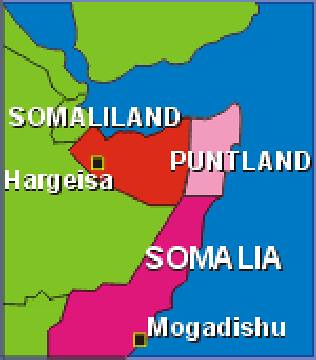
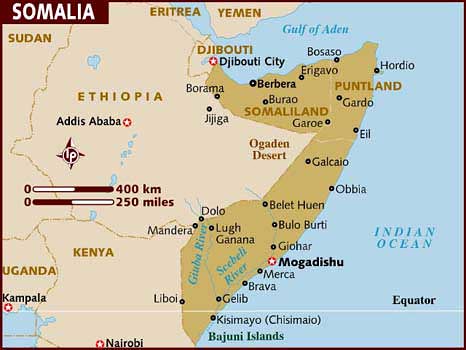
Drone Crashed In Somalia's Puntland Region

Drone crashes in Somalia's Puntland region

Posted: Jun 01, 2013 1:15 PM EDT

MOGADISHU, Somalia (AP) - An official in the semiautonomous Puntland region of Somalia says a surveillance drone has crashed.

Ports and Anti-piracy Minister Saeed Mohamed Rage said Saturday the drone crashed in Qaw village 20 kilometers (12miles) west of the port city of Bossasso.

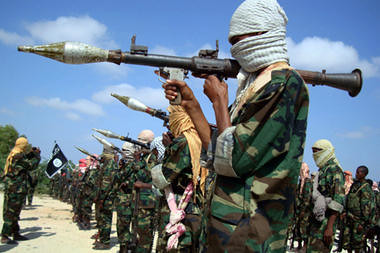
The United States military flies aerial surveillance drones from Indian Ocean island nation of Seychelles to monitor piracy off the East African coast, but Rage said it is not clear whose drone crashed. The U.S. also flies drones that occasionally fire at Somalia's Islamic extremist rebels in south and central Somalia. The al-Shabab rebels Tuesday posted pictures on Twitter of what they claimed was a surveillance drone that had crashed.

Puntland, in northern Somalia, has escaped the decades of conflict seen in the country's south and central regions.

Warlords and Vague Constitution to Blame for Renegade Somalia State

Somalia: Warlords and Vague Constitution to Blame for Renegade Somali State

BY ABDURRAHMAN WARSAMEH, 31 MAY 2013

Mogadishu — Attempts by clan elders and militia commanders in southern Somalia to form an autonomous state, without the consent of the central government but with the apparent backing of foreign countries, remains a dangerous, destabilising element in the region, say analysts.

"Jubaland has all the dangerous elements necessary to kick the stabilisation plan of the liberated territories down like a sand castle," Abukar Arman, a former diplomat and widely-published political analyst, told IPS. He was speaking of towns and regions in this Horn of African nation that were recently liberated from Al-Shabaab control by regional troops.

On May 15, the senior militia commander Ahmed Mohamed Islam, better known as Sheikh Madobe, declared himself president of a self-declared autonomous state known as Jubaland, which comprises the Lower and Middle Juba provinces as well as the Gedo region. The latter borders Kenya.

Islam is said to have close ties with Kenyan forces stationed in the key port city of Kismayo, which is the commercial capital of Jubaland.

Two more local warlords - Barre Hiiraale and Omar Burale Ahmed - were also named as presidents of Jubaland by their respective clan-based supporters.

The Somali government refused to recognise any of the "presidents".

Somalia is still recovering from almost two decades of war, and large parts of the country were once under siege by the Islamist rebel group Al-Shabaab. However, with the help of regional forces, the Somali government was able to recapture some key points in the country in 2012.

On May 24, in an effort to defuse the brewing tension between the Somali federal government and authorities in Jubaland, the regional Intergovernmental Authority on Development (IGAD) urged the Somali government to convene a reconciliation conference in Mogadishu. IGAD recommended that the Somali government form an interim administration for the region.

The move comes after a mission sent by IGAD - which comprises eight Horn of Africa countries - reported its findings to a meeting of the bloc's heads of states and governments in Addis Ababa. The regional grouping has been overseeing the situation in southern Somalia since Kenyan troops, who are part of the African Union Mission in Somalia, ousted Al-Shabaab from the region in 2012.

Since then, efforts by militia leaders allied with Kenya have been underway to form the autonomous administration of Jubaland.

Arman said that Somalia was faced with "armed militias, clan lords and foreign (intruders with) competing interests," as well as an ambiguous constitution that did not clearly specify how federal states would be formed and that deferred some of the key issues.

The Somali government has voiced its discontent about the formation of any administration in the area from the outset, and described the process as "unconstitutional", stating that it would create tribal divisions.

Abdirashid Hashi, deputy director of the Mogadishu-based Heritage Institute for Policy Studies, an independent think-tank, disagrees with Arman about the position of the constitution. He said that the constitution is "very clear" on the formation of federal Somali states.

"It's the politicking, obfuscation and doubletalk of politicians that creates and fuels the ongoing drama," Hashi told IPS in Mogadishu.

With regard to how federal states will be formed, Article 49 of the Provisional National Constitution (PNC) stipulates that "the number and boundaries of the regional states shall be determined by parliament."

However, before determining the number and boundaries of the federal member states, parliament is required to nominate a national commission tasked with studying the issue. According to the PNC, the commission has to submit a report of its findings and recommendations.

But since the constitution was endorsed almost a year ago, no such national commission has been formed.

Article 49 (6) of the PNC seems to further complicate matters, as it states that "based on a voluntary decision, two or more regions may merge to form a federal member state." This is where the bone of contention lies.

It appears that, on one hand, the constitution gives the authority to form autonomous states to the 18 regions. But on the other hand, it calls on parliament to determine the number and boundaries of autonomous states the country will have.

Mohamod Hubey, a constitutional lawyer in Mogadishu, said the constitution is ambiguous regarding the sensitive issue of federalism in Somalia, but adds that the differences can be overcome if parties are willing to cooperate.

"The issue of federalism is a sensitive one as it is not clear-cut in the constitution which region will form a state with which, and clan balance in each region is not uniform, but all these can be resolved if there is will on the part of those concerned," Hubey told IPS.

The perception that foreign involvement is complicating the Jubaland issue is widespread.

"Kenya for a while wanted to establish in southern Somalia a buffer zone administrated by friendly locals. Hence its support for the creation of Jubaland," Hubey said.

Kenya has repeatedly dismissed these claims as "baseless and unfounded" and says that its troops are in Somalia to enhance stability in the region.

Nonetheless, many Somalis see Kenyan involvement in their country as being beyond security concerns.

The southern part of Somalia is strategic, rich in resources - particularly marine resources - and agriculture. It is also where the port city of Kismayo, the third-largest city in Somalia, and a potential commercial hub, is located, said Hashi

He added that many interpret "Kenya's bellicose posturing on the Jubaland issue" as having to do with the oil deposits around the Somali coast. In 2012 there was controversy and some tension between the two nations when Kenya allegedly awarded exploration contracts in contested waters.

"Some even go as far as to claiming that there are concerted international schemes aimed at swindling Somalia out of its territorial waters and the oil under it," Hashi told IPS.

AMISOM Police Trains Somalia Force

Saturday, June 1st, 2013 at 11:16 pm

SOMALIA: AMISOM police trains to Somali Police Force

The African Union Mission in Somalia (AMISOM) with the support of the Federal Government of Somalia formally closed a two weeks re-training course in specialized Public Order Management facilitated by AMISOM at General Kahiye Academy in the countries capital.

The 1071 Men and Women successfully finished the retraining which was conducted by AMISOM Police Trainers.

The trainees conducted training lessons on Public Order Management, Rescue operations, VIP escort services
The Special Representative of the Chairperson of the African Union Commission (SRCC) for Somalia, Ambassador Mahamat Saleh Annadif appealed to the participants to make the most of the training and return home ready to implement their newly acquired skills in improving the security of Somalia.

“The training that you have received will help fill a key gap in the Somali Police Force after years of civil war and armed conflict. I have no doubt that the skills and capability attained during this intensive training will increase your ability to protect civilians and enforce the rule of law on your own,” he said.

So far, over 1000 Somali Police Officers have been trained by AMISOM Police with support from partners. The skills and knowledge acquired by the officers have been able to make positive and concrete impact towards the improvement of service delivery by the Somali Police Officers to the public.

Heavy Clashes Between Al Shabaab and Allied Forces in Shabelle Region

Somalia: Heavy Clashes Between Al Shabaab and Allied Forces in Shabelle Region

1 JUNE 2013

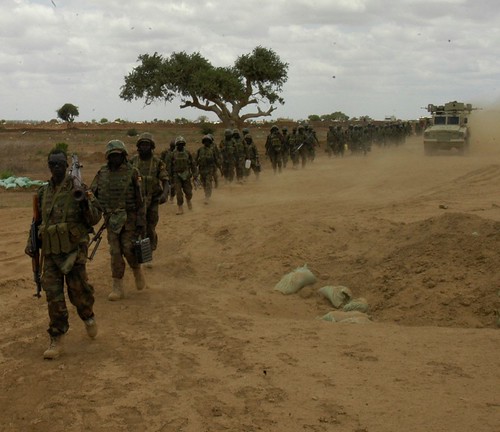
Wanlaweyn — Al Shabaab and Somali government forces backed by AMISOM troops clashed in the Lower Shabelle region on Friday night, Garowe Online reports.

Local media in the region reported heavy fighting Friday night after an attack by Al Shabaab fighter near Wanlaweyn district in the Lower Shabelle region. According to sources, more than 10 people from the battling sides were killed in the clashes.

Local sources said that there were a series of explosions and heavy artillery could be heard Friday.

AMISOM said that they countered the ambush by Al Shabaab forces who targeted government forces rehabilitating a road that runs through the region in southern Somalia. The African Union forces said they captured Al Shabaab fighters in the clashes.

Al Shabaab stated that they inflicted many allied casualties in the attack on Friday adding that they destroyed an AMISOM military vehicle in the clashes.

Commander of the AMISOM force Gen. Andrew Gutti stated that the operations against Al Shabab would continue in the region as the allied forces attempt to sweep Al Shabaab from the rest of their strongholds in the Lower Shabelle region.

Security Boost From Kenya After Attack Along Somalia Border

Security boost from Kenya after attack along Somalia border

Kenya’s authorities have beefed up security along border with Somalia after Al-Shabaab killed six people including two policemen in the northern town of Garissa.

The Saturday evening attack which the insurgents have claimed responsibility has left six police officers missing. Al-Shabaab later said on the social mesdia that they are holding two Kenyan policemen men captive.

Inspector General of Police David Kimaiyo said on Monday more security forces have been deployed in the porous border to help contain the cross border killings after the attack that targeted two police posts near Liboi in the border.

“Security has been beefed up in the two camps and the general area by deployment of additional General Service Unit and Rapid Deployment Unit officers,” Kimaiyo said in a statement received in Nairobi on Monday.

He added that a plane had airlifted the injured to hospitals in Nairobi for specialized treatment. The heavily armed attackers numbering about 80 raided the two police posts and killed the two officers on Saturday evening.

Kimaiyo on Sunday dispatched a team led by the two deputy Inspectors General to assess the situation for further intervention.

A meeting between the security officers and local leaders is being held on Monday to try to seek solutions to the deadly clashes which have sparked a lot of tension to the restive region.

The Kenyan leader encouraged the incoming government to work closely with Amisom, AU and the International community in reconstructing the state of Somalia which is facing near daily onslaught from militants.

Garissa town which hosts the regional headquarters for government officials has in the recent months witnessed a spate of attacks aimed at security officers and innocent citizens.

The attacks come amid rising fears among communities living along the porous border with Somalia that the military group, who fled military assault on their last bastion town of Kismayo, were turning their frustration on the innocent civilians in a series of revenge attacks.

Al-Shabaab militants have vowed to attack Nairobi after the east African nation which hosted protracted negotiations that culminated in the signing of the federal charter for Somalia in 2005, invaded Somalia to flush out the insurgents it blamed for kidnappings of tourists.

The police said they are concerned that most public facilities have lowered their security alertness unlike two months ago when Kenya started pursuing Al-Shabaab.

Source: Strategy Page

Protesters Defiant As Turkey Unrest Goes Into Third Day

Protesters defiant as Turkey unrest goes into third day

10:03pm EDT
By Can Sezer and Parisa Hafezi

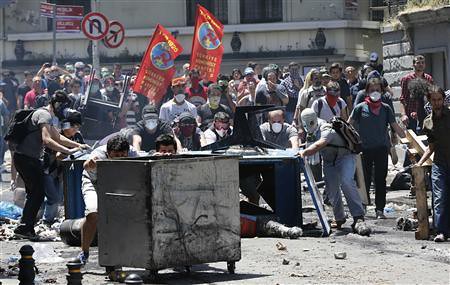
ISTANBUL/ANKARA (Reuters) - Protesters lit fires and scuffled with police in parts of Istanbul and Ankara early on Sunday, but the streets were generally quieter after two days of Turkey's fiercest anti-government demonstrations for years.

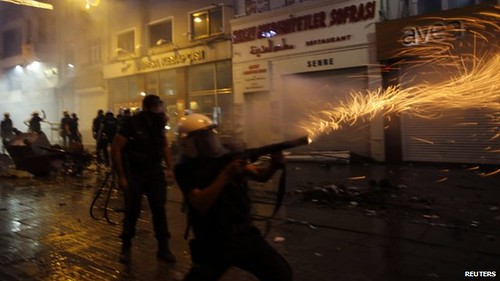
Hundreds of protesters set fires in the Tunali district of the capital Ankara, while riot police fired tear gas and pepper spray to hold back groups of stone-throwing youths near Prime Minister Tayyip Erdogan's office in Istanbul.

Istanbul's central Taksim Square, where the protests have been focused, was quieter after riot police pulled back their armored trucks late on Saturday.

Demonstrators lit bonfires among overturned vehicles, broken glass and rocks and played cat-and-mouse on side streets with riot police, who fired occasional volleys of tear gas.

The unrest was triggered by protests against government plans to build a replica Ottoman-era barracks to house shops or apartments in Taksim, long a venue for political protest. But it has widened into a broader show of defiance against Erdogan and his Islamist-rooted Justice and Development Party (AKP).

Interior Minister Muammer Guler said on Saturday that 939 people had been arrested in more than 90 separate demonstrations around the country. More than 1,000 people have been injured in Istanbul and several hundred more in Ankara, according to medics.

The ferocity of the police response has shocked Turks, as well as tourists caught up in the unrest in one of the world's most visited destinations. It has drawn rebukes from the United States, European Union and international rights groups.

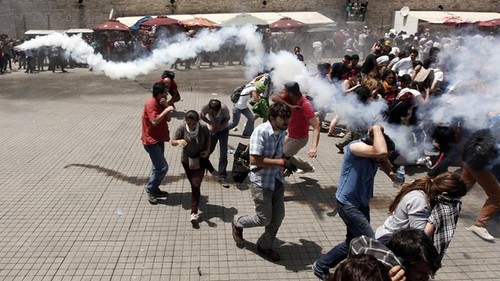
Helicopters have fired tear gas canisters into residential neighborhoods and police have used tear gas to try to smoke people out of buildings. Footage on YouTube showed one protester being hit by an armored police truck as it charged a barricade.

"All dictators use the same methods, oppressing their people," said Mehmet Haspinar, a 60-year-old retired government employee sheltering in a building entrance way as riot police fired pepper spray in an Ankara back street.

EUROPE'S FASTEST-GROWING ECONOMY

Erdogan has overseen a transformation in Turkey during his decade in power, turning its once crisis-prone economy into the fastest-growing in Europe.

He remains by far the country's most popular politician, but critics point to what they see as his authoritarianism and religiously conservative meddling in private lives in the secular republic. Some accuse him of behaving like a modern-day sultan.

Tighter restrictions on alcohol sales and warnings against public displays of affection in recent weeks have provoked protests.

Concern that government policy is allowing Turkey to be dragged into the conflict in neighboring Syria by the West has also led to peaceful demonstrations.

"It's about democracy, and it's going to get bigger," said one demonstrator in a side street off Taksim Square, trying to rinse tear gas from his eyes.

Erdogan has called for an immediate end to the protests and has said his government will investigate claims that the police have used excessive force. But he remained defiant.

"If this is about holding meetings, if this is a social movement, where they gather 20, I will get up and gather 200,000 people. Where they gather 100,000, I will bring together one million from my party," he said in a televised speech.

He said the redevelopment of a park in Taksim was being used as an excuse for the unrest and warned the main opposition Republican People's Party (CHP) against stoking tensions.

In spite of Erdogan's focus on the CHP, the protests have involved a broad spectrum of people opposed to the prime minister and do not appear to have been organized by a single political party.

After the police withdrew from Taksim Square, supporters of Turkey's pro-Kurdish BDP party danced a Kurdish dance in celebration just yards from nationalists waving Turkish flags. They jointly chanted "shoulder to shoulder against fascism".
A group of soccer fans from fierce rival Istanbul clubs Fenerbache, Besiktas and Galatasaray joined the chant.

Protesters voiced anger at the limited coverage of the demonstrations by Turkish television stations, with many seeing government intimidation as to blame. Scores of journalists have been imprisoned during Erdogan's decade in power.

"Government crony media for sale" was written in graffiti over one television broadcast van abandoned in Taksim Square.

(Additional reporting by Daren Butler in Istanbul and Humeyra Pamuk in Ankara; Writing by Nick Tattersall; Editing by David Brunnstrom)

Saturday, June 01, 2013

Turkey Prime Minister Defiant As Police and Demonstators Clash

Turkey's PM defiant as police and demonstrators clash

Unrest targets government limits on alcohol, public displays of affection

The Associated Press Posted: May 31, 2013 12:15 PM ET Last Updated: Jun 1, 2013

Turkish Prime Minister Recep Tayyip Erdogan on Saturday called on demonstrators to end anti-government protests now into a second day, but he remained defiant, insisting police would break down protests at a main Istanbul square and indicating that the government would press ahead with the redevelopment plans that sparked the demonstrations.

In a televised speech, Erdogan said police may have used tear gas excessively while confronting protesters and said this would be investigated.

Nevertheless, police let off more tear gas and pressurized water against protesters trying to reach a main square in Istanbul or the Parliament building in the capital, Ankara.

The protests grew out of anger at heavy-handed police tactics to break up a peaceful sit-in by people trying to protect a park in Istanbul's main Taksim square on Friday.

Bulent Arinc, the deputy prime minister, said the government was wrong to break up the peaceful protest with tear gas and said he welcomed a court's decision that suspended the uprooting of the park.

"It would have been more helpful to try and persuade people who said they didn't want a shopping mall instead of spraying them with tear gas," Arinc told reporters. He was referring to government plans to revamp Taksim, which officials have said include building a shopping mall and the reconstruction of a former Ottoman army barracks.

The park demonstration turned into a wider protest against Prime Minister Recep Tayyip Erdogan, who is seen as becoming increasingly authoritarian, and spread to other Turkish cities despite the court decision to temporarily halt the demolition of the park. A human rights group said hundreds of people were injured in scuffles with police that lasted through the night.

The leader of Turkey's pro-secular, main opposition party called on Erdogan to immediately withdraw police from Taksim and to publicly announce that he was abiding by the court decision.

"Show us that you are the prime minister, pull back your police," Kemal Kilicdaroglu said.

On Saturday, police clashed with several groups of youths trying to reach Taksim, the city's main hub and shopping center. Some threw stones at police.

The Dogan news agency reported 81 demonstrators were detained in Istanbul.

Police took action on the fourth day of the sit-in against a government plan to revamp Taksim square. Officers clashed with angry demonstrators in surrounding areas, firing tear gas canisters and pushing people back with water cannon. A cloud of smoke from the gas filled the square and scattered protests continued into the night.

New law alarms secular Turks

Last week, the government enacted a law restricting the sale and advertising of alcohol, a move that has alarmed secular Turks.

Earlier this week, the government went ahead with a ground-breaking ceremony for the construction of a disputed third bridge across the Bosporus Strait that some say will destroy the few remaining green areas of the sprawling city. It also named the bridge after a controversial Ottoman sultan believed to have ordered a massacre of a minority Shiite Muslim group, instead of choosing a more unifying figure.

Protesters in Gezi Park held up a large poster Friday with a caricature depicting Erdogan as an Ottoman sultan with a caption that read: "The people won't yield to you."

Protester Serdar Sanman accused Erdogan of "trying to install his dictatorship."

Erdogan's Islamic-rooted, conservative government has a strong support base in the mainly Muslim but secular country, and many of the protesters appeared to be from more secular-leaning sections of society.

In Ankara, demonstrators held up posters reading: "Don't Interfere in my Lifestyle" and "Resist the Dictator." Many drank beer and other alcoholic beverages during the protest in defiance of the alcohol restrictions, raising their drinks as they chanted "Cheers Tayyip!" They lined the pavement with empty beer and liquor bottles and cans.

Demands dismissed

Erdogan this week dismissed the Istanbul protesters' demands, saying the government would go ahead with the renovation plans "no matter what they do." The forestry minister said more trees would be planted than those uprooted at Gezi.

The dawn raid was the latest in a series of aggressive crackdown on protests. Human rights activists frequently accuse Turkish police of using inordinate force to break up protests and of excessively using tear gas and pepper spray against protesters.

Interior Minister Muammer Guler said that authorities would investigate the reports of disproportionate use of force. Still, he defended the crackdown, saying officers were carrying out their duties against an illegal occupation of the park.

In Istanbul, several protesters were injured when a wall they climbed on collapsed during a police chase, and at least two people — including a journalist — were hit in the head by tear gas canisters. Two opposition legislators were among several hospitalized after being affected by the gas, the private Dogan news agency reported.

Istanbul Gov. Huseyin Avni Mutlu said 12 people were treated in hospitals for injuries and least 13 people were detained.

In Washington, State Department spokeswoman Jen Psaki said the U.S. was concerned about the number of people injured as police dispersed protesters.

"We believe that Turkey's long-term stability, security and prosperity is best guaranteed by upholding the fundamental freedoms of expression, assembly and association, which is what it seems these individuals were doing," she told reporters. "These freedoms are crucial to any healthy democracy."

Psaki said the U.S. was still gathering information about the incident.

There was very little coverage of the protests on television channels in Turkey, reflecting the environment of self-censorship by the media, which has, among other things, been pressured into dismissing staff too critical of the government.

The media rights group Reporters without Borders said the injured journalist, Ahmet Sik, and others were deliberately targeted by police and urged Turkish authorities to halt the "excessive" use of force. A Reuters photographer was also injured.

Amnesty International also deplored what it called Turkish police brutality and said some officers should be brought to justice.

Demonstrators affected by tear gas sought shelter at a luxury hotel at Taksim and were tended by guests. Police removed tents and the demonstrators' belongings and mounted barricades around the park.

The state-run Anadolu Agency said 15 demonstrators were detained in Ankara.

"The people are demonstrating against the government's intolerance toward demonstrations," said Metin Feyzioglu, who heads Turkey's lawyers' association, during the protest in Ankara. "The government must display understanding and immediately stop the violence against the demonstrators."

Unrest Rages In Turkish Cities of Istanbul and Ankara

1 June 2013
Last updated at 08:51
BBC

Turkey protests: Unrest rages in Istanbul and Ankara

Turkey is entering a second day of protests after clashes between police and demonstrators left dozens of people injured in Istanbul on Friday.

The protest began as a sit-in over plans to redevelop Gezi Park in Taksim Square, but escalated and became violent after police used tear gas.

Tear gas was again fired on Saturday morning as hundreds of protesters marched over a Bosphorus bridge.

In the capital, Ankara, protesters tried to march on the parliament.

Transport lockdown

Hundreds of protesters marched over the bridge connecting the Asian and European shores of Istanbul on Saturday morning to try to reach the main square.

Police fired tear gas to try to disperse them and some protesters threw rocks.

One Istanbul resident, who gave her name as Lily, told the BBC's World Service: "There are 40,000 people crossing the bridge between Asia and Europe today. All the public transport is on lockdown."

She said that police had dropped tear-gas canisters from helicopters overnight.

"About half past one the entire city started to reverberate. People were banging on pots, pans, blowing whistles," she said.

The BBC's Louise Greenwood in Istanbul says police from as far afield as Antalya are being drafted in to help quell the violence.

She says the central Taksim district and surrounding areas remain cordoned off and bridges are closed to traffic.

Istanbul's governor said a dozen people were admitted to hospital and more than 60 people detained after Friday's clashes.

In Ankara, protesters staged what they described as a solidarity rally, with many participants chanting: "Everywhere is resistance, everywhere is Taksim!"

On Saturday, protesters chanting anti-government slogans tried to march on the parliament.

The US has expressed concern over Turkey's handling of the protests and Amnesty International condemned the police's tactics.

Witnesses said tear gas was deployed randomly on people who were "by and large protesting peacefully".

'Creeping Islamisation'

Demonstrators had gathered in Gezi Park on Friday to contest the controversial redevelopment project aimed at easing congestion around Taksim Square, which involved uprooting trees.

Opponents of Prime Minister Recep Tayyip Erdogan's plans say the park is one of the few green areas left in central Istanbul.

Correspondents say the issue has helped highlight unhappiness among young people towards the government and ruling Justice and Development (AK) Party over what they see as creeping Islamisation.

Last week, Turkey's parliament approved legislation restricting the sale and consumption of alcoholic drinks between 22:00 and 06:00.

The prime minister's AK Party has its roots in political Islam, but he says he is committed to Turkey's state secularism.

Mr Erdogan has been in power since 2002 and some in Turkey have complained that his government is becoming increasingly authoritarian.

Earlier this month, riot police clashed with tens of thousands of people attempting to hold a May Day march in Istanbul.
1/4

Are you at the protests? If so please contact us using our website. Send your pictures and videos. If you have a large file you can upload here.


Turkey police attack Istanbul sit-in against uprooting trees

Fri May 31, 2013 4:51PM GMT
presstv.ir

Riot police in Turkey have used teargas and water cannons to disperse a peaceful sit-in protest by hundreds of people in Istanbul.

At least two dozen people were wounded after police attacked the four-day protest in Istanbul’s iconic Taksim Square on Friday.

Witnesses said several protesters, including two opposition legislators, were hospitalized after being affected by the gas while two others were hospitalized after they were hit in the head by teargas canisters.

A number of protesters were also injured after a wall they climbed collapsed during a police chase. Two protestors suffered broken arms and several others had minor bone fractures.

Protesters have occupied the square's park, Gezi, since May 28 to prevent bulldozers from uprooting the trees and demolishing the park in order to replace it with a shopping mall.

Police have attacked the protesters several times in the past four days but they have refused to leave the park.

On Thursday, riot police set fire to several tents and used teargas and pepper spray in a bid to force activists out of the park.

The protesters say Gezi Park, which is a traditional gathering point for rallies and protests as well as a popular tourist destination, is the city's last green public space.

Unconfirmed reports suggest more than 10,000 people have gathered in Taksim's Gezi Park.

Mauritania Pays Price For War on Mali

Mauritania Pays Price For War on Mali

Mauritania, an African country whose border with the Republic of Mali extends for more than 1,000 km [621 miles], has been deeply influenced by the French war on its neighbor, even despite the policy adopted by the Mauritanian government of distancing itself from the conflict next door. Moreover, the suffering of the provinces bordering Mali has been deepened by a severe drought that has followed the absence of rainfall local farmers and herdsmen depend on.

Mauritania and Mali's historically close economic and cultural ties mean the former has suffered immensely in the war affecting its eastern neighbor, writes Al-Mokhtar Ould Mohammad.

Since Mali has not been blessed with a port, almost 90% of its imports come into the country through seaports in Mauritania (the poorest country in Africa). Mauritanians have been influenced by the war in ways beyond the effect on Mauritanian exports like fish, construction materials and Malian imports like grains and citrus fruits. The tourist industry has declined, most notably due to the French decision in 2007 to cancel the Paris-Dakar rally.

Nearly 50% of the stations on that rally had been situated on Mauritanian territory; over the course of the race's eight days, it served as an income-generating event from which Mauritanians in the country's north and east profited handsomely. But that loss does not compare to the results of the war.

Each year at the beginning of May, the search for pastureland begins in neighboring Mali. Mauritanians — who, according to official statistics, own more than 20 million camels, cows and sheep — had grown accustomed to making seasonal visits to Malian way stations that enjoy an earlier rainy season. There, they traditionally feed the majority of their livestock. This tradition dates back centuries; it is one of the fundamental links between the peoples of the two countries, along with constant communication through long-established commercial and ethnic ties.

Mauritania does not experience rain before July, and as a result relies upon the pastures of its neighbors. Some people in northern Mali look upon Mauritanians as ethnic and tribal extensions of their own community. Sayidi al-Mukhar, one of the region's most prominent spiritual leaders (whose grave was recently desecrated by Salafists in northern Mali) descends from the local Kunta tribes and their ancestors. Indeed, Mukhtar's ancestors and some of his descendants live in Mauritania.

Malian — and Mauritanian — refugees

Malian refugees continued to flock to Mauritanian territory during the period when armed Islamist groups held control of northern Mali in 2012.

However, with the beginning of the French war in the second week of January 2013, the issue of the internally displaced began to grow more acute. On the humanitarian level, Mauritania took in more than 200,000 refugees.

The suffering of refugees fleeing the horror of the fighting steadily worsened after it was discovered that Mauritanians were exploiting the opportunities proffered by [the distribution of international] aid by abandoning their villages in eastern Mauritania and registering as refugees in host camps in order to receive the aid packages being distributed by international relief agencies. The underlying cause is attributable to both the area's poverty and the severity of the recent drought.

Today, after much fierce fighting, the refugee camps in Mberra and Bassiknou in eastern Mauritania have appeared incapable of taking care of their original inhabitants. How then can they deal with the newcomers (in addition to their housing crisis, which reduced the food rations offered by international organizations working in the camps)?

It has forced the Mauritanian government to intervene and distribute aid in the city, aid that is needed by Mauritania's own poor. In Mauritanians' view, the latter are naturally more deserving.

Refusing to go back

With the French war on armed Islamist groups in northern Mali — especially in the cities of Kidal, Timbuktuo and Gao — and despite the fact that some refugees have returned to northern Mali, the majority of Malian refugees in eastern Mauritania have refused to return to their villages because of the [campaigns of] ethnic cleansing to which they and their families have been subjected by the Tuareg. Hundreds of female Malian refugees have gone out in protest to express their refusal to return to their country.

Displaced women in the Mberra camp in
eastern Mauritania have said that they are determined not to return to their homes in northern Mali until an agreement is reached between the government in Bamako and the National Movement for the Liberation of Azawad (MNLA), based in the city of Kidal, in the most northern part of Mali.

Sickness and malnutrition

The refugees are now suffering from the threat posed by severe malnutrition. Human rights organizations say that women and children are at risk of dying as a result.

Doctors Without Borders estimates that one out of every five children among the refugees in the Mberra camp (in which 55,000 souls reside) suffers from malnutrition. They also stress that 70% of all children in the camp have not been vaccinated against measles.

Amid all these developments, Mauritania hastened at the beginning of April to dispatch a series of delegations to the Mauritanian Statistics Agency, intent upon officially determining the numbers of the refugee population.

Revisiting history

Over the course of the last 50 years, the people of northern Mali have never known any stability worth mentioning. In 1963, they rebelled against Modibo Keita, the former president of Mali who subjected them to brutal repression of a revolt. In the early 1990s, the former leftist (and current head of Ansar Dine) Iyad Ag Ghali launched a rebellion against the government in Bamako.

Today, these Tuareg people are paying the price in terms of a surrounding region that is both in tumult and preoccupied with them.

The leaders of the Azawad Movement criticized this more than once, and issued repeated calls to the neighboring countries to intervene, since the authorities in Bamako were both rulers and rivals. Perhaps the only winner from the war in neighboring Mauritania are the Mauritanian media outlets, which now constitute the only rivals to the war lords (including the Mauritanian ones), and some Malian former students from Mauritanian universities.

Read more: http://www.al-monitor.com/pulse/security/2013/05/mauritania-suffers-war-mali.html#ixzz2UwOdxDjl

Malians In Gao Protest Against French Interference

30 May 2013
Last updated at 15:41 ET
BBC

Malians in Gao protest against French 'bias'

Thousands of people in Mali's northern city of Gao have staged a protest, accusing France of favouring their rivals from the ethnic Tuareg group.

The protesters said Paris was colluding in the continuing occupation by the Tuareg of the regional capital Kidal.

The separatist rebels say they will not allow the Malian authorities into Kidal ahead of elections planned for July.

France led a military operation that ousted Islamist insurgents from northern Mali earlier this year.

Paris began withdrawing some of its 4,000 troops from the country in April and plans to gradually hand over to the Malian army and a UN peacekeeping force before the elections.

'Confused'

Organisers of Thursday's protest said that up to 3,000 took part in the rally - although officials said the number was significantly less.

The protest was staged by a coalition of the region's powerful civilian militia groups, who voiced their anger of being excluded from talks to bring peace to the north.

The coalition pointed out that the Tuareg, on the other hand, had been invited to the talks in Burkina Faso.

"We want France to tell us what they are up to," protester Moussa Boureima Yoro was quoted as saying by the Associated Press news agency.

"We are confused when they say, on the one hand that Kidal is part of Mali, and - at the same time - they act as if it doesn't belong to Mali," he added.

Hamil Toure, one of the demonstrators, told the BBC that the local militias remained armed and would block the elections if their demands were not met.

Many Gao residents - alongside with most southern Malians - accuse the Tuareg, including the National Movement for the Liberation of the Azawad (MNLA), of being responsible for the war in Mali.

Last year, the MNLA swept across the north, seizing town and proclaiming the birth of a new Tuareg nation.

But they were soon pushed out by their former Islamist militant allies before France intervened.

The MNLA later supported France in its offensive against the Islamists.


Libya "the new Mali" as Islamists shift in Sahara

May 31, 2013, 6:57 AM EDT

REUTERS/Stringer
By David Lewis

BAMAKO, May 31 (Reuters) - Suicide attacks on a French-run mine and a military base in northern Niger have shown how an Islamist threat is spreading across the weak nations of the Sahara, meaning France may be tied down there for years to come.

Regional rivalries are aggravating the problem for Paris and its Western allies, with a lack of cooperation between Saharan countries helping militants to melt away when they come under pressure and regroup in quieter parts of the vast desert.

Security officials say lawless southern Libya has become the latest haven for al Qaeda-linked fighters after French-led forces drove them from strongholds in northern Mali this year, killing hundreds.

"The south of Libya is what the north of Mali was like before," said a senior adviser to Mali's interim President Diouncounda Traore, asking not to be named.

Niger has said last week's suicide raids, which killed 25 people at the army base and desert uranium mine run by France's Areva, were launched from Libya. Amid growing tensions between the two countries, Libya has denied this.

Chad, which played a leading role in the Mali campaign, said a man was shot dead in an attack on its consulate in the Libyan desert town of Sabha at the weekend.

Smugglers have long used Libya's poorly patrolled south - a crossroads of routes to Chad, Niger and Algeria - for trafficking drugs, contraband cigarettes and people to Europe.

But the overthrow of Muammar Gaddafi in 2011 flooded the Sahara with pillaged weapons and ammunition. Tuareg separatists used them to seize power in northern Mali, only to be ousted by even better-armed Islamists who set up training camps and imposed harsh Islamic law until the French forces arrived.

The Islamists have also exploited Libya's weakness. Veteran al Qaeda commander Moktar Belmokhtar bought weapons there after Gaddafi's fall and his fighters passed through southern Libya to carry out a mass hostage-taking at an Algerian gas plant in January, in which 37 foreigners died.

A spokesman for the MUJWA, an al Qaeda-linked group which controlled parts of Mali last year, told Mauritania's al Akhbar news site that the Niger attack was not prepared in southern Libya. But Belmokhtar's group said it also took part.

With no effective national army, Libya relies on local brigades to police its southern border region where at least 100 people died in ethnic violence last year. Tripoli's failure to restore security there may be encouraging permanent Islamist camps and weapons stores, security officials say.

France, which relies on neighbouring Niger for one fifth of the uranium powering its nuclear reactors, has urged regional powers to cooperate to tackle the threat from Libya.

"We're extremely concerned that what's happening in southern Libya could replicate what happened in Mali," a French diplomatic source said, adding that the defence minister had raised the issue on a recent visit to Washington and London. "Dealing with that problem needs to be fast-tracked."

Paris is keen to cut its troop numbers in the region. But, amid persistent bickering and mistrust among regional powers, President Francois Hollande admitted last week that French forces may have be used elsewhere in the Sahel.

Alarmed European governments also approved a 110-man mission this week to improve border security by training Libyan police and security forces. But Paris feels this is being deployed too slowly, given the urgency of the situation.

"As much as the West may wish to leave the problem to Africans, it cannot," said Vicki Huddleston, a former U.S. ambassador to Mali. "Islamists will continue to fight until defeated by the region working together and supported by Western governments."

LACK OF COOPERATION

Borders often have little meaning in a desert where militants can blend in with nomads, and hunting Islamists requires states riven by mutual suspicion to work together.

Algeria, the Sahara's main military power, has long bristled at the idea of outside intervention in the region, particularly one led by its former colonial ruler, France.

It allowed French war planes operating in Mali to fly over its territory. But the Malian official said Algeria had to be more active, whether by arresting militants or preventing the flow of fuel that allows them to cover vast desert distances - the northern Mali town of Gao lies about 1,500 km (930 miles) from the border of southern Libya.

"Algeria's cooperation is essential but they are not on the frontline," he said.

Mauritania also needed to do more because of its strategic location on the western edge of the Sahara, the high number of its citizens who are senior militants, and its experience in tackling Islamists at home, he said.

U.S. officials said efforts to tackle the spreading influence of al Qaeda's Sahara branch had been beset by long-standing rivalries, notably between Morocco and Algeria, and a lack of trust and communication between regional capitals.

Plans to set up a Saharan anti-terrorist command centre in southern Algeria never materialised. A low point, officials in Mali's interim government say, was reached in 2011 when senior figures in the previous administration leaked the positions of Mauritanian troops attacking al Qaeda bases in Mali.

Relations between Mali and Mauritania had already soured in 2010 when Bamako released a Mauritanian al Qaeda commander in return for a kidnapped hostage, prompting Nouakchott to recall its ambassador.

The changing face of Islamist militancy creates particular problems for governments. For years Al Qaeda's North African wing AQIM relied largely on Algerians but they were joined last year by gunmen from across northern and parts of West Africa.

The MUJWA group includes more black Africans better able to drift unnoticed between West African nations since France's onslaught. "They have deployed to other theatres," said Soumeylou BouBeye Maiga, a former Malian foreign minister and security chief. "They will take on France elsewhere as there is a concentration of forces here."

Niger's long border with Mali, tough line on tackling the militants and role as a supplier of uranium to France have long made it a target. U.S. troops are training the army and Niamey has stepped up security in the north, where French Special Forces went this year to protect mines. Four French mine workers seized in Arlit in 2010 are still being held.

U.N. conflict expert Ismael Diallo said France, which had originally ruled out using ground troops in Mali, was gradually being dragged deeper into policing the region.

"France has no choice," said Diallo, a former senior official in Burkina Faso. "Regional cooperation will not improve soon enough and to a credible level to deter the armed groups."

"WE ARE WATCHING"

In Mali, drone surveillance and counter-terrorism teams on the ground have done much to stifle the militants. Suicide attacks around the northern towns of Gao and Menaka this month claimed no victims apart from the bombers themselves.

According to French officials, about 600 Islamists have been killed in "Operation Serval", named after a desert wildcat.

About 200 tonnes of ammunition and dozens of vehicles were seized in operations that scoured desert and mountain bases, disrupting arms and fuel dumps that the Islamists prepared during their nine-month occupation of northern Mali.

"They don't seem to have the ability to coordinate attacks in Mali anymore," said a French officer in Mali. "We assume that they will try to regroup but it will take time for them and it is risky as they know we are watching."

French operations have been backed by a British spy plane and U.S. drones operating from Niger alongside an established monitoring base in Burkina Faso.

But Islamists who once travelled in large convoys have adapted and are keeping a low profile. "At any given time, they could be anywhere," said a U.S. official. "People go where the fight is."