Thursday, July 30, 2009

Afghanistan-Pakistan War Update: Taliban Urges Boycott of Elections; Casualties Mount Among Occupation Forces

Taliban urge Afghan poll boycott

The Taliban have called on people in Afghanistan to boycott next month's presidential and provincial elections.

In a statement on a Taliban website, the movement ordered fighters to block roads on the eve of the elections and stop voters going to polling stations.

The statement said that participation in the vote would be a show of support for "invading Americans".

Afghanistan has seen a rise in violence ahead of the poll and there are grave concerns about security on the day.

The BBC's Bilal Sarwary in Kabul says this is the most specific threat yet made by the Taliban in the run-up to the elections on 20 August, but it is not an unexpected move.

The Taliban have always maintained they want foreign forces to leave the country and have made general calls for election boycotts before.

'Resistance'

"How could Afghans consider this an Afghan process when, contrary to all their national traditions... it is planned by the Americans, financed by the Americans?" the statement says.

The Taliban message goes on to urge fighters to launch attacks against "enemy centres" and "prevent people from attending the elections and one day ahead of elections they must block all roads and highways for government and civilians vehicles".

It said that people should free Afghanistan through resistance and holy war.

In the past week alone there have been two attacks on Afghan election campaigns.

On Tuesday a campaign manager of presidential candidate Abdullah Abdullah was badly hurt after his vehicle was attacked in Laghman province. Two days earlier there was an assassination attempt on Mohammed Qasim Fahim, a running mate of President Hamid Karzai.

Elections are due to take place amid tight security on 20 August when Mr Karzai is hoping to secure a second term.

About 40 other candidates are challenging him for the presidency.

Fragmented militants

The Taliban statement also comes days after the Afghan government announced it had agreed a truce with Taliban insurgents in the north-western province of Badghis for the elections.

Although Taliban militants later denied any deal, our correspondent says it served to underline the disjointed and complex nature of the insurgency - with many different groups operating under a Taliban banner.

In June the US and the UK launched an offensive in the south of the country where the Taliban insurgency is at its fiercest, in a move aimed at shoring up security for the vote.

Story from BBC NEWS:
http://news.bbc.co.uk/go/pr/fr/-/2/hi/south_asia/8176256.stm
Published: 2009/07/30 10:57:01 GMT


UK Afghan casualty rate hits high

British forces in Afghanistan suffered their highest injury rate this month since the mission began in 2001, new Ministry of Defence figures show.

A total of 57 UK troops were wounded in action in the first two weeks of July alone, compared with 46 in the whole of June and 24 in May.

Of the injuries in the first 15 days of July, 16 service personnel were seriously or very seriously wounded.

July has also seen the most deaths - some 22 - since operations began.

An anti-war group said the rising casualty rate underlined how "unwinnable" the war in Afghanistan was becoming.

The rise in injuries and deaths came as coalition forces completed the first phase of their heaviest offensive yet - Operation Panther's Claw - against the Taliban ahead of elections on 20 August.

Along with 38 UK personnel who were admitted to field hospitals suffering from disease or a non-battle injury in the first two weeks in July, there have now been some 2,650 casualties in Afghanistan since the start of MoD records in 2006.

This year, 61 have been "seriously" or "very seriously" hurt, compared with a total of 65 for the whole of 2008.

The figures on casualties provided by the MoD do not include deaths, which are tallied separately.

A military surgeon told the BBC that treating the dying and wounded resulting from Operation Panther's Claw had proved a "very challenging" time for army medical teams.

Lt Col Nigel Tai said: "We have certainly seen a surge in casualties. It is difficult to see young, fit guys who may have to have multiple amputations.

"We try to salvage limbs, but at the same time we have to preserve life."

A spokesman for the Stop the War campaign said government assertions about the success of anti-Taliban operations were rendered "absurd" by the rising casualty figures.

"The British military under-estimated the strength of the Taliban forces opposing them when they launched this offensive," he said.

"These figures show just how unwinnable this war is."

The campaign group was due to accompany a serving soldier - L/Cpl Joe Glenton of the Royal Logistic Corps - to Downing Street on Thursday, where he planned to deliver a letter to the Prime Minister protesting against the conflict.

The Yorkshire soldier is facing a preliminary court martial after saying he would not return to Afghanistan.

'Possible mistake'

Earlier, Defence Secretary Bob Ainsworth said it had "possibly" been a mistake for the government to seek to reduce payouts made by a pensions appeal tribunal to two wounded servicemen.

But he told the BBC the case had to be brought to clear up confusion over compensation payments.

Mr Ainsworth said: "In isolation, it possibly was [a mistake], but we had to clarify the situation that we were left with with the tribunal.

"What I couldn't have is people with the exact same injury getting different levels of compensation and what I couldn't have is people with the most serious injuries not having that reflected in the payments that were made."

Meanwhile, a plane carrying the bodies of the latest British soldiers killed in blasts in Afghanistan has arrived back at a military base.

Warrant Officer Class 2 Sean Upton, of the 5 Regiment Royal Artillery, and Trooper Phillip Lawrence, of The Light Dragoons, died in separate explosions in Helmand province on 27 July.

Bombardier Craig Hopson, of 40 Regiment Royal Artillery, died on 25 July in a roadside bomb attack.

After the three men's families pay their respects at the chapel at RAF Lyneham, Wiltshire, the cortege is due to drive through the town of Wootton Bassett later.

Story from BBC NEWS:
http://news.bbc.co.uk/go/pr/fr/-/2/hi/uk_news/8175991.stm
Published: 2009/07/30 12:53:49 GMT


Wednesday, July 29, 2009
19:07 Mecca time, 16:07 GMT

Pakistan 'rescues' child soldiers

Pakistani officials said that the rescued children ranged from six to 15 years of age

Pakistani security forces have said they rescued dozens of children forcibly recruited by the Taliban as child soldiers in North West Frontier Province.

Officials said the children were being trained to become suicide bombers and warned that hundreds more remained captive by the Taliban group.

"They have been brainwashed and trained as suicide bombers, but the nine who I met seemed willing to get back to normal life," Lieutenant General Nadeem Ahmed, who heads a special support group tasked with handling the return of people displaced in the Swat Valley and surrounding areas, told Pakistani state-run television.

"It seems that there are some 300 to 400 such children who the Taliban had taken forcibly or who they were training," Ahmed said.

Children abducted

Major Nasir Ali, a spokesman for forces in Swat, said that most of the children who had been rescued were taken from a Taliban training camp during raids, although some had later turned themselves in voluntarily.

"The account we are getting from these boys is that there could be many more such cases, and we believe that most of them have dispersed among the public," he said.

"We have appealed, and we are appealing again and again to people, to parents that if they know any of such case, they should contact us. We promise that we will do our best to rehabilitate them."

Bashir Ahmad Bilour, a North West Frontier Province minister, said that the dozens of children ranged from six to 15 years of age.

"They are prepared mentally. They say that Islam is everything for them. They say they are doing it for Islam. They say they have to carry suicide attacks for the sake of Islam," Bilour said.

He said: "They are brainwashed to such an extreme that they are ready to kill their parents who they call infidels."

Shaukat Ali, a 16-year-old boy, said Taliban fighters abducted him while he was playing cricket.

He said they told him they wanted him to be "a warrior" and offered to pay his family for his services.

At least 15 of the children were undergoing rehabilitation at an army school in the northwestern town of Mardan, Bilour said.

Serious challenge

Syed Hamid Saeed Kazmi, Pakistan's minister of religious affairs, released a statement on Tuesday describing the recruitment of youngsters as suicide bombers to be "the most serious challenge before us".

Fakhar Rehman, a political and defence analyst, told Al Jazeera that there are reports registered by the police about other abductions, "not only in Swat but also in North and South Waziristan."

"Recently, when a peace deal was struck between the militants and the provincial government for the implementation of Sharia law, children were abducted and were used as suicide bombers or they [the Taliban] threatened their parents to give up a male child for recruitment." Rehman sai.

Many other children have been reported missing from parents who say their children had been abducted by the Taliban, he added.

"We have yet to see how the government is going to cope with this problem in the future".

Source: Al Jazeera and agencies


Pakistan in 'secret negotiations' with Baitullah Mehsud

By Emal Khan

Jul. 27- A ground assault against the head of the Pakistani Taliban, Baitullah Mehsud, has been delayed due to secret negotiations between him and security forces, according to a senior Pakistani official.

The details of the alleged negotiations are unclear but the Pakistan army has delayed launching attacks against Mr Mehsud after having corralled his stronghold in South Waziristan tribal area.

At least six brigades of Pakistani troops have blocked the four main arteries into Mehsud's fiefdom from where thousands have fled bombing raids and missile strikes from US unmanned drone aircraft.


Afghanistan strikes Taliban truce in remote area

By Sayed Salahuddin

Jul. 27- Afghanistan has struck a ceasefire deal with Taliban insurgents in a remote province, a presidential spokesman said on Monday, the first move of its kind amid an escalation of violence ahead of elections next month.

The truce was reached on Saturday in northwestern Badghis province, near the border with Turkmenistan, spokesman Seyamak Herawi said. The government wanted to make similar deals with the Taliban in other parts of the country in a bid to improve security for the Aug. 20 presidential election, he said.

"As long as the ceasefire holds, the government does not have the intention to attack the Taliban (in Badghis). And the Taliban can also take part in the elections," Herawi told Reuters. Violence across Afghanistan this year reached its worst levels since the Taliban's austere Islamist government was ousted in 2001 and has escalated further since thousands of U.S. Marines began a major offensive in southern Helmand this month.


Pakistan arrests cleric who brokered Swat peace deal

By Ayaz Gul

Jul. 26- Pakistan has arrested a pro-Taliban cleric, Sufi Mohammad, for helping militants and undermining the government's anti-terrorism campaign in a northwestern region.

The hard-line Pakistani religious leader, Sufi Mohammad, went missing three months ago when the military launched a major offensive to flush out Taliban militants from the northwestern valley of Swat and several neighboring districts.

In February this year, Sufi Mohammad negotiated a peace deal with the government to end violence in and around Swat.


Movement of US, NATO troops worries Waziristan tribes

Jul. 26- The movement of Afghanistan-based US and NATO troops over the past few days close to North and South Waziristan Agencies has frightened tribesmen, who are already under stress due to the increasing number of drone attacks and a possible military operation by the Pakistan Army.

Official and tribal sources informed The News from the border villages of North Waziristan about the unusual movement of what they termed ìhuge numberî of the US and NATO forces along the Pak-Afghan border.

They said the Nato troops were armed with helicopter gunships, tanks and armored personnel carriers (APCs) and had started establishing camps and checkpoints along the border.


Seven bombers killed as Taliban switch tactics with attack in east

By Jason Burke

Jul. 26- Taliban fighters wearing suicide vests and armed with AK-47 rifles and rocket-propelled grenades attacked the main police station in the eastern Afghan city of Khost yesterday. Their assault triggered lengthy gun battles that left seven militants dead and 14 people wounded, officials said.

The attack was one of the most audacious in recent years and took place in an area that it was hoped had been stabilised. Khost is a major provincial centre and the site of one of the biggest US bases in Afghanistan.

The assault signalled a further escalation in Taliban tactics of targeting poorly defended government installations rather than heavily armed international troops. One aim is to drive a wedge between local forces and officials and those trying to protect them. Local forces are attacked directly, international soldiers are struck with remote-controlled bombs.


Revealed: £12bn hidden costs of Afghan war

By Brian Brady and Jonathan Owen

Jul. 26- The soaring cost of Britain's military campaign in Afghanistan is laid bare today, as a comprehensive analysis reveals that the cost of fighting the Taliban has passed £12bn. An Independent on Sunday assessment of the "hidden costs" of fighting since the Taliban was ousted in 2001 reveals that the bill works out at £190 for every man, woman and child in the UK – and would pay for 23 new hospitals, 60,000 new teachers or 77,000 new nurses.

The £12bn directly funded by taxpayers is swollen still further by millions poured into rebuilding Afghanistan every year by British charities and other non-governmental organisations. As the Ministry of Defence announced yesterday that another British soldier had been killed in Helmand province, there was no sign of an end to the spiralling human and financial costs of the campaign.

The Government has signalled its determination to step up its financial support for the UN-led operation, despite British forces enduring their bloodiest month since the start of the campaign. Former British commanders yesterday warned that the effort may have to continue for years more – but questioned the commitment of politicians to see the job through in the longer term.


Mercenary Army May Deploy to Afghan Front Lines

By Walter Pincus

Jul. 26- The U.S. military command is considering contracting a private firm to manage security on the front lines of the war in Afghanistan, even as Defense Secretary Robert M. Gates says that the Pentagon intends to cut back on the use of private security contractors.

On a Web site listing federal business opportunities, the Army this month published a notice soliciting information from prospective contractors who would develop a security plan for 50 or more forward operating bases and smaller command outposts across Afghanistan.

Although the U.S. military has contracted out security services to protect individuals, military bases and other facilities in Iraq and Afghanistan, this contract would award a commercial company unusually broad "theater-wide" authority to protect forward operating bases in a war zone.


Pakistan objects to US plan for Afghan war

By Eric Schmitt and Jane Perlez

Jul. 21- Pakistan is objecting to expanded American combat operations in neighboring Afghanistan, creating new fissures in the alliance with Washington at a critical juncture when thousands of new American forces are arriving in the region.

Pakistani officials have told the Obama administration that the Marines fighting the Taliban in southern Afghanistan will force militants across the border into Pakistan, with the potential to further inflame the troubled province of Baluchistan, according to Pakistani intelligence officials.

Pakistan does not have enough troops to deploy to Baluchistan to take on the Taliban without denuding its border with its archenemy, India, theofficials said. Dialogue with the Taliban, not more fighting, is in Pakistan's national interest, they said.

The Pakistani account made clear that even as the United States recommits troops and other resources to take on a growing Taliban threat, Pakistani officials still consider India their top priority and the Taliban militants a problem that can be negotiated. In the long term, the Taliban in Afghanistan may even remain potential allies for Pakistan, as they were in the past, once the United States leaves.


More than 150 UK casualties in a week in Helmand

By Richard Norton-Taylor

Jul. 21- Recent fighting in Afghanistan led to a record number of British casualties since the start of the war against the Taliban, with more than 150 badly wounded within a week, defence officials said yesterday.

The figures are in addition to the 17 soldiers killed this month so far. The latest, the victim of a roadside bomb while on foot patrol near Sangin on Sunday, was Corporal Joey Etchells, 22, from 2nd Battalion the Royal Regiment of Fusiliers. It was his third deployment to Afghanistan. He told his local paper, the Oldham Evening Chronicle, last month: "It's a great job and a big responsibility to have out here, but I really enjoy it. I can't see myself ever wanting to do anything else."

His death takes the British toll in Afghanistan since 2001 to 186.

More than 157 soldiers were treated at the field hospital at Camp Bastion in Helmand province last week, according to army medics. Numbers were so high that medics have been forced to break their own rules by accepted more wounded than the hospital is designed to take.


Rising casualties raise doubts abroad on war

By Elaine Ganley and Matt Moore

Jul. 24- Rising casualties in Afghanistan are raising doubts among U.S. allies about the conduct of the war, forcing some governments to defend publicly their commitments and foreshadowing possible long-term trouble for the U.S. effort to bring in more resources to defeat the Taliban.

Pressure from the public and opposition politicians is growing as soldiers' bodies return home, and a poll released Thursday shows majorities in Britain, Germany and Canada oppose increasing their own troop levels in Afghanistan.

Europeans and Canadians are growing weary of the war — or at least their involvement in combat operations — even as President Barack Obama is shifting military resources to Afghanistan away from Iraq.

The United States, which runs the NATO-led force, has about 59,000 troops in Afghanistan — nearly double the number a year ago — and thousands more are on the way. There are about 32,000 other international troops currently in the country.


US stops giving militant death tolls in Afghanistan

Jul. 24- The US military in Afghanistan has stopped releasing figures showing how many militants have been killed in fighting with US-led forces, officials said Friday.

"Indicating the number of insurgents killed has little relevance to impacting the lives of Afghans," Rear Admiral Gregory Smith said in an email to AFP.

"In fact, if that were the only purpose and metric, you would likely only extend the time it takes to bring about an end to the insurgency."

Smith sent an order last month to NATO and US forces blocking the military from releasing details on militant death tolls and providing estimates instead.

"The goal of security operations in an insurgency is to separate the people from the insurgents. Without access to the people, the insurgents lose their main center of gravity," he said.

Smith, who is revamping communications for the US military and the NATO-led International Security Assistance Force (ISAF) in Afghanistan, stressed US-led military operations were not aimed at killing insurgents.


Pakistan: Schooling, food security worry returnees

Jul. 23- While displaced people continue to return from camps to their homes in Swat, Buner and other northwest areas of Pakistan affected by conflict, the UN Children's Fund (UNICEF) warns that about a million internally displaced persons (IDPs) could remain displaced until December.

"Everybody is hoping people come back to their villages ASAP. But at the same time we also believe it would be prudent to assume that by September one million could have gone back and that we would still have one million displaced through the year," UNICEF emergency office director Louis-Georges Arsenault, who recently visited Pakistan, told the media in Geneva.

Arsenault said about a million children were at risk of not starting school in September, mainly due to the widespread destruction of school buildings by the Taliban in Swat and the fact that 4,000 schools continue to shelter IDPs.

The emergency response unit of the North West Frontier Province (NWFP) government has said 907 families had returned as of 15 July. Colonel Wasim Shahid of the army's special support group for IDPs said 285,187 people had returned to Swat and 36,792 to Buner district.


Monday, July 27, 2009
17:34 Mecca time, 14:34 GMT

Taliban issues code of conduct

The Taliban code of conduct urges fighters to limit suicide attacks and avoid civilian deaths

The Taliban in Afghanistan has issued a book laying down a code of conduct for its fighters.

Al Jazeera has obtained a copy of the book, which further indicates that Mullah Omar, the movement's leader, wants to centralise its operations.

The book, with 13 chapters and 67 articles, lays out what one of the most secretive organisations in the world today, can and cannot do.

It talks of limiting suicide attacks, avoiding civilian casualties and winning the battle for the hearts and minds of the local civilian population.

Al Jazeera's James Bays, reporting from the capital, Kabul, said every fighter is being issued the pocket book entitled "The Islamic Emirate of Afghanistan Rules for Mujahideen".

The book sheds considerable light on the structure, organisation and aims of the group, he said.

Mullah Omar is quoted as saying that creating a new mujahideen group or battalion is forbidden.

"If unofficial groups or irregular battalions refuse to join the formal structure, they should be disbanded," Omar says.

Individual Taliban commanders have so far had a fair degree of autonomy, often deciding what operations to conduct and how to run the territory that they control.

Our correspondent said the regulations seem to be an attempt by Mullah Omar to bring all of the Taliban under his control.

"We have in the past had a lot of different groups in Afghanistan operating under the umbrella of the Taliban," Bays said.

"But it says in these regulations that if you find an irregular battalion that is not obeying orders then what you have to do is find that battalion and then disarm them."

Suicide bombing rules

Michael Griffin, an Afghanistan expert and author of the book Reaping the Whirlwind: Al Qaeda and the Holy War, told Al Jazeera: "The Taliban ... is flirting very closely with criminality on a very, very, large scale.

"If you think of the New York Times reporter who was kidnapped in November last year and released for $8m, this was a criminal act and has nothing to do with the Taliban as a political and military force.

"I think [Mullah Omar is] trying to bring all the disparate elements in the Taliban together under one umbrella to somehow isolate and and separate the elements which are simply criminal.

"But this is a difficult cause because there are a lot of people in the Taliban because it pays them."

While the Taliban have repeatedly used suicide bombings across Afghanistan, the book now says that they should be used only on high and important targets."

'Strong guarantees'

"A brave son of Islam should not be used for lower and useless targets. The utmost effort should be made to avoid civilian casualties," the book says.

There are now clear guidelines on how the Taliban will treat its prisoners as well.

"Whenever any official, soldier, contractor or worker of the slave government is captured, these prisoners cannot be attacked or harmed," it says.

"The decision on whether to seek a prisoner exchange or to release the prisoner with strong guarantees will be made by the provincial leader.

"Releasing prisoners in exchange for money is strictly prohibited."

The book further states that if a "military infidel" is captured, the decision on whether to kill, release or exchange the hostage is only to be made by the Imam, a reference to Mullah Omar, or deputy Imam.

'Winning hearts'

The book makes it clear that it is the duty of every fighter to win over the local population.

"The mujahideen have to behave well and show proper treatment to the nation, in order to bring the hearts of civilian Muslims closer to them.

"The mujahideen must avoid discrimination based on tribal roots, language or geographic background."

Our correspondent said the reference to winning over the hearts of the Afghan people is very similar to language used by Nato-led military forces in the country.

"Recently the Nato commander here issued a new tactical directive saying that civilians should not be bombed - almost the same words in these regulations to Taliban fighters," Bays said.

"Both sides [are] trying to win over the civilian population in their area."

The release of the rule book comes less than a month before Afghans head to the polls for a presidential election, which the Taliban has deemed an illegitimate system imposed by foreigners.

The timing may be just a coincidence, however, as rival presidential candidates detail their manifestos and the Taliban makes an effort to win over the Afghan public.

Source: Al Jazeera


Thursday, July 23, 2009
12:16 Mecca time, 09:16 GMT

Taliban say Fazlullah still 'alive'

Pakistani forces have been battling Taliban fighters in northwestern provinces

The commander of the Taliban in Pakistan's northwestern Swat valley is alive and has not been wounded in battle, his spokesman has said.

Muslim Khan, speaking by telephone on Thursday from an undisclosed location, told the Reuters news agency: "He [Maulana Fazlullah] is alive. He was not wounded. All of the Taliban leadership is okay."

The Pakistani military, which did not comment on the spokesman's claim, had said earlier that Fazlullah had been seriously wounded.

Reports of Fazlullah being critically injured have circulated since Pakistani troops launched a major offensive in the Swat valley to drive out Taliban fighters from the region.

Fazlullah is the architect of a nearly two-year Taliban campaign to enforce a stricter interpretation of the sharia (Islamic law) in the Swat valley.

He has been on the run since the beginning of the army offensive in late April.

Bounty

Pakistan has offered a $615,000 reward for information leading to Fazlullah's death or capture.

Fazlullah and his supporters are believed to have beheaded opponents, burned schools and fought against government troops since November 2007.

He is a son-in-law of the pro-Taliban religious leader Sufi Muhammad, who secured a government deal to put three million people in the northwest under the sharia in February.

The agreement later collapsed after Taliban fighters stormed several towns and the government responded by launching the military offensive.

Pakistan's northwestern region has become a stronghold for both al-Qaeda and Taliban fighters who fled Afghanistan following the US-led invasion that toppled the Taliban government in 2001.

Baitullah Mehsud, another Taliban leader who allegedly has ties to al-Qaeda, already has a $5m bounty on his head.

The US state department considers him "a key al-Qaeda facilitator in the tribal areas of South Waziristan".

Source: Agencies

Wednesday, July 29, 2009

World Capitalist Crisis Intensifies Class Struggle and Social Unrest in Africa

World Capitalist Crisis Intensifies Class Struggle and Social Unrest in Africa

Economic meltdown breeds distress, strikes and armed resistance

by Abayomi Azikiwe
Editor, Pan-African News Wire
Commentary

In several regions of the African continent the world economic crisis is having a tremendous impact on the social fabric of various societies. Since late 2007 there have been tens of millions of workers and farmers that have been severely effected by unemployment, rising commodities prices, food deficits and the decline in material aid from the industrialized states. The failure of capitalist methods of production and distribution are clearly illustrated in the way in which former colonial countries have been devastated by the collapse of the financial and industrial centers in western Europe and the United States.

At the same time, the dominant imperialist power in the world, the United States, has continued to interfere in the internal affairs of developing states. Under the guise of fighting "terrorism", the Pentagon has formed the Africa Command (AFRICOM) which is seeking to develop and strenghthen "partnerships" with various governments on the continent. The rationale for such interference, says Washington, is to enhance the security capacity of African countries to fight against "Islamic extremism" and "piracy". Yet despite this purported desire to assist developing states, none of these military programs have improved the economic conditions in Africa.

In fact the economic crisis has affected the most vunerable sectors of African societies. Where there is greater industrialization, for example, in the Republic of South Africa, there have been wave of strikes and increased demands for higher wages and the nationalization of key industries. In countries like Kenya, where agricultural production and tourism have been highly significant within the national economies, the failure of crops and the threat of famine has created tension and civil unrest.

In Somalia, in the Horn of Africa, the continuing role of U.S. imperialism in its attempts to control and shape the political character of the burgeoning state, has created guerrilla resistance and mass dislocation. The oil-producing state of Nigeria in West Africa has undergone attacks on the petroleum industry prompting the government to launch a military offensive in the Niger Delta as well as an attempt to grant amnesty to members of the Movement for the Emancipation of the Niger Delta (MEND).

Strike Season in South Africa

Beginning on July 27, a series of strikes took place in South Africa in the transportation, municipal and mining sectors of the economy. These work stoppages came in the aftermath of violent demonstrations in several townships the week before protesting the inadequate delivery of city services and the need for increased production of housing.

In Johannesburg, municipal workers gathered for a mass demonstration on July 27 where demands for a 15% increase in salaries were put forward to the government. The workers are asking for the wage increases to counter inflation which is a by-product of the deepening economic crisis.

According to the Globe & Mail "The South African Municipal Workers' Union (SAMWU) and the Independent Municipal and Allied Trade Union, which say they represent 150,000 municipal workers, want a 15% wage hike to cushion their members as the country grapples with its first economic recession in 17 years. They have rejected an 11.5% wage increase. Annual inflation was 8% in May." (July 27)

SAMWU general secretary Mthandeki Nhlapo, said that "Indications are that the majority of workers, if not 90% of them, are out on strike. Refuse collection is badly affected. Other services like electricity are also affected. Across all services within municipalities, the effect is visible." (Globe & Mail, July 27)

In addition to municipal and transport employees, workers in the chemical sector have also gone out on strike. In the gold and coal sectors, unions were scheduled to decide on July 28 whether to accept existing wage offers which would prevent strikes in the some of the world's largest mines.

Although the newly-elected African National Congress (ANC) governmental leadership under President Jacob Zuma was heavily supported by the trade unions and the South African Communist Party (SACP) because of the campaign's stated goals of directly addressing the conditions of the workers and poor inside the country, the economic crisis has prompted these same social forces to engage the bosses within industry as well as state structures.

The ANC Youth League raised the demand for the nationalization of the mining industry in an effort to save jobs and increase salaries and improve working conditions for employees. However, the Zuma government has rejected this appeal.

At the same time a campaign pledge by the ANC to create 500,000 new jobs is proving to be more difficult than anticipated in light of the fall in prices for exports and the impact this is having on industry as well as the government.

Kenya: The Threat of Famine Increases Tension

In the east African nation of Kenya, whose government is closely allied with the United States, the failure of agricultural policies has created serious food deficits inside the country. In the northern region, the situation has become acute causing conflicts over access to land for the grazing of cattle and water distribution.

The government of Kenya has dispatched hundreds of members of the security forces to quell conflict between groups in competition over resources within the pastorial communities around Isiolo. Recent reports indicate that 20 people have died in clashes.

According to the Inter-regional Information Network (IRIN), which is affiliated with the United Nations, "Tensions over water and pasture during a drought in the surrounding arid rangelands unusually spilled over into extensive rioting in the town of Isiolo on July 18." (July 23)

Various leaders from the areas around Samburu, Turkana and Borana, including Parliament member Raphael Letimalo, have demanded that the security forces confiscate hundreds of weapons that were earlier issued to pastoralists. The Kenya Red Cross Society has made an appeal to the government saying that hundreds of displaced persons are in urgent need of food and medicine. Those dislocated by the fighting are reported to be living in deplorable conditions.

IRIN reports that "At least 1,700 families were displaced in villages near Isiolo town following fighting between the Borana and Somali communities on the one hand, and the Samburu and Turkana communities on the other." (July 23)

A local police official Marius Tum indicated that the fighting was being fueled by local politicians. "The fighting was first triggered by the current drought but it seems somebody or a certain group of people are inciting these communities to continue fighting; it will not be accepted." (IRIN, July 23)

Despite the Kenyan government's close alliance with the U.S. under the leadership of Prime Minister Raila Odinga and President Mwai Kibaki, this relationship has done nothing to improve the conditions of people in both the rural areas as well as the cities. Prime Minister Odinga recently delivered an address to the nation saying that food shortages will effect both the urban and farming areas.

At present the U.S. has warships stationed off the coast of Kenya in the Indian Ocean to ostensibly fight "piracy" from the coastal areas around neighboring Somalia. However, very little assistance has been provided by the U.S. and the other imperialist states to deal with the growing problems of food deficits and the consequent famine.

Somalia: The Struggle Against U.S. Interference Continues

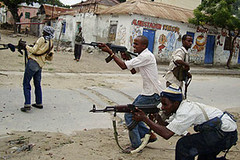
In the Horn of Africa nation of Somalia, which shares a border with Kenya, the Transitional Federal Government (TFG) is being bolstered by the African Union Mission to Somalia (AMISOM). The AMISOM forces consist of 4,300 troops from the U.S.-backed states of Uganda and Burundi.

Fighting between the resistance forces of Harakat Al-Shabab Mujahideen and Hisbul Islam against the TFG and AMISOM is still causing the dislocation of people from the capital of Mogadishu and other areas of the central and southern regions of the country. Ugandan leader Yoweri Museveni has stated recently that his country is willing to send more troops to back the TFG government.

In a report published by Shabelle.net on July 25, Museveni was quoted as saying that "We can raise more numbers to help our brothers in Somalia to get peace. We have the manpower. What we need is equipment and money for bigger numbers."

Off the coast of Somalia, a flotilla of U.S., NATO and other warships are patrolling the waters in order to combat what the imperialist call "piracy" on the part of youth that have taken over cargo vessels that transport billions of dollars in goods and military equipment through the Gulf of Aden and the Indian Ocean. In April the U.S. Navy killed three Somali teenagers and arrested another after they undertook negotiations to return a cargo vessel captured with an American captain on board.

The U.S. wants to maintain a longterm presence in the region. In an Associated Press report published on July 27, military sources indicate that "The U.S. Navy is warning of increased pirate activity off the coast of Somalia due to the advent of weather more favorable to the sea-borne criminals. The Navy says high seas in the Gulf of Aden had resulted in fewer attacks in recent weeks." (Associated Press, July 27)

This same article continues by stating that "With the monsoon season ending in four to six weeks pirate activity is expected to increase, the Navy said in a statement Monday. The Navy advised mariners to use a designated corridor when transiting the Gulf of Aden. The corridor is patrolled by 30 warships, supported by aircraft from 16 nations."

U.S. military presence, both direct or indirect, has not brought stability or prosperity to the people of Somalia. As a result of the failure of the U.S. to control the political situation in Somalia, the government has focused attention on the Somali community in Minnesota, claiming that the resistance forces are recruiting youth to fight the TFG in Mogadishu.

Nigeria: U.S. and Western-based Oil Firms Under Attack

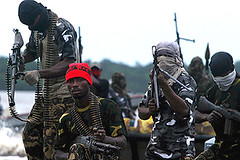
Over the last several months in the oil-producing west African state of Nigeria, there have been numerous attacks on the operations of the western-based petroleum industry in the Niger Delta region. The Movement for the Emancipation of the Niger Delta (MEND) has been offered an amnesty agreement by the government in an effort to halt the destruction of drilling equipment and the seizure of industry employees.

The Nigerian Federal Government has launched a major offensive against members of MEND over the last several months. One leading figure in the movement, Ken Niweigha, was executed by the Nigerian military in late May.

At the same time, using a two-pronged approach, the government has offered amnesty to Henry Okah, another MEND leader, who was extradited from Angola after escaping the country. Nonetheless, the offensive or the offering of amnesty, has not quelled the unrest in the oil-rich areas in the Niger Delta.

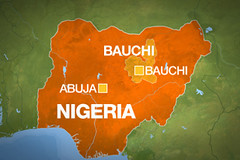
Other repressive government actions have also taken place in the northern region of Nigeria where police have reportedly killed over 100 people in northeast Bauchi state. According to a Reuters news agency report, approximately 70 people with guns and grenades destroyed a police station in the state's capital and later retreated after an intense gunbattle with security forces.

Bauchi police official Mohammed Barau described the armed group as members of Boko Haram, a local Islamic group that wants to implement sharia in Nigeria. According to Barau, "The situation is now under control. More members of the organization are being arrested." (Reuters, July 26)

The Need For a Break With Capitalism

Obviously the integration of the African continent with the world capitalist system has not brought economic development or social stability. Consequently, organizations representing the workers and farmers must look to alternative forms of ownership, production and distribution of the wealth within society.

The fact that Africa is dependent on the imperialist states for the export of raw materials and agricultural commodities in order to earn foreign exchange, places the continent and its people at the mercy of the imperialist states. With the western countries undergoing the worst economic crisis since the Great Depression, the so-called developing states will sink deeper into poverty and social dislocation.

In the western imperialist states, the workers and oppressed are being told by the ruling class to wait for the capitalist system to rebound so that the economic conditions of the masses will improve. In the developing states, the governments and peoples are offered more failed models of "development" which increase their dependence on the industrial states who have nothing to offer their countries.

Only socialism offers a solution to both the imperialist countries and the former colonial and neo-colonial states. The wealth within society, which is created by the workers and farmers, must be distributed for the benefit of the majority. In order for their to be genuine economic growth and development during this period, the masses must be at the center of the decision-making process and the implementation of economic policy.

Cuba and Africa: A Legacy of International Solidarity Continues

Cuba and Africa: A Legacy of International Solidarity Continues

President Raul Castro visits Egypt, Algeria, Namibia and Angola

by Abayomi Azikiwe
Editor, Pan-African News Wire
Commentary

In a visit to four African states, Cuban President Raul Castro, continued the decades-long legacy of international solidarity with the peoples of the continent. Castro, who recently stepped-down as chairman of the Non-Aligned Movement at its summit in Sharm El-Sheikh, Egypt, was hailed at the gathering in July for Cuba's contributions to the liberation and development of Africa.

At the NAM Summit, even the pro-western government of Egypt voiced its gratitude and recognition of the Cuban state for its sterling efforts during its leadership of the 118-member organization that represents developing countries largely from Africa, Asia and Latin America.

In an article covering the NAM summit, Granma International reported that the Egyptian foreign minister, Ahmed Aboul Gheit, praised Cuba's commitment to the defense of the organization's principals and political interests of its membership.

"Our aspiration is that Cuba will continue with those efforts in the context of its role as a member of the NAM troika," Gheit said. Egypt will take over the leadership of NAM for the next three years.

After leaving Egypt, President Castro visited the state of Algeria for high-level talks with the government. Algeria and Cuba both have a history of armed struggle against colonialism and international solidarity with fraternal national liberation struggles in Africa.

Cuba, which became a genuinely independent state after the triumph of the revolution in 1959, preceded Algeria, which won its liberation in 1962 from France after a seven year armed struggle against French imperialism between 1954-1961. Algeria lost over a million of its people during the liberation war and has since assisted other independence movements in southern Africa as well as providing an international headquarters for the Black Panther Party during the late 1960s and early 1970s.

Cuba and the Liberation of Southern Africa

President Castro also traveled to the southern African nation of Namibia during his tour of the continent. Namibia, which won its national independence in 1990 after a 13-year armed and mass struggle against the racist apartheid settler regime formerly based in South Africa, fought alongside the Cuban internationalist forces in Angola between 1975-1988.

The liberation movement in Namibia, the South-West African Peoples Organization (SWAPO), which is now the ruling party controlling the state, has been a close ally of Cuba since its formation in 1959. The revolutionary government of Cuba provided military and political training to SWAPO cadres for many years and it was this alliance between SWAPO, Cuba, the African National Congress of South Africa and the ruling Popular Movement for the Liberation of Angola (MPLA) that defeated the racist apartheid military forces that occupied southern Angola for many years.

Cuba provided 250,000 of its own troops to fight for the total liberation of Angola and Namibia between 1975-1988. In 1975, MPLA leader and Angola's first President Agostino Neto, invited the Cuban military to assist in defeating an invasion of the southern region of the country by the racist South African Defence Forces who entered Angola to prop-up the reactionary UNITA bandits who sought to maintain the country under imperialist influence even after it became an independent government.

In early 1976, the SADF was routed and UNITA was contained to limited areas inside the country. However, the United States-supported racist apartheid regime continued to invade and occupy areas in Angola requiring the ongoing presence of the Cuban internationalists for many years. After the disastrous defeat of the SADF by the joint military forces of Angola, Cuba, SWAPO and the ANC in 1987-88, the conditions were created for a negotiated settlement leading to the withdrawal of SADF forces from Angola and the realization of the independence of Namibia.

With the independence process in Namibia, the apartheid regime in South Africa realized that it had no choice but to relinquish power. The release of Nelson Mandela and other political prisoners in South Africa in early 1990 resulted in the negotiations that brought about the demise of apartheid and the ascendancy of the ANC to power where they have remained over the last 15 years.

The Legacy of Solidarity Continues

President Castro made a two-day official state visit to Namibia on July 19-20. He was commended for Cuba's contribution to the fight against settler-colonialism and imperialism in the region. Also Namibian President Hifikepunye Pohamba condemned the United States for its continuing economic blockade of Cuba.

At a state banquet honoring Castro, President Pohamba encouraged the international community to denounce the sanctions against Cuba, pointing out that these measures are hampering the development of the Caribbean island-nation. Pohamba also called for the release of the Cuban Five who are being held by the United States for their efforts to prevent further attacks on the people of the island.

Pohamba said during the state banquet that "The people of Cuba have weathered many storms and challenges despite externally imposed hardships." He praised Cuba for welcoming in solidarity thousands of exiled Namibians to study in Cuban educational institutions during the liberation struggle.

"These Namibians are today making tremendous contributions to our nation building and the development of our society. The sacrifice and commitment of the Cuban internationalist forces in Africa to help their brothers and sisters in their just cause for freedom and sovereignty will always be remembered by the present and future generations," Pohamba declared.

During his visit, Castro also held discussions with former Namibian president and SWAPO leader Sam Nujoma. In addition, he toured Heroes' Acre where a wreath was laid in honor of the freedom fighters who sacrificed their lives for the independence of the country.

Prior to leaving Namibia, the two governments issued a joint statement pledging continued cooperation and solidarity.

Some aspects of the joint communique state that: "Both presidents confirmed with pleasure the excellent state of bilateral relations between the two countries. At the same time, they reaffirmed their full commitment to establish and expand economic and commercial links to the benefit of both countries and expressed their satisfaction at the positive progress of cooperation between Cuba and Namibia, particularly in the fields of health and education."

In regard to the international situation, the joint Cuban-Namibian communique states that: "Both presidents agreed, moreover, to undertake joint efforts to contribute to the construction of a world of peace, justice and solidarity and to further increase mutual aid and cooperation in multinational forums, in particular via the United Nations, the G77 and the Non-Aligned Movement, within the framework of South-South cooperation." (Granma International, July 20)

After leaving Namibia, President Castro traveled to neighboring Angola where he had a working visit with President Jose Eduardo dos Santos. Both countries signed an accord for greater coooperation in the telecommunications field.

The Angolan minister of Telecommunications and Information Technology, Jose Rocha, said that "We are aware of the large developments in the research fields carried out by that Latin American country, mainly in the computing domain." (Granma International, July 21)

Minister Rocha said that the two governments are planning to "share experience and outline a program that permits the training of Angolan personnel, with a view to meeting the problems in the area. Angola and Cuba last February 2009 in Luanda signed four legal accords aimed at strengthening and widening bilateral cooperation in the areas of Geology, Mining, Industry and Education." (Granma International, July 21)

The San Francisco 8--No More!

The San Francisco 8 -- No More!

[col. writ. 7/15/09] (c) '09 Mumia Abu-Jamal

It's been 2 1/2 years since the San Francisco 8 -- eight former members of the Black Panther Party -- were cast into California jails and threatened with life sentences stemming from the 1971 shooting of a cop.

Perhaps the State figured the post - 9//11 paranoia and mania would make this an easy case. Perhaps the government thought that because many of the accused were men of advancing age, decades away from their prime organizing and activist days, it would be a cake walk.

The 8 men fought with dignity, principle and unity -- and several days ago -- charges for 4 of them were dismissed altogether: Ray Boudreaux, Richard Brown, Hank Jones and Harold Taylor.

New York's Jalil Muntaqim pled no contest to conspiracy -- and got time served in San Francisco County Jail -- almost 2 1/2 years -- with 3 years probation.

Herman Bell -- another New York former Panther -- took a similar deal earlier in July.

One ex-Panther, Francisco Torres, faces a hearing next month, where most observers expect all charges to be dropped. Another, John Bowman, died before trial. The last, Richard O'Neal, was cleared pre-trial.

From the very beginning, back in the '70's -- several of the men were brutally tortured by police in Louisiana to elicit false confessions (thus we see that Abu Ghraib really was nothing new).

The cases were dismissed decades ago -- on that basis alone.

That the prosecutions were reinstated at all is due more to the politicized Justice Department under John Ashcroft and George Bush -- where torture was a tool of state --than anything else. Also implicated? The political ambitions of California Attorney General Jerry Brown, seeking the governorship.

No charges should've been brought in the first place -- or if contemplated, dismissed under double jeopardy principles.

As it is -- even the state admits -- dismissal is valid due to insufficient evidence.

These results are due, in large part, to the solidarity of the men themselves, and some excellent, aggressive lawyering by assorted defense counsel, among them J. Soffiyah Elijah of Harvard Law School.

Several years ago, in a statement calling for support for the San Francisco 8, I implored supporters to fight for them now -- before they fell into the clutches of the state containment system -- instead of after.

Many took up that fight -- leading to many of the most recent results.

-- (c) '09 maj
=======================
The Power of Truth is Final -- Free Mumia!

URGENT Need for Petition Signatures at: http://www.iacenter.org/mumiapetition/

Audio of most of Mumia's essays are at: http://www.prisonradio.org

http://mumiapodcast.libsyn.com/
Mumia's got a podcast! Mumia Abu-Jamal's Radio Essays - Subscribe at the website or on iTunes and get Mumia's radio commentaries online.

Mumia Abu-Jamal's new book -- JAILHOUSE LAWYERS: PRISONERS DEFENDING PRISONERS V. THE USA, featuring an introduction by Angela Y. Davis -- has been released! It is available from City Lights Books: http://www.citylights.com/book/?GCOI=87286100448090

If you are planning to organize an event or would like to order in bulk, you can also receive a 45% discount on any bulk orders of 20 copies or more. The book retails for $16.95, for orders of 20 copies or more the discounted price would be $9.32 per book, plus shipping and handling. Prepayment would be required and books are nonreturnable. If you or your organization would like to place a bulk order, please contact Stacey Lewis at 415.362.1901 or stacey@citylights.com

Let's use the opportunity of the publication of this brilliant, moving, vintage Mumia book to build the momentum for his case, to raise the money we desperately need in these challenging economic times, to get the word out – to produce literature, flyers, posters, videos, DVD's; to send organizers out to help build new chapters and strengthen old ones, TO GET THE PEOPLE OUT IN THE STREETS … all the work that we must do in order to FREE MUMIA as he faces LIFE IN PRISON WITHOUT PAROLE OR EXECUTION!
Please make a contribution to help free Mumia. Donations to the grassroots work will go to both INTERNATIONAL CONCERNED FAMILY AND FRIENDS OF MUMIA ABU-JAMAL and the FREE MUMIA ABU-JAMAL COALITION (NYC).

WWW.FREEMUMIA.COM

Please mail donations/ checks to:
FREE MUMIA ABU JAMAL COALITION
PO BOX 16, NEW YORK,
NY 10030
(CHECKS FOR BOTH ORGANIZATIONS PAYABLE TO: FMAJC/IFCO)

FOR MORE INFORMATION CONTACT:
215 476-8812
212-330-8029

Send our brotha some LOVE and LIGHT at:

Mumia Abu-Jamal
AM 8335
SCI-Greene
175 Progress Drive
Waynesburg, PA 15370

WE WHO BELIEVE IN FREEDOM CAN *NOT* REST!!

Subscribe: mumiacolumns-subscribe@topica.com
Read: http://topica.com/lists/mumiacolumns/read
Subscribe ICFFMAJ email updates list by e-mailing

icffmaj@aol.com!

Zimbabwe Refutes Western Claims of 'Ban on Demonstrations'

‘No ban on demonstrations’

Herald Reporter

GOVERNMENT has dismissed as "false" reports, emanating mainly from the West, that the Zimbabwe Republic Police does not allow people to demonstrate.

Addressing a Press conference in Harare yesterday, co-Home Affairs Minister Giles Mutsekwa said demonstrations were allowed, but certain procedures had to be followed, as in any other country.

"Section 93 of the Zimbabwe Constitution gives the ZRP the responsibility for preserving the internal security of and maintaining law and order in Zimbabwe.

"The ZRP fulfils its mandate by enforcing laws and regulations that are made by Parliament," he said.

Minister Mutsekwa said the rationale of these laws was to try and strike a balance between the rights of those who want to demonstrate and those who want to proceed with their daily business without hindrance.

He said many people misconstrued the role of the police in managing public order situations.

"This is particularly so when it comes to the requirement to give notice to the police by convenors of public meetings, gatherings or processions.

"The notification is not meant to be some form of application for permission from the police to proceed with the intended gathering or procession," he said.

Minister Mutsekwa said the intention was to initiate a process of consultations and negotiations between the police and the convenor on how best the procession or gathering may be managed.

"It would be inviting chaos, for example, if persons any where, any time were allowed to hold public processions or gatherings in public places without the knowledge of the police.

"The obvious result will be the mayhem that will be created by vehicular and human traffic, particularly in built-up areas such as towns and cities," he said.

The purpose for notification was to ensure that the police and convenor could agree on the modalities of the gathering or meeting.

These include the venue, time, duration and date of gathering, the anticipated number of participants, the appointment of marshals, the exact and complete route of the procession or demonstration and the time and place where participants in the procession or public demonstration are to assemble.

Police and convenors must also agree on the time and place where the demonstration is to end, and the manner in which the participants would be transported to the place of assembly and from the assembly of dispersal.

The number and types of cars, if any, which are to form part of the procession and if any petition or other document is to be handed over to someone, the place thereof, are others details that should be agreed on.

"It is abundantly clear the above parameters set by Parliament are not meant to hinder, but to smoothen the policing of public gatherings and processions," said Minister Mutsekwa.

"Only those with ulterior motives would want to circumvent the requirement to give notice to the police."

He said the law "frowns" on those who want to hold public gatherings and processions without notifying the police.

Any person who knowingly failed to give notice of a gathering or procession shall be guilty of an offence and liable to imprisonment.

The Minister said where the situation got out of hand and people were killed or injured and property destroyed, as a result of the demonstration, police were empowered to use firearms to disperse the gathering.

"We must underline here that it is never the intention of police to use minimum force willy-nilly. Only in rare circumstances will police resort to the use of minimum force to deal with unlawful public gatherings and processions," said Minister Mutsekwa.

He said it was clear that the law was necessary and the force would continue to enforce its provisions without fear or favour.

His co-Minister Kembo Mohadi said the role of the police was to protect lives and property and anyone who wanted to carry out a demonstration should notify the police.

He said police would then escort them when there was need.

"We are all required to observe the laws of Zimbabwe. As for the international community, whatever they heard about the laws, it is not true," said Minister Mohadi.

He said they had a meeting yesterday with Police Commissioner-General Augustine Chihuri and advised him that they should not "unnecessarily impede" people who would want to express their views.

"Even if the police say they do not have adequate resources, they would have assisted the situation, but you need to give them time and they will organise for a day for you.

"It’s a question of logistics," said Minister Mohadi.

There have been reports in local and international media that the ZRP will not tolerate any demonstrations.

Some civil society groups have in the past carried out illegal demonstrations.

Other groups that have been notifying the force have been provided with escorts so as to avoid mayhem and anarchy.


Mutambara’s baptism of fire

Herald Reporter

DEPUTY Prime Minister Arthur Mutambara drew the ire of African leaders yesterday when he suggested that no African leader had a brand worth selling where national visions are concerned, and that to be acceptable, the leaders and their countries needed Western endorsement.

Sources said DPM Mutambara, who was presenting a paper on "Strategies for integrating innovations in public service’’, had to leave the conference hall in a huff after the leaders, one after the other, wished Zimbabwe well should he ever assume the presidency.

The sources said the DPM’s presentation appeared to be going well, up to the point he appeared to suggest that Africa should be a chattel of the West.

‘‘What is Mugabe’s brand, what is Museveni’s brand, what is Kikwete’s brand? If a brand is to succeed it should be endorsed by the outsiders. Africa cannot endorse her own brand, Mugabe cannot endorse his own brand, Museveni can- not endorse his own brand, Kikwete cannot endorse his own brand. We need BBC, you need CNN, you need SkyNews to do it,’’ Ugandan sources who attended the plenary quoted DPM Mutambara as saying.

The sources said DPM Mutambara then said Zimbabwe had no capacity to develop its resources without input from the West.

‘‘On mining we do not have capacity, we are workers, our capacity is Chiadzwa. We need people with technology, from England, from America,’’ he charged as he concluded his speech.

The sources said host President Yoweri Museveni promptly stood up and challenged the presentation.

‘‘Young man, your presentation smacks of a serious inferiority complex,’’ the Ugandan leader was quoted as saying. ‘‘You say you need endorsement from the West yet there is a whole world ranged against us. If you think there will come a time when Africa will get the support of the Western world, you are mistaken.

"Think of China, how it was demonised until they made money on their own effort, now they are a big brand not because the West said yes, but because China said no.’’

The Ugandan leader then cited the example of Malaysia that followed the Chinese development model.

He drew the Deputy Prime Minister’s attention to the situation in India saying: ‘‘Now the West, Europe cannot ignore India, not because India was their darling in the past, but because India stood by its own principles.

‘‘Look at Venezuela right now, they are being demonised, but they are working with a clear sense of self-conviction and confidence, and things will come right. So, we have a saying that when you winnow, you remove seed from chaff, you do not take everything. If ever you become a president with these kinds of ideas, then God help Zimbabwe.’’

Tanzanian President Jakaya Kikwete then took the floor and echoed his Ugandan counterpart’s words saying he did not know whether to attribute Deputy Prime Minister Mutambara’s presentation to youthfulness or some unknown condition.

‘‘I don’t know whether its youthfulness or what, but this young man does not seem to know that there is no good story that comes out of Africa to CNN, BBC, SkyNews. When you want a good story to come out of Africa, you pay for it. Tanzania had to pay 40 million shillings to simply get a good story out of Africa to BBC, they simply don’t want a good story out of us. If one day you become a president, we wish you well with these ideas,’’ the Tanzanian leader said.

Zambian leader Rupiah Banda then drew the Deputy Prime Minister’s attention to the history of Zimbabwe saying: ‘‘I want to be historic, I want to be direct, the basis of the demonisation of Zimbabwe is not failure to rebrand, it is rooted in the land question. Let’s not humour each other here. We are talking about a culture of land use, not inability to present a pretty picture of Zimbabwe.’’

DPM Mutambara laughed off the exchange last night saying everything was done in a spirit of debate, and the exchange had been taken out of context.

‘‘The debate we had was a healthy debate, you know this was a dialogue. I was saying we need to have a product worth branding, you need success stories as you can’t endorse yourself. The tourists who come to our countries do not watch Uganda Broadcasting Corporation, they do not watch ZBC, the tourists watch international media channels like CNN and BBC. Where is Africa’s international channel?

‘‘The second issue was on our challenges, what is the problem in Africa? Why does Africa appear stagnant?

"We agree that there are endogenous and exogenous factors, we spend too much time on the external, what about the internal? But my presentation covered quite a lot of things,’’ he said.

Honduran Officials' Visas Revoked by the Obama Administration

Wednesday, July 29, 2009
08:01 Mecca time, 05:01 GMT

Honduran officials' visas revoked

Zelaya insists on returning to Honduras and resuming his role as president

The US has revoked the visas of four Honduran officials, increasing the pressure on the country's interim government to allow Manuel Zelaya, the ousted president, to return to power.

Barack Obama, the US president, agreed on Tuesday to a request from Zelaya to revoke the US visas.

Ian Kelly, a spokesman for the US state department said: "We don't recognise Roberto Micheletti as the president of Honduras, we recognise Manuel Zelaya."

Kelly did not name those affected but said the diplomatic visas of others in the current Honduran government were also being reviewed.

Micheletti became the president of Honduras after Zelaya was ousted in a military-backed coup on June 28.

Since being removed, Zelaya tried twice to return to Honduras, but on both occasions the interim government foiled his attempts.

Senior officials

Connie Mack, a Republican member of the US house of representatives, told Reuters news agency he understood that two of the people who had their US visas revoked were Tomas Arita Valle, the supreme court justice who signed the order for Zelaya's arrest, and Jose Alfredo Saavedra, president of the Honduran congress.

Mack criticised the move as intimidation.

Two others who confirmed they had their visas revoked were Ramon Custodio, the human rights ombudsman, and Adolfo Lionel Sevilla, the defence minister in the interim government.

Micheletti told reporters at the presidential palace on Tuesday that his US visa had not been revoked.

Micheletti's government, which has the backing of the Honduran supreme court and congress, has refused to bend to international condemnation of the coup despite sanctions against it.

Washington has cut $16.5m in US military aid to the Central American country.

The EU has also suspended all budgetary support payments for Honduras.

The Inter-American Development Bank and the World Bank have frozen loans in a move the interim government says will cost $200m in 2009.

Zelaya has called for a ban on the coup leaders' bank transactions.

Source: Agencies

PAIGC Candidate Wins National Presidential Elections in Guinea-Bissau

Wednesday, July 29, 2009
15:39 Mecca time, 12:39 GMT

Sanha wins Guinea-Bissau vote

Malam Bacai Sanha won the presidential election with 63 per cent of the vote

Malam Bacai Sanha has won Guinea-Bissau's presidential election, four months after the country's leader was assassinated.

Sanha, a former head of state, won 63 per cent of the vote, beating Kumba Yala, his opponent, who took 36 per cent.

The new leader represents the African Party for the Independence of Guinea and Cape Verde (PAIGC), Guinea-Bissau's biggest political party.

It is hoped his election will bring stability to the coup-prone West African nation, Desejado Lima da Costa, the country's electoral chief said.

"These elections are very important for Guinea-Bissau because they will enable the consolidation of democracy and credibility ... and enable stability and development," da Costa said.

Revenge attack

Sanha, 62, was interim president for a year following a 1998-1999 civil war, while Yala was elected president in 2000, but overthrown in a bloodless coup three years later.

The vote was triggered by the killing of Joao Bernardo Vieira, Guinea-Bissau's long-time president, by soldiers on March 2, in an apparent revenge attack following the assassination of army chief General Batista Tagme Na Waie in a bomb attack.

In June, the army killed two senior political figures in what they claimed was an operation to foil a coup plot.

The murder of Vieira, who ruled Guinea-Bissau for much of the past 25 years, came about a decade after the military ousted him during a previous term as president.

The run-off round was originally to have been held on August 2 but was brought forward to encourage a higher turnout as the later date could have interfered with harvest work in the predominantly rural country.

Since gaining independence from Portugal 35 years ago, Guinea-Bissau has experienced numerous coups, countercoups and a civil war.

Source: Agencies

Somali Refugees Flee to Yemen

Tuesday, July 28, 2009
22:15 Mecca time, 19:15 GMT

Somali refugees flee to Yemen

Armed groups have stepped up an offensive against the Somali government

Thousands of Somalis are preparing to cross the perilous waters of the Gulf of Aden to Yemen to escape the heavy fighting in Mogadishu, the Somali capital, the UN refugee agency has said.

About 12,000 civilians have taken shelter in the northern Somali town of Bossasso since early May as they prepare to make the crossing, Ron Redmond, a UNHCR spokesman, said on Tuesday.

Most are waiting for smugglers to take them across to Yemen, where 30,000 people have already fled this year, he said.

But he warned that many who have started the journey do not make it alive, adding that more than 300 people have died or gone missing this year while attempting the crossing.

Risking lives

"These people are obviously reaching the end of their rope," Redmond told a news briefing in Geneva.

Civilians bear the brunt of Somalia fighting

"They see no future in Somalia and many of them are so desperate that they are willing to risk their lives and the lives of their families to escape."

The UN agency said it was working "to convince people not to get on those very dangerous smugglers' boats", and is also working to provide aid to those arriving in Yemen to alleviate pressure on the host government.

Somalis are fleeing heavy fighting that worsened two months ago when armed groups stepped up an offensive against the internationally-backed government of Sharif Ahmed, the Somali president.

Deadly attack

Mortar attacks by al-Shabab disrupted a parliamentary session on Monday as heavy fighting erupted between the groups and African Union-backed government forces, officials said.

At least seven civilians were killed and 18 others wounded in fighting, police in the capital said.

The parliament was meeting for the first time since al-Shabab and Hizb al-Islam groups launched an anti-government offensive in May.

The violence comes as Somalia's president prepares to meet Hillary Clinton, the US secretary of state, during her seven-nation trip to Africa next week.

The meeting is scheduled to take place on the sidelines of an annual trade forum with sub-Saharan countries, which will be held in Nairobi, Kenya's capital, on August 5, the US state department said on Monday.

Source: Agencies

President Jacob Zuma's Daughter to Make Appearance in Soap Opera in South Africa

Zuma's daughter in SA soap opera

Jacob Zuma's daughter, Gugulethu is to make her debut on one of South Africa's most popular soap operas, Isidingo.

South Africa's first daughter plays the part of a young woman who returns to her humble beginnings after studying abroad for five years.

This will be her second appearance on the small screen. Her first TV role was as a police officer in a local police drama last year.

She has denied suggestions that she got the role because of her father.

She secured the part after three auditions.

The character she plays grew up on a farm where her father worked as a stableman.

Isidingo, broadcast on the state-run SABC, is set in a small mining town and follows the lives of its residents, black and white, rich and poor.

Ms Zuma, 24, has a BA degree in Live Performance from the AFDA film school, one of South Africa's most reputable performance arts schools.

She is married to Bongani Ncube, the son of Zimbabwean minister Welshman Ncube, a senior member of one faction of the former opposition Movement for Democratic Change.

The couple tied the knot last year.

Story from BBC NEWS:
http://news.bbc.co.uk/go/pr/fr/-/2/hi/africa/8170381.stm
Published: 2009/07/28 10:15:36 GMT

United Nations Group Gets a Look at Post-Katrina Housing Woes

United Nations group gets a look at post-Katrina housing woes

by Katy Reckdahl, The Times-Picayune
Tuesday July 28, 2009, 7:00 AM

Mickey Palmer, who traveled the world for 20 years as a merchant seaman shipping out of the Port of New Orleans, welcomed international visitors on Monday morning to his home, an abandoned building scattered with Katrina-era debris.

As a cool wind blew through a large open window, Palmer, 57, puffed on a cigarette and tried to stay positive.

"This is a good place to squat, as we call it, " he told international housing expert Leilani Farha, who led a small entourage to New Orleans this week to interview people who have lost affordable housing and others who may lose their homes.

Farha, who leads a low-income-housing advocacy group in Ontario, Canada, is part of an advisory group that reports to UN-HABITAT, the United Nations agency charged with monitoring poverty and housing. The group spent Monday morning with outreach workers from UNITY of Greater New Orleanswho tromp through blighted buildings searching for disabled people who need help. The group will publish a report online after their visit.

Representatives of the United Nations have shown special interest in New Orleans since Katrina, with some U.N. officials using the storm as an opportunity to critique the U.S. government's policies toward poor and minority groups.

The group's forays haven't been without controversy. Last year, two U.N. specialists attracted international attention when they said the federal government's response violated an international treaty on racism. But the authors of the resolution also acknowledged they hadn't visited New Orleans since the storm.

On Monday, UNITY officials told the latest U.N. visitors that they believe 6,000 squatters may live in the city's more than 65,000 abandoned structures.

Over the next few days, the advisory group also will meet with public officials, former public-housing residents from the demolished "Big Four" complexes, low-income people struggling with higher post-Katrina rents and Mid-City residents whose houses are in the footprint of the proposed LSU hospital. At the end of the week, the group will travel to Washington to meet with federal disaster-recovery officials.

On Monday, the visitors looked in shock at the conditions inside Palmer's Mid-City squat. Before Katrina, Palmer, a handyman, rented an apartment nearby for $450 a month. Then his rent nearly doubled and floodwaters swallowed up his uninsured possessions, including a truck filled with tools.

Farha and another housing expert, Leticia Osorio, also took pages of notes outside an abandoned home in Gert Town where Naomi Burkhalter and Grace Bailey live. Burkhalter, 49, uses a wheelchair because of a leg injury that hasn't properly healed. Bailey, 57, had her jaw broken in an attack a few months ago, leaving her with a steel plate in her face and an oozing facial infection.

In a nearby decrepit house, two other homeless women cited similar medical woes. Peaches Jackson, 42, suffers seizures because she lost 20 percent of her brain in an accident 10 years ago, she said. Charlene Stewart, 35, is scheduled for abdominal surgery next week for a bacterial infection.

Bailey walked back to the room she sleeps in. She keeps the window there closed at night or else mosquitoes devour her, she said. When it rains, the roof leaks generously onto the rotting floorboards.

She didn't always live like this, she said quietly, talking about her work in the service industry and the low rent she'd paid nearly all her adult life.

To each person, Farha asked, "What do you need?" and jotted down their replies in her notebook.

Riding in the van back to UNITY's offices, Farha said that, in many ways, the homeless New Orleanians she'd met were like the homeless people she'd met in other countries. But most of the squatters she'd just met were "in decent places before Katrina, " she said.

"It's unacceptable, " she said, saying she believed that the federal government had a responsibility to see that people had not ended up in a worse place because of the disaster.

UNITY head Martha Kegel explained that the homeless people they met were placed on a waiting list and given priority according to how likely they were to die without housing. Quite a few already had died waiting for housing, she said.

"Is there a quick way to house people so that they're not dying on a list?" Farha asked. "What is the policy answer to address the immediate need?

Katy Reckdahl can be reached at kreckdahl@timespicayune.com or 504.826.3396.

African-American Deaf Man Tased, Pepper Sprayed by Mobile, Alabama Police

Families of special needs children must become a much more vocal part of the struggle against vicious police attacks!

http://www.fox10tv.com/dpp/news/alabama/PoliceInvestigateTasingIncident (Video of Victim/Family at site)
-----------------------------------------------------------------------------------------
Deaf man tased, pepper sprayed

Tuesday, 28 Jul 2009, 8:39 AM CDT

MOBILE, Ala. - Antonio Love's family members say Mobile police went too far. "Tony," as he is known, said he was sick and went into a store to use the restroom. The store manager called Mobile police after Love had been in the room for a while. If police knocked on the door or called for him, he had no way of knowing. Love is deaf.

Love's brother interpreted as he described what happened. His brother interpreted for him. "He saw smoke. He said, 'What's that smell?' He started putting water on the floor and tissue trying to block the smoke out. He put water on his mouth and face and started to hold his breath."

What Love described was pepper spray. Police sprayed it under the door before breaking the door down. Love said he had no idea what was going on as the smoke poured in and the bashed-in door hit him in the head.

Things quickly went from bad to worse. His brother translated, "Tased him in his chest. He was shaking saying, 'Stop! Stop!' He couldn't move. They dragged him from the bathroom to the front."

Love was tased three times. He said police didn't realize he was deaf until they got him outside the store. That's when they looked in his wallet and found a card detailing his handicap. Love said an EMT was dispatched, and after he was checked out, he was then put into the back of a police car and taken to Metro jail where he sat until police finally took him home later that afternoon.

The incident happened around 11:00 a.m., and when he was returned home, it was 4:00 in the afternoon. He was never arrested. Love's mom doesn't understand.

"He asked them to stop. He tried to say, 'I'm deaf. I'm deaf,' and they still did it. Looking at my son now it hurts. I just want justice. I want them to pay for what they did to my son," said Phyllis Love.

There are many unanswered questions about this incident such as why was Love taken to Metro jail. Was he provided a translator? Also, did store employees know Love was deaf?

Mobile police confirmed an investigation is now in progress. They also said they couldn't discuss the incident.

Nigeria Loses $6 Billion in Oil Revenue to Shell Output Shut-ins

Nigeria loses $6 billion in oil revenue to Shell output shut-ins

Lagos (Platts)
29 Jul 2009

OPEC member Nigeria has lost about Naira 7 trillion ($6 billion) in oil revenues to the production shut-ins by Anglo-Dutch major Shell in the past three years due to attacks on the company's facilities by Niger Delta militants, local media reported Wednesday.

Mutiu Sunmonu, MD of Shell Petroleum Development Company, disclosed the losses at the ongoing Senate public hearing on the draft petroleum bill in Abuja, according to the Nigerian Compass newspaper reports.

Shell, Nigeria's biggest oil producer, was producing around 1 million b/d as at end-2005 before militant groups in the Niger Delta launched their violent campaign in early 2006 against Nigeria's oil industry to gain control of the region's oil wealth.

Sunmonu told the Senate that SPDC's onshore oil joint venture was
producing at less than 30% of capacity due to the unrest in the Niger Delta and funding problems, the newspaper reported.

Following the output losses, Shell declared force majeure on oil loadings from both the Bonny and Forcados export terminals.

The public hearing on the petroleum bill, which began on Monday, provided oil industry operators in Nigeria an opportunity to present their views on the legislation that would impact significantly on their operations in the West African country.

The proposed legislation would restructure state-run Nigerian National Petroleum Corp--which operates joint ventures with the foreign oil companies--into a profit-driven company. In its present draft, the legislation would allow the government to renegotiate old contracts, impose higher fees on oil companies and retake acreage that private companies have failed to explore.

Industry operators complain that although the companies backed the reform plans necessary to boost Nigeria's oil and gas reserves, they had not been consulted in the drafting of the bill.

The head of Shell companies in Nigeria, Basil Omiyi, said at the hearing on Tuesday, during a presentation on behalf of foreign oil companies operating in Nigeria, that the industry needed more time to present economic analysis which should be taken into consideration.

--Staff, newsdesk@platts.com
Similar stories appear in Platts Oilgram News.
See more information at http://oilgramnews.platts.com

Nigeria News Bulletin: Police on Red Alert in Abuja; Hundreds Killed in Military Assaults in the North

Police on Red Alert in Abuja

From Yemi Akinsuyi and Ogochukwu Obiesie in Abuja, 07.29.2009

There was apprehension at the Federal Capital Territory (FCT), Abuja yesterday following the sectarian violence in some states in the North.

The police helped to heighten the fear as over 50 police patrol vehicles, including armoured cars, in a convoy paraded selected streets in the city blaring their sirens.

A bloody clash between the police and members of an Islamic fundamentalist group known as Boko Haram (“Education is sin”), left many dead in the early hours of Sunday in Bauchi, and later spread to Kano, Yobe and Borno States.

The militants, opposed to western education, had been campaigning for the imposition of Shariah (Islamic law), on the 36 states of the federation, allegedly sparked off the crisis when its members launched an attack on a Police station in Bauchi, leading to the bloodbath.

Over 150 people were left dead, while indigenes of the area are said to be fleeing their homes.

As at Monday, the attack by the group had spread to Borno, Yobe, Gombe, and Kano States. Although none of the policemen on patrol accosted or harrassed anybody along the street, they were battle ready for any emergency.

When THISDAY visited some Police formations in the city, the main gate to virtually all of them were either half closed or under locks and keys.

Speaking on the apprehension in the city, Force Public Relations Officer (FPRO), Emmanuel Ojukwu, Assistant Commissioner of Police (ACP), said there was no cause for alarm and that those combat ready policemen were only performing their normal duty of protecting lives and property.

“There is no problem in Abuja. Area is calm and peaceful, and as for the mobile policemen on patrol, they are just performing their statutory duty of protecting lives and properties. There is nothing abnormal about their patrol. No cause for alarm”, he said.


2 Soldiers, 1 Policemen Killed in Bauchi

From Segun Awofadeji Bauchi, 07.29.2009

Police Authorities yesterday confirmed that three security personnel, made up of two soldiers and one policeman, were killed during exchange of fire with the notorious Islamic sect, 'Boko Haram' in Bauchi, last Sunday.

Similarly, security had been reinforced within the state, to track down fleeing members of the sect in a mop-up operation.

The confirmation was made by the AIG in charge of Zone 12 of the Nigeria Police Force, Mr Moses Anegbode, while briefing newsmen on happenings in the zone, with particular reference to the operation carried out by Bauchi State Police Command.

He said members of the Islamic sect targeted the Police in their attacks, because as anti-establishment sect, they see the police as a symbol of authority and therefore, the first target when hitting government.

He said members of the sect who see anything western as prohibited, are nothing but criminals masquerading in the name of religion, adding that the Police had no option but to open fire in self defence, after they attacked the Dutsen Tanshi Police Station.

Anegbode also said 176 heavily armed suspects, most of them from Yobe and Borno States, were arrested at DIC, behind Styer Company, at the outskirts of Bauchi, while planning to set the company on fire.

He said items recovered from the hoodlums included two bags of gun powder for making explosives, 200 detonators, 2000 locally made cylinders for making bombs and seven bags of potassium nitrate for making explosives and some food items they were stock piling before launching their attack.

He said all the injured and the dead had been taken to the hospital, while those arrested were being interrogated and will be taken to court as soon as investigations were concluded.


Shoot-out in Maiduguri as Soldiers Battle Fanatics

From George Oji in Abuja and Michael Olugbode in Maiduguri,

07.29.2009

Members of the Islamic fundamentalist sect, Boko Haram, came under serious attack yesterday in Maiduguri, Borno State capital, as soldiers stormed their stronghold in armoured tanks in a bid to flush them out of town.

The number of casualties recorded in the attack by the sect headed by Yusuf Muhammed, a cleric, could not be ascertained last night as the fight was still raging.

Unconfirmed report, however, put the death toll at 300, most of them from the side of the Islamic militants.

The attack by members of the sect said to be opposed to Western education had begun in Bauchi, Bauchi State capital, on Sunday and spread to Borno, Yobe and Kano States by Monday.

President Umaru Musa Yar’Adua who left the country yesterday for Brazil on a three-day state visit said the crisis was not all about inter-religious skirmishes.

He said security agencies were on top of the situation and that by today the remaining insurgents would have been subdued and peace would have completely returned to the affected states.

The President also spoke about the altercation with Lagos State Government over the local councils in the state, stating that the Federal Government had for now chosen the option of dialogue to convince the state government to revert to its constitutionally recognized 20 councils and dissolve the 37 others created in 2005.

Speaking to State House Correspondents at the Nnamdi Azikiwe International Airport, Abuja before his departure to Brazil, the President said if the dialogue approach failed to resolve the matter, the Federal Government would have no choice but to apply other measures to make the state government comply with the constitution.

The General Officer Commanding (GOC) Third Armoured Division, headquartered in Jos, Plateau State, Maj. Gen. Saleh Maina, who was asked to move to Maiduguri, is said to be coordinating the onslaught against the militant sect.

The GOC arrived Maiduguri with six light armoured tanks ferried to town in a military Hercules aircraft and along with some military officers to complement the growing list of security personnel in readiness to capture the stronghold of the fundamentalists.

Termed the mother of all battles, THISDAY saw military personnel who were also loaded in five military trucks dispatched to level down the religious sect’s stronghold.

But it was learnt that the sect members most of whom were holed up in the domain of their leader were said to be keeping some police and military officers hostage as human shield against the attack.

It was also learnt that a group of fundamentalists allegedly called up from Kano to reinforce the depleting group in Borno were attacked by security men while trying to gain entrance into town where they were gunned down.

The sect members, who attacked the 21 Armoured Brigade, Maiduguri, were also allegedly surrounded by soldiers who shot and killed about 200 of them armed with bows, arrows and grenades.

THISDAY also gathered that the police freed some women that were kidnapped by some alleged fundamentalists from Bauchi.

The women, who were at the Police Headquarters in Maiduguri as at press time, were allegedly held hostage in one of the villages of Borno.

Meanwhile, the number of displaced persons has risen to about 4,000 as people continued to migrate from the stronghold of the sect to more serene parts of the town which are still cordoned off by the military.

Commercial activities in the town remained grounded as residents stayed indoors for fear that the crisis may escalate even further.

Speaking to journalists on the displaced persons, the Assistant Zonal Coordinator of the National Emergency Management Agency (NEMA), Mr. Apollos Jediel, said the North-east zonal office of the agency on seeing the high number of the displaced persons got in touch with its headquarters who instructed that relief materials should be distributed to them.

Jediel disclosed that his office had already presented food items and beddings to Borno State Governor Modu Ali Sherif for onward distribution to the displaced persons.

He said those displaced are presently quartered at three places, Maimalari and Giwa military barracks as well as the barrack at the police headquarters.

President Yar’Adua said the sect members were not the first to attack security agents, noting that security agencies had been monitoring the activities of the group and when the insurgents found out that the security agencies were closing in on them they were forced out to defend themselves.

He said his administration would not tolerate any arms insurrection anywhere in the country.

Yar’Adua said: “We have the situation under control now and I believe by the end of today everything will have taken shape. I have been monitoring this situation in the last few days.

“By yesterday, the situation in Bauchi State had been contained completely and the crisis in Kano and Potiskum has also been dealt with.

“What we have now is a situation in Borno State where the leader of the so-called Taliban group is residing and where most of them have migrated from all the Northern states to go, prepare and declare the holy war. We are going to launch an operation, the main operation with immediate effect.

“I have just finished meeting with our Defence Chiefs who have been in constant contact with the governors of Borno, Bauchi, Kano and other states.

“So, this situation is being brought under control and I want to assure the nation. What has happened is that it is the government that has moved to nip in the bud the action of a potentially dangerous people. These people have been organising, penetrating our society procuring arms, learning how to make explosives and bombs to disturb, confuse and force their belief on the rest of Nigerians.

“Definitely, our security agencies have been tracking them for years and I believe that the operation we have launched now will be an operation that will contain them once and for all. Once the operation in Maiduguri is completed today, we are going to continue with the security surveillance all over the Northern states to fish out any remnants of these elements and deal with them squarely and promptly.

“I want to assure this nation that this administration will not tolerate any arms insurrection anywhere and any part of this country.

“Anywhere any group of people begin to launch arm insurrection and destruction against their fellow Nigerians, they will be dealt with squarely and promptly.

“I want to emphasize that this is not an inter-religious crisis and it is not the Taliban group that attacked the security agents first, no. It was as a result of a security information gathered on their intention, movement and what they are about to launch by getting all their people to move so that they can launch a major attack. The situation is under control and I want to assure the people of this country that peace and security of lives and property will be fully guaranteed.”

On the Lagos council issue, Yar’Adua stated that the Federal Government was not out to engage the state government in an unnecessary altercation but rather to ensure that the action of the state government does not violate the constitution.

Responding to a question on what the Federal Government would do with the expiration of the ultimatum given the state to revert to the original 20 councils, the President said: “I don’t know what ultimatum; I don’t see how the issue between the Federal Government and the Lagos State translates to ultimatum.

“What has happened was that I wrote to the Lagos State Governor drawing his attention to the fact that both himself and myself have sworn to preserve, protect and defend the constitution of this country and that the action of Lagos State Government and the state INEC was unconstitutional because the constitution provides for only 20 local governments in Lagos State and I advised the Lagos State Governor to take steps to rectify this unconstitutional act.

“He replied me, quoting the state’s statutes and putting forward his legal position that they did not violate the constitution. I have referred his reply to the AGF to study and advise me.

“What I am determined to do is that what is constitutional must be adhered to. So if the argument put forward cannot stand on the violation of the constitution, I will invite him to discuss further with him and dialogue so that this can be resolved peacefully.

“But the bottom line is that the constitution cannot be compromised.

The constitution must not be violated. If at the end of the day, dialogue fails to resolve the situation, then the Federal Government will be forced to take measures that will ensure that the Lagos State Government, its INEC and other agencies are compelled to abide by the constitution. This is a process that will take some few months and I hope that we will be able to resolve the issue through constructive dialogue.

“Our democracy is still young, we are bound to make mistakes here and there but the important thing is that we must work hard to ensure that there is rule of law in this country. We know it is not easy but it is important to our survival.”

The President also commented on efforts being made by his administration to end the prolonged Academic Staff Union of Universities’ (ASUU) strike, noting that the Federal Government was almost arriving at a final agreement with the university lecturers on the major issues raised.

He explained that he had directed Vice-President Goodluck Jonathan to collaborate with the Education Minister and other relevant arms of government to ensure that all the knotty issues were quickly resolved so that the students would resume academic studies.

He reiterated the Federal Government’s unwillingness to enter into agreements with the union that would be binding on the state governments, noting that the two levels of government possess different capacities.

“We have been doing everything possible to stop the crisis. I have met with their officials and the Vice-President too, to re-assess the situation on the crisis with ASUU to see what step again the government can take to bring it to an end.

“ASUU is an organisation with membership cutting across Federal and state governments. The Federal Government cannot sign an agreement on behalf of for instance, Lagos State or Kano State to direct what they are going to pay to lecturers in their own universities,” he said.


Kano: 53 Fundamentalists Arrested, 4 Killed

From Ibrahim Shuaibu in Kano, 07.29.2009

Twenty people were arrested on Monday in Kano, in the aftermath of the attack on Wudil Police Station, bringing the total number of those arrested to 53.

Kano Police Spokesman, SP. Baba Mohammed, said the number of deaths has also increased to four.

He said the DPO of Wudil Division, CSP Sagir Idris, who sustained gunshot wounds during the attack, is responding to treatment, adding that 100 people believed to be members of Izalatul Bidi’a Sect on transit, who were picked up in the heat of the crisis, had been set free.

He said they were not detained over the crisis, but were questioned and set free when nothing incriminating was found against them.

THISDAY in Kano learnt that uneasy calm now pervades the commercial city, as the news of the development spread.

Mohammed said the situation is under control and urge residents to go about their legitimate duties without fear, adding that security had been beefed-up to forestall any untoward incident.


Police Beef Up Security in Zamfara

From Imam Imam in Gusau, 07.29.2009

Zamfara State Police Command has said it has placed its men on high alert, to prevent religious crisis similar to the ones that broke out in some parts of the North within the week.

There are fears in some quarters that Zamfara, being the first state to introduce the Islamic legal system in 2000, may be attacked by the extremist group, Boko Haram, meaning, western education is sin.

The Command's Public Relations Officer (PPRO), ASP Lawal Abdullahi, who briefed reporters yesterday in Gusau, said adequate preventive measures have been adopted to ensure that no crisis broke out.

He said Commissioner of Police, Muhammed Abukakar, had directed that all government buildings and known vulnerable points in the state be placed on 24 hours surveillance, adding that both men and officers of the command are ready for any eventuality.

He said all border towns and surrounding areas are being watched closely, and assured that all persons moving in and out of the state suspected to have any link with the extremist group will be held for questioning.

ASP Lawal said so far, there is no indication that the extremist group has members in Zamfara, but said the Police will not leave anything to chance, in its effort to carry out its constitutional responsibilities.

He appealed to traditional and community leaders to watch what happens in their domains, and appealed to members of the public to intimate the police of any suspicious movement of persons or group of persons within the state.


Military Battles Sect Members, Death Toll Rises

By Sukuji Bakoji (Kaduna), Paul Arhewe, Aramide Oikelome (Lagos), Chesa Chesa, Sule Lazarus, Otei Oham (Abuja), Augustine Madu-West (Kano) and Abdulkareem Haruna (Maiduguri)

Federal lawmakers on Tuesday demanded a probe of the religious mayhem in the North, on the day the police banned open air preaching to curb the spread, as the military descended on Islamic extremists, and the death toll rose in Maiduguri and Kano.

About 600 people had died by Monday.

Assistant Inspector General of Police (AIG) Zone 12, Moses Anaegbode, enthused in Bauchi that the ban would help uphold law and order and complement the dusk to dawn curfew imposed.

Maiduguri remains under siege, and tension, as the joint military/police team on Tuesday took the battle to the camps of equally armed sect members, led by Muhammed Yusuf, who had attacked security formations and government structures on Monday.

The security personnel attacked the hide-out with superior ammunition, including armoured tanks, which have produced a large number of deaths.

Sources said Yusuf's second in command, Mallam Shikau, was captured alive. Shikau wields tremendous influence among the highly dogmatic members.

The attack on the enclave, authorised by Aso Rock, was led by Major General Sale Maina, the General Officer Commanding (GOC) 3rd Armoured Brigade, who arrived Maiduguri in the afternoon to take charge of the operation.

Shaken by the military offensive, which left hundreds of them dead, the jihadists retreated to their fortress, popularly called Markas, where Yusuf holds court amid tight security by heavily armed surrogates.

The streets is Maiduguri are deserted, with people discussing in front of their homes in groups, watching and waiting in anxiety for what comes next.

Their biggest concern is that Yusuf could evade arrest again.

Communication in the metropolis is very difficult as most mobile telephone networks are grounded, allegedly by the sect members.

Governor Ali Modu Sheriff and his Deputy, Adamu Dibal, now move in and out of the Government House in bullet-proof vehicles with heavily armed security escorts.

National Emergency Management Agency (NEMA) Assistant Co-ordinator (North East), Apolos Jediel, said about 4,000 persons have been displaced from their homes and camped in military barracks.

President Umaru Yar'Adua declared before reporters in Abuja that his administration would not tolerate religious fundamentalism which has led to deaths and attacks on security installations.

He said at the Nnamdi Azikiwe Airport before his departure to Brazil for a four-day visit that the situation has been brought under control but that the security agencies would continue surveillance all over the North to avert a recurrence.

His words: "The government has moved to nip in the bud the action of a potentially dangerous people. These people have been organising, penetrating our society procuring arms, learning how to make explosives and bombs to disturb, confuse and force their belief on the rest of Nigerians.

"Definitely, our security agencies have been tracking them for years, and I believe that the operation we have launched now will contain them once and for all.

"Once the operation in Maiduguri is completed, we will continue with the security surveillance all over the Northern states to fish out any remnants of these elements and deal with them squarely and promptly.

"I want to assure the nation that this administration will not tolerate any armed insurrection anywhere in the country.

"Anywhere any group of people begins to launch armed insurrection and destruction against their fellow Nigerians, they will be dealt with squarely and promptly.

Yar'Adua explained that the attacks are not inter-religious in nature, "And it is not the Taliban group that attacked the security agents first. It was as a result of security information gathered on their movement and intention to get all their people to move so that they can launch a major attack."

United Nations Secretary General, Ban Ki-moon, in New York expressed shock at "yet another round of sectarian violence in parts of Northern Nigeria, (and condemned) the unnecessary loss of human life and the destruction of property."

Last November, sectarian attacks in Jos claimed nearly 1,000 lives.

On Tuesday, the death toll rose to four in Kano, where the police also arrested additional 20 sect members in a pit toilet in Wudil, bringing the total number of those arrested to 56.

Eleven of them are in critical condition at the Murtala Muhammed Specialist Hospital in Kano, following bullet wounds received in their clash with the police.

Police Public Relations Officer, Baba Mohammed, said nooks and crannies are still being combed for others, and that security has more than doubled in and around Kano, with anti-riot police deployed in strategic locations.

Kano, the commercial nerve centre of the North, on Monday joined Borno, Bauchi, and Yobe States under the siege of Muslim fundamentalists whose activities have sent panic everywhere in the upper part of the Niger River.

Residents of Kano were gripped by the confrontation between the police and the jihadists, which led to the death of three people and injuries to several others.

The leader of the sect Abdulmimuni Ibrahim Mohammed, who was paraded at the Bompai police headquarters along with 30 other suspects, said their mission is to press home their demand for the abolition of Western education in the country, because it has no place in "Islam and so represents evil."

Monday's attack on the Wudil police station was a replay of a 2007 incident by a group that calls itself "Taliban" which attacked security formations, killed personnel and stole assorted arms and ammunition before soldiers dislodged them from Kano.

Items for manufacturing explosives were also recovered from them.

Jamaatu Nasril Islam (JNI) also condemned the violence in a statement issued in Kaduna by its acting Secretary General, Abdulkarim Mu'azu Palladan.

He said the JNI will soon convene a meeting of the Central Fatwa Committee to deliberate on the teachings of the jihadists, "So that Muslims and non-Muslims alike will be assured of the fact that this 'Anti-Boko' group is criminal and un-Islamic."

Palladan urged all Muslims to condemn the criminal activities of the sect as well as support the security agencies in preventing new attacks.

He stressed that "as the umbrella Islamic organisation in the country, (the JNI) cannot and will not fold its arms and watch the carnage and madness going on in the country (particularly in the North East) in the name of Islam.

"We therefore wish to categorically disassociate Islam from the activities of the 'Anti-Boko' misguided group, and denounce the wanton murders and destruction of properties perpetrated by this group."

In Lagos, Pentecostal Fellowship of Nigeria (PFN) President, Ayo Oritsejafor, blamed the 17 Southern Governors for the killing of Christians in the latest uprising in parts of the North.

He blamed Southern Governors for their inability to defend Christians living in the North, pointing out that some of the victims may have contributed to their election into office.

Oritsejafor said he has written a letter to all Southern Governors on the need for them to engage the 19 Northern Governors to ward off sectarian crises in the North.

Back in Abuja, members of the House of Representatives in plenary condemned the violence and urged the Federal Government to order an investigation.

The resolution arose from a motion tabled by Rabe Nasir (PDP, Katsina), who noted that Nigeria has contended with so many religious disturbances and the problem has refused to abate, and could instead assume a more damaging dimension.


Wednesday, July 29, 2009
19:07 Mecca time, 16:07 GMT

Nigeria hunts Islamist fighters

Nigerian troops mounted an offensive in Maiduguri, cracking down on Boko Haram

Nigerian troops and police are hunting for the remnants of Boko Haram, an Islamist group that went on a killing spree in the country's north.

At least 30 people were killed in fresh clashes between security forces and the group the northern state of Yobe on Wednesday, a police source said.

"Thirty have so far been killed in Hawan Malka," the AFP news agency quoted the source as saying, referring to an area outside Potiskum, Yobe's second largest city.

Wednesday's violence came after the army shelled a mosque and the home of Mohammed Yusuf, the group's alleged leader, in Maiduguri, the capital of Borno state.

"We are not sure whether he has been killed in the shelling or has managed to escape," a police officer said of Yusuf.

Boko Haram opposes western-style education and has said it wants to lead an armed insurrection and rid society of "immorality" and "infidelity".

About 140 people have been killed in three days of violence in Nigeria's Muslim-dominated north.

'Under control'

Umaru Yar'Adua, Nigeria's president, has vowed that the group will be hunted down and punished.

He said that the military operation currently under way would "contain them once and for all".

"They will be dealt with squarely and forthwith," he said.

Before leaving on a trip to Brazil on Tuesday, Yar'Adua said that the situation was "under control".

But fresh fighting broke out in Maiduguri following the assault on the home of Yusuf.

Dozens of people took shelter from the bombardment in a local police station.

"It is the first time in my life that I hear this kind of mortar shelling," said one man, who had taken cover there, along with his wife and three daughters.

"I thought they targeted my house."

An AFP correspondent reported witnessing soldiers shooting three young men dead at point blank range close to the city's police headquarters.

The men, who had just been arrested, were seen kneeling and pleading for their lives before being shot.

"There has been a serious intensification of the assault on members of this group, Boko Haram, which is behind this wave of killings," Yvonne Ndege, Al Jazeera's correspondent reporting from Abuja, Nigeria's capital, said.

"The president of Nigeria has said that anybody perpetrating violence will be dealt with very, very severely - in fact, that means imminent death," she said.

"If you're caught working among Boko Haram fighters, there is absolutely no question, your life will not be spared."

Deadly rampage

Boko Haram, which means "Western education is prohibited" in the local Hausa dialect, has called for the enforcement of sharia or Islamic law, across Africa's most populous nation.

But Nii Akuetteh, the founder of the Democracy and Conflict Research Institute, an African think-tank, told Al Jazeera that, while religious clashes had occurred in the past in Nigeria, the recent clashes appeared to have little political motivation.

"Previously when you had religion rear its head in politics [in Nigeria] you had a clash between Christians mainly in the south and Muslims in the north.

"I think that one you have to talk of the political implications of that, but the most recent, frankly, it seems to me is nothing but religious extremism and violence."

Nigeria's 140 million people are nearly evenly divided between Christians, who dominate the south, and the primarily northern-based Muslims.

Islamic law was implemented in 12 northern states after Nigeria returned to civilian rule in 1999 following years of military rule.

'Religious prejudice'

Akuetteh also said that poverty, which has sparked conflict elsewhere in Nigeria, mainly in the oil-rich Niger delta, was not a contributing factor.

"I think religious politicisation of religion in Nigeria is separate and apart from the poverty that is there.

"I would look more to religious prejudice and extremists wanting to inject religion into politics rather than poverty per se."

The clashes began on Sunday in nearby Bauchi state, with fighters attacking police stations, before spilling over into Yobe. Officials said that 55 people were killed in both states.

Residents said fighters armed with machetes, knives, bows and arrows and home-made explosives, attacked police buildings and anyone resembling a police officer or government official in the city.

But most of the casualties appear to have been in Maiduguri, the northeastern city known as the birthplace and stronghold of the group.

Source: Al Jazeera and agencies