Friday, July 29, 2011

Vote Delayed on Debt Bill as Default Date Looms

Vote delayed on debt bill as default date looms

Thu, Jul 28 2011
By Dave Clarke and Richard Cowan

WASHINGTON (Reuters) - A Republican plan to cut the budget deficit stumbled toward a vote in Congress on Thursday and its expected demise could force a compromise to avert an imminent and unprecedented debt default by the world's largest economy.

With the measure short of as many as four votes, according to aides, the Republican-led House of Representatives abruptly delayed a vote as Speaker John Boehner struggled to overcome objections from conservative rebels in his own party.

Republican Representative Mick Mulvaney, a supporter of the Tea Party movement that demands even deeper spending cuts, said he still would vote against the bill as he left Boehner's office to pray at the congressional chapel.

"I'm still a no," he said.

World markets, unnerved by the risk of a U.S. default or credit downgrade, watched anxiously. The U.S. stock market's broad S&P 500 index fell for a fourth day and interest rates soared on some Treasury bills that mature in August.

International Monetary Fund chief Christine Lagarde warned of the risks of Congress failing to raise the $14.3 trillion debt ceiling, which would mean the U.S. government runs out of money to pay all of its bills after August 2.

"One of the consequences could be a decline of the dollar as a reserve currency and a dent in people's confidence in the dollar," Lagarde told PBS NewsHour in an interview.

U.S. financial executives added their voices to calls from the business community for Congress to strike a deal that would banish the specter of default.

"A WHOLE NEW STAGE"

Once the House acts one way or the other, action will move to the Democratic-controlled Senate. Boehner's plan is doomed in the Senate, where Democratic Leader Harry Reid is pushing his own deficit-reduction plan.

But after both chambers have their say, frantic talks are expected this weekend to seek a compromise to permit a vote on raising the debt ceiling and staving off a default Tuesday.

"I think there will be a whole new stage of the Senate and House having to come together to avoid August 2nd as being a day that has never happened in the U.S.," White House chief of staff William Daley told CNN.

Republican leaders were engaged in a final round of arm-twisting as they tried to secure the 217 votes needed to pass the bill in the House and avoid a humiliating defeat.

After the House vote was delayed just minutes before it was due to take place, a stream of lawmakers who had decided to vote against the plan came and went from Boehner's office.

Whatever was said in his office did not appear to be changing many minds.

Republican Representatives Louie Gohmert and Joe Walsh said they would still vote against the bill. Trent Franks and Jeff Flake would not say where they stood.

Boehner's plan would pair about $900 billion in cuts with a short-term debt ceiling increase. Lawmakers would have to come up with further spending cuts to raise the debt ceiling again in several months.

Reid's plan, backed by Democratic President Barack Obama, would cut $2.2 trillion from the deficit over 10 years without raising taxes and extend the debt ceiling through 2012.

Obama's priority was to "lift the cloud and make sure that the United States does not default," White House spokesman Jay Carney told reporters, urging Congress to end its partisan battle and deliver a compromise deal.

The House vote was originally scheduled for between 5:45 p.m. and 6:15 p.m. EDT. No new time was set for a vote later Thursday.

Despite the gridlock, Congress could kick into higher gear as pressure to reach a deal mounts ahead of next Tuesday.

A failure to raise the debt limit by then could trigger a payments crunch that would shake the global financial system and could tip the United States back into recession.

"The markets are going to be on tenterhooks until we get an understanding of what the quality of the package is," said Kevin Caron, market strategist at Stifel, Nicolaus & Co.

White House senior adviser Valerie Jarrett told Reuters Insider the Treasury secretary would face very difficult decisions if the deadline is not met.

"Do we say to our servicemen and women serving abroad that we're not going to pay them and support their families? Do we say to the 70 million, 80 million people who receive Social Security that we're not going to pay them?" she said. "Or small businesses who are vendors of the United States government?"

(Additional reporting by Andy Sullivan, JoAnne Allen, Rachelle Younglai, Deborah Charles, Alister Bull, Caren Bohan, Laura MacInnis, Tabassum Zakaria and Lily Kuo in Washington, Ashley Lau in New York and Anirban Nag in London; Writing by Steve Holland and Stuart Grudgings; Editing by John O'Callaghan)

Somalian Resistance Forces Move to Block Further Western Intervention

July 28, 2011

Somalia: Fighting Erupts Over Aid

ASSOCIATED PRESS

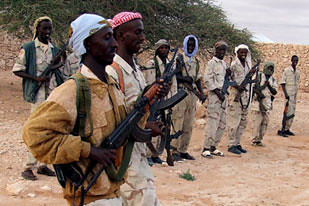
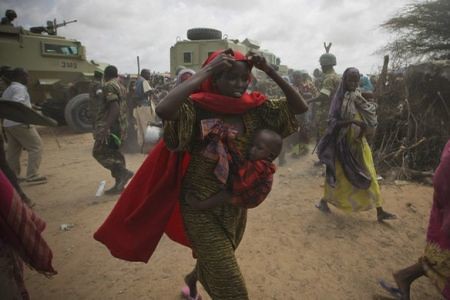
Heavy fighting broke out Thursday in the capital, Mogadishu, as African Union peacekeepers launched an offensive to protect famine relief efforts from attacks by the Shabab rebels, officials said. At least six people died.

The Shabab, which initially said they would allow the aid to be delivered, changed their mind last week.

The rebels have sent 300 reinforcement fighters to Mogadishu in recent days, said Lt. Col. Paddy Ankunda, spokesman for the African Union peacekeeping force.

He said the Shabab were trying to prevent aid from reaching the tens of thousands of famine refugees who have poured into Mogadishu this month.

US Supported Rebel Leader Killed in Factional Dispute in Eastern Libya

Libya rebel leader Younes killed, Benghazi wobbles

One thing that's certain is that Abdel Fateh Younes, a longtime aide of Muammar Qaddafi who defected to Libya's rebels in February, was murdered today. But the circumstances of his death are murky and troubling.

By Dan Murphy, Staff writer
posted July 28, 2011 at 10:04 pm EDT

That Abdel Fateh Younes, the longtime enforcer for Muammar Qaddafi whose stunning defection to the Libyan rebellion in February was an early indication of the depth of the challenge to Qaddafi's regime, is dead, you can take to the bank. General Younes had been head of the embryonic rebel army from practically the moment he'd switched sides.

As far as the rest of the story – who killed him, when, precisely where, and why – all remains murk and conjecture, created by cross-cutting rivalries within the rebellion and the often misleading and contradictory way that Libya's Transitional National Council (TNC) communicates with the press and the Libyan public.

This afternoon, reports began to trickle out of the de facto rebel capital Benghazi that Younes was variously under arrest or summoned for questioning by some other element of the rebellion. An early Al Jazeera English post said that "he is being held at an undisclosed military garrison in Benghazi. The reason behind the former minister of interior’s arrest on Thursday has not been made public." Al Jazeera reported that some of Younes's men had withdrawn from the frontlines at Brega and were heading to Benghazi to demand his release.

Then Mustapha Abdul Jalil, the head of the TNC, called a press conference. He said that Younes was killed along with two colonels working with him on the road from Brega to Benghazi and, oddly, that he didn't know where their bodies were. Mr. Jalil said, and other supporters of the rebellion insistently agreed, that Younes had been killed by agents of Qaddafi. That is hard to believe given the security around the men and the earlier claims that Younes was in the process of being arrested for allegedly working as a sort of double agent, still in contact with Qaddafi's people, and, in some accounts, pilfering weapons from the rebellion to send to Tripoli.

Benghazi is east of Brega, and the road east of town is largely in rebel hands. Younes typically traveled with a convoy of gunmen. Jalil urged Libyans not to listen to "rumors" and said a three-day mourning period would be observed for Younes.

Another explanation is that Younes was killed by supporters of the rebellion, either out of anger over allegations that he maintained ties to Qaddafi or as a matter of tribal or political rivalry. In March, Younes was locked in a cold war of sorts with Gen. Khalifa Hefter, who defected from the Qaddafi regime more than 20 years ago and has lived for most of the time since then in Virginia.

After Hefter returned home in March, he declared himself – with the clear backing of at least some of the rebel leadership – the new head of the rebel military. Weeks were spent jockeying for position, with whispers on one side about Younes's Qaddafi ties, and whispers on the other that Hefter was a CIA asset and not to be trusted as a longtime exile. Younes ended up winning that round and Hefter has been largely behind the scenes since.

There has been deep distrust of Younes in some quarters in Benghazi since the moment he arrived. On Feb. 20, he swung trained forces under his command to the support of civilians who with Molotov cocktails and stones were desperately trying to dislodge Qaddafi's forces from the Benghazi Barracks, or kutaiba.

His intervention proved decisive, but witnesses who fought on the civilian side that day reported that his forces also appeared to provide a security cordon to still armed Qaddafi loyalists, who retreated to the country's west. If Younes ordered this, it wouldn't necessary be evidence of perfidy – perhaps mercy for men who served along side with, or simply an expedient way to avoid bloodshed on both sides. But for some, it planted a kernel of doubt.

Shortly after Jalil's announcement, an agitated group of gunmen arrived at the hotel where he'd spoken, firing small arms and an anti-aircraft gun into the sky, escalating tension in the city. Witnesses said they appeared to hold the TNC responsible for Younes's death.

What really happened? It may be days before we have a clear picture, if then. But whatever happened here, there have been emerging splits in rebel ranks, and the likelihood that there could be a "war after the war" is looking greater (I have generally been skeptical about extensive fighting in the event Qaddafi loses, but have grown more pessimistic about my own opinion in recent weeks).

For now, the first major defector from the core of Qaddafi's security forces lies dead while Qaddafi, hounded by NATO airstrikes but untouched, remains in power in Tripoli.

While Libyan rebels have lost the head of the rebel army, Abdel Fateh Younes, Britain now recognizes Libyan rebels as the country's sole legitimate government.

Wednesday, July 27, 2011

Abayomi Azikiwe, PANW Editor, Featured Again on the African History Network, Thurs., July 28, 8:00-11:00pm

Abayomi Azikiwe, Pan-African News Wire Editor, Featured Again on the African History Network Worldwide Radio Broadcast This Thursday, July 28, 8:00-11:00pm

Location at http://www.AfricanHistoryNetwork.com or Call In And Listen (914) 338-1375.

Created By The African History Network

More Info: THIS IS AN ONLINE RADIO SHOW!!! YOU CAN LISTEN FROM ANYWHERE IN THE WORLD VIA INTERNET OR BY TELEPHONE!
****************
Listen to The African History Network Show on Thursday, July 28th, 8pm-11pm EST as we will be joined by Irene Warren, Author of "Which Way Is Up?: How To Survive In A Down Economy. A quick reference guide on how to earn quick cash, save money, and invest in times of economic ...hardship. " We'll talk about how to create wealth, save money and tips for your business. Irene is also a journalist for TheExaminer.com.

Also Abayomi Azikiwe, the editor of the Pan-African News Wire, will give us an update on Somalia, Libya, South Sudan and more between 10:00-11:00pm. Listen at http://www.AfricanHistoryNetwork.​com or (914) 338-1375.

THIS SHOW WILL EMPOWER YOU. DON'T MISS IT.

To listen visit http://www.AfricanHistoryNetwork.​com or Call In (914) 338-1375.
You can also visit us on www.BlogTalkRadio.com/TheA​fricanHistoryNetworkShow to listen to the show. Chat with us on our Facebook FanPage, "The African History Network" during the show.

*******************
The African History Network Anniversary Month SALE continues!!! DVDs up to 50% OFF. Special Discounts For A Limited Time. Buy 4 DVDs, Get 1 FREE and Get + FREE Shipping (U.S. Orders only)!!! Visit http://www.AfricanHistoryN​etwork.com/ to see our selection and to preview videos clips of DVDs from our Great African-Centered Scholars.

********************
The African History Network Show was designed to help people of African descent especially African-Americans gain knowledge of their history and culture that has been stripped from us over hundreds of years. We focus on educating, empowering and inspiring people of African descent. We will have some of the top African-Centered Scholars on our program and other exciting guest so you can speak with them and have your questions answered. This is a solutions oriented show so we wan to hear from YOU!

Detroit Rally to "Stop the US-NATO War on Libya!", Saturday, August 27, 4:00-7:00pm

For Immediate Release

Media Advisory

Event: Detroit Meeting to “Stop the U.S.-NATO War on Libya!”
Date: Saturday, August 27, 4:00-7:00pm
Speaker: Former U.S. Congressperson Cynthia McKinney
Location: U-M Detroit Center, 3662 Woodward at M.L. King Blvd.
Sponsors: Michigan Emergency Committee Against War & Injustice (MECAWI)
Contact: 313-671-3715
E-mail: panafnewswire@yahoo.com
URL: http://mecawi.org or http://panafricannews.blogspot.com

Stop the U.S. and NATO War on Libya: We Need Jobs, Housing, Health Care, Social Security and Quality Education

For over four months the African nation of Libya has been mercilessly bombed by United States, French, British, Italian, Norwegian, Dutch and Canadian warplanes. A naval blockade has placed warships in the Mediterranean off the coast of the resource-rich country.

Inside the North African state of Libya large numbers of civilians have been killed. The goal of the imperialist powers is to seize control of the largest oil reserves in Africa as they did during the colonial era.

The Central Intelligence Agency (CIA) and military advisers from European governments are on the ground directing their puppet rebel forces in the war against the Libyan people. The imperialists are funding the rebel group through the stolen tax dollars of the working populations of the U.S. and Europe who do not support this war against Libya and Africa as a whole.

Since March 11 the 54-member African Union has opposed foreign intervention in Libya and calls for a ceasefire followed by a negotiated settlement to the war in Libya. These overtures by the AU were accepted by the Libyan government in Tripoli but rejected by the U.S.-NATO forces and their surrogates inside the country.

Come out on August 27 to hear an eyewitness account of the brutal and criminal U.S.-led war against Libya and join the movement to stop this carnage and blatant attempted theft of this African state.

The featured speaker for this event will be the former U.S. Congressperson Cynthia McKinney of Georgia who recently visited Libya to obtain a firsthand account of the U.S.-NATO war in North Africa. McKinney visited sites within the country that had been bombed by the U.S. and NATO warplanes.

Sponsors for this event include MECAWI, the National Conference of Black Lawyers Michigan Chapter, the Michigan Welfare Rights Organization, Moratorium NOW! Coalition to Stop Foreclosures, Evictions and Utility Shut-offs, Freedom Road Socialist Organization, Workers World Party and the Pan-African News Wire.

For more information on this event please contact MECAWI at 313-671-3715.

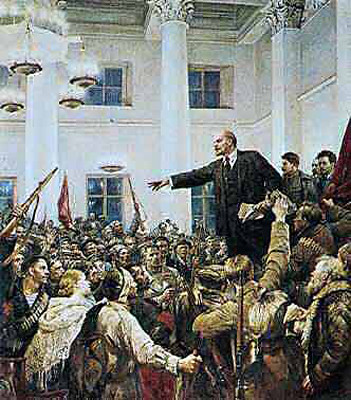
Detroit Marxism Class on V.I. Lenin's "The State and Revolution," Chapter Five--Saturday, July 30, 5:00-7:00pm

Workers World Party and the Harriet Tubman School Invites You to a Special Educational Gathering

Please Attend the Next Detroit Marxism Class for Saturday, July 30, 5:00-7:00pm

Topic: "The State and Revolution by V.I. Lenin"
Location: 5920 Second Ave. at Antoinette, North of the WSU campus, Detroit

Reading: Chapter Five, "The State and Revolution"
Discussion Leader: Andrea Egypt

Just click on the site below to view the material for this class
http://www.marxist.net/lenin/staterev/index.html

This classic work by the founder of the Bolshevik Party, the Russian Revolution and the Union Soviet Socialist Republics (USSR) was written during the period leading up to the Great October Revolution of 1917. In chapter five Lenin discusses the Economic Basis of the Withering Away of the State.

Issues covered in this chapter include Marx's views on the nature and character of the state under capitalism and how this can be transformed under a socialist and communist society.

Reading materials for the class will be made available at this session.

The class is free and dinner will be served.

For more information call 313-671-3715
URL: http://www.workersworld.net/detroit

Bombs Must Stop Before Talks, Says Libyan Government

Bombs must stop before talks; Libya tells UN envoy

TRIPOLI--A UN envoy trying to find a way to end the war in Libya said after talks with the prime minister in Tripoli that the government and the rebels remained far apart in the drive for an end to the crisis.

The government told him NATO must end air strikes before any talks could begin and that Muammar Gaddafi’s role as leader was non-negotiable, though rebels and the West insist he step down.

Britain and France, carrying out most of the NATO bombing attacks, dropped their insistence that Gaddafi leave Libya as part of any settlement, in an apparent softening of their line.

A compromise appeared even more distant after Gaddafi called the rebels "traitors" and said they had no legitimacy, in a defiant audio speech aired live on Libyan television during a pro-government demonstration in Al Khums, 120 km (80 miles) east of Tripoli.

"Is there anyone who still pretends that he represents the Libyan people after millions came out and said ’no’ to the traitors," Gaddafi told several thousand supporters, who waved posters of him and chanted slogans demanding he stay in power.

The UN envoy, Abdul Elah al-Khatib, arrived in Tripoli straight from talks with rebels in their eastern stronghold of Benghazi on Monday.

He met Prime Minister Al-Baghdadi Ali Al-Mahmoudi who said they had a productive dialogue -- but about implementing UN resolutions, not negotiating an end to the five-month-old conflict in which neither side seems to have the upper hand.

"This aggression (air strikes) needs to stop immediately, without that we cannot have a dialogue, we cannot solve any problems in Libya," Mahmoudi told a news conference afterwards.

Asked if he had told the envoy that Gaddafi’s position was not up for negotiation, he said: "Exactly."

The United Nations said in a statement issued in New York that the two sides were still far apart on finding a political solution, but both said they wanted to continue to seek an end to the crisis through the United Nations.

In London, the British and French foreign ministers, William Hague and Alain Juppe, called again for Gaddafi to leave power but, on the matter of whether he could stay in Libya, both said it was up to Libyans to decide.

Britain said it had not changed policy but comments by Hague were interpreted as tacit backing for the proposal, floated last week by France, that Gaddafi could remain in Libya.

A rebel leader this week appeared to endorse the view, which would mark a major shift from previous rebel demands that he be tried for war crimes in The Hague.

Deadlines are approaching for the NATO-led alliance, whose U.N. mandate for military action -- granted on the grounds that it would protect civilians -- expires in two months.

Bombs must stop before talks; Libya tells UN envoy Hopes an agreement could be reached before Ramadan have faded as the Muslim holy month gets nearer. It begins next week.

The poorly armed rebels hold a third of the country, mainly in the oil-rich east but also pockets like the Western Mountains near the capital and an enclave including the port of Misrata.

Hospitals in Misrata, the country’s third-biggest city, said three rebel fighters had died near the city on Monday and 11 were wounded in fighting the other day.

In Tuesday’s speech, Gaddafi threatened to destroy Misrata if the rebels there did not surrender and called on his supporters to march toward the city to cleanse it of criminals.

The rebels have been unable to move decisively against Gaddafi, even with NATO support, and have accused neighbouring Algeria of helping his troops by turning a blind eye to a weapons shipment. Algiers denied letting arms be offloaded at one of its ports.

Italian Interior Minister Roberto Maroni said after talks in Rome with his Libyan rebel counterpart, Ahmed Hussein al-Darrat, that Italy had agreed to help the rebel government develop its security apparatus.

Bombs must stop before talks; Libya tells UN envoy NATO has continued to hammer Gaddafi’s forces around Libya, striking twice in central Tripoli on Monday, and Britain has said there will be no let-up during Ramadan.

Gaddafi says he supports talks with the rebels and the West, but has shown no sign of agreeing to cede power after 41 years of unchallenged rule, much of it as a pariah in Western eyes.

In his talks with the Benghazi-based rebel leadership council, UN envoy Khatib discussed ideas for ending the war but said later a firm initiative had yet to take shape.

"We did not put a plan in front of them. We discussed the views and ideas on how we can trigger a political process ... to achieve a political solution," he said.

He has said his ideas involve a ceasefire and, simultaneously, setting up a mechanism to manage the transitional period. He has not given details.

Senior rebel official Mahmoud Jibril said he had underlined that the rebels would accept only an initiative that involved the removal of Gaddafi from power as a first step to peace.

Rebel leaders have given conflicting signals in recent weeks over whether they would allow Gaddafi and his family to stay in Libya as part of a deal, providing he gave up power.

Rebel leader Mustafa Abdel Jalil told the Wall Street Journal that would be acceptable. "Gaddafi can stay in Libya but it will have conditions," he said. "We will decide where he stays and who watches him. The same conditions will apply to his family."

But the rebels seem unlikely to unseat him any time soon.

They said they had almost taken the oil town of Brega a week ago, but later said minefields had slowed their advance.

While rebels received a boost this week when Turkey sent a first cargo of fuel under a multi-million dollar supply deal, a government rocket attack cut fuel supplies in Misrata.

The Libyan news agency JANA said Foreign Minister Abdelati Obeidi was in Tunisia the other day for talks with officials over "initiatives that were taken about what’s happening in Libya, chief of which is the African Union’s initiative."

The AU plan does not insist on Gaddafi standing down.


Libyan Man Sues Imperialists for Wrongful Death of Family

Wednesday, July 27, 2011
20:21 - Libya

A Libyan man has sought damages from NATO in a Belgian civil court, alleging that the military alliance killed his wife and three children in an air strike, his lawyer says.

Khaled Hemidi says his family was killed in a bombing that took place west of Tripoli on June 20, and that the intended target was his father, Khuwildi Hemidi, who is close to Gaddafi's government.

At the time, NATO said that it had hit a high-level command and control centre in Sorman, 70km from Tripoli.

Hemidi filed the lawusit in Brussels on Wednesday. The first hearing is set to take place within seven to 10 days.

Carmen Romero, a NATO spokesperson, said that the alliance "took note" of the suit but that it was acting within the mandate afforded to it by UN Resolutions 1970 and 1973.

In another case, a Belgian court threw out a suit filed by Aisha Gaddafi, Muammar Gaddafi's daughter, over charges that NATO killed her daughter and the Libyan leader's youngest son in an April bombing.

Nigeria's Oil and Gas: Jobs, Jobs, Jobs, for the Jobless

Nigeria’s Oil and Gas – jobs, jobs, jobs, for the jobless

Wednesday, 27 July 2011 00:00 Godwin J. Igwe
Nigerian Business Day

Dear Mr. President, distinguished members of the Nigeria National Assembly and Senate (NASS), and the Nigerian National Press: Time waits for nobody, and four years will soon come and go.

Please consider this my proposal and contribution to some of the other ideas you will no doubt be receiving, regarding the joblessness of Nigerian citizens.

A long view of legacy is needed for sober and temperate analysis of the problem facing our country. This aforementioned problem is not something that has not visited this world before.

For a blueprint of an effective solution, I humbly suggest that you attempt to implement what the United States President, Franklin Roosevelt, did during his First 100 days of office. He created an employment program that formed the engine of the infrastructure-directed economic recovery that led the American nation out of the Great Depression.

The program built 650,000 miles of roads, 78,000 bridges, 125,000 civilian and military buildings, 800 airports (built or improved), and 700 miles of airport runways.

It also served almost 900 million hot lunches to school children, and operated 1,500 nursery schools. It presented 225,000 concerts to audiences totaling 150 million people, performed plays and circuses before another 30 million, and created 475,000 works of art.

Some of Roosevelt’s “New Deal” popular landmarks dot the country to this day, and serve as a living testimony of his legacy: La Guardia Airport in New York; the River Walk in San Antonio, Texas; Camp David in Maryland; and the Cow Palace in San Francisco.

The Works Progress Administration’s (WPA) primary mission was to repair the nation’s roads and mid-sized infrastructure.

In so doing, it linked rural America with the cities, and refurbished everything from military bases to educational facilities. It can be said, with no exaggeration, that without the WPA, the U.S. could not have carried out a successful war mobilization.

By employing eight million Americans, coupled with thirty million dependents, the program brought people renewed hope and courage. It maintained and increased their working skills, while simultaneously enabling them, once again, to take their rightful places in public and private employment.

In his inaugural address, Roosevelt declared war on The Depression, challenging the nation to overcome its fears. He also moved to immediately put people back to work, stating:

“This nation asks for action, and action now. This is no unsolvable problem if we face it wisely and courageously. It can be accomplished in part by direct recruiting by the government itself, treating the task as we would treat the emergency of a war, but at the same time accomplishing greatly needed projects to stimulate and reorganize the use of our natural resources.”

President Jonathan, President of the Federal Republic of Nigeria (POTFRON), can do better than even Obama, President of the United States (POTUS). The strategy behind Obama’s stimulus bill resembles that of the WPA.

Like the stimulus, the WPA tackled unemployment indirectly by spending money largely through private contractors. The WPA was led by one Harold Ickes Sr., who had a very cautious-to-a-fault management style, resulting in only $110 million of the program’s authorized $3.3 billion getting spent during the program’s crucial first year.

Frustrated, Roosevelt employed Harry Hopkins (who led CWA – Civil Works Administration), to help get unemployed workers through the coming winter by putting them directly onto the federal payroll.

In contrast, Obama pledged that the stimulus package would “save or create 3 to 4 million jobs over the next few years.” (His budget director estimated that 75 percent of the money would be spent within 18 months).

In contrast, Hopkins got there within two months. So the bottom line is this, and cannot be understated: who President Jonathan assigns this task to is crucial.

CWA spent $1 billion, and its workforce built or improved over 500,000 miles of roads, as well as built or repaired 40,000 schools and 3,700 playgrounds. It also restored all the city parks in New York, laid 12 million feet of sewer pipe, built 250,000 privies, while starting or upgrading 1,000 airports across the country.

Again, CWA did all of this in four months. Did this break the bank? By no means. In fact, the investment increased the productivity of the economy as a whole, and yielded more “payback” to the economy (including through taxes) than it required to execute.

Of the nearly $1 billion that Hopkins spent during the CWA’s five-month existence (the equivalent today of nearly $16 billion), 80 percent went directly into workers’ pockets, and thus stimulated the economy by going into the cash registers of grocers and shop owners. Most of the rest went into equipment costs, and less than 2 percent paid for administration.

President Roosevelt did so many more good things for the ordinary citizens of America that space and time do not permit me to elaborate on.

Somalia TFG Charges Western Agencies Of Not Properly Providing Drought Assistance

Somali PM charges aid agencies with not properly helping drought hit people

MOGADISHU (Sh. M. Network) – The prime minister of Somali transitional federal government on Tuesday charged international aid agencies, including UN relief organizations with not properly assisting the drought displaced Somalis.

Abdiweli Mohamed Ali, the Somali premier made the comments during a fleeting visit to the several camps for drought displaced people in the districts of Wadajir, Waberi, and Hamarweyne of the restive capital Mogadishu.

Accompanied by members of his cabinet, the mayor of Mogadishu and the police, Mr. Ali walked inside the IDPs camps to observe the situation of the starving people lead in.

“We will launch full and tough accountability measures to trace how the aid agencies are assisting those who are in desperate need for help” the prime minister told reporters at a camp near Mogadishu’s international airport where 1,800 drought-affected encamped.

“They (aid agencies) are given money claiming they will help Somalia, despite that the people who arrived at Mogadishu are dying of hunger and that is unacceptable absolutely” he explained, citing United Nations High Commissioner for Refugees and organizations in Mogadishu as an instance.

The prime minister’s statement comes a day after Mogadishu Mayor Mohamoud Ahmed Nur disclosed that more than 85,000 people, who fled from drought-hit regions, reached at the capital in search of food and water. It is sourced from AHN.

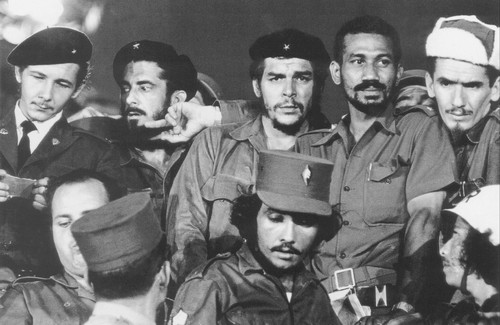
Raul Castro Presides During National July 26th Commemoration in Cuba

Havana
July 26, 2011

Raúl presides during national July 26th commemoration

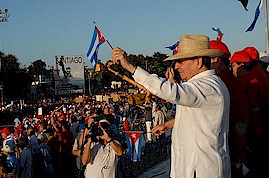
Army General Raúl Castro Ruz, First Secretary of the Party and President of the Councils of State and Ministers and José Ramón Machado Ventura, Second Secretary of the Party and First Vice-President of the Councils of State and Ministers presided during the national celebration of July 26 commemorating the 58th anniversary of the assaults on the Moncada and Carlos Manuel de Céspedes garrisons, beginning at 7:00 a.m., in the Máximo Gómez Plaza de la Revolución, in Ciego de Ávila, the province chosen to host the national event as winner of a fraternal competition for the honor.

"Our Decision to Construct Socialism Will Never Waver"

C U B A
Havana
July 27, 2011

"Our decision to construct socialism will never waver"

COMPAÑERO Raúl;
July 26th Combatants;
Ciego de Avila compatriots and all of Cuba:

Our first thoughts today, 58 years after the heroic deeds of July 26, 1953, go to those who, on that glorious day, gave their lives, many in the hours following the attacks, as victims of the cowardly and brutal repression unleashed by the Batista dictatorship.

We offer our gratitude to all of the participants in the heroic actions and to our combative people, whose unremitting determination to struggle continues to guarantee our freedom and the right to determine our own destiny conquered January 1, 1959.

We are celebrating the national commemorative event on this Day of Rebellion for the third time in the province of Ciego de Avila. The first was in 1980, shortly after the political and administrative division which gave rise to the current organization of the area. The second, more than 20 years later, was in 2002. Now, in well deserved recognition of the progress made in many sectors, Ciego de Avila has once again won the honor of hosting this event.

This is the land of mambises such as the Gómez Cardoso brothers and Colonel Simón Reyes, of principled workers’ leaders such as Tomás Grant and Enrique Varona, of young revolutionaries like Raúl Cervantes, Ricardo Pérez Alemán, Pedro Martínez Brito and Roberto Rodríguez, "El Vaquerito", all honorable and glorious representatives of the province and an inspiration to subsequent generations.

Abounding in Ciego de Avila as well, are examples of how to work and overcome the challenges the country is facing today, in particular in the economic arena, during an adverse international conjuncture. The accomplishments made over the last few years, principally in agriculture, without ignoring those made in other sectors, played a major role in the Political Bureau’s decision to award the honor of hosting this event to the province.

I will fulfill the gratifying obligation to relay congratulations from Fidel, Raúl and all of our people to the workers, campesinos, combatants, students, homemakers, retirees, and all residents of Ciego de Avila, who have made possible the province’s advances.

Nevertheless, you know very well that what was accomplished is still far removed from the existing potential. This is how the situation was harshly described during the Provincial Assembly of the Party, held recently, which, for sure, devoted little time to talking about successes.

As compañero Jorge Luis Tapia explained here in his brief synopsis, Ciego de Avila has many decisive tasks before it - in the production of food, the sugar harvest and the development of tourism on the province’s northern cays, to mention just three of the important fronts.

Just a few moments ago, General of the Army Raúl Castro, President of the Councils of State and Ministers, awarded certificates of outstanding performance to the provinces of Villa Clara - winner of the fraternal competition last year and among the vanguard provinces for 13 consecutive years-and Cienfuegos, which has shown notable progress in important areas. For these reasons, we have made extensive mention of our recognition of the people of Villa Clara and Cienfuegos.

The truth is we have to say that it was not easy to choose a winner among this group which is taking the lead in the extraordinary effort the country as a whole is undertaking.

Their accomplishments take on a special significance since they have been achieved during the year of the 6th Party Congress, where, after a rich and fruitful discussion, the Economic and Social Policy Development Guidelines of the Party and the Revolution were approved, providing direction to the updating of our economic model.

Since the Congress, through this point, intensive work has been undertaken to fulfill the agreements. The Permanent Government Implementation and Guideline Development Commission has begun its activity, coordinating the efforts and actions of all bodies and institutions involved in the updating, which also includes improving the functioning and structure of government bodies at different levels and central state administration, as well as the development and approval of legal norms necessary to support the modifications adopted.

If the 6th Party Congress sessions were important, the actions taken beforehand and subsequently have been so, as well. They constitute a resounding demonstration of patriotism, political maturity, unity and commitment to preserving socialism by the vast majority of Cubans.

Our people have made this process their own, seeing in it a clear and bold exposition of the country’s principal problems and, above all, a realistic conception of how to confront them.

We must carry out compañero Raúl’s instructions to the letter - that our agreements can never again be allowed to become scraps of paper, resting in eternal peace inside a desk drawer.

What was approved by the Party Congress is also the responsibility of all levels and especially of workplaces, in production or the provision of services, which is where the decisions adopted will be materialized.

The mentality of inertia must be definitively exorcized, a mentality which leads to sitting and waiting, looking to a higher level; to thinking first about what is lacking or would be good to have before objectively evaluating how much can be done with what is available.

The country’s leadership has given priority to the fulfillment of the economic plan and the production of food, given the dire consequences of rising prices in the world market.

Progress has been made in the distribution of idle land in usufruct, as outlined in the 2008 Decree-Law No. 259, and although a positive impact in greater production has been noted in more than a few areas, we have to resolutely face the limitations which affect its full implementation.

There are still enterprises and other productive entities which have yet to declare all of their idle or underutilized land, to which can be added delays in processing paperwork to proceed with the redistribution of such land.

On the other hand, some who have received areas of land are not getting them into production in a timely fashion.

Support and training from the Ministry of Agriculture and the Association of Small Farmers (ANAP) for those who have taken on lands in usufruct have also been lacking.

In general, there is still much unexploited potential in agricultural production. Planting is not always being done at the most opportune time, not linked in all cases to the lack of resources or not receiving them on time. Weaknesses continue to exist in the contracting process and in distribution of products for sale. We will continue to pay the most careful attention to these issues, which were forcefully addressed during the recently completed provincial Party assemblies.

In our daily work, we must make a reality of what compañero Raúl expressed at the close of the 6th Party Congress, I quote, "To succeed in this strategic endeavor and others, it is necessary that we immediately concentrate our efforts on implementing the agreements reached by this Congress, guided in our conduct by the common denominators: order; discipline and resolve." End of quote.

We cannot feel satisfied until all workers and administrators have joined the battle for economic efficiency; for systematic organization and fulfillment of expectations; against social and workplace indiscipline, poor accounting and use of resources, bureaucratic attitudes which generate a routine approach, indolence or superficiality; and against absurd procedures which have nothing to do with socialism.

We are not unaware of the lack of certain resources or the existence of organizational problems beyond the workplace which directly or indirectly affect the efforts of workers and administrators, but the fact that some collectives have much better results than others, despite functioning under similar conditions, clearly shows how much potential is as of yet unexploited.

In the economic battle we have undertaken, the elimination of waste and superfluous expenses are essential. Saving, working with the most rational use of labor and resources is an urgent necessity in all sectors. It depends on each and every one of us. A cultured, educated and organized people such as ours which has faced, for more than 50 years, the longest blockade in history, must take maximum advantage of the resources it has at its disposal.

Alongside the steps being taken by government, work is being begun by the Party to oversee, promote and demand the fulfillment of the Guidelines; to differentiate its roles from those of administrators; to determine the problems in every area, in order to offer advice opportunely with solid arguments and eliminate whatever is affecting the progress of the economic plan and the fulfillment of agreements made.

We talked about all of this during the provincial assemblies and the expanded plenums of the Party municipal committees, which took place recently. There have also been meetings of general secretaries of local organizations and the process is underway in workplace Party nuclei. Within a few days, a Central Committee Plenum will be held to continue the analysis of these issues, as the Congress mandated.

We are simultaneously working on the development of documents which will be discussed at the National Party Conference, only six months away. If the Congress did in fact devote itself to the analysis of the economy, at the Conference we will address the changes we must make in Party methods and patterns of work, to clarify and consolidate its role as the organized vanguard of the Cuban Revolution and the guiding force in society and the state, in order to strengthen internal democracy, make our work more dynamic and consistent with the changes and transformations our society is undergoing.

We are going to address our cadre policy and review the concepts and methods we utilize in our relations with the UJC [Union of Young Communists] and other mass organizations.

We will clarify, additionally, the Party’s role in the leadership and systematic oversight of the process underway to update our economic model and the progress of the economy. As part of the latter, we will plan our work as a political organization leaving behind prejudices against the non-state sector of the economy.

As was agreed at the Congress, the documents which will be submitted to the National Conference will be discussed beforehand by the membership and the Party’s leadership bodies and, also, as appropriate, by the leadership bodies of the UJC and other mass organizations at different levels.

To the people, we speak clearly. They can be sure that we are moving ahead, as has been said, "without rushing, but without rest." Work is being done systematically, following the line laid out, comprehensively, because we are not patching up or improvising, but rather looking for definitive solutions to longstanding problems. With our feet on and ears firmly to the ground, alert to the opinions of the people, ready to make rectifications as we go, adjust the pace and make more decisions.

As two centuries have come and gone since the beginning of the independence struggle on the American continent, the winds of self-determination and social justice are blowing with renewed strength. The Bolivarian Alliance for the Peoples of Our America (ALBA) is growing stronger and providing irrefutable evidence of how much we can accomplish by promoting all that unites us, with absolute respect for the sovereignty of each country.

The advances of progressive forces in the hemisphere continue. An example is the coming inauguration as President of Peru, July 28, of Ollanta Humala, who is proposing a nationalist program with more equity in the distribution of wealth. Cuba wishes him success in this effort much needed by this sister people.

Compañeras and compañeros:

Today’s battle has a decisive front – that of relentless, daily combat against our own errors and deficiencies.

We have the basics needed to achieve the gradual development of the national economy: a prepared and willing people and at least, the essential resources - in the first place, the land which we are still far from exploiting even satisfactorily.

We are aware that, in addition to material limitations, time is required to change the way people think, the only way to change the way they act.

Political and administrative leaders must be conscious that, before speaking, we must listen carefully and, above all, take into consideration what others say, not only in meetings but when conversing individually with colleagues, without anyone thinking that they have a monopoly on the truth.

Before calling for a task to be undertaken, all relevant information must be shared and the reasons for it explained, so that, therefore, everyone, or at least the majority of those who have to carry it out, fully understand. And in order to accomplish anything, it is imperative to lead by example.

Fidel, 11 years ago, called upon us to change everything which needed to be changed and reiterated in his April 17 Reflection, the importance for the younger generations of respecting this principle, with the conviction that the only thing that would never waver would be our decision to construct socialism, which in essence he said with the words, "It is also the art of doing the impossible: constructing and carrying out the Revolution of the poor, by the poor and for poor and defending it for more than half a century from the most powerful country that has ever existed." End of quote.

We are confident that the people of this province will continue fighting, alongside all other Cubans, with the same spirit and patriotic ardor that amazed Cuba and the world on that July 26, 1953, united, with Fidel and Raúl and our Party. Once again, Venceremos!

Eternal glory to the martyrs of July 26th!

Long live the Revolution!

Long live socialism!

Thank you.

Translated by Granma International

Welcome to Cuba, Lucius Walker, Forevermore!

Havana
July 22, 2011

Welcome to Cuba, Lucius Walker, forevermore!

Lucius Walker’s ashes will repose in Cuba, fulfilling the pastor’s final request

Throughout its history, and still today, Cuba is a place that attracts, engenders love and enchants. In many instances, it draws people to commit themselves to its destiny, its fate and world view. This had been its good fortune.

There have been many foreigners from all over the world who have enriched the history of Cuba in diverse areas. Some took up arms and shed their blood in its struggle for freedom. Others defended the country with ideas and devoted their humanistic, scientific, philosophical and political thinking to support its cause.

An undying love bound, and binds, these sons and daughters of other lands to Cuba, which has always made itself an object of affection given its people and the enchantment of its exceptional natural environment. To be found on this list of individuals are great figures and common men and women, many of whom became a definitive part of the essential core which sustains the Cuban nation. Many have enriched Cuba’s prolific universal heritage with their legacies. It matters little if their efforts were grand or small, of fundamental importance is that the contributions of all have been incorporated into the Cuban people’s culture, nature and way of life.

It is therefore only just that the Cuban people give thanks, today and everyday, for all the solidarity and defense Cuba has received and receives, since as José Martí affirmed, "To all who love her, I say with a great shout: brother! And I have no other brothers beyond those who love her."

There are two good citizens of the United States, of the present era, to whom Cubans will always offer our gratitude and carry in our hearts, the recently deceased Leonard Weinglass, defense lawyer for the Cuban Five, and Reverend Lucius Walker.

In the case of Lucius Walker, an Afro-American and church pastor, because he was able to challenge his country’s unjust laws and regulations directed against Cuba, like those enforcing the blockade which have been deemed genocidal, and which exposed him and his supporters to severe sanctions ranging from prison terms of several years to extremely large fines.

Lucius, along with his collaborators, faced all of this with the valor and integrity of a true Christian. This honorable man held the conviction that the friendship and solidarity of his people with ours was a cause worth any risk whatsoever. He dreamed of the day, be it close at hand or a long time coming, when relations between the people of the United States and Cuba would be inspired by and based on worthy sentiments which his spirit and religious beliefs allowed him to consider realistic and achievable through a sustained peaceful struggle of civil disobedience and acts of fraternal solidarity. The first requirement, if this dream is to become a reality, is the capacity to dream, and the second perseverance – pursuing the dream until it is accomplished.

Like hard-working bees collecting nectar, participants in the 22nd Pastors for Peace Caravan traveled to distant cities scattered across the U.S. gathering humanitarian aid from the people, keeping alive the initiative begun by Lucius in 1992 with the mission of promoting friendship between the peoples of Cuba and the United States and ending the economic, financial and commercial U.S. blockade of Cuba.

This time, the Caravan’s arrival in Havana was not physically led by Lucius, proud and smiling upon reaching the country with his solidarity and aid, along with the generous, stoic group which always accompanied him. He will, however, always be present spiritually and within the love of every participant who may come to Cuba.

A reencounter with his spirit, his remains and his memory will take place here, as members of the Caravan present a tribute to Lucius and place the urn containing his ashes in a spot on Cuban soil specially chosen as its final resting place. He will be received and honored as an immortal son, for his merits and exceptional humanist work.

Lucius has died but he will continue to live in the work of the organization Pastors for Peace. He individually, and the group as a whole, deserves and should be awarded, a Nobel Peace Prize, given the concrete, relevant work carried out. But there are prizes greater than the Nobel, awarded by the conscience and hearts of peoples, not expressed monetarily, but through eternal gratitude and remembrance.

Lucius was born August 3, 1930 and died September 7, 2010, at 80 years of age, in New York. He was a tireless fighter for the just and noble causes of Latin America, the Caribbean and Africa. And since the Cuban Five were sentenced to prison, he has been a mainstay in the defense of René, Gerardo, Ramón, Fernando and Antonio, working tenaciously for their freedom as he had previously worked for the return to Cuba of the child Elián González.

The final tribute to Lucius in his country took place September 17, when hundreds of people from around the United States gathered in a Baptist Church in Harlem.

Since the arrival of his ashes in Cuba he has been honored in our land as he deserves - a process which will culminate July 31 at the final resting place of his remains.

After a full life, like the one Lucius lived, of solidarity and humanitarian aid offered with the passion and imagination of an artist, with dreams of building a bridge of friendship and peace between the people of the United States and others around the world, especially Cuba, he is, once and for all, among us.

Lucius Walker has died and the time has come to preserve his life by continuing his work and following his example. For all that he did for Cuba and for his love of Cuba, we say: WELCOME TO CUBA, LUCIUS WALKER, NOW AS A SON FOREVERMORE!

(Taken from CubaDebate)

Haiti Solidarity With the Cuban Five Over the Airwaves

Havana July 19, 2011

Solidarity with the Five over the airwaves

Juan Diego Nusa Peñalver, special correspondent
Granma International
PORT-AU-PRINCE. – Haitian journalist Jean Gary Apollon is well-known in his country as a result of his popular radio program Sabor Latino, broadcast Radio Signal FM 90.5, one of the most important stations in the country, located in Pétion-Ville, just outside of Port-au-Prince. The program is presented as a bridge of friendship and integration among Latin American countries and supports just causes around the world.

He was calm and collected enough to protect the radio console and keep his program on the air precisely when the devastating earthquake of January 12, 2010 hit and asked the international community to come to the aid of his long suffering country.

Loquacious, persuasive and an impassioned professional for more than 20 years, Apollon prides himself on being one of the many friends Cuba has in Haiti. He also joins the Cuban people in calling for the freedom of the Cuban Five, unjustly imprisoned in the United States for their efforts combating terrorism.

Granma was able to witness how, over the airwaves during Sabor Latino, Apollon expressed his hope that Venezuelan President Hugo Chávez would fully recuperate, as well as his best wishes for Fidel’s health and demanded that President Barack Obama use his executive powers to immediately free Gerardo Hernández, Antonio Guerrero, Fernando González, Ramón Labañino and René González, "since any sane person understands that they never endangered the national security of the United States."

The Cuban patriots were only working to expose macabre terrorist plots launched from South Florida against the Cuban people. "They had nothing to do with any sort of espionage on U.S. soil," the radio host reiterated.

The U.S. government, which claims to be waging a war on terrorism, should heed the arguments of the Five and dismantle the anti-Cuban mafia in Miami, he said, "This would, in fact, be a great service to humanity."

After explaining that the trial to which Gerardo, Antonio, Fernando, Ramón and René were subjected was arbitrary and political in nature, he confirmed that the Haitian people support their freedom and denounce the violation of their human rights.

"I know many young Haitians who have sent letters to the U.S. administration demanding the release of these brave men… Solidarity with their just and human cause will always have a place on Sabor Latino," he said.

A proponent of Haiti’s full integration within Latin America, Apollon, who in addition to speaking Creole and French, the official languages of his country, communicates perfectly in Spanish and English as well, describes as successful and generous Cuba’s health care and educational collaboration with Haiti, reiterating that the country has yet to recover from either the earthquake or the cholera epidemic.

"There are hundreds of Haitian doctors who have been trained free of charge by Cuba; its help has been invaluable in the struggle against illiteracy with the use of the ‘Yes, I Can’ method of reading and writing instruction and thousands of my compatriots have regained or improved their vision as a result of the Cuban Operación Milagro ophthalmological program," affirmed Apollon, who has also visited Cuba and opposes the U.S. economic, commercial and financial blockade of the country.

"It is a contribution that my country does not has the money to repay and for which Cuba has never requested anything in return," he added.

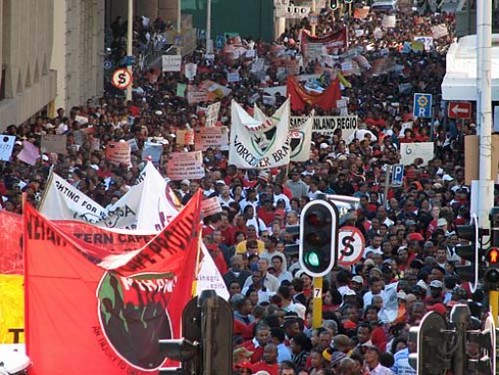
South African Unions Add Fire to the Fuel Strike

Unions add fire to the fuel strike

NICKOLAUS BAUER JOHANNESBURG, SOUTH AFRICA - Jul 27 2011 16:41

Unions leading the strike in the chemical and fuel sector have vowed to continue with industrial action until their demands are met -- despite many workers and fellow union Solidarity withdrawing their support.

The Chemical, Energy, Paper, Printing, Wood and Allied Workers Union (Ceppwawu) and General Industries Workers Union of South Africa (Giwusa) staged a march outside the offices of Shell in Rosebank, Johannesburg on Wednesday, brandishing placards promising no end to the fuel strike.

“Comrades, we own these streets today. In as much as the greedy capitalists own production, we will own the streets,” Giwusa president Charles Phaahla told cheering protesters.

Trade union Solidarity withdrew their support for the strike in the first week after only two days of participation. And, according to employers, thousands of workers have returned to their posts, even though they are affiliated to unions still on strike.

William Hendriks, a fuel worker in Alrode says he and other workers will fight until the wage demands are realised.

“We are fighting for what we deserve -- they can afford these wages; they are lying,” said Hendriks.

Ceppwawu member Ayanda Sithole echoed Hendriks's sentiments, vowing to drag the strike on as long as it takes.

“We don’t care if it takes eight weeks -- they must give us our money. They can afford to give themselves R10-million bonuses why can’t they afford our salaries? They spend the amount we earn on expensive cigars and booze,” Sithole.

Hendriks did not have kind words for workers who had already returned to their posts.

“They are stupid, if they don’t want to fight for their rights then they must accept their fate,” Hendriks said.

“Our government that we voted for is leaving us out in the cold -- that makes us very angry,” Sithole said.

South African Clothing Sector Missing the Gap

SA clothing sector missing the gap

TEAGUE PAYNE
Jul 22 2011 00:00

The textile and clothing industry urgently needs "to get over this narrow-minded dispute around wages so that it can take advantage of what is taking place in China". So says Renato Palmi, a Durban-based researcher and consultant to the industry.

He says foreign companies sourcing from China have to deal with labour shortages, power-supply problems, increasing wages and longer lead times.

"Internationally, many companies are now looking at alternative suppliers," Palmi says. "This offers some opportunity for South African suppliers to capture more of the local market, but to do so the industry must operate from a platform of stability in order for its customers to have confidence in the abilities of the local apparel sector. This is not currently the case.

"If we cannot create this space the market will seek to grow its supplier base in countries such as Bangladesh, Vietnam and Cambodia, where wages are 50% to 80% lower than in China.

"But relocation to these countries is fraught with difficulty. They do not have the logistical road systems and infrastructure to meet the delivery requirements demanded by international clients. These countries have seen a spate of labour unrest and demands for wage increases. We have an opportunity to grow local demand if the stakeholders within our sector are prepared to be visionaries and implement a new discourse," Palmi says. "Overseas, unions have moved on to a much less confrontational and more integrational model, which sustains rather than destroys industries."

Palmi says the focus on the Chinese-owned factories in Newcastle is unfair -- most of the other non-compliant factories in the industry are not Chinese owned but are standing on the sidelines, often intimidated but facing the same problems as the Newcastle companies.

Many of them are CMT (cut, make and trim) factories. This means they receive materials and specifications from retailers and operate on low margins. But many retailers are now placing fewer orders with these non-compliant factories because they believe the factories may close down and their consignment materials will be trapped in insolvency situations - they therefore prefer to import more.

Currently, says Alex Liu of Newcastle's Win-Cool clothing factory, South African retailers buy only 12% to 15% of their clothing requirements from South African factories.

In the short term, Liu and a fraction of the non-compliant clothing companies (most don't want to stick their heads above the parapets) are having one last crack at extending the survival of their factories by bringing a court case against the minister of labour and the bargaining council.

The case challenges the application of the 70% to 100% minimum wage "agreement" to non-parties. They say the minister acted unlawfully and unfairly in extending minimum wages to non-parties. The case challenges the minister on the reasonableness of requiring unsustainable wages in an industry that is in rapid decline. A court date has yet to be set.

Palmi says: "Even if the bargaining council wins, it will be a hollow victory. More factories will be closed and the industry will be more fractured. The irony is that if all the factories became compliant tomorrow, it wouldn't increase output or exports or help with skills development. The whole focus is on wages and not on the sustainability of the industry."

Even as the Southern African Clothing and Textile Workers' Union (Sactwu) continues to lose members because of closures, officials can be consoled by its huge investment fund, built up from compulsory contributions by employers such as Liu.

The investment fund, started in 1993 to create new funding for the union, has grown tremendously, though its success has recently been severely tainted by the disappearance of R100-million or more in alleged crony and dishonest transactions.

The fund today controls (with a 42% share) the listed investment company HCI -- a share worth more than R450-million.

The portfolio managers of HCI have avoided investment in unionised, labour-intensive manufacturing industries in South Africa. HCI's portfolio is weighted towards media and entertainment, gaming, financial services and liquor.

It has one big investment in a South African clothing maker -- a 70% share in Seardel, the subsidiaries of which are among the "compliant companies" that earn big government subsidies. Seardel also has production facilities in Lesotho, where minimum wages are far below those Sactwu demands in South Africa.

A recent report by the Centre for Development and Enterprise states that "events in the Newcastle clothing industry should be seen as a model for a new industrial structure rather an affront to South Africa's self-image as a producer of high-value goods".

Strike fever has once again hit South Africa with fuel employees, metal and chemical workers among others promising to cripple the country's economy if their demands are not met. For more news click here.

Source: Mail & Guardian Online
Web Address: http://mg.co.za/article/2011-07-22-sa-clothing-sector-missing-the-gap

Millions March in Harlem Gears Up for August 13 to Oppose US War Against Libya

Millions March In Harlem Gears Up!

by Amadi Ajamu

The Millions March in Harlem buzz is in the streets around the country. Posters and flyers are everywhere and people are excitedly talking about the need for unified action and change. The Millions March in Harlem will be held on Saturday, August 13, assembling on Malcolm X Blvd at 110th Street at 10 AM. It will focus on the attack on African people on the Continent and in the United States.

The heinous bombing of Libya by the US and NATO, illegal sanctions against Zimbabwe by the West, and the Bloomberg administration’s destruction of housing, jobs, education, health care and police abuse, are all a systematic assault on African communities.

Special guest speakers include: Minister Louis Farrakhan of the Nation of Islam; Father Miguel d'Escoto, former President of the UN General Assembly and former Foreign Minister of Nicaragua; Dr. Molefi Asante of Afrocentricity International; Viola Plummer of the December 12th Movement; NOI Minister Akbar Muhammad, and many others.

In a press conference at the United Nations Plaza Hotel on June 15, Minister Farrakhan stated, “NATO and America are trying to recolonize Africa through AFRICOM (African Command). My question to African leaders is, will you allow it? Out of fear of the so-called power of the West. Will you bow down and act against the interest of African people world wide?” Colonel Muammar Gaddafi has been a principal advocate and organizer for a United States of Africa which threatens the international power structure.

The organizers of the Millions March in Harlem held a press conference on June 22nd and Minister Akbar Muhammad reported, “Minister Farrakhan will definitely be speaking at the march on August 13. The Nation of Islam is fully behind this march, it is extremely important, and we will do all that we can to make this happen.”

Viola Plummer of the December 12th Movement International Secretariat stated, “There comes a time when people have no alternative but resistance. This march will revitalize the Pan African movement. It will broaden our peoples' world view and demonstrate the need for Africans to unite in our own political and economic interests internationally. We must expose the United Nations Security Council machinations, western imperialism, the attack on Black people in the US, and all collaborators at every turn.”

The march has garnered international attention with the participation of Father Miguel d'Escoto Brockman, who flew in from Nicaragua and attended the Harlem press conference. Father d'Escoto spoke against the “war of aggression on Libya.” Further stating “There is no people in the whole planet who know less about what the United States does abroad than Americans. They are systematically deceived. This is the very foundation of what they call democracy in this country.” Father d'Escoto went on to outline the need for reform in the United Nations, emphasizing the domination of the voting members of the UN Security Council over all other countries.

On the ground, “Millions March In Harlem” organizing teams, which are saturating the streets with bright green posters, report on the grassroots response. “We never underestimate our people's ability to analyze a situation. The vast majority of folk are clear about the attack on African people and want to do something to fight back.

Mainstream media propaganda about strong African leaders like Colonel Muammar Gaddafi and President Robert Mugabe is just like what they say about Black people here who do not bow down to the status quo,” said Gregory Perry of Queens.

Bronx Coordinator Kamau Brown stated, “Colonel Gaddafi and the people of Libya have built their country from the poorest to the richest country in Africa. He is the key person in the organizing effort to build a United States of Africa. President Mugabe has dared to take back the land stolen by European settlers and give it back to the people of Zimbabwe.”

“The attack on us here is insidious. Police brutality and harassment, gentrification of our communities, housing foreclosures, destruction of public education, closing hospitals, the prison industry, the list goes on and on. They all destroy lives. The NATO bombs in Libya and the illegal sanctions in Zimbabwe kill people.
Black people understand that it's time for Pan African Unity.” Brown concluded.

For more information on the upcoming Millions March in Harlem call (347) 737-3272 or Email: info@MillionsMarchHarlem.com

UNAC Statement on Upcoming Rallies and Marches Against the US-NATO War on Libya

Statement by UNAC on the occasion of the August 13, 2011 “Millions March in Harlem” mobilization, the many meetings with strong African American endorsement featuring Libyan bombing eyewitness Cynthia McKinney, and the August 20 Black is Back Coalition mobilization for an “International Day of Action Against the Wars on Africa and the African People.”

UNAC welcomes the July and August actions protesting the wars on African people abroad and at home. We will be marching on August 13 in Harlem to demand an end to the U.S./NATO bombing of Libya, an end to the U.S.-backed sanctions against Zimbabwe, and an end to the racist attacks of the Bloomberg administration on New York's Black community. We urge all UNAC affiliates outside of NYC to mark August 20 with events educating the antiwar movement about the wars on African people worldwide.

The U.S.-led NATO assault on Libya, an assault that has created over 1000 civilian casualties in a few short months, is not only a means for the US to try to halt the Arab Spring.

It is also part of an ominous escalation of US military intervention on the African continent.

Nation reporter Jeremy Scahill recently documented the Special Operations strikes, drone attacks, and expanded surveillance operations in famine-wracked Somalia, a nation in which the CIA operates an illegal torture compound and which is still reeling from the 2006 US-inspired and supported Ethiopian invasion.

The U.S. goal in Somalia is control of the strategically important Horn of Africa. In the Congo, a decade and a half-long U.S. proxy war over control of coltan and other precious minerals, has resulted in the death of over six million.

U.S. military activity in Africa is directed by AFRICOM (United States Africa Command), the latest U.S. imperial military training, secret war, death squad-promoting interventionist institution aimed at asserting U.S. interests in Africa and denying the people there of the fundamental right to self-determination.

In the Americas, the U.S. backs a UN occupation of the Black nation of Haiti and promotes policies in Colombia that displace masses of Afro-Colombians.

There is no community more antiwar in sentiment than African Americans in the U.S. The historic militancy of the Black community has been met with a set of punitive government policies, dubbed the New Jim Crow, that have led to the mass incarceration of its youth and their entrapment in a new prison-industrial complex.

As Black Agenda Report editor Glen Ford, recently asked, “If there is not a war against the Black community, where did all the prisoners come from?”

The United National Antiwar Coalition urges all antiwar activists to use the month of August to deepen their involvement in the fight against the “other” wars on the African continent and at home.

Stop the U.S./NATO Bombing of Libya!
U.S. Hands Off Africa!
End the U.S./UN Occupation of Haiti!
Bring Our War Dollars Home!
Money for Jobs and Education, Not for War and Incarceration!

South African Communist Party to Celebrate 90th Anniversary

SACP: Statement by Malesela Maleka, South African Communist Party spokesperson, on the commemoration of its 90th anniversary

(27/07/2011)

The South African Communist Party (SACP) will this weekend be celebrating 90 years since its formation on 31 July 1921 in Cape Town. The major activity for the celebrations includes the holding of the Anniversary Rally at the Sugar Ray Xulu Stadium, in Clermont, eThekwini, KwaZulu Natal Province, preceded by the anniversary dinner on Saturday 30 July. The official programme of the rally will commence at 10H00 on the 31st July 2011.

The rally will be addressed by our international allies from the Communist Party of Cuba and the Communist Party of China, the National Chairperson of the MKMVA Cde Kebby Maphatsoe, the National Secretary of the Young Communist League Cde Buti Manamela, the President of SANCO Cde Ruth Bengu, the General Secretary of COSATU Cde Zwelinzima Vavi and ANC President, Cde Jacob Zuma. The SACP General Secretary Cde Blade Nzimande will deliver the keynote address at the rally.

The 90th anniversary is a moment to celebrate the enormous role that the SACP has played in the national liberation of our country, and also its conrribution towards the reconstruction of our country since the democratic breakthrough of 1994. Ours is a party that is committed to the destruction of the capitalist system in our country and the building of a more humane alternative, a socialist South Africa. In achieving this objective we are guided by our medium term vision, that of seeking to build working class influence in all key sites of power, both inside and outside the state.

We are also celebrating the many contributions the SACP has made in the struggle for liberation in our country. Our Party was the first non-racial political party and also through this helped pioneer non-racialism in the politics of our country, and in society in general. It was the Communist Party that not only theoretically pioneered this but was in the forefront of organising African workers and white workers hand in hand in pursuit of the common enemy, capitalism. It is this which was later to influence what Cde Joe Slovo was to coin as an understanding of the “national character of the class question and the class character of the national question”. We celebrate a party of national liberation. It was the SACP that led in this country the call for black majority rule, with its call from way back in 1929.

We celebrate a party that has been a dependable ally of the progressive forces and the Mass Democractic Movement led by the ANC in the struggle against apartheid. We celebrate a leading role of communists in the operations of the people’s army, uMkhonto we Sizwe. The SACP has also contributed immensely towards the building of the African National Congress as the leading formation of the national liberation movement, much as it has also, over the years, learnt a lot from the ANC.

We honour heroes and heroines of our revolution included amongst others Johannes Nkosi, Basil February, Ruth First, the heroic leadership and activism of communists in the Wankie and Sipolilo campaign, the leadership role of women like Dora Tamana in the Federation of South African Women and the ANC Women’s League and the ANC, and the brilliant organisational skills of trade unionists like Elizabeth Mafikeng, John Beaver Marks and many unsung heroes and heroines of our revolution.

The SACP can also rightly claim that no other political organisation has played and contributed to the building of the progressive trade unions like it has done. The SACP also pioneered progressive media in our country that has promoted the interests of the workers and the poor in country, a far cry from the role that is being played by mainstream media, whose obsession today is unbridled support for capitalism and an opposition to all that the ANC-led alliance and its government is trying to build.

It is for all the above reasons and history that since 1999 we have taken forward the decision of building a vanguard party with a mass character and immersed our organisation in taking up campaigns that touch at the heart of the daily struggles of the South African people through our Red October Campaign. Since 1999 the SACP has led the following campaigns:

a. For land and agrarian reform

b. A campaign for the protection of vulnerable workers

c. A campaign for food security for the poor, lower food prices and redistribution of land for food production

d. A campaign to transform the financial sector to serve the majority of our people including a credit amnesty and campaigning against reckless credit lending – it is this campaign by the way which partly insulated our finance institutions during the capitalist crisis of 2008

e. A campaign for safe, affordable and accessible public transport system

f. A campaign for Quality Healthcare For All which called for amongst others the introduction of the National Health Insurance

g. A campaign for the financing of development

h. A campaign against corruption

i. A campaign to build street committees and people’s power for a revolutionary state

j. A campaign to deepen and strengthen participatory democracy

These are the campaigns that have left an indelible mark in the minds and heart of ordinary South Africans about the relevance of the SACP in radically transforming their lives. It is because of these campaigns, amongst others, that today we can talk about a Communist Party whose paid up membership is just over 130 000. We are in fact the largest political formations after the ANC.

The communist party today is faced with the challenge of attaining the required balance of its tasks and role in governance and continuing its leadership role in mass struggle as an independent organisation.

As we celebrate our 90th anniversary the SACP further commits itself, in the struggle for the total liberation of our country, to fight all forms of corruption, both inside and outside the ranks of our Alliance and the state. We will do this without fear or favour and irrespective of who is involved or implicated.

The SACP will also intensify its ideological offensive against both liberalism and neo-liberalism, as well as attempts to try and destroy the image of our movement by these liberals. Today there is a huge offensive by liberals and conservatives, who have consistently lost elections since 1994, to try and abuse our institutions of democracy to try and project our movement and organisations as inherently corrupt. With the support of mainstream, bourgeois media, these liberal forces, are trying to rule from the grave – losing elections but attempting to co-opt our institutions of democracy to pursue an anti-ANC and anti-government agenda.

We further commit ourselves to consistently fight against all forms of populist demagoguery and factionalism, whose aim is to try and steal our organisations in order to further narrow accumulation agendas.

In doing all this we will continue to mobilise the mass of the workers and the poor of our country, and seek to meaningfully participate in government as part of our overall objectives to build a better South Africa for millions of South Africans.

The 'Rot' in the Nigerian Police Force

The 'rot' in the police force

Monday, 25 July 2011 00:00
Mary Ukachukwu
Nigerian Guardian

THE police remains to a great extent the face of the government of the day. The police is a tool in the hands of the powers that be. The so-called over chanted 'rot' in the police force, is therefore the rot in the government.

In the just concluded 'free and fair' elections, in how many states were opposition parties given a chance to campaign? Why could they not? Because the powers-that-be would not allow that.

Any police reform has to start with political reform. We are yet to understand what democracy is. Perhaps, we are yet to wean our minds off the military era. Do we have any criteria for appointing or sacking even the Inspector General of the police? How free is the state comissioner of police from the whims of the State governor?

We all know that even if the police catches a criminal, it takes just a phone call from the right quaters to release the criminal from whatever crime.

It is not that the police do not know what to do, they are no fools- at least the majority of them, it is not that they cannot do it, is is even not so much that they are not adequately mobised, though often they are not. No, it is that they are simply dancing according to the tune the government is calling.