Tuesday, October 30, 2012

Learning From Lumumba

Learning from Lumumba

Tuesday, 30 October 2012 00:00
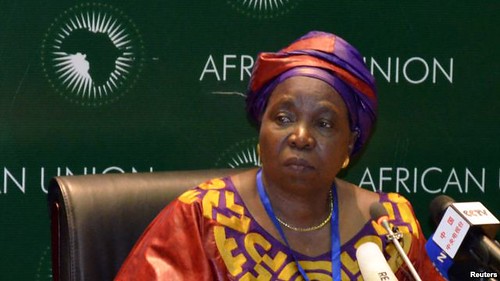
Nkosazana Dlamini-Zuma

I always remember the words of one of our finest sons of our continent, our hero President Patrice Lumumba who said in 1960 at the All African Conference in Leopoldville: “We all know and the whole world knows it, that Algeria is not French, that Angola is not Portuguese, that Kenya is not English, that Ruanda-Urundi is not Belgian. We know that Africa is neither French, nor British, nor American, nor Russian, that it is African.”

Moving from the premise that the future of our region is inextricably linked to the future of the rest of our continent, the implementation of the agreed programmes and policies will certainly add the necessary impetus to the realisation of the vision of Africa’s socio-economic renewal.

The success of the African Union is, however, dependent on the implementation of most of its decisions by regional economic communities (RECs) and the member states. Therefore, a strong, dynamic and symbiotic relationship between the African Union Commission and the regional economic communities is critical for the integration and development of Africa.

Only through the building of sustainable infrastructure in the form of integrated rail, air, roads, telecommunications and electricity between and among the regions can we succeed in ensuring inter and intra-African trade between all our peoples.

This in turn requires the development of common standards and the harmonisation of legislation and other steps being taken within and between economic communities.

A united Africa will assist the peoples of our continent to deal with burning issues that confront them daily — issues such as climate change and food and water security, pandemics and the relationship between healthy, educated populations and development; democracy and the empowerment of youth and women.

African unity in action is what will give regions and individual states the competitive advantages they need to build on the successes achieved thus far. Let us not forget that we have done it before.

The kind of African unity that enabled us to end colonialism and claim our right to political independence and self-determination can empower us to succeed on the economic front.

Women make up just over 50 percent of Africa’s total population which currently stands at a billion people.

Although Africa has been experiencing positive economic growth, it will not reach its full potential if women do not participate fully in the life and the economy of the continent.

Having proclaimed the decade of 2010 to 2020 as the African Women’s Decade, it will be important to accelerate, amongst others, the Millennium Development Goals, particularly those that affect women and children, like halving poverty, reducing maternal and infant mortality, increasing the representation of women in decision making.

Women must be involved more meaningfully in the economy. We should also ensure they have access to, amongst others, training, skills development, technology, land and financing.

Indeed Africa can halve poverty and even exceed this if we use our resources in a way that can assist the people of Africa. Africa has over 30 percent of all the world’s resources.

I would just like to quote Achim Steiner, Under Secretary-General of the United Nations and Executive Director of the United Nations Environment Programme headquartered in Nairobi, Kenya: “Report after report is now demonstrating that sustainable management of Africa’s natural resources is one of the keys for overcoming poverty.

“Sensitively, creatively and sustainably harvested and fairly shared, these resources can assist in meeting — and going far beyond — the internationally agreed development goals.” So it is possible we must use our resources effectively and share the proceeds equitably.

The continent has abundant human resources.

We have a young population whilst the developing world has an aging population. We must ensure our young people are educated, healthy and skilled so they can become a vital asset to driving our economy.

They will also have buying power which will contribute to our economies while also serving as a market for our goods and services.

I look forward to working with the African Development Bank and the ECA as the major continental organisations to see how we can accelerate the economic development of Africa and to ensure an equitable sharing of our resources.

As a continent we should work towards becoming more sustainable and self-reliant.

The Lagos Plan of Action encouraged us to “cultivate the virtue of self-reliance.”

Unfortunately, even as we speak, our programmes at the African Union are solely funded by donors. We must remember that the Lagos Plan of Action suggested that “these outside contributions should only supplement our own effort (and) should not be the mainstay of our development.”

As long as donor contributions are the mainstay of our development, we will not achieve our own identified priorities. I leave you with the much more recent words of Joaquim Alberto Chissano, on the occasion of Africa Day on 25 May,2012: “We have defined this century as ‘The African Century’.

Today, we have the advantage of being better-equipped and more united to realise our aspirations. If we won yesterday, despite major obstacles and adversities, nothing will prevent us from succeeding in the future.”

Dr Nkosazana Dlamini-Zuma is the Chairperson of the AU Commission. This has been extracted from her address to the Sadc Heads of State and Government Ordinary Summit in Maputo, earlier this year.

Monday, October 29, 2012

Blackouts Affect 1.5 Million As Sandy Approaches East Coast

Blackouts affect 1.5mn as Hurricane Sandy approaches East Coast

Tue Oct 30, 2012 12:30AM GMT
presstv.ir

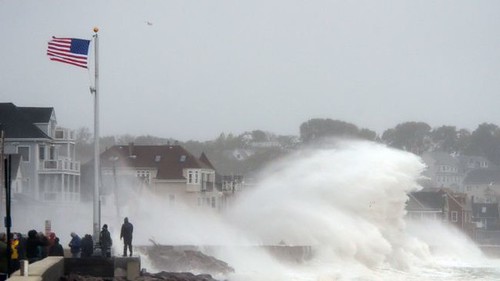
Blackouts affecting 1.5 million people have occurred on the East Coast of the United States, hours before Hurricane Sandy is expected to make landfall, with many electrical utilities saying the outages are only likely to get worse.

On Monday, utilities reported power outages for more than 1.5 million customers from Maine to South Carolina as of 6 p.m. EST Monday.

The worst outages were reported in New Jersey. Jersey Central Power & Light reported 287,826 outages, mostly in Ocean and Monmouth counties. Public Service Electric & Gas, which serves about three quarters of New Jersey's population, had 93,500 customers without power.

Consolidated Edison, New York City's primary electrical utility, reported at least 71,543 customers in the city and in Westchester County were without power Monday afternoon.

Other utilities across the Northeast reported limited power outages, with affected customers typically numbering in the thousands. Most of the outages are the result of flooding and falling trees knocking down power lines.

Hurricane Sandy, one of the biggest storms ever to hit the United States, was expected to make landfall near southern New Jersey or Delaware, hours before meteorologists initially anticipated.

It has been described as a hybrid "super storm" created by an Arctic jet stream wrapping itself around a tropical storm.

The storm has killed at least 65 people since Wednesday, mostly in Haiti, as it was charging through Caribbean islands.

African National Congress Ruling Party Endorses Anti-Israel Boycott

South Africa’s ruling party endorses anti-Israel boycott

Mon Oct 29, 2012 6:38PM GMT
presstv.ir

Senior members of South Africa’s ruling party have endorsed a boycott campaign against Israel, with former South African deputy president Baleka Mbete calling Tel Aviv ‘far worse than apartheid South Africa’.

During an international conference hosted on Sunday by the African National Congress (ANC), which controls two thirds of the National Assembly, delegates endorsed the Boycott, Divestment and Sanctions (BDS) movement against Israel.

"On the occasion of the third ANC International Solidarity Conference, we call on the ANC to support the Palestinian people in their fight for freedom, justice and equality...," BDS said in its statement.

Responding to an objection from a German delegate, who said Tel Aviv cannot be compared to South Africa during the apartheid era, Mbete, who is also ANC chairperson, said Israel was actually “far worse than Apartheid South Africa,” according to a press release published by the BDS.

"Ms Mbete received a resounding round of applause from delegates for articulating this position,” the release added.

The conference also included in its declaration a demand for the release of all Palestinian political prisoners.

About 1,000 delegates from South Africa and across the globe, mostly former anti-apartheid activists, trade union representatives, religious leaders and various other progressive and left-wing groups attended the ANC’s third International Solidarity Conference.

France, US Push Algeria to Back Military Intervention in Mali

France, US push Algeria to back military intervention in Mali

Mon Oct 29, 2012 3:44PM GMT
presstv.ir

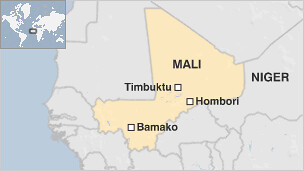
France and the United States have put more pressure on Algeria to support a military intervention in crisis-hit African country of Mali.

"An intervention in northern Mali is possible without the military backing of Algeria but not without its green light," said the head of the Centre of African Studies, a French think-tank, Pierre Boilley on Sunday.

Earlier in the day, US officials asked regional states including Algeria, which is said to be the region's biggest military power, to back intervention in Mali.

"We encourage greater cooperation with the regional states in dealing with terrorist threat. We encourage collaboration, communication with the notion that terrorists don't recognize international boundaries...That is the key to success,” said Assistant Secretary of State for the Bureau of African Affairs, Johnnie Carson.

The remarks come as the UN Security Council unanimously adopted a resolution on October 13 that gave West African nations 45 days to offer details of a plan for a military intervention in Mali.

The Security Council expressed “grave concern about the continuing deterioration of the security and humanitarian situation in the north of Mali, the increasing entrenchment of terrorist elements… and other extremist groups, and its consequences for the countries of the Sahel and beyond.”

The Sahel region is a belt of land including nearly a dozen of the world's most impoverished countries on the southern rim of the Sahara.

Mali plunged into chaos after the country’s democratically-elected government was ousted in a March coup. Tuareg rebels initially took control of two-thirds of the country.

But militants took advantage of the power vacuum created by the coup to seize the northern parts of the country.

Anti-Black Sentiments Rise in the United States

Anti-black sentiments rise in US: Poll

Mon Oct 29, 2012 2:53PM GMT
presstv.ir

New figures reveal that racial attitudes have not improved in the US since the country elected its first black president Barak Obama.

According to an Associated Press poll released on Saturday, 51 percent of Americans now express explicit anti-black attitudes, compared with 48 percent in a similar 2008 survey.

The results released by AP were conducted by GfK Custom Research using explicit and implicit questions about race and included interviews with 1,071 adults between August and September 2012.

"As much as we'd hope the impact of race would decline over time ... it appears the impact of anti-black sentiment on voting is about the same as it was four years ago," said Jon Krosnick, a Stanford University professor who worked with Associated Press to develop the survey.

African-Americans reportedly talk openly about perceived antagonism toward them since Obama took office.

"Part of it is growing polarization within American society," said Fredrick Harris, director of the Institute for Research in African-American Studies at Columbia University.

"The last Democrat in the White House said we had to have a national discussion about race. There's been total silence around issues of race with this president. But, as you see, whether there is silence, or an elevation of the discussion of race, you still have polarization. It will take more generations, I suspect, before we eliminate these deep feelings," he added.

The poll results also showed that most Americans express anti-Hispanic sentiments as the number of non-Hispanic whites who express anti-Hispanic attitudes rose from 52 to 57 percent in the implicit test, compared to a 2011 survey.

Alan Jenkins, who was an assistant solicitor general during the Clinton administration and now executive director of the Opportunity Agenda think tank, noted that negative racial attitudes can be seen in policies.

"That has very real circumstances in the way people are treated by police, the way kids are treated by teachers, the way home seekers are treated by landlords and real estate agents," Jenkins said.

Racial profiling and racism have been surfacing in the United States during recent months.

On October 22, an African-American woman was set on fire by alleged KKK attackers in the state of Louisiana in the most recent act of racism.

United States CIA Denies Involvement in Sudan Bombing

US denies involvement in Khartoum attack: Sudanese paper

Mon Oct 29, 2012 7:37PM GMT
presstv.ir

The US Central Intelligence Agency (CIA) says it was not involved in an Israeli attack on a weapons factory in Sudan’s capital city of Khartoum, a Sudanese paper says.

According to a Monday report by a local Sudanese newspaper called al-Intiba, CIA chief David Petraeus called Saleh A-Tayeb, Sudanese deputy intelligence head, shortly after the attack and said his country was not involved in the incident.

On October 24, Sudan's Minister of Information Ahmed Bilal Osman said four Israeli warplanes attacked a weapons production factory in the Sudanese capital city killing at least two people.

Hundreds of Sudanese staged a demonstration in the capital Khartoum on the same day to protest against the airstrike, chanting chanted slogans against the Israeli regime and the United States, such as "Death to Israel" and "Remove Israel from the map."

However, Saleh al-Tayeb said the US could have applied pressure on the Israeli regime despite its denial of direct involvement in the attack.

On October 28, Sudanese Minister of Information Ahmed Bilal Osman said that information collected by experts indicated that the weapons used in the aerial strike on al-Yarmouk facility were made in Israel.

Sudan has asked the United Nations Security Council to condemn Israel for violating the country’s sovereignty and bombing the factory.

Israel has so far refused to comment on the incident. Israeli Minister for Military Affairs Ehud Barak has said, "There is nothing I can say about this subject."

Bani Walid Pays Price for Refusing to Accept the Mark of the Beast

Bani Walid Pays Price for Refusing to Accept the Mark of the Beast

By Gerald A. Perreira

It is a year since the brutal killing of Muammar Qaddafi and the installation of NATO’s proxy government in Tripoli. The installed government is not in control and heavily armed militias and foreign mercenaries are running the show.

This past year has been one of chaos and savagery. Thousands have been hunted down, imprisoned or killed. Hundreds of thousands have fled to neighboring countries to flee the persecution. The images emerging from the current siege of Bani Walid are gruesome.

NATO’s henchmen are attacking their own people with bombs and chemical weapons, injuring and killing scores of civilians. Women, children and old people lie maimed or dismembered on the side of the roads, many of them buried in the rubble.

Residents tell stories of bombs filled with burning toxic gases and white phosphorous raining down from missiles. Scorched victims of the constant shelling are proof of the sinister nature of the Islamist militias and the fascist government forces which have been ordered to use ‘all necessary means to deal with Bani Walid’.

Where is the ‘international community’ condemnation? Where is Amnesty? And where is NATO? Why has the Security Council not called an emergency session to address this atrocity?

Where is the ‘humanitarian intervention’?

Russia finally put forward a draft statement to the UN Security Council calling for ‘a peaceful resolution to the ongoing crisis’ - a lukewarm response to a ‘killing fields’ scenario and even this was blocked by the US. This is the freedom sanctioned by NATO in Libya – accept the mark of the beast or die.

Where is the African Union? Ethnic cleansing of people with black skin is being carried out by Arab Supremacists and where is the African Union? The answer is that its troops, drawn from neo-colonial African countries, are mired down in Somalia and the Democratic Republic of Congo, fighting imperialism’s battles under the command of AFRICOM.

Since Qaddafi’s murder, all but three African countries have accepted US military occupation in the form of AFRICOM. And what about the Eurocentric left in the US, Europe, Canada and elsewhere – it seems they are so confused over Libya and the Arab Spring thing, that they are unable to put up any effective opposition to the murder and mayhem that their governments are perpetrating.

It is so much more comfortable and easier all round to join the frenzy over Pussy Riot, while the siege of Libya and Bani Walid, which can easily be compared to the ‘killing fields’ of Cambodia, is unfolding before their eyes. There is no question that the Islamist militias that have surrounded Bani Walid are certainly on a par with the Khmer Rouge.

Everything you can imagine and everything you can’t… Bani Walid, like many other towns and neighborhoods loyal to the Al Fateh revolution, has been under constant siege since NATO first invaded. Two years later the residents have no food, water, electricity, medicine or even oxygen for the hospitals but they have set up their own television station which broadcasts daily, and no matter how desperate their situation they continue to resist the savage hordes at the gates of their city.

The current onslaught is entering its fourth week, part of a killing and maiming spree which has been on-going since the NATO led invasion of the Libyan Jamahiriya. It is only in the last few days that the dominant global media has broadcast news from Bani Walid, and only then because the horror of what is taking place there could no longer be ignored.

The events that have unfolded in Libya over the past year have occurred away from the eyes of the world. Imperialist media outlets, such as BBC, CNN and Al Jazeera were told to turn their cameras off so that NATO’s thugs could quietly engage in a cleanup operation, that is, to finish off the necessary racial and ideological cleansing.

NATO expected that these vicious militias would have finished the ‘mop-up’ by now, but once again they failed to understand the true dynamic of this battle.

There is no doubt that NATO has destroyed much of Libya but that was an attack on material structures – albeit a devastating one.

However, this battle is not being fought on the material plane alone. It is therefore wholly different to anything that the North Atlantic Tribes can conceive of. They should take note of a catch phrase taken from an old Libyan tourism poster which describes the Jamahiriya as ‘everything you can imagine and everything you can’t’.

This is a battle being fought on many planes, including the metaphysical plane – it is not something that can be exterminated with physical force alone, no matter how great that force is.

The real revolution will definitely not be televised…

Bani Walid is a bastion of resistance, sheltering many of those who fled the Black Libyan town of Tawergha and numerous Africans living in Libya, all of whom are escaping the persecution meted out towards anyone whose skin is black. The Muslims of Bani Walid refused to accept that people with black skin are to be hunted and killed, since this is antithetical to the teaching of Islam.

There are Libyans of every skin shade in Bani Walid – Libyans who believe in Muammar Qaddafi’s vision of a truly independent Libya taking its rightful place in a United States of Africa.

On the anniversary of the slaying of Shaheed Muammar Qaddafi, we salute the heroic resistance of all those at Bani Walid, Sirte, Abu Salim, Janzur, Kufra and all over Libya, all of whom are willing to die rather than accept the ‘mark of the beast’.

Let our defiant brothers and sisters in Bani Walid know that they should not worry about the fact that their cause is receiving little or no corporate global media attention. They dare not televise the real revolution.

Nevertheless, the real revolution is acknowledged by millions of people throughout the world who stand in solidarity with the real revolutionaries, inspired by some of the greatest acts of defiance and resistance seen in our times.

This is how the battles of Sirte and Bani Walid will be recorded by us. In the words of the Brother Leader: ‘I live in a place where you cannot reach me. I live in the hearts of millions of people’.

You came, you didn’t see, he died…

‘Today many Americans are asking, indeed I asked myself, how could this happen? How could this happen in a country we helped liberate? In a city we helped save from destruction…’, wailed Hillary Clinton, upon hearing the news that Christopher Stevens had been murdered in Benghazi.

Let’s just put it this way Hillary, everything is not as it seems. One thing we know for sure is that no US ambassador or diplomatic staff would have been killed if you and your NATO allies had not destroyed Libya and murdered Muammar Qaddafi. Put the blame where it belongs. ‘You came, you didn’t see, he died’.

You are way out of your depth.

This ‘Arab Spring’ Thing

Regardless of the amount of damage control, lies and spin that comes out of Washington, nothing can clean up the mess they have gotten themselves into with their so-called Arab Spring – a construct straight out of their warped imaginations.

The sad thing is that so many commentators and activists are also talking about an Arab Spring as if it exists, allowing Empire to name, set the agenda and call the shots –what it should be called, where and when, and how it should be understood.

Via their globally dominant media outlets, they feed people a daily diatribe of simplistic binary oppositions – ‘the good guys and the bad guys’. In the real world it is not so simple but in fact highly complex.

So highly complex, that without an in-depth knowledge of the region’s history, politics, religious issues and theological discourse, no commentator would be in a position to make sense of current events. While we expect right wing pundits to regurgitate imperialist propaganda, there is an enormous amount of confusion even in progressive circles with regard to Libya, so much so that we have witnessed a convergence of the ‘left’ and ‘right’.

One reason for this is that both sides are analyzing events using Eurocentric paradigms – paradigms which are reductionist, incomplete, flawed and incapable of providing an accurate understanding of what is taking place.

Following the hijacking of uprisings in Tunisia and Egypt, and the subsuming of unrest across the region into a ‘one size fits all’, using that key phrase – ‘Arab Spring’, the Empire was on a roll. It was then that they committed their worst blunder - a calamity so catastrophic that its fall out will haunt them for decades to come.

They handed the most progressive and prosperous country in all of Africa on a platter to a conglomerate of religious deviants (Salafi Islamists).

Their plan was to use these Salafi Islamists to get rid of Qaddafi and destroy the Libyan Jamahiriya, and with it, any possibility of a truly independent Africa and the specter of an African currency based on Africa’s gold standard. And they did use them to achieve this objective, but the Salafis, who have had a long and tedious love-hate relationship with white supremacists/imperialists, were also using NATO.

The US and their European allies had no qualms about backing Al Qaeda affiliated thugs to finally get rid of Muammar Qaddafi.

They had attempted to assassinate Muammar Qaddafi a number of times over the years and failed. They imagined that after ridding themselves of Qaddafi they could set up sham elections, fly in some ‘moderate’ and out of touch Libyan emigres in suits and set up a proxy government.

Their plan was to marginalize the Islamist thugs, send them packing after using them to do their dirty work, patch things up sufficiently with an inept government that would implement their sham democracy, and then get their hands on some of the world’s best sweet crude.

At the same time, with Qaddafi out of the way, they could ensure unhindered access to the continent, something they need at any cost for their very survival.

The imperialists and their oil companies are now in Libya in full force. However, their victory posturing was short lived. Their poorly hatched plan has backfired. US foreign policy has always suffered from the ignorance of successive presidents and their mouthpieces, including their intelligence services, which are inept at best.

As one US general said regarding the war in Afghanistan, ‘we are flying blind’. When we listen to the nonsense emanating from their ‘think tanks’, such as the Hoover Institute and the Heritage Foundation, we are left incredulous that they could be so ill-informed and misguided.

‘Who’s Gonna Stop Dem Now?’

US imperialist blunders, resulting in immeasurable amounts of human suffering, are nothing new on this earth. Obama’s administration is just one in a long line of US administrations with no real understanding of the Arab and African worlds. Following Obama’s election, Muammar Qaddafi, along with Hugo Chavez and other progressive world leaders, expressed their hope that Obama might bring a different mindset to the White House.

However, a few months after Obama’s inauguration, they came to the disappointing conclusion that this liberal from Chicago had no real understanding of the world and had in fact, as we say in the Caribbean, ‘hung his hat up where he could not reach it’. In other words, he was out of his depth and his European allies are no better informed.

This is why NATO leaders did not know that Abdelhakim Belhadj and his followers could not be used and then disposed of. They were too busy using the Islamists to see that in fact, it was the Islamists who were using them - the US and NATO – a scenario that is currently being replayed in Syria.

In both cases the imperialists are being out played at their own game of deception. The fact is that a few months ago the same people who were waving US flags and hailing the US as their ‘liberators’ are now chanting ‘death to America’ and burning US flags.

Hillary - you came, but you didn’t see. The battle raging in Libya today, in Bani Walid and throughout the nation, predates Qaddafi’s 1969 revolution.

There is no ‘Arab Spring’ – the ‘Arab Spring’ is a Neo-Con ideological construct

Qaddafi warned the world about the Salafis – no one knew them better than he and his fellow Libyans. This battle raging out of Benghazi and Bani Walid is as old as Islam itself.

I have heard commentators talking about Qaddafi’s cooperation with the CIA and MI5 when he negotiated with them to get the Libyan detainees returned to Libya. Following these negotiations, Belhadj and other returnees from the Afghan war were able to return home.

Some progressive commentators, who unfortunately, are so caught up in a textbook interpretation of events, that they have ceased themselves to understand the complexity of what they would term ‘realpolitik’, and have as a result misunderstood what happened in Libya post 9/11. The leaders of this recent rebellion in Benghazi were fighting US forces in Afghanistan only months before.

They were in US prisons and rendition centers being tortured. It was not that Qaddafi sought to work with imperialist intelligence services – it was that he could – he had the sufficient economic power to negotiate a deal which allowed the Libyan Islamic jihadists to come home.

Since the Al Fateh revolution’s inception, he had been dealing with these Islamists. He wanted to reintegrate them into society.

He believed in the principle of restorative justice, a fundamental tenet of Sharia. He actually released them all from prison because he knew that the Libyan revolutionary forces and the Libyan masses were capable of keeping them in check.

Enter US and NATO fools. All hell has broken loose. The Islamists, now in power in Libya, are arming and financing their allies in neighboring countries.

Groups such as Ansar Dine and the Movement for Oneness and Jihad in Mali have emerged from out of nowhere. Heavily armed and well funded, they are causing chaos across the region. As the reggae song laments, ‘Who’s gonna stop dem now?’

Latest Spin

In true V for Vendetta style we wake up daily to the lies. The TV news anchors were definitely blinking as they read the spin handed them following Stephens’ murder. Mohamed Magarief, leader of the CIA and Saudi financed counter-revolutionary group – National Front for the Salvation of Libya, and now president of the General National Congress of Libya, told CBS News he had ‘no doubt’ the attack was pre-planned, contradicting US envoy to the UN, Susan Rice’s statement that it had been part of ‘spontaneous’ protests.

Magarief said the suspects were connected to ‘Al-Qaeda or its affiliates and maybe sympathizers’. The truth is that all of those who are in control in Benghazi, Magarief included, are Al Qaeda affiliates and sympathizers. Qaddafi told us this from day one of the rebellion.

The Al Qaeda Factor: Getting it Right

When the US wants to cause commotion or justify more spending on arms and further global militarization they shout ‘Al Qaeda’ where they used to shout ‘Communism’ and this fits their spin. However, in reality, like us, they know the real name of their game. As Jamahiriyan loyalist Dr Yusuf Shakir put it, ‘the name of their game regarding Arab and African foreign policy is to cause as much commotion as they can and then stand back and let us sons of bitches kill each other’.

Remember the infamous George Bush Snr statement, ‘we need Africa without the Africans’?

The Islamist groups in Libya were in existence long before the concept of Al Qaeda emerged.

That is why Qaddafi was able to warn the world of the danger of these Islamist groups and their ideology, and why Libya was the first country in the world to issue an arrest warrant for Osama Bin Laden.

While many were full of zeal and excitement when these groups seemed to be giving the US what it finally deserved, Qaddafi knew that this was not Islam, but rather reactionary ideas and tyranny in the name of Islam and that it could take us nowhere.

Al Qaeda is a brand. It’s an off shoot of the Muslim Brotherhood. Both are shaped and influenced by the writings and teachings of Hassan al Banna, Sayyid Qutb and Sayyid Maudaudi.

The fundamental difference between these Islamist fighting groups and the original Iqwan (Brotherhood) is one of strategy and tactics rather than worldview. While the original Iqwan believed and preached reform, their offshoots, groups such as the Libyan Islamic Fighting Group, Ansar Dine in Mali and Al Qaeda in the Islamic Maghreb all believe in violent action, even against other Muslims.

Many of these Islamist groups that pre-dated al Qaeda have re-emerged and affiliated to the Al Qaeda brand, a brand that was developed and globalised with the assistance of Arab client regimes, such as Saudi Arabia and Qatar, US and Pakistani Intelligence forces and successive US regimes and their media. And no one brands better than the U.S.

And so the chaos and commotion continues. This is the same strategy the imperialists opt for every time they are in crisis and their grip on the world threatens to unravel.

In this phase, the imperialists draw up extra judicial hit lists which include whoever displeases them and, having reached amazing new technological heights, they work their lists, murdering at will with unmanned drones which target not only those on their hit lists but scores of civilians in the process.

There are no trials, no freedom of speech, thought or action, no democracy - just more lies, hypocrisy, plunder and chaos. That is all the North Atlantic Tribes know and understand.

Imperialism Will Be Buried in Africa

It is no surprise that the imperialists are re-focused on Africa in this phase of their battle to maintain control of the world. Control of Africa is integral to their continued dominance. Central to their current strategy is the re-militarization of the continent via AFRICOM.

From the outside looking in, the situation may seem hopeless, but this is part of the plan: to create a sense of hopelessness that seeks to overwhelm and disempower.

However, Bani Walid reminds us that no amount of chaos, confusion, set-backs, deception or mass murder can stop the African resistance or lead to its defeat. It will never stop until Africa is free and it is Africa’s freedom that will bury imperialism.

It does not matter how many revolutionary leaders and fighters are murdered, more stand willing to resist in their place – this is an historical lesson learned, not only in Africa but throughout the Global South.

The imperialists cannot win because there are no winners in the evil and destructive plan that they have been engaged in for centuries, and remain engaged in. Their game plan will not only consume us but will consume them as well, evidenced by the unprecedented crisis and inevitable downward spiral that the Empire is currently experiencing.

The Hon. Elijah Muhammad warned us many years ago that their reign is over. The world they have created is dying – either we fight in whatever way we can to defeat them, willing to die for our cause, or we accept the mark of the beast and join them in their descent into hell.

Gerald A. Perreira is a founding member of the Guyanese organizations, Joint Initiative for Human Advancement and Dignity and Black Consciousness Movement Guyana (BCMG). He lived in Libya for many years, served in the Green March, an international battalion for the defense of the Al Fateh revolution and was an executive member of the World Mathaba based in Tripoli.

The US Blowback From Libya

The Blowback From Libya

By Rossen Vassilev
opednews.com

"We came, we saw, we killed him (Muammar Gaddafi)," were the triumphalist, if extraordinarily undiplomatic (to say the least), words of Secretary of State Hillary Clinton, paraphrasing Julius Caesar's boast Veni, vidi, vici ("I came, I saw, I won").

What Hillary was referring to was the decisive military support which the US and its NATO allies provided to anti-Gaddafi rebels, many of them Al Qaeda-linked jihadists, who had invaded from Egypt and seized Benghazi, a restive city in eastern Libya that had long been a stronghold of Islamic militancy and radicalism. With the help of Ambassador Susan Rice, the US Representative to the UN, and Samantha Powers, Special Assistant to the President and Senior Director for Multilateral Affairs in the National Security Council, Hillary had persuaded a reluctant President Obama to intervene militarily on behalf of the anti-Gaddafi insurgents in spite of the open opposition of then Secretary of Defense Robert Gates, the only Republican holdover from the George W. Bush Administration and a former CIA director.

Incredibly, the President ignored the advice of his own Defense Secretary, an experienced CIA and National Security veteran from the Cold War era, who had argued publicly against any military intervention in Libya as not being in the long-term US security interest, especially since the Libyan strongman had given up his nuclear-weapon aspirations and was now aiding significantly in the US campaign against Al Qaeda. Perhaps stung by this rebuke, on July 1, 2011 Secretary Gates tendered his previously-announced resignation and even refused the offer to become the first Director of National Intelligence (DNI). It is also worth remembering that in 2005 President Bush and British Prime Minister Tony Blair had praised Col. Gaddafi as a partner in the "war on terror" because he had arrested or "rendered" on US behalf many al-Qaeda operatives.

In a sort of "blowback" unintended consequence, the Libyan episode has now come back to haunt the Obama Administration in the wake of the September 11 jihadist raid against the US consulate in Benghazi which led to the deaths of Ambassador Chris Stevens and three of his American colleagues.

Not only has President Obama not included at all the "liberation of Libya" among his oft-recited overseas achievements, but his Republican opponents now seem determined to exploit the so-called "Benghazi-gate" scandal to discredit the President's foreign-policy record and blame his Administration for the rising anarchy and violence across the Middle East.

And this presents a very serious problem for a chief executive who ever since the Republican takeover of the House of Representatives in 2010 has focused far more on foreign affairs than on his domestic agenda, and for whom foreign policy is supposed to be his strongest point.

Luckily for Obama, in the second presidential debate Mitt Romney engaged in a foolish semantic wrangle over what the President said and when exactly he said it, instead of concentrating on the question of why the State Department denied the extra security measures which Ambassador Stevens had asked for prior to the raid. This still unexplained denial becomes all the more shocking when one reads media reports that the US consulate in Benghazi has doubled as a CIA station, inside which a cache of British weapons had been stored that were subsequently looted by the attacking militants.

Then Romney compounded his inexplicable mistake by failing to raise this entire troubling issue during the third presidential debate which was devoted to foreign-policy matters.

This omission no doubt contributed to the wide viewer perception that Romney lost that third debate, which may slow down or even reverse his current momentum in the polls.

But Obama's luck may not last long. The Republican majority in the House of Representatives has been holding hearings on "Benghazi-gate" that will most likely continue through Election Day, the results of which the House Republicans will make sure are made widely known to voters. These hearings are pursuing the GOP election campaign's currently main line of attack that a cover-up has been organized at the very top to conceal the Obama Administration's embarrassment over such a brazen assault against American interests in a country that the US ostensibly helped liberate in an innovative, Obama-esque way--that is, without putting any boots on the ground like the previous president had done in Iraq and Afghanistan.

A year after triumphantly declaring, "All of us are inspired by what is happening in Libya," and praising the Libyan people for "taking back their country," Hillary Clinton is now dejectedly asking, "How can this happen in a country we helped liberate, in a city we helped save from destruction?" In a mea culpa, she has now taken "responsibility" for the Benghazi fiasco, proclaiming that the "Buck stops here," because it is the State Department that is officially in charge of diplomatic security. But, sitting in a non-elective office, she knows better. Ultimately, as President Harry Truman meant it when he put the famous sign on his Oval Office desk, the "buck stops" nowhere else but at the White House.

That is why Republicans are actually aiming for Obama when pressing questions like who exactly denied Ambassador Stevens's request for extra diplomatic security in Libya and for what reason. Both Obama and Joe Biden publicly declared that the White House had been totally unaware of the existence of such a request. Was it to hide the State Department's unease and alarm over the growing chaos and insecurity in post-Gaddafi Libya? Who sent Ambassador Rice to lie on no less than five TV news shows that the Benghazi consulate attack was a spontaneous public reaction to the infamous "Islam-bashing" video, when there is ample evidence that the commando-like assault may have been a premeditated, long-planned Al Qaeda operation?

And who is now trying to pin the blame on Director for National Intelligence, Lt. Gen. James Clapper? Maverick Republican congressmen like Dr. Ron Paul may even raise the question if the Islamic militia now blamed for the assault in Benghazi was the recipient of US covert aid during the anti-Gaddafi uprising. And also whether the tragic lesson of the Libyan "blowback" is being ignored in the case of war-ravaged Syria, where the foreign-sponsored anti-Assad opposition seems to be increasingly dominated by Al Qaeda-allied Islamic radicals.

For President Obama's supporters, the prospects of the damaging "Benghazi-gate" controversy dominating the national news as well as a prolonged investigation by the House Republicans are very worrisome, particularly at a time when both candidates are running neck-and-neck in the polls and Mitt Romney even enjoys a small edge over the President. And even worse, the unspoken hopes of Democrats that one or two top

Administration officials involved in "Benghazi-gate" are going to salvage Obama's re-election chances by falling on their swords (that is, resign rather than be fired) and sacrificing their current or future political careers are fading fast. What could be more depressing for Democrats today than this sudden and escalating "blowback" from the Libyan adventure which may by itself wreck Obama's drive for re-election?

Dr. Rossen Vassilev is a former Bulgarian diplomat to the United Nations in New York City and a lecturer at the Ohio State University, where he obtained a Ph.D. in political science in 2000.

Charcoal Exports Seized by US-backed Military Forces in Somalia

Saving Somalia: A matter of charcoal and UN bureaucracy

Somalia's embattled port of Kismayo could fall back to Al Shabaab militants if UN doesn’t lift charcoal embargo soon.

Tristan McConnell
October 29, 2012 06:11

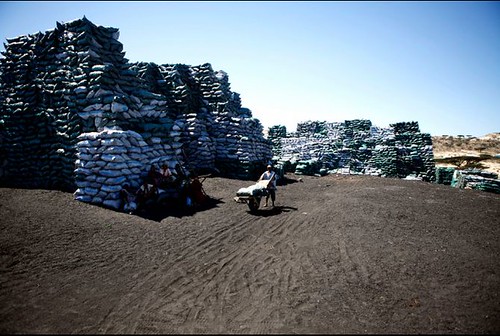
KISMAYO, Somalia ― Kismayo’s southern entrance is flanked by pile after vast pile of charcoal, bagged and stacked in towering blocks on either side of the asphalt road.

These stalled shipments now threaten to undermine hopes of a lasting peace in Somalia.

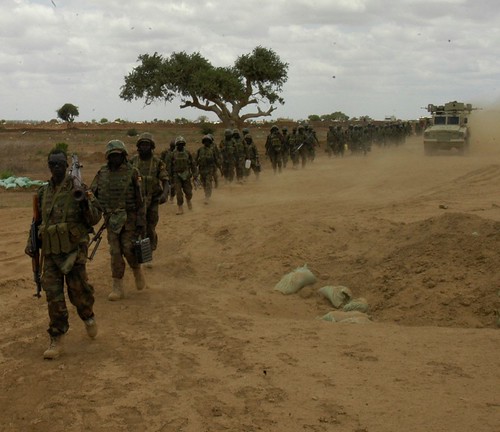
Al Shabaab, Somalia’s Al Qaeda-styled militant organization, withdrew from Kismayo late last month as an international military force moved in. It was the group’s last of a string of retreats that began 14 months ago in Mogadishu, Somalia’s capital.

It’s been a dramatic turnaround for Al Shabaab, which just over a year ago had nearly full control of the capital and much of the country’s hinterlands. Since its withdrawal from Mogadishu, the city has experienced something of a revival, at least by Somali standards.

Whether or not Kismayo, a coastal economic center in the country’s south, can do the same is almost entirely dependent on the tens of millions of dollars worth of charcoal laying in wait at its port.

It was charcoal that once helped fund Al Shabaab. The UN estimates that at its height, Al Shabaab was taking in $50 million a year in port revenues from Kismayo, a third of which came from charcoal. As a result, in February, the UN Security Council placed an embargo on its sale and export.

“The economy of this city is 90 percent charcoal,” Sheikh Ahmed Madobe, the former governor of Kismayo, militia commander and regional powerbroker, told GlobalPost.

With the departure of Al Shabaab and since the charcoal “cannot be returned to the trees,” Madobe argued that the ban should be lifted and the coal sold off. Local businessmen, who have lost millions as a result of the embargo, are making the same argument.

A group of 20 business leaders gathered in a warehouse last week at the once-busy deep-water port to put their concerns to Kismayo’s new military rulers. The military now occupying the city is made up of the Kenyan army, operating under the banner of the African Union Mission in Somalia (AMISOM), the new Somali National Army (SNA) and Madobe’s Ras Kamboni Brigades (RKB) militia.

They asked for a seven-month suspension of the charcoal ban to allow them to sell off the stockpile.

“Kismayo has been one of the hotspots for the conflict for the last 21 years. We have not had any government support or any other assistance, so charcoal has been the main source of livelihoods,” said a businessman who did not want to be named because he maintains trade links in both government and Al Shabaab territory.

“When the charcoal trade stops everyone suffers, from the top to the bottom of society,” he said.

Officials worry that if the people are suffering, the winning of hearts and minds by an occupying force will be difficult. The charcoal impasse could make enemies out of the town’s traders, giving an opening to Al Shabaab and renewing the potential for conflict.

“If we do not solve the charcoal issue it will make serious problems for us, especially in security,” admitted one Kenyan officer.

Ultimately, it falls to the UN Security Council to lift the embargo. Given the UN bureaucracy and the issues the Security Council already has on its plate, this one is unlikely to come up anytime soon.

Even if the Security Council does turn its attention to the charcoal embargo, there’s no guarantee it would lift the ban. There’s no mechanism in place to prevent the profits from finding their way back
to Al Shabaab.

Although Al Shabaab no longer controls Kismayo, no one believes the militants are altogether gone. Its fighters were not defeated, they withdrew. Authorities believe many of them have melted into the civilian population and still pose a threat.

Brig. Anthony Ngere, a commander of the 4,000-strong Kenyan contingent, said that suicide bombers, grenade attacks, improvised explosives, snipers and ambushes were all high on his list of concerns.

The fear of Al Shabaab’s return is palpable among the city’s residents.

“We are still living in terror that Al Shabaab will make a comeback,” said one man who did not want to be identified. “They are still here, hiding among the people. They can kill anyone anytime.”

That leaves Kismayo in a precarious position.

For now, the month-old peace is being kept in place by the strong show of military force. Kenyan troops patrol the town in armored cars, monitoring everything between their base at the airport and the harbor. Somali soldiers and militiamen man the streets.

On a recent morning, just three ships unloaded their cargo in the once frenetic port. With no charcoal to carry, they would return to Dubai empty.

Somalia's General Farah Killed al-Shabab Ambush

29 October 2012
Last updated at 08:34 ET

Somalia's General Farah killed in al-Shabab ambush

Al-Shabab has been under pressure from African Union and government troops

A top Somali military commander has been killed in an ambush - the first general to be killed by the Islamists.

Mohamed Ibrahim Farah,nicknamed Gordon, was killed near Merca, a strategic town captured from the al-Shabab militants in August.

The Somali government army and African Union troops have been battling the al-Qaeda-aligned group for several years.

Al-Shabab has withdrawn from several key towns in recent months, but still controls much of the countryside.

The governor of the Lower Shabelle region in southern Somalia said General Farah was killed along with four other soldiers in an ambush on Sunday.

Al-Shabab still manages to stage attacks in areas it has left, including in the capital, Mogadishu.

The hotel of the new UN-backed President Hassan Sheikh Mohamud was targeted by suicide bombers, killing eight people, the day after his election by MPs last month.

Meanwhile, a journalist who was attacked by gunmen last weekend has died of his wounds - bringing the number of reporters assassinated this year across Somalia to 17.

Mohamed Mohamud Turyare, who worked for the private radio station Shabelle, was shot as he walked home on Saturday 20 October.

Al-Shabab has claimed responsibility for killing more than 10 journalists this year. One of them was beheaded in Mogadishu.

Since the overthrow of President Siad Barre in 1991, Somalia has seen clan-based warlords, Islamist militants and its neighbours all battling for control of the country.

Pentagon Says AFRICOM Change Not Linked With Benghazi Attacks on US Interests

Dempsey: Africa Command change not tied to Libya

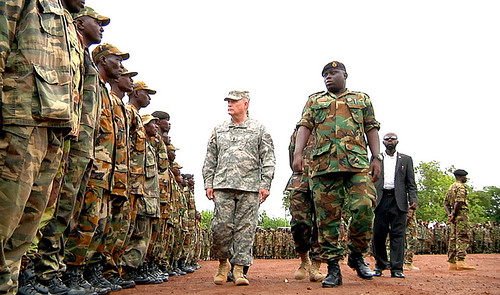
The top U.S. military officer is denying reports that Army Gen. Carter Ham's planned departure as head of U.S. Africa Command is linked to the Sept. 11 attack in Libya.

By ROBERT BURNS
AP National Security Writer
WASHINGTON

The top U.S. military officer is denying reports that Army Gen. Carter Ham's planned departure as head of U.S. Africa Command is linked to the Sept. 11 attack in Libya.

Joint Chiefs of Staff Chairman Gen. Martin Dempsey issued a written statement Monday calling speculation about the reasons for Ham's move "absolutely false."

Defense Secretary Leon Panetta announced Oct. 18 that Gen. David Rodriguez is being nominated to succeed Ham. The Africa Command is responsible for U.S. military operations and relations in much of Africa.

Last week, Panetta said he, Dempsey and Ham all felt very strongly that it would have been a mistake to insert U.S. forces into Benghazi during the attack, which killed four Americans.

Dempsey said Monday that Ham's departure is part of "routine succession planning."

Young Communist League National Secretary Addresses the Current Situation Involving the ANC and South Africa

Speech by the National Secretary of the YCLSA on the celebration of the ANC Centenary and SACP 91st Anniversary

22 October 2012, Mamelodi, Stanza Bopape Hall

"The ANC and the SACP: A Shared History"

The history of the ANC and the SACP is the history of South Africa. As we celebrate the 91st Anniversary of the SACP and the Centenary of the ANC, we do so cognisant of the fact that the current state of events are informed by where we come from. This alliance survived internal and external attempts to ensure that the working class and the poor have divided loyalties between their national mass movement and the communist movement, and thus, a derail of the long-term objective for the complete liberation of our people from economic and political bondage.

In the past, the attempt to drive a wedge between the SACP and the ANC were led by those who sought to turn the ANC into a narrow Pan-Africanist political formation on the one hand, whilst on the other hand there were the ultra-leftists and workerist tendencies who wanted to distinguish between a national democratic struggle and a struggle for socialism.

Many of these went on to pursue their own political formations such as the PAC, members of the then Gang of Eight splintered into various political formations, lately, some went on to form the UDM and COPE defiant of this alliance and its leadership. Others are pursuing a narrow socialist path, urging communists not to form part of a "sell-out" ANC government and pursue socialism far from and out of the state.

Just as we saw immediately after Mangaung, some forces both within and outside the ANC and the SACP questioned the legitimacy of a sitting office bearer in the communist party becoming also an office bearer in the ANC. The same tendencies are the one`s calling for change, having used that initial excuse to launch a leadership change in the forthcoming Mangaung Congress.

What are the shared historical mandates and objectives of the Alliance between the ANC and the SACP and how do we relate these to the current political and economic situation? Cde. Joe Slovo was spot on to suggest that there can be no struggle for socialism outside of the struggle for national emancipation, for it can only be under socialism that we completely eradicate the shackles of colonialism and national oppression. He further said that any struggle for national emancipation and economic freedom that falls short of pursuing the goals of socialism is worthless and would face massive defeats.

Many efforts have been made since 1994 to reverse the effects of more than three centuries of national oppression, economic exclusion and colonial rule. Because of the nature of the political and economic settlements reached since then, the pace and extent of reversing colonialism, imperialism and apartheid rule was determined by contending forces hellbent on maintaining the status quo.

These were further perpetuated by the systemic and real challenges of an apartheid state apparatus, the urgent need for delivery of education, health and housing in order to better the lives of our people and the urgent priority of building an economically equitable and politically just society

We are time and again coming to the realisation that we cannot change the lives of our people for the better if we do not alter the ownership patterns inherent of the apartheid past. The fact that millions of black South Africans are locked in poverty, inequality and unemployment on the one hand whilst white South Africa continues to inherit the wealth of the past that was protected by the apartheid negotiators remains an unsustainable pattern of economic development.

We have to consistently challenge the multiple efforts of blaming the ANC and the alliance-led government as the sole creator of this type of society. The capitalist path of development, which has guaranteed billions of profits channelled into the pockets of both local and foreign firms should take the responsibility for the mess that we are in.

Although government has built millions of houses, opened taps for millions of families, built thousands of schools and hospitals, built roads and empowered some of our people with land and other means of production and sustainable livelihood; a lot more needs to be done and some of the trials and errors have to be corrected by our government. However, most of the real conditions of the lives of people will never change as long as the economic institutions still favours the historically rich and co-opt a few black faces as part of economic empowerment.

I must hasten to say that there has been efforts to create an impression that doomsday is nearing and that the entire South African roof is about to collapse on all of us. This impression has been consistently repeated by, firstly, proponents of a liberal government and the former architects of apartheid.

They include people such as FW de Klerk, whose intention is not out of pity for black people in general for the conditions that they face, but scorn for them having voted for the ANC since 1994. Institutions such as the FW de Klerk foundation have awoken to the reality that the wealth which they secured in perpetuity for white South Africa is under threat as many of our people languish in poverty and want.

They preach the gospel that the misery of our people lies not in the equitable redistribution of the wealth in white hands, the mineral resources and the arable land, but that all of these are part and parcel of a failing or failed state. These are the same people who have used violence and deployed the so-called third force in the townships during the negotiations so that, in fear of more lives being lost, the ANC should concede economic freedom and pursue a political settlement.

They are the same people who have used the courts and the constitution to prevent the ANC-led government from redistributing land without incurring exorbitant costs, and made a vampire out of the ANC for wanting a two-thirds majority in order to change the property clause and other laws that guarantees apartheid wealth.

These also include some of the people within the ANC and the alliance who scorn our people for having elected the leadership of Polokwane, against their `wise` advise. Some of these people are making calls for change when it comes to leadership at the next Conference of the ANC but fail to provide content on how this changes will impact on the lives of our people. They have armed both the opposition and the media with propaganda that seeks to weaken the ANC, and therefore the government and its leading capacity, in order to themselves share the spoils once in office.

We must be careful not to reduce the ANC and the alliance into organisations that are self-centred and only interested in leadership battles. We cannot have every five years, no matter how democratic leadership contests are, an ANC or alliance that presents itself as seeking to devour itself merely because some people have turned themselves into professional campaigners, seeking to change or impose leadership at every Conference just to serve their stomachs and the egos of their handlers.

When we called for a change of heart or a change of leadership building up to Polokwane, it was not merely for want of positions to shared amongst those who stood firm in principle. Just because some people were not appointed as Ministers or Premiers post-Polokwane does not mean that their role must at all conference call for change and become the change that they want us to see. How can you say that there must be a change of leadership, but when asked who should then lead, you boldly say "I will be National Chairperson, and my friend there would be Secretary General". There is no principle in such call of change.

Yes there must be change. We must change the lives of the more than 13 million people on social grants. We must change the lives of those who do not have access to water, electricity and basic health care. We must change the lives of those who live in shacks. We must change the lives of unemployed young people who have degrees and diplomas. We must change the tender system that allows corruption and non-delivery. We must change the lives of school children in Limpopo who do not have access to textbooks or the ones in the Eastern Cape who learns under mud-schools. We must change the lives of mineworkers who are paid peanuts by Anglo-Gold and Lonmin Marikana, and the exploitative nature of capitalism in those mines.

Yes there must be change and this is the change that we call on the leadership that was elected in Polokwane to ensure that, as they continue after Mangaung, the effect this change. My friend, brother and Comrade, Fikile Mbalula, is alleged to have said that President Zuma is politically bankrupt, marries every week and relies on corruption as a president. In that regard, my friend, brother and Comrade Mbalula is alleged to have declared war in President Zuma come Mangaung. He is further alleged to have said that he has ensured the election of all the currently serving NEC members.

There is a popular poem by Bertolt Brecht titled "Questions from the worker who read" and it goes on as thus: Who built Thebes of the 7 gates?/In the books you will read the names of kings/Did the kings haul up the lumps of rock?/And Babylon, many times demolished/Who raised it up so many times?/In what houses of gold glittering Lima did its builders live?/Where, the evening that the Great Wall of China was finished, did the masons go?/Great Rome is full of triumphal arches./Who erected them?/Over whom did the Caesars triumph?/Had Byzantium, much praised in song, only palaces for its inhabitants?/Even in fabled Atlantis, the night that the ocean engulfed it/The drowning still cried out for their slaves/The young Alexander conquered India/Was he alone?

They kept on feeding us the lie that "Young Mbalula conquered Mbeki", we ask the question, "was he alone". Where were the branches of the ANC? Where were the leadership collective of the Alliance? Where were the leadership of the PYA which was together with Mbalula? Our history cannot be written in names of king-makers. Yes, my friend, brother and comrade was fearless in the build-up to Polokwane, but was he alone in that big Conference Hall? We were all there.

Lately, the chorus of a crises was repeated by former President Thabo Mbeki in his beautiful oration to Oliver Tambo as part of the ANC centenary celebrations. I am not interested in the media headlines proclaiming that "Mbeki lashes Zuma", but in the actual content of what our beloved former President said. As he put down the speech on at the University of Fort Hare, I waited for the skies to fall or the graves to open in collaboration with the former President`s proclamation of an apocalypse. But alas, here am I.

The thing with what the former President said is that it is neither new nor is being ignored. His acceptance that the leadership is dealing with a mess that he has created fell short of an acknowledgement that it will take us much longer because that mess was built on the traumatic experience of dealing with an apartheid system.

We have seen stern leadership is instilling discipline and unity within our movement post-Mangaung, we are also dealing with a continuous scourge of HIV/AIDS, reversing the consolidation of wealth in white hands which was guaranteed by neo-liberal economic policies embodies in Gear and others, we are dealing with a deficit of political education that was canvassed in the SG`s report to the Polokwane Conference, we are dealing with the effects of purging real cadres of the movement in favour of the `proffessional cadre` whose sole purpose and mandate was to accumulate the crumbs from the table of white capitalism.

To suggests that blame for the preventable tragedy of Lonmin Marikana lies solely with the democratic state, and that South Africa, although becoming the firm leader of the continent through the AU, has become another laughing stock of the world and a disappointment in the continent is to be frugal with the truth and in denial of the progress made since 2008.

We do not expect former President Mbeki to shower the current leadership with praise, after all, they recalled him from office. But the least we expect from him is to corroborate and arm people such as FW de Klerk with ammunition aimed at the ANC and its government.

We supports all the efforts and intentions of the workers in the various mines to better their lives and get a living wage. We fully agree that things cannot and must never be the same for these workers. We stand with them that victory through struggle is certain. We also call on them to agree to be led not by chance takers who are merely interested to resuscitate their political fortunes. The NUM is there for all the workers in the mining industry. Use their leadership and ignore efforts to drive a wedge between you and your leadership. It is also important to send a message to companies such as Gold-Fields that your actions are not for the cause of resolving the disputes, but intended to worsen the situation if you expel more than 15 000 workers. We further condemn the stoning of the vehicle of the General Secretary of COSATU by individuals who have no interest in workers struggles. This follows the killing of many shopstewards of the NUM, which we believe is spearheaded or encouraged by some of these forces. Killing other workers is no solution at all.

Comrades, the challenge of building a democratic, prosperous society that will be inherited by our youth lies in strengthening the alliance and its leadership of our society. As young people, we deserve a better future that is enshrined in the golden values of non-racism, non-sexism and common social justice. We cannot allow the history of our fathers and mothers to divide a future society. We need to hold, without fear, the current leadership accountable in order to guarantee this prosperity.

We are duty bound to ask problematic questions, to expect solid answers about what is being done to guarantee a better future for all the youth of our country. We need a future were practical things such as education, health, employment, housing, safe and quality public transport, electricity and water are guaranteed.

We represent not a colonial outpost for the West to rape our mineral resources, but an important connection between the continent and the world for the common good of all Africans. As the last zone of colonialism, imperialism and under-development imposed by Western Powers, we need a solid alliance and organisation that will foster unity and harness the resources that we have for the future.

At all times, we need, and have in the current collective, a leadership that is troubled by the situation in the mining sector, in the education sector, in the health sector and in all facets of our society. This leadership must collectively share the spoils of post-1994 victory, and equally, shoulder the blame for the slow pace of transformation in some sections of our society.

If at all, and this is directed to those who say there must be change, there is a need for the overhaul of the leadership, it must be in its entirety. No one is without blame, and no one has the right to cast the first stone, from the comfort zone of alienating themselves from this leadership collective.

To those on the journey to Mangaung, we say, the youth are hungry for change. That change, is not in the leadership, for things may remain the same or worse, but that change is in their lives. If Mangaung will be anything to go by, and will be worth its while, it should come out there and say these are the problems confronting young people, and that we have listened to their voices, and we say this is the kind of future we will build for generations to come.

Former South African President Thabo Mbeki Pays Tribute to the Late ANC Leader Oliver Tambo

POLITICAL REFLECTIONS: *Thabo Mbeki

Tribute to the colossal former ANC President OR Tambo

" Further, Oliver Tambo had the maturity of revolutionary strategic and tactical intelligence, during the later years of the 1980s, to understand that the strategic balance of power had shifted decisively in favour of our country's National Democratic Revolution, and therefore that the combined force of the ANC, the broad democratic movement in our country, and the world Anti-Apartheid Movement had to prepare themselves for an historically new phase of struggle."

Understandably, as part of the celebration of its Centenary, the ANC decided that it would devote particular months throughout the Centenary Year 2012 to give the opportunity to the nation to reflect on the contributions to the national cause particularly of those of our patriots and compatriots who had served as its Presidents.

Accordingly, we meet here today because of this, to speak about one of these Presidents of the ANC, the late Oliver Reginald Tambo, who, if he was still alive, would have celebrated his 95th Birthday eight days from today.

I trust that you will pardon me if I do not use this occasion to succumb to the natural temptation to present to you a truncated biography of Oliver Tambo, which you know.

With your permission, given what I have said, I will speak about Oliver Tambo in the context of the historic evolution of the ANC, and therefore the overall liberation movement of our country.

However, before I reflect on this important matter, which is obviously relevant to the Centenary of the ANC, I must state that I have prepared this Lecture deeply troubled by a feeling of great unease that our beloved Motherland is losing its sense of direction, and that, we are allowing ourselves to progress towards a costly disaster of a protracted and endemic general crisis.

Today, as we meet here at Fort Hare, I, for one, am not certain about where our country and nation will be tomorrow, and what I should do in this regard, to respond to what is obviously a dangerous and unacceptable situation of directionless and unguided national drift.

Among others, that feeling of unease is informed by questions I have not been able to answer about what happened which allowed the eminently avoidable massacre at the Lonmin Marikana mine in the North West Province to happen.

Among others, this tragedy and its consequences seems to have signalled a radical weakening of the national labour relations system which was and is one of the major victories of our National Democratic Revolution, the NDR.

This system is based on the fundamental propositions that the State should put in place the policies to help ensure a thriving economy and the equitable distribution of the national wealth, and a system of industrial relations which would enable labour and capital to negotiate the specific agreements which would give practical expression to the objective of shared prosperity in the context of a growing economy.

My feeling of unease is also informed by what I sense is a pervasive understanding throughout the nation that there is no certainty about our future with regard to any of our known challenges, and therefore the future of the nation.

This is underlined by a troubled pessimistic sentiment among many families in our country about whether their children can expect a future better, contrary to the travails the parents of these young people had to endure, including the students at this University.

My sense of unease is also informed by the fears I know are shared by many throughout our Continent, rightly or wrongly, that they face the threat that because of our internal conflicts, our country could lose its ability to defend its possibility to be an exemplar of resolute African independence, self-determination and African pride, as did Ethiopia during an earlier period of Africa’s struggle for her emancipation.

Those fears derive from what the rest of Africa believes is a significant weakening of the binding assurance which our Continent thought it had, that our country would, at all times, serve as one of the important Continental anchors in defence of the right to self-determination of the peoples of Africa and the African Diaspora.

I know that what I have just said might not sit easily in the minds and hearts of some circles here at home and abroad, which I would understand.

However, I also know this as a matter of fact that it will not be possible to correct whatever might have gone wrong, and therefore address our challenges in this regard, unless all of us have the honesty and courage publicly to state what we believe is true.

In this context I am convinced that it would be treacherous to hide our heads in the sand and behave as though we remain on course in terms of the achievement of our shared and various national objectives.

Equally, of course, we must be ready to accept such criticism as might result from everything we say, ready to engage in any consequent open debate – thus to engage in the processes for which I have consistently urged, borrowing on the task the great Chinese people set themselves – to let a hundred flowers bloom, and a hundred schools of thought contend!

Obviously, such an intellectual contest would have to be based on the firm understanding that those who control the levers of state power would not misuse such control to stifle or suppress any opinion, regardless of its content, and would also not remain silent when others willfully and recklessly abuse their right to freedom of thought and speech.

I must now return to my required and specific presentation to you about the role of Oliver Tambo in terms of our struggle for national liberation.

This means that I must speak specifically about the strengthening of the organised formations and the movement whose actions ultimately brought about the political liberation of South Africa in 1994.

I must also speak about the processes and struggles which resulted in the historic compromise which led to the 1994 General Elections, and which ended white minority rule in our country and effectively closed the centuries-old period of the colonial domination of Africa and the rest of the world.

I must, as well, pay tribute to the broad liberation movement in our country, in the rest of Africa and the world, not only the ANC, as it engaged in the struggle to defeat the last, best resourced and most stubborn outpost of the global colonial system, apartheid South Africa.

For over half-a-century Oliver Tambo was a central actor in all these processes.

Correctly to discuss the central theses of my presentation, which I have indicated, I must say something about South Africa as it came to be defined by three-and-a-half centuries of imperialist and colonial domination.

I have chosen to discuss this history, briefly, because it is directly relevant both to our immediate subject of the role of Oliver Tambo in our struggle, and the tasks we face today of the further advancement of the objectives of the National Democratic Revolution, the NDR, to which he dedicated his life.

I am certain that you understand very well that all this is directly relevant to the historic challenge of all revolutionaries to fight for the revolutionary transformation of society, to create a new social order which would benefit the ordinary masses in all these societies.

By definition, and inevitably, revolution means that there must take place a titanic struggle for victory over each other and one another, between and among the forces representing the new, and the forces seeking to preserve the old order.

Logically, in pursuit of their respective and antagonistic outcomes, each of these contending forces would seek victory over each other, in a zero-sum game.

In this regard, I would like to believe that as thinking people, committed to the progressive transformation of our country and Continent, you will have made an effort to understand what have been described as revolutionary processes relating alternatively to our seminal year 1994, and what has been happening, for example, to the African country of Egypt since 2011.

I am certain that from both these processes you will have understood that the neat paradigm I have mentioned, of the defeat of the old and the victory of the new, is not necessarily correct in terms of what happens in actual life.

Very often, these forces, the old and the new, enter into unavoidable compromises which throw up their own challenges. No revolution is worthy of its name if it does not know when to enter into such compromises, and gets lost about what it should do afterwards, in pursuit of its strategic goals.

I say this to make the point that the political victory of 1994 represented such a compromise, which dictated and dictates that the National Democratic Revolution, the NDR, should, while understanding that such compromise represents an important and historic advance, nevertheless poses the challenge to answer the question about what it should do to continue to pursue its strategic goals.

In this regard, with your permission, I would like to quote a famous paragraph in a book by the eminent revolutionary, Karl Marx, which explains some of the dialectical relationship between the new and the old.

In his “Eighteenth Brumaire of Louis Bonaparte”, Marx said:

“Men make their own history, but they do not make it as they please; they do not make it under self-selected circumstances, but under circumstances existing already, given and transmitted from the past. The tradition of all dead generations weighs like a nightmare on the brains of the living. And just as they seem to be occupied with revolutionising themselves and things, creating something that did not exist before, precisely in such epochs of revolutionary crisis they anxiously conjure up the spirits of the past to their service…”

As they engaged in protracted struggle to make their own history, the masses of our people, who sacrificed everything for the victory of the first strategic objective of the national democratic revolution, achieved this objective under circumstances existing already, given and transmitted from the past.

And thus, as we and they were occupied with revolutionising themselves and things, creating something that did not exist before, we and them had to take into account the reality we had inherited.

The political compromise of 1994 was born of this concrete and historical reality, in which ‘men do not make history as they please’, which signified both an historic and important advance and the definition of particular objective parameters within which the National Democratic Revolution, the NDR, would have to pursue its strategic objectives.

In this regard, as Marx had indicated, the NDR entered into agreements during the 1990-1994 negotiations taking into account the conditions which Marx described as not being its “self-selected circumstances, but under circumstances existing already, given and transmitted from the past.”

I would like to believe that it is obvious to all of us that the complex and challenging reality created by this actuality, which was obviously not unique to our country, would pose a particular challenge to our forces of revolution to develop the necessary strategy and tactics correctly to respond to this reality.

In this regard, I am convinced that our revolution was very fortunate that it had the possibility to draw on the firm foundation which Oliver Tambo had helped to establish, before he was suddenly and unexpectedly struck down by a paralysing affliction.

Relating specifically to the contribution Oliver Tambo made in this regard, I would not hesitate to underline the importance of the exercise of correct leadership at moments of revolutionary change.

In this context I have no hesitation in saying that Oliver Tambo was an outstanding revolutionary democrat, a principal theoretician of the perspective of the national democratic revolution to which the ANC is committed, and consequently a central architect of the popular forces which would have an obligation to lead the offensive to achieve this National Democratic Revolution.

I would therefore like to thank the Vice Chancellor, Dr Mvuyo Tom, the academic staff, students and workers at this historic centre of learning and research, Fort Hare University, which is Oliver Tambo’s alma mater, as well as countless other African patriots, for giving me the opportunity to speak here today.

I say this because I can think of no better location than this particular University, dispassionately to discuss the historic significance of Oliver Tambo’s contribution to the realisation of the vision we share of building a better life for all.

I am also certain that you will realise that what I have just said constitutes a particular challenge to you who have followed in his footsteps voluntarily to become members of this centre of learning and inquiry, the outstanding historic incubator in our country of many revolutionary democrats and fighters for African liberation like Oliver Tambo, from our country and from many other countries in Southern and East Africa.

In this context, I believe that we who have gathered here today have no choice but to ask ourselves the vitally important question – what are we doing today, during these challenging times for the future of South Africa and Africa, to ensure that Fort Hare University continues to be the incubator of Africa’s revolutionary democrats and a centre for the promotion of the objective of the renaissance of Africa, which characterise so distinctively the life of Oliver Tambo!

Thus do I return to what I said earlier about the imperative to speak, even briefly, about South Africa as it came to be defined by three-and-a-half centuries of colonialism and imperialist domination.

I said and say this because I am convinced that the historical processes which produced that outcome dictated the tasks of our national liberation movement, and therefore the ANC, and must continue, to this day, to inform the central agenda of our National Democratic Revolution.

In this context you would have heard the regular refrain repeated constantly by influential voices in our county and abroad, including through our domestic media, that Oliver Tambo’s movement, the ANC, and after eighteen years as our country’s ruling party, has no right to blame our current reality on our colonial and apartheid past.

The firm assertion is made that certainly since 1994, what South Africa became from then onwards, was a unique creation of the policies and programmes of Oliver Tambo’s movement, the African National Congress.

This assertion seeks to advance the self-serving political proposition that the 1994 political victory wiped our country’s colonial and apartheid socio-economic slate clean, giving the ANC the unfettered freedom to inscribe its own ‘characters’ on this alleged blank slate – to borrow language used during the Maoist years in China!

In this respect I can refer to countless occasions when, in the past, I said that the central and immediate task of the national democratic revolution after the political victory of 1994 was to dismantle the legacy of colonialism and apartheid, this evoked major opposition, on the basis of the strange and false argument that the apartheid legacy died in 1994.

What is this colonial and apartheid heritage?

Among others colonialism and apartheid have meant that democratic South Africa has inherited:
•the legacy of the impact of the most pervasive colonial and imperialist system in terms of the dispossession of the indigenous African majority and the destruction of its communities, resulting in deculturation, the radical weakening of any sense of African identity, and the destruction of the traditional value system, identified as ubuntu/botho, which would ensure African social cohesion;
• the imposition of a capitalist system of property relations across the board, originally exclusively for the benefit of the white minority, which has nevertheless educated our entire population, both black and white, to accept the capitalist value system as the only relevant value system which should inform all social behaviour;
•a related culture of violence, based on the notion of individual benefit at all costs, and born in part from the absence of a value system and state practice militating against such violence and the practice of state structures to resort to violence to sustain the oppressive colonial and apartheid system;
•a predominantly landless, propertyless and unskilled African majority, constituting more than 75% of our population, which depends for its livelihood on employment in the public and private sectors, but much of which is ‘unemployable’ because it does not have the skills required by a modern economy and society;
•an educational system that was consciously designed to produce an African majority which would have no skills and impetus to enable it to carry out more than clerical and manual tasks;
•the absence of a rural peasantry with access to land, steeped in peasant productive culture, having the means and capable of sustaining even subsistence peasant farming, therefore representing a significant section of the indigenous majority capable of acting independently;
•the creation of an entrenched social order of privilege and power characterised in the main by an essentially three-layered hierarchy of racial divisions;
•given the foregoing, the construction of South Africa as a state built in all respects as a racist entity of defined unequal racial communities, and the later systematic insertion into this by the apartheid regime of ethnic identities and divisions among the African majority;
•the positioning of South Africa as an economic outpost of the developed Western world, and therefore a producer and exporter of precious minerals and raw materials, and importer of manufactured goods; and,
•the positioning of South Africa as other than an African country, arguing that it occupies a special space as the exemplar of ‘modern’ human development within a ‘pre-modern’ and regressive African Continent.

The imperialist and colonial reality we have just sought to describe was accompanied and sustained, as was necessary, by forcible and exclusive white minority rule.

It is therefore obvious that necessarily the ANC as a credible organisation of the African oppressed, even before Oliver Tambo joined it, had no choice but to strive for the reconstruction of South Africa away from the paradigm representative and characteristic of South African colonial reality – which colonialism the South African Communist Party, fifty years ago, correctly characterised as ‘colonialism of a special type’.

Accordingly and correctly, from the time of its foundation, the ANC set itself the task to end colonial and white minority rule in our country, and indeed our region, therefore to transform South Africa into a non-racial democracy.

It would therefore be correct to say that this was the first strategic task of the National Democratic Revolution, which the ANC pursued up to the historic political victory of 1994.

I would insist that the second strategic task of the national democratic revolution in our country, consequent upon the political victory of 1994, is the eradication of the legacy of colonialism and apartheid.

I would also insist that the third strategic task of our revolution is the entrenchment of a national democratic society, focused on ensuring the permanence of the genuinely democratic, non-racial, non-sexist and prosperous society visualised in our Constitution, which would define the long-term character of South Africa, as a truly egalitarian society.

Earlier I referred to the historic challenge that faces all revolutionaries to fight for the revolutionary transformation of society, to create a new social order which would benefit the ordinary masses in all these societies.

That challenge of revolutionary transformation has faced and will face the NDR as it has and will confront all three of the strategic tasks I have mentioned.

It must follow from what I have said that I must now return to the matter of the tasks of the NDR, and Oliver Tambo’s role in this regard.

In this context I would like to say a few more words about Oliver Tambo, to help explain his role to which I have referred.

Oliver Tambo belonged among a cadre of intellectuals and professionals who passed through the portals of this University, and yet others, including those who came from the ranks of the trade union movement, the traditional African faiths, the Christian churches, the Moslem mosques and the Judaic synagogues, who discharged their responsibilities brilliantly as leaders and activists of our revolution.

Like some or many of these, what distinguished Oliver Tambo are:
•an unwavering commitment to serve the people of South Africa with no expectation of any personal benefit: this affirmed a value system at the centre of which is respect for the fundamental principle and practice that leaders are there to serve the people;
•a sustained determination to conduct himself in his personal life so that at all times he would never betray the ethical standards which the masses he represented and led viewed as fundamental to their definition of themselves;
• the commitment, to its fullest extent, of the entirety of his enormous intellectual capacity and personal energy to pursue the objectives of the National Democratic Revolution;
•his ability as an outstanding strategist to lead the broad forces of the National Democratic Revolution through the twists and turns of an ever-changing and therefore dynamic national, continental and international situation, ensuring that the revolution did not lose its focus on its fundamental goals;
•his flexibility as a master tactician of the National Democratic Revolution, requiring the necessary command of detail, which enabled him correctly to identify the tactical manoeuvring which would be imperative to sustain the advance of the democratic revolution towards its victory;
•his capacity to communicate well-thought-out, clear and relevant messages to the national democratic movement as a whole about its tasks at all times, which reassured everybody that there was a purpose to their actions and a positive end-game to their sacrifices; and,
•his ability to ensure the cohesion of the forces of revolution by taking all the necessary steps, including through even his personal interaction with the people constituting these masses, which reinforced the confidence of these forces in the apex leadership of the revolution, which strengthened their will and capacity to act as one cohesive force.

I am certain that all of you present here will have understood that what I have just said about Oliver Tambo describes exactly the kind of leadership that any period of revolutionary change needs.

I have said what I have about Oliver Tambo to reflect on the kind of person he was, which I would like to believe underlines how rare a leader of the National Democratic Revolution he was, precisely and specifically as such a revolutionary leader.

I must also state this frankly, that I thought it important to state what I believe set Oliver Tambo apart as the leader he was, to underline the fundamental point that unless we produce other leaders and cadres of the calibre of Oliver Tambo, it is almost inevitable that the National Democratic Revolution will fail.

Everything I have said surely underlines the reality that the revolution continues, and therefore demands a leadership linked to the masses of the people, that is capable of leading this revolution, exemplified by what Oliver Tambo achieved in this regard.

We must therefore ask ourselves the difficult questions:
•whether yesterday the democratic revolution produced and has produced the calibre of leadership exemplified by Oliver Tambo, and therefore whether we, who directly inherited the Tambo legacy, lived up to the demands of this legacy;
•whether we cultivated in the past, including when I served as one of the leaders of the ANC, the leadership cadre required by the continuing National Democratic Revolution; and,
•whether the national democratic movement is doing anything now to develop the broad corps of cadres who would gain acceptance by the masses of our people as their genuine leaders for the further advancement of this revolution.

It was to address exactly this concern that the ANC has continuously put on its programme the task of political education and cadre development.

Accordingly, what I have said is by no means original, because it has been a central part of the understanding and programmes of the ANC for even more than the almost two decades since 1994.

In this regard I must accept that during the years when I served in the leadership of the ANC, we failed to achieve the objective of sustaining the calibre of a membership made up of politically mature and committed cadres.

This would have made it, as much as it was possible, to insulate our movement from the “staff-riders’’ who came on board the ANC train, intent to use their membership as a step-ladder to access state power and abuse this power for self-enrichment.

The real and hard truth is that, in this regard, the current leadership of the ANC and the broad democratic movement, at all levels, have inherited this failure, which lies at the base of much that is going wrong in our country.

To return to the central subject of this Lecture, I must take care not to expose myself to the charge that I have presented an image of Oliver Tambo as I have, without so much as providing even a single fact to substantiate any claim that what I have said is true.

Let me therefore do something to address this potential deficiency.

Throughout his four-and-a-half-decades of active political life, from the 1940s until almost the end of the 1980s, Oliver Tambo played a central role in mobilising and uniting the national, continental and global forces whose sustained united action led to the historic 1994 political victory.

This included uniting the old and the young in the 1940s and 1950s mass struggles, as a leader of both the ANC Youth League and the ANC, and the later similar struggles, which played a decisive role in achieving the political victory of 1994.

This also included the truly remarkable achievement of mobilising and uniting the African Continent and the rest of the world, encompassing Governments and nations, all regions, sectional, governmental and non-governmental organisations of note, including the very United Nations, to coalesce behind the South African liberation movement in a common struggle to defeat the apartheid system.

Under his leadership the world constituted itself into the most powerful international post-Second World War solidarity movement, to date, described as the International Anti-Apartheid Movement.

Beginning with the banning of the ANC and the PAC in 1960, following on the banning of the Communist Party of South Africa (CPSA) in 1950, the apartheid regime, supported by powerful international allied Western anti-communist states, led by the US, sought to use extreme repression completely to liquidate all organised opposition in our country to the apartheid regime and system.

We must admit that during perhaps a decade from the early 1960s to the early 1970s, except for the resurgence of university student resistance, serious national organised opposition to the apartheid regime collapsed, and therefore that extreme state repression succeeded in its purposes, imposing on the masses of our people of what we can honestly describe as our own ‘dark age’.

It is in this context that we must understand the critical importance of the reality that was created by the actuality that Oliver Tambo, originally sent abroad by the ANC leadership essentially to mobilise international support for our domestic struggle, led the processes which ensured the very survival of the ANC.

In the absence of what was done outside our country, and under his leadership, there would have been no organising centre representing the oppressed majority, and therefore the ANC, which served as the counter-party in the complex process which ended with the 1994 political victory.

During the challenging years of the virtual exile of the ANC, and operating in the context of a complicated international situation, Oliver Tambo led the political processes which both ensured that the ANC maintained the confidence of the South African masses, and ensured that these masses remained loyal to the strategic objectives of the NDR.

As the master strategist he was, Oliver Tambo made a critical contribution to the elaboration of the strategic perspective of the ANC at an historically critical moment of the struggle to defeat the apartheid crime against humanity, which resulted in the identification and combined pursuit of the Four Pillars of the Revolution, these being:
•mass action within the country, involving millions of our people, which came to be represented by such eminent formations as the UDF, COSATU, the South African Council of Churches, the women’s, youth and student formations, NAFCOC representing black business, organisations of journalists, workers in arts and culture, traditional leaders, sports people, members of the intelligentsia and the professional echelon, and others;
•underground action within the country carried out by organised structures of the ANC, which were based among the people;
•the armed struggle carried out by and under the auspices of Umkhonto we Sizwe; and,
• international solidarity involving the isolation of the apartheid regime, active support for the ANC and the broad democratic movement, support for the other sister liberation movements in our region, and the defence of the Frontline States of Southern Africa, including all our neighbours, which served as our critically important rear-base, in which capacity they made enormous and selfless sacrifices to help guarantee our liberation.

Further, Oliver Tambo had the maturity of revolutionary strategic and tactical intelligence, during the later years of the 1980s, to understand that the strategic balance of power had shifted decisively in favour of our country’s National Democratic Revolution, and therefore that the combined force of the ANC, the broad democratic movement in our country, and the world Anti-Apartheid Movement had to prepare themselves for an historically new phase of struggle.

Accordingly, he worked to position the entirety of this movement, at home and abroad, to prepare for this new phase of struggle.

Among others, this included the preparation for the necessary processes for the transfer of power in our country through a process of negotiations, which ultimately resulted in the adoption of the important documents – the Harare Declaration, Ready to Govern, and the Reconstruction and Development Programme.

Accordingly, I will not hesitate to say that the late President of the ANC, Oliver Tambo, lived up to his revolutionary obligation to lead our movement and people in the protracted and complex struggle successfully to achieve the first objective of the national democratic revolution, and to lay a firm base for the correct pursuit of the second objective of this revolution.

The success of this first objective, the political victory of 1994, has now become part of the commonly-owned national heritage. Happily, now, and quite correctly, all South Africans see it as their solemn duty to defend this heritage.

Nevertheless, and within the context of this Lecture, I would like to make bold to say that all of us should position ourselves as revolutionary democrats, to do everything possible to protect and advance the national heritage I have mentioned – the genuine democratisation and deracialisation of our country, fundamentally based on our Constitution, in its letter and spirit.

Let me now state what I believe is the legacy left behind for all of us by our dear Oliver Tambo, which we have no alternative but to incorporate into our thinking ad actions, to empower us to take the next step further along the road towards the achievement of the strategic objective further to advance our National Democratic Revolution.

Essentially this boils down to two major tasks, these being:
•successfully to address the objective of the eradication of the legacy of colonialism and apartheid, this being the second strategic objective of the National Democratic Revolution, the NDR; and,
• producing yet more Oliver Tambos to lead the struggle to achieve this objective.

It would seem obvious to me that as we celebrate the Centenary of the ANC, and therefore the memory of such outstanding leaders of the ANC as Oliver Tambo, and others, our broad movement for national liberation, the national democratic movement, must, as a matter of urgency, undertake an open, honest and critical assessment of its actions since 1994, relating to the two major tasks I have just mentioned.

I am convinced that in the main, with regard to both these tasks, we have not, and I repeat, not realised the strategic advances we set ourselves to achieve, these being:
•decisively to break the back of the colonial and apartheid legacy; and,
• to build the national cadre both politically committed and professionally qualified to help ensure the accomplishment of the second strategic task of the national democratic revolution.

In reality the very lively and legitimate national debate which has engaged the country for some time now, and will undoubtedly continue, is exactly about the real or perceived failures of the National Democratic Revolution with regard to these tasks.

Earlier in this Lecture I mentioned various important elements of the colonial and apartheid legacy whose eradication stands at the centre of the achievement of the second strategic task of the National Democratic Revolution.

These include such matters important to the achievement of this task as:
i.radically modernising the mass skills base especially among the African majority, and therefore changing the system of education and training to enable the achievement of this objective;
ii.expanding and modernising the production base of the economy through consistently high rates of investment, resulting in sustained high economic growth rates, and deracialising our system of property relations in favour of the national majority;
iii. achieving the objectives of the emancipation of women and gender equality;
iv.systematically addressing the challenge of the empowerment of the youth;
v.altering the structure of our economy to end its historical relationship with the developed world as essentially an exporter of raw materials;
vi.significantly reducing the racial and gender inequalities in terms of wealth, income and opportunity;
vii.creating the material base to underwrite the achievement of national unity, and therefore national reconciliation and shared patriotism, thus to achieve progress towards ending the divisive racial and ethnic divisions that were entrenched during the apartheid period;
viii.achieving the sustained and sustainable socio-economic improvement especially in the poor black residential areas, resulting in changing both the life styles in these communities and the prevalent value systems.
ix.a radical reduction of the levels of poverty and inequality.

I strongly believe that the occasion of the Centenary of the ANC imposes on all of us the obligation to make an honest assessment of how far we have succeeded to address these objectives of the second strategic task of the NDR.

Speaking as one who served in positions of leadership during the greater part of the period during which the NDR has sought to attend to this second strategic task, I must admit, frankly, that our progress has been much less than satisfactory, in some instances bordering on failure.

At the same time I must state this that policies and programmes were put in place to respond to all the major challenges that constitute the component parts of the second strategic task of the NDR I have spoken of.

A serious, honest and detailed assessment will therefore have to made to determine what went wrong, which has produced what I have described as a much less than a satisfactory outcome, in some instances bordering on failure.

I must also admit that this will require its own separate Lecture and discourse.

At the same time we must acknowledge and welcome the significant progress our country and nation have made in some important respects, which progress we must defend and sustain – exactly one of the urgent and critical national challenges we face.

This progress includes the establishment of a constitutional democratic system, which also entails the citizen and group entitlements entrenched in our Bill of Rights and respect for the separation of powers and the rule of law; the reconstitution of the state machinery to serve the people as a whole; the expansion of access to basic services such as water, electricity, sanitation, education, health, housing and to some extent economic opportunities; the placement of South Africa as a respected member of the African and world community of nations; and, of great importance, the provision to all our people the assurance of dignity, self-pride and self-worth, enabling all of us to walk tall everywhere in the world.

I say all this fully conscious of the reality that all these important successes must serve as but a base from which we must proceed further and successfully to address the remaining enormous, persisting and debilitating legacy of colonialism and apartheid, and the various glaring shortcomings of the National Democratic Revolution as it has pursued its second strategic task.

With regard to what I have said about an honest assessment of the achievements of the NDR since 1994, perhaps the National Development Plan 2030, which I must confess I have not had time to study in detail, seems to have made an important beginning in this regard.

I say this because in its early pages the Plan contains the comment made by the Chairperson of the National Planning Commission, Trevor Manuel, in which he says:

“Eighteen years into democracy, South Africa remains a highly unequal society where too many people live in poverty and too few work. The quality of school education for most black learners is poor. The apartheid spatial divide continues to dominate the landscape. A large proportion of young people feel that the odds are stacked against them. And the legacy of apartheid continues to determine the life opportunities for the vast majority. These immense challenges can only be addressed through a step change in the country's performance.”

The Plan also seeks to reflect on the subjective factor which relates to the possibility to achieve the goals of the second strategic task of the NDR. In this regard it says that during the years since 1994:

“We felt our way towards a new sense of ourselves:
•trying, succeeding and making mistakes;
•proclaiming success and closing our minds to failure;
•feeling orientated and disorientated through our own actions;
•affirming some realities and denying others;
•proclaiming openness to the world, yet courting insularity;
•eager to live together, yet finding it difficult to recognise shared burdens;
•learning to recognise and acknowledge shared successes.”

With regard to the assessment I have suggested is imperative, I am convinced that we must make a determined effort to defeat the negative national tendencies described in the National Development Plan as - proclaiming success and closing our minds to failure, and affirming some realities and denying others.

Practically, among other things, closing our minds to failure signifies a perverse and determined refusal to reverse or correct such failure!

In this context I must say that I know of the corrosive and self-serving practice according to which we, sitting in decision-making positions in both the ruling party and the organs of state, would seek to explain away our failures by blaming everybody else other than ourselves, thus to justify and therefore perpetuate our own failures!

Out of respect from what I learnt from Oliver Tambo and others of our esteemed leaders, over many years, I would make bold to say that this manner of proceeding constitutes a betrayal of the kind of leadership expected of us, basing ourselves on the noble traditions handed down to us by these leaders.

To return to what I said earlier about my own assessment that at best, with regard to accomplishing the objectives of the second strategic task of the NDR, our achievements have been much less than satisfactory, in some instances bordering on failure, I must confess that one of the important root causes of this outcome is failure of leadership on our part, among which leadership I have been privileged to serve.

In the context of what I have said, this means that we have an obligation to ensure that our continuing National Democratic Revolution and struggle are led by people who:
•accept completely and absolutely, internalise and practically ensure that their actions are informed by the imperative, never, in any way, to abuse state power to advance their personal interests;
•conduct themselves always and practically in keeping with moral practices informed by a commitment to serve the people;
•are determined to conduct themselves in their personal lives so that at all times they do not betray the ethical standards viewed by the masses they lead as fundamental to their definition of themselves;
• commit the entirety of their intellectual and other capacities to pursue the objectives of the National Democratic Revolution;
•have the strategic ability to lead our country to ensure that at no moment does it lose its focus on its fundamental goals as spelt out in our Constitution;
•respect the truth and are ready at all times to take actions that respond to our objective reality, not informed by narrow party political and otherwise partisan objectives rather than national goals; and,
•at all times can and communicate a credible message of hope to all our people, regardless of race, colour, gender, ethnicity and age, which gives the nation an authentic and real sense of certainty about its future.

Those of us who understand the meaning of the sacrifices that were made to achieve our liberation, will know that there is absolutely nothing extraordinary about any of the foregoing in terms of what we should expect especially of the leadership of the National Democratic Revolution.

I hope, sincerely, that nobody will resort to what seems to have become normal mischief, to highlight any part of what I have said to generate short-lived media sensation, thus to divert attention away from the serious national tasks to which we, together, must attend.

I am absolutely certain that all genuine South African patriots, regardless of partisan political affiliation, have more than due cause to celebrate Oliver Tambo as one of our country’s most outstanding leaders of the last century.

Unequivocally, and by all accounts, this most pre-eminent son of our people emerged from our rural areas, to establish himself as an international statesperson, equal to any across the globe, during his historical age.

We have gathered here today, at this historic place, the University of Fort Hare, during what I have stated is a moment of great unease in our country, and intimated the same about our Continent and the world, to celebrate and salute one of the Fathers of the Nation, Oliver Tambo, born in Mbizana, a rural area hundreds of kilometres north-east of this centre of learning.

He was also a determined and principled internationalist.

In this context he led the South African national liberation movement, particularly but not only the ANC, to establish firm relations of solidarity with the rest of the national and democratic movement elsewhere in Africa, and throughout the rest of the world.

In this regard, we know that the ANC established strong relations of comradeship and solidarity with various premier liberation movements, among others the MPLA of Angola, SWAPO of Namibia, FRELIMO of Moçambique, ZANU-PF of Zimbabwe, the PAIGC of Guinea Bissau and Cape Verde, POLISARIO of Western Sahara, the SPLM of Sudan, and FRETILIIN of Timor l’Este.

I would like to take this opportunity once again to express our profound thanks to the MPLA, the government and sister people of Angola for the selfless and all-round support they extended to us to give us the possibility to achieve our liberation.

It was natural that in this regard we would do our best to learn from our reliable ally, the MPLA, about what we should do properly to use our access to state power to serve the people, following the political victory of our own National Democratic Revolution in 1994.

In this regard we took into account the fact that the NDR in Angola, led by our reliable ally, the MPLA, won its political victory in 1975, fully 21 years before our own victory in 1994.

One of the texts we studied in this regard was the book written by the outstanding and veteran British progressive journalist, Victoria Brittain, Death of Dignity: Angola’s Civil War, published in 1998, and the published interviews she held with leaders of the MPLA.

In this context, in addition to the interaction of Oliver Tambo and others of our leaders with the leadership of the MPLA, including Joe Slovo, we paid especial attention to the recorded observations of the leaders of the MPLA.

In this context we know that one of these principal leaders of the MPLA, Paolo Jorge, said that when an Angolan Government Decree of 1992 allowed Government Ministers to engage in business on their individual accounts:

“That brought a change in mentality - moral values disappeared, replaced by material values.”

Yet another principal leader of the MPLA, at one point in the history of the MPLA the immensely popular deputy to the outstanding African and Angolan leader, Aghostino Neto, Lucio Lara, said:

“We (did not pay) a great deal of attention to the ideological problem…I speak of honesty, sticking to one's principles, above all, kindness, generosity. A natural militant (of the national democratic revolution), by definition, is generous…because he (or she is) doing what he (and she) can for the people, without taking personal interests into account…We should have been able to prevent…personal interests, gradually, the little egos, (from) taking over from the generosity which should be the defining characteristic of militants in a party like ours.

“Today…I don't have illusions about many things. In the Angolan struggle perhaps we did (not) have philosophers or sociologists, but we had the words of (Aghostino) Neto (that): 'the most important thing is to solve people's problems.' Once in the Council of Ministers I heard someone say that we should stop using this phrase. I thought maybe he was right, because no one spoke out against him. In my opinion this was when the party began to collapse. The leaders felt they all had the right to be rich. That was the beginning of the destruction of our life. Our people are suffering and no one cares. If you talk to our people, they (are) all suffering. No one is smiling. But there's no preoccupation with this from the leadership (of the party).”

From my recollection of the conversations which Victoria Brittain had with these leaders of the MPLA, Paolo Jorge and Lucio Lara, at the end of these interactions they made an admission that is immensely painful for all genuine revolutionaries, such as Oliver Tambo was.

They said that when the MPLA formally allowed all its leaders to engage in business for personal benefit, and thus to enrich themselves, turning their back on the defining obligation of the leaders of the revolution to ‘solve the people’s problems’, this marked the moment of the death of dignity of both the party of the democratic revolution and the revolution itself.

As a people that has, for an entire Century, placed our most sacred hopes about our better future in our own parliament of the people, the ANC, we must ask ourselves and answer a vitally important question, precisely during this year of the Centenary of that parliament of the people, whether this historic creation of all the peoples of Africa and the African Diaspora is, today, what it should be!

If Oliver Tambo was alive today, I have absolutely no doubt that he would surely have been gravely concerned that we do not conduct ourselves in a manner that would result in our own death of dignity.

Despite the accident of his place of birth in what was already then and now the grossly disadvantaged African rural Eastern Cape of South Africa, the Transkei, Oliver Tambo developed into a renaissance intellectual, eminently competent in many fields, including mathematics, biology and chemistry, legal jurisprudence, history, pedagogy and theology, military science, sociology and revolutionary social transformation, communications, creative literature, music and the arts.

To express my profound respect for him and his many talents, and with your permission, I will end by citing what the creative writers of two Continents have said in the past, which I trust will help to explain the grave challenges we face.

Some centuries ago, in his famous play, Hamlet, the eminent English playwright, William Shakespeare, reflecting on similarly troubled times in his imagined State of Denmark, got the hero of the play, Hamlet, to utter the challenging words full of pathos:

The time is out of joint -
O cursèd spite
That ever I was born to set it right!

I dare say that the time during which we live is out of joint.

The challenge each one of us faces is whether we have the courage to set it right!

Centuries after Shakespeare lived and composed his Plays, early in the 20th Century, the Irish poet, W.B. Yeats, foresaw an epoch when the time would be out of joint for all humanity.

In his famous poem, The Second Coming, he wrote:

The darkness drops again but now I know
That twenty centuries of stony sleep
Were vexed to nightmare by a rocking cradle.
And what rough beast, its hour come round at last,
Slouches towards Bethlehem to be born?

During the same Century, the last, our own undeclared national Poet Laureate, S.E.K. Mqhayi, foresaw similar times for our country and wrote the disturbing words, in one of our own languages:

“Kunamhla nj’ ilizwe liyazuza;
Kunamhla nje lo mhlab’ uyalunywa;
Int’ esesiswini maze niyilumkele,
Loo nt’ isesizalweni maze niyindwebele;
Namhla ngathi kuza kuzalw’ uGilikankqo,
Ngathi kuzalw’ isil’ esingaziwa mngxuma.”

Surely our own consciousness and consciences as revolutionary democrats must tell us that we would honour Oliver Tambo best, not by finding flattering and casual words to speak well of him, but by responding correctly to a time that is out of joint, by confronting the beast that is slouching out of Bethlehem to be born, by contending with isil’ esingaziwa mngxuma – the frightening beast of the wild, of no known abode and origin!

I can think of no better response to these historic challenges, to guarantee our victory over human deprivation and the dehumanisation of the African, than to do what we must, to emulate the example that Oliver Tambo set, which helped to define what the ANC must be.

Amandla

*President Thabo Mbeki is the former President of the African National Congress and also former President of the Republic of South Africa. Amongst his passionate work has been the reconstruction of Africa through spearheading the African Renaissance and other international works such as the negotiations leading to the formation of South Sudan and the agreements of cooperation recently adopted under his watch. This was a Lecture by the Patron of the TMF, Thabo Mbeki, on Oliver Tambo, as part of the Celebration of the Centenary of the ANC: University of Fort Hare, Alice: October 19, 2012.