Tuesday, April 30, 2013

May Day! May Day!... Workers Neglected

May Day! May Day! . . .workers neglected

Tuesday, 30 April 2013 00:00
Sifelani Tsiko
Zimbabwe Herald

THAT the labour movement in Zimbabwe has lost its power, sparkle and membership is not debatable, the question is who or what is responsible and the far-reaching implications this has had in fostering wage inequalities in the country.

The template of opinions is centred on the abuse of workers by a plethora of pretenders, masquerading as unionists, who have used the workers to catapult them into political office.

From Morgan Tsvangirai to Wellington Chibebe, the story is the same, abusing the workers to climb up the political ladder.

Other opinions vary from company closures around the country due to sanctions-induced economic hardships to the shift towards market-driven capitalism over socialist-leaning policies of the early 1980s, technological advancement leading to the decline in the labour-intensive methods of production, increased meddling in politics and the Government’s indifference to labour issues.

The biggest undoing of the labour movement has been the evident lethargic leadership within the labour movement itself.

This year, ZCTU says it has been forced to cancel Workers Day commemorations in 17 of its 36 districts.

At independence in 1980, the movement had as its base a formal sector working class of around 1,2 million, which grew to 1,5 million in 1999.

Labour experts say this constituted approximately 10 percent and later 12 percent of the total population.

The situation is now different and the formal working class has shrunk considerably to figures of which are not known or have not been updated.

May Day has long been a rallying point for workers across the country to address their concerns.

It has been an important official holiday in Zimbabwe that gives workers an important platform to press for improved working conditions and more importantly matters related to wages.

In the past May Day celebrations would typically feature elaborate rallies, march pasts and worker processions.

But now things have changed and the May Day commemorations are no longer part of the national conscience.

In the 1980s, prior to the Economic Structural Adjustment Programme years, the day used to command considerable attention from the entire business community, Government and politicians.

In Zimbabwe, May Day has been reduced to a battleground for attacking rival unions and of course, a platform to compete for membership.

Workers’ issues have taken a back seat as the beleaguered labour movement is consumed with infighting and survival.

Membership to local Zimbabwean unions means increasing the kitty for the union leaders with nothing substantial trickling to the struggling workers.

Divisions have been the major hallmark of the Zimbabwean labour movement in recent years, a development that has weakened its sting to levels that have never been seen before.

The ZCTU says it is holding this year’s commemorations under the theme: “Workers Under Siege, Organise and Move on” at Gwanzura Stadium while its rival, a splinter labour group calling itself the Concerned Affiliates of the ZCTU will mark the day on their own at the “upmarket” Raylton Sports Club in Harare.

The Japhet Moyo-led ZCTU says it will use the day to push the Government and private sector to adopt the poverty datum line as the minimum wage while the Raymond Majongwe-led faction will mark the day under the theme: “Fighting for Poverty Datum Line, Worker Safety and Empowerment” and will also push for US$550 minimum wage linked to the Poverty Datum Line.

The divisions are so sharp and the Zimbabwe labour movement is going against the tide of global calls for unity and solidarity.

Since 1904, when people started celebrating May 1 across the world, workers’ rights activists have been calling on workers to be united and to stand together to fight the powers that seek to widen the gap between rich and poor.

The labour unions have turned their backs to the most pressing demands of the struggling workers in the country — decent pay, decent working conditions, housing and access to basic needs.

Many workers feel betrayed and disenfranchised by the labour movement which has been infiltrated by some power-hungry individuals who see labour unions as a powerful springboard into politics.

Most workers told The Herald that they are angry at the lies, the betrayal, and are angry that socialist voices in the labour movement have been infiltrated by neo-liberals who are bent on siphoning whatever subscriptions there are for their own selfish ends.

Workers say they put in long hours, with little pay and are frustrated by a very complicated mechanism of seeking compensation for work-related injuries or wrongful dismissal.

They also say that greedy union leaders who are easily compromised by unscrupulous employers have also worsened their miseries.

A huge backlog of cases at the labour court means a single suit can drag on for months or even years, while some workers are likely to be retrenched or die before the settlement.

This has been quite frustrating for most aggrieved workers in the country.

Apart from economic and political issues, the HIV/Aids epidemic has been one of the biggest headaches for labour.

HIV/Aids has had serious implications for labour and business and workers say there is need for a co-ordinated response to the epidemic by organisations representing these two groups.

Workers want the country’s labour movement to play a more proactive and leading role in strategies to combat HIV/Aids rather spending time fighting for power.

The fate of Zimbabwe’s labour movement has been its sharp appetite for politics at the expense of worker interest. Economic problems facing the country have also added to the woes.

Without a strong countervailing force of a strong and united organized labour, corporations and wealthy elites are now on a “roller-coaster” — advancing their own interests and influencing major political, social and economic policies unfettered.

The Zimbabwean labour movement is in a crisis and it is at its weakest ever since the country attained its independence 33 years ago.

The biggest casualty of a weak and divided labour movement, is probably the ‘stinking’ wage gap between the most paid and the lowly paid workers in the country.

Some labour analysts say the decline in organised labour’s power and membership has played a larger role in fostering increased wage inequality in Zimbabwe than is generally thought.

A national salary survey report by the human resource firm Stallone Consultancy in February this year shows that the salary gap between top earners and the lowest paid workers in Zimbabwe has widened with company executives raking in monthly salaries of up to US$15 000 while shop floor workers are taking home US$200 or less.

In one case, it was reported that a bank was paying a bonus of US$140 000 to one of its executives while another company was reportedly paying its directors quarterly bonuses of between US$30 000 and US$40 000 while workers at the bottom had nothing.

A Harare-based labour analyst said the decline of organised labour held down wages in union and non-union workplaces alike.
Many non-union employers — especially decades ago, when unions represented more than 30 percent of the private sector work force — raised wages to help avert the threat of union organising.

Moreover, the labour analyst argued that when unions were larger and had a far greater voice in politics and society, they played a more influential role in advocacy on wages across the economy, for instance, in pushing to raise the minimum wage.

“In the 1980s, up until 1990, when the labour movement was organised, unions were often prominent voices for equity, not just for their members, but for all workers,” he says.

“Union decline marks an erosion of the moral economy and its underlying distributional norms.

Wage inequality in the non-union sector increased as a result.

The introduction of economic reforms — Esap even worsened this and led to the decline of labour power.”

The labour expert noted that the decline of unions is part of a common account of rising inequality that is often contrasted with a market explanation that includes technological change, company closures and a slump in foreign trade.

He further argues that the market explanation usually understates the role of organised labour’s decline on increased inequality.

As Zimbabwe joins the rest of the world in marking the international Workers Day, workers can only hope that labour movements in the country will continue to press for better pay for the worst paid and use all channels to help reduce the gap between the well paid and the worst paid.

The complete collapse of unions would have devastating consequences.

The labour movement has to put its act together and play a crucial role in advancing economic justice in the workplace.

Zimbabwean workers need a strong and vibrant labour movement that focuses more on workers’ rights — advancing justice at the workplace and expanding worker opportunities through promoting various empowerment strategies.

Politics is a hard hat area and when labour ventures into the murky political waters, they only have themselves to blame.

Perhaps what is more important, is for labour to have skilled negotiators who will engage the Government to help improve the working conditions of workers.

Do Not Fail Us, President Mugabe Tells Youth

Do not fail us, President tells youths

Tuesday, 30 April 2013 00:00
Takunda Maodza Senior Reporter
Zimbabwe Herald

President Mugabe has urged youths to safeguard the goals and gains of the liberation struggle as the country prepares for the harmonised elections set for this year.

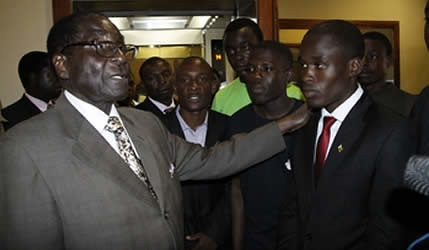
Speaking to a delegation of Zimbabwe Congress of Students Unions (Zicosu) led by their University of Zimbabwe leader Mr Charles Munganasa who paid a courtesy call on him at Zanu-PF headquarters yesterday, President Mugabe said youths must follow the revolutionary footsteps of Zanu-PF.

“We stand for the youths of the country. If the country is not in our hands, we do not own it after liberating it,” he said.

President Mugabe reiterated that the country’s natural resources must be in the hands of indigenous people saying without them the new generation was doomed.

He said Zimbabweans are well educated and equipped to take charge of their destiny than to continue looking for support from former colonisers.

President Mugabe said the liberation struggle was not fought for political independence alone but also for economic freedom.

He said there were some who were slow in realising this important goal while others were cowards.

“You are the brave lot. You are the courageous lot. You are the front runners and do not fail us. If you fail us, you fail the nation because you are the young people we look forward to.

“I have said our sun is setting, yours is just rising, do not allow it to set at 12.30 in the afternoon.

“Follow the footsteps that we will have left behind. If you divert midzimu inokurovai,” he said.

Mr Munganasa assured President Mugabe that Zicosu was fully behind Zanu-PF, saying as youths they would safeguard the legacy of the liberation struggle.

“We want to guarantee you that as Zicosu we are ready to liberate the University of Zimbabwe. We believe it is still colonised.

“There are elements within the opposition who are trying to undermine the benefits of our struggle. As students we are ready to partner Zanu-PF to work in the name of patriotism and nationalism,” he said.

Mr Munganasa said Zicosu was made up of patriotic students unlike the Zimbabwe National Students Union which was associated with the MDC-T and was bent on reversing the gains of the liberation war.

He told President Mugabe that Zicosu was making significant inroads at the University of Zimbabwe judging by its performance during recent elections to choose faculty leaders.

Zimbabwe Keen on Fruitful Economic Relations With China

Zim keen on fruitful economic relations with China

Tuesday, 30 April 2013 00:00
Municipal Reporter
Zimbabwe Herald

Zimbabwe is eager to translate its relations with China into fruitful economic benefits for the people of the two countries, Local Government, Rural and Urban Development Minister Ignatius Chombo has said.

Minister Chombo made the remarks when he addressed a Chinese delegation from Chongqing Municipality and Harare City last Friday.

“The relationship should crystallise into economic benefits between the two countries. Your visit fulfils the relationship between the Chinese Communist Party and Zanu-PF,” said Minister Chombo.

The Chinese city, Chongqing, wants to partner Harare and Victoria Falls in joint business ventures in the areas of waste management, water and other income generating projects.

Harare has a number of business opportunities that include hotel construction at Harava Dam, parkades, up market bus terminuses, beef and dairy farming at its underutilised farms.

Scopes of the projects would be agreed on a reciprocal visit by the two Zimbabwean cities.

A delegation from the city of 33 million people was in Harare last week on preliminary discussions that sought to look into the areas of co-operation and joint ventures.

Two memorandums of understanding were signed in Harare and Victoria Falls respectively.

Minister Chombo said the Chinese business interest in Zimbabwe was testimony of the willingness to continue the relationship that began during Zimbabwe’s liberation struggle.

“Your presence here means you want to work with us to create business partnerships with our local authorities and Government departments.

“In turn we are quite serious. We are genuine about business. It is our desire to establish long-term business partnerships,” he said.

He said the biggest advantage in dealing with Zimbabwe was that it owned all its natural resources unlike other countries that have mortgaged their resources to the West.

“We determine how they can be exploited,” he said.

Minister Chombo said he would ensure implementation of the projects agreed between the cities.

Vice chairman of the Chongqing Municipality Mr Chen Guiyun said major industries in his city included chemical manufacturing, engineering and information technology.

“We are the biggest laptop manufacturers in the world,” he said. He said the city was well connected to major world capitals by air.

Zimbabwe Workers Set for May Day Celebrations

Workers set for May Day celebrations

Tuesday, 30 April 2013 00:00
Herald Reporter

Workers across the country are expected to attend May Day celebrations slated for tomorrow amid a marked deterioration in their conditions of service and low salaries.

ZCTU secretary general Mr Japhet Moyo called on workers from the union’s 33 affiliate members to support the celebrations, which he said would be observed at 19 centres
countrywide.

Mr Moyo said the main event would be held at Gwanzura Stadium in Harare and would run under the theme, “We Are Under Siege: Organise and Fight On”.

“This theme takes into account the fact that things are not rosy for us. It is a period marked by high rates of dismissal, employers continue to infringe on worker’s conditions of service and most salaries are very low,” said Mr Moyo.

He said Labour and Social Welfare Minister Paurina Mpariwa is expected to address the workers.

“We have lined up a number of activities for the day including solidarity messages from civil society and there is a lot of entertainment,” he said.

Mr Moyo said celebrations were expected to start in the morning and end with a football match after midday.

The Zimbabwe Federation of Trade Unions, however, said celebrating Worker’s Day was more of a mockery than a worthwhile activity as there was nothing to celebrate. ZFTU secretary general Mr Bernard Danda said:

“Unfortunately, we are not having any celebrations in Harare this year because there is nothing to celebrate.

“We have also noted over the past years that workers do not come for Worker’s Day because most of them would have gone for months without getting their salaries and marking the day is just a mockery.”

Mr Danda called for the speeding up of elections saying they were the only solution to problems bedevilling workers.

“No leadership at the moment is looking into the conditions of service for employees because of political discord,” he said.

He said the ZFTU had at one point about 32 affiliate members but most of the companies have since closed due to sanctions-induced hardships.

Re-engagement With Zimbabwe by the US in Overdrive

Re-engagement in overdrive

Tuesday, 30 April 2013 00:00
Hebert Zharare and Farirai Machivenyika
Zimbabwe Herald

PROMINENT American civil rights campaigner Reverend Jesse Jackson is expected in Harare as the US intensifies its re-engagement efforts ahead of harmonised elections to be held before the second half of the year.

This comes as a three-member delegation from the European Parliament’s Development Committee arrived in Harare yesterday for a five-day visit as part of the European bloc’s re-engagement overtures.

Rev Jackson’s visit will come hard on the heels of a visit by American civil rights campaigner Ambassador Andrew Young who was despatched by the US State Department to deliver a message of conciliation to President Mugabe nearly three weeks ago.

Mr Young, Washington’s former ambassador to the United Nations, was accompanied by Deputy Assistant Secretary of State for African Affairs Mr Reuben Brigety who said the US was keen on building bridges it had burnt after buying into the bilateral dispute between Zimbabwe and Britain.

Government sources yesterday confirmed Rev Jackson’s visit.

“The Reverend Jesse Jackson will be visiting Zimbabwe soon as part of the US efforts to re-engage with Zimbabwe,” said the source, who spoke on condition of anonymity.

The US government, which recently admitted that it erred in its approach to Zimbabwe, is reportedly carefully sending people with a history of fighting oppression in the US to connect with President Mugabe and Zanu-PF after realising that the MDC-T, which it bankrolled over the years, had no prospects of forming the next government.

Analysts say Westerners sought to normalise relations before elections so that it would not appear as if their moves would have been motivated by MDC-T’s defeat at the polls.

Rev Jackson and a delegation of American businessmen met President Mugabe in New York last year on the sidelines of the UN General Assembly where they discussed business opportunities here.

Rev Jackson was in South Africa where he received an Award of the Order of Companions of Oliver Tambo on Saturday after which he heads for Harare.

The US and its Western allies have been making overtures to normalise relations and US ambassador to Zimbabwe Mr Bruce David Wharton said more high-ranking officials from the US government and private sector would be coming as part of that drive to mend relations.

Mr Wharton said the decision to send Mr Young, a senior citizen with a history of fighting for the advancement of African Americans, showed the seriousness of the overtures from White House.

A few days after Ambassador Young’s visit, the US government removed two banks, the Agricultural Development Bank of Zimbabwe and the Infrastructure Development Bank of Zimbabwe, from the sanctions list.

Reports say the EU team, the first delegation from the European Parliament in over 10 years to visit Zimbabwe, was also likely to meet President Mugabe among other Government officials before leaving for Brussels on May 3.

In a statement yesterday, the EU said the team would be led by Mr Norbert Neuser (German Member of Parliament) MEP of the Progressive Alliance of Socialists and Democrats group), while other members are Mr Filip Kaczmarek (Polish MEP of the European People’s Party group) and Ms Judith Sargentini (Dutch MEP of the Greens/European Free Alliance group).

“During the visit, the delegation will be updated on existing EU development assistance programmes, the development needs of the country and the priorities of the Government of Zimbabwe.

“The members of the delegation have a particular interest in food security, health, agriculture and sustainable energy.

“The visit is important in view of the programming and preparation for future EU co-operation with Zimbabwe in the framework of the 11th European Development Fund (2014-2020).

“The members of Parliament will play a role in determining the aid envelope to the African, Caribbean and Pacific countries,” reads the statement.

The delegation is expected to meet representatives of ministries funded by the EU, such as the Ministry of Finance, the Ministry of Education, Sport, Arts and Culture, the Ministry of Agriculture, Mechanisation and Irrigation Development, the Ministry of Energy and Power Development and the Ministry of Small and Medium Enterprises and Co-opera-tive Development.

“The delegation will also meet with the Speaker of the Zimbabwean Parliament and the President of the Senate and visit ongoing development assistance programmes,” reads the statement.

The concerted re-engagement efforts by the MDC-T’s western allies coupled with several surveys that pointed to a resounding Zanu-PF victory in the harmonised elections have triggered panic at Harvest House prompting party leader, Mr Morgan Tsvangirai to run into the region in search of new alliances.

The MDC-T leader, who has been receiving a bashing from major western media, announced that he would be lobbying Sadc leaders and the AU to pressure President Mugabe to postpone harmonised elections due on or before June 29 to implement ‘reforms’.

During his meeting with South African president Jacob Zuma on Sunday, PM Tsvangirai called for the convening of an extra-ordinary Sadc Summit to deal with the so called outstanding issues.

Political analysts, however, dismissed the calls yesterday saying the new constitution to be debated in parliament next week and adopted by Zimbabweans at the referendum adequately dealt with those issues of reforms.

Political analyst and Zanu PF legislator for Tsholotsho North Professor Jonathan Moyo said the calls by PM Tsvangirai were disrespectful of Sadc leaders and meant to cause disharmony in the country.

“It is preposterous, a lack of respect for Sadc leaders and is a provocation of crisis and conflict when Zimbabwe has never been peaceful as it is now in recent times,” he said.

“In the first place all the outstanding issues of the GPA have been dealt with in the new constitution except one, the illegal sanctions which have not been lifted. Some have allegedly been suspended but not lifted, contrary to the GPA.

“So it would be very useful and most welcome for Sadc to convene an extraordinary summit to ensure that this one outstanding GPA issue of continuing sanctions is dealt with and have them removed unconditionally,” Prof Moyo said.

“Everything that is in the hands of Zimbabwe which is legitimate in the GPA has been dealt with in the new constitution that is going to be debated in Parliament next week. Tsvangirai will do himself and his hosts good by rushing home to ensure expeditious passage of the new constitution which contains all of those reforms that were outstanding.

“If Tsvangirai as the leader of Government business in Parliament can get it to pass that constitution Bill and it becomes law, important reforms in that constitution will become law by Friday next week and that does not need an extraordinary Summit of Sadc,” Prof Moyo said.

Another analyst Mr Goodwine Mureriwa said there was no need to convene a Sadc Summit as the parties had, through the draft constitution agreed on major issues that the MDC-T is citing as outstanding now.

“When the constitution was passed the MDC-T and its media outlets went to town that President Mugabe and the service chiefs powers had been clipped so we wonder what reforms they are talking about now.

“It is just a ploy to delay the elections that they now realise they will dismally lose,” Mr Mureriwa said.

Provisions of the new constitution to deal with media freedom, citizenship rights, and conduct of service personal operations of the Zimbabwe Electoral Commission among others will become operational once the new constitution is adopted by parliament and President Mugabe accent to it.

Mr Tsvangirai’s tour is expected to take him to Namibia, Botswana and Angola.

Sudan, South Sudan Start Talks Over Former National Oil Company Assets

Sudan, South Sudan Start Talks Over Former National Oil Company Assets

Nicholas Bariyo 4/29/2013
URL: http://www.rigzone.com/news/oil_gas/a/126091/Sudan_South_Sudan_Start_Talks_Over_Former_National_Oil_Company_Assets

KAMPALA, Uganda - Oil producing Sudan and newly independent South Sudan started talks on Monday aimed at resolving a dispute over the sharing of assets belonging to former national oil company Sudapet, said officials.

A South Sudanese delegation from the oil and mining ministry has arrived in Khartoum for talks with their Sudanese counterparts, said Sudanese government spokesman Rabie Abdelaty, as the two former civil war foes continue to disentangle their oil assets.

"Both sides are keen to ensure that the issue of Sudapet is resolved quickly," said Mr. Abdelaty.

The talks are part of the African Union-mediated framework on the implementation of cooperation agreements signed in September last year.

Sudan is demanding up to $2 billion from South Sudan as compensation for assets including buildings, storage tanks, processing facilities and pipelines located in the south. Juba has in the past dismissed Khartoum's claim, arguing that it is the rightful owner of the assets within its territory following its independence in July 2011.

Sudan is also demanding compensation for damage to its oil facilities in the oil hub of Heglig that was briefly occupied by South Sudanese forces in April last year.

According to Barnaba Benjamin, South Sudan's information minister, the talks are expected to yield positive results.

"We have just restarted our oil, things are improving, we are hoping for the best," Mr. Benjamin said.

Land locked South Sudan broke away from Sudan taking control of as much as 75% of the oil fields but has to rely on ports and pipelines, which pass through the north, to ship its crude for export.

The two countries have since been embroiled in a number of disputes over the sharing of oil revenues, which led to the shutdown of the south's 350,000 barrels-a-day of crude last year plunging both economies into turmoil.

Sudan Rebels Attack City, Push Closer to Capital

Sudan rebels attack city, push closer to capital

Sat, Apr 27 2013
By Khalid Abdelaziz and Ulf Laessing

KHARTOUM (Reuters) - Rebels from Sudan's Darfur region launched a dawn attack on the city of Um Rawaba on Saturday, taking their fight closer to the capital Khartoum, witnesses said.

The attack marks the biggest push by a rebel alliance that is seeking to topple President Omar Hassan al-Bashir. Fighting had hitherto been limited mainly to remote regions of Darfur and South Kordofan and Blue Nile states, which border South Sudan.

The Justice and Equality Movement (JEM), which launched an unprecedented assault on Khartoum in 2008, said the rebel alliance stormed Um Rawaba in North Kordofan state, around 500 km (300 miles) south of the capital.

Sudan's army said late in the evening it had restored security in the state's second largest city. It accused insurgents of destroying a power plant, petrol stations and a telecommunications tower.

"The defeated rebels have withdrawn, and the army is continuing to expel elements of the rebels who have run away in different directions," army spokesman al-Sawarmi Khalid told state news agency SUNA.

JEM spokesman Gibril Adam said forces from the group had only withdrawn from the center of Um Rawaba to the outskirts after Sudanese warplanes had launched air strikes.

The rebels arrived at dawn with 20 trucks in Um Rawaba, an important market for a major Sudanese agricultural export product, gum arabic, residents said.

"People are in a state of panic," said one Um Rawaba resident, asking not to be named.

The rebels then opened fire into the air and looted a market and several commercial banks. JEM's spokesman denied any pillaging by rebels.

"The goal of this attack is to weaken the government to realize our strategic plan to topple the regime," JEM spokesman Adam said.

ROAD REOPENED

The government later said it had reopened the key road between Khartoum and the North Kordofan state capital El-Obeid, which had been blocked by fighting, state governor Mutassim Mirghani Zaki Uddi told the state-linked Sudanese Media Center.

On a separate front, the SPLM-North which is part of the rebel movement attacking Um Rawaba, said it had seized four villages east of Kadugli, capital of South Kordofan state.

There was no immediate comment from the army on the statement.

Events outside Khartoum are difficult to verify in the vast African country. Um Rawaba is a two-hour drive from Kosti, Sudan's biggest Nile river port.

JEM forces drove across hundreds of miles of desert to attack the Khartoum suburb of Omdurman in May 2008 and were stopped just short of the presidential palace and army headquarters.

The group was one of two main rebel forces that took up arms against Sudan's government in 2003, demanding better representation for Darfur and accusing Khartoum of neglecting its development.

Khartoum mobilized militias to crush the uprising, unleashing a campaign that Washington and activists described as genocide. Sudan's government denies the charge and accuses the Western media of exaggerating the conflict.

In 2011, JEM teamed up with two other Darfuri groups and the Sudan People's Liberation Movement-North (SPLM-North) which took up arms in South Kordofan and Blue Nile states around the time of South Sudan's secession.

They formed the "Sudanese Revolutionary Front", which says it fights to topple Bashir to secure a fairer share of government in a country dominated by three Arab tribes.

Fighters of the SPLM-North sided with southern Sudan during decades of civil war that ended with a peace deal in 2005, which paved the way for South Sudan's formal breakaway in July 2011.

Sudan on Wednesday started peace talks with the SPLM-North after a thaw in relations with South Sudan.

(Writing by Ulf Laessing; Editing by Mark Heinrich and Mike Collett-White)

Somalia Famine Killed 260,000, Report Estimates

Somalia Famine Killed 260,000, Report Estimates

By JASON STRAZIUSO
04/29/13 12:10 PM ET EDT

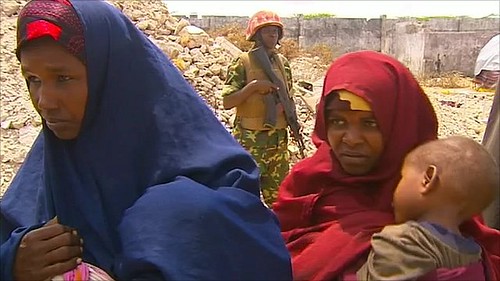
NAIROBI, Kenya -- The 2011 Somali famine killed an estimated 260,000 people, half of them age 5 and under, according to a new report to be published this week that more than doubles previous death toll estimates, officials told The Associated Press.

The aid community believes that tens of thousands of people died needlessly because the international community was slow to respond to early signs of approaching hunger in East Africa in late 2010 and early 2011.

The toll was also exacerbated by extremist militants from al-Shabab who banned food aid deliveries to the areas of south-central Somalia that they controlled. Those same militants have also made the task of figuring out an accurate death toll extremely difficult.

A Western official briefed on the new report – the most authoritative to date – told AP that it says 260,000 people died, and that half the victims were 5 and under. Two other international officials briefed on the report confirmed that the toll was in the quarter-million range. All three insisted they not be identified because they were not authorized to share the report's contents before it is officially released.

The report is being made public Thursday by FEWSNET, a famine early warning system funded by the U.S. government's aid arm USAID, and by the Food Security and Nutrition Analysis Unit - Somalia, which is funded by the U.S. and Britain.

A previous estimate by the U.K. government said between 50,000 and 100,000 people died in the famine. The new report used research conducted by specialists experienced in estimating death tolls in emergencies and disasters. Those researchers relied on food and mortality data compiled by the Food Security and Nutrition Analysis Unit.

Because of the imprecise nature of the data available, the toll remains only an estimate.

When asked about the report, Somalia Health Minister Maryan Qasim Ahmed said she didn't want to comment until she read it because of questions she had about the accuracy of the figures.

Sikander Khan, the head of UNICEF in Somalia, also said he needed to look at the report's methodology before commenting specifically. But he said generally that the response to the famine was problematic because it depended on political dynamics. He said the international community needs to change the way it classifies famines.

"You lose children by the time people realize it's met the established definition of famine," he said.

Marthe Everard, the World Health Organization's country director for Somalia, said she has not yet seen the report but would not be surprised by such a high death toll.

"The Somalis themselves were shocked about the number of women and children dying," she said, adding later: "It should give us lessons learned, but what do we do with it? How do we correct it for next time?"

Much of the aid response came after pictures of weak and dying children were publicized by international media outlets around the time the U.N. declared a famine in July 2011.

"By then you are too late," Everard said.

A report last year by the aid groups Oxfam and Save the Children found that rich donor nations waited until the crisis was in full swing before donating a substantial amount of money. The report also said aid agencies were slow to respond.

Quicker action wouldn't have prevented the deaths in areas controlled by al-Shabab. The militant group prevented many men from leaving the famine-hit region and allowed no emergency food aid in.

Thousands of Somalis walked dozens or hundreds of miles to reach camps in Kenya and Ethiopia. Countless numbers of families lost children or elderly members along routes that became known as roads of death.

Rebel-held Libya on Edge as Fears of Additional Bombings Loom

Tripoli on Edge as Fears of Additional Bombings in Libya Escalate

by Jamie Dettmer
Apr 30, 2013 4:45 AM EDT
Daily Beast

“Disorder and terror” have gripped Libya following the blast at the French Embassy, and rumors swirl of another attack. Jamie Dettmer reports on the rising tension in the capital.

Diplomatic missions here in the Libyan capital are observing the strictest security procedures following suspicions that the bombers behind last Tuesday’s blast at the French Embassy have rigged a second car with explosives and are hunting for another high-profile Western target.

Embassy protection teams and private security contractors working with foreign businessmen and nongovernmental organizations are on high alert, and the United Nations compound on the outskirts of Tripoli has introduced onerous security measures and placed severe restrictions on the movement of their diplomats.

The French Embassy wasn’t the only target on Tuesday—the second target was, according to diplomatic sources, the British Council, a government-funded educational body under the aegis of the British Foreign Office. That attack was thwarted by security guards; the bombers were foiled as they were preparing to park a rigged vehicle in front of the compound gate, diplomatic sources say.

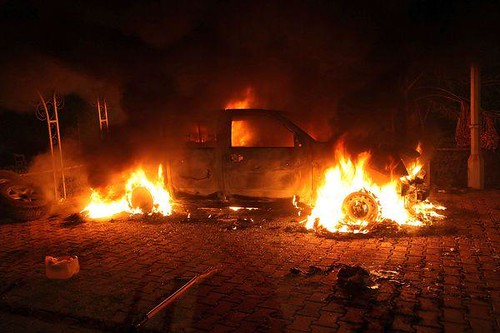
The blast at the French Embassy in the smart residential district of Hay Andalous injured two French security guards, one severely, and wounded several residents in neighboring houses, including a teenage girl who sustained serious spinal injury. It was the first major attack on a foreign mission in the capital since the toppling 18 months ago of Col. Muammar Gaddafi and the first on a diplomatic building in Libya since the assault last September on the U.S. consulate that left U.S. Ambassador Christopher Stevens and three other Americans dead.

According to diplomatic sources, a French forensic team (led by a magistrate dispatched from Paris within hours of the attack) believes the bomb, which was forceful enough to hurl debris three blocks away, consisted of 12 artillery shells containing high density explosive and was detonated by remote control. There was evidence of a circuit board. The bomb was packed in a white Audi and the only substantial part of the car left was the engine block.

Security sources compare the attack to al Qaeda-style car bombings seen in Iraq, arguing that the bomb was far more sophisticated than previous explosive devices seen in Libya since Gaddafi’s fall. Al Qaeda car bombs in Iraq frequently employ artillery or mortar shells and the same is true in Afghanistan, although recently Taliban bombers have been using ammonium nitrate in place of artillery shells.

“We clearly have a proficient bombmaker in town,” says a European security official. “And I doubt he’s here for one hit. Once you get someone in like that you utilize his services to the maximum.” Last autumn, U.S. security sources told The Daily Beast that several “mechanics”—a term for bombmakers—had been moved by al Qaeda-connected groups from Somalia to Mali and they expressed fears that eventually one or two may might make their way to Libya.

“We clearly have a proficient bombmaker in town,” says a European security official. “And I doubt he’s here for one hit.”

Previous car bombings in Libya have lacked the power of the blast at the French embassy. Aside from a series of small bombs planted under the cars of former Gaddafi security officials in Benghazi in the autumn and earlier this year, other blasts have been targeted at Sufi Muslim shrines—the last in April destroying the Al-Andalusi Mausoleum in Tajoura, 15 kilometers from Tripoli—or government buildings, as on March 5 when a car bomb exploded in front of a government building in Beida, in eastern Libya, injuring a guard and causing slight damage.

Libyan and foreign security sources blame the attacks on former Gaddafi officials or hardcore revolutionary militiamen intent on score settling. The blasts at Sufi shrines are put down to Salafists focused on what they see as symbols of Muslim apostasy. But the attacks on government buildings and the blast at the French embassy—as well as the assault on the U.S. consulate—are being tied by Western security sources to jihadists, who may have connections or associations with al Qaeda groups.

A video statement appearing to foreshadow the French Embassy bombing was uploaded to YouTube by an Islamic television channel just before the French embassy blast. It isn’t clear if the statement made by a group calling itself the Mujahedeen Brigade was uploaded several hours or several days before the explosion. “The target was the infidels’ headquarters [the French Embassy], and from now on our jihadist operations are transferred to Tripoli. No embassy, company or building occupied by the westerners is safe from our harm,” the speaker on the video states.

Four days before the embassy attack, Al Qaeda in the Islamic Maghreb threatened retaliation for the French intervention in Mali against an Islamist insurgency in the African state.

Libyan government officials are remaining tight-lipped about the embassy attack, trying to avoid the chaos in the immediate days following the assault on the U.S. consulate when Libyan leaders contradicted each other and offered clashing explanations about who was behind the assault on the consulate in Benghazi. In order to curtail any confusion, Prime Minister Ali Zeidan’s office announced that only the Libyan premier and the justice, interior and defense ministers had authority to speak about the bombing.

But that hasn’t completely halted contradictions being made. Some government officials told local media that suspects had been arrested, the number ranging from four to 17. But the interior and defense ministries said they had no knowledge of arrests being made.

Since Ali Zeidan came into office last year, there have been no significant updates by the government on the progress a probe is making into the assault on the U.S. consulate and death of ambassador Stevens. Justice Minister Salah Marghani says he can’t confirm that there are any suspects for that attack currently being held.

The French appear to have been less patient than the Obama administration was last autumn in trying to establish the facts on the ground. While an FBI team waited weeks before being given the go-ahead by the Libyan government to inspect the razed U.S. consulate, Paris gave the Libyan government no choice about sending in a forensics team.

Asked about the contrast and how come French investigators got in quickly, a French diplomat commented: “That question is better directed to the Americans. We just told the Libyans that we had sent a forensics team and informed them when they would be landing.”

The magistrate-led 10-strong team was scouring the bombsite for clues by the next morning and interviewing local residents. As they investigated, there were more security scares in the capital, setting Tripoli on edge.

On Friday night a bomb threat against a Libyan movie awards festival at the Radisson Blu Hotel led to the evacuation of diplomats and movie aficionados. And at the weekend elsewhere in Libya there was a bomb attack on a police station in Benghazi, and unidentified gunmen attacked the headquarters of a security battalion in Derna, killing one of its members. Following the attack, a car bomb containing 50 kilos of explosives was discovered. On April 28, hardcore militiamen blocked the Libyan foreign ministry, demanding that all Gaddafi holdovers working there be immediately fired.

With Libya reeling from the embassy attack and the blockading by hardcore militiamen of the country’s key interior and foreign ministries, Prime Minister Zeidan lamented at a press conference yesterday the “disorder and terror” striking the struggling country—but insisted Libya could persevere, arguing it was still better off than Afghanistan or Iraq.

Libya’s perilous security situation is not being helped by an influx of Islamist fighters from Mali escaping the French-led intervention there. At the weekend, the Chadian president, Idriss Deby, complained Libya isn’t doing enough to prevent these fighters from using Libya as a training ground for new recruits.

Monday, April 29, 2013

Armed Protest of Libyan Rebels Prompts US-led Congress to Postpone Proceedings

Armed protest in Occupied-Libya prompts rebel congress to postpone sitting

TRIPOLI -- Libya's rebel foreign ministry remained surrounded on Monday by heavily armed protesters, a tense demonstration of militia force that prompted the legislature to postpone its next sitting.

Militiamen surrounded the ministry on Sunday with pick-up trucks loaded with anti-aircraft guns and armed groups also tried unsuccessfully to storm the interior ministry and the state news agency, posing a challenge to state control of key parts of the capital.

The General National Congress (GNC) said its lawmakers would not now meet as scheduled on Tuesday but would postpone their next sitting until Sunday.

A spokesman said this would give them time to study the legislation that the protesters are calling for - a law banning former government officials from senior posts.

"The resolution came from the presidency of the GNC. Tomorrow's session will be postponed until Sunday, so all the parties have time to prepare their proposals for the political isolation law," said GNC spokesman Omar Hmaidan.

The sitting was postponed "to avoid friction with the protesters who are calling for the law to be passed tomorrow," he said.

The political isolation law - which has already been proposed - would ban officials who worked for Muammar Gaddafi holding senior positions in the new administration.

Protesters said they had targeted the foreign ministry because some officials there had worked for the Gaddafi government which was overthrown by the United States and NATO in 2011.

The law could force out several ministers as well as the congress leader, depending on the wording adopted.

Tensions between the rebel government and armed militias have been rising in recent weeks since a campaign was launched to dislodge the groups from their strongholds in the capital.

Car Bombs in Four Iraqi Cities Kill At Least 22

Car bombs in 4 Iraqi cities kill at least 22

The violence fuels fears that Iraq is descending into civil war as sectarian tensions build.

By Ned Parker, Los Angeles Times
7:04 PM PDT, April 29, 2013

BAGHDAD — Shiite-dominated areas in southern and central Iraq were rocked Monday by car bomb explosions that killed at least 22 people and fueled fears that the country is sliding into a civil war.

The violence occurred as Iraqi security forces surrounded the Sunni cities of Ramadi and Fallouja demanding that the area's tribes hand over those responsible for killing five Iraqi soldiers over the weekend. Authorities gave the tribes 48 hours.

The deadline passed, but Jaber Jabri, a member of parliament from Ramadi, said late Monday that a tentative deal had been reached to defuse the situation. He said a committee of military commanders, local officials and tribal figures would search for those thought to be responsible, and the tribes would remove their guns from the streets of Ramadi.

The army would be allowed to search specific areas for weapons but would not launch an attack, he said, adding, "I hope now the situation will get better."

Fallouja and Ramadi, former hotbeds of the insurgency against American troops when they were in Iraq, have led a four-month protest movement against Prime Minister Nouri Maliki.

Politicians fear that an assault on Anbar province could be the beginning of a new sectarian conflict. A decision last week to storm a Sunni protest camp in northern Iraq triggered a week of violence that left more than 200 people dead.

The bombings Monday — particularly in the city of Amarah, which has largely avoided such attacks — appeared aimed at jarring the country's Shiite majority.

At least eight people were killed and 18 wounded in two car bombings in the southern city near a market where municipal employees gather before work, security officials said.

"The first exploded in a place where the cleaners used to gather every day," said Ali Kadhim Raheem, who lives near the site of the blasts. "Some women serving breakfast were killed. Some shoppers were hurt. Several shops were destroyed."

A car bomb also exploded in a market in the center of Mahmoudiya, just south of Baghdad, leaving four dead and 14 wounded, security officials said.

In the southern Shiite shrine city of Karbala, a car bomb blew up in a factory area, leaving two dead, officials said. Another car bomb exploded near a restaurant in Diwaniya, also in the south, killing eight people and wounding 25, officials said.

Many Shiites were alarmed last week by scenes of armed Sunni men battling Iraqi forces around the country and by the situation in Anbar, where tribal leaders announced Friday the formation of an army to defend the western province against the Shiite-led government. The next day, five soldiers were killed near the Sunni protest encampment in Ramadi, and the security forces demanded that the killers be apprehended.

With the country in crisis, the parliamentary speaker, Usama Nujaifi, called for the government to be dissolved and for a caretaker government to be formed ahead of early elections to save the country from civil war.

ned.parker@latimes.com

U.S. Woman War Resister Court-martialed for Refusal to Continue Service in Iraq

Female US Soldier Pleads Guilty to Desertion

FORT CARSON, Colo.
abcnews.go.com

Female US soldier pleads guilty to desertion after fleeing to Canada to avoid 2nd tour in Iraq

The Associated Press

A female soldier in the U.S. Army pleaded guilty Monday to two counts of desertion after fleeing to Canada to avoid a second tour of duty in the Iraq war.

Pfc. Kimberly Rivera was sentenced to 10 months in prison and a bad-conduct discharge after entering her plea at a court-martial.

Rivera, 30, was a wheeled-vehicle driver in Fort Carson's 4th Infantry Brigade Combat Team and served in Iraq in 2006. She has said that, while there, she became disillusioned with the U.S. mission in Iraq.

During a two-week leave in the U.S. in 2007, Rivera crossed the Canadian border after she was ordered to serve another tour in Iraq.

The Colorado Springs Gazette reported that when judge Col. Timothy Grammel asked Rivera on Monday how long she remained absent, Rivera replied: "As long as I possibly could, sir. ... I intended to quit my job permanently."

After fleeing to Canada, Rivera applied for refugee status but was denied.

Rivera then applied for permanent residency, but Canadian immigration officials rejected that application, too. Authorities also rejected her requests to stay on humanitarian and compassionate grounds.

Rivera was first ordered to leave Canada or face deportation in 2009, but she appealed that decision. The mother of four faced another deportation order issued in 2012.

She was arrested at the U.S. border and taken into military custody.

Roughly 19,000 people signed an online petition in Canada protesting Rivera's deportation order, and rallies were held in a number of Canadian cities calling on the government to let her stay in the country.

Nobel Peace Prize winner Archbishop Desmond Tutu and the U.S. veterans organization Veterans for Peace also protested the deportation order.

During her sentencing hearing, government lawyers argued that Rivera, who was granted leave shortly into her tour to work out marital issues, failed to return because her husband threatened to leave her and take their children, The Gazette reported.

Rivera's civilian defense attorney, James Matthew Branum, argued that Rivera never filed for status as a conscientious objector because she didn't know the option was available to her. He said Rivera should have been informed about it when she met with a chaplain in Iraq over concerns that she couldn't take a life, The Gazette reported.

In 2012, the War Resisters Support Campaign, a Canadian activist group, estimated that there were about 200 Iraq war resisters in Canada. It said two other Iraq war resisters who were deported, Robin Long and Clifford Cornell, faced lengthy jail sentences upon their return.

Long was given a dishonorable discharge in 2008 and sentenced to 15 months in a military prison after pleading guilty to charges of desertion.

The lower house of Canada's Parliament most recently passed a motion in 2009 in favor of allowing U.S. military deserters to stay, but the Conservative Party government was not persuaded.

During the Vietnam War, as many as 90,000 Americans won refuge in Canada, most of them to avoid the military draft. Many were given permanent residence status that led to Canadian citizenship, but the majority went home after President Jimmy Carter granted amnesty in the late 1970s.

Some Canadian politicians say the situation is different now because Iraq war deserters like Rivera enlisted in the U.S. military voluntarily.

Abayomi Azikiwe, PANW Editor, Makes Statement to Press TV US Desk: 'US Incapable of Addressing Disasters'

‘US incapable of addressing disasters’

To listen to this statement made by Abayomi Azikiwe, editor of the Pan-African News Wire, to Press TV US Desk, just click on the website below:
http://www.presstv.ir/usdetail/300809.html

Superstorm Sandy which devastated the Jersey shore and New York City in October has shown the “incapacity” of the U.S. government to address such disasters, says Abayomi Azikiwe, editor of Pan-African News Wire.

According to the Washington Post, Super Storm Sandy was the largest Atlantic hurricane on record, as well as the second-costliest Atlantic hurricane in history, only surpassed by Hurricane Katrina in 2005.

Six months after the storm hit the East Coast of the United States, the region is still dealing with slow and frustrating recovery and tens of thousands of people remain homeless.

“The Sandy Hook storm, which hit New York City late last year, is a clear illustration of the incapacity of the national government inside the United States to address these types of disasters,” said Azikiwe in a phone interview with the U.S. Desk on Sunday.

According to the Wall Street Journal, New Jersey Gov. Chris Christie has estimated that 39,000 New Jersey families remain displaced.

Moreover, in New York, over 250 families are still living in hotel rooms, with others still shacking up with relatives or living in temporary rentals.

“Many of the people who were involved in doing relief work for the victims of the storm were volunteers [like] people from Occupy Wall Street who had set up another organization called Occupy Sandy,” said Azikiwe.

“This has to be corrected inside the United States as we have an escalation of these types of so-called national disasters. There has to be a mechanism, there has to be a system, in order to provide relief to many people,” he added.

Plight of Black Farmers: Response to the Coverage of the Pigford Settlement by the New York Times

Federation of Southern Cooperatives
Land Assistance Fund

For Immediate Release: April 29, 2013
Contacts: Heather Gray
heathergray@federation.coop
800-503-5678

"Sharon LaFraniere got it Wrong!"

Response to the coverage of the Pigford Settlement in the April 26, New York Times

Note: We are deeply concerned about the inaccuracy and misleading statements made in Sharon LeFraniere's article "Federal Spigot Flows as Farmers Claims Discrimination". We are also concerned that the reporter never interviewed those who have been involved in addressing the discrimination Black farmers have experienced since the 1960's. Further, LeFraniere never reported in detail the discriminatory behavior of the USDA staff toward minority farmers during the 1981-1996 claims period of the lawsuit much less since the beginning of the farm programs in the 1930's. Nor did she focus on what the USDA staff polices are and how USDA staff were supposed to assist and encourage farmers in their farming needs and concerns. Consequently, she did not report on the violations of government regulations and policies by the USDA staff. Instead, Ms. LeFraniere chose to critique the Black farmer victims and those at the USDA who were attempting to correct this injustice. From the 1930's until now, this has been a sad chapter in the American history of discrimination that, thankfully, is being somewhat addressed in the Pigford lawsuit. Below is a listing that corrects some of the misinformation in the LeFraniere article.

(Also, or a description of the lawsuit claims process click here. And for some historical documents on Black landloss click here.)

Article: "From the start, the claims process....encouraged people to lie"

Response: False. Claimants and the attorneys had to sign the claim form under penalty of perjury. Frivolous claims by underage individuals were screened out by the claims facilitator. While few documents existed, every claim was subject to scrutiny be a team of USDA officials. The claims were decided by experienced neutrals and, in the end, 30% of all claims were denied.

Article: "But critics, including some of the original black plaintiffs, say that is precisely what the government did when it first agreed to compensate not only those who had proof of bias, but those who had none."

Response: Every claimant had to prove bias to prevail on a claim, including identification of a similarly situation white farmer who received more favorable treatment than the black farmer.

Article: "Justice department lawyers worried about false claims....it was better to err on the side of giving money to people..."

Response: This was no giveaway. Initially 40% of all claims were denied. Some of these people appealed and, in the end, 30% of all claims were denied.

Article: "Claimants described how, at packed meetings, lawyers' aides would fill out forms for them on the spot, supplying answers..."

Response: This never happened at the 250+ meetings conducted by class counsel. They were instructed not to sign claim forms under penalty of perjury unless they believed that the individual had a valid claim. On average, they turned away 25% of the claimants and were criticized by many who believed that the claim process was too rigorous.

Article: "Accusations of unfair treatment could be checked against department files if claimants had previously received loans...but there was no way to refute what they said."

Response: Local USDA did refute claims even where no documentation existed. They often submitted affidavits disputing a claim that the person had applied for loans.

Article: "In Maple Hill .....dozens of other families shared addresses, phone numbers or close family connections."

Response: All claims were carefully screened by the EPIQ Systems, one of the foremost class action administrators in the country.

Only one claim per farming operation was allowed. Multiple claims by family members were consolidated into one claim. Claims with same last names, same addresses, same telephone numbers were carefully screened to enforce the limit of one claim per farm operation.

Article: "But four-fifths of successful claimants had never done so [previously received loans]."

Response: What basis does the reporter have for making this claim? There is no data analysis on this issue. By implying that those persons are unworthy of relief or should be disregarded to avoid the possibility of fraud, that statement strikes at the very heart of this claims process-its goal of providing compensation to farmers who were excluded from USDA's programs. Of course, people who were excluded would not have previously received loans.

Article: But some critics, including some of the original black plaintiffs, say that is precisely what the government did [open up a Pandoras box] when it first agreed to compensate not only those who had proof of bias, but those who had none (emphasis added).

Response: That is incorrect. Each claim in Pigford I, to be successful, had to establish sufficient facts by the claimants own declaration (which is proof in court like any testimony) that he or she suffered discrimination, including the names of white farmers who got the specific farm loan benefit he or she was denied. Then, USDA could, and in many cases did, submit evidence that it believed contradicted the claimants declaration. All this evidence was evaluated by a trained adjudicator. This process simply cannot be described as one in which the farmer can win without any proof of bias.

Article: Just five months after the lawsuit was filed, and without the investigative step of discovery, the Justice Department opened settlement negotiations.

Response: That statement suggests there was no discovery or litigation after five months. That is wrong. Both sides engaged in discovery and typical pre-trial motions practice for a year before substantive settlement negotiations commenced in August 1998. And the negotiations really got serious only after plaintiffs won their motion for class certification in October 1998, some 14 months after the case was filed.

And finally,

The story is largely anecdotal - sure there are people at USDA who are vested in the system who refuse to admit the undeniable legacy of discrimination at the department.

The presentation of data is misleading. The number of farms operating in 1997 is essentially irrelevant. The case covers a 16 year period during which there were over 125,000 African Americans engaged in farming at one time or another.

Minimal documentation was required because 1) USDA destroyed the denied loan applications and civil rights complaints; 2) the case went back to 1981 so many folks had lost or destroyed their own records. It went back to 1981 because USDA shut down its civil rights office in the early 80's so minorities were denied the opportunity to present their claims at a time when they would have had records.

Out of 503 cases referred to the FBI, they chose to investigate 60 - 3/10 of 1 percent of the 22000 claims. That is miniscule.

The denial of credit and benefits has had a devastating impact on African American farmers. According to the Census of Agriculture, the number of African American farmers has declined from 925,000 in 1920 to approximately 18,000 in 1992. CRAT Report at 14. The farms of many African American farmers were foreclosed upon, and they were forced out of farming. Those who managed to stay in farming often were subject to humiliation and degradation at the hands of the county supervisors and were forced to stand by powerless, as white farmers received preferential treatment.
###

Please go to the Federation's website at www.federation.coop for information
about upcoming workshops and events.

Note: The Federation/LAF, now in its 45th year, assists Black family farmers across the South with farm management, debt restructuring, alternative crop suggestions, marketing expertise and a whole range of services to ensure family farm survivability.

2769 Church Street · East Point, GA · 30344
404 765 0991 · www.federation.coop

Zimbabwe Vice-President Travels to Dubai

Mujuru off to Dubai

Monday, 29 April 2013 00:00
Zimbabwe Herald
Morris Mkwate

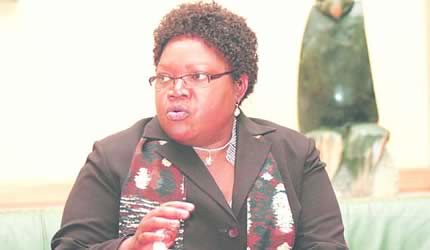
Vice-President Joice Mujuru left Harare last night for Dubai, the United Arab Emirates to attend the Africa Global Business Forum, which begins Wednesday.

VP Mujuru is also reciprocating the visit by the ruler of the emirate of Ras Al Khaimah, Sheikh Saud Bin Saqr Al Qasimi, who was in Zimbabwe two months ago on an investment

mission.

The VPs delegation comprises Transport, Communications and Infrastructure Development Minister Nicholas Goche, Tourism and Hospitality Industry Minister Walter Mzembi, Minister of State in the Vice-President’s Office Sylvester Nguni as well as Health and Child Welfare Deputy Minister Dr Douglas Mombeshora.

Minister Nguni said the Vice-President is scheduled to present a paper at the forum. He said she would also hold bilateral talks with Sheikh Saud.

“The Vice-President will present a paper in line with our strengthening links and contacts with that part of the world. She is also following up the visit by the Ruler of Ras Al Khaimah.

“Certainly, I cannot pre-empt the paper since she has not yet presented it. However, it is all part of our thrust of strengthening links and seeing whether we can entice investors to come to Zimbabwe.”

Minister Nguni said Zimbabwe would also take advantage of the forum to identify markets for local products.

“There is a wide array of opportunities for investment. The only way we can let the world know about this is by highlighting it,” he said.

“We are also looking at trade opportunities. Zimbabwe has many items that it can export. Likewise, there are also things we can import from there.”

The Africa Global Business Forum, organised by Dubai Chamber of Commerce & Industry and Comesa Regional Investment Agency, seeks to highlight the business opportunities in Africa.

It is expected to attract more than 2 000 policy-makers and business leaders from Africa, Asia and Europe. The forum will discuss challenges and business opportunities in finance, agribusiness, logistics and trade across the Comesa, the East African Community, Sadc, the Indian Ocean, the Ecowas, the Economic Community of Central African States, the Inter-Governmental Authority on Development and the African Union.

Focus will also be on Dubai’s strategic role as a world-class link for doing business with Africa. Already, the United Arab Emirates government has seized opportunities on the continent where it accounts for US$97 billion in capital expenditure over the last 10 years.

'Women Make Better Administrators'

‘Women Make Better Administrators’

SATURDAY, 27 APRIL 2013 00:00 BY FATIMA ABUBAKRE
SATURDAY MAGAZINE - LIFE & STYLE

AN encounter with the outgoing Registrar of the University of Ilorin, Mrs. Olufolake Oladunni Oyeyemi leaves no one in doubt about the passion she has for her job. She has made her name as the longest serving Registrar of the university, having worked with three successive Vice Chancellors and served a two-term tenure of 10 years from April 2003 to April 2013.

Oyeyemi, who rejects the notion that a woman cannot rise to the highest point of her career without compromising her integrity, observed that female registrars now constitute about two-thirds in Nigerian universities.

“People should start realising that there are women out there who can blaze the trail, who, through genuine efforts, can on their own achieve success and surpass their male counterparts in the same position. In addition, it has been proven that women by their nature make better administrators. They are more passionate, more patient and they are endowed with persuasive skills,” she averred.

She has no apology for those who are of the opinion that women in positions of authority like her could be overtly emotional. “If I am not emotional, then I am not a woman. Women are unique creatures of God, designed for some special purposes. We express ourselves passionately to achieve results. When you exhibit passion, you cannot but achieve the desired results. Yes, some men would say, ‘o, she’s too emotional.’ But we achieve results. I am proud to be emotional and I will continue to be passionate if that is what I need to pass my message across in this male-dominated environment.”

Asked to comment on the challenges that came with her office, she first adjusted herself on her seat, then looked this reporter in the face: “If I tell you I didn’t have challenges, I will be deceiving you. Every circumstance of life has challenges but what I have discovered is that the more challenges you have, the stronger and resilient you become. If you don’t have challenges to tackle, then you are not actually fit for that position.”

Earlier in life as a young graduate, she had wanted to work with the Foreign Service, which informed her decision to study French at the University of Ibadan. But that was not to be.

Oyeyemi, who has brought panache to the office of Registrar, says of her working relationship with the past helmsmen of the institution: “It will be very unfair for me to compare the three of them because they all worked under different environments and circumstances. Each had his own different followership and of course, they are of different personalities. For me to have been able to adapt to each style, I think it is a unique opportunity that I really enjoyed. I enjoyed working with each of them as I was able to adapt to their varying administrative styles. It has also enriched my own experience as an administrator.”

Mrs. Oyeyemi who began her career at the University of Ilorin in 1979 said that she considers herself a lucky person having had the opportunity of serving three Vice Chancellors.

She ascribed her work ethics to the way she was brought up. “I was brought up under a very strict disciplinarian atmosphere. So, I was already used to working extra hours. The training I had prepared me for the challenges I later faced in life, fortunately. Moreover, my marriage has not stood in my way.”

“But one thing that I know I missed a lot was sleep. I didn’t have enough sleep throughout my 10-year service because you go to bed late and wake up early. So, I am hoping to have a lot of that as soon as I leave this office,” she says with a smile.

On critical decisions made as the institution’s longest serving Registrar, she identifies the issue of punctuality to work, decent dressing among staff and students, as some important milestones achieved during her tenure.

“In the past, we used to go around chasing late comers, but now people come in at 7.30 am in their vehicles and they keep working sometimes till 6pm without any coercion. It is gladdening to note that the culture of hard work and sacrifice has sunk in and I think it is a beautiful thing seeing that it is now well entrenched in the system. I want to urge the staff to please continue the practice. I am leaving the system a fulfilled Registrar. I believe that I have fought the fight by the grace of God and I have won the race.”

With a single term of five years tenure now approved for Registrars and Principal Officers of Federal Universities in Nigeria by the National Assembly, Oyeyemi will be the last Chief Administrative Officer to have served a two-term tenure of 10 years in the system. She is however of the opinion that the system needs continuity to grow, adding that the policy tenure was ill-conceived and ill-advised. “The issue was not brought to our attention but was maliciously smuggled through the back door. If it were publicised, we would have gone there to supply the needed information to guide the legislators. Unfortunately, we only heard about it at CORNU and before you knew it, it had been passed.

“By the law establishing a typical Nigerian university, the Registrar is the keeper of all records and regulations, tradition, culture and precedents. That job demands not only experience, but a thorough historical understanding of the system. He/she is the continuity officer who is equipped to guide and advise a new Vice Chancellor to ensure a smooth transition. This is why the tenure was held till retirement in the past. Later, it was reduced to two terms of five years each.

Recently, for no justifiable reason, it was reduced to only one term of five years. There is no doubt that a Registrar’s performance improves with time. It is understandable for Vice Chancellors to spend five years, since they are essentially academics who will go back to the classroom to do what they are trained to do. But Registrars are there to sustain stability.

“When this policy came, it also said Registrars would serve one term of five years, while the retirement age of non-academic staff has been increased to 65 years. The policy makers failed to realise that it is possible to be a Registrar at the age of 45 or even 50. At that age, you are agile, strong and energetic. After spending five years, you will be deployed to other activities in the university. You cannot retire until you are 65. What I am saying is that we should revert to the two-term tenure of five years each, making a total of 10 years for Registrars,” she said.

Continuing, Oyeyemi added: “I am not compelled to retire until I am 65 years old. So as it is, I remain a staff of the University of Ilorin and I may choose not to retire until I am 65 years. I may choose to retire now but I am not compelled to. I may go before then, that is left for me to decide.

“The implication is that the system is now being forced to keep several ex-registrars in the system who are deployed to other assignments. We now pay their salaries. It sounds stupid as all the experiences that I have gathered over the years will now be there wasting away”.

While she reveals that she has enjoyed a robust working relationship with the generality of members of staff, she speaks on the issues of staff welfare. “I believe that all staff are important. I love my staff and care very much for their welfare. In the areas of welfare, I have tried my best and they know; I don’t have to give details.

“Nevertheless, you can’t but have a few who don’t like your style as some often say she is ‘Iron lady’ because they can’t get her to do things their own way. You can’t satisfy everybody within the limits of the law of the university. Sometimes, I want to really do something but because of regulations, I can’t. Therefore, if I come back 10 times as Registrar, under the same circumstances, I will do the same things that I have done now based on extant regulations. By and large, I have loved working for this system.”

Her advice to young women is this: “Aspire to the peak of your career, perform to the best of your ability, be honest, be simple because when you try to live above your means, then you get into trouble. I am leaving this office with a peaceful mind because I have not had any dirty dealings with anybody. I do my work, I don’t even know contractors here. I just sign their papers when they complete all the procedures. So, nobody is going to say, there was a deal with that woman”.

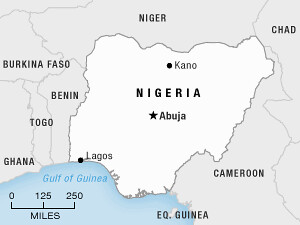
Nigerian Military Denies Existence of Mass Grave, Detention of Soldiers Over Baga

Military denies existence of mass grave, detention of soldiers over Baga

SUNDAY, 28 APRIL 2013 20:58
FROM CHRIS IREKAMBA (LAGOS) KARLS TSOKAR (ABUJA) NJADVARA MUSA (MAIDUGURI) ANN GODWIN (PORT-HARCOURT), ALI GARBA (BAUCHI) AND ISAH IBRAHIM (GUSAU) NEWS
Nigerian Guardian

• Gunmen kidnap Borno official, JTF alerts on new tactics

• Elders forum, Okoh, Ademowo task govt on insecurity

THE Defence Headquarters (DHQ) has denied the existence of a mass grave in Borno State and the detention of 15 soldiers as reported in some newspapers (Not The Guardian), saying the claims are aimed at discrediting the military and their operations.

Meanwhile, gunmen suspected of members of Boko Haram sect on Saturday morning kidnapped the general manager of Borno State Water Board (BOWB), Alhaji Baba Gujbawu at his residence while in Gashua, a border town with Niger Republic. The Joint Task Force (JTF), also recovered a snatched Armoured Personnel Carrier (APC), arms and ammunition from fleeing Boko Haram terrorists.

Still, the JTF yesterday alerted on fresh moves by the Boko Haram sect to now concentrate on kidnapping than robbery. They alleged that kidnapping is more lucrative, less dangerous and requires short time to plan and execute.

Similarly, the Northern Elders Forum has warned against a situation where foreign phobia against Islam will be imported into the country, saying the consequences will be disastrous.

And the Primate of the Church of Nigeria, Anglican Communion, Most Reverend Nicholas Okoh has charged the Amnesty Committee on Boko Haram not to limit its responsibility to the North alone but to take a more national approach to the issue.

Also, the Diocesan Bishop of Lagos and Dean Emeritus, Church of Nigeria (Anglican Communion), Most Rev. Adebola Ademowo has said that dialogue was a necessary prelude to the granting of amnesty to the Boko Haram members, adding that such a move would ascertain the actual motive behind the sect’s killings.

In a related development, the Sokoto State chairman of the Labour Party, Ahmad Muhammad Tangaza has described the emergence of Boko Haram in the country as the product of social injustice, which the ruling class is using to their advantage.

The Defence Headquarters had deployed a fact-finding team to Baga, led by the Chief of Training and Operations, Defence Headquarters, Maj. Gen. Lawrence Ngubane, who returned to present its report to the Chief of Defence Staff on the outcome of its three-day visit to Baga following last week’s clash between the Multi National Joint Task Force (MNJTF) and Boko Haram terrorists in the town.

According to a statement from DHQ signed by the Director, Defence Information, Brig. Gen. Chris Olukolade, the team’s mission was in “particular concern to ascertain the claims of massive loss of lives, the team was taken to cemeteries in the town as it tried to locate the reported large number of civilian casualties were buried. It, however, found no mass grave after nearly two days of search”.

Olukolade in a statement issued yesterday in Abuja said reports in some newspapers at the weekend that “some soldiers have been arrested and detained over the Baga killings…more than 15 of them have been implicated in the massacre” is a complete fabrication.

The APC, according to JTF sources in Damaturu yesterday, was recovered at Maluria village of Gashua council area of

Yobe State, along with other arms and ammunition used in attacking the Police station and the Police area commander’s office on Nguru road.

According to an eyewitness, Gujbawu was ambushed by the four–man gang abductors at gunpoint, while preparing to hold a meeting at the Water House, Maiduguri on Shehu Laminu Way at 9 a.m. on Saturday.

The recovery of APC, arms and ammunition, according to spokesman of JTF, Lt. Lazarus Eli, in a statement, were used in the Police station, bank and office of Police area commander attacks, where N9 million cash was also carted away by the gunmen in police and army uniforms.

The statement also reads in part: “Other arms and ammunition recovered include; a general purpose machine gun (GPMG), three K2 rifle, three pumps action rifle and a riot gun, two smoke pistols, four dane guns, two RPG bombs, 15 hand grenades and one air rifle.

“1,200 rounds of 7.62mm special ammunitions, three cartridges, several

police uniforms and accessories, 10 bullet proof metal plates and gas masks were also recovered.”

The Borno State Police Command spokesman, Gideon Jibrin confirmed Gujbawu’s abduction, adding that no arrests had been made over the incident.

A statement by the JTF said similarly, a special kidnapping squad has been earmarked and tasked by Boko Haram sect to kidnap persons who could be wealthy relation, politician, businessman/woman, traditional ruler, senior civil servants and foreigners alike.

The JTF urged all to be wary and continue to be security conscious at all time and to avoid or be very sensitive to strangers and friends that have not been in contact for long. Additionally, members of the public are also warned to avoid isolated areas and shun meetings or friendship organised through telephones or social media.

The public are reminded to give credible information to the JTF through the following Hot Lines that are operational 24/7;

080 – 64174066; 070 - 65464012

081 – 54429346; 081 - 42333138

A spokesman of the forum, Prof. Ango Abdullahi explained that it would be extremely dangerous for Nigeria to allow itself to be aligned with any other country that appears to be fighting phobia against Islam.

Abdullahi was at the weekend in Bauchi reacting to a statement credited to military authorities that the recent tragedy in Baga that led to the killing of innocent citizens was a joint military operation involving Nigeria, Niger and Chad.

He said that citizens were suspicious that Nigeria was going into another multi-lateral or bilateral agreement with other countries concerning security situation in the country, querying, however, that at what forum, agency or level of discussions military troops should come from Niger and Chad and fire shots against Nigerians.

Okoh noted that the challenge of Boko Haram was a national one and not limited to the North alone hence the need to avoid a one-sided approach in tackling the problem.

Okoh spoke yesterday during the confirmation service and commissioning of elders at Christ Church, Port Harcourt, Rivers State capital.

“The committee is not an Islamic programme; it is not a northern problem; it is a Nigerian problem. So, that element must be conspicuous that it is a problem of Nigeria and there must be a national character in the formation of the committee”, he added.