Friday, February 03, 2012

China Opposes Sanctions on Iran

China opposes sanctions on Iran

Updated: 2012-02-02 22:28
(Xinhua)

BEIJING - China believes dialogue and cooperation is the only correct and effective solution to resolve the Iran nuclear issue, and that sanctions will not fundamentally address the problem, Chinese Premier Wen Jiabao reaffirmed Thursday afternoon.

Wen made the remarks when holding a joint press conference with German Chancellor Angela Merkel in Beijing.

"China firmly safeguards the international non-proliferation regime and opposes Iran and any of the Mideast countries developing nuclear weapons," said Wen.

The Iran nuclear issue is complicated and sensitive, and involves the peace, security and stability of the region and the world, said Wen, noting the use of force will cause turbulence and turmoil in the Middle East and the world, and that would be detrimental to all parties.

China has been relentlessly promoting dialogue and negotiation between Iran and the five permanent members of the UN Security Council -- Britain, China, France, Russia and the United States -- and Germany, and urged Iran to enhance cooperation with the International Atomic Energy Agency (IAEA), he said.

As Iran has recently expressed willingness to resume dialogues with the group of six international mediators, the top priority for all parties is to seize the opportunity and seek a comprehensive, long-term and appropriate solution for the issue through dialogue and negotiation, he added.

Wen said the overall objective for China and Germany on the Iran nuclear issue was consistent, noting that the two countries should enhance communication and coordination, so as to jointly play a constructive role in resolving the problem.

China has maintained normal economic and trade cooperation with Iran in view of its need for economic development, said Wen, adding China opposes the politicizing of the normal trade relationship.

He said China has maintained normal trade ties with Iran, including crude oil trade, and will not do things that go against international laws and relevant UN Security Council resolutions.

He stressed that China will not trade its principles for profits, and normal trade relations between countries should be protected.

Sudan Oil Stalemate Persists

Institute for Security Studies
(Tshwane/Pretoria)

East Africa: Sudanese Oil Stalemate Persists

2 February 2012
analysis

Negotiations between Juba and Khartoum on the oil issue, under the auspices of the African Union's High-Level Implementation Panel (AUHIP), continued on the sidelines of the recently ended African Union meeting in Addis Ababa, Ethiopia.

This followed the collapse of negotiations between the two countries after South Sudan accused Sudan of stealing its oil whereas Sudan demanded more than $30 per barrel for the use of the oil infrastructure on its territory. However, the latest round of negotiations has not succeeded in breaking the deadlock between the two countries.

In the recent attempt to break the deadlock, the AUHIP laid two main options on the table. The first required the parties to agree a 30-day transition period during which the use of the infrastructure would continue whilst negotiations persist till a deal is arrived at by the two parties.

The second option was for South Sudan to pay an agreed amount to Sudan for the use of the oil infrastructure as well as loss of revenue resulting from the 2011 split. The latter appeared to have prevailed and Juba was required as per indicative guidelines to pay an estimated amount of about $4 billion to Sudan over a period of five years and 35 000 barrels of oil per day.

The figures are, however, indicative and actual amounts to be paid by South Sudan would have to be agreed upon conclusion of negotiations in 30 days. In addition to these, Juba will be required to stop the ongoing shut down of oil production.

Juba has, however, rejected the deal leading to another stalemate.

Justifying the decision of the government of South Sudan, President Salva Kiir cited issues of lack of clarity in several provisions and the fact that the solution does not comprehensively address the issues underlying the stalemate.

It is evident that if both sides keep shifting the post and reintroducing other issues, an agreement is unlikely to be reached anytime soon. With Sudan's economic indicators steadily declining, there will be a great deal of pressure on them to cede grounds in the negotiations.

However, South Sudan has diminished Khartoum's use of its monopoly of oil infrastructure in dictating the price for the use of the infrastructure and might be keen on going ahead with alternative routes through Kenya, as a long-term strategy.

The difficult nature of the oil negotiations indicates the difficulties that other contentious post-referendum issues may pose to the AUHIP-facilitated negotiation process. It might be better for the panel to start considering discussing many of these issues more comprehensively than the single-focused approach that the oil stalemate is pointing to.

The inherent interests in certain issues may facilitate getting stakeholders to cede some grounds on others thus giving a breakthrough on the post-referendum issues including oil.

Thursday, February 02, 2012

In Clashes With Police, Egyptians Unleash Fury Over Soccer Deaths

February 2, 2012

In Clashes With Police, Egyptians Unleash Fury Over Soccer Riot Deaths

By DAVID D. KIRKPATRICK
New York Times

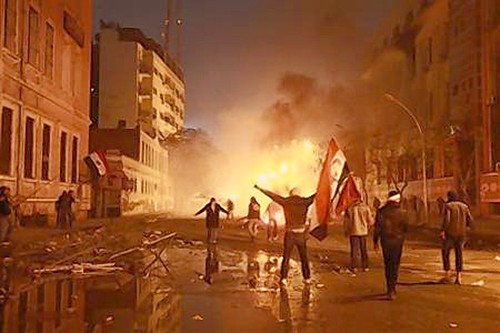
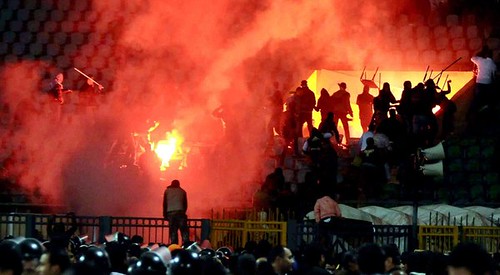
CAIRO — The police in several Egyptian cities on Thursday night battled with thousands of die-hard soccer fans angry at the military-led government’s failure to prevent dozens of deaths at a soccer riot in Port Said the previous night.

In Suez, two protesters were wounded by birdshot and two others by live ammunition, the Health Ministry said, while in Cairo more than 600 were injured by tear gas and stampeding crowds.

The fans, known as ultras, began their demonstration in the capital by directing their fury in part at the Port Said club’s supporters, who attacked a visiting Cairo club, Al Ahly, on Wednesday night. But by the time their march reached the barbed-wire barriers protecting the Interior Ministry, the soccer rivalries were forgotten in a battle against their shared enemy, the police.

Rumors that the police had deliberately abetted the violence at the match on Wednesday circulated through the crowd but were impossible to confirm. Protesters charged that the police had neglected to search fans for weapons, or had opened gates for the Port Said fans while closing them on the Cairo contingent or had turned out the lights to give the home fans cover.

About 70 people were killed in the riot on Wednesday.

Many protesters said they believed that the Interior Ministry meant to retaliate against the Cairo soccer fans because of their leading role in several violent battles with the police at protests over the past three months. At nationally televised games, the ultras have also picked up the habit of chanting for the ouster of the military rulers who took over from President Hosni Mubarak, piercing the walls set up by the generals, who jealously guard their public image.

“The military is taking revenge on us,” said Tarek Adel, 24.

Egypt’s newly elected Parliament, called into an emergency session to address the crisis related to the riot, sent a fact-finding committee to Port Said to investigate the Interior Ministry’s role in the violence, with orders to report back by next week.

Essam el-Erian, a senior member of the Muslim Brotherhood bloc that leads Parliament, presented the signatures of 120 lawmakers who demanded that charges be filed against the interior minister, and Parliament assigned a panel to question him.

Field Marshal Mohamed Hussein Tantawi, the leader of the ruling military council and the de facto chief executive, called for three days of national mourning.

He also accepted the resignation of the governor of Port Said. The government suspended the district’s director of security and the chief of its detective unit, and by the end of the night the state media reported that both men had been detained by the police.

The Interior Ministry said it had interrogated more than 50 people suspected of instigating the clashes, including a dozen minors.

The bodies of 52 people killed in Port Said were taken to a Cairo morgue before they were released for burial here, suggesting that most of the victims were on the side of the Cairo team.

News reports indicated that many of those killed in the fighting were teenagers or younger, and at least one victim in the Cairo morgue appeared to be younger than 10.

Groups of ultras organized around rival clubs began appearing in Egypt within the past decade. Although rival fans often clashed, all shared a common culture of obscene chants, special firecrackers and instruments, and a violent hatred of the police who usually try to control them. Some paint vulgar insults to the police on walls around Cairo.

In the year since the uprising against Mr. Mubarak, the ultras have increasingly found that political demonstrations are good for practicing their second favorite sport, fighting with police officers. They played an especially pivotal role in the defense of Tahrir Square against Mubarak supporters in the so-called Battle of the Camels a year ago Thursday. They also led an attack on the Israeli Embassy that grew out of a demonstration in September.

Increasingly politicized, they have recently expanded their repertory to include chants demanding the end of military rule, calling for the death of Field Marshal Tantawi or making lewd insults about the mothers of the ruling generals.

In the aftermath of the deaths in Port Said, the rival groups of ultras around Cairo’s two most popular teams, Al Ahly and Zamalek, marched together in a rare moment of solidarity, with each of their banners on the same pole as an Egyptian flag.

At first some of their chants denounced the Port Said fans. But as the march progressed they sang mostly about the ruling generals. “Ultras Al Ahly will execute Tantawi,” they chanted, and “They killed the free ultras because they took the side of the revolutionaries.”

And as they crossed Tahrir Square toward the Interior Ministry, their chants grew more aggressive: “We either avenge them or die like them.”

By nightfall, thousands of ultras filled the downtown district around the ministry, drumming, chanting and eventually setting garbage and tires on fire. Some of those present said they were not soccer fans but activists who had come out in political solidarity against the ruling military council, which they also blamed for allowing the violence.

The soccer fans hurled obscenities at the row of riot police officers stationed behind a barbed-wire barrier in front of the Interior Ministry, and around dusk began dismantling the barrier. A row of demonstrators formed in front of the ultras to try to separate them from the riot police.

While some tried to calm the crowd, others egged each other on. “If you are scared, you can go home” was a common refrain. “They kill us or we kill them,” one person shouted.

Around 6:30 p.m., the ultras began dragging a large metal gate toward the front line. The police suddenly ran back in retreat.

The tear gas began just as the retreating officers reached the ministry, and at midnight the crowds were still surging forward and retreating back through narrow side streets. People with motorcycles carted away the injured, some of whom appeared too young to shave.

“They’re very stupid,” one demonstrator said of Egypt’s military rulers. “They turned the biggest fan base in the country against them.”

Mayy El Sheikh contributed reporting.

10 Nabbed in US Police Raid on Occupy Buffalo

10 nabbed in US police raid on Occupy Buffalo protest

Fri Feb 3, 2012 1:27AM GMT
presstv.ir

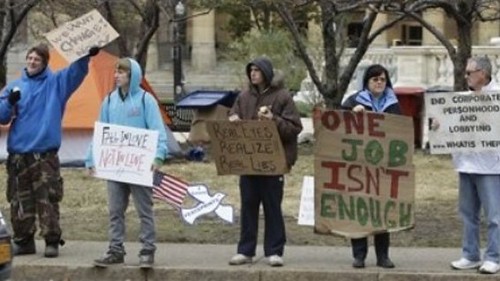
United States police have arrested ten Occupy protesters in an early morning raid on their encampment in downtown Buffalo, the second most populous city of the state of New York.

Buffalo media reported that police officers, including SWAT (special weapons and tactics) team members, moved in around 2:00 a.m. on Thursday and arrested 10 demonstrators in Niagara Square near city hall.

The Occupy Buffalo protesters have been camping in the downtown area of the city for four months.

In late December, Buffalo police attacked another protest site near Lafayette Square. Occupy encampments have also been shut down by police in other New York state cities of Albany and Syracuse.

There have been more than 5,800 arrests during Occupy protests in tens of cities across the US up to December 31, 2011, according to the website occupy-arrests.com.

The Occupy movement emerged after a group of demonstrators gathered in New York's financial district on September 17, 2011 to protest against the unjust distribution of wealth in the country, unemployment and the excessive influence of big corporations on American policies.

Despite the police crackdown and mass arrests, the Occupy movement, which grew out of the Occupy Wall Street movement, spread to many major US cities.

US-backed Somalian Regime Seize Strategic Town in South of Country

Somali govt forces seize strategic town in southern Somalia

Thu Feb 2, 2012 12:54PM GMT

Thu Feb 2, 2012 12:54PM GMT
presstv.ir

Several pro-government forces, including Kenyan soldiers and Ahlu-Sunna fighters are now based in Howsingow town."
Mohamed Khalif, a Somali Transitional Federal Government (TFG) military official

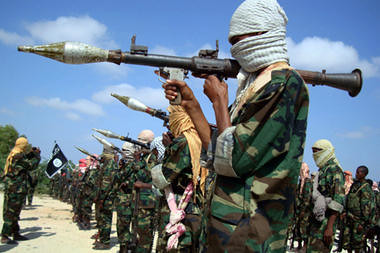
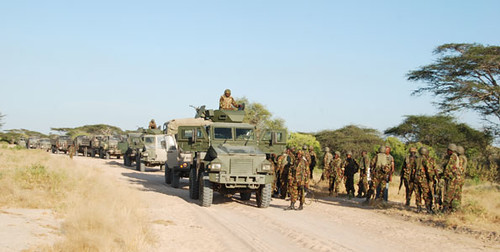
The Somali government forces backed by Kenyan troops have reportedly captured a strategic town in southern Somalia after al-Shabab fighters vacate the town without any resistance, Press TV reports.

“Several pro-government forces, including Kenyan soldiers and Ahlu-Sunna fighters are now based in Howsingow town,” said Mohamed Khalif, a Somali Transitional Federal Government (TFG) military official on Wednesday.

“We are planning to capture Badhadhe town, which is a strong-hold of al-Shabab in a few hours to come,” he added.

Al-shabab officials, however, have dismissed the report, saying the Howsingow is still under their control.

Meanwhile, clashes between Somali troops and al-Shabab fighters in Somalia's southern town of Dhobley, close to the Kenyan border, have left 10 al-Shabab troops dead and several injured, said the spokesman for government troops in Dhobley, Mohamed Farah.

Somalia has not had a functioning government since 1991, when warlords overthrew former dictator Mohamed Siad Barre.

Israel Threatens Military Attacks Against Iran

Barak: If sanctions fail, Iran must face military strike

By YAAKOV KATZ
03/02/2012

Ya’alon says Tehran is developing missiles capable of reaching the United States; IDF intel chief Kochavi says Iran has enough uranium to build four nuclear bombs.

Claiming that all of Iran’s nuclear facilities are vulnerable and that a military option is real and ready to be used if sanctions fail, Israel’s top political and military leadership issued a series of warnings to the Islamic Republic on Thursday in some of the most candid comments on the nuclear threat in years.

Speaking at the Herzliya Conference, Defense Minister Ehud Barak said there was a consensus among many nations today that if diplomacy and sanctions failed to stop Iran, a military strike should be launched.

“If sanctions don’t achieve the desired goal of stopping [Iran’s] military nuclear program, there will be a need to consider taking action,” he declared.

Barak said he saw Iran as nearing a stage “which may render any physical strike as impractical."

“A nuclear Iran will be more complicated to deal with, more dangerous and more costly in blood than if it were stopped today,” he said. “In other words, he who says in English ‘later’ may find that ‘later is too late.’”

Barak’s threat was backed up earlier in the day by Vice Premier Moshe Ya’alon who said that Iran needed to be stopped “one way or another” and that a credible military threat needed to be on the table, a message also delivered by IDF Chief of Staff Lt.-Gen. Benny Gantz on Wednesday evening.

Ya’alon, a former IDF chief of staff, dismissed arguments that underground Iranian nuclear sites such as the Fordow facility might be invulnerable to bunker-buster bombs.

“From my military experience, human beings will know how to penetrate any installation protected by other human beings. Ultimately all the facilities can be hit,” he said.

Earlier in the day, OC Military Intelligence Maj.-Gen. Aviv Kochavi said that Iran has created a stockpile of enriched uranium that could be used to manufacture four nuclear weapons.

Kochavi said that once Iran’s Supreme Leader Ayatollah Ali Khamenei made the decision to go to the “breakout stage” and begin enriching uranium to military-grade levels, it would take the Iranians a year to make a crude device and another year or two to manufacture a nuclear warhead that can be installed on a ballistic missile.

Iran, he said, has obtained 4 tons of uranium enriched to 3.5 percent and another 100 kilograms enriched to 20%.

“Iran’s motivations are: to create hegemony in the region; deterrence; and to become an international player,” Kochavi said. “They claim that they are developing the program for peaceful purposes but our intelligence shows without a doubt that Iran is continuing its work on developing a nuclear weapon.”

Israel’s increased threats came as The Washington Post reported that US Secretary of Defense Leon Panetta believes Israel will attack Iran in April, May or June.

According to the report, written by the paper’s senior opinion writer David Ignatius, Panetta is concerned that Israel will attack before Iran enters the so-called “immunity zone” when its nuclear facilities will be heavily fortified and a military strike will no longer succeed.

The term “immunity zone” has been coined by Barak in reference to Iran’s recent decision to activate the Fordow enrichment facility that is buried close to 100 meters under a mountain near the city of Qom. Barak has said in the past that Fordow could not be destroyed in a conventional military strike.

“Israeli Prime Minister Binyamin Netanyahu doesn’t want to leave the fate of Israel dependent on American action,” Ignatius wrote. According to the report, Israel’s strike against Iran’s nuclear facilities could last five days, which would be followed by a United Nations-brokered cease-fire.

In his speech, Ya’alon revealed that Iran had been developing a missile with a range of 10,000 km. that would have been capable of reaching the United States. He said that the missile was destroyed, though, in the mysterious explosion that rocked a missile base near Tehran on November 12, killing 17 Iranian troops, including the father of Iran’s missile program.

According to Ya’alon, the missile was based on a solid fuel propellant and would have significantly increased the Islamic Republic’s offensive capabilities.

Ya’alon also said that Turkey is helping Iran bypass the sanctions that have been imposed on it in recent months.

According to the vice premier, who was in the United States last week for talks on Iran with senior officials from the Obama administration, Turkey was helping Iran circumvent the sanctions by allowing it to use its banking system.

Ya’alon said that the Israeli government was committed to stopping Iran’s nuclear program “in one way or another.”

“We need a credible military option. The Iranians understand the West has capabilities, but as long as the Iranians don’t think that the West has the political stomach and determination to use it they will not stop,” Ya’alon said. “Currently they don’t think that the world is determined.”

Reuters contributed to this report.

Egypt Protesters Besiege Cairo Ministry

www.chicagotribune.com/news/sns-rt-us-egypt-protesttre81203t-20120202,0,7015757.story

chicagotribune.com

Egypt protesters besiege Cairo ministry

Marwa Awad and Tom Perry
Reuters
8:38 PM CST, February 2, 2012

CAIRO (Reuters) - Protesters laid siege to Egypt's Interior Ministry on Friday, extending a rally against the military-led government into a second day in a show of anger triggered by the deaths of 74 people in the country's worst soccer disaster.

In separate clashes in the city of Suez, two protesters were killed as police used live rounds to hold back crowds trying to break into a police station, witnesses said.

Demonstrations erupted in Egypt this week following deaths at a soccer stadium in Port Said as the football incident turned quickly into a political crisis. Protesters hold the military-led authorities responsible for the bloodshed.

In Cairo, several thousand protesters remained in the streets around the ministry as night fell. The only vehicles in the usually congested downtown area were largely ambulances that ferried away casualties from clashes with police.

Underlining the tension, ambulances had to intervene to extract riot police whose truck took a wrong turn into a street full of protesters, a Reuters witness said.

Protesters surrounded the vehicle for at least 45 minutes, rocking it while the police were inside. Some of the demonstrators then formed a human corridor to help them escape.

Close to 400 people were wounded in confrontations that erupted late on Thursday, the health ministry said, many of them suffering the effects of inhaling tear gas fired by riot police who the Interior Ministry said were protecting the building.

Rocks thrown by protesters were strewn across streets that two months ago witnessed violent clashes between police and activists who see the Interior Ministry as an unreformed vestige of former president Hosni Mubarak's rule.

"We are not going to leave this time," said Sami Adel, a 23-year-old member of the "Ultras," a group of football fans known for confronting police. They have regularly been on the front lines of clashes with security forces over the last year.

Security forces fired tear gas into the night to drive back protesters, who then regrouped ready for more. "The crimes committed against the revolutionary forces will not stop the revolution or scare the revolutionaries," said a pamphlet printed in the name of the Ultras.

In Suez, witnesses said fighting broke out at a local police station in the early hours of Friday. "We received two corpses of protesters shot dead by live ammunition," said a doctor at a morgue where the bodies were kept.

A witness said: "Protesters are trying to break into the Suez police station and police are now firing live ammunition."

The soccer stadium deaths have heaped new criticism on the military council, which has governed Egypt since Mubarak stepped down a year ago in the face of mass protests. Critics regard them as part of his administration and an obstacle to change.

The army leadership, in turn, has presented itself as the guardian of the "January 25 revolution." It has promised to hand power to an elected president by the end of June.

INTERIOR MINISTER BLAMES FANS

At least 1,000 people were injured in the soccer violence when fans invaded the pitch after local team al-Masry beat Cairo-based Al Ahli, the most successful club in Africa.

Hundreds of al-Masry supporters surged across the pitch to the visitors' end and panicked Ahli fans dashed for the exit. But the steel doors were bolted shut and dozens were crushed to death in the stampede, witnesses said.

The cause of the violence has been the focus of intense speculation. Some believe it was triggered by unknown provocateurs working for remnants of the Mubarak administration who are seeking to sabotage the transition to democracy.

Interior Minister Mohamed Ibrahim said the fans started it.

"The events started with provocations between the Ahli and Masri crowds, then insults, until it ended up with those sorrowful events," he told the Egyptian TV station CBC during a telephone interview.

Ibrahim was widely blamed for the deaths during an emergency parliamentary session on Thursday. MPs including the Islamists who control some 70 percent of the chamber called for him to be held to account and accused him of negligence.

Safwat Zayat, an analyst, said the incident had done further damage to the image of the ruling military council. "The current events push in the direction of speeding up the transfer of power to civilians," Zayat told Reuters.

Field Marshal Mohamed Hussein Tantawi, the head of the military council, responded to the deaths by vowing that Egypt would remain stable. "We have a roadmap to transfer power to elected civilians," he said in broadcast remarks.

(Additional reporting by Ashraf Fahim and Ahmed Tolba; Writing by Tom Perry and Marwa Awad Editing by Maria Golovnina)

Copyright © 2012, Reuters

Inter-Imperialists Differences Emerge Over Afghanistan Occupation

latimes.com/news/nationworld/world/la-fg-nato-panetta-20120203,0,1724736.story

NATO members rattled by U.S. combat plan on Afghanistan

Some object to being caught off guard by Panetta's talk of transferring combat duties to Afghans in 2013.

By David S. Cloud, Los Angeles Times
5:32 PM PST, February 2, 2012
Reporting from Brussels

A U.S. proposal to step back from leading combat operations in Afghanistan by the middle of 2013 divided NATO on Thursday as some allies objected to being caught by surprise, and France suggested that the alliance completely end its involvement in fighting over the next two years.

Germany, Britain and other NATO members complained in closed talks at alliance headquarters here that they had been blindsided by Defense Secretary Leon E. Panetta, who described the U.S. plan to reporters on his way to Brussels on Wednesday, according to a senior NATO diplomat.

European governments, after backing the unpopular Afghan war for years despite little public support, said the U.S. plan was being viewed in news reports as an indication that Washington was eager to leave Afghanistan, which would make it harder for them politically to keep their own troops there, the official said.

Reflecting those concerns, French officials confirmed that Paris intended to pull its 2,500 remaining combat troops from Afghanistan by the end of 2013, and they suggested that the rest of the alliance examine whether it should follow the same timetable, according to a senior French diplomat.

Removing all combat forces in 2013 would be a year ahead of schedule, but French officials say the faster timetable would help the alliance extricate itself from the decade-old war. "We must not leave the most difficult tasks for the end," French Defense Minister Gerard Longuet said in a brief interview.

U.S. officials favor handing over lead responsibility for fighting the insurgency to the Afghans next year but keeping U.S. and allied combat troops there until the end of 2014.

U.S. officials insisted that the transfer of duties to the Afghans did not mean the U.S. would cease combat operations entirely, but several U.S. and NATO officials initially had trouble explaining what the change would mean in practice. The announcement also seemed to spook both Afghan officials and U.S. military commanders, who worried that it meant U.S. troops would be pulled out more quickly than expected, an impression that, despite multiple efforts, U.S. officials did not entirely dispel.

One senior NATO official briefing reporters explained the U.S. plan this way: Panetta "said that the combat role will come to an end. But he also said that combat will continue, and that's exactly what I am saying."

The U.S. plan also seemed to rattle NATO Secretary-General Anders Fogh Rasmussen. He told reporters Thursday morning that Afghan army and police personnel would be in the lead "by mid-2013," as Panetta had said, but at an evening news conference he announced that he needed to "clarify a few issues."

Apparently concerned that the U.S. announcement would lead other members of the alliance to withdraw their troops next year, Rasmussen pulled back from his earlier optimistic statement that Afghan troops would assume security responsibility throughout the country in 2013, with NATO taking on a support role.

"It may be 2013. We don't know yet. It depends on the situation on the ground," he said.

Panetta offered reassurance that U.S. forces would still be engaging in combat even after the Afghan army takes the lead role next year. "Everyone understands that there's going to be a transition here," Panetta told reporters after a day of meetings at NATO headquarters. "The Afghans will be in the lead, and we will continue to provide support."

Panetta said U.S. forces would train and advise Afghan units, conduct special-operations raids and be available to aid other troops in emergencies. He said American troops would only "engage in combat operations as necessary," a major shift away from the U.S.-dominated approach of the last decade.

david.cloud@latimes.com

Don Cornelius, 75, Founder of Soul Train, Dead of Apparent Suicide

Friend recalls Tuesday conversation with Cornelius: ‘He was very upbeat and even joking’

By STELLA FOSTER
sfoster@suntimes.com
Feb 2, 2012 02:12AM

THE TRAIN HAS STOPPED: The news of “Soul Train” creator/host and former Chicagoan Don Cornelius’ death shocked the music industry and his fans.

THE 75-year-old Cornelius, whose legendary “Soul Train” dance show aired weekly for over 35 years, was found dead early Wednesday morning in his Sherman Oaks, Calif., home apparently from a self-inflicted gunshot wound to the head.

MARV DYSON, director of operations at Kennedy King College’s WKKC-FM radio, was crushed after hearing about his dear friend’s death. Dyson told me he last spoke with Cornelius around noon Tuesday to inquire if he had gotten Grammy Awards tickets for Dyson’s son, Jordan, a USC student, and according to Dyson, “he was very upbeat and even joking on the phone.” “On Tuesday night, Don left me three different messages between 7 p.m. and 8:20 p.m. on voicemail saying he had secured the tickets,” said Dyson. “We were friends for over 40 years, and I will miss him.”

I CALLED THE REV. Jesse Jackson Wednesday, and he told me since hearing the tragic news, he is kicking off Black History Month by dedicating his Saturday morning Operation PUSH forum to celebrating Don’s life and legacy by having the “Don Cornelius & Soul Train Day.” The public is invited to come out and celebrate his life.

I asked him about his longtime friendship with Cornelius, whom he first met in 1964 when Cornelius was a street reporter for WVON radio. “I first met Don when he would cover Dr. Martin Luther King’s open housing rallies in Chicago, and he felt that black artists needed a TV audience and at that time you only had ‘American Bandstand’ out of Philly with Dick Clark way before BET and MTV,” Jackson said. “So Don started his ‘Soul Train’ weekly dance show on the 43rd floor of the Board of Trade building in the WCIU-TV studios, and it became extremely popular. George Johnson, former owner and founder of Johnson Products, became the exclusive and very first sponsor of ‘Soul Train’ with his Afro-Sheen commercials.”

“Don and I always competed to see who had the biggest natural, but he always won,” Jackson laughingly said. “And Aretha Franklin called me this morning to verify if the news was true. His show was a groundbreaking transformer in the music industry by providing access,” Jackson said.

THE DONS: I ALSO TALKED TO local TV producer Don Jackson of Central City Productions, who first met Cornelius when they both worked at WVON radio. Jackson helped Don launch the original “Soul Train Music Awards” show back in 1987.

“Stella, at that time, other major TV music awards shows objected to the need for a soul music awards show,” Jackson said. “And I was pleased to work with Don in launching the ‘Soul Train Music Awards’ and getting the Tribune Entertainment company to partner with us and air the show live and in primetime. The show was an instant hit in the ratings and lasted for 20 years ending in 2007.”

“I last saw him at the huge Chicago tribute last year in Millennium Park where my wife, Rose, and I spent two hours with him backstage in his dressing room, and he looked great and was joking, and reminiscing about the times we spent in starting the awards show,” Jackson said. “His Chicago nieces and nephews were also there, and he didn’t seem depressed or sad. His death was truly a shock and in passing, “We wish him LOVE, PEACE AND SOOOOOOOOOUL!”


Cornelius' legacy lives on in Chicago

February 2, 2012
by The Associated Press / DON BABWIN (Associated Press), KAREN HAWKINS (Associated Press)

(AP) -- When this proud city welcomed back hometown hero Don Cornelius last year, it wasn't just Chicago-style -- it was "Soul Train" style, complete with Afro wigs, bell bottoms and hip-shaking in the streets.

The 40th anniversary celebrations for "Soul Train" traced a remarkable journey for a former Chicago police officer who got his start in broadcasting when he pulled over a radio executive in a traffic stop and then had to build up his pioneering show one step at a time.

Cornelius, who became an icon defining black culture in America for decades, died at his California home Wednesday of a self-inflicted gunshot wound. He was 75.

While the South Side native and his show left Chicago decades ago for Los Angeles, his legacy has lived on here -- in the "Don Cornelius Way" street sign west of downtown, in the teens and performers who boogied onstage during the early days of "Soul Train" and in the audiences who were glued to their televisions every Saturday to see the newest dance moves and styles.

To television viewers -- especially those in Chicago -- Cornelius was the epitome of cool. An impeccably dressed cat whose voice was as smooth as his demeanor and who rubbed elbows with the biggest stars in music and the most promising up-and-comers.

Which is why Chicago Ald. Walter Burnett says it was so much fun to see Cornelius let his guard down last year when the city gave him an honorary street sign.

"Don was just in rare form," said Burnett, whose ward the sign is in. "He just wanted to talk and talk and talk. ... He broke down because he was with his friends."

The sign is outside the studios of WCIU-TV, where "Soul Train" got its start in 1970. It began as a local program and aired nationally from 1971 to 2006.

Cornelius came back to town last year for the sign's unveiling and for a 40th anniversary celebration of the show. An anniversary concert featured acts such as soul singer Jerry "Iceman" Butler, the Impressions and the Chi-Lites.

Butler recalled that Cornelius seemed particularly pleased to be back home in Chicago.

"In his introduction, he talked about how much Chicago meant to him and even though he was transplanted now to California, that this would still be home and the home of 'Soul Train,'" said Butler, now a Cook County Commissioner.

At the sign unveiling, Chicago was just as happy to see Cornelius, Burnett said.

"That was a wonderful day, it took people back, man, to the 'Soul Train' days," he said. "I came in my leather jacket, people came with their Afro wigs on and their bell bottoms, people were dancing in the crowd. It was packed. ... It was a beautiful thing."

Cornelius got his start in broadcasting while working as a Chicago police officer. He pulled over Roy Wood, then news director of black radio station WVON-AM, who "was amazed at this police officer's voice," said Melody Spann Cooper, current president of WVON. Wood offered Cornelius a job in the newsroom, and he said yes.

Cooper said that while Cornelius was from Chicago, his influence was national.

"He was the original social network," she said. "Before we had internet or Facebook, we all gathered around that television every Saturday to see what people were listening to, what we were dancing to.

"Don Cornelius helped shape black culture at a time coming out of the Civil Rights era, when America had not been exposed to the social side of who we were," she said.

But "Soul Train" didn't start out big, and Butler recalled getting a call to come over and perform on the show on the day it was to make its inaugural syndicated broadcast.

"I think Gladys Knight and the Pips were originally scheduled to come and do it and they got jammed up and couldn't come and I was the stand-in, so I went and did it," he said.

Though he appreciated being called, Butler suggested that it was Cornelius who was the more grateful one.

"Well, you know, this is going to sound arrogant but at the time I did 'Soul Train' I meant more to the show than he meant to me. He was dealing with a South Side perspective and I was dealing with a nationwide perspective."

But, he said, Cornelius' career took off as the significance of the show grew and grew.

"Over time, he became the show to be on if you wanted to be anybody in this business," said Butler.

Butler, who played with the likes of Otis Redding and was once a member of the Impressions, along with Curtis Mayfield, sang for Cornelius at the 40th anniversary show. Along with two original Impressions and the singer who replaced the late Mayfield, Butler performed his 1969 hit "Only The Strong Survive."

Butler recalled Cornelius walking a little slower, but otherwise seeming to be in good health and in good spirits.

Malcolm X Artifacts Unearthed: Police Documents and More Found Among Belongings of Malcolm Jarvis

Malcolm X artifacts unearthed: Police docs and more found among belongs of 'Shorty' Jarvis

By theGrio
3:10 PM on 02/01/2012
JEFF KAROUB,Associated Press

DETROIT (AP) -- Documents outlining the crime that landed Malcolm X in prison in the 1940s are among some 1,000 recently unearthed items purchased jointly by the civil rights leader's foundation and an independent collector of African-American artifacts.

The documents and other artifacts belonged to late musician Malcolm "Shorty" Jarvis, who served in prison with Malcolm X and was one of his closest friends. Jarvis' 1976 pardon paper also is part of the collection, which was recently discovered by accident.

The items had been in a Connecticut storage unit that had gone into default, and were initially auctioned off to a buyer who had no idea what he was bidding on.

The Omaha, Nebraska-based Malcolm X Memorial Foundation, which oversees the Malcolm X Center located at his birthplace, will house and display the just-arrived archives. It split the cost with Black History 101 Mobile Museum, based in Detroit -- the birthplace of the Nation of Islam.

Mobile Museum founder and curator Khalid el-Hakim declined to identify the original buyer or the price the two organizations paid for the trove. Still, even after splitting the cost, he said it's the largest acquisition to date for his mobile museum, which includes Jim Crow-era artifacts, a Ku Klux Klan hood and signed documents by Malcolm X and Rosa Parks.

He said the buyer first contacted the foundation, which in turn contacted el-Hakim.

"Once (the buyer) found out that it was of a significant historical nature, he decided then he didn't want to break the collection up. He wanted to make sure it went to the right home," said el-Hakim, a former Detroit Public Schools teacher now in graduate school at Western Michigan University.

Malcolm X foundation Board President Sharif Liwaru said the public will get its first full look at the collection on May 19, Malcolm X's birthday. El-Hakim said the mobile museum is taking some items on a multistate tour that started in January and includes upcoming stops in Chicago; New York; Cleveland; Lexington, Kentucky; and Honolulu.

Among the most interesting is a document of the 1946 sentencing of Jarvis, Malcolm X -- then known by his birth name, Malcolm Little -- and three others. The yellowed jury report describes the 1945 larceny of a home in Arlington, New Jersey, in which they stole a pair of gloves, flashlights, a rug, two perfume bottles, 20 pounds of sugar and assorted jewelry. As a bookend, the collection also contains a letter of pardon 30 years later from the state of Massachusetts that exonerates Jarvis of the conviction and sentence.

The collection also reveals an enduring connection between the two Malcolms after their incarceration, Malcolm X's conversion to Islam and his rise to prominence. There's a 72-page scrapbook of Malcolm X's life that was maintained by Jarvis until after his friend's 1965 assassination.

One of the civil rights era's most controversial and compelling figures, Malcolm X rose to fame as the chief spokesman of the Nation of Islam, a movement started in Detroit more than 80 years ago. He proclaimed the black Muslim organization's message at the time: racial separatism as a road to self-actualization and urged blacks to claim civil rights "by any means necessary" and referred to whites as "devils."

After breaking with the Nation of Islam in 1964 and making an Islamic pilgrimage to Mecca, he espoused a more internationalist approach to human rights and began emphasizing that he didn't view all whites as racists.

Lawrence Mamiya, a Vassar College professor of religion and Africana studies, said there's no doubt that the two Malcolms had been accomplices and good friends. He said it's difficult to assess the collection's historical significance, though there could be some value in Jarvis' published and unpublished book manuscripts, particularly to the extent that they describe their relationship before and after their incarceration.

For his part, el-Hakim said the court paperwork "represents one of the pivotal times in Malcolm X's life," and has never seen the document in all of his years of research and collecting, which he began more than two decades ago as a college student. But he's also grateful to discover and share pieces from Jarvis, who deserves his own scholarly treatment.

"You find out there's two Malcolms here -- one that developed spiritually in Islam and (the other) in Christianity," el-Hakim said.
___
Copyright 2012 The Associated Press.

Wednesday, February 01, 2012

Government Investigation Ongoing Against Anti-War Activists

U.S. Attorney’s Office Confirms Investigation Is Ongoing into Anti-war Activists

The Northern Illinois Assistant U.S. Attorney Barry Jonas stated that the “investigation is continuing” into the case of the anti-war and international solidarity activists hit with FBI raids and grand jury repression. Barry Jonas is known for his leading role in prosecuting the leaders of the Holy Land Foundation while he was trial attorney for the Department of Justice Counter-terrorism Section.

This confirms what the U.S. Attorney’s office related some months ago - they are preparing multiple indictments of multiple activists. The FBI raided seven homes and the government subpoenaed 23 international solidarity activists to a Chicago grand jury over a year ago. The anti-war activists refused to appear at the secretive grand jury and launched a campaign against political repression. The U.S. government is threatening to imprison anti-war activists on the grounds of “material support for terrorism.”

The confirmation of the ongoing investigation came during a January 24, 2012 phone call between Assistant U.S. Attorney Barry Jonas and attorney Bruch Nestor, who represents some of the political activists.

Nestor initially contacted Minneapolis Assistant U.S. Attorney Andrew Winter to view some of the sealed documents in the case. The grand jury proceedings against the anti-war activists are secret. The vast majority of documents relating to their case are under seal, meaning the targeted activists or their attorneys cannot view them. Assistant U.S. Attorney Winter helped to oversee the Sept. 24, 2010 raids and in recent months represented the government on the issue of returning property seized in the raids. Winter told Nestor to contact Chicago Assistant U.S. Attorney Barry Jonas.

Jonas told Nestor the documents would remain secret "pending completion of the investigation."

Barry Jonas is responsible for railroading the Holy Land leaders. Jonas views solidarity with Palestine as a crime deserving long-term imprisonment. He is willing to pull every dirty trick available to him to obtain convictions. The Holy Land Foundation for Relief and Development was once the largest Muslim charity in the U.S. Its efforts were geared towards providing humanitarian aid to help the people of Palestine and other countries. In 2001 its offices were raided. Three years later, five people associated with the charity were indicted. The first trial ended with a hung jury. The second trial ended with convictions. The five defendants received sentences that range from 15 to 65 years in prison.

The Holy Land trial included secret witnesses - the defense never got to find out who the witnesses were - the use of hearsay evidence, and the introduction of evidence that had nothing to do with the defendants in the case, such as showing a video from Palestine of protesters burning an American flag, as a means to prejudice the jury.

As lead prosecutor, Barry Jonas played a key role in all this. He is now working under Chicago U.S. Attorney Patrick Fitzgerald, who runs the federal grand jury attacking anti-war and international solidarity activists.

The Committee to Stop FBI Repression urges all supporters of peace with justice to sign the pledge to take action (http://www.stopfbi.net/get-involved/pledge-of-resistance) in the event that international solidarity activists are indicted.

In a closely related case, the FBI directed the LA Sheriff to raid the home of veteran Chicano leader Carlos Montes. Carlos Montes is now facing trial and imprisonment on six felony charges relating back to a student protest that happened 42 years ago.

Kenyan Newspaper Says 'Bring Our Soldiers In Somalia Back Home'

Opinion

Bring our soldiers in Somalia back home

By WILLIAM OCHIENG’
Kenya Daily Nation
Wednesday, February 1 2012 at 20:00

We have bombed them, whacked them and clobbered them. What next? Every event, however nice or ugly, must have an end – be it a dance, sex or beer-drinking. If you outstretch the limit you might die.

The government must decide when to put a stop to our foray in Somalia. To roam all over Somalia chasing Al-Shabaab will be futile. We think they have been taught a lesson. All that remains is to tell them: “Behave yourselves, or else, we will return”.

Yes, let a team of our army join the pan-African force in Mogadishu to support the Somali Government to do its work. The point, however, is that Kenya has no capacity to hold Somalia for long. We have better things to do with our funds.

Many of our institutions are asking for better salaries, and some of our trunk roads have began to fall apart.

It is time to quit. After all, we are not colonisers!

What has shocked us are the brutal conditions in which Al-Shabaab have held their people. It is a pointer that there are many human beings who have not crossed the road from wildlife to modernity.

Al-Shabaab did not care that there was a big drought, and famine in their country. They even denied the donor communities the chance to distribute food to their people. Will the feeble Mogadishu Government ever humanise these brutes?

We must do the Barack Obama thing: Call our boys back home, stay armed, alert and vigilant. We must work with the international community as we keep our borders safe and secure.

Indeed, our policy should be to keep 100 miles of bordering Somali territory clean of Al-Shabaab. Should they attack us again, then we must (in collaboration with the United Nations Security Council) determine the next phase of conflict.

For many years, since the Shifta war in the 1960s, we kept our defence force away from the international spotlight. Some of our neighbours have boasted that the Kenya Army would be a walk-over in any fight.

Well, our forces have shown that they have mettle.

But we cannot keep them slogging in a dysfunctional war. Fighting Al-Shabaab is like keeping weaver birds off a garden, knowing you cannot chase each bird to its nest. Our army must be trained to help modernise and expand our infrastructure, rebuild our forests, and manage disasters.

There is also the question of whether that country, if properly reconstituted, could in the future resume its earlier agitation for a “greater” Somalia. We hope not, but in case that agitation returns, it should be met by a multilateral force that includes Kenya, Ethiopia and Djibouti.

Besides, it is hoped that the Somali citizens of neighbouring East African countries will not be lured to take part in utopian ethnic bandwagons.

Ultimately, however, it is our hope that the Somali Republic will be absorbed into the East African Community, where it rightly belongs.

Somalis are a very industrious and friendly people. Their economy combines agriculture, in a few well-watered valleys, with pastoralism. They have been traders and fishermen for centuries, and it is suspected that Somalia, like neighbouring territories, might have vast oil deposits.

Prof Ochieng’ teaches history at Maseno University.

American Airlines Plans to Cut 13,000 Jobs, Eliminate Pensions

American Airlines plans to cut 13,000 jobs, eliminate traditional pensions to cut costs

By Associated Press
Updated: Wednesday, February 1, 9:40 PM

DALLAS — The parent of American Airlines wants to eliminate about 13,000 jobs — 15 percent of its workforce — as the nation’s third-biggest airline remakes itself under bankruptcy protection.

The company proposes to end its traditional pension plans, a move strongly opposed by the airline’s unions and the U.S. pension-insurance agency, and to stop paying for retiree health benefits.

AMR Corp. said Wednesday that it must cut labor costs by 20 percent. It will soon begin negotiations with its three major unions, but the president of the flight attendants’ union quickly rejected the company’s ideas as unacceptably harsh.

CEO Thomas W. Horton said Wednesday that the company hopes to return to profitability by cutting spending by more than $2 billion per year and raising revenue by $1 billion per year.

AMR lost $884 million in the first nine months of 2011, and $904 million for December alone. It has lost more than $11 billion since 2001.

“We are going to use the restructuring process to make the necessary changes to meet our challenges head-on and capitalize fully on the solid foundation we’ve put in place,” Horton said in a letter to employees.

AMR’s 88,000 employees have braced for bad news for weeks. AMR, American and short-haul affiliate American Eagle filed for bankruptcy protection in November. Horton said in December that the company would emerge from bankruptcy with fewer workers.

Laura Glading, president of the Association of Professional Flight Attendants, said the proposal was more drastic than she expected. She claimed that the annual reduction in employee costs, which AMR put at $1.25 billion, would be closer to $2.8 billion.

“This is an absolute outrage,” Glading said. “There’s nothing in here that’s remotely acceptable.”

Transport Workers Association President James Little declared, “We’re going to fight this.” His union represents American’s mechanics and bag handlers, who would be hit hardest — 40 percent would be laid off.

The job cuts would include 4,600 maintenance workers, 4,200 baggage handlers, 2,300 flight attendants, 1,400 management and support employees and 400 pilots.

If American and its three unions can’t agree on changes, the company could ask a bankruptcy judge in New York to throw out existing labor contracts and impose the company’s conditions on workers. Federal law requires the company to first make a good-faith effort to negotiate agreements with its workers.

Besides fewer workers and reduced benefits, company officials said that other cost-cutting moves would include restructuring debt and aircraft leases and grounding older planes. A maintenance-overhaul facility in Fort Worth, Texas, would close and some maintenance would be outsourced, a move that American has long resisted. Aircraft-cleaning and fueling work would also be outsourced, and pilots and flight attendants could work more hours.

Ray Neidl, an analyst with Maxim Group LLC, said for American to win support for its plan, it would have to offer employees a goal — a carrot — and not just a stick. He said an AMR proposal for a new profit-sharing plan might help.

“It’s hard to see a carrot right now,” he said, “but you have to convince them that this is part of a plan to return to profits and secure jobs.”

The company also wants union approval to drop its traditional pension plans, which cover 130,000 employees and retirees. It would replace them with 401(k)-type plans under which the company contributes to workers’ retirement accounts.

The pension plans were once standard in the airline industry. AMR’s are underfunded by billions of dollars and the company said on a new website Wednesday that it could no longer afford them. This week, the U.S. Pension Benefit Guaranty Corp. slapped liens on $91 million in AMR property after the company paid only $6.5 million of a required $100 million contribution to the plans.

PBGC Director Joshua Gotbaum said that before American “takes such a drastic action as killing the pension plans of 130,000 employees and retirees, it needs to show there is no better alternative.” He said the company had failed to provide even basic financial details.

American said the cost of traditional pensions and retiree health benefits saddled AMR with higher labor costs than its rivals. Through the first nine months of 2011, labor was 29 percent of operating costs at AMR compared with 22 percent at United and 20 percent at Delta.

Horton said AMR also plans to go ahead with orders to buy hundreds of new aircraft to replace older gas-guzzlers. That would cut fuel use — high fuel costs have been a major drag on American and other airlines. The bankruptcy judge hasn’t approved those new orders, but he has allowed the company to take delivery of some new jets.

American plans to increase flights in New York, Los Angeles, Chicago, Dallas and Miami by 20 percent over the next five years to raise revenue, Horton said.

AMR, which barely avoided bankruptcy in 2003, is the latest of several large U.S. airlines to go through Chapter 11 in an effort to reduce costs and debt. United, Delta and US Airways did so in the past decade, and Continental — now part of United — in the 1990s.
___
Follow David Koenig at http://www.twitter.com/airlinewriter

Egypt Soccer Unrest Leaves More Than 70 Dead, Military Blamed

February 1, 2012

Riot in Egypt Kills More Than 70, and Many Blame Military

By DAVID D. KIRKPATRICK
New York Times

CAIRO — At least 73 people were killed in a brawl between rival groups of soccer fans after a match in the city of Port Said on Wednesday, the bloodiest outbreak of lawlessness since the ouster of President Hosni Mubarak one year ago.

The riot refocused attention on the failure of the transitional government to re-establish a sense of order and stability in the streets and threatened to provoke a new crisis for Egypt’s halting political transition. The deadliest soccer riot anywhere in more than 15 years, it also illuminated the potential for savagery among the organized groups of die-hard fans known here as ultras who have added a volatile element to the street protests since Mr. Mubarak’s exit.

Leading members of the newly elected Parliament accused the military-led government of deliberately allowing the violence to escalate to justify its expansive police powers and undermine the revolution.

Lawmakers demanded high-level resignations and threatened a vote of no confidence in the military-appointed cabinet, and Parliament scheduled an emergency session on Thursday to discuss the episode.

“The reason for this tragedy is the deliberate neglect and absence of the military and the police,” said Essam el Erian, a senior lawmaker from the Muslim Brotherhood’s political arm, which leads the chamber.

He accused security forces of “a plot against democratic transition” and of “a revenge against us” for seeking to end the so-called emergency law allowing extralegal detention.

“This will not pass without punishment, a thousand punishments,” he warned.

Politicians, fans and Egyptian soccer officials all faulted the police for failing to conduct the standard gate searches to prevent fans from bringing knives, clubs or other weapons into the match.

The first flurries of violence, by all accounts, occurred about midway through the match between the historical rivals El Masry of Port Said and Al Ahly of Cairo. The visiting Ahly fans displayed a sign questioning the virility of Port Said fans, and the game was halted temporarily because of scuffles in the stands.

After El Masry came from behind to win in a 3-1 upset, its fans stormed the field, chasing Al Ahly’s players back to their locker room and attacking its fans with knives, clubs and stones. The police around the stadium appeared unable or unwilling to control the violence, and video footage showed officers standing idle as the melee exploded.

Mohammed Abu Trika, a star player with Al Ahly, said that the police had done nothing. “People here are dying, and no one is doing a thing. It’s like a war,” he said in an interview on Al Ahly’s satellite channel. “Is life this cheap?”

Soon locker rooms had transformed into makeshift field hospitals. Bloody bodies littered the field. Health Ministry officials said that some people had died of knife wounds and some from blows to the head. Some were thrown down from high in the stands. Others were trampled by stampeding fans rushing to escape.

An official of the Port Said morgue said at least a few of those killed were members of the security forces, The Associated Press reported.

Egypt’s military rulers sent helicopters and military vehicles to Port Said to carry the Ahly players and fans, the injured and the dead back to Cairo. Other soldiers and tanks were deployed around the city to help keep the peace.

In a rare impromptu statement, Egypt’s top military officer, Field Marshal Mohamed Hussein Tantawi, vowed in a phone call to Al Ahly’s satellite channel that the military would apprehend those responsible and that the victims would be compensated.

“We will get through this stage. Egypt will be stable,” he said. “We have a road map to transfer power to elected civilians. If anyone is plotting instability in Egypt, they will not succeed. Everyone will get what they deserve.”

Others sought to associate the rioting fans with political protests in the streets. “This is a plot to topple the state,” said Kamel Abu Ali, president of the Masry club, who resigned over the deaths. “The police have to come back strongly, and we must let them do their job,” he continued, in a television interview. “When a thug is being punished, we shouldn’t defend him.”

The bloodshed was believed to be the deadliest soccer match since 1996, when 78 people died in a stampede after a match in Guatemala City.

In Cairo, the die-hard fans of the capital’s Zamalek club, usually archrivals of Al Ahly, abandoned a match in midgame in solidarity with the team, burning their signs as they usually do at the end. The match was called off, and by the end of the night, the league had suspended its schedule.

Apolitical before last year’s uprising, the fans, or ultras, were known for their rowdy behavior, obscene chants and apparently endless enthusiasm for clashes with the often-brutal Egyptian police.

The ultras joined the revolt against Mr. Mubarak on the first day of protests, taunting and harassing the police as they tried to crack down on thousands of other marchers heading for Cairo’s Tahrir Square. Protest organizers said that they had played a more central role in the “battle of the camels,” helping to beat back mobs of Mubarak supporters in a daylong battle of rocks and gasoline bombs. Thursday is the anniversary of that event, a turning point in the Egyptian revolt.

By 2 a.m. Thursday, a new wave of protests had begun, blaming the military-led government for allowing the deaths of the fans. There were reports of marchers’ making their way through Port Said and chanting for the fall of the military council and clashes with police officers firing tear gas in the city of Suez.

In Cairo, demonstrators against military rule who had been camped out by the state television building moved their vigil to the Ahly headquarters. Then they marched to the train station, where hundreds were gathering to receive returning survivors.

Mayy El Sheikh contributed reporting.

Corporate Press Claims Detroit Mayor, Unions Have Reached Concessions Deal

Detroit Mayor Dave Bing, unions reach tentative deals

February 1, 2012

Detroit Mayor Dave Bing is seeking to cut $102 million from this fiscal year's budget. By

Suzette Hackney and Steve Neavling
Detroit Free Press Staff Writers

Detroit Mayor Dave Bing's administration has reached tentative agreements -- contracts with substantial worker concessions -- with a significant number of the city's 48 labor unions in a down-to-the-wire effort to ward off a state-appointed emergency manager, according to people close to the negotiations.

Labor leaders said Tuesday that 25, slightly more half of the city's bargaining units, have reached tentative agreements. However, administration officials would not confirm that number.

The city has been unable to negotiate as much savings as Bing had hoped, but the concessions on health care and prescription drugs are substantial, according to people close to the negotiations. Bing is seeking to cut $102 million from this fiscal year's budget to help avoid the state taking control of the city.

Union leaders said they agreed to a savings of $20 million a year alone on prescription drugs by finding a new provider.

The biggest long-term savings targets the ballooning pension costs. Under the tentative agreements, new employees would be largely responsible for paying into defined-contribution plans, much like a 401(k).

Currently union members have defined-benefit plans, financed largely by taxpayers. Still, the pacts are anything but certain.

Labor leaders said they won't seek ratification by their members unless defiant police and fire unions also approve concessions. And rank-and-file members, most of whom accepted 10% wage cuts nearly three years ago, would still have to approve the deal.

Late Tuesday, the administration released a statement offering few details about the ongoing talks. Negotiations were expected to last into the night.

"Mayor Bing has met with key members of the major unions, both uniform and nonuniform, today," the statement said. "Negotiations are ongoing."

Although tentative agreements could be a victory for Bing, they may not contain the cost savings needed to solve the budget crunch alone. Some council members say the union concessions are not enough, and are proposing deeper cuts, including closing all of the city's recreation centers, privatizing ambulance services, increasing bus and garbage fees and reducing the salaries of employees making more than $100,000 by 15%.

The council has suggested cuts that members hope Bing will include in his final financial restructuring plan that will be presented to Gov. Rick Snyder.

City officials don't want to present two plans to Snyder -- a Bing plan and a council plan -- because such a move would give the state the impression of divisiveness and leadership deficiencies.

The Michigan Treasury gave city leaders until early February to reach concessions.

Snyder appointed a 10-member financial review team that has been examining the city's finances. Under a law backed and signed by Snyder in March, the review is another step in a process that could lead to the appointment of an emergency manager.

Alternatively, it could lead to a consent agreement under which local officials receive increased powers and agree to take certain steps to right the city's finances.

A meeting to discuss proposed council reductions Tuesday ended because not enough council members were present. Five of the nine council members are required in attendance to hold a public meeting of the full board. But three council members had scheduled meetings with the financial review team.

Without full union concessions, the state is expected to appoint an emergency manager or urge the council and mayor to use a consent agreement to privatize services, restructure government and impose a contract on employees when most of the union contracts expire June 30.

After learning that some of the city's 48 unions appear likely to tentatively approve landmark concessions, council members expressed cautious optimism that some services could be saved.

"The more concessions we get, the more we can scale back some of the recommendations" for cuts, City Council President Charles Pugh's spokeswoman Kirsten Ussery said. "Concessions will help with the immediate cash crisis, but there is no way to avoid some of these tough decisions that council will have to make."

Ratified union contracts could limit the divisions among council members who can't agree on the severity of cuts needed to ward off an emergency manager.

Council members Kwame Kenyatta and JoAnn Watson said Tuesday they were uncomfortable with some of their colleagues' recommendations for more than $100 million in cuts.

"At this point, I'm not voting for this," Kenyatta said, without offering alternatives. "Until we have a vote, we don't have a plan. I don't think even the majority at the table would support this."

Councilman James Tate said he was encouraged by word of the tentative agreements, and called the negotiations unprecedented, particularly in such a short period. The administration has been in talks with the unions since November.

"I am aware that the clock is ticking and action has to be taken quickly," Tate said.

Tate said the council is aware that cuts will have to be made if union concessions aren't enough, but there is a limit to slashing services without viable options. Take recreation, for example.

"I don't have a problem with us getting out of the recreation business, but we have to provide an alternative for the community or at least foster relationships with others who can fill in the gaps if we can't provide that service," he said.

Contact Suzette Hackney: 313-222-6678 or shackney@freepress.com

Great-Granddaughter of Ida B. Wells-Barnett Seeking Monument to Anti-Lynching Crusader

Great-Granddaughter of Ida B. Wells-Barnett Seeking Monument to Anti-Lynching Crusader

Pioneer in civil rights, women’s emancipation and social welfare deserves tribute in Chicago

By Abayomi Azikiwe
Editor, Pan-African News Wire

150 years ago on July 16, 1862, Ida B. Wells-Barnett was born into the antebellum slave system in Holly Springs, Mississippi. Wells-Barnett, who died on March 25, 1931 during the Great Depression, is still recognized today as one of the early pioneers in the struggle against lynching and for the rights of African Americans, women and the working poor.

During late 2011, an effort was undertaken by the great-granddaughter of Ida B. Wells-Barnett, Michelle Duster, to have a sculpture placed in the location where a housing project named after the anti-lynching activist once stood on Chicago’s south side. The Ida B. Wells Homes opened in 1941 and was part of the New Deal era Public Works Administration construction projects.

The Wells Homes suffered the same fate as other public housing projects in Chicago and throughout the United States. In the decades after World War II when larger numbers of African Americans migrated from the southern states to the northern industrial regions, racist employment and residential practices led to the systematic segregation of urban areas in the country.

This de jure and de facto segregation stemmed from the conscious policies of the ruling class in the U.S. to divide the working class in order to continue the super-exploitation of the African American population. Housing projects, although considered progressive for providing low-income residents when they were first built during the mid-20th century, later became the dumping-grounds for African Americans.

The Wells Homes, which consisted of 1,662 units with more than 860 apartments and nearly 800 row houses, deteriorated over the decades. By the 1990s, the area became a center for drug activity and gang-related crime and violence.

In an article published by the Associated Press it noted that “In an infamous 1994 case, two boys, ages 10 and 11, dropped a 5-year-old boy to his death from a vacant 14-floor apartment. The boys were convicted on juvenile murder charges.” (Associated Press, December 30, 2011)

This case gained nationwide attention and illustrated the conditions under which millions of African Americans lived in urban areas. The Associated Press recalled in the same article that “The same year two neighborhood teenagers produced an award-winning radio documentary ‘Ghetto-Life 101,’ which aired on National Public Radio.”

Eventually by 2002, the final buildings at the Wells Homes were torn down. Other housing projects in Chicago such as the Robert Taylor Homes and Cabrini Green would also be razed in a federal and local government program purportedly aimed at eliminating blight and encouraging more humane living conditions for low-income city dwellers.

Nonetheless, the government policies of eliminating public housing and refusing to invest adequate sums of public money into building low and moderate-income communities contributed significantly to the burgeoning problem of homelessness as well as foreclosures and evictions. Today the lack of quality and affordable housing is one the most serious problems facing working people under capitalism.

The Legacy of Ida B. Wells-Barnett

It was not until the emergence of the campaign launched by Ida B. Wells during the early 1890s that there was widespread attention given to the genocidal wave of terror inflicted on African Americans centered in the southern United States, but not necessarily limited to this region. Wells, whose parents had been enslaved, studied at Shaw University and eventually became a primary school teacher in Mississippi as well as in Shelby County, Tennessee.

Her parents died in the yellow fever epidemic of the late 1870s that struck Mississippi and southwest Tennessee. Soon Wells went to Memphis to live with the widow of her uncle who had also perished during the yellow fever epidemic.

It was during her tenure as a school teacher in Woodstock, Tennessee in 1884 that she became embroiled in a racial segregation lawsuit after the young educator was forcibly removed from a ladies’ coach reserved for whites-only on the Chesapeake & Ohio Railroad. After filing suit in the Circuit Court and winning a favorable judgment against the railroad company, the firm appealed to the State Supreme Court of Tennessee, having the lower court’s decision overturned against Wells.

As a young school teacher in Memphis, Wells participated in the social life of the African American community during this period. She joined a lyceum in the city where she read poetry, essays and engaged in debates on the contemporary issues of the times. After making an impression on her colleagues at the lyceum, she was asked to take over the editorship of their literary journal, the Evening Star.

Later she would take partial control of the Free Speech and Headlight newspaper in Memphis. This was a period of flowering for numerous African American newspapers which covered issues the white-dominated corporate publications would never address.

Eventually she would take full control of the newspaper then called the Free Speech. It was during the course of building her reputation as a newspaper publisher and editor that a murderous act of mob violence in Memphis would change the course of the life of Ida B. Wells. While away from Memphis on newspaper business in Natchez, Mississippi, word came to Wells on the lynching of Thomas Moss, Calvin McDowell and Henry Stewart who were friends of the Free Speech editor.

According to published newspaper reports of the period, the three African American men had wounded three whites who had unlawfully entered a store they owned in order to carry out a robbery. The three Black men were arrested and placed in the Shelby County jail where some days later a select group of whites were admitted by the authorities inside the lock-up in order to remove Moss, McDowell and Stewart.

The men were forced on to a switch engine rail car which ran in back of the county jail. The three were taken one mile north of Memphis city limits and shot to death by the white mob.

Wells was outraged by the killings and wrote fiery editorials denouncing the authorities in Memphis for allowing such actions to take place without any attempts at prosecuting the perpetrators. While away on a speaking tour the offices of the Free Speech were ransacked and destroyed.

Wells wrote in her autobiography that “I had bought a pistol the first thing after Tom Moss was lynched, because I expected some cowardly retaliation from the lynchers. I felt that one had better die fighting against injustice than to die like a dog or a rat in a trap.” (Wells-Barnett, Crusade for Justice, p. 62)

Wells never returned to Memphis to live after the destruction of her newspaper offices. She would travel throughout England, Scotland and Wales in 1893-94 speaking on the atrocities being committed against African Americans in the U.S. She would continue as a newspaper writer and public lecturer for the remaining years of her life.

In 1895 she would publish the first serious study on the problem of racially-motivated mob violence. This book was entitled: “A Red Record: Tabulated Statistics and Alleged Causes of Lynchings in the United States, 1892-1893-1894.”

Wells would marry Attorney Ferdinand Lee Barnett in 1895, the founder of the Conservator, the first African American newspaper in Chicago. She was an early proponent of women’s suffrage and in Chicago, where she re-located to live the remainder of her life, she worked as a leader in the African American women’s club movement, the Equal Rights League and the Negro Fellowship League.

Monument Commissioned in Chicago

The Ida B. Wells Commemorative Committee is attempting to raise $300,000 in donations to complete the project. Chicago artist Richard Hunt has been commissioned to create the sculpture, which will combine an image of Wells along with her writings.

Michelle Duster said of the project that “I want people to remember Ida B. Wells the woman, not Ida B. Wells the housing community. Something should be done to remember who she was.” (Associated Press, December 30, 2011)

Duster went on to comment that “I think who she was as a woman got lost when it was attached to the housing projects. Her name and what she did can’t be lost with the housing project.”

Libyan Loyalists Retake Bani Walid

Libyan Loyalists Retake Bani Walid

Attacks mount against imperialist-backed NTC rebel regime

By Abayomi Azikiwe
Editor, Pan-African News Wire

A series of attacks have been launched against the United States and NATO-installed National Transitional Council in Libya. The most significant events occurred on January 23 when local forces still loyal to the former government of slain leader Col. Muammar Gaddafi retook the city of Bani Walid located 200 k (120 miles) south-east of Tripoli.

During the battles to reclaim the city four people were killed and 20 others were injured. Reports indicate that heavy weaponry was used by several hundred Libyan loyalists including 106 mm anti-tank launchers.

The liberation of Bani Walid took place after a gun battle with the NTC rebels that lasted only a few hours. Immediately green flags were hoisted, a symbol of the Jamahiriya government that was driven from power by a seven-month bombing campaign carried out by the U.S.-NATO forces.

A witness to the events on January 23 told Reuters that “They (the loyalists) control the town now. They are roaming the town.” (Reuters, January 23)

NTC rebels that were patrolling Bani Walid had recently arrested supporters of the former government prompting outrage among the population. The city had been one of the last to fall during the war against Libya which lasted for eight months and resulted in the wholesale destruction of the country’s infrastructure and the theft of its national wealth.

After holding out for many months against the U.S.-NATO forces and the NTC rebels, the local loyalist forces agreed to allow the western-backed gunmen to enter the city. However, tensions have remained extremely high.

Just last November gun fights erupted when NTC rebels entered the city in an attempt to arrest pro-Gaddafi supporters. On January 23, loyalist forces attacked a NTC militia garrison killing several guards before moving to occupy the center of the city.

According to Reuters, it may be very difficult for the NTC to make any attempts to exercise authority over Bani Walid. Sentiments against the western-backed rebels have not subsided.

Journalist Taha Zargoun wrote that “Taking back control of the town will be challenging because it has natural defenses. Anyone approaching from the north has to descend into a deep valley and then climb up the other side, giving defenders an advantage.” (Reuters, January 23)

Bani Walid Liberation Part of Broader Unrest

In various regions of Libya the NTC has been rapidly losing any semblance of control of the country. Other attacks by loyalist forces took place in the eastern city of Benghazi, the base of the counter-revolution and in Tripoli, the capital.

In Benghazi, pro-Gaddafi fighters mounted offensives against NTC rebels killing at least three gunmen. In the capital of Tripoli, guerrilla units loyal to the former government of Gaddafi launched attacks against NTC personnel in several neighborhoods across the city.

Overall dissatisfaction with the imperialist-backed rebel regime is increasing by the day. Even elements that supported the counter-revolution have rapidly grown disillusioned with the NTC regime which has failed to reign in the militia groups that roam areas of the capital and other cities committing atrocities against the people.

Even the Associated Press had to admit that “The bold attacks are the latest breakdown in security, three months after Gaddafi’s capture and killing. Protests have surged in recent weeks, with people demanding that the interim leaders deliver on promises of transparency and compensation for those injured in the civil war.” (Associated Press, January 23)

There have also been reports of attacks launched by loyalist forces in the western Nafusa mountains. This has prompted the NTC rebel regime to heighten security in Misrata, setting up check points in order to secure entrance points into the city.

After the fall of Tripoli in August, many loyalist units took refuge in Bani Walid and other areas in the west of the country. Reports of clashes have been consistent from the area.

Imperialists Ignore Human Rights Violations in Libya

Since the beginning of the rebellion against the Gaddafi government last February, there have been gross human rights violations against people inside the country. Foreign nationals, Black Libyans and loyalist forces were subjected to harassment, beatings, illegal imprisonment, torture and death at the hands of the NTC rebels and their imperialist backers.

During the course of the bombing campaign between March 19 and October 20, 26,000 sorties were carried out and 10,000 airstrikes. Estimates of deaths during this period range from 50,000-100,000.

At least 7,000 people remain imprisoned inside the country including the son and heir apparent to Muammar Gaddafi, Seif al-Islam. Seif was captured by the NTC rebels in south of the country late last year and has been held incommunicado since then.

Seif al-Islam has had one of his hand severed and reportedly is not allowed to seek legal counsel. The International Criminal Court (ICC), which had indicted Muammar Gaddafi and Seif al-Islam for alleged war crimes during the bombing of the country, has now said that the son can be tried on Libya soil under the purported laws of the NTC rebels.

In a report released in January by several human rights organizations, there are still widespread abuses, unjustified imprisonment and torture being conducted by the NTC rebel regime. The document entitled: “Report of the Independent Civil Society Fact-finding Mission to Libya,” reveals that victims of NATO and NTC war crimes reside in numerous areas throughout the country including Tripoli, Sibrata, Khoms, Zilten, Misrata, Tawergha and Sirte.

The authors of the report include the Arab Organization for Human Rights, the Palestinian Center for Human Rights and the International Legal Assistance Consortium. The document further confirms the deliberate targeting of civilians during the bombing campaign between March and October of 2011.

Journalist Farirai Chubvu wrote of the findings that “The report exposes the human rights and democratic pretexts employed by the U.S., France, Britain and their NATO accomplices to carry out a colonial-style war of conquest. It makes clear that U.N. Security Council Resolution 1973, imposing a ‘no-fly zone’ and arms embargo on Libya supposedly to protect civilians from repressive actions by Muammar Gaddafi, was in fact used to carry out a ruthless air war waged in coordination with ‘rebel’ forces on the ground.”

Consequently, the imperialist states cannot be relied upon to protect the basic human rights of peoples within countries where they are carrying out wars. When President Barack Obama boasted during his state of the union address recently that the government of Gaddafi had been overthrown, no mention was ever made of the horrendous crimes committed by his government and NATO against the people of Libya.

Anti-war, peace and social justice organizations in the U.S. and other western countries must continue to speak out against imperialist wars being waged against oppressed peoples. Despite the false claims of concern for human rights and civil rights both inside the U.S. and abroad, it is the western states that are the main purveyors of violations of fundamental rights throughout the world.