Friday, November 02, 2012

Boko Haram Gives Terms for Talks With Nigerian Government

Boko Haram gives terms for talks with government

Thursday, 01 November 2012 20:44
From Madu Onuorah, John-Abba Ogbodo, Lemmy Ughegbe (Abuja), Francis Obinor (Lagos), John Ogiji (Minna) and Njadvara Musa (Maiduguri)
Nigerian Guardian

• Picks Buhari, others for dialogue in S’ Arabia

• Seeks compensation, release of members, others

• Amnesty, security agents disagree on killings

AFTER about three years of keeping the country on the brink of disintegration owing to the violence it regularly inflicted on it, Boko Haram may have decided to dialogue with the Federal Government.

But the group wants the dialogue to hold on its terms. It says the talks should take place in Saudi Arabia, it should be paid compensation and former Borno State Governor Ali Modu Sheriff who was arrested by the police in connection with the activities of the group, and its members being held should be released.

Former Head of State, Maj.-Gen. Muhammadu Buhari (rtd), is among top northerners the group has chosen to negotiate on its behalf with the Federal and Borno State Governments.

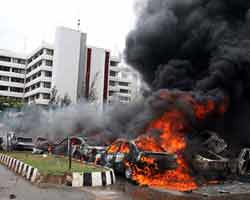
The conditions of negotiation were disclosed yesterday in Maiduguri by the newly appointed spokesman of Boko Haram, Abu Mohammed Ibn Abdulaziz in a tele-conference with reporters.

He said: “To bring an end to these attacks, bombings, killings and arrests of our members in Nigeria, we have been mandated by our
leader, Imam Abubakar Shekau, to appoint high members, elders and others from the North-East sub-region to dialogue with the Borno State and Federal Governments of Nigeria in a neutral state of Saudi Arabia.”

He said five members of the group were mandated to liaise with a five-member committee of Borno elders to dialogue with the Federal Government.

The Nigerian mediators, according to him, include Alhaji Shettima Ali Monguno, Buhari, Sen. Bukar Abba Ibrahim, Amb. Gaji Galtimari and Aisha Wakil and her husband.

On a neutral centre for the dialogue, Abdulaziz said: “We insist on having the dialogue in Saudi Arabia, because the Federal Government has betrayed us on two different occasions… The committee members for dialogue comprise my humble self, Abu Mohammed Abdulaziz, Shiek Abu Abass, Shiek Ibrahim Yusuf, Shiek Sani Kontagora and Mamman Nur.”

He said: “We are not after anything, but the Federal Government should fulfill three conditions on which the announced dialogue could commence.

Compensation of our members is one of the three main conditions for this dialogue with government, while the immediate past Governor of Borno State, Sen. Ali Modu Sheriff arrested by the police and … our members incarcerated in various prisons in the country (should be released).

This will also facilitate dialogue with the Federal Government in the holy land of Saudi Arabia. If the Federal Government likes peace we will appreciate it and we should be compensated.”

The compensation, he added, should be made directly by the Federal Government.

He, however, noted that armed bandits, hoodlums and assassins hide under the cover of Boko Haram to attack, kill people, torch schools, telecoms masts and public buildings.

Asked about the group’s relationship with the media, Abdulaziz said: “We don’t have any problem with the Nigerian press. They should however, not write what we did not say to the press. I am now appointed second in command of the Boko Haram sect spokesman.”

Also, it was learnt that some suspected members of Boko Haram who were recently arrested in Minna, Niger State capital by a combined team of military and police anti- terrorist squad in connection with bomb factories in the suburb of Minna, have confessed to the killings of policemen in parts of the state in recent times.

No fewer than seven policemen have been killed by gunmen suspected to be members of Boko Haram while on their duty posts at various locations in Minna and other parts of the state in the last five months.

The state Commissioner of Police, Mrs. Desire Nsirim disclosed this in Minna on Wednesday during an interactive session with the top management workers of the state’s Ministry of Livestock/Fisheries led by its Commissioner, Dr. Isah Yahaya Vatsa when she paid a familiarisation visit to the ministry.

However, in a damning report, the Amnesty International yesterday carpeted Nigerian security outfits over their response to acts of terrorism masterminded by Boko Haram, saying that the forces’ response was a sorry continuation of the cycle of violence.

In the report released in Abuja by the Secretary General of the global body Salil Shetty, it noted the atrocious acts of the dreaded sect and decried the serious human rights violations perpetrated by Nigerian security operatives in response to these acts of terrorism, including enforced disappearance, torture, extra-judicial executions, torching of homes and detention without trials.

The report titled “Nigeria: Trapped in the circle of violence,” documents these violent acts by Boko Haram and the response of the Nigerian security forces against persons suspected to be members of the group.

Presenting the report in Abuja, Shetty noted that the “cycle of attack and counter attack had been marked by unlawful violence on both sides, with devastating consequences for the human rights of those trapped in the middle.

“People are living in climate of fear and insecurity, vulnerable to attack from Boko Haram and facing human rights violations at the hands of the very state security forces which should be protecting them,” Shetty stated.

The secretary general observed that gross human rights abuses including murder, burning down schools and churches and attacking media houses and journalists had been committed by Boko Haram.

The report documents the increasing climate of fear where people are too scared to report crimes and journalists would not cover them out of fear for their own safety.

The report condemns security agencies, which it claims, acted with little regard for rule of law and human rights in their actions targeting Boko Haram elements.

But the Nigeria Police Force (NPF) has expressed concern over the report compiled by Amnesty International on human rights situation in the country.

A statement by the Deputy Force Public Relations Officer, Frank Mabah, yesterday said in view of the seriousness attached to the report by the police, it had begun a critical study with a view to establishing its veracity or otherwise.

The statement read: “A recent Amnesty International report dated November, 2012 has just been received by relevant authority of the Nigeria Police. As a responsible law enforcement agency, the Nigeria Police Force takes all criticisms against its organisation seriously.

Consequently, the Police Authority has begun a comprehensive and critical study of the report with a view to establishing its veracity and relevance vis-à-vis our contemporary security challenges and needs.

“Bearing in mind that the Force has no monopoly of knowledge, the Police High Command (on the strength of the report) will not hesitate to accept honest and factual recommendations (if any) contained therein and initiate appropriate reforms where necessary.

“However, the Force is deeply concerned over a key research methodology adopted by Amnesty International in compiling its report.

The fact that most of the sources of the content of the report are “not named”, (and thus not open to confirmation or reconciliation) puts the authenticity, credibility and legitimacy of the report in question.”

In the same vein, the Nigerian military yesterday dismissed the report of the Amnesty International.

The Director, Defence Information, Col. Muhammed Yerima told The Guardian yesterday that “there is no truth whatsoever in what Amnesty International said in regard to the role security forces have been playing in the fight against the Boko Haram group.

The report is biased and unsubstantiated. You cannot have a report like this without interviewing Boko Haram or the security forces and you just pick your stories on the streets and come up with a cooked story and say that the Nigerian security forces have violated the human rights of Boko Haram members or that the security forces are involved in human rights abuses.”

On the accusation by Amnesty International that the military has been carrying out detention without trial, Yerima explained that “if we arrest any of the suspects, either during stop and search operation or during encounter with armed groups, we will first of all interview them on whether they are members of Boko Haram or not. And members of the security forces like the State Security Services and the Police join as it is a combined interrogation.

After sifting the information, if the person is involved in any criminal activity, we will hand him over to the police for prosecution. If he is not, we release him. We don’t keep people unnecessarily or longer than necessary.

“As for the accusation of extra-judicial killings, being caught in a crossfire is not extra-judicial killings. It is unfortunate. It can happen to anybody, either it hits us, passersby or the members of the Boko Haram. When it is extra-judicial killing, you are talking of tying a person down or handcuffing somebody and killing him. That is unfair and unnecessary. And it is against international tenets. The issue of crossfire can happen anywhere in the world. But the truth of the matter is that such casualties are not intentional or intended. Nobody, not the security forces, are there on duty to kill anyone like that.”

Author of this article: From Madu Onuorah, John-Abba Ogbodo, Lemmy Ughegbe (Abuja), Francis Obinor (Lagos), John Ogiji (Minna) and Njadvara Musa (Maiduguri)

'Thrilla' in Africa!: Williams Sisters Visit Nigeria

‘Thrilla’ in Africa!

Thursday, 01 November 2012 20:42
By Ayo Ositelu Sport
Nigerian Guardian

...As Serena faces Venus in today’s historic match

FOR the first time since February 1976, when the world’s very best male tennis professional players were in Lagos to participate in that year’s World Championship of Tennis (WCT) tour circuit, Nigeria (thanks to the yeomen’s job by the Connect Marketing Company), will today play host to two of the world’s greatest women ever to wield tennis racquets.

At the Lagos Lawn Tennis Club, Race-Course, Lagos today, the world famous Williams sisters take their storied sisterly rivalry to another level, after previously facing each other 23 times in their illustrious careers.

Thirty six years ago, African-American Arthur Ashe then world number two and reigning Wimbledon champion, and world number three fellow-American Stan Smith (1972 Wimbledon champion), led the finest male players on the planet, including Romania’s Ilie Nastase, the Netherlands’ Tom Okker, Australia’s former world number one John Newcombe, American Roscoe Tanner (the world’s fastest server at the time), Victor Amaya (former ‘Big Ten’ champion in the South West of the United States), etc. to contest the Lagos stop on the WCT tour schedule.

That was the first and major breakthrough of Nigeria’s hosting of international tennis tournaments. It was also the last, as the WCT was concerned about the future safety of the world’s best players, who were chased off the court (at the same Lagos Lawn Tennis Club) by gun-totting soldiers who took exception to an international competition going on at a time Nigeria was mourning the assassination of the Head of State, General Murtala Muhammed, in a bloody coup d’etat, which sad event occurred on the second day of the tournament.

As time has been known to heal all wounds, this is the first time in 36 years that the world’s best tennis players would show interest again in coming to play in Nigeria. This time, it was the women, the world’s very best, who ‘broke the mould’ in keeping with the theme of the organisers of the Williams Sisters visit “breaking the mould.”

To be sure, this is not the first time many an organization had tried to bring the Williams sisters who have always been keen to and use themselves as examples to demonstrate to youths in the developing world that, if they could make it to the top despite the hurdles and disadvantages stacked up against them, anyone can accomplish their dreams, with sheer dint of determination, hard work, and self-belief.

It is now common knowledge around the world that the Williams sisters’ seemingly miraculous accomplishments, since both were teenagers up till now, have continued to inspire youths in any country they have been privileged to visit.

To the sisters’ ever-growing fans in Nigeria, many of them through the social media as Serena informed during the world press conference held at the Federal Palace Hotel, Lagos however, watching the sisters rise to the pinnacle of the sport on Tv is one thing, being privileged to watch them live is another.

This is why you do not get a medal if you forecast that a record crowd would jam the Lord Rumens Centre Court of the Lagos Lawn Tennis Club to play a part in history when the sisters, both former world number ones, and still a handful for the world’s best ranked players, get to face-off one more time today.

Although today’s match is officially billed as an “Exhibition Match,” a very high-profile one at that, I have it on good authority that each champion has promised to play their best tennis, and that the match, which is not necessarily a grudge match, will surely be full of strokes of genius, which would remain in the memory and sub-conscious of the biggest crowd ever assembled to watch a tennis match in Nigeria.

Yes, “no one loves to see their children fight,” in the famous words of Richard Williams, the father of the sisters, and ‘poker-faced’ Oracene (their mom) who is in Nigeria with them, would certainly not show her preference of the winner between her two superstar daughters.

One thing is sure, either will be trying to win the latest match in their long and interesting rivalry, which has now shifted to Africa, hence the tag “Thrilla in Africa,” in line with legendary heavyweight champion Muhammad Ali’s famously-coined “Thrilla in Manila” back in 1975.

Neither will today’s match be a “Rumble in the Jungle,” but the best tennis you probably have ever seen will be on offer. Perhaps a little bit of family bragging rights too. After all, Serena has been severally quoted as saying, “I go into any match trying to win, sister or no sister.” But then, as she (Serena) herself confessed while answering one reporter’s question during Wednesday’s Press Conference at the Lagos Federal Palace Hotel, “It hurts deeply to see Venus lose any match. It gives me pain when she loses, and it always felt like it is me who lost such a match.”

Asked how many aces she expects to serve against “big sister” Venus today, Serena answered, “Venus is hard to ace.” Venus, on her part, remarked, “We know each other’s game so well. That may be why I do better against her than other players, but my sister is difficult to beat, even for me, her elder sister.” That is how much they love each other, and respect each other’s game.

Perhaps because both sisters were trained by the same person, (dad Richards), they have the same approach to the game, and for sure, nobody plays like them. They both try to take the initiative early to control the point, even when they are not serving. They return the opponent’s serve with such aggression and accuracy that the server is often forced to be on the defensive since the returned serve often returns with interest. This is why they believe they can break right back if even their serve is occasionally broken.

Take the Championship point of last week’s final of the season-ending WTA Championships in Istanbul, Turkey for example. Having lost the first set 6-4, and was serving to stay in the match trailing in the second set 3-5 and 15-40, Russia’s Maria Sharapova, in a match in which she had played well enough to defeat any player whose last name was not Williams, unleashed what was expected (by most) to be an ace, or at the least a crushing service winner against any other player (not Venus).

How did the point go? The returned serve from Serena down-the-line traveled so fast the Russian began to trot discouragingly to the net to shake her victorious opponent in obvious acceptance of defeat.

But need anyone remind the all-conquering Serena that Venus is a different ‘animal’ from Sharapova, if even the co-13 times Grand Slam Ladies Doubles champion has just won her first WTA tournament Singles title (in Luxembourg) in two long years.

Today na today, as they say. In today’s potentially entertaining encounter (their matches always are), the woman with the official fastest serve in history of the women’s game (Venus), is up against a woman who officially has served more aces than any woman, dead, or alive.

Don’t go anywhere! Lagos Lawn Tennis Club is the place to be.

Prisoners Rot on Death Row in South Sudan

Friday, November 02, 2012

Prisoners rot on death row in South Sudan

Impoverished South Sudan was left in ruins after decades of war with Sudan before separating in 2011 after a landslide independence referendum

Kenneth Kaunda says that the only reason he is on death row in a jail in South Sudan is because he reported a corpse he found in the road four years ago with a knife stuck in its chest.

“Whether you killed or didn’t kill, you get sentenced to death — this is the situation in South Sudan,” he said, as others crowding around nod and clamour to tell similar stories of injustice.

In the ramshackle capital of the world’s newest nation, over 100 people await execution in filthy and crowded conditions, which human rights activists say break basic freedoms, with many never having even seen a lawyer. “The judge told me I’m the one who killed this person. I said: ‘Let him show me the evidence’, but he refused,” Kaunda said. He is one of eight death row inmates interviewed by AFP, none of whom had money for a lawyer.

Accused of murdering her husband, mother-of-six Stella Juwa Felix was allegedly beaten for 17 days by police, while three other suspects with lawyers were released before the trial.

The court’s decision to sentence her to death took just five minutes and like most, she claimed she was not given the chance to speak in her defence.

“They said that my sentence was to hang me,” Felix said. “Now what am I to do? I just pray to God.”

Prison officials demand that photos taken by journalists of shackles, or disturbed prisoners left naked, locked in dank cells or smeared in their own excrement are deleted. But prison and government officials keen for outside help are quick to point out flaws in the system, from poor infrastructure, to untrained police absorbed from rebel movements.

Impoverished South Sudan was left in ruins after decades of war with Sudan before separating in 2011 after a landslide independence referendum. But like so much in the country, the legal system was left in tatters, with sometimes conflicting, overlapping systems of justice.

Lawyers and judges are few and often inexperienced, while those who have served for years trained in the Islamic-based laws of the Arab-speaking north, who sometimes cannot read new laws now written in English. “There’s a very high chance that people have been executed that have not received those fair trial protections and may in fact not be guilty of the charges brought against them,” said Jehanne Henry of Human Rights Watch. Apart from confirming two hangings publicised in August, officials could not say how many people face the death penalty or have been executed this year.

Fears the innocent are being sent to the gallows are glossed over, and Andrew Monydeeng, the deputy director for prisons, claims that appeals are dealt with within 14 days, and after that “fate is fate”.

But Kaunda, a former rebel soldier who fought for South Sudan’s independence, says he has received no response to an appeal filed
in 2009.

Like many others, he scoffs at the likelihood of the legal system saving him. “I cannot believe in this system,” he said, waving at the overcrowded prison, bursting with almost 1,250 inmates, almost three times the maximum number it was built for in the 1950s. “What they are doing is not law, but playing games.” Shackled in chains — to show that she faces a death sentence for the killing of a relative — 45-year old Mary Sezerina says that the prison is like a “pit of hell.”

“There was independence but nothing has changed here in the prison”, she said, adding she has not heard back from appeals made after her arrest in 2005.

During the civil war, firing squads were used, but as David Deng of the South Sudan Law Society notes, officials in the rebel movement-turned-government still see the death penalty as a useful tool. “For them capital punishment is an indispensable deterrent to try to keep a lid on some of the crime in South Sudan”, Deng said, pointing out that the country is awash with guns.

“To sentence someone to death who doesn’t have a lawyer, is unable to challenge evidence that is clearly an egregious miscarriage of the law, something which should not be permitted in any society,” he added.

While President Salva Kiir has the last say in signing lives away or pardoning those festering in jail, his legal advisor Talar Deng could not give details on how and when this has been used. But Talar insists that while lower courts may make mistakes, appeals go to experienced professionals in a higher court.

“Our systems are like any other systems, they may have some loopholes here and there,” he said.

While Talar points out the death penalty was introduced by British colonial rule — and that traditional custom was to pay cows as blood money — there seems little support to bow to calls by rights groups, the European Union and church organisations for a moratorium.

“In South Sudan, everything is a priority,” he said of the grossly underdeveloped country, a land where basic healthcare and education services are lacking, and where rule of law is more often a concept than reality. afp

Sudan Government Says US Reneged on Promise to Lift Sanctions

Sudan says US reneged on sanctions promise

(AFP)

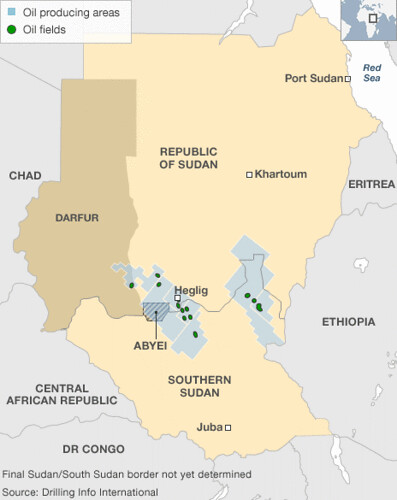
KHARTOUM — Sudan on Thursday accused the United States of reneging on commitments to remove sanctions, after Washington extended the 15-year-old trade restrictions.

Then-president Bill Clinton imposed the embargo in 1997 over Sudan's support for international terrorism, efforts to destabilise neighbouring governments, and human rights violations.

President Barack Obama approved the sanctions for another year on Thursday, saying the actions of the Sudanese government "continue to pose an unusual and extraordinary threat to the national security and foreign policy of the United States."

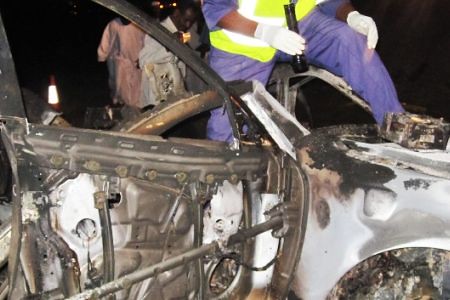
This year's sanctions renewal came one week after Sudan accused Israel of sending four radar-evading aircraft to strike a military factory, which exploded and burned in the heart of Khartoum at midnight on October 23.

The blast led to speculation that Iranian weapons were stored or manufactured there but Sudan's foreign ministry denied Iran had any involvement.

Israel refused all comment on Khartoum's allegations about the factory blast but officials in the Jewish state have long accused Khartoum of serving as a base of support for militants from the Islamist Hamas movement that rules the Gaza Strip.

Sudan's foreign ministry called the US sanctions "basically political", with the aim of hindering the country's development. It said the embargo benefits armed rebel groups while violating international law.

"Many times the American administration agreed that Sudan is meeting its commitments but they are always retreating from their promises to remove the sanctions," the ministry said in a statement.

"The Sudanese government repeats its strong rejection of the sanctions renewal and strongly condemns the behaviour of the American administration."

From 1991 to 1996 Sudan hosted Al-Qaeda leader Osama bin Laden, who was killed in Pakistan by US Navy SEALS last year.

The US State Department continues to list Sudan as a state sponsor of terrorism but, in a July report, said Khartoum was "a cooperative counterterrorism partner" last year.

Except for Hamas, the government "does not openly support the presence of terrorist elements within its borders," the report said.

It added that Sudan maintains a relationship with Iran, another terrorism sponsor.

The sanctions limit access to external financing for Sudan's indebted economy, which lost the bulk of its export revenue when South Sudan separated in July last year with most of the country's oil production.

Chadian Diplomat to Head US-backed Occupation Mission in Somalia

Annadif to lead AU Somalia mission

Mr Mahamat Saleh Annadif, from Chad, is also the commission’s new special representative to the war-torn country.

The Africa Union has appointed a new head of its mission in Somalia.

Mr Mahamat Saleh Annadif, from Chad, is also the commission’s new special representative to the war-torn country.

The new head of AU Mission in Somalia (Amisom) will oversee the ongoing peace activities spearheaded by forces from Eastern African states including Kenya.

“Mr Annadif has an extensive diplomatic experience. Before this appointment, Mr Annadif held several ministerial portfolios in his country, including Foreign Affairs.

"He also served as the Head of the AU Permanent Delegation in Brussels. He will shortly take over his new assignment in Mogadishu” said the AU dispatch to newsrooms.

Mr Annadif is taking over the leadership of Amisom against the background of tremendous progress in the Somalia peace and reconciliation process.

Together with the Somali authorities, the Inter-Governmental Authority on Development (Igad), the United Nations and other stakeholders, he will assist in consolidating the achievements made, in line with the priorities outlined by the Somali authorities.

He will also focus on the review of Amisom and its mandate, which will be launched shortly with a view to taking stock of the work done to date and making recommendations on how best the mission can continue to support the Somali authorities and stakeholders.

This is in light of the gains made and the positive changes that occurred on the ground.

Mr Annadif takes over from Ambassador Boubacar Gaoussou Diarra, from Mali, who has been nominated as Special Representative for the Great Lakes Region.

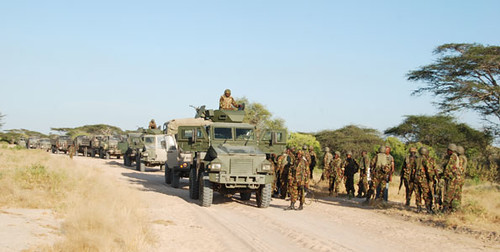
Kenya Defence Forces formally joined Amisom in March, almost seven months after starting its own pacification of Southern Somalia.

KDF recently captured the port town of Kismayu after battling with Al Shabaab, the terrorist group occupying the town, for several months.

Somalians Detained After US-led Military Commander is Killed in Shabelle

Thursday, November 1st, 2012 at 10:26 pm

Somalia: Several held in connection with Somalian military commander’s killing in Shabelle region

Marka (RBC)

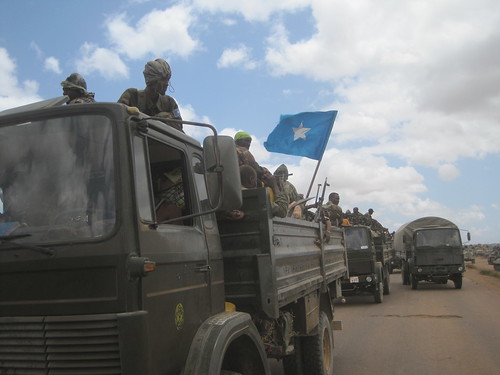
The government officials in Marka town of lower shabelle region announced on Thursday that they have arrested several people in Marka town in a joint security operations carried out by police forces and national security agencies in connection of the killing of a senior military commander, Gen. Mohamed Ibrahim farah Gardon who was killed in an ambush attack by Al-shabab militants on Sunday.

Abdi Salam Mohamed Abdulle, the deputy governor of Shabelle region who spoke to the local media said, they have detained three suspects held at Marka custody suspected of being behind for the killing of the Gen. Gordon who was the commander of fifth brigade of the Somali national army.

He added that these people were caught in a joint operations conducted in Marka town, the regional capital city of lower shabelle region and its surrounding areas.

The slain commander and three other officers were killed in an ambush attack when Al-shabab fighters attacked military convoy they were traveling in as they slew in the shoot out.

Somali government announced it will revenge for the killing of the commander and will pursue those behind for the perpertration.

It is not uncommon, that Somali military commanders are killed in Somalia, on Wednesday a senior military commander was killed in Beledweyn by armed gangs after the slain officer removed a roadblock mounted illegally by the gangs and he was killed in the shoot out.

Meanwhile scores were arrested on Thursday in Beledweyn town in connection of the killing of the military commander, Mumin maxamud Mohamed in joint operations carried out by the police forces and Somali national army.

Thursday, November 01, 2012

Hundreds Arrested As Somalians Resist US-backed Military Forces

1 November 2012
Last updated at 11:32 ET

Somalia: Mass Kismayo arrests of 'Islamist supporters'

The security situation in Kismayo is precarious

BBC World News

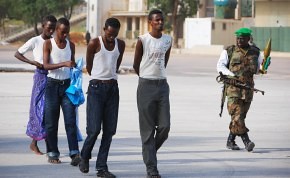
Nearly 400 people have been arrested in a major security operation in the Somali port city of Kismayo, officials there have told the BBC.

African Union troops, the Somali army and a pro-government militia gained control of the strategic port last month from al-Qaeda-aligned militants.

A militia spokesman told the BBC those arrested were believed to be supporters of the Islamist al-Shabab group.

Since al-Shabab's withdrawal there have been frequent bombings in the city.

In the latest attack on Tuesday, four civilians were killed when a bomb exploded in the town centre outside a restaurant.

Abidnasir Serar, the spokesman of the Ras Kamboni militia, told the BBC Somali Service the operation began early in the morning.

Residents say the city has been in complete lockdown for most of the day.

Markets and schools were closed as the security forces went from place to place looking for those they suspected of supporting al-Shabab.

Life in the city is very dangerous and more than 20 civilians have died since Kismayo's capture in various attacks and explosions.

Al-Shabab has withdrawn from several key towns in recent months, but still controls much of the countryside.

Since the overthrow of President Siad Barre in 1991, Somalia has seen clan-based warlords, Islamist militants and its neighbours all battling for control.

Estimate of Economic Losses Now Up to $50 Billion

November 1, 2012

Estimate of Economic Losses Now Up to $50 Billion

By MARY WILLIAMS WALSH and NELSON D. SCHWARTZ
New York Times

Economic damages inflicted by Hurricane Sandy could reach $50 billion, according to new estimates that are more than double a previous forecast. Some economists warned on Thursday that the storm could shave a half percentage point off the nation’s economic growth in the current quarter.

Losses from the storm could total $30 billion to $50 billion, according to Eqecat, which tracks hurricanes and analyzes the damage they cause. On Monday, before the storm hit the East Coast, the firm estimated $10 billion to $20 billion in total economic damages.

The flooding of New York’s subways and roadway tunnels and the extensive loss of business as a result of utility failures across the region were behind the sharp increase in the estimate, the firm said.

“The geographic scope of the storm was unprecedented, and the impacts on individuals and on commerce are far larger,” said Tom Larsen, Eqecat’s senior vice president and product architect. “Lost power is going to contribute to higher insurance losses.”

Eqecat predicted that New York would bear 34 percent of the total economic losses, with New Jersey suffering 30 percent, Pennsylvania 20 percent and other states 16 percent. That includes all estimated losses, whether covered by insurance or not. The estimates and the share that will be covered by insurers are far from certain at this point, as government officials, property owners and insurance adjusters struggle to assess the destruction.

While the stock market, banks and other financial institutions regained some of their stride on Thursday, other sectors like retailing, transportation and leisure and hospitality face a much longer and more difficult recovery. With fuel in short supply in many areas and utilities warning that power may not be back for a week or more in some areas, businesses found themselves preparing for the equivalent of a long siege.

FedEx, for example, was trying to rent fuel tankers for its trucks in New York and New Jersey as commercial gas stations ran dry.

“We’re reaching out to everyone who has a gasoline tanker that we can move to these areas,” said Shea Leordeanu, a spokeswoman for the company. While FedEx had stocks of oil in advance of the storm for generators, it was not prepared for the gas shortages that caused long lines at stations on Wednesday and Thursday.

“There has not been an impact yet, but this is something we can see as an issue and we’re concerned,” she said.

As logistical problems mounted, and damage estimates surged, economists raised their estimates of the storm’s impact.

“I think the effect will be quite big,” said Julia Lynn Coronado, chief economist for North America at BNP Paribas. “In the fourth quarter, we’re probably looking at an impact of half a percentage point.”

She said some of those losses would be made up in the first quarter of 2013, as insurance reimbursements were distributed and homeowners and businesses rebuilt.

Hurricane Sandy will rank high among disasters in terms of economic impact but will not be at the top of the list, said Mark Zandi of Moody’s Analytics. He estimated that the losses would be less than half of those suffered because of the 9/11 terrorist attacks and from Hurricane Katrina.

Moody’s Analytics also put the impact in the $50 billion range, with about $12 billion in losses falling in the New York City metropolitan area.

About $20 billion of that total is from lost economic activity like meals not served in restaurants, canceled plane flights and bets not placed in casinos, Mr. Zandi estimated. The rest, about $30 billion, will be from property destruction, including damage to homes, cars and businesses, Mr. Zandi said.

Eqecat said it believed that various forms of insurance would cover $10 billion to $20 billion of the total cost. Other losses will be borne by individuals and businesses, or covered by federal government programs like the National Flood Insurance Program. Much of the federal spending will be used to repair damaged public infrastructure, rather than for private property.

Eqecat said that if insured costs remained at the lower end of its predicted range, at $10 billion, then about 60 percent of the losses would be covered by homeowners’ and, to a lesser extent, auto insurers. The remainder would be covered by commercial and industrial insurance.

The firm’s officials said that if total insured losses rose to the higher end of its predicted range, it would be because of costs like business-interruption losses — and in that case, commercial insurers pay more.

They said this possibility would depend to a great extent on how long power failures continued. They said there were no solid data yet on the number of transformers and power lines that had been knocked out. They added that in some cases, power might not be restored until well into December.

Moody’s issued a report on Thursday stating that the large nationwide insurers had “diversified exposures and strong capital bases to withstand” payouts related to the storm. It added, however, that the costs could disrupt the capital bases of smaller regional insurers.

State Farm, the largest writer of home and auto insurance in the region, reported having received nearly 25,000 homeowners’ claims and 4,000 auto claims as of Wednesday. Those numbers are probably a fraction of the eventual totals. Some of the losses will not be recouped. Lost Halloween sales will be especially painful for some retailers, according to a separate analysis by Moody’s.

“As shoppers in the affected regions focus on the storm, other discretionary spending will fall and not be recouped,” Moody’s said.

Patrick McGeehan

Role of CIA in Occupied Libya Further Exposed

CIA officials in Libya made key decisions during Benghazi attacks

9:20pm EDT
By Mark Hosenball

WASHINGTON (Reuters) - CIA officials on the ground in Libya dispatched security forces to the U.S. diplomatic mission in Benghazi within 25 minutes and made other key decisions about how to respond to the waves of attacks on U.S. installations on September 11, a senior American intelligence official said on Thursday.

Officials in Washington monitored events through message traffic and a hovering U.S. military drone but did not interfere with or reject requests for help from officials in the line of fire, the official said.

The information emerged as officials made available on Thursday a timeline chronicling the U.S. response to the Benghazi attacks in which Christopher Stevens, the U.S. ambassador to Libya, and three other American officials died. The material appears to refute claims by critics that officials in Washington delayed sending help to the besieged personnel.

The handling of the attack by the Obama administration and CIA has come under sharp criticism by supporters of Republican challenger Mitt Romney during the campaign ahead of the presidential election on November 6.

The senior intelligence official said that CIA officers in Benghazi, "responded to the situation on the night of 11 and 12 September as quickly and as effectively as possible.

"The security officers in particular were genuine heroes. They quickly tried to rally additional local support and heavier weapons, and when that could not be accomplished within minutes, they still moved in and put their own lives on the line to save their comrades," the official said.

"At every level in the chain of command, from the senior officers in Libya to the most senior officials in Washington, everyone was fully engaged in trying to provide whatever help they could," the official said.

"There was no second-guessing those decisions being made on the ground, by people at every U.S. organization that could play a role in assisting those in danger. There were no orders to anybody to stand down in providing support," the official added.

OBAMA, CIA PUSH BACK AGAINST CRITICISM

Intelligence and other administration officials expressed particular dismay about a report on Fox News last week that alleged that armed CIA operatives near the U.S. compound in Benghazi were repeatedly told to "stand down" after asking for permission to assist on the night of September 11 and were also refused military backup by the CIA chain of command.

Following the initial broadcast of the Fox News report, Jennifer Youngblood, a CIA spokeswoman, denied that CIA had ever turned down requests for help from U.S. personnel in Benghazi.

"No one at any level in the CIA told anybody not to help those in need; claims to the contrary are simply inaccurate," Youngblood said.

According to the timeline, around 9:40 p.m. Benghazi time, officials at the CIA's relatively fortified and well-defended base in Benghazi got a call from State Department officials at the U.S. diplomatic mission about a mile away that the less-fortified public mission complex had come under attack from a group of militants, the intelligence official said.

Other official sources said that the initial wave of attacks on the diplomatic mission involved setting fires using diesel fuel. The dense smoke created by the fuel both made it hard for people at the compound to breathe and to organize a response to the attack.

About 25 minutes after the initial report came into the CIA base, a team of about six agency security officers left their base for the public diplomatic mission compound.

Over the succeeding 25 minutes, the CIA team approached the compound, and tried, apparently unsuccessfully, to get local Libyan allies to bring them a supply of heavier weapons, and eventually moved into the burning diplomatic compound, the intelligence official said.

At around 11:10 p.m., a Defense Department drone, which had been on an unrelated mission some distance away, arrived in Benghazi to help officials on the ground gather information. By 11:30, U.S. personnel who had been working or staying at the mission had been rounded up except for Ambassador Stevens, who was missing, the intelligence official said.

When they tried to drive out of the diplomatic compound to return to the CIA base, however, the convoy carrying U.S. evacuees came under fire.

Once they got back to the CIA base, that installation itself came under fire from what the intelligence official described as small arms and rocket-propelled grenades. These patchy attacks went on for roughly 90 minutes, the intelligence official said.

CIA SENT TEAM FROM TRIPOLI

Around the same time, a CIA security team based in Tripoli, which included two U.S. military officers, landed at Benghazi airport. Upon its arrival, however, the team spent some time trying both to arrange local transport and to locate the missing Ambassador Stevens.

After some time trying to solve these problems, the security team that had flown in from Tripoli eventually arranged for an armed local escort and extra transportation, but decided not to go the hospital where they believed Stevens had been taken. In part this was because they had reason to believe Stevens was likely dead, and because security at the hospital was believed, at best, to be "uncertain," the intelligence official said.

Not long before dawn, the reinforcements from Tripoli managed to take themselves and a convoy of vehicles to the CIA base to prepare for an anticipated evacuation.

However, just after they arrived at the CIA base, the official said, a new round of attacks on that facility was launched, this time with mortars. Although the mortar attacks lasted only 11 minutes, two U.S. security officers were killed by a direct hit from one of the shells, the intelligence official said.

Finally, a bit less than an hour later, a heavily armed Libyan military unit arrived at the CIA base to help evacuate the compound of U.S. personnel to the Benghazi airport, the official added.

Over the next few hours, roughly 30 Americans, as well as the bodies of Stevens and the other three Americans killed during the attacks, were loaded on planes and flown out of the city, several U.S. officials said.

(Reporting by Mark Hosenball; Editing by Lisa Shumaker)

Gunmen Occupy US-Puppet Libyan Parliament

1 November 2012 Last updated at 13:28 ET

Gunmen occupy Libyan parliament

Hundreds of rebels have turned up at the Congress building

BBC World News

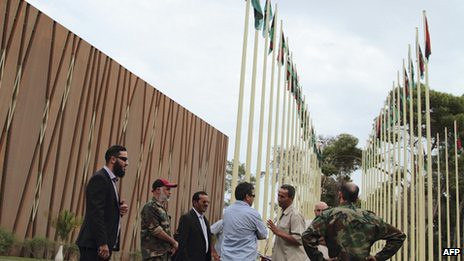
Dozens of gunmen have occupied Libya's parliament to register their anger over the formation of the new government.

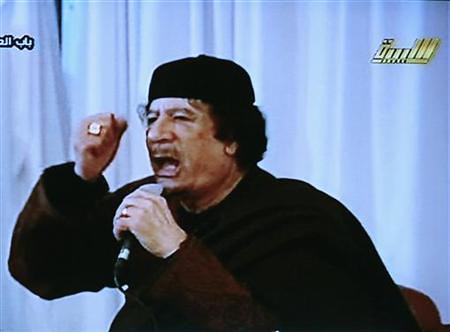
The militiamen are demanding some of the ministers be removed because they have links to the late Muammar Gaddafi's regime.

At least a dozen trucks mounted with anti-aircraft guns are lining the main road to the parliament.

Libya held a peaceful election in July and finally agreed the composition of a government on Wednesday.

Prime Minister Ali Zidan gained the support of the National Congress for his choice of ministers.

His list included liberal figures and Islamists in an attempt to forge a coalition acceptable to all parties.

But negotiations were disrupted by protests earlier this week.

And late on Wednesday gunmen broke through security and occupied the Congress building.

'Gaddafi ties'

The BBC's Rana Jawad, in Tripoli, says some of the gunmen are dressed in scruffy army fatigues and others in civilian clothes.

She says some are from the western city of Misrata and others are from Tripoli, and few are willing to talk to the media.

At the scene Rana Jawad BBC News, Tripoli
----------------------------------------------------
The street where the Congress lies appears to be in a world of its own.

The usual mix of official security units charged with its guard are not there. In their place are armed men who are offering us water one minute, and asking us to leave a moment later. Some of the men are busily pushing back photographers and journalists.

An aged man seated behind his anti-aircraft gun on the back of a truck appears less agitated and fiery than the others. He says: "We just want a real democracy. This new government is not a government, and Tripoli isn't even properly represented in it."

"Some of them have had long ties with Gaddafi, we don't want them," a militiaman dressed in civilian clothes told the BBC.

Presidential guards are stationed in the Congress complex and have been ordered not to fight with the men.

The militiamen are believed to be in talks with politicians to resolve the stand-off.

Despite largely peaceful elections in July, Libya's transition continues to be affected by instability.

Reining in the different militia and trying to integrate them into a single national army will be one of the biggest challenges for any new government, analysts say.

The new government has representatives from the two most prominent blocs in Congress - the Alliance of National Forces led by liberal former Prime Minister Mahmoud Jibril, and the Muslim Brotherhood's Justice and Construction Party.

Mr Zidan said he had tried to strike a balance between Libya's different regions in making the appointments.

According to his list, the defence and interior ministries would be headed by ministers from the eastern city of Benghazi, considered to be the cradle of last year's revolution that ended Gaddafi's rule.

Two women are also among the ministers proposed by Mr Zidan.

Deep Read: 'Corrective' Rape and Our Naked Reality

Deep Read: 'Corrective' rape and our naked reality

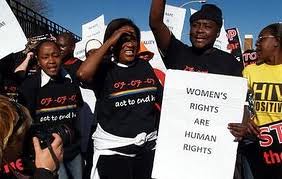
Woe unto you if you step in the path of a powerless, patriarchal male - he will make you pay for the pain of his emasculation, writes Simphiwe Dana.

29 Oct 2012 12:45 - Simphiwe Dana
South African Mail & Guardian

Woe unto you if you step in the path of a powerless, patriarchal male - he will make you pay for the pain of his emasculation, writes Simphiwe Dana.

She wore brown dungarees. A yellow T-shirt, Jackie Brown laughing with a poofy afro on her heavy breasts. In her takkies she walked with swagger that most claim is the abode of men. She had exuberance, a big laugh, and a warm heart. She feared no one, and wanted to make fearful no one. Her eyes would squint at you behind her nerdy glasses as she threw her head back in a guffaw. She could not be owned, she was free, and she wanted to own no one. Freed from the falsification of our spiritual origins by love, she had become a loner in her marvelling. Finally she could lay the anger to rest in the arms of true love. Yes, she had a spring in her step. The wolf-whistles and catcalls washed off her like she was shedding prisons. Prisms winked at her and she marvelled at the colour love had bathed her life with. Love had kicked the rebel out of her.

She should have hidden her light. In the shadows of her wonderings a storm was brewing.

You see, unlike the anger that drives some straight men to kill a gay man, the anger that drives some straight men to kill a lesbian is tainted with a sense of ownership over her body.

As a woman, no matter how successful you look, even a beggar on the street believes they own your body. I have experienced this. "Hello nice, hello baby!" Some men will even go the length of touching you, grabbing you. You have to put on a bulletproof mask when you leave your house, so that you may not be emotionally incensed enough to want to lash out in anger.

Instead of changing the vampiric nature of patriarchal society, we try to change the victim. Maybe you must dress differently, maybe change your attitude, we say.

Patriarchy is a power game. Woe unto you if you step in the path of a powerless, patriarchal male. He will make you pay for the pain of his emasculation. He does not even have to know you to punish you for his disappointments.

She was found behind a spaza shop. Naked, sprawled in a bloody mess of skin and bone. Spread eagled, a green beer bottle peeking out of her privates. They had bashed her skull in, the shards from her nerdy glasses dug deep into her skull. Where her breasts had been were two, raw, flat, circles. They had taken her breasts with them as souvenirs of a womanhood she didn't deserve. She was a bloody pulp of skin and bone. Close by, lay her clothes. They had been folded neatly, only had a few splatters of blood. She had undressed and calmly folded her clothes. Maybe she had hoped to wear them afterwards. She did not fathom the violence of their intentions. See, she had been here before. She had an 18-year-old daughter to prove it.

Monitoring our bodies. Measuring our ripeness. We do not own our bodies. Maybe the religionists are right – you can only be free in death. So I remember her hearty laugh. I remember her mischievous eyes, teasingly studying mine to see if I had not changed teams yet. I remember her smile that cloaked so much sadness. By remembering I hope to keep the memory of her circumstance alive, to keep my sanity, to know that I did not just dream it. I am not imagining it. My body is not my own. One step out of this understanding and I might just end up behind the spaza shop, with stray dogs lapping at my blood. I will not let her be a statistic, as it happens with so many black bodies, because my existence is not the summation of a statistic.

I am tired of understanding my man's emasculation, as if I were not there, going through my woman's emasculation. I was there, under some sweaty, fat, red faced master and his sons. I too have sacrificed my humanhood to keep the peace and preserve a little of myself. And I have managed to keep seeing beauty. I have loved my children, born out of my humiliation, even when they spat at the roughness of the uncertainty of my touch. I have loved my man, even when he sought refuge in the breaking of my bones. I have, like a mother hen, protected and nurtured my family.

Your problem is that you believe you deserve better than me. That is why you insist your story is more important than mine.

We obviously cannot navigate the waters of our oppression without dealing with this – the oppression that exists between the two of us. The oppression that puts us on different sides of a predicament we both identify with.

Come my love! Let us explore this here truth. Conditioning, like religion, is not for us. We have turned into monsters in our rebelliousness. Because this seed, dropped in the copulation that would birth us, this seed that is tightly woven into our remembering, it will not let us be great. When George Orwell said: "some are more equal than others" it was because he eavesdropped on our past. He found the weakness that would keep us on our knees. For we understand hierarchy. Finally ... You, would understand how it feels to have a master, like we womenfolk do. Of course we would suffer the most for it. For the anger, in a trickle-down system of doing things, also trickles down – a deepening dam on the lowest wrung of society, choking our vision and setting rot to our foundation. I watch how you suffer. I see how you don't see me holding a mirror to your pain.

We are all going through our own ugliness. The hierarchy of ugliness won't allow us to break free. The more we fight, the more it sinks its hooks deeper into our naïve delusions/convictions of innocence. Because none are innocent ... though some are more innocent than others.

Come my love. Let us find a place where we can let go of all this madness. A place where the smile of our eyes, the readiness of our bodies, is all we need to decipher the truth of the life we seek. This is the death we seek. For it keeps us alive. We lived. And the raw uncouthness of the days of our lives electrifies the truth-seeking of our progeny ... as the struggle continues.

Women As War Zones

Posted by: Koketso Moeti

October 29, 2012
South African Mail & Guardian

Women as war zones

Very often when we think of war, we think machine guns and soldiers. We think demolished homes and buildings, even imagining the prisoners and survivors it leaves. That is what the media shows as war – the haunted looks in people’s eyes, clearly showing their fear and tortured souls. But war is much more than the image it brings to the eye. War is brutal and wounds not just physically and emotionally; it scars even the mind.

We believe South Africa not to be a country at war. There are no dead bodies. There are no soldiers forcefully entering homes. We are not walking the streets fearing gunshots and we certainly do not sit in our homes fearing drones.

But a look beyond the obvious tells a different story. We are a nation deeply in the midst of war – with women being the war zones. It is not homes that are entered forcefully, it is women’s bodies. It is not gunshots we live in fear of; we fear our partners, fathers, uncles, teachers and even the man on the street.

This fear is justified by a 2010 Statistics SA finding that 38.4% of sexual offences victims were victimised by a known community member. For 22% of the sexual offence victims, the perpetrators were unknown community members and 15.8% were relatives.

However in the year leading up to April 2012, it was found that 40% of all reported sexual offences were committed against children, meaning women also live in fear for their children.

It is estimated that a woman is killed by her male partner every six hours, giving South Africa the highest rate of death by domestic violence in the world.

According to the World Health Organisation, 60 000 women and children in South Africa are victims of domestic violence every month – and those are just the cases that are reported.

Chandre Gould, a senior researcher at the Institute for Security Studies, writes that “Research by Gender Links and the Medical Research Counci conducted in Gauteng found that although 51.2% of women had experienced some form of physical, sexual or psychological violence at some point, only 0.3% had reported cases of domestic violence to the police.” This in turn suggests that 60 000 per month is but the tip of the iceberg of the actual number of domestic violence cases in the country.

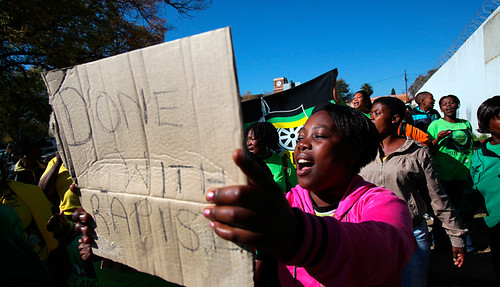
Women face regular assault, not only in the streets, but also in the very homes meant to be their sanctuaries. Earlier this year, Interpol found South Africa to be the world’s rape capital and yet it is believed that less than 1% of rape cases are reported to police. Women also deal with regular rape, “jackrolling” (leisure gang rape) and “corrective rape”.

These atrocities, however, only make up a small number of the horrors faced by women daily in South Africa. This, coupled with prejudice, misogyny and the structural violence women endure as a result of poverty and socio-economic inequalities further deepen the abuse faced by South African women.

Whether we are in the street, at church and even in our own homes, women face some kind of abuse and very little is being done to address it.

We need to realise that this is not ‘their’ story – it is OUR story. It is the story of every woman – our mothers, daughters, sisters, aunties, nieces and friends. It is the story of every Female Genital Mutilation (FGM) survivor and the story of the Namibian woman who was forcefully sterilised.

It is the story of the women of Libya, Kenya, Egypt, Somalia and elsewhere – all united by the common thread of extreme deep hurt, physical pain and the kind of abuse no person should undergo. You see, the war is not unique to South Africa; it is a war that cuts across countries – taking place even in other countries not considered to be “war zones”.

Until we accept that we are at war, we will continue to be unable to comprehend the urgency needed to deal with the gross abuse and violation of women. We cannot continue to silently sit back and witness the abuse of our grandmothers, mothers, sisters, aunts, cousins and friends.

South Africa's National Union of Mineworkers Stands Fast on Shifting Ground

NUM stands fast on shifting ground

Despite the negativity about it among miners, the National Union of Mineworkers still believes that it can win them back, writes Kwanele Sosibo.

26 Oct 2012 00:00 - Kwanele Sosibo
South African Mail & Guardian

Frans Baleni does not believe an autonomous workers’ body can exist independently for any length of time.

Although Frans Baleni did not lash out at a new breed of worker lacking "class consciousness", it is safe to say that there are things to which even a relaxed National Union of Mineworkers (NUM) general secretary will not concede on home turf.

Chief among these is the defeat of an organisation he has pledged allegiance to since its formation in 1982 – the same organisation that stands to lose the most members as a result of the unprotected strike action that has swept the gold and platinum sectors in the past few weeks.

"If we can't save 1 500 people at Gold One then we would have lost members, because 75% of those people are our members," he said.

"At Amplats we are the majority union, with over 70% membership – about 12 000 in Rustenburg and 8 000 in Limpopo. That's a lot."

Perhaps predictably, Baleni sees no victory resulting from the unprotected strikes – only restructuring, which, he said, would result in the closure of marginal operations and increased mechanisation to counter labour costs.

"Both Impala and Lonmin [hit by protracted strikes this year] have cancelled programmes that would have employed about 3 000 people. About 20 to 25 gold mines have been in decline. AngloGold is launching a mechanised five-kilometre project. So there's already a shift from intensive labour."

Introspection

Baleni said that 30 years of existence called for, among other things, introspection on its progress, its changing membership profile and the effects of the prevailing 50%-plus-one threshold, which has resulted in smaller unions being squeezed out of bargaining processes. But it had been hampered by the rolling strikes and the only problems the organisation faced were those born out of its own success.

"As a union we've tried to have as much resources as we can. Previously, in the executive committee, it was only the general secretary that was [a] full-time [staff member of the union]. Now, the entire exco is full-time. We have elected branch committee members who earn a wage. There are now perks involved – a salary of R16 000 [a month] and a car. So when you lose an election and you're taken back to R6 000, you are part of an army of grumpy people and can make other people's terms ungovernable. So that's been the situation in places like Carletonville, Rustenburg, et cetera."

Is Baleni's theory not dangerous in as far as it sees workers as helpless pawns, only helpful in advancing factions in the NUM and not their own circumstances?

"The bottom line is that there has been a political project to capture the soul of the NUM … I think it's natural that people wanted people who would say what they wanted them to say, but they failed through the congress process. So you find that some of the committees have been unhappy. This campaign of bana bamo [communities calling for mining companies to hire the local population] started in Limpopo, then it spread to Marikana, to Angloplats, to Virginia and the Northern Cape. It's easy to spread this fire. They go to the local community and say: 'Support this strike until they're fired.' They go to the strikers and say: 'Strike until you get this money.'"

Even as the platinum sector is holding talks to establish a central bargaining body in the face of unprotected strikes led by an autonomous joint strike co-ordinating committee, Baleni is adamant that an autonomous workers' body cannot be party to the discussions.

"We don't think it's appropriate for them to have representation without a legal body. We've seen in the communities where mines engage bodies and then another one comes along. It's like liaising committees. They are not sustainable. In most cases these workers are associated with the mother union. For example, in Lonmin, workers have been saying 'maybe later we'll associate with another union', which suggests that people are clearly protecting themselves."

Strange

Although that can be read as a veiled attack on the Association of Mineworkers and Construction Union (Amcu), which has gained numbers in areas such as Lonmin and Implats where the NUM has lost ground, NUM president Senzeni Zokwana has been more critical. He said the union "found it strange" that only NUM members were being killed after a Lonmin peace accord that Amcu refused to sign. This caused Amcu to walk out of the central bargaining forum talks on October 10 and demand a public retraction, a suggestion at which Baleni scoffed.

"All parties have been making statements in the media. It could be tit for tat. All these things can be discussed separately, or we can go the legal route."

Going the legal route is something the union has been considering as a response to the Implats verification debacle, where, according to Implats, NUM membership has dropped from 70% to 13%, with Amcu benefiting. The NUM argues that violence at the mine, the intimidation of the Council for Conciliation, Mediation and Arbitration, which was appointed to head the ill-fated independent verification process, and Implats's complicity scuppered a legally sanctioned process. Two weeks ago, the union marched on the Implats office and delivered a memorandum.

"We're not allowed to operate at Impala," Baleni said. "Our shop stewards were shot at and others were hospitalised. Impala is saying they can't guarantee our safety and they can't bring in armed personnel, and we want a safe environment to operate in … Forty-three percent of the workers haven't joined a union. We just can't embark on a process to regain our membership under those circumstances."

Although Baleni appears confident that the union can regain lost ground by embarking on an organisational review that will focus on increasing the representation of rock drill operators in the branch committees, he has no plan for how that might happened. Instead, he turns to history.

"We're looking at scenarios where we're losing members and we know we'll come back. Principles always shine when the dust is settled. At one stage we had lost all membership at Amplats in a situation involving Mouthpiece [Workers Union]. Eight people were killed in 1999. It took us 18 months to recover at Amplats. We'll lose, but we'll come back."

Baleni's comments do not take into account how widespread discontent is with the NUM, or that the workers themselves are expressing it.

During the lead up to the Marikana shootings Baleni downplayed the union's slide, still quoting the obsolete figure of 32 0000 NUM members, although a 2011 Cosatu secretariat report had put the figure at roughly 50 000 less. This suggests that denial is perhaps the strongest gun in the NUM's arsenal.

The Chamber of Mines and the NUM announced an agreement on Wednesday that will result in entry-level gold miners earning R8 000 gross (including benefits) and rock drill operators getting R12 000 a month (including benefits). The increases vary between 11% and 20.8%.

China Manufacturing Gains Signal Fourth-Quarter Rebound

China Manufacturing Gains Signal Fourth-Quarter Rebound: Economy

By Bloomberg News - Nov 1, 2012

China’s manufacturing expanded for the first time in three months as output and new orders climbed, adding to signs growth in the world’s second-biggest economy is rebounding after a seven-quarter slowdown.

The Purchasing Managers’ Index climbed to 50.2 in October from 49.8 in September, the National Bureau of Statistics and China Federation of Logistics and Purchasing said today in Beijing. A separate survey from HSBC Holdings Plc and Markit Economics was at an eight-month high.

Shanghai’s benchmark stock index rose the most in three weeks as the reports added to evidence of a pickup in expansion this quarter after industrial production, exports and retail sales accelerated in September. The data may also reduce pressure on outgoing Premier Wen Jiabao to roll out more stimulus measures during a once-a-decade power handover that begins with a Communist Party congress next week.

“The worst is behind us already,” Joy Yang, chief Greater China economist at Mirae Asset Securities (HK) Ltd. in Hong Kong, said in an interview with Bloomberg Television. “Monetary policy has already done its job” and there’s “no way we will see another interest-rate cut because we think inflation is going to rebound.”

Surveys of manufacturing purchasing managers across Asia released today also improved, adding to evidence the worst of the declines in the region’s economies may be moderating.

The HSBC Manufacturing PMI for Taiwan was at its highest since June while a similar gauge for South Korea rose after dropping the previous month. India’s survey showed manufacturing accelerated for the first time in four months.

Stocks Drop

In the U.S., manufacturing probably expanded for a second month. The Institute for Supply Management’s factory index is expected to be at 51.0 in October after a 51.5 reading the previous month, according to a Bloomberg survey ahead of data due today.

Manufacturing PMIs for the euro area, U.K., India and Russia are also due today.

Asian stocks fell as a forecast from Japan’s Panasonic Corp. of a loss 30 times bigger than analysts estimated overshadowed manufacturing improvements in the region’s economies. The MSCI Asia Pacific Index declined 0.4 percent at 2:18 p.m. in Tokyo.

The Shanghai Composite Index (SHCOMP), China’s benchmark stock gauge, rose 1.8 percent at 1:20 p.m. local time, headed for the biggest gain since Oct. 9. The index lost 5.9 percent in 2012 up until yesterday on concern the slowing economy will depress earnings growth.

China’s economy expanded 7.4 percent in the third quarter from a year earlier, the slowest pace in three years. Bank of America Corp. in Hong Kong, this week raised its estimate for fourth-quarter growth to 7.8 percent from 7.5 percent while Nomura Holdings Inc. projects a rebound to 8.4 percent.

New Orders

Forecasts for China’s official PMI ranged from 49.8 to 51.8, in a Bloomberg News survey of 30 economists that had a median estimate of 50.2. A reading above 50 indicates expansion. The index is based on responses from purchasing managers at 820 companies in 31 industries.

A gauge of output rose to 52.1, the highest since May, while an index of new orders rose above 50 for the first time in six months, the statement showed. New export orders contracted for the fifth month although at a slower rate.

HSBC’s survey showed manufacturing contracted at a slower pace in October. The final reading of the survey, which covers more than 430 companies and is weighted toward smaller businesses, was 49.5, up from 47.9 in September and a preliminary reading of 49.1 published last week.

Policy Easing

HSBC’s new orders gauge was at the second-highest level in 17 months while new export orders contracted for a sixth month, according to the statement.

The survey implies “China’s industrial activity continues to bottom out,” Qu Hongbin, chief China economist at HSBC in Hong Kong, said in a statement. “We expect a continuation of policy easing to further boost domestic demand and counterbalance the external weakness, leading to a gradual growth recovery in the coming quarters.”

Elsewhere in Asia today, Indonesia’s inflation accelerated to a 13-month high in October, reducing the scope for interest- rate cuts to counter falling exports. Consumer-price gains in Thailand unexpectedly slowed last month from a year earlier as government subsidies helped contain rising food and fuel prices.

In Europe, data from the Nationwide Building Society will show U.K. house prices in October rose from the previous month.

Initial jobless claims in the U.S. for the week ended Oct. 27 were 370,000, according to the median of 49 estimates in a Bloomberg survey.

Inflation Rebound

The People’s Bank of China has paused from monetary easing after cutting interest rates in June and July amid concern that further relaxing policy will lead to rebounds in inflation and property prices. Mirae’s Yang estimates consumer-price gains will accelerate to about 3 percent by the end of the year from 1.9 percent in September.

Industrial-production growth accelerated for the first time in four months in September, retail sales rose at the fastest pace since March and fixed-asset investment expansion quickened.

“Macro data will continue to surprise on the upside in coming months as the government continues to ease policy through the period of leadership transition,” said Zhang Zhiwei, chief China economist at Nomura in Hong Kong.

Gains in industrial output will be faster this quarter than in the previous three months and help the nation achieve its 7.5 percent target for economic expansion in 2012, Zhu Hongren, spokesman at the industry ministry, said at a briefing on Oct. 25.

Industrial companies’ profits rose in September for the first time in six months, a statistics bureau report showed on Oct. 27, a sign that pressures on corporate earnings are easing.

CSR Corp., China’s biggest trainmaker by market value, on Oct. 25 reported a 21 percent increase in third-quarter profit as rising domestic spending on railways and lower borrowing costs boosted income.

--Zheng Lifei. With assistance from Ailing Tan in Singapore, Regina Tan in Beijing, Rishaad Salamat in Hong Kong and James Mayger in Tokyo. Editors: Nerys Avery, Paul Panckhurst

To contact Bloomberg News staff for this story: Zheng Lifei in Beijing at lzheng32@bloomberg.net

To contact the editor responsible for this story: Paul Panckhurst at ppanckhurst@bloomberg.net

Expert Defends Military Role in Zimbabwe's Economy

Expert defends military role in Zim’s economy

Thursday, 01 November 2012 00:00
Zimbabwe Herald
Tendai Mugabe Senior Reporter

MILITARY personnel have a right to be involved in the running of the economy to foster national development, Marange Resources chairperson Retired Colonel Tshinga Dube has said.

Speaking at the official opening of his firm’s offices in Harare yesterday, Rtd Col Dube said there was nothing wrong with one being a soldier while serving the country’s key economic sectors.

Marange Resources had been using rented offices since inception two years ago.

The company has since acquired new offices worth US$2 million.

Rtd Col Dube said military personnel involved in national affairs begin with the President to various Government arms.

“I want to dispel rumours that soldiers are being deployed in most key economic positions in the country. This is not true.

“Who is not a soldier and what is wrong about being a soldier? Is the President not a soldier?”

He said President Mugabe led guerrilla warfare during the liberation struggle.

“How could you lead guerrilla warfare if you are not a soldier?”

Rtd Col Dube’s remarks put paid to allegations from Western organisations claiming that the army had taken over running Zimbabwe’s economy, especially in administering Chiadzwa diamonds.

In March, Western-funded non-governmental organisations spoke against Rtd Col Dube’s appointment as Marange Resources chairman.

Rtd Col Dube said his firm consistently remitted royalties and met other statutory obligations.

He said Marange Resources had so far remitted US$78 million to the fiscus.

Rtd Col Dube said since his appointment, Marange had boosted monthly production from 47 000 carats to 100 000 carats.

“We are targeting at producing 200 000 carats per month before the end of the month and next year we are looking at a higher figure,” he said.

Rtd Col Dube said the company had invested in modern equipment that would enable them to contribute significantly to the fiscus starting next year.

He, however, said world diamond prices had slumped from the range of US$70 to about US$50 per carat.

Rtd Col Dube said the prices had affected their operations because production costs remained high.

Mines and Mining Development Minister Obert Mpofu said illegal sanctions imposed on Zimbabwe were hindering trade in diamonds.

“Sanctions imposed on the country by the United States of America and the European Union are still the main threat to Zimbabwe’s diamond trade.

“This has now been covertly extended to customers who are buying from the country and face the risk of blacklisting in the US and EU markets.”

He, however, commended Marange Resources for producing positive results despite the devastating illegal sanctions. Minister Mpofu recently announced that Zimbabwe would not meet the projected US$600 million target due to the illegal sanctions.

He said diamond customers were subjected to the US Office of Foreign Asset Control restrictions where their funds would be confiscated en-route to Zimbabwe.

Rise of the Libyan Resistance

November 1, 2012 00:09 IST

Rise of the Libyan resistance

Atul Aneja

Although the U.S. is in denial, there is every reason to believe that it was Tahloob, a movement of pro-Qadhafi loyalists, that killed Ambassador Stevens

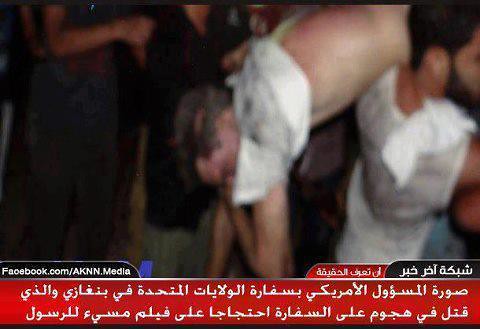
Spin doctors in the United States are finding it hard to explain the September 11 strike in Benghazi that killed Ambassador John Christopher Stevens. Nobody, including powerful lobbyists, politicians, public relations gurus, mainstream media, has managed to present a credible and logically consistent account of the tragedy. The fog engulfing the assassination is rising from the campaign for the U.S. presidential elections scheduled on November 6. In the heat of an electoral battle where princely sums are paid to create perceptions rather than establishing facts, neither the Republican camp of Mitt Romney nor Barack Obama’s legions seem interested in confronting the truth till such time as the votes have been cast and the last ballot box has been sealed.

‘Intelligence failure’

The debate ahead of the elections is not just about who killed the ambassador, and how, but also the context. The Republicans, who may be in striking distance of the presidency, argue that he was a victim of a planned al-Qaeda attack. The killing was, therefore, a result of either a huge intelligence failure or unforgivable administrative laxity which prevented the authorities from responding to the red flags raised about the possibility of a strike in Benghazi or elsewhere.

Mr. Obama has acknowledged that Ambassador Stevens was the victim of an “act of terror”. There have been several articles in the mainstream media that quote unnamed intelligence officials as saying that the assailants, who attacked the cluster of villas occupied by the ambassador and his staff, mounted an “opportunistic” attack, taking advantage of the protests that had been organised in Benghazi against the tasteless b-grade video film that was disrespectful of Prophet Muhammad. The theory of an “opportunistic” attack is far less damaging to the current administration. It spares President Obama and his team culpability in inaction, because it shows that the attack was not pre-planned, was difficult to predict and, therefore, harder to prevent.

Neither of the two narratives offered to the American electorate may, however, pass careful scrutiny. The Republicans’ assertion that the al-Qaeda masterminded the strike cannot be accepted at face value. Copious reams of material are available which show that jihadist groups with strong al-Qaeda ideological connections were, with American and NATO support, at the forefront of the military campaign that toppled Muammar Qadhafi, the former Libyan leader. Ambassador Stevens, who had famously arrived in Benghazi in April 2011 aboard a Greek cargo ship, became the lynchpin coordinating the administration’s ties with the armed Islamist groups.

The ambassador’s bonding with the Islamist fighters was well known. He shifted base from a Tripoli hotel after he escaped an assassination attempt outside its premises to the more secure villas of Benghazi, the hotbed of jihadists. So confident was he about his security that he enjoyed jogging on the streets of Benghazi teeming with jihadi groups — many with well-established connections to the Afghan Mujahideen and the al-Qaeda.

‘Opportunistic’

The opportunistic attack scenario, painted by Mr. Obama’s supporters, in which the assailants weaved their way into an ongoing protest against the blasphemous film and struck when the opportunity arose, appears equally flawed. It assumes that a protest was under way outside the gated villas in Benghazi, which presented the attackers a smoke-screen to infiltrate. However, eyewitness accounts suggest that there was no assemblage of protesters outside the villas on the fateful evening of September 11.

McClatchy news service quotes an eyewitness interviewed on September 13 as saying: “The Americans would have left if there had been protesters but there wasn’t a single ant. The area was totally quiet until about 9.35 pm, when as many as 125 men attacked with machine guns, grenades, RPGs, and anti-aircraft weapons. They threw grenades into the villas, wounding me and knocking me down. Then, they stormed through the facility’s main gate, moving from villa to villa.”

In an article published on the website globalresearch.ca, researchers Mark Robertson and Finian Cunningham identify the eyewitness as a 27-year-old who was one among the eight Libyans involved in protecting the villas used by ambassador Stevens and his staff. He suffered five shrapnel wounds in a leg and two bullet wounds in the other during the course of fighting. If the account is true, the “opportunistic attack” theory collapses as the assailants did not have the crowds to infiltrate and mount an assault.

Obsessed with the projection that a free and democratic Libya is emerging from 40 years of “tyranny” of the Qadhafi-era, it appears that no one in the U.S. establishment and NATO is inclined to speak the truth — that a green resistance movement of pro-Qadhafi loyalists, systematically targeting the former leader’s chief adversaries, has been mushrooming in Libya. The killing of the ambassador was only the latest act that capped an aggressive and effective campaign of the movement called “Tahloob” in local parlance. Not headlined by the mainstream media, the Tahloob has carried out a string of attacks including assassinations, chiefly of those who betrayed Qadhafi in his last days.

Its victims include Shukri Ghanem, a one-time celebrated Oil Minister, whose lifeless body was found floating on the Danube on April 29. In a classic betrayal, Ghanem had switched sides, joined NATO, and began living the good life, first in London and later in Vienna. Less than a month after Ghanem’s death, the movement claimed responsibility for killing General Albarrani Shkal. The former military governor of Tripoli had been accused of demobilising 38,000 men under his command. His act opened the floodgates for the entry of foreign troops into Tripoli, resulting in the “success” of Operation Mermaid Dawn, crowned by the unceremonious sacking of the Libyan capital. Another celebrated defector, Special Forces commander Abdel-Fattah Younis was also killed as was the judge investigating Younis’ assassination, in June this year.

The killing of Ambassador Stevens marked a sharp escalation in the green movement’s campaign. The motive was obvious, given Washington role and the critical contribution of the ambassador in toppling Qadhafi.

There were other factors that might have impacted the timing of the attack. Six days before the Benghazi attack, Mauritania had extradited to Libya Abdullah Al Senoussi, Qadhafi’s high-profile intelligence chief. This infuriated the resurgent Tahloob. Senoussi had made the ill-fated choice of seeking refuge in Nouakchott, the Mauritanian capital, where he was promptly arrested upon arrival on March 17. At the time of his arrest, Mauritania was firmly in the lap of the western camp.

While the green movement has not claimed responsibility, it will be surprising if it is not on the list of those suspected to be involved in the attempt to assassinate Mauritanian President Mohamed Ould Abdel Aziz on October 13. For public consumption, the al-Qaeda is being blamed for the attack although the official version states that the President was lightly injured in a “friendly fire” incident involving his own troops.

There was another reason that could have hastened the green movement’s decision to target Stevens. A day before the Benghazi attack, two Qadhafi loyalists — Abdul Ati Al Obeidi, a former Prime Minister, Foreign Minister, and Head of State, and Mohammed Zwai, former head of the legislature — were put on trial. Both were accused of squandering public funds by paying compensation to the tune of $2.7 billion to the families of the victims of the attack on the Pan Am Flight 103 over Lockerbie, Scotland.

Bitter conflict

In the aftermath of Ambassador Stevens’ death, a new chapter of bitter conflict seems to have opened up between Qadhafi loyalists of the green resistance and the NATO backed militias which have assumed power in an increasingly fractured Libyan state. Bani Walid, the city loyal to Qadhafi, which was the last to fall last year, has been attacked and the people of the Warfala tribe, loyal to Qadhafi, who reside in strength in the city, are being subjected to collective punishment. Rumours are swirling that Khamis, Qadhafi’s youngest son, has been killed and Moussa Ibrahim, Qadhafi’s one-time spokesman, captured. The resistance offered by Bani Walid under the leadership of the green movement illustrates that whoever occupies the White House next year is unlikely to escape the blowback from Libya, where many reject the regime change engineered under the generic deception called the Arab Spring.