Monday, May 07, 2007

Ron Wilkins' Interview With Kwesi Pratt on the 50th Anniversary of Ghana Independence


Ron Wilkins' Interview With Kwesi Pratt on the 50th Anniversary of Ghana Independence

Professor Ron Wilkins of California State University, Dominguez Hills attended Ghana’s 50th Independence Anniversary celebrations.

He filed the following report:

I recently visited Ghana to experience its 50th Independence Anniversary celebrations. Ghana occupies a special place among African nations as the first country on the continent south of the Sahara, to win independence from colonial rule. Having visited Ghana previously, I began my eleven day stay with some reservations; as I was aware that no government, since the original government of President Kwame Nkrumah, which was overthrown by a 1966 CIA-led coup, has surpassed his achievements. Under Nkrumah’s brilliant leadership Ghana began to develop industrially and played a major role in liberating the rest of the African continent. Within 10 years of Ghana’s independence, 31 additional African countries became independent. Declassified National Security Council and Central Intelligence Agency documents have provided new evidence of the 1966 U.S. engineered overthrow of Nkrumah’s progressive government.

Immediately upon my arrival in the capital city of Accra, I was floored by the deepening poverty and desperation of its inhabitants. The lack of running water in my guesthouse, power outages and the foul odor from open sewers lining the streets. The cumulative effect of these conditions exacted a heavy toll on my senses and dampened any enthusiasm that I may have had for the celebrations. It seems that corruption knows no bounds, as Ghana’s current leaders spent over 20 million dollars, imported 250 luxury cars and shabbily decorated Nkrumah’s mausoleum in preparation for the celebrations.

Eventually I held discussions with Nkrumaists, officials from the former Rawlings government, academics and students at the University of the Cape Coast and expatriates from the U.S. now residing in Ghana. Perhaps, one of the most insightful meetings was with Kwesi Pratt. Kwesi Pratt is a member of Socialist Forum, a central committee member of the Convention People’s Party, and one of the most visible and outspoken critics of the present government.

The Interview

Ron Wilkins: I would like to get some of your impressions of Ghana’s 50th Independence Anniversary celebration. I’m having real problems with it. I’m not impressed with the government, or the progress that Ghana has made. I would like your comments because I know you’re doing a great deal of work and are involved with many other people. I can imagine that the struggle must be very difficult. Just where do things stand at the moment? Your impressions.

Kwesi Pratt: I think it is important to understand that there are two kinds of celebrations taking place at the same time. There is the official celebration which is sponsored by the government and there are private celebrations which involve the democratic and progressive forces in the country. If you are looking at the government celebration, it is basically a celebration of the victory of the oppressor over the masses. The people who are in the government today are the same people who opposed the independence struggle.

They come from the same tradition which appealed to the Queen of England not to grant Independence to Ghana because the Ghanaian people could not manage their own affairs. They come from the same tradition which subverted the independence movement, even after independence by exploding bombs in stadiums, by plotting to assassinate Kwame Nkrumah, by working with the Central Intelligence Agency of the U.S. (CIA), and so on. So their celebration of the 50th Independence anniversary is in reality a celebration of their temporary victory over the masses.

Those of us on the other side are celebrating the victory of the masses over the exploiters and the oppressors. That is why the manifestations are very different. We believe in organizing street marches which involve all of our people. They believe in organizing elitist parties and celebrations that exclude the masses. That difference is obvious. Again, for us this is a celebration of the progressive ideas of Nkrumah, W.E.B. Dubois, Malcolm X, and all. They are celebrating, Busia and Danquah, who were agents of imperialism. And we have to understand this very clearly.

They make all kinds of obscene comments about how they initiated the independence struggle and that they led it and so on. But all that is lies. They claim for example that it was them, Busia, Danquah and others, who invited Kwame Nkrumah to join the United Gold Coast Convention.

The impression they create is that Nkrumah was doing nothing but sitting idle until they invited him. But that is false. Because long before Nkrumah came back to the Gulf Coast in1948 to lead the struggle, he had actually been involved in organizing nationalist agitators across the whole of the West African Sub-Region. He was not just interested in Ghana’s independence; he was interested in the independence of all people under colonial rule everywhere in the world. And he was already engaged in those agitations. He had been part of The Manchester Pan-Africanist Congress, and so on.

And he came here precisely because the elite who were leading the independence struggle knew about their own shortcomings and they knew that they could not carry the struggle very far. And they needed the expertise and knowledge of somebody like Nkrumah to change the situation. And indeed, Nkrumah arrived in 1948, and by 1951 we had gained partial independence, by 1957 we had gained complete independence, and by 1960, we were already a Republic. So it is clear that this struggle gained special importance by the arrival of Nkrumah in Ghana.

Ron Wilkins: What should we be looking at in terms of this new thing that the Bush administration has come up with as far as an African Command? What should we be looking for from President Kufuor of Ghana and his role now coming up as the African Union chair? What is one to make of all this? Because, actually I’m very nervous about it. Just from what I’ve heard and what I’ve picked up on already, it seems that the United States has gained a foothold in Ghana and is expanding its influence here.

Kwesi Pratt: I am very alarmed after reading what is called the Cheney Report. When Bush came to power, he set up a committee chaired by Dick Cheney his Vice President to assess America’s energy requirements up to the year 2015. The Cheney Report actually says that by the year 2015, twenty percent of American oil requirements will be supplied by West Africa and therefore it is important to maintain a foothold in West Africa in order to ensure that oil supplies from West Africa to the United States of America will not be interrupted.

Consequently, the United States is planning to establish military bases across West Africa including Ghana. And I am very worried that at a time when we are celebrating our national independence we are going to tolerate the establishment of foreign military bases, especially American military bases on our soil. The great Osageyfo Dr. Nkrumah, Malcolm X, Kwame Ture, and all of them emphasized that Africa ought to be free from foreign military bases and weapons of mass destruction. We cannot allow that dream to die.

That is why, it is important for us to resist all attempts to establish foreign military bases on African soil especially forces of the United States, must be prevented from establishing on African soil. Clearly because they are not on African soil to protect our interests, they are on African soil to facilitate the exploitation of our resources for the benefit of the tiny minority that controls the wealth of the American people and who are sitting on top of this world exploiting the Chicanos, exploiting the African Americans and exploiting all of the other independent and healthy forces in the United States on America. We have to resist all attempts to build U.S. military bases in Ghana and elsewhere in Africa.

Ron Wilkins: The Joseph Project. What’s your take on it? It is very important that Africans in the Diaspora, especially in the United States, assist Africa’s development and assist the struggles against neo- colonialism and imperialism. However, The Joseph Project is being couched in very religious terms. I am not a Christian, but I love Africa. I have long acknowledged Africa as my ancestral home. And I want to come here as do many others, but not within a Christian framework. There are some other obvious meanings to this Joseph project that have been established. I just wondered what your take on it is.

Kwesi Pratt: I think that The Joseph Project is an insult to all people of African descent, whether you are on the continent or you are in the Diaspora. It is an insult because it starts from the basis that there was something positive about slavery, that as a result of the Trans-Atlantic Slave Trade our brothers have become the Josephs of Africa today. And they are returning with their wealth that they acquired from slavery. I think this is absolute nonsense. It is something we should not countenance at all. There could not have been anything good about the Trans-Atlantic Slave Trade. And the concept of a Joseph coming back to deliver us from poverty is a foolish concept that must be rejected by all dignified African people.

Our brothers in the Diaspora are welcome back home as Africans with a commitment to help us to develop, and with a commitment to help us fight against the penetration of imperialism into the continent. They are not coming as Messiahs, they are coming as one of us. And they are not coming because they benefited from the Trans-Atlantic Slave Trade; indeed they themselves are victims of oppression and victims of exploitation. That point must be made abundantly clear to those who think that something was gained from the Trans Atlantic Slave Trade. That is the whole concept of The Joseph Project, and I reject it completely.

Evidence of the African struggle can be found all over the world. We can talk about Akente, we can talk about Imhotep, we can talk about all those who lived 3,000 years before Jesus Christ was born, and we can talk about the modern revolutionary fighters of the United States of America. We can talk about those who led the Black Panther Party, we can talk about Malcolm X, and the Student Nonviolent Coordinating Committee. We can talk about all of them. I think it is important for all of us, wherever we are to continue the struggle that these great sons of Africa have fought to deliver the continent from oppression and exploitation. It is important for us to understand that those of our brothers and sisters in the U.S. live right at the center of the oppression and exploitation, and they have a responsibility to work in the United States of America to weaken the enemy and to make it impossible for the enemy to carry out its agenda on the African Continent or anywhere. Oppression everywhere is against decency, and we have a commitment to fight oppression and exploitation wherever we find it. This is our historic duty.

Ron Wilkins: Thank you very much.

Ron Wilkins can be contacted at: rwilkins@csudh.edu

Sunday, May 06, 2007

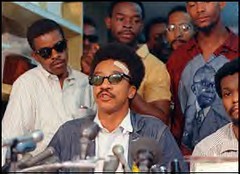
Gang Leader's Confession Exonerates Imam Jamil al-Amin (formerly known as H. Rap Brown)

Islamic Leader Praises Confession on Imam Jamil

As Salaamu Alaikum
In the Name of Allah, Most Merciful and Mercy-Giving. As to what follows...

This letter of confession on Imam Jamil should be on the front page of the New York Times and the Wall Street Journal and sent to Oprah, as well as The Final Call, Muslim Journal, Horizon Magazine, Minaret, Al Talib, etc. Ya Sheikh. Who is leading this campaign? Shukran for your great work.

Gang Leader in U.S. Prison Says he Shot the Policemen Imam Jamil is Accused For

U.S. Government arrested Imam Jamil as Part of Conspiracy to "Get" the Islamic Leader

The Confession:

In the name of Allah the most Gracious the most Merciful

In the name of the Almighty Vice Lord Nation, I am as I come as I am I come Almighty Vice lord.

I greet you all in Peace. I’m the Spiritual son of the Honorable Dr. Yusuf Ali Bey founder of Your Black Muslim Bakery Inc. In Oakland, CA. My name is Farrakhan Malik Bey AKA Otis M. Jackson AKA James Santos. I’m the head of the Almighty Vice Lord Nation as well as the Chairman of the New Student National Coordinating Committee. It was this organization that sent me to the mosque and the general store of Imam Jamil Abdul Al-Amin. I went there to talk to him about me taking the Almighty Vice Lords from a street organization to a socially conscious, self-help, socially motivated organization

Now before going to Atlanta I had just gotten out of prison in NV for shooting a white man. As a kid I lived not far from the west end, so when I came back to Atlanta I went there but with the mind of a minister and a heart for revolution.

When I got to Oak street on 3-16-2000 at about 10.00 PM, as I was walking back to my car, a Sheriff’s came up. One got out and ask me something. I could not understand but I did not want to understand it because Vice Lords don’t talk to cops and I had guns on me and I was on parole. So when the other one got out and asked me to put my hands up, I pulled out and opened fire with my 9 mm hand gun.

I then went to my car and got my M-14 and fired off some rounds. Deputy Kinchen shot me two times in the arm so I shot him. I shot Deputy English as well . I remember standing over him and him telling me about his family but I was upset and hurt and I hate cops so I shot him anyway. I got in my car, went to the home of Latina Moore.

She along with Sheryl Watts removed the bullet. One went in and came out. The one that was in there, they got it out. I went home, on the 17th or 18th I found out that they were looking for Jamil Abdullah Al-Amin. So I called my parole officer and told her what I had done.

I was sent back to Vegas. I had to beg the FBI to investigate and I was told that I was not the one that they wanted. I was told that I should be honored that I had gotten away with killing a police. Truth can be said to symbolize divinity. Truth is the foundation of everything that is just. It is what man is constantly seeking. But truth is impossible to define. All of us look at everything differently. We are conditioned by our environment, associates and education. All of us look at life through restricted windows. No two people see exactly the same thing at the same time.

Deputy Aldranon English can free Jamil because he knows Jamil is not the man who shot him. Everything that he said Jamil had on is what I had on. I talked to him. I looked into his eyes. He cannot forget that. The department for whatever reason asked him to pick out Jamil and he did.

Look, I like living. I have nothing to gain from telling a lie and I don’t even know Jamil. I’m doing this for myself and my Nation the Almighty Vice Lord Nation. I want them to know that when you end up in a situation, you should own up to what you do. Not one of Jamil’s criminal defense lawyers have come to see me because they are a part of what is being done to him..

Imam Warith Deen Muhammad, Minister Louis Farrakhan and Silis Muhammad all have their own paper. They are around the same age as Jamil. They remember him as H. Rap Brown but he has gotten no writing in their papers, yet they talk about Muslim unity: let’s come together! All that is just talk. Here is a man that you know to be living the life of a Muslim telling you that he did not do something. Here is a man telling you that the man could not have done it because he did it. You should do everything in your power to help them fix this.

Judge Stephanie B. Manis should have called me in to court but she never did. I sent letters and I was declined the right, so now I feel that I have been used in a government conspiracy because I know that he was not even there that night. What is factual to one, won’t be to another, so it is with symbolism each will see something different and rightly so. In the Masonic Lodge we say that we are seeking light. We are actually seeking truth. . Therefore light symbolizes truth. I feel that it is my job to bring this truth to light.

The Persecution and Prosecution is mine, not Jamil’s . I could never say that I am from the street and have the Vice Lords look up to me if I run from my Punishment and let an innocent man die in jail for something that I did. It’s not right and the Vice Lords should never honor me if I don’t stand up for what I do.

I would like to say to the family of Deputy Ricky Kinchen when he got out of bed that day, God had it set that he was not coming home that night. I only did what I had to do.

Deputy Aldranon English I have no respect for you because you fingered a man that had nothing to do with shooting you and you know that. You are part of the conspiracy. You worked with a man every day and he was killed because you made mistakes. Then you let the man who did it walk because you were told to. You are weak, less than a man. You were laying down begging for your life and I shot you. Had it been up to me, you would have died as well. I can’t tell you to do the right thing. I say look at the situation. I ask all the Vice Lords to respect my wish to open this case. I ask that any and every one do what they can to help Jamil.

And to Mr. Al-Amin and his family, I’m sorry that I got you in this. I know that it’s hard to be sitting in another man’s seat. I’m so sorry!

Respectfully yours
Farrakhan Bey

**************
Ma'a Salaams wa Shukran Jazillin wa BarakAllah-fikum

Abdul-Jalil
(510) 839-5400

Afghan Update: Resistance Clashes With Police; UK Tells Farmers to Grow Poppies; CIA Torture Chambers, etc.

Afghan police killed by Taleban

Eight Afghan policemen and at least four Taleban militants have been killed in a six-hour gun battle in the western province of Farah, Afghan police say.

The clashes began after a police patrol was ambushed in Bala Baluk on Saturday.

Provincial police chief Gen Sayed Agha Saqeb said 17 Taleban were killed, but only four bodies have been recovered. Two other policemen were wounded.

Western Afghanistan has so far been comparatively free of violence, with most fighting occurring in the south.

Gen Saqeb said two of the dead militants had come from the neighbouring, southern province of Helmand, which has been the focus of a recent operation by Nato-led forces.

Story from BBC NEWS:
http://news.bbc.co.uk/go/pr/fr/-/2/hi/south_asia/6629337.stm
Published: 2007/05/06 06:00:16 GMT


Canada signs Afghan detainee deal

Canada has signed a deal with Afghanistan which will give Ottawa unrestricted access to any prisoners they hand over to Kabul.

Canada has come under growing criticism following allegations that detainees were tortured in Afghanistan.

The torture is said to have occurred after Canadian soldiers transferred suspects to Afghan security forces.

Canada signed a controversial agreement two years ago to hand over Taleban prisoners to the Afghan authorities.

About 2,500 Canadian soldiers are involved in combat operations against insurgents in southern Afghanistan.

'Not good enough'

Canadian Federal Court Judge Michael Kelen announced the details of the new agreement during a case brought about by human rights group, Amnesty International Canada.

Amnesty has been calling for stopping all transfers of prisoners to Afghanistan.

"It [the new agreement] probably wouldn't have happened if this court hadn't been happening," Mr Kelen said.

But Amnesty said the deal was not good enough.

"Monitoring isn't the solution. It's a positive step forward compared to the former deal, but that's not the end point when torture is as rampant and systematic as it is in Afghanistan," Amnesty spokesman Alex Neve told news agency Associated Press.

"No amount of monitoring will prevent something that is a secret, insidious practice that can inflict devastating harm and damage on prisoners in a few minutes," he said.

'Electric cables'

Last week, at least 30 detainees told Canada's Globe and Mail newspaper that they were tortured in Afghan prisons after being handed over by Canadian armed forces based in Kandahar to Afghanistan's National Directorate of Security.

The allegations of brutality ranged from beatings to starvation, to being left naked outside in freezing temperatures.

Some of the men also said they were whipped with electrical cables.

In the face of a storm of opposition questions in the Canadian parliament, Prime Minister Stephen Harper defended the controversial prisoner exchange deal.

Canadian Defence Minister Gordon O'Connor promised that the allegations would be looked at seriously.

International law and human rights activists have warned the government that if the allegations are true, then Canadians may face international war crimes prosecution.

Story from BBC NEWS:
http://news.bbc.co.uk/go/pr/fr/-/2/hi/south_asia/6623021.stm
Published: 2007/05/04 08:10:17 GMT


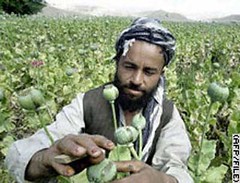
UK troops tell Afghan farmers they can grow poppies

By Declan Walsh

Apr. 28- Afghan officials have reprimanded British diplomats over a campaign by UK troops in Helmand telling farmers that growing poppies was understandable and acceptable.

A radio message broadcast across the province assured local farmers that the NATO-led International Security Assistance Force (ISAF) would not interfere with poppy fields currently being harvested.

"Respected people of Helmand. The soldiers of ISAF and ANA [the Afghan National Army] do not destroy poppy fields," it said. "They know that many people of Afghanistan have no choice but to grow poppy. ISAF and the ANA do not want to stop people from earning their livelihoods."

The advertisement, which was drafted by British officers and carried on two local stations, infuriated Afghan officials as high up as President Hamid Karzai, who demanded an explanation.

The Afghan government has been under intense pressure to smash the burgeoning drug trade. Last year opium cultivation soared 59 percent, earning traffickers an estimated $2.5 billion according to the United Nations. The rise was most concentrated in Helmand, which is the source of much of the heroin sold in Western Europe.

"This was an error by ISAF," said Zalmay Afzali, spokesman for the Ministry of Counter Narcotics. "We have asked ISAF to avoid such problems in the future because it can create a hell of a problem. We hope it will not happen again."

After a series of stormy meetings, NATO announced on Apr. 25 that it was dropping the ads. "We recognized this was a mistake and addressed it as soon as possible," said spokesman Nicholas Lunt.

A British military spokesman said the ads were intended to counter Taliban propaganda that British soldiers had moved to the Sangin Valley, a hotbed of cultivation, to destroy farmers' livelihoods.

"The dilemma was that the poppy harvest was taking place and people would take up arms and fight us," said Lt. Col. Charlie Mayo. "They have to understand that we are here to kill the Taliban, not to cut down their poppy."

Mayo admitted the wording of the message was "open to misinterpretation" and said that after complaints from the local governor, Asadullah Wafa, it was removed and an apology issued. A drug official played the incident down, saying the message had been drafted by a newly arrived territorial army officer who "got a bit carried away with the language."

But it exposes tension inside western policy in Afghanistan centered on arguments about trying to eradicate poppies while fighting a dogged insurgency.

Since 2001, western embassies have channeled hundreds of millions of dollars into helping the Afghan government to hunt for drug barons, persuading farmers to grow licit crops and funding eradication efforts. But NATO and the US military have refused to get involved in eradication, arguing that the sight of western soldiers slashing through poppy fields could drive farmers into the hands of the Taliban. NATO says it will provide security so that Afghan counter-narcotics officials can wipe out the poppy crop.

The argument is particularly sharp in Helmand, where NATO troops are fighting the Taliban amid some of the world's most extensive poppy plantations. British officers are at pains to distance themselves from expensive eradication efforts that are riddled with allegations of corruption and produce poor results.

So far this year Afghan officials claim to have eradicated almost 20,000 acres in Helmand — about 10 percent of last year's crop — and the veracity of even those figures has been questioned. The British policy can create strange dilemmas. Recently in Sangin, officers discussed paying the full market rate for a field of poppies to a local farmer whose land was being requisitioned for a military base.

Critics argue that drugs and the insurgency have become so linked it is impossible to distinguish them. In Helmand the Taliban pushes farmers to grow poppies and reportedly uses drug profits to buy guns. One drug official in Kabul said: "Insecurity and poppy are the same issue — one creates the conditions for the other. This won't be over until the poppy is gone."

A sea of poppies has become Afghanistan's runaway export success. The crop soared from 20,000 acres in 2001 to a record 400,000 last year. Farmers milk opium resin from the plants which is processed into heroin and smuggled. An estimated 2.9 million Afghans, 13 percent of the population, are involved. There are no cartel lords — western officials believe trade is controlled by 25 smugglers including three government ministers.

Source: Guardian (UK) Photo courtesy chathamhouse.org


US to make history trying alleged child war criminal

By Mark Tran

Apr. 25- A human rights group has attacked a US decision to file murder charges against a Canadian national and alleged Taliban fighter who was captured in Afghanistan when he was 15.

Omar Khadr was wounded by US soldiers during a battle near Khost, Afghanistan, and taken into US custody in July 2002. He has spent most of the past five years in the US military prison at Guantánamo Bay.

During his capture he was shot three times and is nearly blind in one eye as a result of his injuries. The US military says Khadr threw a grenade that killed a US Green Beret sergeant, Christopher Speer, and wounded another sergeant, Layne Morris.

Khadr's Pentagon-appointed lawyer, Marine lieutenant colonel Colby Vokey, said the US would become the first country in modern history to try a war crimes suspect who was a child at the time of the alleged violations if a trial went ahead.

Khadr has been charged with murder, attempted murder, providing support to terrorism, conspiracy and spying under rules for military trials adopted last year. The conspiracy charge is based on acts allegedly committed before Khadr was 10, according to his defense team.

Amnesty International strongly criticized the decision to subject Khadr to a military tribunal.

"To have held a 15-year-old boy in the harsh and lawless conditions of Guantánamo for five years has already been a travesty of justice — and to put him before an unfair 'military commission' trial simply adds to a disgraceful record in his case," Amnesty International UK director Kate Allen said on Apr. 25.

Allen said the US authorities should transfer his case to a civilian federal court on the US mainland.

Toronto-born Khadr faces a maximum penalty of life imprisonment.

The Pentagon said Khadr must be held accountable.

"The Defense Department will continue to uphold the law and bring unlawful enemy combatants to justice through the military commissions process," it said.

Speer's widow and Morris filed a civil lawsuit against Khadr and his father. In February, a judge awarded them $102.6 million.

Dennis Edney, a Canadian lawyer for Khadr's family, said the new tribunal system, which allows coerced and hearsay evidence, "provides Mr. Khadr with almost no chance of proving his innocence.

"The aim is to provide a showcase to justify the US administration decision to arrest Mr. Khadr and other men like him in the first place," Edney told The Associated Press.

Khadr's attorneys urged Canada and the US to negotiate a "political resolution" of the case to spare Khadr a guaranteed conviction by "one of the greatest show trials on earth."

Several of Khadr's family members have been accused of ties to Islamic extremists. His Egyptian-born father, Ahmad Said al-Khadr, was killed in Pakistan in 2003 alongside senior al-Qaida operatives and Canada is holding Khadr's brother Abdullah on a US extradition warrant accusing him of supplying weapons to al-Qaida.

Khadr will be the second prisoner to face terror charges under new military tribunals after the Supreme Court in June struck down the previous military tribunal system at Guantánamo as unconstitutional. Congress then passed a law establishing a new system, which is also being challenged.

In March, the military tribunal at Guantánamo sentenced an Australian, David Hicks, to nine months in prison after he pleaded guilty to supporting terrorism — the first conviction at a US war crimes trial since the second world war.

Under an agreement with the court, he will serve his sentence in an Australian prison, but must remain silent about any alleged abuse while in US custody. Prosecutors say they plan to charge as many as 80 of the 385 men held at Guantánamo on suspicion of links to al-Qaida or the Taliban.

"We are increasingly concerned that with 80 percent of Guantánamo detainees now held in solitary confinement, there is mounting evidence that some are dangerously close to full-blown mental and physical breakdown," Amnesty said.

Source: Guardian (UK) Photo courtesy commondreams.org


CIA held suspect in secret prison for months

Apr. 28- The CIA held an alleged al-Qaida leader in a secret prison since autumn and transferred him a week ago to the US military prison at Guantánamo Bay, Cuba, officials said on Apr. 27.

The disclosure revealed that the Bush administration reopened its detention program within three months of announcing that no secret prisoners remained in the CIA's custody.

The detainee, Abd al-Hadi al-Iraqi, an Iraqi Kurd who they claim joined al-Qaida in the late 1990s and ascended to become a top aide to Osama bin Laden, is the first terrorism suspect known to have been held in secret CIA jails since President Bush announced the transfer of 14 captives to Guantánamo Bay in September.

Human rights advocates expressed anger that the United States continued a program of secret detention.

The CIA's secret detention of terrorism suspects has been widely criticized by human rights organizations and foreign governments as a violation of international law that relied on interrogation methods presumably verging on or including torture.

The Bush administration's continuing reliance on secret CIA prisons violates basic human rights standards, Human Rights Watch said. The group called the secret detention "a blatant violation of international law."

The group said the announcement that al-Iraqi was transferred to the Guantánamo Bay detention facility from CIA custody raises worrying questions about how long he has been detained by the CIA, where he was held, what kind of treatment he endured, and whether other prisoners still remain in CIA detention. The CIA has previously held numerous detainees for months and even years.

"The CIA's secret detention of Abd al-Hadi al-Iraqi is a blatant violation of international law," said Joanne Mariner, terrorism and counterterrorism director at Human Rights Watch. "This transfer shows that Congress will have to act to end the CIA's illegal detention program."

Numerous detainees previously transferred from CIA custody to Guantánamo have claimed that they were subjected to torture.

Human Rights Watch renewed its call to have suspected criminal detainees at Guantánamo transferred to federal courts and prosecuted under US federal criminal law.

"If al-Hadi and other detainees committed the crimes they're accused of, they should be tried for acts of terrorism in federal court, under a fair and transparent system," said Mariner.

On Sept. 6, 2006, President Bush publicly revealed the existence of the CIA's secret detention and interrogation program. Although he stated that, as of that moment, there were no prisoners in CIA custody, he did not promise that the program was closing permanently.

US officials have told journalists that al-Hadi was arrested in late 2006, meaning that al-Hadi has been in secret CIA custody for at least five months.

It is possible that the president's statement that the CIA's prisons were empty in September 2006 was true only in a technical sense, and that in fact prisoners were being held in "proxy detention" – held in another country on behalf of the United States.

"We're skeptical that President Bush was telling the whole story when he said the CIA prisons were empty," Mariner said. "It's quite possible that his claim was based on legal niceties: that while detainees were in the custody of other countries, the CIA had the power to determine their fate."

Sources: Human Rights Watch, International Herald Tribune, Washington Post. Compiled by Eamon Martin (AGR) Photo courtesy rewardsforjustice.net


Canada hides Afghan torture, killings

By Paul Koring

Apr. 25- The Canadian government knew from its own officials that prisoners held by Afghan security forces faced the possibility of torture, abuse and extrajudicial killing.

But the government has eradicated every single reference to torture and abuse in prison from a heavily blacked-out version of a report prepared by Canadian diplomats in Kabul and released under an access to information request.

Initially, the government denied the existence of the report, responding in writing that "no such report on human rights performance in other countries exists." After complaints to the Access to Information Commissioner, it released a heavily edited version this week.

Among the sentences blacked out by the Foreign Affairs Department in the report's summary is "Extrajudicial executions, disappearances, torture and detention without trial are all too common," according to full passages of the report.

The Foreign Affairs report, titled "Afghanistan-2006; Good Governance, Democratic Development and Human Rights," was marked "CEO," for Canadian Eyes Only. It seems to remove any last vestige of doubt that the senior officials and ministers knew that torture and abuse were rife in Afghan jails.

The report leaves untouched many paragraphs such as those beginning "one positive development" or "there are some bright spots."

But heavy dark blocks obliterate sentences such as "the overall human rights situation in Afghanistan deteriorated in 2006."

It's not clear why such internationally agreed and obvious observations are blacked out of the Canadian report. No national security issues seem involved, nor are there personal privacy issues, reasons often cited for excising information.

A comparison of the full text with the edited version shows a consistent pattern of excising negative findings or observations from the report with positive ones left in.

There was no explanation for blacking out observations such as "military, intelligence and police forces have been accused of involvement in arbitrary arrest, kidnapping extortion, torture and extrajudicial killing."

The findings echo other, and widely publicized, reports by Louise Arbour, the UN Human Rights Commissioner, the US State Department, the Afghanistan Independent Human Rights Commission and various international human-rights groups. The report by Canada's own diplomats seems to undermine the government's claims that it was unaware of the fate likely faced by detainees handed over by Canadian troops to Afghan security forces.

The report raises a red flag for any government bound by the Geneva Conventions and responsible for safeguarding transferred detainees from torture and abuse.

It makes repeated dark references to the reputation and performance of Afghanistan's National Directorate of Security (NDS), or intelligence police. Most prisoners captured by Canadian troops are now turned over to the widely feared NDS, which is considered tougher but perhaps less corrupt that the Afghan National Police. "Allegations of torture and arbitrary detention by NDS officials have also been reported," the full text of the report says.

Another portion that is blacked out reads "widespread allegations of corruption and human-rights violations exist with respect to the Afghanistan National Police and Ministry of Interior."

In March, when the US State Department issued its annual report, it made clear that Afghan prisons, where Canada consigns detainees captured by its troops, were rife with torture, abuse and corruption. The report echoed equally grim assessments issued earlier by the United Nations and Afghanistan's own independent Human Rights Commission.

"Security and factional forces committed extrajudicial killings and torture," the US report said. The most recent report by Arbour found: "The NDS, responsible for both civil and military intelligence, operates in relative secrecy without adequate judicial oversight and there have been reports of prolonged detention without trial, extortion, torture and systematic due process violations."

Source: Globe and Mail (Toronto)


Men in uniforms rob Afghan civilians

Apr. 24- Local residents in the Sangeen district of the restive southern Afghan province of Helmand said armed Afghan men in military uniforms looted their homes and businesses in early April. There are conflicting reports on whether the men were allied with international forces fighting the Taliban or whether they were an independent militia.

"They were Afghans wearing military uniforms like the national police and army. They broke into many houses and shops and looted whatever they could," a local resident said in an interview in Sangeen.

Provincial authorities and police officials in the capital, Kabul, confirmed reports of plundering by militias working for US forces in Afghanistan.

"They work for the Americans," Nabi Jan Molakhel, Helmand's police chief, said in an interview. "We impounded 35 motorcycles and many others items that they had stolen in Sangeen. We tried to apprehend them, but the Americans stopped us saying whatever they had taken belonged to the Taliban."

In Kabul, Zemarai Bashari, spokesman for Afghanistan's Ministry of Interior, said that no Afghan police or soldiers were involved in the lootings in Sangeen.

"Armed men who work for the US forces were [not] involved in those nasty actions. We don't have a single ANP [Afghan National Police] officer in the Sangeen district for the time being," said Bashari, adding that a 100-man police force would be deployed in the district to ensure law and order in the near future.

NATO-led International Security Assistance Force in Afghanistan (ISAF) and NATO officials denied any knowledge of such militias.

A spokesman for ISAF said its forces work very closely with the Afghan police and army but do not maintain relations with illegal armed groups and other militias in the country.

Nicholas Lunt, NATO's spokesman in Afghanistan, said no Afghan militias are used in their operations but "I cannot comment on whether US forces use non-government Afghan forces in their operations that do not come under NATO command."

Saturday, May 05, 2007

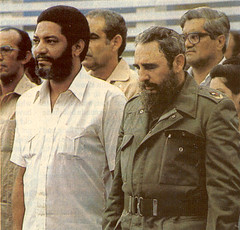
President Fidel Castro's May Day Address: Reflections by the Commander-In-Chief

Reflections by the Commander in Chief:

IT IS IMPERATIVE TO IMMEDIATELY HAVE AN ENERGY REVOLUTION

I hold nothing against Brazil, even thought to more than a few Brazilians continuously bombarded with the most diverse arguments, which can be confusing even for people who have traditionally been friendly to Cuba, we might sound callous and careless about hurting that country’s net income of hard currency. However, for me to keep silent would be to opt between the idea of a world tragedy and a presumed benefit for the people of that great nation.

I do not blame Lula and the Brazilians for the objective laws which have governed the history of our species. Only seven thousand years have passed since the human being has left his tangible mark on what has come to be a civilization immensely rich in culture and technical knowledge. Advances have not been achieved at the same time or in the same geographical latitudes. It can be said that due to the apparent enormity of our planet, quite often the existence of one or another civilization was unknown. Never in thousands of years had the human being lived in cities with twenty million inhabitants such as Sao Paulo or Mexico City, or in urban communities such as Paris, Madrid, Berlin and others who see trains speeding by on rails and air cushions, at speeds of more than 250 miles an hour.

At the time of Christopher Columbus, barely 500 years ago, some of these cities did not exist or they had populations that did not exceed several tens of thousands. Nobody used one single kilowatt to light their home. Possibly, the population of the world then was not more than 500 million. We know that in 1830, world population reached the first billion mark, one hundred and thirty years later it multiplied by three, and forty-six years later the total number of inhabitants on the planet had grown to 6.5 billion; the immense majority of these were poor, having to share their food with domestic animals and from now on with biofuels.

Humanity did not then have all the advances in computers and means of communication that we have today, even though the first atomic bombs had already been detonated over two large human communities, in a brutal act of terrorism against a defenseless civilian population, for reasons that were strictly political.

Today, the world has tens of thousands of nuclear bombs that are fifty times as powerful, with carriers that are several times faster than the speed of sound and having absolute precision; our sophisticated species could destroy itself with them. At the end of World War II, fought by the peoples against fascism, a new power emerged that took over the world and imposed the absolutist and cruel order under which we live today.

Before Bush’s trip to Brazil, the leader of the empire decided that corn and other foodstuffs would be suitable raw material for the production of biofuels. For his part, Lula stated that Brazil could supply as much biofuel as necessary from sugar cane; he saw in this formula a possibility for the future of the Third World, and the only problem left to solve would be to improve the living conditions of the sugarcane workers. He was well aware –and he said it-- that the United States should in turn lift the custom tariffs and the subsidies affecting ethanol exports to that country.

Bush replied that custom tariffs and subsidies to the growers were untouchable in a country such as the United States, which is the first world producer of ethanol from corn.

The large American transnationals, which produce this biofuel investing tens of billion dollars at an accelerated pace, had demanded from the imperial leader the distribution in the American market of no less than thirty-five billions (35,000,000,000) of gallons of this fuel every year. The combination of protective tariffs and real subsidies would raise that figure to almost one hundred billion dollars each year.

Insatiable in its demand, the empire had flung into the world the slogan of producing biofuels in order to liberate the United States, the world’s supreme energy consumer, from all external dependency on hydrocarbons.

History shows that sugar as a single crop was closely associated with the enslaving of Africans, forcibly uprooted from their natural communities, and brought to Cuba, Haiti and other Caribbean islands. In Brazil, the exact same thing happened in the growing of sugar cane.

Today, in that country, almost 80% of sugar cane is cut by hand. Sources and studies made by Brazilian researchers affirm that a sugarcane cutter, a piece-work laborer, must produce no less than twelve tons in order to meet basic needs. This worker needs to perform 36,630 flexing movements with his legs, make small trips 800 times carrying 15 kilos of cane in his arms and walk 8,800 meters in his chores. He loses an average of 8 liters of water every day. Only by burning cane can this productivity per man be achieved. Cane cut by hand or by machines is usually burned to protect people from nasty bites and especially to increase productivity. Even though the established norm for a working day is from 8 in the morning until 5 in the afternoon, this type of piece-work cane cutting tends to go on for a 12 hour working day. The temperature will at times rise to 45 degrees centigrade by noon.

I have cut cane myself more than once as a moral duty, as have many other comrade leaders of the country. I remember August of 1969. I chose a place close to the capital. I moved there very early every day. It was not burned cane but green cane, an early variety and high in agricultural and industrial yield. I would cut for four hours non-stop. Somebody else would be sharpening the machete. I consistently produced a minimum of 3.4 tons per day. Then I would shower, calmly have some lunch and take a break in a place nearby. I earned several coupons in the famous harvest of 1970. I had just turned 44 then. The rest of the time, until bedtime, I worked at my revolutionary duties. I stopped my personal efforts after I wounded my left foot. The sharpened machete had sliced through my protective boot. The national goal was 10 million tons of sugar and approximately 4 million tons of molasses as by-product. We never reached that goal, although we came close.

The USSR had not disappeared; that seemed impossible. The Special Period, which took us to a struggle for survival and to economic inequalities with their inherent elements of corruption, had not yet begun. Imperialism believed that the time had come to finish off the Revolution. It is also fair to recognize that during years of bonanza we wasted resources and our idealism ran high along with the dreams accompanying our heroic process.

The great agricultural yields of the United States were achieved by rotating the gramineae (corn, wheat, oats, millet and other similar grains) with the legumes (soy, alfalfa, beans, etc.). These contribute nitrogen and organic material to the soil. The corn crop yield in the United States in 2005, according to FAO (Food and Agriculture Organization of the United Nations) data was 9.3 tons per hectare.

In Brazil they only obtain 3 tons of this same grain in the same area. The total production registered by this sister nation that year was thirty-four million six hundred thousand tons, consumed internally as food. It cannot contribute corn to the world market.

The prices for this grain, the staple diet in numerous countries of the region, have almost doubled. What will happen when hundreds of millions of tons of corn are redirected towards the production of biofuel? And I rather not mention the amounts of wheat, millet, oats, barley, sorghum and other cereals that industrialized countries will use as a source of fuel for its engines.

Add to this that it is very difficult for Brazil to rotate corn and legumes. Of the Brazilian states traditionally producing corn, eight are responsible for ninety percent of production: Paraná, Minas Gerais, Sao Paulo, Goiás, Mato Grosso, Rio Grande do Sul, Santa Catarina y Mato Grosso do Sul. On the other hand, 60% of sugar cane production, a grain that cannot be rotated with other crops, takes place in four states: Sao Paulo, Paraná, Pernambuco and Alagoas.

The engines of tractors, harvesters and the heavy machinery required to mechanize the harvest would use growing amounts of hydrocarbons. The increase of mechanization would not help in the prevention of global warming, something which has been proven by experts who have measured annual temperatures for the last 150 years.

Brazil does produce an excellent food that is especially rich in protein: soy, fifty million one hundred and fifteen thousand (50,115,000) tons. It consumes almost 23 million tons and exports twenty-seven million three hundred thousand (27,300,000). Is it perhaps that a large part of this soy will be converted to biofuel?

As it is, the producers of beef cattle are beginning to complain that grazing land is being transformed into sugarcane fields.

The former Agriculture Minister of Brazil, Roberto Rodrigues, an important advocate for the current government position, --and today a co-president of the Inter American Ethanol Commission created in 2006 following an agreement with the state of Florida and the Inter American Development Bank (IDB) to promote the use of biofuel on the American continent-- declared that the program to mechanize the sugarcane harvest does not create more jobs, but on the contrary it would produce a surplus of non-qualified manpower.

We know that the poorest workers from various states are the ones who gravitate towards cane cutting out of necessity. Sometimes, they must spend many months away from their families. That is what happened in Cuba until the triumph of the Revolution, when the cutting and hauling of sugarcane was done by hand, and mechanized cultivation or transportation hardly existed. With the demise of the brutal system forced on our society the cane-cutters, massively taught to read and write, abandoned their wanderings in a few years and it became necessary to replace them with hundreds of thousands of voluntary workers.

Add to this the latest report by the United Nations about climate change, affirming what would happen in South America with the water from the glaciers and the Amazon water basin as the temperature of the atmosphere continue to rise.

Nothing could prevent American and European capital from funding the production of biofuels. They could even send the funds as gifts to Brazil and Latin America. The United States, Europe and the other industrialized countries would save more than one hundred and forty billion dollars each year, without having to worry about the consequences for the climate and the hunger which would affect the countries of the Third World in the first place. They would always be left with enough money for biofuels and to acquire the little food available on the world market at any price.

It is imperative to immediately have an energy revolution that consists not only in replacing all the incandescent light bulbs, but also in massively recycling all domestic, commercial, industrial, transport and socially used electric appliances that require two and three times more energy with their previous technologies.

It hurts to think that 10 billion tons of fossil fuel is consumed every year. This means that each year we waste what it took nature a million years to create. National industries are faced with enormous challenges, including the reduction of unemployment. Thus we could gain a bit of time.

Another risk of a different nature facing the world is an economic recession in the United States. In the past few days, the dollar has broken records at losing value. On the other hand, every country has most of its reserves in convertible currencies precisely in this paper currency and in American bonds.

Tomorrow, May Day is a good day to bring these reflections to the workers and to all the poor of the world. At the same time we should protest against something incredible and humiliating that has just occurred: the liberation of a terrorist monster, exactly when we are celebrating the 46th Anniversary of the Revolutionary Victory at the Bay of Pigs.

Prison for the assassin!

Freedom for the Five Cuban Heroes!

Fidel Castro Ruz
April 30, 2007
6:34 p.m.

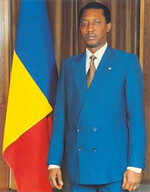
Will the Chad-Sudan Pact Halt War in the Region?

Chad-Sudan pact will not halt war: Chadian rebels

Fri May 4, 2007 2:15PM EDT
By Pascal Fletcher

DAKAR (Reuters) - A Saudi-brokered reconciliation deal signed by Chad with its neighbor Sudan will not halt a guerrilla war by Chadian rebels aimed at toppling President Idriss Deby, a rebel spokesman said on Friday.

Deby and Sudanese President Omar Hassan al-Bashir, who have been at loggerheads over military clashes and rebel activity on their countries' volatile border, signed the pact in Saudi Arabia on Thursday under the auspices of Saudi King Abdullah.

It was the latest in several bilateral peace accords made by the two
leaders over the last 18 months, all of which have failed to prevent
fresh violence spilling out of Sudan's conflict-torn Darfur region into
neighboring Chad.

Chad and Sudan have long accused each other of backing rebels hostile to their respective governments.

Past peace deals brokered by Libyan leader Muammar Gaddafi have failed to halt rebel movements and raids across the long, porous border of Darfur, where at least 200,000 people have been killed by political and ethnic conflict since 2003.

The Chadian rebel Union of Forces for Democracy and Development (UFDD) has fought a hit-and-run war against Deby's forces in east Chad since last year, and a UFDD spokesman said the Saudi-backed peace deal would not stop the rebel campaign.

"It's a fools' agreement. It changes nothing ... We are going to
continue to confront the Deby regime," Makaila Nguebla, an UFDD spokesman based in Dakar, said.

The UFDD's leader, Gen. Mahamat Nouri, is a former Chadian defense minister who was his country's ambassador to Saudi Arabia until he turned against Deby and defected to the rebel ranks a year ago.

DOUBTS OVER DEAL

Deby's fears that Nouri's UFDD may have been receiving Saudi as well as Sudanese support could have pushed him to sign the Saudi-mediated pact with Bashir on Thursday, analysts said. But doubts remained about just how solid the latest Chad-Sudan accord was and how long it would last.

"I seriously doubt this new deal will lead to any genuine thaw in
relations or improvement in the security situation," said Colin
Thomas-Jensen, an expert on Chad and Darfur who has done research for the International Crisis Group think-tank.

"We see a pattern of smiles and handshakes by political leaders of Chad and Sudan but the situation continues to deteriorate on the ground," added Thomas-Jensen, who is currently working on the U.S.-based ENOUGH project, which aims to prevent atrocities and genocide in Darfur and elsewhere.

In their latest accord, Deby and Bashir echoed previous agreements
signed in Tripoli by promising their countries would not be used to harbor, train or fund armed movements opposed to the government of the other.

Thomas-Jensen said the promise would have little concrete impact unless it was accompanied by concrete peace-building initiatives on the ground in Darfur and eastern Chad.

Sudan has been resisting the deployment of a large United Nations
peacekeeping force to support hard-pressed African Union peacekeepers in Darfur and Chad says it wants civilian U.N. police, not a robust military force, in its violent east.

"The simmering conflict, with civilians in the middle, looks set to
continue for some time," Thomas-Jensen said.

Communist Party of China Delegation Visits Cuba

From Havana

China and Cuba; Cuba and China

An important visit: Wu Guanzheng in Havana

By Manuel Alberto Ramy
maprogre@gmail.com

While mobilizations and demonstrations took place all over the island to protest the release on bail of terrorist Luis Posada Carriles, a high-level mission from the Communist Party of China (CPCh) arrived in Havana on Thursday, April 19.

The delegation, presided by Wu Guanzheng, member of the Permanent Committee of the Political Bureau of the Central Committee of the CPCh and a close adviser to President Hu Jintao, met that afternoon with José Ramón Machado Ventura, member of the Political Bureau of the Communist Party of Cuba (PB/CPC.)

Machado Ventura is the organizer of the CPC and Wu Guanzheng presides the Disciplinary Control Commission of the CPCh. Juan Almeida Bosque, a Comandante of the Revolution and a member of the PB/CPC, used to preside the Department of Party Control but, as I understand it, that department disappeared in the 1990s. Therefore, it is logical that Machado Ventura, who as CPC organizer supervises all the departments, was the right interlocutor for the visitor.

To the same degree that China has carried out deep reforms in the economic system, the Control Department has grown in importance, designed to watch and punish corruption within party ranks.

In Cuba, after the keynote speech given by Fidel Castro at the University of Havana in October 2005 where he warned that only the revolutionaries could destroy the revolution, a campaign against theft, corruption and misdirection of funds has been in effect throughout society. It is so thorough that Juan Carlos Robinson, a member of the PB/CPC, was sentenced to 12 years' imprisonment last year for corruption.

The experience of the communist Chinese in this field is of great importance for the CPC and Cuban government, even though no substantial reforms in economic concepts have yet been carried out. It appears that Cuba has opted for a process of escalation that begins with maintaining institutionality and the productive sector without making profound changes. In other words, Havana has decided to take best advantage of the existing process and postpone any Cuban-style reform until results can be checked.

On the other hand, institutionality is invaluable, not only in the present but also with a look to the future. The period of almost nine months when Cuba's historic leader was absent is a clear sign of the importance of institutionality.

Meetings with Fidel and Raúl Castro

The international media have highlighted Wu Guanzheng's meeting with Fidel Castro, which is valid and extremely important.

First, because it was an informal meeting; from Castro's attire to the reading of the document that both governments were to sign, there was an attitude of mutual deference.

The meeting was also significant because of some novel aspects. Let us not forget that Castro is an essentially political individual and thoroughly knowledgeable about the value of the media.

The first aspect is that Castro has recovered remarkably and, as the photographs show, has gained much weight since previous meetings -- the most recent with Nobel Prize winner Gabriel García Márquez last month.

A second observation is that the signing of the Accord for Economic and Technical Cooperation and an amendment to the agreement on the Reciprocal Protection of Investments, was attended by Raúl Castro, Cuba's acting president. General Castro later held a long meeting with Wu Guanzheng.

According to the Chinese news agency Xinhua, General Castro said "the island [...] is very anxious to learn from China its experiences in the subject of development, and will continue to strengthen exchanges and cooperations at all levels with the Asian country."

For his part, the Chinese leader, said he valued "the political stability and economic development shown by Cuba and I hope that the island will make even greater progress in search of a socialist cause with Cuban features."

The third possibility is that -- as I have been saying (and not just me) -- Fidel Castro's activities, independent from his official post, will be reduced to tasks of a strategic nature and the utmost importance. The dual purpose in this is to preserve his health as much as possible and not lose the wealth of extraordinary talent accumulated by this leader, who strides two centuries in the history of Cuba and the world.

Does this mean that Fidel will officially remain as the Chief of State while the government's day-to-day activities are managed by Raúl Castro? What's important is not the titles but the functions, the apportionment of tasks that will best contribute to the direction of the country and the CPC. This distribution of duties has been in effect since July 31, when Fidel Castro transferred his responsibilities to the First Vice President and Second Secretary of the CPC, Raúl Castro.

If this is so, Cuba would continue to engage in an internal political process of readjustment within the circles of power, so any formal distinction between the posts of Chief of State and Head of Government would be unimportant in the short run. Down the road, that situation could be formalized in one way or another. Perhaps this is the option chosen by Fidel.

Formal definitions notwithstanding, Cuba demonstrates a process that has begun within its structure and that should solidify in the near future. In this process, we find the perceptions of the principal actors in the CPC and government, the unfolding of the national reality at the level of the people -- how the people react to what I call "the emphasis on institutionality" and how they react as producers of goods and services -- and the international reality.

A besieged Cuba would see an increase in centralism and verticality of decisions, and would keep its economic model unchanged.

The role of China

China looms as the great economy of the century. Its lift-off has been impressive and the country has made reforms without losing political control. It has expanded its relations with all continents; the Great Wall is not a symbol of its policies. Beijing has signed multibillion-dollar economic and trade accords with South America.

At present, China is Cuba's second-largest commercial partner, surpassed only by Venezuela. Havana maintains much of its trade relations with China despite the fact that the Chinese are very strict when it comes with compliance with payment terms.

"If a contract says 'payment within 90 days,' we are bound to pay during that period," a Cuban specialist told me.

During this visit, Wu Guanzheng signed an Accord for Economic and Technical Cooperation and an amendment to the Accord on the Reciprocal Protection of Investments. China does business in the oil industry and biotechnology, among other industries.

Cuba's links with the People's Republic of China, both in party and government spheres, continue to strengthen. Out of nine members of the PB/CPCh, three have visited the island. The first was the First Secretary of the CPCh and President of the Republic, Hu Jintao, in 2004. Later, Luo Gan, a member of the Council of State and Secretary of the Committee on Political and Legislative Affairs of the CPCh, and now Wu Guanzheng, who delivered a letter from President Hu Jintao to Fidel Castro. Heads of various organizations within the CPCh also have visited Cuba.

Visits by high military chiefs of the People's Army of China are frequent and of great importance. We cannot forget that the armed forces of both countries, from their birth as guerrilla forces, originated their respective socialist states and party organizations.

The strengthening of relations between the armies and the parties also applies to the principal institutions of power on the island. It is not a question of penetration, but of links, of exchanges about the role those institutions have played in their respective societies, in different fields of endeavor.

Down the road, those experiences can shade the models of behavior on the island. I stress: shade, not replicate, because the economic, geographic and geopolitical realities in Cuba are different from those in China.

Perhaps China's perception of Cuba's reality is that Havana, under the leadership of the CPC and with the support of the Cuban Armed Forces, will make reforms appropriate to the circumstances. And the Chinese already have major interests on the island.

Manuel Alberto Ramy is Havana bureau chief for Radio Progreso Alternativa, and editor of Progreso Semanal, the Spanish-language version of Progreso Weekly.

Friday, May 04, 2007

Mali Election Update: President Amadou Toumani Toure Wins Second Term

Mali president wins second term

Mali's President Amadou Toumani Toure has won a second five-year term in first-round presidential elections.

Provisional results from Sunday's election showed Mr Toure received 68% of the votes, while Ibrahim Boubacar Keita finished second with 19%.

Mr Toure far exceeded the 51% he needed to avoid a run-off election, interior ministry official Boubacar Sow said.

International monitors said the vote appeared to have gone smoothly, but opposition candidates alleged fraud.

They said voters' lists favoured Mr Toure and accused his supporters of using state assets for his campaign.

Voter turnout for the poll was 36%.

Coup leader

Mr Toure, known as "ATT", played a leading role in ending Mali's military dictatorship with a coup 16 years ago.

He then organised elections in 1992 and handed power over to the winner, Alpha Oumar Konare.

Mr Toure was elected president in 2002, after Mr Konare had served two terms.

Mr Keita is the president of Mali's National Assembly and a former prime minister who came third in the 2002 presidential poll.

Story from BBC NEWS:
http://news.bbc.co.uk/go/pr/fr/-/2/hi/africa/6620533.stm
Published: 2007/05/03 15:35:05 GMT


Mali opposition seeks poll re-run

Mali's opposition has formally asked the Constitutional Court to annul last Sunday's presidential election.

"We do not recognise these results because it is a farce," said opposition coalition spokesman Djiguiba Keita.

They say the poll was marred by fraud and members of the military were ordered to vote for incumbent President Amadou Toumani Toure.

But the BBC West Africa correspondent says annulment is unlikely, as foreign observers declared it mostly fair.

The Front for Democracy and the Republic (FDR) opposition coalition says that it has concrete proof that it will present in court.

Provisional official figures issued by the authorities on Thursday gave President Toure more than 68% of the vote, putting him well ahead of his closest challenger, parliamentary speaker Ibrahim Boubacar Keita, who had less than 19%.

Voter turnout for the poll was 36%.

Coup leader

Mr Toure, known as "ATT", played a leading role in ending Mali's military dictatorship with a coup 16 years ago.

He then organised elections in 1992 and handed power over to the winner, Alpha Oumar Konare.

Mr Toure was elected president in 2002, after Mr Konare had served two terms.

Mr Keita is president of Mali's National Assembly and a former prime minister who came third in the 2002 presidential poll.

Story from BBC NEWS:
http://news.bbc.co.uk/go/pr/fr/-/2/hi/africa/6623603.stm
Published: 2007/05/04 10:16:01 GMT

May Day News Update: LA Mayor Cuts Trip Short; MAPA Issues Letter on Police Attacks

Los Angeles Mayor Cuts Short Mexico Trip

FBI Announces Inquiry Into Violence at Immigration Rally

By JEREMIAH MARQUEZ
AP

LOS ANGELES (May 4) - Mayor Antonio Villaraigosa cut short a trade mission to Mexico to deal with fallout from his Police Department's use of batons and more than 200 rounds of rubber bullets to clear out a park where immigration rights activists were holding a rally.

"I think it is necessary to make sure people know everything is in order and we will conduct a thorough and transparent investigation," the mayor said late Thursday in Mexico. He was expected back in Los Angeles at midafternoon Friday for a news conference to talk about the incident, which is the focus of four investigations, including one by the FBI.

No one was seriously hurt, but images of officers swinging batons and knocking people to the ground have been played repeatedly on cable TV newscasts, increasing the pressure on Villaraigosa to return.

Criticism of Tuesday's police action at MacArthur Park grew Friday along with potential legal and political consequences arising from scenes of rally-goers and journalists being struck by officers.

KTTV television news camerawoman Patti Ballaz filed a claim for unspecified damages against the city and Police Department. Kathy Pinckert, a spokeswoman for Ballaz's attorneys, said the claim alleges civil rights violations but the nature of Ballaz's actual injuries were not yet clear.

Ballaz suffered a fractured wrist and injuries to her ankle and was hit in the breast with a police baton, Pinckert said. Ballaz was also suffering from insomnia and mental and emotional distress, Pinckert said.

There was no official count of how many reporters were struck by police. Local media groups said they would meet this weekend to determine how to proceed.

State legislators, immigration activists and others gathered Friday at MacArthur Park to denounce police conduct.

"There are no excuses, a simple apology is not going to suffice," said state Assembly Speaker Fabian Nunez. "To say we are outraged is an understatement. We want those responsible in the highest levels of the LAPD to pay consequences."

Nunez said the department's handling of the rally should be considered in determining whether Chief William Bratton should be given another five-year contract.

"I don't think you heard anybody say Chief Bratton is immune to any of this," Nunez said.

Bratton has expressed "grave concern" about what happened and promised a full investigation. He has said the use of force began while officers were dealing with 50 to 100 "agitators" and that objects were thrown at officers.

Victor Narro, an attorney with the National Lawyers Guild who helped organize Tuesday's event, said police had promised to keep him abreast of any potential trouble but his liaison, a police captain, was unreachable.

The guild is reviewing videotape and determining whether to sue the Police Department. He noted that in one tape he saw police fire a rubber round at a boy who appeared to be 10 and "toss him aside like a piece of meat."

John Mack, president of the Police Commission, the civilian overseers of the Police Department, told reporters the clash was "a terrible breakdown" and the panel wants to get to the bottom of who was in charge at the time.

"We have a responsibility to protect individuals while they're expressing themselves," Mack said.

The MacArthur Park melee occurred with the mayor away on a city mission to Central America. Villaraigosa was in El Salvador at the time and continued the trip after video and photos of the incident began to show its scope. His staff said he was in constant contact with police and other officials.

"I was very disturbed by what I saw," Villaraigosa told reporters in Mexico City, where he arrived Thursday.

Also on Thursday, the FBI said it will open a preliminary inquiry to determine "whether the civil rights of protesters taking part in the May 1st immigration rally were violated."

The FBI probe is the fourth official investigation of the incident. The Police Department opened two investigations, one to create an "after-action report" that evaluates planning and operations, and another by internal affairs to probe complaints against officers.

An independent review also has been undertaken by the investigative arm of the Police Commission, a five-member board of mayoral appointees that sets policy for the Police Department.

Bratton said he hoped a federal review would show the department has nothing to hide while dispelling any claims that police targeted immigrants or immigrant rights activists.

Associated Press Writers Julie Watson in Mexico City and Andrew Glazer in Los Angeles contributed to this report.

Mexican American Political Association
Greetings!

----------------------------------------------------------

LOS ANGELES MAY DAY MARCH DISRUPTED BY POLICE

Below is our letter to the Los Angeles Police Chief William Bratton, Mayor Antonio Villaraigosa, and President of the Police Commission, John Mack, which demands an immediate investigation into the events of May 1, 2007 in Los Angeles.

We call on all organizations to unite around the demand to investigate the police brutality and abuse heaped on innocent men, women, and children - the only violence yet recorded in the hundreds of marches during 2006 and 2007 in favor of the rights of immigrants.

Please use this letter as a basis to send your own, either individual or organizational.

------------------------------------------------------------

May 2, 2007
Chief William Bratton
Los Angeles Police Department
150 N. Los Angeles Street
Los Angeles, CA 90012

Dear Chief Bratton:

On behalf of the Mexican American Political Association (MAPA) and the Hermandad Mexicana Latinoamericana, and the tens of thousands of our members in the city of Los Angeles, I would like to convey my emphatic protest at the behavior and performance of the LAPD on the evening of May 1, 2007 at MacArthur Park, the site of the MIWON- sponsored MAY DAY event.

Thousands of my organization's members attended and were literally shocked at the excessive use of force and over-reaction by officers of the department.

We call upon you to conduct a thorough, exacting, and transparent investigation into the events of May 1st. Additionally, we call for you to certainly conduct your internal investigation, but that you also conduct open public hearings and allow persons from the public to provide oral and written testimony.

I am aware that a relatively small group of individuals sought to disrupt the event, as they did on May 1, 2006, however, the LAPD's tactics on this occasion were not targeted at this particular group alone, were excessive in the use of force, were generalized to all rally attendees in that general vicinity, and harmed women and children, innocent attendees, and members of the news media.

The tactics employed by the department on May 1, 2006, for example, were more appropriate, measured, and intelligent, targeted to isolate the disrupters, and did not snarl other attendees in their sweep.

It is my best hope that we can better coordinate our security efforts in the future to avoid any repetition of such incidents as it is our plan to continue to organize similar marches.

We await your response to our request for a public investigation where in the public will have an opportunity to present their views.

Sincerely,

Nativo V. Lopez
National President

----------------------------------------------------------

May 2, 2007
Mayor Antonio Villaraigosa
Office of the Mayor
200 North Spring Street, Room 303
Los Angeles, CA 90012

Honorable Mayor Villaraigosa:

On behalf of the Mexican American Political Association (MAPA) and the Hermandad Mexicana Latinoamericana, and the tens of thousands of our members in the city of Los Angeles, I would like to convey my emphatic protest at the behavior and performance of the LAPD on the evening of May 1, 2007 at MacArthur Park, the site of the MIWON- sponsored MAY DAY event.

Thousands of my organization's members attended and were literally shocked at the excessive use of force and over-reaction by officers of the department.

I call upon you to conduct a thorough, transparent, and public investigation into the events of May 1, 2007.

The behavior of the LAPD officers was over-the-top in their reaction to a relatively small group of rally disrupters, especially in the generalized use of excessive force without prior loud-speaker notice to disperse.

The marches and rallies that we have organized, either solely or in conjunction with other organizations, have been characterized by their peaceful, festive, and cooperative comportment. This has been repeatedly described by the media. Never before have millions of individuals repeatedly taken to the streets and protested in the United States without incidents of disruption, property damage, violence, or even litter.

We have every intention to not only continue our organizing activities throughout the city, including marches, rallies, pickets, sit-ins, etc., but also we have every intention to strengthen our cooperation with the LAPD to prevent any repetition of the incidents that tarnished our mutual record.

I look forward to working with your office to assure an expeditious investigation, a full public airing of the corrective recommendations, and the implementation of the same.

I am available to meet with you at your convenience. I can be reached at (323) 269-1575.

Sincerely,
Nativo V. Lopez
National President

----------------------------------------------------------
Join us in this prolonged campaign for driver's licenses and visas for our families. The first step in making change is to join an organization that pursues the change we desire. We welcome you to our ranks.

Other organizations leading this movement include: Hermandad Mexicana Latinoamericana, Mexican American Political Association (MAPA), MAPA Youth Leadership, Liberty and Justice for Immigrants Movement, National Alliance for Immigrant's Rights, and immigrant's rights coalitions throughout the U.S..

CONTACT:
Nativo V. Lopez, National President of MAPA (323) 269-1575

Sincerely,
Mexican American Political Association
email: newsletter@mapa-ca.org
phone: 323-269-1575
web: http://www.mapa.org

Thursday, May 03, 2007

Malawian Foreign Minister Visits Cuba--Calls For Third World Unity

GRANMA
May 3, 2007

Third World Unity Is Crucial

Malawi's Foreign minister stresses the importance of South-South Cooperation and Cuba's example

ARNALDO MUSA

Joyce Hilda Banda has several years of experience, not only as the Malawian Foreign Minister, but also in her work advocating women's and children's rights.

This is her second visit to Cuba. She came for the first time during the Non-Aligned Summit (September 2006), and just concluded leading her country's delegation to the Third Joint intergovernmental Commission, in which the two nations agreed to further boost ties in areas such as healthcare, education and sustainable development.

Banda spoke about the importance of boosting South-South Cooperation and voiced her support for unity among the Third World to face development challenges.

The Malawian foreign minister told Granma that getting to know Cuba has allowed her to admire Commander in Chief Fidel Castro even more, and to appreciate his efforts to benefit his people. She added that Malawi sees Cuba as an example of what a small country can accomplish.

The Malawian foreign minister stressed the importance of relations within the Non-Aligned Movement -currently chaired by Cuba- and indicated that ties with developed countries are necessary, but said they should always be developed within the framework of equity and cooperation.

Having overcome times of famine and currently with a government that is taking steps to meet its peoples' needs, Banda explained: "For us it is very important to develop rural areas. In a given area, we open a school, a hospital, a market, a post office. We are granting loans to mothers, so that they can send their children to high school, because primary school is free. That is, we are making available to those populations conditions that exist in cities, and we are also implementing an education program to prevent HIV/AIDS."

Malawi has approximately 118,480 square kilometers and a population of 13.2 million people, half of which live below the poverty line. The illiteracy rate is 40 percent and life expectancy 50 years.

The African nation faces serious infrastructure problems, a lack of roads, and electricity is only available to 20 percent of the population, although there are conditions for the nation to overcome these difficulties.

Banda explains that an improved water policy and organization of labor, enabled farmers to produce two harvests in stead of one, which is why Malawi reported a GDP growth of six percent last year and had a half million metric ton foodstuff surplus. "For 2007, that surplus will reach one million, and we have already contacted neighboring nations victimized by draught so that they can obtain our corn," she added.

Turning to the visit she has just concluded in Cuba, Joyce Hilda Banda explained that specialists from the island will help in the construction of a canal to connect Malawi with the sea.

"We have just begun the first contacts and we have already identified areas where we can work together. One of them is education, we hope to receive a great boost using the Cuban model for teaching literacy and in the training of teachers and doctors," said Banda.

In concluding the Malawi official noted, "Many people ignore the Cuban reality, and when they come here they are impressed by how Fidel has led this country out of difficulties and to the level where it currently stands. It is really extraordinary."


MALAWI: Bumper harvest expected again this year

Malawian agriculture is recovering from the 2005 drought

LILONGWE, 26 April 2007 (IRIN) - Farmers in Malawi are attributing the abundant harvest they are looking forward to - a total of 3.2 million metric tonnes of maize this year - to a combination of good rains and subsidised fertiliser, although there are still remaining pockets of vulnerability.

"What the government did - to reduce fertiliser [prices] to enable the poor buy cheap fertiliser - has increased food production. It is my sincere hope that government will continue implementing the programme, so that Malawi does not suffer from hunger any longer," said Amos Banda, a farmer on the outskirts of the capital, Lilongwe.

The government has also attributed the high maize production to subsidised fertiliser, which was sold to farmers at 950 kwacha [about US$6.50] per 50kg bag; in 2004 the price was around K4,000 [about US$27] per 50kg bag.

With a 22 percent increase over last year's production - 73 percent higher than the average for the last five years, according to government estimates - Malawi's agricultural sector seems to be recovering after a drought in 2005 left almost five million people in need of food aid.

Banda said that working hard "is the only solution to deal with persistent hunger in our households. We have had good rains in the past few years, but good rainfall without farm inputs and hard work cannot produce better crop yields."

Joana Kambale, another farmer, praised the government for reducing the cost of fertiliser but suggested that the most poverty-stricken people be given fertiliser free of charge.

"Some of us are keeping orphans, and to raise money to feed the children and buy fertiliser is not easy. However, I have to be thankful to government for the reduction, but free fertiliser to the poor would be helpful," she said.

Despite forecasts of a good harvest throughout the country, a maize shortage is expected in Karonga district, in the Northern part of Malawi, after a lack of rain in February.

Nevertheless, the farmers have proven resilient. "Although we may not harvest enough maize from this area, we still believe we can survive by growing winter crops. What most people would like, however, is the support from government. We need to irrigate our crops and we can only succeed if we have proper equipment," said Daniel Mwagomba, a farmer in Karonga.

An estimated 65 percent of Malawi's 12 million people live below the poverty line, so the vast majority cannot afford irrigation equipment. The government has said it would distribute about 400 treadle pumps - a simple and inexpensive human-powered pump - but farmers in most areas have not yet received them.

Deputy Minister of Agriculture Binton Kuntsaira said there were no plans to discontinue the government's subsidy programme. "Due to high maize ... production last year, government has allowed traders to sell their crops outside Malawi. This year we expect more from our farmers, and this is what the government wants. People must be able to feed themselves."

This report does not necessarily reflect the views of the Pan-African News Wire


Country, Malawi, Lesotho to Help Solve Swaziland's Pension Delays

BuaNews (Tshwane)
May 1, 2007
By Sydney Masinga
Mbabane

As the world marks Workers' Day on 1 May, Swaziland has asked South Africa, Malawi and Lesotho for advice on how best to distribute its pension grants.

Representatives of pension payment bodies from the three countries have been invited to a conference in Swaziland on Wednesday to meet with a task team of Swazi cabinet ministers.

Swaziland suspended the delivery of pension grants two months ago, until the Social Welfare Ministry addresses the delays in delivering the grant.

Co-ordinator of a the Regional Hunger and Vulnerability Programme (RHVP), Patricia Musi, said on Tuesday that the RHVP was helping the task team find ways to solve the delays.

The RHVP operates in six southern African countries where hunger is a problem.

"We are offering technical expertise and promoting and facilitating dialogue between the task team and the other relevant stakeholders in this matter," said Ms Musi.

The RHVP is also funding the conference.

"The conference will enable the government of Swaziland to learn from the experiences of the other countries on cash grant delivery systems.

"We will also give potential service providers a chance to make presentations on how they would go about delivering the old age grant, if given the task," said Ms Musi.

South Africa will be represented by a Durban company called Net One, which produces pension smart cards.

Lesotho will be represented by the Lesotho Commissioner of Pension, while Malawi will be represented by an official from the Bank of Malawi, which is responsible for delivering pension payments.

Wednesday, May 02, 2007

Detroit's May Day March & Rally Draws Over 15,000

PANW Editor's Note: Two members of the Michigan Emergency Committee Against War & Injustice (MECAWI) Sue Pacquin and David Sole, are featured in the short video put together by the Detroit Free Press on the Detroit May Day demonstration yesterday. They have David saying that "Workers Have No Borders" and Sue talking about the human rights violations against the immigrant communities in the United States. Just go to the link below to view this news item.

Abayomi Azikiwe, Editor

Detroit Free Press video featuring MECAWI
http://freep.com/apps/pbcs.dll/articleAID=/20070501/VIDEO01/70501054/1001
-------------------------------------------------------------------------------------------
Also the Detroit News produced a short video on Detroit's May Day mass demonstration that drew thousands into the streets of Vernor Avenue. According to the police, there were 15,000, however, the crowds were so large that from the front, you could not see the end of the march. To view the Detroit News video just click on the web site below:

Detroit News Video on May Day Mass Demonstration:
http://detnews.com/apps/pbcs.dll/articleAID=/20070502/METRO/705020406
------------------------------------------------------------------------------------------

Immigrants: Don't split families

They call for a path to citizenship and end to deportations

May 2, 2007
BY NIRAJ WARIKOO
FREE PRESS STAFF WRITER

Waving U.S. and Mexican flags, thousands of immigrants and their supporters marched through the streets of Detroit on Tuesday in a vivid call for immigration reform they said is needed to lift them out of an underground world of fear and uncertainty.

Many came as families: toddlers and grandparents, moms and dads, uncles and aunts, all walking together to call for an end to deportations that are dividing families across metro Detroit.

Police estimated 15,000 protesters gathered in the heart of Detroit's Mexican-American community, illustrating how potent the issue of immigration reform has become locally and across the United States.

Immigrants and supporters also held rallies or marches in Phoenix, Los Angeles, Milwaukee and Chicago.

"It's not right to split up families," said Juan Cuevas, 35, of Detroit, who marched with his wife, kids and nephews. "We're part of this country, too."

The largely Latino crowd pushed off from Patton Park, led by a police escort and men carrying a banner that read in bold, "Stop the Raids and Deportations," a reference to the 27% increase in deportations of illegal immigrants in Michigan and Ohio during the past year.

Winding their way east on Vernor, the protesters chanted, "Si, se puede" (Yes, we can) and "El pueblo unido jamas sera vencido" (The people united will never be defeated). They walked past businesses that were shuttered Tuesday in solidarity.

As they entered Clark Park, mariachi music blared from speakers. By 12:30 p.m., the park was transformed into a sea of flags, red shirts and signs that read "Legalize Hard Work" and "USA Pais de Inmigrantes (USA Country of Immigrants).

Organizers assembled children waving U.S. flags to sit in the front to symbolize the future and how deportations are affecting young ones.

"We want justice and rights for all," said Roxanne Gambino, 21, of Detroit, who was at the rally with about 40 family members. "Hispanics are getting treated differently."

About 200 students from Detroit Public Schools left their schools Tuesday to participate in the rally, according to school officials, though it's unclear how many students actually attended.

The rally came on the first anniversary of an immigration protest in Detroit and in cities across the country that drew an estimated million people. The crowd Tuesday was sizable, but not as big as a Detroit rally in March 2006 that police say drew more than 50,000.

The protesters wanted Congress and President George W. Bush to support legislation that would offer a path to citizenship for an estimated 12 million illegal immigrants in the United States, 150,000 of them in Michigan. Protesters repeated that call Tuesday and also were upset over the upswing in deportations. Federal agents have maintained they are just enforcing the law.

Demonstrators, though, said the deportations are hurting families.

"Deportations separate families -- that is inhumane," the Rev. Don Hanchon, pastor of Holy Redeemer Catholic Church, where 75% of the worshippers are Mexican immigrants, told the crowd at Clark Park.

Other speakers included labor leaders, Alex Resendez, director at La Explosiva, a popular Spanish-language radio station based in Ypsilanti, and Detroit City Councilwoman Jo-Ann Watson.

"We are a family," she said. "An assault on one is an assault on all."

In a separate event, Latinos, Arabs and Muslims gathered Tuesday evening at the International Institute in Detroit to call for an end to profiling of immigrants and minorities.

The size of the march and rally exceeded the expectations of the organizers.

Rosendo Delgado of the Detroit-based Latinos Unidos, one of the march organizers, said: "It's time society recognizes that we contribute to this country."

Contact NIRAJ WARIKOO at 248-351-2998 or nwarikoo@freepress.com. Staff writer Chastity Pratt contributed to this report.


Thousands of Metro Detroiters protest for immigration reform

Santiago Esparza
The Detroit News

DETROIT -- Thousands of Detroiters donned red clothing Tuesday and took to the streets as part of a nationwide protest of U.S. immigration policies.

Beginning at Patton Park, the protesters marched about three miles along West Vernor to Clark Park, waving Mexican and American flags and chanting "Yes we can" in Spanish.

Michigan Catholic bishops pushed for the march as a way to celebrate the feast day of St. Joseph the Worker as well as look at different ways to handle the estimated 12 million illegal immigrants in the country and 150,000 of them in Michigan.

The bishops want immigration laws to promptly reunite families, open a path to citizenship for illegal immigrants working here and create a system that allows temporary workers a path to residency, according to a press release from the Archdiocese of Detroit.

"Most of the undocumented people come here as a necessity of survival," said Rosendo Delgado, a member of Latinos Unidos, which helped organize the Detroit event. "For them it is the only choice."

Maria Alonzo, 30, who said she's known undocumented workers, agreed. "Their main focus is to come here to work," Alonzo said. "Everyone is struggling. They are trying to make money to send back to loved ones."

In March, the White House proposed three-year work visas for illegal immigrants that cost $3,500 and require immigrants to return to their home country to apply for residency.

Veronica Rivera, a 33-year-old Detroiter, said she hoped the event sent a message to elected officials that people are serious about immigration reform.

"They just want to be free and to be happy," she said.

About 50 of the 450 students at the Cesar Chavez Academy in southwest Detroit attended class Tuesday as children participated in the rally. Organizers said some businesses shut down for the day and others made do with fewer employees so they could take part in the event.

The Associated Press contributed to this report.