Friday, January 26, 2007

A View on the Rise of the Somali Union of Islamic Courts

PANW Editor's Note: The following article represents the opinions of the author and does not necessarily reflect the views of the Pan-African News Wire.
------------------------------------------------------------------------------------

The Rise of Fall of the Somali Union of Islamic Courts

by Abdirahman Adan Mohamoud

Brief Introduction

Since the toppling of the former regime, Southern Somalia remained lawless country where law and order is the remembrance of the yesteryears. Chaos and disorder spread throughout the country. Competing warlords turned Mogadishu, the capital city, a divided and one of the most dangerous cities in the world. Also, freelance militia men who were answerable to no one roamed the streets of the major towns where they robbed everything that carried whatever value. The once emerging and developing African country was reduced into a lawless and collection of clan-based fiefdoms.

In Somaliland, the situation was different as the region unilaterally declared its independence in the aftermath of Somali state failure and maintained relative peace and stability since then. It has taken series of steps to restore governmental institutions. The most recent and the most remarkable ones were the three successful elections held in which the international community recognized as fair and free elections.

Following the footsteps of Somaliland, Puntland state of Somalia was formed in 1998 and restored some degree of political stability. However, the rest of the country remained chaotic as the warring faction leaders and militias took the reign of Southern Somalia. The level of anarchy of the country reached to a point where the capital city of Mogadishu has not had an administration since President Mohamed Siyad Bare was ousted early in 1991.

The Emergence of Islamic Courts

At the peak of the civil war, people in lawless Southern Somalia sought an alternate justice system given the fact that all judiciary was in ruin due to the country’s political turmoil. Tribal elders and religious leaders then turned to Islamic tribal courts where every community or tribesmen established an Islamic court of its own. These courts were initially supposed to restore law and order, punish perpetrators, protect the weak and provide security to the immediate inhabitants of its vicinity.

The political situation of Southern Somalia was in disarray when the authority of the Islamic courts spread in Mogadishu and beyond. The Mogadishu-based warlords considered the emergence of the Islamic courts as a direct threat to their interests and decided to curb it before it matures to a very powerful force.

Within a short period of time, the security situation of the courts-controlled areas greatly improved and many confessed this positive development. However, the overall political situation of Southern Somalia remained tense and even descended into further violence and increasing insecurity. This was because the warlords in Mogadishu and their militias were not prepared to end the nation’s plea. All the efforts of the International Community to reconcile between the warring factions and install a government of national unity ended in vein.

Formation of the Council of Restoration of Peace and Counter Terrorism

In 2006, the warlords in Mogadishu embarked on what they called an anti-terrorist campaign. They announced the foundation of a new organization that brought together almost all warlords and dissident government ministers in Mogadishu. Restoration of Peace and Counter Terrorism Alliance announced to fight and destroy Union of Islamic Courts. They also accused UIC of harboring internationally-wanted figures and members of Al-Qaeda Network, pledging they would extradite these figure to their countries of origin- an allegation vigorously and constantly denied by UIC. The formation of this alliance was perceived as an apparent attempt to gain the collaboration and admiration from the US troops in the region and beyond.

Most of the warlords who controlled Mogadishu were members of the federal transitional parliament which was formed in neighboring Kenya. Some were even cabinet ministers and assumed ministerial posts. However, there was a strong and bitter division among the Transitional Federal Institutions and these Mogadishu warlords were heading a faction within the government. After being in exile for a number of months, the TFG government moved to Jowhar- a township of 90km west of Mogadishu and controlled by a warlord called Mohamed Omer Habeb (Mohamed Dhere). The speaker of the parliament had a row with the TFG’s top officials including the president and the premier and therefore he opted Mogadishu as his seat.

Founding members of this alliance among others included Mohamed Qanyare Afrah, Muse Sudi Yalaxow, Omer Fillish, Abdi Qeybdid, Botan Essa Alin, Bashir Rage Shirar, Abdirashid Ilqayte, Abdi Nour Ziyad, Mohamed Omer Habeeb and their likes. These men vowed to destroy Islamic courts and to extradite the alleged foreigners and Al-Qaeda operatives to the wanted countries. The UIC on their hand believed that warlords are selling Somali religious leader. As a result, this sparked off a deadly and bitter fighting between the Islamic Courts and the Anti-terrorist Alliance.

The two parties exchanged allegations and counter allegations. The anti-terrorist alliance for instance, was accusing UIC of bringing the country and protecting internationally-wanted figures. Also, they placed an accusation that UIC was receiving weapons and military equipment from external sources. On the other hand, the UIC criticized Ethiopia and the US government being behind the formation of the counter-terrorism alliance and funding its operations.

Fighting Erupts in Mogadishu

As the misunderstanding of the UIC and anti terrorist alliance reached its peak, war broke out in Mogadishu, each one pledging to sweep their opponent out of the ground. The anti terrorist alliance was committed to get rid of the Islamic courts. However, they failed to realistically assess the situation as they have underestimated the support and backing of the general public who tired of their domination. In this regard, the local people in Mogadishu underpinned the Islamic courts and generously financed the war until UIC succeeded to oust the Mogadishu warlords. The fighting in Mogadishu claimed the lives of many innocent people- a large number of them women and children and destroyed what little was left after the century-long civil strife.

In this fighting, Islamic courts had the upper hand due to the unequivocal support and the open-handedly assistance they have received from Mogadishu citizens. The disgraced warlords haphazardly fled from Mogadishu to every location they considered a safe haven. The people of Mogadishu have been captives-like to warlords for a period of over 15 years and this time seriously wanted to throw them out of Mogadishu for once and for good. This war -as some rightly call it a popular uprising by the people of Mogadishu and for the people of Mogadishu-eventually succeeded to take control of the warlords’ weapons and militias.

Premier Ali Gedi saw a golden opportunity to revenge the former warlords and dissident ministers who were opposing his government. Consequently, he gave a deadline for all cabinet ministers to go to Baidao or else face the consequences. Most of the government ministers reached Baidao timely except Mogadishu-based warlords. Premier Gedi added an insult to the injury of the warlords as he sacked them from the cabinet of the ministers.

Turning Mogadishu into a stable city

The UIC restored peace and order in almost all of the areas they have controlled including the capital city of Mogadishu. Militiamen and their checkpoints were moved from the streets of Mogadishu. The security of Mogadishu greatly improved during the six months time that UIC controlled the capital city. Generations of young men and women enjoyed the first time in their life the dividend of peace and freely moved without checkpoints and the escort of heavily-guarded militias. Also, the first time for over 15 years, the capital city came under a unified administration- a sign made Mogadishu a better place to live.

The removal of the warlords and their ousting was a milestone and a painful chapter of Somali history seemed to have been officially closed down. Unfortunately, the Ethiopian troops and the TFG are trying to empower the disgraced warlords once again to take control of their old constituency. Ever since the overthrow of former dictator Mohamed Ziyad Bare, warlords played havoc and destruction on Somalia. They were also an obstacle to any peaceful settlement initiated either by Somalis themselves or friendly/brotherly states.

After pacifying most of southern regions, the UIC has yet taken another very important step. In an attempt to ease the economic hardships of the citizens, the UIC re-opened Mogadishu’s national port and airfield. This was a very significant move and the UIC was categorized as the only administration that genuinely addressed the social needs. By turning Mogadishu and most of the southern Somalia into peaceful areas and putting the key infrastructure into functioning, the UIC earned the hearts and minds of almost all the residents of the capital city and beyond.

Dialogue Instigates

Despite of the increasing misunderstanding of the TFG and the UIC, accusations and counter accusations, they have accepted to have their dispute solved through negotiation table. To this end, the two parties agreed upon invitations sent by Sudanese president to go to Khartoum for dialogue. The two parties sent a very high profile delegation to the meeting. Negotiations started in a conducive atmosphere and kept this path all the way to the end. This climate enabled the two parties to reach a preliminary consensus and as a result, memorandum of understanding was signed by the two parties. As part of this agreement, further meeting was scheduled to be held to resume the dialogue and seriously discuss all binding issues.

In the aftermath of these negotiations, the UIC brought further districts and towns under their control and the TFG considered this move as a gross violation of the agreements signed by the two parties. The TFG also on their hand aggressively pursued their attempt to have foreign peace keeping forces in Somalia to secure government buildings and the transitional institutions. However, the courts considered this as acting against the mutual understanding of the two parties and accused the transitional government of bowing down to external pressure.

The gap between the two parties widened and even reached a point whereby it is said that courts are planning to attack and conquer Baidao. However, the UIC leaders ruled out any plan to attack Baidao but strongly condemned the Ethiopian government troops’ presence of Somali soil. They called on Ethiopia to leave the country and withdraw its troops.

Prime Minister Ali Gedi accused UIC of imposing harsh rule on the provinces they control and grossly violating human rights. These condemnations among others included tough interpretation of Islam, violations of freedom of expression, freedom of assembly, intentional killings and murder. Regarding to this, Gedi pledged that his government would not travel to Sudan for negotiations due to the constant violation of human rights and the courts’ recurring breach of previous agreements. The top officers of the TFG, however, did not all shared such concerns.

After rigorous mediation tasks undertaken by the Arab League and mounting pressure was rested on the two parties by the far-sighted Somalis both in the Diaspora and in the home country, the two parties announced that they would attend the negotiation table. Consequently, the second round of negotiations opened in Khartoum under the auspices of the Arab League. The transitional government was represented in this meeting by a delegation led by the speaker of the parliament whereas the delegation of the Islamic Courts combined of civil society representatives, academics and Islamic scholars but all under the leadership of Islamic courts official.

What is worth to mention is the environment in which the dialogue convened. Around the 15 national conferences convened for Somalis, foreign mediators played an instrumental role to reach an agreement. In contrast, this time the Somali delegates alone and in the absence of foreign mediators discussed very challenging issues and to the surprise of every one reached a general understanding and consensus. The two negotiating delegations also pledged to attend the next round of talks which was scheduled to take place in Khartoum after 30 days.

Misunderstandings Emerge

At the initial stage when the courts took the control of Mogadishu, the TFG welcomed the new development in Mogadishu. However, as time elapses, the two parties could not conceal their differences. President Abdilahi Yusuf accused Islamic courts of getting military assistance from foreigners and terrorists who helped take over the full control of Mogadishu. The president blamed the courts using the Islamic hat to spread their influence. He emphasized the legitimacy of his government and the international recognition it enjoys. He therefore, called upon UIC to come under his administration.

Although UIC leaders did not hide their recognition towards the legitimacy of the TFG institutions and presidency of Abdilahi Yusuf, they were strongly opposing to the policy of the TFG particularly the deployment of foreign peace-keeping troops. In his inauguration speech, the interim president on his side appealed to the international community the deployment of peace-keeping troops and strongly advocated since then.

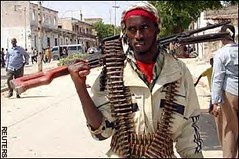
Islamic courts on their hand pursued an expansionist strategy to spread their influence to further areas. They attacked Jawhar town, a stronghold of Mohamed Dhere, former ally of Abdilahi Yusuf and his host. The UIC took control of the town without facing any viable resistance. The warlord, along with some of his militia, fled to Baidao, to seek refuge under the interim seat of the TFG. The people of Jawhar welcomed the courts and the UIC forces advanced to central regions of Somalia. From this point, the UIC expanded their influence dramatically by conquering most of the southern parts of Somalia. They have taken over the control of all major towns with the exception of the government’s temporary seat under the pretext that the residents of these towns extended to them an invitation to come.

The UIC expansionist policy even reached to relative stable towns such as the southern seaport town of Kismayo. The seizure of Kismayo made angry the TFG which lost a great ally and a member of the transitional cabinet. This has also created a war environment whereby the ousted warlord getting support and backing from the TFG and Ethiopia prepared a retaliation attack. However, this was resisted by the Islamic forces ruling the Lower Juba region.

The TFG on its hand pursued their demand for international peace keeping troops. This demand was one of the most controversial issues that sparked a bitter division among the TFG in several times. The UIC consistently opposed the whole idea of having foreign peace keeping forces in Somalia and vowed it would fight should they arrive in Somali territories. Yet, Abdilahi Yusuf and his government insisted their position despite of the controversy and dispute it has created. Further, the TFG has succeeded to convince some African countries to help the interim government stand firmly its feet on the ground by sending troops who secure the government institutions. This and the expansionist policy of UIC swerved the direction of the negotiation and the two parties put forward pre-conditions to be met for the dialogue to resume.

The external intervention intensified as the Security Council of the United Nations issued a resolution lifting the arms embargo to pave the way the foreign peace-keeping troops. The Security Council, however, exempted the neighboring countries to send their troops inside Somalia. The TFG eagerly welcomed this resolution while the UIC rebuffed it. Many people, however, believe that this resolution gave the Ethiopians the green- light to intervene the Somali crisis and as a result, Ethiopia consolidated its presence inside Somalia.

As the situation deteriorated, the two parties prepared for war. War sentiments and war oratory filled the air. At this stage, all the efforts to convince the two parties to resume the negotiation reached a deadlock. The Ethiopian troops crossed the border in their thousands and stationed in Puntland, Bay and Bakol regions in Southern Somalia. The UIC arranged their militias and started a jihad-like preparation in most of the areas they have controlled. Ethiopia and the TFG blindly denied the presence of Ethiopian troops inside Somalia. Later stage, the Ethiopian government would confess that it has military troops in Somalia who go there upon the request of the internationally-recognized transitional government.

War Breaks Out

Long before the full-fledged war between the UIC forces and military loyal to the TFG backed by the Ethiopian troops broke out, there were skirmishes in the front lines. However, after several days of shelling and counter shelling, an-all-out war broke out in Bay, Bakol, Hiran and southern Galka’ayo. After days of fierce fighting, each one claiming to have sustained his opponent a huge loss, the UIC have their troops withdrawn from the front lines, interpreting this move as war tactics.

It was apparent that Ethiopians have well-trained and better equipped military as well as superiority in military equipment when compared to the forces loyal to UIC, however, many expected a war that would last for a long time. Conversely, the TFG forces along with the Ethiopians prevailed over their opponents in no time. The fiercest resistance took place in Moode-Moode, Idaale and Daynuunay areas. After the fighting around Baidao, which each party claimed to have killed hundreds of their enemies, the UIC pulled out of their troops from the major towns. This has paved the road to the successive takeover of the victorious mixed troops of Ethiopians and the TFG forces.

The TFG and Ethiopian troops approached to Mogadishu, the capital city of Somalia. The ruling UIC and their troops left the town to unknown destiny. This enabled the allied forces of the Ethiopians and the TFG forces to enter the capital city without resistance. In their last press conference in Mogadishu, the leaders of the UIC expressed how they were ready to respect the will of the Somali people and transferred power as to how the local people desire.

Ingredients of Failure

a) Incompatibility
On the other hand, little was known of the chemistry and composition of Islamic Courts. It was clear that members of Islamic courts and their leaders belonged to different religious denominations. They have just united their resources for one purpose-to fight against the warlords in Mogadishu. The leader of the union is said to be Sheikh Sharif Shiekh Ahmed, a 42 year old and a teacher by profession. The Libyan trained lawyer emerged to be moderate and get along with most of the people. He turned to be a man with great articulation and managed to earn the admiration of many civilians through his countless interviews and speeches. The admiration of this young leader reached to a point whereby a prominent Somali Website “Hiiraan Online” named him as the man of the year “2006”. Many, however, believed that Sheikh Hassan Dahir Aweis, the former leader of Al-Itihad religious denomination was the real man who steers the UIC activities. Sh. Dahir Aweys a former military colonel was heading Al-Itihad religious group when they attempted to seize the control of North Eastern regions through the barrel of gun.

Similarly, many political analysts defined UIC as a loose grouping that comprised of different groups of people with different religious ideologies. These include Islamic hardliners, reformists, members of Al-Islaax movement, civil society members and Jihadists. Adan Hashi Ayro, a young Somali in his mid thirties and reportedly trained in Afghanistan was said to be leading jihadist Shabaab sect. Yusuf Ziyad Indhacade, the former ruler of Lower Shabele, held very high profile post which is the head of security of UIC. Indha’Ade is counted as one of the most hardliners and the most controversial figures of UIC leaders. Through their abusing speeches, these two and their likes within the UIC failed to gain the hearts and minds of the local people and instead created hostility and enmity for the UIC. For instance, Sh. Hassan Turki, made a speech in Kismayo town after it has fallen to UIC troops. He publicly announced the intention of UIC leaders which was to expand their influence as far as Somaliland. He even pledged that his troops would triumph over Puntland and Somaliland should they attempt to stop them.

b)Hasty Decisions
On the social aspect, they have taken certain steps that many people considered as hasty moves. For instance, the restriction imposed on the freedom of the people was widely seen as something that would backfire the popularity of the UIC. Restrictions imposed on social gatherings as well as the ban of world cup tournaments greatly distorted the reputation of the UIC.

In economic terms, they banned the trade of the Qat which is n stimulant element widely used in Somalia. The ban of Qat has without doubt its countless implications in terms of financial, health, and social aspects. Many people, however, argued that before issuing jurisdictions forbidding its trade, a broad-based and carefully- defined policy was required in order to address the problems that stem from Qat. Many academics argued that Qat is a liability to the national economy and has a negative impact on social and health to its users. Yet, as widespread unemployment prevails in the country, many people depend on it for their daily earnings. These are mostly orphans and female bread-winners. In short, many people fiercely opposed this move and even expressed their disapproval through demonstrations. The truth is that UIC lost a lot of supporters and sympathizers due to is move.

c)Poor Diplomacy
Most of the UIC leaders lack the vision and experience to plan and lead a nation. They were just religious scholars who mobilized Mogadishu residents to resist against the warlords. What they lacked is the skill and expertise to run a country with established institutions let alone a country struggling to emerge from chaos and disarray. In the meantime Ethiopians and the TFG were coordinating the logistical and necessary preparatory arrangements to launch an-all-out war on UIC militia, the UIC and its military commanders acted in a manner that naked of diplomacy. They announced that they will launch a jihad against Ethiopia and failed to convince their cause to the friendly and neighboring countries.

The courts would have consistently demanded that Ethiopia withdraws its troops from Somalia. In the meantime, they would have attempted to gather diplomatic support from the countries in the region and beyond as well the regional bodies such as IGAD, Arab League etc. Instead and to the surprise of even their sympathizers, they have given an ultimatum to Ethiopia to have its troops withdrawn from Somalia or else face the consequence. Although the UIC leaders withdrawn this deadline, yet many countries interpreted this as a declaration of war.

d)Internal Divisions
It is now apparent that the UIC leaders were not in agreement with the war plan. Some elements within the UIC deliberately started the war without the consultation of their colleagues. As reliable sources indicate, UIC representatives were having dialogue with external intermediaries when the war broke out- a strong clue that indicates the decision to go to war was taken by some extremist elements within the UIC.

The mystery, however, is the absence of Yusuf Indhacade from the country. Yusuf Indhacade, being the man who gave Ethiopians the seven day ultimatum left the country shortly before the war broke out as reliable sources confirmed. His absence, as a strong proponent of “Jihad” against Ethiopia, left concerns and speculations among the Somalis. However, the fact that he was away from the country when Somalia was at war in which many citizens held him responsible leaves his loyalty and rhetoric under question.

Despite of all these shortcomings and limitations, the reasonable Somalis would agree that UIC managed to restore peace and stability to the regions they controlled- an attempt many including the super powers failed to realize. Similarly, UIC would be remembered for chasing away the notorious warlords from Mogadishu and re-opening the key infrastructures. On the other hand, they would also be remembered for their attempt to restrict the personal freedoms.

Recommendations

Somalia is now going through a very sensitive stage and it badly needs visionary leadership and pragmatic policies to be managed its state of affairs. The TFG’s top officers who now control most of the country are required to carefully think the current critical situation and handle the country’s affairs in a manner of far-sightedness and statesmanship. The following steps could save the country from descending into further violence and anarchy.

In an effort to seek the genuine reconciliation, the TFG must be engaged in a grass-root reconciliation that involves all segments of the society be it religious leaders, remnants of UIC forces and supporters, civil society groups and former military officers.

The TFG should issue a pardon for the forces loyal to the defeated UIC and those qualified enough must be incorporated with the TFG police and military forces after they are trained.

As part of the reconciliation program, the TFG must start serious and authentic dialogue with the remnants of the UIC leaders and the moderate ones should be involved in post-war administration. TFG must not rule out the possibility of having a dialogue with the leaders of the UIC in order a government of national to be installed.

Ethiopia must withdraw its troops from the country within the shortest period possible. TFG top officers must realize the with the assistance of foreign troops, they will not be able to impose peace and tranquility upon Somalis should they fail to earn the trust and credibility of their people

Limited peace-keeping forces with the exception of front line states must be stationed at the important infrastructure, government buildings and checkpoints to help the efforts to restore peace and stability

The Government must not attempt to disarm Mogadishu residents through the use of gun point. The disarmament program must be carefully planed and the local people must be involved in the process. Also, it must be simultaneously carried out throughout the TFG controlled areas.

The disgraced and defeated warlords must not be empowered once again. They must not be allowed to play any further havoc on the country in which they turned to the land of lawlessness and mayhem .
--------------------------------------------------------------------------------
Abdirahman Adan Mohamoud
Freelance Writer

This is my personal view and therefore it will not be attributed to the position/point of view of any organization/group of individuals that I am associated with in any way

Somali War Update: 5 Killed in Capital; AU Discusses Peacekeeping, etc.

Gunmen kill 5 in restive Somali capital

MOGADISHU, Somalia - A spate of gunfire and mortar attacks in the Somali capital killed five people overnight and injured at least four others, witnesses said Friday.

An Associated Press reporter saw five bodies in open areas of the city with gunshots to their chests. The motive for the killings was not clear.

Four mortar attacks overnight injured four people, including a 3-year-old girl, said businessman Mohamed Bad Mushani, who was nearby when the shells hit.

Police Commissioner Ali Mohamed Hassan Loyan told the AP the attackers were "hell-bent on undermining the security of the country. The police will track them down."

Somalia has been increasing security this week as Ethiopian troops, whose military strength was crucial to helping Somalia's government drive out a radical Islamic militia, begin withdrawing from the country. It was not clear when the withdrawal would be complete.

Many Somalis resented the Ethiopian presence; their countries fought a war in 1977. But without Ethiopia's tanks and fighter jets, the Somali government could barely assert control outside one town and couldn't enter the capital, Mogadishu, which was ruled by the Council of Islamic Courts. The U.S. has accused the group of having ties to al-Qaida.

On Thursday, gunmen attacked Ethiopian soldiers at a busy market in the southern Somali town of Kismayo, killing one and wounding another and sending screaming residents fleeing the area, witnesses said. Forty people were arrested.

Kismayo, the third-largest city in Somalia, was the last major town held by the Union of Islamic Courts before the Somali government and Ethiopian forces took over.

The withdrawal of Ethiopia, which says it cannot afford to stay in Somalia, raises a sense of urgency for the arrival of a proposed African peacekeeping force. The African Union has approved a plan to send about 8,000 peacekeepers for a six-month mission that would eventually be taken over by the U.N.

Nigeria, Malawi and Uganda have said they want to contribute troops, but no firm plans are in place.

Earlier this month, Ethiopian and U.S. forces were pursuing three top al-Qaida suspects but failed to capture or kill them in an AC-130 strike in the southern part of Somalia. A main target that time was Fazul Abdullah Mohammed, one of three senior al-Qaida members blamed for the 1998 bombings of the U.S. embassies in Kenya and Tanzania.

The U.S. Navy also has had forces in waters off the Somali coast, where they have monitored maritime traffic, boarded suspicious ships.


Somalia: Another mortar attack wounds civilians in Mogadishu

Thu. January 25, 2007 02:54 pm.
Mohamed Abdi Farah

(SomaliNet) At least two civilians have been injured in a mortar attack that happened in Wada-jir district in southwest of Somalia capital Mogadishu on later Thursday. It is the second attack in two consecutive days.

Abdikarin Osman, local resident told Somalinet that the attack took place around Macmacanka area in Wadajir district about 8:15 pm tonight local time.

“Shortly after I heard the sounds of explosions I went the area that was hit by two mortar shells, I can confirm that two persons were wounded in the blast,” Osman told Somalinet by the telephone. “The mortars fell into two civilian houses,”

It is not yet clear who carried out the latest attack. It came day after mortar attack targeted at the main Mogadishu airport injuring four civilians.

All these seemed to be acts done by Islamist insurgents that are hiding inside the capital.

After the ouster of the Islamic Courts from the Somalia capital late December last year, the top Islamists vowed to start hit and run attacks on the Ethiopians until they withdraw from the country.


Somalia: Ethiopian soldier killed in Kismayu

Thu. January 25, 2007 09:21 am.
Mohamed Abdi Farah

(SomaliNet) An Ethiopian soldier has been shot dead and other one was wounded on Thursday in ambush attack that in the port city of Kismayu, 500km southern of the Somalia capital Mogadishu.

Witnesses told Somalinet that unidentified gunmen opened fire on two Ethiopian soldiers who were shopping at the market in Kismayu killing one of them and injured the other.

No word yet from the interim government on the latest incident.

Sources say the attackers escaped unharmed heading to unknown destination. Shortly after the accident, the Ethiopian forces sealed off the area tracking down the assailants.

A number of civilians were arrested following the attack. It was the first insurgent attack on the Ethiopians in Kismayu.

The latest attack came as the Ethiopian Prime Minister Meles Zenawi told reports in Addis Ababa that his forces began withdrawing from Somalia. About 200 Ethiopian soldiers pulled out of Somalia in part three phases departure.

Meles said that Ethiopian forces will remain in Somalia capital until the AU peacekeepers are deployed in the country.


Nigeria: Gov’t agrees to send troops to Somalia

Thu. January 25, 2007 11:35 am.
Bonny Apunyu

(SomaliNet) Nigeria's defence minister said on Wednesday that a battalion of Nigerian soldiers is expected to leave for Somalia in the next two weeks to join a planned African peacekeeping force in the horn of African nation.

After Ethiopian troops complete their pull out from the chaotic Somalia, African Union(AU) wants African states to send about 8 000 peacekeepers to the horn of African nation to reinforce the interim government.

Nigeria’s efence Minister Thomas Aguiyi-Ironsi said the Nigerian battalion, which normally contains between 770 and 1 000 troops, is already undergoing training and waiting for supplies and logistics to move into Somalia.

"One battalion is what we are preparing to move immediately for the peacekeeping mission and we hope that within the next two weeks, they will move," Aguiyi-Ironsi told Reuters after a cabinet meeting in Abuja.

The United Nations (UN) Security Council on Wednesday backed the speedy deployment of an African force in Somalia, which has not known peace for 15 years.

Nigeria, a major contributing nation to African peace mission, also has troops in Sudan's Darfur region and Liberia.-Reuters.


South Africa rejects to deploy troops in Somalia

Fri. January 26, 2007 10:17 am
Mohamed Abdi Farah

(SomaliNet) The South African defense ministry said Friday its government would not send troops to Somalia as part of an African Union (AU) peacekeeping mission in that country.

Sam Mkhwanazi, the SA government spokesman said the ministry of defense would rather study other ways to help stabilize the war-torn country.

“Defence Minister Mosioua Lekota considered that the military was already stretched to capacity by peacekeeping deployments in other countries,” said Mkhwanazi.

South Africa has contributed peace-keeping troops to Sudan, Burundi, the Democratic Republic of Congo, Ivory Coast, Ethiopia and Eritrea.

“We support the AU’s mission in Somalia, but the minister’s view is that to send troops would neither be to the interest of current missions where South Africa is involved nor of the African Union or the United Nations.”

Patrick Mazimhaka, the deputy chairman of the AU, said in an interview published in the Financial Times this week that an opportunity to foster stability in Somalia after years of civil war.


Islamist fighters arrested at Somalia-Kenya border

Fri. January 26, 2007 10:14 am.
Mohamed Abdi Farah

(SomaliNet) Authorities in Kenya said their forces have arrested five men of foreign fighters including a U.S. national and a French national suspected to be fighters for Somalia's defeated Islamist movement, the Kenyan news papers reported.

The five, which are believed to be belonging to Somalia Islamists, were carrying two AK 47 rifles with more than 120 rounds of ammunitions when they were arrested. Others were a Tunisian and two Syrians.

A senior police official was quoted as saying a joint security team arrested the men late Wednesday at a border crossing near the Kenyan coastal town of Lamu.

This brings to 18 the number of suspects arrested in the area carrying passports of countries outside the East African region. Kenyan troops on Saturday arrested 13 foreigners carrying American, British and Arabian Gulf passports at Kiunga as they attempted to cross the border from Somalia.

Officers from the Anti-terrorism Police Unit are interrogating the suspects. Government sources said the suspects could be brought to Nairobi for further interrogation.

The suspects were handed over to the country's anti-terrorism police to carry out more investigations.

"We are doing a background check on the suspects but so far their passports look genuine," the official added.

One of the men was carrying a U.S. passport, two had British passports and the rest carried Syrian, Saudi Arabian and Yemeni passports.

Last week, the Kenyan government deported 34 people suspected to be members of the Islamist movement.

The Islamists, who once controlled much of southern and central Somalia, including the capital Mogadishu, have retreated to remote regions near the Kenyan frontier, prompting Nairobi to close its border and lock out thousands of refugees.


Somalia: Yemen set to mediate Islamists and US

Thu. January 25, 2007 11:41 am.
Mohamed Abdi Farah

(SomaliNet) The Yemeni government is currently involving in efforts to act as a go-between the US government and the second man of Islamists leadership who is now being held in Nairobi under the protection of Kenyan authorities, reliable sources reports on Thursday.

Yemeni officials are secretly trying to hold talks between Sheik Sharif Sheik Ahmed and the United States government over Somalia future.

Washington sees Sheik Ahmed as moderate cleric who has wide support in Somalia and can play a positive role in the reconciliation process in the war-torn country (Somalia).

Sources from Nairobi indicate that Sheik Sharif might be extradited to an Arab state, possibly Yemen.

Meanwhile, yesterday Nairobi based Daily Standard newspaper reported that Somalia Prime Minister Ali Mohamed said his government wants Sheik Sharrif and his supporters to participate in the ongoing reconciliation talks.

Premier Gedi made the statement before flying from Nairobi and returning to Mogadishu.

"We want all UIC officials and supporters including Sheikh Sharrif to come to Mogadishu for talks in Somalia," he was quoted as saying.

Gedi added that none of them would be persecuted in Mogadishu since his government's aim is to restore peace and order rather than revenge.


Somalia urged to include Islamists in peace talks

By William Wallis in Addis Ababa
January 26 2007 02:00

International pressure on Somalia's interim government to include defeated Islamists in talks over the country's future was building yesterday as foreign ministers met in Addis Ababa ahead of an African Union summit.

The US and EU appear to have singled out Sheikh Sheriff Ahmed, one of the main leaders of the Islamic Courts Union (ICU), which held sway over much of southern Somalia last year, as potentially central to the country's stability in the aftermath of Ethiopia's invasion last month.

Their primary concern is to prevent Somalia, which has been without a functioning government since the overthrow of Mohammed Siad Barre as president in 1991, evolving into a haven for international terrorist networks amid the chaos of warlord rule.

Both the EU and US appear to believe there is an opportunity to drive a wedge between adherents of Somalia's traditional Sufi Islam, such as Sheikh Sheriff, and jihadist militants influenced by more extreme and puritanical forms of Islam from the Gulf.

The rise to power and expansionary rhetoric of harder line elements within the Islamist coalition, which brought a semblance of order to Mogadishu during a six-month reign last year, was one of the pretexts for Ethiopia's invasion.

But members of Somalia's weak transitional government, born of peace talks in 2004 but installed in Mogadishu only this month largely thanks to Ethiopia's intervention, are resisting international pressure to include more moderate Islamists to build a broader constituency and are becoming increasingly sensitive to interference from the west.

On Wednesday Michael Rassenberger, the US ambassador to Kenya, took the unusual step of meeting Sheikh Sheriff in Nairobi after he had handed himself into Kenyan custody.

Nothing emerged from the talks, but an embassy official said the US believed that if he renounced "violence and extremism", Sheikh Sheriff could provide a "positive contribution to dialogue" in Somalia.

"We do not believe he is an al-Qaeda operative. We believe he has demonstrated moderate tendencies," the official said.

Diplomats in Nairobi said that since fleeing across the Somalia border, Sheikh Sheriff had been questioned and was being held in "protective custody" at a hotel but was not under arrest.

The interim government, meanwhile, appears unimpressed by international efforts to include Sheikh Sheriff in a broader peace process.

"America can meet anyone they like. It is their business. But we will not accept anyone dictating to us," Abdikarin Farah, Somalia's ambassador to the AU, said on the sidelines of the AU meeting.

Mr Farah said interim government forces were holding hundreds if not thousands of Islamists, among them foreign jihadists. Many would be put on trial, he said.

The government had incl-uded three former ICU members in a security committee for Mogadishu and was in talks with others, he said. But Islamic courts "would not be reconstituted".

Copyright The Financial Times Limited 2007

Thursday, January 25, 2007

TONC Statement in Response to the 'State of the Union' Address

TONC Statement in Response to "State of the Union" Address

The statement below is a preliminary response from the Troops Out Now Coalition to President Bush's "State of the Union" address last night. The definitive and most important response will be the "surge" of protests in Washington DC and around the globe over the next few weeks as the people demand: "Bring the Troops Home Now!"

January 27 - The Troops Out Now Coalition urges activists to converge on Washington DC this weekend, the first national antiwar protest of this year. Now, more than ever, we need a massive outpouring on the streets of Washington DC. The Troops Out Now Coalition is organizing buses, vans, and car caravans to DC to support this important demonstration, which will assemble on the National Mall at 11 am.

February 17 - Some time over the next few months, Congress will vote on Bush request for another $100 billion for war. This time, we must force Congress to vote NO. It's time to move from protest to resistance. Saturday, February 17 is No More Money for War Day, with local protests across the country to demand the cut off of all war funding. The Troops Out Now Coalition and other national and local organizations are calling for demonstrations, rallies, sit-ins, and other forms of creative resistance and direct action. Many actions are being planned targeting local offices of members of Congress. Check the Troops Out Now Coalition website http://www.troopsoutnow.org for updates and local actions.

March 17 - March on the Pentagon - Stay in Washington - The Troops Out Now Coalition is working with the Answer Coalition and other national coalitions to organize a massive march on the Pentagon on the fourth anniversary of the illegal invasion of Iraq. This time, we are going to Washington prepared to stay until we force Congress to cut off all war spending--it is time to move from protest to resistance. Check the Troops Out Now website http://www.troopsoutnow.org for details, updates, and transportation from your area.

Troops Out Now Coalition Response to the State of the Union Address, January 23, 2007

As the U.S. occupation of Iraq grinds on and the numbers of dead and wounded mount, President George W. Bush and Democratic Party leaders, the supposed opposition, continue to reject the growing demand to bring the troops home now. In Bush’s State of the Union address to Congress last night, George W. Bush continued to stick to his “stay the course” position and claimed he has a “plan for victory” despite clear evidence that the attempt to colonize Iraq has been defeated.

Bush made a desperate attempt to restore confidence in his failed adventure in Iraq, outlining a "new strategy" that is really just a repeat of the same lines he has been using since he declared "mission accomplished" almost four years ago. The so-called "surge" of 21,000 troops will not succeed in crushing the resistance of the Iraqi people; it will only bring more death and destruction. He did not mention the more than 600,000 Iraqi people that have died as a result of the U.S. invasion and occupation. Nor did he address the fact that every reason he gave to justify the war has now been exposed as a deliberate lie.

Despite his talk of “a democratic Iraq," the ghastly torture chambers of Abu Ghraib, the continued bombing of Iraqi homes, the use of depleted uranium, phosphorous, napalm, and other illegal weapons of mass destruction, all reveal the brutal nature of the war against the people of Iraq. This war is not and never was about bringing democracy to Iraq--it has always been about seizing control of the country’s oil reserves.

What Bush also failed to mention is that even as the attempt to colonize Iraq is clearly failing, the Bush administration is moving towards another reckless adventure—war on Iran. Bush has deployed two second aircraft carrier groups—with destroyers, cruisers, submarines, cruise missiles and combat aircraft—to the Gulf, while sources report that the Pentagon is already identifying targets for U.S. air strikes.

Health care

Bush attempted to deflect attention from the catastrophe in Iraq by offering a tax deduction for workers who purchase health insurance or use employer-supported plans. His plan would allow standard deductions for health insurance — $7,500 for individuals, $15,000 for families — while subjecting employer-paid health insurance to income taxes.

Bush's plan would do nothing to help the estimated 47 million people in the US without health insurance. Rep. Pete Stark, who chairs the House Ways and Means Committee's health subcommittee, has said that Bush's proposal to tax existing health benefits is so ludicrous that it is unlikely to be seriously considered by Congress. He said, "The president's so-called health care proposal won't help the uninsured, most of who have limited incomes and are already in low tax brackets. But it will hurt middle-income Americans, whose employers will shift even more cost and risk to their employees.''

Most of the uninsured don't have coverage because they cannot afford to pay the premiums. Making those premiums tax-deductible will not make healthcare more affordable for most workers. Many others cannot get coverage because of
pre-existing conditions, which Bush's plan does nothing to address.

The net result of Bush's plan would be a decline in the number of workers having access to health coverage. Paul Fromstein, director of the health research and education programs at the Employee Benefit Research Institute, said the Bush proposal would ``mean the end of employment-based coverage as we know it because it gives employers an incentive to drop coverage. If employees can go out and get private coverage with the same tax breaks as they'd get through employer-sponsored coverage, more companies will simply give them the money and let them find their own coverage because they view [health coverage] as a headache."

We must continue to demand health coverage for all. The $300 billion that the Bush Administration has spent on war on occupation could easily provide complete health coverage for all uninsured children in the U.S.

The War at Home: Police Brutality and Police State Tactics

As he has done since repeatedly since the attacks on September 11, 2001, Bush used the threat of "terrorism" to drum up support for his policies of endless war and repression. He said, “For all of us in this room, there is no higher responsibility than to protect the people of this country from danger." But he did not address the fact that many communities face threats of violence every day--not from "terrorists," but from the police. The police who gunned down Sean Bell the night before his wedding, firing 50 shots at an unarmed man, and the police who killed 92-year old Kathryn Johnson in her home in Atlanta, the ICE raids that haul away families in the middle of the night, and the police who commit acts of racist brutality in communities across the country, are a daily threat to the lives and safety of communities of color, immigrant communities, and the LGBT communities. Antiwar and progressive organizations must stand in solidarity with communities that are under daily attack from police terror.

Bush has used the words "freedom" and "democracy" repeatedly as justification for his policies of endless war, but an examination of his actions here and world-wide demonstrates that he has no interest in either. He has authorized the Department of Defense and the Central Intelligence Agency to spy on and infiltrate meetings of progressive organizations that oppose his policies. Under the PATRIOT Act, FBI agents search library records, book store sales, and other personal records and conduct widespread surveillance without any probable cause. He has ordered intelligence agencies to kidnap people off of the streets and drag them from their homes, fly them to other countries, and torture them in a secret global network of detention camps. Under his mantra of "freedom and democracy" lies a full-scale war on civil liberties and civil rights.

Katrina

The President made no mention of one of the biggest failures of his Administration, the ongoing catastrophe that followed in the wake of Hurricane Katrina. But the whole world remembers watching the scenes of horror and despair on the streets of New Orleans, as people died, abandoned by every level of government because they were poor and Black. While everyone watched newscasts of people dying of thirst, as FEMA did nothing to help, Bush praised the FEMA director, saying, "Brownie, you're doing a heck of a job."

We must continue to support the right of Katrina survivors to return to their homes and to determine how the region will be rebuilt. They, not Bush's millionaire friends, have a right to control the money for rebuilding the area.

Energy policy

Every year, in an attempt to grab headlines on the following day, Bush has introduced a new initiative that never lasts longer than his address. A few years ago, he promised $15 billion for AIDS treatment in Africa--money that never materialized. Throughout his presidency--at every State of the Union address, Bush has talked about energy independence, but the funding for research and development never materializes. In last years address, he promised to take on the US "addiction to oil," but his 2007 budget actually proposed to spend less on energy efficiency, conservation, and renewable energy resources in inflation-adjusted dollars than was appropriated in 2001. In 2005, he cut the funding for alternate energy by 50%.

As soon as Bush took office, he proposed cutting the Department of Energy's renewable fuels and energy efficiency budget by as much as 40 percent. Meanwhile, Vice President Cheney was in secret meetings with executives from Enron, Exxon, Conoco, Shell Oil and other energy companies, where they studied petroleum maps of Iraq and developed the national energy policy of the Administration. We can only conclude that when Bush talks about looking for "alternative fuel sources," he actually means looking for another oil-rich country to invade.

For some, this policy has been enormously successful--oil companies are reporting record profits. But for others, like the people of Iraq or the soldiers and military families who are paying the ultimate price, Bush's policies have been an unmitigated disaster. We can be sure that, despite his talk about "alternative fuels," his primary and central goal is to ensure maximum profits for the oil companies.

No Opposition from the Democrats

Bush's criminal war against Iraq has brought justified resistance throughout Iraq and outrage across the globe. Everywhere he travels, he is met with massive protest in the streets.

President Bush's poll numbers are in a freefall. A new CBS News poll has the President's approval rating at a career low of 28 percent-- 14 points below where he was at before he delivered his State of the Union speech a year ago. In November, he had a 34 percent approval rating. In December, it was 31 percent. In early January, it was 30 percent.

Less than 3 months ago, voters in the U.S. made their opposition to the war very clear as they handed the Republican Party a resounding defeat at the polls. President Bush's announcement of a "surge" in the occupation was met with more than 500 protests across the U.S.

Despite this clear and overwhelming opposition to the ongoing occupation, the Democratic response to the State of the Union offered no real opposition to the Bush Agenda. Senator James Webb did not call to bring the troops home--in fact, he waited until he was half way through his speech before even mentioning Iraq. When he did get around to it, he merely indicated that the U.S. needs a "new direction."

It was clear from his remarks that his difference with the Bush Administration is only tactical. The Democratic Party criticism of the war in Iraq is not based on the fact that the war is a criminal act that has resulted in the death of more than 600,000 Iraqis, but on the fact that Bush has been unable to successfully crush the resistance and establish a stable puppet state. The Democrats in Congress marched in lockstep with the Administration when they thought the war to seize Iraq's oil would be over in weeks.

Senator Webb claimed that the President "took us into this war recklessly." But the President could not and did not act alone. He could not have launched the war in Iraq without the eager complicity of the Democrats in Congress, a complicity that continues to this day, as Democrats continue to assert that they do not plan to carry out the mandate that brought them into office -- the demand to end the war now and bring all the troops home now.

It is clear that politicians in Washington are not going to end the war. The people themselves must take action to force them to bring the troops home now.

If we want to end the war, to have health care, education, and housing for all, to fight racism, to defend the rights of women, immigrants, and the LGBT communities, then we have to build a mass movement in the streets, and we have to stay in the streets. We can never again allow the antiwar movement to be misled into serving the interests of corporate politicians.

We must build a movement that will do what the war parties will never do --link the struggles of working people here with the struggles against war and occupation everywhere, including not only Iraq, but Palestine, Haiti, Afghanistan, Nepal, the Philippines, and everywhere people are struggling to for freedom and self-determination..

March 17, 2007 will mark the fourth anniversary of the invasion of Iraq. The Troops Out Now Coalition is working with the Answer Coalition and other national coalitions to organize a massive march on the Pentagon on the fourth anniversary of the illegal invasion of Iraq. This time, we are going to Washington prepared to stay until we force Congress to cut off all war spending--it is time to move from protest to resistance.

Together we must grasp the opportunity to help transform the turning tide against the war into a human tidal wave of antiwar resistance in the streets. Nothing should stand in the way of building a massive, united movement to converge on Washington and end the war. Our sisters and brothers in United for Peace and Justice had initially called for a national march on the fourth anniversary of the war, but have now changed to calling for "local actions." In the interest of unity and strength we call on them to unite with the call for to converge on Washington DC on March 17. The crisis and opportunities ahead of us demand unity, and we will continue to do all we can to work for that unity.

Six hundred thousand Iraqis are dead. More than 3,000 U.S. soldiers are dead and tens of thousands have been wounded. This is not time to talk about timetables and "non-binding resolutions" or to get distracted by 2008 Presidential politics—it’s time to take direct action to stop the war. We call on everyone to descend on Washington this weekend – January 27, followed by local actions on February 17 at Congressional offices. Then, on March 27, come to Washington, prepared to stay until we stop the war.

Immediate, Unconditional, & Complete Withdrawal from Iraq--Out Now!
End Colonial Occupation & Imperialist Aggression from Africa to Asia, from Iraq to Palestine, to Afghanistan, to Haiti, to the Philippines, to Puerto Rico
No New Wars Against Iran, Syria, North Korea
Hands Off Cuba, Venezuela, Bolivia, & Lebanon
Solidarity with Immigrant Workers and Katrina Survivors
Stop the War at Home -- Stop Racist Police Terror -- Stop ICE raids
Military Recruiters Out of Our Schools and Communities -- No Draft -- Education, Not War

How You Can Help:

Endorse the call for March 17 - http://www.troopsoutnow.org/mar17endorse.html
Volunteer - http://www.troopsoutnow.org/mar17volunteer.html
Become an Organizing Center - http://troopsoutnow.org/mar17orgcentsignup.html
Donate - http://www.troopsoutnow.org/donate.html

'Dreamgirls' Leads in Oscar Nominations But Is Snubbed For Best Picture

January 24, 2007

‘Dreamgirls’ Leads in Oscar Nominations but Is Snubbed for Best Picture

By DAVID CARR
New York Times

BEVERLY HILLS, Calif., Jan. 23 — Everything went as planned for “Dreamgirls,” a perfectly confected Oscar machine. Great cast, showstoppers that stopped the show, and a wonderful back story in Jennifer Hudson, the washed-out “American Idol” turned movie star. And it was all propelled by hype-filled rollout, plenty of strong reviews and, finally, widespread belief that it was the favorite in the best-picture throwdown.

Everything continued to go as planned during the news conference at the Academy of Motion Picture Arts and Sciences here on Tuesday morning, with this crowd-pleasing costume musical racking up eight nominations. And then the best-picture category was announced:
“Babel,” “The Departed,” “Little Miss Sunshine,” “The Queen” and “Letters From Iwo Jima.”

Wait. Are they nominating six this year? The hundreds of reporters in the auditorium were leaning heads together, making sure that they did not hear the name “Dreamgirls.”

They did not.

“Dreamgirls” had the most nominations for the day, eight, including a pair for its supporting players, Eddie Murphy and Ms. Hudson, but it will not be around for the war. It is the first film in many decades to have the most nominations and not be in the best-picture category.

The seven nominations for “Babel” prove that the academy is a sucker for a weave of ambitious filmmaking (multiple languages and stories are represented) and big stars in small roles. (Brad Pitt and Cate Blanchett were in just one segment of the movie’s triptych.)

“Pan’s Labyrinth,” a Spanish-language film, received a half-dozen nominations, as did “The Queen,” in an array that was announced by Sid Ganis, president of the academy, and the actress Salma Hayek at 5:38 a.m Pacific time; it was planned to land in the middle of morning shows in the East.

Much of what happened was expected — Forest Whitaker and Helen Mirren, who played monarchs to very different effect — continued their stately walk to the podium, with nominations for best actor and best actress. (“I’m not going to win in a million years, and that’s absolutely fine,” said Kate Winslet, a fellow nominee in the actress category.)

Ms. Mirren said of her nomination: “It’s the mother lode. It’s the big mama of the whole thing. There’s nothing in the whole world like the Oscars.”

Mr. Whitaker described his excitement: “I’m stoked. I have to find the right word, and ‘stoked’ is O.K.,” he said, joining the ritual outpouring of gratitude and expectation.

Mr. Murphy, a seasoned veteran, and Ms. Hudson, an absolute beginner, were joined in the supporting categories by 10-year-old Abigail Breslin and Alan Arkin, 72, for their roles in “Little Miss Sunshine.” (It’s been 38 years since Mr. Arkin’s last nomination, for “The Heart Is a Lonely Hunter.” )

The supporting-actor category was notable for its eclecticism, with Jackie Earle Haley’s portrayal of a pedophile in “Little Children” being recognized, as was Rinko Kikuchi’s role in “Babel” as a deaf-mute Japanese girl with a lot on her mind. In total, out of 20 slots for acting awards, 5 black actors were nominated, 2 Latinas and a Japanese woman.

And in a year when the precursor awards have been all over the road, the movies came from all over the world. “Cinema is an international art form, and you can do it in any language the artist dreams about,” Mr. Ganis said after coming offstage. He pointed to Clint Eastwood’s vivid example in making two movies in two languages about the same war.

The academy, frequently criticized for being a prisoner of convention, ventured far and wide in search of films that represented the year’s most spectacular achievements. Tidy little movies like “Little Miss Sunshine” and “The Queen” were selected for best-picture nods, and two movies in which English is a second language — “Babel” and “Letters From Iwo Jima” — also made the cut, while “The Departed,” a big popcorn movie with a bloody, relentless end, was recognized as well.

Even “United 93,” a movie that made the unthinkable watchable, was given a significant nod when Paul Greengrass was nominated for best director. None of these movies had a built-in Oscar-winning apparatus — far from it, actually, but perhaps that was precisely the point.

Los Angeles is a place that worships success, but can be very punishing when it comes to striving for it. Paramount/DreamWorks learned as much, as it sought to position “Dreamgirls” as a favorite and succeeded; but something went wrong on the way to the podium. It most likely did not help that the movie, with its gorgeous songs and amazing costumes, was a tough sell to begin with among white males, a demographic that describes the majority of the academy’s 5,800 voting members.

The marketing of the film didn’t help, either. Regardless of what you have heard, “Dreamgirls” was a story that was about something, a particularly American story of success and redemption. Instead it was sold as a parade float, majestic and unstoppable. Behind that miscalculation, the basic blocking and tackling of an Oscar campaign fell short. The decision to send out screeners of the movie late was built on hubris — the same reason that Parmount/
DreamWorks chose to charge $25 for early peeks at the movie — which suggested that it was an Important Film that must be seen on a big screen.

But the death of President Gerald Ford, combined with a national holiday, meant that most academy members did not get the film until Jan. 3, 10 days after they had received “Letters From Iwo Jima,” a movie that wasn’t even supposed to come out in 2006. That means that academy members saw the hype long before they saw “Dreamgirls” and had just 10 days to see it before they voted. (“Flags of Our Fathers,” another Paramount/Dreamworks project, this one from Mr. Eastwood and Steven Spielberg, came basted in Oscar juice and went nowhere.)

It made for a bad day at Paramount, although the studio’s chief, Brad Grey, was traveling and not taking calls, so no one can say for sure. The studio can find solace in “Babel,” a movie from its specialty division, Paramount Vantage, that did extremely well on Tuesday.

At Warner Brothers, things did not go as planned, either. It was thought early on that “Blood Diamond,” with its serious themes and star wattage from Leonardo DiCaprio, would be a durable contender. Mr. DiCaprio scored a best-actor nomination. But it was Warner’s “Departed” that landed in the thick of the best-picture race, and its director, a hardy unrequited perennial named Martin Scorsese, was also chosen. And the studio’s decision to release Mr. Eastwood’s “Letters From Iwo Jima” is looking pretty smart just about now.

Alan F. Horn, chief executive of Warner Brothers, said best-laid plans or not, he was thrilled for both directors, Mr. Scorsese and Mr. Eastwood — the face-off will reprise 2005, when “Million Dollar Baby” edged out “The Aviator” — and with the five nominations
“Blood Diamond” received. (In one indication of “The Departed’s” underlying strength going forward, Mark Wahlberg was nominated in the supporting category for his profane, explosive depiction of a police official.)

“We ended up in a good place,” Mr. Horn said.

Now that the nominations have been settled, the battle for credits will begin. The academy handout listed the best-picture nominations of both “The Departed” and “Little Miss Sunshine” with “nominees to be determined.” The academy will have to decide which of the five producers of “Little Miss Sunshine” deserve a statue, and although Graham King is currently listed, for the purposes of the best-picture nomination, as the sole producer of Warner Brothers’ “Departed,” Mr. Grey, who packaged the movie as an agent before he came to Paramount, may yet have something to say about that. As murky as that seems, it can be said with certainty that it won’t be pretty.

And, going forward, the best-picture race was left without a clear favorite, which is great news for the academy. The voters love a contest, and ABC does, too, because television of all kinds thrives on suspense. With a new host, Ellen DeGeneres, and a collection of films that millions of people actually paid money to see, ABC is hoping on reversing a drop-off in viewership and certainly improving on last year’s 39 million viewers when the show comes up on Feb. 25.

Paula Schwartz contributed reporting for this article.

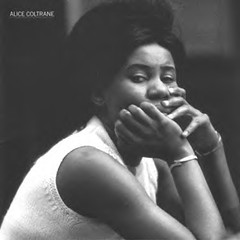
Meditations on Alice Coltrane (Swami Turiyasangitananda)

Meditations on Alice

The Detroiter who became Swami Turiyasangitananda

by Andy Beta
1/24/2007

Spiritual texts tell us that life is change, and change is its only constant. And while it's difficult to mark just when such a metamorphosis occurs in our lives, a change of name generally indicates such a shift, be it confirmation, marriage, divorce or, in the case of musicians, the adoption of a persona like Bob Dylan or David Bowie. For a Detroit jazz pianist named Alice McLeod, each name change through her life intimated a transformation. She was known most famously as Alice Coltrane, second wife to saxophone avatar John Coltrane, and though in her later years she was called Swami Turiyasangitananda, it's as Coltrane that she has been memorialized, having passed away from respiratory failure on Jan.12.

She was born in the house of Virgo on Aug. 27, 1937; the McLeods were a musical household. Alice began her classical training by the age of 7, but was also attuned to jazz, particularly the soulful playing of local Detroit harpist Dorothy Ashby. Ernie Farrow, Alice's half-brother, gigged on bass for the likes of Stan Getz and Yusef Lateef, and Lateef later gave instruction to young Alice as well. Her studies continued at Cass Tech, and she played organ with the gospel choirs at church every Sunday. Later she backed reedman Lateef, as well as jazz guitarist Kenny Burrell, and toured throughout Europe where she studied with bop piano great Bud Powell. She was briefly married to Kenneth "Pancho" Hagood, a Detroit-born jazz crooner who sang with Thelonious Monk and Dizzy Gillespie, and her earliest recordings with vibist Terry Gibbs list her under both her maiden name and Alice Hagood.

After moving to New York in the early '60s and gigging around town, she met tenor saxophonist John Coltrane. The most powerful and iconoclastic figure in post-war jazz, the recordings he made with his classic quartet remain the apex of the decade. That body of work, rendered by Coltrane with bassist Jimmy Garrison, pianist McCoy Tyner, and propelled by the thunder of drummer Elvin Jones, is some of the most volcanic and spiritually affirming music ever set to record. The resultant decades have done little to abate their brilliance.

Alice McLeod became Alice Coltrane in 1966. And while his classic quartet was the epitome of power, grace and ferocity, John Coltrane's restless spirit led him to venture beyond into something less tethered, more spontaneous, more chaotic, more universal. The new openness (or cacophony to its detractors) slowly dissolved his group, and Alice replaced longtime pianist Tyner on the bandstand. As New York Times jazz critic Ben Ratliff noted recently, while she wasn't Tyner's technical equal, she was "fluid and energetic within the group's freer new language." She backed her husband on his later works, performing with him right up until his death from liver cancer in 1967.

When John Coltrane passed, Alice carried the torch that was his musical message, making that fluidity and energy hallmarks of her own style. She incorporated both harp and Wurlitzer organ into her repertoire. Her earliest recordings were made with her late husband's sidemen, including saxophonist Pharoah Sanders and percussionist Rashied Ali. Albums like Ptah the El Daoud and Journey in Satchidananda (both 1970) echoed her husband's work: Modally-rooted and minor-keyed, these sprawling, cathartic explorations similarly referenced Eastern religious traditions. She even contributed to records by the Rascals, Laura Nyro and Carlos Santana.

Though informed by her late husband's incandescence, Alice grew restless too, and began to move out of his indomitable shadow. Her albums from the early '70s, such as Universal Consciousness, World Galaxy and Lord of Lords, remain some of the most head-swimming and audacious of that or any era. Ancient and futuristic, classically structured yet destabilized, the textures and emotions are quicksilver, dizzying and ever-changing. Whether on harp, piano or Wurlitzer, she moves from the pastoral to nightmarish to the transcendent in the span of a few notes. Nominally jazz, Coltrane made space for Indian music, blues, religious chants and Stravinsky too.

Alice Coltrane's spiritual studies continued, to where she receded from music altogether in the late '70s to concentrate on Vedic scriptures. Intermittently, she would return to play with her son Ravi Coltrane, even releasing Translinear Light in 2004. At her ashram in Woodland Hills near Los Angeles, she became a spiritual teacher, Swami Turiyasangitananda. Translated from Sanskrit, it means "the highest song of God." One could say that her earthly name meant that as well.

See Also:

George Tysh
In the flesh
Alice Coltrane: Sept. 23, 2006, HIll Auditorium, Ann Arbor.

Andy Beta is a freelance music writer. Send comments to letters@metrotimes.com.


In the flesh

Alice Coltrane, Sept. 23, 2006, Hill Auditorium, Ann Arbor
by George Tysh

1/24/2007

It was transcendent, which is fitting, given her life-long spiritual concerns. Roy Haynes in his 80s had the energy of a twentysomething, the muscles of an Elvin Jones in his prime and the lightning precision of a Tony Williams. Bassist Charlie Haden spread out a huge bottom sound, and spun out one masterfully lyrical solo after another.

At one point, after a ballad duet with Alice, he bowed to her in total affection, and it brought tears to my eyes. Ravi Coltrane managed to be brilliantly himself, even though everyone keeps clamoring for him to be his father. (When he picked up the soprano for a Coltrane tune, it did sound uncannily like John.)

The shock of Alice’s recent passing was tripled after seeing her so recently be so on top of her music, playing piano, organ and synthesizer wonderfully, and speaking eloquently about John’s legacy.

At intermission, there was a slide show, complete with soundtrack, on the life and art of John Coltrane. No one had a problem with such open veneration. And now it seems to have served a double purpose: as a loving recollection and a fond farewell.

Send comments to letters@metrotimes.com.

Wednesday, January 24, 2007

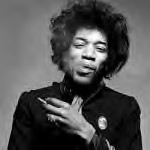
Jimi Hendrix Energy Drink to be Marketed in April

January 24, 2007

Jimi Hendrix Energy Drink in Works

By THE ASSOCIATED PRESS
Filed at 11:03 a.m. ET

CALABASAS, Calif. (AP) -- A new energy drink doesn't promise to give you the juice to play guitar like Jimi Hendrix, but it does hope to give you a ''Liquid Experience.''

Beverage Concepts says its nonalcoholic ''Liquid Experience'' drinks, named for Hendrix's breakthrough album, ''Are You Experienced?'' will debut in April.

The "Are You Experienced" album was released 40 years ago in 1967, the year that Hendrix became an internationally renowned rock star after releasing hit records in Britain and the United States.

The concept is irking some Hendrix fans, many of whom still consider him the greatest guitarist of all time.

''To see his image and the beautiful feelings it has created during my lifetime cheapened by base advertising ... is very disappointing to me,'' said bassist Michael Balzary, better known as Flea of the Red Hot Chili Peppers.

The image of Hendrix, who died in 1970 under mysterious circumstanes in London, has been licensed for products including baby clothing, an air freshener, lava lamp and a Christmas ornament.

Portions of royalties have gone to several educational causes, including the United Negro College Fund, said Bruce Kuhlman, director of licensing and brand development for Authentic Hendrix, the Seattle-based company that controls use of Hendrix's name and images.

Beverage Concepts Chief Executive Josh Glass said his company would honor Hendrix's memory by donating some of the profit from the Liquid Experience to an unidentified music education foundation.

------

On the Net:

Authentic Hendrix: http://www.authentichendrix.com

Beverage Concepts: http://www.beverageconcepts.net

7 Veteran Black Panther Party Members Indicted in 35-Year-Old Death of San Francisco Cop

For More Information on the Campaign to Free US Political Prisoners Just Log on to the following URL:
http://thejerichomovement.com

January 24, 2007

8 Arrested in 1971 Killing of San Francisco Police Officer

By JESSE McKINLEY

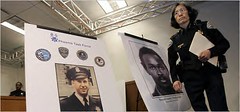
SAN FRANCISCO, Jan. 23 — Eight men, including seven described as members of the radical Black Liberation Army, were arrested on Tuesday on charges of murdering a police officer here in 1971 and waging a violent five-year battle against the police and federal authorities.

The arrests, in morning raids in California, Florida and New York capped an investigation by San Francisco police into the murder of Sgt. John V. Young, who was killed by a shotgun at a desk in the Ingleside stationhouse on Aug. 29, 1971.

A civilian clerk was wounded.

New York police officials said two of the men arrested were the gunmen, Francisco Torres, 58, who was seized at his home in Queens, and Herman Bell, 59, who was rearrested at a New York prison where he is serving a murder sentence.

The rest of the aging men were said to have been lookouts, getaway drivers and participants in the assault on the police station and other attacks.

A statement by the San Francisco police characterized Sergeant Young’s killing as a part of a “conspiracy to kill law enforcement officers” from 1968 to 1973, a plan that included the murders of two New York police officers, four attempted murders of law enforcement personnel, the bombing of a police officers’ funeral at a San Francisco church and the attempted bombing of another San Francisco police station, as well as three bank robberies, two here and one in Georgia.

In New York, Police Commissioner Raymond W. Kelly said the arrests dealt a blow to the legacy of the protest group, a violent offshoot of the black nationalist Black Panthers, which operated from the late 1960s until the early 1980s. Mr. Kelly said the arrests testified to the long memory of the police, especially for the killing of one of their own.

“It is a good day for police officers in New York and San Francisco and everywhere else,” Mr. Kelly said in a telephone interview from Washington. “It underscores the fact that the law enforcement community is never going to forget.”

Soon after the arrests, current and former defense lawyers for several of the men said they were skeptical of the charges in the nearly 36-year-old case, saying the police had harassed their clients for years.

Three men were charged with Sergeant Young’s killing in 1975, The Associated Press reported, including one of the men arrested on Tuesday, but that case was dismissed.

A lawyer who represents Mr. Bell, Stuart Hanlon, said he thought that the case against Mr. Bell was based on a 30-year-old confession by a suspected Black Panther member that a judge threw out in the mid-’70s because it had been physically coerced.

“I think the police are outraged, and rightfully so, that one of their own was gunned down,” Mr. Hanlon said. “They believe they are right. But the belief does not make it so.”

Mr. Torres was one of the first arrested, taken from his red-brick home in Jamaica, Queens, before dawn. Also arrested in New York State were Mr. Bell, 59, and Anthony Bottom, 55, who were in prison for the murders in May 1971 of two New York City police officers, Waverly Jones and Joseph Piagentini.

All three men were charged with murder and conspiracy.

In San Francisco, the police arrested Richard Brown, 65, and Richard O’Neal, 57. They were held in $3 million bail with Mr. Brown charged with murder and conspiracy, and Mr. O’Neal, who is not believed to be a member of the so-called army, was charged with conspiracy.

The Los Angeles County sheriff confirmed the arrests of Ray Michael Boudreaux, 64, and Henry Watson Jones, 71, both of Altadena.

The police in Panama City, Fla., confirmed that they had taken Harold Taylor, 58, into custody without incident. He was held on $3 million bond.

The authorities said they were also seeking Ronald Stanley Bridgeforth, 62, on charges of murder, conspiracy and assault. Mr. Bridgeforth is thought to be living abroad.

In their statement, the San Francisco police said that in 1999 they began investigating again several killings of their officers after advances in forensic science had led to the discovery of new evidence in one case.

In 2005, a grand jury was convened to look into Sergeant Young’s killing. Four of the men arrested on Tuesday were called to testify. They refused, and were briefly jailed.

A spokesman for the San Francisco police, Sgt. Neville Gittens, said the investigation into Sergeant Young’s case and the other attacks would continue. Sergeant Gittens said the police and state attorney general were confident that enough evidence had been gathered to bring charges.

Mr. Hanlon said he doubted that the police had any new evidence.

“The only thing I can think of is the evidence they have from 1971 has been analyzed using a more sophisticated forensic science,” he said. “But that is not the same as having new evidence.”

Mr. Hanlon suggested that the police had long focused on the Black Panthers and other black power groups.

“I think there is a hatred of the Panthers,” he said. “Police who were around then hated them, and the animosity was clear.”

Mr. Torres’s lawyer, Michael W. Warren, said Mr. Torres was innocent.

“He’s been around in the community in New York for a number of years,” Mr. Warren said. “The F.B.I., as well as the San Francisco police, have known his whereabouts for all these years. He has been an integral part of this community.”

The police said Mr. Torres tried to ignite dynamite in the Ingleside stationhouse in 1971.

Outside police headquarters in Manhattan, Mr. Torres said as detectives escorted him, “It’s a frame up.”

Al Baker contributed reporting from New York, and Carolyn Marshall from San Francisco.


8 arrested in 1971 cop-killing tied to Black Panthers

By JOHN M. GLIONNA, Times Staff Writer
2:32 PM PST, January 23, 2007

BLA members arrested

SAN FRANCISCO -- Eight men were arrested today in connection with the 1971 shotgun murder of a San Francisco police officer in a case that authorities said involved a five-year conspiracy to kill police officers throughout the United States.

A joint task state and federal task force identified seven of the arrested as former members of the Black Liberation Army, a violent arm of the Black Panthers.

The arrests, which were made in California, New York and Florida, were the culmination of an investigation into the activities of the BLA, which in the late 1960s and early '70s "were bent on creating terror and chaos by assassinating police officers," said Morris Tabak, deputy chief of investigations for the San Francisco Police Department.

The eight men have been charged with the murder of Sgt. John V. Young, who was gunned down Aug. 29, 1971 at a police station here.

They have also been charged with conspiracy to murder police officers, authorities said.

The men arrested today were: Ray Michael Boudreaux, 64, and Henry Watson Jones, 71, both of Altadena; Richard Brown, 65, of San Francisco; Francisco Torres, 58, of Queens, N.Y.; Herman Bell, 59, and Anthony Bottom, 55, who are both incarcerated in New York state; and Harold Taylor, 58, of Panama City, Fla.

Another man, Richard O'Neal, 57, of San Francisco, was arrested on conspiracy to murder police officers. He was not charged "as an active participant" in the Young killing, authorities said.

A ninth suspect, Ronald Stanley Bridgeforth, 62, was charged with murder, conspiracy to commit murder and aggravated assault on a police officer in connection with the killing of Young. Bridgeforth was still at large.

Authorities said they will seek extradition of all of the men to stand trial in California.

The investigation, named the Phoenix Task Force, has for years been collecting evidence on a series of nationwide attacks on police officers.

Investigators today named four incidents in the years between 1968 and 1973, including the bombing of a police officer's funeral and the attempted bombing of a police station, both in San Francisco; the murder of two New York City police officers; and three armed bank robberies, whose proceeds, they said, were used to fund the BLA's criminal activities.

This is not the first time arrests have been made in the Young killing.

In 1975, three defendants were charged with the shooting, but a judge dismissed the case, ruling that evidence gathered against the men was gained through torture. An attorney representing one of the men has said that the police used cattle prods and wet blankets in an attempt to force a confession.

At a news conference in San Francisco, task force members refused to discuss specifics of their ongoing investigation. Several task force members addressed reporters next to visual aids that included an enlarged photograph of Officer Young, an undated mug shot of Bridgeforth, as well as an aerial view of the Ingleside police station where Young was killed.

Authorities said the probe into the death of the San Francisco officer was reopened in 1999 "after advances in forensic science led to new evidence in one of the unsolved cases," according to a press release.

They would not confirm that DNA samples were part of the evidence.

"There was a strong anti-government sentiment in the late 1960s and early 1970s when the BLA members were bent on creating terror and chaos by assassinating police officers," Tabak said. "We believe the motive for the crimes was the furtherance of these revolutionary views."

Investigators on Tuesday also offered a $100,000 reward for information into the 1970 killing of San Francisco police officer Richard P. Radetich. They declined to specifically link Radetich's death to today's arrests but said his killing happened at the same time as the other attacks on police.

On the night of Young's killing, five black men strode into the Ingleside station about 9:40 p.m. As the officer stood behind bulletproof glass at the visitor's window, one of the men stuck a 12-gauge shotgun in the speaking hole and fired. The buckshot caught Young in the chest and upper body. An office clerk was hit in the back but was not seriously injured.

A second officer in the station at the time dove to the floor when he heard the gunshots. He crawled over to the wounded Young, who gasped "Help me," according to a recent story about the case in a San Francisco weekly.

"The evidence we believe will show that the motivation of these men was to kill police officers," said Maggy Krell, a prosecutor in the state attorney general's office. "They ambushed an innocent person because of the uniform he wore."

Speaking at the news conference, San Francisco Police Chief Heather Fong called Young's killing "coldblooded." She described him as busy in neighborhood affairs, "someone who was doing community policing before the term was even coined."

"Now," Fong continued, 36 years after this brutal death, arrests have been made."

Authorities said the arrests helped close an emotional historical chapter in which officers were targeted indiscriminately.

"We never stopped working this case," Tabak said. "Like other murders, you go back and check things double and triple. If you think about this, any group's targeting law enforcement for assassination strikes at the core of any civilized society.

The arrests, he said, were "a great sense of relief, a victory for law enforcement."

john.glionna@latimes.com

Somali War Update: More US Air Strikes Launched Against Civilian Areas

U.S. launches new air strike on Somalia -report

Reuters
Wednesday, 24 January, 2007
By Sahal Abdulle

MOGADISHU (Reuters) - A U.S. Air Force AC-130 gunship has launched a second air strike against suspected al Qaeda operatives in southern Somalia, the Washington Post reported on Wednesday, citing unidentified U.S. officials.

No confirmation of Monday's reported attack was immediately available in the region and a Pentagon spokesman declined to comment. The newspaper said there was no information on the results or the specific targets of the strike.

An AC-130 gunship two weeks ago attacked what Washington said were al Qaeda agents fleeing with Islamist forces defeated by Somali government and Ethiopian troops late last month. It was the first overt U.S. action in Somalia since the end of a disastrous peacekeeping mission in 1994.

Somali government spokesman Abdirahman Dinari said he was not aware of a second U.S. attack.

Washington believes Somali Islamists harboured al Qaeda members accused of bombing two U.S. embassies and an Israeli-owned hotel in east Africa.

Any prolonged U.S. intervention in Somalia would be sure to inflame political passions there, joining the chorus of Muslims who see the "war on terror" as a crusade against Islam.

A freelance Somali journalist said on Sunday he had seen U.S. troops on the ground in south Somalia working with Ethiopian forces hunting fugitive Islamists. Ethiopia vehemently denied the report.

Rumours have swirled for days that U.S. personnel were inside Somalia since the January 8 strike but there has been no official confirmation of a U.S. ground presence.

Mortars were fired at Mogadishu airport on Wednesday, killing one person and injuring another after a U.N. delegation arrived in the Somali capital, a government source said.

"A U.N. delegation just arrived and as soon as they left the plane, two mortar shells hit the airport," the source said.

"One person was killed while another was injured," the source said, adding the victims were Somalis. The U.N. Development Programme delegation was taken to an agency compound.

A spate of attacks, mainly against Ethiopian troops backing Somalia's interim government, have rocked the capital since they helped oust Islamists from Mogadishu and much of the south they had controlled for six months in a lightning December offensive.

The Islamists and some foreign supporters have vowed to wage guerrilla war against Ethiopian troops in the country, and many Somalis suspect their militants have been behind the attacks.

"THERE WILL BE NO VACUUM"

Ethiopian Prime Minister Meles Zenawi said on Wednesday some 200 soldiers had withdrawn from the chaotic nation.

"We have organised that the last phase of withdrawal will coincide with deployment of AU forces," Meles told a news conference in Addis Ababa. "There will be no vacuum."

The African Union (AU) has approved a nearly 8,000-strong peacekeeping force for Somalia, but experts doubt its capacity to muster it, let alone tame a nation in anarchy since the 1991 ouster of dictator Mohamed Siad Barre.

The Islamists have been pushed into the remote southern tip near Kenya's border and Nairobi has in custody top Islamist leader Sheikh Sharif Ahmed.

A Kenyan government official said on Wednesday Ahmed would not be deported to Somalia because he would be killed and that he has asked for refuge in Yemen.

Yemen's foreign minister was quoted as saying this month that some Islamist leaders had arrived there.

"We won't send him back. He will be killed," the official, who spoke on condition of anonymity, told Reuters.

"(Prime Minister Ali Mohamed) Gedi is in town and we are trying to persuade him to talk to Sheikh Sharif, but he won't. He (Ahmed) wants to go to Yemen."

Dinari declined to comment on the fate of Islamists returned to Somalia.

Considered a moderate before the war, Ahmed is among those the United States sees as a potential force in reconciliation.

The Kenyan official said Ahmed was under the watch of Kenya's National Security Intelligence Service at a plush hotel in Nairobi's outskirts.

Many diplomats suspect a Kenyan and U.S. hand in bringing Ahmed in.

At least one Western diplomat dismissed as false reports that he turned himself in at the Kenyan border on Sunday: "He's been in the shade in Nairobi for at least a week and they have just been figuring out how to handle it."

A European diplomat said Ahmed had been in the country since at least January 16.

The U.S. embassy in Kenya said Ambassador to Kenya Michael Ranneberger planned to meet Ahmed later this week.

(Additional reporting by Bryson Hull and Marie-Louise Gumuchian in Nairobi and Tsegaye Tadesse in Addis Ababa)


Mortars hit Somalia's international airport, wounding several civilians, witnesses say

Wednesday January 24, 2007
By SALAD DUHUL
Associated Press Writer

MOGADISHU, Somalia (AP) Gunmen launched several mortars at Mogadishu International Airport on Wednesday, wounding at least three civilians, witnesses said.

Abdi Mohamed, who was nearby, said he saw three injured young men who were hit with shrapnel.

``Two mortars landed inside the airport and the other outside,'' said Mohamed. ``There were three planes on the runway when the attack happened.''

The runway was not damaged, said the director of the airport.

The attack comes one day after Ethiopian troops, whose military strength was crucial to helping Somalia's government drive out a radical Islamic militia, began withdrawing. The pullout leaves the fledgling government to stand on its own for the first time in this notoriously violent capital.

The intervention of Ethiopia last month prompted a military advance that was a stunning turnaround for Somalia's two-year-old government. Without Ethiopia's tanks and fighter jets, the administration could barely assert control outside one town and couldn't enter the capital, which was ruled by the Council of Islamic Courts.

On Tuesday, Somali government spokesman Abdirahman Dinari said Ethiopia helped chase the Islamists from the capital and much of southern Somalia, but that it was time for the neighboring forces to leave.

``As of today, the Ethiopian troops have started to withdraw from Somalia. We are grateful that they played an important role in the restoration of law and order in the country,'' Dinari said.

But the potential for violence in this chaotic Horn of Africa nation remains great because of clan rivalries, resentment of the government's Ethiopian backers and a threat of guerrilla war from remnants of the Islamic movement.

Many Somalis were angered by the presence of Ethiopian forces; Somalia, a Muslim country, and Ethiopia, which has a large Christian population, fought a brutal war in 1977.

Ethiopian Prime Minister Meles Zenawi said Wednesday that ``quite a few'' Somali fighters captured by his forces were being held in Ethiopia. He declined to elaborate.

A Somali government soldier said Wednesday that he saw a wounded Islamic official this week being held by Ethiopians in the Somalia city of Kismayo. He said the wounded man was Sheik Ahmed Madobe, governor of the Islamic courts in Kismayo.

``He had injures in one of his legs,'' said government soldier Deq Ibrahim.

The Ethiopian withdrawal raises a sense of urgency for a proposed African peacekeeping force to arrive quickly.

The African Union Peace and Security Council has approved a plan to send about 8,000 African peacekeepers, including nine infantry battalions, to Somalia for a six-month mission that would eventually be taken over by the U.N. Malawi and Uganda have said they want to contribute troops, but no firm plans are in place.

AP writers Mohamed Olad Hassan in Mogadishu and Les Neuhaus in Addis Ababa, Ethiopia, contributed to this report.

(Copyright 2007 by The Associated Press. All Rights Reserved.)


Ethiopian troops kill 3 people in Somalia

Tuesday 23 January 2007.

Jan 22, 2007 (MOGADISHU) — Ethiopian troops supporting Somalia’s fledgling government killed three people early Monday during a three-hour operation in an area where Ethiopian forces have been attacked in recent days, witnesses said.

The troops were firing at several gunmen who were trying to hide in a house in the Hurwa district, said Mustaf Hassan Ali, who witnessed the shooting. He said the victims were not the gunmen but civilians in the home.

"The Ethiopians fired at the civilians when unknown gunmen sought refuge in their house," Ali said.

Ethiopian troops have come under fire frequently in recent days in the Hurwa district, which is considered a hotbed of sympathizers for Somalia’s Council of Islamic Courts. The radical group was driven out of the capital and much of southern Somalia last month with the help of powerful troops from neighboring Ethiopia.

On Saturday, gunmen fired machine guns and rocket-propelled grenades at an Ethiopian convoy in Hurwa district, but missed. The Ethiopians responded with heavy weapons, killing four bystanders, witnesses and medical officials said.

Somalia has been without an effective government since 1991, when warlords overthrew a dictator and turned on each other. The government was formed two years ago with the help of the U.N., but was weakened by internal rifts.

The intervention of Ethiopia prompted a military advance that was a stunning turnaround for the administration, which is trying to assert control in this battle-scarred country. But the potential for violence remains great because of traditional clan rivalries and a threat of guerrilla war from remnants of the Islamic movement.

Many Somalis also resent the Ethiopians’ presence. Somalia, a Muslim country, and Ethiopia, with its large Christian population, fought a brutal war in 1977.

On Sunday, Somalia’s government spokesman said Kenya has handed over 34 Islamic militiamen, and that some of them may be senior leaders of the Islamic movement.

Kenyan border patrols arrested the men in the past few weeks, said Abdirahman Dinari, the government spokesman. He said the government is investigating the identities of the men and will soon make the details public.

The government has invited African peacekeepers to help provide security in Somalia, but they are unlikely to come if fighting continues. African Union officials approved an 8,000-peacekeeper mission on Friday.


Somalia: African Union force agreed

By Ann Talbot
23 January 2007

The African Union has agreed to send a 7,600-strong peacekeeping force to Somalia to replace the Ethiopian troops who invaded the country in December. Ethiopian Prime Minister Meles Zenawi has insisted that his forces will withdraw in a matter of days.

Meeting in Addis Ababa, the African Union’s Peace and Security Council announced that it would deploy nine battalions of 850 soldiers. The mission is to be known as AMISOM. It will last for a period of six months and begin on January 26.

The presence of Ethiopian troops, Somalia’s traditional enemy, is a major source of instability and conflict. “The sooner the Ethiopians get out of Somalia the better,” Korwa Adar told the South African based Inter Press Service (IPS). Adar, an analyst at the Africa Institute of South Africa in Pretoria, said, “Their presence in Somalia will continue to cause resentment given the long history between them.”

Ethiopian Foreign Minister Seyoum Mesfin has just returned to Addis from a tour of African states, trying to drum up support for the AU mission. He told Ethiopian television,
“Nigeria and Libya have confirmed to me that they are willing to send peacekeeping troops to Somalia. Algeria has also stated its willingness to provide assistance to the cause.”

He has, however, received a definite refusal from Angola—an indication of the difficulty the AU has in meeting up to its promises.

Angolan Foreign Minister Joao Bernardo de Miranda told the Lusa news agency, “Angola has come out of a long conflict. Our troops were involved in a draining war. It is not the time for us to be involved in a foreign military force.”

The overall total promised in any event falls far short of the 10,000-plus Ethiopian troop presence. Nor will it have the air power and heavy artillery that the Ethiopians have at their disposal. And so far only Uganda has made a concrete public commitment. Ugandan President Yoweri Museveni has agreed to make 1,500 troops available. His ruling party agreed to the deployment at the weekend.

The AU anticipates that its force will become a UN mission after six months. As such it “will support the long-term stabilisation and post-conflict reconstruction of Somalia,” according to a statement issued from the organisation’s headquarters. For that it will need international financial support.

The actions of the transitional government are throwing that support into doubt. There have been numerous appeals by the imperialist powers for the government to reach some form of accommodation with what are routinely described as “moderate Islamists” as well as with the various warlords and clan chiefs. The aim is to provide a modicum of popular legitimacy for a regime that is seen as a US puppet and one that is militarily dependent on Somalia’s traditional enemy, Ethiopia.

Thus far these appeals have been rejected. The dismissal of the speaker of the transitional parliament, Hassan Sheikh Adan, has antagonised both the United States and the European Union. Adan is viewed as one of the few members of the parliament who is not entirely favourable to Ethiopia. He was sacked when he attempted to start talks with former supporters of the United Islamic Courts, whose leaders were driven out of Mogadishu by the Ethiopian invasion.

His dismissal makes the regime much more open to the charge of being an Ethiopian puppet and will make an agreement with the powerful clan leaders and warlords more difficult to achieve.

Adan told Associated Press in a telephone interview, “They have been ordered to vote me out by the president, Abdullahi Yusuf, who wants to rule Somalia through Ethiopian forces and through this parliament. The president wants to crack down on all those who are against him.”

US Assistant Secretary of State for African Affairs Jendayi Frazer condemned the sacking. She said, “The past has to be left in the past ... the symbol of the president and the prime minister combining to push him out is counter to that spirit of reconciliation.”

US Ambassador to Kenya Michael Ranneberger expressed his frustration. At a press conference in Nairobi he demanded to know, “Was there a proper forum of parliament? Were the stated procedures of parliament followed? Were the procedures and parameters of the transitional federal charter followed?”

The EU will discuss the situation in Somalia next week. It is proposing to offer €15 million to help fund the AU mission, but is concerned about the dismissal of Adan. An EU official commented, “The EU will say it remains concerned by the current state of the reconciliation process.”

A draft statement issued to the press ahead of the meeting insisted, “It is of the utmost importance to ensure that all key stakeholders—including clan elders, Islamic leaders, representatives of the business community, civil society and women—are engaged.”

The chairman of the Union of Islamic Courts, Sheikh Sharif Sheikh Ahmed, is reported to have crossed the border into Kenya. He surrendered himself to the Kenyan security services and was immediately flown to Nairobi under conditions of high security. He is reported to be under US protection in a top hotel in the Kenyan capital.

There has been no comment from the US embassy in Nairobi. But Ranneberger has repeatedly identified Ahmed as one of the moderate Islamists with whom the transitional government should do a deal. Ahmed shared the leadership of the courts with Sheik Hassan Dahir Aweys, identified by the US as a member of Al Qaeda. Aweys is on the US wanted list.

Without help from Ahmed or other leading members of the Islamic Courts, alongside the clan leaders and warlords, it is unlikely that the transitional government can establish control of Mogadishu. And if the government is isolated it will make the task of the AU peacekeeping force impossible.

Last Friday night the presidential palace came under mortar fire. The president was in his palace, but was said to be unhurt. On Saturday an Ethiopian tank column was attacked. Four civilians were reported to have been killed when the Ethiopians opened fire. On Sunday Ethiopians troops were reported to have killed three civilians after they blasted their way into a house where they claimed gunmen were hiding.

The action of the US in bombing southern Somalia has made it even more difficult for African countries to intervene. Even Zenawi recognizes the problem. When Orla Guerin of the BBC asked him if he thought the US air strike was misguided, he replied, “We were there, we saw what happened. This is not to say that the American intervention at that particular moment was fortunate.” Guerin then asked him, “Do you think it shouldn’t have happened?” to which Zenawi responded, “It could have been avoided.”

South Africa is one of the prime candidates for contributing to a peacekeeping force. But President Thabo Mbeki has publicly expressed his concern about the US air raids on southern Somalia. The attacks, he pointed out, had claimed the lives of innocent civilians and would provide no solution for the tribal and political conflicts in the region. Somalis, he said, believed that the US bombing was in revenge for the deaths of 18 US soldiers in the Black Hawk Down incident in 1993.

Mbeki insisted that African countries must provide peacekeeping troops, but when Kenyan Foreign Minister Raphael Tuju approached South Africa for help, Mbeki initially prevaricated. It was left to Deputy Foreign Minister Aziz Pahad to say that South Africa would not send troops to Somalia. An anonymous South African official told the Mail and Guardian that the government was unwilling to send troops because it did not want to be seen as fighting the war on terror on behalf of the US.

David Monyae, a lecturer of international relations at South Africa’s University of Witwatersrand, told the IPS, “The recent intervention by the US planes to bomb (fleeing) Somali (Islamist) locations has complicated Africa’s position. It has muddied the water. As a result, whoever intervenes by deploying troops in Somalia will be seen as a US agent.”

“You don’t want to deploy troops that will be butchered,” he added.

Any African force that is seen as doing the bidding of Washington could rapidly find itself facing as much hostility as the Ethiopians are now. The US has so far provided $40 million in aid to Somalia. The transitional government has requested more money and assistance in training a police force and army. There is certainly support for this within the US political elite. The American Enterprise Institute recently hosted a press conference at which a representative of the transitional government announced its request for funds. The US already runs training programmes in a number of African countries. But the presence of even a small number of US personnel in Somalia would inevitably provoke hostility after the experience of Operation Restore Hope.

With African countries reluctant to step in, there is pressure on the US military to become more directly involved. Channel 4 reporter Nima Elbagir recently reported on the developing opposition to the transitional government. She warned that if the US “doesn’t go in fully, what it’s done is to create a fertile recruiting ground.” Larry Korb, a senior fellow at the Center for American Progress in Washington, who was an assistant defence secretary responsible for manpower and logistics in the early 1980s, has openly speculated about US paratroopers being deployed in Somalia.

The US already has small numbers of its special forces on the ground in southern Somalia, where they have been hunting down alleged members of Al Qaeda. US General Peter Pace, chairman of the Joint Chiefs of Staff, told Congress last week that the operation in southern Somalia is being conducted under the Pentagon’s authority to track down and kill terror suspects internationally.

A report in the Sunday Times has also indicated that the British SAS is involved in the operation. The paper quoted CIA sources who said that they had been using the
“professional assistance” of the SAS since the end of 2005. “The brief was to enter Somali territory with the objective of studying the terrain, mapping and analysing landing sites and regrouping areas, and reporting on suitable ‘entry and exit points.’”

The CIA source admitted that the US had been “bankrolling the Ethiopians since the start of last year, as well as providing them with satellite surveillance, technical, military and logistical support.”

The pressure on Ethiopia to pull out comes not only from within Somalia, but from the threat posed by neighbouring countries and the risk of divisions inside Ethiopia being exacerbated. President Isaias Afwerki of Eritrea recently told Al Jazeera television that Ethiopia was stuck in a “quagmire.” He warned, “The Islamic Courts have not been defeated.”

Eritrea and Ethiopia fought a bitter two-year war that only ended in 2000. The border between them is still undecided and is policed by a UN force. Last month the US Council on Foreign Relations warned that an Ethiopian invasion of Somalia had the potential to become a conflict between Ethiopia and Eritrea. There are already low-intensity conflicts between Ethiopia and separatist movements, the Oromo Liberation Front and the Ogaden National Liberation Front. Both these movements look to Eritrea for support.


Islamists Invited Back for Dialogue

The East African Standard (Nairobi)
Cyrus Ombati - Nairobi

The Somalia Government wants Kenya to hand Union of Islamic Courts leader, Sheikh Sharrif Ahmed, over to them.

Prime minister Mohamed Ghedi said they want Sharif and his deposed supporters to participate in the ongoing reconciliation talks.

"We want all UIC officials and supporters including Sheiikh Sharrif to come to Mogadishu for the talks in Somalia," he said.

He said he believes Kenya will hand over all immigrants that have been arrested to participate in the ongoing talks.

Ghedi added that none of them would be persecuted in Mogadishu since his Government's aim is to restore peace and order rather than revenge.

The prime minister addressed several diplomats at a Nairobi hotel to highlight on what his Government has done since it landed in Mogadishu two weeks ago.

He made the address hours after the Kenya government admitted that it was holding the UIC leader who surrendered on Sunday.

Government Spokesman Dr Alfred Mutua said police are still interrogating Sharrif without disclosing his whereabouts.

Ghedi announced that the Transitional Federal Government is now in control of the entire country.

He said they have installed a mayor and his deputy in Mogadishu and plans are underway to appoint district commissioners across the country.

He said the country's new Speaker will be known in a week's time following the sacking of the former one.

Ghedi also appealed to the international community to assist Somalia restore order. He said the TFG police are now in at all police stations in the country and have exerted their authority.


Canada 'strongly protests' man's deportation to Somalia

Monday, January 22, 2007 | 2:49 PM ET
CBC News

A Canadian who describes himself as a used clothing dealer has been deported from Kenya to Somalia — possibly into the hands of Ethiopian authorities — after fleeing Somalia in the wake of that country's civil war.

Bashir Ahmed Makhtal is originally from the Ogaden region of Ethiopia, an ethnic Somali enclave where his grandfather was a founder of a separatist movement, the Ogaden Liberation Front.

Bashir Ahmed Makhtal was deported from Kenya to Somalia after fleeing Somalia in the wake of a civil war.

Ethiopia has a large military presence in Somalia, after providing the muscle that enabled a weak secular government to defeat Islamist forces formerly in control of much of the country.

Makhtal's lawyers and family fear for his safety in Ethiopian hands.

"He's never been part of any kind extremist organization," his wife, Aziza Osman, told CBC News. "He's just a businessman."

Osman, who lives in Nairobi, the Kenyan capital, said her husband had travelled between Somalia and Kenya on business four times in the past year.

Because he was travelling on a Canadian passport, the decision to deport him to Somalia rather than Canada amounts to what is called rendition, a tactic famously used by U.S. officials when they grabbed Montreal resident Maher Arar as a terrorism suspect in 2002 and sent him to Syria for interrogation.

A spokesman for the Department of Foreign Affairs and International Trade said in Ottawa on Monday that Canada "strongly objects" to Kenya's decision, partly because the department has labelled Somalia too dangerous for travel and has advised all Canadians to leave.

Spokesman Réjean Beaulieu said the matter has been raised "at the highest level" with Kenyan officials in Ottawa and the Kenyan capital, Nairobi. He said he had no information on whether Makhtal has been handed over to the Ethiopians.

CBC Africa correspondent David McGuffin reports from Nairobi that Makhtal was picked up by Kenyan authorities on Dec. 30 as he applied to enter Kenya from Somalia. He was held at the border for three days, then moved to a police station in Nairobi.

On Saturday, he was deported to Somalia along with 29 other people picked up on the Kenyan side of the border. Their exact whereabouts are unknown.

Makhtal's lawyers believe he is in Ethiopian hands and may have been sent to the Ethiopian capital, Addis Ababa. They say he told them that Ethiopian security officers were present as he was interrogated about possible terrorist links.

His relatives, who fear he may be executed, deny strongly that he has any involvement in terrorism or ties to Somalia's short-lived Islamist regime.

"Anything could happen, any minute, any second," a cousin living in Hamilton, Ont., Said Maktal, told the Toronto Star. "You're dealing with a Third World country which does not obey international law. They don't care."

Family fled Ethiopia in the early 1970s

Makhtal's lawyers and relatives provide this background:

The family fled to Somalia in the early 1970s and ultimately to Canada to avoid persecution of ethnic Somalis in Ethiopia.

Makhtal lived in Canada in the 1990s, where he studied computers at the DeVry Institute of Technology, a private trade school, and worked for the Canadian Imperial Bank of Commerce.

He moved back to the Horn of Africa in 2001 to open his clothing business, operating from Dubai, Eritrea, Kenya and Somalia.

He was stuck in Somalia during the fighting in December and January and was trying to leave via Kenya.

In Nairobi, McGuffin reports that Makhtal didn't get access to a lawyer until Jan. 10, during his second week in Kenyan custody, and was denied Canadian consular access five times before a Canadian High Commission official was able to meet him in the week of Jan. 15.

McGuffin spoke to four Kenyan government departments and the office of the president, none of which would comment. It is believed this is the first case of a foreign national in Kenya being deported to a third country, McGuffin says.

The Somali government was also not commenting, he reports, but a Somali journalist told him that Makhtal and others were seen being taken away in an Ethiopian military truck after arriving by plane in the Somali capital, Mogadishu.

Beaulieu, the Foreign Affairs spokesman, said Kenya did not tell Canadian officials that Makhtal was being deported to Somalia.

Canada has no resident diplomatic mission in Somalia, he said, "so you will understand that it limits our capacity to provide consular assistance."