Thursday, April 02, 2009

The Untold Story of Ethiopians in Cuba

The Untold Story of Ethiopians in Cuba

Published August 10th, 2008
Meditations and News & Hot Shots

Publisher’s Note: In 1979, under Lieutenant Colonel Mengistu Haile-Mariam, the Ethiopian government sent thousands of Ethiopian children to Cuba to be educated. Cuba, an ally of Ethiopia in the Ethio-Somali war, offered housing and education for war orphans. The Cuban government accepted 2,400 Ethiopian students, aged seven to fourteen, to study at Escuelas Secundarias Basicas en el Campo (basic rural secondary schools) - on the small island of Isla de la Juventud.

The following is an interview from our archive with photographer Aida Muluneh, who is filming a documentary about their lives in Cuba.

TADIAS: How did you become interested in the “Ethio-Cuban” story?

AIDA: I went to a group photo exhibit in Havana in 2003 and prior to my trip I had heard about the Ethiopian students in Cuba. After searching for them, I finally met around 30 students who had been in Cuba for over twenty years. It was an amazing experience meeting these fellow Ethiopians. I soon realized that I had to come back. So in 2004, I went back and begun interviewing them to start telling their story and also to help them get out of Cuba.

TADIAS: Why haven’t they left Cuba? And why haven’t they returned to Ethiopia?

AIDA: They have had the opportunity to leave Cuba and return to Ethiopia; however they have no means of supporting themselves in a country they left twenty years ago. There is no incentive for them to go back to Ethiopia and resettle because life would be just as difficult, if not worse in Ethiopia. As for other countries i.e. Europe or North America, the remaining student just recently qualified for their UN refugee number. This basically means that they can get in line for a chance to immigrate to those countries.

TADIAS: This was a coordinated effort between the Cuban and Ethiopian governments. What efforts did Cuba make to help Ethiopian immigrants adjust to Cuba?

AIDA: The Cuban government has been extremely supportive within their means from day one. Even prior to the students arriving, Cuba played an instrumental role in helping Ethiopia during the Ethio-Somlia war. Therefore, upon the student’s arrival, the children were given the basic necessities in order to become acquainted with life in Cuba. One thing that needs to be put into perspective is that as a young child, it is difficult to adjust to any place that is foreign, especially when one is so far away from home. The Ethiopians expressed to me that as children they had missed their country more then anything and I believe this yearning to return is what made it extremely difficult for many. The Cubans have gone above and beyond in providing support to the Ethiopians to this day.

TADIAS: Although The Unhealing Wound focuses on those Ethio-Cubans still in Cuba, we understand there have been a number who have managed to leave Cuba and live elsewhere. When did they leave and where do they live now?

AIDA: In addition to providing primary education, the Cubans have also educated University students during this time period. For many of the Ethiopian students who attended universities in Cuba they have managed to return back to Ethiopia and find viable means of supporting themselves. In fact during the Derg period, many of the students that completed their education were given housing and job opportunities upon their return to Ethiopia. However, after the fall of the Derg government, many of the students felt that returning back to Ethiopia would lead to further economic hardship. In 1991, the Soviet Block fell and many of the students begun leaving to countries such as Spain, Greece, Holland, U.S., etc. I am not exactly sure how many returned to Ethiopia and how many went to other destinations. My assumption is that the greatest number of Ethiopian-Cubans are in Spain.

TADIAS: Is there a network of Ethio-Cubans abroad that help others still in Cuba to immigrate to other countries?

AIDA: As far as I know, there is no organized effort by Ethio-Cubans that continuously assists the Ethiopians to leave Cuba and resettle to a third country. Although it is a tightly knit community in Cuba, once abroad, it’s more so through the efforts of individuals helping new comers than an established network.

TADIAS: What kind of relationship do Ethio-Cubans have with Cuba? Do they identify in any way as Cubans?

AIDA: From my observation of the Ethio-Cubans, there is a special relationship between the Cubans and these Ethiopians. It is clear that they still identify themselves as Ethiopians but they have fully taken on Cuban mannerisms and cultural habits in the ways they interact with others and express themselves.

TADIAS: You mentioned that many Ethio-Cubans faced challenges in adjusting to their new environment when they moved to Cuba. What were some of those challenges?

AIDA: The challenges were similar as any immigrant faces when they arrive to a new country, but imagine that through the eyes of a ten year old. The first problem that they had was the climate. The temperature was a big issue. They were moving from the highlands of Ethiopia to a tropical island. The second was the food. The food in Cuba consisted of pork, rice and beans in contrast to eating Injera their whole life. Then, of course, language and homesickness were major issues.

TADIAS: You left Ethiopia as a child as well. Is there a relationship between your interest in the Ethiopian students in Cuba and your own experience?

AIDA: There was definitely a relationship to my life. I went to boarding school at a young age in Cyprus away from my family. One of the things that attracted me to the whole story and enabled me to empathize with them was the struggle I faced as a child who felt alone in a foreign land.

TADIAS: Does the Ethio-Cuban story fit into the themes that you address in your photography work?

AIDA: My beginning as an artist is in photojournalism and this story at first was supposed to be a series of photographs about these Ethiopians. However, I decided that their story was too compelling to be told solely in still photography. The Unhealing Wound is an exploration of themes that captivate me as a photographer and a filmmaker. It all comes down to capturing life and in this case it is capturing our past history and also documenting the history as it is happening. I hope that thirty years from now, anyone can look back at this film and have a better understanding of our struggles, triumphs and sacrifices as Ethiopians in the landscape of the immigrant life.
—-
Find out more about the film at pastforwardfilms.com.

ANC Election Update: Party 'Disturbed' By Tutu Remarks

ANC 'disturbed' by Tutu remarks

JOHANNESBURG, SOUTH AFRICA Apr 02 2009 15:06

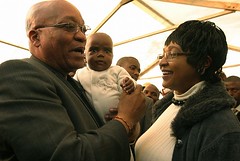
The ANC is "increasingly disturbed" by Archbishop Emeritus Desmond Tutu's comments on the investigation against its president Jacob Zuma.

It said the tone of his comments on the National Prosecuting Authority's (NPA) consideration of representations on Zuma's case indicated he was "either knowledgeable of the decision or seeking to pre-empt an outcome that is favourable to Jacob Zuma".

This, the party said in a statement, was "tantamount to him undermining the independence of the NPA and the judiciary which is unfortunate for a person of this stature".

The comments they were responding to were made at a book launch in Durban on Wednesday night.

While the ANC leader was a warm and friendly man, Tutu said he was not the ideal president.

"In the year of [US President Barack] Obama, can you imagine what it is like when you are walking in New York and they ask you who will be the next president?

"At the present time, I can't pretend to be looking forward to having him as my president."

He said he hoped the NPA would decide to continue with Zuma's fraud and corruption prosecution.

"For his own sake, I hope they are not going to have a political solution. If he is innocent as he has claimed to be, for goodness sake, let it be a court of law that says so," said Tutu.

The NPA was locked in meetings earlier this week to discuss the possibility of dropping Zuma's prosecution on graft charges.

It was expected to annunce on Friday when it would make its decision public.

The ANC believed Zuma's case had to be dealt with in a "transparent, fair and legal manner".

"It would be unfortunate if the bishop is found not to respect the rule of law and its processes.

"It is our view that the Bishop's views do not resonate with the dominant view of the public and the average citizens. If the bishop wants to pronounce on Zuma's guilt and innocence at a personal level, he must say so and would find this to be out of character given his standing as a man of the cloth.

The party was "taken aback" by Tutu's "continued comparison of the ANC to God", considering this blasphemy and sacrilege.

Tutu was welcome to talk to the ANC about his concerns and would benefit from a walk through Gugulethu, Langa and Khayelitsha in Cape Town.

"Walking the streets of New York will certainly result in him having a narrow view of South Africa."

Cosatu says comments 'despicable'

The Congress of South African Trade Unions described Tutu's comments as "despicable".

The trade union federation said it was concerned that he was allowing his "personal passionate hatred" for the ANC and its leader to cloud his judgement.

"We do not share his ultra-pessimism and dismissive attitude of the views of the majority. It is a fact, even if we do not like it, that comrade Jacob Zuma won a free and fair election in Polokwane to become a president of the ANC," Cosatu said in a statement.

It defended Zuma's right to make representation to the NPA and slammed opposition parties and Tutu for pre-empting a decision by the authority as "desperate politicking".

In his remarks on Wednesday, Tutu said South Africa was at a "bad place right now".

"It was easy to be against something [during the struggle]. A far more difficult task has been left to you -- making a reality of our freedom. So when our new government behaves somewhat strangely, it is very difficult to condemn because it looks like you are unpatriotic ... we are at a bad place right now in our country.

"We imagined that our idealism, our altruism, being concerned about others more than ourselves, would be automatically carried over into the post-apartheid era, and we were surprised by how easily we seemed to forget," he said.

He repeated his criticism of the government's refusal to grant a visa to Tibet's spiritual leader, the Dalai Lama.

"When [Finance Minister] Trevor Manuel tried to justify it [the Dalai Lama decision] and was so sneery, I said 'aikhona, this can't be what we struggled for'."

Tutu also questioned the medical parole granted to Zuma's former financial adviser, fraud convict Schabir Shaik.

"Then there's [Schabir] Shaik. It's not a laughing matter -- it's people saying 'go jump in a lake' if you have objections. Is this why people died, is this why people went into exile, is this why people were tortured?

"This is our country, our beautiful country. Please allow us old people to go to our graves smiling," said Tutu.

The National Union of Mineworkers (NUM) on Thursday described Tutu's comments as "misplaced and unfortunate".

It said Tutu was "clearly on a campaign trail".

"Whilst we accept and acknowledge his right to freedom of speech, it is very worrying that his intentions seems to be to canvass for the opposition," said NUM general secretary Frans Baleni.

Baleni said the union respected the archbishop and his credentials.

"He must not abuse himself. The right that the bishop does not have is to hate the children of God with passion."

'Dignified, selfless thing'

In 2006, Tutu said Zuma should not pursue the race to become president of the African National Congress.

Delivering the Harold Wolpe Memorial lecture in Cape Town on August 23 of that year, Tutu said: "I pray that someone will be able to counsel him that the most dignified, most selfless thing, the best thing he could do for a land he loves deeply is to declare his decision not to take further part in the succession race of his party." - Sapa

Source: Mail & Guardian Online
Web Address: http://www.mg.co.za/article/2009-04-02-anc-disturbed-by-tutu-remarks


ANC statement on Emeritus Archbishop Desmond Tutu utterances

2 April 2009

The ANC is increasingly disturbed by the manner in which Emeritus Archbishop Desmond Tutu is addressing the issue of the NPA and the pending case of the President of the ANC Cde Jacob Zuma. His tone and insistence on the pending outcome of the decision of the NPA suggest that he is either knowledgeable of the decision or seeking to preempt an outcome that is favourable to Jacob Zuma.

This is tantamount to him undermining the independence of the NPA and the Judiciary which is unfortunate for a person of this stature. As the ANC we remain convinced that the Jacob Zuma matter must be dealt with duly in a transparent, fair and legal manner. It would be unfortunate if the Bishop is found not to respect the rule of law and its processes.

It is our view that the Bishop views do not resonate with the dominant view of the public and the average citizens. If the Bishop wants to pronounce on Zuma guilt and innocence at a personal level, he must say so and would find this to be out of character given his standing as a man of the cloth. It would be unfortunate if the Bishop is found pandering to the whims of the minority of South Africans who happen to have access to media and other influential platforms.

We are further disturbed by the Bishop's continued comparison of the ANC to God as this is blasphemous. The ANC has not equated itself to God and it has never pretended to be God. We are taken aback by the Bishop sacrilege.

We hold a firm view that the Bishop has access to the ANC leadership incase there are issues related to the aforementioned issue. The ANC has before invited the Bishop to meet with the ANC President and other leaders in order to exchange view and find common ground on how to develop our country.

It is our view that if the Bishop took a walk in the streets of Gugulethu, Langa and Khayelitsha he might have a life changing experience in terms of his views. Walking the street of New York will certainly result in him having a narrow view of South Africa.

Issued by:
Jessie Duarte
African National Congress
More information:
Ishmael Mnisi 082 333 5550


ANC welcomes Electoral Court ruling on comrade Winnie Madikizela-Mandela

31 March 2009

The African National Congress (ANC) welcomes the ruling today (31 march 2009) by the Electoral Court which found nothing incorrect in the struggle stalwart Winnie Madikizela-Mandela's inclusion in the list of ANC candidates for the National Assembly.

We wish to reiterate our support and acknowledge the vital role played by Comrade Madikizela-Mandela in shaping the South African history and politics.

The ANC has always maintained that it will respond to any objections lodged against any of its candidates through the process set down in law and according to the timetable set out by the Independent Electoral Commission (IEC).

The ANC wish to reiterate that it has made every effort to ensure that its list of candidates is compliant with all relevant provisions of the Constitution and Electoral Act.

The process for choosing ANC candidates for this election is the most extensive and democratic of any party in this country. The members of the ANC have chosen a corps of cadres who have the experience, resolve and credibility to serve the South African people capably and with diligence.

Issued by:
African National Congress
Enquiries:
Brian Sokutu 071 671 6919
Ishameal Mnisi 082 333 5550

US Economic Crisis Update: Hidden Homeless Emerge As Economy Worsens

Hidden homeless emerge as US economy worsens

By Steve Gorman and Suzanne Hurt

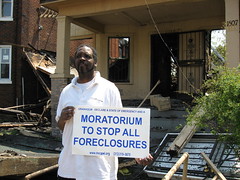
Mar. 26- Emergency shelters brimming with homeless people in California's capital are quietly turning away more than 200 women and children a night in a sign of the deteriorating U.S. economy.

The displaced individuals on waiting lists at St. John's Shelter and other facilities often turn instead to relatives or friends for temporary living quarters, perhaps moving into a spare room, garage or trailer. The less fortunate might sleep in their cars or a vacant storage unit.

They are the hidden homeless. And their ranks appear to be growing as rising joblessness and mortgage foreclosures take their toll in Sacramento and other U.S. cities, experts say.

U.S. President Barack Obama recognized the trend in his televised news conference this week, saying, "the homeless problem was bad even when the economy was good," and he vowed to bring greater government resources to bear to deal with it.

"It is not acceptable for children and families to be without a roof over their heads in a country as wealthy as ours," he said.

A "tent city" of up to 200 homeless in Sacramento was thrust into the media spotlight last month as a symbol of the battered U.S. economy. California authorities said this week they would shut down the illegal settlement and find other shelter for its residents, most of them chronically homeless.

Homeless advocates say they expect such encampments, which already exist around the country, to spread as the housing crisis worsens and shelters fill up.

"I think there's a slight trickle of people who've been at risk of homelessness who are winding up in tent cities or knocking on shelter doors," said Michael Stoops, director of the National Coalition for the Homeless in Washington. "I expect a tremendous increase in homelessness over the next couple of years."

Stoops, who has worked with the homeless for 35 years, said the newly dispossessed often retain some income and seek initially to downsize or find cheaper accommodations.

WORST NIGHTMARE

"Their worst nightmare would be winding up on the streets, in a tent city or a shelter," he said. "That's the last stage. They will do everything they can before that happens to them."

Maria Romero, 52, who held a series of low-paying jobs over the years before steady work became hard to find, said she lived out of her automobile for a year before reluctantly moving to St. John's Shelter in January.

"I'd rather be by myself. My car was my own space," she said, adding she would never consider living in a tent city.

"It wouldn't be safe, especially for a single female," said Romero, a high school dropout forced by circumstance to live in a car or shelter more than once in her life.

Her experience illustrates the complexity of homelessness in America, where the most economically vulnerable are often the first to fall through the cracks during hard times.

The latest national figures, in a January report by the National Alliance to End Homelessness, actually showed a 10 percent decline in the homeless population two years ago -- from about 744,000 per night in January 2005 to nearly 672,000 per night in January 2007.

But 36 of the 50 states reported increases and homeless advocates worry that the national trend will be reversed because of the deepening recession and housing crisis.

As of 2007, the report said, 42 percent of homeless people in the United States, and 70 percent of those in California, slept on the streets, in cars, tents or abandoned buildings.

The "Skid Row" area of Los Angeles is thought to have the nation's highest concentration of homeless, with more than 5,000 counted in that 50-block area in 2007.

Experts say it typically takes six to eight months to go from losing one's home to turning up at a shelter doorstep. Some already have noticed more than a trickle.

RUN ON THE SHELTERS

"I've never seen it like this before, and I have 30 years of experience working with the homeless," said Darlene Newsom, head of the UMOM Day Centers emergency housing project in Phoenix, Arizona, where the number of homeless families seeking services has doubled in the past three months.

Loaves & Fishes, a Sacramento charity that supports the homeless, now provides a free lunch to about 650 people a day, up about 10 percent from a year ago, but private donations to the organization have been flat.

"We are struggling to keep our doors open," director Joan Burke said.

Nearby St. John's Shelter, which caters to women and children, has been running at or near capacity for months -- filling roughly 100 beds a night -- with a waiting list well over twice that long, case manager Kellie Dockendorf said.

This is up from the daily average of 80 women and children turned away in 2008. And getting in can take up to 45 days.

The mix of clientele is changing too, she said.

"We're getting a lot more working people. We're getting more people with education. We're getting a lot more people who are working part-time or not getting enough hours to pay their bills," she said.

Keysia Bell, 38, had made a living as a caregiver for the elderly until full-time work became harder to find.

After a period of paying to stay with friends or relatives for weeks or months at a time, then renting a house she could no longer afford, she ended up at St. John's two months ago with her 17-year-old and 10-month-old daughters.

"I'm out of a job. I'm out of a place to stay. I have a baby daughter, and it all just became overwhelming," she said.

Source: Reuters


Recession forcing more senior citizens into bankruptcy

By Ana Veciana-Suarez

Mar. 28- Jose Abrahantes has been working for about half a century -- in construction, landscaping, even as a janitor cleaning offices on the night shift. He figured he would eventually enjoy a relaxing retirement.

But at 66, with medical bills piling up after an emergency surgery, Abrahantes has filed for bankruptcy. Retirement isn't even in the picture. Instead, he's working part-time at a Publix bakery.

''I had no choice,'' said Abrahantes, who rents a modest Little Havana apartment with his wife, Carmen. ``If I'm making $8 an hour and trying to live off that, there's no way I'm going to pay down all my bills.''

Abrahantes is one of a growing number of senior citizens doing what they once thought unthinkable -- or, as Abrahantes put it, ''embarrassing and painful.'' Hit hard by the slumping economy, unable to pay mounting bills from meager retirement savings, older Americans are filing for protection from their creditors in record numbers. Experts said many end up bankrupt because of medical bills they can't afford to pay. Others simply can't cover their living expenses with their Social Security and savings.

In 2007, Americans 55 and older accounted for 23 percent of the more than one million Americans who filed for bankruptcy, a threefold increase from 1991, according to a recent AARP study. They experienced the sharpest increase in bankruptcy filings of all age groups, jumping from 8.2 percent of all debtors. The numbers are especially stark for older seniors, with bankruptcy more than quadrupling for seniors ages 75 to 84.

Elizabeth Warren, a professor at Harvard Law School and the AARP study's author, said these bankruptcy filings provide a snapshot of the financial vulnerability of older Americans who "now, more than ever, are confronting serious financial challenges.''

What's more, advocates said seniors have been filing at even higher rates since 2007, the last year of the AARP study, because of a declining economy, increasing healthcare costs and a lack of retirement savings.

''It's bad,'' said Barbara Prager, executive director of Coast to Coast Legal Aid of South Florida, which serves people 60 and older in Broward. ``We're seeing a lot of seniors with medical debt and without the income to pay for it. And it's coming at a time when it's harder to find solutions.''

Carlos Franco, the community outreach director for the nonprofit Consumer Credit Counseling, said the problem may be compounded in South Florida, where many senior citizens can't understand English or don't have the savvy to negotiate debt relief.

''They let the bills pile up. They bounce checks,'' he said. ``They don't understand what's going on or what the bills and letters are saying.''

His counselors don't automatically suggest bankruptcy. Instead, they draw up a budget and look at a family's income versus its expenditures. If possible, they ask creditors to reduce interest rates and propose a repayment plan. However, he adds, seniors who depend on small Social Security checks and savings hit hard by the stock market find their options limited.

In the past, some tapped the equity in their homes. But with the housing market in the doldrums, that may not be an option. A September 2008 AARP study found that 684,000 Americans 50 or older -- 28 percent of all homeowners -- were delinquent on their first mortgages, were in foreclosure or had already lost their homes.

''Because the equity value of homes has dropped so much, we can't use reverse mortgages as often as we used to,'' Prager said. ``We're literally flooded with clients in foreclosure or about to go into foreclosure.''

At Consumer Credit Counseling, a senior citizen filing for bankruptcy is offered a bankruptcy education class and told to visit an attorney for legal advice. Emotional support is often required, too. ''It's very hard for them at this point in their lives to deal with having to declare bankruptcy,'' Franco said. ``It can be very embarrassing. Many Latinos don't even want to talk about it.''

Timothy Kingcade, a bankruptcy lawyer with Kingcade & Garcia, said his clients often break down and weep in his office. ``It's very traumatic for them. It's not what they expected in their golden years.''

Their unpaid debt, he adds, usually starts off as a small figure. After several months, however, it can add up to tens of thousands of dollars.

''What I see a lot of are seniors using their credit cards for prescription drugs,'' he said. ``They need their medicine so they worry about paying it later. But even if you're only charging $200, $300, $400 a month, it adds up. It's not long before they're in a lot of trouble.''

Abrahantes' problems started when he was in an accident and was unable to pay the $1,000 deductible on his damaged pickup truck. When he could no longer afford the payments, the bank repossessed the truck. Then Abrahantes developed an infected boil that had to be removed. The bill: $40,000. Abrahantes did not have health insurance or Medicare.

Calls and letters from creditors became too much for Abrahantes, so he filed for bankruptcy.

''If I were 30, it would be different,'' he said. ``I could get myself out of this hole.''

Medical-related financial debt can be particularly problematic for seniors who are uninsured but not old enough -- or poor enough -- to receive government help, said Dave Certner, AARP's legislative policy director. He singles out the ''pre-Medicare'' age group -- 55 to retirement -- who may be an injury or illness away from financial ruin. ''If they don't have insurance through an employer, they find it hard to get affordable insurance on their own or [a policy] that doesn't disqualify them for all these pre-existing conditions,'' Certner said.

More pre-retirement workers are faced with this problem as cost-cutting employers drop insurance or lay off older workers, he adds.

But not all senior citizen bankruptcy is due to healthcare costs. Patrick Cordero, another bankruptcy attorney in Miami, said about 60 percent of the elderly clients he sees are simply in over their heads: Income doesn't cover living expenses.

''One month they pay the electric bill but not the phone,'' he said, ``The next month they pay the phone, but not the electric bill. That goes on until they can't juggle it anymore.''

The reason? Lack of planning for retirement. In other words, some people are outliving their savings.

''Now, more than ever, you have to be prepared for retirement because that's the one thing nobody is going to finance for you,'' Kingcade said. ``When planning, you have to build in the possibility of an expensive long-term illness. You better have a good game plan.''

Source: Miami Herald

The Resurgence of Winnie Mandela's Political Comeback

The resurgence of Winnie Mandela's political comeback under way despite her criminal record

GEOFFREY YORK
From Wednesday's Globe and Mail

April 1, 2009 at 4:03 AM EDT

JOHANNESBURG — At the opening of the newly renovated Mandela Family Museum in Soweto, Nelson Mandela's former wife swept up to the entrance in a black Mercedes-Benz, as coolly confident as ever.

Winnie Madikizela-Mandela, looking younger than her 72 years, made no public speech as she surveyed the bullet-scarred walls of the house where she once lived with the hero of the anti-apartheid struggle. But she didn't need to remind anyone that her political comeback is nearly complete.

Ms. Madikizela-Mandela has shrugged off the notoriety of her convictions for kidnapping and fraud. She knows that millions of supporters still see her as "the mother of the nation," not the woman who endorsed the gruesome punishment of "necklacing" (in which a tire is placed around the victim's neck, filled with gasoline and set alight), who was found by an inquiry to be involved in attempted murder, and who was banned from entering Canada because of her criminal record.

Now Ms. Madikizela-Mandela is again among the leaders of South Africa's ruling party, the African National Congress. The ANC has anointed her one of its top five candidates in this month's election - virtually guaranteeing her the ultimate vindication of electoral victory, and even a seat in cabinet if she wants it.

Among the millions of poor and working-class voters who remember the struggle for liberation from apartheid, Ms. Madikizela-Mandela is still a beloved figure and a political asset. In an ANC campaign commercial, she is shown holding Nelson Mandela's hand as he walked out of prison in 1990.

It is almost enough to justify her boastful prediction of a year ago, when she declared to a local newspaper: "I am going to return the ANC to its former glory by 2009. Watch me."

But even in her moment of triumph, Ms. Madikizela-Mandela remains dogged by controversy. Two political parties have challenged her nomination, charging she is disqualified from running because of her fraud conviction.

The challenge was rejected by South Africa's election commission last week. One of the parties, the Freedom Front Plus, took the matter to the next level of appeal, the Electoral Court, where it was rejected again yesterday.

On the face of it, the legal challenge seemed strong. The South African Constitution states that a candidate is disqualified if convicted of a crime punishable by a prison sentence of 12 months or more. The disqualification does not end until five years after the sentence has been completed.

Ms. Madikizela-Mandela, convicted of 43 counts of fraud for misusing ANC loans, had her sentence reduced on appeal in July of 2004 to three-and-a-half years in prison, and the sentence was suspended. But the election on April 22 will take place less than five years after the suspension.

By placing her among the top five in its candidate list, the ANC has reinforced its image as a party for which criminal records or alleged criminality are irrelevant. Its leader and presidential candidate, Jacob Zuma, is facing prosecution for corruption, although the prosecutors are reportedly on the verge of dropping the charges.

Ms. Madikizela-Mandela, the daughter of a farmer in a remote South African village, married Nelson Mandela in 1958 and raised two children during his 27 years of imprisonment. She suffered constant persecution from apartheid authorities who placed her under house arrest, restricted her movements, jailed her and threw her into solitary confinement for more than a year.

By the 1980s she was a khaki-uniformed militant and a powerful icon of the liberation movement. But her reputation was tarnished by the vigilante activities of her bodyguards, known as the Mandela United Football Club, who were involved in a series of violent incidents, including the killing of 14-year-old Stompie Seipei in 1989.

When the cases were brought to trial, Ms. Madikizela-Mandela was convicted of kidnapping and being an accessory to assault. The accessory charge was overturned on appeal, but a later inquiry by the Truth and Reconciliation Commission found that she was involved in assaults, attempted murder and kidnapping, and had been negligent in failing to prevent Stompie Seipei's murder.

Many South Africans believe she has rehabilitated herself by fighting for justice in unpopular causes in recent years. She became a social worker who fought for the rights of AIDS patients. She defended refugees from Zimbabwe and Congo who were suffering xenophobic attacks from South Africans.

At the peak of the xenophobia crisis last year, she personally gave shelter to a Congolese family, inviting the family to stay at her home after she saw their year-old baby sleeping on the damp floor of a police station.

Wednesday, April 01, 2009

Marching on Wall Street to Fulfill Martin Luther King's Dream: A Jobs Program

Marching on Wall St. to fulfill King’s dream: A jobs program

Published Apr 1, 2009 4:51 PM
By Charles Barron and Chris Silvera

We will be amongst the many speakers at the “Bail Out People, Not Banks” rally on Wall Street on April 3. Just a few hours before the Wall Street rally, the Bureau of Labor Statistics is going to announce that another two-thirds of a million workers got laid off in March. That is one of the reasons why we intend to use the time allotted us to speak, to call for the creation of a massive jobs program. We are going to call it the “Fulfill King’s Dream Jobs Program” in honor of Dr. Martin Luther King Jr.

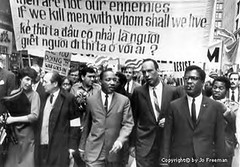
We have four reasons for associating King’s name with the jobs program. The first reason is that April 4 will mark the 41st anniversary of Dr. King’s martyrdom. The second reason is that King devoted the final months of his life to launching a movement for the right of all to either a job or an income.

King saw the struggle for the right to a job or an income as nothing less than the second phase of the civil rights movement. Securing a job at a living wage for all was the central demand of the Poor People’s Campaign that King initiated in late 1967.

The third reason is that at no other time in our lifetime has the need for the massive jobs program that King dreamed about been more urgently needed. Depression-level layoffs and home foreclosures are populating new tent cities from coast to coast. Whole families are living under bridges and in parks on the outskirts of cities.

The real unemployment rate, if you count those who want full-time jobs but can only find part-time or temporary work, is upwards of 15 percent. Everyone from the World Bank to the National Urban League says that the jobless rate is only going to get worse.

The latest “State of Black America” report issued by the National Urban League confirms what everyone already knows. While very few, regardless of race and gender, are not harmed or threatened by the biggest worldwide economic collapse since the 1930s, it is the Black and Latino/a communities that are the most devastated by the crisis, especially Black and Latino/a youth. Jail is not the jobs program for young people that King dreamed about. It was his and should be our worst nightmare.

The unemployment crisis demands a real jobs program, something equal to the size and scope of the Work Projects Administration created by Congress in 1935 to put millions of jobless people to work.

In its first year the WPA created more than 3.4 million jobs (the equivalent of about 10 million jobs today). Under the WPA, workers were paid the prevailing wage in the industry or vocation they worked in.

The stimulus legislation passed by Congress in February may help ease the suffering of some, but it’s not going to reverse or even halt the soaring jobless rate. There is no jobs program currently in effect or even under serious consideration by the government that comes even close to the seriousness and size of the WPA.

Where do we get the money for such a jobs program? When the government is prepared to pump trillions of dollars into the banking system, the question is not where will the money come from but rather what need should it be devoted to. The 200 billion dollars that the government has given AIG alone could have created anywhere between three to four million jobs paying a living wage.

There is another important point that makes the WPA jobs program relevant to today’s crisis. The WPA should have started at an earlier stage of the U.S. and global depression 75 years ago. However, the government delayed putting a serious jobs program in place until it was painfully clear that waiting for the banks to be fixed as the basis for putting the jobless back to work was a huge mistake. We must not make the same mistake again.

We don’t think King believed that meeting the needs of the poor and the unemployed must be contingent upon the solvency of JPMorgan Chase, Citicorp, Bank of America, Wells Fargo, Goldman Sachs, etc., or the power of these big banks to turn the economy on and off depending on what makes them richer.

The belief that until the banks are fixed, there can be no jobs, no economy and nothing but layoffs, evictions, cutbacks, fare hikes, tuition increases, etc., is not some commandment decreed by heaven. It’s a rule made down here on earth to protect the interests of the few against that of the many.

We refuse to accept the rules that say that the only good way to do things is the way that makes rich capitalists happy and leaves the rest of us at their mercy. Such rules must be changed. The only certain thing is that nothing will change unless people demand it so.

Here’s our fourth reason for naming the jobs program after Dr. King. The election of an African-American president is without a doubt the realization of a part of King’s dream. But a president is not a substitute for a mass movement for social justice.

King knew that the captains of industry were not going to suddenly wake up one morning believing that the cause of economic and social justice was superior to their profit motive and thus create good-paying jobs for the poor. King knew that it would take a mass social movement to get the job done.

It is a mistake—and a dangerous one for those of us who are still rejoicing over how we made history last November—to simply sit on the sidelines and wait to see how things turn out instead of raising hell.

King served the interests of the downtrodden and oppressed. Obama must serve all sides. To the extent that Obama wants to do things that directly bail out poor and working people, don’t forget that there are powerful people in Washington and on Wall Street who are dedicated to stopping him. Those powerful people will prevail unless they see and hear the angry masses marching in the streets below their ivory towers.

The popular outrage over the bailout of the banks is a precious and powerful force. It should not, it must not be wasted. Let’s focus that anger into the struggle for the things that we need.

We’ll be on Wall Street on April 3 demanding that the unemployed be bailed out with a real jobs program. We invite you to join us.

Charles Barron is a member of the City Council of New York City.

Chris Silvera is secretary-treasurer of Local 808 of the International Brotherhood of Teamsters and past president of the Teamsters National Black Caucus.
--------------------------------------------------------------------------------
Articles copyright 1995-2009 Workers World. Verbatim copying and distribution of this entire article is permitted in any medium without royalty provided this notice is preserved.

Workers World, 55 W. 17 St., NY, NY 10011
Email: ww@workers.org
Page printed from:
http://www.workers.org/2009/us/jobs_0409/

Issues Behind The Oakland Shootings

WW COMMENTARY

Issues behind the Oakland shootings

By Larry Hales
Published Apr 1, 2009 4:33 PM

On March 21, Lovelle Mixon, a young Black man, was pulled over by two motorcycle cops in Oakland, Calif. According to the Oakland Police Department, the stop was “routine” and was for a “traffic violation.” Other than that the details of the stop remain shady. But such routine stops involving racial profiling occur frequently in oppressed communities.

Mixon placed a call to his uncle from a cell phone. According to the uncle, Curtis Mixon, “He was saying that they were talking on the radio, that they were probably calling for backup, you know how they do. ... Then he said he had to go.” (New York Times)

After the phone call, Lovelle Mixon apparently shot the cops and fled on foot to an apartment complex. According to reports, Mixon hid out in a closet, and as SWAT police entered the apartment he was in and the room in which he was hiding, he then exchanged gunfire with the cops, hitting three, two fatally, and was himself shot dead.

Since then, the police have made numerous claims against Mixon, including that he was tied to a rape or several rapes, a homicide, and that he entered into the sex trade as a pimp, the latter charge supposedly confirmed by a cousin. Of Mixon’s choice to be a pimp, “That’s not something he wanted to stay in,” his cousin said, “but he couldn’t find anything else to pay the bills.” (New York Times)

This commentary is not an attempt to defend his choice to be a pimp, if it is true, or any sexual assault. It is a usual course of police departments to defend their actions and the actions of the state apparatus as a whole by further demonizing victims of police brutality or anyone who is alleged to have fought back against cops.

The final months of Lovelle Mixon’s life must be placed within the context not only of the specific conditions of Oakland, Calif., and the fact of national oppression but also of a deepening crisis of the capitalist system and its disproportionate effects on oppressed communities.

The Los Angeles Times published a timeline of the last months of Mixon’s life, following his release from the California Correctional Center in Susanville.

Mixon served five years in prison before being released in October of 2007 and securing a job as a janitor. He made his parole visits but was remanded back to prison for nine months. According to family, he was willing to go back, because once released he would get a different parole officer, as he felt the one he had was abusive and demeaning.

When he was released in November, he moved back home to live with family members and started seeing his new parole officer, submitting to visits and looking for a job.

A New York Times article reports that Mixon’s grandmother revealed his problems with his parole officer—that the officer would make him wait for hours, stand him up, belittle him and threaten to revoke his parole a second time.

Ultimately not able to find a job, Mixon felt forced to resort to other means. According to a 2003 report by the California Research Bureau, the unemployment rate of parolees recently released was 70-80 percent and many of the prisoners in California were remanded back to prison because of the strict zero-tolerance policy that governs parolees in the state.

Beyond that, though, beyond the politics regarding parolees and the prices they must pay for drug counseling and other classes that people released on parole are made to pay for as a condition of parole, stands institutionalized racism and the national question.

It is well documented that the U.S. has the world’s largest prison system. In fact, the total number of people in prison, jails, on parole or probation is 7.3 million, with 2.3 million in prison. Fifty percent or more of the prison population is Black. California, with 170,000 prisoners, has one of the largest prison populations in the world.

And in every city across the U.S. police brutality is rampant. Oakland, one of the poorest cities in California, with a rich history of struggle, has seen a number of police killings of people of color by police. The most recent killing was of Oscar Grant III, who was executed by a Bay Area Rapid Transit cop, Johannes Mehserle, while he lay face down on a subway platform.

In 2008 Casper Banjo, a 71-year-old Black artist, was shot by a cop at a shopping mall. The people of Oakland have suffered through intimidation, martial law, occupation and generally being terrorized by the police; therefore, Lovelle was justified in defending himself from occupying cops just as resistance fighters in Iraq are justified in defending themselves against an occupying army.

Also killed in 2008 were six others, including Jody Woodfox and 15-year-old José Luis Buenrostro. The year before, Gary King Jr. was brutally beaten, tased and shot in the back by Oakland Police Department cop Patrick Gonzales.

This was and is the atmosphere that led to the four cops being shot, and it could happen at anytime, as long as the racist conditions lead to blinding poverty, mass incarceration and oppression and repression for people of color at the hands of the police.

Lovelle Mixon was not a cold-blooded monster acting out of rage that was unwarranted, but another example of a young Black man with the weight of centuries of oppression bearing down upon him who had few chances to secure better opportunities for himself.

He is a victim and casualty of the racist U.S. capitalist system and the cops are merely armed protectors of that system who wage a constant war against the poor and oppressed every day.
--------------------------------------------------------------------------------
Articles copyright 1995-2009 Workers World. Verbatim copying and distribution of this entire article is permitted in any medium without royalty provided this notice is preserved.

Workers World, 55 W. 17 St., NY, NY 10011
Email: ww@workers.org
Page printed from:
http://www.workers.org/2009/us/oakland_0409/

G20 Protest Bulletin: Royal Bank of Scotland Stormed, Trashed; Thousands Surround Bank of England

G20 protests: riot police clash with demonstrators• RBS branch stormed as bloody skirmishes erupt

• Thousands of protesters held in containment pens
• Barack Obama and Gordon Brown upbeat on G20 deal

Sam Jones and Paul Lewis guardian.co.uk, Wednesday 1 April 2009 15.59 BST

Watch video on the clashes outside the Bank of England & RBS
http://www.guardian.co.uk/world/video/2009/apr/01/police-protesters-clashes-g20

Police and demonstrators clash in London at G20
http://news.bbc.co.uk/2/hi/uk_news/7977489.stm

The G20 protests in central London turned violent ahead of tomorrow's summit, with a hardcore band of demonstrators close to the Bank of England storming a Royal Bank of Scotland branch, smashing its windows and wrecking the interior.

The trouble broke out as Gordon Brown and Barack Obama announced that the G20 leaders were "within a few hours" of agreeing a global deal for economic recovery.

Riot officers and police dogs and horses were used to remove the 20 protesters, who spent quarter of an hour ransacking the RBS building, tearing out computers and telephones. Nineteen people were arrested after a small group among the 4,000-strong crowd broke through the police line.

Although the demonstrations began peacefully, bloody skirmishes erupted as police tried to keep thousands of people in containment pens on Threadneedle Street.

Protesters targeted RBS – at the centre of a row over £703,000-a-year pension payments to Sir Fred Goodwin, the disgraced former chief executive – and police spent an hour clearing and sealing off the branch, which had been closed today as a precaution.

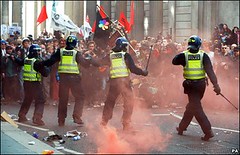
By midday, around 60 protesters and police were involved in scuffles, which saw officers pelted with bottles, eggs, fruit and paint. Some officers also had their helmets ripped from their heads and thrown into the air, which was turned pink and red as protesters let off smoke bombs. Police responded by using truncheons, batons and pepper spray.

For two hours, a group of protesters pushed against the police line on Threadneedle Street, provoking intermittent skirmishes that left several officers and demonstrators injured.

Police used truncheons and batons to beat back the protesters each time they surged forward. Some in the pens demanded to be released, saying they were being denied the right to march, while others set their sights on the RBS branch.

To cheers and shouts, protesters smashed several of the bank's windows, writing "burn a banker" and "scum" in spray paint.

Police in riot gear inside the bank tackled protesters trying to climb in through the smashed windows.

Scotland Yard said corralling the demonstrators into the area was a legitimate tactic as missiles were being thrown at police officers on Threadneedle Street.

A spokesman said that the pens would remain in place for as long as necessary, but by 3pm police had loosened the cordon around the Bank and allowed crowds to filter away along Queen Victoria Street.

The Met later confirmed that 19 people had been arrested. Eight of them were detained for offences ranging from threatening behaviour to violent disorder and indecency while another 11 protesters who turned up at the protest in an armoured personnel carrier were arrested in connection with the possession of police uniforms and road traffic offences.

The latter group are understood to be anarchists known as the Space Hijackers who had come to make their feelings felt through the medium of street theatre.

Large numbers of demonstrators who tried to make their way down Threadneedle Street towards the climate camp in the City were met halfway by a police line.

"It's our street, it's our street," the crowd chanted as it was forced forward on to the line.

Injured demonstrators with bleeding heads and necks were ushered through the crowd while others handed out milk so that people could wash the pepper spray from their eyes and mouths.

Harry, who was dressed as the Grim Reaper, led the procession from Moorgate to the Bank of England. However, his costume did not amuse the police, who demanded that he remove his skeletal mask so they could see his face. He said it was the first time he had marched in 10 years.

"I'm protesting for the small individuals in Britain who have been left with their pants down as the government bails out the banks for billions of dollars. Where's the money for the struggling baker, butcher, small marketing people and architectural companies?"

He accused the government of helping the big boys but "leaving the little boys to sink".

In contrast to the violence that marred the Bank of England protests, the climate camp event in Bishopsgate was largely peaceful.

The police, who had been warned that the London Climate Exchange Centre was to be a target of the protests, were taken by surprise but did not try to stop an instant tent city being set up.

Within minutes, 800 yards of Bishopsgate had been blocked off, banners hung, and stalls, a farmers' market and a bandstand erected.

For the next two hours Bishopsgate became the scene of a political rave, with dancing, speeches and celebrities arriving to wish demonstrators good luck.

"I'm blown away by this. Art is the antidote to despair and global warming is the greatest issue of the age," said Dame Vivienne Westwood, wearing a "chaos" bandana on her head.

"Carbon trading is a scam. There has been no reduction in climate change emissions. The G20 looks at climate change and sees a way to make money. We see it as the chance for sustainable living," said Sophie Stephens, an office worker from Leeds.

Amid the protests, office workers on their lunch breaks mixed with protesters and generally approved. "Capitalism is just not working. Don't give money to the bankers, give it to ordinary people," said Franklyn Sewell, a medical worker.


RBS branch attacked in City of London

By FT Reporters
April 1 2009 14:56

Protests by thousands of anti-capitalist demonstrators in the City of London ahead of the G20 summit turned violent on Wednesday when windows at a branch of Royal Bank of Scotland, one of the UK’s biggest banks, were smashed and police charged the crowd.

Four marches, led by representations of horsemen of the apocalypse, converged on the Bank of England in the ‘Financial Fools’ day’ protest as demonstrators chanted “storm the banks”.

Shortly after 1pm, live television pictures showed some of the crowd smashing windows at an RBS building. An FT reporter at the scene said: “They’re going into RBS and they are urinating in the bank.” The words “Burn” and “Thieves” could be seen daubed on the outside of the building. The bank was rescued with taxpayers’ money last autumn and its former chief executive Sir Fred Goodwin has been villified over his £700,000 a year pension.

Scotland Yard said around 4,000 people had gathered outside the Bank and cordons had been put up in response to “increasing levels of violence”. Reuters reported that the RBS building, which appeared to be empty, was hit by a hail of missiles including plastic bottles and toilet rolls. Around 300 to 400 protesters attacked the offices, shouting: ”These streets, our streets! These banks, our banks!”

Police then charged the crowd outside the building. Elsewhere, ranks of officers in fluorescent yellow jackets coralled protesters along the roads outside the Bank of England and tried to keep the separate marches apart.

Some protesters were carrying coffins, while others covered their faces with hoods and scarves. The protests were initially largely peaceful, if noisy, although some small groups of about 50 hard-core protesters tried to push through police lines and there were occasional scuffles. Eleven arrests have been reported so far.

As the chanting marchers snaked down Broad Street, flanked by banks to their left and right, chaotic scenes erupted. Office workers were standing faces pressed against glass windows looking down onto the crowds in the street below. Protestors met derision from some City workers who waved £10 notes from their offices at marchers on the streets below, Reuters reported.

Some of the banners read: “Balls to the Bankers”, “Eat the Bankers”, “Capitalism Isn’t Working” and “What a Load of Bankers”. One group of protesters urged people watching from the top of Santander bank to “jump”.

While the main focus of the protest was directed against bankers, anarchist, environmental and anti-war groups were also among the marchers protesting together under the G20 Meltdown banner.

Olivier Dale, a 28 year old attending the demonstration said: ”I am sick of these bankers and this greed. It has got to stop. We have to make a stand. But we want it to be peaceful.”

One protester wearing a balaclava and carrying a sign saying ” welcome to pig city” and who declined to be named said: ”I am an anti-capitalist, I am an anarchist. It’s a rich man’s club. I believe in class war. It is poor versus rich, as simple as that. ”

The protests have caused some shops to remain shut for the day. ”Following police advice regarding the G20 protests we have taken the decision to close this store today,” read a sign outside a Robert Dyas store on Moorgate.

City staff had earlier arrived for work in defiant mood but wearing casual clothes.

Most big employers – including the global investment banks and law firms – told employees they were expected to come into work as usual. But those near locations where demonstrations were held told staff to dress inconspicuously and avoid drawing attention to themselves.

Workers appeared to heed the calls for greater vigilance. UBS posted security guards outside the bank’s main building next to Liverpool Street station, and there were unusual scenes of staff turning up to work in leather jackets and beanie hats.

Andrew, a recruiter, said: “I don’t think City workers have dressed to blend with anarchists. However, the pinstripe count is down today and jeans and smart casual seem to be the order of the day.”

Michael, an accountant, said: ”Having to alter the way we dress is absurd. This is all a bit much.”

Mary, who works as a secretary in a bank, said: “You wouldn’t catch me in a suit today. It’s frightening. The papers have said these people may get violent. But I don’t blame them.”

Others, however, defied the dress-down advice. Zak Abdin, an IT project manager, was sporting a suit on the Northern Line. ”My boss told me I had to,” he said. “I’ve got a meeting at Tower Hill.”

At the so-called “climate camp” in Bishopsgate, there was a carnival atmosphere as protesters set up a barricade of tents in the middle of the street.

Curious City workers peered out of their windows at the site below, where protesters including teenagers and pensioners sported fancy dress outfits, colourful banners and flowers.

Tim Martin, a bond fund manager, said: ”I think its a cool – a carnival atmosphere.

”A lot of City workers probably support what’s going on today. People in the City have been shown to be incompetent– look at the rating agencies or the Bank of England.”

Copyright The Financial Times Limited 2009


G20 protestors break into bank ahead of summit

LONDON (AFP) - - Angry protestors smashed through police lines and broke into a bank in London's financial district on Wednesday, amid ugly scenes on the eve of a major economic summit here.

Riot police on horseback were deployed to push back demonstrators who attacked a branch of the state-controlled lender Royal Bank of Scotland in central London.

Thousands of angry anti-capitalist demonstrators, meanwhile, surrounded the Bank of England in the British capital's financial district, while anti-war activists protested outside the US embassy in west London.

Riot police could be seen inside the RBS branch, trying to prevent demonstrators from entering the building, as other protestors threw missiles including bottles, cans and shoes at police outside.

"Scum" and "Beat inflation -- eat the rich," were sprayed in graffiti on the ouside of the branch, which was closed for the day.

At one point a protestor in a black balaclava pulled himself up to get into a window of the bank, but a policeman wielding a riot shield repelled him from inside.

Outside the Bank of England, frontline activists scuffled with police, hurling taunts, paint bombs and fruit, while police responded with occasional baton blows to keep masked demonstrators back.

Eleven people were arrested after a renovated armoured personnel carrier was stopped near the financial district, a police spokesman said. The group inside had at least one police uniform.

Police estimated about 4,000 demonstrators were in the streets of the main banking district.

About 5,000 officers were deployed to protect US President Barack Obama, British Prime Minister Gordon Brown and other Group of 20 leaders who will hold a summit on Thursday.

Anti-globalisation and anti-war protesters and climate campaigners joined with activists demanding more help for the poor and the punishment of bankers they blame for the economic crisis.

In one street, a band played reggae and rock music while a shop dummy dressed as a banker was hanged by a noose from a lamp post and fake money was thrown in the air.

A protestor dressed as the Grim Reaper led the rally to Britain's central bank, where demonstrators chanted: "Build a bonfire, build a bonfire. Put the bankers on the top."

The Times newspaper described the pre-summit security lockdown as "Fortress London".

The possibility of a terror attack is also taken seriously, and while there is no specific intelligence police are on high alert with the national terror threat level at "severe", meaning an attack is "highly likely."

All leave for London police has been cancelled and reinforcements were called in from other forces.

Officers began searching the summit venue, the ExCel Centre in London's Docklands, and other key sites last week, while a marine unit patrolled the River Thames. Across the river from the centre, a banner read: "Smash Capitalism".

The mix of causes -- ranging from action on climate change to demands for an end to Western involvement in Iraq and Afghanistan -- could be seen in the banners. "Can we overthrow the government? Yes we can!" said one banner in the streets referring to US President Obama's election campaign slogan.

Other protestors carried a giant yellow canary on a stretcher, with a sign reading "RIP Canary Wharf, 1990-2009", referring to the east London area dominated by investment banks and finance firms.


Aso lays bare G20 split on downturn

By Mure Dickie in Tokyo
March 31 2009 23:40

Taro Aso has dismissed Angela Merkel’s warnings about the risks of excessive public spending in the global downturn, saying Germany has failed to understand why strong fiscal action is vital for recovery.

The Japanese prime minister’s remarks – made in an interview with the Financial Times – underline the wide differences among world leaders as they head to London for Thursday’s G20 meeting on the global slump.

Ms Merkel, German chancellor, said last week that spending more public money as part of a co-ordinated stimulus risked creating an unsustainable recovery.

However, Mr Aso said that what his country went through after its asset price bubble burst in the early 1990s made clear that fiscal stimulus played a critical role in restoring growth.

“Because of the experience of the past 15 years, we know what is necessary, whilst countries like the US and European countries may be facing this sort of situation for the first time,” Mr Aso said. “I think there are countries that understand the importance of fiscal mobilisation and there are some other countries that do not – which is why, I believe, Germany has come up with their views.”

In a further sign of tensions ahead of Thursday’s summit, Nicolas Sarkozy, France’s president, has threatened to walk away from the negotiating table if his demands are not met.

Mr Sarkozy reportedly told cabinet colleagues on Monday that there would be “an empty chair” – a reference to Charles de Gaulle’s seven-month boycott of the European Economic Community in 1965 – if he was not satisfied, although diplomats in Paris later downplayed his comments.

Ms Merkel has cited Germany’s heavy public debt as a reason for caution on spending, but Japan – which, along with Germany and China, has been accused of contributing to global economic imbalances by running structural trade surpluses – has record government liabilities equivalent to more than 170 per cent of GDP.

Mr Aso said a Japanese stimulus package outlined on Tuesday would “mobilise all available means” to prevent the world’s second largest economy’s “floor” from “falling out”. The prime minister, whose government is already implementing stimulus spending measures worth about Y12,000bn ($120bn), said it was too early to talk about the likely scale of the new package. However, ruling party politicians have suggested it include fiscal spending of about Y20,000bn.

Saying Japan was ready to “take the lead” in global efforts to address the slump, Mr Aso said Tokyo would provide more than $22bn in additional trade financing assistance and give global coverage to a trade insurance network it announced for the Asia-Pacific region last year.

Japan would also offer Y500bn over the next three years in new overseas development aid for Asian countries suffering from the global downturn and stand by its pledge to double such aid for Africa by 2012, Mr Aso said.

Mr Aso said he would push for stronger funding of the International Monetary Fund through an increase in its New Arrangements to Borrow, while also calling for the proceeds of sales of IMF gold to be used for assistance to the poorest countries and for a fresh allocation of Special Drawing Rights.

Copyright The Financial Times Limited 2009

Cynthia McKinney Reports on the G20 Summit in London

Cynthia McKinney Reports on the G20 Summit in London

What an impressive Conference put on by the Government of Malaysia and the Kuala Lumpur Foundation to Criminalise War (KLFCW). Absolutely incredible. And the audience was packed with information. I will definitely make a more detailed report later and include the information learned at this Conference in my next economics report, too, on the state of our economy and common sense solutions as I promised you.

The Malaysian Foreign Minister, Dr. Rais Yatim, spoke passionately this morning about the need for accountability in the face of war crimes. And so too, did the founder of the KLFCW, Tun Dr. Mahathir. Dr. Mahathir spoke of the long history of Zionism, starting with the Balfour Declaration, and explained that we were in London because there had been a request from a British citizen in Malaysia attending our Forum for Palestine there, to take this information to the source of the problem--England. Dr. Mahathir recommended that we remember the Balfour Declaration and all the events leading up to the creation of the state of Israel for a better understanding of the challenges we face on our road to peace.

Dr. Mahathir knows a lot about what's happening in our economy, too. Remember, he faced down George Soros and the currency speculators and was vilified (by them) for keeping Malaysia out of their snares. Today, Malaysia has a public Central Bank and a national system of public banks.

Needless to say, the ringgit is doing just fine. Malaysia is strong to take a stand today because Dr. Mahathir took the unpopular stand yesterday--unpopular that is, with the monied interests of the world. More on that, later.

After our tea break (of course, we were in London), Lauren Booth, PressTV reporter who was trapped in Gaza for one month, reported on her experiences with individual life stories of how life is made unbearable by the Israelis as they deny health care and education to Palestinian women and children. Lauren is also a Free Gaza Movement success story as she was on one of the boats that successfully challenged the Israeli seige. Unlike me, she made it into Gaza and received a hero's welcome. She was also with George Galloway as he successfully entered Gaza City by land in a convoy of over 100 vehicles.

Then I spoke. My comments are included at the end of this report.

Former M.P. Tony Benn delivered wonderful historical context and gave us hope for the future. All day, for some reason, speakers kept calling him Tony Blair, instead of Benn. It was quite funny, since I think Blair is Lauren Booth's brother-in-law and was pretty much reviled roundly by everyone in the audience. At one point, Benn leaned over to me and asked wryly, "You think I can win the Nobel Peace Prize?" And at that point, I remembered that I was the sole vote against honoring him (Blair) for his support of the "Global War on Terror."

And Rabbi Aharon Cohen of Naturei Karta explained to us what their perspective is on Israel. Paraphrasing, Rabbi Cohen said that Zionism is the root of the problem and until Zionism is addressed, there will continue to be a problem. Even in the panel discussion, he brought us back to the problem of Zionism, itself. He made it clear that Zionism is not Judaism. His remarks were particularly educational since I had never had the opportunity to dialog with member of Naturei Karta before. He also gave the significance of the name that means, protectors of the city. For when the Zionists came to the land, Jews and non-Jews lived together in harmony. But the Zionists came to steal the land from the non-Jews and the Jews joined with the non-Jews to protect the City, thus, Naturei Karta--protectors of the City. I will defintely read more about them.

Finally, Sir Gerald Bernard Kaufman basically said that Israel, by its actions, is becoming indefensible. He said this: "The Israeli electorate have proven themselves incorrigible," noting that only 3% of Israelis voted for peace in Israel's last election. He has said as much on the Floor of the House of Commons, and a tape was played at the Conference of him saying it. He talked about his hate mail. Well, I think we could go toe-to-toe on the hate mail. Only, in the mail he receives, they call him a self-hating Jew.

Finally, there was a panel discussion where the audience asked questions of the speakers. And just before people left the room, I was able to make an announcement. When the gentleman showed me his blackberry, I was sure he was joking. That he was playing some kind of cruel joke on me.

[I thought] That it was a hoax. Because all the night before and in my remarks, as you will see, I touted the judges of Spain and their courage as one of our hopes for justice in the legal arena. And when I didn't believe him, he showed his blackberry to me and I could see that it was a real news item: Spain had agreed to investigate Bush and his cronies for war crimes. Hallelujah!! What a wonderful end to a wonderful Conference. What a wonderful way to welcome the G20 into town!!!!

For those of you who are new to my messages and are not on my e-list, please send a message authorizing me to add you to my e-list and you can get these messages from me all the time. Let me hear from you!

Here are my remarks:

Cynthia McKinney
Forum for Palestine
London/March 31, 2009

Not too long ago, I received an invitation to participate in the Malaysia Peace Organization’s effort to Criminalize War and establish a tribunal to try the heads of state who violated the peace and led their countries into war and occupation.

When I was in Kuala Lumpur, I had the opportunity to meet one of my heroes, Tun Dr. Mahathir, who stood up against the very same individuals who are today wreaking havoc on the U.S. economy in a feeding frenzy on the imperial carcass. As a result, Malaysia became an outpost of resistance in Asia. Dr. Mahathir’s bold action was the first time I came to know Malaysia, and that was by way of the news reports.

And when I had the opportunity to travel there for the purpose of fashioning a world without war, I dubbed Kuala Lumpur the world capital of peace. Thank you, Malaysia, for showing the world, along with Cuba, Venezuela, Bolivia, Ecuador, Paraguay, and others, that national dignity is possible.

For dignity depends on peace, and peace depends on justice, and justice depends on truth. So, our charge today is to help the world attain dignity.

At that 2007 Kuala Lumpur peace conference, I met victims of war crimes, torture, and crimes against humanity, all made possible because of U.S. policy and U.S. taxpayers. It was an emotional Conference for me, because I came face to face with the scars borne by victims of war.

The next year, I spent International Human Rights Day 2008 in Havana, Cuba with family members of victims of U.S. aggression against that fiercely independent island country. And while I was there, over and over and over again I heard the word “dignity.” And how there is dignity in resistance.

I can’t help but remember that it was Dr. Martin Luther King, Jr. who, forty years ago, said that the United States was the greatest purveyor of violence on the planet. Sadly, violence sponsored by the U.S. directly or indirectly has only intensified.

And because I stand in London right now, where tens of thousands of people are about to take to the streets in protest of war and occupation, I must not omit the roles that London and Europe have played in promoting this worldwide violence.

The world is rising up against the lies that we’ve been told. People are reclaiming their dignity. Against the greed, corruption, and theft that have been committed in our name, with our tax dollars. In the streets, you will hear the word dignity.

That’s what the U.S. civil rights movement was all about. And its spirit of resistance to injustice shaped my childhood experiences. I saw what is possible when people stand up.

On the night before his murder, Dr. King said that he was proud to be alive at the end of the 20th Century when people were rising up saying, “We want to be free.”

Today, we are rising up and saying that we want to be free from hatred, division, oppression, and war.

I admire those stood up on the national stage, and I’ve tried to do my part to take a stand, too.

Thus, in 1991, as a Member of the Georgia Legislature, when President George Herbert Walker Bush bombed Baghdad, I asked the Speaker of the House if I could speak on a point of Personal Privilege to explain my opposition to Operation Desert Storm. My colleagues stood up and walked out on me during my remarks.

And then, when I decided to run for the United States Congress, I knew that the foundation of all U.S. policy—whether domestic or foreign--had to be: respect for human rights.

So, when the marginalized and dispossessed of the world came to me, I did my best to help them.

There was no room in my view for policies promoting nuclear weapons, NATO expansion, or discrimination against any person, group, or country. I voted against every Pentagon budget that came before Congress.

I introduced legislation to stop the transfer of U.S. weapons to regimes that did not respect human rights and to eliminate the use of depleted uranium.

I spoke out against President Clinton’s sanctions against Iraq, and President George W. Bush’s war against and occupation of Iraq.

I represented the Congressional Black Caucus at the Durban World Conference Against Racism, despite intense pressure to not attend in order to avoid a discussion of Zionism.

I worked with a team of internationally-respected lawyers to prosecute Sharon, Barak, and Netanyahu for war crimes as well as those responsible for incitement of genocide in Gujurat, India.

I even turned down a politician’s dream: fame, fortune, and re-election if I would just get arrested in front of the Sudan Embassy and let a famous Zionist lawyer bail me out of jail.

Underlying it all was my belief that the Universal Declaration of Human Rights ought to have universal application. Afterall, it was Dr. King who reminded us that justice is indivisible: injustice anywhere is a threat to justice everywhere.

But when the subject was justice for Palestine, while I stood my ground, the political resolve underneath me dissolved beneath my feet.

When the pro-Israel Lobby targeted me for defeat, even lifelong family friends abandoned me and those I thought stood for principle, shrank in utter fear.

For all the talk about justice, the principles underlying the Universal Declaration of Human Rights melted away when the topic was Palestine. Or any other project of the pro-Israel Lobby. Like Durban, Sudan, Rwanda, Congo, or protecting their interests in Blood Diamonds. Unfortunately for me, all the issues I had taken on with great enthusiasm pitted me for the people, but against the interests of the powerful pro-Israel Lobby.

And then, they decided in 2002 that I had to go.

That came after I questioned the Bush Administration’s version of what happened on September 11, 2001. The pro-Israel lobby activated its operatives inside both the Republican and Democratic Parties, and I lost my campaign for re-election to Congress.

Even though, two years later, in 2004, I ran again and regained my seat, I still wore a target on my forehead. And again, pro-Israel, pro-war Democrats and Republicans joined to oust me from Congress in 2006, when I was the only Democratic Member of Congress to lose reelection. The significance of the 2006 election was this:

The very first bill to fund the war came up for a vote and passed with exactly the number of votes required. Had I been there to cast my no vote, the bill would have failed. It became clear to me that the “War Party” inside the United States, that consists of pro-war elements inside both the Democratic and Republican parties, do a darn good job of making sure they control enough Congressional votes to keep our country at war.

So, after leaving Congress in January of 2007, I declared my independence from every bomb dropped, every child killed, and every veteran maimed as a part of the U.S. war machine.

In 2008, the Green Party, the largest of the small parties in the U.S., nominated me to lead their ticket and I ran for President.

And now, I’m trying to launch “Dignity,” a movement for peace and justice inside the United States as a counter to the war party.

So, the day after Israel began bombing Gaza, the co-founder of the Free Gaza Movement asked me to travel the next day to Gaza with some doctors and deliver 3 tons of medical supplies. It didn’t take me 5 minutes to say yes.

And so began my voyage aboard the pleasure boat, Dignity, that was rammed in international waters by an Israeli warship and that almost cost me my life.

Onboard the Dignity was Sami El-Hajj—the Al Jazeera reporter from Sudan who, while covering the U.S. military operation in Afghanistan, was captured and became known as prisoner 345 in Guantanamo for six years. Once again, I came face to face with a victim of U.S. war policy, against Afghanistan and also against his home country of Sudan. I apologized to him.
Dr. David Halpin is here. Stand up Dr. Halpin. He was onboard the Dignity with me and is the one who told me to prepare myself mentally to die after the Israelis attacked us. He also noticed that I had my life jacket on upside down and helped me put it on right side up after we had been rammed.

It is clear that those who favor war use every trick in the book to rob us of our human dignity. And then, feeling powerless, we allow them to do to us what they want.

But effective resistance requires that perpetrators of crime, especially torture, genocide, war crimes, and crimes against the peace, be brought to justice.

It’s a shame that I have to even say that. But currently, we have a situation in which the killer of one might go to jail, but the killer of one hundred thousand is invited to peace talks. It seems that in this upside down world, the more one kills, the more impunity one acquires. But true justice requires the absence of impunity.

And that’s what brings us here today. We want to criminalize war. Many people’s tribunals have been initiated precisely because of the lack of justice in the politicized courts of the United States, and increasingly, in the world Courts. Those with political power have been able to seize these courts and manipulate them to favor injustice.

This includes the conduct of the International Criminal Court, which to date, has not engendered hope. In his piece entitled “White Collar War Crimes, Black African Fall Guys,” investigative journalist Keith Snow writes:

“First note that the ICC can now be viewed as a tool of hegemonic U.S. foreign policy, where the weapons deployed by the U.S. and its allies include the accusations of, and indictments for, human rights violations, war crimes and crimes against humanity. To understand this, we can ask why no white man has yet been charged with these or other offenses at the ICC, which now holds five black African warlords and seeks to incarcerate and bring to trial another black man, also an Arab, Omar Bashir. Why hasn’t George W. Bush been indicted? Or what about Donald Rumsfeld? Dick Cheney? Henry Kissinger? Ehud Olmert? Tony Blair?”

The sad fact is that the International Criminal Court has become terribly politicized, as has the entire international justice apparatus. The ICC has issued indictments, for the first time in history, against a sitting head of state. Meanwhile, according to Snow, an Israeli weapons dealer, also a reputed Mossad operative, is revealed to be shipping weapons into Sudan with Pentagon support.

And Belgium changed its law rather than prosecute Ariel Sharon for war crimes. The double standard cries out to us.

One country in the West, however, increasingly stands out as a place where justice can be found—and that is Spain. With its landmark indictment of Pinochet and its current consideration of Israeli war crimes in Lebanon and U.S. torture in Guantanamo, we increasingly look to the Spanish Courts with hope. It was the Spanish courts that returned indictments against Rwandan soldiers for genocide even as the world coddles U.S. proxy Rwanda and its leader, Paul Kagame.

Now, why is curbing impunity important? Just this week Israel and the US admitted that Israel murdered approximately 800 refugees as Israel attacked Sudan in January and February using unmanned killer drones.

Israel unleashed death squads to commit targeted assassinations all over the world.

To save the Palestinians from Israel, is to save the rest of us from Israeli abuse, and of course, saves the Israelis from themselves. Even Israeli soldiers are telling the sad truth about Gaza. Doctors tell us that Gaza was a weapons testing laboratory. The world is rightly outraged about Israeli Operation Cast Lead. And of the Sudan operation, of which we are only just now learning, Olmert is reported to have said: "There is no place where Israel cannot operate. There is no such place."

Now, I’ve been questioned about my passion because I’m not Arab; I’m not Muslim; why do I care so much about justice in Palestine?

My answer is this: I struggle every day for the human rights and dignity of blacks, Latinos, Native Americans, Muslims, Arabs, the poor and others discriminated against in America.

I learned from Dr. Martin Luther King, Jr. who broke with his friends in the civil rights movement because they did not want to alienate themselves from President Johnson by criticizing the Vietnam War. Dr. King decided that conscience compelled him to speak out against the war even if it meant losing his friends. Even if it meant losing his life. And when asked about it, Dr. King said that he had fought segregation too long to segregate his moral concerns.

The people of the world want war criminals held accountable. Bolivia wants to hold Israeli leaders accountable for their crimes in Gaza. The International Criminal Court says it is investigating whether Israel committed war crimes in Gaza. Now is the time for us to stand firm.

That’s why I support the Malaysia Peace Organization, the Brussels Tribunal, the Hurricane Katrina Tribunal, and other efforts to hold national leadership accountable for their actions. And I specifically support Malaysia’s efforts to criminalize war.

Because of what happened to our Dignity boat while in international waters, the Free Gaza Movement wants to bring Israel to justice for its war crime against us.

I applaud George Galloway’s success in entering Gaza by land. The Free Gaza Movement will try again by sea.

I paid the ultimate political price for standing by the idea that the Universal Declaration of Human Rights ought to have universal application. You can rest assured that I will do all I can to promote dignity, a vision of peace that relies on truth and justice for all of us.

Thank you.

Three Found Guilty in Murder of South African Reggae Icon Lucky Dube

State: Dube killers should get life sentences

JOHANNESBURG, SOUTH AFRICA Apr 01 2009 13:38

The three men who killed reggae icon Lucky Dube should be removed from society and not be considered for parole before serving at least 25 years of their sentence, the prosecution told the High Court in Johannesburg on Wednesday.

"They didn't show any remorse ... and they are surely not candidates for rehabilitation. This court should impose one sentence only and that sentence is life imprisonment," state advocate Lethabo Mashiane said.

He was arguing ahead of the sentencing of the trio. On Tuesday Sifiso Mhlanga, Julius Gxowa and Mbuti Mabe were found guilty of killing Dube in October 2007 during a botched hijacking. They were also found guilty of hijacking a Mercedes Benz two days after Dube was killed.

Lawyers representing the three men said on Wednesday that while there were no substantial or compelling circumstances for the court to impose a lesser sentence, Judge Seun Moshidi should consider that they had minor children.

Mashiane disputed this, saying the trio had not considered their children when committing the crime.

"They had these children before they decided to commit the crime, so they can't now say 'please have mercy on us because we have children'," Mashiane said.

The court should also consider that Dube's killers robbed 14 of his employees of an income and his seven children of a father.

Thuthukani Cele, one of Dube's nine band members, told the court that his staff included a driver and office workers. Cele said Dube was a humanitarian who gave poor women food and matriculants money to further their studies.

Judge Moshidi stood the matter down for Thursday to consider all the facts.

"The court isn't going to rush, so the court will give sentence tomorrow at 10am," Moshidi said. -- Sapa

Source: Mail & Guardian Online
Web Address: http://www.mg.co.za/article/2009-04-01-state-dube-killers-should-get-life-sentences


Lucky Dube's alleged killers try to escape from police custody

JOHANNESBURG, SOUTH AFRICA Mar 31 2009 12:09

Judgement in the trial of Lucky Dube's alleged killers was delayed on Tuesday to ascertain if two of the accused, injured while trying to escape from police custody, were fit to proceed.

The judgement in the High Court in Johannesburg started at 11.30am instead of the scheduled 10am.

Lawyers representing Sifiso Mhlanga and Mbuti Mabe told the court the two men were rushed to hospital following an attempted escape on Tuesday morning.

"Accused one [Mhlanga] attempted to escape and he got injured in the process and was taken to hospital," said advocate Vuyo Jack.

Mpho Milubi, who is representing Mabe, said the same regarding his client.

The two men, whose judgement was due to be finalised by Tuesday afternoon, allegedly assaulted a police officer at about 8am.

However, other officers managed to apprehend them before they could escape and they were rearrested and taken to hospital as they were injured in the ensuing scuffle.

The nature of their injuries was not yet known.

The police officer assaulted with a brick was receiving treatment in hospital.

Before standing down the trial for 11.30am, Judge Seun Moshidi requested that security be beefed up until the trial was finalised.

"I suggest, in view of this development, that security should be beefed up. People going into this court should be safe and court orderlies must do their work ... They have been too relaxed," Moshidi said.

The third accused, Julius Gxowa, cut a lone figure in court on Tuesday morning.

Captain John Maluleke said a truck transporting prisoners from the prison to the courts arrived at about 7.30am at the high court building.

It drove into the courtyard and down to the basement where it parked next to the holding cells to offload 16 prisoners.

The roller gate was closed to seal off the basement and nine policemen were sent to carry out the prisoner transfer from the truck to the cells.

As per procedure, prisoners came out two-by-two to be handcuffed and to have their feet chained together.

Maluleke said the first two pairs of prisoners came out of the truck and were cuffed and chained.

The third pair included one of the men accused of murdering Dube.

As the two men were stepping down from the truck, both pushed hard at one of the vehicle's doors -- causing it to swing into a police officer and knock him to the ground.

A second officer, standing with the chains and cuffs in hand, was then struck by a brick in the face, allegedly wielded by one of the men accused of murdering Dube.

A third officer pulled out a firearm and fired off two warning shots into the air before demanding that all prisoners lie on the ground.

Police then handcuffed and chained the prisoners where they lay on the ground.

Four police officers were injured during the incident.

No prisoners managed to escape and the roller door was closed throughout the incident. All prisoners were placed in the holding cells.

A case of attempted escape and assault on an officer would be investigated, said Maluleke. -- Sapa

Source: Mail & Guardian Online
Web Address: http://www.mg.co.za/article/2009-03-31-lucky-dubes-alleged-killers-try-to-escape


Dube accused found guilty

JOHANNESBURG, SOUTH AFRICA Mar 31 2009 16:57

Slain reggae musician Lucky Dube's family clapped in excitement as the three men accused of his murder were found guilty in the High Court in Johannesburg on Tuesday.

Judge Seun Moshidi found Sifiso Mhlanga, Mbuti Mabe and Julius Gxowa guilty of shooting and killing Dube during a botched hijacking in Rosettenville on October 18 2007.

Mabe was also found guilty on charges related to the aggravated robbery of a VW Polo on October 13 2007. His two co-accused were acquitted on this charge.

The three men were also found guilty on charges related to the hijacking of a Mercedes Benz in Jules Street, Johannesburg, two days after Dube's murder.

Responding to Moshidi's verdict, Dube's son Thokozani said the family was happy that his father's killers had been brought to book.

"What happened to uBaba [Dube] was really traumatic to all of us, but we are happy that his killers have been found guilty. We know they are being brought to book and we can now have closure," Dube junior said.

He, along with his sister Nonkululeko, were present when their father was killed.

He hoped his father's killers would get a "proper sentence".

Dube's wife was too emotional to talk to journalists.

Before the case was adjourned for arguments in mitigation of sentence, state prosecutor advocate Lethabo Mashiane asked that two of the accused be held at the Johannesburg Central Police Station's high risk security detention centre, rather than at Johannesburg Prison where they had been kept thus far.

The request came after two of the accused tried to escape from police custody on Tuesday morning. Judgement was delayed to ascertain if the two were fit to proceed.

The judgement started at 11.30am instead of the scheduled 10am.

Lawyers representing Sifiso Mhlanga and Mbuti Mabe told the court earlier that the two men were rushed to hospital following an attempted escape on Tuesday morning.

"Accused one [Mhlanga] attempted to escape and he got injured in the process and was taken to hospital," said advocate Vuyo Jack.

Mpho Milubi, who is representing Mabe, said the same regarding his client.

The two men allegedly assaulted a police officer at about 8am.

However, other officers managed to apprehend them before they could escape and they were rearrested and taken to hospital as they were injured in the ensuing scuffle.

Captain John Maluleke said a truck transporting prisoners from the prison to the courts arrived at about 7.30am at the high court building.

It drove into the courtyard and down to the basement where it parked next to the holding cells to offload 16 prisoners.

The roller gate was closed to seal off the basement and nine policemen were sent to carry out the prisoner transfer from the truck to the cells.

As per procedure, prisoners came out two-by-two to be handcuffed and to have their feet chained together.

Maluleke said the first two pairs of prisoners came out of the truck and were cuffed and chained.

The third pair included one of the men accused of murdering Dube.

As the two men were stepping down from the truck, both pushed hard at one of the vehicle's doors -- causing it to swing into a police officer and knock him to the ground.

A second officer, standing with the chains and cuffs in hand, was then struck by a brick in the face, allegedly wielded by one of the men accused of murdering Dube.

A third officer pulled out a firearm and fired off two warning shots into the air before demanding that all prisoners lie on the ground.

Police then handcuffed and chained the prisoners where they lay on the ground.

Four police officers were injured during the incident.

No prisoners managed to escape and the roller door was closed throughout the incident. All prisoners were placed in the holding cells.

A case of attempted escape and assault on an officer would be investigated, said Maluleke. -- Sapa

Source: Mail & Guardian Online
Web Address: http://www.mg.co.za/article/2009-03-31-lucky-dube-accused-found-guilty


April 1, 2009

3 Found Guilty in 2007 Killing of Reggae Star in South Africa

By BARRY BEARAK

JOHANNESBURG — Three men accused of murdering the South African reggae star Lucky Dube were found guilty here on Tuesday, just hours after two of them tried to bolt from custody on the way back to their trial.

Mr. Dube (pronounced doo-bay) was an internationally famous musician, and his murder during a botched carjacking in October 2007 once again brought the appalling rate of violent crime in South Africa to the world’s attention.

A recording artist with a strong social conscience, Mr. Dube, 43, had worked with Peter Gabriel, Sinead O’Connor and other Western artists. He often sang about the evils of crime, of houses broken into and bullets fired, wanting criminals to see their misdeeds through the eyes of their victims. He was killed while dropping off his two teenage children at his brother’s house in Rosettenville, near downtown Johannesburg.

Mr. Dube left behind a wife and seven children. After Tuesday’s verdict was read, his wife was too emotional to talk with reporters, but his son Thokozani, who had witnessed the crime, said, “We can now have closure.”

More than a dozen armed officers oversaw the proceedings after two of the defendants earlier tried to escape while guards transferred them from a truck to the courtroom basement. One prisoner hit a policeman in the face with a brick, according to a police captain quoted in a local news account of the episode. Warning shots were then fired, and the defendants were subdued in a scuffle. They arrived in court with their heads bandaged.

The three convicted men, S’fiso Mhlanga, Mbuti Mabe and Julius Gxowa, will be sentenced after a hearing where mitigating evidence can be presented. The death penalty has been banned in South Africa, though the Dube case has been cited by those who want its return.

The nation’s homicide rate, while declining, is among the worst. In 2006, it was about eight times more than the United States’ and 20 times higher than Western Europe’s, according to Antony Altbeker, a criminologist. Electrified barbed wire surrounds many of the finest homes in Johannesburg. South Africa exceeds international norms in its number of police officers, and by some estimates there are more than four times as many private security guards as police officers, with most companies promising their clients “armed response.”

Criminologists have long puzzled over not only the nation’s high crime rate but also the unusual amount of homicide and torture that accompanies burglaries and carjackings.

Mr. Dube had been driving a late-model Chrysler luxury sedan. According to the trial testimony of Mpho Maruping, who knew the accused men, they had been looking for just such an automobile the day of the crime.

The three men did not realize that they had killed someone both famous and widely beloved until they read the newspapers the next day. They had thought their victim “was a Nigerian,” Ms. Maruping said.