Wednesday, January 28, 2009

What About Closing Angola, Mr. Obama: Torture at a Louisiana Prison

January 27, 2009

What About Closing Angola, Mr. Obama?
Torture at a Louisiana Prison

By JORDAN FLAHERTY

The torture of prisoners in US custody is not only found in military prisons in Iraq, Afghanistan and Guantanamo. If President Obama is serious about ending US support for torture, he can start here in Louisiana.

The Louisiana State Penitentiary at Angola is already notorious for a range of offenses, including keeping former Black Panthers Herman Wallace and Albert Woodfox, in solitary for over 36 years. Now a death penalty trial in St. Francisville, Louisiana has exposed widespread and systemic abuse at the prison. Even in the context of eight years of the Bush administration, the behavior documented at the Louisiana State Penitentiary at Angola stands out both for its brutality and for the significant evidence that it was condoned and encouraged from the very top of the chain of command.

In a remarkable hearing that explored torture practices at Angola, twenty-five inmates testified last summer to facing overwhelming violence in the aftermath of an escape attempt at the prison nearly a decade ago. These twenty-five inmates - who were not involved in the escape attempt - testified to being kicked, punched, beaten with batons and with fists, stepped on, left naked in a freezing cell, and threatened that they would be killed. They were threatened by guards that they would be sexually assaulted with batons. They were forced to urinate and defecate on themselves. They were bloodied, had teeth knocked out, were beaten until they lost control of bodily functions, and beaten until they signed statements or confessions presented to them by prison officials. One inmate had a broken jaw, and another was placed in solitary confinement for eight years.

While prison officials deny the policy of abuse, the range of prisoners who gave statements, in addition to medical records and other evidence introduced at the trial, present a powerful argument that abuse is a standard policy at the prison. Several of the prisoners received $7,000 when the state agreed to settle, without admitting liability, two civil rights lawsuits filed by 13 inmates. The inmates will have to spend that money behind bars –more than 90% of Angola's prisoners are expected to die behind its walls.

Systemic Violence

During the attempted escape at Angola, in which one guard was killed and two were taken hostage, a team of officers - including Angola warden Burl Cain - rushed in and began shooting, killing one inmate, Joel Durham, and wounding another, David Mathis.

The prison has no official guidelines for what should happen during escape attempts or other crises, a policy that seems designed to encourage the violent treatment documented in this case. Richard Stalder, at that time the secretary of the Louisiana Department of Public Safety and Corrections, was also at the prison at the time. Yet despite – or because of - the presence of the prison warden and head of corrections for the state, guards were given free hand to engage in violent retribution. Cain later told a reporter after the shooting that Angola's policy was not to negotiate, saying, ''That's a message all the inmates know. They just forgot it. And now they know it again.''

Five prisoners – including Mathis - were charged with murder, and currently are on trial, facing the death penalty – partially based on testimony from other inmates that was obtained through beatings and torture. Mathis is represented by civil rights attorneys Jim Boren (who also represented one of the Jena Six youths) and Rachel Connor, with assistance from Nola Investigates, an investigative firm in New Orleans that specializes in defense for capital cases.

The St. Francisville hearing was requested by Mathis' defense counsel to demonstrate that, in the climate of violence and abuse, inmates were forced to sign statements through torture, and therefore those statements should be inadmissible. 20th Judicial District Judge George H. Ware Jr. ruled that the documented torture and abuse was not relevant. However, the behavior documented in the hearing not only raises strong doubts about the cases against the Angola Five, but it also shows that violence against inmates has become standard procedure at the prison.

The hearing shows a pattern of systemic abuse so open and regular, it defies the traditional excuse of bad apples. Inmate Doyle Billiot testified to being threatened with death by the guards, "What's not to be afraid of? Got all these security guards coming around you everyday looking at you sideways, crazy and stuff. Don't know what's on their mind, especially when they threaten to kill you." Another inmate, Robert Carley testified that a false confession was beaten out of him. ""I was afraid," he said. "I felt that if I didn't go in there and tell them something, I would die."

Inmate Kenneth "Geronimo" Edwards testified that the guards "beat us half to death." He also testified that guards threatened to sexually assault him with a baton, saying, "that's a big black…say you want it." Later, Edwards says, the guards, "put me in my cell. They took all my clothes. Took my jumpsuit. Took all the sheets, everything out the cell, and put me in the cell buck-naked…It was cold in the cell. They opened the windows and turned the blowers on." At least a dozen other inmates also testified to receiving the same beatings, assault, threats of sexual violence, and "freezing treatment."

Some guards at the prison treated the abuse as a game. Inmate Brian Johns testified at the hearing that, "one of the guards was hitting us all in the head. Said he liked the sound of the drums – the drumming sound that – from hitting us in the head with the stick."

Solitary Confinement

Two of Angola's most famous residents, political prisoners Herman Wallace and Albert Woodfox, have become the primary example of another form of abuse common at Angola – the use of solitary confinement as punishment for political views. The two have now each spent more than 36 years in solitary, despite the fact that a judge recently overturned Woodfox's conviction (prison authorities continue to hold Woodfox and have announced plans to retry him). Woodfox and Wallace – who together with former prisoner King Wilkerson are known as the Angola Three - have filed a civil suit against Angola, arguing that their confinement has violated both their 8th amendment rights against cruel and unusual punishment and 4th amendment right to due process.

Recent statements by Angola warden Burl Cain makes clear that Woodfox and Wallace are being punished for their political views. At a recent deposition, attorneys for Woodfox asked Cain, "Lets just for the sake of argument assume, if you can, that he is not guilty of the murder of Brent Miller." Cain responded, "Okay. I would still keep him in (solitary)…I still know that he is still trying to practice Black Pantherism, and I still would not want him walking around my prison because he would organize the young new inmates. I would have me all kind of problems, more than I could stand, and I would have the blacks chasing after them...He has to stay in a cell while he's at Angola."

In addition to Cain's comments, Louisiana Attorney General James "Buddy" Caldwell has said the case against the Angola Three is personal to him. Statements like this indicate that this vigilante attitude not only pervades New Orleans' criminal justice system, but that the problem comes from the very top.

The problem is not limited to Louisiana State Penitentiary at Angola – similar stories can be found in prisons across the US. But from the abandonment of prisoners in Orleans Parish Prison during Katrina to the case of the Jena Six, Louisiana's criminal justice system, which has the highest incarceration rate in the world, often seems to be functioning under plantation-style justice. Most recently, journalist A.C. Thompson, in an investigation of post-Katrina killings, found evidence that the New Orleans police department supported vigilante attacks against Black residents of New Orleans after Katrina.

Torture and abuse is illegal under both US law – including the constitutional prohibition against cruel and unusual punishment - and international treaties that the US is signatory to, from the 1948 Universal Declaration of Human Rights to the International Covenant on Civil and Political Rights (ratified in 1992). Despite the laws and treaties, US prison guards have rarely been held accountable to these standards.

Once we say that abuse or torture is ok against prisoners, the next step is for it to be used in the wider population. A recent petition for administrative remedies filed by Herman Wallace states, "If Guantanamo Bay has been a national embarrassment and symbol of the U.S. government's relation to charges, trials and torture, then what is being done to the Angola 3… is what we are to expect if we fail to act quickly…The government tries out it's torture techniques on prisoners in the U.S. – just far enough to see how society will react. It doesn't take long before they unleash their techniques on society as a whole." If we don't stand up against this abuse now, it will only spread.

Despite the hearings, civil suits, and other documentation, the guards who performed the acts documented in the hearing on torture at Angola remain unpunished, and the system that designed it remains in place. In fact, many of the guards have been promoted, and remain in supervisory capacity over the same inmates they were documented to have beaten mercilessly. Warden Burl Cain still oversees Angola. Meanwhile, the trial of the Angola Five is moving forward, and those with the power to change the pattern of abuse at Angola remain silent.

Jordan Flaherty is a journalist based in New Orleans, and an editor of Left Turn Magazine. He can be reached at neworleans@leftturn.org.

Research assistance for this article by Emily Ratner.

Financial Crisis Hangs Over Davos Economic Summit

Wednesday, January 28, 2009
21:16 Mecca time, 18:16 GMT

Financial crisis hangs over Davos

The dismal economic outlook has cast a pall over the once glitzy forum in the Swiss resort

The World Economic Forum has got under way in Davos, Switzerland, as the international monetary fund slashed its economic growth forecasts, predicting the severe financial crisis would brake global growth to the slowest pace in six decades.

In a sharp downward revision of its November forecasts, the organsiation said: "World growth is projected to fall to 0.5 per cent in 2009, its lowest rate since World War II."

Earlier, PricewaterhouseCooper, the financial consultant company, had released a report in the Swiss ski resort, showing that confidence among business leaders around the world had hit a new low.

The findings showed that the hopes of more than 1,100 chief executive officers worldwide that the global recession would be short and sharp had all but evaporated.

Twenty-one per cent of respondents said they were very confident of growing revenue in the next 12 months, down from 50 per cent a year ago, the survey suggested.

'Drastic action'

The dismal economic forecasts have put a damper on the normally glitzy start of the annual four-day economic summit.

The financial crisis has also meant that politicians are taking centre-stage at the summit over the rich bankers and other financial heavyweights which normally run the show.

More than 70,000 job cuts were announced on Monday this week alone and world leaders are hoping to find ways out of recession.

Absent from Davos

Some of the world's most powerful bankers - taking the blame for the global economic crisis - have skipped this year's summit:

-Richard Fuld, the man who presided over the collapse of investment bank Lehman Brothers last September

-The former boss of Merrill Lynch pulled out at the last minute after losing his job at Merrill's new owner, Bank of America

-Goldman Sachs chairman Lloyd Blankfein is giving Davos a miss

-The chief executive of Citigroup is staying home as his company struggles to stay afloat

Arriving in Davos, Rupert Murdoch, the chairman of News Corp, a media conglomerate, said the economic crisis was deepening.

Murdoch said: "It's going to take drastic action to turn it around, if it can be turned around quickly. Personally, I believe it will take some time.

"The great majority of the people in the world are depressed and traumatised by the fact that their savings, the wealth in their homes or pension funds... a big percentage of it has disappeared."

Trevor Manuel, South Africa's finance minister, said there was a risk developed nations would emerge from the crisis with massive debts.

He said wealthy nations appeared to be adopting a "lemming-like approach, trying to get to the precipice without knowing what their money would buy".

Chinese influence

In a speech to the forum on Wednesday, Wen Jiabao, the Chinese prime minister, said that the global economic crisis was having a "big impact" on his country's economy and posed "major challenges."

Wen called on rich countries to "assume their responsibilities" and minimise the impact of the financial crisis on developing countries.

He said: When governments fufil their responsiblities with resolution and courage they can help maintain a stable financial order and prevent the crisis from causing more serious damage on the world economy.

"Political leaders must be forward looking they should be responsible to the entire financial community as well as to their own countries and people".

China has sent one of its biggest ever delegations to the forum, which some analysts interpreting it as a sign of Beijing's desire to engage with the rest of the world in finding a way out of the crisis.

'Perfect storm'

Officially opening the summit, Vladimir Putin, the Russian prime minister, called the international economic crisis the "perfect storm".

He said: "There is the notion of the 'perfect storm' when the natural elements come to a point and multiply their destructive capacity. This crisis looks exactly like this perfect storm."

Notably absent from the summit is a senior delegation from the United States, despite hopes that the new administration of Barack Obama will be able to lead a recovery.

Speaking to Al Jazeera, Lionel Barber, editor of London's Financial Times newspaper, said economies should be looking to the US for a way out of the crisis.

Barber said: "America is spending too much, and China is saving too little, so we need to get the economies back in balance, and the key players are America and China.

"The biggest myth in this story was that somehow the rest of the world could decouple from the American economy, that they were strong enough in other words to stand on their own two feet."

But, Barber said, this was wrong, "because they depend on American growth, American markets".

"So all eyes I'm afraid, even though they are on Davos this week, should be on Washington," he said.

Source: Agencies


Wednesday, January 28, 2009
19:56 Mecca time, 16:56 GMT

Brazil forum challenges Davos meet

The forum will focus on deforestation, development in the Amazon and indigenous rights

Tens of thousands of people have opened the World Social Forum in Brazil, offering an alternative to the World Economic Forum in Davos.

About 100,000 people, ranging from environmentalists to political activists and indigenous Indians, were taking part in the forum held in the city Belem to draw attention on the destruction of the Amazon forest, officials said on Wednesday.

The event was being staged in contrast to the meeting of the world's political and business leaders meeting in Switzerland.

The gathering, which is entering its second day, is set to focus on issues including deforestation and development in the Amazon as well as the rights of indigenous peoples and the global economic crisis.

Al Jazeera's Gabriel Elizondo, reporting from Belem, said: "The World Social Forum was built to be an anti-World Economic Forum.

"It is not for the rich, not for the well-connected and it is not 'invitation only' - just the opposite of everything in Davos.

"The interest in the Economic Forum might be down a little bit because of the global economic crisis, but here ... it is just the opposite. The interest has actually increased because of the global crisis."

Global crisis

Participants also said the global economic crisis gave legitimacy to their calls for alternative economic systems.

Elizondo said: "So many here are saying that now is the critical time for these people ... to really be getting their message out because of the state of the global economy.

"They say, 'We can't trust the people of Davos to fix the world economic situation because they are the ones ... responsible for causing it'."

The annual forum, now in its ninth year, began in 2001 in the southern Brazilian city of Porto Alegre.

Five Latin American leaders are expected to attend to the gathering.

Source: Al Jazeera and agencies

Letter Offers Clues to Death of 5 Children, 2 Adults

Letter offers clues to death of 5 kids, 2 adults

By THOMAS WATKINS, Associated Press Writer
Wed Jan 28, 7:28 am ET

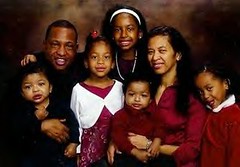
LOS ANGELES – In one upstairs bedroom, the bodies of twin 2-year-old boys were found beside their dead mother. In another bedroom, 5-year-old twin girls and their 8-year-old sister lay next to their lifeless father.

Officers discovered the horrific scene after rushing to a home in Wilmington, prompted by the father's distraught letter faxed to a TV station describing a "tragic story" and a call to authorities.

Police believe Ervin Lupoe, 40, killed his five children and his wife before turning the gun on himself. Both adults were recently fired from their hospital jobs.

"Why leave our children in someone else's hands?" Lupoe wrote in his letter faxed to KABC-TV. The station posted the letter on its Web site with some parts redacted.

The station called police after receiving the fax, and a police dispatch center also received a phone call from a man who stated, "I just returned home and my whole family's been shot." Police are unsure who the male caller was, but they suspect it was the father.

Officers rushed to the home in Wilmington, a small community between the ports of Los Angeles and Long Beach, about 8:30 a.m. Tuesday and found the bodies.

All the victims were shot in the head, some multiple times, coroner's Assistant Chief Ed Winter said. The killings may have occurred between Monday evening and early Tuesday, based on neighbors' accounts of firecracker sounds, he said.

Although the fax — addressed to "whom it may concern" and explaining "why we are dead" — asserted that the wife, Ana Lupoe, planned the killings of the whole family, police Lt. John Romero said Ervin Lupoe was the suspect. A revolver was found next to his body.

It was the fifth mass death of a Southern California family by murder or suicide in a year. Police urged those facing tough economic times to get help rather than resort to violence.

"Today our worst fear was realized," said Deputy Chief Kenneth Garner. "It's just not a solution. There's just so many ways you find alternatives to doing something so horrific and drastic as this."

Ervin Lupoe removed three of the children from school about a week and a half ago, saying the family was moving to Kansas, the principal told KCAL-TV. Crescent Heights Elementary School Principal Cherise Pounders-Caver said nothing seemed to be troubling Ervin Lupoe, and she did not ask why the family was moving.

Kaiser Permanente Medical Center West Los Angeles released a statement confirming Lupoe and his wife were fired as medical technicians more than a week ago. The hospital said the firings followed an internal investigation but would not specify why they lost their jobs.

The letter indicated that Lupoe and his wife — both 40 — had been investigated for misrepresenting their employment to an outside agency to obtain childcare. He claimed that an administrator told the couple on Dec. 23: "You should not even had bothered to come to work today you should have blown your brains out."

Lupoe's letter said the couple complained to the human resources department and eventually were offered an apology but two days later they were fired.

"They did nothing to the manager who stated such and did not attempt to assist us in the matter, knowing we have no job and five children under 8 years with no place to go. So here we are," the note said.

At the bottom of the letter, Lupoe wrote, "Oh lord, my God, is there no hope for a widow's son?" The phrase is frequently found in Internet discussions about the novel "The Da Vinci Code," Freemasons and Mormonism.

Kaiser Permanente said staff was "saddened by the despair" in Lupoe's letter "but we are confident that no one told him to take his own life or the lives of his family."

Lupoe's fax identified his children as Brittney, 8; 5-year-old twins Jaszmin and Jassely; and twins Benjamin and Christian, ages 2 years and 4 months. Winter confirmed the identities of the girls, but the boys' names were pending.

Lupoe got a state license to work as a security guard in 1989 and a permit to carry a gun as a security guard in 1993 but both expired in 2007, said Russ Heimerich, a spokesman for the state Bureau of Security and Investigative Services.

Bob Pierce, a Long Beach attorney who represented the Lupoes in an auto accident, said the case did not involve any serious injuries and the family was expected to receive "well below $10,000," he said.

Lupoe called Monday to find out when the money might be coming, Pierce said. Pierce told him that it might be another week or two "and he said 'no problem.'"

To Amanda Garcia, everything seemed normal in the Lupoe house next door. Her neighbors always had a friendly wave and their five young children would play outside.

"They were happy, they had birthday parties," the 22-year-old Garcia said as she choked back tears near her home. "The kids were always outside on bikes, riding on their wagon."
___________________________________________________

On the Net:
Lupoe letter available at: http://www.abc7.com

US Workers Appeal to President Obama to Enact An Economic Emergency Recovery Program

Workers Emergency Recovery Campaign

P.O. Box 40009
San Francisco, CA 94140
Email: wercampaign@gmail.com
Website: http://www.wercampaign.org
-----------------------------------------------------------------------
January 20, 2009

Dear President Barack Obama,

On November 4, 2008, millions of Blacks, Latinos, youth, and working people of all backgrounds seized on this election to say: Enough is enough, racism and oppression must end now. In the context of the deepening economic crisis, the election also was a cry from working people: We cannot accept the destruction of our jobs, our homes, our public services and our communities -- this crisis is not of our making and we should not be made to pay for it.

We, the undersigned, call upon you to submit to the Congress an economic recovery program that bails out working people -- NOT Wall Street. We also call on the AFL-CIO, Change to Win, and the organizations representing Blacks, Latinos, antiwar, immigrant rights and other social protest activists to endorse this 10-point platform of the Workers Emergency Recovery Campaign:

1) Put a halt to the Wall Street bailout plan. Not one more penny should be earmarked to bail out the bankers and speculators. It's time to bail out working people.

2) Enact a moratorium on all home foreclosures, utility shut-offs, evictions and rent hikes. Nationalize the mortgage industry, including Fannie Mae and Freddie Mac.

3) Enact H.R. 676 -- the universal, single-payer healthcare plan. Take the private insurance companies out of the healthcare equation. Guarantee fully funded pensions for retirees, along with healthcare and other benefits.

4) Enact the Employee Free Choice Act (EFCA) so that every worker can have union representation.

5) Stop the layoffs in auto and other industries across the country. Nationalize the Big 3 automakers. Re-tool the auto industry to build rapid mass transit, solar, and wind systems.

6) Stop the scapegoating of immigrant workers. Stop the ICE raids and deportations.

7) End all funding for the U.S. wars in Iraq and Afghanistan and bring our troops home now. The war expenditures in these countries alone are estimated at $3 trillion. Redirect all war funding to meet human needs.

8) Enact a massive national reconstruction public works program (minimum expenditure needed of $1 trillion) to rebuild the nation's schools, hospitals and crumbling infrastructure and to put millions of people back to work at a union-scale wage. Provide all necessary funding for a genuine Reconstruction program in the Gulf Coast; enact the Gulf Coast Civic Works Act (H.R. 4048).

9) Defend and expand the rights and economic security of those who are unable to work. Grant living-wage benefits to single parents, disabled, seniors, and the unemployed. End the arbitrary, punitive time limits, sanctions, denial of education, and forced unwaged workfare in the TANF welfare program.

10) Tax the corporations and the rich -- not working people -- to finance a workers' recovery plan. The rich currently enjoy historically high levels of wealth while being taxed at bargain-basement rates. Implement a retroactive tax on windfall revenue on the oil-energy industry, return capital income taxation to 1981 levels, and repatriate the $2 trillion from the offshore tax havens.

INITIAL LIST OF CAMPAIGN SUPPORTERS (partial list of 500 endorsers; * org & title listed for id. only):

Abayomi Azikiwe, Editor, Pan-African News Wire
Nancy Wohlforth* (Co-Pres., Pride at Work/AFL-CIO, Vice Pres., California Federation of Labor)
Cindy Sheehan (Gold Star mother, antiwar activist)
Cynthia McKinney (former Member of Congress, 2009 Green Party presidential candidate)
Donna Dewitt* (President, South Carolina AFL-CIO)
Progressive Democrats of America
Nativo López (Hermandad Mexicana)
Colia Clark (veteran of the Civil Rights Movement)
Michael Eisenscher* (AFT Local 1603, OPEIU Local 3)
Mark Dudzic* (National Organizer, Labor Party)
Dennis Serrette* (Political Director, Communications Workers of America)
Bruce Dixon (Editor, Black Agenda Report)
Kali Akuno (Gulf coast reconstruction activist)
Gene Bruskin (labor and antiwar activist - Washington, D.C.)
Larry Pinkney* (Black Activist Writers Guild & The Black Commentator)
Al Rojas (Coordinator, Frente de Mexicanos en el Exterior)
Alan Benjamin (Editor, The Organizer)
Glen Ford (BlackAgendaReport.com)
Chris Silvera (Sec.-Treasurer, Teamsters Local 808, Long Island City, NY)
Traven Leyshon* (Pres., Washington - Orange - Lamoille Labor Council, Vermont)
Fred Hirsch* (Exec. Bd., Plumbers and Fitters Local 393, San Jose, CA)
Rev. Elston K. McCowan* (Public Sector Dir., SEIU Local 2000; current
candidate for Mayor of St. Louis, MO)
Bill Leumer (Workers Action)
Leonel Nixon* (Universal African Peoples Organization-St. Louis/Chicago)
Elizabeth "Betita" Martinez (Institute for Multiracial Justice)
Kentucky May Day Coalition
Renée Saucedo* (La Raza Centro Legal)
Andy Griggs* (Chair, National Education Assoc., Peace & Justice Caucus; UTLA)
Howard Wallace* (Pride at Work)
Clarence Thomas* (Exec. Bd., ILWU Local 10)
Don Bechler* (Single Payer Now!)
George Hutchinson* (Pacific Green Party, former OEA member)
Mike Carano* (Progressive Democrats of America-Ohio, Teamsters' union)
Jerry Gordon* (UFCW International Rep/retired; Chair, Ohio State Labor Party)
Ed Rosario (Co-Convener, OWC Continuations Committee)
Pat Gowens (Welfare Warriors)
Luis Magaña (Organización de Trabajadores Agrícolas de California)
Tim Kaminski* (UAW Local 110, former committeeman, retired)
Gustavo Bujanda (Raices Mexicanas)
Nancy Romer* (Professional Staff Congress, CUNY, AFT 2334)
Frank Martin del Campo* (Exec. Bd. member, S.F. Labor Council)
Mark Esters* (member, UAW-St. Louis, Missouri)
Jack Rasmus (Economist, Professor St. Mary's College)
Juan Rafael Santos* (South Central Farm Leadership Council)
Wes Brain* (Southern Oregon Jobs with Justice)
Adam Richmond (Committee to Overturn Prop 8)
James Vann* (Oakland Tenants Union)
Luis Alberto Rivera (President, PRD en el Exterior)
Jean Pauline* (SF Gray Panthers)
Akinyele Sadiq (The Troublemakers Union - band)
Hal Sutton* (UAW Local 1268 retirees chapter)
Filemon López (Radio Bilingüe)
Kristen Zehner* (AFSCME Sub Chapter 52)
C. T. Weber* (Peace and Freedom Party / California State Employees Association)
Dale Sorensen* (Task Force on the Americas)
Helen Spalding (AFSCME retiree)
David Walters* (IBEW Local 1245)
Randy Lopez* (By Any Means Necessary / Sacramento BAMN)
Jessica Sanchez (Workers' International League-S.F.)
Rodger Scott* (AFT Local 2121, retired)
Jose Luis Jaral Moreno (Comité Binacional de Derechos Humanos de los Migrantes)
Millie Phillips (Socialist Organizer)
Páramo Hernandez (Union Civica Primero de Mayo)
Steve Ongerth* (IWW, IBU SF Bay Region)
Vinnie Burrows* (AEG, SAG, AFTRA-NY)
Chris Kaihatsu* (Rev.Left.com)
Dan Kaplan (Exec. Sec., AFT Local 1493)
Ann Robertson* (California Faculty Association, SFSU)
Marc Rich* (UTLA delegate, Los Angeles County Federation of Labor)
Paul Burton* (Northern Calif. Mdia Workers, CWA 39521, San Mateo Labor Council)
Allan Fisher* (AFT Local 2121)
Roger Dittman (Professor Emeritus, Physics, Cal. State Univ.-Fullerton)
Lisa North* (AFT Local 2)
James Keys* (Senior Action Network and SF Mental Health Board)
Larry Duncan* (CWA 14408, Co-Producer, Labor Beat-Chicago)
Marlena Santoyo* (Philadelphia Federation of Teachers)
Brian L. Rich* (Kentucky Coalition for Immigrant and Refugee Rights)
Laurence Shoup* (UAW 1981, retired)
Dennis Gallie* (UAW Local 249)
Rodrigo Ibarra (Co-Editor, El Organizador)
Kathy Lipscomb* (Exec. Bd, Senior Action Network - S.F.)
Jim Hamilton* (Member State Exec. Com., AFT Missouri)
Linda Ray* (SEIU Local 1021, San Francisco)
Ken Hollenbeck* (CWA 6300 delegate to St. Louis Labor Council
Roger T. Harris* (Task Force on the Americas, Corte Madera, CA)
Herb Johnson* (Missouri State AFL-CIO)
T. Rodgers (Sidewalk University, Los Angeles)
Lisa North* (UFT-AFT Local 2 - N.Y.)
Eugene Frison (Retired, St. Louis Court Workers' leader)
Rogelio Reyes (Prof., San Diego State University)
Mark Demming* (National Lawyers Guild, Oakland, CA)
Nikhil Kothegal* (AFT Local 420, St. Louis)
Robley E. (Rob) George* (Center for the Study of Democratic Societies)
Julie Utley (T.A. , St. Louis County Special School District)
Patty Jaundzems* (OPEIU Local 3)
Mark Vorpahl* (SEIU Local 49, Portland, OR)
Paul Joseph Poposky (Workers International League - St. Louis)
Francesca Rosa* (SEIU Local 1021, delegate to SF Labor Council)
Kathleen Densmore* (Phd., community activist, San Francisco)
Renate Bridenthal* (Prof. Staff Congress, PSC/CUNY)
Tucker Pamella Farley* (Prof. Staff Congress, PSC/CUNY)
Paul Colvin* (Communications Workers of America-ITU, retired)
Paul Lenart (IWW Organizing Committee-Reno, Nevada)
Michael Flynn* (National Lawyers Guild-Oakland)
Mary Moore* (Bohemian Grove Action Network)
Larry Lambert* (Coachella Valley MDS)
Helen Spalding* (AFSCME Local 1844, retired)
Joanne Husar (filmmaker, Los Angeles)
Col. Jeffrey Segal, Esq. (Louisville, Kentucky)
Eric Blanc (youth organizer - San Francisco)
Karen Parker* (Association of Humanitarian Lawyers)
Jack Chernos* (American Federation of Musicians Local 6)
Greg Miller* (Freelancers Union - San Francisco)
Francisca Ramos-Stierle (Metta Center for Nonviolence Education)
Esther John* (AFT-Seattle)
Donald Leisman* (AFT Local 420 - St. Louis)
Brian Hill (environmental activist, Eugene, Oregon)
Aaron Schuman* (NWU/UAW 1981 - Ithaca, N.Y.)
Steve Kessler* (member, Bay Area Labor Committee for Peace and Justice)

[Campaign initiated by The Organizer Newspaper. For more info, or if wish to support the Workers Emergency Recovery Campaign (WERC), contact or go to www.wercampaign.org. Also write us at P.O. Box 40009, San Francisco, CA 94109, or call 415-641-8616.]

African Americans Speak Out For Palestine, January 31, 4:00-7:00pm

For Immediate Release

Media Advisory

Event: MECAWI Meeting on U.S. Policy Toward Palestine
Date: Saturday, January 31, 4:00pm-7:00pm
Location: 5920 Second Avenue at Antoinette, Near WSU campus
For Info: 313.680.5508
e-mail: info@mecawi.org
URL: http://www.mecawi.org

African Americans Speak Out For Palestine

Detroit leaders of the African-American community are joining with people around the world to denounce the U.S.-financed Israeli invasion and massacre of Palestinians in Gaza.

Israeli propaganda spread by the mass media in the United States and free trips to Israel to "wine and dine" African-American leaders, cannot cover up the racism, war crimes and genocide being committed by Israel.

Come out to a public meeting and learn about the decades-long support of African-Americans for Palestine. Hear about the ugly history of racism and apartheid inside Israel. Find out about Israel's military support for the former racist apartheid government of South Africa and how Israel supported the U.S. war in Vietnam.

Speakers include:

Abayomi Azikiwe, co-founder of the Michigan Emergency Committee Against War & Injustice (MECAWI) and editor of the Pan-African News Wire.

Andrea Egypt, community activist and leading member of MECAWI.

Derek Grigsby, chairperson of the Detroit Green Party.

Ron Scott, co-founder of the Detroit chapter of the Black Panther Party, current spokesperson for the Detroit Coalition Against Police Brutality, radio and television host on "For My People" (Channel 50) and "Fighting for Justice" (1310 AM).

Plus a representative of the Palestinian solidarity movement in Detroit.

This event is free and open to the general public.

US Faces 'Challenge' in Afghanistan

Tuesday, January 27, 2009
19:13 Mecca time, 16:13 GMT

US faces 'challenge' in Afghanistan

Gates is considering an increase in US troop numbers for Afghanistan

Afghanistan is now the United States's "greatest military challenge", the US defence secretary has said.

But Robert Gates warned on Tuesday the lack of troops meant the US had not provided "a baseline level of security" against Taliban forces and he was considering increasing the number of US soldiers.

He told the Senate Armed Services Committee that the US could still face "a difficult fight" in the country.

Gates, the only Republican to retain a position in the administration of Barack Obama, the US president, told the committee that co-ordination with international forces in Afghanistan to combat Taliban fighters had been "less than stellar".

"Too often the whole of these activities has added up to less than the sum of the parts," he said.

'Civilians killed'

Gates' remarks came amid anger in Afghanistan over claims that a US military raid in the eastern Afghanistan province of Laghman at the weekend killed least 16 civilians.

The US military has denied the claims and said that 15 Taliban fighters died in the operation.

Gates also said that the Pentagon's efforts in Afghanistan to combat the insurgency following the overthrow of the Taliban in 2001, would in the future include better counter-insurgency training for US and international forces and efforts to improve "civil-military" co-ordination for reconstruction efforts.

"We can attain what I believe should be among our strategic objectives: An Afghan people who do not provide a safe haven for al-Qaeda, reject the rule of the Taliban and support the legitimate government that they elected and in which they have a stake," he said.

Obama has vowed to shift military resources from Iraq to Afghanistan and Pakistan, both which he says form the central front in the struggle against "terrorism".

Gates also praised Pakistan as "a friend and partner" and said any solution to the Afghan conflict required strong relations with Pakistan given the porous border between the two nations.

Last week he appointed Richard Holbrooke, a veteran US diplomat, as special envoy to both countries.

Iraq stability

Gates said that although violence remained low in Iraq there was "still the potential" for setbacks.

He described the prospect of a stable Iraq as "crucial to the Middle East", but warned against looking for a swift resolution to the conflict.

"As our military presence decreases over time, we should still expect to be involved in Iraq on some level for some many years to come," he said.

US forces are currently due to withdraw from major Iraqi cities by the end of June this year and from the country by 2012, as part of a US-Iraq agreement.

The US currently has about 34,000 troops in Afghanistan and around 142,000 troops in Iraq.

Source: Agencies

Palestine News Update: Israeli Jets Strike Rafah While Obama Envoy Visits Egypt

Wednesday, January 28, 2009
05:10 Mecca time, 02:10 GMT

Israeli jets strike Rafah tunnels

Israel says the Rafah tunnels are used to smuggle weapons to Hamas fighters

Israeli jets have carried out fresh air strikes on tunnels under the Gaza-Egypt border, reportedly sending hundreds of people fleeing their homes in panic.

Local residents and Hamas security officials said three air strikes took place before dawn on Wednesday, but no casualties have yet been reported.

The strikes came just hours before the newly-appointed US Middle East peace envoy was due to arrive in Israel.

Israel has confirmed that it carried out the raids. It says the strikes on the Rafah tunnels are aimed at stopping alleged weapons smuggling into the Gaza Strip by Hamas fighters.

The tunnels are also used to smuggle food, fuel and consumer goods from Egypt and are considered a life-line for thousands of ordinary Gazans.

The latest attack came despite fragile ceasefires declared by Israel and Hamas last week, ending a 22-day Israeli military campaign on Gaza in which 1,300 people were killed.

Israeli warplanes had targetted scores of cross-border tunnels during the recent war, but many tunnels resumed work shortly after the ceasefire.

Earlier two people were wounded in an Israeli air raid elsewhere in the Gaza Strip, according to Hamas and Palestinian medical officials.

Hamas said one of its members riding a motorcycle was injured in the attack in the town of Khan Younis on Tuesday.

The raid came after an Israeli soldier and a Palestinian were reportedly killed in a clash near the Kissufim border crossing.

Neither Hamas nor any other group has claimed responsibility for what the Israeli military said was a bomb attack targeting an Israeli border patrol.

Israeli military officials said an officer and two other soldiers were also wounded in the attack.

After the incident, Israeli forces opened fire, killing a Palestinian farmer, Palestinian medical workers said.

Farmer killed

Dr Moaiya Hassanain of Gaza's health ministry confirmed that a 27-year-old farmer was killed by Israeli gunfire along the border, which also left two other Palestinians wounded.

Israel subsequently closed its border crossings to humanitarian aid traffic after briefly opening them in the morning.

Raed Fattouh, a Gaza border official, said Israeli officials informed him the closure was due to the attack.

Describing the attack on the Israeli patrol, Al Jazeera's Tamer Mishal reporting from Gaza, said an anti-armour shell was fired from inside the territory at an Israeli tank near the area of Khan Younis.

"Witnesses told Al Jazeera that the grenade directly hit an Israeli jeep," he said.

Israel and Hamas entered an uneasy ceasefire last week [AFP]
"Palestinian residents reported the sound of gunfire and Israeli helicopters in the area."

Residents of Kissufim said the Israeli army patrol and Palestinian fighters exchanged fire shortly after the blast.

Ayman Mohyeldin, Al Jazeera's correspondent in Gaza, said no Palestinian group has yet claimed responsibility for the attack.

"Immediately after a large blast of gunfire was heard in the area. There were several farmers out on their land, and we understand that one Palestinian farmer was killed," he said.

Israeli troops withdrew from Gaza last week after a three-week offensive whose stated aim was to stop Palestinian rocket fire into southern Israel.

Egyptian mediation

Egyptian mediators have been talking separately to Israel and Hamas to negotiate a more permanent ceasefire.

Hamas wants the border crossings into Gaza reopened, including the Rafah crossing into Egypt, to end the Israeli blockade in the territory.

Israel wants to stop the rocket fire and prevent Hamas fighters from using smuggling tunnels under the border with Egypt to rearm themselves with weapons.

Barack Obama, the US president, has despatched George Mitchell, his newly appointed Middle East envoy, to the region to discuss the ceasefire efforts.

Speaking on Monday Obama said he had instructed Mitchell, who played a prominent role in the Northern Ireland peace process, to "engage vigorously" to achieve real progress between Israel and the Palestinians.

Source: Al Jazeera and agencies


Israeli strike hits southern Gaza

Israel has carried out an air strike in Gaza, hours after a bomb attack killed one Israeli soldier and wounded three others near the Gaza border.

The air strike in southern Gaza wounded two people, including a Hamas militant, Palestinian sources say.

It was Israel's first air strike since it ended its offensive against Hamas and both sides called a ceasefire.

Israeli troops also entered the Gaza Strip after the bomb attack, killing one Palestinian, medics said.

No group has said it carried out Tuesday's bombing on an Israeli patrol near the border crossing of Kissufim.

One Israeli officer was badly wounded in the explosion and the other soldiers were lightly wounded, an army spokesman said.

Palestinian residents of Kissufim said they could hear Israeli helicopters circling overhead and the sound of heavy gunfire.

Medics in Gaza said a Palestinian farmer was killed by gunfire.

Two people were wounded in the subsequent air strike in the town of Khan Younis near Rafah.

Hospital sources say one was a member of Hamas' Popular Resistance Committee who was on a motorbike at the time, and the other was a passer-by.

US visit

Israel has closed border crossings into Gaza because of the attack on the patrol, Israeli officials said, stopping the flow of aid supplies to Gaza's 1.5 million residents.

Aid agencies have been struggling to meet the urgent needs of tens of thousands of displaced, homeless and injured people in Gaza.

Last month Israel launched a 22-day offensive against Hamas, in a effort to stop rocket attacks on its territory.

There has been Israeli artillery and naval fire against Gaza targets since the ceasefires were announced earlier this month.

The fresh violence comes as US President Barack Obama's Middle East envoy, George Mitchell, arrives in the region to seek a more permanent truce.

He will hold talks with Egyptian officials, who have been mediating between Israel and Hamas, before travelling on to Jerusalem and Ramallah.

Story from BBC NEWS:
http://news.bbc.co.uk/go/pr/fr/-/2/hi/middle_east/7853803.stm
Published: 2009/01/27 15:39:46 GMT


Tuesday, January 27, 2009
17:28 Mecca time, 14:28 GMT

Gaza violence mars Mitchell tour

Mitchell has been charged with making 'genuine progress' in the region

George Mitchell, the US peace envoy, has arrived in Cairo at the start of his Middle East tour as fresh violence broke out in the region.

Mitchell arrived in Egypt on Tuesday, shortly before Israel launched an air raid on the Gaza Strip and Israeli troops reportedly crossed into the territory following clashes that led to the deaths of an Israeli soldier and a Palestinian.

The envoy, who has been briefed by Barack Obama, the US president, to "engage vigorously" to achieve peace in the Middle East, is holding talks with Egyptian officials before visiting Israel, the Palestinian West Bank, Jordan, Turkey and Saudi Arabia and then heading to Europe.

Upon his arrival at the airport Mitchell briefly met Javier Solana, the EU foreign policy chief, who is in Egypt to discuss shoring-up Hamas' and Israel's ceasefires in Gaza.

'Concrete progress'

Obama has vowed to make the Israeli-Palestinian conflict a priority and described Mitchell as the man who "speaks for us" on Middle East issues.

George Bush, Obama's predecessor, had been widely criticised for neglecting the Middle East for much of his tenure.

"The charge that Senator Mitchell has is to engage vigorously and consistently in order for us to achieve genuine progress," Obama said.

"And when I say progress, not just photo ops, but progress that is concrete."

Mitchell's Middle East tour was launched as Obama gave his first television interview to an Arab broadcaster, pledging his administration would take a wider view of the region.

Speaking to Al Arabiya, Obama said the US remains committed to protecting its long-time ally Israel, but said he also believes there are Israelis who recognise the need for regional peace and are willing to make the necessary sacrifices to achieve it.

"I think the most important thing is for the United States to get engaged right away," he said.

Commenting on Mitchell's visit to the Middle East he said: "What I told him is to start by listening ... because all too often the United States starts by dictating."

Seasoned diplomat

In 2000, Mitchell led a fact-finding committee on Middle East violence that recommended commitments by Israel and the Palestinian Authority to immediately and unconditionally end their fighting.

His report, released in April 2001, urged Israel to freeze settlements in the West Bank and the Palestinians to cease rocket attacks across the border, the two issues that remain sticking points today.

Robert Wood, a spokesman for the US state department, said Mitchell might travel to the Gaza Strip, where Israel waged a 22-day war on the territory that left more than 1,300 Palestinians deadbefore declaring a ceasefire on January 18.

Thirteen Israelis, three of them civilians, were also killed in the conflict.

Wood said Mitchell will work to consolidate the Gaza ceasefire, help in preventing alleged arms smuggling by Hamas and facilitate the opening of border crossings.

Mitchell's report will also help formulate the new administration's overall policy toward the Middle East, Wood said.

Peace broker

Ziad Hafez, managing editor of the journal Contemporary Arab Affairs, told Al Jazeera that he doubts about whether Mitchell will achieve much in his new role.

"I don't think any movement is going to take place as long as the fundamental rules are not observed - which means that if you don't talk to the principal parties, nothing much will be accomplished," he said.

"Neither the Palestinian Authority nor the Egyptian government can provide any leverage over the situation in [Hamas-run] Gaza.

"Mitchell already had a previous mission in the Middle East and it did not amount to much, so I don't know what he will do now. As long as there is no political will in the United States to work seriously in promoting the Arab peace initiative [on Israeli-Palestinian relations], I don't think a lot will be accomplished."

Mitchell, 77, is credited with persuading all sides in the Northern Ireland conflict to sign up to a power-sharing deal, culminating in the landmark Good Friday peace accord in 1998.

Source: Al Jazeera and agencies


Sunday, January 25, 2009
12:36 Mecca time, 09:36 GMT

Hamas to pay victims of Gaza war

Hamas says more than 20,000 homes were damaged or destroyed in Israel's Gaza offensive

Hamas is set to hand out money to Gazans afflicted by Israel's offensive on the Gaza Strip.

The territory's government was due to start giving out the money, expected to total about $45m, on Sunday - a day after a Hamas committee was established to oversee relief efforts.

Ahmed al-Kurd, the Hamas-appointed minister of social affairs, also heads the National High Committee for Relief which will distribute the money to those who lost family members or their homes.

"It will be the only body to oversee and supervise the rescue. We will be in contact with all other bodies, whether local, national or international, to organise the relief," al-Kurd said.

Re-building Gaza

Al-Kurd did not say how Hamas had raised the funds for the Strip, which has been under a strict blockade since the group took control of Gaza in June 2007.

"We are a government that is in charge of all of Gaza," he said. "The ministries have budgets, they have funds, just like in the rest of the countries of the world."

Taher al-Nunu, a spokesman for Gaza's de facto government, said that Hamas would grant €1,000 ($1,300) for the family of each "martyr" killed in the three-week-long conflict earlier in the month and €500 ($650) to for each one of those injured.

He also said that Hamas would pay €4,000 ($5,200) for each family whose house has been completely demolished.

He said that more than 20,000 Palestinian houses have been either completely demolished or partially damaged during the war.

More than 1,330 Palestinians were killed in the Israeli offensive, which Israel says was aimed at stemming rocket and mortar fire from Gaza.

Ten Israeli soldiers and three civilians were also killed.

'Death by blockade'

Both sides declared unilateral ceasefires last Sunday and Israel completed its withdrawal from the territory on Wednesday.

Al-Kurd would not specify the role the relief committee would play in rebuilding efforts in the battered territory, but demanded the lifting of Israel's blockade of the Strip and the reopening of Gaza's border crossings.

"From now on we will not accept a slow death by blockade. We sacrificed in this war ... and we did not sacrifice our youth to return to square one."

The Palestinian Authority of Mahmoud Abbas, the Palestinian president, has said that it should lead the reconstruction efforts, which it said would require about $1.9bn in aid.

Abbas's Fatah group were pushed from Gaza in June 2007 when Hamas took control of the Strip.

Source: Agencies

Bolivia Says Yes to Constitutional Changes

Bolivia says Yes!

Re-founding underway, Evo affirms

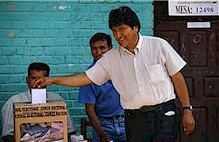
LA PAZ, January 25.—President Evo Morales confirmed today from the balcony of the Quemado Palace that the re-founding of Bolivia is underway, in reference to the triumph at the polls of the new Constitution, by a large majority.

Addressing a huge crowd gathered in the Murillo Plaza, the Bolivian leader emphasized that the approval of the Constitution replacing the one in force since 1967 is the result of the people’s awareness, PL reports.

In that context, he thanked the people for supporting the process of change initiated in January 2006.

"It is thanks to those people who made it possible with their vote that a new Bolivia with equality for all is being re-founded," he commented.

Morales praised the contribution to the victory provided by the social movements, particularly those in the campesino and indigenous sectors, historically excluded and exploited.

"Today marks the end of the colonial and neoliberal state represented by governments that do nothing more than to auction off our natural resources," he affirmed, in reference to articles in the new Constitution defending national ownership of the principal raw materials.

At the same time he noted that "the implementation of the new Constitution is one of the greatest challenges lying ahead."

"This is the beginning of the new Bolivia, a state with a nation. The ill-named Media Luna (half moon) has been left behind to give way to the ‘Full Moon,’ a united and more dignified Bolivia," he stated.

The constitutional referendum in Bolivia closed peacefully with a 60% ‘Yes’ to the draft constitution by close to four million voters, as revealed in the preliminary results.

Translated by Granma International

LA Man Upset Over Jobs Kills Wife, 5 Children, Himself

LA man upset over job kills wife, 5 kids, himself

By THOMAS WATKINS, Associated Press Writer

LOS ANGELES – A man fatally shot his wife, five young children and himself, claiming in a note he faxed to a TV station Tuesday that the couple had just been fired from their hospital jobs and together planned the killings as an escape for the whole family.

"Why leave our children in someone else's hands," Ervin Lupoe wrote in his letter to KABC-TV. The station posted the letter on its Web site later with some parts redacted.

The station called police after receiving the fax, and a police dispatch center also received a call from a man who stated, "I just returned home and my whole family's been shot."

Officers rushed to the home in Wilmington, a small community between the ports of Los Angeles and Long Beach, about 8:30 a.m. and found the bodies.

All were shot in the head, some multiple times, Coroner's Assistant Chief Ed Winter said. The killings may have occurred between Monday evening and early Tuesday, based on neighbors' accounts of firecracker sounds, he said.

Although the fax asserted that Ana Lupoe planning the killings of the whole family, police Lt. John Romero said Ervin Lupoe was the suspect. A revolver was found next to his body.

Ana Lupoe's body was found in an upstairs bedroom with the bodies of the couple's twin 2-year-old boys. The bodies of an 8-year-old girl and twin 5-year-old girls were found alongside Ervin Lupoe's in another bedroom.

It was the fifth mass death of a Southern California family by murder or suicide in a year. Police urged those facing tough economic times to get help rather than resort to violence.

"Today our worst fear was realized," said Deputy Chief Kenneth Garner. "It's just not a solution. There's just so many ways you find alternatives to doing something so horrific and drastic as this."

Ervin Lupoe removed three of the children from school about a week and a half ago, saying the family was moving to Kansas, the principal told KCAL-TV. Crescent Heights Elementary School Principal Cherise Pounders-Caver said nothing seemed to be troubling Lupoe at that time; she did not ask why the family was moving.

Kaiser Permanente Medical Center West Los Angeles released a statement confirming both Lupoe and his wife had worked there; both were medical technicians.

"We are deeply saddened to hear of the deaths of the Lupoe family," it said in a statement.

In his letter, Ervin Lupoe claimed he and his wife both had been fired and that she suggested they kill themselves and their children, too. Police described the fax but did not release details.

The letter indicated that Lupoe and his wife had been investigated for misrepresenting their employment to an outside agency in order to obtain childcare. He claimed that an administrator told the couple on Dec. 23: "You should not even had bothered to come to work today you should have blown your brains out."

The couple complained to the human resources department and eventually were offered an apology but two days later the Lupoes were fired, according to the letter.

"They did nothing to the manager who stated such and did not attempt to assist us in the matter, knowing we have no job and five children under 8 years with no place to go. So here we are," the note said.

At the bottom of the note, Lupoe wrote, "Oh lord, my God, is there no hope for a widow's son?" The phrase is frequently found in Internet discussions about the novel "The Da Vinci Code," Freemasons and Mormonism.

The Kaiser Permanente statement made no comment on the claims in Lupoe's fax.

"It looks like they might have had grounds for his termination ... it wasn't that he was laid off as a result of the economic situation," police Capt. Billy Hayes said.

Lupoe's fax identified his children as Brittney, 8; 5-year-old twins Jaszmin and Jassely; and twins Benjamin and Christian, ages 2 years and 4 months. Winter confirmed the identities of the girls, but the boys' names were pending.

The two-story home, much larger than its one-story neighbors, sits in front of a railroad track in Wilmington, a small community about 18 miles south of downtown. A children's playset stood in the backyard.

On his Facebook page, Lupoe posted photographs of a daughter at karate class, and of a fancy tub and wash basins in an apparently remodeled bathroom.

Retired truck driver Jaime Solache, who lives a few doors down, said many of these newer, larger homes in the neighborhood had gone into foreclosure. The Lupoe house, which has a sign by the driveway reading "The Lupoe's Pad," is about 6 years old, Solache said.

News of the killings sent shivers through the community, and several neighbors came to the yellow police tape to watch a steady procession of officials enter and leave the home.

"This area right here is quiet, calm," said Armando Chacon, who lives one block north. "People like to sit out at weekends and barbecue. Other than this, no problems at all."

In 1994, Lupoe was charged with carrying a concealed firearm but it was either dismissed or not prosecuted, court documents show.

Lupoe got a state license to work as a security guard in 1989 and a permit to carry a gun as a security guard in 1993 but both expired in 2007, said Russ Heimerich, a spokesman for the state Bureau of Security and Investigative Services.

Bob Pierce, a Long Beach attorney who represented the Lupoes in an auto accident, said the case did not involve any serious injuries and the family was expected to receive "well below $10,000," he said.

Lupoe called Monday to find out when the money might be coming, Pierce said. Pierce told him that it might be another week or two "and he said 'no problem.'"

The region has been shook by several recent mass murders.

On Dec. 24, a man dressed up as Santa Claus invaded a Christmas Eve party and killed his ex-wife and eight of her relatives. The man later killed himself.

In October, an unemployed financial manager despairing over extreme money problems shot and killed his wife, three children, mother-in-law and himself in their home in the Porter Ranch area of the San Fernando Valley.

In June, five members of a Turkish-American family, clad in black, were found dead in an upscale home in San Clemente. Investigators say it was apparently a suicide pact but the reason is a mystery.

DRC News Update: 200 FDLR Rebels Flee to Uganda; Rwandan Dissent Over Nkunda Arrest; More on ICC Trial

Rwanda: 200 FDLR Rebels Flee to Uganda

Ignatius Ssuuna
28 January 2009

Kigali — More than two hundred rebels of the Democratic Forces for the Liberation of Rwanda (FDLR) are reported to have fled into neighboring Uganda after being flushed out of Eastern DRC by a joint Rwandan-Congolese military operation.

Sources from MONUC, the UN mission in DR Congo say the FDLR, a group composed mainly of perpetrators of the 1994 Genocide against Tutsis has crossed into Matanda in the western part of Uganda. It was also reported that the rebels could be trying to infiltrate Bwindi National Park on the border with Rwanda.

Speaking from Kampala in a telephone interview last evening, Uganda's army Spokesperson Maj. Felix Kuraije said FDLR rebels 'would be committing suicide to enter Uganda'.

"We have no room for these people. They killed many people and we are very ready to fight them," Maj. Kuraije said.

The army spokesperson said Bwindi National Park was also heavily protected by the army and emphasised that FDLR could not use it again.

By press time, Kuraije had not confirmed the alleged presence of FDLR on Ugandan soil but added that the army was 'on the lookout'.

Over a dozen of FDLR militias have been killed in eastern DR Congo since the operation began last week.

Hundreds, including Congolese militia, have already surrendered. Some were killed in Lubero, a region in the DRC, 370 Kilometres northeast of the regional capital Goma.

The Congolese army this week urged the rebels and other armed groups in the country's eastern region to surrender or face fire.

The on-going Rwanda-DRC military operation to forcefully disarm and repatriate the Interahamwe came about after several high-level bilateral meetings last year.

The FDLR have for the last 15 years been operating in the DRC from where they committed atrocities against Congolese civilians and also continue to hatch their plans of destabilizing Rwanda.

The operation was endorsed December 5, last year, after a two-day meeting between both countries' Foreign Affairs Ministers in Goma and later followed by an almost similar meeting by their Defence counterparts in Gisenyi (Rwanda) to chart its implementation.


Rwanda puts down Nkunda dissent

Security has been tightened at refugee camps in Rwanda after protests calling for rebel Laurent Nkunda's release.

Gen Nkunda, who claimed his fighters were protecting the Tutsi community in the Democratic Republic of Congo, was arrested by Rwanda last week.

A joint force of Rwandan police and soldiers put down the protests mainly by Congolese Tutsis, on Sunday - reportedly using live bullets.

Correspondents says demonstrations against the government are very rare.

A Tutsi like Rwanda's leaders, Gen Nkunda had guarded Rwanda's western flank against attacks from ethnic Hutu Interahamwe militias who fled there after the Rwandan genocide of 1994.

But in a change of policy, he was arrested after being invited by Rwanda to discuss a joint military force from both countries against Hutu forces.

DR Congo has allowed at least 6,000 Rwandan soldiers into its eastern region to help Congolese soldiers disarm the Hutu militia.

Rwanda, which hosts more than 50,000 Congolese refugees, has not yet said whether it will hand over its former ally to DR Congo, where he faces war crimes charges.

'Fighting for peace'

Thousands of Congolese refugees across Rwanda's two main camps - Kiziba in the south, and Gihembe in the north - took to the camps' street on Sunday in a co-ordinated protest.

They called the arrest of General Nkunda "illegal", and expressed their anger at they way he was reportedly trapped and arrested.

But a joint force of Rwanda police and army dispersed the protesters and many were injured in the skirmishes that followed.

"We could not go on with the demonstration as planned as the police and army stopped us," one man in Gihembe camp, which houses about 20,000 refugees, told the BBC.

"What we want is that Nkunda is released so that he goes back to DR Congo to continue fighting against the Interahamwe for he's our only hope for any return to DR Congo," he said.

"Nkunda was fighting for peace and we cannot understand why he was arrested."

In Kiziba camp, refugees claim that the army and police used live bullets and sticks to break up the demonstration.

One woman who was injured in the fracas said they were protesting peacefully when they were surrounded by police.

"They started beating us but we were not deterred by the beatings, for the anger we felt was more than the sticks' pain," she told the BBC's Great Lakes service.

"Shortly afterwards, they were joined by the army and started arresting young men among us. We tried to resist this and this is when they started shooting - that is how I got shot," she said.

The Rwandan authorities have not commented officially about the protests or commented on allegations that they were heavy handed in their attempt to quash them.

A refugee speaking to the BBC on Tuesday from Gihembe says the military have set up tents around the camp and intend to prevent further demonstrations.

Some 250,000 people have fled their homes in DR Congo's North Kivu province since August 2008, when Gen Nkunda began an offensive on the regional capital, Goma.

Human rights group have accused Gen Nkunda's rebel group - and also government forces - of numerous killings, rapes and torture.

Story from BBC NEWS:
http://news.bbc.co.uk/go/pr/fr/-/2/hi/africa/7853155.stm
Published: 2009/01/27 15:33:00 GMT


NAIROBI, Kenya 26 January 2009 Sapa-AP

RWANDA: CONGO REBEL NOT IN JAIL

A Rwandan army spokesman says Congo's most powerful rebel leader is not imprisoned.

Rwandan troops captured Laurent Nkunda last week in a stunning reversal of alliances. Nkunda has long had close ties to Rwanda.

But Rwandan Maj. Jill Rutaremara said Monday that Nkunda was in Rwanda but "not in jail." He would not elaborate, other than saying Nkunda was "safe."

Rwandan troops captured Nkunda as part of a breakthrough deal that saw at least 4,000 Rwandan soldiers enter Congo to hunt down Hutu militias. The move is a gamble for Congo's President Joseph Kabila because the Rwandans are deeply unpopular and some believe they may provoke more violence.


MIRIKI, DR Congo 26 January 2009 Sapa-AFP

DR CONGO REBEL MAJOR PREFERS DEATH TO 'SLAVERY' IN RWANDA

In a reed hut camp he has called home for 10 years, a Rwandan Hutu rebel major waited defiantly to face government troops determined to drive his militia out of eastern Democratic Republic of Congo.

"It's better to die here than to return as a slave to Rwanda," said Kafa Bimanos, a military leader with the Democratic Force for the Liberation of Rwanda (FDLR) rebel movement.

"Let them come! With their devil, their major power. We are ready to react, we are not afraid!" said the baby-faced major, sporting a thin moustache.

His militia set up camp a decade ago in the village of Miriki, which now lies in the line of fire as a joint Congolese-Rwandan military operation makes way for the region's remote valleys.

"We don't want war, we want dialogue," said Bimanos, whose Abcunguzi Combatant Forces (FOCA) is reputed to be FDLR's most radical faction.

Rebels nonchalantly kick about the mud-hut village wearing their characteristic black rubber boots and army fatigues, as AK-47s dangle at their sides.

The rebel major claims his fighters do not want to endanger the lives of villagers, calling them "our close friends", yet in the same breath says bloodshed is inevitable.

"But if Rwandan troops attack us, we will shoot back. We cannot leave without fighting," said Bimanos, clad in a spotless olive green uniform.

"Some of us will die, as well as many innocent Congolese," he said.

Residents of the mud hut village, forced to live alongside the FDLR troops, are visibly worried about lies around the corner.

Thirty kilometres (20 miles) southeast, the joint force has yet to move in on the fief of FDLR rebels, some of whom took refuge in eastern DR Congo after participating in Rwanda's 1994 genocide that killed some 800,000 people, mainly Tutsis and moderate Hutus.

The United Nations estimates that Kigali's Tutsi-dominated
government sent at least 5,000 Rwandan soldiers into Nord-Kivu province last week as part of an offensive that marked a striking turnaround in bilateral relations with Kinshasa.

Kigali had previously been accused of supporting ethnic Tutsi rebel leader Laurent Nkunda's campaign against the Kinshasa government, while the Rwandans in turn accused the Congolese officials of supporting the Hutu rebels.

Bimanos was "not surprised" by the Congolese government's move to join an operation against the FDLR rebels, while he called the Rwandan operation a "pretext".

"They will start with us, but after a few weeks, their cannons will turn towards Kinshasa," said Bimanos, insisting his men would not be vanquished.

"In 2002, the entire Rwandan army was in Congo. They never succeeded in crushing us or repatriating us," he said.

"This time, it will be the same thing."

Bimanos, a former teacher now in his early 30s, said he took part in the "resistance" in his country and decided to take up arms in DR Congo after being "wrongly imprisoned and mistreated".

"Since 1996, the enemy has been attacking us and wants to annihilate us," said Bimanos.

"We are fighting against racial segregation, social inequality, arbitrary arrests," he said, adding that his rebels would not disarm.

"It's not possible. Those (Hutus) who went back to Rwanda are
mistreated," he said.


AMSTERDAM 26 January 2009 Sapa-dpa

DRCONGO MILITIA LEADER'S VICTIMS PARTICIPATE IN ICC TRIAL

The alleged victims of former a Congolese militia leader being tried in the International Criminal Court (ICC) on Monday became the first victims of war crimes to be represented as equal parties in the case, alongside the prosecution and the defence.

A total of 93 victims have been accepted as party to the trial in which Thomas Lubanga Dyilo is charged with recruiting child soldiers in the bloody civil war in the Democratic Republic of Congo between 1998 and 2003.

The 48-year-old former head of the Union of Congolese Patriots party opened on Monday became the first war crimes suspect to be brought before the ICC in The Hague, the first permanent international tribunal for war crimes.

Prosecutors accuse Lubanga of developing and operating an entire child soldier infrastructure in the final years of the civil war.

Attorney Paolina Massida, representing the victims of crimes
allegedly committed by Lubanga and his militia, said: "In the past, victims were considered to be simple witnesses."

She referred to the cases heard by international tribunals of
Nuremburg, the former Yugoslavia and Rwanda for war crimes and crimes against humanity.


KINSHASA 26 January 2009 Sapa-AFP

FOUR RWANDAN HUTU REBELS KILLED IN DR CONGO: MILITARY SPOKESMAN

Congolese and Rwandan troops killed four Rwandan Hutu rebels during battles in eastern Democratic Republic of Congo, a spokesman for the two armies told AFP.

The rebels from the Democratic Forces for the Liberation of Rwanda (FDLR) died in a failed attempt to take back Kisenga village in the Lubero region of the eastern province of Nord-Kivu, said Congolese Captain Olivier Hamuli.

Their deaths come two days after the joint force said it killed nine Hutu rebels in the first scenes of fighting since the two countries launched controversial joint operations against Rwandan Htu rebels.

However FDLR rebels have denied the claim.

Hamuli added Monday that 394 Mai-Mai militia also travelled to the town of Nyanzale in the Rutshuru region south of Lubero to join the government's Armed Forces of the Democratic Republic of Congo (FARDC).

Some 7,000 displaced people have returned to their home districts of Binza and Joma along the Ugandan border in the last few days.

Hundreds of thousands of Congolese civilians fled their homes after fighting resumed between DR Congo's army and rebel fighters in August.


KINSHASA 26 January 2009 Sapa-AFP

SARKOZY NOT WELCOME HERE, SAY CONGOLESE LAWMAKERS

A group of opposition Congolese lawmakers said they opposed an upcoming trip to Kinshasa by French President Nicolas Sarkozy, according to a statement released Monday.

"The visit of President Nicolas Sarkozy, scheduled for March, in as much as it endangers the fundamental interests of the Congolese people, is not desirable," said the group of senators and deputies in the text received by AFP following a meeting in the capital.

In his New Year's address to diplomats in Paris this month, Sarkozy said a "fresh approach" was needed to resolve the instability and share the wealth in the Great Lakes region, which includes part of Democratic Republic of Congo.

He also touched on "the future of Rwanda."

Sarkozy's remarks triggered an uproar here, with the Congolese media suggesting he wanted a "balkanisation" of DR Congo.

The lawmakers said Sarkozy's desire to see broad-based discussions as to the "sharing of space and the riches of our country is strange," and added in the statement that while Sarkozy had "the right to please Rwanda," that did not give him the right to serve up Congolese wealth "in order to improve diplomatic relations between France and Rwanda."

Paris and Kigali have been at odds for years over who bears
responsibility for Rwanda's 1994 genocide that killed some 800,000 people in a matter of months.


Rwanda: UN Supports Exploratory Home Return of Ex-Fighters From DR Congo

26 January 2009

A programme to allow Rwandans who have been fighting with militias in the Democratic Republic of the Congo (DRC) to visit their home country and see whether conditions are conducive to returning is a positive way to reduce recurrent violence, the top United Nations envoy in the DRC said today.

The initiative "underlines the will of the two Governments to continue to offer a peaceful option to Rwandais combatants who want it," Alan Doss, Special Representative of Secretary-General Ban Ki-moon in the vast African country said.

The two Governments have recently been engaged in an ongoing joint military operation in eastern DRC against the Democratic Forces for the Liberation of Rwanda (FDLR), an armed Hutu group which has been in eastern DRC since the Rwandan genocide in 1994.

According to the UN Mission in the DRC, known as MONUC, six members of an associated armed group called the Rally for Unity and Democracy (RUD) who arrived yesterday in the city of Goma accompanied by five dependants embarked today on a one-week visit in their country of origin.

The visit was planned the week before, when the MONUC team responsible for disarmament, demobilization and reintegration (DDR) of ex-combatants spoke to a group of some 150 combatants and dependents of the RUD who had voluntarily given up their arms last July, the mission said.

The ex-combatants accepted the offer of the Rwandan Government to send representatives on a visit to investigate conditions for their voluntary return.

The UN mission said that the group crossed the border accompanied by the MONUC DDR team, members of the working group on the follow-up to recent talks in Nairobi on the continuing violence in the eastern DRC, representatives of the international facilitators of those talks and Congolese and Rwandan officials.

The delegation was welcomed at the town of Rubavu, near the Congolese/Rwandan border, by the President of the Rwandan Commission on DDR.


Rwanda: Is Country Justified in Its Decision Not to Negotiate With the Fdlr? Part 1

Idi Gaparayi
27 January 2009

Kigali — For nearly fifteen years, Rwanda has been confronted with the existence of a 'rebel group' in the Democratic Republic of Congo [DRC].

Built-up from remnants of forces that took part in the 1994 genocide, the Forces Démocratiques pour la Libération du Rwanda [FDLR], as the group is now known, fled into DRC following their defeat on the battlefield in Rwanda.

On its own accord, Rwanda twice invaded DRC in an attempt to deal with these 'negative forces' that continued to pose a threat to civilian lives, peace and stability within Rwanda and the region at large.

These early military incursions into DRC achieved limited success. Though Rwandan military campaigns significantly reduced FDLR's military ambitions, the group continues to exist and has been operating in Eastern DRC ever since, disregarding domestic and international law alike.

To its credit, FDLR managed to export the genocide ideology into DRC, including through direct and public incitement to attack and exterminate Rwandans and Congolese Tutsi. In the course of fulfilling this agenda, FDLR has had little care for civilians or their property.

For over a decade, the suffering of civilians in Eastern Congo has continued unabated, fuelling resentments among Congolese, generally directed against 'Rwandans', who are blamed by local politicians to be at the root cause of all their troubles.

Earlier this week, news reports, confirmed by both Rwanda and DRC, indicate that several thousands Rwandan troops entered DRC based on a fresh agreement between the two countries to work together militarily to deal with FDLR.

Some may question the wisdom of pursuing the military option in light of earlier experiments. Should Rwanda, instead, negotiate with the FDLR, as a number of -mostly western- analysts have suggested?

Using negotiation theory and concepts as a framework for discussion, I conclude that Rwanda's decision not to negotiate with the FDLR is appropriate. There are indeed limits to the type of conflicts that can be resolved through negotiations.

This analysis makes no claim about comprehensively taking into account the full range of considerations that may have influenced Rwandan policy not to negotiate because it necessarily relies only on facts publicly known.

Nor is the particular outcome of the current military campaign against FDLR relevant for our purpose. Those who wait to see what happens in order to praise or criticize a particular policy decision always have the benefit of hindsight while decision makers do not.

Moreover, performing a cost-benefit analysis of the merits of entering into negotiation is a challenging task; not least because there is always some degree of uncertainty surrounding the estimation of short and long-term costs and benefits of negotiation, as well as the potential costs and benefits of one's best alternative.

It is also worth noting that both negotiations and its alternatives - whether litigation or war - occur in the context of strategic interactions.

The potential outcome of a chosen course depends on the action (or reaction) of the other side. These are issues with which decision-makers and analysts are familiar.

The purpose of this contribution is to sketch out a framework for analysis to illustrate how a decision maker might weigh the costs and benefits of a decision whether to negotiate.

Interests

Negotiation theory teaches, among other things, that in deciding whether to negotiate, one should begin by indentifying his own interests. What are the interests of Rwanda?

The paramount interest of Rwanda in this context is to protect Rwandan lives both within its territory and, to the extent possible, abroad.

As Rwanda prepares to commemorate the fifteenth anniversary of the Tutsi genocide that claimed the lives of a million of its own, it is a statement of responsibility for the government to take all necessary measures to ensure that 'never again' translates into tangible results.

Rwanda has additional interests, stemming both from its past, but also its vision for the future, including:

-Keeping the country on a 'peace, unity and reconciliation' track by creating a new sense of 'Rwandaness' (seen, for example, on car stickers in Kigali boasting 'proudly Rwandan'), an identity separate and distinct from the traditional dichotomy along 'ethnic' lines,
-Making a clean cut with former regimes so as to allow the emergence of new ideas and politics, and
-Promoting security and stability in the country and the region, and thus create conditions favourable to 'Doing Business' in Rwanda, attract investments, stimulate economic growth, allow market access and trade in the region, using its strategic location as a competitive advantage.

It is, therefore, true that Rwanda has economic interests in the Congo. Its large population and vast natural resources combined with Rwanda's location makes DRC a prime market for Rwandan products and services.

Rwanda's business community has every reason to seek opportunities in DRC given the relative low cost of sourcing raw materials in a neighbouring country to supply local industry while, at the same time, having access to that market is an incentive for both local and foreign investors.

This is not what has been advocated for sometime in international forums, mostly by the United Nations [UN]. The UN has gone to some length to portray Rwanda as an Occupying Power in Eastern DRC whose sole purpose is to exploit the natural resources of that country, FDLR presence being just a pretext.

Charged with similar allegations, a wealthy country can simply ignore the UN and the governments controlling it, with no significant adverse consequences.

Not so for a poor nation. Rwanda cannot afford to be branded as a 'rogue nation', the validity - or lack thereof - of claims made by the UN notwithstanding.

Rwanda must preserve its image as a stable and peaceful country, with a leadership that is responsible and committed to implementing its development agenda while, at the same time, striving to promote and maintain a peaceful attitude towards its neighbours. That the United States [US] makes no distinction between terrorists and the countries harbouring them is beside the point. Rwanda, of course, is not the US.

While Rwanda is increasingly recognised as a powerful player to reckon with in regional affairs - chiefly as a result of its no-nonsense approach to security, zero-tolerance to corruption and its remarkable economic performance in the span of a decade - the country still relies, perhaps too heavily for its own good, on aid for its various social and economic programmes.

The trade-offs resulting from the politics of aid and their impacts on Rwanda's sovereignty are still a reality of our times.

In this context, to maintain a positive image and still deal with the FDLR issue in DRC call for unconventional measures, the current military campaign involving Rwandan troops under DRC command - despite the obvious misgivings anyone would have to such a proposition - being but one example.

Given these interests, it follows that the immediate goal of Rwanda is to eradicate FDLR and, to the extent possible, ensure -through diplomacy and enforceable agreements- that DRC no longer harbours or supports such groups in the future.

What are the interests of the FDLR, the other protagonist in this equation? In negotiation theory, such inquiry, it is said, must probe beyond stated demands and positions and ask, what is important to the other side? What do they value?

At this stage, FDLR's paramount interest is to survive either as individual members, groups within the group, or FDLR as a whole. Several accounts suggests that the last few years have registered a weakening of the group both in terms of members' moral, equipments and ammunitions, other resources, and support.

These forces have not always been known as FDLR. At different times in the last decade or so, they have presented themselves or have been portrayed under different umbrella: 'Hutu rebels', 'Rwandan Opposition', 'Armée de Liberation du Rwanda' and so forth.

While its members are drawn from several sources, it is accurate to say they include ex-FAR forces - some of whom were involved in the genocide against the Tutsi , Interhamwe militias - who did participate in the killings - and other like-minded individuals recruited over the years, initially from the refugees camps in Congo and Tanzania and, later on, from within Rwanda and in DRC.

Some are Congolese civilians that found themselves co-opted into FDLR operations as a way to survive. Indeed, in the many lawless regions of Eastern Congo, it makes sense to be on the side of those holding the power of the sword, when pillaging and looting the property of those who don't is the order of the day.

Idi Gaparayi is a consultant in legal affairs based in Kigali


Rwanda: Hundreds of Rebels Surrender, Four Killed

James Karuhanga
27 January 2009

Kigali — As the ongoing Rwanda-DRC joint offensive against the Ex-FAR Interahamwe intensified yesterday, four other rebels were killed, dozens of weapons seized while hundreds more surrendered.

The operation code named Umoja Wetu (Our Unity) was launched last week in an effort to rout the militias responsible for the 1994 Genocide against the Tutsi, out of the Eastern DRC.

Capt. Olivier Hamuli, the Congolese army (FARDC) eastern operations Spokesman told The New Times on phone that four rebels were killed early in the day, 35 AK-47 rifles seized and a total of 494 rebels also surrendered to the joint operation in the past two days.

"These four were killed today in the south of Lubero and the joint forces have also taken control of the territory of Masisi which was their (rebels) main base," Capt. Hamuli said.

He explained that this was in the territories of Lubero and Masisi, in Katoyi Sector.

The militias who are grouped under what they call the Democratic Forces for the Liberation of Rwanda (FDLR) have been living in the central African country since 1994 and are responsible for atrocities against Congolese civilians.

A subsequent press release indicates that the four died when the FDLR tried to forcefully retake Kasinga, a region between Bunyatenge and Fatua locations.

He also revealed that the recent rallying of the rebel National Council for the Defense of the People (CNDP) to government side had caused refugees in neighboring Uganda to return home.

"In two refugee camps in Uganda, when the refugees learnt about CNDP's integration, they left their camps and have now come back home," He said.

Capt. Hamuli put the number of returning Congolese to about 7,000. These have reportedly come from Kihihi and Mutolere refugee camps in Uganda.

MONUC's role

In a related development, the United Nation's Mission in the Democratic Republic of Congo (DRC) - MONUC - has also been allowed to participate in the joint military operation. Rwandan Defense Spokesman Maj Jill Rutaremara revealed this Monday afternoon.

According to Maj. Rutaremara, the Joint Operations Centre briefed MONUC about this, in the presence of its Commander Gen. Babacar Gaye on Sunday.

"This allays all their fears and concerns on matters to do with civil affairs," he said, "MONUC has agreed to cooperate - to provide logistics and bring on their own staff to follow up on civil affairs."

"There will be close collaboration whereby their earlier concerns will be put to rest," he said.

The UN peacekeepers had last Thursday demanded to be given a role in the joint military operations, saying they feared for the safety of civilians.

Rebels on alert as Congolese, Rwandan troops close in
AFP - Tuesday, January 27MIRIKI, DR Congo (AFP) - - Rebels in the Democratic Republic of Congo's troubled east girded for battle Monday as Rwandan and Congolese troops targeted them in a joint offensive that raised concerns for civilians' safety.

After Rwandan forces' arrest of Congolese ex-general Laurent Nkunda last week raised hopes for peace in the conflict-torn region, Hutu rebels from the FDLR group pledged to fight if attacked by soldiers in the joint operation.

One of the leaders of the Democratic Forces for the Liberation of Rwanda (FDLR) rebels in the village of Miriki said his fighters did not want to endanger villagers, but that bloodshed may be inevitable.

"... If Rwandan troops attack us, we will shoot back. We cannot leave without fighting," said Kafa Bimanos. "Some of us will die, as well as many innocent Congolese."

The joint operation that began last week to target the FDLR includes at least 5,000 Rwandan troops, and the village of Miriki now lies in the line of fire as the soldiers make way for the region's remote valleys.

Villagers said they feared fighting could break out at any moment and cause widespread killings among civilians or force them to flee.

Some also described being completely at the mercy of the FDLR.

"When they arrived, they really disturbed things -- raped women, killed innocents," a teacher in the village said, adding the local population had been treated "like animals."

At least one person feared locals could be used as a kind of "shield" as part of an FDLR bid to discredit their enemies through high numbers of civilians casualties.

According to the Congolese and Rwandan armies, the first fighting linked to the offensive broke out on Friday in the area of Lubero.

The two armies announced Saturday that they had killed nine FDLR rebels, but the rebel group later claimed that no fighting had taken place with their members.

FDLR, enemies of the Kigali government, includes some of the main perpetrators of the 1994 Hutu genocide in Rwanda, which resulted in the slaughter of some 800,000 Tutsis and moderate Hutus.

The joint offensive is controversial, with the Rwandan army having twice occupied eastern Congo in the 1990s in its battle against the FDLR.

Its return has sparked alarm among local inhabitants, aid agencies and the UN peacekeeping force MONUC.

On Monday, the International Committee of the Red Cross (ICRC) warned all sides involved in fighting that they are legally bound to spare civilians, especially children and women.

About 3,000 children are among the ranks of armed groups in Congo, mostly in the restive eastern Kivu provinces, the United Nations estimates.

"Civilians have paid and continue to pay a heavy tribute to the armed conflicts in the region," said Max Hadorn, head of the ICRC delegation in the country.

Many armed groups in the DR Congo's east have essentially operated as proxies of the governments in Kigali and Kinshasa.

However, Nkunda's arrest and the joint offensive have signaled shifting alliances and tighter cooperation between the former rival governments.

Rwanda had previously been suspected of supporting Nkunda's Tutsi rebel movement, which took control of parts of eastern DR Congo last year. Kigali in turn accused Kinshasa of sheltering the FDLR Hutu group.

There were further encouraging signs in the region on Monday, with Mai Mai militia declaring a "definitive halt to hostilities."

Various Mai Mai groups have operated in DR Congo, often allied with the government in its fight against Nkunda.

Their announcement was not unexpected. The main Mai Mai group, Pareco, had declared an end to fighting against Nkunda's rebels on January 17.

Pareco's move came after Nkunda lost the support of top commanders who switched allegiance to the government.