Showing posts sorted by relevance for query kony 2012. Sort by date Show all posts

Friday, April 06, 2012

How Kony 2012 Hides the Truth of Imperialism in Africa

Proletarian issue 47 (April 2012)

How Kony 2012 hides the truth of imperialism in Africa

‘Going viral’ refers to the phenomenon of a video or website becoming popular, or at least widely known, via the medium of public sharing.

In the age of social networking this is no longer as impressive as it once was, but nonetheless it was certainly surprising when Kony 2012 [1] – a short documentary which purported to dish the dirt on a fundamentalist christian terrorist organisation in Uganda, known as the Lord’s Resistance Army, and its not-so-charismatic leader Joseph Kony – ‘went viral’ a few weeks ago. And it was even more surprising when, just as his popularity was peaking, the director of Kony 2012 was arrested for public masturbation. [2]

So, masturbation aside, what on earth is going on here?

Kony 2012 is the 11th documentary released by an allegedly not-for-profit organisation called Invisible Children. [3] All eleven documentaries produced by Invisible Children have been about the same subject – Joseph Kony and the Lord’s Resistance Army.

The name ‘Invisible Children’ refers to the group’s principal gripe with the LRA, namely, its use of child soldiers in its war against the Ugandan state. Not content with merely documenting the situation in Uganda, however, Invisible Children seeks to prescribe a solution: it wants US military action both in Uganda and in central Africa more generally. This is not a covert objective, but a stated goal of the organisation. [4]

In fact, Invisible Children has been widely recognised for galvanising public support around the US senate’s Lord’s Resistance Army Disarmament and Northern Uganda Recovery Act, passed in 2010 – an act which led to the active deployment of US troops in Uganda. [5]

Invisible Children is not just an advocacy group, but also an active supporter of imperialist causes in Africa. It channels a sizable percentage of the revenue it accrues through donations and merchandise sales directly into the Ugandan army and government, as well as the armies and governments of several other central African states.

Once again, these activities are not covert, but public. The founders of the organisation have gone so far as to be photographed posing with members of the Sudanese People’s Liberation Army, all three of them proudly carrying weapons that their organisation, or others like it, probably helped pay for. [6]

The reality is that Joseph Kony and the Lord’s Resistance Army are a bugbear whose relatively minor role in African regional politics has been grossly distorted by Invisible Children. This was the point made by three commentators writing in the US establishment’s Foreign Policy journal in November of last year: “[Invisible Children] manipulates facts for strategic purposes, exaggerating the scale of LRA abductions and murders and emphasising the LRA’s use of innocent children as soldiers, and portraying Kony — a brutal man, to be sure — as uniquely awful, a Kurtz-like embodiment of evil.” [7]

Moreover, though Invisible Children continues to focus on the LRA’s activities in Uganda, most experts are now questioning whether the group still operates in Uganda at all.

Arthur Larok, the director of Action Aid in Uganda, has criticised Invisible Children on precisely this point: “Six or 10 years ago, this would have been a really effective campaign strategy to get international campaigning. But today, years after Kony has moved away from Uganda ... I’m not sure that’s effective for now. The circumstances in the north have changed.” [8]

These changed circumstances are also highlighted by the freelance journalist Michael Wilkerson, who has pointed out that “in 2006, the LRA was pushed out of Uganda and has been operating in extremely remote areas of the DRC, South Sudan, and the Central African Republic. ... the small remaining LRA forces are still wreaking havoc and very hard to catch, but northern Uganda has had tremendous recovery in the six years of peace”. [9]

So why do Invisible Children continue to act as though Uganda is the LRA’s main base of operations and, moreover, that the LRA are a serious threat? The answer is either shameful ignorance or deliberate deception. Whichever of these two is the correct answer, Invisible Children’s shortcomings as documentarians have certainly been helpful in furthering the foreign policy aims of the United States.

As senior research fellow at the Makerere Institute of Social Research in Uganda, Adam Branch, has pointed out, the popularity of Invisible Children’s campaigns “[has been] an excuse that the US government has gladly adopted in order to help justify the expansion of their military presence in central Africa”. [10]

More specifically, by appearing to be ‘responding’ to misguided public pressure on Uganda, the Obama administration has been given a useful cover for expanding its military presence in the country at precisely the time when its unpopular, pro-western government, and the lucrative oil contracts that it can dispense, are under threat from the population whom it has been exploiting.

Invisible Children and its supporters, whether they realise it or not, are playing a significant role in supporting western imperialism in central Africa. Through their ignorance of the complex reality of African regional politics and their naïve prejudices and faith in the altruistic motivations of imperialism, they have given ammunition (both figurative and literal) to the worst forces of reaction and obscured the fact that American troops in Uganda are not there to help the children of central Africa, but to help the US imperialist aims of monopolising Africa’s oil and mineral wealth and trying to undermine China’s ability to trade on the continent.

If people in the imperialist countries are serious about helping the people of central Africa, it is not Joseph Kony they need to focus on, but imperialist looting – and the military force it uses, both directly and indirectly, to back that up. As Adam Branch has said: “In terms of activism, the first step is to re-think the question: Instead of asking how the US can intervene in order to solve Africa’s conflicts, we need to ask what we are already doing to cause those conflicts in the first place. How are we … contributing to land grabbing and to the wars ravaging this region? How are we, as US citizens, allowing our government to militarise Africa in the name of the ‘War on Terror’ and its effort to secure oil resources?” [10]

NOTES
1. http://vimeo.com/37119711
2. http://www.digitalspy.co.uk/showbiz/news/a371668/kony-2012-creator-arrested-for-public-masturbation-drunkenness.html
3. http://www.invisiblechildren.com/
4. http://www.reddit.com/r/videos/comments/qk0pd/kony_2012_help_raise_awareness_and_stop_joseph/ c3ycvhb
5. http://www.opencongress.org/bill/111-s1067/text
6. http://www.scarlettlion.com/invsible-children-the-next-chapter/
7. http://www.foreignaffairs.com/articles/137327/mareike-schomerus-tim-allen-and-koen-vlassenroot/ kony-2012-and-the-prospects-for-change
8. http://www.guardian.co.uk/politics/reality-check-with-polly-curtis/2012/mar/08/kony-2012-what-s-the-story
9. http://blog.foreignpolicy.com/posts/2012/03/07/guest_post_joseph_kony_is_not_in_uganda_and_other_ complicated_things
10. http://www.aljazeera.com/indepth/opinion/2012/03/201231284336601364.html

Saturday, April 21, 2012

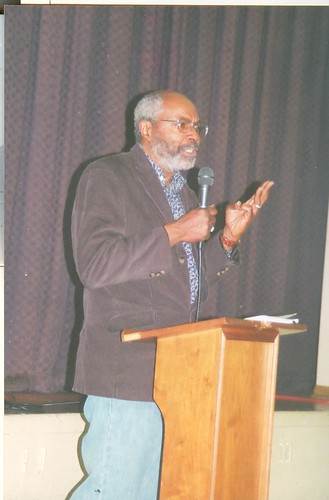
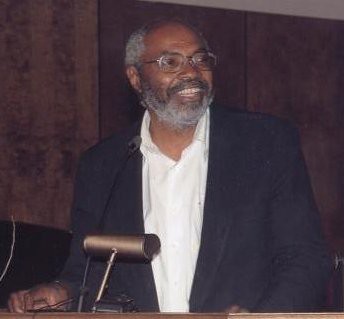
Abayomi Azikiwe, PANW Editor, Quoted in Final Call: 'Kony 2012, Concern or Deception?'

FinalCall.com News
World News

Kony 2012: Concern or Deception?

By Brian E. Muhammad-Contributing Writer-
Updated Apr 20, 2012 - 10:59:05 AM

Many believe movement is a tool of Imperialist forces

(FinalCall.com) - Recently the African Union announced a commitment of five thousand troops to Central Africa to hunt down Ugandan rebel leader Joseph Kony and the Lord’s Resistance Army (LRA)—a reputed Christian fundamentalist group who waged a gory armed struggle against Uganda’s pro-Western President Yoweri Museveni. The move came after wide spread attention on a film about the rebel called Kony 2012 by the organization ‘Invisible Children’ that reached over 100 million hits on YouTube.

However, some observers expressed disdain at the video’s overly simplistic narrative of an otherwise nuanced and complicated African issue. They said the high quality cinematography and gripping scenes of child soldiers and disfigured Ugandans was designed to tap the emotions of gullible, uninformed viewers and gain public support for a U.S. military agenda in Africa.

“The issue is the increased use of the U.S. military in Africa under the guise of humanitarian intervention,” said Kambale Musavuli, a national spokesman for Friends of the Congo, an advocacy group.

If anything, Kony 2012 and the role of social media in its exposure was an attempt at U.S. “soft power” diplomacy to advance U.S. “hard power” of American military interests in Africa, added Mr. Musavuli.

Then in a strange twist of events, its creator, Jason Russell suffered a “mental melt down” and was arrested for a lewd public act after screaming and running nude in the streets of San Diego, California. But before his personal drama unfolded, there were mixed feelings, controversy and strong scrutiny of the project that critics say is a propaganda tool that “racketeers of capitalism” are using to exploit misery in a diabolical plan for world domination.

Other Africa watchers said the film’s message to “get Kony” is out of touch with current geopolitics in the region and its call for U.S. military intervention is dangerous.

They opine the demand plays into the hands of an active Imperialist agenda for re-colonization, militarization and looting the valuable resources on the continent.

“I am hurting for Africa,” lamented the Honorable Minister Louis Farrakhan during a March 21 press conference in Trinidad. The Nation of Islam leader said forthright that Kony is a ruse for U.S. military presence in East and Central Africa.

“Now the United States has inserted AFRICOM into Africa; soldiers are there supposedly trying to track down Mr. Kony, but in reality it has nothing to do with the Lord’s Resistance Army. It has everything to do with the mineral strength in Central Africa,” he said.

AFRICOM is the Pentagon’s military command for Africa, where a theater for economic warfare is intensifying between America and other foreign powers like China and Russia. “America will never be a super power in the 21st century, if she doesn’t have access to those strategic metals and minerals,” said Minister Farrakhan.

Based on a high global demand for raw assets, new battle lines are being drawn in Africa, setting the stage for a geo-economic region, no longer dominated by America; but shared with other emerging players and China as the main competitor. An example is the B.R.I.C.S. bloc of nations consisting of Brazil, Russia, India, China and South Africa that’s attempting to unify behind the creation of an independent currency and a development bank.

China is a major owner of U.S. foreign debt and “could sink the U.S. dollar by calling in the debt that America owes China, or exchanging her huge dollar reserve for other currencies,” the Muslim leader said in an April 8, 2007 speech called The War of Armageddon.

If successful, experts say the shift will rival the World Bank and potentially replace the U.S. dollar as a global standard of exchange. These self-sufficient steps by up-and-coming powers led primarily by China—that does major business with Africa and the Middle East—is problematic to Western interests.

Abayomi Azikiwe, political analyst and Editor of Pan African Newswire added, AFRICOM is America’s counter move and “part of a broader strategy” towards destabilization and control in Africa that includes the turmoil in Somalia, Eritrea, Djibouti and the March 21 coup d’état in the West African nation of Mali.

Mr. Azikiwe referenced the overthrow of Libya and brutal assassination of Muammar Gadhafi in October 2011 as AFRICOM’S “first major project” and gateway to the recent events on the continent. Leader Gadhafi established the African Union to facilitate the vision of a United States of Africa with a single government, military and currency tied to gold, which would have rearranged the world power equation in Africa’s favor.

He was eliminated by the Western powers who considered him an obstacle to unfettered access to Africa’s wealth.

“There’s gold and tremendous iron-ore deposits … recently they found oil in Uganda. And whereever you find gold and precious minerals or natural resources; you find that the Western world—America included—is engaged in some conflict in that country,” said A. Akbar Muhammad, International Representative of the Nation of Islam.

African leaders, willing collaborators

Furthermore since the demise of Col. Gadhafi, and with the billions of dollars in aid he gave to other African leaders gone, the AU is floundering.

Now the AU is hiring itself out as collaborators to major powers like America, at the expense of African self-determination and empowerment.

“Weak leadership, weak, cowardly leadership that is so frightened of North America and Europe that they allow themselves to be trodden under foot so that the next generation receives nothing but the legacy of cowardice,” said Minister Farrakhan, rebuking the frail state of the AU.

In October 2011 under the pretext of removing Kony and the LRA, President Barack Obama authorized one hundred combat ready “advisers” into Central Africa to aid U.S. regional “partner forces” –which means Uganda and the governments of Central African Republic, Democratic Republic of Congo (DRC) and South Sudan.

However, Kony has not been a factor in the region for several years and the focus on the LRA distracts from America’s alliance with President Museveni, whose hands aren’t clean of crimes against humanity according to Mr. Musavuli. He cited Northern Uganda where hundreds of thousands of Ugandans perished under squalor conditions over a ten-year period in “Internal Displaced People’s” camps that became known as death camps ran by the Ugandan government during its conflict with the LRA.

Furthermore, along with laying blame on President Museveni for human rights violations of his own people, activists also want attention to his role in the U.S. financed war and resource pillaging in neighboring Democratic Republic of Congo that Kony 2012 omits.

From the mid-1990’s to 2003 President Museveni and Rwandan President Paul Kagame were willing accomplices and U.S. proxies for mayhem in the DRC resulting in six Million Congolese killed in what analysts call Africa’s world war that also drew in armies from Zimbabwe, Burundi and Angola.

Deceptive Intelligence and Hollywood

Mr. Muhammad noted striking similarities in the tactics used by the relatively unknown “Invisible Children” group and Zionist concoction, “Save Darfur” organization that raised millions of dollars in the name of alleged atrocities in Sudan, only to be discredited for dubious schemes and financial practices. He said both organizations employed staged protests and enlisted endorsements of the cause by Hollywood names like actor George Clooney and others to give credibility.

“The very same U.S. and Israeli military and intelligence officials involved in genocide and war crimes and regime change in Sudan are responsible for these same atrocities in Uganda, Rwanda, Burundi and Congo … these are the same people tied to phony Kony 2012 agenda,” said Investigative Journalist, Keith Harmon Snow, in a Pacifica AfroBeat radio interview.

Mr. Snow described the build-up in Africa as the “sub-Saharan extension” of the full scale military and propaganda war on Iran and Syria, as was already seen in Libya, Afghanistan and Iraq.

However, “we are clear there is no military solution for African problems,” said Mr. Musavuli.

Sunday, April 29, 2012

US Special Forces Operating In Central Africa

Joseph Kony Hunt: U.S. Special Forces Assist In Hunt For One Of World's Most Wanted Warlords

By DAVID RISING 04/29/12 05:37 PM ET

OBO, Central African Republic -- Deep in the jungle, this small, remote Central African village is farther from the coast than any point on the continent. It's also where three international armies have zeroed in on Joseph Kony, one of the world's most wanted warlords.

Obo was the first place in the Central African Republic that Kony's Lord's Resistance Army attacked in 2008; today, it's one of four forward operating locations where U.S. special forces have paired up with local troops and Ugandan soldiers to seek out Kony, who is believed likely to be hiding out in the rugged terrain northwest of the town. For seven years he has been wanted by the International Criminal Court for war crimes and crimes against humanity after his forces cut a wide and bloody swath across several central African nations with rapes, abductions and killings.

Part of the LRA's success in eluding government forces has been its ability to slip back and forth over the porous borders of the Central African Republic, South Sudan and Congo. But since late last year, U.S. forces have been providing intelligence, looking at patterns of movement, and setting up better communications to link the countries' forces together so that they can better track the guerrilla force.

Sent by President Barack Obama at the end of 2011, the 100 U.S. soldiers are split up about 15 to 30 per base, bringing in American technology and experience to assist local forces.

Exact details on specific improvements that the American forces have brought to the table, however, are classified, to avoid giving Kony the ability to take countermeasures.

"We don't necessarily go and track into the bush but what we do is we incorporate our experiences with the partner nation's experiences to come up with the right solution to go out and hopefully solve this LRA problem," said Gregory, a 29-year-old captain from Texas, who would only give his first name in accordance with security guidelines.

The U.S. troops also receive reports from local hunters and others that they help analyze together with surveillance information.

"It's very easy to blame everything on the LRA but there are other players in the region – there are poachers, there are bandits, and we have to sift that to filter what is LRA," he said.

Central African Republic soldiers largely conduct security operations in and around the town, while Ugandan soldiers, who have been in the country since 2010, conduct longer-range patrols looking for Kony and his men.

Since January, they have killed seven LRA fighters in the area and captured one, while rescuing 15 people abducted by the group including five children, said their local commander, Col. Joseph Balikuddembe.

There has been no contact with the LRA since March, however, according to Ugandan Army spokesman Col. Felix Kulayigye, who said the LRA now is in survival mode. The LRA is thought to today number only around 150 to 300 die-hard fighters.

"They're hiding," he said. "They are not capable of doing."

But with Kony still around, there are wide ranging-fears that the LRA will be able to rebuild.

"There's periods of time when the LRA will lie low when the military pressure is too high or where there's a threat that they don't understand such as the American intervention," said Matthew Brubacher, a political affairs officer with the U.N.'s mission in Congo, who was also an International Criminal Court investigator on the Kony case for five years.

"But then after a while after they figure it out, if they have the opportunity they'll try to come back, so it's just a matter of time they'll try to come back. Kony always said `if I have only 10 men, I can always rebuild the force."

Right now, expectations are high of the Americans serving in Obo and Djema in the Central African Republic, as well as those in Dungu in Congo and Nzara in South Sudan.

"For all the communities, the U.S. bases in Obo and Djema means one, Kony will be arrested, and two, there will be a lot of money for programs, humanitarian programs," said Sabine Jiekak of the Italian humanitarian aid agency Coopi.

Central African Republic Deputy Defense Minister Jean Francis Bozize said it's been difficult for the poor country's small military to deal with Kony in the southeast as well as several other militant groups in the north.

An African Union mission expected to begin later this year should help expedite the cross-border pursuit of the LRA.

In the meantime, Bozize said the American forces could make a big difference.

"The involvement of U.S. forces with their assistance in providing information and intelligence will allow for all forces to operate from the same base-level of intelligence ... (giving) better coordination with better results," he told reporters in the capital, Bangui.

But the military mission is not a simple one.

How do you find small groups of seasoned fighters hidden deep in the jungle, who have eluded authorities for decades? How do you prevent brutal reprisal attacks on civilians? How can you bring together several countries' troops to cooperate on cross-border pursuits?

The LRA usually attacks late at night, then melts back away into the jungle. Seasoned bush fighters, they employ many techniques to elude pursuit – walking along rocks or along streams to avoid leaving tracks, for example, and sometimes even marching backward to fool trackers.

Kony has reportedly stopped using radios and satellite phones for communications, instead relying on an elaborate system involving runners and multiple rendezvous points.

Key to his capture is good information from local residents – which they will only give when they can be sure of their own safety, according to American commanders.

"The population have to believe that they are secure and once they believe they are secure from the LRA, you start to deny the LRA the opportunity to attack villages to get people, to get food, to get medicine," Gen. Carter Ham, the head of U.S. Africa Command, told reporters in Stuttgart.

That may take some time in Obo, a town of some 15,000 where around 3,500 people have sought refuge to escape LRA violence in the area.

Rural farmers and others stick to within 5 kilometers (3 miles) of the village for safety – originally the area that Central African Republic soldiers were able to patrol but now more a rule of thumb followed by the locals.

They've started recently to venture out farther, emboldened by the presence of the Ugandans and Americans to help the government forces, but are too nervous to stray too wide from the safety of the village.

"They're still scared, they're still wary because Joseph Kony is still out there," said Mayor Joseph Kpioyssrani, looking at the jungle behind him.

Kony's LRA sprung up in 1986 as a rebel movement among the Acholi people in northern Uganda to fight against the Kampala government, but has for decades been leading its violent campaign without any clear political ideology.

Emmanuel Daba, 33, was one of 76 people abducted in the first LRA raid on Obo in 2008 and forced to fight for the guerrillas for two years before managing to escape.

"We were trained to kill – forced to kill – otherwise we'd be killed ourselves," he said outside the tiny radio station where he now works broadcasting messages to try and encourage others with the LRA to defect or escape. "I still have dreams – nightmares."

This year, the U.S. Defense Department is committing $35 million to efforts to find and fight Kony.

Since 2008, the U.S. State Department has sent some $50 million in funds to support the Ugandan military's logistics and non-lethal operations against the LRA, including contracting two transport helicopters to ferry troops and supplies. Another $500 million has been given over that time for the broader northern Uganda recovery effort in the aftermath of Kony's presence there.

In Stuttgart, Ham keeps a "Kony 2012" poster hanging on his office door.

Though he isn't committing to the goal of the viral YouTube campaign to see Kony neutralized by the end of the year, he does define success as either capturing or killing the LRA leader eventually.

"I'm confident that the mission will be successful, but I can't give you a timeline when that's going to occur..." Ham said. "It is one of those organizations that if you remove the senior leader and the small number of those who surround him, I believe this is one of those organizations that will not be able to regenerate."


Uganda Says LRA Is Supported by Sudan

BBC

The Ugandan army says the Lord's Resistance Army (LRA) led by Joseph Kony is being supported and supplied by the Sudanese government.

The LRA is accused of rape, mutilation, murder and the recruitment of child soldiers.

A Ugandan Defence Force colonel told the BBC they captured a member of the LRA who was wearing a Sudanese uniform, and carried its weapons and ammunition.

The US has sent special forces to help in the hunt for Mr Kony.

The 100-strong mission is working in four bases across Central Africa, where the LRA is moving in small groups, raiding and abducting villagers to become fighters, sex slaves or porters.

An online video produced by the US pressure group Invisible Children earlier this year helped raise international awareness of the LRA's activities.

Last month the African Union set up a 5,000-strong force to track down the fugitive warlord.

Mr Kony and his close aides have been wanted for war crimes by the International Criminal Court since 2005.

Col Felix Kulayigye of the Ugandan Defence Force told the BBC it had information that the LRA was now moving into Sudan, including areas controlled by the Janjaweed militia which is backed by Khartoum.

"Kony knows we can't enter that region, so when the pressure is high in Central Africa he crosses into the Sudanese border [areas]," he said.

Mr Kony, whose army first emerged in northern Uganda, has evaded capture for more than 20 years as his forces terrorised large areas of Central Africa.

He claims he has been fighting to install a government in Uganda based on the Biblical 10 Commandments.

Mr Kony was due to sign a peace deal with the Ugandan government in 2008, but peace talks fell apart because the LRA leader wanted assurances that he and his allies would not be prosecuted.

The BBC's Dan Damon is one of a few journalists who has visited the US forces based in Obo, Central African Republic.

He says fear of the LRA is tangible and real to people in Central Africa, especially in remote areas along the heavily forested and often unmarked borders between Uganda, the Democratic Republic of Congo, South Sudan and Central African Republic.

The US forces told the BBC that they were not hunting for Kony themselves, but assisting local armies and coordinating intelligence and communications.

Maria Wangechi from the medical charity Merlin says the LRA staged its most recent attack two weeks ago, but the presence of the US and AU forces has helped reassure civilians in the region.

The LRA has now split into small groups. The BBC's Dan Damon says they do not use any form of electronic communications, but instead use runners and rendezvous points to keep in touch.

He says that means the US electronic surveillance technology may not be so useful as the hunt for Joseph Kony continues.

Saturday, March 17, 2012

Director of Fabricated Film on Uganda Arrested

'Kony' director detained, hospitalized after incident

Updated: Fri Mar. 16 2012 20:02:36
CTVNews.ca Staff

One of the creators of the viral "Kony 2012" video campaign has been detained for allegedly vandalizing cars and masturbating in public.

Jason Russell, the 33-year-old co-founder of the group Invisible Children, was detained by police in San Diego on Thursday, according to force spokeswoman Andra Brown.

No criminal charges are pending and Russell is being detained under a 5150 hold, which under California law allows citizens to be held for three days, according to TMZ.

Russell is reportedly receiving psychiatric assessments.

Russell, who has been described as a Christian father of two kids, was acting very strange when officers picked him up, Brown said.

"Due to the nature of the detention, he was not arrested," Brown told reporters. "During the evaluation we learned we probably needed to take him to a medical facility because of statements he was saying."

Police noted that Russell was found "in his underwear" and that several people had tried to calm him down before police arrived.

"He was no problem for the police department. However, during the evaluation we learned that we probably needed to take care of him," said Brown. "We determined that medical treatment was a better course of action than arrest."

Invisible Children CEO Ben Keesey said in a release that "Jason Russell was unfortunately hospitalized yesterday suffering from exhaustion, dehydration, and malnutrition."

Keesey said that Russell "is now receiving medical care and is focused on getting better. The past two weeks have taken a severe emotional toll on all of us, Jason especially, and that toll manifested itself in an unfortunate incident yesterday."

He added: "Jason's passion and his work have done so much to help so many, and we are devastated to see him dealing with this personal health issue. We will always love and support Jason, and we ask that you give his entire family privacy during this difficult time."

The "Kony 2012" video sparked a massive reaction earlier this month when it was released, publicizing the alleged war crimes of Uganda's Joseph Kony.

Russell directed the video, and on the Invisible Children website, he is described as "our grand storyteller and dreamer."

Thursday, February 23, 2012

US Troops in Central, East Africa

US Troops in Central, East Africa

Wednesday, February 22, 2012 at 4:11 PM

NAIROBI, Kenya — U.S. troops helping in the fight against the brutal rebel group called the Lord's Resistance Army (LRA) are deployed in four Central African countries, the top U.S. special-operations commander for Africa said Wednesday.

The U.S. said in October it was sending about 100 U.S. troops — mostly special-operations forces — to Central Africa to advise in the fight against the LRA and its leader, Joseph Kony, a bush fighter wanted by the International Criminal Court for crimes against humanity.

Rear Adm. Brian Losey, the top U.S. special-operations commander for Africa, said the U.S. troops are stationed at bases in Uganda, Congo, South Sudan and Central African Republic.

"We've already seen a decrease in the lethality of LRA activities, which we think is attributable in part to the pressure we and our partners are applying," Losey said in a telephone briefing.

The LRA began its attacks in Uganda in the 1980s, when Kony sought to overthrow the government. Since being pushed out of Uganda several years ago, the militia has terrorized villages in Central Africa.

Many of the U.S. forces are stationed in Uganda. Others are based in Obo, Central African Republic; Dungu, Congo; and in Nzara, South Sudan, Losey said. Each of those locations had established bases where troops from partner countries have been based.

The LRA operates in an area the size of California, Losey said.

A top State Department official, Karl Wycoff, said Kony has shown the ability to mobilize combatants and militant leaders to carry out "horrible atrocities" for the LRA, which he called "some kind of cult," given that the group has no clear agenda. He said the U.S. effort was not just aimed at Kony but at all the LRA leaders.

The LRA's tactics have been widely condemned as vicious. The U.S. troops are helping to fight a group that has slaughtered thousands of civilians and routinely kidnaps children to be child soldiers and sex slaves.

The anti-LRA group Resolve in a report released Wednesday urged the U.S. to encourage Uganda to dedicate more troops and helicopters to counter-LRA operations. The group also urged the U.S. to pay for more transport helicopters and improved communications equipment for Ugandan troops, and to increase intelligence gathering by expanding the use of aerial surveillance.

Losey said there are no drone aircraft being used by U.S. troops involved in the counter-LRA fight.

"Other than Kony, the only other person who had the capacity to sustain the LRA was (Vincent) Otti, who is gone," said Col. Felix Kulayigye, spokesman for Uganda's military. "Kony is the LRA and the LRA is Kony. You get Kony and you have the LRA done."

Otti, Kony's former deputy, has been presumed dead since the failure of peace talks ended in 2008. Ugandan army officials say Kony ordered his death, fearing he was about to defect.

Tuesday, March 13, 2012

Imperialist Intervention & the Global Economic Crisis Fuels Conflict in Africa

Imperialist Intervention & the Global Economic Crisis Fuels Conflict in Africa

From the Maghreb to the East instability and struggle intensifies

By Abayomi Azikiwe
Editor, Pan-African News Wire

With the escalating military and economic role of the United States and the European Union on the African continent, mounting political crises have resulted in social unrest throughout the region. From Libya and Kenya to Nigeria and Somalia, internal turmoil, labor unrest and mass resistance continues to illustrate the interconnectedness of events throughout the international scene.

In the North African state of Libya, the U.S. and NATO-backed National Transitional Council (NTC) is continuing to unravel with the declaration of autonomy by elements based in the eastern sections of the country. In Benghazi where the rebellion began in February 2011 against the government of Col. Muammar Gaddafi, elite elements aligned with the former monarchy have declared that Barqa, also referred to as Cyrenaica, has established its own self-rule within a broader Libya.

These actions exposed the already tenuous coalition of forces that opposed the Jamahiriya as being based on regionalism and opportunism. The Tripoli-based TNC leadership immediately renounced the declaration of autonomy by western-backed forces in the east and pledged to maintain the “unity” of Libya even by force of arms.

Most keen observers of the rebellion and subsequent imperialist war against Libya beginning in early 2011 characterized the anti-Gaddafi campaign as a war for oil and an attempt to partition the state which was Africa’s most prosperous. Such a division of the country can only benefit the imperialist governments and their domestic and regional allies who are now in total control of the petroleum and natural gas resources of Libya.

The instability generated by the internal rebellion and the massive bombing of Libya between March and October of 2011 has resulted in the displacement and re-location of hundreds of thousands of people both inside and outside of the country. In Mali, Niger and other countries that make up areas of the Sahel, conflict has escalated and the problems of food deficits have worsened the already humanitarian crisis stemming from the drought.

Inside northern Mali, the ongoing Tuareg rebellion has spread as a result of the fleeing of people who were living in Libya and allied with the previous government of Gaddafi. Better armed and experienced in combat, the Tuareg fighters have intensified their struggle against the central government in Bomako.

At the same time this escalating conflict in Mali has pushed tens of thousands across the border into neighboring Niger. This large-scale movement of refugees has worsened the food deficit crisis in Niger.

In a recent article by Massahudu Ankiilu Kunateh in the Ghanaian Chronicle it is pointed out that “Several countries in the Sahel region of western Africa need urgent support to prevent a full-blown food and nutrition security crisis, and to protect and restore livelihoods of communities dependent on livestock and crops, according to the Food and Agricultural Organization of the United Nations (FAO). “ (Chronicle, March 12)

This same article goes on to note that “At least 15 million people are estimated to be at risk of food insecurity in the Sahel, in part due to localized, but significant, declines in agro-pastoral production. This includes 5.4 million people in Niger (35 percent of the population), 3 million in Mali (20 percent), around 1.7 million in Burkina Faso (10 percent), around 3.6 million in Chad (28 percent), 850,000 in Senegal (6 percent), 713,000 in the Gambia (37 percent) and 700,000 in Mauritania (22 percent).”

Kony 2012 and the Invisible Children: A Cover for Further Intervention

During the week of March 5, the Invisible Children project launched a massive public relations campaign over the internet utilizing social media aimed at building support for further U.S. and European military intervention in Central and Eastern Africa. The project is purportedly targeted against Joseph Kony’s Lord’s Resistance Army (LRA), a para-military organization that has been operating in northern Uganda for over two decades.

Reports from northern Uganda indicate that the LRA has been largely defeated in recent years and that the remnants of the organization has fled to neighboring states in the Democratic Republic of Congo (DRC), the Central African Republic and South Sudan. During October 2011, the Obama administration announced that it was dispatching 100 Special Forces and military advisers to these above-mentioned countries in the region to assist with the efforts of various governments to defeat the LRA.

Yet it so happens that at least three of these states, Uganda, the DRC and South Sudan, are rich in oil and other strategic minerals that are vital to the profitability of the ruling classes in North America and Western Europe. The U.S. and NATO have already escalated their presence in various regions of Africa and these military forces over the last year were involved in the naval blockade and bombing of Libya, the war against Al-Shabaab in Somalia as well as other so-called “anti-piracy” efforts in the Gulf of Aden and the Gulf of Guinea.

B. E. Wilson wrote in Alternet.org asking “What does Invisible Children share in common with the Discovery Institute, the leading organization promoting ‘intelligent design,’ a pseudo-scientific theory created to insinuate creationist ideas into public schools—or with The Call, whose leader Lou Engle claims homosexuals are possessed with demons….? All of these ministries—the Discovery Institute, Focus on the Family, the Family Research Council, The Fellowship Foundation, The Call, Ed Silvoso’s Harvest Evangelism, and Invisible Children—received at least $100,000 in 2008 from what has emerged in the last decade as the biggest funder of the hard, antigay, creationist Christian right: the National Christian Foundation.” (alternet,.org, March 11, 2012)

It is also important to emphasize that the International Criminal Court (ICC) chief prosecutor Louis Moreno Ocampo says that he supports Kony 2012. Ocampo has issued arrest warrants for numerous African leaders including Sudan President Omar Hassan al-Bashir, Muammar Gaddafi and other leading figures in the former Libyan government as well as Joseph Kony.

Filmmaker Jason Russell, who crafted the 30-minute video that was said to have been viewed 58 million times, has been criticized because the bulk of the money raised for the project does not go to victims of LRA violence but back into the coffers of this right-wing group. Russell in response to criticism said that “They hear the word charity and they don’t understand why all of our money isn’t going to Central Africa. We have found that putting money towards our media and our movie, changes lives.” (Christian Science Monitor, March 12, 2012)

Kenya Fires 25,000 Health Care Workers

A major assault on labor is taking place in the East African state Kenya where some 25,000 nurses have been on strike demanding better pay and working conditions. The pro-Western government of Prime Minister Raila Odinga has sacked the nurses and is demanding an explanation as to why they should not be terminated before returning to work.

Union representatives told the nurses to return to work amid ongoing efforts aimed at negotiations, but when many of them arrived they were sent away with letters demanding to know why they have not come to work since the beginning of the strike since March 1. A letter from the Medical Services Permanent Secretary said “Absence from the place of work without permission is viewed as a gross breach of discipline and a contravention of the Employment Act.” (The Standard, March 12)

In a rally at Uhuru Park on March 12 the nurses sought a meeting with Odinga but to no avail. Capital FM in Kenya reported that “One team led by National Nurses Association of Kenya Treasure Jeremiah Maina camped at the PM’s office for four hours before joining their striking colleagues at Uhuru Park where they chanted slogans expressing their solidarity.” (CapitalFm, March 12)

The Union of Kenya Civil Servants Secretary General Tom Odege said that “It is true people are receiving ‘show-cause’ letters and we want to ask the government not to go in that direction because forcing over 25,000 people to write response letters to them would amount to intimidation which I do not think is good for our relationship.” These actions by the Kenyan government were condemned by various civil society organizations and two labor unions: the Kenya Health Professional’s Society and the Kenya Union of Civil Servants.

Military Raid by British Special Forces Raises Tensions With Italy

British Special Forces launched a raid to rescue two detained construction engineers from the UK and Italy. Reports indicate that ransom had been paid for the Italian, Franco Lamolinara, yet the British military unit went ahead and conducted the raid without the knowledge of the government in Rome.

The individuals holding the two men had also made contact with the family of the Briton, Chris McManus. McManus’ family admitted that they had received a phone from the people holding him but no deal was worked out for his release.

The incident has heightened tensions between London and Rome whose respective governments have differing policies on the handling of hostage crises. Britain has been staunchly opposed to negotiating for the release of hostages whereas Italy was willing to pay ransom for its nationals being held.

In the face of criticism of the British handling of the bungled operation, the government issued a statement on March 11 saying “There were no coherent demands, no requests for money, no money paid and no suggestion that these hostages would be released unharmed.” (The Independent, March 12)

This statement conflicts with a report published by the Italian newspaper La Repubblica, which claimed that a portion of the ransom had been paid and “negotiations were initiated to achieve the liberation of the two hostages.” The corporate media had alleged that the kidnapping was carried out by the Boko Haram religious group based in the north of Nigeria, however, the organization denied that they were involved in the apprehension some nine months ago.

Tuesday, March 27, 2012

African Union to Hunt Down Kony

African Union to hunt down Kony

Force of 5,000 targets warlord

Reuters
March 24, 2012

The African Union will launch a 5,000-strong military force on Saturday in Juba, Southern Sudan, to hunt down fugitive warlord Joseph Kony, whose global profile shot up recently thanks to a celebritybacked Internet campaign to bring him to justice.

The force, which Uganda said it would lead last week and the AU authorized on Friday, brings together soldiers from South Sudan, the Democratic Republic of Congo and Central African Republic, as well as Uganda.

It will be based in the South Sudan city of Yambio, close to the border with the Democratic Republic of Congo, the AU's Special Envoy for the (Kony's) Lord's Resistance Army (LRA) Francisco Madeira told reporters in Entebbe, after a meeting that brought together AU, United Nations and Ugandan officials.

Madeira said the force would be deployed in jungle areas where Kony and his fighters are known to be at work.

Asked how long the force would be operating, Madeira said: "When we capture Kony or he hands himself in or we neutralize him in some way, that will be the end. That's the time frame."

Some 100 U.S. military advisers deployed to Uganda were already helping to capture Kony, but the task force needed more international support, Uganda's defence minister said last week.

Kony, accused of terrorizing northern Uganda for two decades, is wanted by the International Criminal court for war crimes. He is accused of abducting children to use as fighters and sex slaves and is said to like hacking off limbs.

Violence has subsided since 2005 when the LRA was ejected from Uganda and now Kony is believed to command only hundreds of followers, scattered in jungle hideouts.

Tuesday, June 03, 2025

ICC Appeals Judges Greenlight First in Absentia Hearing Over Ugandan Rebel Leader Kony

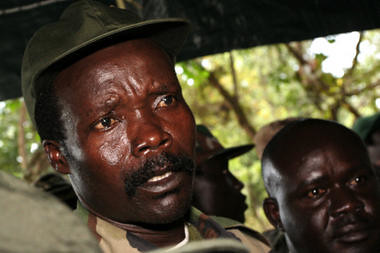
In this Nov. 12, 2006 file photo, the leader of the Lord’s Resistance Army, Joseph Kony answers journalists’ questions following a meeting with UN humanitarian chief Jan Egeland at Ri-Kwangba in southern Sudan. (AP Photo/Stuart Price, File, Pool)

By MOLLY QUELL

7:21 AM EDT, June 3, 2025

THE HAGUE, Netherlands (AP) — Appeals judges at the International Criminal Court gave a final greenlight Tuesday for the tribunal’s first in absentia hearing by allowing the next step in proceedings against notorious fugitive Ugandan rebel leader Joseph Kony.

The Hague-based court has scheduled a so-called confirmation of charges hearing at which prosecutors will present evidence in September to back up charges of war crimes and crimes against humanity against Kony, despite his whereabouts being unknown.

Kony, the leader of the brutal Lord’s Resistance Army, faces dozens of counts of crimes against humanity and war crimes, including murder, sexual enslavement and rape.

The ICC’s rules do not allow trials entirely in absentia but can in some circumstances move forward with a confirmation of charges even if the suspect is not in custody.

Kony’s court appointed lawyers had argued his fair trial rights would be violated if the proceedings continued without their client.

Judge Erdenebalsuren Damdin said the court has “adequately robust safeguards” for suspects to allow the confirmation of charges hearing to be held in absentia.

The case had been seen as a trial balloon for the court moving forward with other cases where the suspect is not in custody, such as Israeli Prime Minister Benjamin Netanyahu or Russian President Vladimir Putin.

However, the Kony decision was limited to situations where the wanted person has fled ICC custody or cannot be found, says Luigi Prosperi, an international criminal law expert at the University of Utrecht. Kony “is a very peculiar situation,” he told The Associated Press.

Kony was thrust into the global spotlight in 2012 when a video about his alleged crimes went viral. Despite the attention and international efforts to capture him, he is still at large.

The LRA began its attacks in Uganda in the 1980s, when Kony sought to overthrow the government. After being pushed out of Uganda, the militia terrorized villages in Congo, Central African Republic and South Sudan. It was notorious for using child soldiers, mutilating civilians and enslaving women.

In 2021, the court convicted Dominic Ongwen, a one-time child soldier who morphed into a brutal LRA commander of dozens of war crimes and crimes against humanity, ranging from multiple murders to forced marriages.

Tuesday, March 05, 2024

International Criminal Court to Hold First Ever in Absentia Hearing Over Ugandan Rebel Leader Kony

FILE - In this Nov. 12, 2006 file photo, the leader of the Lord’s Resistance Army Joseph Kony answers journalists’ questions following a meeting with UN humanitarian chief Jan Egeland at Ri-Kwangba in Southern Sudan. International Criminal Court prosecutors will present evidence against notorious fugitive Ugandan rebel leader Joseph Kony at the global court’s first ever in absentia hearing later this year. (AP Photo/Stuart Price, File)

12:12 PM EST, March 4, 2024

THE HAGUE, Netherlands (AP) — International Criminal Court prosecutors will present evidence to back up charges of war crimes and crimes against humanity against notorious fugitive Ugandan rebel leader Joseph Kony at the global court’s first ever in absentia hearing later this year.

The court announced Monday it will hold a so-called confirmation of charges hearing starting Oct. 15 against Kony, the alleged leader of the Lord’s Resistance Army, a brutal rebel group, nearly two decades after first seeking his arrest.

Kony faces 12 counts of crimes against humanity including murder, sexual enslavement and rape, and 21 counts of war crimes including cruel treatment of civilians, pillaging and enlisting child soldiers allegedly committed in 2003 and 2004 in northern Uganda.

The hearing is not a trial, but allows prosecutors to outline their case in court. Kony – if he is not arrested before the hearing -- will be represented in his absence by a defense lawyer. If he is captured after the hearing, Kony will face trial at the court based in The Hague.

The LRA began its attacks in Uganda in the 1980s, when Kony sought to overthrow the government. After being pushed out of Uganda, the militia terrorized villages in Congo, Central Africa Republic and South Sudan. It was notorious for using child soldiers, mutilating civilians and enslaving women.

Kony was thrust into the global spotlight in 2012 when a video about his crimes went viral. Despite the attention and international efforts to capture him, he remains at large.

Last week, the ICC awarded reparations of more than 52 million euros ($56 million) to thousands of victims of Dominic Ongwen, a convicted commander in the Lord’s Resistance Army.

Sunday, May 11, 2014

Nigeria: Hypocritical West Exploits Boko Harem's Crimes
Mohammed Yusuf the founder of Boko Haram killed by the
Nigerian government in July 2009.

Sunday, May 11, 2014
By Tony Iltis

Boko Haram fighters. The group has no monopoly on violence or backward idieologies in Nigeria.
More than 270 female secondary students were kidnapped on April 14 as they sat matriculation exams in the north-east Nigerian town of Chibok.

The kidnappers were members of a religious cult that calls itself Jama‘at Ahl as-Sunnah lid-da‘wa wal-Jihad — Arabic for Congregation of the People of Tradition for Proselytism and Jihad.

The group is more commonly known by its Hausa nickname, Boko Haram, which translate — very loosely — as “Western education is filthy”, although this is not a name that the group itself uses.

For the next fortnight the kidnapping was largely ignored by the global media and the Nigerian state.

Nigerian President Goodluck Jonathan was more focused on the World Economic Forum (WEF) meeting in the capital Abuja staring May 7. Jonathan was planning to spin Nigeria to visiting global political and corporate leaders as a neoliberal success story, boosted by the April 7 announcement that Nigeria had overtaken South Africa as the continent’s largest economy.

This statistic is less impressive when it is considered that, with 175 million people, Nigeria is Africa’s largest country by population and per capita GDP is well under half of South Africa’s. Wealth inequality in Nigeria is extreme.

Protests against inaction

Family members of the kidnapped girls and other Chibok residents armed themselves with homemade weapons to search for the kidnapped students. They found 50 who had managed to jump off the trucks they were being transported on.

Authorities, however, did little but make outlandish and contradictory claims: that they had either all been rescued or that there was no kidnapping in the first place.

The kidnappings were the largest of escalating Boko Haram attacks on schools. A simultaneous Boko Haram bomb attack in Abuja claiming 75 lives suggested the cult had extended its reach beyond its base in the country’s north-east.

Protests against the government’s inaction spread and activists began using the Twitter hashtag #BringBackOurGirls. The Twitter campaign took off in Nigeria. Then it reached the West.

By the beginning of May, Western media disinterest turned into saturation coverage as tweeting the hastag became something of a trend for global celebrities.

Among the celebrities giving their support to the campaign have been Angelina Jolie, Jada Pinkett Smith, Justin Timberlake, Sean Penn, Ashton Kutcher, Alicia Keys, Cara Delevingne and, ironically, Chris Brown before he was jailed on May 9 on domestic violence-related charges.

The social media campaign was fuelled when a 57 minute video was sent to Agence-France Presse on May 5. In it, a grinning Boko Haram leader Abubakar Shekau announced he would sell the kidnapped students “on the open market” and force girls as young as nine to marry.

On May 8, an open letter was signed by almost 50 “global business, civil society and religious leaders”. Some of the signatories have genuine humanitarian credentials, notably South African Archbishop Desmond Tutu. More the most part, however, the names read like a Forbes Rich List.

Australian mining tycoon Andrew Forrest and media baron Rupert Murdoch signed along with US media baron Ted Turner, software billionaires Bill and Melinda Gates and British owner of the Virgin Group, Richard Branson. Predictably, pontificating rock star and tax avoider Bono was also on the list.

The open letter stopped short of directly calling for Western military intervention. But it demanded “full support of the international community, to dedicate their expertise and resources — from satellite imagery to intelligence services to multinational corporations’ supply chains — to #BringBackOurGirls”.

Nigeria has contributed troops to African Union “peacekeeping” forces in several countries on the continent. But it has been reluctant to accept foreign assistance to deal with its several insurgencies and civil disorders.

Foreign intervention

However, by the time the WEF meeting started, the government had accepted military assistance from the US, Britain, France, Canada and China. US military, police and intelligence forces were already in the country.

Parallels with the “Kony 2012” social media campaign to support US troops being sent to Uganda are striking. In a May 9 Guardian piece entitled “Dear world, your hashtags won’t #bringbackourgirls”, Nigerian-American journalist Jumoke Balogun said: “The United States military loves your hashtags because it gives them legitimacy to encroach and grow their military presence in Africa.

“Africom (United States Africa Command), the military body that is responsible for overseeing US military operations across Africa, gained much from #KONY2012 and will now gain even more from #BringBackOurGirls…

“In 2013 alone, Africom carried out a total of 546 ‘military activities’ which is an average of one and half military missions a day. While we don’t know much about the purpose of these activities, keep in mind that Africom’s mission is to ‘advance US national security interests’.

“And advancing they are. According to one report, in 2013, American troops entered and advanced American interests in Niger, Uganda, Ghana, Malawi, Burundi, Mauritania, South Africa, Chad, Togo, Cameroon, São Tomé and Príncipe, Sierra Leone, Guinea, Lesotho, Ethiopia, Tanzania, and South Sudan.”

She said this was on top of “US-led drone operations in Northern Nigeria and Somalia. There are also counter-terrorism outposts in Djibouti and Niger and covert bases in Ethiopia and the Seychelles which are serving as launching pads for the U.S. military to carry out surveillance and armed drone strikes.”

Balogun pointed to some of the results of US training African military forces: “The man who overthrew the elected Malian government in 2012 was trained and mentored by the United States between 2004 and 2010.

“Further, a US-trained battalion in the Democratic Republic of Congo was denounced by the United Nations for committing mass rapes.

“Now the United States is gaining ground by sending military advisors and more drones, sorry, I mean security personnel and assets, to Nigeria to assist the Nigerian military, who by the way, have a history of committing mass atrocities against the Nigerian people.”

Ridiculing the “humanitarian” pretexts for military action, Balogun said: “Remember #KONY2012? When Obama sent 100 combat-equipped troops to capture or kill Lord’s Resistance Army leader Joseph Kony in Central Africa?

“Well, they haven’t found him and although they momentarily stopped looking, Obama sent more troops in March 2014 who now roam Uganda, Central African Republic, South Sudan, and the Democratic Republic of Congo.”

Just like the Kony 2012 campaign failed to contextualise the violence of the Lord’s Resistance Army, outside of Nigeria the #BringBackOurGirls campaign and the accompanying media campaign have ignored the context in which Boko Haram emerged.

Instead, they prefer to rely on the standard Islamaphobic cliches of the “War on Terror”.

In December, when Canada joined the US and Britain in listing Boko Haram as a terrorist group, Canadian Public Safety Minister Steven Blaney said: “Boko Haram is a Salafist jihadist group … whose ultimate objective is to overthrow the Nigerian government and implement sharia law.

“The group desires a political system in Nigeria modelled after how the Taliban ruled in Afghanistan.”

In fact, Boko Haram is not Salafist. Its take on Islam follows highly unorthodox local millenarian traditions that would be seen as heretical by actual Salafists.

The group’s origins lie in the complicated relationship between movements for regional self-determination, corrupt local politics, inter-ethnic conflict and gangsterism that have characterised Nigerian politics since independence in 1960.

Colonial control

Britain created Nigeria in the 19th century by merging quite different existing social and political entities. From the 1500s, the coast west of the Niger Delta was known to Europeans as the Slave Coast due to its importance to the Atlantic slave trade. In the early 19th century, while slavery still existed in the British Caribbean, Britain began the conquest of Africa on the pretext of suppressing the slave trade.

By the 1860s, the largest city and port, Lagos, was a British colony. By the end of the 19th century, Britain controlled all the coastal regions as protectorates.

Britain exercised control through local monarchs. Where none existed, Britain appointed them. In 1906, the south was unified into the Colony and Protectorate of Southern Nigeria.

Britain did not start colonising the north until the “scramble for Africa” that followed the division of the entire continent into European spheres of influence at the Berlin Conference of 1884-85.

It was not until the early 20th century that Britain defeated the Muslim states in pre-colonial northern Nigeria. Britain then retained control via British protectorates.

In 1914, Britain merged southern and northern Nigeria, although separate administrations were maintained. In the south, Christian missionaries and the colonial government opened schools to train skilled workers and local bureaucrats.

In the north, however, as part of the policy of indirect rule via the pre-colonial ruling class, missionaries were banned and the Islamic clergy were funded to provide education through religious schools.

This is a key source of the northern religious establishment’s antipathy to Western education — reflected in Boko Haram’s nickname.

When Britain built roads and railways from northern Nigeria to the coast, labour from the south was used. However, separate housing compounds were built for southern workers, who were prohibited from interacting with Muslim northerners.

Britain united the country to better exploit its resources, but divided the population. Not only were north and south kept separate, but each was divided itself between several protectorates.

Fight for resources

Since independence, Nigeria has been torn apart by the centrifugal forces this created. Between 1966 and 1998, Nigerian politics was defined by constant military coups. Various regionally based military cliques competed for the chance to plunder the country — for personal gain and for the benefit of Western corporations.

Between 1967 and 1970, this became full-scale civil war. The east of the country, backed by the US, France and apartheid South Africa, tried to break away as the Republic of Biafra. But the bid was defeated by forces from Nigeria’s west and north, who were backed by Britain and the Soviet Union, at the cost of 3 million lives.

In 1973, oil was discovered in the Niger Delta and quickly became central to the economy. This exacerbated regional and ethnic tensions.

On the one hand, the delta suffered environmental devastation without getting proportionate economic benefits, which were monopolised by the kleptocratic British-created elite.

On the other hand, the less developed north received no benefit at all from the oil wealth. It fell further behind in social indicators such as literacy and life expectancy. This led to frequent armed insurgencies.

In the Niger Delta, Shell Oil pushed the government to crush the non-violent Movement for the Survival of the Ogoni People (MOSOP). The government hanged Ken Saro-Wiwa and eight other MOSOP leaders in 1995 after a crudely rigged trial.

In the aftermath, several armed resistance movements emerged. Some focused on defending their communities, but others allied with local politicians and focussed on “bunkering” — the theft and illicit export of oil.

Throughout the country, similar processes occurred. Local politicians coopted armed insurgencies for their own ends. As neoliberalism advanced after the first International Monetary Fund-imposed structural adjustment program was introduced in the 1990s, organised crime increased.

Armed gangs were drawn from a variety of sources: local insurgencies, religious cults (Muslim, Christian, traditional, and even New Age), private security forces created by Shell and Chevron to protect their investments, and violent student fraternities promoted in the 1980s by military governments to suppress the democratic student movement.

Ethnic and religious communalism was further fuelled by the centralisation of the economy, which promoted rural-to-urban migration. But the British system of classifying people as “indigenous” to a particular state (as the 36 protectorates were renamed after independence) was maintained.

Political and economic rights were denied to “settlers” even if their family had actually lived in the state for generations.

Boko Harem

All these were factors in the creation of Boko Haram. In particular, it emerged from northern politicians promoting a movement for Sharia law and from conflict in the city of Jos, in Plateau State, between “indigenous” Christians and Muslim “settlers”.

The group was founded in 2002. Despite clashes between it and authorities, it retained links with local politicians.

However, after the extrajudicial execution of Boko Haram’s charismatic founder Mohamed Yusuf in 2009, the conflict escalated. The May 6 Guardian said that since 2011, the Nigerian authorities had tried to intimidate the group with mass jailings of suspected members’ wives and children, including Shekau’s family.

In a 2012 video, Shekau threatened revenge: “Since you are now holding our women, just wait and see what will happen to your own women … to your own wives according to sharia law.”

The slowness of the government’s initial response to the Chibok abductions; revelations by Amnesty International on May 9 that the army command had received a four-hour warning that Boko Haram forces were heading to Chibok but did not send reinforcements; and the insistence of the local government that the matriculation exam go ahead despite schools being closed due to previous Boko Haram attacks, has created speculation that ties between the group and some politicians may remain.

Either way, authorities have been unable to stop the group kidnapping more schoolgirls. On May 8, Boko Haram massacred 315 people in the border town of Gamboru.

However, the social media campaign for Western intervention against Boko Haram ignores past violence and current Western military interventions in Africa. It ignores the fact that Boko Haram, appalling though its actions are, does not have a monopoly on ultra-violence in Nigeria.

As President Jonathan’s January 13 law making being gay a criminal offence shows, neither does it have a monopoly on backward ideologies.

As Balogun said: “Calls for the US to get involved in this crisis … co-opts the growing movement against the inept and kleptocratic Jonathan administration.

“It was Nigerians who took their good-for-nothing president to task and challenged him to address the plight of the missing girls … emphasis on US action does more harm to the people you are supposedly trying to help and it only expands and sustain US military might.

“If you must do something, learn more about the amazing activists and journalists … who have risked arrests and their lives as they challenge the Nigerian government to do better for its people.”
Saturday, November 10, 2012

International Criminal Court Probes New Cases in Libya

International prosecutor probes new cases in Libya

Edith M. Lederer, Associated Press Share
5:18PM EST November 10. 2012

UNITED NATIONS (AP) — The chief prosecutor of the International Criminal Court says she is collecting evidence for filing possible new war crimes charges against supporters and opponents of Moammar Gadhafi during last year's Libyan civil war.

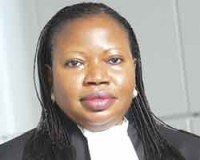
Prosecutor Fatou Bensouda said she expects to decide soon on "the direction" of a possible new case that could see the first charges stemming from the Libyan civil war since the ICC issued arrest warrants for Gadhafi, his son and heir-apparent Seif al-Islam Gadhafi, and intelligence chief Abdullah al-Senoussi in May 2011. They were accused of committing crimes against humanity by targeting civilians in a crackdown against rebels that led to the Libyan leader's ouster and death.

Libya has challenged the ICC's right to try Seif al-Islam. Bensouda said she doesn't expect the tribunal's judges to take too long to decide whether he should be prosecuted at the court in The Hague, Netherlands, or in his home country.

"I think they will ... consider giving clarity to the parties and participants as soon as possible," she said.

In a wide-ranging interview, Bensouda also discussed the importance of capturing the infamous African warlord Joseph Kony, her recent visit to Kenya to seek cooperation in the upcoming trial of four prominent Kenyans for crimes stemming from the country's 2007-2008 post-election violence, and her frustration at being unable to act in response to the ongoing attacks on civilians.

Bensouda was at U.N. headquarters to give her first briefing on ICC activities in Libya to the Security Council since she took over the prosecutor's job from Luis Moreno-Ocampo in June. The council referred the Libyan uprising against Gadhafi to the court in February 2011.

The prosecutor said in the interview after Wednesday's council briefing that if the judges rule that Seif al-Islam should be tried by the ICC "it will be difficult" to enforce the decision.

But she said Libya has been operating within the Rome statute that established the court in challenging the ICC's jurisdiction, and she expects the government's cooperation in handing Seif al-Islam over if that is the judges' decision. If the judges decide to allow Seif al-Islam to be tried in Libya, "we will continue to monitor what Libya is doing," she added.

Seif al-Islam is being held by a militia group in the Libyan town of Zintan. Bensouda said she has been urging the government to appoint a lawyer for him. Al-Senoussi was captured after fleeing to Mauritania and was extradited to Libya in September.

Regarding possible new Libya cases, the prosecutor said she is collecting information on allegations of rape and sexual violence targeting men and women, gathering evidence against other members of the Gadhafi government, and investigating allegations of war crimes committed by rebel forces against Gadhafi loyalists and residents of Tawerga. The town was used as a staging ground by Gadhafi's forces to launch attacks on Misrata, Libya's third-largest city and its commercial hub, where rebel fighters fought off a bloody siege in what became one of the turning points of Libya's civil war.

Bensouda said she is examining allegations that civilians in Tawerga were subject to killings, looting, torture and forced displacement by Misrata militias which could constitute war crimes and crimes against humanity.

As for Kony, Bensouda said finding the Lord's Resistance Army leader — the first suspect indicted by the ICC on charges of war crimes and crimes against humanity in 2005— is proving difficult because his small band of fighters is moving between remote areas of South Sudan, Congo and the Central African Republic that are very difficult to access.

She said the 100 U.S. Special Forces troops sent by President Barack Obama about a year ago to help Ugandan-led African Union troops hunt down Kony have been playing an advisory role, "but I think they are also progressing to actually taking part in tracking him and finding him and eventually getting him arrested."

Lt. Col. James O. Gregory, a spokesman for the Special Forces, said late Friday that "unfortunately, I cannot discuss any potential role changes for our forces involved in this mission."

Bensouda said she hopes Kony will be captured in the coming year.

"I think that getting Joseph Kony before the ICC will be a big plus for those who lead militias and play havoc with civilian populations and think that they can continue to evade justice," she said. "I think it is very positive that attempts are being made to have him arrested and surrendered to the ICC."

Bensouda said her office remains in constant touch with the Ugandans about the operation "and we were assured that if he is arrested he will be sent to the ICC."

In March, the fugitive warlord became the subject of renewed international attention after the U.S. charity Invisible Children released an online video aimed at raising awareness of crimes attributed to Kony's LRA rebels that quickly went viral. Kony's rebellion originated in Uganda before spreading to other parts of Central Africa and is accused of mass murder, recruiting children to become soldiers or sex slaves, and mutilating victims by cutting off their tongues and lips.

On the Kenyan case, Bensouda said the four Kenyans are scheduled to go on trial at the ICC in The Hague in April — soon after the March presidential election in which two of the accused are candidates — former Education Minister William Ruto and Deputy Prime Minister Uhuru Kenyatta, the son of Kenya's founding president Jomo Kenyatta.

More than 1,000 people died in post-election violence following Kenya's last presidential election, and Bensouda said "there is big panic" about a repetition of violence in next year's voting.

During her visit to Kenya in October, Bensouda said the ICC issued its warrants "based on individual criminal responsibility" and was not trying to interfere in the election.

Bensouda said she also pressed the Kenyan government for cooperation because the court's requests for assistance had not been answered for some time. After meetings with the president and other top officials, she said she received "very firm assurances" of cooperation..

As for Syria, the prosecutor said she is concerned about crimes against civilians but can't do anything because Syria is not a party to the ICC and the Security Council has not referred the conflict between President Bashar Assad's government and rebel forces to the court.

Friday, May 07, 2021

International Court Sentences Ugandan to 25 Years for War Crimes

By MIKE CORDER

May 6, 2021

FILE - In this Tuesday, Dec. 6, 2016 file photo, Dominic Ongwen, a senior commander in the Lord's Resistance Army, whose fugitive leader Kony is one of the world's most-wanted war crimes suspects, is flanked by two security guards as he sits in the court room of the International Court in The Hague, Netherlands. Ongwen was convicted in February, 2021 of a total of 61 war crimes and crimes against humanity including murder, rape, forced marriage, forced pregnancy and using child soldiers. His lawyers have said they will appeal the conviction. (AP Photo/Peter Dejong, Pool, File)

THE HAGUE, Netherlands (AP) — The International Criminal Court sentenced a Ugandan former child soldier who turned into a brutal rebel commander to 25 years’ imprisonment Thursday, with judges saying that his own abduction as a schoolboy and history as a child soldier prevented him being sentenced to life.

Dominic Ongwen was convicted in February of a total of 61 war crimes and crimes against humanity including murder, rape, forced marriage, forced pregnancy and using child soldiers as a commander in the shadowy Lord’s Resistance Army. His lawyers have said they will appeal the conviction.

Presiding Judge Bertram Schmitt said that judges had to weigh Ongwen’s brutality and victims’ wishes for justice against his own tortured past when deciding on a sentence.

“The chamber is confronted in the present case with a unique situation. It is confronted with a perpetrator who willfully brought tremendous suffering upon his victims,” Schmitt said.

“However, it is also confronted with a perpetrator who himself had previously endured extreme suffering himself at the hands of the group of which he later became a prominent member and leader.”

Ongwen, wearing a face mask and headphones, showed no emotion as he heard that the three-judge panel had given him a sentence five years longer than the 20 years prosecutors requested.

Ugandan authorities welcomed the sentence, in a case they had asked the court to investigate.

“As the government of Uganda, we are happy that the case we referred to the ICC had merit,” said spokesman Ofwono Opondo. “We are satisfied, and we hope it will serve as a signal to others who think they can commit a crime and run away. The law will always catch up with you.”

Ongwen’s defense lawyers have always cast him as a victim of the LRA’s brutality who was traumatized after being abducted as a 9-year-old and turned into a child soldier in the group’s violent insurgency.

But judges in February ruled that he committed the crimes “as a fully responsible adult, as a commander of the LRA in his mid- to late 20s.”

Schmitt underscored that on Thursday, saying Ongwen could have fled the LRA, was not always in a position of total subordination to its leader Joseph Kony and committed some of the crimes in private.

Ongwen abducted children and women and “distributed” them among his fighters, the judge said.

“He also kept women and girls for his own household, forcing the youngest to be his domestic servants, while those that were deemed old enough were forced to be his so-called wives, obliged to have sex with him, and bear his children,” Schmitt added.

Ongwen is the first commander of the LRA to face justice at the global court and his convictions for gender-based crimes are significant for prosecutors keen to punish such atrocities.

Founded by Kony, himself a fugitive from the ICC, the Lord’s Resistance Army began in Uganda as an anti-government rebellion. When the military forced the group out of Uganda in 2005, the rebels scattered across parts of central Africa.

Kony gained international notoriety in 2012 when the U.S.-based advocacy group Invisible Children made a video highlighting the LRA’s crimes that went viral. By that time, the group had already been weakened by defections. Uganda’s military estimated in 2013 that the group comprised no more than a few hundred fighters.

Reports over the years have claimed Kony was hiding in Sudan’s Darfur region or in a remote corner of Central African Republic, where LRA fighters continued to kill and abduct in occasional raids on villages, and where Ongwen was arrested in 2015.

Judges said Ongwen’s role in a litany of brutal crimes would have merited a life sentence had it not been for his own childhood.

They said he was an intelligent child who could have grown up into a valuable member of society had he not been abducted on his way to school.

“All these possibilities, all his positive potential, all his hopes for a bright future came to a brutal halt on the day when he was abducted,” Schmitt said.

Friday, May 04, 2012

South Sudan Leaders Run to Uganda For Help

S. Sudan leaders run to Uganda for help

By David Livingstone Okumu
Posted Friday, May 4 2012 at 00:00

This follows fears of a possible resurface of the LRA rebels in northern Uganda, with claims that Sudan is financing the rebel group.

South Sudanese leaders have asked for Uganda’s help as war drums continue to be sounded between Africa’s youngest nation and Khartoum, warning a defeat of their military would have adverse security ramifications for their southern neighbour.

This newspaper understands that the Governor of South Sudan’s Western Equatoria State, Joseph Bakosoro Bangasi, sent emissaries to Northern Uganda last week to impress upon government officials there, the necessity for a pro-active intervention.

The State’s Youth minister, Gibson Bullen Wande, warned of the possibility of Joseph Kony’s Lord’s Resistance Army (LRA) fighters re-bounding to terrorise northern Uganda, as they did for two decades until 2005, if Sudan Armed Forces were to overrun Sudan People’s Liberation Army in an all-out war.

“You must be ready to face the LRA should Sudan defeat the SPLA forces,” he reportedly said during a talk-show on the state-owned Mega FM radio in Gulu. “LRA can easily come back to northern Uganda with the aid of the Sudan.”

Ugandan military officials in the past week pointed an accusing finger at Gen. Omar al-Bashir’s government that it alleged recently provided sanctuary to Kony in a part of Bahr el Ghazel under its military’s control.

Defence Spokesperson Felix Kulayigye said they learned from rescued abductees that Sudan also resumed arming and providing uniforms to the LRA, an allegation Khartoum denies.

The UPDF would not hold back fire if SAF attacked South Sudan, local media quoted the Chief of Defence Forces, Gen. Aronda Nyakairima, as having warned last week.

Sudan’s embassy in Kampala did not respond to the threat, but its envoy to South Africa said such military involvement would boomerang.

‘‘Countries that make such meaningless statements are playing with fire,” Dr Ali Yousif Ahmed, reportedly told Channel Islam International radio in Johannesburg. “Sudan is a sovereign country and does not accept such threats.’’

Ministry of Foreign Affairs Permanent Secretary James Mugume in response to the weekend appeal by South Sudan’s regional officials, said Uganda “does not receive requests through governors”.

“This is not a Ugandan issue; it is bilateral between Sudan and South Sudan,” Amb. Mugume said by telephone.

UN threatens

He added: “The matter is being handled through the Inter-governmental Authority on Development, the African Union and the United Nations Security Council. Our support to resolving the conflict through dialogue is within these regional and international frameworks.”

The UN Security Council this week voted unanimously to impose non-military sanctions on both Khartoum and Juba if both governments do not back off full scale war.

Gulu Resident District Commissioner Chris Odoi, who chairs the district security committee, earlier told this newspaper that he never met the visiting Western Equatorial State officials and that Uganda has no arrangement with the new nation to support it militarily.

“We are ready,” he said, “to assist South Sudan in terms of accommodating their refugees who will probably cross over to Uganda as a result of the conflict.”

Additional reporting by James Eriku.
editorial@ug.nationmedia.com


Sudan: Crisis Conditions In Southern Kordofan

Written by: Eurasia Review
May 4, 2012

The Sudanese government forces are conducting indiscriminate bombings and abuses against civilians in the Nuba Mountains area of Southern Kordofan, Human Rights Watch said today. Such attacks may amount to war crimes and crimes against humanity, and are creating a humanitarian crisis, exacerbated by the government’s denial of access to humanitarian agencies outside government-controlled towns, Human Rights Watch said.

Human Rights Watch researchers went to the region in mid-April 2012 and interviewed victims and witnesses in three areas. They consistently described almost-daily aerial bombardment by government forces, the destruction of grain and water sources that are critical to their survival, arbitrary detentions, and sexual violence against women.

“Civilians in Southern Kordofan have endured 11 months of terror,” said Leslie Lefkow, deputy Africa director at Human Rights Watch, who took part in the research mission to the area in mid-April. “Children have been maimed, women have been raped, and many people have no idea whether family members detained by Sudanese government forces are dead or alive.”

Sudan Armed Forces (SAF) and the Sudan People’s Liberation Army-North (SPLA-N) are locked in an armed conflict in Southern Kordofan state and neighboring Blue Nile state, both of which lie north of the border with South Sudan, which gained independence in July 2011. Communities in both states were aligned with the southern rebels during Sudan’s 22-year civil war.

The Sudanese government forces’ actions are serious violations of international humanitarian law, Human Rights Watch said. The government should immediately halt indiscriminate attacks in civilian areas, rein in abusive forces, and release civilians captured and now arbitrarily detained by its forces.

On May 2, the United Nations Security Council passed a resolution condemning recent cross-border violence between Sudan and South Sudan, but failed to condemn Sudan’s indiscriminate bombing inside its own territory in areas such as Southern Kordofan. The UN Security Council and the African Union should unequivocally condemn these attacks, insist that Khartoum free all civilians unlawfully detained and facilitate access for aid agencies, Human Rights Watch said.

The civilian deaths and injuries from aerial bombing investigated by Human Rights Watch occurred mostly in civilian areas, where witnesses indicated that there was no apparent military target or presence of rebel fighters at the time the attacks occurred.

In recent weeks, fighting between Sudanese and South Sudanese forces in the oil-producing area of Heglig has overshadowed the ongoing crisis in Southern Kordofan, where conflict between the Sudanese government and remnants of the Sudan People’s Liberation Army first erupted in June 2011, and in Blue Nile, where the conflict spread in September 2011. Human Rights Watch also visited Blue Nile State in April.

Human Rights Watch’s most recent research in Southern Kordofan builds on research in the region in August 2011. The April visits were to El Buram, Um Durein, and Heiban, three localities where the government bombing and humanitarian needs are severe. Human Rights Watch visited some areas that were particularly hard hit by fighting in December and February such as the towns of El Taice and Troji, where government soldiers destroyed boreholes and other sources of water and destroyed grain supplies as they withdrew.

Human Rights Watch found that Sudan’s bombing campaign across the Nuba Mountains has killed and injured scores of civilians over the past 11 months. In one such attack, a bomb from an Antonov plane hit Halima Kafi’s home in El Taice, in El Buram, in March. Her brother was inside. “The bomb fell on the house, and we couldn’t find a single piece of my brother,” she said. Her 9-year-old daughter, Asia, also died immediately. Her 8-year-old son Khamis lost an arm; and 14-year-old Nafisa had shrapnel wounds all over her body.

Thousands of Nuba civilians are hiding from bombs, shelling, and missiles in mountain caves, afraid to return home. Many displaced people interviewed by Human Rights Watch said their homes had been destroyed by the bombing and fighting, and they had lost all of their belongings, including cattle and other livestock looted by government soldiers. The fear of being hit by aerial bombardment prevents civilians from going about their normal lives, including preparing fields for cultivation.