Thursday, June 28, 2007

Zimbabwe Update: Blair Leaves At Last; China Wins Contract; Prices Slashed Again

Blair leaves power today, at long last

By Dumisani Sibanda, Political Editor

MR Tony Blair, the man whose illegal sanctions have inflicted immense suffering on ordinary Zimbabweans, steps down today from the post of British Prime Minister.

He leaves Number 10 Downing Street after a 10year reign marred by scandals and a disastrous foreign policy which saw relations between London and Harare hit rock bottom.

Mr Blair, who became British Prime Minister in 1997, was forced to cut his final term by two years.

According to the Biritsh political system, no general election will be held to replace him. A successor is chosen within the ruling party in the event of the incumbent leaving before the expiry of his or her term.

Mr Blair is being replaced as both Premier and leader of the Labour Party by Mr Gordon Brown, who was Chancellor of the Exchequer, the equivalent of the Minister of Finance in Zimbabwe.

Seven weeks ago, the prime minister finally announced his departure, following mounting pressure within his party for him to step down and save the Labour Party from his disastrous rule.

There had been calls for him to vacate office immediately after he announced his resignation but he soldiered own until today, prompting the leader of the Conservatives, Mr David Cameron, at one time to ridicule him as leading a “government of the living dead’’.

Mr Blair’s waning popularity was confirmed by the huge electoral losses the Labour Party suffered in local government polls.

His party lost control in Scotland for the first time in 50 years and had the worst electoral results in Wales since 1918.

Analysts believe Mr Blair’s greatest undoing was allowing himself to be carried away with US president, Mr George Bush’s military misadventures in Iraq and Afghanistan, something which earned him the tag of “Bush’s poodle’’.

The recalcitrant politician had the audacity to tell the growing British antiwar population to “go to hell’’ when he said he had no apologies to make for sending more than 7 000 British soldiers to Iraq on the false pretext that the late Iraqi leader, Saddam Hussein, was harbouring “weapons of mass destruction”.

No such weapons were found following the illegal AngloAmerican invasion of Iraq and at one point Mr Blair conceded that the decision to send British soldiers to Iraq had been on the basis of information from a “sexed up document’’.

“I do not either regret the strength of our alliance with the US or standing by the US president and the American people in the aftermath of 11 September and I am never going to do that,’’ Mr Blair was quoted as saying early this year as he defended the 2003 USled invasion of Iraq and it became apparent that he was about to leave 10 Downing Street.

The British Socialist party described him as an “unindicted war criminal’’.

His tenure was also marred by the “cash for honours’’ scandal in which he was fingered.

He made history by being the first sitting British prime minister to be interviewed as part of a police investigation.

The scandal saw key donors to the Labour Party allegedly rewarded with seats in the Upper Chamber of the British parliament, the House of Lords for their donations.

Although Mr Blair has prided himself with increasing aid to Africa and assisting militarily in solving Sierra Leone’s internal strife, analysts say his mishandling of the Zimbabwean situation overshadows his achievements on the continent.

This has prompted the ZanuPF Secretary for Administration and Minister of National Security, Land Reform and Resettlement, Cde Didymus Mutasa, to dismiss Blair’s legacy on the continent as “a total failure’’.

“He did nothing for Africa and when you look at it the Labour Party has never done anything for Africa from the days of Harold Wilson to Blair,’’ Cde Mutasa was quoted as saying last month during Mr Blair’s final visit to Africa as premier.

“Blair has been a total failure. He has failed in everything he delved in with his foreign policy. I read somewhere he was described as George Bush’s poodle and I think that is a fair description of a man who was led by the nose by another leader.’’

Mr Blair’s ‘‘unforgivable sin’’ with respect to Zimbabwe is reneging on the pledge by the predecessor Conservative governments to fund Zimbabwe’s acquisition of land from white commercial farmers for resettlement.

This forced President Mugabe’s Government to proceed and compulsorily acquire the land from white farmers while paying only for improvements on the farms.

The land reform question has been at the centre of the bilateral dispute which Britain has gingerly internationalised.

In 1997, after Mr Blair had assumed office as British prime minister, his secretary for international development, Ms Clare Short, wrote to the Government of Zimbabwe, seeking to distance her government from the earlier commitment.

“I should make it clear that we do not accept that Britain has a special responsibility to meet costs of land purchase in Zimbabwe. We are a new government from diverse backgrounds without links to former colonial interests. My own origins are Irish and you know we were colonised not colonisers,’’ read the letter.

On 14 June, 2004, Mr Blair also told the House of Commons that his government was working closely with the opposition MDC to effect regime change in Zimbabwe.

He was also instrumental — as the chair of the Westminster Foundation for Democracy — in setting up the MDC so that it could wrest power from the President Mugabe led Government.

Mr Blair was also on the forefront of campaigning for illegal sanctions against Zimbabwe and isolating the Southern African country in international circles.

The onslaught saw Zimbabwe pull out of the racist Commonwealth. The Commonwealth is a club of Britain and mostly its former colonies.

Commenting on Mr Blair’s legacy on Zimbabwe recently, the Minister of Information and Publicity, Dr Sikhanyiso Ndlovu, castigated the outgoing British prime minister for his “staggering ineptitude’’ in handling the Zimbabwean issue.

He described Mr Blair as the chief architect of the frosty relations that exist between London and Harare.

“Tony Blair single handedly destroyed the excellent relations built by his predecessors striving to repair and overcome sins of British colonialism here, indeed striving to reconcile and bring the two peoples closer to each other,’’ Dr Ndlovu was quoted as having said.

The sanctions that Britain has been lobbying for in the European Union, US and International Monetary Fund have seen the country being blocked from receiving balance of payments support and international development credit. The illegal sanctions have also created the negative impression that Zimbabwe is a risky investment destination.

However, in response to the racist sanctions, Zimbabwe has crafted a “Look East Policy’’ and come up with homegrown economic solutions that have so far stood the test of time, much to the chagrin of Mr Blair and his AngloSaxon compatriots.

Last week, Chronicle revealed that the antiZimbabwe group was working on a cocktail of covert measures to further sabotage the Zimbabwean economy to the extent of gloating that yearonyear inflation would shoot to 1,5 million percent by the end of the year if their plans succeed.

Government has, however, vowed to leave no stone unturned in ensuring that this does not happen.

On Monday, the Minister of Industry and International Trade, Cde Obert Mpofu, ordered retailers to reduce prices of controlled and monitored goods in line with Government provisions.


Commodity prices to be slashed again

Chronicle Reporters

THE Government will further reduce prices of all commodities as it continues to protect consumers against unscrupulous manufacturers and retailers, the Minister of Industry and International Trade, Cde Obert Mpofu, said last night.

A comprehensive schedule showing all the products and prices was being compiled and would be released soon.

The detailed schedule is a followup to the statement issued on Monday directing manufacturers, wholesalers and retailers to revert to the prices that were obtaining on 18 June.

In a statement last night, Cde Mpofu said the Price Stabilisation Committee was working on new prices and they will be announced soon.

“All producers, manufacturers and retailers are to revert to the prices that were obtaining on Monday 18 June 2007 as per approval of the Price Stabilisation Committee,” he said.

“The list that was published today (yesterday) does not clearly reflect on the true picture of the true prices as determined by the Price Stabilisation Committee. So the committee is now working on exact prices of all commodities which will be published very soon.”

Cde Mpofu said the list that was published yesterday was only a sample.

“Like I have indicated, the list published is a bit erroneous. A list that will be showing all prices across the board will soon be out and it is on that basis that the prices will have to be guided,” he said.

Cde Mpofu said he had a good team dealing with the price issue which he believed was wary of the tricks employed by unscrupulous businesspeople.

“We are quite aware of the tricks that they are employing but those will not work. I am informed that in Bulawayo by the end of the day (yesterday) the shelves were empty. But let them also know that hoarding is another serious crime. We are leaving no stone unturned,” he said.

“Yes, we know that they are going to use all tricks but let me say to them, they are just wasting their time. We are coming in full force and will not tolerate any nonsense”.

On mealiemeal, he said: “I do not see any reason why local millers should be increasing prices when they are actually getting the grain from the Grain Marketing Board at a reasonable price.”

In Bulawayo and Gweru yesterday some supermarkets reduced prices — but only on selected products.

Some shopowners remained defiant and businesspeople in the highdensity suburbs actually increased prices with a 10kg bag of mealiemeal costing $250 000, up from $150 000, at some supermarkets.

Supermarkets such as OK, TM and Haddon and Sly took heed of the Government’s directive, but only on certain products.

There was a rush for Mazoe Orange Crush whose price was reduced from $600 000 to $150 000 and within a few minutes people had cleaned up the shelves at the supermarkets that had the product.

The price of bread was also reduced from $45 000 to $22 000.

Some leading supermarkets also reduced the price of a bar of washing soap from $225 000 to $95 000.

However, fuel dealers remained defiant with a litre of both diesel and petrol selling at between $145 000 and $170 000.

The gazetted price of diesel is $55 000 with petrol at $60 000.

The dealers argued that they imported the fuel from Botswana and South Africa.

They said reducing the price of the commodity would mean huge losses on their part.

The commuter omnibus operators, instead of reducing fares, actually increased their fares from $30 000 to $50 000 despite a Government directive that they should charge $15 000 per trip.

The beef price also was unchanged with butcheries and supermarkets selling at more than $240 000 per kg.

In Gweru, supermarkets in the city centre reduced prices only on some commodities.

Mazoe Orange Crush was also popular with the shoppers as TM and OK supermarkets had reduced it to $120 000 from $400 000.

The residents also rushed to grab the 750ml bottles of cooking oil that were on the shelves at Town and Country supermarket. With a lot of people hoping to buy the product at a cheaper price of $90 000, they were taken aback to learn that it was still $16 000 when they got to the tills.

The people waited for more than an hour inside the shop with the hope that the price would be reduced but to no avail. The shop manager then ordered the closure of the supermarket, as he feared a revolt.

Realising that the manager would not change the price, the crowd began protesting and threatened to report the matter to the police.

“We will not leave this shop until you sell the cooking oil at the gazetted price. You have to reduce the price, there are no two ways,” shouted one stout woman who was part of the crowd that thronged the supermarket.

However, the supermarket had reduced prices of some of the products with a tablet of Geisha bath soap going for $65 000, down from $190 00.


Negative reports on Zim false: SA judge

Harare Bureau

A SOUTH AFRICAN judge says some sections of the media were on a crusade to misinform the world about the situation in Zimbabwe to demonise the country for no apparent reason.

In an interview yesterday, Justice Moses Mavundla said they had read numerous stories in the South African Press and some international newspapers peddling falsehoods about the situation in Zimbabwe.

Justice Mavundla made the remarks after a meeting with Supreme Court judges.

“Zimbabwe is a beautiful country. We are surprised about the stories in the South African newspapers and other papers saying bad things about this country.

“They have not been telling the truth. What we have seen here is not the correct position portrayed,” said Justice Mavundla.

Justice Mavundla was part of the sixmember team of judges from Pretoria High Court who were in Zimbabwe for the past three days to share experiences with their local counterparts.

Team leader and Deputy Judge President of the Pretoria High Court, Justice Jerry Shongwe, said his team had a fruitful time with their counterparts over the past three days.

“We have learnt a lot from our counterparts. Indeed, we have been empowered and I hope to return to Zimbabwe. We also hope that our colleagues will visit us in South Africa to share our valuable experiences too,” Justice Shongwe said.

Judge President Rita Makarau commended the visit by the judges from Zimbabwe’s southern neighbour, saying the interaction was an enriching experience on how best to deliver justice for the benefit of both the two countries.

“It is our hope to keep on strengthening our relationship and forge new relations with all judges in the Sadc bloc. We also want to push for a common jurisprudence for the bloc, initially and hopefully the whole of Africa,” she said.

She said it was imperative for the judges on the continent to network like parliamentarians from all the African states were doing.

Justice Makarau, however, noted with concern that there were few women judges on the South African bench which was dominated by men.

“There is need to consider appointment of more women judges to the bench and Zimbabwe should act as an inspiration for gender balance,” she said.

The Judge President said during their discussions she learnt that despite vilification from some sections of the media, their counterparts found nothing wrong with the Zimbabwean judiciary which faces problems similar to those in South Africa.

On Monday, the SA judges had an opportunity to sit in courts and chambers with their Zimbabwean counterparts at the High Court.

All the six judges were paired with local judges who were presiding over criminal and civil cases.

They were taken around the High Court premises.

Justice Makarau, who led the tour, took the visitors to the main courtroom “A” before she took them to the court cells.

From the cells the visitors were shown Court C which is used as both an appeals and motion court.

They also went into the judges’ library where they were shown various law reports before they were taken to the family court.

During the tour, Justice Shongwe stressed that the team’s visit was purely private business.

He said the main purpose of the visit was for them to share experiences with Zimbabwean judges since the two countries’ legal systems were similar.

Justice Shongwe said the transformation of the judiciary in South Africa was proceeding at a slow pace.

Zimbabwe, he said, got its independence earlier than South Africa and as such the visitors had a lot to learn from the local judges.

On Sunday, Justice Makarau described the visit by the South African judges as reflection of its neighbour’s confidence in the country's judiciary.

The visit, she said, would strengthen the bilateral relationship between South Africa and Zimbabwe.

This is the first time since independence in 1980 that a team of judges from South Africa has visited Zimbabwe. Zimbabwean judges are also expected to travel to South Africa on a reciprocal visit.

The SA judges met the country’s ambassador to Zimbabwe, Professor Mlungisi Makhalima, before returning home.


Chinese firm wins pipeline contract

By Reason Mpofu

A CHINESE company has won the contract to lay the longawaited pipeline linking the Mtshabezi and Umzingwane dams, a move that comes as a relief to Bulawayo residents who are facing a water crisis.

Mr Tommy Rosen, the Zimbabwe National Water Authority (ZINWA) Umzingwane catchment area manager, confirmed the latest development in an interview yesterday

“A tender has been awarded to a Chinese company. This is public knowledge and you can actually get all that information at the Tender Board offices in Harare. As we speak, the company is on site,” he said.

“The company was awarded the tender on 6 June and on 9 June I took them to site. They are now in the process of mobilising the necessary equipment.”

Mr Rosen said the project was likely to cost more than Z$400 billion.

“I do not have the exact figures with me. But the project should cost around $400 billion,” he said.

The water crisis has forced Bulawayo City Council to introduce eighthour water cuts in a bid to conserve the water remaining in the supply dams. The municipality has already decommissioned Umzingwane and Upper Ncema dams because of the low water levels.

The Government has allocated $30 billion through the Public Sector Investment Programme (PSIP) fund towards the laying of the pipeline.

“Under the PSIP, $30 billion has been allocated for the Mtshabezi pipeline. The scope of work, as you would know, is the construction of a pipeline linking Mtshabezi Dam to Umzingwane,” said Mr Rosen.

He said a resident engineer had already been appointed for the project.

“I am not quite sure of his first name, but he is a Mr Mukwa.

This is the man who will be our resident engineer for this project. For any comment you would want in future, this is the man you will be talking to. I think all this shows you that ZINWA is indeed doing something, contrary to reports that we are a dying horse with nothing to offer,” said Mr Rosen.

“Like we have always said, our job is not to speak but our actions speak on our behalf.”

Mr Rosen would not disclose how long the laying of the pipeline would take. Sources privy to the goingson said the proposed pipeline was now being handled as an urgent project.

“All I can say to you is the original contract specified the timeframe the construction should take. But when the contractor came on site this is said to have been reviewed, considering the situation the city is facing insofar as water supplies are concerned,” said the source.

“We are made to understand that more funds are being mobilised to ensure that the project is completed within the shortest possible time.”

ZINWA will soon apprise the Resident Minister of Bulawayo Metropolitan Province, Cde Cain Mathema, and the political leadership on the latest developments.

The ZanuPF city councillor for Ward Three, Cde Emmanuel Kanjoma, described the development as a welcome move.

“If that is the situation pertaining on the ground, I am indeed thrilled on behalf of my ward and the people of Bulawayo as a whole. Our people are going through trying times,” he said.

Cde Kanjoma said the water quality had in some areas drastically deteriorated.

“The residents of Killarney are facing a problem with the quality of their water which now contains brown particles. As you know, if water stops running for some time the metal pipes gather rust which is then washed along when the water starts running,” said Cde Kanjoma.

Wednesday, June 27, 2007

MECAWI Screens "The Iron Wall" on Palestine, Wednesday, June 27, 7:00 p.m.

You are invited to a screening of the documentary film:
"Iron Wall"

Location: MECAWI Office, 5922 Second Avenue at Antoinette
Time: Wednesday, June 27, 2007, 7:00 p.m.
Admission: Free and Open to the Public
For More Information: (313) 680-5508
URL: http://www.mecawi.org

This week's MECAWI meeting (June 27, 7:00 p.m.) in Detroit will feature a film showing of "The Iron Wall." This new video is a devastating indictment of Israeli occupation of the West Bank, the increasing settlements, the "Jewish settler only roads", the invasion of Arab cities by fanatic settlers with the Israeli army - aiming to drive out tens of thousands of Arab residents, and, of course, the insane wall running throughout the West Bank.

A discussion will follow the showing of the film.

About the film

http://www.theironwall.ps

In 1923 Vladimir Jabotinsky, leading intellectual of the Zionist movement and father of the right wing of that movement, wrote:

"Zionist colonization must either stop, or else proceed regardless of the native population. Which means that it can proceed and develop only under the protection of a power that is independent of the native population - behind an IRON WALL, which the native population cannot breach."

From that day these words became the official and unspoken policy of the Zionist movement and later the state of Israel. Settlements were used from the beginning to create a Zionist foothold in Palestine.

After 1967 and the occupation of the West Bank and Gaza, the aim of the settlement movement became clear - create facts on the ground and make the creation of a Palestinian state impossible. Thirty nine years of occupation and the policy started showing results. There are now more than 200 settlements and outposts scattered throughout the West Bank blocking the geographic possibility of a contiguous Palestinian territory.

The Iron Wall documentary exposes this phenomenon and follows the timeline, size, population of the settlements, and its impact on the peace process. This film also touches on the latest project to make the settlements a permanent fact on the ground - the wall that Israel is building in the West Bank and its impact on the Palestinian's peoples.

Settlements and related infrastructures are impacting every aspect of life for all Palestinians from land confiscation, theft of natural resources, confiscation of the basic human rights, creation of an apartheid-like system, to the devastating impact in regards to the future of the region and the prospect of the peace process.

Palestinians and Israelis began the peace process based on a very simple principle: land for peace. Settlements destroy that principle and create a land with no peace.

PANW Editor's Lecture on United States Foreign Policy Towards Sudan Now Online

Pan-African News Wire Editor, Abayomi Azikiwe, Lectured About United States Foreign Policy Towards Sudan on June 24, 2007

This talk is now available by clicking on the following URL:
http://www.uusermons.com

Abayomi Azikiwe, editor of the Pan-African News Wire, delivered a lecture on the history of United States foreign policy towards the central African nation of Sudan. This talk was given at the Unitarian Universalist Church in Farmington Hills, Michigan on Sunday, June 24, 2007.

Azikiwe examined the current crisis in Darfur within the context of the American quest to dominate the extraction and marketing of oil resources in Africa, the Middle-East and internationally.

The PANW editor examined the impact of the discovery of vast amounts of oil in Sudan on that nation's economy and its political standing internationally. The role of China and the former colonial power of the United Kingdom are analyzed in the ongoing efforts by the Bush administration to impose sanctions and create the pretext for military intervention in this oil-rich African state.

This discussion on Sudan can be heard by logging on to the web site for the Unitarian Universalist Church at:
http://www.sermons.com

Just click on the entry for the services held on June 24 to hear this presentation in the MP3 format.

Tuesday, June 26, 2007

CIA Declassified "Family Jewels" Report Now Available

National Security Archive Update, June 26, 2007, 1:00 p.m.

"FAMILY JEWELS" REPORT NOW AVAILABLE

For more information contact:
Thomas Blanton - 202/994-7000

http://www.nsarchive.org

Update - June 26, 2007, 1 p.m. - The full "family jewels" report, released today by the Central Intelligence Agency and detailing 25 years of Agency misdeeds, is now available on the Archive's Web site. The 702-page collection was delivered by CIA officers to the Archive at approximately 11:30 this morning -- 15 years after the Archive filed a Freedom of Information request for the documents.

The report is available for download in its entirety and is also split into smaller files for easier download.

Click on the link below to read the full report:
http://www.nsarchive.org


CIA opens the book on a shady past

Declassified ‘family jewels’ detail assassination plots, break-ins, wiretaps

By Alex Johnson
Reporter
MSNBC
Updated: 4:25 p.m. ET June 26, 2007

The CIA declassified nearly 700 pages of secret records Tuesday recording its illegal activities during the first decades of the Cold War, publishing a catalog of adventures that run the gamut of spy movie clichés from attempts to kill foreign leaders and intercept Americans’ mail to garden-variety break-ins and burglaries.

“Most of it is unflattering, but it is CIA’s history,” the CIA’s director, Gen. Michael Hayden, said last week in announcing plans to release the documents, which had been considered so sensitive that they were known internally as the agency’s “family jewels.”

The documents were compiled beginning in 1973 at the order of then-CIA Director James Schlesinger, who wanted to be prepared for congressional investigations he expected in the wake of disclosures that arose during the Watergate scandal. Schlesinger’s successor, William Colby, was outraged at much of the material, which he collected in a report to President Gerald Ford in 1975.

Much of the material had previously entered the public record through nearly 30 years of requests by academics, authors and journalists under the Freedom of Information Act. But many new details emerge in a review of the documents by MSNBC.com, including the never-before-disclosed news that CIA Director Allen Dulles personally approved the agency’s plot to assassinate Cuban President Fidel Castro in 1960 and 1961.

Operation CHAOS — still sensitive

Even after more than 30 years, the CIA chose to keep scores of pages partly or totally blacked out. Much of the redacted material appears in sections relating to Richard Ober, head of the Special Operations Group and deputy to James Jesus Angleton, the agency’s legendary chief of counterintelligence.

Ober directed Operation CHAOS, a highly secretive covert operation to spy on racial, anti-war and other protest groups inside the United States.

The CIA’s charter bans domestic spying, but in 1976, the final report of the special Senate subcommittee headed by Sen. Frank Church, D-Idaho, to investigate CIA abuses concluded that the CHAOS project had amassed files on more than 7,000 American citizens and 1,000 domestic organizations. That information was disseminated in thousands of reports to the FBI and other agencies.

Americans’ communications intercepted

It has also long been known that the CIA routinely intercepted international mail and telephone calls of U.S. citizens, but the scope of that espionage becomes clearer in the new documents.

For 20 years beginning in 1953, the CIA opened and copied all mail to and from the Soviet Union that passed through John F. Kennedy International Airport in New York. The operation, which used the information to compile a watch list of suspicious people, was approved by three successive postmasters general, the documents indicate.

Likewise, for three years beginning in 1969, the CIA similarly opened mail to and from China that passed through San Francisco.

And the agency intercepted radio telephone calls involving U.S. citizens and foreign nationals to and from South America “for drug-related matters” involving the federal Bureau of Narcotics and Dangerous Drugs.

General Counsel Lawrence R. Houston, asked for his ruling on the legality of the operation, replied on Jan. 29, 1973, that since the reports were going to the BNDD, they were for law enforcement purposes, which the CIA was barred from. Accordingly, the intercepts were illegal, he concluded.

Soviet defector jailed for two years

The papers also flesh out details of the detention of a Soviet defector, Yuri Nosenko, who was held in a cell from August 1965 to September 1967 because the CIA feared he might be a plant.

Nosenko, deputy chief of the Seventh Department of the KGB, was responsible for recruiting foreign spies. He claimed to have been the KGB handler of the case of Lee Harvey Oswald, who he said was rejected as not having been intelligent enough to work as a KGB agent.

After more than two years confined in a cell with only a cot, Nosenko was released and given a false identity. He became an adviser to the CIA and the FBI for $35,000 a year and a lump sum payment of $150,000 for his trouble.

The papers indicate that the CIA regularly confined defectors for interrogation, but only outside the United States, and the agency was concerned that the detention of the Soviet defector might violate kidnapping laws. “The possibility exists that the press could cause undesirable publicity if it were to uncover the story,” David H. Blee, chief of the Soviet Bloc Division, wrote in a memo.

Other disclosures:

The CIA conducted surveillance on numerous journalists, including Brit Hume, now an anchor for Fox News. Hume was working for investigative columnist Jack Anderson when he, Anderson and other Anderson associates were put under surveillance in 1972 after Anderson published a column, considered inside the agency as highly damaging, reporting that the CIA was “tilting” toward Pakistan in its Middle East operations.

Another journalist who was placed under surveillance was Michael Getler, then the intelligence reporter for The Washington Post. There was no indication that the CIA conducted any illegal wiretaps or other unlawful operations against Getler.

From 1963 to 1973, the CIA authorized and funded “behavioral modification” research on Americans without their consent.

The research primarily involved observation of their reactions in public, but some of it involved reactions to undisclosed drugs, the documents report.

In fiscal 1971 and 1972, “Agency funds were made available to the FBI.” No further details are given on what this account was for.

The CIA investigated plans to disrupt the 1972 national political conventions and provided operational support — inside the United States, where such activities are the purview of the FBI — for Secret Service operations.

For the Republican convention in Miami, the agency ran name checks on foreign nationals and set up a safe house for the Secret Service. For Nixon’s renomination in San Diego, it ran name checks on all hotel and convention employees, noting, “We anticipate there will be several thousand names to be checked.”

In May 1973, Angleton reported that the CIA had looked into the operations of the Investors Overseas Service for White House counsel John Dean. The company employed President Richard Nixon’s nephew, and Dean was concerned that the connection could generate “adverse publicity,” Angleton wrote.

Six reports were eventually generated, which the CIA channeled to Dean, now a prominent critic of the Bush administration, through Fred Fielding, who serves President Bush in Dean’s old job of White House counsel. The nature of the reports is not disclosed.

CIA director’s unusual literary pursuits

The papers also include some disclosures that can only be described as odd.

In 1972, Colby submitted an article for publication in the Sunday newspaper supplement Parade, titled “Should Lesbians Be Allowed to Play Professional Football?” Parade Editor Lloyd Shearer replied in a letter in April that he found the article “intriguing” and planned to publish it “in a future issue.”

And we learn that some in the agency were also exasperated by Secretary of State Henry Kissinger, who made frequent demands on the CIA, the papers reveal. One memo, dated May 7, 1973, complains about the “inordinate amount of time” and “fairly sizeable amount of money that has been expended in support of these measures.”

The 693 pages of CIA disclosures were turned over in 1975 to three investigative panels — special House and Senate committees and a commission headed by then-Vice President Nelson Rockefeller. Much of the material has since seen the light of day, but Tuesday marked the first time the CIA had publicized its clandestine past.

In his address last week, to a conference of historians, Hayden acknowledged that the papers “provide a glimpse of a very different time and a very different agency.”

URL: http://www.msnbc.msn.com/id/19438161/

DPRK Reaches Deal Over Frozen Funds

June 26, 2007

North Korea Receives Funds and Says It Will Shut Down Its Main Nuclear Reactor

By CHOE SANG-HUN
New York Times

SEOUL, South Korea, June 25 — North Korea said Monday that its dispute with the United States over $25 million frozen in a bank in Macao had been resolved, and that it would begin to carry out its much-delayed promise to shut down its main nuclear plant.

The first test of the North Korean commitment to stop and seal its main nuclear reactor in Yongbyon, south of Pyongyang, the capital, and an adjacent fuel-reprocessing plant, will come when officials from the International Atomic Energy Agency begin five days of negotiations on Tuesday in North Korea.

The agency, the United Nations’ nuclear monitoring arm, and North Korean officials will discuss a timetable for shutting down the reactor and technical details of monitoring and verification. Ever since the first suspicion of a North Korean nuclear weapons program surfaced in the early 1990s, the agency and North Korea have bickered over how much access the agency should have to nuclear facilities and data in the isolated country.

“As the funds that had been frozen at Macao’s Banco Delta Asia have been transferred as we demanded, the troublesome issue of the frozen funds is finally resolved,” the official North Korean KCNA press agency quoted a Foreign Ministry spokesman as saying. “We too will start implementing the Feb. 13 agreement on the principle of action for action.”

In the agreement reached in February with the United States and four other countries, North Korea promised to close the Yongbyon nuclear plant, which, according to American intelligence estimates, has produced enough plutonium for as many as a half dozen bombs.

To ensure that North Korea keeps its promise, the United States made several concessions. It agreed to release the $25 million in North Korean funds, even though the United States Treasury had blacklisted the bank in Macao as a main conduit of money-laundering for North Korea. It also made a point of transferring the money to other North Korean accounts because the North wanted the United States to treat it as part of the international banking system.

Then, Christopher R. Hill, the main American negotiator with North Korea on the issue, went to Pyongyang last week in part to show that the Bush administration, which once called North Korea part of an “axis of evil,” was treating it like a serious negotiating partner.

The United States had promised to release the money by mid-March and in return North Korea promised to shut down the reactor by mid-April. But the process took longer than expected because few banks wanted to touch the money.

Finally, Dalkombank, of Russia, agreed to act as an intermediary. It said Monday that the money had been transferred to the Foreign Trade Bank of North Korea.

North Korea said it would use the released money “for improving the standard of people’s living and humanitarian purposes,” as the United States demanded. But neither North Korea nor the United States elaborated on how to check whether the promise would be kept.

Lockerbie Prosecution Based on Fabrications Against Libya

Hundreds of new documents appear to show many aspects of the Lockerbie prosecution were at best incompetent and at worst amounted to an attempt to pervert the course of justice

'It is time to put right the wrongs'

MARCELLO MEGA

EVIDENCE against the Lockerbie bomber was fabricated and manipulated on both sides of the Atlantic, according to leaked defence documents which appear to undermine the conviction of Abdelbaset Ali Mohmed al-Megrahi.

Investigators for Megrahi claim to have compelling new evidence of widespread tampering with evidence, missing or overlooked statements, and a concerted attempt to lead investigators away from the original Iranian-backed suspects and towards Libya.

Hundreds of new documents and photographs examined by Scotland on Sunday appear to show many aspects of the Lockerbie prosecution were at best incompetent and at worst amounted to an attempt to pervert the course of justice.

Last night, legal experts and families of the victims reacted with astonishment and outrage to the revelations. Jim Swire, whose daughter died in the disaster, said: "Scottish justice obviously played a leading part in one of the most disgraceful miscarriages of justice in history. The Americans played their role in the investigation and influenced the prosecution."

Megrahi, who was convicted in 2001 of the murder of 270 people in the Lockerbie bombing, will learn on Thursday whether his case will, as expected, be sent back to court by the Scottish Criminal Cases Review Commission (SCCRC).

Megrahi was convicted for the December 1988 bombing on crucial evidence that he bought items of clothing packed into the suitcase containing the bomb and that he was closely associated with the firm that made part of the bomb timer. Evidence that a fragment of bomb timer was implanted in a shirt sealed Megrahi's fate.

But the defence papers to the commission, seen by this newspaper, appear to undermine that chain of evidence. Among the key findings are:

• Tony Gauci, the Maltese shopkeeper who sold the clothes to the bomber, gave two earlier statements in which he identified convicted Egyptian terrorist Abu Talb;

• Gauci gave earlier statements saying he did not sell a shirt to the man but six months later remembered selling shirts and the price;

• Two of Gauci's statements are missing altogether;

• A babygro said to have been wrapped around the bomb and shown to the court blown to pieces was recovered intact, according to a statement from the woman who found it;

• A manual for the Toshiba radio containing the bomb was in pieces when shown to the court but was intact when recovered, according to statements from mountain rescuers;

• The discovery of the all-important shirt containing the bomb timer fragment was recorded in May 1989 by a UK forensic scientist and in January 1990 by German investigators. Examination of forensic records shows a "new" page on the discovery was inserted into the record of evidence.

• The same Slalom shirt was in a different condition when shown to the court than when photographed by German investigators.

The defence team believes it was necessary in 1990 for the prosecution to alter evidence, for political reasons. The Gulf War meant it was essential to keep Iran onside and Libya became a suitable scapegoat. Investigators switched from the current known suspects, a Palestinian terror group, the PFLP-GC, and Abu Talb, an Egyptian currently serving life in Sweden.

While the main perpetrators appear to have been CIA officers, according to the defence papers, there is also damning evidence suggesting police officers and other investigators took part in preparing false evidence.

It can also be confirmed today that a former senior Scottish police officer, who worked at a high level on the Lockerbie inquiry, has given statements to the SCCRC in which he is understood to support claims of planted evidence.

A document seen by this newspaper reveals the officer - codenamed "Golfer" - believes "labels and productions from the locus have been interfered with". Golfer also reveals there was no "investigative or operational" reason for the inquiry to switch the inquiry to Libya.

Last night, retired MP and Lockerbie campaigner Tam Dalyell said: "It is time we tried to put right the wrongs that have been perpetrated. This was the most high profile trial internationally that there has ever been, and the conduct of it and the verdict were simply outrageous."

Related topic

Lockerbie
http://news.scotsman.com/topics.cfm?tid=184
http://scotlandonsunday.scotsman.com/index.cfm?id=986842007

Last updated: 23-Jun-07 00:59 BST

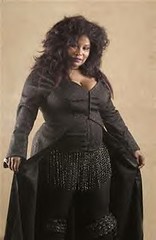
Chaka Khan Releases New CD, 'Funk This,' Returning to Her Roots

CHAKA KHAN: Ready To 'Funk'

Posted Jun 22nd 2007 4:44PM by Karu F. Daniels
Filed under: Entertainment Newswire
By Karu F. Daniels, AOL Black Voices

Chaka Khan is still hot like fire.

The eight time Grammy Award winning R&B diva brought her soulful fury into The Big Apple June 21 for an exclusive listening session for her new album, titled 'Funk This,' at the Sony Music Studios.

The new album, produced by R&B superproducers Jimmy Jam & Terry Lewis marks Khan's first full length studio effort (including new, unreleased compositions) in over ten years. With covers of tracks popularized by Prince ('Sign of the Times'), Dee Dee Warwick ('Foolish Fool'), Jimi Hendrix ('Castle in the Sand') and her former band Rufus ('You Got the Love'), 'Funk This' is well balanced with new and original compositions, most notably the poignant 'Angel,' which is an entry from her diary.

Yesterday, she talked to a jam-packed studio audience about her experience working with the four-time Grammy Award winning dynamic duo.

"I really enjoyed working with Jam and Lewis. They are not snobby, stuck up guys. They are really real. And Terry would say you're not coming out of the (booth) until I feel it."

Khan feels that this new opus, set for release via Burgundy Records/Sony on Sept. 25, may remind people of my early Rufus albums because she's in a similar "soul space."

"I've been on a little journey in the last few years, finding Yvette again," she said. (Yvette Marie Stevens is the Chicago native's birthname.) "I went through a period of being insecure," she added. "I'm walking a different path now. I've changed. This album is different from any other album I've recorded because it reflects what I'm about, who I am now. The album is called, 'Funk This!' because it's funky!"

Speaking of funky, a lead single from the album is an original up-tempo groove titled 'Disrespectful,' -- the tour-de-force duet with Queen of Hip-hop/Soul Mary J. Blige.

While her and Blige didn't record the album together live, it's a collaboration that will knock your socks off. "We're never together anymore," she admitted of the recording process. "Mary, however, did come back after I put my vocal on it, and put another vocal on because ... she had to," Khan quipped as the room busted out in laughter. "That's my dog. She's my dog and I love her," she clarified, then explained, "but there are times when you can't really distinguish which one of us are singing, even to me."

"But what I'm dreading is singing that live because that's a lot of screaming," she contemplated.

According to a Burgundy rep, various mixes of 'Disrespectful' will surface within the coming weeks, as the label gears up for a full fledged marketing blitz surrounding the yet to be determined first single.

Khan, who appeared as an opening act for Jill Scott at Radio City Music Hall last week, will also embark on a 'Funk This' around the time of the album's release.

Zimbabwe News Update: Government Takes Action to Lower Prices

State orders price slash

Herald Reporter

GOVERNMENT has directed manufacturers, retailers and wholesalers to reduce prices of basic commodities, including transport and newspapers, by up to 50 percent with immediate effect as it takes measures against the wave of unjustified price increases over the past few weeks.

Chairman of the Cabinet Taskforce on Price Monitoring and Stabilisation Cde Obert Mpofu, who is also the Minister of Industry and International Trade, announced the measures at a Press conference in Harare last night.

He said the business sector should revert to the prices as at June 18 2007 while its justifications for increases are being looked into by the National Incomes and Pricing Commission.

Cde Mpofu said the Government had noted with concern that manufacturers, wholesalers and retailers had unjustifiably increased their prices over the past few weeks without proper justification.

"Government is aware that these escalating price increases are a political ploy engineered by our detractors to effect an illegal regime change against the ruling party, Zanu-PF, and the Government following the failure of illegal economic sanctions. As a Government, we cannot stand idly while this situation continues.

"The Task Force on Price Monitoring and Stabilisation recently constituted by the Government is going to immediately take appropriate action against unscrupulous and insensitive economic players.

"This unruly behaviour is unacceptable and as such, Government will mobilise all the powers vested in the State to protect consumers."

A crack unit comprising all the security agencies has been set up and will work with the NIPC inspectorate to enforce the prices and root out all forms of corruption and economic sabotage.

Among some of the products whose prices have been halved are bread, reduced from $45 000 to $22 000, 10kg refined maize meal from $130 000 to $85 000, 2kg white sugar from $70 000 to $33 940 and Mazoe orange crush from $600 000 to $120 000.

The price of fuel, which had reached an all time high of $180 000 per litre, was slashed to $60 000.

Transport operators were also directed to appropriately adjust their fares.

Cover prices for The Herald and The Sunday Mail — the only two publications cited — currently at $25 000 and $35 000 respectively were expected to be reduced by $10 000 each.

Zimpapers chief executive Mr Justin Mutasa welcomed the Government intervention last night, saying the move should also be stretched to suppliers of raw materials, mainly newsprint and printing inks.

"We welcome the latest intervention in the spirit that the same will be extended to suppliers of newsprint and printing inks we use in the production of newspapers.

"These two are the major cost drivers of our costs and as soon as they lower their prices, the prices of newspapers will also go down," he said.


Mumbengegwi leaves for Ghana to attend AU session

Herald Reporter

FOREIGN Affairs Minister Cde Simbarashe Mumbengegwi has left the country for Accra, Ghana, to attend the 11th Ordinary Session of the Executive Council of the African Union.

In a statement yesterday, the Ministry of Foreign Affairs said the session would be held from June 28 to 29.

The meeting was preceded by the 14th Ordinary Session of Committee of Permanent Representatives to the AU, which ran from yesterday up to today.

"The Foreign Ministers’ Executive Council Session will in turn present the conclusion of its deliberations to the 9th Ordinary Session of the Assembly of the African Union or the Summit of the Heads of State and Government of the Africa Union, which is scheduled to take place from 1 to 3 July 2007, in the Ghanaian capital, Accra," read part of the statement.

The assembly is expected to consider several issues, including convening a Grand Debate on the possibility of forming a Union Government, the election of the Chairperson and Deputy Chairperson and appointment of Commissioners of the Commission of the AU.

The report of the New Partnership for Africa’s Development Heads of State and Government Implementation Committee on the Integration of Nepad into the structures and procedures of the African Union is also among issues to be considered.

The statement indicated that there will be adoptions of the decisions of the Executive Council of Ministers of the 11th Session and then conclude with the adoption of the Declarations of the Ordinary Summit of the AU.

Meanwhile, Cde Mumbengegwi is expected back into the country on July 5.


Zimbabwe plans to expand cotton production

Zimbabwe plans to expand cotton production from an estimated 270,000 tons this year to one million tons by 2010 through a systematic increase in hectarage and recruitment of new farmers.

The National Association of Cotton Ginners, Merchants and Buyers (NACGMB) said on Monday it aimed to achieve this target by increasing the hectarage put under cotton by 40 percent every year.

The Association was quoted by the official New Ziana as saying that although it seemed a mammoth task to increase production by such a big margin, the willingness of industry players to invest and commit the necessary funds in line with the planned growth would make the target achievable.

It added that achieving the target would also require that NACGMB members stick to their contractual obligations with buyers buying their own contracted crop which they would have financed while farmers only sell their crop to the financing contractor.

The association also cited high inflation, side marketing and the absence of a regulatory framework that govern the industry as some of the challenges facing the sector. Cotton lint is one of Zimbabwe's largest exports. Zimbabwe has an overcapacity of ginning which stands at 750,000 tons.

Source: Xinhua
People's Daily Online --- http://english.people.com.cn/


Zimbabwe, Mozambique to scrap visa system soon

Zimbabwe and Mozambique have made significant steps towards abolishing visa requirements, Mozambican Ambassador to Zimbabwe Vicente Veloso said on Monday during his country's 32-independence anniversary in Harare.

He said the visa system would be scrapped before the end of the year and urged the business sector to take advantage of this development to penetrate new markets in his country.

"We are pleased to note that there is a significant move towards the abolition of visa between Zimbabwe and Mozambique. The agreement will be signed in the next few months or weeks," he said, adding the development would help boost trade and the movement of goods between the two countries.

The move, he said, would also facilitate the free movement of people and services between Zimbabwe and Mozambique.

"It is my hope that the private sector will also take full advantage of this instrument and the preferential trade agreement to further boost economic linkages between our two countries," he said.

Zimbabwean deputy foreign minister Rueben Marumahoko said the signing would strengthen the good relationship that exists between the two countries, ensure free movement of people and further promote the exchange of goods and services.

Zimbabwe and Mozambique share cordial relations that date back to the days of the liberation struggle.

The two countries have also supported each other in their principled stance towards the defence of national sovereignty.

Source: Xinhua


President sends condolences to Chigwedere family

Herald Reporter

PRESIDENT Mugabe yesterday sent a condolence message to the Chigwedere family following the death of Ambassador Stanislaus Chigwedere on Saturday.

He described Cde Chigwedere as an outstanding teacher, bureaucrat, diplomat and Public Service Commissioner who belonged to the crop of dedicated cadres whose record goes back to the days of the liberation struggle.

"Alongside a number of committed teachers working in schools along the border with Mozambique, Cde Chigwe-dere ran numerous errands for the freedom struggle, including assisting recruits into Mozambique for training.

"At independence, Ambassador Chigwedere was among the first crop of cadres I engaged to fill the skills gap we faced then. He worked in my office until his redeployment into the diplomatic field where he served his country quite well."

The President said Ambassador Chigwedere was recalled to head the Ministry of Foreign Affairs before he was appointed a Public Service Com-missioner.

"We grieve together with Chigwe-dere’s family, his wife Lillian and children, in particular, for losing a real father and mentor as we express our sympathies and condolences to them."

The Minister of Foreign Affairs, Cde Simbarashe Mumbe-ngegwi also consoled the Chigwe-dere family yesterday.

"On behalf of my ministry and on my own behalf, I convey our deepest sympathies to Mrs Chigwedere, the children and to the rest of the Chigwedere family on the loss of a dear one," he said.

He said the Chigwedere family should get solace from the fact that the ministry was also mourning the departure of an efficient administrator of the Public Service of Zimbabwe, an attribute that saw him occupy the lofty position of Public Service Commissioner.

Cde Mumbengegwi described Cde Chigwedere as a diplomat par excellence.

"I fondly recall how he so ably gave direction to the ministry, both at head office and to all our ambassadors when he served as the ministry’s permanent secretary from 1992 to 1994," said Cde Mumbengegwi.

He added that before and after this, Ambassador Chigwedere enriched the ministry’s operations by serving as Ambassador to Canada from 1985 to 1989, as Ambassador to the United States of America from 1989 to 1992 before serving as Ambassador to Namibia from 2002 to 2007.

"In all these various portfolios Ambassador Chigwedere always presented himself as a most dependable colleague who acquitted himself exceptionally well in the performance of his duties. As we cherish fond memories of a departed dear brother and committed colleague, I pray that his soul may rest in eternal peace," said Cde Mumbengegwi.

Burial arrangements for Cde Chigwedere have not yet been announced as consultations are sill underway over his hero status.


Brigadier-General Gunda declared national hero

Herald Reporter

AN extraordinary Zanu-PF Politburo meeting yesterday declared Commander of 1 Brigade, Brigadier-General Armstrong Gunda, who died last week, a national hero.

He will be buried at the National Heroes’ Acre tomorrow.

Brig-Gen Gunda died last Thursday when his car was involved in an accident with a train, off the Harare-Marondera Road near Watershed School.

He was on his way to the school to pick up his son when tragedy struck.

Brig-Gen Gunda joins fellow military cadres interred at the national shrine, among them former Zanla Commander Cde Josiah Tongogara, who died in a car accident in 1979; Cdes Alfred Nikita Mangena and Lookout Masuku.

Others are former Minister of Indigenisation and Empowerment; Cde Josiah Tungamirai buried in 2005, Cde Charles Dauramanzi buried in 2003 and Brigadier-General Charles Gumbo (1999) among others.

Speaking soon after the two-hour meeting, Zanu-PF secretary for administration Cde Didymus Mutasa said people who worked closely with Brig-Gen Gunda spoke highly of him and the Politburo did not hesitate to confer him with the national hero status.

Cde Mutasa said Brig-Gen Gunda was described as an outstanding soldier who distinguished himself in executing the war of liberation that brought about independence in 1980 before serving in the defence forces after independence.

"He served our country extremely well to become a brigadier-general. Those who knew him and closely worked with him spoke highly of him for his outstanding work," said Cde Mutasa.

"All those who worked under him are successful officers who are straightforward and honest. We are sorrowful that he died and convey our condolences to his wife and family."

The body of Brig-Gen Gunda was expected to be flown from Bulawayo to the capital last night where his family would officially be notified of the national hero status, said Cde Mutasa, who is also the Minister of State for National Security, Lands, Land Reform and Resettlement.

"It has been agreed that he be buried on Wednesday morning," said Cde Mutasa.

Brig-Gen Gunda was born on March 2 1957 and did his secondary education at St Killian’s Mission in Rusape before leaving the country for Mozambique in 1975 to join the liberation struggle.

He received his military training at Tembwe in 1976 and later in China from 1977 up to 1978.

Upon his return from China, he was posted to Chitepo Sector in Mashonaland Central Province where he operated until the ceasefire in 1979.

At independence, he was attested into the Zimbabwe National Army as an officer and in December 1981 he was commissioned a lieutenant after completing the Officer Standardisation Course at the Zimbabwe Military Academy.

His promotion history is as follows: lieutenant (1981), captain (1984), major (1986), lieutenant-colonel (1992), colonel (1996) and brigadier-general (2004), the rank he held until his untimely death.

During his service, Brig-Gen Gunda attended the Command Staff Course No. 1 at the Zimbabwe Staff College, the Human Rights for Peacekeeping at the Regional Peacekeeping Training Centre, Senior Officers’ All Arms Signals Course and the Executive Programme for Commanders in the United States of America, among other courses.

Since attestation in 1980, he has held several appointments with different units such as Officer Commanding B Company at 41 Infantry Battalion 1980-1982, Administration Staff Officer Grade 2 Facilities at the Directorate of Army Training 1984-1985, Commandant at All Arms Battle School 1996-1998, commander Presidential Guards 1998-2005 and Commander 1 Brigade from 2005 until his death.

It was during his time as commander Presidential Guards that Brig-Gen Gunda displayed his versatility and extreme devotion to duty.

His responsibilities included the highly sensitive duty of protecting the President and visiting VVIPs and VIPs from other nations.

This was a highly demanding task taking into cognisance the politically sensitive nature of his responsibilities.

The responsibility required him to exercise extreme diligence, initiative, unfailing devotion and loyalty as well as the highest standards of command and foresight.

Brig-Gen Gunda was awarded the Independence, Liberation, 10 Years Service, Mozambique Campaign, the Long and Exemplary and the Democratic Republic of Congo Campaign medals, among others.

He was posted to head 1 Brigade, which covers Matabeleland Province in 2005, a position he held until his death.

Mourners are gathered at Number 29 Argyle Road, Newlands, Harare. A funeral parade was held yesterday at Headquarters 1 Brigade in Bulawayo.

Monday, June 25, 2007

Imperialist Nations Meet in France to Plan Attacks on Sudan; African Union Refuses to Attend

MONDAY, JUNE 25, 2007
9:52 MECCA TIME, 6:52 GMT

France in fresh push on Darfur

With key players like the US on board, France hopes to pressure Khartoum to deliver on its promise

France's president has opened a conference attended by the US, China and 15 other nations aimed at launching a new effort to end atrocities in Sudan's Darfur region.

Nicolas Sarkozy on Monday urged delegates in Paris to find a solution to the Darfur crisis, after Sudan agreed to the deployment of 23,000 UN and African Union [AU] in the region.

"As human beings, and as politicians, we must resolve the crisis in Darfur," Sarkozy told the officials gathered at France's Elysee presidential palace.

Khartoum is boycotting Monday's conference, arguing that the French initiative will unnecessarily duplicate efforts by the UN and the AU.

The AU is also staying away, sceptical about the meeting's purpose and annoyed about being kept out of the planning.

Concern

Sarkozy and Bernard Kouchner, France's foreign minister, have made Darfur a high priority amid concern that fighting and instability is spreading to neighbouring Chad and the Central African Republic, two French allies in the region.

"It is not a peacemaking meeting. It is, on the contrary, a meeting to support the international efforts that have been deployed," Kouchner said on Sunday.

He said the meeting was aimed at offering support to the UN-AU joint effort, which will take over from a beleaguered AU force of 7,000 peacekeepers.

"If there are 20,000 soldiers coming in the hybrid force, whoever they are, they will have to be paid. And the 7,000 who are there now are not being paid, and they are doing nothing because they haven't received their salaries since January," he said.

"So if we continue like this, obviously it won't work."

Pressure on China

In a joint news conference with Kouchner on Sunday, Condoleezza Rice, the US secretary of state, said: "It is a renewed push in which we can come together and look again at what we need to do."

The Paris conference has been seen as an opportunity to work towards ending the conflict in Darfur, in which at least 200,000 people have been killed and two million driven from their homes since 2003, according to the UN.

Pressure has been mounting on China to improve its human rights record, spearheaded by activists who accuse Beijing, Sudan's biggest oil importer, of bankrolling some of the atrocities in Darfur.

The new international push could see Khartoum come under pressure to deliver on its promise to allow a 23,000-strong peace force to be dispatched to Darfur and to re-start peace negotiations with anti-government fighters.

France's financial aid to Darfur remains low compared with other European powers.

UN figures show that France gave $5.25m in 2006 and $3.4m so far this year.

Source: Agencies


AU miffed over France’s Darfur drive

Mon, 25 Jun 2007

France brings the United States, China and some 15 other nations together for a major conference on Monday aimed at launching a new international drive to end atrocities in Sudan's Darfur region.

The meeting comes after Sudan bowed to months of pressure and agreed to the deployment of peacekeepers in Darfur under the United Nations and the African Union.

Khartoum is boycotting the conference, angry that it was not consulted during preparations for the meeting and arguing that the French initiative will unnecessarily duplicate efforts by the UN and the AU.

The African Union is also staying away, sceptical about the meeting's purpose and miffed at being kept out of the planning.

The Paris conference is nevertheless seen as an opportunity to help end the conflict in Darfur, which has pitted a rebel insurgency against the Arab-dominated government in Khartoum and its proxy militia known as the Janjaweed, whose leader stands accused of war crimes.

At least 200 000 people have been killed and two million driven from their homes since 2003, according to the United Nations. Khartoum says those figures are exaggerated.

French President Nicolas Sarkozy and his Foreign Minister Bernard Kouchner have made Darfur a high priority amid concern for the instability spreading to neighbouring Chad and the Central African Republic, two French allies in the region.

The US administration is facing an increasingly vocal rights movement with Hollywood stars George Clooney and Angelina Jolie using their celebrity status to raise public awareness about the plight of Darfur's refugees.

China accused of bankrolling atrocities

Pressure is also mounting on China ahead of the 2008 Olympics to improve its human rights record, spearheaded by activists who accuse Beijing, Sudan's biggest oil importer, of helping Khartoum bankroll some of the atrocities in Darfur.

With Paris, Beijing and Washington apparently on the same page, the new international push could see Khartoum come under pressure to deliver on its promise to allow a 23 000-strong peace force to be dispatched to Darfur and to re-start peace negotiations with the rebel groups.

Sarkozy on Monday is due to welcome the foreign ministers at the Elysee palace before the conference officially opens.

AFP

Sunday, June 24, 2007

China Boosts African Economies, Offering a 'Second Opportunity'

From the June 25, 2007 edition - http://www.csmonitor.com/2007/0625/p12s01-woaf.html

China boosts African economies, offering a 'second opportunity'

Trade between China and Africa reached a record $55 billion last year, much of it coming from oil and metals

By Danna Harman

A bicycle craze has hit South Sudan. And with it, decorative fake flower handlebar bouquets have become all the rage.

"If you have a bicycle, then you need flowers, because they are so beautiful," explains John Dut, a former rebel now working as a security guard for a Danish charity.

Mr. Dut's bouquet of choice: pink and orange. "Sudanese people like nice things," he says.

The brutal 21-year-long civil war, the millions dead or displaced, and the insufferable poverty usually associated with South Sudan are a far cry from the stuff of beauty.

But, today, with a fragile 2-1/2-year peace deal between rebel and government forces holding, roads being built, and commerce trickling in – locals are turning some attention away from survival and toward a few of life's simpler pleasures – like shopping.

Candy-apple-red nail polish is for sale in the market stalls under the acacia trees. Toothpaste and matchboxes are here, too. Soap. Mattresses. Padlocks. Suitcases. Shoes. And the hottest sellers of the moment: shiny Phoenix 10-speed bicycles and their attendant fake flower handlebar decorations.

All of it is made in China.

In most parts of the world, such everyday items wouldn't raise an eyebrow. But here, this feels like the dawn of a new age of consumption.

Five years ago, there was nothing to buy, says Moga Johl, a shopkeeper in the dusty, languid former rebel stronghold of Rumbek. "Absolutely nothing."

From the well-stocked markets of Rumbek to the Chinese oil firms in Sudan's upper Nile; the Chinese weapons in Darfur; and the Chinese laborers building the new presidential palace in Sudan's capital, Khartoum – China, in its many forms, has made a grand entry.

Sudan's experience is hardly unique. There is more trade going on today between China and Africa than ever before. In the late 1980s, trade between the country and the continent was $12 million. Last year, according to official Chinese figures, it reached a record $55 billion. In 1991, Chinese direct investment in Africa was less than $5 million a year. In 2006 – China's official "Year of Africa" – it reached $1.25 billion, according to the Chinese Academy of Social Sciences. Sudan is the No. 1 recipient of that investment.

"The Chinese have big machines and factories and they work day and night ... and at the end of the day this means we can go shopping," says Jacob Marial, a rebel-leader-turned-bicycle repairman in Rumbek. "My wife likes green tea toothpaste."

THE backbone of China's blossoming relationship with the continent is raw materials. China, with its rapid economic and industrial growth, needs them – and Africa has them in abundance. Some 30 percent of China's oil imports now come from Africa.

Last year, Angola overtook Saudi Arabia as the largest oil supplier to China, and Sudan – China's second-largest supplier on the continent – sold close to 65 percent of its oil to Beijing. China is also either drilling or exploring for oil in more than half a dozen other African countries.

Beyond oil, China is extracting copper from Zambia and cobalt (a key ingredient in making cellphones and laptop computers) from Congo, buying timber in such countries as Cameroon and Liberia, and getting manganese for manufacturing steel from Ghana. South Africa is one of China's biggest suppliers of iron ore.

With $55 billion in trade with Africa last year, China has quickly inched past France ($47 billion) to become the continent's second-largest bilateral trading partner, after the US ($91 billion), according to the International Monetary Fund. Martyn Davies, head of the Center for China Studies at South Africa's Stellenbosch University, estimates that within five years, China will be the continent's No. 1 trading partner.

Last November, when leaders from 48 African countries attended the Beijing summit of the Forum on China-African Cooperation, Beijing announced it would double both its investment and aid to the continent. Soon after, during his 12-day, eight-nation African tour in February (his third such visit in as many years) President Hu Jintao began making good on this promise – dispensing billions of dollars worth of debt relief and announcing discounted loans and new investments.

In Sudan alone Mr. Hu cheerily waved away $80 million dollars in debt. He made the announcement while visiting the controversial new hydroelectric plant in Meroe – financed by the Chinese to the cost of $1.8 billion.

Hundreds of Chinese companies – many state-owned – are marching in the footsteps of their leaders, snatching up incentives and operating in 49 African countries (of which 25 are totally exempt from export tariffs).

The Chinese public is not far behind, with 24 African countries are now approved by Beijing as destinations for Chinese holidaymakers.

And Africans know which way the wind is blowing: Universities from Namibia to Uganda are opening Chinese language departments. The continent's three Confucius Institutes – promoting Chinese language and culture – in South Africa, Kenya, and Rwanda are so popular that a dozen more are scheduled to be opened next year. Schoolchildren from Khartoum to Cape Town are learning to say ni hao (which means "hello" in Mandarin).

Meanwhile, as commodity prices on the continent rise, so does the much needed cash flow into segments of the economy – and so do African incomes.

Sub-Saharan Africa's gross domestic product growth rate was negative in the 1970s and '80s – but, since the '90s has consistently been above 5 percent. The Sudanese growth rate is particularly impressive; a whopping 13 percent this year, say government forecasts.

Still, say some observers, the availability of cheaper Chinese products can be a mixed blessing.

In Lesotho, South Africa, and Ghana the arrival of Chinese cloth in traditional African patterns has forced some textile plants to close. In Zambia, the main opposition party has accused China of dumping inexpensive goods and bankrupting Zambian traders.

But by and large, argues Harry Broadman, a World Bank economic adviser on Africa, who recently completed a study on Chinese and Indian firms in Africa, "The Chinese are filling a market need that would simply not be filled otherwise."

Chinese manufacturers, he notes, are creating needed economies of scale, pushing African firms to be more competitive, and increasingly partnering with them. Lately, they've starting processing more goods on the continent.

"If the Africans can be proactive, through domestic reforms and flexible labor markets, they can empower themselves, use their collective leverage, and use the investments coming in for their benefit," says Mr. Broadman. "This is a second opportunity for Africa."

Saturday, June 23, 2007

Abayomi Azikiwe, Editor of the Pan-African News Wire, Speaks Saturday at the Allied Media Conference on the 'Future of Radio'

PANW Editor to Speak on the Future of Radio at the Allied Media Conference Held at Wayne State University in Detroit, Saturday, June 23, 2007

Editor's Note: Abayomi Azikiwe will speak at the Allied Media Conference on Saturday examining the 'Future of Radio'. The PANW founder will discuss some of the tactical challenges facing those seeking to transform the dominance of corporate media within American political culture.

Illustrations of the corporate control and dominance of the American media are represented in the close alliance between the multi-national networks and the military-industrial-complex. This was clearly reflected in the false ideological and political premises advanced to justify the invasion and ocuupations of Afghanistan, Iraq, Haiti and Somalia.

In addition, this corporate media dominance plays a major role in re-enforcing the national oppressive character of racial capitalism.

Such conditions call for the necessity to build a popular movement to revolutionize the content and direction of mass media in the United States through the creation of alternative or parallel institutions designed to uphold the material and immaterial interests of the people.
---------------------------------------------------------------------------------------
Pan-African News Wire Editor to Present on Panel at the Allied Media Conference in Detroit, June 22-24, 2007

We are announcing that Abayomi Azikiwe, Pan-African News Wire Editor, will appear on a panel discussing the challenges for
the future of radio. The session description is below:
http://alliedmediaconference.org/program/future_of_radio

Erica Williams from the Leadership Conference on Civil Rights will be moderating the panel.

A profile for Abayomi has been created on the AMC website:
http://alliedmediaconference.org/user/abayomi_azikiwe

If you'd like to see when this and other sessions are scheduled, the (nearly) full conference schedule is here:
http://alliedmediaconference.org/program/schedule

Looking forward to seeing you soon.

Allied Media Conference
Detroit. June 22-24.
http://www.amc2007.org

Abayomi Azikiwe, Pan-African News Wire Editor, Supports the Syndication of 'Saturday Morning Live'

Syndicate Saturday Morning Live (SML)

To: The National Campus and Community Radio

By Norman (Otis) Richmond

I recently began testing the water to see if there was any interests in syndicating my radio show Saturday Morning Live (SML), which is aired every Saturday from 10am to 1pm on CKLN-FM 88.1 across Canada. I have received e-mails from the U.K., South Africa, Jamaica, Trinidad & Tobago, Atlanta, Detroit, Los Angeles etc. talking about how they enjoy listening to SML.

I recently received a letter from a listener that makes me feel the time has come to syndicate the show in the country where I reside. Iva Matkovic wrote, “The world, including Canada, needs hundreds of shows of this kind, and this would still be too few to counter the thousands of the general fodder-kind produced by the capitalist corporate media… A few Europeans, such as me, and possibly (!?) even a few more as time goes on, want to hear this. I am sure that "your own" people are just as delighted to hear about and program for themselves. Thanks for the programming.”

I‘m offering The National Campus and Community Radio Conference (NCRC), CKLN’s flagship news program Saturday Morning Live (SML). SML is Afrikan centered Internationalist and progressive. The center piece of SML is the Professor/Author Gerald Horne’s Report which covers everything from Canada’s involvement in the war in Afghanistan to Chaka and the Zulu wars. Dr.Horne is Professor of History at the University of Houston. He visits Toronto annually to promote his books. His three latest works Cold War in a Hot Zone; The White Pacific; and The Deepest South will be launched here in Toronto during the 2007 Toronto International Film Festival. These talks are always broadcast live on CKLN-FM from A Different Booklist, one of the finest bookstores in North America.

SML features Mumia Abu –Jamal’s commentaries Live From Death Row every week. Mumia is an award-winning journalist who chronicles the human condition. He has been a resident of Pennsylvania’s death row for twenty-five years. Writing from his solitary confinement cell his essays have reached a worldwide audience. His most recent book We Want Freedom: A Life In The Black Panther Party has sold over 150,000 copies and been translated into nine languages. His 1982-murder trial and subsequent conviction has been the subject of global debate.

The Group for Research and Initiation for the Liberation of Africa (GRILA) airs a feature, Amandla, three weeks out of the month. The GRILA crew is composed of Africans from the African continent and the Diaspora. The majority of the GRILA crew are women, which is a huge plus for SML and CKLN. The GRILA crew take a Cape Town to Cairo view of Africa, and looks at the continent in a holistic fashion. However, they also discuss issues going on this side of the pond.

On the last week of the month SML features Social Justice News with Collen Bell and Amber Kellen. Bell is a PhD candidate at York University, and Kellen represents the John Howard Society. Bell and Kellen are on the cutting edge of issues dealing with prison reform, welfare, homelessness and other social justice issues. These issues are dealt with from a progressive and feminist perspective. Rachel Sanders handles SML’s community calendar which is a popular spot every Saturday morning. Ian Brown and Stuart Andrews handle technical work for SML.

Toronto and other parts of Canada are talk- radio friendly. In Toronto we are inundated with talk radio. Unfortunately, most of this talk is from the right. SML opens the phones every week and this is a very important feature of SML. This is one of the few places were progressive voices can be heard on the airwaves. It would be a victory for a cross Canada hook-up to be aired nation –wide. There are many voices opposed to Canada’s role in Haiti and Afghanistan. Two of Canada’s opposition parties, the Liberals and the NDP are talking about sending troops to the Darfur region of the Sudan. The Canadian people are clearly opposed to the baby imperialist role the government is playing. This is reflected in all the polls. SML can help get this view- point out to a bigger audience if SML is syndicated.

I’m petitioning the NCRC to syndicate SML because it is a Canadian- produced program with legs that can run or make that sprint anywhere on earth. I ‘m hoping that the NCRA will seriously consider this. This can only strengthen the NCRA’s mandate. It can only provide more alternative radio and make the NCRA more relevant to a more diverse audience. The NCRA’s concept of workshops on MySpace, Women in Radio Conference, Women-Focused Programming can only be enhanced by having an Afikan-focused spot all across Canada.

SML has some of the best Pan-Aftrican music available. King Comos’, “Payback Time” one of the strongest anthems calling for reparations and first aired on Saturday Morning Live. Tiki Mercury –Clarke’s triple CD, LIFT EVERY VOICE & SING: The Roots of Gospel Music were first aired on Saturday Morning Live. Deborah Cox, Glenn Lewis, (his father Glen Ricketts), Salome Bey, Phyllis Marshall, Archie Alleyne, Doug Richardson, Jay Douglas, Jackie Richardson and others are frequently played on SML.

SML has pioneered Afrikan Liberation Month (February), Black August and Black Music Month (June). Hopefully, the NCRA can help in spreading these important historical commeratations across Canada. The NCRA can begin this June and promote the following events:

Some Black Music Month Highlights:

Lena Horne 90th Birthday

Don Drummond 75th Birthday

Dennis Brown 50th Birthday

Curtis Mayfield 65th Birthday

Fela Anikulapo Kuti 10th Anniversary of joining the ancestors

Peter Tosh 20th Anniversary of joining the ancestors

Otis Redding 40th Anniversary of joining the ancestors

John Coltrane 40th Anniversary of joining the ancestors

Finally, we close with words of the NCRA: “Over the past quarter century the NCRC has migrated from east to west and north to south as it has been hosted by a different station every year, bringing together broadcasters and experts from across the country for several days of workshops, seminars, social events, and entertainment.” We hope the current board of the NCRA will open its airwaves to more African and oppressed and suppressed voices as they state their call for the 2007 conference:

Norman Richmond can be reached Norman@ckln.fm

Sincerely,
The Undersigned
Abayomi Azikiwe, Editor
Pan-African News Wire

US Imperialists Plan to Establish More Bases in Africa While Somali Resistance Continues

Officials discuss new U.S. command with African leaders

by John J. Kruzel
American Forces Press Service

6/22/2007 - WASHINGTON (AFPN) -- Leaders in five African nations see the U.S. Africa Command, or AFRICOM, as a constructive approach to making the continent more stable, a senior Defense Department official said June 22.

A delegation comprising officials from the departments of Defense and State and from the U.S. Agency for International Development met with leaders from Algeria, Morocco, Libya, Egypt, Djibouti and the African Union last week to discuss the new unified combatant command the Defense Department is establishing in Africa.

"They saw AFRICOM's integrated approach as a more constructive way for the Department of Defense to partner with African organizations and help bring about long-term peace and security," said Ryan Henry, principal undersecretary of defense for policy.

Currently, the Defense Department divides responsibility for Africa among three combatant commands: European Command, Pacific Command and Central Command. AFRICOM will be a three-pronged defense, diplomatic and economic command effort focused solely on the continent, Henry said.

"We're ... taking the area of responsibility for the African continent and giving that to a single commander, who will worry 24 hours a day, seven days a week, just about African issues," Mr. Henry said.

Officials have not decided where the new command's headquarters will be, nor have they named a commander, he said, but Mr. Henry confirmed that the four-star commander, once appointed, will serve in theater.

AFRICOM will better enable the Defense Department and other elements of the U.S. government to work in concert with more politically stable and economically prosperous African partners, Mr. Henry said.

"It will also help in setting the conditions whereby humanitarian and developmental assistance can be used more effectively," he added.

During discussions, the African leaders identified counterterrorism as "a top security concern," Mr. Henry said.

"They were interested in how AFRICOM would help support their counterterrorism efforts, how current programs and initiatives would be impacted," he said. "We said that it was our intent not to make any dramatic changes as AFRICOM comes on line, but to see how we can be more effective by integrating civilian parts of the U.S. government that will be resident on AFRICOM's staff."

Leaders are committed to the Africa Union as the continent's common security structure, Mr. Henry said, and they advised the delegation that AFRICOM should work in harmony with the established body.

"We responded that we were investigating on how best to do that, as AFRICOM's goal is not to lead the security efforts on the continent, but rather to support existing African countries and organizations that take the lead and be successful," he said.

In October, AFRICOM is slated to be structured as a sub-unified command to European Command with some responsibilities. It is expected to be a fully unified command able to handle all responsibilities about a year later, Mr. Henry said.

This was Mr. Henry's second "consultation trip" to the continent, where he led delegation members in expressing AFRICOM's broad goals to their African counterparts. In April, a delegation met with leaders from Nigeria, South Africa, Kenya, Ethiopia, Ghana and Senegal.


Somalia: fighting erupts in Kismayu

Fri. June 22, 2007 08:47 pm.-
By Mohamed Abdi Farah

(SomaliNet) Fresh gun battle between rival soldiers within the Transitional Federal Government has erupted in Somalia’s southern port city of Kismayu on Friday killing seven people and wounding 30 others - as heavily armed Ethiopian forces are heading to Kismayu to go between the warring clans.

The fighting that lasted for four hours in Bulo-Gadud and Gobweyn villages village, near Kismayu went between Sade and Majerten clans of Darod, one of powerful tribes in Somalia.

Both clan soldiers in the government are fighting for the control of Kismayu, 500km south of the capital Mogadishu.

Unconfirmed reports say the soldiers that hailed from Sade clan who now control Kismayu overrun those from Majerten clan, led by Col. Abdirisak Afgadud who was close to the president of Somalia Abdulahi Yusuf Ahmed.

A spokesman for Sade clan who declined to be named claimed that his militia seized six war vehicles from the other side and took hostage their commander Aden Bojar.

There is no independent confirmation on that.

Just in reports say that the fighting still continues as both sides regain reinforcements.


Somalia: Explosions rock Mogadishu after curfew

Fri. June 22, 2007 08:49 pm.-
By Mohamed Abdi Farah

(SomaliNet) Huge and load explosions could be heard late Friday in the Somalia capital Mogadishu as the city is under curfew.

Around seven blasts rocked the capital tonight and it is not yet clear where the explosions happened and the casualty so far.

The latest explosions came shortly after the curfew was put into effect in Mogadishu with government troops together with the Ethiopian forces patrolling the city enforcing the curfew.


Night curfew imposed in Mogadishu

Several people were injured in a grenade attack at a marketplace in Mogadishu

Authorities in Somalia have clamped a night-time curfew in the capital Mogadishu after six people were killed in continuing violence.

Somalia's national security agency chief said the curfew would take effect on Friday.

"No one should be seen moving from 7.00 pm (1600 GMT) to 5.00am (0200 GMT)," Mohamed Warsame Darwish said on Thursday.

The curfew was announced as three people died in a grenade explosion in the Mogadishu’s Bakara market. Several more were injured in the blast.

Minutes before the grenade attack, two people reportedly died after police opened fire in the same market.

Eyewitnesses said the grenade was thrown at a group of policemen, one of whom was killed along with a bystander.

One other person was killed after another police officer on the scene opened fire.

Security plan

Darwish said the curfew was necessary to restore security to the restive capital.

"We need our forces to tackle the violence in the evenings and secure the city in order to prevent explosions. That is why we are imposing the curfew," Darwish said.

Police last week set an overnight curfew in the central town of Baidoa after grenade attacks in a cinema hall and a bank killed at least three people and wounded at least 12.

Violence has continued in Mogadishu despite Somali government troops backed by Ethiopian forces pushing opposition fighters, led by the Union of Islamic Courts [ICU], from the capital.

Months of fighting has left hundreds of civilians dead and hundreds of thousands displaced.

Conference delay

In recent months, opposition fighters have targeted government officials, Ethiopian troops and African Union [AU] peacekeepers in the country.

Last week, a UN-backed peace conference bringing together Somali clan leaders and government officials was postponed for the third time.

Somalia has been without a functioning central authority since ruler Mohamed Siad barre was deposed in 1991.

The current transitional government, now nearly three years old, has been unable to maintain security in Somalia.

Source: Agencies


Somalia: Ethiopian troops kill civilians in Mogadishu

Wed. June 20, 2007 08:34 pm.
By Mohamed Abdi Farah

(SomaliNet) Nine civilians have been killed in gun shooting by the Ethiopian forces in the Somalia capital Mogadishu after the Ethiopians got under attack on Tuesday, according the medical sources on Wednesday.

Shortly after yesterday’s roadside bomb blast, the Ethiopian soldiers near the former defense ministry compound in southwest Mogadishu opened indiscriminate fire on all directions killing nine civilians in the area.

“I saw several bodies after the shooting by the Ethiopians when the bomb exploded on their truck,” said one eyewitness who declined to be named.

The blast hit the first military pick-up truck of the Ethiopian convoy receiving but not yet clear the exact casualty on the soldiers.

The area of the blast was cordoned by the Ethiopian forces and began arresting many people.

The Ethiopian forces in Mogadishu are always target for the attacks by the insurgents.

Since the local insurgents were defeated in the capital by the allied forces of Somalia and Ethiopia last month, they began hit and run attacks including suicide bombing.


Somalia: PM flies to US for UNSC assembly

Wed. June 20, 2007 08:16 pm.
By Mohamed Abdi Farah

(SomaliNet) Somalia interim Prime Minister Ali Mohamed Gedi Wednesday left for New York city in USA to attend the assembly of the United Nations Security Council.

Before leaving the country, Mr. Gedi told the reporters he will brief the UN about Somali issues. The reconciliation conference he said will be on the agenda of the UNSC assembly on June 28. “definitely, I will discuss the country’s developments with the UN member states,” said Gedi.

The premier’s trip to the USA comes as escalation of anti government violence still rages in the capital.