Friday, July 27, 2007

Fighting For Justice Radio to Focus on Federal Consent Decrees, Sunday, 10-11am on AM 1310, WDTW

FIGHTING FOR JUSTICE RADIO * SUNDAYS 10-11a.m. * 1310 AM, WDTW * DETROIT
--------------------------------------------------------
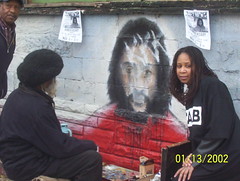
TWO MEN, ONE WOMAN
----------------------------------------------------------
AIRDATE: JULY 29, 2007
-----------------------------------------------------------
EVENT CANCELLATION: The Detroit Coalition Against Police Brutality cancelled the 7/26/07, 11:00 a.m. Federal Court House Demonstration. The Coalition apologizes to anyone who has been inconvenienced by this cancellation.

Contents
1)This Sunday's Discussion
2)Comment & Response
3)Sponsor's Area
4)Gift Offer
5)Caller Quote of the Week
6)Fighting With Information
7)Upcoming Show Highlight
8)Newsletter Statement of Belief

IGNORED AND UNWANTED

Many say that the Federal Consent Decrees that mandate reform in and monitoring of the Detroit Police Department has been virtually ignored since it was put into effect. With a reported compliance rate that is less than 5%, Detroit citizens are saying that the Consent Decrees have been simply disregarded.

Now, four years later, it appears that the Consent Decrees imposed by Federal District Court Judge Julian Cook, are unwanted by the City of Detroit because motions have been filed in court to do away with the very judgements that serves as a watch between the police department and vulnerable citizens.

Find out what a Detroit without Consent Decrees would be like on Sunday's Fighting For Justice Radio

Want More Facts About Consent Decrees?
Scroll down to FIGHTING WITH INFORMATION

This Sunday's Discussion:

-Federal Consent Decrees at Stake
-Highlights of the Observance of the 40th Anniversary of the Detroit Rebellion
-Could the removal or revision of the Federal Consent Decrees spark another large uprising?
-What organizations are doing to combat the motion against the Federal Consent Decrees.
-VIEWS AND OPINIONS FROM MICHIGAN'S MOST INFORMED LISTENING AUDIENCE!

FOR DETROIT COALITON AGAINST POLICE BRUTALITY'S OFFICAL STATEMENT REGARDING THE RECENT DEVELOPMENT OF THE FEDERAL CONSENT DECREES, SCROLL DOWN TO THE FIGHTING WITH INFORMATION SECTION

CALL IN THIS SUNDAY 10-11 a.m. ET - 248.848.1310
(OUT OF MICHIGAN CALLERS WELCOMED)
+++++++++++++++++++++++++++++++++++++++++++++++++++
HELP KEEP FFJ ON THE AIR!!!

Did you know that when we go off of the air, we put our ideology into action! We assist people who have reached the end of their ropes because they cannot find the proper solutions to an injustice. Many of these people do not have the economic means or correct information to get the results that they need and deserve.

Despite our lack of resources, we continue to serve the community in need of help. Please partner with us, so that we may continue to help others FIGHT FOR JUSTICE!

DCAPB
The Historic Michigan Building
202 Bagley, Suite 809
Detroit, MI 48226

+++++++++++++++++++++++++++++++++++++++++++++++++++

COMMENT & RESPONSE

COMMENT:
"I'm 50-years old and good looking!"
-Gregory
FFJ Radio Frequent Contrary Libertarian Caller

RESPONSE:
"We don't know that - this is radio. Gregory says he's good looking, we don't know..."

-Ron Scott
FFJ Radio Co-host and Activist
___________________________________________________
SUPPORT OUR SPONSORS!

Bangfruit
Web Development/Graphic Design
313.595.3938
http://www.bangfruit.com

WCCCD: Nursing Program
College Education
313.496.2600

YOUR COMPANY
YOUR INDUSTRY
313.963.8116
YOUR WEBSITE
___________________________________________________

GIFT OFFER OF THE MONTH

WHAT SHOULD PROGRESSIVES BE DOING NOW?

"....The few progressives ensconced in some of these hardened and unresponsive institutions can access the national media and force the discussion. At the same time, they should be helping to fund the struggle at the local level-where the action is-so that local progressives can organize the meetings, make the phone calls, produce the leaflets and continue to educate and agitate."

- Ronald D. Glotta
The Road to Hell is NOT Paved With Good Intentions:
How We Get There...How We Get Back

GET THIS DYNAMIC NEW BOOK FOR A GIFT OF $15 OR MORE.
CALL US AT 313.963.8116
-----------------------------------------------------------

ADVERTISE WITH US!!!

30 and 60 Second Commercial Spots available! Call us for a price quote!

Announce Your Event !!!! $20 Exclusive Special for you, our email recipients!
-----------------------------------------------------------

MISSED A SHOW? ORDER YOUR COPY OF FIGHTING FOR JUSTICE $10 + S&H

Trish Cunningham
Radio Producer
313.963.8116 (Office)
313.412.5396 (Cell)
FFJRadio@yahoo.com

FIGHTING WITH INFORMATION

FEDERAL CONSENT DECREES*

Since 2001, the Detroit Police Department has been under both a Department of Justice investigation along with two subsequent Federal Consent Decrees related to the use of lethal force and the deplorable conditions existing in the lock-up facilities.

In 2003 District Judge Julian Cook appointed Kroll Associates to monitor the city's compliance with the reforms ordered by the Consent Decrees. After four years the City of Detroit remains largely out of compliance with the changes ordered by the Consent Decrees....

The Detroit Coalition Against Police Brutality seeks to point out the irony of the City's efforts in light of the 40th anniversary of the 1967 rebellion which was sparked by actions carried out by the police. In order to bring genuine peace and stability to Detroit, it is necessary rebuild confidence and credibility in police-community relations.

*Provided by the Detroit Coalition Against Police Brutality

OFFICIAL STATMENT ON THE CITY OF DETROIT'S EFFORTS
TO AVOID COMPLIANCE WITH THE TWO CONSENT

Since 2000, the Detroit Coalition Against Police Brutality has called for federal Justice Department intervention to take actions that would provide some relief for the residents of the city who have been subjected to unacceptable levels of law-enforcement misconduct. This decision to request DOJ involvement was not taken lightly by the Coalition, since we are firm believers in local self-rule, particularly in a overwhelmingly majority African-American populated city such as Detroit.

However, after the DCAPB presented its concerns to the Detroit City Council in November of 1998, where a report was placed in the record that documented numerous cases of the unjustified use of lethal force and other forms of police harassment of city residents, there were no substantive measures put into place that would reverse the tide of victimization against many persons who came into contact with certain Detroit police officers.

During the period between 1998-2000, the conditions involving
police-community relations worsened. In the Fall of 2000, the Detroit Coalition Against Police Brutality openly called for the resignation of the then Mayor Dennis W. Archer and police chief Benny Napoleon. The Archer administration left office the following year ushering in the current regime of Mayor Kwame Kilpatrick. Nonetheless, the problems associated with the use of lethal force and the overall misuse of law-enforcement power against civilians has persisted.

The DCAPB has held meetings with both the current Mayor and Deputy Mayor. We have continued to appear before the Detroit City Council to provide further documentation in relationship to the unjustified killings, beatings and harassment of residents. We have instituted independent investigations into these incidents and provided counseling and consultation to dozens of families seeking some relief within the existing governmental structures and the courts.

We welcomed the Department of Justice's investigation into the
practices of the Detroit Police Department beginning in 2001 under the previous administration. As a result of the 30 month investigation, two Consent Decrees were issued by Judge Julian Cook of the Federal District Court in 2003. After the Judge denied a motion to intervene filed by the DCAPB, we watched attentively to see if there would be some fundamental changes in the operations of the police.

Unfortunately, we have noted that of the more than 100 violations cited by the federally-appointed monitor, the City of Detroit has come into compliance with less than five percent of the findings.

People are still being harassed, unjustly arrested and detained, beaten and murdered by local law-enforcement. This is taking place even under the close watch of the federal courts and a publicly-funded private firm, Kroll Associates.

Consequently, we were appalled at the recent actions by the City of Detroit Law Department when they filed a motion seeking to avoid any real compliance with the issues raised in the two federal Consent Decrees.

Interestingly enough, the legal actions aimed at avoiding city
responsibility for complying with the federal Consent Decrees comes at a time when Detroit is commemorating the 40th anniversary of the 1967 rebellion.

It was the deplorable state of police-community relations that sparked the rebellion forty years ago. It is a tragedy that some four decades later the residents of this city are facing similar problems that caused so much destruction and loss of life.

Consequently, we are strongly urging the city of Detroit to reconsider its position and to work in conjunction with community organizations and the federal courts to institute major changes within the police department.

UPCOMING SHOW
WOMEN ACTIVIST ON FFJ RADIO 8/5/07

NEWSLETTER STATEMENT OF BELIEF
We strongly believe in allowing a forum where an individual or a group representative may freely express their view points. We may or may not, however, necessarily agree with all the views and opinions that are expressed by the guests, callers or others who are printed in this newsletter.

Producer, Trish Cunningham

Copyright 2007
220 Bagley * Suite 809 * Detroit, MI 48226 * 313.963.8116 * FFJRadio@yahoo.com

Zimbabwe Update: Politburo Backs Price Controls; Ideological Basis, etc.

Zanu-PF Politburo backs price controls

Herald Reporter

THE Zanu-PF Politburo met in the capital and threw its weight on the current efforts by the Price Monitoring and Stabilisation Taskforce’s to instill economic discipline in the country.

The ruling party’s supreme decision making body chaired by President Mugabe held its monthly meeting yesterday at Zanu-PF headquarters.

In an interview yesterday, Zanu-PF secretary for information and publicity, Cde Nathan Shamuyarira said the current crackdown on business to reduce prices took centre stage in the Politburo as it received an update on the operations.

"Yes, we held our Politburo meeting today (Thursday) which was very successful and the issue of prices was discussed at length.

"We received an update from the Price Monitoring and Stabilisation Taskforce and various members debated the report.

"The Politburo said the taskforce should continue with their work and they gave their suggestions during the discussion," said Cde Shamuyarira.

"We also discussed the party’s restructuring and once we report to the Central Committee, we will make the necessary announcement.

"The Politburo is a standing committee for the Central Committee, that is where we report to and once we do that we will issue a statement."

Cde Shamuyarira said the Politburo meeting also assessed the results of the crackdown embarked upon by the Government aimed at reducing prices of goods and services to pre-June 18 level.

Government has directed that prices of goods and services be reduced to the level that prevailed as at June 18 2007, a development has been well received by the country’s populace.

President Mugabe has since said the reduction of prices should also be extended to school fees, a development that is expected to mitigate the plight of many parents.

Most businesses have since complied with the directive.


‘Assist Government thwart economic saboteurs’

Herald Reporter

SECURITY forces should remain resolute in assisting the Government to thwart economic saboteurs who intended to effect regime change through prices meant to fleece ordinary citizens, the Speaker of the House of Assembly, Cde John Nkomo, said yesterday.

Cde Nkomo said Government’s price blitz was legal because it was done in line with the recently enacted National Incomes and Pricing Commission Act.

Speaking at a pass-out parade of 295 new police recruits at Morris Depot in Harare yesterday, Cde Nkomo applauded the police for helping Government restore order in the economy where relentless price increases were now a daily occurrence.

Cde Nkomo said the increases, which he described as unreasonable, were an act of desperation by Western imperialist forces through the MDC and other saboteurs to effect regime change in Zimbabwe.

It was disheartening that some manufacturers and retailers had become unethical by raising prices at alarming proportions.

"In view of this, I would like to commend our security forces and other stakeholders who through Operation Reduce Prices/Dzikisai Mitengo/Yehlisani Intengo have responded swiftly to Government’s call to circumvent this Western-sponsored ploy to sabotage the economy," he said.

Cde Nkomo urged the police to stamp their authority until the price increase scourge was tamed.

"It defies logic that the price hikes come hardly a month after Government, labour and the business signed the Social Contract, which compelled the three parties to come to a consensus on matters that affected the generality of our people.

"The unreasonable hiking of prices goes to show the desperation of Western imperialist forces through their proxies, the opposition MDC and other dreamers in the business sector, entertaining the hopes for regime change in Zimbabwe.

"Notwithstanding the evil and punitive economic sanctions that were unjustifiably imposed on our country by some Western countries, the Government will continue to open up opportunities for the black majority through empowerment programmes such as the land reforms, Operation Maguta and the recently launched Farm Mechanisation Programme which has seen resettled farmers benefiting from agricultural equipment and machinery provided by the Government," he said.

The recruits underwent six months training at Morris Depot.

They covered subjects such as the political history of Zimbabwe, statute law, police duties and investigations, human rights and policing, first aid and public order management and weapons handling.


Zinwa must deliver: Gono

Municipal Reporter

THE Reserve Bank of Zimbabwe will not stand by and watch as service delivery deteriorates in local authorities and other sectors, Governor Dr Gideon Gono said yesterday.

He criticised the Zimbabwe National Water Authority for agreeing to the wholesale takeover of water and sewer responsibilities when it was obvious it did not have the capacity to deliver.

Departing from his prepared speech at the Zimbabwe Local Government conference in Harare yesterday, Dr Gono said it was disheartening that some sections of a city or a school go for up to 10 days without water.

Without specifically mentioning Zinwa but apparently referring to it, Dr Gono said the water authority should at least have enumerated the tasks it was able to take at a time.

When reporting to Cabinet, Government officials should say what they were able to do rather than inflate the tasks they thought they could do.

"Kumhanya handiko kusvika. Sorry, if I go against the grain. My role is to advice," he said.

"Where we are failing we must go back to Cabinet for reviews of decisions. There is nothing wrong in reviewing certain decisions," Dr Gono said.

He said it was also sad that Zinwa and local authorities were engaged in prolonged debates over water management when such energies could be better channelled to resolving the urgent water requirement gaps in some council catchment areas.

Dr Gono said the central bank would not watch as service delivery deteriorated in local authorities or any other sector of the economy.

"We will not abandon projects we started. This is regardless of whether the minister or ministry wants it or not. Developing Zimbabwe is not the preserve of individuals. We only intervene when we see that those who are supposed do it are not doing it.

"We will not allow the collapse of the economy just because we are fighting for job descriptions. Kana zvichida minamato tinoita minamato yacho kuti tishande pamwe chete," he said.

He made the comments in response to charges that he was fuelling inflation through the central bank’s quasi-fiscal activities.

"We sought to be practical. But that was not yet in the minds of some," he said.

Dr Gono said he would make representations to the Cabinet Taskforce on Price Stabilisation to allow for the reopening of council abattoirs.

He said waiting for the Cold Storage Company to deliver meat on its own would not work.

"If we wait for CSC on its own . . . CSC has no capacity. The truth has to be told. You became unintentional victims. Personally, I will make representations to the taskforce. You cannot be regarded as the private sector," he said.

Dr Gono also urged councils to earn their own foreign currency through engaging in export-oriented projects such as horticulture and ranching.

"Try and earn your own forex. We will not give you. You have the land to grow flowers and rear cattle. No one is going to generate foreign currency for you," he said.

He promised that the central bank would assist the local authorities to have motorised road maintenance equipment but urged the councils to enter into partnerships to purchase the equipment.

Dr Gono said councils should prioritise housing delivery programmes to reduce the high cost of rentals.

Meanwhile, Zinwa says the water supply disruptions being experienced in the western suburbs in Harare are as a result of pumping problems being faced at the major water treatment works.

In a Press statement yesterday, Zinwa assured residents of the affected areas that pumping would resume today, but warned of disruptions in other parts of Harare Metropolitan Province due to power supply problems and a major leak at Morton Jaffray Water treatment works.

"As a contingency measure, Zinwa would like to urge residents of areas that are currently not receiving water supplies to go and access free water from emergency water supply points that were installed in their areas by the authority last month," Zinwa said.

These included Budiriro 1 Primary School and a stand pipe opposite house number 170-36th Street in Budiriro 1.

"Zinwa would like to take this opportunity to warn residents of other parts of Harare Metropolitan Province of possible water supply disruptions in their areas due to power supply problems being experienced at Morton Jaffray Water treatment works and Warren Control Booster Pump Station and reduced water supplies from Morton Jaffray to Warren Control because of a major leak that is being attended to just outside the Morton Jaffray Treatment Works.

"Any inconveniences caused is sincerely regretted."


Ideological basis for price controls

By Godwills Masimirembwa

DICTIONARIES generally define ideology as "a set of beliefs, concepts and principles forming the basis of an economic or political theory". This week, this writer continues with his analysis of Zimbabwe’s price control legislation with particular emphasis on how it dovetails with international "beliefs, concepts and principles" justifying price controls.

In an article titled "Price Controls: now is the hour" published in The Herald (July 6 2007), this writer submitted that "the state is free to correct the exploitative and abusive practices of unconscionable businesspersons, landlords and estate agents . . . who hike prices of goods and services and rentals without regard for the public interest".

There is no doubt that the prices of goods and services positively or negatively impinge on people’s standards of living. Low prices generally lead to a better standard of living as consumers can afford to purchase goods and access services. High prices generally lead to low standards of living, as consumers cannot afford to purchase goods and access services.

The recent price reductions have witnessed a surge in the demand for goods as the majority of consumers can now afford to buy food, clothes and medicines, etc. The majority of tenants can now afford to pay rentals, either for commercial or residential buildings.

The Universal Declaration of Human Rights adopted and proclaimed by the United Nations General Assembly on December 10 1948 recognised and protected the economic rights of every member of society. The "beliefs, concepts and principles" of member states of the United Nations include the right of everyone to a decent standard of living.

Article 22 of the Universal Declaration of Human Rights reads: "Everyone, as a member of society, has the right to social security and is entitled to realisation, through national effort and international co-operation and in accordance with the organisation and resources of each state, of the economic, social and cultural rights indispensable for his dignity and the free development of his personality."

Economic rights are thus recognised as being "indispensable" for the "dignity and development" of a human being. The economic rights being referred to are set out in Article 25 (1) which partly reads: "Everyone has the right to a standard of living adequate for the health and well-being of himself and his family, including food, clothing, housing and medical care and necessary social services . . ."

On December 16, 1966 the United Nations General Assembly adopted and opened for signature by member states the International Covenant on Economic, Social and Cultural Rights.

This covenant recognises and cements the ideological position that economic rights are an inalienable human right obligating the state to promote and protect the same. Part of the preamble to the covenant reads:

"Recognising that, in accordance with the Universal Declaration of Human Rights, the ideal of the free human beings enjoying freedom from fear and want can only be achieved if conditions are created whereby everyone may enjoy his economic rights, realising that the individual, having duties to other individuals and to the community to which he belongs, is under a responsibility to strive for the promotion and observance to the rights recognised in the present Covenant, agree upon the following articles."

Article 11 (1) of the Covenant then provides for the protection of the economic rights of citizens in the following terms: "The State Parties to the present Covenant recognise the right of everyone to an adequate standard of living for himself and his family, including adequate food, clothing and housing, and to the continuous improvement of living conditions. The State Parties will take appropriate steps to ensure the realisation of this right, recognising to this effect the essential importance of international co-operation based on free consent."

The Covenant, no doubt, places an obligation on individuals owning businesses and/or companies "to strive for the promotion and observance" of the economic rights recognised in the Covenant.

The Covenant no doubt recognises that business on its own may not freely "strive for the promotion and observance of the economic rights recognised in the Covenant". It therefore places the ultimate responsibility to ensure compliance on the State Parties or the government.

Profiteering is anathema to promoting and protecting the economic rights of citizens as contemplated under the Universal Declaration of Human Rights and the International Covenant on Economic, Social and Cultural Rights.

But profiteering is a reality that society faces from greedy and unscrupulous businesspersons. Member countries of the United Nations and State Parties to the International Covenant on Economic, Social and Cultural Rights are therefore entitled to enact laws that promote and protect the economic rights of their citizens, while at the same time protecting the business community’s right to make a decent profit.

This writer submits that the current price controls have to be viewed from the context of the Zimbabwean Government’s responsibility to protect consumers from the rampant profiteering of greedy and unscrupulous businesspersons, while safeguarding the reasonable profit margins of business.

It follows, therefore, that in the absence of greed and profiteering, in the presence of ethical business practices with respect to profit margins, price control laws would not be invoked and implemented, as is the case now.

The Control of Goods Act (Chapter 14.05) and the National Incomes and Pricing Commission Act (Chapter 14.32) complement each other in protecting consumers from the excesses of business in pricing goods and services. The provisions of these two pieces of legislation are consistent with the provisions pertaining to economic rights of citizens as set out in the Universal Declaration of Human Rights and the International Covenant on Economic, Social and Cultural Rights.

As already stated, the core purpose of economic rights is to promote and protect "an adequate standard of living" for citizens. The mandate of the National Incomes and Pricing Commission is to achieve exactly what the United Nations defines as the economic rights of a citizen.

Section 5 of the National Incomes and Pricing Commission Act reads:

Functions of Commission;

The functions of the Commission shall be to:

a) Undertake research and maintain a comprehensive nationwide statistical database to be used in the analysis of pricing and production costs across all sectors of the economy and developing periodic pricing models, frameworks and strategies;

b) Monitor price trends of goods and services through comprehensive surveys and inspections, producing periodic price monitoring reports and initiating corrective measures in cases of unscrupulous business practices affecting Zimbabwe’s pricing system;

c) Consider, approve or determine, as the case may be-

i. Requests for price adjustments of price monitored or controlled goods and services and the impact thereof on the economy of such adjustments;

ii. The major cost drivers in various industrial sectors;

iii. Prices and industry mark-ups and trade margins in relation to price monitored or controlled goods and services;

d) Investigate pricing violations;

e) Provide regular reviews and updates on capacity utilisation in various sectors of the economy, promote public understanding and disseminate information on matters related to prices and wages, compile regular reports, on the status of incomes and conduct stakeholder training, education and awareness campaigns on pricing and incomes issues;

f) Establish the determinants of wages and wage variations in all sectors of the economy and provide information on minimum wages for the purposes of wage and salary negotiations, carry out productivity studies and track productivity trends in the economy and assess the impact of remuneration packages on the prices of goods.

g) Section 3 of the Control of Goods Act, as amended by Section 28 (b) of the National Incomes and Pricing Commission Act then empowers the President, acting on the recommendation of or in consultation with the Commission, to, among other things, control the prices of goods.

Article 11 (2) of the International Covenant on Economic, Social and Cultural Rights obligates State Parties to take measures that improve methods of production and ensure an equitable distribution of food supplies in furtherance of the economic rights of citizens. It reads:

a) To improve methods of production, conservation and distribution of food by making full use of technical and scientific knowledge, by disseminating knowledge of the principles of nutrition and by developing or reforming agrarian systems in such a way as to achieve the most efficient development and utilisation of natural resources;

b) Taking into account the problems of both food-importing and food-exporting countries, to ensure an equitable distribution of world food supplies in relation to need.

The National Incomes and Pricing Commission provides precisely for what Article 11 (2) of the International Covenant of Economic, Social and Cultural Rights advocates, for under Section 5 (e) the Commission is enjoined to "provide regular reviews and updates on capacity utilisation in various sectors of the economy, while under Section 5 (f) it is enjoined to carry out productivity studies and track productivity trends in the economy . . ."

The Control of Goods Act, under Section 3 (b), empowers the President, acting on the recommendation or in consultation with the Commission, to control the distribution, disposal, purchase and sale of goods, while Section 4 of the same Act provides for the rationing of goods to achieve equity.

The ideological justification for price controls in Zimbabwe or in any other country for that matter, can therefore be summarised as follows:

a) Zimbabweans are entitled to enjoy the economic rights that are internationally accepted and stipulated in the Universal Declaration of Human Rights and the International Covenant on Economic, Social and Cultural Rights;

b) Government has the responsibility to enact laws that protect the economic rights of Zimbabweans;

c) Business has an obligation to self-regulate and operate businesses ethically, earning reasonable profits but shunning profiteering and other vices associated with unscrupulous business practices;

d) In the absence of self-regulation by business, the presence of rampant profiteering and other business vices, the Government has an obligation to Zimbabweans to invoke and enforce consumer protection laws that were, but for the deviant behaviour of business, lying possum.

e) Government’s determination to root out the importation of inflation into Zimbabwe by forex barons and companies intercepting foreign currency meant for the formal sector, which then surfaces in the country in the form of overpriced goods like fuel, motor vehicles and other trinkets is borne out of its commitment to protect the economic rights of Zimbabweans.

Government’s determination to ensure that consumers pay reasonable rents, parents pay reasonable school fees, patients afford medical fees, prices of houses are within the reach of many is equally borne out of Government’s commitment to protect the economic rights of Zimbabweans.

Government’s determination to root out any form of profiteering by the business sector is consistent with the obligation to protect the public interest.

The crippling effects of the hyperinflationary environment Zimbabwe finds itself in can only be reversed through laws and policies that curtail and bring sanity to the unbridled capitalist economic forces of individual or corporate aggrandisement.

SADC Ministers Endorse Gender Protocol Ahead of Lusaka Summit

Sadc ministers endorse Gender Protocol ahead of Lusaka Summit

MINISTERS for gender and women’s affairs from southern Africa have endorsed the contents of a Gender Protocol that would make regional decisions on gender equality legally binding for the first time.

The protocol contains several measures to address the attainment of commitments to gender equality, justice and women’s empowerment in the Southern African Development Community.

The measures include specific goals and targets to ensure accountability in addressing inequalities in constitutional and legal rights; governance; education and training; productive resources and employment; gender-based violence; health; HIV and Aids; peace building and conflict resolution; and in the media, information and communication.

The protocol will be submitted to Sadc Ministers of Justice for their perusal ahead of the Sadc Summit of Heads of State and Government in Lusaka in August.

Gender ministers from the 14 Sadc member states met in the Mozambican capital, Maputo, where the President assured them that Mozambique would continue working towards the implementation of the Protocol.

The opening address by President Armando Guebuza set the tone for their deliberations when he said that the new Sadc protocol on gender would contribute to the "deepening of the regional integration process, sustainable development and edification of a strong, solid and inclusive community".

Guebuza highlighted the contributions made by women, starting from the struggle to free southern Africa from the yoke of foreign domination, racist regimes and apartheid.

Women had felt the brunt of torture and colonial humiliation, imprisonment, forced labour and exile, but had not given up, he said.

"Thanks to these women and the role they played for our liberation, what yesterday seemed a mirage is today a reality," he added, saying that "we are proud of these achievements and they inspire us for the battles of the present and the future."

Today’s battle includes the struggle against hunger, poverty and endemic diseases, as well as regional integration, Guebuza said. This means that there is a significant role for women to play so "that we can emerge victorious from these new challenges."

He recalled that women’s participation had been prioritised by Sadc leading to the adoption in 1997 of the Sadc Declaration on Gender and Development by the Heads of State and Government, "with women not only taking an active part in its drafting, but also, importantly, giving signs that the document would afford them new opportunities for greater participation in the regional and national challenges of the moment."

At least three countries in Sadc attained the 30 percent target for women participation in decision-making structures by the year 2005 as specified in the 1997 of the Sadc Declaration on Gender and Development.

A decade later, the moment has arrived for Sadc to take the "next qualitative step, moving to a Protocol, a binding regional instrument."

The Sadc Executive Secretary, Tomaz Salomão, told the gathering that the process had gained momentum and registered phenomenal progress, starting from the decision in 2005 of the Council of Ministers for the drafting of a Protocol on Gender and Development.

Sadc member states have a shared vision for the creation of a future where the regional community has enduring peace, freedom, social justice, equitable development and a prosperous sustainable economy for the peoples of southern Africa, with the "resolution of the priority needs for the reduction of poverty and socio-economic imbalances".

Heads of State and Government approved the gender declaration in 1997, and its addenda on the Prevention and Eradication of Violence against Women and Children in 1998, in the knowledge that poverty reduction and human rights are inextricably linked to achieving gender equality, Salomão said.

Although there has been significant progress towards achieving gender equality, there were still shortcomings, Salomão said, adding that "implementation of gender commitments still falls short of stated commitments as glaring gaps and obstacles still prevail that prevent gender equality from being a reality."

He said the development of a Protocol on Gender and Development was a practical example showing that Sadc is prepared to transform its commitments into action for achieving gender equality and equity. —

http://www.Sardc.net

Raul Castro Calls For Hard Work, More Production and Greater Efficiency

GRANMA
July 26, 2007

Raul Castro Calls for Hard Work, More Production, Greater Efficiency

SILVIA BARTHELEMY

“We need to work hard and be systematic, consolidating every achievement no matter how small,” said Cuba’s first vice president during his speech in Camaguey marking the 54th anniversary of the July 26, National Rebellion Day.

Cuba is waging several battles at the same time which require a concerted effort so that there is unity, said Raul Castro. “Unity is the chief weapon of the Revolution and it is essential to take advantage of the potential that Cuba’s socialist society offers,” he noted.

The first vice president said the nation’s industrial capacity should be
recovered wherever possible, seeking to substitute imports and expand exports. He said that with the price of oil skyrocketing, Cuba’s nationwide energy saving effort is strategic and an almost inexhaustible resource. He regretted though that not enough attention has been paid to the need to be energy efficient.

Raul Castro said Cuba is presently studying the possibility of expanded foreign investment in projects that contribute with capital, technology and markets. He cautioned against a repeat of mistakes made in the past in the area of foreign investments due to what he called “naivety and ignorance regarding this activity.”

He said Cuba will look for serious entrepreneurs for projects with sound, clearly defined legal frameworks that ensure the predominant role of the State and of socialist ownership.

The vice president said Cuba will further boost its cooperation with other countries, citing the need for unity on the basis of absolute respect for the path chosen by each nation. He pointed to the high level relations attained with Venezuela, Bolivia, and Nicaragua and the solid links that exist with China y Vietnam.

“We will continue to assign priority to the Non-Aligned Movement (NAM) and to the thriving international movement of solidarity with the [Cuban] Revolution,” he said, adding that Cuba will step up its work with the United Nations and with multilateral institutions to which the island belongs.

Raul Castro stressed that the upcoming People’s Power legislative elections will provide an opportunity to demonstrate the extraordinary force of Cuba’s true democracy.

He also called on Cubans to be systematic and effective in their efforts, based on planning that considers the strategic priorities set. “We need to be creative and critical in what we do; avoiding being schematic and thinking everything we do is perfect and doesn’t merit revision.”

The first vice president recalled that during a similar commemoration
on July 26, 1989, Fidel Castro had said that even if the USSR were to disintegrate, Cuba would continue with its revolution, ready to pay the necessary high price for freedom.

“History has shown beyond a doubt that Cuba has stood by that determination,” he stressed.

Raul Castro called on Cubans to keep fresh in their minds and apply
President Fidel Castro’s definition of what the Cuban Revolution is about, as outlined in his May Day speech in the year 2000:

“Revolution means to have a sense of history; it is changing everything that must be changed; it is full equality and freedom; it is being treated and treating others like human beings; it is achieving emancipation by ourselves and through our own efforts; it is challenging powerful dominant forces from within and without the social and national milieu; it is defending the values in which we believe at the cost of any sacrifice; it is modesty, selflessness, altruism, solidarity and heroism; it is fighting with courage, intelligence and realism; it is never lying or violating ethical principles; it is a profound conviction that there is no power in the world that can crush the power of truth and ideas.

Revolution means unity; it is independence, it is fighting for our dreams of justice for Cuba and for the world, which is the foundation of our patriotism, our socialism and our internationalism.”

Raul Castro said the best tribute Cubans could pay to Fidel on an occasion like today’s, and the best contribution to his getting well, is by always abiding by those revolutionary principles as they go about their daily lives.

He pledged a commitment to work guided by the instructions set forth by President Fidel Castro when he became ill and in the future.

“Regardless of the difficulties, the Cuban people will never be caught off guard by its enemies,” concluded Raul.

Cuba Affirms That Defense is Nothing to Play With

Cuba: Raul Castro Affirms Defense is Nothing to Play with

By Israel Hernández Álvarez

http://www.escambray.cu/Eng/news/Cdefense0707261039.htm

“Defense is nothing to play with” said Cuban First Vice President and Army General Raul Castro Ruz during the closing speech for the main celebration of the 54th anniversary of the attack on the Moncada and Carlos Manuel de Cespedes garrisons in Santiago de Cuba and Bayamo cities, respectively.

The also minister of the Revolutionary Armed Forces announced that by the end of next year, Cuba will organize the Bastion 2008 military exercise as a continuation of the Caguairan Operation began 12 months ago, aimed to the preparation for the defense of the people that will mobilize over a million Cubans in the next stage.

Raul reiterated the need for discipline in life and society and alerted that not all difficulties can be solve right away taking into consideration the current economic situation of the world, including Cuba, as well as the increase of the US blockade on the island.

He referred to the high prices of the oil and foodstuffs nowadays, so the country has to make great efforts to buy them in the world market.

Raul affirmed that Cuba will continue to honor its commitments toward the migratory accords and assured that the last 12 months constitute an evidence of seriousness because “no task was undone despite our deep sorrow”. Later on, he referred to the fact of looking for the most effective solutions to every situation and said: “None of the tasks of the Battle of Ideas, the Energy Revolution and others launched by the Commander in Chief has been paralyzed, although it was necessary to make some adjustments".

He reminded how the enemies of the Revolution in the United States have tried to drown the Cuban people, but it has always been victorious in the battles, inspired by its great patriots.

“The morals of the Cuban people –affirmed Raul- has been raised in that forge of sacrifice”. He stressed that the Five Cuban Heroes imprisoned by the Empire have behave as worthy Cubans.

Raul, on behalf of Fidel, congratulated Camaguey along with the rest of the provinces with outstanding work in the “26” emulation (Ciudad de La Habana, Granma and Villa Clara) as well as the other which were also recognized (Sancti Spiritus, Cienfuegos and Matanzas and Las Tunas)

Over 100 000 Camaguey residents attended the ceremony where the Commanders of the Revolution Juan Almeida, Guillermo Garcia and Ramiro Valdes were also present together with other participants in the expedition of Granma yacht in which 82 fighters arrived in Cuba from Mexico to start the last liberation stage of the struggle.

Wednesday, July 25, 2007

Demonstration Against the City of Detroit's Attempt to Halt the Enforcement of the Consent Decrees

For Immediate Release

Media Advisory

Event: Hearing on Federal Consent Decrees,
Thursday, July 26, 2007
Time: Court Hearing at 9:00 a.m.
Demonstration, Press Conference, 11:00a.m.
Sponsors: Detroit Coalition Against Police Brutality
Contact: (313) 963-8116; FFJRadio@yahoo.com

DCAPB Calls For Demonstration Against the City Administration's Attempt to Halt Enforcement of the Federal Consent Decrees

Since 2001, the Detroit Police Department has been under both a Department of Justice investigation along with two subsequent Federal Consent Decrees related to the use of lethal force and the deplorable conditions existing in the lock-up facilities.

In 2003 District Judge Julian Cook appointed Kroll Associates to monitor the city's compliance with the reforms ordered by the Consent Decrees. After four years the City of Detroit remains largely out of compliance with the changes ordered by the Consent Decrees.

On Thursday, July 26, a hearing will be held on the City's motion to undermine the changes mandated by the Consent Decrees. We are asking the public to attend this hearing and later demonstration beginning at 9:00 a.m. at the Federal District Courthouse on Lafayette and Washington Blvd. A demonstration and press conference will be held after the hearing beginning at 11:00 a.m.

The Detroit Coalition Against Police Brutality seeks to point out the irony of the City's efforts in light of the 40th anniversary of the 1967 rebellion which was sparked by actions carried out by the police. In order to bring genuine peace and stability to Detroit, it is necessary rebuild confidence and credibility in police-community relations.

The FBI's Spyware: Is it Watching You?

The FBI's Spyware: Is it Watching You?

Jul 19th 2007 11:02AM
by Terrence O'Brien

Privacy advocates, prepare thy letter writing hands. A student at Timberline High School, outside Seattle, Washington, has recently been arrested for calling in repeated bomb threats. That, you should have no problem with.

The scary part is the manner in which he was caught and convicted. Josh Glazebook, 15, taunted authorities via e-mail and even created a MySpace profile called Timberlinebombinfo (shown), which used the alias Doug. It's through this profile that the FBI was able to track down Josh.

Using a fake profile, the FBI sent a message to Timberlinebombinfo that installed a hacker-style trojan horse on his PC. The FBI spyware collected a wide range of information including the computer's IP address, MAC address, open ports, a list of running programs, the operating system type, version and serial number, preferred Internet browser and version, the computer's registered owner and registered company name, the current logged-in user name, the last-visited URL and the IP Address of every computer it connects to. Phew...

The FBI was able to install this program without a suspect or wiretap warrant because "under a ruling this month by the 9th U.S. Circuit Court of Appeals ... Internet users have no 'reasonable expectation of privacy' in the data when using the Internet."

NYT Responds to FAIR Over Fallujah Weapons Dismissal

NY Times Responds on Fallujah Weapons

Public editor sides with reporter's dismissal

7/20/07

On July 18, New York Times public editor Clark Hoyt responded to FAIR's June 11 Action Alert "Incendiary Weapons are No Allegation." FAIR's action alert took issue with a New York Times review (5/29/07) of the British play Fallujah, in which reviewer Jane Perlez called into question the "objectivity" and "authenticity" of the playwright, Jonathan Holmes, over "the scenes that deal with the use of napalm in Falluja, an allegation made by left-wing critics of the war but never substantiated."

In his response, Hoyt stood by Perlez's criticism that alleged that the play erroneously referenced napalm attacks in Fallujah. He also criticized FAIR for supporting its argument with documentation about the use Mark 77 firebombs—a modern version of napalm--in another, earlier, attack in Iraq, but not in Fallujah.

FAIR's point in taking issue with Perlez's criticism of the play is that there had been a serious controversy about the use of incendiary weapons in Fallujah: U.S. government officials denied that they were being used, while some independent journalists said that they had been. The New York Times took the government's side in this controversy with reporter Scott Shane reporting (11/13/05):

"A documentary on Italian television on Tuesday accuses American forces of using white phosphorus shells in the assault on Fallujah last year not just for nighttime illumination, their usual purpose, but to burn to death Iraqi insurgents and civilians. The mainstream American news media, whose reporters had witnessed the fighting and apparently seen no evidence of this, largely ignored the claim."

Unfortunately for the U.S. government and for the Times, it turned out that U.S. forces were on record as discussing the use of white phosphorus (WP) as a weapon in Fallujah (Field Artillery, 3–4/05). (The distinction between civilians and insurgents, which Hoyt stresses in his response, does not seem to have been taken as seriously by the U.S. military in Fallujah--see below.)

Moreover, the U.S. military has admitted to using Mark 77 in Iraq. Hoyt points out that WP is not napalm at all, which FAIR did not argue. Rather, the point was that a chemical agent with potentially lethal effects was used in a battle in a major Iraqi city.

In the context of the New York Times's acceptance of the false denials, a Times critic quibbling with a playwright about what particular form of incendiary weapons were used on which Iraqi city--in a phrasing that gives the reader no indication that any kind of incendiary weapons were used anywhere--is more than a little grotesque. As FAIR said in the original alert:

"If Perlez meant to say that the U.S. military had only confirmed the use of a napalm-like weapon elsewhere in Iraq, not in Fallujah, while the only incendiary weapon admitted to have been used in Fallujah was white phosphorus, then that's a very slender technicality with which to call into question the "objectivity" and "authenticity" of a playwright."

In his response to FAIR, Hoyt relied on the testimony of Dexter Filkins, a New York Times reporter who was embedded with the Marines during the siege of Fallujah. Filkins, Hoyt wrote, "said in an e-mail that he doesn’t buy the charges of large numbers of civilian deaths, from whatever cause. 'The city was a ghost town by the time the Marines went in, at least in the neighborhoods that I went through, and we traveled from one end of the city to the other on foot,' he said."

With all due respect to Filkins, Hoyt would have done better to consult the reporters who were actually in Fallujah during the siege rather than one who was with the forces bombarding it. Journalists like Rahul Mahajan and Dahr Jamail described the roughly half of Fallujah's 300,000 residents who were still in the city being subject to indiscriminate attacks by U.S. forces. Wrote Mahajan (CounterPunch, 11/6/04):

"The best estimates are that roughly 900-1000 people were killed directly, blown up, burnt or shot. Of them, my guess, based on news reports and personal observation, is that 2/3 to 3/4 were noncombatants."

Hoyt's response did reveal that Filkins witnessed the use of white phosphorus in Fallujah--information that might have helped his colleague Shane avoid his embarrassing dismissal of white phosphorus reports, had Filkins bothered to report it at the time. It strains credulity to imagine that an incendiary weapon that put fist-sized holes in the gear of an embedded reporter didn't burn civilians to death in the city where the weapon was directed.

FAIR activists who wish to comment on Hoyt's response can do so at the Times's website (at the link below). What follows is Hoyt's response in full:

http://publiceditor.blogs.nytimes.com/2007/07/18/was-there-napalm-in-fallujah/

July 18, 2007, 3:03 pm
Was There Napalm in Fallujah?
By Clark Hoyt

On May 28, Jane Perlez reported from London on a play called “Fallujah,” which purported to tell the story of the November, 2004 assault by U.S. forces on the Iraqi city where four American contract workers had been killed the previous spring and hung from a bridge.

The Perlez story set off a mini-storm of e-mails because of this paragraph:

“The denunciations of the United States are severe, particularly in the scenes that deal with the use of napalm in Falluja, an allegation made by left-wing critics of the war but never substantiated.” (Times style is to spell the city’s name without the “h.”)

A media watchdog group called Fairness & Accuracy in Reporting (FAIR), which describes itself as progressive, took Perlez to task in an “Action Alert,” declaring that “Incendiary Weapons Are No ‘Allegation.’” FAIR urged its readers to contact me to get The Times to set the record straight.

I’ve spent quite a bit of time looking into this. Here’s what I found:

Perlez was correct. There are no substantiated reports of the use of napalm — or a “napalm derivative,” as the play’s author and director said — in the battle of Fallujah.

FAIR’s complaint started with the assertion that U.S. forces “did use the modern equivalent of napalm in Iraq.” Notice, that FAIR said “Iraq,” not “Fallujah.” That’s because the source for FAIR’s statement was an August, 2003 article in the San Diego Union-Tribune quoting a Marine colonel as saying that the successor weapon to napalm was used during the invasion of Iraq, as Marines battled toward Baghdad. The article was written more than a year before the battle of Fallujah.

After discussing napalm, FAIR slid over to a discussion of white phosphorus (WP), a different incendiary weapon that the U.S. military first denied – and then admitted – using directly against insurgents in Fallujah.

FAIR quoted accurately but selectively from an article in “Field Artillery,” the journal of the Army’s Field Artillery: WP was such “an effective and versatile munition” that U.S. forces “saved our WP for lethal missions.” Those quotes suggest the WP was dropped directly on Iraqis to kill them.

But a close reading of the article indicates a different story: WP was used for screening missions and later “as a potent psychological weapon against the insurgents in trench lines and spider holes when we could not get effects on them with HE (high explosives). We fired ‘shake and bake’ missions at the insurgents, using WP to flush them out and HE to take them out.”

Michael Stebbins, the director of biology policy at the Federation of American Scientists, a non-partisan, non-profit group that deals with national security issues, told me that napalm and white phosphorus are “very different.” He said, “No experienced military person would mistake one for the other.”

Napalm and its successor use jellied petroleum products, require an ignition and often kill by suffocating their victims because the fire they create is so intense it uses up all the nearby oxygen. WP ignites on contact with the air and can inflict deep wounds because it burns as long as it has a supply of oxygen.

These are weapons with horrible potential effects, and you might say, “What’s the difference, they both kill.” But, so do 500-pound bombs dropping on Iraq and all the other weaponry employed in a war that inspires strong passions.

Calling what was used in Fallujah “napalm” may have greater emotional impact than calling it WP. Napalm raises images of Vietnam and, especially, that tragic 1972 photograph of a naked little girl, running down a street, screaming in agony from napalm burns.

A playwright may take such license to achieve a dramatic effect. A journalist needs to deal precisely with facts, such as which weapons were actually used in a particular battle.

The sub-text here comes from a 2005 documentary shown on Italian television. It charged that WP was used against civilians in Fallujah in November 2004, something that has also not been substantiated.

Dexter Filkins of The Times, who accompanied the Marines who assaulted Fallujah, said in an e-mail that he doesn’t buy the charges of large numbers of civilian deaths, from whatever cause. “The city was a ghost town by the time the Marines went in, at least in the neighborhoods that I went through, and we traveled from one end of the city to the other on foot,” he said.

Filkins did experience WP first hand. He said the unit with which he was traveling took friendly fire, and chunks of WP burned holes the size of fists through his backpack and sleeping bag.

“But, honestly, I don’t know what that phosphorus was being used for. A flare? A weapon? I don’t know. We were under heavy fire, and it didn’t seem significant enough at the time to ask.”

Monday, July 23, 2007

Pan-African Women's Organisation Media Launch in South Africa

ADVISORY: PAN AFRICAN WOMEN'S ORGANISATION LAUNCH

Pan African Women's Organisation Media Launch:

Sunday 29 July 2007
Hilton Hotel, Sandton Johannesburg
12h00-17h00

The African unity debate discussion cannot leave us behind. Leadership development and responsibility.

The South African arm of the Pan African Women Organisation (PAWO), cordially invites you to a media launch cocktail a prelude to the PAWO congress to be hosted by South Africa 14-17 February 2008.

PAWO was formed in 1962 believe it or not before the organization of African Unity. PAWO's aim was and is still to ensure full and effective participation of women in political, economic and social development particularly in member countries and internationally. To struggle for improvement of the status of women and strengthen, cooperation and solidarity between African women and women of the world.

Come hear the successes, challenges and strategies for the future of African women in the new global environment, how PAWO intends to take women through the new challenges.

The media launch starts at 12H00-17H00

For content information
Ambassador Lindiwe Zulu
Mobile: 082 994 6363

RSVP Mpho Ndimande
Mobile: 0823076159
Fax: 0866331372
E-mail: mndimande@anc.org.za

Looking forward to your attendance.

Released by ANC Women's League

Now is the Time to Parole the MOVE 9!: Statement From Janet Africa

NO EXCUSES! NOW IS THE TIME TO PAROLE THE MOVE 9! NO EXCUSES!

The MOVE 9 completes their minimum sentence of 30 years in Aug. of 2008 and become eligible for parole. They will be interviewed by the parole board in a few months. We intend to do everything possible to insure that they are in fact paroled, so this Aug. 11th we are doing a car caravan through Philadelphia neighborhoods.

We want to inform people of the current status of The MOVE 9 and gather support to pressure the parole board to release innocent MOVE people. We want as many cars and people as possible. If you want to participate but don't have a car, it's not a problem. Some people will be walking and handing out information to people. People can also alternate between riding and distributing info, so there's something for everybody to do, with or without a car.

We will assemble at 45th & Kingsessing Ave. at 12:00pm. Join us for a day in the community and working for the release of The MOVE 9. This year's activity is more important than ever because of the upcoming parole hearings. It is not simply a commemoration of the Aug. 8, 1978 police attack on MOVE but it is the launch of our campaign for the parole of innocent MOVE people.

Join us in the fight for freedom, including yours!

ONA MOVE---
THE MOVE ORGANIZATION

Contact us at 267 408-7802
http://www.onamove.com
or at onamovellja@aol.com with any questions
-----------------------------------------------------------------------------------
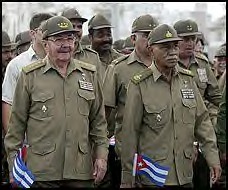
Autobiography of Political Prisoner Janet Africa of MOVE

MY NAME IS JANET AFRICA. I HAVE BEEN IN MOVE SINCE 1972. BEFORE I CAME IN MOVE I WAS LIKE EVERYBODY ELSE IN THIS SYSTEM, LOOKING FOR A HAPPY CONTENT LIFE, STRIVING TO MAKE A COMFORTABLE LIVING CONDITION FOR MYSELF SO I COULD HAVE A GOOD LIFE.

DESPITE THE YEARS OF ME ATTEMPTING TO DO THE THINGS SYSTEMATICALLY REQUIRED TO ACHIEVE THIS KIND OF LIFE, LIVING ACCORDING TO THE CUSTOMS AND TRADITIONS THAT WERE SUPPOSED TO AFFORD ME SOME MEASURE OF SATISFACTION, I NEVER REACHED THAT MEASURE OF SATISFACTION FROM THIS SYSTEM.

I WAS BORN IN 1951 IN NEW JERSEY. MY MOTHER WAS SINGLE. SHE WAS THE SECOND CHILD OF 20. BOTH MY GRANDPARENTS HAD TO WORK HARD TO SUPPORT A FAMILY THAT SIZE, SO BEING THE OLDEST GIRL, THE BURDEN OF RESPONSIBILITY FOR RAISING HER MOTHER'S CHILDREN FELL ON HER - AFTER I WAS BORN MY MOTHER GAVE ME TO MY AUNT TO RAISE SO I COULD HAVE A "BETTER LIFE" THEN SHE COULD GIVE ME, AND NOT HAVE TO GROW UP IN THE COLD STREETS OF NEWARK, NEW JERSEY WHERE SHE LIVED.

I GREW UP LIVING WITH MY AUNT GETTING PRETTY MUCH WHATEVER I WANTED. WE HAD A NICE HOUSE, SWIMMING POOL IN THE BACKYARD, MY AUNT SENT ME TO DANCING SCHOOL FOR DANCING LESSONS: TAP, BALLET, AMD MODERN JAZZ. I WAS INVOLVED IN SPORTS, WON MEDALS, RIBBONS AND TROPHIES IN OUR TOWN COMMERCE OLYMPICS DURING MY ELEMENTARY YEARS. THINGS CAME PRETTY EASY FOR ME. WHEN I WAS 11, IN THE 6TH GRADE, MY MOTHER GOT HER LIFE TOGETHER AND WAS ABLE TO TAKE CARE OF ME AND GIVE ME THE KIND OF LIFE SHE WANTED TO GIVE ME. I SPENT THE NEXT 6 YEARS LIVING BACK AND FORTH BETWEEN MY MOTHER AND AUNT. MY MOTHER FELT GUILTY ABOUT HAVING TO GIVE ME UP WHEN I WAS A BABY SO SHE TRIED HARD TO MAKE UP FOR IT. SHE GAVE ME ALL KINDS OF THINGS. I WAS WELL FED, HAD NICE CLOTHES, WENT TO GOOD SCHOOLS, HAD NICE FRIENDS WITH GOOD PARENTS, PRETTY MUCH THE NORMAL UP BRINGING.

AT 15 I GOT A JOB, THIS WAS TO TEACH ME HOW TO BE RESPONSIBLE AND RELIABLE AND REALIZE I HAD TO PAY MY OWN WAY THROUGH LIFE. AFTER I GOT MY DRIVER'S LICENSE, MY MOTHER BOUGHT ME A CAR. I GRADUATED FROM HIGH SCHOOL, I HAD TO ME TUTORED MY LAST YEAR BECAUSE I HAD A ULCERATED STOMACH. I WENT TO PROMS, WENT ON DATES, I LIVED THE TYPICAL BLACK, NEW JERSEY, SUBURBAN LIFE, BUT I STILL WASN'T HAPPY, AND I WASN'T CONTENT.

I ALWAYS FELT THERE WAS SOMETHING MISSING IN MY LIFE I DIDN'T KNOW WHAT IT WAS AND COULDN'T EXPLAIN IT BUT INSIDE OF ME THERE WAS ALWAYS THIS EMPTY FEELING EVEN WHEN I WAS WITH PEOPLE I WAS CLOSE TO, I STILL, SEEP DOWN INSIDE FELT LIKE I WAS ALONE, THAT I DIDN'T REALLY FIT AND I DIDN'T UNDERSTAND IT. IN MY MIND I WAS SAYING THERE MUST BE SOMETHING WRONG WITH ME, CAUSE NOBODY ELSE WAS FEELING LIKE THAT, BUT THERE WAS NOTHING I COULD DO SO I JUST WENT THROUGH THE MOTIONS.

AS I GOT OLDER, I STARTED GOING FROM JOB TO JOB, LOOKING FOR THE "RIGHT" JOB BUT NEVER SEEMING TO FIND IT. I MOVED FREQUENTLY LOOKING TO FIND A COMFORTABLE PLACE WHERE I FELT SETTLED AND SECURE, I NEVER FOUND THAT EITHER. IN 1970, I MOVED TO PHILADELPHIA, GOT A JOB, MET A MAN, HAD AN AVERAGE TYPE RELATIONSHIP, GOT PREGNANT AND HAD A BEAUTIFUL BABY GIRL. WE BOUGHT A HOUSE IN WEST PHILLY AND TRIED TO MAKE THINGS WORK.

I REMEMBER SITTING IN MY ROCKING CHAIR WITH MY NEW BORN BABY IN MY ARMS FEELING THE SAME WAY MY MOTHER FELT, WANTING SOMETHING BETTER FOR MY DAUGHTER, WANTING HER TO BE SAFE, HAPPY, FREE OF THE HURT, PAIN, DISAPPOINTMENT AND DISILLUSION OF THIS COLD, CRUEL, PREJUDICE SYSTEM.

I DID THE ONLY THING I KNEW TO DO, I PRAYED FOR GUIDANCE, DIRECTION, FOR SOMETHING TO GIVE MY DAUGHTER SO SHE COULD HAVE A GOOD LIFE. I GOT INTO RELIGION, WHEN I SAW THE UNGODLY BEHAVIOR, THE UNCLEAN CONDUCT OF THOSE PEOPLE CALLING THEMSELVES VESSELS OF GOD, PEOPLE WHO WERE SUPPOSED TO BE CHANNELING ME TO RIGHTEOUSNESS, THAT LEFT ME NUMB, DEVASTATED AND HOPELESS BECAUSE I FELT THERE WAS NO WHERE ELSE LEFT FOR ME TO TURN, I WAS GETTING READY TO GO BACK TO SCHOOL, I HAD BECOME SO CALLOUS AND MISTRUSTING OF EVERYTHING THAT SOCIETY CLAIMED TO ME MORAL, I KEPT SEARCHING FOR SOMETHING BUT I WASN'T AS VULNERABLE OR AS EASILY ACCEPTING LIKE I'D BEEN BEFORE BECAUSE I WASN'T GOING TO GET BURNT AGAIN, WASN'T GOING TO PUT MYSELF IN A POSITION TO BE DECEIVED, MISLEAD AND HURT LIKE I DID BEFORE.

ONE DAY I HEARD ABOUT MOVE BY WORD OF MOUTH, AND IT CHANGED MY LIFE FOREVER. I WAS APPROACHED BY AN ACQUAINTANCE AND ASKED WOULD I LIKE TO ATTEND A MEETING, A RAP SESSION MOVE WAS HAVING, TALKING ABOUT THE CONDITIONS OF THE WORLD. I ATTENDED, MOVE GUIDELINES, JOHN AFRICA'S TEACHING WAS READ, THE INFORMATION WAS SO CLEAR, ANALYTICAL AND ABSOLUTE IT TOOK ME OUT. NOT ONLY WAS IT BREAKING DOWN THIS ENTIRE REFORM WORLD SYSTEM BUT DESCRIPTIVELY EXPLAINING THINGS SO PLAIN AND CLEAR, WHEN I HEARD IT IT WAS SO UNDERSTANDABLE, SO RIGHT. IT MADE ME FEEL FAMILIAR AND CONNECTED TO IT. I CAN'T EVEN PUT INTO WORDS THE FEELING I GOT HEARING JOHN AFRICA'S TEACHING, IT GRIPPED ME IN A WAY THAT I'VE NEVER BEEN GRIPPED BEFORE, FOR THE FIRST TIME IN MY LIFE I FELT LIKE THERE WAS HOPE FOR ME, AND THERE WAS REASONS WHY I WAS SO DETACHED, DISSATISFIED AND UNHAPPY.

I WENT TO STUDY SESSIONS REGULARLY AND STARTED INCORPORATING JOHN AFRICA'S TEACHING INTO MY LIFE, IT CLEARED AWAY SO MUCH CONFUSION I HAD BEEN CARRYING, MY MIND STARTED UNTWISTING MY THOUGHTS BECAME CLEAR. THIS REFERENCE WAS SO CLEAR IT PUT ME IN TOUCH WITH MY INSTINCTS.

THANKS TO JOHN AFRICA I'M TRULY SATISFIED, SECURE AND HAVE THE LIFE I'VE BEEN SEARCHING FOR. I AM STRONG, LOYAL, HEALTHY, AND COMMITTED TO FIGHT FOR ALL OF LIFE. I WOULDN'T TRADE THAT FOR NOTHING. I CAN TRULY SAY THAT JOHN AFRICA AND GAVE ME MY LIFE BACK THAT THIS SYSTEM TOOK FROM ME.

I AM A STUDENT OF JOHN AFRICA AND I'VE BEEN TAUGHT THAT THE EXAMPLE OF CLEAN, RIGHTEOUSNESS CAN NOT BE FOUND IN THIS REFORM WORLD SYSTEM AND THIS IS PROVEN IN THE FILTH OF THIS SYSTEM'S ENTIRE HISTORY THIS IS WHAT MOVE IS NOW WORKING TO RID OURSELVES FROM, AND TEACHING OTHERS TO DO THE SAME. JOHN AFRICA HAVE THE DIRECTION TO DIRECT PEOPLE AWAY FROM MAN'S REFORM WORLD SYSTEM TO NATURE, GOD, THE PERFECT SYSTEM.

LONG LIVE JOHN AFRICA!

ONA MOVE
JANET AFRICA

Sunday, July 22, 2007

Iman Proves That 'Black Girls Rule'

IMAN: Proving that 'Black Girls Rule'

By Karu F. Daniels, AOL Black Voices

Though a bevy of beautiful people turned out at New York City hotspot Room Service to fete 'Trace' magazine's 2007 Black Girls Rule edition, the real object of desire was Iman.

The celebrated super-duper-model turned mogul relished in all of the fan fare, which included throngs of paparazzi and glamour seekers who buzzed around her all night like moths to a flame.

As beautiful and famous as Mrs. David Bowie is, I was shocked how low-key she appeared to be. No battallion of bodyguards; no trail of minions circling about; and no bitchy fashion flacks floundering around. The only accessory she had in tow was fashion pioneer Bethann Hardison -- who I adore.

One can't go wrong when they have -- the former model turned talent manager (Tyson Beckford)-- Miss Hardison in their corner.

Iman was ever-present at the soiree for a special reason: she's the guest-editrix of the issue that celebrates black women in their countless chosen professions and private lives.

Packing its pages with articles that, according to Iman, "change and challenge the narrow definition of beauty to include all of us, to celebrate our natural God-given features and to determine beauty in our own terms," the new "Black Girls Rule" -- hitting newsstands this week -- features articles on up-and-coming actress and designated "It" girl Zoe Kravitz (yes, Lisa Bonet and Lenny Kravitz's beautiful baby is all grown up now), bi-racial black girls, unsung heroines and Somali-born activist and 'New York Times' bestselling writer Ayaan Hirsi Ali ('Infidel').

"I was both excited and nervous of the prospect," Iman writes in the issue. "I have been an avid supporter of the celebration of black women in the myriads of our chosen professions as well as private lives. I wanted to co-create an amazing portfolio that would become a collector's edition both for its content and its beauty. Most of my choices in this issue are truly personal as well as universal."

Veering a little differently from issues past, this new edition features a fresh crop of new faces -- and doesn't have the pre-requisite familiar face on its cover (Naomi Campbell, Erykah Badu, Lauryn Hill and Alicia Keys have all graced its cover). Dark-skinned beauty Kinee Diouf leads the brigade a 28-page photo spread dedicated to the beauty of up-and-coming black models.

Looking like a modern day version of Grace Jones, the Senegalese born sensation is quite a vision with her sketched on crown.

"I rule because I'm true to myself," the Paris-based Diouf professed.

Indeed.

So last night, while it was light on the celebrities, I did run into a bunch of characters.

Outside of Miss Iman being stunning as always, and Bethann being such a attentive soul, (pictured above with Iman, and 'Trace' editor Claude Grunitzky (r) ),'New York' magazine contributor Ericka Goodman was working it out; )pictured below l-r) publicity maven Susan Blond working her gold lamé rain hat (it wasn't raining); event producer/performer Kevin-Anthony making his way through the crowd; event publicist Nyle Washington illuminating in the dark; and my two favorites of the evening: 'Complex' magazine's promotion coordinator Peter Robinson (in his Prince-inspired get-up) and power publicist Simone Smalls (with her relaxed tressed coif) -- who told me that she had to walk some clients through the strip club next door to get in.

Saturday, July 21, 2007

Abayomi Azikiwe, Editor of the Pan-African News Wire, Speaks Saturday on the 40th Anniversary of the 1967 Detroit Rebellion--Essay on Crises and Social Transformation

For Immediate Release

Media Advisory

Event: PANW Editor to Deliver Address on 40th
Anniversary of the 1967 Rebellion in Detroit
Date: Saturday, July 21, 2007, 5:00 p.m.-8:00 p.m.
Venue: 5920 Second Avenue at Antoinette, near WSU campus
Sponsors: Workers World Party Detroit Branch
Contact: (313) 831-0750, 680-5508

Abayomi Azikiwe, the Editor of the Pan-African News Wire, Will Deliver a Major Address on the International Significance of the Detroit Rebellion of July 1967

On July 23 the city of Detroit will commemorate the 40th anniversary of the beginning of the 1967 rebellion. During that summer the masses of African-Americans and other working people rose up in opposition to the conditions of racism, police repression and economic exploitation.

After six days of unrest, more than 40 people were dead, thousands of businesses and residences were destroyed by looting and arson and the city was occupied by over 17,000 National Guard soldiers, U.S. Airborne Division Troops, local and state police along with government agents.

This rebellion, which was the largest to date in American history, did not take place in a vacuum. During 1967 there were other outbreaks in over 160 cities throughout the United States. The then Johnson Administration plead for calm while ordering tens of thousands of occupation troops into the urban areas across the country.

The rebellions of the 1967 took place alongside the armed struggles of the Vietnamese people against U.S. imperialist occupation; the growing national liberation struggles on the African continent and the Arab/Israeli war of June 1967.

Utilizing primary source documents and oral histories from the period, Abayomi Azikiwe, will argue that the urban rebellions of the 1960s were part and parcel of a broader struggle against national oppression, western imperialism and international racial capitalism.

In addition, a video featuring rare footage of the 1967 Detroit rebellion will be screened.

This event is open to the general public. For more information contact the Detroit offices of Workers World at numbers listed above.

-----------------------------------------------------------------------------------------
Rebellion, Crisis and Transformation: A View on the Political Economy of Domestic Neo-Colonialism

By Abayomi Azikiwe, Editor
Pan-African News Wire

The purpose of this work is to chronicle the origins of the current political crises which exists in the African community in the United States. The word crisis as it is to be used in this context, refers to the current social conditions existing among the African people of America and the political response and course of action being proposed and executed by the African-American leadership aimed at addressing immense social problems faced by the African-American people. It is the contention of this study that the currently existing leadership of the African people of America are ill-prepared politically and ideologically to deal with the dire circumstances facing the majority of African people in this country. The aim of this article is to propose alternative approaches to historical problems which are increasing in momentum and magnitude.

The inspiration for the development of such a historical review arose from the fortieth anniversary of the African national uprising of 1967. In over 160 cities that year, particularly during the summer months, African poor and working people arose spontaneously in revolt against their national oppression. The City of Detroit, which at that time was the heartland of American industrialism, experienced that largest and most militant of all the rebellions taking place throughout the United States.

The Detroit rebellion of July 1967 and the political events occuring afterwards, between 1967-1973, were instrumental in charting a new course in the containment policy of the US ruling class vis-a-vis its relationship to the African masses in America. The shift from domestic colonialism to domestic neo-colonialism served as a mechanism for the American ruling class to postpone the necessity of addressing the problems created by the large-scale displacement of African people from the rural south to the urban north and west; a population shift which was caused by the industrial expansion in the northern urban areas and the unwillingnesss of the federal government to eradicate de jure segregation in the south.

The increased automation and reliance on high-technology during the 1960s created huge pockets of unemployment and institutionalized poverty in many northern urban areas. These factors coupled with the recalcitrance of the federal government to enforce the Civil Rights and Voting Rights Acts of 1964-65 in a meaningful fashion, lead to mounting frustration among urban African-Americans which erupted in to full-scale civil unrest in the leading commercial and industrial centers of the United States.

The thesis that will be put forward in this study is designed to illustrate that the phenomena of domestic neo-colonialism was instituted as a new form of exploitation designed to perpetuate the national oppression of African people in America. Utilizing Africans as surrogate representatives of US Capital and the continued exclusion of increasing layers of the African proletariat from the US post industrial economy, has created a demand for strategies which extend beyond the role of 'pressure groups' and 'power brokers' in regard to African-American political leadership.

The contemporary dynamics of capitalist development in the United States does not involve the expansion of labor-intensive employment opportunities. Many of the urban revitalization programs have not been geared toward the imporvement of the social and economic conditions of the African proletariat and poor, but has utimately lead to the increased impoverishment of the African urban proletariat and the escalation of class polarization between the African-American petty-bourgeoisie on the one hand and the African proletariat and poor on the other.

Such a course of capitalist development now in operation in the United States requires a sober assessment of the contemporary conditions and potential options aimed at reversing the course of oppression and moving the political mood towards one of a serious approach to these monumental problems. The complete destruction of the system of domestic neo-colonialism is the only hope for the reversal of the abysmal conditions which the African masses live under at present.

The position of this historical review is that the existing African-American political leadership, both mainstream and 'radical' have opted, one way or the other, for the domestic neo-colonial solution to the African-American problem. Many among the African-American petty-bourgeoisie have a vested interests as leaders presiding over a failed system. The decadent culture of modern-day American consumerism has drenched the consciousness of this stratum among African-Americans.

Incapable of becoming a geniune bourgeois class based on the historical development of capitalism, (it is impossible to repeat a 19th century process resulting from the primitive accumulation of capital leading to industrialization), the African-American petty-bourgeeosie has opted for the trappling of bourgeois life absent of any substance. Entirely dependent upon American post industrial capitalism for protection in their roles as surrogates towering over the African masses in their misery, this stratum has objectively become the class enemy (although secondary due to economic baselessness) to the majority of African people in America.

This historical review will not proclaim to be the last word on the current conditions of African-Americans. However, the objective is to lend clarity to the current problems facing African people from the perspective of the African proletariat. The working people initiated and led the African national uprising of 1967 despite its lack of consciousness as a class. Even though this fact was revealed in the ruling class financed studies conducted after the rebellions, it has been the petty-bourgeois stratum among the African populace which has been instrumental in the ruling class designs aimed at the demobilization of the African proletariat as a political force in the African liberation movement in the United States.

In conclusion, this work aims to point out the significant role that the African proletariat of America must play in the overall African Revolution taking place internationally on the continent, in Europe, the Caribbean, Latin America and where ever Africans are being exploited and oppressed. It is only with the collapse of US imperialism that the oppressed people of the world can envision peace, development and security. Consequently, the most exploited and nations within the domestic confines of the United States must be unleashed as a conscious revolutionary force aimed at the liberation of humanity from all forms of exploitation and oppression.

The Theory of Domestic Neo-Colonialism

The notion that African people in America constitute a distinct, oppressed, underdeveloped nation subjected to the economic and political domination of the European settler nation class, has been the contention of many African political tendencies operating within the community. The question of what constitutes a nation is key in determining the validity of African nationhood in the United States. The mere acceptance of African nationhood in the US does not automatically resolve the key questions of: where does this nations exist, i.e., what are the boundaries; what geographic areas does the land mass of the nation cover; do Africans have primary land claims to the south-central and south-eastern portion of the United States; if Africa should be the focus of the African-American political struggles, how does this fit into the contemporary neo-colonial nation-state politics of modern-day Africa?

The concept of the African community being an internal colony comprising wage-laborers and a burgeoning reserve army of labor, has been advanced by various social scientists since the late 1960s. In 1972, Robert Blauner published his study on the sociology of African-American oppression entitled: "Racial Oppression in America," where he advanced the theory of the Black internal colony. Also a further elucidation on this question can be found in Richard C. Hill's "Exploitation and Discrimination in Capitalist Metropolis: Is Detroit An Internal Colony? (1977). Hill provides a definition for what consitutes an internal colony, he states that: "a structure of capital accumulation and social control which corresponds to the logic of exploitation within a racial capitalist society."

The interrelationship between race and class is a key component in viewing the historical development of the oppressed African nation in the US, however, the partial or total recognition of the interrelationship between race and class cannot depict the totality of African-American oppression. In the National Advisory Commission on Civil Disorder Report of 1968, it is stated that there are two socieities in America: one black, one white, separate and unequal. This analysis of the dual nature of the US social system stops far short of stating that African people suffer national oppression. Such an admission would lead one to conclude that such national oppression could only be abolished through a national struggle aimed at ending the oppressive colonial system.

The failure of the National Advisory Commission on Civil Disorder, commonly known as the Kerner Commission, to explicitely accept the nationally oppressed character of the US social system is rooted in the fact that the white ruling elites both liberal and conservative maintain a vested interest in the preservation of the status-quo vis-a-vis the US political economy. The ideology of racism which permeates the major social institutions in the US has served as a rationalization for the maintenance of the current system. Blauner, in relation to racism states that: "the conquest of people of color by white westerners, the establishment of slavery as an institution along color lines, and the consolidation of the racial principle of economic exploitation in colonial societies led to the elaboration and solidification of the racist potential of earlier modes of thought."

This schism based on race has been interjected into the very fabric of the production process itself. The historical development of Detroit itself can be analyzed within this context. With the increase demand for labor during the pre and post World War I periods, the industrial giants encouraged the migration of millions of African-Americans from the rural and urban south to the burgeoning industrial north.

During the years of 1916-17, over 30,000 African-Americans migrated to Detroit. At the beginning of the 1920s, the African-American population had increased by more than 600 percent over what it was in 1910. By 1925, another 40,000 African-Americans had re-located in Detroit, doubling the population of Africans, making it approximately seven percent of the city's population. This migration of African people into Detroit went unmatched by any other city in the industrial north other than the steel center of Gary, Indiana.

The entrance of African-Americans in large numbers into industrial production was carried out in a manner which perpetuated the division of the industrial workforce along racial lines. This division served the aims and objectives of the owners of capital by promoting racial antagonism in the fierce competition for jobs and housing. For example, Ford Motor Company was the largest employer of African-Americans in the auto industry, however, it kept them largely confined to the Rouge complex. Outside of Detroit, Ford refused to hire Africans as production workers, but only as menial workers. In all, the African-American was confined t the most menial, dirty and low-wage jobs inthe entire industry of auto production.

The fact that Ford had hired 12,000 African-Americans in its plants by the mid-1920s, Henry Ford I held tremendous influence in the African-American community of Detroit. His philanthropic assistance to Detroit African-American churches gave his political views tremendous exposure in the community. The Detroit chapter of the National Association of Colored People (NAACP) was heavily based in the churches since its founding in 1912. Consequently, the organization became a recipient of large donations from Ford and other auto owners and executives.

In addition to the influence among the churches and the NAACP, the Urban League of Detroit, which was founded by the Empolyers Association of Detroit and the Community Chest in 1916, was instrumental in recruiting African-Americans into industrial production in Detroit. These factors served to promote a leadership subservience to the auto giants in Detroit. The NAACP, the Urban League and the churches remained for the most part heavily pro-management and anti-labor throughout the 1920s, 30s and early 1940s.

Living conditions for the Africans who had migrated into Detroit remained sub-standard. Africans were confined largely to an area known as Paradise Valley, located on the near-east side of the city. In this area they were charged high rents for deteriorating houses and apartments, and as a result, suffered disease rates 200 to 300 percent higher than the city's white population.

In efforts aimed at maintaining cheap labor and a reserve labor pool, the owners of capital encouraged the development of a split labor market in the industrial north. Racial antagonism was fueled by increased competition among African and white workers for better housing and employment opportunities.

Racial Antagonism and the Split Labor Market

As a result of the development of racial categorization in job availability, pay-scale and working conditions in Detroit, a large segment of the white working class felt that they held a vested interest in preserving racial privilege in employment and housing practices. African-Americans who were restricted as a source of cheap labor and a reserve labor pool, increasingly became the victims of racial violence. In the 1940s, the population of workers grew tremendously in Detroit. In the first three years of the decade, over 50,000 Africans and 500,000 southern whites migrated into the city. This factor of large-scale migration in the 1940s, resulting from increased labor demands in the war industry, exasperated racial tensions.

In the area of housing an acute crisis existed in regard to quality and availability. White controlled real estate firms in cooperation with the "neighborhood improvement associations" worked to keep Africans confined to their sixty-square block black ghetto on the lower east side. These restrictions created appalling for the residents of this section of the city. A report issued by the city's Housing Commission in 1941, pointed out that over 50% of the dwellings in the Paradise Valley section were considered substandard. Many dwellings utilized outdoor toilets which were oftentimes shacks built over open sewage mains. The report also noted that five-room apartments that rent in white neighborhoods for 25 dollars per month, were being subdivided into five one-rooms dwellings renting for 15 dollars each.

As a result of the large number of African-Americans in the city and the many employed in the war industry, the federal government decided to build a housing project for the African-American residents of the city. Heretofore, the public housing in Detroit had been reserved exclusively for whites. This proposal caused a tremendous reaction in the white community, leading to the so-called "race riot" of 1943 which left thirty-five people dead including twenty-five African-Americans.

The role of the white dominated United Auto Workers (UAW) during this period was quite dubious. The UAW had initially fought to keep Africans out of higher paying skilled job categories before the union was recognized formally as a bargaining unit. Henry Ford had promoted this racial division in the work force by cultivating this African workforce as an insurance against recognition in the early 1940s. In 1941, 800 African workers barricaded themselves in the Rouge Plant in order to prevent the final UAW organizing drive. Africans were also used unsuccessfully as strike-breakers at Chrysler in 1939.

Out of the necessity of war-time production it became necessary to upgrade the status of African workers in the auto plants. The response to this was usually the staging of wildcat strikes by rank-and-file white workers. In these instances, the UAW did intervene on the side of African workers being upgraded. In fact, one factor precipatating the racial tension before the June 1943 race riot, was a strike by 25,000 Packard workers over the upgrading of three African workers.

With the conclusion of World War II, the number of migrant Africans in continued to increase. At the same time, many whites began to relocate in the burgeoning suburban areas surrounding city boundaries. The breakdown in housing segregation patterns helped to foster this process. The outlawing of Restrictive Covenants in deeds for housing, resulting in the purchasing of homes by affluent African-Americans in wealthier white neighborhoods.

However, despite slight progress in housing conditions among African-Americans during the post WWII period, the problem of housing availability and quality persisited. During the 1950s, with the building of the major freeways: the Lodge, Ford and Chrysler, many African-Americans communities were violently disrupted from a social standpoint. Areas which were moved into by African-Americans soon became overcrowded and substandard based on the fluctuation of the labor market and the avarice practices of landlords in overcrowded African-American areas.

Another factor in racial antagonism among Detroit's population was the relationship between the majority white police force and the African-American community. Many police were recruited from the lower echelons of the white working class southern migrants. The overt racial intolerance of the white southern migrant worker was unleashed on the African community through the Detroit police force. In the early 1960s, the liberal Jerome Cavanaugh administration gained power in the city as a result of African-American discontent with rabid police brutality prevalent in the community.

These factors served to bring about a racist class exploitation of the African proletariat of Detroit. This phenomena was part of the overall national oppression suffered by African-Americans in the United States. The huge outmigration from the southern rural areas created massive social problems in the large industrial-urban areas of the country. Africans were still subjected to a rigid split labor market which restricted their ability for job advancement and availability. These conditions created poor residential sections occupied and patrolled by avarice white businessmen and racist police. Political boundaries prevented significant African representation in government in Detroit and many other major cities. Despite the passage of the Civil Rights Act of 1964 and the Voting Rights Act of 1965, unemployment, institutional poverty, substandard segregated housing, inferior education, quality health care services and working conditions continued to worsen during the middle to late 1960s.

The Uprising of July 1967

Despite the illusions of the owners of capital and the liberal petty-bourgeoisie in Detroit, the social conditions were ripe for large scale civil disorder in 1967. Detroit was the center of the largest rebellion resulting from national oppression in the entire history of the United States. For a detained account of the 1967 rebellion in Detroit and other cities see the National Advisory Commission on Civil Disorder report. For the purpose of this historical review we will focus on the effect of this uprising and its implication for the evolving nature of national oppression of African people in America.

The immediate response of the United States ruling class to the African national uprising of 1967 was: first, the quelling and confinement of the disorder and secondly, the cooptation of the most militant leadership and social forces involved in the rebellions. The creation of the Kerner Commission itself was a manifestation of this process of containment and cooptation. With the Commission stating that America was divided along racist class lines signalled the flood of programs aimed at quickly quelling the rebellions and embryonic revolutionary mood that was burgeoning in the community. In Detroit, the establishment of the New Detroit Committee was designed to coopt the militant community activists with the establishment of 'youth programs' and 'community development projects.'

The fact that the New Detroit Committee, whose leadership consisted of the top industrial and commercial chiefs in the areas such as: Henry Ford II, Max Fisher, Lynn A. Townsend, William Day, Ralph McElvenny, etc., made overtures to leading 'black militants' in Detroit, indicated that the owners of capital realized that the older leadership had lost credibility in its inability to prevent the Detroit rebellion. However, in these maneuvers laid the seeds of a new methodology of control more insidious in nature than the one existing prior to the 1967 rebellion.

From Domestic Colonialism to Neo-Colonialism

Dr. Martin Luther King, Jr.'s assassination in April of 1968 ushered in a new wave of civil disorder throughout the United States. The magnitude of the rebellions following King's assassination was broader and more overtly political since the African nation was revolting against the murder of its most populist mass leader. in 1967, there were rebellions in approximately 160 cities throughout America. In 1968, after King's death, there were rebellions reported in over 130 cities in the United States. Mass demonstrations were held in most major cities and the African-American youth demonstrated a heightening militant political consciousness in regard to the struggle against national oppression.

The Student Nonviolent Coordinating Committee (SNCC), the Black Panther Party (BPP), the League of Revolutionary Black Workers (LRBW), the Republic of New Africa (RNA), and the militant black student unions arose out of the ashes of the rebellions calling for self-determination and the end to white political hegemony resulting inevitably in a social revolution led by the oppressed African masses. All organizations, with the exception of SNCC, came directly out of the social mood resulting from the rebellions. In 1967, H. Rap Brown (now known as Imam Jamil al-Amin), the chairman of SNCC, became the focal point for repression by the United States ruling class in its effort to suppress the articulate response of African youth and workers in rebellion against the American social system.

Despite this spirit of rebellion among the African working class and youth, the most opportunistic elements in the community, many proclaiming to be 'nationalist', began a scheme of subtle manipulation of mass sentiment along lines quite acceptable to the American ruling class. The first "Black Power Conference" for example, was financed by over fifty multi-national corporations in Neward in 1967. Nathan Wright, the organizer of the Conference, wihich came on the heels of the rebellion in Newark, began a semantical manipulation of the Black Power concept to define it as a group integration into maninstream America, as opposed to individual integration as previously cited by the so-called integrationist wing of the movement.

Either 'group integration' or nor 'individual', one-by-one integration, can fundamentally change the socio-economic status of African-Americans, because neither challenges the hegemony of capital over the lives of the African masses. This phenomena of corporate manipulation of the movement manifested itself in the nationalist wing of the African-American communities through the notion that it was possible to build a parallel black capitalist economy servicing the African community and eventually the entire American economy. As pointed out in the beginning of this article, the United States is dominated by a post-industrial monopoly capitalist economy which is not condusive to the level of competition and primitive capital accumulation required for the development of a national bourgeoise in the classical European/North American sense.

The Reverend Jesse Jackson has advocated a form of 'black capitalism' since the late 1960s when he stated that: "Modern capitalism must become an instrument for a much wider base of participation on the part of the masses in the economic benefits of the nation." Such an ideology cannot liberate the African masses from economic underdevelopment and social stagnation, because the foundation of the American capitlist system is built on the exploitation of African labor during slavery, sharecropping labor exploitation and the theft of Native ladn. Such a participation by the 'masses' as refered to by Jackson, can only take place after United States capitalism has been destroyed and the growth of a socialist society is in progress.

The nature of the contemporary American political economy presents formidable obstacles to the development of genuine African-American political empowerment. The coming to power of the African-American political officials as mayors of large cities, congresspersons in predominantly African-American districts, judges, civil servant bureaucrats, etc., has illustrated the poliltical limitations inherent in electoral politics. Although African-Americans have elected mayors in Cleveland, Gary, Chicago, Detroit, Newark, Los Angeles, Oakland, Washington, D.C., Atlanta, Birmingham, Memphis, etc., the overall social and economic conditions of African people has worsened.

The refusal of many African-American politicians to recognize this factor publicly is rooted in their political vested interests in preserving the status-quo. The fact that political participation among Africans does not extend much behond beyond going to the polls on election day to vote for a Republican or Democratic candidate, points to the limited definition of 'democracy' prevalent in the United States. In order to break the hegemony of the two ruling class party dominated politics, it is necessary to promote and nuture the growth of participatory democracy. Democracy which involves the development and execution of political policy.

The election of these officials to public office has served as a means to fostering further neglect in regard to the social concerns of African-Americans. Since African have the right to vote and 'legal' privileges equal to all other 'Americans', the government and corporate community can now proclaim that the problem is solved. The ball is now in the African-American court: if they do not succeed it is their own fault.

Consequently, the current economic blight within the African nation is subtly regarded as a product of African political empowerment within the United States social structure. Detroit is devastated because the 1967 'riot', according to the ruling class view; the Young administration, the first black mayor in Detroit, was inefficient, therefore Detroit became depressed economically. Crime is also cited as a root cause of Detroit's post rebellion crises, however, never does the ruling class viewpoint cite the large scale labor idleness as resulting from the super labor exploitation and unplanned automation of industry.

A first page article published in the Wall Street Journal on June 17, 1987, focused on Detroit twenty years after the rebellion in 1967. In investigating this story, the writer, John Bussey, recognizes immediately that the social conditions of the people are much worse than they were twenty years before. The article points out that the aftermath of the rebellion saw the influx of large-scale spending on job training and social programs, however, this was not enough to sustain long term growth and prevent ever encroaching urban blight.

According to the statistics in the Wall Street Journal article, 28% of African households were receiving public assistance and 26% of Africans are living below the officially designated poverty line, an increase of 4% since 1970. These conservative figures gives one a glimpse of the level of economic underdevelopment characterizing the African nation. Other figures of importance were the comparison of the 1967 rate of unemployment among Africans which stood at 10% with 1987's being an estimated 25% of the African labor force in general and at least twice as high among African youth.

The quotation by Detroit's first black mayor Coleman Young, who served between 1974-1994, illustrates the politico-ideological bankruptcy of his strata within the community. Young was quoted as saying: "What I've been trying to do is to develop downtown to make the hard conversion from automobiles to service and high-tech, which is what we must do if this city is to survive. There is no other answer." What Coleman did not point out was that high-tech and service industries in a post-industrial economy are not labor intensive, i.e., they will not require the employment of large numbers of unskilled or skilled workers significant enough to make a miniscule dent in the structural unemployment in Detroit.

In 2007, some twenty years later, the same strategy and political line is advanced by Kwame Kilpatrick, who was quoted in the Detroit corporate press as saying that the heroic history of the 1967 rebellion is no longer relevant to his young children. What Kilpatrick and other black mayors avoid is any penetrating analysis of their policies which ultimately benefit the interests of capital and not the masses who pay the taxes to provide public subsidies to multi-national corporations operating in the city.

The hopeless nature of the situation as portrayed by the Wall Street Journal in 1987 is again utilizing the 'blame the victim' syndrome prevalent in United States ruling circles since the 1970s. The problem of course is one created by the dynamics of post-industrial monopoly capitalism: human idleness, massive military expenditures, drug abuse, street violence, racist hatred between the national groups and the oppression and exploitaition of women. These social ailments are the result of a decaying capitalist system which can only be solved through a social revolution led by the oppressed national groups and the working class.

Some Solutions

In analyzing the current situation of the oppressed African nation in America, we must not get stalled in the acquisition of data which lends empirical evidence to this thesis. The ultimate aim of this work is to provide a political praxis for the effective political struggle against national oppression in its current domestic neo-colonial form. In the beginning of this historical review it was pointed out that it is necessary to define what liberation consist of for the African nation. Imperialism must be defeated no doubt; but what is the most effective strategy geared toward this aim?

Africans constitute a nation based on the historical development of United States capitalism and its handling of the national question. Coming from many African nations and nationalities captured by the Atlantic slave trade, African people were subjected to the vicious exploitation of their labor, the capture and colonization of their land by western European imperialists and legal disenfranchisement and social degradation by European political structures. Consequently, this exploitation and oppression created colonized African nations on the Continent and in the Americas. The struggle is to liberate the oppressed African nations from capitalism, racialism and imperialism and to build societies devoid of the exploitation of human beings by dominant social classes.

The question then arises as to the existence of the location of the African nation itself in the United States. Many accept the view of a nations of Africans in the south-central and south-eastern regions of the United States. However, it is the contention of this article that the mass outmigration of the African rural proleteriat and landless peasantry from the southern United States into the urban and now suburban areas, has torn down the notion of territorial boundaries as a determining factor in defining the parameters of the African nation in America. Since the 1960s, the existence of large numbers of Africans in industrial and commercial centers on the north-midwest, northeast, west and growing metropolitan areas of the south, has destroyed the ability of anyone to make a credible argument for the sole existence of the African nation in the south.

Simply because Detroit exist outside the geographical boundaries laid down by the New African or Black Belt theses, it cannot be stated that the mere existence of this geographical factor would exclude the African inhabitants of Detroit from the African nation in America. It is the contention of this work that Africans throughout the United States are subjected to national oppression as described in this article and are in need of self-determination in order to liberate themselves from national and class oppression under United States capitalism.

African Liberation and the North American Land Question

The notion that Africans have a legitimate right to primary land claims in North America as a manifestation of their right to self-determination is rejected by this thesis. No historical basis can be laid for the African origins in North America. The existence of the Cherokee, Creek, Seminole, Dineh, Hopi, etc., cannot be ignored when seeking solutions to the national question in North America. The history of capitalist development in North America was dependent upon land and mineral wealth seized by European settler-imperialists. Consequently, the only primary land claims to North America can be made by Native peoples.

The historical land base of African people is the African continent which the people were taken from as a result of the Atlantic slave trade. The fact that African labor was pivotal in efforts aimed at capital accumulation in North America and western Europe, the development of this wealth was carried out on behalf of the ruling European regimes. As a result of these factors of European capitalist exploitation of African labor, many attempt to justify the dismissal politically of the Native American's legitimate claims to primary land rights in North America. Such a position cannot be justified legally or historically.

The question then arises: how does the primary land claims of African-Americans to Africa actualize itself in the context of modern-day neo-colonialism in Africa? The present political situation in Africa is largely determined by historical and geo-political factors rooted in the colonial period. Although there have been progressive strides made in many African states and the existence during the post-independence period of a number of 'peoples' democracies' in Africa has lended a progressive current in some societies, the overall political economy of modern-day Africa is dependent upon western imperialist capital.

Recognizing the current nature of the African political economy on the continent, how can Africans in America fight for independent nationhood rooted in a methodology geared toward socialist development? Firstly, it is important to realize that the attainment of politcal nationhood does not automatically solve the problems of exploitation and oppression. The lessons of over fifty years of independent former colonial nations in Africa, Asia and Latin America, illustrates that until a formal break is made with imperialism very little progress can be expected overally. Despite the tremendous assistance given to national liberation movements and developing states by the socialist countries, their (the socialist nations) economies still remain incapable of totally counteracting western imperialist hegemony within the world system.

This sober assessment requires that the African liberation movement in the United States be firmly anti-capitalist in orientation and led by the African proletariat. Only the destruction of the world capitalist-imperialist system can bring about the genuine liberation of African and all oppressed people. The African movement in America must struggle to destroy American capitalism as its contribution to the liberation of Africans and all oppressed and exploited peoples. The exercise of self-determination can be ensured with the destruction of United States capitlalism and the federation of the African nation in America with a progressive and revolutionary Africa united under a socialist political and economic system.

Africans under these conditions could decide if they wished to migrate to Africa or remain in America, but their strength will ultimately be in a united socialist Africa and a revolutionary socialist existence in America. A state mulst exist in North America controlled by the proletarian parties and mass organizations of the nationally oppressed groups to ensure the defeat of national chauvinism, racialism and imperialist-capitalism. Such a situation would resolve the foremost contradiction in modern society: the antagonistic contradiction between imperialist capital and exploited labor.

Conclusion

The view put forward in this work is designed to provide an analysis of the African condition and a view on how the problems of oppression, exploitation and underdevelopment can be solved. The abysmal conditions under which Africans endure in the City of Detroit provides an excellent case study for making a strong argument identifying the African-American condition as one of an oppressed nation suffering from a form of domestic neo-colonialism designed to perpetuate the existence of American political and economic power.

The solution must lie outside the capitalist system since the development of American capitalism was based on the exploitation of African labor and natural resources. The seizing of state power by the oppressed national groups in the United States and the ascendency of proletarian state power in a unified Africa can bring genuine independence and freedom to African peoples and consequently assist in the social liberation of the immense majority of humanity.

---------------------------------------------------------------------------------------
About the Author: Abayomi Azikiwe is the editor of the Pan-African News Wire, an electronic international press agency. Azikiwe has been a close observer of the social plight of Africans in the United States and the evolving character of the nationally oppressive apparatus employed by the ruling class in that country. Articles from the Pan-African News Wire have been published in dozens of periodicals, journals, research reports and web sites throughout the world.
----------------------------------------------------------------------------------------