Tuesday, September 03, 2013

U.S. Threatens Iran Through War Propaganda Against Syria

September 2, 2013

Drawing a Line on Syria, U.S. Eyes Iran Talks

By ROBERT F. WORTH
New York Times

WASHINGTON — As the Obama administration makes a case for punitive airstrikes on the Syrian government, its strongest card in the view of some supporters of a military response may be the need to send a message to another country: Iran. If the United States does not enforce its self-imposed “red line” on Syria’s use of chemical weapons, this thinking goes, Iran will smell weakness and press ahead more boldly in its quest for nuclear weapons.

But that message may be clashing with a simultaneous effort by American officials to explore dialogue with Iran’s moderate new president, Hassan Rouhani, in the latest expression of Washington’s long struggle to balance toughness with diplomacy in its relations with a longtime adversary.

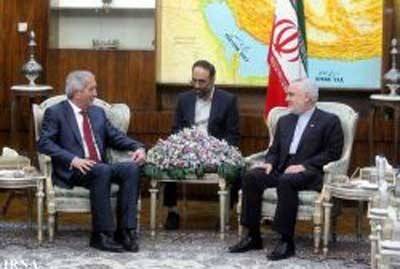
Two recent diplomatic ventures have raised speculation about a possible back channel between Washington and Tehran. Last week, Jeffrey Feltman, a high State Department official in President Obama’s first term who is now a senior envoy at the United Nations, visited Iran to meet with the new foreign minister, Mohammad Javad Zarif, and discussed possible reactions to an American airstrike in Syria.

At the same time, the sultan of Oman, who has often served as an intermediary between the United States and Iran, was in Tehran meeting with Iran’s supreme leader, Ayatollah Ali Khamenei.

Neither Mr. Feltman nor Sultan Qaboos bin Said al Said of Oman has said anything about carrying messages between the two governments. Still, those overtures, along with some surprisingly mild noises from Iranian leaders, have raised hopes that Washington may be able to thread the needle — to strike Syria without compromising efforts toward an Iranian-American détente before meetings at the United Nations General Assembly this month.

Those hopes may well be premature: even if Mr. Rouhani and his foreign minister are eager for a deal ending the dispute over the future of Iran’s nuclear program, it is far from clear that they would be able to deliver one. Negotiations have been stalled since last year, and final authority on foreign policy rests with Ayatollah Khamenei. The Iranian president’s hand, whatever his politics, is weakened further during national security crises, analysts say, and hard-liners are likely to be empowered.

Like Mr. Obama, Mr. Rouhani — who has declared his goal of resolving tensions with the West and bringing “more transparency” to nuclear talks — is vulnerable to domestic conservatives, who still blame him for having signed an agreement in 2003 opening Iran to United Nations inspectors.

“I am convinced that Rouhani and Zarif want to overcome the hostility between the U.S. and Iran, but a military strike on Syria could be a spoiler,” said Hossein Mousavian, a former nuclear negotiator for Iran who is now a visiting scholar at Princeton University.

Even as Secretary of State John Kerry worked to build support for a strike, his Iranian counterpart, Mr. Zarif, known as a moderate who hopes for dialogue, seemed to be working to avert one, declaring in an interview on Sunday that Iran warned the United States last year about chemical weapons getting into the hands of Syrian rebels. On Monday, he even tried to suggest that Mr. Obama was closer to his way of thinking, saying the American president was being pushed toward war by hard-liners in his own government.

Nuclear weapons aside, the debate over chemical weapons has raised questions about the strength of Iran’s commitment to the government of President Bashar al-Assad of Syria. Iran suffered terrible losses to chemical weapon strikes during its decade-long war with Iraq in the 1980s, and the issue is a delicate one for many Iranians. Mr. Rouhani aroused some controversy last week by strongly condemning the use of chemical weapons in Syria on his English-language Twitter feed, without saying who used them.

Mr. Zarif made similar comments on his Facebook page, and others went further, including a former Iranian diplomat who suggested that Iran should not put all its eggs in one basket. A former president of Iran, Ali Akbar Hashemi Rafsanjani, was quoted in Iranian state media accusing Mr. Assad of using chemical weapons on his own people, though the government later disavowed those comments.

But Syria remains an essential ally for Iran, and a crucial link with Hezbollah, the Shiite movement based in Lebanon. There is no sign that Iran’s leaders are backing off; an Iranian delegation visited Mr. Assad in Damascus on Sunday to reaffirm its country’s commitment. But with the Iranian economy in tatters, the military support to Syria is costly.

“The question is, if things go badly for Assad on the battlefield, at what point would Iran let the rope go?” said Mehrzad Boroujerdi, the director of the Middle East studies program at Syracuse University.

If more evidence emerged that Mr. Assad’s military had used chemical weapons, that would raise the political cost of continuing to support him, Mr. Boroujerdi added.

One thing is clear: the statements by Iran’s leaders have shifted from earlier this year, when high-ranking Iranian officials said a foreign attack on Syria would be treated as an attack on Iran itself. There may even be some relief at the prospect of more direct American involvement in the Syrian conflict, which has occasionally been cast as “Iran’s Vietnam,” some analysts say.

“The reality is that Obama’s military action will make the Syrian tragedy his and not Iran’s,” wrote Farideh Farhi, an Iran scholar at the University of Hawaii, in an analysis published online at Lobelog.com. “And in Iran’s postelection environment, in which the country has moved toward national reconciliation — both among the elite and between the government and the population — nothing suits the Islamic Republic better than divesting itself from this issue quietly.”

For all their mutual antipathy, the United States and Iran may ultimately find common ground in Syria.

“The United States and Iran are fighting a zero-sum proxy war in Syria at the moment,” said Karim Sadjadpour, an Iran analyst at the Carnegie Endowment for International Peace. “If and when Assad falls, the two sides will have a mutual adversary in radical Sunni jihadists.”

Judicial Advisory Body Recommends Dissolution of Egypt's Brotherhood

Judicial advisory body recommends dissolution of Egypt's Brotherhood

El-Sayed Gamal El-Din , Monday 2 Sep 2013

State Commissioners Authority, which advises the government, calls for dissolution of Muslim Brotherhood based on law prohibiting formation of paramilitary groups by non-governmental organisations

Egypt's State Commissioners Authority, a body that advises the government on legal issues, has recommended the dissolution of the Muslim Brotherhood.

In an announcement on Monday, the Authority also called for the group’s national headquarters in Cairo’s Moqattam to be closed.

The recommendations were made in accordance with Law 84 of 2002, which prohibits non-government organisations and institutions from forming paramilitary groups.

The Authority's recommendations to the government are non-binding.

In March 2013, the Muslim Brotherhood, outlawed since the 1950s, was officially registered as a non-governmental organisation by the Ministry of Social Security.

After the removal of Islamist president Mohamed Morsi on 3 July, then minister of social affairs Nagwa Khalil asked whether the Brotherhood’s headquarters had contained weapons and whether there were militias or militant groups linked to the group.

The questions were asked after eight people died on 1 July in clashes at the Brotherhood HQ in Moqattam after dozens of protesters stormed the building.

Several Muslim Brotherhood leaders, including Supreme Guide Mohamed Badie and his deputies Khairat El-Shater and Rashad Bayoumi, appeared at a criminal court on 31 July for allegedly inciting the killing of protesters at the group’s HQ.

http://english.ahram.org.eg/News/80593.aspx

Military-Appointed Constitutional Amendment Committee In Egypt Declares Political Supremacy

Secular political forces satisfied with Egypt's constitution-amending committee

Zeinab El-Guindy, Monday 2 Sep 2013

Socialist Popular Alliance Party and Egyptian Social Democratic Party, among other political groups, say 50-member committee representative of Egyptian people; Salafist Nour Party critiques minimal Islamist representation

Egypt's newly formed 50-member constitution-amending committee has been mostly criticised by Islamist groups and praised by many secular political groups.

The makeup of the committee, announced Sunday by the presidency, includes only a few Islamists and critics of the ouster of ex-president Mohamed Morsi by the army on 3 July following mass popular protests.

Abdel Ghafar Shukr, the leader of the Socialist Popular Alliance Party, praised the new constitutional amendment committee in press statements on Monday, describing it as being representative of all Egyptians.

"Most of the committee's members have been elected through authorities and syndicates, like the representatives of the students unions, syndicates of journalists and lawyers, as well as the members of political parties," said the Leftist politician, adding that public figures selected for the committee also represent Egyptian society.

Ayman Abu-Ela, Secretary of Parliamentary Affairs in the Egyptian Social Democratic Party, expressed his complete satisfaction with the formation of the 50- member committee.

"The committee was chosen carefully when it comes to diversity," he said in a statement on Monday, praising the representation of youth in the committee.

However, Abu-Ela believes there should be a larger representation of women in the committee, which currently includes five women.

Mohamed Abu El-Ghar, leader of the Egyptian Social Democratic Party, is a member of the committee as a representative of liberal powers.

The 'Rebel' (Tamarod) group, which called for the 30 June nationwide protests that paved the way for the armed forces to topple Morsi, also praised the make-up of the 50-member constitution committee.

Mai Wahba, a spokesperson for the group, told Al-Ahram’s Arabic website on Monday that the committee was diverse and representative, saying that the anti-Morsi Rebel campaign's proposals have largely been met.

Two of the 'Rebel' campaign's founders, Mahmoud Badr and Mohamed Abdel-Aziz, have been included in the committee.

'Illegitimate'

On the other hand, the Salafist Nour Party filed a complaint in a statement earlier on Monday, saying that the newly formed constitutional committee marginalises the Islamist current. The party added that it is still evaluating the situation and "all options are on the table."

"The formation of the committee is really bad and reflects the domination of the leftist-Nasserist faction," the Nour statement reads.

The Nour Party has approved the roadmap that was announced by army-chief Abdel-Fattah El-Sisi following the removal of president Morsi from office.

The Salafist party has warned that eliminating certain articles from the suspended-2012 constitution concerning Sharia law is an attempt to move Egyptians away from their "Islamic identity."

Alaa Abu El-Nasr, general secretary of the Building and Development Party, the political arm of the ultra-conservative Al-Gama'a Al-Islamiyaa, has criticised the announcement of the 50-member committee's formation, saying that it does not give legitimacy to the current interim-government.

"The current regime does not have any democratic legitimacy. Our position following the ousting of president Morsi is clear; we consider the amendment of the constitution illegitimate," said the member of the Building and Development Party, adding that his party has refused any part in the committee.

"How could the people accept an unelected constituent assembly when the opposition in the time of president Morsi used to attack a constituent assembly chosen by an elected president," Abu El Nasr said.

The Building and Development Party and Al-Gama'a Al-Islamiyaa are founding members of the Muslim Brotherhood-led coalition.

The coalition, namedthe NationalAllianceto Support Legitimacy, has already declared its complete refusal to adhere to the roadmap announced by Egypt's interim government after the ousting of Morsi.

The Muslim Brotherhood, from which Morsi hails, has been critical of the suspension of the 2012 constitution and any moves to revise it since Morsi's ouster.

Presidential spokesman Ihab Badawi announced on Sunday the composition of the 50-member committee that has been tasked with amending the suspended 2012 constitution.

The committee will examine amendments drawn up by a separate group of legal experts formed in July, and is to produce a final draft of the constitution within 60 days.

Interim President Adly Mansour will then put the constitution to a national referendum within 30 days of receiving the final draft. It will become effective upon public approval.

The 2012 constitution was suspended as part of the roadmap put forth by the Egyptian armed forces, together with political groups and public figures.

Under Morsi, Egypt's non-Islamist political forces have repeatedly argued the suspended constitution was not representative of all layers of society and limited many freedoms, blaming the majority Islamist members of the outgoing constituent assembly for ignoring their recommendations.

http://english.ahram.org.eg/News/80639.aspx

Egypt Brotherhood Leader Arrested In Cairo

Egypt Brotherhood leader Saad El-Husseini arrested in Cairo

Sayed Gamal El-Din, Monday 2 Sep 2013

Another leading figure of the Muslim Brotherhood - former governor of Kafr El-Sheikh - is arrested by security forces

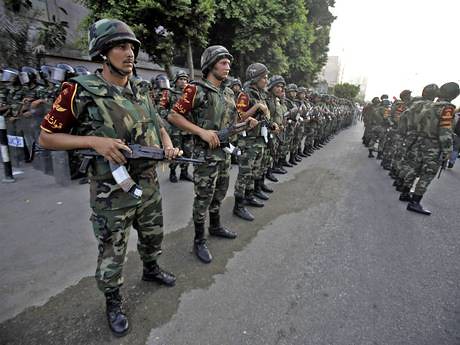
Egyptian security forces arrested Muslim Brotherhood leading figure Saad El-Husseini on Monday, as part of an ongoing crackdown on the Islamist group's members, following the ouster of former president Mohamed Morsi amidst mass popular protests.

El-Husseini was located and taken from a house in the district of New Cairo on the outskirts of the capital on Monday evening.

Fifty-four year old El-Husseini is a member of the Muslim Brotherhood's Guidance Bureau – the group's highest administrative board – and a senior member in the group's Freedom and Justice Party.

He is also the former governor of the Delta governorate of Kafr El-Sheikh.

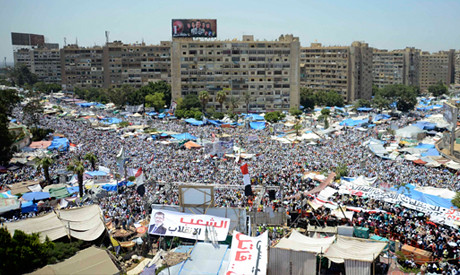
Dozens of leading Brotherhood figures, including the group's Supreme Guide Mohamed Badie, and hundreds of members have been arrested since security forces dispersed two large pro-Morsi protest camps in Cairo on 14 August, during which hundreds were killed.

Most of the Brotherhood leaders who have been arrested over the last few weeks have been accused of 'inciting violence' during clashes that broke out in the wake of the ouster of Morsi, who hails from the Brotherhood.

http://english.ahram.org.eg/News/80650.aspx

NATO Continues Imperialist War Threats Against Syria

NATO head 'personally convinced' Assad used chemical arms

AFP, Monday 2 Sep 2013

NATO chief stresses international community cannot allow use of chemical weapons to go by unchallenged

NATO head Anders Fogh Rasmussen said Monday he is "personally convinced" that Syrian President Bashar al-Assad used chemical weapons near Damascus last month.

"Personally, I am not only convinced that a chemical attack has taken place ... I am also convinced that the Syrian regime is responsible," Rasmussen said when asked if he had seen intelligence to prove Assad was behind the suspected attack which left hundreds dead.

"In general, we have concrete information," he said.

Rasmussen stressed repeatedly that the international community could not allow the use of chemical weapons go by unchallenged but he was guarded about any military response.

"The aim of the response should be to send a very clear message ... that you cannot do that without a very firm international reaction," he told a regular news conference.

Any military action, however, "would be very short, sharp, tailored," Rasmussen said, adding: "I don't see a long-term, sustainable military solution in Syria ... we need a political process."

It would be up to NATO's 28 members, led by the United States, to decide what specific military response they might make, he said.

"I don't envisage any further NATO role" beyond providing a forum for consultations and backing up member Turkey which shares a tense border with Syria, he added.

Earlier this year, NATO deployed Patriot anti-missile batteries supplied by the United States, Germany and the Netherlands to help defend Turkey after border villages were hit by fire from inside Syria.

The Patriot missiles have a deterrent effect, Rasmussen said when asked about a possible change in NATO's stance if Syria were to retaliate against Turkey for a US strike.

"An attack on one ally is an attack on all," he said, recalling NATO's core rationale and mission.

"I can assure you we have all plans in place for an effective defence of Turkey ... I don't see any need for extra contingency planning."

Western powers face considerable public reluctance to get involved in another Middle East conflict and US President Barack Obama is trying to drum up Congressional backing for his plans to punish Assad.

Britain has backed out of any military commitment after a parliamentary vote last week blocked efforts by Prime Minister David Cameron to join US forces in military action, leaving France the only major European country still committed to a strike.

http://english.ahram.org.eg/News/80613.aspx

Client Arab League Regimes Urge United Nations Action In Syria

Arab League urges UN-backed action in Syria

Ahram Online, Monday 2 Sep 2013

Arab League foreign ministers call for international community and United Nations to take 'deterrent' action against Assad regime over its alleged use of chemical weapons

Arab League chief Nabil El-Araby says 18 Arab League states support tough measures against the government of Bashar Al-Assad for its alleged chemical attack that killed at least 1,400 civilians in Damascus last week.

"These weapons cannot be used except via certain rockets and aeroplanes, so they were conducted by the [Assad] regime," El-Araby said at a press conference on Monday.

El-Araby also spoke of a "new kind of cold war," referring to the US and Russia, which support opposing sides in the conflict.

US President Barack Obama announced on Saturday that he would seek the approval of Congress before launching a “limited and narrow” military intervention in Syria.

During the last few months, both powers have tried to bring the warring sides to a peace conference dubbed Geneva 2.

"What was agreed at Geneva 1 has not been implemented,” El-Araby said. “There must be a political solution because the government will not be able to put an end to the rebels, and vice versa."

http://english.ahram.org.eg/News/80572.aspx

UAE to Shower Egypt With Additional $2 Billion In Deposits, Grants

UAE to shower Egypt with additional $2 bn in deposits, grants

Ahram Online, Tuesday 3 Sep 2013

Egypt to receive further financial boost after the United Arab Emirates pledged additional $2 billion in aid for the country

Mohammed Bin Zayed Al-Nahyan, the crown prince of Abu Dhabi, has pledged an additional $2 billion aid comprising deposits and grants to support Egypt, Al-Ahram's Arabic-language news website reported on Monday.

Al-Ahram has quoted anonymous sources in Egypt’s Cabinet as saying that the Emirate’s prince vowed to support the country in several fields through making new investments in the domestic market.

Al-Nahyan, who is also the deputy supreme commander of the UAE Armed Forces, arrived in Cairo on Sunday to discuss ways of supporting Egypt with the interim figures after the 30 June uprising that led to the ouster of Islamist president Mohamed Morsi.

Egypt's Central Bank said in July that it received $3 billion in aid from UAE, part of the $12 billion pledged by Gulf Arab states after Morsi’s removal.

The UAE has also sent seven shipments of fuel worth $225 million in the same month.

http://english.ahram.org.eg/News/80652.aspx

Rita Marley Speaks at FELABRATION

RITA MARLEY Speaks at FELABRATION

Nigeria ThisDay

Rita Marley, wife of the late reggae music icon, Bob Marley, has agreed to participate in this year’s Felabration Festival; just as one of the sons of the late reggae legend will be performing with his band at the week long annual festival.

At a meeting in Ghana last week with Yeni Kuti, founder of the Felabration brand and Mr. Theo Lawson, Chairman, Felabration Organising Committee, Mrs Marley agreed to be a Special Guest Speaker at this year’s Felabration Symposium. This year’s symposium topic is; Movement of the People: The Fela-Bob Marley Perspective.

Recall that both Fela Anikulapo-Kuti and Bob Marley popularised the theme “Movement Of The People” in their various works. Fela’s political party was called Mvement of the People (MOP) and he also waxed a hit tune by that same title. Bob Marley on the other hand, had a hit album titled; Exodus: Movement of Jah People.

This year’s Felabration Festival’s theme is fashioned to rekindle the people oriented messages these two mega stars imbibed in their days.

Meanwhile, one of Bob Marley’s reggae super-star sons is billed to perform as one of the star acts in this year’s Felabration Festival. He has agreed with the Organisers of the Festival to break out of his current global tour to honour the Movement of the People. He will share the stage at some point in the Festival with Afro beat king Femi Kuti and his younger brother Seun Kuti, who currently leads Fela’s Egypt ‘80 band.

Remarkably both Fela and Bob Marley never shared a common stage throughout their playing lives despite the mutual respect they had for each other. This year’s Felabration Festival will run from October 14 to October 20, beginning effectively with the symposium

China and Nigeria: The New Path

China and Nigeria: The new path

TUESDAY, 03 SEPTEMBER 2013 00:00 OGHOGHO OBAYUWANA
Nigerian Guardian

Foreign Affairs Editor OGHOGHO OBAYUWANA who was recently in Beijing, China, writes about the need for sensible action on all of the identified areas of bilateral interest so that using a fitting development model, citizens in Nigeria and China can truly benefit from the refocused strategic relations between the two countries.

IN order to have a deeper understanding of the philosophy of survival and progress of the Chinese and maybe, the secret of their economic audacity, the rest of the world might do well to pay attention to a Chinese worldview that holds the concept of the Yin (negative) and Yang (positive).

To the Yin for instance, belongs the earth, woman, the moon and the colour black. As for the positive, according to this worldview, you have the Sun, Man, Heaven and the colour White. Between these however, is the doctrine of the middle – the Mean? Now, this doctrine recognizes that there is really no constancy of matter. That at some point, it might be expedient to be Yin or Yang, but a man or a nation must be able to recognize when it pays to be in the Mean. To be in the Mean could be likened to being grey or having sensible adaptability and flexibility.

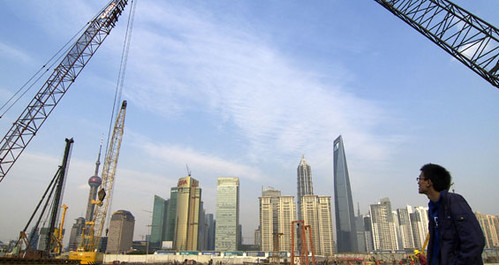
And unknown to the Chinese Vice Minister, State Council of Information, Li Wufen, he may have been giving a toast to the efficacy of the twin polar concepts recently in Beijing while providing insights to how the strategic relations between Nigeria and China could be made to impact on the ordinary citizens of both countries. Modern China started off as a communist nation. Today, it has effectively employed a blend of progressive communism and free market economic principles to become the world’s second biggest economy.

And the Asian giant is increasingly witnessing state visits by African leaders. Wufen spoke just as the president of another African country Uhuru Kenyatta of Kenya happened to be on a one-week state visit to China. For Nigeria, it is a critical turning point. The African giant is now the third largest trade partner of China in Africa. In 2012, the trade volume between the two countries reached $10.57 billion, and by the end of last year, China’s non-financial direct investment in Nigeria accumulated to $8.7 billion. From a lowly $2 billion in 2002, the volume of trade between Nigeria and China is now projected at $13 billion by the time another stock taking is done. Nigeria currently commands over 30 per cent of China’s total trade transactions with the whole of West Africa.

The new vista of development strategy which the Chinese minister opened by inference, was to the effect that taking advantage of the Chinese model for economic development and transformation rather than a stereotyped proscription being handed to some African countries, is key in the realization of the expected economic benefits of countries like Nigeria which have strategic relations with China. In effect, a change of development strategy by countries seeking to exit the third world has become an imperative in the aftermath of the global melt down.

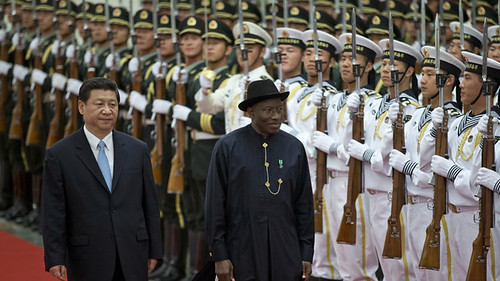
As China prepares to launch a second satellite into orbit for Nigeria, it can safely be deduced also that part of the bid to consolidate and make meaningful use of the refocused bilateral relations between the continental giants of Asia and Africa, is responsible for the nature of agreements signed by President Goodluck Jonathan with his Chinese counterpart, President Xi Jinping.

Indeed, President Jonathan already disclosed that Nigeria is currently strengthening its investment and economic ties with China because of the exponential increase in the bilateral trade volume between the two countries within the last few years, as well as China’s involvement in the financing and construction of key infrastructural projects in Nigeria.

So, even as there has arisen the need to critically examine the development model delivery for Nigeria, there are issues of concern that collaborations between the two countries can take care of. Infrastructure is one. Power is another. And then there is aerospace, food security and petroleum industry overhaul. Now, with the apparent hewing of a new path, how active can Nigeria be? Have all of the moribund agreements and cooperation formats been given sufficient implementation levers?

We start with petroleum. Agreeing that cooperation with Nigeria in the energy and power sector has become very critical, Minister Wufeng had said “Yes, in the future, we want to set up factories and refine (crude oil) in Nigeria and also, we have that understanding regarding helping out in the mutual cooperation. The investments would involve our equipment and expertise. So, before then the petrochemical companies in China would likely take all the factors into consideration in terms of security of such investments.”

Nigeria currently imports refined petroleum products despite having the reserve and four state-owned refineries. So, this offer deserves a mighty follow up. Well this is not an entirely new concern. Before now, Nigeria had made some inroads for investment drive to Asia with a major focus on China. In 2010, a 42-man business delegation from relevant sectors – maritime and ship-building, energy, power, telecommunications, infrastructure and general services met across the board with Korean and Chinese experts, industrialists and government officials at the instance of the then Minister of Foreign Affairs, Odein Ajumogobia.

Stressing the need for investments and businesses to thrive on both sides with a balanced involvement of both nationals and business concerns, the Chinese foreign minister at the time, Yang Jiechi had urged the Federal Government to provide policy support as well as security guarantees in order for Chinese investments as well as others being planned in aid of infrastructural development. What came out of this?

One of the sweeteners of the consultations by the Nigerian team then, came in the form of a public security system deal by a Chinese firm – ZTE to assist the Nigerian police force in its renewed effort to fight crime. The Nigeria-ZTE security deal also carries a three-year agreement. The Nigerian half of the negotiation table stressed the need then to ensure that the accompanying maintenance component of the agreement is honoured. Heart-warmingly, ZTE further agreed to a stricter maintenance regime, which carries a proviso for the training of Nigerians for the continuous maintenance of facilities to be installed. How far is this journey also?

The firms, which got assurances from the Nigerian government team on facilitated legal business environment incentives, include China National Petroleum Corporation (CNPC), China National Offshore Oil Corporation, Huawei as well as China State Construction Engineering Corporation (CCEC). What has been their level of activity in Nigeria since then?

Now, in Beijing, the High official of the African Department in the Chinese cabinet, Zhou Pingjian, said the visit of Chinese president in March this year to three African countries “signals the new thinking by China on greater mutually beneficial cooperation with Africa”.

Making reference to the $500 million loan concession secured by Nigeria during President Jonathan’s visit last month, he said, “It is the start of more good things to come. We are now to follow through on our agreements… Since 2000, in the working of Forum of China- Africa Cooperation (FOCAC), the first visit made by President Xi Jinping outside China on his assumption of office in March was to Africa. We share extensive common interest. Today trustworthy friends and sincere partnership forever is what we desire in the new age. China would intensify and not weaken its relations with Africa”.

Preparing the grounds for the Chinese minister’s comments earlier, chief executives of China’s oil corporations had in response to questions by journalists from Nigeria, stated the willingness to cooperate with the Nigerian government to bring Chinese expertise into the Nigerian oil industry.

They particularly signified readiness to go into partnership with Nigerian National Petroleum Corporation (NNPC) if possible to help in refining Nigeria’s crude oil. China Oil Petrochemical CINOPEC Zhang Shagauog made the first disclosure during a briefing at Zibo in Shandom province.

Interestingly, Qilu Petrochemical Corporation, a subsidiary enterprise of China Petrochemical Corporation is a super large refining, chemical fertilizer/fiber global supplying manufacturer integrated with petroleum, salt, coal, natural gas. Nigeria can set up her own petroleum corporation along similar working lines. One way to do this may be by building on the corporation’s administrative vice president, Wang Hongliang’s disclosure of the company’s readiness to train Nigerian oil workers and supply requisite equipment for the purpose of crude oil refining.

In the face of epileptic electricity supply and a collapsing power infrastructure in Nigeria, the issue of using nuclear power for sustenance of vital sectors of the Nigerian economy gains all the more ascendancy wherever there are any serious bilateral talks between Federal Government officials and their counterparts from elsewhere.

A look at how the Huaneng Xindian International Power Plant Corporation in Zibo works, point to the fact that operatives and researchers here are already thinking ahead of the times. It is the largest power plant in China with over 600 million kilowatts capacity, it uses oil and petrol as raw materials apart from water and since 2001 coal is now being used, even though a new research into the possibility of using wind, nuclear, gas technology to move into next level is currently going on. There are five major electricity suppliers in China. Outages are virtually unknown in China and electricity per households put at 0.5 Yuan is by far cheaper when compared to Nigeria. 5,000 tons of coal is needed everyday. But coal is said to be going down because of growing economy and demands. And sadly, the facility tour found that China gets coal from Malaysia and Australia. In the refocused strategic relations, Nigeria should be supplying China coal!

Nigeria also needs to follow up on old deals, including what unfolded in August last year when after intense but off-camera moves by the country’s diplomatic machinery, Nigeria positioned herself for eligibility in the $206 billion (about N32.96 trillion) infrastructural development fund that was then proposed by the Chinese government for investment in Africa.

The sum, over which many interests across the continent were generated, was meant to cover economy –growing strides in the power, energy, agriculture as well as urban and rural development sectors.

Formal negotiations for Nigeria’s eligibility in accessing the fund were tied up by the Minister of Foreign Affairs, Ambassador Olugbenga Ashiru, on the margins of the recently concluded 5th ministerial conference on China-Africa Co-operation (FOCAC) in Beijing. Notwithstanding the internal security challenges, Nigeria is still the biggest destination of Foreign Direct Investments from China. As captured by the 2012 World Investment Report of the United Nations Conference on Trade and Development (UNCTAD), Nigeria also emerged as Africa’s biggest destination for FDI in 2011 securing $8.92 billion of the FDI flow.

On what should be the way forward for Cino-Nigeria relations in the emerging investment climate, international relations analyst, Dr. Nwangwu Okeimiri said both countries should also now re-work and reconstitute their bi-national joint commission even though China has been told in clear terms that it must revisit its immigration laws, touted to be in need of greater flexibility such that consular problems would not continue to be an irritant of bilateral relations of both countries.

He noted further: “High level contacts are identifying the issues to resolve them. Trade imbalance and individual attitudes, both sides have to take seriously. The surest way is for the governments to play their role, the market, the corporations have to play theirs”.

Diplomatic watchers think that what is happening now ought to ride on the back of a renewed commitment to fulfill existing pledges made some three years ago under the Forum for China-Africa Cooperation (FOCAC) which came after the Nigerian team conferred with the Chinese Vice Premier, Li Keqiang at the Great Hall.

But besides the People’s Republic of China, Nigeria recently reviewed and re-negotiated several bilateral agreements with many countries (India, Turkey, Switzerland, Belgium, Australia, Canada, the United Arab Emirates etc) to reflect its economic diplomacy priorities. These are in the area of Joint Commissions, Investment Promotion and Protection Agreements (IPPAs), Bilateral Air Services Agreements (BASA), avoidance of double taxation, science and technology, agricultural cooperation, energy and power, solid minerals, education, culture and tourism.

Now that the new path has been hewn, treading it may mean the evolution of a workable development model to turn the bilateral cooperation into fruits in the baskets of citizens.

Political Crisis Inside the PDP of Nigeria

Political Crisis Inside the PDP

PDP-convention
• Jonathan, leaders meet

• Atiku’s faction sues Tukur’s group

• Party awaits outcome of elders’ intervention

• Compromise may lead to new structure

. Faction pledges to accept verdict, insists on justice

AS the People’s Democratic Party (PDP) top hierarchy meets Tuesday with President Goodluck Jonathan, a fresh legal hurdle threatens an early resolution of the party’s crisis.

The meeting Tuesday at the Presidential Villa, Abuja, is a follow-up to a similar one held between Jonathan and 16 PDP governors, four of who were arrowheads of the faction referred to as the New PDP.

Indicative of the widening crack in the PDP, the faction led by Alhaji Kawu Baraje Monday filed a suit before a Lagos High Court seeking to stop the Dr. Bamanga Tukur-led group from further functioning as officers of the party.

The plaintiffs are Baraje, Sam Sam Jaja, Olagunsoye Oyinlola and the PDP.

They are asking the court to restrain defendants in the suit - Tukur, Uche Secondus, Mrs. Kema Chikwe, Olisah Metuh and others - from parading themselves as members of the National Executive of the party.

Tukur is the Chairman of his own faction, Secondus the Deputy Chairman, Chikwe the Woman Leader and Metuh the Publicity Secretary.

The court, presided over by Justice Ganiyu Safari, granted the plaintiffs’ leave to serve the defendants in their various locations which are outside the court’s jurisdiction.

But the court refused to hear the plaintiffs’ argument on the determination of which of the factions is legally entitled to be members of the National Executive Council of the party.

Justice Safari ordered that status quo be maintained and ordered the plaintiffs to convert the ex-parte motion to motion on notice, which the court ruled, must be served on other parties. He adjourned the matter till September 9.

The uncertainty is increasing as the PDP awaits the outcome of the intervention by its elders regarding the breakaway of some of its members last Saturday.

The National Publicity Secretary of the party, Olisa Metuh, told journalists at the end of the National Working Committee (NWC) in Abuja that the party’s elders and leaders would consider issues raised and their implications before arriving at the appropriate solution.

It was learnt yesterday that negotiations between the two PDP factions at the reconciliatory meetings may result in a compromise that might in turn affect the current structure of the PDP leadership.

Ahead of the rescheduled meeting of the PDP leaders today, some leaders of the Atiku Abubakar-led breakaway group of the party met yesterday evening in a prominent hotel in Abuja to consolidate on the position of the faction and decide on which one could be dropped or insisted on.

A source close to the breakaway group disclosed yesterday that its grievances would be more thoroughly discussed by the party elders so that appropriate solutions would be applied.

“You see, we cannot say a final word on the issue right now. Some people were not happy with the way things have been done in the party and discussions are ongoing already. Nobody can tell you that he has won or lost until those intervening have concluded their exercise. What I can also tell you is that the people you called breakaway faction are not stupid. They would not be carried away by mere promises this time around.”

He continued: “That is why they are meeting this evening to consolidate their grievances, review them and consider the ones that can be dropped and those to insist on. What is certain for now is that each camp must be prepared to yield ground. Some things will definitely give way in both camps no matter big or small.”

Metuh declared that a high-level consultation on the protest by Atiku, and the seven governors which culminated in the declaration of new PDP was in progress.

“Consultation is going on at the highest level of this party, the president, national chairman of our party, chairman, board of trustees and PDP governors are meeting on this and their discussions so far have been very encouraging. At the appropriate time, we will communicate to the media the decisions they reached. The meeting is continuing on Tuesday, and once the meeting is over, whatever the outcome is, we will communicate immediately to the press and we will inform you the reasons behind the decisions, but for now, consultations are going on at the highest level of this country of the party,” Metuh said.

Monday’s meeting of the NWC was unusually brief having lasted for less than an hour.

PDP National Chairman, Bamanga Tukur, left the party national secretariat shortly after the meeting ended at noon and never returned to office.

Also, the party has re-affirmed Dr. Charles Aderemi Akitoye as its Acting National Secretary until a court order which restrained it from conducting an election into that office is finally disposed of.

Metuh said that there was no basis for the removal of Akitoye from office since there was no representation to that effect from the South-West where the position was zoned to.

According to Metuh, “there is no basis for the replacement of Dr. Akintoye as the Acting National Secretary of the party until the pending suit is decided finally. More so, is there any protest from the South-West Zone against him? Is there any court order? There is no protest, there is no petition, there is no representation against him. So, Dr. Akitoye remains the Acting National Secretary of the party until the court decides otherwise.”

Oyinlola had written to the National Convention Planning Committee of the party over his pending appeal on the office and the need for the committee not to conduct election into the office of the National Secretary which the party took judicial notice of and put the election on hold.

The breakaway group of the PDP yesterday declared that it would be guided by the intervention of the elders of the party into the crisis between it and the Tukur-led PDP.

In a statement by its National Secretary, Oyinlola, the New PDP said it would remain committed to the struggle against injustice.

The statement stressed the resolve of the new PDP to continue with its mission of rescuing the party.

It reads in part: “Alhaji Baraje and other leaders of the party appreciate the overwhelming outpouring of support and encouragement from genuine members and leaders of the party across the country. We assure them that we will not disappoint them in the mission to make the PDP work again in the interest of Nigeria and its people.

“We also appreciate the efforts of leaders of the party, particularly President Goodluck Jonathan and former President Olusegun Obasanjo who, we note, have scheduled a meeting of the party elders for this week. We respect the elders and will be guided by them even as we stress that we will not abandon the ideals of justice and fairness that gave birth to the new party leadership under Alhaji Baraje.

“We equally call on all party members across the country to remain peaceful and law-abiding as the PDP rescue process is being pursued with vigour. We owe the coming generation of Nigerians a duty of ensuring that impunity and dictatorship do not take any root in our democracy and, indeed, in our nation,” the statement added.

The statement pointed out that the leadership was encouraged by the overwhelming support it had been receiving from party members across the country in its mission to salvage the party.

The new PDP said it had also sent a condolence message to its Adamawa State chapter on the road crash that killed some delegates from that state on Saturday.

Gunmen Kills 33 In Kaduna, Bornu and Plateau

Gunmen Kills 33 In Kaduna, Bornu and Plateau

• U.S. warns citizens against travelling to North before Sept. 11

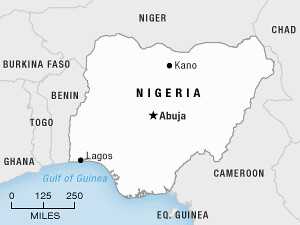
FRESH waves of killings have swept through Borno, Kaduna and Plateau states, leaving at least 33 persons dead.

Amid the violence in the northern part of the country, the United States (U.S.) has warned its citizens against travelling to the region before September 11.

In Kaduna State, gunmen killed 10 persons in an attack in Adu village.

The tragedy in Borno occurred yesterday morning when gunmen suspected to be Boko Haram’s members attacked a nomadic Shuwa-Arab village and shot dead 17 herdsmen.

The village, according to police sources in Maiduguri, is near Damboa where suspected Boko Haram gunmen killed 18 local hunters at a market early this year.

A resident of Shuwa-Arab, Madina Azaki, told The Guardian that all the slain herdsmen were her relations that had lived and reared cattle in the village for over three decades.

On how the village was attacked, an anonymous resident said: “The violence commenced when attackers killed one of our herders and whisked away another to an obscure camp located some kilometres away.”

Azaki also said that a day after this, the herdsmen mobilised themselves and traced the attackers in order to rescue their abducted kinsman.

“When my people approached the camp of the attackers, they were ambushed which resulted in the death of 16 people. The victims include the district head of Amune, Ba Lamin, who was my uncle. His son, Abdallah, was also killed and we strongly believe that the killing was carefully planned. Most of the victims were very rich and had no fewer than 500 cows,” she said.

According to Madina, the killing marked the end of a generation in the settlement.

“The assailants have wiped out the village because they killed the bread-winners. If you go there, you will only see women and young men who need help,” she lamented.

The Spokesman of the state Police Command, Gideon Jibrin, said there was an attack on one of the villages in Southern Borno, where over a dozen herdsmen were slain by armed hoodlums.

He said no arrest had been made by either the Joint Task Force (JTF) or the police.

In Plateau State, the killing of the six persons was done by gunmen suspected to be Fulani herdsmen in Kungte village of Jos South Local Council.

A source, who spoke with journalists on condition of anonymity, said the gunmen stormed the village at the early hours of yesterday and opened fire on the residents.

It was learnt that those killed were all from two families. Confirming the incident, the state government said it had received reports of attacks on some communities in the state with great indignation.

This was contained in a statement made available to journalists by the Commissioner for Information and Communication, Yiljab Abraham.

The statement reads in parts: “The unprovoked killing of six members of two families in their home in Kungte village, Kanadap (near Marraraban Jama’a) in Kuru District of Jos South Local Council by gunmen yesterday, is an evil and wicked act that should be condemned by all members of society.

“It is also a display of cowardice by the perpetrators who under the cover of darkness deliberately chose to visit violence on vulnerable members of society - women and children to achieve clearly devilish designs.”

Abraham added: “Such an attack, coming when the state has been mostly peaceful for quite some time, appears a desperate attempt to reverse the gains of our efforts in breaking down the barriers of ethnic and religious intolerance and thereby rebuilding the bridges of communal consensus.

“Such intentions will fail because Plateau people have made up their minds to live in peace with one another - and, together with the state government and security agencies, they will frustrate every attempt aimed at taking the state back to the days of bloodshed and gloom. The current level of peace in the state is for consolidation, not evaporation.”

The statement further noted that government shared the pains of victims of these heinous crimes and declared that those behind such acts would face justice in the long run. “We call on communities to remain alert always and work closely with security agencies in the sustenance of peace,” it said.

The recurrent violence has made the U.S. to urge its citizens to avoid 14 states in the northern part of Nigeria ahead of the 12th anniversary of the September 11, 2001 terrorist attacks on the World Trade Centre.

“Because of safety and security concerns, the U.S. mission in Nigeria is enforcing a restricted travel policy for U.S. Embassy personnel to the states of Adamawa, Bauchi, Borno, Gombe, Jigawa, Kaduna, Kano, Katsina, Kebbi, Niger, Plateau, Sokoto, Yobe and Zamfara,” the U.S. Embassy in Nigeria posted on its website.

“U.S. citizens should be mindful of this and consider taking similar steps when planning travel,” added the online statement.

According to the embassy, the restriction is to prevent American citizens from being hurt in “spontaneous demonstrations” that could occur on the 9/11 anniversary.

“Spontaneous demonstrations are also likely to occur in these and possibly other areas within Nigeria in response to heightened tensions in the Middle East, as well as the lead-up to September 11,” said the statement.

“U.S. citizens should avoid areas of demonstrations, and exercise caution if in the vicinity of any large gatherings, protests, or demonstrations.

“U.S. citizens should also remain vigilant around churches, mosques, other places of worship, and locations where large crowds may gather, such as hotels, markets, malls, and other areas frequented by expatriates and foreign travellers, particularly as the anniversary of the September 11 attacks approaches,” it added.

The embassy recommended that American citizens travelling to or residing in Nigeria participate in the Department of State’s Smart Traveller Enrolment Programme (STEP).

“STEP enrolment gives you the latest security updates, and makes it easier for the U.S. embassy or nearest U.S. consulate to contact you in an emergency. If you don’t have Internet access, enrol directly with the nearest U.S. embassy or consulate,” said the online statement.

Although Boko Haram extremist group has railed against the U.S. in its past statements and YouTube recordings, no record exists of its attack on any American installations across Nigeria.

The attack on the United Nations office in Abuja, the country’s capital, was its first and last attack on physical infrastructure of any continental body since the group rose against the Nigerian state in 2009.

But it once kidnapped some European nationals who were killed in a multinational military’s botched raid on its enclave in the North.

Monday, September 02, 2013

US-Brazil Tensions Rise After New Intelligence Report

http://www.businessweek.com/ap/2013-09-02/us-brazil-tensions-rise-after-new-spy-report

US-Brazil tensions rise after new spy report

By By Bradley Brooks And Marco Sibaja
September 02, 2013

RIO DE JANEIRO (AP) — The U.S. ambassador to Brazil met with his Brazilian counterpart Monday following new revelations that the National Security Agency's spy program directly targeted the South American nation's leader.

Ambassador Thomas Shannon arrived and left Brazil's Foreign Ministry without speaking to reporters. There was no comment from officials at Brazil's Foreign Ministry either.

The office of Brazil's President Dilma Rousseff said it had no immediate comment, but Rousseff was meeting with top ministers to discuss the case.

Lawmakers in Latin America's largest nation were outraged over the Globo TV network's report citing documents dated June 2012 from NSA leaker Edward Snowden.

They showed that the U.S. was targeting Rousseff's emails and telephone calls, along with those of Mexican President Enrique Pena Nieto, whose communications were being monitored even before he was elected as president in July, 2012.

Sen. Ricardo Ferraco, head of the Senate's foreign relations committee, said that lawmakers already had agreed to formally investigate the U.S. program's focus on Brazil because of earlier revelations that the country was a top target of the NSA program in the region, and that the probe would likely start work this week.

"I feel a mixture of amazement and indignation. It seems like there are no limits. When the phone of the president of the republic is monitored, it's hard to imagine what else might be happening," Ferraco told reporters in Brasilia. "It's unacceptable that in a country like ours, where there is absolutely no climate of terrorism, that there is this type of spying."

During the Sunday night TV program, U.S. journalist Glenn Greenwald, who lives in Rio de Janeiro, told the news program "Fantastico" that a document dated June 2012 shows that Pena Nieto's emails were being read. The document's date is the month before Pena Nieto was elected.

The document indicated who Pena Nieto would like to name to some government posts, among other information.

It's not clear if the spying continues.

As for Brazil's leader, the June 2012 document "doesn't include any of Dilma's specific intercepted messages, the way it does for Nieto," Greenwald told The Associated Press in an email. "But it is clear in several ways that her communications were intercepted, including the use of DNI Presenter, which is a program used by NSA to open and read emails and online chats."

The U.S. targeting mapped out the aides with whom Rousseff communicated and went a level further by tracking patterns of how those aides communicated with one another and also third parties, according to the document.

Messages sent to Pena Nieto's office were not immediately returned. He was delivering his state of the nation speech on Monday. Mexico's Foreign Ministry said it had no comment.

Brazilian Justice Minister Eduardo Cardozo told the newspaper O Globo that "if the facts of the report are confirmed, they would be considered very serious and would constitute a clear violation of Brazil's sovereignty."

"This is completely outside the standard of confidence expected of a strategic partnership, as the U.S. and Brazil have," he added.

In July, Greenwald co-wrote articles in O Globo that said documents leaked by Snowden indicate Brazil was the largest target in Latin America for the NSA program, which collected data on billions of emails and calls flowing through Brazil.

The Brazilian government denounced the NSA activities outlined in the earlier reports.

Greenwald reported then that the NSA collected the data through an undefined association between U.S. and Brazilian telecommunications companies. He said he could not verify which Brazilian companies were involved or if they were aware their links were being used to collect the data.

Greenwald began writing stories based on material leaked by Snowden in May, mostly for the Guardian newspaper in Britain.

Before news of the NSA program broke, the White House announced that Rousseff would be honored with a state dinner in October during a trip to the U.S., the only such full state dinner scheduled this year for a foreign leader. The move highlighted the U.S. desire to build on improved relations since Rousseff took the presidency on Jan. 1, 2011.

Rousseff's office said last week that there were no plans to scrap the state dinner because of the NSA program.

The new revelations follow last month's detention of Greenwald's domestic partner, Brazilian citizen David Miranda, who was held for nearly nine hours at London's Heathrow airport under anti-terrorism legislation.
___

Bradley Brooks on Twitter: www.twitter.com/bradleybrooks

Sunday, September 01, 2013

Ousted President Morsi to be Tried for Inciting Violence in Egypt

Posted on Sun, Sep. 01, 2013

Egypt's Morsi to be tried for inciting violence

By SARAH EL DEEB
Associated Press
Cairo, Egypt, Friday, Aug. 30, 2013.

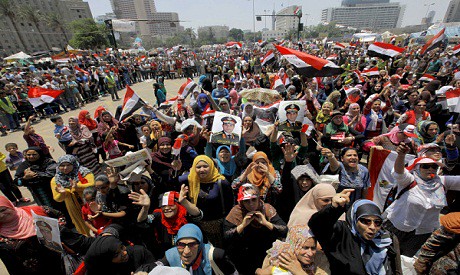
Tens of thousands of protesters and Muslim Brotherhood supporters rallied Friday throughout Egypt against a military coup and a bloody security crackdown, though tanks and armored police vehicles barred them from converging in major squares.

Egypt's state news agency says the country's top prosecutor has referred ousted Islamist President Mohammed Morsi to trial on charges of inciting the killing of opponents protesting outside his palace while he was in office.

The military ousted Morsi on July 3 after millions took to the street demanding he step down. He's been held incommunicado since.

Prosecutors have accused him of conspiring with foreign groups to break out of prison during the chaos of the country's 2011 uprising.

Sunday's decision however is the first referral to trial. Morsi will be tried, along with 14 members of his Muslim Brotherhood, in a criminal court for allegedly committing acts of violence, inciting the killing of at least 10.

No date was announced for the trial.

China's Economy Strengthens With Manufacturing Gauge at 16-Month High

China’s Economy Strengthens With Factory Gauge at 16-Month High

By Bloomberg News - Sep 1, 2013

China’s economy is strengthening after a two-quarter slowdown, with a manufacturing gauge rising to a 16-month high in August as new orders jumped and overseas demand rebounded.

The Purchasing Managers’ Index was at 51.0, the National Bureau of Statistics and China Federation of Logistics and Purchasing said yesterday in Beijing. HSBC Holdings Plc and Markit Economics will today release the final reading of their gauge after a preliminary figure on Aug. 22 showed the biggest gain in three years.

Improvement in manufacturing may bolster confidence that the economy is responding to Premier Li Keqiang’s policies to support growth amid a crackdown on shadow banking aimed at curbing financial risks. JPMorgan Chase & Co. yesterday joined Deutsche Bank AG and Credit Suisse Group AG in raising estimates for an increase in gross domestic product, citing strength in infrastructure and real-estate, and a pickup in exports.

“The recovery is being driven primarily by domestic demand but international demand is picking up too as we can see from the jump in new export orders,” said Lu Ting, head of Greater China economics at Bank of America Corp. in Hong Kong. “This will surely boost markets’ confidence in China’s recovery amid the turmoil in some emerging markets.”

The Shanghai Composite Index (SHCOMP) rose 2 percent last week, the biggest gain since March. The yuan completed its second straight monthly advance in August on optimism the economy is picking up.

Orders Jump

The official PMI figure compared with the 50.6 median estimate of 31 analysts in a Bloomberg News survey and July’s 50.3 level. Estimates ranged from 50.4 to 52. The preliminary reading of HSBC’s index was 50.1, the first reading above 50, which denotes expansion, since April.

JPMorgan raised its estimate for China’s third-quarter economic growth to 7.6 percent from 7.4 percent and its projection for the final three months of the year to 7.5 percent from 7 percent, Hong Kong-based chief China economist Zhu Haibin said in a report yesterday. “Economic conditions are improving and the downside risk to economic growth has been mitigated in the near term,” Zhu said.

Deutsche Bank lifted its third-quarter estimate to 7.7 percent from 7.5 percent, according to an Aug. 22 note. Credit Suisse last week increased its 2013 forecast to 7.6 percent from 7.4 percent.

Tolerate Slowdown

China’s GDP growth slowed to 7.5 percent in the second quarter from a year earlier, extending the longest streak of sub-8 percent expansion in at least two decades and putting the government at risk of missing its 2013 goal of 7.5 percent. Li signaled in July he won’t tolerate a slowdown beyond a 7 percent as the bottom line.

A sub-index of new orders in yesterday’s report rose to 52.4, the highest level since April 2012 and a gauge of input prices was the highest since February.

“Input prices are usually a good tracker of the strength of aggregate demand relative to supply so the reading suggests demand has strengthened notably,” said Helen Qiao, chief Greater China economist at Morgan Stanley in Hong Kong. “Sector-specific measures adopted recently are starting to show an impact but it also implies a lower probability for high-profile easing.”

Li has avoided a broad-based stimulus to reverse slowing growth, instead rolling out targeted measures that include tax cuts, boosting infrastructure spending including on railways, and supporting strategic industries such as renewable energy.

Export Outlook

China’s top solar-panel makers are returning to profitability following two years of losses as higher demand and prices drive up margins. JinkoSolar Holding Co. last month reported second-quarter net income of $8 million, its first profit since the third quarter of 2011, as sales jumped 43 percent from a year earlier.

China’s export outlook improved, with a gauge of new overseas orders in yesterday’s report rising above 50 for the first time since March. While that contrasts with the contraction indicated in the export index of HSBC’s preliminary PMI, it tallies with trade reports from Asian economies and signs of stronger growth in the U.S. and Europe.

South Korea’s exports jumped 7.7 percent in August from a year earlier, the government said yesterday, the biggest gain since January.

The U.S. economy expanded more than economists estimated in the second quarter, an Aug. 29 Commerce Department report showed. Economic confidence in the euro area rose to a two-year high, according to data last week.

‘Modest’ Impact

China’s official PMI indicates the impact of the government’s crackdown on non-bank financing and its efforts to rein in credit growth have “so far been modest,” said Louis Kuijs, chief China economist at Royal Bank of Scotland Plc in Hong Kong.

Interest rates in China’s interbank market surged to record highs in June as the central bank allowed a cash crunch in order to squeeze speculative lending and curb shadow banking. Aggregate financing, the broadest measure of new credit that includes banks’ off-balance-sheet loans, corporate bond and stock issues, fell to a 21-month low in July.

While the campaign will help ease the risks of a financial crisis, it may also curb economic expansion as companies find it harder to get funding.

“The current rebound in growth is still benefiting from loose monetary and credit conditions earlier this year,” said Ding Shuang, senior China economist at Citigroup Inc. in Hong Kong. “But since May, conditions have tightened considerably and that will weigh on investment and growth toward the end of the year.”

--Shen Hu, Nerys Avery. With assistance from Ailing Tan in Singapore. Editors: Nerys Avery, Nathaniel Espino

To contact Bloomberg News staff on this story: Shen Hu in Beijing at hshen33@bloomberg.net Nerys Avery in Beijing at navery2@bloomberg.net

To contact the editor responsible for this story: Paul Panckhurst at ppanckhurst@bloomberg.net

Abayomi Azikiwe, PANW Editor, Speaks on US War Threats On Syria

August 31, 2013 at 5:33 pm

Local reaction is mixed on Obama's decision to get congressional approval to strike Syria

Lauren Abdel-Razzaq
The Detroit News

President Barack Obama announcement Saturday that he intends to seek congressional approval before launching an attack on Syria has led to a backlash from Syrian Americans and activists across Metro Detroit.

Some say the president’s decision to possibly intervene is a poor decision, and others say he is not doing enough quickly enough.

“I think it’s a major distraction from the major business Congress should be dealing with,” said Abayomi Azikiwe, an organizer and activist with the Michigan Emergency Committee Against War and Injustice.

“I think it will be for the worse because Syria has close ties to Russia and the people of the U.S. are not in favor of this unilateral action.”

United Nations experts are investigating the alleged use of chemical weapons in Syria as the United States and its allies prepare for the possibility of a punitive strike against President Bashar Assad’s regime, blamed by the Syrian opposition for the attack. The international aid group Doctors Without Borders says at least 355 people were killed in the Aug. 21 attack.

The U.S., Britain and France blame Assad’s regime for the alleged chemical weapons attack on rebel-held suburbs of Damascus. The Syrian government denies the allegations, saying rebels staged the attack to frame the regime. This week, the UN and Britain voted not to intervene

Assad vowed Thursday that “Syria will defend itself” against Western military strikes.

With Navy ships in the Mediterranean Sea ready to strike, Obama said he had decided the United States should take military action, but also determined “our country will be better off” if Congress renders its own opinion.

At the same time, he challenged lawmakers to consider “what message will we send to a dictator” if he is allowed to killed hundreds of children with chemical weapons without suffering any retaliation.

Leith Fadel, a Syrian American organizer with the Syrian American Forum said he wasn’t surprised by the president’s decision to take action, but hoped it would be one of diplomacy.

“I think it’s a terrible idea putting any American lives on the line in a civil war that has been going on for the past year,” he said. “It would have no benefit for the U.S. and no benefit for the Syrian people.”

Lawmakers will return to session on Sept. 9 and Speaker of House John Boehner said Congress would tackle the question of Syria then.

That’s not good enough for Syrian American activist Abdullah Haydar, who says he was hoping to see some kind of direct action in Syria such as the establishment of a no-fly zone or a safe zone for civilians.

“It’s clear certain things wouldn’t work very well, like boots on the ground, when our soldiers can’t tell who is the enemy,” said the Canton resident whose family has had to flee parts of Syria. “But (Obama) is so afraid of repeating the legacy of his predecessor that he’s showing moral cowardice.”

He said waiting for Congress is unacceptable because, “it’s as if a couple more weeks of people getting killed is OK.”

“The president is looking the other way when there is clear brutality going on,” he said.

lrazzaq@detroitnews.com
(313) 222-2127
Associated Press contributed to this report.

From The Detroit News: http://www.detroitnews.com/article/20130831/METRO08/308300123#ixzz2deXbBG6Y

Former President Nelson Mandela Discharged From South African Hospital

1 September 2013
Last updated at 09:55 ET

Nelson Mandela discharged from South African hospital

Nelson Mandela arrived at his home in Johannesburg

Nelson Mandela has left hospital and has gone to his Johannesburg home, where he is continuing to receive intensive care, the South African presidency says on its website.

The announcement came a day after officials denied reports that the 95-year-old had already been discharged.

The statement says Mr Mandela condition remains critical and at times unstable.

South Africa's first democratically elected president has been in hospital since June with a lung infection.

The Nobel Peace Prize laureate is revered around the world for leading the fight against white minority rule and preaching reconciliation with the white community despite being imprisoned for 27 years.

BBC News, Johannesburg

Well-wishers have already started visiting Nelson Mandela's home in the Houghton suburb of Johannesburg. One man told me that as soon as he heard that Mr Mandela had left hospital, he woke up the children, jumped in the car and drove here.

"It's a spring day and we hope this will be a new dawn for Mandela that he will be a healthier person," he told me.

"If he dies, we won't feel the same - this world won't be the same," said his young daughter after reading some of the pebbles outside the house painted with messages of goodwill and love for the 95-year-old.

The statement from the presidency tells us that behind the high walls of his home, Mr Mandela will still receive the same level of intensive care from the same people who treated him at the Pretoria hospital - so in effect a special medical unit has been created.

"His team of doctors are convinced that he will receive the same level of intensive care at his Houghton home that he received in Pretoria [hospital]," the presidency statement says.

It says his home in the suburb of Houghton has been "reconfigured to allow him to receive intensive care there" and he will be treated by the same health care personnel who have been looking after him since 8 June.

If necessary, he will be readmitted to hospital, the statement says.

The BBC's Andrew Harding in South Africa says this is not the discharge of a man who has made a significant recovery but the transfer of a patient from an intensive care ward in a hospital to a specially built intensive care unit in his own home, presumably in line with his family's wishes.

But he notes that some people will take some encouragement from the fact that his doctors have said he was fit enough to make the 55km-journey (34 miles) and says such a decision will not have been taken lightly.

"It is a day of celebration for us, that he is finally back home with us," said his grandson Mandla Mandela.

On Saturday, sources close to Mr Mandela told the BBC and other international media that he had already returned home.

This was denied by South Africa's presidency, which handles all communications about the former leader's health.

After almost three months in a Pretoria hospital, Nelson Mandela was driven the 55km (34 miles) to his home in Johannesburg on Sunday.

Mr Mandela's lung condition is said to result from the tuberculosis he contracted during the 27 years he spent in prison for taking up arms against white minority rule.

He is been hospitalised four times in the past year and his latest stay lasted 84 days.

He became president after 1994 elections - the first time black South Africans were allowed to vote - and stepped down five years later.

His last public appearance was at the 2010 football World Cup, which South Africa hosted.

SACP Central Committee Press Statement

SACP Central Committee press statement
25 August 2013

The Central Committee of the SACP met in Johannesburg over the weekend of 23-25 August 2013. The CC was meeting in the week before an all-important Alliance Economic Summit and in the midst of serious challenges within our alliance partner, COSATU. The first day of the CC was, accordingly, devoted to a secretariat political report that focused on this immediate context.

None of our domestic challenges can be adequately understood, still less responded to effectively, without locating ourselves in the midst of the persisting global capitalist crisis - the gravest crisis of its kind since the 1930s. In its first phase, beginning in 2007/8, the epicentre of the crisis was focused on the US financial sector, spreading rapidly into the Eurozone. SA was relatively cushioned through this first phase, thanks to continued strong, notably Chinese, demand for our industrial minerals.

The one mineral export exception was platinum - our major export market for this mineral being Europe. It is no accident, therefore, that it was to be the platinum sector in which the offensive against labour by the mining houses, and the attempt to undercut NUM, the largest of COSATU`s affiliates, was first felt. The major platinum mining houses have flirted with vigilante unionism, are looking to downsize, and use unprotected strikes to retrench as a useful means to cushion profits in a depressed market.

In 2012 a second phase of the globalised capitalist crisis struck. While stagnation and crisis continue to characterise the developed capitalist economies, the impact of the crisis has now spread to leading developing economies, including China, India and Brazil. The commodity super-cycle, driven in particular by China`s sustained growth, is now over. This has impacted significantly on major industrial mineral exporting economies - Brazil, Chile, Australia, and South Africa.

At the same time, the US administration`s attempts to re-float their economy, partly through quantitative easing (the "printing" of billions of dollars of cheap money) has had hugely negative effects on developing economies like SA, with excessively liberalised financial controls, and relatively high interest rates. Cheap "hot" money has flooded into SA in pursuit of quick profits based on the differential between interest rates in the US and SA. This in turn resulted in an excessively over-valued rand, impacting on the competitiveness of our exports, including our manufacturing and agro-processing sectors which had begun to see some progress, as a consequence of our state-led industrial policy actions, and other state-led interventions.

When the US Federal Reserve hinted earlier this year that quantitative easing might be tightened up, this "hot" money then poured out of SA (and many other economies in a similar situation) for "safer havens". This, then, plunged the Rand down to equally unrealistic levels - with a serious impact upon the cost of imports (notably oil) and our balance of payments.

Meanwhile, the domestic investment strike by South African monopoly capital largely continues - epitomised, in particular, by SASOL`s recent announcement that it will be investing (in practice, disinvesting) some R200bn in Louisiana, USA. This is the largest FDI investment in the history of the US! In 2007, in the face of calls from the SACP, and a recommendation from a Treasury Task Team to impose a windfall tax on SASOL`s super-profits, Treasury and SASOL reached a compromise "gentlemen`s" agreement. Instead of a windfall tax, SASOL agreed to consider investing its massive profits (R24bn in 2012) in a new coal-to-liquid plant in Limpopo (Mafutha). Nothing has happened on this front. Instead South African-earned surplus is being disinvested out of our economy, exporting job-creation, enhanced energy security and re-industrialisation to the US!

In the Alliance Economic Summit next weekend, the SACP delegation will be calling for the imposition of a windfall tax on SASOL - so that at least some of its excessive profits are re-invested within our country. At the same time, the SACP will be raising the broader macro-economic challenges that have been dramatically exposed by the current situation. The 1996 GEAR macro-economic programme has excessively liberalised our financial markets and exchange controls, exposing us to massive disinvestment and making us excessively reliant on speculative capital flows. This makes for a volatile currency, and it undermines our industrial and agro-processing sectors. At the Alliance Economic Summit a serious discussion on re-calibrating our macro-economic policies has become ever more important.

State of the organised labour sector

This wider reality is also the context for correctly analysing the challenges within organised labour in SA, and particularly within our ally, COSATU. Everywhere, in the face of the persisting capitalist global crisis, the class offensive against organised labour has been intensified. Here in SA, the grave challenges of unemployment, poverty, and inequality are blamed on government and on the trade union movement and a supposedly "inflexible" labour market.

While the capitalist offensive blames both our democratic government and the labour movement, it also seeks to sharpen differences and conflicts between the ANC-led government and COSATU. Unfortunately, elements within COSATU have taken the bait.

The SACP has never argued that the ANC-led government is above criticism, or denied that there are many challenges, including the dangers of corporate capture, tenderpreneurship and corruption. Still less have we argued in favour of a narrow support for individual government leaders. The democratic government COLLECTIVE must be supported - but supported vigilantly and with constructive but robust criticism where necessary. What the SACP rejects is a narrow anti-government oppositionism that elevates an endless stream of anti-ANC, anti-government invective above a serious and unifying class-based struggle against monopoly capital and its hangers-on.

The CC expressed its full support for the struggle for a living wage currently being waged by NUM, NUMSA, SATAWU and others. The SACP greatly values its long-standing alliance with the progressive trade union movement in SA, and we celebrate the role that Communists have played in building militant unionism for more than eight decades in our country.

In the face of sustained provocation from some quarters, the SACP has steadfastly refused to become involved in the internal problems and disputes confronting our ally COSATU. We have consistently advanced a Hands Off Cosatu call. COSATU must be given the time and space to address its own internal difficulties, guided by its own constitution and experience.

None of this means that the SACP is a disinterested observer of the challenges confronting our ally COSATU. We see our role as being one in which we work together to analyse and deal with the underlying causes behind much of the factional challenges - notably, corporate capture of leadership elements by union investment arms, poaching of members in inter-affiliate competition, the weaknesses of COSATU as a federation in supporting difficult sectors, and weaknesses in terms of servicing members at the shop-floor level.

We call for the unity of COSATU - there is no problem that is bigger than COSATU itself. Only bosses will benefit from tensions, splits and walk-outs. We call for organisational renewal across COSATU and its affiliates - focused on the training of organisers and shop-stewards. We pledge to play an active role in building combined Alliance campaigns that unite the organised working class and the urban and rural poor.

The Farlham Commission and persisting violence in Marikana

Much has been made in the media about the Constitutional Court decision upholding a lower court`s judgment that there is no obligation on the state to carry the ongoing costs of legal fees for private parties participating in the Farlham Commission proceedings. It is, of course, unfortunate that there is now, at the very least, the appearance of imbalance in legal representation. But behind this situation is a wider question. We respect Judge Farlham, but we are concerned that the Commission of Investigation has been turned into a prolonged quasi-court proceeding, dominated by excessively well-paid senior advocates, some of them clearly grand-standing while clocking up billable hours. We would like to see the commissioners taking more direct and unmediated responsibility for examining the responsibilities of the various parties for the terrible tragedy, and for uncovering the underlying systemic factors.

Meanwhile, as the Farlham Commission drags on, AMCU has refused to sign the stability pact. Two AMCU members, charged with murder, were released last week on bail back into the Marikana community on grounds that they "might be called as witnesses to the Commission". Yesterday, we buried NUM shop-steward and SACP member, Mrs Madolo who was murdered in cold-blood. The reign of anarchy and fear prevails within the Marikana community. For the Marikana community living in chronic insecurity and fear there is a sense that they have been abandoned by the police. We call on the criminal justice system to be much more decisive in dealing with criminality and violence and to demonstrate at the highest level real commitment to assisting this terrorised community.

National Health Insurance

The CC received a report on progress being made in moving towards operationalizing the NHI and the first pilots for the NHI. The SACP has long supported the proposal for a comprehensive NHI, based on the principles of universal access and social solidarity. We salute the important resolutions taken by the ANC on the NHI at its 2012 Mangaung National Conference, and the fact that government is now moving ahead.

However, as we move to implement an NHI there is a well-funded push-back from the multi-billion rand private health-care industry which services a tiny minority of our population. Having lost the battle to scrap the idea of an NHI, the private health industry is now seeking to infiltrate itself into an NHI, hijacking and distorting its key principles.

In this regard, and in line with ANC resolutions, the SACP insists that:

The NHI must be a single payer and must be publicly administered. There must be no profit-seeking outsourcing of administration. Further flirtation with the idea of a multi-payer system must be stopped - such an approach will irreparably undermine the principle of universal access;
There must be no co-payments approach, in which costs are partly met by out of pocket payements.
Tax subsidies, essentially for those of us with access to medical aids, must be abolished
The NHI must be funded via general tax revenue on high-earning individuals, payroll-linked progressive contributions, and contributions by employers. No additional levies must be made through VAT, for instance, to fund the NHI.
Erosion of these principles will end up reproducing the very yawning inequalities in health-care provision in our society that we are seeking to eradicate.

August - Women`s Month

The CC devoted some time to discussing gender-based oppression and violence in our society. In particular we focused on the plight of working class women. The struggle for a non-sexist society, an integral part of any struggle for sustainable democracy and development, is in part about changing attitudes, a critical self-examination of personal behaviour and of family life. But the struggle is also about the objective social realities which exacerbate gendered oppression. Women from poor and working class communities are challenged by the weaknesses in our social security system, the absence of effective child-care facilities, poor public transport in townships, and a breakdown in many places of law and order and community cohesiveness. At the work-place, working women frequently encounter harassment and discrimination.

The CC commended the Department of Justice for the re-introduction of the Sexual Offences Courts.

A consistent struggle against behavioural, ideological and social factors reproducing gendered oppression must be waged. Amongst other things the SACP commits to struggling for a re-orientation of government`s expanded public works and community works programmes to more effectively align with the inspiring, but often unrecognised and unpaid volunteer work that hundreds of thousands of women (and men) in poor communities are daily undertaking through stokvels, faith-based NGOs, and other local associations, in providing community child-care services, in doing volunteer home-based care, and generally in helping to re-build communities living in distress.

The crises in Egypt and Syria

The CC commended the South African government for condemning the military coup in Egypt. Whatever the many mistakes and weaknesses of the Muslim Brotherhood-led Morsi government - it was democratically elected. The military coup and the subsequent horrific massacres have set back democratisation and development in Egypt, and plunged the country into a very dangerous situation. We condemn the role of the US and the reactionary Saudi regime for their support to the Egyptian military forces. By failing to roundly condemn the coup, the US and its European allies encouraged the Egyptian army in its belief that it had a green light for proceeding with its violent repression of its own citizenry.

In Syria a civil war, initially fomented by external forces including the US and its European allies, has spun wildly out of control, with a death toll now over 60,000. It is also impacting upon stability in neighbouring countries, in particular Lebanon. Ultra-conservative forces with the original backing of the US, steadfastly blocked attempts at a negotiated settlement, free of external manipulation. This past week the conflict has reached a new exceedingly dangerous point - with allegations of the use of chemical weapons. If such has happened it must be condemned without any ambivalence - however, using this as a reason for the further escalation of external imperialist involvement will not bring peace to the people of Syria and the region.

Issued by SACP

Contact:

Malesela Maleka
SACP Spokesperson - 082 226 1802