Sunday, February 24, 2008

US Imperialism & Africa Conference: PANW Editor's Presentation on the Character of National Oppression and the Class Struggle

The Impact of US-Africa Relations on the Character of Racism, National Oppression and Class Divisions in America

By Abayomi Azikiwe, Editor
Pan-African News Wire

Note: This article is based on a talk delivered on February 23, 2008 at an all-day conference entitled: "US Imperialism and Africa." The conference was sponsored by the Michigan Emergency Committee Against War & Injustice (MECAWI) and held in the city of Detroit. The event featured presentations from members of MECAWI which examined various aspects of the history and contemporary affairs of the African continent and the black Diaspora.

A presentation on the United States Africa Command (AFRICOM) was made by the National Conference of Black Lawyers (NCBL). In addition the documentary film: "Cuba, Africa, Revolution" was screened for the first time in the city.

The conference was held in commemoration of the 140th anniversary of the birth of the scholar and activist W.E.B. DuBois (1868-1963) and in honor of African-American History Month.
-----------------------------------------------------------------------------------

United States President George Bush's trip to Africa in February of 2008 was designed to shore up the waning influence of American foreign policy on the continent. Concerns have been voiced for several months over the advent of the Africa Command (AFRICOM), a pentagon project to enhace US military presence on the continent ostensibly to fight terrorism and the growing threat of radical Islam.

As a result of the rejection by leading African states, such as Nigeria and South Africa, headquarters for this military program remains in Germany. Consequently, in recent weeks the overall political framing of the AFRICOM project has shifted to a less threatening approach with the American administration later claiming that the program is designed to enhance the capacity of African states to provided adequate security amid the changing concerns of the 21st century.

This evolution of political spin continued when Bush was in Ghana, the first country south of the Sahara to gain national independence in 1957 from Britain. Kwame Nkurmah proclaimed on March 6, 1957 that the independence of Ghana was meaningless unless it was linked up with the total independence of the African continent. With the overthrow of Nkrumah in 1966 by a US-backed military and police coup, the country has fallen into the grip of neo-colonialism, what the first Prime Minister and President described as the last stage of imperialism.

To further obscure its imperialist aims, the United States Ambassador to the United Kingdom denied over the BBC on February 20 that the Bush administration had any intentions of building military bases in Africa. So what should the people of Africa and the world believe? And what does this apparent new interest in African affairs mean to the anti-war and peace movements in the United States in light of the ongoing occupations of Iraq and Afghanistan?

The Continuing Legacy of Slavery

We must first look at the historical legacy of slavery, colonialism, national oppression, institutionalized racism and segregation in order to understand the link between the imperial past and the present character of domination in the modern era. W.E.B. DuBois, who was born in the immediate aftermath of the civil war and the conclusion of slavery in 1868, wrote extensively on the impact of this peculiar institution on the failure of the American political system to build a genuinely democratic state and culture.

With the independence of the 13 colonies from Britain, the Declaration of Independence and the United States constitution, the African people remained in bondage. Even though the documents proclaiming the new republican democracy declared that all men were created equal, the Africans were designated as less than human. The consolidation of constitutional rule in the United States required the disproportional representation of the southern planters class utilizing the African slaves as an appendage of political control among the whites themselves on a national level.

This dominance of the southern planters class grew from the overwhelming impact of slave labor on the growth and development of the American capitalist system. According to DuBois in his seminal work entitled: "Black Reconstruction in America: An Essay Toward A History Of The Part Which Black Folk Played In The Attempt To Reconstruct Democracy In America, 1860-1880," published in 1935 during the Great Depression, he illustrates the essential role of African labor in the rapid expansion of the United States as an economic powerhouse.

DuBois points this out by stating that:
"The giant forces of water and of steam were harnassed to do the world's work, and the black workers of America bent at the botton of a growing pyramid of commerce and industry; and they not only could not be spared, if this new economic organization was to expand, but rather they became the cause of new political demands and alignments, of new dreams of power and visions of empire." (Black Reconstruction, p. 5).

This system of dominance by the southern planters continued for eight decades and was only severely affected by a bloody four-year civil war. However, it was both the ruling elites of the North and the South that benefited from the exploitation of slave labor. Yet the war was necessary to determine which region would dominate and what the future role of labor both black and white would mean to the rising system of industrial capitalism.

DuBois points out the powerful impact of African slave labor in the process of economic development in the United States:
"First of all, their work called for widening stretches of new, rich black soil--in Florida, in Louisiana, in Mexico; even in Kansas. This land, added to cheap labor, and labor easily regulated and distributed, made profits so high that a whole system of culture arose in the South, with a new leisure and social philosophy. Black labor became the foundation stone not only of the Southern social structure, but of Northern manufacture and commerce, of the English factory system, of European commerce, of buying and selling on a world-wide scale; new cities were built on the results of black labor, and a new labor problem, involving all white labor, arose both in Europe and America." (Black Reconstruction, p.5).

Yet it was the advent of the cotton industry that brought about both the rapid expansion of slavery and the economic growth of the United States. This growth lead to the strengthening of other forms of economic activity such as shipping, banking and the growth in mass production of consumer goods.

DuBois speaks to this phenomena by stating that:
"But in a rich and eager land, wealth and work multiplied. They twisted new and intricate patterns around the earth. Slowly but mightily these black workers were integrated into modern industry. On free and fertile land Americans raised, not simply sugar as a cheap sweetening, rich for food and tobacco as a new and tickling luxury; but they began to grow a fiber that clothed the masses of a ragged world. Cotton grew so swiftly that the 9,000 bales of cotton which the new nation scarcely noticed in 1791 became 79,000 in 1800; and whith this increase, walked economic revolution in a dozen different lines. The cotton crop reached one-half million bales in 1822, a million bales in 1831, two million in 1840, three million in 1852, and in the year of secession, stood at the then enormous total of five million bales." (Black Reconstruction, p. 4).

In order to maintain and justify such a system of gross exploitation and national oppression it was essential to dehumanize the slave community and to create a poor white buffer class between the southern planters and the African slaves. Hence theories of innate African inferiority and depravity arose to provide a rationale for the continuation of the system. With America being a rapidly expanding settler-colonial state, it became necessary to integrate the masses of whites into the exploitative apparatus of the slave system and to link its success and profitability with the suppression of the social and political will of the African people.

In pointing to the special character of the oppression of African slave labor, DuBois states that:
"In this vital respect, the slave laborer differed from all others of his day: he could be sold; he could, at the will of a single individual, be transferred for life a thousand miles or more. His family, wife and children could be legally and absolutely taken from him. Free laborers today are compelled to wander in search for work and food; their families are deserted for want of wages; but in all this there is no such direct barter in human flesh. It was a sharp accentuation of control over men (and women) beyond the modern labor reserve or the contract coolie system." (Black Reconstruction, p. 11).

Consequently, a system of control evolved of containing the African slave community for the purpose of exploitation. This required the participation of the white worker who could be employed in the process of the super-exploitation of African labor. In doing this the poor white was conditioned to see slavery as a mechanism to enhance their own social status and to prevent the competition of the African slave laborer with the white laborer for selling of their respective labor power within agriculture and industry.

DuBois notes that:
"The system of slavery demanded a special police and such a force was made possible and unusually effective by the presence of the poor whites. This explains the difference between the slave revolts in the West Indies, and the lack of effective revolt in the Southern United States. In the West Indies, the power over the slave was held by the whites and carried out by them and such Negroes they could trust. In the South, on the other hand, the great planters formed proportionately quite as small class but they had singularly enough at their command some five million poor whites; that is, there were actually more white people to police the slaves than there were slaves. Considering the economic rivalry of the black and white worker in the North, it would have seemed natural that the poor white would have refused to police the slaves. But two considerations led him in the opposite direction. First of all, it gave him work and some authority as overseer, slave driver, and member of the patrol system. But above and beyond this, it fed his vanity because it associated him with the masters. Slavery bred in the poor white a dislike of Negro toil of all sorts. He never regarded himself as a laborer, or as part of any labor movement.
“If he had any ambition at all it was to become a planter and to own "niggers". To these Negroes he transferred all the dislike and hatred which he had for the whole slave system. The result was that the system was held stable and intact by the poor white. Even with the late ruin of Haiti before their eyes, the planters, stirred as they were, were nevertheless able to stamp out slave revolt. The dozen revolts of the eighteenth century had dwindled to the plot of Gabriel in 1800, Vesey in 1822, of Nat Turner in 1831 and crews of the Amistad and Creole in 1839 and 1841. Gradually the whole white South became an armed and commissioned camp to keep Negroes in slavery and to kill the black rebel." (Black Reconstruction, p.12).

The Failure of Reconstruction

With the dissolution of chattel slavery after the conclusion of the Civil War in 1865 and the crushing of the confederate pro-slavery rebellion in the South, the efforts aimed at Reconstruction were abandoned by the federal government. During the period of Reconstruction the military continued to occupy areas of the South and the former African slaves were granted voting rights and the educational opportunities through the construction of primary and secondary schools, teacher training colleges and some professional institutions of higher learning.

Yet the white terrorist organizations such as the Ku Klux Klan and the White Leagues developed to place the Africans back into conditions that were reminiscent of slavery or even worse. Lynching became a mechanism of social control through mass killings absent of any semblance of due process under the law. Africans were forced off the land that some had been able to obtain after slavery and placed into the system of peonage and tenant farming.

The criminal justice system developed a host of vagrancy laws that lead to the criminalization of the people through penal farms and capital punishment. Many Africans fled the system of lynch law through migration to the west into the states of Kansas and eventually Oklahoma. However, the majority of the former slaves remained in the same states where they had served in bondage. The Africans formed their own independent institutions of religion and social life. Their cultural expressions through music, poetry, storytelling and dance became nationally and internationally recognized as tremendous contributions to the country and the world.

DuBois states in Black Reconstruction that the political involvement of Africans in the electoral system was largely outlawed. He illustrates that the utilization of the vote came under serious attack by the racists:
"First, there was systematic disfranchisement of the Negro. He was kept from voting by force, by economic intimidation, by propaganda designed to lead him to believe that there was no salvation for him in political lines but that he must depend entirely upon thrift and the good will of his white employers. Then came the series of disfranchisement laws discriminating against poverty and ignorance and aimed at the situation of the colored laborer, while the white laborer escaped by deliberate conniving and through the
"understanding" and "Grandfather" clauses. To make assurance doubly sure, the "White Primary" system was built on top of this, by which the "Democratic" party confined its membership to white voters of all parties. The "White Primary" was made by law and public pressure the real voting arena in practically all Southern states." (Black Reconstruction, p. 694).

Gender Oppression and the 20th Century Color Line

By the conclusion of the 19th century a system of political repression, Jim Crow segregation laws, economic exploitation and lynching was instituted to maintain the status-quo in the United States in both the northern and southern regions. An anti-lynching campaign arose which was headed by Ida B. Wells-Barnett who traveled throughout the country and in Europe to spread the word about the inhumane treatment meted out to African-Americans.

Wells-Barnett took the lead in exposing the barbarism of southern lynch law and criminal injustice. Born in Holly Springs, Mississippi in 1862 during the Civil War, Wells-Barnett later went to live in Memphis after her parents died as a result of the Yellow Fever epidemic during the late 1870s. It was after she became a teacher with the Shelby County School system that her political crusade against racism and genocide would emerge.

In 1884 Wells-Barnett was physically removed from a ladies coach in Woodstock, Tennessee aboard the Chesapeake & Ohio Railroad because she was African-American. She would later file suit in the circuit court and win a favorable judgment against the railroad company. However, the railroad company appealed the judgment to the state supreme court and was able to overturn the verdict of the lower court.

During this period, the young school teacher became an active participant in the cultural activities in Memphis as a member of the Vance Street Christian Church. She read poetry, essays, gave recitation and engaged in vigorous debates on contemporary issues of the times. Later she would be asked to contribute to the Living Way news weekly where she wrote a column under the name of "Iola."

In her autobiography Wells-Barnett wrote of the period that:
"...I had observed and thought much about conditions as I had seen them in the country schools and churches. I had an instinctive feeling that the people who had little or no school training should have something coming into their homes weekly which dealt with their problems in a simple, helpful way. So in weekly letters to the Living Way, I wrote in a plain common sense way on the things which concerned our people. Knowing that their education was limited, I never used a world of two syllables where one would serve the purpose. I signed these articles 'Iola'." (Crusade for Justice: The Autobiography of Ida B. Wells-Barnett, pp. 23-24).

As a result of her experience as a columnist with the Living Way, she would soon purchase a share in another African-American weekly publication, the Free Speech and Headlight, in Memphis. Copies of the newspaper were distributed weekly through the Beale Street Baptist Church, which at the time was the largest African-American congregation in Memphis.

She eventually became the editor of the Free Speech after leaving her position as an educator in Memphis. Wells-Barnett, in her autobiography, recounted her experiences at the time:
"I went to most of the large towns throughout the Delta, across the Mississippi River into Arkansas, and back into Tennessee. Wherever there was a gathering of the people, there I was in the midst of them, to solicit subscribers for the Free Speech and to appoint a correspondent to send us weekly news. Wherever I went people received me cordially and gave me their warm support...A woman editor and correspondent was a novelty; besides, Mississippi was my native state." (Crusade for Justice, p.39).

Wells-Barnett's journalistic and publishing career took a sharp turn when in 1892 Memphis would be the scene of a triple lynching of three black men, Thomas Moss, Calvin McDowell and Henry Stewart, who were friends of the newspaper editor. The men owned a lucrative business in Memphis and consequently drew the attention of white racists who sought to attack the establishment. When the African-American men defended themselves wounding three white racists, they were arrested and later removed from the jail and lynched by a mob right outside the city.

Wells-Barnett, outraged by the acts of cold blooded murder, wrote in an editorial for the Free Speech that:
"The city of Memphis has demonstrated that neither character nor standing avails the Negro if he dares to protect himself against the white man or become his rival. There is nothing we can do about the lynching now, as we are out-numbered and without arms. The white mobs could help itself to ammunition without pay, but the order was rigidly enforced against the selling of guns to Negroes. There is therefore only one thing left that we can do; save our money and leave a town which will neither protect our lives and property, nor give us a fair trial in the courts, but takes us out and murders us in cold blood when accused by white persons." (Crusade for Justice, p.52).

For weeks after the triple lynching of Moss, McDowell and Stewart, hundreds of African-Americans would flee the city of Memphis. Two leading pastors in the community, Rev. R.N. Countee and Rev. W.A. Brinkly carried their entire congregations out west to Oklahoma. The migration had a tremendous impact on crippling many commercial establishments owned by whites in the city. Wells-Barnett was approached by some leading businessmen and asked for assistance in encouraging people to return to Memphis.

However, the newspaper editor continued to be an outspoken voice against lynching and racism through the pages of the Free Speech. Eventually the offices of her newspaper were destroyed while she was away in New York on a speaking engagement. During this period racial tensions were extremely high in the city.

Wells-Barnett would later write of the period that:
"Although I had been warned repeatedly by my own people that something would happen if I did not cease harping on the lynching of three months before. I had expected that happening to come when I was at home. I had bought a pistol the first thing after Tom Moss was lynched, because I expected some cowardly retaliation from the lynchers. I felt that one had better die fighting against injustice than to die like a dog or a rat in a trap. I had already determined to sell my life as dearly as possible if attacked. I felt if I could take one lyncher with me, this would even up the score a little bit. But fate decided that the blow should fall when I was away, thus settling for me the question whether I should go West or East." (Crusade for Justice, p.62).

Wells-Barnett would continue to speak out and organize around white mob violence against African people. She would tour England and Scotland in 1893-1894 furthering the agitation work against the southern racist system. Upon her return to the United States, Wells-Barnett would research and publish the first serious study on the question of racially motivated mob violence. This report was entitled: "A Red Record: Tabulated Statistics and Alleged Causes of Lynching in the United States, 1892-1893-1894.”

It has been reported that there was a rapid acceleration of lynching of African-Americans after the collapse of Reconstruction and the rise of the former Confederate political elites in the South. Brutal acts of carnage and brutality took on a public character when thousands of people would travel to witness the horrible spectacle of a mutilation murder of one or more individuals. The majority of these lynchings occured in the South, accounting for 82% of all such killings during the 1880s; and by the 1920s, more than 95% of these murders took place in the former Confederate states.

Between 1880 and 1930, there were 3,200 African-Americans reportedly lynched in the southern region of the United States. These numbers are reflective of those individuals who are officially cited as lynch victims by the white press and other reporting agencies.

However, when one compares and collates the data provided through sources such as African-American newspaper archives, against those provided by organizational reports and papers of the National Association for the Advancement of Colored People (NAACP), the Association of Southern Women for the Prevention of Lynching and the Tuskegee Institute Research Center, the critical examiner will understand that the criteria for defining a lynching does not totally capture the degree of societal sanctioned terror against African-Americans characteristic of the time period in question.

At this historical juncture the overwhelming majority of Africans still resided in the former slave-holding states of the South. In the aftermath of the disenfranchisement of the majority of this section of the population, people still attempted to organize through the churches, the formation of a National Afro-American Council, and a proliferation of newspapers and journals that spoke against the rise of racial violence.

The United States Government turned a deaf ear to the race terror perpetrated by organized white hate groups consisting of tens of thousands of members throughout the South as well as in northern regions of the country. It would require the intervention of African-Americans themselves to draw real attention to the critical situation prevailing during the late 19th century.

Coinciding with the anti-lynching campaign of Ida B. Wells-Barnett during the 1890s, was the emergence of a national African-American women's movement through the Colored Women's Clubs. These efforts had taken root in communities throughout the United States in both the North and the South. Wells-Barnett played an instrumental role in this movement by intersecting with women's groups throughout the country while carrying out her anti-lynching mobilizations. However, there were many other women who took charge of their political and social agendas to promote self-organization and self-help programs for the African-American people.

One important development of the period was spearheaded by Mrs. Josephine St. Pierre Ruffin of Boston. She is credited with being a pioneer in the Colored Women's Club Movement and the first person to organize a national conference of African-American women in 1895. In 1894, Ruffin started the Women's Era Club that brought together approximately 60 African-American women who conducted charitable and educational work in Boston. In the immediate aftermath Ruffin began to edit the Women's Era monthly publication.

On July 29, 1895 the first National Conference of Colored Women was convened at the Charles Street A.M.E. Church in Boston. Two years after the convening of this conference in Boston, the National Association of Colored Women was founded with Mary Church Terrell of Memphis as the first president and Ruffin as the editor of the Women's Era which became the official publication of the new national organization.

In a speech delivered by Ruffin at the 1895 Boston conference she stated that:
"Now for the sake of the thousands of self-sacrificing young women teaching and preaching in lonely southern backwoods for the noble army of mothers who has given birth to these girls, mothers whose intelligence is only limited by their opportunity to get at books, for the sake of the fine cultured women who have carried off the honors in school here and often abroad, for the sake of our own dignity, the dignity of our race and the future good name of our children, it is 'mete, right and our bounded duty' to stand forth and delcare ourselves and principles, to teach an ignorant and suspicious world that our aims and interests are identical with those of all good aspiring women.

"Too long have we been silent under unjust and unholy charges; we cannot expect to have them removed until we disprove them through ourselves. It is not enough to try and disprove unjust charges through individual effort that never goes any further.

"Year after year southern women have protested against the admission of colored women into any national organization on the ground of the immorality of these women, and because all refutation has only been tried by individual work the charge has never been crushed, as it could and should have been at the first.

"Now with an army of organized women standing for purity and mental worth, we in ourselves deny the charge and open the eyes of the world to a state of affairs to which they have been blind, often willfully so, and the very fact that the charges, audaciously and flippantly made, as they often are, are of so humiliating and delicate a nature, serves to protect the accuser by driving the helpless accused into mortified silence.

"It is to break this silence, not by noisy protestations of what we are not, but a dignified showing of what we are and hope to become that we are impelled to take this step, to make of this gathering an object lesson to the world. For many an apparent reasons it is especially fitting that the women of the race take the lead in this movement, but for all this we recognize the necessity of the sympathy of our husbands, brothers and fathers." (Ruffin Speech to Boston Conference in 1895).

In 1909 the formation of the National Association for the Advancement of Colored People (NAACP) was carried out with close involvement of both W.E.B. DuBois and Ida B. Wells-Barnett. However, Wells-Barnett conveys in an autobiography that her participation in the leadership of the new organization was curtailed. The recognition of her work and that of other women activists and organizers would not be fully realized by many of their male counterparts. It would take the emergence civil rights and black power movements some six decades later to bring to the fore the contradictions inherent in a movement of oppressed people that did not fully appreciate the necessity for the total emancipation of women as a precursor to the national liberation of a captive nation.

The Struggle for Pan-Africanism in the 20th Century

Nonetheless, the international character of the black struggle would be recognized by activists and organizers from the United States as evidenced in their participation in the burgeoning pan-african movement beginning in the 1890s and extending into the middle of the 20th century. DuBois as well as women activists such as Anna Julia Haywood Cooper and Addie W. Hunton, were involved in the pan-african gatherings in 1900 in London as well as the post-World War I meeting in Paris.

In fact DuBois admitted in later years that the pan-african movement faced collapse in 1927 when the women's society, the Circle for Peace and Foreign Relations, took responsibility for the funding and organization of the Fourth Pan-African Congress held in New York that year. The significance of the Fifth Pan-African Congress in Manchester, England in October of 1945, in the immediate aftermath of the conclusion of World War II, was that it took on a mass character with the greater involvement of labor and youth. The independence movement in Africa and the Caribbean would accelerate after World War II.

DuBois and other activists saw the black struggle in the United States as being part and parcel of a broader movement against racism, colonialism, imperialism and for national liberation and socialism. With the onslaught of the Great Depression in 1929, the impact on African-Americans was tremendous. DuBois involvement with the NAACP and the Pan-African Congress gave him decades of experience as a political agitator, a scholar and journalist. As a result of the collapse of the capitalist system in the United States, DuBois began to rethink the plight of the African people and sought to define the struggle of the masses as a collective one aimed at social, political as well as economic independence.

In an essay published in 1935 entitled: "A Negro Nation Within the Nation," he stated the following:
"No more critical situation ever faced Negroes of America than that of today--not in 1830, nor in 1861, not in 1867. More than ever the appeal of the Negro for elementary justice falls on deaf ears.

"Three-fourths of us are disenfranchished; yet no writer on democratic reform, no third party movement says a word about Negroes. The Bull Moose crusade in 1912 refused to notice them; the LaFollette uprising in 1924 was hardly aware of them; the Socialists still keep them in the background. Negro children are systematically denied education; when the National Education Association asks for federal aid to education it permits discrimination to be perpetuated by the present local authorities. Once or twice a month Negroes convicted of no crime are openly and publicly lynched, and even burned; yet a National Crime Convention is brought to perfunctory and unwilling notice of this only by mass picketing and all but illegal agitation. When a man with every qualification is refused a position simply because his great-grandfather was black and there is not a ripple of comment or protest." (W.E.B. DuBois Reader, p.69).

In this same essay DuBois reviews the historical racist class structure that Africans were subjected to in the South of the United States. He recalls that:
"Long before the depression Negroes in the South were losing 'Negro' jobs, those assigned them by common custom--poorly paid and largely undesirable toil, but nevertheless life-supporting. New techniques, new enterprises, mass production, impersonal ownership and control have been largely displacing the skilled white and Negro worker in tobacco manufacturing, in iron and steel, in lumbering and mining, and in transportation. Negroes are now restricted more and more to common labor and domestic service of the lowest paid and worst kind. In textile, chemical and other manufactures Negroes were from the first nearly excluded, and just as slavery kept the poor white out of profitable agriculture, so freedom prevents the poor Negro from finding a place in manufacturing. The world-wide decline in agriculture has moreover carried the mass of black farmers, despite heroic endeavor among the few, down to the level of landless tenants and peons." (A W.E.B. DuBois Reader, p. 70).

As a result of the developments during the post World War II period, W.E.B. DuBois would move further towards the political left in the United States. During the concluding years of the War, DuBois increased his involvement in the Council on African Affairs (CAA) under Executive Secretary William Alphaeus Hunton and the patronage of Paul Robeson. DuBois participated in the deliberations of the United Nations during the early years of the late 1940s. An attempt to put forward a petition on the plight of Africans in America, was suppressed by the Truman administration with the assistance of the former first lady Eleanor Roosevelt.

DuBois would leave the NAACP for the second time in 1948 over support for the progressive presidential campaign of Henry Wallace and for a greater internationalization of the African-American struggle. In the early 1950s he would be indicted and tried for being an advocate of a anti-American doctrine and not registering as a foreign agent. The prosecution failed, but he would be denied a passport for eight years and was unable to travel abroad.

In the meantime DuBois would marry left-wing writer and activists Shirley Graham, who furthered his invovlement in socialist-oriented and anti-imperialist causes. However, in 1958, the DuBois' were able to retain their passports and travel to Africa, China, the Soviet Union and western Europe.

The Future of All-Africa Lies in Socialism

After regaining the right to travel outside the United States, the DuBois' were invited to participate in the All-African Peoples Conference (AAPC) in December of 1958. The conference was organized by George Padmore, veteran pan-africanist and socialist, who at the time was serving as the head of the African Affairs Bureau in the government of Dr. Kwame Nkrumah in Ghana. Padmore was the government's chief adviser on African affairs.

The conference attracted representatives from 62 nationalist organizations from throughout Africa. The objective of the gathering was to form a united front of nationalist organizations and movements in order to advance the struggle for a unified African continent. Nkrumah, in his speech to the gathering declared: "Forward to independence, independence now. Tomorrow, the United States of Africa."

Nkurmah, Padmore and DuBois had worked together in various pan-african forums since the 1940s. At the Fifth Pan-African Congress at Manchester in October of 1945, all three of these organizers and theorists helped to chart the modern-day movements for national independence and socialism in Africa. Dubois was scheduled to deliver a speech to the AAPC but while visiting the Soviet Union, he was advised by physicians not to travel to Ghana at that time. Instead his wife, Shirley Graham DuBois, traveled to Accra to read W.E.B.'s address to the historic meeting.

In this address DuBois states that:
"In this great crisis of the world's history, when standing on the highest peaks of human accomplishment we look forward to peace and backward to war, when we look up to heaven and down to hell, let us mince no works. We face triumph or tragedy without alternative.

"Africa, ancient Africa, has been called by the world and has lifted up her hands! Africa has no choice between private capitalism and socialism. The whole world, including capitalist countries, is moving toward socialism, inevitably, inexorably. You can choose between blocs of military alliance, you can choose between groups of political union; you cannot choose between socialism and private capitalism because private capitalism is doomed!

"But what is socialism? It is a disciplined economy and political organization in which the first duty of a citizen is to serve the state; and the state is not a selected aristocracy, or a group of self-seeking oligarchs who have seized wealth and power. No! The mass of workers with hand and brain are the ones whose collective destiny is the chief object of all effort....

"For 400 years Europe and North America have built their civilization and comfort on theft of colored labor and the land and materials which rightfully belong to these colonial peoples.

"The dominant exploiting nations are willing to yield more to the demands of the mass of men than were their fathers. But their yielding takes the form of sharing the loot--not of stopping the looting. It takes the form of stopping socialism by force and not of surrendering the fatal mistakes of private capitalism. Either capital belongs to all or power is denied to all." (W.E.B. DuBois Reader, pp. 254-255).

The National Question in the United States

In 1959, DuBois in an essay, addressed the question of what direction the burgeoning African-American movement would take as it relates to the struggle against racism and national oppression. Having left the NAACP some eleven years earlier and experiencing the vast contributions of socialism in the Soviet Union and China and the national liberation struggles in Africa, DuBois reinforced his positions that had been developing since the Great Depression during the 1930s.

DuBois did not see the elimination of laws governing racial separation as the ultimate objective in the social transformation of the United States. In an article published after his death (1963) in Freedomways journal during 1965, he challenges the civil rights movement to think deeper in regard to long term solutions to the national oppression of African people in America.

In the article entitled: "India's Relation to Negroes and the Color Problem," he writes that:
"To most Indians, the problem of American Negroes--of twelve million people swallowed in a great nation, as compared with the more than three hundred million of India--may seem unimportant. It would be very easy for intelligent Indians to succumb to the widespread propaganda that these Negroes have neither brains nor ability to take a decisive part in the modern world. On the other hand, American Negroes have long considered that their destiny lay with the American people; that their object was to become full American citizens and eventually lose themselves in the nation by continued intermingling of blood. But there are many things that have happened and are happening in the modern world to show that both these lines of thought are erroneous. The American Negroes belong to a group which went through the fire of American slavery and is now a part of the vast American industrial organization; nevertheless, it exists as a representative of two hundred or more million Negroes in Africa, the West Indies and South America. In many respects, although not all, this group may be regarded as the leading intelligentsia of the black race and no matter what its destiny in America, its problem will never be settled until the problem of the relation of the white and the colored races is settled throughout the world." (W.E.B. DuBois Reader, pp.283-284).

Therefore, the solution to the national question in the United States will be a collective one, rooted in a struggle against capitalism and imperialism on a world scale. Irrespective of the machinations of the Bush administration's Africa policy, the fact that the problem of race, class and gender oppression in the United States has not been resolved speaks volumes to the peoples of the continent and other oppressed and struggling peoples around the globe.

The deepening crisis of capitalism and imperialism requires the heightening of the struggle of working people and the nationally oppressed against exploitation, racism and gender oppression. In the tradition of DuBois and other luminaries of the 20th Century, the present generation must continue the fight to achieve genuine political freedom and social emancipation.
----------------------------------------------------------------------------------
Abayomi Azikiwe is the editor of the Pan-African News Wire.
----------------------------------------------------------------------------------

Friday, February 22, 2008

MECAWI Conference: What's Behind Bush's Africa Trip?; The True Role of the United States on the Continent, Saturday, Feb. 23

For Immediate Release

Media Advisory
African-American History Month Program

Event: Conference on US Intervention in Africa
Date: Saturday, Feb. 23, 2008, 9:30am-3:00pm
Venue: 5922 Second Ave. at Antoinette, Detroit
Admission: Free and Open to the Public
Sponsors: Michigan Emergency Committee Against War &
Injustice (MECAWI)
Contact: 313.671.3715
e-mail: ac6123@wayne.edu
URL: http://mecawi.org

MECAWI to Host Conference on the Growing Threat of United States Intervention in Africa

Despite the claims of the Bush administration that it does not wish to establish military bases in Africa, the history of United States involvement on the continent has been in support of the forces of colonialism, neo-colonialism and non-democratic forms of government. Come out to a conference on Saturday, Feb. 25, to learn the true history of America's centuries-old relations with the African continent and its peoples.

Bush is currently touring several African states in order to promote an image quite contrary to the actual foreign policy aims of the administration. Yet the peoples of the continent have rejected the militarism and globalization policies advanced by the American government after experiencing the brunt of successive regimes that have failed to address the systematic problems of poverty, underdevelopment, the lack of health care facilities and the refusal to write-off crippling debts based on predatory lending by the International Monetary Fund and the World Bank.

The Michigan Emergency Committee Against War & Injustice (MECAWI) is an anti-war and anti-imperialist coalition that opposes United States military intervention in Iraq and Afghanistan. Moreover, MECAWI has responded to further interventionist maneuvers by the Bush administration in Somalia, Haiti, Zimbabwe, Sudan, Colombia, Cuba, Venezuela and other geo-political regions of the world.

Based upon recent political events on the African continent such as:
-the US-backed invasion of Somalia in 2006;
-the escalation of destabilization efforts against Sudan, Zimbabwe, Kenya and Chad;
-as well as the much publicized American plans to establish military bases on the continent through the Africa Command (AFRICOM) that is directly administered from the Pentagon,
many of us in the anti-imperialist and anti-war movements see the mounting danger of greater United States military intervention in Africa.

Recent Bush administration plans to implement AFRICOM has been met with rejection among various African countries. Two of the largest nations in Africa, Nigeria and South Africa, have refused to allow the American military to set up AFRICOM bases in their respective territories and have come out solidly against any other country allowing such intervention.

Consequently, MECAWI is holding a conference to address the political and historical context in which these events are occuring in Africa and to discuss action proposals to ensure that these concerns are fully addressed by the anti-war and peace movements here in the United States. In addition, we wish to advance activities that will express solidarity with the peoples of Africa and other regions that are subjected to imperialist intervention and manipulation.

This event will feature presentations on various nation-states on the continent as well as a panel on the need to defeat AFRICOM. A presentation from the National Conference of Black Lawyers (NCBL) will discuss the legal and political implications of American governmental efforts to build permanent bases on the continent of Africa.

In addition, a new BBC documentary film entitled: "Cuba, Africa, Revolution!" will be premiered in the city of Detroit. This film reviews the history of Cuban solidarity efforts on the continent and how they played an instrumental role in the defeat of colonialism and apartheid in Africa.

For more information please contact the numbers listed above.

Abayomi Azikiwe,
Media Liason, MECAWI

Pennsylvania Court Rejects Appeal By Mumia Abu-Jamal

Pennsylvania court rejects a Mumia appeal

By LeiLani Dowell
Published Feb 21, 2008 12:18 AM

The struggle to free world-renowned journalist and political prisoner Mumia Abu-Jamal continues after Pennsylvania’s racist courts again ruled against him on Feb. 19, rejecting an appeal filed by his lawyers on his behalf.

However, his supporters are still awaiting a separate, major ruling from the U.S. Court of Appeals for the Third Circuit that will determine if he is granted a new trial, has his conviction overturned, or sees the death sentence reinstated.

Abu-Jamal was convicted, in a political frame-up and a thoroughly corrupt trial, of killing police office Daniel Faulkner in 1982.

The appeal that was rejected on Feb. 19 by the Pennsylvania Supreme Court had challenged a 2005 ruling against a Post Conviction Relief Act (PCRA) petition filed on the case.

The PCRA petition was based on affidavits by Yvette Williams and Kenneth Pate, who stated that two of the key witnesses who testified against Abu-Jamal during his original trial had later confessed to them that they had been lying. Williams testified that she had shared a jail cell with Cynthia White, who said the Philadelphia police had coerced her, with death threats and monetary compensation, to falsely accuse Abu-Jamal as the killer. Pate testified that his stepsister, hospital security guard Priscilla Durham, told him the police peer-pressured her into falsely claiming that Mumia boasted while at the hospital about killing Faulkner.

Despite the fact that these new revelations of witness tampering only became known shortly before the PCRA petition was filed in 2003, Pennsylvania Court of Common Pleas Judge Pamela Dembe dismissed the petition on the grounds that it was “untimely.”

The Pennsylvania Supreme Court is led by former Philadelphia District Attorney Ron Castille, who has refused to recuse himself from the case despite the fact that, during his tenure as district attorney, he fought against Abu-Jamal’s appeals.

After the ruling Hans Bennett, co-founder of Journalists for Mumia, interviewed several prominent figures in the struggle to free Abu-Jamal. Robert R. Bryan, lead counsel for Abu-Jamal, stated: “We were not surprised since that court has a history of not addressing the racism and fraud that has dominated the prosecution since its inception over a quarter of a century ago. By dismissing the appeal on procedural grounds, the court avoided dealing with the compelling facts establishing that the prosecution of my client was based upon lies, half-truths and bigotry.”

Other recent developments in Abu-Jamal’s case include the release of photographs taken at the scene of the shooting that reveal police manipulation of the scene and discredit testimony from prosecution witnesses. The photographer had offered the pictures to the prosecution during the original trial, but was never called.

Organizers in the struggle to free Abu-Jamal are asking people to reach out to their networks with updates on his case. Pam Africa of International Concerned Family and Friends of Mumia Abu-Jamal said, “I urge readers to please help fight the media bias by going to Abu-Jamal-News.com to see the new photo evidence, download the information and spread the word at this urgent time in Mumia’s case.”
--------------------------------------------------------------------------------
Articles copyright 1995-2007 Workers World. Verbatim copying and distribution of this entire article is permitted in any medium without royalty provided this notice is preserved.

Workers World, 55 W. 17 St., NY, NY 10011
Email: ww@workers.org
Page printed from:
http://www.workers.org/2008/us/mumia_0228/

A-APRP Salutes President Fidel Castro of Revolutionary Cuba

THE ALL-AFRICAN PEOPLE’S REVOLUTIONARY PARTY SALUTES PRESIDENT FIDEL CASTRO

On the occasion of the retirement of President Fidel Castro, the All-African People’s Revolutionary Party (A-APRP) issues a call to Africa’s people, wherever they may have been born, or wherever they may live, to salute the Cuban leader’s monumental contributions to the progress of humanity.

The A-APRP also calls upon the African World and progressive forces worldwide to maintain and intensify defense of Cuba’s sovereignty as imperialism attempts during this period of transition to seize the opportunity to create confusion and increase attacks on the Cuban people.

Africans in particular owe a debt to our great comrade and revolutionary President Castro and the Cuban people that we can probably never fully repay. Under President Castro’s leadership, the people of Cuba repeatedly shed their blood in wars to liberate Africa from foreign domination.

By assisting the training of many of our combatants in the struggle against colonialism, and providing decisive assistance at Cuito Cuanavale where the US and British backed apartheid military of South Africa was defeated, Cuba helped bring the liberation of Namibia and South Africa within arms reach.

After the defeat of colonialism, Cuba sent literally thousands of doctors to Africa who saved countless lives, year after year for decades.

Viva Cuba! Viva Fidel!

There are many selfless acts of our most noble revolutionary comrade President Castro and the people of Cuba that are not limited to Africa. Africans in the Gulf Coast region of the U.S. would also have been the beneficiaries of Cuban medical assistance in the aftermath of the Katrina disaster but for the cold-hearted decision by the Bush administration to reject President Castro’s offer.

Nevertheless, there are a number of Africans who were born in the U.S. who are receiving a full medical education at Cuba’s medical school free of charge. The only thing President Castro has asked in return is that these future doctors return to poor communities in the U.S. to render much-needed service.

In the days, weeks and months to come, the enemies of human progress will condemn President Castro and his lifetime of service by publishing lies and distortions. It is important for Africans in particular to understand that after President Castro and the freedom fighters that he led overthrew a brutal, dictatorial regime in Cuba, he immediately undertook a program for the educational and material uplift of Cuba’s poorest and most alienated citizens. Many of these people were Africans! By demonstrating in a concrete way how a socialist economy can effectively address issues of poverty, President Castro drew the ire of capitalists.

The All African People's Revolutionary Party and its membership will always support, build coalitions and work to galvanized the progressive and revolutionary comrades around the world to defend the revolutionary honor of the Cuban people!

Cuba has long been a target for capitalist military intervention, covert intelligence agency operations and economic warfare. It is a testament to the strength of socialist principles and the integrity of the Cuban people that the country has not only survived, but in many ways thrived in the midst of such hardship. We call upon all freedom loving People around the world to intensify your organizational efforts to defend the Cuban revolution by pressuring the U.S. government to stop the illegal, immoral, unjust embargo imposed against the Cuban government and Cuban People.

The A-APRP has drawn inspiration from President Castro and the Cuban people as the Party has fought to bring socialism to Africa under a liberated and unified continent-wide government. To that end, the A-APRP has been working with progressive and socialist organizations throughout Africa to establish the All-African Committee for Political Coordination (A-ACPC) as properly outlined by our founder and first President Dr. Kwame Nkrumah.

The All African People's Revolutionary Party believes that the best way to thank and honor President Castro and the people of Cuba is to fight for the principles to which they have dedicated their lives.

We in the AAPRP and it's women's wing the AAWRU know that Comrade Fidel will be pleased by a liberated, united, socialist Africa that has the capacity to do on a much larger scale what Cuba has historically done. Namely, to assist not only Africans throughout the world, but all oppressed people everywhere who are fighting for their freedom.

We are certain that the people of Cuba will continue to defend the interest of the revolution which despite the illegal blockade against the country, has brought a level of medical care, housing and education that is higher than in most underdeveloped countries and parts of the U.S. We believe that these benefits which have never been guaranteed in Europe or America are worth fighting and dying to protect. About that we have no doubt!

We stand with the Cuban People, ready for the revolution!

Long Live the Cuban and African Revolution!
Long Live Comrade- President Fidel Castro!
Long Live the solidarity of Africa and Cuba!
Long Live the World Socialist and Communist Revolution!

(sent by Moya Mzuri Pambeli, Central Committee Rep. Program Secretariat)

Detroit Struggle Continues to Stop Foreclosures; Government Weighs Relief Program

http://www.workers.org
Feb. 28, 2008 Page 3

After court victory

Activists fight to stop foreclosures

By Kris Hamel
Detroit

New statistics confirm the widespread crisis in Detroit and throughout Michigan caused by predatory lending and racist, subprime home mortgages. Wayne County, where Detroit is located, ranked first in the U.S. in 2007 foreclosures.

According to RealtyTrac, a California-based mortgage research company, 4.9 percent of homes in Wayne County are in some stage of the foreclosure process, a figure that is almost five times the national average. Stockton, Calif., ranked second at 4.8 percent while Las Vegas and suburbs, with 4.2 percent of homes in foreclosure, came in third.

The number of foreclosures filed in Wayne County in 2007 was 72,616, a 68-percent jump from 2006. Oakland and Macomb counties, which together with Wayne comprise the metro Detroit
area, had a foreclosure rate of 2.1 percent of households, ranking them 17th among metropolitan areas in the U.s. and nearly double the rate in 2006.

Overall, the state of Michigan ranks third in the country for the highest rate of home foreclosures, with 136,205 foreclosures filed in 2007, or almost 2 percent of all homes. This rate is 68 percent higher than 2006, and a staggering 282 percent over 2005.

Michigan Gov. Jennifer Granholm has failed to acknowledge the crisis, even though the state leads the country in unemployment and job losses and has been in a severe economic depression for years due to restructuring, outsourcing, plant closures and attempted union busting in the auto industry.

But grassroots political leadership is stepping up to the plate, taking on the inaction of the government and advocating a program that can provide real relief to Michigan’s working, unemployed and poor people. The Michigan Emergency Committee Against War and Injustice (MECAWI) has been engaged in a struggle demanding the governor declare a state of economic emergency and use her authority under the law to impose a moratorium stopping foreclosures.

MECAWI organizers have opened a broad campaign to popularize the idea of a moratorium and to show the basis for the governor to take such action.

Thousands of people have signed petitions demanding the governor declare a moratorium. Victims of predatory lending and home foreclosures have become involved in this struggle. More and more activists are speaking out and organizing and have received an excellent response from the public.

MECAWI wins in court

Recently the campaign has taken on the reactionary, repressive state apparatus allied with the banks and financial institutions that want to squash this struggle.

MECAWI activists filed a complaint in federal court on Feb. 8 claiming their First amendment rights to free speech were violated by the City of Detroit and the state’s attorney general in December.

On Dec. 13, Michigan attorney general Mike Cox had hosted an “avoid foreclosure” forum at Cobo Hall. More than 4,200 people came to seek relief.

The forum provided dozens of banks and lenders with a forum in which to talk to people and give supposed tips on how to avoid losing their homes. But MECAWI activists were ejected from Cobo Hall when they tried to leaflet and petition the attendees about the moratorium campaign.

The attorney general scheduled another such forum at Cobo Hall for Feb. 12. Jerry Goldberg, a MECAWI organizer and progressive lawyer, argued at an emergency hearing before U.s. District Court Judge David Lawson on Feb. 11 that plaintiffs should be allowed access to the forum attendees.

At the hearing, lawyers for the attorney general and for the city, which owns Cobo Hall, exposed their animus against the campaign for a moratorium on foreclosures.

In his 16-page opinion and order, which ruled in favor of MECAWI, Judge Lawson stated: “The [attorney general] contends
‘[p]laintiffs’ moratorium only delays the issues. It is not a solution. Further, plaintiffs’ position could disrupt the cooperation of the mortgage servicers who are participating voluntarily. Plaintiffs’ position is hostile to the servicers and focuses blame on them.’”

The court wrote further: “[I]t appears from the attorney general’s briefing that its restriction against the plaintiffs’ leafleting is not content-neutral, and limiting the plaintiffs from distributing leaflets violates the First amendment. ... The Court finds that the plaintiffs’ proposed leafleting activity advancing [their] viewpoint and seeking … political action is protected by the First amendment. ... shielding lenders and the public who will come to see them from this viewpoint certainly cannot be a governmental interest…that justifies curtailing speech. ...

“[T]he plaintiffs have demonstrated a likelihood of success on the merits of their claim. The Court also believes that if the plaintiffs lose out on the ability to offer their message to the thousands of attendees, they would suffer irreparable harm.”

The court granted MECAWI activists the preliminary injunction and ordered that the defendants—the city and the attorney
general—be restrained and enjoined from prohibiting MECAWI’s right to leaflet and petition inside Cobo Hall at the Feb. 12
“avoid foreclosure” forum.

MECAWI organizers, buoyed by this legal victory that sprang from their struggle, reported that people attending the forum “grabbed up literature and stood in line to sign petitions.” The following day in Saginaw, Mich., MECAWI activists were allowed to leaflet and petition inside another forum hosted by the attorney general, even though that wasn’t included in their lawsuit and injunction.

Jerry Goldberg told Workers World: “activists felt great taking on the state and actually winning. While none of us holds any credence in the judicial system, and all of us know that the laws are stacked in favor of the capitalists, we felt that this victory was won because of struggle, because we have refused to back down from putting forward a solution to the foreclosure crisis that’s devastating the working class. The government and banks and lenders may hate our campaign, but it resonates with the workers and oppressed who are losing their homes in record numbers.”

Moratorium activists are also taking up direct actions and have begun organizing squads and preparing to defend homes when bailiffs and sheriffs come to foreclose and evict families.

MECAWI has called a demonstration for Feb. 27 at noon outside the HUD office in Detroit at the McNamara Federal Building to call attention to the federal government’s role in paying off banks and lenders, then foreclosing homes and throwing people into the streets.
-------------------------------------------------------------------------------------

February 22, 2008

Rescues for Homeowners in Debt Weighed

By EDMUND L. ANDREWS and LOUIS UCHITELLE
New York Times

WASHINGTON — Prodded in part by some of the nation’s biggest banks, the Bush administration and Congress are considering costly new proposals for the government to rescue hundreds of thousands of homeowners whose mortgages are higher than the value of their houses.

Not since the Depression has a larger share of Americans owed more on their homes than they are worth. With the collapse of the housing boom, nearly 8.8 million homeowners, or 10.3 percent of the total, are underwater. That is more than double the percentage just a year ago, according to a new estimate of the damage by Moody’s Economy.com.

Administration officials say they still oppose any taxpayer bailout for either people who borrowed more than they could afford or banks that made foolish loans during the height of the speculative bubble in housing.

But with the current efforts to arrest the housing collapse so far bearing little fruit, Washington is being forced to explore new ideas, among them the idea of a federal mortgage guarantee for troubled borrowers.

And policy makers are listening to proposals from industry and community groups to use government funds to purchase and refinance billions of dollars in mortgages now in danger of default.

Many owners are only gradually becoming aware that their homes would sell for less than the debt against them — a phenomenon, said Richard T. Curtin, director of the Reuters/University of Michigan Surveys of Consumers, that is “beginning to weigh on people, making them uncertain and nervous about the future.”

That nervousness is evident across the country, particularly in places like Memphis, a city of nearly 1.3 million people where falling home prices and negative equity are new experiences.

The housing slumps of the mid-1970s and late 1980s were confined to the coasts. The current bust, while leaving some cities relatively unscathed, has cut a far wider path and it comes just when home debt is at its highest level since World War II.

For Stuart B. Breakstone, the problem hit home when he was forced to come to the closing on the sale of his eight-year-old custom-built house with a check for $65,000. The money, out of his own pocket, was to pay the difference between what he still owed on the mortgage for his home and the lower selling price.

Mr. Breakstone, a 42-year-old lawyer, and his wife, Lori, chief of customs agents at Memphis International Airport — who together earn more than $250,000 a year — managed to extricate themselves by paying off the mortgage. But millions of others are trapped in their homes. They have jobs, make their mortgage payments on time, but cannot raise enough cash to cover the shortfall.

Some eventually default, surrendering to foreclosure. But the vast majority — embedded in their communities, their children in public schools, their reputations at stake — wait nervously in hope that prices will bottom and rise once again, eliminating their negative equity and restoring their freedom to sell or refinance.

“People can’t believe this is happening to them,” said Robert Moulton, president of the Americana Mortgage Group in Manhasset, N.Y.

In Washington, it will be difficult to engineer a bailout similar to the one for savings and loan companies in the early 1990s, because Democrats and Republicans alike cringe at the very word bailout and fear a backlash by people who never became overextended.

But with millions of homeowners already underwater and the prospect that millions more may face the same situation, Democrats and Republicans alike are scrambling for ideas to keep people from simply walking away from their homes and to help those struggling to pay their bills.

Bank of America, which is in the process of acquiring Countrywide Financial and has potentially huge exposure, has circulated a proposal to create a new federal agency that would buy vast quantities of delinquent mortgages at a deep discount and replace them with fixed-rate federally guaranteed loans.

The bank warned that tightening credit conditions were leading to “escalating levels of delinquency and default among borrowers” and “an unprecedented number” of homes that would enter foreclosure.

Administration officials have given the Bank of America plan a cold reception. But the idea is similar to one proposed by Senator Christopher J. Dodd, Democrat of Connecticut and chairman of the Senate Banking Committee.

The Federal Housing Administration, meanwhile, is examining ways to expand its new insurance program, known as FHA Secure, to help people replace their costly subprime mortgages with federally guaranteed fixed-rate mortgages.

Mortgage industry executives have complained that the F.H.A.’s eligibility requirements are so restrictive that the new program has helped only a trickle.

Credit Suisse executives said they have held lengthy meetings with F.H.A. officials and have urged the agency to relax rules that currently disqualify many borrowers.

One idea, company officials said, was to allow borrowers who had simply made six payments during the course of their mortgage to qualify.

Representative Barney Frank, Democrat of Massachusetts and chairman of the House Financial Services Committee, has ordered his staff to come up with options for a broader rescue bill. An aide to Mr. Frank said his bill would, among other things, allow the government to buy up at least some troubled mortgages.

A more modest plan is being developed by John M. Reich, director of the Office of Thrift Supervision, the agency that regulates savings and loan companies. His plan, still in rough form, would create a voluntary system under which mortgage lenders would reduce debt and monthly payments to reflect the diminished sales value of a home.

It would take the remainder of the mortgage as a “negative amortization certificate,” a lien that the investor could recoup if the house were later sold for its original mortgage value or higher.

In an interview, Mr. Reich said he hoped that most of the old mortgages would be replaced by cheaper mortgages insured through the F.H.A.

“It isn’t a bailout,” Mr. Reich said. “It is a market-driven solution.”

For Americans caught in a mortgage trap and owing more on a home than it would sell for, consumer spending and confidence are the most immediate casualties, Mr. Curtin reports. But the damage goes deeper.

People cannot move easily to jobs in other cities if they have to sell their homes at a loss. The $168 billion federal stimulus package is likely to be less effective than intended because many homeowners may simply use their government checks to pay down their debts.

Housing prices in Memphis fell by 2.5 percent last year, only the second decline since records began to be kept in 1968, and by far the largest dip, according to Chandler Reports, which gathers this data for Greater Memphis.

The Memphis metropolitan area highlights the larger national trend, with the average first-mortgage debt, at $153,764, edging above the average home price, $152,815, for the first time. And that does not count refinancing and home equity loans, as well as closing costs.

Collie Tuttle, in her early 60s, is caught in this bind. Four years ago, she purchased a newly built four-bedroom three-bathroom house in the Memphis outer suburb of Olive Branch, Miss., for $270,000. She put nothing down, relying on her six-figure income from selling furniture to pay down the mortgage, reducing it to $248,000.

But then she lost her job, and in her next one — also selling furniture, but at lower pay — she is being forced to choose between her home and the rest of her life.

“It was a big mistake on my part to buy this house,” she said. Divorced, with two grown sons, she rattles around in it alone. She had thought the house would add to her wealth.

But now, to sell it for the $269,000 a potential buyer was recently willing to pay, “I would have to come up with $6,000 from my pocket,” Ms. Tuttle said, explaining that she cannot afford to invade her meager retirement account. “All I’m asking is for enough so that I come out even.”

Her house payments and utilities come to nearly $2,400 a month. That is affordable, she said, on her present income. But very little is left over to replace her 11-year-old car, to travel, to pay down her credit card debt, or even to buy new clothes.

“I’m stuck,” she said. “I’ve tried everything and I can’t get rid of this house.”

The reluctance to sell at a loss helps to explain why the number of homes listed for sale in the Memphis area has climbed to more than 13,000 from 9,000 a year ago.

Jane and Kevin Naus, in their mid-40s, have had their home on the market since last May; their attempts to sell for a price that covers their debts are skewing their lives.

Mr. Naus took a job in Greenville, N.C., last March, at a local bank. His wife stayed behind, putting their house up for sale, just a month before prices began to unravel.

But there were no offers at the $239,000 the couple asked for their four-bedroom brick house on a one-acre corner lot, so they gradually cut the price to $220,000, barely enough to cover the $192,000 in mortgage debt and an additional $22,000 in closing costs and broker’s fees. It still did not sell.

Mr. Naus says prices are under downward pressure because of competition from the auctioning of foreclosed homes at bargain prices. There were 5,714 foreclosures in Memphis in 2007. “In our neighborhood alone,” Mr. Naus said, “five houses were sold last September and October, and four of the five were foreclosures.”

Mrs. Naus joined her husband in Greenville in December but he lost his job in January, when his division was shut down. The couple decided to stay in Greenville, to be near the family of Mrs. Naus, who has multiple sclerosis and no longer works.

Her $1,800-a-month in disability pay, however, falls short of the $1,400 in monthly payments on the Memphis house and the $700 in rent for an apartment in Greenville. The Nauses make up the difference with his severance pay, and occasional dips into their savings, which have fallen below $100,000.

“We don’t want to lose the house or cut the price,” Mrs. Naus said, “and end up owing money.”

“Basically,” she added, “we are praying that the house sells before my husband’s severance runs out.”

The Breakstones are similarly in danger of sinking, despite their high income. After forking over $65,000 on the house they just sold, they are struggling with $670,000 in debt on their present, larger home — perhaps more than the house itself is worth.

The Breakstones, each previously divorced, married in 2006, bringing three children to their union. They needed a bigger house than the one Mr. Breakstone had built.

Mr. Breakstone thought that he could sell his other home quickly, but it sat on the market for 17 months and finally brought only $170,000. He covered the shortfall by borrowing against his present home — bringing it closer to being underwater, too.

Now the Breakstones are saddled with $4,000 a month in house payments, and $14,000 more in fixed outlays, including child support, car leases, taxes, consumer debt and utilities, using up the bulk of their income.

“I used to think,” Mr. Breakstone said, “that I would pay the piper later and enjoy life now. I’ve totally reversed that view.”

Edmund L. Andrews reported from Washington and Louis Uchitelle from Memphis and New York.

Lebanon Update: Liberation Hero Eulogized; Letter From Hannah

A liberation hero to Lebanese masses

Thousands mourn Hezbollah military leader

By John Catalinotto
Published Feb 21, 2008 7:46 PM

Tens of thousands of people gathered in Beirut, the Lebanese capital, on Feb. 14 to praise and mourn Hezbollah military commander Imad Mughniyeh, who had been assassinated in Damascus, Syria, two days earlier.

In contrast to this massive sympathetic outpouring of Lebanese people, the corporate media and imperialist officials, especially in the U.S., have denounced Mughniyeh as a “master terrorist.” But this is how the oppressors have viewed every military leader of the oppressed, from the rebel slave Spartacus in ancient Rome to Nat Turner and beyond.

Mughniyeh was a leader of the military wing of Hezbollah, which has fought Israel’s occupation of Lebanon since 1982. Israel’s secret police, the Mossad, and the U.S. CIA had been hunting him since 1983, when he allegedly planned truck-bomb attacks on barracks housing U.S. Marines and French troops occupying Lebanon. The U.S. had reportedly put a price of from $5 million to $25 million on Mughniyeh’s head.

According to Hezbollah and other anti-imperialist organizations in the region, it was Mossad that carried out the assassination.

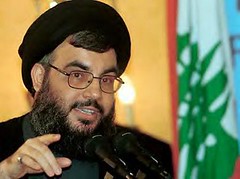
Sayyed Hassan Nasrallah, general secretary of Hezbollah, eulogized Mughniyeh and praised his role in fighting for liberation, saying that tens of thousands would rise up to replace the martyr. He called the killing of Mughniyeh “a big mistake” that would be avenged and said the struggle may be extended beyond Israel-occupied territory and Lebanon.

Nasrallah said that in the war of 2006, Hezbollah exposed the weaknesses of the Israelis. At that time, the Lebanese resistance—a coalition that included other groups, like the Lebanese Communist Party, but with Hezbollah as the leading force—successfully defended Lebanon from an Israeli invasion.

Nasrallah pointed out in his funeral speech that the Zionist leader David Ben-Gurion, a founder of the state of Israel, had written that Israel would fall after its first defeat in a war. He added that the recently released Winograd report—about an inquiry by Israel into the 2006 war—admitted that this war was Israel’s first real defeat. These facts were the basis for Nasrallah’s statement that “The blood of Imad Mughniyeh will eliminate [Israel].”

Reactions from diverse groups condemn Israel, U.S.

In the Syrian capital, the leftist Popular Front for the Liberation of Palestine blamed the Israelis for the killing, which they vowed to avenge.

Al-Manar, Hezbollah’s television channel, said that Mughniyeh exhausted Israel for a quarter of a century and called his death a loss to Lebanon and Palestine.

Usamah Hamdan, representative of the Hamas movement in Lebanon, said, “The crime is a direct offshoot of the campaign being launched by the U.S. administration against the resistance forces in the region.”

Abu-Imad al-Rifa’i, representative of the Islamic Jihad Movement in Lebanon, said that “The blood of martyr Imad will breathe new life in, and unleash, the jihad and struggle of our people in Palestine.” He added that “The blood of the martyrs in the Islamic resistance in Lebanon flows together with the blood that is being spilled in Palestine.”

Dr. Hazim Abu-Shanab, a Fatah movement leader in Gaza, said: “All the assassinations committed by the Israeli occupation state against the Palestinians, Lebanese and all others are criminal acts that violate international law and can never be tolerated. All the resistance factions should aid one another.”

“The stamp of the criminal [Israeli Defense Minister Ehud] Barak is on this cowardly operation, for which, God willing, he will personally pay a heavy price,” said the Al-Aqsa Martyrs Brigades, the armed wing of Palestinian President Mahmoud Abbas’s Fatah movement.

Other media reported that Lebanese Christian opposition leader Michel Aoun, who has been allied with Hezbollah, said, “The assassination of Muganiyeh is a clear aggression on Lebanon and Syria.”

Former Iranian President Akbar Hashemi Rafsanjani condemned the U.S. and Israel for welcoming Mughniyeh’s assassination, saying the car bomb that killed him was an act of terrorism.

U.S., Israeli role

The Israeli state has assassinated many Palestinian and other Arab liberation leaders over the decades, sometimes openly taking credit for these terrorist acts. While this time the Israeli government denied it had killed the historic Hezbollah leader, both members of the Knesset (Parliament) and the Israeli media celebrated Mughniyeh’s death as a victory for the Israeli state. White House statements also celebrated the military leader’s death.

Veteran Israeli peace activist Uri Avnery wrote on Feb. 16 of the orgy of self-congratulation in the Israeli media over Mughniyeh’s killing, despite the Israeli government’s official denial. He described Israel as being expert in high technology but even more expert in “liquidations.” He pointed out how earlier liquidations—such as that of Hezbollah General Secretary Abbas Mussawi in 1992 by U.S.-built helicopter gunships—roused the same orgy of self-satisfaction in Israel, but had only led to an increase of strength for Hezbollah.

White House spokesperson Gordon Johndroe would say only that he was “not familiar with the circumstances of the death,” when asked if the U.S. had played any role in the assassination. (New York Times, Feb. 14) Al-Jazeera television said the U.S. had mounted several secret operations in recent years that had repeatedly tried to capture or kill Mughniyeh, but without success.

Mughniyeh was on the FBI’s list of “most wanted terrorists” and had been indicted in the U.S. for his alleged role in planning the 1985 hijacking of a TWA airliner. He was accused of an unbelievably large number of military actions, the most dramatic being the bombings of barracks of foreign troops occupying Lebanon in October 1983 that killed 241 U.S. Marines and 58 French paratroopers.

At that time, the Reagan administration and the Mitterrand government in France had sent the youth of their countries to be cannon fodder in an imperialist occupation of Lebanon. The explosions at the barracks drove them out. It should be no surprise then, that Mughniyeh, assuming he was responsible, became a hero and martyr for the Lebanese while being called a “terrorist” by the imperialist oppressors.

E-mail: jcat@workers.org
----------------------------------------------------------------------------------
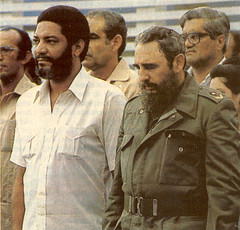
Articles copyright 1995-2007 Workers World. Verbatim copying and distribution of this entire article is permitted in any medium without royalty provided this notice is preserved.

Workers World, 55 W. 17 St., NY, NY 10011
Email: ww@workers.org
Page printed from:
http://www.workers.org/2008/world/hezbollah_0228/
--------------------------------------------------------------------------------------

February 13, 2008

Letter From Hannah Mermelstein

I left Lebanon more than a week ago and am only now starting to find
words. I have never before been in a place that has seen so much war.

Occupation, yes. Injustice, yes. Death and destruction and
uncertainty, perhaps. But something felt different about Lebanon. I
have not wrapped my mind around it enough to feel confident that what I write will accurately represent my own thoughts, let alone the
actual situation. But I do want to tell you about Nahr el Bared.

You may have heard of Nahr el Bared, one of the Palestinian refugee
camps in the north of Lebanon, when the Lebanese army almost
completely destroyed it this past summer. All of the residents were
forced to leave, made refugees for at least the second time, and most people are still forbidden by the army from returning.

I visited the area with a friend who has spent a lot of time there. We stopped first at Bedawi refugee camp, where many of Nahr el Bared's residents are living inside the UN schools (because of this, the schools have been closed since the beginning of the school year).

I have never seen such obvious displacement. People have reconstructed a sort of life in this school, with different families in different rooms, or often many families in one room with a tarp separating them. All their belongings are there, with makeshift closets and bureaus for clothes and small ovens to cook food.

The schoolyard is full of clotheslines and small stores sell snacks at the base of the school. Life almost seems normal, the setting completely absurd. I could blink and imagine the people back in their camp, or even in their villages that they have not seen since 1948.

I think about my association with the word "refugee." It should, by
definition and by international law, be temporary. And yet my
experience with refugees has been with Palestinian people in West Bank refugee camps, relatively developed communities where people have been living for 60 years and which are not entirely dissimilar to the towns around them, with the exception of the narrow streets and fewer services.

I realize that "Palestinian refugee" to me has been a stationary, permanent identity. This does not reflect justice or people's desires, but it does reflect a certain current reality. Not so in Lebanon, and most of all in the displaced communities of Nahr el Bared residents.

When we arrived in Nahr el Bared itself, it was like a ghost town. A
deliberately created ghost town, virtually empty of people and full of
shelled and collapsed homes. We stood on a roof near the entrance.

To the left was a beautiful snow-covered mountain, to the right the
Mediterranean Sea, and in the center thousands of empty, destroyed
homes. The teenage boys who had invited us to the roof are among the few families who have been allowed back into the camp. "Even Israel doesn't destroy like this, does it?" they asked, as they watched their new pigeons fly in circles around the house. I thought of Rafah
(Gaza), the only place I have been that resembles the destruction of
Nahr el Bared. But even the destruction of Rafah was not of this
scale.

We walked around the camp, which I dare to call beautiful in many
ways. A river runs through the middle, and the camp is on the sea.
There is more green than I have ever seen in a refugee camp. My
friend described to me how Nahr el Bared is one of the more
traditional camps, that many communities find themselves resisting
with weapons or giving up altogether, but here the resistance has been in the preservation of culture and traditions, like wedding rituals at the river.

Again, I could blink and imagine the camp as the vibrant community
that it was until May. And I could feel a taste of pre-1948
Palestinian life that I have only occasionally felt while walking
through the lands of destroyed villages with Nakba survivors
themselves.

A small block of temporary UN housing holds a few hundred people. We walked through the area, gathering a small entourage of children as we went. "Where are you from?" a little girl asked one of us. "Chicago," responded one of the members of our group. "I'm from Saffourieh," said the girl. I turned around and asked her, "From
where?"

I wanted to make sure I had heard right. This young girl has
given the name of a destroyed village inside present-day Israel that
not only has she never been to, but I have. While some of
Saffourieh's residents apparently fled to Lebanon, others fled only a
few miles away and currently live in Nazareth. I have visited the
land with some of these people.

At the only public clinic in the camp, we met a man who told us he was the last doctor to leave the camp and the first to return. The clinic is open 24 hours a day, and the staff work as volunteers. They barely have money for medicine.

We began to talk with the doctors, and it turns out one of them is
originally from Saffourieh as well. Which is to say that his parents
were displaced from Saffourieh in 1948. He has never been. We told him that we had been there, and he began to ask questions: "What does it look like?" "What do the Israelis call it now?" "Do people live there?" We told him what we know. "If only I could go…" he said. When we left, he said he hopes to see us again, next time in his village of Saffourieh.

We walked out of the clinic, trudged through the mud away from the
destruction and towards the checkpoint at the entrance of the camp.
Refugees are refugees, I thought, people displaced from their
communities by force. Whether they have carried this identity for a
few months or several decades, whether they have been displaced once or twice or many times over, their right to return is sacred.

Whether to Nahr el Bared or to Palestine, the choice to return should be theirs. Because, unfortunately, I can blink and imagine their
settings transformed as many times as I want, but it is no more
effective than clicking my heels together and wishing them home.

For more on Nahr el Bared, including photos, visit
http://electronicintifada.net/lebanon.

Kenya News Bulletin: Last Hurdle to New Prime Minister; Condi's Visit; Mediation Challenged Legally

The last hurdle to new prime minister

Story by SATURDAY NATION Team
Publication Date: 2/23/2008

Only a constitutional amendment seemed to stand in the way of the long-awaited settlement to the country’s post-election crisis Friday after a day of long talks and factional consultations.

President Kibaki’s negotiators appeared to have accepted the legal proposals put forward by the drafting committee but insisted that they should not be anchored in the Constitution.

On the ODM side, the negotiators insisted that such landmark changes in the government structure must be supported by an amendment to the Constitution.

This would avoid the possibility of someone going to court to challenge the legality of the new government.

Last night, the PNU negotiators left Serena Hotel and headed straight to Harambee House to hold further consultations.

The ODM team was also expected to brief their leader Raila Odinga, who is out of the country.

The talks chairman, Mr Kofi Annan, issued a statement saying that the teams had been given a weekend off to go and consult with their principals.

Mr Annan appealed to President Kibaki and Mr Odinga to give clear instructions to their negotiators to enable the talks to move forward.

Earlier, the talks which were expected to start in the morning did not take off until midday when the two teams finally occupied their positions at the Serena Hotel.

The delay was apparently caused by the government team which held lengthy consultations with President Kibaki in his Harambee House office in the morning.

The President met with the mediators, a team of Cabinet ministers he appointed to spearhead peace and reconciliation efforts in the country, then held talks with the incoming chairman of the African Union Commission Jean Ping.

It is understood that the President discussed with mediators the legal proposals that would lead to a coalition and the kind of powers that should be ceded to a prime minister.

It was also understood that the powers which were being proposed for the PM were causing discomfort in the Party of National Unity ranks who were asking that the government negotiators should not give away too much.

At the Serena Hotel, the venue of the talks, the legal working group of Justice and Constitutional Affairs minister Martha Karua and Mbooni MP Mutula Kilonzo, ODM’s James Orengo and William Ruto held a marathon meeting from 12.05 pm to fine-tune the legal draft.

But Ms Karua left the meeting at 6.30 pm and the hotel precincts without a word leaving behind the three to continue with the work.

Earlier, Mr Annan’s personal assistant, Mr Nasser Ega-Musa, had told the press that the legal team was still working and that they would go to report to the negotiators later in the night.

“It is beyond what we expected, but at the end of their session, they will have to go into plenary. It is at the end of the plenary that we will decide whether or not to hold a press conference,” he said.

As the talks progressed into the night, ODM MPs held a Parliamentary Group meeting in Parliament Buildings where they announced that they would call for mass civil disobedience on Wednesday if the Annan talks fail to yield tangible results.

They insisted that they were demanding a Prime Minister with executive powers.

It also emerged that Mr Odinga had flown out of the country Friday in a chartered flight to South Africa in what party officials said was a private visit. This is Mr Odinga’s first foreign trip since the disputed presidential elections.

Sabatia MP Musalia Mudavadi, who is leading the ODM negotiating team to the peace talks being chaired by former UN secretary general Kofi Annan said Mr Odinga will be back in Nairobi at the weekend “but we are in constant touch with him”.

Mr Odinga is visiting South Africa at a critical stage of the negotiations which is the home of Mr Cyril Ramaphosa who the government turned down the proposal to join Mr Annan’s group of African Eminent Persons.

The South African politician-cum-businessman could have joined former Tanzanian President Benjamin Mkapa and former South African First Lady Graca Machel who are in Mr Annan’s team.

Sources in ODM said Mr Odinga was going to South Africa, then move on to Nigeria.

As Mr Odinga headed south, Vice-President Kalonzo Musyoka flew out to Kigali, Rwanda, to brief President Paul Kagame on the ongoing negotiations.

Mr Musyoka met Mr Kagame in State House Friday. President Kagame had earlier called for a military solution to the Kenyan crisis.

It is understood that President Kagame repeated his warning to the Kenyan government to find a quick solution to the conflict in the country to avoid violence spiralling to dangerous levels.


It wasn't business as usual when Condoleezza hit town

Story by ARNO KOPECKY
Kenya Daily Nation
Publication Date: 2/23/2008

She’s brisk, she’s bright, she’s (red, white and) blue — and oh yeah, black too. She’s Condoleezza Rice, “the most powerful woman in the world.” For a few hours on Monday, she was in Nairobi for the highest-profile visit to Kenya since her predecessor, Mr Colin Powell, came to bid President Moi adieu in 2001.

Busy day, huh Condi? After pulling in at Kenyatta International Airport around 10am, she barrelled straight to Serena Hotel in downtown Nairobi for a chat with Mr Kofi Annan (who no doubt wishes his Kenya stay was as short as hers), then onto Harambee House for tea with President Kibaki before heading to the American ambassador’s lush Muthaiga residence to meet the aspiring prime minister.

Conspicuous by their absence around Harambee House, though, were the usually tough-looking police officers.

Phew... no sooner had Mr Raila Odinga left than a delegation from the lobby groups — code for big business — piled into Ranneberger’s palace... er house... to put in their plea for business as usual. By the time all that was over, we journalists were basically an afterthought.

For our part, the press did little but think about Condi all day. Her closing remarks were scheduled for 10 minutes to 5pm, which in Nairobispeak usually means a quarter past six. Not so for team America: they told reporters to show up around noon so the guards would have time for a thorough pat-down.

Tennis rackets

If only we’d brought our tennis rackets! The distractions of the ambassador’s living room were off limits to all but the first handful of photographers to arrive. They were allowed inside for a brief photo-op on the condition that each cameraman was accompanied by a security guard.

Those of us who pulled into Muthaiga drive after 1 o’clock were whisked down an alleyway and shoved through a little black gate at the mansion’s rear end; metal detectors awaited us there, then a short walk past the tennis court to the pool deck, where we waited for the next three hours.

This idle scene resembled a cocktail party, the only real difference being that the fruit juice brought around by white-shirted waiters lacked vodka. Everyone wore their finest but the expats who could hardly be troubled to tuck their shirts in.

We scattered across the pool deck and formed small groups that reflected the allegiances formed amongst the press corps over the last two months of war correspondence.

For the most part, print journalists stayed seated while the television personalities flitted from one clutch of journalists to another.

I joined a table of foreign correspondents — an Alabama girl, a Spaniard, a Frenchman, three Canadians and a Brit. Like everyone else, we filled the time with gossip. “Who are the Republicans more afraid of?” said the Spaniard; “Barack or Hillary? That’s what we should find out.” He seemed to think Hillary was the greater threat, but the rest of us were betting on the Luo.

“A friend of mine works at a five-star hotel in Jerusalem where Condi always stays,” said one of the Canadians. “She always has a treadmill brought up to her room, along with a personal chef.”

“Wouldn’t you? The chef, that is, not the treadmill.”

We all agreed that with Kosovo having just declared independence from Serbia, and Pakistan in the throes of its own electoral drama, America’s top diplomat would have to say something truly outrageous for this Nairobi afternoon to make news outside Kenya.

Shortly before the appointed hour, a press officer went around informing everyone that we would be allowed to ask only two questions at the end of Condi’s briefing. Two in total, that is, not each. A collective groan went up among the 50 or so journalists assembled, each of whose notebooks harboured several questions of mass destruction. Who, we wondered, would be chosen to address the mighty Rice?

At a quarter to 5, we were let out of our holding tank, and streamed through an ivy-decked gate into an impeccably manicured back lawn. Secret service agents you could have spotted a mile away were milling in the bushes.

It isn’t just Hollywood, these guys really do wear brush cuts and dark sunglasses and earpieces; they also communicate with crisp hand gestures which, together with the earpieces, make them appear vaguely deaf.

There followed the most respectful hush I’d yet witnessed in Kenya as we lined up like footballers a safe distance from the podium and waited for her majesty’s appearance. But where was she? Five, 10, 15 minutes went by. Feet shuffled, cameras sighed, and I heard a Reuters man whispering to a friend behind me: “What should I ask?” Lucky devil, he’d won the draw but now had the weight of all our curiosities hanging on his query.

And then out came Condi. Just like that, with no introduction, she strode out from the dark confines of Mr Ranneberger’s house — she was talking before reaching a full-stop in front of the microphone.

“I met with Kofi Annan today,” she began, listing off her day’s encounters without so much as a hello.

You’ve heard the rest of the sound bites: “This is not a matter of dictating to Kenyans? there is an urgent need to share real power... do it yesterday? business as usual?”

Here was a lady who had performed similar functions in places like Baghdad and Kabul, Islamabad and Beirut. What’s a little Nairobi, after all that?

Condi looked relaxed, alert, every inch the businesswoman. You don’t have to agree with her actions — say, helping to orchestrate the Iraq war — to respect her professionalism.

She spoke without pause for all of six or seven minutes; answered the two questions put forward by KTN and Reuters without hesitation, then did the same for two more questions hollered out from the anxious crowd.

One could almost fail to realise she didn’t say anything new.

And that was it — make of it what you will — that was Kenya’s biggest visit in recent history.

We shuffled off to file our stories. As for Condi, she had a plane to catch, a president (her own) to meet in Dar es Salaam, and perhaps a tread mill to jog on before bed time.


Mediation group’s legality challenged in court

Story by SATURDAY NATION Correspondent
Publication Date: 2/23/2008

A parliamentary loser has moved to court to challenge the constitutionality of the mediation team.

Mr Antony Ndung’u Kirori wants the High Court to issue an order restraining all the negotiators from adopting any resolution by the Kofi Annan team which is likely to alter the governance structure of Kenya in violation of the Constitution.

Also sought by Mr Kirori is an order directing that his case be heard and determined within a period not exceeding 21 days.

In the suit filed under a certificate of urgency, Mr Kirori has listed negotiators Musalia Mudavadi, William Ruto, Sally Kosgei, Caroli Omondi, Martha Karua, Mutula Kilonzo, Moses Wetangula, Sam Ongeri, Gichira Kibaara and Raila Odinga as respondents. Also being sued are Police Commissioner Major Gen Mohammed Ali and Attorney-General Amos Wako.

Mr Kirori said the negotiators are engaged in an unconstitutional “boardroom” exercise referred to as “mediation process” to discuss and determine what is, in effect, an electoral dispute between ODM and PNU.

This, according to him can only be done by a court of law which is vested with powers under section 10 and 44 of the Constitution.

He says he vied for the Lang’ata constituency seat against Mr Odinga and lost it. He argues that he should also be permitted to share power with Mr Odinga as MP for Lang’ata.

Reason? He believes that if Mr Odinga who lost the presidential race to President Kibaki is allowed to share power, then it would only be fair for him to also be accommodated as he represents those who voted for him in Lang’ata constituency.

Secondly, Mr Kirori says Mr Odinga and ODM Members of Parliament ought to have refused to turn up for the swearing in ceremony in Parliament if they did not believe or accept that President Kibaki, who convened the opening of Parliament, was not legally in office.

He noted that all the MPs from all parties attended and participated in the election of Speaker and Deputy Speaker.

And since they agreed to participate in the affairs of the House, they accept that President Kibaki was legally elected, he said.

He accused ODM of giving the impression that the country is ungovernable and on the brink of civil war.

This, Mr Kirori said, was a calculated intention to invite foreign entities to oversee the current mediation process in an unconstitutional manner.

The case is scheduled for hearing on Monday before High Court judge Mr Justice Paul Kihara.