Monday, March 03, 2008

Somali News Bulletin: US Bombs Civilians Again; The Failure of the Fake 'War on Terror'

U.S. Strikes at Terror Target in Somalia

By MOHAMED OLAD HASSAN
The Associated Press
Monday, March 3, 2008; 3:43 PM

MOGADISHU, Somalia -- The U.S. Navy fired at least one missile into a southern Somali town before dawn Monday, targeting a terrorism suspect as an Islamic group with links to al-Qaida appears to be gathering sway again in this lawless African nation.

Residents and police in Dobley said at least eight people, including four children, were seriously injured when a home was destroyed. The attack was confirmed by U.S. officials, who said only that the target was a "known al-Qaida terrorist."

The U.S. military has staged several attacks on suspected extremists in Somalia over the past year amid fears the Horn of Africa country could become a haven for terrorists.

"As we have repeatedly said, we will continue to pursue terrorist activities and their operations wherever we may find them," Pentagon spokesman Bryan Whitman said in Washington.

Whitman declined to provide any details, including the target's identity, the fate of the targeted individual or reports of any other casualties.

Another defense official told The Associated Press that the strike used one or more Tomahawk cruise missiles fired from a U.S. submarine off Somalia's coast. The official spoke on condition of anonymity because he wasn't authorized to discuss details.

White House spokesman Gordon Johndroe told reporters that "the action was to go after al-Qaida and al-Qaida-affiliated terrorists," suggesting it may have been designed to hit more than one person. Like Whitman, Johndroe declined to provide any details.

One other U.S. military official said the target was believed to have been staying in a building known to be used regularly by terrorist suspects. The official spoke on condition of anonymity because he was not authorized to comment on the record.

A radical Islamic movement that ruled much of southern Somalia in 2006 took over Dobley last week, led by senior official Hassan Turki. Turki, who is rarely seen in public, is on U.S. and U.N. lists of suspected terrorists for alleged ties to al-Qaida. His fate after the strike was not known.

People in Dobley, a town about four miles from the Kenyan border, said the sound of explosions shook them awake before dawn Monday.

"When we came out we found our neighbor's house completely obliterated as if no house existed here," Fatuma Abdullahi told The Associated Press. "We are taking shelter under trees. Three planes were flying over our heads."

The Islamic movement, the Council of Islamic Courts, seized control of much of southern Somalia, including the capital, Mogadishu, in 2006. But in early 2007, troops loyal to the U.N.-backed interim Somali government and the allied Ethiopian army defeated the Islamic group.

The Islamic council now appears to be re-emerging.

On Monday, fighters linked to the group overran Bur Haqaba, a hilltop town about 35 miles from the provincial capital of Baidoa in the south. The group released prisoners from jail and killed a police chief before retreating, witnesses said.

Last month, Islamic fighters briefly took over Dinsor in southern Somalia, killing nine soldiers, police said.

The United States has repeatedly accused the Islamic group of harboring international terrorists linked to al-Qaida and allegedly responsible for the 1998 bombings of the U.S. embassies in Kenya and Tanzania.

America has been concerned Somalia could become a breeding ground for terrorist groups, particularly after the Islamic militants briefly gained control of the south and Osama bin Laden declared his support for them.

The U.S. sent a small number of special operations troops to help the Ethiopian force that drove the Islamic movement into hiding, and a Navy warship shelled suspected al-Qaida targets. U.S. warplanes staged at least two airstrikes in January 2007 in an attempt to kill suspected al-Qaida members, Pentagon officials have said.

The U.S. Navy still patrols Somalia's 1,880-mile coast, which is the longest in Africa. Somalia is near key shipping routes connecting the Red Sea with the Indian Ocean and piracy is rampant in the waters offshore.

The U.S. has avoided sustained military action in Somalia since it led a U.N. force that intervened in the early 1990s in an effort to fight famine. That mission led to clashes between U.N. forces and Somali warlords, including a battle in Mogadishu that killed 18 American soldiers.

Somalia has been ravaged by violence and anarchy since warlords overthrew dictator Mohamed Siad Barre in 1991, then turned on each other. The current government was formed with U.N. help in 2004, but it has struggled to assert any real control.
________________________________________________

Associated Press writers Pauline Jelinek in Washington and Elizabeth A. Kennedy in Nairobi, Kenya, contributed to this report.


The "war on terror" and the Worst Humanitarian Crisis in Africa

By Sadia Ali Aden

Approximately three months ago, Somalia's Transitional Federal Government (TFG), pressured out Prime Minister Ali Mohamed Gedi. Surprisingly, this political re-arrangement of deckchairs generated much noisy headlines.

Meanwhile the real story—the great unfolding humanitarian
disaster--continued unnoticed.

For the Somali people, the Ethiopian invasion of December of 2006 could not have started at a worse time. Defeating the Union of Islamic Courts (UIC) and propping up the TFG; this was Ethiopia's immediate rationale for violating Somalia. The larger goal? Forging a partnership between Washington and Addis Ababa in order to execute "war on terror"…

A year later, this mission has not been accomplished. Instead, the "war on terror" has become the terror of war being visited on the Somali people.

Admittedly a handful of Somalis have benefited from the invasion, specifically the dozens of warlords previously driven out of Mogadishu by the UIC. These warlords, the instigators of Somalia's current civil conflict, were reinstalled in their fiefdoms riding on the backs of Ethiopia's invading tanks.

As a result, the reviled check points and road blocks used to bully cash out of unarmed civilians were reintroduced in Southern Somalia, particularly Mogadishu.

To keep the invasion and Africa's worst humanitarian catastrophe going, heavy and modern weapons, including airplanes were used. One was a U.S. Air Force AC-130 gunship that attacked and killed Somali villagers and countless livestock in the hunt for three foreign men suspected for the bombing of 1998 American embassies in Africa, who yet remain at large.

Among those caught in the chaos were visiting Somalis from the Diaspora. In the period between June and December 2006, Somali technocrats returned to their native country to partake the rebuilding in the six month period of peace and stability that was established under the rule of the UIC. The Diaspora arrived with the intention to give back to the land and the people they left behind and contribute to rebuilding their lives.

Unfortunately, an extraordinary rendition programs were the gratitude they received; in that, the TFG, Kenya, Ethiopia and US all being implicated. Young men as young as 12 years of age were taken out of their homes in the dead of the night, blindfolded and taken into unknown destinations.

Fleeing refugees of mostly women and children did meet a similar fate.

Unfortunately, these refugees had no where to escape, as Kenya decided to close its borders and deny them entry. This paved the way to the current nightmare scenario: 1 million internally displaced persons (IDPs,) mostly children and women, without any provision or protection from the UN or other humanitarian agencies or NGOs.

In order to create a safe haven for the displaced refugees, the international community must demand the neighboring countries to open their borders. It is all too often that the casualties of war are those that are unmentioned. The innocent men, women and children, caught in the middle, left with no way out.

The UN's High Commissioner for Refugees, António Guterres, said border security measures should not impair the ability of deserving Somali civilians to enter Kenya to seek safety and protection as refugees. The neighboring Nations have humanitarian responsibility to safeguard these refugees.

On October 30, 2007, 40 international NGOs have released a joint statement ominously warning against a gathering cloud of humanitarian catastrophe in Somalia urging the international community to respond to this man-made calamity as the Ethiopian forces and militias loyal to the (TFG) callously prevent the delivery, and bluntly stating that "there is an unfolding humanitarian catastrophe in South Central Somalia".

Meanwhile, Ethiopian forces continue their shelling of Mogadishu neighborhoods and killing, according to Elman Human Rights group, 7000 civilians mostly women, children, and elderly between January and November of 2007.

"In Shell-Shocked, Human Rights Watch's August 2007 report of our investigation of the March-April hostilities, we documented many of the most serious patterns of abuse by Ethiopian troops, such as indiscriminate attacks on civilians, summary executions and repeated targeting of hospitals," wrote Tom Malinowski, Washington Advocacy Director for Human Rights Watch, in an open letter to Secretary of Defense, Robert Gates.

However, the international media by and large remain morally selective in what they show to the world.

Somali caricaturist, Amin Amir (AminArts.com,) depicts this morally selectivity on his December 12, 2007 cartoon. The powerful imagery shows a representative of the international media zooming his camera on a severely malnourished child standing in the middle of a killing field where many bodies are on the ground and Ethiopian fighter jets are flying overhead and dropping missiles. The child retorts: I don't need your coverage; it is these atrocities – pointing to the dead--that you need to be telling the world.

The current Somali nightmare was exacerbated by the systematic assassination of Somali independent media groups who are not pro TFG and the Ethiopian occupation. And the silence of the international community on this matter is deeply disturbing and sadly deafening.

This year alone, eight Somali journalists were killed- their crimes being to have simply dared reporting the reality on the grounds of Mogadishu. The TFG & Ethiopian forces are terrorizing Somali reporters creating an uncomfortable environment of terror and coercion.

According to the United Nations Children's Fund, one-quarter of the refugees around Afgooye are younger than age of five.

Sick children and pregnant women often are turned away at checkpoints, and trucks carrying food and other humanitarian aid are routinely charged $500 each for passing through.

"Things are now getting absolutely worse," said Christian Balslev-Olesen, the UNICEF representative for Somalia.

"There is a dirtiness to this war.

Children are a real target."
--------------------------------------------------------------------------------------
Sadia Ali Aden is a mother, writer, and voice for justice and equality who lives in Virginia
------------------------------------------------------------------------------------

Somalia is on fire again

By OSCAR KIMANUKA
oscar_kim2000@yahoo.co.uk

Television screens are awash with images of death and despair in Mogadishu, Somalia. Crowds of Somalis beat, hammer and drag dead Ethiopian troops in a manner that reminds us of the bitter experience of American troops back in October 1993, when a mob dragged the bodies of two United States soldiers through the streets of Mogadishu. The American soldiers had been ruthlessly killed in an intense street battle.

It was soon after the firefight that the US withdrew its troops from chaotic Somalia.

What had led the Americans then to intervene in Somalia was the war and famine following Siad Barre’s exit from power. The rescue effort led by the Americans began in a blaze of glory and publicity in December 1992 as the American marines stormed ashore on the beaches of Mogadishu into the lenses of waiting television cameras. Their task, code-named Operation Restore Hope, was to impose peace and democracy and feed the hungry and starving.

FIFTEEN MONTHS AFTER their colourful and triumphant arrival, the Americans made an ignominious withdrawal, leaving the United Nations to clean up the mess.

Somalia today is yet again in chaos. The hope that the Transitional Federal Government would make progress towards national reconciliation is quickly evaporating. In scenes reminiscent of the 1993 battle, the bodies of two dead Ethiopian soldiers were dragged through the streets of Mogadishu, a grim reminder that the fragile East African state of Somalia is far from stabilising.

THE WAR IN SOMALIA IS A war few would like to touch even the UN. No less a person than the UN Secretary-General Ban Ki-moon has said that sending a UN peacekeeping force to Somalia right now is “neither realistic, nor viable” and has instead suggested the formation of a multinational “coalition of the willing.”

Interestingly, Mr Ban should be aware that no one is willing to send troops into Mogadishu. The African Union, which had previously pledged to send 8,000 peacekeepers, just supplied 1,600 Ugandan troops.

The images on the television screens of dead bodies dragged through the streets of Mogadishu are a serious impediment to anyone out there with the remote wish of sending in troops.

Oscar Kimanuka is a commentator on social and economic issues based in Kigali.

Over 100 Palestinians Killed in Five-Day Israeli Attack

March 03, 2008

Over 112 Palestinians Killed in Five-Day Israeli Attack, Mohammed Omer Reports from Gaza

As Israel pulls ground troops from Gaza, Israeli aircraft continues to carry out bombing raids. On Sunday, Palestinian President Mahmoud Abbas formally suspended contacts with Israel to protest what he called a criminal war on the Palestinian people. We speak with Palestinian journalist Mohammed Omer and Israeli journalist Amira Hass.

Guests:

Mohammed Omer, Palestinian journalist living in the Gaza Strip. He writes for several publications and maintains a blog at http://RafahToday.org

Amira Hass, correspondent for the Israeli newspaper Haaretz and one of Israel’s leading journalists. She has spent much of the last decade living in Palestinian communities of the Gaza Strip and the West Bank.

AMY GOODMAN: Israeli troops have reportedly pulled out of northern Gaza after days of fighting that killed more than 112 Palestinians in the deadliest military assault on Gaza in years. The assault drew worldwide protests for excessive use of force, but Israeli Prime Minister Ehud Olmert has warned the withdrawal of troops does not mean Israel’s military operation there is over.

The clashes reached a peak on Saturday, after Israel sent in a regiment of ground troops in an operation dubbed “Hot Winter” that killed seventy-seven Palestinians in two days. According to Gaza health ministry statistics, twenty-two children were killed. More than 350 people were wounded. Since last week, three Israelis have died: one civilian and two soldiers.

Amid the bloody assault, Palestinian President Mahmoud Abbas suspended peace negotiations and cut off all contacts with Israel.

On Monday, Hamas claimed victory over Israeli forces and mounted a rally in Gaza City. Secretary of State Condoleezza Rice is due to arrive in the region for talks tomorrow. Meanwhile, a senior Israeli official told Reuters, “This very limited (Gaza) operation was intended to show Hamas what could happen, what you may call a ‘prequel.’” He went on to say, “If they continue to fire the rockets, then there will be more operations like this one or worse.”

We go now to Gaza to speak with Mohammed Omer, a Palestinian journalist living in the Gaza Strip. He writes for several publications, maintains a blog at rafahtoday.org.

We welcome you to Democracy Now!, Mohammed. Can you describe what is happening?

MOHAMMED OMER: Thank you. Thank you very much. I’m not sure if you can hear me right now. Actually, I’m in the middle of some funerals here in the northern part of the Gaza Strip. If you can hear me now, I’m not sure, actually.

AMY GOODMAN: We can hear you fine. Can you describe what has happened over the last few days?

MOHAMMED OMER: Well, in the last two days and up ’til the moment, on the northern part of the Gaza Strip, a Jabaliya refugee camp, where the Israeli F-16s [inaudible] at the moment, the Israelis were talking about the withdrawal from the northern part of the Gaza Strip, but the situation is quite difficult right now. The ambulance crews are trying to evacuate bodies of people, and they were able to find the body of one of the ambulance workers. His name is Mahmoud Zakut [phon.], and he was drove by an ambulance by the Israeli military forces. And it seems to be, from the damage on his body, that this ambulance—the Israeli bulldozers, they drove over his body. And this came just a few hours ago. And his body arrived to the hospital, and they said that he had disappeared for nearly three days in the Gaza Strip, in specific in the north of the Gaza Strip.

AMY GOODMAN: You were describing over the weekend the smell of bodies and body parts. Where were you? What did you see?

MOHAMMED OMER: Well, this was yesterday. I found arms and legs and fingers scattered in the streets everywhere. And this was the situation—burned flesh in the streets with children and kids and women. And so far, 130 Palestinians were killed in the last few days. Out of 130, there are thirty-nine children, ten women, in addition to 370 children who were injured in the past few days. And there is 35 percent of those cases who were injured in the head and the upper side of the body, this which makes the whole situation at Kamala Adwan hospital quite difficult for the ambulance crews to deal with such cases, especially those people who are arriving from the far north of the Gaza Strip, where ambulances could not reach, because the Israeli bulldozers and F-16s were not able to evacuate the bodies.

Right now, I can see also some ambulances. They are trying to get inside one of the areas, and they are trying to get some more bodies into the area by getting the arms and fingers and legs of people that they were not able to reach. And I’m actually close right now to the area where the ambulance crews are patrolling, and they’re trying to get the bodies of those people into the hospital. And I can say that they are collecting at the moment, by collecting with some plastic bags some remains of human flesh, like arms and fingers and legs, and mostly children’s and women’s. And I can say that I cannot identify right now how many the numbers of the people—how many the numbers of the people who are affected by that or who were killed. Right now, I’m also close to one of the medical workers here, and they are trying hard to get the bodies of the people who are inside the area, who are inside the area of the northern part of the Gaza Strip.

People here still don’t have food. They have difficulty in accessing food, have difficulty in accessing different kinds of things. And probably you can hear the Israeli F-16 right now. It’s hovering in the sky, and it has been bombing since the early morning, and that was the case since the last few days. There is shortages of fuel, as well, for the ambulance workers. And I’ve been talking to one of the medical workers here, and he confirmed to me that seventy kinds of medicines that they could not find in the Palestinian hospitals in the northern part of the Gaza Strip, and that makes the whole situation quite difficult for them.

Let me say here that among the people who were targeted or injured, there were three journalists, and one of them was severely injured in the northern part of the Gaza Strip. We were shot at at different places, in addition to three medical workers and rescue teams who were injured, beside Mahmoud Zakut, who’s a medical worker who was droven by an Israeli tank while he was inside the area of the northern part of the Gaza Strip, Jabaliya refugee camp, as he was trying to evacuate some bodies of the people lying collectively. There is nothing to collect here, but it’s only human flesh of people and injured and killed people that makes the whole situation quite difficult for ambulances to collect them.

And the most tragic that I have seen in this hospital is to say some of those medical workers, when they are trying to collect—as I’m right now next to an ambulance, and they are trying to collect, I can see, some arms and legs of scattered people, and you cannot tell what is the ages, but you can tell that these fingers could be fingers for children and these fingers could be fingers for women or man, I’m not sure, but they are all human flesh coming out of the Gaza Strip, due to the Israeli missiles.

Israel has been using the heaviest missiles by F-16s. Some experts here estimate that there are one-ton weight of Israeli missiles that Israel has been using. And that’s the case, as one of the medical sources here told me about the whole situation. And we have been told also that there is a bombing by F-16s in a close area nearby, and there are more ambulances coming with more casualties and with more people who are coming to the hospital. We are not sure who is a target. But I can tell you that most of the casualties were children and women. And among those 130 people, there are thirty-nine children and ten women. And in addition to that, there is 370 children who are also among the targets by the Israeli occupation forces.

AMY GOODMAN: Mohammed Omer, a quote from Reuters of an Israeli official calling this all a “prequel,” going on to say, “If they continue to fire the rockets, [then] there will be more operations like this one or worse.” And Deputy Defense Minister Matan Vilnai last week threatening a “holocaust” in Gaza if rocket fire continues, saying, “The more Qassam fire intensifies and the rockets reach a longer range, [the Palestinians] will bring upon themselves a bigger shoah [holocaust] because we will use all our might to defend ourselves.” Your response, Mohammed Omer?

MOHAMMED OMER: While that’s true, still, you know, in the same time, while the Israeli occupation forces are attacking in the northern part of the Gaza Strip and other parts of the Gaza Strip, launching rockets has continued by the Palestinian resistance. They are launching rockets towards Israel up ’til the moment, as Israel is attacking. They are—there is news that Israel has left the Gaza Strip, and to do that some bulldozers back out from some areas, but still the F-16 is occupying the skies of Gaza. And I can tell you that the launching of rockets is continuing. And when you talk to those resistance guys, they inform you and they tell you that this is simply because of them being attacked by the Israelis, and it’s Israel who should stop in the first place, according to Hamas and other factions.

But Israel has been attacking civilians. The latest one was a seven-months child, baby child, who was killed, beside there is also a one-week child who was killed last night, beside many other ones who were killed. And if we want to make a comparison, three Israelis were killed in the last few days, and this was since eight months that Israeli citizens are killed by home—rockets from Gaza, while if we look at this last period, there is more than 130, so from three to 130. And look at what Israel—the weapons that Israel is using. It is heavy weapons, and they are targeting also these civilian houses, so I’m not sure if we can compare the primitive weapons that the Palestinian resistance is using with the well-equipped army, one of the most powerful armies in the world, Israel. And they are using missiles that burns the bodies. And I can tell you and I can tell all the American people listening to this interview, that they’re using the missiles that they’re burning the bodies.

And it can make a smell—it smells really bad here. It smells like if you are—if you are—like an American barbecue, actually, in a house. It is actually—but this is not an—this is not a cow, this is not beef; this is a human being’s flesh. It is scattered in the streets, so they can smell this smell awfully. And this also beside the sewage system, which smells bad, as well.

I’m receiving news here from one of my colleagues here, and he says that the Israeli warships also in the eastern—in the western part of the Rafah refugee camp in the southern Gaza Strip, are firing rockets towards the fishermen and towards the houses of civilians. We’re not sure if there are casualties, but they are confirming that the tanks in the north are launching rockets, and the Israeli warships in the south are also launching missiles towards the fishermen and the civilians’ houses.

AMY GOODMAN: Mohammed Omer, do these attacks strengthen Hamas?

MOHAMMED OMER: I’m not sure if I can hear you, because it’s quite noisy here.

AMY GOODMAN: Do these attacks strengthen Hamas? Do these attacks by Israel—

MOHAMMED OMER: They strengthen Hamas, definitely. Such attacks—I can confirm to you that, you know, such attacks makes Hamas stronger by people. And one hour from now, there will be demonstrations all over the Gaza Strip from the mosques and from the south, from the north, from the Middle East. And there will be tens of thousands of people going out by these demonstrations and calling for Hamas to take revenge for the killing of those Palestinians. So I can tell you that this is strengthening Hamas, and this is empowering Hamas, and this is making Hamas more power, because people who have elected Hamas democratically, they want Hamas to defend them by firing rockets towards Israel. So I can confirm to you that this is something that Hamas is finding the support, despite the fact that all this killing and bombing and killing.

And people believe that, you know, the problem is not with the rockets; the problem is with the occupation, because—let us take example. In Bethlehem, in Jenin, in Nablus, in Ramallah, there is no rockets, but there’s still occupation is existing. The occupied wall is existing. And the occupation is destroying a killing on daily basis. Forty-five Palestinians were injured and one Palestinian was killed, mostly students; they were coming in a protest in solidarity with Gaza in Hebron yesterday. And that shows that the Israelis are not really interested in any kind of peace or dialogue or negotiations. So there is no dialogue, and there is no peace when it comes to this, but I can tell you that this shows that the Israelis are—they mean to make the situation miserable for the Palestinians. The excuse they are using is rockets, but in West Bank there is no rockets. The occupation is continuing, and that makes people believe here that the problem is not with the rockets, but the problem is with the occupation.

Let me tell you here that I can also confirm to you that here the F-16s are quite hovering, and I can see three F-16s hovering. It might be that they bomb any target in any minute. I’m not sure if you can hear that right now, but it is low, actually, and I can see also the two helicopters on the other side, as well, coming from the direction of the southern part of Gaza Strip.

AMY GOODMAN: Mohammed Omer is speaking to us from Gaza, and Amira Hass, correspondent for the Israeli newspaper Haaretz, one of Israel’s leading journalists, is on the line with us from Tel Aviv.

Amira, do you hear reports like this in Israel on Israel television or radio?

AMIRA HASS: This is exactly what I thought when I listened to Mohammed Omer, that this kind of news is completely absent from the news diet, the journalistic diet of Israelis [inaudible] Israeli. I, for personal reasons, am today in Tel Aviv and not in Ramallah, so I have not been listening to Palestinian or Arab radio and did not watch Arab TV, so I’m also—you know, I was stunned by hearing Mohammed Omer, even though I talk all the time with my friends in Gaza. And this is indeed life here—actually, I can report about how life sixty kilometers north to Gaza, how life is normal, how everybody—except for one demonstration yesterday, that the group of leftwing Israelis held in front of the Ministry of Security, Israeli Ministry of Security, there is nothing. Hello?

AMY GOODMAN: Yes, we can hear you fine.

AMIRA HASS: Yeah. You hear me, yeah. So there was one demonstration, and that’s it, and people live their life.

AMY GOODMAN: And the perception of what is happening now in Gaza, the comment of the Deputy Defense Minister saying that they will launch a “holocaust,” trying to get to be very careful. He’ll bring—he said, “The more Qassam [rocket] fire intensifies and the rockets reach a longer range, [the Palestinians] will bring upon themselves a bigger shoah [holocaust] because we will use all our might to defend ourselves.”

AMIRA HASS: OK. I must say that there is some misunderstanding here. Matan Vilnai was very, very insensitive to use the word—a word which can—which is, of course—it is shoah, what we all know is “holocaust.” But in Hebrew, it also means “disaster.” And here, I tend to believe that he didn’t mean to say that there will be a holocaust. He meant that the Palestinians will inflict upon themselves—and that’s what he said—the Palestinians will inflict upon themselves a worse disaster if they continue. This is the correct translation. Unfortunately—of course, he had to think about the words he was using, of course, because you say “shoah,” it’s not a neutral term anymore. But he didn’t mean “holocaust,” that’s for sure. So let’s—I think that here we should be accurate. Then Arab and Palestinian media picked up on it and made all kind of other, you know, media—

AMY GOODMAN: So, Amira Hass, what do you see then happening now? Tomorrow, Condoleezza Rice is expected to arrive, the US Secretary of State.

AMIRA HASS: I couldn’t understand.

AMY GOODMAN: What do you expect to see happening now? Tomorrow, the US Secretary of State, Condoleezza Rice, is arriving.

AMIRA HASS: Yeah, I—look, this has been—what is true is that Israel is opting all the time for an escalation. And I agree with Mohammed Omer that it only strengthens Hamas, even though Israelis say, claim that what they want to do is to topple Hamas, actually, by the attacks. And what happens is the opposite. So I tend to believe that maybe they only want to strengthen Hamas, and not only Hamas, but to strengthen those wings of Hamas or those currents of Hamas which oppose any, any sort of—how would I say—ceasefire with Israel and only opt for more struggle against Israel.

Look, as long as—Gaza is not separated from the West Bank. We see, even though the Israelis have succeeded, and unfortunately with the help of Abu Mazen and Hamas, have succeeded to disconnect Gaza from the West Bank. But the people feel it’s the same people. And we see, whenever Gaza is so atrociously attacked, people in the West Bank come out and protest. As long as Israel continues its policies of colonization and [inaudible]—and at the same time negotiations with never come to an end, I think that we can only wait for more escalation, more—maybe some weeks or days of tranquility, and then another outburst, another explosion. It seems like a perpetual mobile of fightings and escalations.

AMY GOODMAN: Amira Hass, I want to thank you for being with us, correspondent for the Israeli newspaper Haaretz, speaking to us from Tel Aviv. Mohammed Omer was speaking to us from Gaza. He writes for several publications, including Washington Report on Middle East Affairs. His blog is http://rafahtoday.org .
----------------------------------------------------------

Buddy Miles (1947-2008) and Jimi Hendrix (1942-1970): A Musical Legacy or What Happens When Earth Meets Space

Jimi Hendrix & The Band of Gypsys: When Earth Meets Space

The Band of Gypsys in Historical Context

Editor's Note: Buddy Miles of the Band of Gypsys joined the ancestors in late Feb. of 2008. He played with Jimi Hendrix during his career with the Experience as well as the short-lived group, the Band of Gypsys.The article below, written by Oscar J. Jordan III, provides a perspective on Hendrix and the Band of Gypsys. Hendrix was one of the greatest musicians of the 20th century. His legacy lives on three and a-half decades after his untimely death. This article does not necessarily reflect the views of the Pan-African News Wire.

For more information on the music of Jimi Hendrix just log on to the URL below:
http://www.daggerrecords.com
http://home.online.no/~hpjohns/hendrix.html

Jimi Hendrix and The Band of Gypsys...
Or That's What Happens When Earth Fucks With Space

By Oscar J. Jordan III

"Buddy Miles claims that Michael Jeffery, in a deliberate effort to sabotage the Band of Gypsys' s performance, slipped Hendrix LSD backstage. "Both my sister and I saw Jeffery slip Hendrix two tabs of acid, and I personally saw Hendrix take them. He looked so scared."

Jimi Hendrix wasn't stupid but he was naive. On October 15th 1965, he signed a three year exclusive recording contract with producer Ed Chalpin for PPX Inc in New York. At the time he was just a squirrel looking for a nut. A year later he would be discovered by Chas Chandler and the world would be introduced to fire breathing guitar and The Jimi Hendrix Experience. Chas was smart enough to buy up all of Jimi's outstanding contracts but Jimi neglected to tell Chas about one in particular. PPX Inc. After Jimi got a record deal with Warner Brothers, Chalpin demanded huge sums of cash for breach of contract.

They went to court and it was eventually agreed upon in June of 69' that Jimi would record a live album not featuring The Experience, since nobody wanted to give PPX new studio material. This album would be given to PPX and be released by Capital records. Warner Brothers added a stipulation that the album not be called The Jimi Hendrix Experience, but something else as to disassociate the release from their name.

This is how Jimi would satisfy Chalpin who was selling inferior recordings of Jimi from his pre-Experience days. The recordings were of low quality, other instruments were added, then sold as bonafide Jimi Hendrix recordings. Ironically in July of 67', Jimi showed up at Chalpin's studio oblivious to the legal maneuverings taking place. He just wanted to hang out with friends and show off his 8 string Hagstrom bass and new wah-wah pedal. "Wait until you hear this wah-wah pedal". Oh yeah, Chalpin recorded that too. They recorded him and later put it out on the market as a Jimi Hendrix recording.

Check out this recorded dialogue:

Jimi: You can't, you know...like if you use it you can't put my name on the er...thing...right?

Curtis Knight: No, no, no. Hell no.

Jimi: Now, listen, huh...he can't do this, all right...ok?

Chalpin: Go ahead.

Jimi: Edward (Chalpin), can you hear me?

Chalpin: I can hear you loud enough.

Curtis Knight: You can't use his name for any of this.

Chalpin: Oh don't worry about it.

Jimi: No, but...no seriously though, seriously though..

Chalpin: It's our own tape, don't worry about it.

Jimi: Huh?

Chalpin: I won't use it. Don't worry.

Of course he would use it! Chalpin wasn't crazy, he was a businessman. Something with Jimi's name on it meant duckets in the bucket. The question is; "why did Jimi go back in the first place?" He was probably trying to smooth things over with Chalpin with the idea that he could use the tracks without his name. But what good would that have been if he couldn't use Jimi's name? He had to be unaware of the details of the suit. No, he wasn't stupid just naive.

By the later part of 1969 drummer Mitch Mitchell had already performed with Jimi at Woodstock and was back in England to spend some time at home. He later joined up with Jack Bruce and Larry Coryell. The band was called Jack Bruce and Friends. An agitated Noel Redding had already left the band after a Denver show in June of 69'.

Bassist Billy Cox, an old Army and R&B band buddy had already replaced Noel and performed at Woodstock. Billy and Jimi went way back, playing together between 1961 and 1965 with The King Casuals. Buddy Miles and Jimi had met years before when Buddy was Wilson Picket's drummer. He joined The Electric Flag and later fronted his own band The Buddy Miles Express. With Buddy Miles in place as the drummer, The Band of Gypsys was born.

As early as September of 69' the three of them were jamming or in the studio working on a new album that was overdue for Warner Brothers. For all their hard work they had not completed any new material that was presentable. Hours and hours of studio time was spent jamming with out any finished songs. These sessions yielded early versions of "Room Full of Mirrors", "Ezy Rider", "Stepping Stone", "Izabella", "Dolly Dagger", "Burning Desire", "Message to Love", "Power of Soul", "Who Knows", and "Machine Gun".

Albert Allen: "Hendrix was trying to find a way to get to the black audience. He felt that if he put together a band that could reach that audience, he would please them. He wanted to be liked by blacks but I don't think he knew what ingredients he needed."

The bottom line was that after wading through all the so-called political and social ground-breaking aspirations for the band, Billy Cox and Buddy Miles were merely helping their friend out of a serious jam. They were great friends and musicians, and happened to be at the right place at the right time. They would book four shows at the Fillmore East over two days, record it, mix it, take the best stuff and give it to Ed Chalpin as a pay off.

Yes, Jimi wished he had more Blacks in his audience. He wanted to please and not alienate his own people. But finding that elusive magic bullet that would get him in the good graces of an audience who was more attuned to Aretha Franklin, Otis Redding, and Smokey Robinson, was low on his list of priorities. It seemed that everyone else had higher expectations for the band than Jimi did. In the beginning he wasn't fully committed. He felt pushed into the situation but he had agreements to fulfill. He really just wanted to play and write good music.

Electric Gypsy: "It has become part of the Jimi Hendrix mythology that he was under pressure to form a black band. There may well have been demand from black nationalists that he should do this, there is no evidence that he actually complied. With his next venture (The Band Of Gypsys) the presence of two black musicians in a new trio format was sheer expediency.

Can you imagine the pressure he must have been under? While acknowledging responsibility for making the mistake of signing with Chalpin, he was getting pressured by various Black nationalist factions to be their spokesperson. This was during the Black Power movement of the 60's and if you weren't part of the solution you were considered part of the problem. Not only that, but he needed to give something to Warner Brothers and Capital, and at the same time prepare his new band for the Fillmore East shows. He had to whip the band into some kind of cohesive unit that would work.

The tapes from the rehearsals at Baggys studios reveal a rough R&B band struggling to play together as a tight rhythmic unit. Creative ideas flowed constantly but were later jettisoned. Even Alan Douglas stepped in to organize rehearsals and recording, but Jimi's expensive and time consuming way of coming up with ideas through non-stop jamming was too frustrating for Alan to continue. It also created a power struggle between him and Mike Jeffrey with Jimi in the middle. Then there was the record company to deal with.

Johnny Winter: The white guys and managers would say, "Don't play with these niggers, man; the 14 year olds can't relate to all that space stuff. Get the cute English guys back." And the Black guys would tell him he was selling out to whitey. Jimi was a pretty sensitive person, plus he was loaded all the time, and he didn't know what to do.

Jimi just wanted to create music, but he was a Black star with a white audience. Insecure white kids could go see Jimi without having to worry about being seriously outnumbered by Blacks, as they would at a show by someone like Jackie Wilson. Jimi had no exposure to Blacks on Black radio because his music didn't fit into their Motown heavy format. Without this introduction to his own people he was a skinny ass freaky mother fucker who sold out to whitey.

Hendrix: "Black kids think the music is white now, which it isn't. The argument is not between black and white; that's just another game the establishment set up to turn us against one another..."

He may have thought that, but Black stations would not play his music anyway, regardless of the establishment. It wasn't about skin color, it was about where to place his music. What he was creating was just so outside of everything that was going on, even some white stations wouldn't play him. To add to his dilemma he was caught in a river of Black nationalist groups, record producers, musicians, women, drugs, and businessmen all competing for his money, his celebrity, his time, and his music. In addition, Mike Jeffrey couldn't stand Buddy Miles and did everything he could to turn Jimi against him. Jimi needed more time. But in December things started to look up. Jimi was very slowly beginning to regain his creative juices, and the band was coming together. The word on the street was that Jimi had a brand new bag. More earthy.

Funky. Machine Gun was the talk of the town, and the band was all Black now. What gives???

Charles Shaar Murray: "It's generally received a fairly unenthusiastic press, but the Cox/Miles rhythm section has a heavy rolling fluidity which brings out a very different dimension in Hendrix's playing from the more familiar Redding/Mitchell team, which hinged on Redding's stiffness and Mitchell's flamboyant extroversion. For the record the Gypsys remain Miles Davis's favorite Jimi Hendrix rhythm section. ...The way Hendrix locks into the thick, lazy twitch of Cox and Miles's groove on the opening "Who Knows", creates a brand new funk which he never attained with any other combination, and one which found it's truest echoes in the seventies of one of Hendrix's sixties influences."

The story goes that on December 31, 1969 at the first show at the Fillmore East, Jimi pulled out all the stops and did his full stage show. The audience went wild. He later asked Bill Graham what he thought. Graham said it stunk, and that the audience would love him no matter what he did. All the stage antics simply made his performance under par. He could do push ups and the audience would love him because he was the great Jimi Hendrix. He did everything but play the music. Jimi was down about it, but for that second show Jimi just stood there and played, and played brilliantly. Graham describes the second show as "The most brilliant, emotional display of virtuoso electric guitar playing he had ever heard".

December 31, 1969 New Year's Eve
First Set:

Power of Soul, Lover Man, Hear my Train A Comin', Then Changes, Izabella, Machine Gun, Stop, Ezy Rider, Bleeding Heart, Earth Blues, Burning Desire.

Second Set:

Auld Lang Syne, Who Knows, Stepping Stone, Burning Desire, Fire, Ezy Rider, Machine Gun, Power of Soul, Stone Free, Sunshine of Your Love, Them Changes, Message to Love, Stop, Foxy Lady, Voodoo Child, Purple Haze.

"Happy New Year, goodbye 69'. Would you can do for me, is kiss my behind." Two incredible shows but the reviews were mixed. But you know how critics are...

Chris Albertson - Down Beat magazine: "Hendrix never really has considered himself much of a singer, and he is right. Perhaps that is why he let his guitar drown out his voice each time he sang while he did not allow it to interfere with Miles' vocals. Miles is a good blues singer, and I think Hendrix would be wise to let him handle that department. His work on the drums is not bad, but it cannot stand comparison with numerous jazz drummers."

Mike Jahn: "His playing is so loud, so fluid, and so rife with electronic distortions that it resembles that of no other currently popular performer."

Never before had Jimi sounded more funky. This was hard progressive funk. It was ground breaking music that pointed the way to where R&B was supposed to go. As opposed to the music of The Experience, The Band of Gypsys were earthy, very funky, and in the pocket. In my mind this is the band where Jimi rediscovered the "one"! The "one" is a hard accent on the first beat of a bar that is the key ingredient to funk. James Brown was the architect of this monster groove and it was later adopted and pulverized by George Clinton and many others.

January 1st 1970 New Year's DayFirst Set:

Who knows, Machine Gun, Them Changes, Power of Soul, Stepping Stone, Foxey Lady, Stop, Earth Blues.

Second Set:

Stone Free, Them Changes, Power of Soul, Message to Love, Earth Blues, Machine Gun, Voodoo Child, We Gotta Live Together, Wild Thing, Hey Joe, Purple Haze.

Loraine Alterman: "Unfortunately A Band Of Gypsys doesn't quite measure up to Hendrix's art. Cox, an old friend of Hendrix, provides solid support on bass, but Miles insists on grabbing his share of the spotlight as a singer. The drummer seems to suffer from the delusion that he is another Otis Redding when neither his styling nor his voice have anything to distinguish him from the run of the mill R&B singer."

Alfred G. Aronowitz: "By the time the second set ended, at 3 this morning, the audience was on it's feet, clapping to the music and singing along "We got to live together, We got to live together."

John Woodruff: "To my mind Hendrix always had soul - it wasn't the Sly Stone or the James Brown type - it was the Hendrix type and it was rich. Now it is the Buddy Miles type with a lot of fast guitar work on the side. Give me Mitchell any day. He pushed Hendrix into new ideas all the time. ...Mitchell is incredible. Miles, well, he's a drummer."

The Song "Machine Gun" in my opinion has to be considered his masterpiece. Nothing before this with The Experience even comes close (except for possibly the Live at Berkeley version of "Hear My Train A Comin'"), particularly the version from the first set on New Years day. This version was chosen by Hendrix and Eddie Kramer to go on The Band of Gypsys album. It starts out with a dedication.

"Happy New Year, first of all. An' I hope you have about a million or two million more of 'em, if we can get over this summer. Nyeh heh, heh. We'd like to dedicate this one to, uh, sort of a draggy scene that's goin on, all the soldiers that are fightin' in Chicago and Milwaukee and New York...oh yes, and all the soldiers fighting in Vietnam. Like to do a thing called Machine Gun."

While the other versions of this song over the four shows were brilliant in their own right, this particular version seemed to bring together all the elements in the right place. It displayed the most feeling, dynamics, musicianship, band interaction, and the pain of the Vietnam war on a personal level. Not just pain for the American Soldiers who were there dug in deep in terror, but the plight of the people of Vietnam.

"Well I pick up my axe like a farmer, and your bullets keep knockin' me down."

Hendrix reminds us that there were people who lived there who were either being killed or traumatized. The post modern delta blues groove that Jimi sets up for Cox and Miles to take over, becomes relentless, heavy, and thick as a brick. This is stone cold slow funk with a delta blues sensibility! This song is a 20th Century American masterpiece joining the works of Duke Ellington, and Louis Armstrong. "Machine Gun" out weighs other great songs because it is so deep, yet so simple, and when it's done you feel like you've just watched a very intense movie in THX. The song is played using one chord. One chord! With this one chord and his maple necked Fender Strat tuned down a whole step to D, he blurs the gap between major and minor. This piece of work also happens to be the Encyclopedia Brittanica of everything that is possible with the electric guitar. A master class in feed back, whammy bar usage, sustain, over bends, double stops, effects, behind the neck tapping, spring manipulation, and how to create the sound of air.

Cinematic, Jimi's guitar cries, wails and moans, displaying pictures of rice paddies, despair, screaming victims, bullets cutting through the thick humid air, and the pain of unjustified death. Jimi shows us through sheer sound that farmer on his knees, screaming at the top of his lungs, kneeling in a rice paddy, with a defiant fist in the air and a snarl on his lips. Then he is cut to pieces by a spray of bullets. Rat-a-tat-tat!

"The same way you shoot me down baby, you'll be goin' just the same, three times the pain. And your own self to blame."

Groove wise this songs is as hard gut bucket as it gets. Buddy Miles plays the shit out of those drums! Ladies and gentleman the monster is walking! When you hear the rat-a-tat-tat of the machine gun, Buddy Miles makes you feel it hitting you in the chest. Billy Cox had ESP with Jimi. All they needed was a look from each other and they were together like Siamese twins.

Holding down that groove and keeping it alive and steady was his gift. Few can match his ability to make his bass surge, breath, and pulsate all at the same time. It's that deep southern R&B vibe he puts forth that makes this song so deep and earthy. Billy Cox grounds us with deep southern R&B, Hendrix takes us to the outskirts of infinity, and Buddy Miles beats the shit out of everybody. It's almost performance art but the song lets your mind see all the action. Like Hitchcock, Hendrix pans the camera away from the subject to allow you to imagine the absolute worst. Yeah, I like this song alot. But opinions varied in regards to Buddy Miles's drumming.

Charles Shaar Murray: "Whereas Mitch was all fire and air, with one foot in the jazz world of Elvin Jones and Tony Williams and the other in the flamboyant Britrock double-bass-drum tradition of Keith Moon and Ginger Baker, Miles was earthier to the max with on-the-one roots in deep heavy funk. He was incapable of soaring into the up-and-out as Mitchell could, but he could anchor Hendrix as Mitchell couldn't. The Experience rhythm section was wiry; the Gypsys were solid, meaty and muscular. It wasn't just the musicians' skins that were blacker; the music was too."

After the last Fillmore shows while Jimi rehearsed the band, Mike Jeffrey was plotting to bring The Experience back together. That last Fillmore show was the only show that The Band of Gypsys were committed to and in Mike Jeffrey's mind it was time to move on. The Band of Gypsys was simply a project Jimi put together to take him to the next project. The Jimi Hendrix Experience became Gypsys Sons and Rainbows, which became The Band of Gypsys, which would later evolve into something else. This something else might have been a project with Steve Winwood. Lots of ideas were up in the air and all this could change at any time because in an interview with The Record Mirror Jimi stated that he would "play with Mitch maybe, but not with Noel for sure". So then you have to ask yourself, what's wrong with Buddy Miles?

Robert Wyatt: "Buddy could be pleasantly messy. He wasn't as tight as a Stax drummer. He was no drum machine; his rolls would clatter about a bit."

Mike Jeffrey, with his knee in Jimi's back, put on the pressure to get rid of Miles. He did whatever he needed to do to get his way. The effects of coercion and alienation took their toll on Jimi. Jeffrey simply did not want The Band of Gypsys to exist. Noel Redding got a call to reform The Experience! Things got worse when Jimi's drug abuse worsened, and he and Miles got into a few arguments. Jimi was the star, but Miles though dedicated to the project, had a large ego. He wanted to be a star in his own right. After all, Miles's last album "Electric Church" had done very well for Mercury Records and they wanted him back. He was a successful player in the music industry and had his own core audience that he brought to The Band Of Gypsys' shows and to the record stores. This could cause some conflict.

Mike Bloomfield: "Buddy is Superspade. If you melted down James Brown and Arthur Conley and Otis Redding into one enormous spade, you'd have Buddy...he is the quintessence of all R&B amassed in one super talented human being. His singing is just superb, his drumming is just the best. He's the superman."

Electric Gypsy: "...Jimi was not happy having Buddy Miles as his regular drummer because he wasn't good enough. Jimi wanted someone like Mitch to play against. Buddy was fine for jamming at the Scene and socially he was great fun - he and Jimi had some good times together.

But as Gerry Stickells observed, Buddy was a solid, lay down the beat, rock'n' roll drummer. Mitch had a certain bit of jazz background there that allowed him to move around a bit, around what Jimi was doing.

Jimi didn't handle this situation at all well. He needed to make some hard choices and voice them, but he could not come to a decision. He knew what he wanted to do but couldn't look Buddy in the eye with the truth. To add to all of this, Jimi had a run in with Mike Jeffrey.

Jeffrey demanded that he fire Buddy Miles or he could tear up his contract. As usual the record company had their own ideas of what was best for Jimi.

Billy Cox: "Buddy and I thought that because they had successfully marketed the Jimi Hendrix Experience as being these two white guys, with Jimi in the middle, they didn't want to change horses midstream and go with three black guys up there."

On January 28th 1970, The Band of Gypsys were to play last their show at Madison Square Garden for the Winter Festival For Peace. It was organized by the Vietnam Moratorium committee with Peter Yarrow of Peter, Paul, and Mary running the show and getting all the talent to play for free. Jimi showed up too stoned to play.

Johnny Winter: "When I saw him it gave me the chills. It was the most horrible thing I'd ever seen. He came in with his entourage of people and it was like he was already dead. He just walked in and even though Jimi and I weren't the greatest of friends, we always talked, always - and he came in with his head down, sat on the couch alone and put his head in his hands. He didn't say a word to anybody and no one spoke to him. He didn't move until it was time for the show. He really wanted to do that gig, but he never should have."

As he walked on stage a woman yelled out "Foxey Lady!". Jimi responded with "Foxey Lady is sittin' right over there, in the yellow underpants stained with dirt and blood." People in the audience were mortified! He then performed terrible versions of "Who Knows" and "Earth Blues", then stumbled to the mike and said "That's what happens when earth fucks with space, never forget that." He then sat down on the stage near the drums and refused to continue.

Buddy, trying to take control of the situation, addressed the audience. "Listen it seems as though we are not quite getting it together here. Just give us a little more time because it has been hard. Give us a few minutes and we'll try to get something together." Jimi unplugged his guitar, went back to his dressing room, and bent over with stomach cramps.

Sacha Reins: "Jimi picks up his guitar again, and he tries to start another song, but it is even worse. Then he throws his guitar on the floor and leaves, his body shaking from sobbing. Apart from a few fools who are booing, everybody is silent. They are getting up and stand in silence, unable to comfort a friend, the idiots."

Billy Cox: Buddy and I walked over to Madison Square Garden, went into the dressing room, and there was Jimi. He was not in the best shape. Jimi was sitting next to Jeffery, and we knew it wasn't going to work. Jimi was in bad shape. We thought about not going out there, because someone was trying to make assholes out of us, but we did. We thought Jimi might be able to make it, but we only got through that one song before it started coming apart. What went down was very embarrassing, and it left Jimi angry and disillusioned. It was unfortunate."

From the book Setting the Record Straight : "Buddy Miles claims that Michael Jeffery, in a deliberate effort to sabotage the Band of Gypsys' s performance, slipped Hendrix LSD backstage. "Both my sister and I saw Jeffery slip Hendrix two tabs of acid, and I personally saw Hendrix take them. He looked so scared.""

We'll probably never find out the truth. Some say Jimi accidentally did it to himself. After all, this had happened before in Germany. Others say that Jimi was already high and Mike Jeffrey made it worse by giving him acid before the show. The popular belief is that Mike Jeffrey gave Jimi bad acid as a "Final Solution" to destroy the band publicly. This was backed up by Buddy Miles' statement.

Whatever the cause, it was the end of The Band of Gypsys. Backstage Mike Jeffrey confronted Buddy Miles and told him he was fired. Billy Cox didn't feel welcome and went home to Nashville. Noel Redding and Mitch Mitchell would be soon on their way to New York from England. The next day in the press, Jimi made a statement to the effect that he was not happy with The Band of Gypsys. He singled out Buddy as having too much "earth" for his taste.

Throughout my research for this essay that word kept popping up. Earth. What does that mean? Maybe there was a little too much James Brown and not enough Tony Williams. Too much funk and not enough of Jazz? Too much earth fucking with space? I've always sought that magical drummer who could combine Mitchell's unadulterated fire, flash and mayhem, with Miles's earth, weight and gut bucket funk. Imagine a drummer who could fill that position for Jimi, fulfilling his most urgent musical and emotional needs. The later rhythm section of Cox and Mitchell effects a groovalistic compromise between the two radically different feels. Buddy Miles and Mitch Mitchell were two sides of the same coin. Both brilliant musicians. Whenever I hear a Hendrix tune I always wonder what the other would have brought to the table.

Oscar J. Jordan III
For more of Oscars' essays, go to:
Soul Patrol: The Jimi Hendrix Black Experience!

Sunday, March 02, 2008

Buddy Miles, Drummer Who Played With Jimi Hendrix in the Band of Gypsys, Joins the Ancestors

February 29, 2008

Buddy Miles, 60, Hendrix Drummer, Dies

By JON PARELES
New York Times

Buddy Miles, the drummer in Jimi Hendrix’s Band of Gypsys and a hitmaker under his own name with the song “Them Changes,” died on Tuesday at his home in Austin, Tex. He was 60.

His death was announced on his Web site, which said he had been battling congestive heart disease.

Mr. Miles played with a brisk, assertive, deeply funky attack that made him an apt partner for Hendrix. With his luxuriant Afro and his American-flag shirts, he was a prime mover in the psychedelic blues-rock of the late 1960s, not only with Hendrix but also as a founder, drummer and occasional lead singer for the Electric Flag. During the 1980s, he was widely heard as the lead voice of the California Raisins in television commercials.

George Allen Miles Jr. was born in Omaha and began playing drums as a child. An aunt gave him his nickname, after the big-band drummer Buddy Rich.

Mr. Miles was 12 years old when he joined his father’s jazz group, the Bebops. As a teenager, he also worked with soul and rhythm-and-blues acts, among them the Ink Spots, the Delfonics and Wilson Pickett. By 1967, he had moved to Chicago, where he was a founding member of the Electric Flag.

That band included a horn section and played blues, soul and rock; it made its debut at the Monterey Pop Festival in 1967 and released its first album in 1968. But the Electric Flag was short-lived. Mr. Miles then formed the Buddy Miles Express; its second album, “Electric Church,” was produced in part by Hendrix, whom he had met when both were sidemen on the rhythm-and-blues circuit.

Mr. Miles also appeared on two songs on “Electric Ladyland,” the groundbreaking Hendrix double album released in 1968. After Hendrix disbanded his group the Jimi Hendrix Experience, whose two other members were British, he formed a new trio, Band of Gypsys, with African-American musicians, Mr. Miles and Billy Cox on bass.

On the last night of the 1960s, a New Year’s Eve show at the Fillmore East, they recorded “Band of Gypsys,” an album that included “Them Changes.”

Mr. Miles also worked in the studio with Hendrix and appears on “The Cry of Love,” which was released after Hendrix died in 1970. Mr. Miles rerecorded “Them Changes” with his own band, and it became a hit and a blues-rock staple; Eric Clapton and Steve Winwood performed it on Monday at Madison Square Garden.

Through the 1970s, Mr. Miles made albums with his own bands. He also made a live album with Carlos Santana in 1972 and sang on the 1987 Santana album “Freedom.” In all, he appeared on more than 70 albums, working with Stevie Wonder, David Bowie, Barry White, John McLaughlin and George Clinton, among other musicians.

Mr. Miles served a prison term for grand theft in the late 1970s and later another term for auto theft in the early ’80s. After he emerged in 1985, advertising recharged his career. He sang lead vocals for the California Raisins, a fictional group whose Claymation commercials were so popular that they led to a string of albums. Two of them, “California Raisins” and “Meet the Raisins,” were certified platinum for shipping a million copies each.

Mr. Miles also produced commercials for Cadillac and Harley Davidson and performed on them. He and Mr. Cox recorded an album, “The Band of Gypsys Return,” in 2004. Mr. Miles continued to perform even after suffering a stroke in 2005.

He is survived by his partner, Sherrilae Chambers.

Saturday, March 01, 2008

MOVE Members Due For Parole Hearing

http://www.philly.com/philly/hp/news_update/20080228_MOVE_members_due_for_parole_hearing.html

MOVE members due for parole hearing

By Emilie Lounsberry

Inquirer Staff Writer

Seven MOVE members who have been behind bars since 1978 for their part in the shoot-out that killed Philadelphia Police Officer James Ramp and injured seven others are up for parole soon - amid a swell of opposition from police and prosecutors.

The seven are scheduled for parole interviews in April, and it will then be up to the state Board of Probation and Parole to decide whether they would be able to walk out of prison. Five of nine votes would be required for parole to be granted.

"I don't think they should ever get out," said Thomas Hesson, 69, a retired police officer who was shot in the chest in the Aug. 8, 1978, confrontation. His wounds, he added, nearly cost him his life and ruined his career.

The Philadelphia District Attorney's Office also has weighed in, urging the board to require the defendants to serve the maximum of their 30- to 100-year prison terms.

"They got 30 to 100 for a reason," Deputy District Attorney John Delaney said yesterday.

He said he wrote a letter to the board asking in the "strongest possible terms" that parole be denied.

The seven were among nine MOVE members convicted in a 19-week trial in 1980 that, at the time, was the longest and most expensive in Pennsylvania history. An eighth defendant will be eligible for parole next year and a ninth died in prison.

All nine were found guilty of third-degree murder in the shooting death of Ramp, and the attempted murders of the others shot and injured that day, when police tried to evict 12 adults and 11 children from their headquarters at 33d and Pearl Streets in Powelton Village.

Prosecutors contended there was no doubt the fatal shot came from inside the MOVE house because a ballistics match between a weapon found in the house and bullet fragments in Ramp's body proved that the rifle killed him.

As Common Pleas Judge Edwin S. Malmed sentenced them, the defendants shouted obscenities at him.

The seven with scheduled parole interviews in April are: Delbert Orr Africa, Edward Goodman Africa, William Phillips Africa, Michael Davis Africa, Janet Hollaway Africa, Jeanene Phillips Africa and Debbie Sims Africa. Charles Sims Africa probably will have an interview in November; his minimum date is in February 2009.

They are held in state prisons across Pennsylvania, including Graterford and Dallas.

The 1978 confrontation was a pivotal moment in the city's torturous history with the radical group and ultimately set the stage for another disastrous event - the May 1985 conflagration that killed 11 MOVE members, including five children, and destroyed 62 houses along Osage Avenue. The 11 were killed after police dropped an incendiary device on the MOVE compound and decided to let it burn.

If released, some of the defendants might have some money waiting for them.

In 1990, the city agreed to pay $2.5 million to end a lawsuit brought by parents of the five children who died in the May 13, 1985, siege - including Delbert Orr Africa and Janet Holloway Africa for the death of their daughter, Delisha, 12; and William Phillips Africa and Jeanene Phillips Africa for the death of their son, Philip Delmar, 12.

Offenders are usually interviewed for parole consideration three months before they reach their minimum sentence. Parole can be granted at any time between the minimum and the maximum sentence. Over the course of the last year, the board granted parole in 61 percent of the cases it considered.

MOVE - which started out as a back-to-nature organization but which is known more for generating support for people it believes have become political prisoners - is not an acronym, and all members use the surname Africa.

Members of the group have long railed against the conviction of the nine, saying that prosecutors were never able to prove who fired the fatal shot.

MOVE member Ramona Africa said yesterday that she hoped the parole board doesn't force them to serve their maximums.

"There's no reason at all for them not to be paroled," said Africa, who served her maximum prison sentence related to charges filed after the 1985 MOVE bombing.

"We have no confidence in this system," she said. "Of course they want to come home. They've been away from their family for 30 years. But we never expect anything right from this system."

Paul Hetznecker, the lawyer who represented the MOVE members for years, said he hoped they would be paroled.

"It would be outrageous not to be released after all these years," Hetznecker said, adding that there was a "lack of evidence presented during the trial," especially about the three female defendants, who he said were in the basement trying to protect children during the confrontation.

But the city's law enforcement community hopes all the defendants will remain behind bars.

Michael G. Lutz, vice president of Lodge 5 of the Philadelphia Fraternal Order of Police, wrote a letter to the board urging that parole be rejected.

In the letter, Lutz evoked the memory of Ramp and also cited the three other officers who were shot and injured.

"May the courage of these officers never become a faded memory of the past, nor may the courage of Police Officer James Ramp be forever sealed in the silence of death," he wrote in the letter, which is on the FOP Web site.

Hesson, the retired officer wounded in the encounter that killed Ramp, said that even so many years later, the events remain unforgettable. "It never leaves your mind," he said.

See more photos from the first MOVE confrontation at http://go.philly.com/move
Contact staff writer Emilie Lounsberry at 215-854-4828 or elounsberry@phillynews.com.

Long Live The Cuban Revolution!--Viva Fidel Castro

Long Live the Cuban Revolution – Viva Fidel Castro

The Malcolm X Grassroots Movement (MXGM) applauds the historic contributions of Cuban Revolutionary leader Fidel Castro Ruz. We stand firm in support of the new leadership of the Cuban revolution in its quest to deepen democracy, increase production, and resist US imperialist aggression. Cuba has been a steadfast supporter of Afrikan liberation struggles in Afrika and in the United States empire and deserves the support of Afrikan people all around the world against those who seek to turn Cuba back into a playground for the rich.

Under Fidel’s exemplary leadership Cuba consistently demonstrated the true meaning of solidarity in support of the Afrikan revolution. This solidarity is best exemplified in Angola, where Cuba stood toe to toe with the Popular Movement for the Liberation of Angola or MPLA from 1975 – 1988, to deliver several crushing defeats to the armies of apartheid South Africa and the CIA backed forces of white supremacy and imperialist reaction that lead to the liberation of Namibia, the end of counterrevolutionary terror in Mozambique and Botswana, and the end of white minority rule in Azania (South Africa).

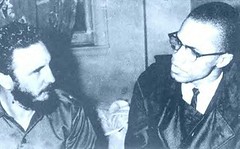
Fidel’s solidarity with the Black Liberation movement in the US empire, the very belly of the beast, has been no less exemplary. From his historic stay in Harlem in 1960 at the Theresa Hotel, his meeting with Brother Malcolm, and to his rallies in the Harlem community in 1960 and a return trip in the 1995, Fidel has been a comrade to Black Liberation struggle in word and deed. Cuba has allowed many important freedom fighters in our struggle to call Cuba home, including Robert F. Williams, Assata Shakur, Huey Newton and Nehanda Abiodun to name a few. Cuba has never backed away from its commitments to this struggle and recognized the rights of Afrikan people to be self-determining.

Fidel and the Cuban revolution have lasted close to 50 years against US imperialism and its ceaseless attempts to kill him, roll back the revolution, and the never ending sabotage of the Cuban economy. Cuba through the leadership of Fidel Castro has shown itself to be a friend, ally and inspiration to all oppressed nations throughout the World. It is our hope that the new revolutionary leadership continues to blaze the trail laid down by Comrade Fidel. The Struggle Continues. Long Live Fidel! Long Live the Cuban Revolution!

The Malcolm X Grassroots Movement

Friday, February 29, 2008

Anti-War Organization Says 'US Imperialism--HANDS OFF AFRICA!'

On 140th anniversary of W.E.B. Dubois’ birth

Anti-war organization says 'U.S. imperialism - HANDS OFF AFRICA!'

By Cheryl LaBash
Detroit
Published Feb 28, 2008 9:54 PM

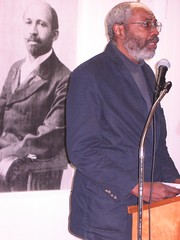
Less than a month before the fifth anniversary of the U.S. military occupation of Iraq, a one-day Black History Month conference sponsored by the Michigan Emergency Committee Against War and Injustice on Feb. 23 challenged the anti-war movement to address the increased U.S. military and political intervention in Africa. The conference commemorated the 140th anniversary of the birth of the great scholar and activist W.E.B. DuBois.

African countries are resisting the U.S. government plan to build permanent military bases on the African continent and a unified U.S. military headquarters focusing exclusively on Africa, known as the Africa Command, or AFRICOM. The historical and political context of this resistance was set through three overview presentations by Debbie Johnson, Detroit Area Network for Reproductive Rights; Abayomi Azikiwe, founding member of MECAWI and Pan African Newswire editor; and Mark Fancher, National Conference of Black Lawyers. Fancher is a primary contributor to the NCBL’s position paper, “AFRICOM Threatens the Sovereignty, Independence and Stability of the African Continent.”

“DuBois and other activists saw the Black struggle in the United States as being part and parcel of a broader movement against racism, colonialism, imperialism and for national liberation and socialism,” said Azikiwe, who quoted extensive eloquent passages from W.E.B. DuBois’ seminal work, “Black Reconstruction in America: An Essay Toward a History of the Part Which Black Folk Played in the Attempt to Reconstruct Democracy in America, 1860-1880,” published in 1935 during the Great Depression.

Azikiwe highlighted and paid tribute to the contribution of African-American women “who took charge of their political and social agendas to promote self-organization and self-help programs for the African-American people. ... Ida B. Wells-Barnett played an instrumental role in this movement by intersecting with women’s groups throughout the country while carrying out her anti-lynching mobilizations.”

Azikiwe concluded: “The solution to the national question in the United States will be a collective one, rooted in a struggle against capitalism and imperialism on a world scale. Irrespective of the machinations of the Bush administration’s Africa policy, the fact that the problem of race, class and gender oppression in the United States has not been resolved speaks volumes to the peoples of the continent and other oppressed and struggling peoples around the globe.

“The deepening crisis of capitalism and imperialism requires the heightening of the struggle of working people and the nationally oppressed against exploitation, racism and gender oppression. In the tradition of DuBois and other luminaries of the 20th century, the present generation must continue the fight to achieve genuine political freedom and social emancipation.”

Reports by MECAWI activists on Zimbabwe, Somalia and Sudan exposed specific examples of U.S. imperialist intervention in African nations.

Andrea Egypt noted: “National press associations and other propaganda machines are the modes of operation to make it appear that Robert Mugabe is some deranged ruler who is sabotaging the economy [in Zimbabwe]. Yet sanctions imposed by the U.S., Britain and the European Union and its allies are the real cause for the failing economy. ... Just recently the Washington Post put out a call for the overthrow of Mugabe. They also insisted that President Thabo Mbeki [of South Africa] cut off 15 percent of the electricity that South Africa provides for Zimbabwe, similar to what has occurred recently in Palestine.”

Kim Greene reported that the U.S. encouraged hostilities between Somalia and Ethiopia during the 1980s, intervened directly under the guise of providing humanitarian aid in 1992, but was expelled after Black Hawk helicopters were shot down in Mogadishu. In 2006 the U.S. backed an Ethiopian invasion of Somalia.

Kevin Carey also paid tribute to W.E.B. DuBois and Paul Robeson. On Sudan, Carey pointed to the oil and uranium resources as a motive for U.S. political and military intervention. In 1998, 19 cruise missiles were used by the Clinton administration to destroy a pharmaceutical plant in Sudan.

Fancher exposed the real intent of AFRICOM, using the U.S. Navy’s own website. “The U.S. military is stepping up operations in the Gulf of Guinea to enhance security in this strategic and resource-rich region. ... Maritime security is critical for the region to benefit from its natural resources and prosper economically, [Capt. Tom Rowden] said. Africa provides almost 15 percent of the United States’ oil supply, much of which comes from the Gulf of Guinea. In addition, the region is rich in timber, iron ore, copper and other resources. ‘Our goal is to ensure a more stable maritime environment to ensure their ability to get those resources to market.’”

The full NCBL position paper on AFRICOM is at www.ncbl.org.

--------------------------------------------------------------------------------------
Articles copyright 1995-2007 Workers World. Verbatim copying and distribution of this entire article is permitted in any medium without royalty provided this notice is preserved.

Workers World, 55 W. 17 St., NY, NY 10011
Email: ww@workers.org
Page printed from:
http://www.workers.org/2008/us/bhm_detroit_0306/

A Look Back at US and World Imperialism in Africa

A look back at U.S. and world imperialism in Africa

Published Feb 28, 2008 9:50 PM

The following talk was given by Debbie Johnson, a leader and founding member of the Detroit Action Network for Reproductive Rights (DANFORR), at a Feb. 23 Detroit Conference on the Growing Threat of United States Intervention in Africa.

First I would like to thank MECAWI—Michigan Emergency Coalition Against War and Injustice—for the opportunity to speak at this very important political forum on the situation and events now taking place on the great continent of Africa. I would like to share with you some of the brief history of the European invasion, brutal occupation and colonization of Africa which laid the foundation for the struggles being carried out there today.

In Zimbabwe, Namibia, South Africa, Mozambique, Nigeria, the Sudan, Ethiopia—from north to south, Atlantic Ocean to Pacific Ocean—the entire continent is suffering from the onslaught of Western imperialism today being led by none other than the United States, the alpha dog of imperialist war, racism, exploitation and domination.

But before I discuss the history of colonialism in Africa, let me first offer you food for thought as I share just a little of the brutal history of the slave trade and colonization of Africa.

First and foremost, we live in a world dictated by the haves, the capitalists, i.e., the bankers, the bosses, the owners of the means of production, and the war machine, which can and is turned on the peoples of the world at will, the will of the Pentagon, Wall Street, and the bosses—the ruling class—against the have-nots, the majority of the people of this country and of the world—the workers, the poor, the producers of the goods, products and natural resources from which the great wealth of the U.S., England, France and Germany is generated and who comprise the working class.

When Karl Marx wrote, “The history of all hitherto existing society is the history of class struggles. Freeman and slave, patrician and plebeian, lord and serf, guildmaster and journeyman, in a word, oppressor and oppressed, stood in constant opposition to one another, carried on an uninterrupted, now hidden, now open fight”—class struggle—he spoke a truth that has remained constant more than a century and a half later. We are 24/7 engaged in class struggle, and we need only look at the history of this country, and more particularly at the history of the great continent of Africa, to see that truth borne out.

It is undisputed that Africa is one of the richest—in natural and mineral resources—continents on the globe. Despite the untold billions of dollars in resources, both human and natural, today it is considered the most economically underdeveloped continent in the world. How is it that Africa, so abundant in so many resources including oil, diamonds, magnesium, uranium and other bounty, is so poor economically that millions of its children, women and men die every year of hunger, illness and disease?

It is reasonable to assume that after centuries of the rape and plunder of the human and natural resources of Africa, the severe economic straits the majority of African nations find themselves mired in today is the legacy of colonialism, courtesy of European and U.S. capitalism and imperialism.

“Colonialism” as described in the Merriam-Webster dictionary is “control by one power over a dependent area or people.” I would say that that is a “kinder, gentler” description of the brutal colonialization of Africa that does not even began to shed ample light on well over four centuries of exploitation of the African peoples by white European and U.S. interests, the superpowers of today.

The answer lies in the horrendous effects of colonialism that begin in the 15th century, intensified during the late 19th century and continuing today.

Colonialism, or the enslavement of African peoples within the borders of their homeland, was an outgrowth of the slave trade and invasion of Africa by Europeans.

The African continent was virtually sliced up like a pie as European capitalist countries—England, France, Spain, Portugal, Germany, the Netherlands and later the United States, built their capitalist economies by stealing and exploiting the lands and resources, human and natural, of Africa.

The African peoples heroically tried to beat back the onslaught of invasion by the racist colonialists who sought to control the resources and dominate and control the peoples of Africa, but their weapons were no match for the technologically advanced European invaders.

An estimated (and this is only that) 40 million African people were kidnapped and sold into slavery from the early 1400s to the mid 1800s—that is, if they survived the horrific Middle Passage to the “New World” and elsewhere. And it was the United States, first as itself a colony of England and later as an independent nation, that sought and obtained the majority of the African peoples stolen from their lands and communities.

The untold millions brought in slave ships to the vast continents of the Western Hemisphere started in the mid-15th century when Spain and Portugal began importing significant numbers of Black slaves to their plantations on the Canary and Madeira islands. Most of the very same leading imperialist powers that are today concerned with maintaining their domination over the African continent—even in the face of the heroic opposition to neocolonial imperialist interests—participated in, promoted and fought ferociously to maintain the slave trade and continue their brutal colonialization of Africa.

Modern transnational monopolies may differ fundamentally in their economic content from the colonialists’ interests of earlier centuries, but they still show the same greed and avarice, the utterly unprecedented cruelty and barbarous treatment which characterized the slave trade. In fact the rape and plunder of Africa was what lay behind the flourishing of world commerce then and today, and is the foundation for what Karl Marx called the primitive accumulation of capital.

The word primitive, as used here, however, was not a characterization of African social-cultures; the term speaks to and was the source of and applied to, the fiendish methods by which the early capitalists accumulated the primary, original capital that was so indispensable for the development of their systems of oppression and exploitation—the seed money if you will—that filled the coffers of the European aristocracy and later those of the slave holders primarily of the South in the Americas. In truth, there would have been no primitive capitalist development and later industrialization had it not been for the brutal colonialization, enslavement and exploitation of African people.

It was the enslavement of the peoples of Africa which gave the European colonies their value, and it was the European and American colonies that created world trade, and it is world trade that is the precondition of large-scale industry.

The world as we see it today, with all of its unbelievable wealth and natural resources, was born out of Africa, the birthplace of human life on the planet. Without the more than four hundred years of trading in humans, then further exploitation of the millions of African people, the African continent and its natural resources, capitalism, as we know it today, would not be in full expansion, particularly U.S. capitalism, ready, willing and able to wage war to obtain, secure and keep its control over capital and natural resources across the globe.

The history of colonialism in Africa has been the subject of many great and valuable writings by, to name just a few, such Africans as Walter Rodney and Amilcar Cabral, and African-American writers like W.E.B. DuBois, whose chronicles of colonialism and today’s neocolonialism both educate and inform us of the rich history of resistance to enslavement, as well as the history of the peoples for whom Africa is home.

Just a brief discussion of that early history is necessary here to perhaps offer some understanding of why this great continent was so easily dominated by white Europeans.

Most African societies before 1500 were in a transitional stage between the practice of agriculture (plus fishing and herding) in family communities and the practice of the same activities within states and societies comparable to European feudalism.

All history is a transition from one stage to another, but some historical situations along these lines have clearly more distinguishable characteristics than others. Under communalism—the social order of the majority of African cultures—there were no classes. There was equal access to land and equality in distribution, although there was only a low level of technology and production within these cultures.

On the other hand, European feudalism, evolving in the same epoch as African cultures—was involved in great inequality in distribution of land and social products (class struggle). The landlord class and its bureaucracy controlled the state and used it as an instrument for oppressing peasants, serfs, slaves, even craftsmen and merchants. History is rife with the brutal life and death stories and events of that class Europeans comprised of serfs, slaves and craftsmen who suffered under the brutal, unjust and inhumane conditions of European feudalism.

African communal societies, however, had differences such as age-grades and differences between ordinary members and religious leaders such as rainmakers. However, those were not exploitative or antagonistic relations. The concept of class as a motive force in social developments had not yet come about in these early African cultures.

It would be folly to suggest that there was no development and understanding within the African cultures of the need for, and instruments of defense and protection. Political-military development in some parts of Africa from 1500 to the late 1800 meant that some African social collectives had become more capable of, and recognized the need for, defending the interests of their members, as opposed to the interest of people outside the given community.

It also meant that the individual in a politically mature and militarily strong state-culture could be free from external threats of physical removal—enslavement—and many social-cultures were indeed strong enough to resist raids which threatened their communities.

However, unlike what is often portrayed, the majority of African society cultures DID NOT engage in slavery or capturing other peoples for that purpose. More often than not, the coastal areas of Africa, which were more prone to attacks by slavers and European invaders, were the areas from which most African peoples were rounded up and forced onto the slave ships.

Because of the common social-familial cultural arrangements of African cultures, which often resulted in small and vulnerable societies that were easily overtaken and vulnerable to attacks both from outside Africa and from within, they were victimized most often by European invaders.

Slaving within Africa was limited, and was not the choice of the majority of African peoples. In the end, it was the vulnerability of small, social cultures that would fill the slave ships of the Middle Passage. The African people fought no less to repel these threats; however, the majority of the time they were unable, given their numbers, to resist raids which ripped families apart and resulted in the kidnapping and enslavement of millions of African peoples taken thousands of miles from their families and homelands.

The history of life for the African peoples subjected to exploitation by European invaders is long, brutal, violent and ugly. Thousands of events are contained in the history books of Africa and the U.S., depicting the heroic resistance to the European invaders, to slavery and to the brutality of the oppressors.

One of the bloodier, genocidal chapters during the depths of the colonial period occurred almost one century ago, in the country then called South-West Africa, today known as Namibia. Namibia, which borders South Africa, Angola and Botswana, is still considered to be one of the most mineral-rich countries in Africa.

During the 1880s, Namibia was brutally ruled by Germany. White farmers systemically took over the most arable lands from the Indigenous Herero and Nama peoples. A similar process took place in Zimbabwe, formerly Rhodesia, during the same period, with England being the colonizer there.

The Hereros organized a heroic guerrilla struggle against the invading German troops led by the fascist general van Trotha.

On October 2, 1904, van Trotha issued a proclamation for the sole purpose of stealing the lands of the Hereros and Nama people, and ordered that the Herero people were to be exterminated either by machine gun fire or by poisoning their drinking water if they refused to leave their lands. An estimated 65,000 out of 80,000 Hereros, including children, were massacred in Okakarara, along with 10,000 Namas.

Hereros who were captured were either hung in massive numbers or driven into the desert to die. To this day, Germany, the home of the murderous Nazi scourge a mere three decades later, refuses to pay reparations to the Namibian people. Reparations to former African people brought to North America and the entirety of the African continent are only one of the many obligations owed by the purveyors of capitalism and imperialism to people of African descent here in the belly of the beast and around the world. But that is another demand, another story, and one which we must never abandon.

This was but one of tens of thousands of bloody events perpetrated upon the African peoples by European colonizers. The conditions we witness today, in the 21st century, carried out by Western imperialism, particularly U.S. imperialism, are shades of the same brutal, bloody capitalist monster of 15th century colonial times.

In this the epoch of neocolonialism and imperialism, the rest of us, the workers—the producers of all things necessary to life and living—can ill afford to sit back and fail to challenge the imperialist beast at home—where, no matter who may occupy the White House after this year’s election, can continue to allow the brutality that is being carried out unchallenged in Africa, whether in the Sudan, Mozambique, South Africa or Zimbabwe.

It is our duty—it is our responsibility—to educate our class on what is really going on in Africa, and to take on the U.S. ruling class, in any disguise it may wear—AFRICOM comes to mind—and stand in solidarity with the brothers and sisters of Zimbabwe, South Africa, Nigeria, the Sudan, or wherever, to stamp out and turn back the hands of U.S. imperialism that has targeted Africa as its next necessary conquest in world domination.

This snapshot of colonial Africa, as it struggled against the invading slavers and colonizers, is only just that, a brief look back. However, brothers and sisters, we must look back to where we were, what we have had to fight against, and what challenges we face today, to understand what is to be done.

By any means necessary, we owe to our heroic brothers and sisters in Africa no less a duty than we owe to ourselves—the duty to challenge and hold back the brutal and bloody hands of U.S. capitalism and imperialism, in Africa and at home, or anywhere on the globe that it sets its sights—to struggle against racism, war and injustice, and not allow the wars of exploitation and domination abroad to be done in our name, or on behalf of our class, the U.S. working class, for the sole purpose of continuing to fill the coffers, bank vaults and pockets of the haves—the ruling class.

NO to the invasion and occupation of any African country! Liberation and freedom is a right our class must continue to struggle for! Workers and peoples of the world unite!
-----------------------------------------------------------
Articles copyright 1995-2007 Workers World. Verbatim copying and distribution of this entire article is permitted in any medium without royalty provided this notice is preserved.

Workers World, 55 W. 17 St., NY, NY 10011
Email: ww@workers.org
Page printed from:
http://www.workers.org/2008/us/africa_0306/

Friday, February 29, 2008

Positive Developments Regarding the Housing Struggle in New Orleans

Free the Land,

Positive development regarding the housing struggle and the right of return to New Orleans and the Gulf Coast.

This is a product of the work of the US Human Rights Network (USHRN) delegation to the UN Committee to Eliminate Racial Discrimination (CERD) last week in Geneva. The Katrina/IDP delegation including myself representing the Malcolm X Grassroots Movement (and PHRF), Mayaba Liebenthal form Critical Resistance (CR) and INCITE! Women of Color Against Violence, Monique Harden from Advocates from Environmental Human Rights (AEHR), Brenda Stokely from NYC Katrina Solidarity Committee, and Katie Schwartzmann from the ACLU-NO.

See USHRN Director, Ajamu Baraka on the Tavis Smiley show at http://www.pbs.org/kcet/tavissmiley/archive/200802/20080227.html

In the face of the demolition of the St. Bernard Housing Development the forces fighting for the right to return are having to regroup and restrategize. But, the struggle continues and will continue to need the support of progressive forces throughout the empire and the world.

In Unity and Struggle,
Kali

Thu, 28 Feb 08 15:02:51 EST

UN News Centre: UN experts call for protection of housing rights of Hurricane Katrina victims

The article below has been sent to you by kaliakuno@gmail.com from the UN News Centre

UN experts call for protection of housing rights of Hurricane Katrina victims – (28 February 2008)

United Nations experts on housing and minority rights today called on the United States Government to halt the demolition of public housing and protect the human rights of African-Americans affected by Hurricane Katrina, which battered New Orleans in 2005.

“We are deeply concerned about information we continue to receive about the housing situation of people in New Orleans, Louisiana and the Gulf Coast region,” Miloon Kothari, the Special Rapporteur on adequate housing as a component of the right to an adequate standard of living, and Gay McDougall, the Independent Expert on minority issues, said in a joint statement.

The demolition of the St. Bernard public housing development started the week of 18 February and the destruction of three other complexes were planned for the near future without meaningful consultation with the communities involved, they said.

Citing reports that there are more than 12,000 homeless people in the greater New Orleans metropolitan area, they said that the demolition of public housing, in combination with the spiralling costs of private housing and rental units, are helping to drive people, primarily African-Americans, into destitution.

“We understand that the new housing will not be available for a significant period of time nor will there be one for one replacement for housing units destroyed,” they said. “These demolitions, therefore, could effectively deny thousands of African-American residents their right to return to housing from which they were displaced by the hurricane.”

Whether or not the demolitions were intentionally discriminatory, “the lack of consultation with those affected and the disproportionate impact on poorer and predominantly African-American residents and former residents would result in the denial of internationally recognized human rights,” they maintained.

The two experts said they sent a letter stating their concerns to the US Government in December 2007.

Special rapporteurs and experts are unpaid, independent specialists who monitor their area of expertise in association with the UN Human Rights Council.

Additional coverage Kali Akuno (kaliakuno@gmail.com) thought you would be interested in this item from NOLA.com.

http://blog.nola.com/inyourownwords/2008/02/un_accuses_us_city_of_denying.html

Kali Akuno has sent you a link: "U.N. Experts: Feds, City Forced Blacks Out Of Homes - New Orleans News Story - WDSU New Orleans"

The link:
http://www.wdsu.com/news/15437777/detail.html?treets=no&taf=no