Friday, March 28, 2008

US War Bulletin: Who Dies in Iraq?; Patraeus Lies Collapse; No Water in Basra; Curfew Imposed in Capital; NATO Bombs Afghans, etc.

US death toll in Iraq is 'mostly white and poor'

By Ian Bruce

Mar. 27- The 4000 US soldiers killed in Iraq in the past five years were predominantly white and more than one in three came from poor southern states, according to a casualty analysis carried out by The Herald.

Almost one in 10 of the dead were officers, with a heavy toll of captains and lieutenants leading their men from the front. Overall, 97% of them died after the official "end" of hostilities in May 2003.

The fatalities also included 40 Native American tribesmen and 44 Pacific islanders.

The 36% of southern boys came from small towns such as Bauxite, Arkansas. There were also losses from Glasgow, Kentucky, and Midlothian, Virginia.

Texas was hardest hit of the old Confederate states, losing 371 dead and 2840 wounded, but California suffered 429 deaths, the highest number of fatalities from any home state.

By ethnic group, the dead were 75% white, 11% Latino and 9% black. Between 40% and 55% were killed by roadside bombs, although rocket-propelled grenades and gunfire accounted for many of the 137 who fell during the assault on the insurgent-held city of Falluja in November 2004.

US special forces also took heavy losses. Although the Pentagon does not comment on clandestine operations, two naval commanders, five lieutenant-commanders and 52 petty officers -- most believed to be members of the US Navy Seals -- have been killed.

Four colonels and 14 lieutenant-colonels from the army and Marine Corps were the most senior officers to die, joined by 36 majors and several hundred platoon and company commanders.

The vast majority of losses were in the 20 to 30 age group, with just 83 of the total aged over 45 and only 33 aged 18.

Despite the prohibition on women in combat, there were 98 female deaths, mainly in support units. The mortality rate for women soldiers is 2% of those given Iraq duty.

A US officer with Iraq experience said on Mar. 26: "You'll find that the backbone of the US Army has long been poor, white and southern. Small-town rural Dixie has always been a prime recruiting area because there's a shortage of jobs and southerners have a proud military tradition. Sadly, that translates into casualties."

Source: Herald (UK)


Sadr offensive shows failure of Petraeus strategy

By Gareth Porter

Mar. 26- The escalation of fighting between Mahdi Army militiamen and their Shiite rivals, which could mark the end of Moqtada al-Sadr's self-imposed ceasefire, also exposes Gen. David Petraeus's strategy for controlling Sadr's forces as a failure.

Petraeus reacted immediately to Sunday's rocket attacks on the Green Zone by blaming them on Iran. He told the BBC the rockets were "Iranian provided, Iranian-made rockets," and that they were launched by groups that were funded and trained by the Quds Force of Iran's Islamic Revolutionary Guard Corps (IRGC). Petraeus said this was "in complete violation of promises made by President [Mahmoud] Ahmadinejad and other most senior Iranian leaders to their Iraqi counterparts."

Petraeus statement was clearly intended to divert attention from a development that threatens one of the two main pillars of the administration's claim of progress in Iraq -- the willingness of Sadr to restrain the Mahdi Army, even in the face of systematic raids on its leadership by the US military and its Iraqi allies.

The rocket attacks appear to have been one of several actions by the Mahdi Army to warn the United States and the Iraqi government to halt their systematic raids aimed at driving the Sadrists out of key Shiite centers in the south.

They were followed almost immediately by Mahdi Army clashes with rival Shiite militiamen in Basra, Sadr City and Kut and a call for a nationwide general strike to demand the release of Sadrist detainees.

Even more pointed was a strong warning from Sadr aide Abdul-Hadi al-Mohammedawi to the United States as well as to the Islamic Supreme Council of Iraq (ISCI), whose Badr Organisation militiamen, in the uniforms of Iraqi security forces, have targeted the Madhi Army throughout the south.

"They don't seem to realize that the Sadrist trend is like a volcano," he told worshippers Friday in Kufa. "If it explodes, it will crush their rotten heads."

The signs that the Madhi Army will no longer remain passive mark a major defeat for the US military command's strategy aimed at weakening the Mahdi Army.

When he took command in Iraq in early 2007, Petraeus recognized that the US occupation forces could not afford to wage a full-fledged campaign against the Mahdi Army as a whole. Instead it adopted a strategy of dividing the Sadrist movement.

Petraeus and the ground commander in Iraq, Lt. Gen. Ray Odierno, hoped that there were leaders in the Sadrist movement who would be willing to give up further military resistance and accept the US occupation and the existing government.

For months, the command tried to generate a "dialogue" with "moderates" in the Sadrist camp. It issued a series of statements hailing Sadr's willingness to change the purpose of his movement.

Most recently, on Jan. 17, Odierno said, "I believe he is trying to move forward with more of a religious organization and get away from a militia type-supported organization." But he admitted, "That could change."

Meanwhile, Petraeus targeted selected elements of the Mahdi Army in raids in Sadr City and the Shiite south, portraying its targets as "criminals" and "rogue elements" which had broken away from Sadr and were armed, trained and financed by Iran. Odierno suggested in his Jan. 17 press briefing that such renegade groups were causing "the majority of the violence."

But the "moderate" Sadrists who would be willing to make a deal with the US never materialized. Last July, a US commander in Baghdad claimed that Sadrist representatives had initiated "indirect" talks with the US military.

But in January, Odierno would say only that they had been meeting with "local leaders" in Sadr City, not with representatives of the Sadrist movement.

The Mahdi Army's blunt warnings of military countermeasures followed months of raids against Sadr's political-military organization by both US forces and the Badr Organization. According to a senior Sadrist parliamentarian, between 2,000 and 2,500 Mahdi Army militiamen had been detained since Sadr declared a ceasefire last August.

The raids have been aimed at weakening the Madhi Army's political hold on Shiite cities in anticipation of eventual provincial elections.

During 2007 there were signs of strong support for Sadr in Najaf, Basra and Karbala, as Sudarsan Raghavan reported in the Washington Post last December. In Najaf, portraits of Sadr and his father, Grand Ayatollah Mohammed Sadiq Sadr, who was assassinated by Saddam Hussein's security forces in 1999, had "mushroomed defiantly in the streets."

Sadr's image had also been "pervasive" in Karbala, according to Raghavan, until security forces loyal to the ISCI arrested more than 400 of Sadr's followers in an obvious effort to destroy its organization in the city.

For months Sadr had refrained from authorizing a full-fledged response to such attacks on his forces. But Tuesday an officer at Sadr's headquarters in Najaf said the Mahdi Army should be prepared to "strike the occupiers" as well as the Badr Organization.

Revealing the contradictions built into the US position in Iraq, even as it was blaming Iran for the alleged renegade units of the Mahdi Army, the US was using the Badr Organization, the military arm of the ISCI, to carry out raids against the Mahdi Army.

The Badr Organization and the ISCI had always been and remained the most pro-Iranian political-military forces in Iraq, having been established, trained and funded by the IRGC from Shiite exiles in Iran during the Iran-Iraq War.

It was the ISCI leader Abdul-Aziz al-Hakim who had invited two IRGC officers to be his guests in December 2006, apparently to discuss military assistance to the Badr Organization. The Iranian officials were seized in the home of home of Hadi al-Ameri, the leader of the Badr Organization and detained by the US military. The Bush administration continued throughout 2007 to cite those Iranian visitors as evidence of the IRGC's illicit intervention in Iraq.

But the Badr Organization had become the indispensable element of the Iraqi government's security forces, who could be counted on to oppose the Mahdi Army in the south. And in a further ironic twist, it was the leaders of the ISCI and of the Nouri al-Maliki government, which depended on Iranian support, who insisted last summer and fall that the United States should credit Iran with having prevailed on Sadr to agree to a ceasefire. The close collaboration of the US command with these pro-Iranian groups against Sadr appears to be the main reason for the State Department's endorsement of that argument last December.

The Petraeus assertion that the rocket attacks on the Green Zone were Iranian-inspired strongly implied that Iran is still providing arms to Shiite militias. However, Odierno told a press briefing in mid-January, "We are not sure if they're still importing [sic] weapons into Iraq."

That admission came only after many months in which US officers in the border provinces were unable to find any evidence of arms coming across the border from Iran.

Those officers also found no trace of the alleged presence of the IRGC personnel in Iraq. Last November, the French weekly news magazine Le Point quoted Maj. Scott A. Pettigrew, the military intelligence chief in Diyala province on the Iranian border, as saying, "I have never seen any activity or presence of the Quds Force. I see nothing here that resembles a proxy war with Iran."

Source: Inter Press Service


Basra crisis leaves British withdrawal in ruins

By James Hider, Michael Evans and Richard Beeston

Mar. 28- Plans to bring home 1,600 troops from Iraq this spring are in disarray, British Ministry of Defense (MoD) officials said on Mar.27.

The admission came as the Iraqi government's offensive against Shia militias in Basra appeared to be failing.

The rebels ignored a deadline to disarm and intense fighting in the city raised the possibility that British forces could be asked to re-engage on the front line.

Nouri al-Maliki, the Iraqi Prime Minister, had flown to Saddam Hussein's former palace in central Basra to take personal control of the offensive, led by 30,000 Iraqi troops backed by paramilitary police.

But reports from the city suggested that the Iraqi forces had failed to make any significant inroads. As the deadline for disarmament passed, Iraqi police were defecting to the militia ranks.

The Iraqi government's difficulties leave Britain facing one of its toughest challenges since the invasion five years ago.

British MoD officials admitted that they were no longer thinking about cutting troop numbers to 2,500 from the spring, as had been outlined by Prime Minister Gordon Brown in a statement to the Commons last October. "Any plans for a reduction of British troops is off the table for the time being," a senior Whitehall source said.

Officials insisted that so far British forces were providing support only in the form of air cover and logistics support—including 19 liaison officers in Basra city — but did not rule out sending a small force to help the Iraqis if requested by the authorities in Baghdad.

Al-Maliki had hoped to lead his army to victory in Shia militia strongholds in Basra, Iraq's oil city in the south. Instead, Iraq's Shia prime minister was left with the prospect of disaster as district after district of his own capital fell to the rival Mahdi Army.

Residents of Basra complained that water and electricity had been turned off in the three main areas besieged by the Iraqi Army. Estimates of the death toll in Basra are as high as 200, with hundreds more wounded.

Under present strategy, the 4,100 British troops still in Iraq are supposed to remain at their base at the airport northwest of Basra and join the Iraqi forces in a security operation only when requested.

No such request has been made and a source in Basra said there was not expected to be any call for help during the present operation.

Source: Times (UK)


Iraqi police in Basra shed their uniforms, kept their rifles and switched sides

By James Hider

Mar. 28- Abu Iman barely flinched when the Iraqi government ordered his unit of special police to move against al-Mahdi Army fighters in Basra.

His response, while swift, was not what British and US military trainers who have spent the past five years schooling the Iraqi security forces would have hoped for. He and 15 of his comrades took off their uniforms, kept their government-issued rifles and went over to the other side without a second thought.

Such turncoats are the thread that could unravel the British Army's policy in southern Iraq. The British military hoped that local forces would be able to combat extremists and allow their army to withdraw gradually from the battle-scarred and untamed oil city that has fallen under the sway of Islamic fundamentalists, oil smugglers and petty tribal warlords. But if the British taught the police to shoot straight, they failed to instill a sense of unwavering loyalty to the state.

"We know the outcome of the fighting in advance because we already defeated the British in the streets of Basra and forced them to withdraw to their base," Abu Iman told The Times.

"If we go back a bit, everyone remembers the fight with the US in Najaf and the damage and defeat we inflicted on them. Do you think the Iraqi Army is better than those armies? We are right and the government is wrong. [Nouri al] Maliki [the Iraqi Prime Minister] is driving his government into the ground."

The reason for his apparent switch of sides was simple: the 36-year-old was already a member of the al-Mahdi Army which, like other militias, has massively infiltrated the British-trained police force in the southern oil city. He claimed that hundreds of others from the 16,000-strong force have also defected to the rebels' ranks. Abu Iman joined the new Iraqi police force after the invasion, joining the Mugawil, a special police unit infamous for brutality, kidnapping and sectarian murders.

"We already heard two weeks ago that we were going to attack the Mahdi Army, so we were ready," he said. "I decided to take off my uniform and join my brothers and friends in the Mahdi Army. All these years, we were like a scream in the face of the dictator and the occupation."

He said: "I joined the police because I believed we have to protect Basra and save it with our own hands. You can see we were the first fighters to take on Saddam and his regime, the best example being the Shabaniya uprising."

Abu Iman said that the fighting raging in Basra was intense because the al-Mahdi Army was operating on its own turf. He was confident that the Shia militia would prevail because its cause was just.

"The Iraqi Army is already defeated from within. They come to Basra with fear in their hearts, knowing they have to fight their brothers, the sons of Iraq, because of an order from Bush and his friends in the Iraq government. For this reason, all of the battles are going in the Mahdi Army's favor."

Major-General Abdelaziz Moham-med Jassim, the director of operations at the Ministry of Defense, played down reports of defections in the Basra police force. "The problem of one policeman doesn't make up for the whole of the force," he said.

In recent months Major-General Abdul Jalil Khalaf, Basra's police chief, has tried to shake up the force and drive out militia infiltrators, who have wrought havoc in the past, often turning police stations into torture cells in which factions settled vendettas and power struggles with murder and abuse. But he only narrowly escaped an assassination attempt on Mar. 27 when a suicide car bomb attack in Basra killed three of his policemen. A local tribal leader said the police directorate building was later gutted by fire.

Source: Times (UK)


'Pressing need' for drinking water in Basra as curfew bites

Mar. 26- Life in Basra, Iraq's second-largest city, has been paralyzed by a large-scale government military operation against militiamen of the Mahdi Army led by Shia cleric Moqtada al-Sadr, Mahdi al-Tamimi, head of the city's Human Rights Office said on Mar. 25.

The Iraqi government imposed an indefinite curfew at dawn that day. No one is allowed between neighborhoods and there are checkpoints in place to ensure this.

"The most pressing need is drinking water, as Basra residents depend on bottled mineral water because they do not drink tap water -- first because of contamination and second because of its high salinity," al-Tamimi said.

"This is a catastrophe that could lead to a huge problem as we are entering summer and, of course, if it continues like this, it will lead to waterborne diseases including diarrhea," he said.

"All aspects of life have been paralyzed with the closure of schools, government offices and markets due to clashes that have forced people indoors with not enough food as there was no prior notice for this operation," said al-Tamimi.

IDPs affected

Al-Tamimi said the curfew and continuing street clashes meant residents could not get to hospitals for treatment and aid operations had been suspended, especially for internally displaced persons (IPDs).

Basra is home to 5,707 displaced families, about 34,172 individuals, most of whom live in makeshift camps, according to figures from the Iraqi Red Crescent Society (IRCS) on Jan. 27.

"I call upon the government to allow our teams at least to help distribute drinking water and to help and protect all humanitarian teams to do their normal work in helping displaced families," Al-Tamimi said.

On Feb. 22, al-Sadr announced a six-month extension to his militia's unilateral cease-fire in a move that was widely seen as designed to improve security in war-torn Iraq.

"This [the military crackdown] could break the cease-fire," said Hazim Yassin al-Saffar, a Basra-based political analyst. "It is clear the government has not realized that this [Sadrist] trend has deep roots in Iraqi society and cannot be treated like this," said al-Saffar, who lectures in international law at the University of Basra.

Source: UN Integrated Regional Information Networks


NPR News: National Pentagon Radio?

By Norman Solomon

Mar. 27- While the Iraqi government continued its large-scale military assault in Basra, the NPR reporter's voice from Iraq was unequivocal this morning: "There is no doubt that this operation needed to happen."

Such flat-out statements, uttered with journalistic tones and without attribution, are routine for the US media establishment. In the "War Made Easy" documentary film, I put it this way: "If you're pro-war, you're objective. But if you're anti-war, you're biased. And often, a news anchor will get no flak at all for making statements that are supportive of a war and wouldn't dream of making a statement that's against a war."

So it goes at NPR News, where — on "Morning Edition" as well as the evening program "All Things Considered" — the sense and sensibilities tend to be neatly aligned with the outlooks of official Washington. The critical aspects of reporting largely amount to complaints about policy shortcomings that are tactical; the underlying and shared assumptions are imperial. Washington's prerogatives are evident when the media window on the world is tinted red-white-and-blue.

Earlier this week — a few days into the sixth year of the Iraq war — "All Things Considered" aired a discussion with a familiar guest.

"To talk about the state of the war and how the US military changes tactics to deal with it," said longtime anchor Robert Siegel, "we turn now to retired Gen. Robert Scales, who's talked with us many times over the course of the conflict."

This is the sort of introduction that elevates a guest to truly expert status — conveying to the listeners that expertise and wisdom, not just opinions, are being sought.

Siegel asked about the progression of assaults on US troops over the years: "How have the attacks and the countermeasures to them evolved?"

Naturally, Gen. Scales responded with the language of a military man. "The enemy has built ever-larger explosives," he said. "They've found clever ways to hide their IEDs, their roadside bombs, and even more diabolical means for detonating these devices."

We'd expect a retired American general to speak in such categorical terms — referring to "the enemy" and declaring in a matter-of-fact tone that attacks on US troops became even more "diabolical." But what about an American journalist?

Well, if the American journalist is careful to function with independence instead of deference to the Pentagon, then the journalist's assumptions will sound different than the outlooks of a high-ranking US military officer.

In this case, an independent reporter might even be willing to ask a pointed question along these lines: You just used the word "diabolical" to describe attacks on the US military by Iraqis, but would that ever be an appropriate adjective to use to describe attacks on Iraqis by the US military?

In sharp contrast, what happened during the "All Things Considered" discussion on Mar. 24 was a conversation of shared sensibilities. The retired US Army general discussed the war effort in terms notably similar to those of the ostensibly independent journalist — who, along the way, made the phrase "the enemy" his own in a follow-up question.

It wouldn't be fair to judge an entire news program on the basis of a couple of segments. But I'm a frequent listener to "All Things Considered" and "Morning Edition." Such cozy proximity of world views, blanketing the war maker and the war reporter, is symptomatic of what ails NPR's war coverage — especially from Washington.

Of course there are exceptions. Occasional news reports stray from the narrow baseline. But the essence of the propaganda function is repetition, and the exceptional does not undermine that function.

To add insult to injury, NPR calls itself public radio. It's supposed to be willing to go where commercial networks fear to tread. But overall, when it comes to politics and war, the range of perspectives on National Public Radio isn't any wider than what we encounter on the avowedly commercial networks.

Source: CommonDreams.org


In Iraq, jailed women tell of abuse

Mar. 22- Sad, tired eyes peer out from behind the bars of Kadhimiya Prison. The pleas are desperate: "I swear I am innocent." "The criminal investigators raped us." "I have been here eight months and I have not seen a judge."

Nearly 200 women, some with their toddlers and infants living with them in their cells, are imprisoned in Baghdad's only detention facility for women. Suspected killers bunk with women charged with petty crimes. Some don't know why they were arrested.

"We consider all of them innocent--innocent until proven guilty," said Abdul Qadir, legal advisor to Iraqi Vice President Tariq Hashimi. "They have constitutional rights that should uphold their treatment."

But in a country mired in corruption, the protection of constitutional rights is elusive. Some women report that their lawyers have been shot and killed en route to the prison. Others say judges have been bribed.

A Los Angeles Times review of nearly three hours of video-- shot inside the prison and provided by Hashimi, who is leading a call for protecting prisoners' rights and establishing a credible justice system--suggests the problems are deep-rooted and systemic.

Tales of injustice and inhumane treatment are plentiful in letters from female inmates, and evidence gathered by members of parliament and human rights activists indicates that the problems begin from the moment a woman is detained.

"This is not acceptable in any war in any time," inmate Suad Aziz Abbas, a former elementary school principal with 30 years of government service, says in one of the videos.

She and her daughter, a college student and newlywed, were charged with murder, convicted and sentenced to life in prison. Their arrests came as Abbas was searching for her only son, an oil engineer, who went missing in 2004. She had sought help from the Human Rights Ministry and elsewhere, she said, to no avail.

One woman told Hashimi she confessed to murder because she was tortured by investigators. "They threatened to rape me," she said. "They stripped me naked and they tortured me with electricity and other devices. I admitted it after all this torture."

More often than not, the women have little recourse, said Hania Mufti of the United Nations Assistance Mission for Iraq. "There are numerous complaints and little action," she said. "There still remains very little political will to hold people criminally liable on torture."

In the rare cases in which action is taken, Mufti said, the punishment is administrative, not criminal, such as a suspension or termination of police officials or prison guards.

Under the Iraqi Constitution, detainees must see a judge within 24 hours of their arrest. During that hearing, a judge determines whether to move forward with the charges and the investigation process begins. But it is routinely months or longer before a woman faces a judge to learn her charges, and there are no consequences for missing the 24-hour window.

One detainee said she had been imprisoned for four years without her case going to court, said Amal Qadhi, a member of parliament.

"Her case was theft," Qadhi said. "She was about 25 years old and she committed five suicide attempts because she had been waiting there for far too long."

Source: Los Angeles Times


Terrified Afghanis flee NATO bombings

By Anand Gopal

Mar. 26- Jumakhan Said Muhammad was working on his land when he first heard the planes. "I looked up," the farmer from Musa Qala, in the southern Helmand province, says. "Suddenly a plane flew by and I saw smoke rising from my house, which was down the road."

Muhammad ran towards his home, where dozens of villagers were shouting his name as they surrounded his house. "The house was split in half by the bomb," he recalls. "The walls were collapsed and crumbled. Blood was pouring from my nephew [seven-years-old] like it was water. He had shrapnel in his brain and stomach. I then saw my sister's headscarf peeking out from underneath the rubble and so we raced desperately to save her. When we pulled her out from the wreckage I saw her body -- she was cut completely in half. I started to scream."

Muhammad's sister and nephew are among a steady flow of civilian casualties caused by NATO (North Atlantic Treaty Organization) bombardment, residents say. When such casualties started to rise last year -- bombers destroyed Muhammad's house in November -- coalition forces pledged to change their tactics and ensure that civilians were not caught in such attacks.

But Helmand residents say that they are often still caught in the crossfire and that fighting has been particularly intense in March -- locals claim that aerial bombing killed over 40 civilians in the last two weeks alone.

Helmand residents allege that 13 civilians were killed two weeks ago in a NATO air-strike, and last week lawmaker Nasima Niyazi claimed that dozens of civilians were killed when coalition forces bombed a popular picnic spot in the Sangin district. US-led forces recently admitted to killing six civilians in a house raid in eastern Afghanistan, including two children.

Last week, close to 400 demonstrators gathered near Lashkar Gah, the capital of Helmand, to protest civilian killings. Protesters claim that NATO soldiers raided a house and killed two people, including a child. One protester asked a local news agency, "We are poor people with no links to militants. Why are troops killing us?"

Fighting has raged in Helmand province for more than two years and has produced a steady exodus of injured and terrified civilians.

Tauskhan Palwesha arrived in Kabul three days ago from the Sangin district, where last year a fire fight broke out between coalition forces and the Taliban. "Bullets were flying past our home," he recalls. "Suddenly a plane flew by and dropped a bomb -- I heard a loud noise and everything around me burst into flames. I looked for my wife and saw that a beam had gone right through her head, spilling her brains onto the floor. My nine-year-old daughter had burns all over her body. When I picked her up I noticed that she was missing an arm."

A leading Afghan NGO reports that close to 2,000 civilians were killed by the fighting and estimates coalition air strikes are responsible for nearly a tenth of these. Analysts say possibly many more deaths go unreported because of the poor security conditions that prevail in the southern provinces. Overall, aid agencies estimate that more than 12,000 people, at least a quarter civilians, have been killed since the start of the war in 2001.

The International Security Assistance Force (ISAF), a coalition over 40,000 troops and 40 countries headed by NATO, maintains that it does not deliberately target civilians. "ISAF goes to great lengths to avoid civilian casualties, unlike the Taliban, who have no apparent regard for neither life nor truth," the coalition said recently in a statement.

However, observers say that whether civilians are deliberately targeted or not, the continued civilian killings threaten to alienate Afghans who previously stayed neutral in the fight between ISAF and the Taliban. "There's mounting anger against NATO and US forces," journalist Hamed Asir says. "This will drive people into the hands of the Taliban."

"I never supported the Taliban before," Palwesha says, his face cherry red with anger. "But now I've lost everything. The foreign troops killed my family and destroyed my house."

Palwesha carries with him a wrapped blanket, speckled with faded maroon stains that he says are his daughter's dried blood. Unwrapping the cloth, he unveils a charred stump. "This was part of her bone," he says. "I'm going to take this and drop it on [Afghan President Hamid] Karzai's desk. He has to help me. If he ignores me, I will go to the Taliban. I am ready to die. I am ready to become a suicide bomber because I have nothing left to live for."

Sadeq Mudaber, a senior government official and policy director, says that Karzai recently met with top ISAF commanders to address the issue. Without a good-faith effort to avoid civilian casualties, he says, NATO and the US run the risk of alienating large sections of the population.

"I'm so angry," Muhammad says. "I am angry at the world. NATO should be bringing peace and security. If they can't do that they should leave."

"Otherwise," he adds, "they will become just like the Russians."

Source: Inter Press Service


US gave $300 million Afghan arms contract to 22-year-old with criminal record

By Suzanne Goldenberg

Mar. 28- The Pentagon entrusted a 22-year-old previously arrested for domestic violence and having a forged driving license to be the main supplier of ammunition to Afghan forces at the height of the battle against the Taliban, it was reported on Mar. 28.

AEY, essentially a one-man operation based in an unmarked office in Miami Beach, Florida, was awarded a contract worth $300 million to supply the Afghan army and police in January last year. But as the New York Times reported in a lengthy investigation, AEY's president, Efraim Diversoli, 22, supplied stock that was 40 years old and rotting packing material.

"Much of the ammunition comes from the aging stockpiles of the old communist bloc, including stockpiles that the state department and NATO have determined to be unreliable and obsolete, and have spent millions of dollars to have destroyed," the paper said.

The report on AEY was the latest instance of private firms securing lucrative defense contracts in Iraq and Afghanistan under the Bush administration's policy of privatizing growing aspects of the military.

The army suspended AEY from future contracts during the course of the investigation -- although it continues to fill existing orders.

Diversoli told the newspaper his firm had won contracts worth at least $200 million each year since 2004. AEY also supplied weapons to US agencies, and rifles to Iraqi forces.

In 2006, AEY was among 10 firms bidding on a contract to supply 52 kinds of ammunition for the Afghan security forces. But while his business was taking off, Diversoli was accused of violent behavior involving two girlfriends and the parking attendant at his apartment building. In December 2006, Diversoli was charged with battery after beating up the parking attendant, according to the newspaper. Police recovered a forged driving license from Diversoli's flat which led to a separate charge. He entered a program for first time offenders to avoid trial.

AEY's contract was approved weeks later in January 2007, and Diversoli began scouring the globe for suppliers. Diversoli turned to Albania, which had large weapons dumps. However, the New York Times reported that the firm ended up paying for Kalashnikov rounds that were so obsolete that the US and NATO funded programs to see them safely destroyed.

AEY also purchased 9 million cartridges from a Czech citizen who had been linked to illegal arms trafficking to Congo.

At first, the Pentagon defended its contractor. "AEY's proposal represented the best value to the government," the Army Sustainment Command wrote to the New York Times. Henry Waxman, the member of congress from California who heads the committee on government oversight, said he would conduct hearings into the contract next month.

Source: Guardian (UK)

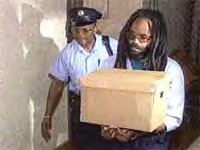
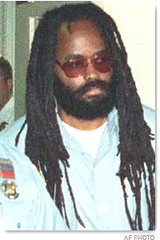
The Mumia Exception: Third Circuit Court Rejects Abu-Jamal's Appeal

Third Circuit Court Rejects Abu-Jamal Appeal: The "Mumia Exception"

By Dave Lindorff, OpEdNews.com

After spending almost a year’s time deliberating following a hearing last May 17, a three-judge panel of the Third Circuit Court of Appeals in Philadelphia has shot down all three claims by death row prisoner Mumia Abu-Jamal challenging his conviction for the 1981 murder of Philadelphia Police Officer Daniel Faulkner.

At the same time, the appeals court upheld a 2001 decision by Federal District Judge William Yohn that had overturned former Black Panther and Philadelphia journalist Abu-Jamal’s death sentence, agreeing with the lower court judge that the form used by the trial jury in 1982 to establish whether jurors felt there were any mitigating circumstances was flawed, and could have left panelists mistakenly believing that before they could consider any such mitigating factors in their deliberations, they would all have to agree such a factor existed.

In fact, by law if even one juror believes that there is a mitigating factor, that factor can be considered by jurors in deciding on death or life in prison.

The court was unanimous in rejecting Abu-Jamal’s claim that the trial judge, Albert Sabo, had been prejudiced against him and in favor of the prosecution when he presided over a Post-Conviction Relief Act hearing in 1995-6.

It was also unanimous in rejecting Abu-Jamal’s claim that Prosecutor Joseph McGill had improperly diminished the jury’s sense of responsibility during the conviction phase of the trial by telling them that their decision would not be final as there would be “appeal after appeal.”

The appellate judges didn’t say that McGill’s statement was proper, or even that it might not have impacted jurors’ decision on guilt, but rather agreed that by court precedent they had only used evidence of such prosecutorial misconduct to overturn death sentences, not convictions.

(Arguably, in the unlikely event that the Philadelphia DA were successful in getting the US Supreme Court to reverse the Third Circuit and reimpose Abu-Jamal’s death penalty, he could go back and appeal the sentence based upon this statement to the jury by McGill.)

But on Abu-Jamal’s third claim—that the prosecution had improperly violated his Constitutional right to a fair trial by his peers by barring 10 qualified African-American potential jurors from serving on his jury through the use of what are called “peremptory challenges”—there was a dissent, making the vote 2-1.

Judge Thomas Ambro, a Clinton appointee to the bench—chastised his two colleagues, Chief Judge Anthony Scirica and Judge Robert Cowan-- both Reagan appointees--saying that they were applying a different, and unattainable standard of proof to Abu-Jamal than they had been using for other cases brought before them.

In rejecting Abu-Jamal’s claim of racial bias in jury selection—something known as a Batson violation, after the Supreme Court’s 1986 decision in Batson v Kentucky—the court majority wrote that Abu-Jamal had not made a timely protest over prosecutor McGill’s rejection of 10 black jurors without cause (McGill used 15 of his 20 available peremptory challenges to remove at least 10 qualified black and 5 qualified white jurors).

The majority also proposed that because Abu-Jamal had not provided the court with the racial makeup of the jury pool, it was impossible to know whether perhaps two-thirds of that pool might have been black, giving an “innocent explanation” to McGill’s 66.7% black rejection rate. (Local attorneys scoff at such a notion, saying they've never seen a jury pool so skewed racially.)

Judge Ambro blasted this logic, saying that the US Supreme Court had established that “excluding even a single person from a jury because of race violated the Equal Protection Clause of our Constitution.” Significantly, the nation's High Court just affirmed that position March 19 with a powerful 7-2 ruling in a Louisiana death penalty case (Snyder v. Louisiana).

Judge Ambro then accused his robed colleagues of having a double standard, saying “Our Court has previously reached the merits of Batson claims on habeas review in cases where the petitioner did not make a timely objection during jury selection—signaling that our Circuit does not have a federal contemporaneous objection rule—and I see no reason why we should not afford Abu-Jamal the courtesy of our precedents.” He added, “Why we pick this case to depart from that reasoning I do not know.”

Going further, Judge Ambro writes, “We have repeatedly said that a defendant can make out a prima facie case for jury-selection discrimination by showing that the prosecution struck a single juror because of race…In fact, in United States v. Clemons, we explained that 'striking a single black juror could constitute a prima facie case even when blacks ultimately sit on the panel and even when valid reasons exist for striking other blacks.’..."

Yet the majority focuses on the absence of information about the racial composition and total number of the venire [jury pool], claiming that this statistical information—from which one can compute the exclusion rate—is necessary to assess whether an inference of discrimination can be discerned in Abu-Jamal’s case.

Such a focus is contrary to the nondiscrimination principle underpinning Batson, and it conflicts with our Court’s precedents, in which we have held that there is no “magic number or percentage [necessary] to trigger a Batson inquiry.”

One thing Judge Ambro didn’t mention in his 41-page dissent was the evidence presented by Abu-Jamal to the court of a clear history of deliberate race purging of juries by the Philadelphia DA’s office, and by prosecutor McGill in particular.

That evidence, developed by academic researchers and by attorneys at the Federal Defenders’ Office in Philadelphia, show that between 1977 and 1986, while Ed Rendell was Philadelphia’s District Attorney, local prosecutors used peremptory challenges to strike qualified blacks from juries in death penalty cases 58 percent of the time, compared to 22 percent of the time for qualified whites.

During the same period of time, prosecutor McGill himself struck qualified black jurors 74 percent of the time in death penalty cases he tried, compared to 25 percent of qualified white jurors. This is seriously damning evidence of racial bias in jury selection.

Interestingly, one of the Third Circuit precedents referred to by Judge Ambro was a 2005 case heard by Judge Sam Alito, now elevated to the Supreme Court. In that case, Brinson v Vaughn, Alito overturned the appellant’s death penalty conviction, writing that "...a prosecutor may violate Batson even if the prosecutor passes up the opportunity to strike some African Americans jurors."

Alito further stated in that decision that "a prosecutor's decision to refrain from discriminating against some African Americans does not cure discrimination against others." (Significantly, the High Court’s latest Snyder decision opinion was also penned by Justice Alito, who shows himself to be a passionate opponent of racism in jury selection.)

What appears to be happening here, and what obviously upset Judge Ambro, is that the other two judges, Scirica and Cowan, are demonstrating another example of what my colleague, Philadelphia journalist Linn Washington, has dubbed the “Mumia Exception.”

Washington has noted that on several occasions during Abu-Jamal’s epic 26-year battle to survive Pennsylvania’s death row machine, the state’s courts have altered the rules to keep him locked up and on course for execution.

Pennsylvania’s top court in 1986 overturned a death sentence where McGill, the same prosecutor in Abu-Jamal’s case, had made the same closing statement to jurors at the conclusion of a murder trial presided over by Judge Sabo, the same trial judge who presided in Abu-Jamal’s case. The court, declaring that the prosecutor’s language had “minimize[ed] the jury’s sense of responsibility for a verdict of death,” had ordered a new trial that time.

Three years later in 1989, despite this precedent and presented with an identical situation involving the same characters, the same court reversed itself, though, upholding Abu-Jamal’s conviction. Eleven years later, Pennsylvania’s highest court reversed track again, barring such language by prosecutors “in all future trials,” but not making their decision retroactive to include Abu-Jamal.

Another example of this judicial “special handling” where Abu-Jamal’s case is concerned, involves the right of allocution– the right of the convicted to make a statement without challenge before sentencing.

One month before initially upholding Abu-Jamal’s conviction in March 1989, the Pennsylvania Supreme Court issued a ruling declaring the right of allocution to be of “ancient origin” and saying that any failure to permit a defendant to plead for mercy demanded reversal of sentence.

Abu-Jamal’s appeal claimed Judge Sabo, by allowing the prosecutor to question Abu-Jamal on the stand after the convicted defendant had made just such a statement to jurors, violated his allocution right during the ’82 trial. The state’s high court, however – for the first time in its history – ruled that the “right of allocution does not exist in the penalty phase of capital murder prosecution.”

This flip-flopping on allocution, on acceptable language for prosecutors and on other legal precedents all led Amnesty International to conclude in its 2001 report on Abu-Jamal’s case that the state’s highest court improperly invents new standards of procedure “to apply it to one case only: that of Mumia Abu-Jamal.”

Justice, that is to say, has not always been blind in this case. A “Mumia Exception” had been established.

And now this stain on Pennsylvania jurisprudence appears to have migrated to the federal court system, at the Third Circuit.

Says Washington, “This decision once again shows that in the Abu-Jamal case, evidence is not important. As with the Pennsylvania courts, this federal court ignored its own precedents in reaching a result that is contrary to the facts and to the law.

The reason for this is what Amnesty International pointed out in their 2001 report: The Abu-Jamal case is hopelessly polluted by politics, which precludes any justice in this case.”

Robert Bryan, Abu-Jamal’s lead attorney, said the third Circuit Court’s upholding of the death penalty reversal was a “major victory,” but he said, “The fact that the court majority turned a blind eye to the racially discriminatory practices of the DA’s office is outrageous.”

With all three of Abu-Jamal’s habeas claims for an overturning of his conviction rejected, his case now moves to the US Supreme Court, with a possible stop along the way for a hearing by the full Third Circuit bench.

Abu-Jamal’s attorney Bryan says he plans to file a request for such an en banc reconsideration of the ruling by the full Third Circuit within the next two weeks. Neither the full Third Circuit, nor the Supreme Court, are obligated to hear the case, which would make the current Third Circuit decision the final word on his conviction.

Bryan said, “Judge Ambro’s dissent in the Batson decision was very powerful, and we will certainly be using it in our arguments to the full Third Circuit and to the Supreme Court."

As for the overturned death penalty ruling, which the DA’s office will certainly also appeal to the High Court, should it be sustained, there are two options. The DA could decide to leave things at that—something McGill, interviewed shortly after Judge Yohn’s initial ruling, said was being considered—in which case Abu-Jamal would face life in prison with no possibility of parole.

He would not, however, have to spend more time in the near solitary confinement torture of Pennsylvania’s maximum-security death row, but would be moved to a regular prison. Alternatively, the DA could decide to go to a Philadelphia court and impanel a new jury to conduct just a sentencing hearing, in hopes of winning a new death penalty. Such a limited trial would not address guilt or innocence--only punishment.

Given fairer rules regarding jury selection, and the larger minority population in today’s Philadelphia, and Abu-Jamal's having better legal representation, it is hard to imagine the DA succeeding in convincing 12 fairly chosen Philadelphia jurors to sentence journalist him to death for a crime for which he has already served 26 hard years’ time.

Moreover, because a defendant is entitled to subpoena witnesses in his defense, the DA would run the risk that Abu-Jamal could use such a trial to introduce new evidence of innocence, opening the door to further appeals of his underlying conviction. For these reasons, an effort to win a new death sentence seems unlikely.

The legal stymieing of Abu-Jamal’s efforts to win a new trial comes at a time of growing questions regarding his guilt, or at least the veracity of the witnesses and the evidence used to convict him on a first-degree murder charge.

Last year, photos were discovered that had been taken by a freelance news photographer of the crime scene on the south side of Locust Street at 13th Street in Philadelphia’s Center City only minutes after police had arrived and after the wounded Abu-Jamal and the clinically dead Faulkner had been taken off to Jefferson Hospital.

These photos show police tampering with evidence, including the both Abu-Jamal’s and Faulkner’s guns as well as the officer’s police hat. Photos of the bloody spot on the sidewalk where Faulkner lay as he was shot by a bullet to the face at close range show no sign of craters where three other shots Abu-Jamal is alleged to have fired from a position astride the officer and that missed should have left their marks in the concrete, raising questions about the testimony of two alleged eyewitnesses to the shooting.

Those same photos also show no taxicab parked behind Faulkner’s parked squad car in the place one of those witnesses, Robert Chobert, claimed he had been stopped. The missing cab raises questions about the veracity of Chobert’s claim to have witnessed Faulkner’s murder.

Other witnesses are still coming forward since the trial, who also challenge the prosecution’s story, but without a new trial, it is not clear that their evidence will ever be heard.

Abu-Jamal’s attorney says Abu-Jamal told him this morning that he was “disappointed” in the result, but that he “hopes the reversal of the death penalty will help others on death row, and says, 'The struggle continues!’”

--------------------------------------------------------------------------------------
DAVE LINDORFF is author of "Killing Time: An Investigation into the Death Penalty Case of Mumia Abu-Jamal" (Common Courage Press, 2003). His work is available at http://www.thiscantbehappening.net
--------------------------------------------------------------------------------------

This is the statement from Germany:

Justice Denied: A Political Decision that Cannot Be Allowed to Stand

Written by Michael Schiffmann for the German Network Against the Death Penalty and to Free Mumia Abu-Jamal

On Thursday, March 27, the 3rd U.S. Court of Appeals decided to lift the death sentence against Mumia Abu-Jamal and deny him a new trial.

The lifting of the death sentence is a big victory for the movement against the death penalty and for the life and freedom of Mumia.

That the court denied Mumia a new trial is a bitter defeat.

The defense will now seek a decision by the full court instead of the three judge panel that handed down the March 27 decision.

So all is not lost and the struggle continues.

A hopeful sign was that one of the three judges dissented and wrote a 41-page commentary in which he criticized the decision of his colleagues.

In its decision, the 3rd Court of Appeals has followed the precedent of other courts from the Court of Common Pleas in Philadelphia to the U.S. Supreme Court in deciding one way in a host of cases, and another way in the case of Mumia Abu-Jamal.

The clearest such case was in the early 1990s when the U.S. Supreme Court granted a neo-Nazi prisoner a new sentencing hearing since the prosecutor had used the defendant’s membership in the ultra-violent, racist prison gang Aryan Brotherhood to argue for the death penalty, but denied such relief to Mumia even though the prosecutor in his case had argued for Mumia’s execution merely because he had been a member of the Black Panther Party – 12 years before the trial!

There are multiple other examples of this sort where the courts singled Mumia out for special treatment – and always to his disadvantage.

In the present stage of Mumia’s case, the court once again did so with regard to Mumia’s claim of racism in the jury selection. Generally, to be granted at least a hearing on this issue, the defendant must make a so-called “prima facie” case that the prosecutor excluded jurors because of their race.

Generally, the threshold for such a prima facie case is quite low, and mere statistics – black potential jurors were statistically at least 10 times as likely to be excluded by the prosecutor than white potential jurors – and a whole array of other evidence should certainly have been enough to make such a prima facie case for Mumia.

Not so for the 3rd Circuit Court majority. It does not even discuss the possibility that it might not have been a good idea to exclude blacks with a ten times greater likelihood than whites. Rather, it points to all sorts of data that Mumia allegedly did not supply, citing the resulting lack of information as the reason to deny an evidentiary hearing – as if such an evidentiary hearing were not supposed to supply exactly information of this sort!

In other words, the two majority judges do not seem overly concerned that an evidentiary hearing might reveal information that would convince even them that racism prevailed during the selection of Mumia’s jury. Once more, Mumia is singled out for “special treatment” and denied relief.

The court also denied Mumia’s other two claims for a new trial or post-conviction hearing, citing similar allegedly purely formal grounds.

The myriads of formalism in which this decision drowns elementary considerations of justice cannot hide the fact that it was not these formalisms that produced the decision. It was a political decision, a decision designed to please the powers that be, in Philadelphia and Pennsylvania.

If the court’s decision is allowed to stand, the consequences for other prisoners will also be severe.

The court will then have sent a message that 1) racism in jury selection is so harmless and tolerable that you need an unachievable mountain of evidence to get relief, 2) that prosecutors can deceive the jury at will about its responsibility, as Mumia’s prosecutor Joseph McGill did when he asked the jury to convict the defendant since in that case he will have “appeal after appeal” anyway, whereas if acquitted he will be able to simply “walk out,” and finally, that 3) a behavior as blatantly unfair as original trial judge Albert F. Sabo’s behavior during the 1995-97 post-conviction hearings is also tolerable since it is not in the domain of federal courts to review it (this is the reason given in the decision to deny relief in that particular point).

The March 27 decision by the 3rd Circuit Court marks a sad day not only in the struggle for Mumia, but also in the general struggle for the rights of defendants in court and for civil and human rights.

But this is not the final word. As I said above, the struggle goes on, in the legal as well as in the political arena. This is not the moment to give up, but rather, to intensify our fight, for truth, justice, and the life and freedom of Mumia Abu-Jamal.

Michael Schiffmann for the German Network Against the Death Penalty and to Free Mumia Abu-Jamal

The Power of Truth is Final -- Free Mumia!

PLEASE CONTACT:
International Concerned Family & Friends of MAJ
P.O. Box 19709
Philadelphia, PA 19143
Phone - 215-476-8812/ Fax - 215-476-6180
E-mail - icffmaj@aol.com
Web - http://www.freemumia.com
AND OFFER YOUR SERVICES!

Send our brotha some LOVE and LIGHT at:
Mumia Abu-Jamal
AM 8335
SCI-Greene
175 Progress Drive
Waynesburg, PA 15370

WE WHO BELIEVE IN FREEDOM CAN *NOT* REST!!

[Check out Mumia's latest: *WE WANT FREEDOM:
A Life in the Black Panther Party*, from South
End Press (http://www.southendpress.org); Ph.
#1-800-533-8478.]

Thursday, March 27, 2008

Zimbabwe Elections Update: VP Mujuru Winds Up Campaign; Mugabe to Win at 57pc; Blair Admits Lies, etc.

VP Mujuru winds up poll campaign

ZBC News

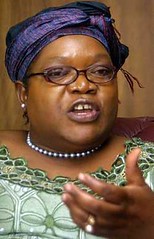
Vice President Joice Mujuru has reiterated the call for Zimbabweans to vote for President Mugabe in tomorrow’s elections.

Cde Mujuru was speaking in Mount Darwin West constituency at campaign rallies where she is the Zanu-PF House of Assembly candidate.

As the country braces itself for the harmonised elections, Vice President Mujuru winded up her campaign for the ruling party with five rallies in the Chitepo, Chiburi, Nehanda, Mutwa and Kariano areas in the constituency. Cde Mujuru said after successfully implementing the land reform programme, Government was now focusing on assisting farmers to increase production on their farms.

She said challenges currently facing the country were a result of sanctions by Britain and its allies, adding that these would soon be overcome as Zimbabweans have proved to be a resilient people. Zanu-PF Senate candidate for Mount Darwin constituency Alice Chimbudzi called on Zimbabweans to shame the country’s detractors by voting resoundingly for the ruling party. — ZBC News.


President tipped to win by 57pc

By Mabasa Sasa

PRESIDENT Mugabe is likely to overwhelmingly win tomorrow's presidential election with between 56 to 57 percent of the vote, according to a survey conducted by the University of Zimbabwe’s Department of Political Science and Administration.

According to the countrywide survey overseen by the department’s chairman, Dr Joseph Kurebwa, the ruling Zanu-PF party will probably clinch a total of 41 Senate seats and 137 House of Assembly constituencies, ensuring another two-thirds in the next Parliament.

Prior to the 2005 parliamentary elections, Dr Kurebwa carried out an almost similar survey and projected Zanu-PF would win 72 seats and the MDC 45, which was not far off the actual outcome.

Zanu-PF went on to win 78 seats while the MDC got 41.

Conducted over a period of a month, this year’s survey projects opposition MDC faction leader Morgan Tsvangirai taking between 26 and 27 percent of the presidential vote with independent Simba Makoni managing around 13-14 percent.

The other independent presidential candidate, Langton Towungana, was likely to make up the numbers with 0,2 percent of the total vote count.

The projections for President Mugabe compare favourably to the roughly 52 percent he garnered in the last presidential election in 2002.

Dr Kurebwa’s study, which assessed the views of 10 322 people drawn from all the wards in Zimbabwe, concluded that Tsvangirai’s faction would win 13 Senate seats and 53 House of Assembly seats.

The other MDC faction led by Arthur Mutambara would secure six and 18 seats in the Senate and House of Assembly elections respectively.

Only two independent candidates, one of them Jonathan Moyo, are expected to win House of Assembly seats. Moyo is the outgoing MP for Tsholotsho, which he won as an independent in 2005.

Interestingly, Moyo has also predicted that President Mugabe will win the elections while another study conducted by David Coltart of the Mutambara faction had also predicted the President would win.

In his prediction Moyo — a political scientist — said President Mugabe would romp to victory with Tsvangirai in second position and Makoni a distant third.

Dr Kurebwa said they dispatched another team last week on Friday to carry out a mock presidential ballot exercise and the results so far were similar to those of the broader survey.

"We have teams that are right now carrying out a mock election. People are given ballot papers and asked to vote in just the same way and procedure they will do on Saturday. So far, the results indicate more or less the same thing as the month-long survey," he said.

Dr Kurebwa gave the entry of Makoni in the presidential race as the probable reason why Tsvangirai’s share of the national vote would decline from the 48 percent he had in 2002 to the 26-27 percent projected by the survey.

"Makoni is pulling his numbers from Harare and Bulawayo, which are areas the MDC has concentrated its campaign resources in. At the same time, the ruling party also believes that it should regain these urban constituencies and hence there is a tussle there.

"Zanu-PF appears to have concentrated its resources in rural areas and managed to secure them. On the other hand, neither Makoni nor Tsvangirai has made any real attempts to market themselves there. So you have a situation where the areas the opposition are targeting being free for all while Zanu-PF is left alone to take the rural vote," Dr Kurebwa said.

For instance, the survey shows that in Lobengula, an opposition stronghold in Bulawayo, Tsvangirai will get 35 percent of the presidential vote, Makoni 33,5 percent and President Mugabe 29 percent; representing a 6 percent difference between the ruling party candidate and the opposition candidate expected to easily sweep that constituency.

On the other hand, in the Zanu-PF stronghold of Uzumba, President Mugabe is expected to amass a colossal 92 percent of the vote compared to Tsvangirai and Makoni’s 4 and 2 percent respectively.

Similarly, Tsvangirai’s lead over President Mugabe in the opposition stronghold of Chitungwiza South is a mere 2 percent.

But in the Zanu-PF bastion of Mhangura, President Mugabe holds a 60 percent lead over both Tsvangirai and Makoni.

An intriguing phenomenon across a number of constituencies is that President Mugabe will get significantly more votes than Zanu-PF Senate and House of Assembly candidates.

Theoretically, this means President Mugabe as an individual holds more appeal for voters than some of the candidates representing the ruling party in particular constituencies.

It also means there exists the probability of people voting for President Mugabe for the top job and then opting for someone else for the other available posts.

"There is disgruntlement largely stemming from some primary elections and so we will see a few cases of people voting for President Mugabe and then someone not from the ruling party. But we do not expect this variation to exceed beyond 10 percent across the whole country," Dr Kurebwa said.

The survey also shows that a vast majority of the electorate is going to accept the election outcome.

"Almost unanimously," Dr Kurebwa said, "the people we polled say they will respect the outcome of the elections even if their favoured parties and candidates lose. People do not want to go through the bitter experiences of past disputed elections."

Dr Kurebwa said of those who had been polled, only 1,7 percent — mainly from the 18-25 age group — were not registered voters.

Apart from gauging the manner in which people were likely to vote, the survey also assessed their reasons for supporting particular parties and candidates.

For instance, Dr Kurebwa said, a significant proportion of the electorate was primarily motivated by economic development, followed by the liberation war and issues of national security.

"People have strong feelings on the issue of (Western-imposed) sanctions and this is not surprising considering the economic environment we are living in. The economic environment has deepened their grievances. We also received some mixed signals on the issues of corruption and inflation and how they relate to economic performance," Dr Kurebwa said.

The issue of "change", long viewed as an opposition mainstay, is, in fact, central to the people who support Zanu-PF, as they believe that the ruling party is "advocating for change as embodied in economic empowerment".

"Another common factor emerging from the survey is that regardless of their residing in urban, peri-urban or rural areas, people are concerned with the issues of employment creation and food security. The issue of a new constitution is largely an elitist one," Dr Kurebwa said.

A number of the people polled indicated they had changed their allegiances since the 2005 parliamentary elections and Dr Kurebwa attributed this to "the wider choice available this time around".

The survey was carried out from mid-February to March 15 2008 and was conducted by four-member teams tasked to poll at least 45 people per constituency along gender, age and other demographic lines.

The survey also included council elections, but the results had not been processed yet because of time constraints.

Dr Kurebwa said they were also going to conduct an exit poll, during which a survey would be carried out of how people voted as they leave polling stations on Saturday.


‘Blair admitted telling lies about Zim to Mbeki’

Features and Political Editor

FORMER British prime minister Tony Blair admitted to South African President Thabo Mbeki that his government had erred on Zimbabwe but could not openly admit it without losing face.

Cde Mugabe, who was addressing his biggest star rally to date — an estimated 40 000 plus supporters who packed Chipadze Stadium in Bindura while thousands of others had to be locked out on account of limited sitting and standing space — said Blair had vowed that he would not go back on the lies he peddles on Zimbabwe as they had been swallowed by his allies and media embeds.

‘‘Vana Blair vakatya vakati tikataura kuti takonana nevarume ava pamusoro pevhu, tinokoneswa tirisu nekuti ndisu takatadza, ndisu tisina kuzadzisa chivimbiso chatanga tapa. Ndozvaakazotaura izvozvo, handiri kutaura zvangu zvekufungidzira asi zvandakaudzwa naPresident Mbeki that Blair actually admitted that his government was wrong.

‘‘Obvunzwa naPresident Mbeki kuti: ‘If your government was wrong, what then are you doing to correct that wrong?’ Zvikanzi izvo: ‘Ah, iyezvino tatoudza vanhu kare kuti ha taranga Zimbabwe nemasanctions pamusana pekuti hakuna hurumende ikoko irikutonga zvakanaka, Hurumende yavo irikudzvanyirira vanhu, Hurumende yacho zvakare haina democracy, Hurumende yacho haisiri kutevera murawo, the rule of law. Taudza vanhu vedu kare, vemapepa, majournalists varikuzviziva ah saka totoramba takasimbirira nenhema dzatakataura.

‘Eh, so we can’t go back,’ he said, ‘so we shall always be liars, telling lies,’ and these are the lies they are telling even right up to this day,’’ said Cde Mugabe to cheers and jubilant singing from the packed stadium.

On November 5 1997, Blair’s government reneged on the obligations entered into by the Tory administration of Mrs Margaret Thatcher in 1979 to bankroll land reforms in Zimbabwe, saying Labour was a new government made up of people, among them the Irish, who were also colonised and not colonisers, and as such they did not have any obligation to fund land reforms in Zimbabwe.

This blatant violation of the international law of succession that binds successive governments to honour agreements entered into by predecessors prompted the Government to compulsorily acquire land from white commercial farmers with compensation being paid only for developments on the farms.

This, Cde Mugabe said, was what riled the British, prompting them to impose ruinous economic sanctions on Zimbabwe in the hope

that the resultant hardships would force people to revolt against the Government.

He chronicled the gamut of economic sanctions on Zimbabwe, saying the fact that the economy was dominated by British companies, over 400 of them, who worked in cahoots with London, was what had worsened the effects of the sanctions. But the policies the Government had adopted, among them the Look East Policy, he said, were the key to defeating British machinations.

‘‘Patiri apa maBritish vari kuti vanhu ava tavatadza sei, kubva varamba vakamira nemakumbo maviri, dai vanga vava iyezvino pagumbo rimwe chete taizviona? Kubva vati chaizvo-izvo dzi? Ehe, tinoramba takati dzi, we will never collapse. I have told them kuUnited Nations ikoko taenda ko. The British want regime change. Havaigone, regime change inoitwa nevanhu vedu. Simba rekuchinja zvinhu riri muvanhu vedu, ndimi makatisarudza, ndimi zvakare munogona kutibvisa muzvigaro zvatiri moisa vamwe,’’ he said to applause from jubilant supporters.

He said all the programmes the Government was launching, among them the farm mechanisation programme, had been made possible by assistance from its Eastern partners.

Zanu-PF, Cde Mugabe said, is a people’s party which derives its mandate from the majority. He took a swipe at independent presidential candidate Simba Makoni for trying to impose himself on the people, and MDC faction leader Morgan Tsvangirai for being a willing British stooge.

‘‘Hamungaterere nhasi vanhu vamakanga musina, hutungamiri hwakanga husiko hondo yeChimurenga payakarwiwa. Vasina zvavo kumboda kubata apa nepapa.

"KuMDC ndiani ariko? Tsvangirai akasevenza kuno, kuTrojan ikoko, tea boy. Anoti iye: ‘Nekuti ndakaita basa rekupa tea, ndaipa vose vose, ndiyo democracy iyoyo, ndokwandakaifunda.’ Handisirini ndakadaro, ndiye akadaro, ‘that’s where I derived my principles of democracy mukuserver tea,’’ Cde Mugabe said to laughter from the crowd.

Tsvangirai has been running advertisements likening democracy to being a waiter, and that one of the former world leaders — ironically Ugandan autocrat Idi Amin — started off as a waiter.

Cde Mugabe thanked the people of Mashonaland Central for always sweeping all constituencies for Zanu-PF, saying they could not afford to do less as one of the luminaries of the First Chimurenga, Mbuya Chahwe — the medium of the Nehanda Spirit — hailed from that province, a province that also launched the decisive phases of the Second Chimurenga true to Mbuya Nehanda’s prophecy that her bones would rise again to decimate settler rule.

Cde Mugabe said it was because of the overwhelming support Zanu-PF draws from the province that he always addressed his final rally before election day in Mashonaland Central.

‘‘Saka ndo finale yataita kuno, nekuti kuno vanogara vakabuda shudhu. Hongu kuHarare tichafamba zvedu mangwana, asi kunenge kuri kungobatsira, asi finale yedu ndiyoyi. Saka finale zvainoitwa, music inobva yaenda kumusoro, ndiyo yavanoti pachirungu crescendo. Inoperera kupi? Kumusoro crescendo, saka ndiyo yatinoda iyoyo crescendo (tomorrow),’’ he said to loud slogans from the packed stadium.


Remain vigilant to counter British moves — President

Herald Reporters

ZIMBABWEANS must remain vigilant to counter British moves to undermine their independence and sovereignty, President Mugabe has said.

Speaking at a rally held at Chipadze Stadium in Bindura yesterday, the President said the British were sending in clandestine operatives in a bid to compromise the peace and security situation.

‘‘Hondo yemaBritish irikuramba iripo. Varikupinza iyezvino vanhu pachivande muno, tochenjera, kurikuuya maforces akawanda. Mamwe epasi-pasi, including SAS, vese ivavo, Special Air Service people. Saka zvemaBritish zvavarikuronga zvakawanda, tochenjera, kuchenjera security yedu. Kuchenjera politics dzedu. Kuti vatinoterera ndavanani?’’

The President’s comments come in the wake of the arrest of a British pilot contracted to carry campaign material for MDC faction leader Morgan Tsvangirai earlier this week, a development that sources say could provide details of how the MDC election campaign is being funded by foreigners in contravention of the Political Parties Finance Act.

The pilot, who was in possession of British and South African passports bearing different names, was arrested after security details were alerted to the fact that he wanted to fly his helicopter without filing a proper flight plan with the Civil Aviation Authority of Zimbabwe.

The helicopter is now under police guard at Charles Prince Airport just outside Harare.

Commenting on the helicopter in an interview with The Herald and ZBCTV yesterday, Cde Mugabe said though he was still to receive a full report from the police, the development posed serious security concerns.

‘‘It’s a serious matter, we don’t know what the MDC is up to. They could bring in arms caches or anything, and land you know, in hidden places, these are helicopters by the way. It means we should keep up our vigilance, and remain aware that the enemy has a lot of plans against us.’’

He said if the MDC genuinely wanted a helicopter to use for their campaigns they could easily have hired one from within Zimbabwe.

‘‘It’s a situation, naturally, that raises concern. If they wanted a helicopter to use within the country, why didn’t they hire? There are small planes here that they could hire without importing a helicopter. We know they have people outside who help them but not all these people are our friends,’’ Cde Mugabe said.

It is believed that the pilot works for the British foreign intelligence service, the MI6, and was hired and paid by foreigners involved in Tsvangirai’s election campaign including a former British soldier working in Zimbabwe.

Roy Bennett, the self-exiled treasurer-general in the Tsvangirai faction and now based in South Africa, is also understood to have paid for 2 420 litres of fuel to be used during the operation.

The pilot has a South African passport which gives his name as Brendon Douglas Bridge, which he used to try and file a flight plan with CAAZ, while his British passport identifies him as Brenton Bridge Smyth.

On the day he was arrested (March 25 2008), he had been ferried to Charles Prince Airport by Mr Maxwell Daniel, a Scot by birth who served as a member of the British Marines and claims to have been in the Police Constabulary from 1984 to 2000.

Daniel’s role in the election campaign, coupled with the pilot’s suspected MI6 links, is said to have alerted security services to the likely existence of a well co-ordinated British plot to fund the MDC’s campaign. Others arrested that day were Jameson Timba, an MDC-Tsvangirai House of Assembly candidate in Mt Pleasant and Garikai Tshuma, a fourth-year University of Zimbabwe student serving as a campaign manager for the former.

"We are still investigating the pilot’s British intelligence links and the presence of people such as Daniel, who is a former British marine indicate something more sinister than a mere election campaign.

"Mr Bennett is believed to be co-ordinating the foreign funding operation from South Africa through his links in that country and further abroad.

"These activities are not only in contravention of the Political Parties (Finance) Act which prohibits foreign funding for parties but also substantiate the long-held contention that the opposition is an appendage of foreign interests seeking regime change in Zimbabwe," said the sources.

The sources said the police would probably charge Bridge, alias Smyth, with contravening Section 29 (1)(a) as read with Section 36(1)(a) of the Immigration Act Chapter 4:0 as well as contravening Section 136 of the Criminal Law Codification and Reform Act Chapter 9:23.

"There still remains the possibility of invoking the Suppression of International Terrorism Act to keep this guy in holding until it can be established that this was not part of a wider espionage conspiracy that has been taking place over an extended period of time.

"His (the pilot’s) intentions in Zimbabwe seem thoroughly dishonourable and indicate breaches of our security mechanisms as a nation. Everything is being done to uncover the identities of all those involved and more arrests are likely to follow very soon," the sources said.

"Consultations are presently going on with the Attorney-General’s Office to ascertain whether these activities by the MDC are not in contravention of the Electoral Act," the sources added.

According to information availed to The Herald, on March 21, Bridge, alias Smyth, filed a flight plan with the Polokwane Airport Authority in South Africa to travel to Joshua Mqabuko Nkomo Airport in Bulawayo with CAAZ.

He arrived at Joshua Mqabuko Nkomo Airport alone the next day flying a South African registered helicopter (ZS-RML) and was cleared by immigration authorities. Tsvangirai is understood to have met him at the airport in the company of MDC activists and they proceeded to try and file a new flight plan with CAAZ.

The aviation authorities refused to accept it as it did not meet the standard 24-hour clearance requirement and at this stage Tsvangirai pleaded with Mr Godfrey Gondo of the Immigration Department to let the helicopter proceed.

Mr Gondo refused and Bridge alias Smyth then proceeded to change his flight plan so that he could go to Harare. He arrived at Charles Prince Airport on March 24 where he filed another flight plan that would see him fly to Chipinge, Bikita, Buhera, Bulawayo and finally back to Polokwane.

One Erick Richard picked him up at the airport and took him to a city hotel (name provided) where a booking had been made for him by a JT Tiriboyi.


AU observer team hails peaceful environment

Herald Reporter

THE African Union election observer team has said the situation in Zimbabwe is conducive for free and fair elections, joining the long list of observer teams that have predicted tomorrow’s polls will be transparent.

Head of the AU election observer team former Sierra Leone President Mr Ahmed Tejan Kabbah said the run-up to the polls was peaceful.

Mr Kabbah — who flew into Harare on Wednesday afternoon — said he had managed to move around the capital during which he spoke to a few people and had been impressed by the peaceful environment prevailing.

"Since we arrived we have been looking around. We saw that the place was peaceful. This morning I met one political party leader and he told me that he was against violence, and I believed him and we are hopeful that the election will be violence-free," said Mr Kabbah, who last visited Zimbabwe in 1980 when it attained independence.

He said he had noted that all political parties contesting the elections were being accorded time in the public media to carry out their campaigns.

"I want to believe that the story moving around that other political parties are not allowed to broadcast or use media facilities may not be accurate. I am saying this because I have been watching television and listening to radio and access to the media is being given to all parties. So let’s try to convey the truth," said Mr Kabbah.

Another member of the observer team, Justice Lewis Makame, said an AU assessment team dispatched to Zimbabwe three weeks ago was satisfied with the political situation prevailing in the country.

Justice Makame is chairman of the Electoral Commission of Tanzania.

"Before we came we were told that the shops were empty, but we went there and found them full. We were told that police beat up people, but we never saw that and we met stakeholders like the Zimbabwe Electoral Commission and we were satisfied by the situation in the country," said Justice Makame.

The mission later met the ZEC and was also expected to meet political parties’ representatives, civil society and other stakeholders.

Mr Kabbah is leading 21 observers drawn from the continent.

AU Election Observer Mission coordinator Professor Raphel Omotayo Olaniyan said the team would observe the elections within the spirit and letter of the Declaration on the Principles Governing Democratic Elections in Africa as adopted by the AU Assembly in July 2002.

"The presence of the AU observer team constitutes an unequivocal proof of the AU’s commitment to contribute to the promotion and strengthening of democracy and the rule of law on our continent. The main objective of the mission is to make an honest, independent and impartial observation and assessment of the organisation and conduct of the harmonised elections," he said.

Several observer missions have expressed confidence that the elections will be free and fair.

The Pan-African Parliament Election Observer Team, the Sadc Election Observer Team and the Sadc Elections Commission Forum have all hailed the peaceful environment prevailing ahead of the polls.

Mumia Abu-Jamal Denied New Trial: Re-Sentencing Ordered, No Date Set

New Trial for Mumia Abu-Jamal is Denied; Protests on Friday

Thu Mar 27 2008

Mumia Abu-Jamal to Be Re-Sentenced, Date Not Yet Scheduled

The Third Circuit Court of Appeals has ruled against a new trial for Mumia Abu-Jamal. The court has called for a sentencing hearing that would result in either an execution or life in prison without parole.

Supporters of Mumia have already called for protests to be held "the day after" today's decision. The San Francisco demonstration and press conference has been called for 5:00 pm at the federal courthouse at 7th and Mission. In Oakland on Friday, protesters will gather at 14th and Broadway from 4:30-6:30 pm.

A "day after" protest has also been called for New York on Friday, at the Adam Clayton Powell State Office Building (125th Street and Adam Clayton Powell Jr. Blvd) at 5pm.

National protests scheduled for April 19th in San Francisco and in Philadelphia on April 26th.

It was announced on March 27th that U.S. Court of Appeals for the Third Circuit has rejected all of Mumia Abu-Jamal’s demands for a new trial. In 1982 Jamal was convicted of the murder of Police Officer Daniel Faulkner in a trial where most African American jurors were systematically excluded and where critical evidence that would have proved the defendant’s innocence was excluded.

The State of Pennsylvania has been ordered to hold a new sentencing hearing within 180 days. In that hearing the jury's decision will be limited to a finding of either life imprisonment, or execution by lethal injection.

Jamal’s attorneys will appeal the Third Circuit's decision to the U.S. Supreme Court.

CLR James on the African-American National Question: A Review of Slavery and the Civil War

CLR James 1943

Negroes in the Civil War: Their Role in the Second American Revolution
--------------------------------------------------------------------------------

Source: “Negroes in the Civil War,” New International, December 1943, pp. 338-341. Under the name J.R Johnson.
Transcribed: by Ted Crawford.
--------------------------------------------------------------------------------

An indispensable contribution to the understanding of the role of the Negro in American history is a study of the period between 1830 and 1865. In this article we treat the subject up to 1860.

The basic economic and social antagonisms of the period embraced the whole life of the country and were fairly clear then, far less today. The system of chattel slavery needed territorial expansion because of the soil exhaustion caused by the crude method of slave production.

But as the North developed industrially and in population, the South found it ever more difficult to maintain its political domination. Finally the struggle centered, economically, around who would control the newly-opened territories, and, politically, around the regional domination of Congress.

The regime in the South was by 1830 a dreadful tyranny, in startling contrast to the vigorous political democracy of the North. The need to suppress the slaves, who rebelled continuously, necessitated a regime of naked violence. The need to suppress the hostility to slavery of the free laborers and independent farmers led to the gradual abrogation of all popular democracy in the Southern states.

Previous to 1830 there had been anti-slavery societies in the South itself, but by 1830 cotton was king and, instead of arguing for and against slavery, the Southern oligarchy gradually developed a theory of Negro slavery as a heaven-ordained dispensation. Of necessity they sought to impose it upon the whole country. Such a propaganda can be opposed only actively. Not to oppose it is to succumb to it.

The impending revolution is to be led by the Northern bourgeoisie. But that is the last thing that it wants to do. In 1776 the revolutionary struggle was between the rising American bourgeoisie and a foreign enemy. The bourgeoisie needs little prodding to undertake its task.

By 1830 the conflict was between two sections of the ruling class based on different economies but tied together by powerful economic links. Therefore, one outstanding feature of the new conflict is the determination of the Northern bourgeois to make every concession and every sacrifice to prevent the precipitation of the break.

They will not lead. They will have to be forced to lead. The first standard-bearers of the struggle are the petty bourgeois democracy, organized in the Abolition movement, stimulated and sustained by the independent mass action of the Negro people.

The Petty Bourgeoisie and the Negroes

The petty bourgeoisie, having the rights of universal suffrage, had entered upon a period of agitation which has been well summarized in the title of a modern volume, The Rise of the Common Man. Lacking the economic demands of an organized proletariat, this agitation found vent in ever-increasing waves of humanitarianism and enthusiasm for social progress.

Women’s rights, temperance reform, public education, abolition of privilege, universal peace, the brotherhood of man — middle class intellectual America was in ferment. And to this pulsating movement the rebellious Negroes brought the struggle for the abolition of slavery. The agreement among historians is general that all these diverse trends were finally dominated by the Abolition movement.

The Negro struggle for Abolition follows a pattern not dissimilar to the movement for emancipation before 1776. There are, first of all, the same continuous revolts among the masses of the slaves themselves which marked the pre-1776 period.

In the decade 1820-30 devoted white men begin the publication of periodicals which preach Abolition on principles grounds. The chief of these was Benjamin Lundy. No sooner does Lundy give the signal than the free Negroes take it up and become the driving force of the movement.

Garrison, directly inspired by Lundy, began early, in 1831. But before that, Negro Abolitionists, not only in speeches and meetings, but in books, periodicals and pamphlets, posed the question squarely before the crusading petty bourgeois democracy. Freedom’s Journal was published in New York City by two Negroes as early as 1827.

David Walker’s Appeal, published in 1829, created a sensation. It was a direct call for revolution. Free Negroes organized conventions and mass meetings. And before the movement was taken over by such figures as Wendell Phillips and other distinguished men of the time, the free Negroes remained the great supporters of the Liberator. In 1831, out of four hundred and fifty subscribers, fully four hundred were Negroes. In 1834, of 2,300 subscribers, nearly two thousand were Negroes.

After the free Negroes came the masses. When Garrison published the Liberator in 1831, the new Abolition movement, as contrasted with the old anti-slavery societies, amount to little. Within less than a year its fame was nation-wide. What caused this was the rebellion of Nat Turner in 1831. It is useless to speculate whether Walker’s Appeal or the Liberator directly inspired Turner. What is decisive is the effect on the Abolition movement of this, the greatest Negro revolt in the history of the United States.

The Turner revolt not only lifted Garrison’s paper and stimulated the organization of his movement. The South responded with such terror that the Negroes, discouraged by the failures of the revolts between 1800 and 1831, began to take another road to freedom. Slowly but steadily grew that steady flight out of the South which lasted for thirty years and injected the struggle against slavery into the North itself.

As early as 1827 the escaping Negroes had already achieved some rudimentary form of organization. It was during the eventful year of 1831 that the Underground Railroad took more definite shape. In time thousands of whites and Negroes risked life, liberty and often wealth to assist the rebel slaves.

The great body of escaping slaves, of course, had no political aims in mind. For years rebellious slaves had formed bands of maroons, living a free life in inaccessible spots. Thousands had joined the Indians. Now they sought freedom in civilization and they set forth on that heroic journey of many hundreds of miles, forced to travel mainly by night, through forest and across rivers, often with nothing to guide them but the North Star and the fact that moss grows only on the north side of trees.

The industrial bourgeoisie in America wanted none of this Abolition. It organized mobs who were not unwilling to break up meetings and to lynch agitators. Many ordinary citizens were hostile to Negroes because of competition in industry and the traditional racial prejudice.

At one period in the early ‘forties, the Abolition movement slumped and Negro historians assert that it was the escaping slaves who kept the problem alive and revived the movement. But we do not need the deductions of modern historians. What the escaping slaves meant to the movement leaps to the eye of the Marxian investigator from every contemporary page.

By degrees the leadership of the movement passed into the hands of and was supported by some of the most gifted white poets, writers and publicists of their time. The free Negroes, in collaboration with the Abolitionist movement, sometimes by themselves, carried on a powerful agitation.

But a very special role was played by the ablest and most energetic of the escaping slaves themselves. These men could write and speak from first-hand experience. They were a dramatic witness of the falseness and iniquity of the whole thesis upon which the Southern case was built.

Greatest of them all and one of the greatest men of his time was Frederick Douglass, a figure today strangely neglected. In profundity and brilliance, Douglass, the orator, was not the equal of Wendell Phillips. As a political agitator, he did not attain the fire and scope of Garrison nor the latter’s dynamic power in organization. But he was their equal in courage, devotion and tenacity of purpose, and in sheer political skill and sagacity he was definitely their superior.

He broke with them early, evolving his own policy of maintenance of the Union as opposed to their policy of disunion. He advocated the use of all means, including the political, to attain Abolition. It was only after many years that the Garrisonians followed his example.

Greatest of the activists was another escaped slave, Harriet Tubman. Very close to these ex-slaves was John Brown. These three were the nearest to what we would call today the revolutionary propagandists and agitators.

They drove the South to infuriation. Toward the middle of the century the Abolitionists and the escaping slaves had created a situation that made compromise impossible.

The Anti-Fugitive Slave Law

In 1848 there occurred an extraordinary incident, a harbinger of the great international movement which was to play so great a part in the Civil War itself. When the news of the 1848 revolution in France reached Washington, the capital, from the White House to the crowds in the streets, broke out into illuminations and uproarious celebration. Three nights afterward, seventy-eight slaves, taking this enthusiasm for liberty literally, boarded a ship that was waiting for them and tried to escape down the Potomac.

They were recaptured and were led back to jail, with a crowd of several thousands waiting in the streets to see them, and members of Congress in the House almost coming to blows in the excitement. The patience of the South and of the Northern bourgeoisie was becoming exhausted.

Two years later, the ruling classes, South and North, tried one more compromise. One of the elements of this compromise was a strong Anti-Fugitive Slave Law. The Southerners were determine to stop this continual drain upon their property and the continuous excitation of the North by fugitive slaves.

It was the impossibility of enforcing the Anti-Fugitive Slave Law which wrecked the scheme. Not only did the slaves continue to leave. Many insurrectionary tremors shook the Southern structure in 1850 and again in 1854. The South now feared a genuine slave insurrection. They had either to secede or force their political demands upon the federal government.

The Northern bourgeoisie was willing to discipline the petty bourgeois democracy. But before long, in addition to their humanitarian drive, the petty bourgeois democrats began to understand that not only the liberty of the slaves but their own precious democratic liberties were at stake.

To break the desire of the slaves to escape, and to stifle the nation-wide agitation, the South tried to impose restrictions upon public meetings in the North and upon the use of the mails. They demanded the right to use the civil authorities of the North to capture escaping slaves.

Under their pressure, Congress even reached so far as to side-track the right of petition. The Declaration of Independence, when presented as a petition in favor of Abolition, was laid upon the table. Negroes who had lived peaceably in the North for years were now threatened, and thousands fled to Canada.

Douglass and Harriet Tubman, people of nation-wide fame (Douglass was an international figure) were in danger. There was no settling this question at all. The petty bourgeois democrats defied the South. The escaping slaves continued to come. There were arrests and there were spectacular rescues by pro-Abolition crowds.

Pro-slavery and anti-slavery crowds fought in the streets and with the Northern police. Scarcely a month passed but some escaping slave or ex-slave, avoiding arrest, created a local and sometimes a national agitation.

Slaves on ships revolted against slave-traders and took their ships into port, creating international incidents. Congress was powerless. Ten Northern states legalized their rebelliousness by passing Personal Liberty Laws which protected state officers from arresting fugitive slaves, gave arrested Negroes the right of habeas corpus and of trial by jury, and prohibited the use of the jails for runaway Negroes.

Long before the basic forces of the nation moved into action for the inevitable show-down the petty bourgeois democrats and revolting slaves had plowed up the ground and made the nation irrevocably conscious of the great issues at stake.

The Free Farmers and the Proletariat

Yet neither Negroes nor petty bourgeois democracy were the main force of the second American revolution, and a more extended treatment of American history would make that abundantly clear if that were needed by any serious intelligence. The great battle was over the control of the public doman! Who was to get the land — free farmers or slave-owners? The Republican Party, as Commons has said, was not an anti-slavery party. It was a Homestead party.

The bloody struggle over Kansas accelerated the strictly political development. Yet it was out of the Abolition movement that flowered the broader political organizations of the Liberty Party and the Free Soil Party, which in the middle of the decade finally coalesced into the Republican Party.

It was Marx who pointed out very early (The Civil War in the United States, page 226. Letter to Engels, July 1, 1861) that what finally broke down the bourgeois timidity was the great development of the population of free farmers in the Northwest Territory in the decade 1850-60. These free farmers were not prepared to stand any nonsense from the South because they were not going to have the mouth of the Mississippi in the hands of any hostile power.

By 1860 the great forces which were finally allied were the democratic petty bourgeoisie, the free farmers in the Northwest, and certain sections of the proletariat. These were the classes that, contrary to 1776, compelled the unwilling bourgeois to lead them. They were the basic forces in the period which led to the revolution. They had to come into action before the battle could be joined. They were the backbone of the struggle.

In all this agitation the proletariat did not play a very prominent rôle. In New England the working masses were staunch supporters of the movement and the writer has little doubt that when the proletariat comes into its own, further research will reveal, as it always does, that the workers played a greater role than is accredited to them. Yet the old question of unemployment, rivalry between the Negroes in the North and the Irish, the latest of the immigrant groups, disrupted one wing of the proletariat.

Furthermore, organized labor, while endorsing the Abolitionist movement, was often in conflict with Garrison, who, like Wilberforce in England, was no lover of the labor movement. Organized labor insisted that there was wage slavery as well as Negro slavery, and at times was apt to treat both of them as being on the same level — a monumental and crippling error.

Nevertheless, on the whole, the evidence seems to point to the fact that in many areas the organized proletarian movement, though not in the vanguard, supported the movement for Abolition. Finally, we must guard against one illusion. The Abolition movement dominated the political consciousness of the time. Most Northerners were in sympathy.

But few wanted war or a revolution. When people want a revolution, they make one. They usually want anything else except a revolution. It was only when the war began that the abolitionists reaped their full reward. Despite all this Abolition sentiment in the North, and particularly in the Northwest areas, the masses of the people on the whole were not anxious to fraternize with the free Negroes, and over large areas there was distinct hostility.

But the free Negroes in the North never allowed this to demoralize them, and the masses of the revolting slaves kept on coming. Between 1830 and 1860, sixty to a hundred thousand slaves came to the North. When they could find no welcome or resting place in the North, some of them went on to Canada. But they never ceased to come. With the Civil War they will come in tens and then in hundreds of thousands.

Abolition and the International Proletariat

From its very beginning at the end of the eighteenth century, the Negro struggle for freedom and equality has been an international question. More than that, it seems to be able to exercise an effect, out of all proportion to reasonable expectation, upon people not directly connected with it. In this respect, the Abolition movement in America has curious affinities with the Abolition movement a generation earlier in Britain.

In Britain, before the emancipation in 1832, the industrial bourgeoisie was actively in favor of abolition. It was industrially more mature than the American bourgeoisie in 1850; the West Indian planters were weak, and the slaves were thousands of miles away.

But there, too, the earlier Abolition movement assumed a magnitude and importance out of all proportion to the direct interests of the masses who supported it. Earlier, during the French Revolution, the mass revolts of the Negroes brought home to the French people the reality of the conditions which had existed for over a hundred and fifty years. A kind of collective “madness” on the Negro question seemed to seize the population all over France, and no aristocrats were so much hated as the “aristocrats of the skin.”

The Abolitionist movement in America found not only a ready audience at home but an overwhelming welcome abroad. Not only did Garrison, Wendell Phillips and others lecture in Britain. Frederick Douglass and other Negro Abolitionists traveled over Europe and enrolled many hundreds of thousands in Abolitionist societies.

One inspired Negro won seventy thousand signed adherents to the cause in Germany alone. In the decade preceding the Civil War, Uncle Tom’s Cabin was read by millions in Britain and on the continent, and even as far afield as Italy. And masses of workers and radicals in France, Spain and Germany took an active interest in the question. Their sentiments will bear wonderful fruit during the Civil War itself.

It is not enough to say merely that these workers loved the great American Republic and looked forward to the possibility of emigrating there themselves one day. There are aspects to this question which would repay modern investigation and analysis by Marxists. Beard, who has some insight into social movements in America, is baffled by certain aspects of the Abolition movement.[1]

Thoroughly superficial are the self-satisfied pratings of English historians about the “idealism” of the English as an explanation of the equally baffling Abolition movement in Britain. It would seem that the irrationality of the prejudice against Negroes breeds in revolutionary periods a corresponding intensity of loathing for its practitioners among the great masses of the people.[2]

“The Signal Has Now Been Given”

The slaves played their part to the end. After Lincoln’s election and the violent reaction of the South, the North, not for the first time, drew back from Civil War. Congress and the political leaders frantically sought compromise. Frederick Douglass in his autobiography gives an account of the shameful attempts on the part of the North to appease the South. Most of the Northern Legislatures repealed their Personal Liberty Laws.

And Douglass concludes his bitter chapter by saying: “Those who may wish to see to what depths of humility and self-abasement a noble people can be brought under the sentiment of fear, will find no chapter of history more instructive than that which treats of the events in official circles in Washington during the space between the months of November, 1859, and March, 1860.” (Life and Times of Frederick Douglass, Pathway Press, 1941, pages 362-366.)

For a long time even Lincoln’s stand was doubtful. On December 20, 1860, the very day on which South Carolina seceded, Lincoln made a statement which seemed to exclude compromise. However, in a series of speeches which he delivered on his eleven-day journey to Washington, he confused the nation and demoralized his supporters.

Even after the inaugural, on March 4, the North as a whole did not know what to expect from him. Marx, as we have seen, had no doubt that the decisive influence was played by the North-west farmers, who supplied sixty-six votes or 36.6 per cent of the votes in the college which elected Lincoln.

But there was refusal to compromise from the South also. Says Douglass: “Happily for the cause of human freedom, and for the final unity of the American nation, the South was mad and would listen to no concessions. It would neither accept the terms offered, nor offer others to be accepted.”

Why wouldn’t they? One reason we can now give with confidence. Wherever the masses moved, there Marx and Engels had their eyes glued like hawks and pens quick to record. On January 11, 1860, in the midst of the critical period described by Douglass, Marx wrote to Engels: “In my opinion, the biggest things that are happening in the world today are, on the one hand, the movement of the slaves in America started by the death of John Brown, and, on the other, the movement of the serfs in Russia .... I have just seen in the Tribune there has been a fresh rising of slaves in Missouri, naturally suppressed. But the signal has now been given.”

Fifteen days later, Engels replied: “Your opinion of the significance of the slave movement in America and Russia is now confirmed. The Harper’s Ferry affair with its aftermath in Missouri bears its fruits .... the planters have hurried their cotton on to the ports in order to guard against any probable consequence arising out of the Harper’s Ferry affair.” A year later Engels writes to Marx: “Things in North America are also becoming exciting. Matters must be going very badly for them with the slaves if the Southerners dare to play so risky a game.”

Eighty years after Marx, a modern student has given details which testify to that unfailing insight into the fundamental processes of historical development, so characteristic of our great predecessors. In Arkansas, in Mississippi, in Virginia, in Kentucky, in Illinois, in Texas, in Alabama, in Northwest Georgia, North Carolina, South Carolina — rebellion and conspiracy swept the South between 1859 and 1860.

Writes a contemporary after the John Brown raid: “A most terrible panic, in the meantime, seizes not only the village, the vicinity and all parts of the state, but every slave state in the Union ... rumors of insurrection, apprehensions of invasions, whether well founded or ill founded, alter not the proof of the inherent and incurable weakness and insecurity of society, organized upon a slave-holding basis” (Ibid., page 352).

The struggle of the Negro masses derives its peculiar intensity from the simple fact that what they are struggling for is not abstract but is always perfectly visible around them. In their instinctive revolutionary efforts for freedom, the escaping slaves had helped powerfully to begin and now those who remained behind had helped powerfully to conclude, the self-destructive course of the slave power.

J.R. JOHNSON.
--------------------------------------------------------------------------------
1. Rise of American Civilization (page 898). “The sources of this remarkable movement are difficult to discover.” Much the same can be said of the movement in Britain, which embraced literally millions of people.

2. It is something for revolutionists to observe in the past and to count on in the future. Already in England, a country where race prejudice is still very strong, the presence of American Negro soldiers, the prejudice against them of white American soldiers, and the reports of Negro upheaval in America have awakened a strong interest among the English masses.