Wednesday, April 02, 2008

Zimbabwe Elections Bulletin: No Party Wins Absolute Majority; Ousted White Settlers Threaten Return; UK's Hidden Hand

Zanu-PF, MDC-T in photo finish

Herald Reporter

THE contest for the House of Assembly went into a photo-finish with MDC-Tsvangirai ending with 99 seats, Zanu-PF with 97, MDC with 10 and one independent.

Neither major party has an absolute majority and even when the results of three by-elections caused by death of candidates are known, neither will have the 106 seats needed for an absolute majority.

Besides the 206 seats contested on Saturday, Muzarabani South was won unopposed by Zanu-PF and three by-elections are pending following the death of MDC candidates. While the MDC-Tsvangirai is likely to win at least two of these, since one is Redcliff and the other is in Bulawayo, it cannot gain the 106 seats needed to hold a majority in the House of Assembly.

While the MDC-Tsvangirai had a small lead in seat numbers, Zanu-PF was ahead in the popular vote.

In the polls for the 206 contested seats, Zanu-PF had won 45,94 percent of the votes, MDC-Tsvangirai 42,88 percent, the MDC 8,39 percent and the minor parties and independent candidates 2,79 percent.

Zanu-PF won an absolute majority of the vote in five provinces: the three Mashonalands, Midlands and Masvingo; and last night came first in Matabeleland South with just under 43 percent of the vote, although that lead was not translated into seats.

MDC-Tsvangirai won the absolute majority of the vote in just two provinces: Harare and Manicaland. No party took an absolute majority of Bulawayo, although MDC-Tsvangirai won all the contested seats with just 47 percent of the vote in a vicious three-way contest, coming first in that province and coming first in Matabeleland North with just under 37 percent of the vote.

In the two rural Matabeleland provinces, three-way fights produced some curious results. In the 12 contested constituencies of Matabeleland South, Zanu-PF came an easy first in the total vote, but won just three seats. MDC came second in the vote, but translated that into seven seats, and MDC-Tsvangirai was third, and with just two seats.

Masvingo, like Matabeleland South, produced an anomalous distribution of seats when compared to the provincial vote. Zanu-PF was an easy winner of the popular vote, taking 52,01 percent of the votes, but only 12 of the 26 seats. The other 14 seats went to MDC- Tsvangirai, although the party only managed 41,61 percent of the popular vote. Many Masvingo seats were won with minute majorities.

Zanu-PF has lost its majority in the House of Assembly for the first time since independence, despite its lead in the popular vote. It tended to win with larger majorities where it was stronger than the opposition parties were winning in their strongholds.

Since the 2000 and 2005 elections, Zanu-PF has lost significant support in Manicaland and some support in Masvingo, although a drop of less than 10 percent in its share of the vote in that province saw the huge cut in seats.

The party held its support in rural Mashonaland and rural Midlands while MDC-Tsvangirai has maintained its support base in the cities and towns, and changed the face of the next Parliament with its large gains in Manicaland and modest advances in Masvingo.

Rural Matabeleland has always tended to concentrate most of the marginal constituencies in Zimbabwe, and the strong three-way fight in that area accentuated that trend. Many seats in the region were won with well under 50 percent of the valid vote.

The ZEC, with the national agents of the candidates monitoring its work, is still compiling the totals for the presidential vote.

But if the voting patterns follow the votes for the MPs fairly closely — with Zanu-PF supporters voting for President Mugabe, MDC-Tsvangirai voters opting for Mr Morgan Tsvangirai and MDC voters voting for Dr Simba Makoni — it is difficult to see how any candidate can reach the total of 50 percent plus one required to avoid a run-off.

Even if almost all those who voted for independent candidates and the minor parties gave their presidential vote to Mr Tsvangirai, he would still fall far short of the total unless a large number of Zanu-PF and MDC voters switched to him in the presidential poll.

A look at the turnout in the four constituencies that did not vote for MPs suggests that even with the bulk of these votes, neither of the two main candidates can avoid a run-off.

Without significant cross-voting, a run-off appears the most likely outcome.


Poll results: UK’s hidden hand exposed

By Caesar Zvayi

THE British government and its prime minister, Gordon Brown, have now come out in the open as the real power behind the MDC Tsvangirai faction, demanding the release of the results of Zimbabwe’s elections that show an opposition victory.

Almost the entire British state machinery -- from the BBC to its House of Commons -- was almost going hysterical over the delay in announcing the election results by the Zimbabwe Electoral Commission.

Britain’s three main political parties united in urging Brown to approach South African President Thabo Mbeki to press him ‘‘to deal with the crisis in Zimbabwe’’.

It was these three British parties that set up the so-called Westminster Fund for Democracy that bankrolled the launch of the MDC from a ZCTU platform in September 1999 after the Government announced it would compulsorily acquire white-held farms for redistribution to landless black families.

Brown told the BBC that the "eyes of the world" are on Zimbabwe, saying the election results should be published without delay.

Liberal Democrats leader Nick Clegg urged Brown to increase pressure for a "swift and transparent" declaration of results, even though ZEC has been hailed by observer missions for the manner in which it conducted the election and managed the release of the results.

"Gordon Brown must seek urgent discussions with Thabo Mbeki and other leaders of the Southern African Development Community to ensure that maximum pressure is applied to ensure a swift and transparent declaration of results," Clegg said.

Brown’s office said the British premier had discussed ‘‘the situation’’ with President Mbeki on Monday, but would not give details of the talks.

British Foreign Secretary David Miliband and former Labour cabinet minister Peter Hain called on Africa and the rest of the world to express their support for the MDC.

Miliband told the BBC’s Newsnight programme: "It is long overdue for the rest of the world to stand shoulder to shoulder with the spirit of democracy which has expressed itself in Zimbabwe and which is now about to be traduced by President Mugabe and his ruling clique."

At a meeting in Paris, foreign ministers from France, Italy, the Netherlands, Slovakia, Slovenia and Spain issued a joint statement, along with Milliband, saying: "We call on the Zimbabwe Electoral Commission to swiftly announce all the election results, especially the results of the presidential election. The future of the Zimbabwean people depends on the credibility and transparency of the electoral process."

The BBC said Brown’s spokesman had hinted at possible increases in aid for Zimbabwe in the event Tsvangirai wins.

Zimbabwe’s election results have become a top story on all international media networks, drawing far more attention than Kenya was accorded when over 1 500 people were hacked or speared to death while 600 000 others were displaced following the disputed re-election of incumbent president Mwai Kibaki on December 27 last year.

Given the intimate relationship between the global media structures, Western politics and the quest for world domination, analysts say this vindicates the view that what is at stake in Zimbabwe is far bigger than what the contestants, with the notable exception of those in Zanu-PF, realise.

A view vindicated by the conspicuous flow of many white former commercial farmers who trooped back into Zimbabwe once the MDC prematurely claimed victory. Some of them have headed to the farms where they threatened to evict newly resettled farmers particularly around Chegutu and Kariba, as many are coming through Chirundu Border Post.

Zimbabwe, the analysts say, represents the last frontier of resistance between the black nationalist struggle and Western neo-colonial encroachment under the guise of globalisation and the parochial discourse of democratisation

Following the Government’s decision to bar all news networks hostile to Zimbabwe from covering the elections, many of them are encamped right round the borders with flushed correspondents giving feverish coverage to all sorts of conspiracy theories and utterances by the opposition and its allies.

The BBC, the public face of British foreign policy, yesterday devoted the entire day to non-stop coverage of Zimbabwe before splashing hourly updates to claims of electoral victory by the MDC. The BBC, in fact, dispatched its main news anchor to report from Johannesburg.

Yesterday all major news networks ran hourly updates on Zimbabwe eclipsing even US President George W. Bush’s visit to Europe for a Nato conference that is supposed to resolve some contentious issues between the world’s major military powers.

What has raised eyebrows is the fact that the Western leaders are basing their premature pronouncements on results compiled by the MDC and its civil society compatriots, yet ZEC — the only organisation legally and constitutionally mandated to issue the results — has not declared a winner, let alone the winner of the presidential contest.

What makes the pronouncements from the West even more glaring is that African leaders, many of whom have a lot to gain or lose from the political dynamics in Zimbabwe, have not spoken, obviously waiting to issue their statements once the full outcome is in the public domain.


Polls orderly, peaceful: AU observer team

Herald Reporter

THE African Union has reported that last week’s harmonised polls were conducted in an orderly and peaceful manner.

The continental body’s observer mission, headed by former Sierra Leone president Dr Ahmad Tejan Kabbah, said the polling arrangements by the Zimbabwe Electoral Commission made it possible for people to cast their votes in secret.

Several observer missions, including those from the Sadc region, Pan African Parliament and Comesa, hailed the election process, saying it allowed free and fair voting.

In a statement released on Tuesday, the AU mission commended electoral officials for their commitment, professionalism and efficiency, saying this made it possible for contesting political parties, their agents and security personnel to collaborate effectively during the conduct of the polls.

The mission also said that ZEC set up a transparent and effective framework in spite of the complexity and enormity of running the four combined elections for the very first time.

It also praised the peaceful environment that prevailed before, during and after the elections and urged all the stakeholders to accept the results as announced by ZEC.

"The AU observer team would like to take the opportunity, at this stage, to commend the people of Zimbabwe for the manner in which they have comported themselves in relation to these elections and further appeal to them to continue to be patient while ZEC finalises the release of the results," said Dr Kabbah.

The continental body’s team said it held a number of consultations with stakeholders in the country to obtain relevant information necessary for the polls.

"The purpose of these consultations was to obtain relevant information that would lead to a clear understanding and appreciation of the political and social environment in which these harmonised elections were to be held as well as the legal framework and practical arrangements put in place for the conduct of the polls," said the observer team.

Members of the team were deployed to various provinces that included Harare, Bulawayo, Midlands, Mashonaland East and West, Matabeleland North, Manicaland and Masvingo.

The East African Community observer mission has also declared Saturday’s elections free and fair, New Ziana reports.

Leader of the mission Mr Clarkson Otieno Karan told journalists at a Press conference yesterday that the mission observed the pre-election period, the entire electoral process including collation and tallying, and announcement of results.

"Taking into account the observations and recommendations in this report, the harmonised elections in the Republic of Zimbabwe were, to this extent, free and fair," he said.

The mission leader, however, called on the ZEC to expedite release of the results.

"This country has good infrastructure, and two days after the elections, they should by now have announced even the senatorial results, but there is undue delay in the announcements."

He said the delays might encourage people and political parties to begin announcing their own results.

With lessons from the recent volatile Kenyan elections where the EAC participated, Mr Karan urged winners to be magnanimous in victory and losers to accept defeat graciously.

"Quest for power may destroy the country and it is (incumbent) upon the leaders to ensure that the country is peaceful," he said.

Mr Karan said the mission had learnt some good things from the elections, among them the posting of results on notice boards at polling stations.

Deputy leader of the mission Ms Dora Kanabahita also applauded the use of translucent ballot boxes and involvement of women in the entire electoral process.

"We are looking forward to citing Zimbabwe as a good example in the African region," she said.

The eight-member team, made up of parliamentarians from the East African Legislative Assembly, observed polling in eight of the country’s 10 provinces.

Other observer groups, including those from Sadc and the Pan African Parliament, have endorsed the elections as free and fair.

ZEC has said it is still verifying and collating results for the presidential election with the consent and involvement of the relevant political parties/candidates.


Some white ex-farmers threaten new owners

Herald Reporter

SOME white former commercial farmers are reportedly threatening new owners and workers claiming that they will soon be coming back to reclaim the properties as they anticipate an MDC victory in the harmonised polls.

Such cases have been reported in Mashonaland West Province where scores of the erstwhile landowners visited farms they used to own but have since been redistributed to blacks under the land reform programme.

The former commercial farmers are said to have been to Paarl, Impofu and Bougainvillea farms a week ago and threatened resettled farmers that they were coming back for the land they owned previously.

In an interview with The Herald in Selous yesterday, Zimbabwe National Liberation War Veterans’ Association Chegutu chapter chairman Cde Edmore Matanhike confirmed the development.

"A group of whites visited Paarl, Impofu and Bougainvillea farms and later gathered at Selous Country Club celebrating that they would return to ‘their’ farms after the elections," he said.

"Our investigations have revealed that they are white former commercial farmers from Zambia camped at Kariba and others from Mozambique based at Chikwalakwala preparing to take their former farms if Tsvangirai wins this election," he said.

Cde Matanhike said he gathered the information from the white farmers who visited some farms in Chegutu East.

He said the returning farmers were linked to some white farmers in the province whose properties were not gazetted by Government for compulsory acquisition for resettlement purposes.

But Cde Matanhike said war veterans would not sit and watch them reverse the gains of the liberation struggle brought about by President Mugabe’s leadership.

"We will be left with no option except to take up arms and defend our pieces of land," he said.

In the run-up to the elections, the Commissioner of Prisons, Retired Major-General Paradzai Zimondi, said if the opposition won the elections, he would resign and go and defend his piece of land allocated under the land reform programme.

People interviewed at Paarl, Impofu and Bougainvillea farms confirmed the visits by the white farmers.

Mrs Irene Richard Nikwi of Paarl Farm, a former maid to one of the white farmers, confirmed that a Mr Cray Wherret and his brothers visited her family at their plot.

"I was away but they saw my husband. It was my former boss’s children who visited us. They were on motorbikes and said they were going to a wedding and had just decided to pass by to pay a courtesy call," she said.

She said she nursed Mr Wherret when she was the family’s maid.

At Impofu, Mrs Serina Phiri confirmed that some white farmers had been to the farm.

"I saw them on motorbikes. They told people that they were coming back to the farms."

Former white farmer Mr Triegaardt Stefanus Lombard is said to have also visited Bougainvillea Farm and took photographs of the farm.

"He came here together with four other white farmers and inspected the whole farm taking photographs in the process," said Mrs Lydia Mukucha, a resettled farmer.

Mrs Audrey Hativagone, Zanu-PF councillor for Ward 29 Chegutu East and also a farmer, said she was surprised by the development.

"I am surprised and I wonder how this is going to happen. We voted for President Mugabe so that we can retain our land. We hear that Morgan Tsvangirai is promising the whites that same land."

Several white commercial farmers whose properties were compulsorily acquired for redistribution to the landless black majority settled in neighbouring Zambia, Mozambique, South Africa, Nigeria and Australia.

They are reported to be camping on Zimbabwe’s borders with neighbouring countries waiting to return once the MDC is declared winner of the elections.

Last month reports from Nigeria said former farmers who had settled in that country where desperate to return home and repossess properties they previously owned.

The farmers were banking on the MDC winning the elections.

The MDC Tsvangirai faction has said it would reverse the land reforms if elected into power.

Its leader, Morgan Tsvangirai, has described the land redistribution programme as illegal and detrimental to foreign investment.

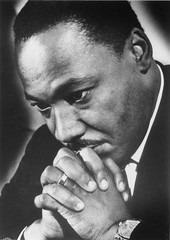
Detroit Conference Commemorates the 40th Anniversary of the Martyrdom of Dr. Martin Luther King, Jr., April 5, 1:00-5:00pm

For Immediate Release

Media Advisory

Event: Conference on the 40th Anniversary of the Martyrdom
of Dr.Martin Luther King, Jr., April 5, 2008
Location: Dr. Charles H. Wright Museum of African-American
History, Orientation Theater, 1:00-5:00 p.m.
315 E. Warren, Between John R. & Brush
Sponsors: Michigan Emergency Committee Against War &
Injustice (MECAWI)
Contact: 313.671.3715
E-mail: ac6123@wayne.edu
URL: http://www.mecawi
Admission: Free and Open to the Public

MECAWI to Host Conference Commemorating the 40th Anniversary of the Martyrdom of Dr. Martin Luther King, Jr., April 5

April 4, 2008 will represent the 40th anniversary of the assassination of the civil rights and peace activist Dr. Martin Luther King, Jr. On April 5, MECAWI will host an historic conference examining the true legacy of the most well-known and championed leader of a popular movement for social change to develop during the 20th century in the United States.

At the time of his assassination Dr. King was in Memphis, Tennessee supporting a sanitation workers' strike where over 1,500 African-American men were seeking recognition as a bargaining unit through the AFSCME trade union. If he had lived, Dr. King would have also led a Poor People's Campaign in Washington, D.C. demanding the eradication of poverty inside the country. One year prior to his assassination, Dr. King had come out strongly against the United States involvement in Vietnam.

Some four decades later, unfortunately, the United States has still not solved the problems of militarism, poverty and social inequality. In order to assess the legacy of Dr. King and to discuss the current state of the struggle for social justice, peace and self-determination, MECAWI is inviting the general public to participate in an afternoon of lectures, a video and discussions reviewing the history of the civil rights movement and what lies ahead in the ongoing fight to end poverty, racism, sexism and all other forms of biogtry and injustice.

Some of the issues discussed will be as follows:
-MLK and the Vietnam War
-Women and the Civil Rights Movement
-Nonviolence and armed self-defense from MLK to the BPP
-The US Counterintelligence Program and MLK
-A rare video of MLK speaking on the Vietnam War
-From civil rights to economic justice

Guest speaker Larry Hales, a Denver, Colorado activist and writer, will be a special guest at this conference. Hales is a member of the Fight Imperialism, Stand Together (FIST) youth organization.

This event is free and open to the general public. For additional information just contact the number, website and e-mail listed above.

Abayomi Azikiwe,
Media Liason
313.671.3715

Tuesday, April 01, 2008

Madonna In Malawi For Adoption Ruling

Madonna in Malawi for adoption ruling

From correspondents in Lilongwe, Malawi
April 02, 2008 07:36am
Reuters

AMERICAN pop star Madonna is due back in Malawi next week for what is expected to be a final court ruling on whether she can adopt a child from the African country.

A senior official at Lilongwe International Airport said today her jet was cleared for landing from April 8 and she was expected around that time.

In February, Malawian Information Minister Patricia Kaliati praised Madonna's efforts to rally support for orphans in the impoverished country and said it would be wrong for the government to deny the pop star's adoption of a child.

Madonna is in the process of adopting a Malawian boy, David Banda.

She began adoption proceedings in 2006 after meeting the boy in a local orphanage.

The toddler is living with Madonna and her film director husband Guy Ritchie in London.

The adoption has been controversial, with critics accusing the government of skirting laws that ban non-residents from adopting children in Malawi, which has been badly hit by the AIDS epidemic and is one of the poorest in the world.

There are an estimated one million orphans in the country, many of whom are infected with the HIV virus.

Malawi's government is amending its adoption laws.

Zimbabwe Elections Bulletin: ZANU-PF, MDC Heading For Tie; Run-off Vote For President Possible; COMESA Says Poll Transparent, etc.

Zanu-PF, MDC heading for tie

Herald Reporters

THE Zimbabwe Electoral Commission yesterday released more election results with indications that Zanu-PF and the MDC Tsvangirai faction are headed for a tie in the House of Assembly poll while the pattern of results in the presidential election show that none of the candidates will garner more than 50 percent of the vote, forcing a re-run.

ZEC had by 10pm last night released results of 160 House of Assembly constituencies with Zanu-PF and the MDC Tsvangirai faction continuing in a neck-and-neck contest.

Indications last night were that the two parties were likely to win between 96 and 99 House of Assembly seats each.

Analysts were projecting that this pattern of results was pointing to a run-off in the presidential poll as neither of the two presidential candidates was likely to achieve the 51 percent margin.

The Constitution states that if a winner in a presidential election fails to garner 51 percent of the total vote, a second round will be called within 21 days between the winner and the candidate with the second highest number of votes.

Zanu-PF had by last night garnered 78 seats, the MDC Tsvangirai faction 77 and MDC Mutambara faction five.

Twenty-five women, among them Vice President Joice Mujuru and MDC Tsvangirai faction vice president Thokozani Khupe, won their tickets to the House of Assembly.

Cde Mujuru won resoundingly in Mt Darwin West while Ms Khupe emerged the winner in Makokoba, Bulawayo.

Zanu-PF won most of its seats in rural Mashonaland, Midlands and Matabeleland South.

The MDC Tsvangirai faction won most of its seats in Bulawayo Urban, Harare, Manicaland, had a fair share of seats in rural Masvingo, especially the eastern side that borders with Manicaland.

MDC Mutambara won its seats in Matabeleland South which it shared with Zanu-PF.


Parties agree on presidential poll results

Herald Reporter

ZANU-PF and the Morgan Tsvangirai-led MDC faction yesterday agreed that the verification and collation of the presidential results will commence in the presence of their candidates or chief election agents, before announcement.

Zimbabwe Electoral Commission chief elections officer Mr Lovemore Sekeramayi announced this in a statement broadcast on national television last night.

He said ZEC was in the process of receiving results of the presidential election from the provinces.

Mr Sekeramayi said the two parties had agreed that the verification and collation of the results would commence in the presence of all the candidates or their chief election agents once all results have been received from the provinces.

"Please note that the Zimbabwe Electoral Commission has been working with the national chief election agents who have also been present at the national collation centre and are in full agreement with this arrangement.

"We therefore would like to urge the nation to remain patient as we go through this meticulous verification process," he said.

ZEC, Mr Sekeramayi said, commends the electorate for showing political maturity and tolerance before, during and after the polls.

"We urge you to continue in that spirit," he said.

The commission is releasing results from Saturday’s harmonised elections and so far the main contestants, Zanu-PF and the Morgan Tsvangirai-led MDC faction, are neck-and-neck in the House of Assembly elections.

Supporters of contesting political parties are eagerly awaiting the outcome of the polls, but ZEC chairman Justice George Chiweshe warned earlier this week that the results had to be authenticated by a strict verification process to avoid mistakes.

MDC faction leader Morgan Tsvangirai last night said they would wait for ZEC to announce the final results of the presidential election before commenting on the poll.

Speaking at a Press conference, Tsvangirai urged ZEC to proceed with haste in coming up with the final result of the elections.

"We are not going to be influenced by speculation. We would wait for ZEC before we discuss circumstances of the final result to the people.

"We have our representatives at the National Command Centre with our own results that have been confirmed by ZEC and we would seek to establish the truth in disputed areas."

He said his party acknowledged that the verification process was delaying the announcement of the final result.

Tsvangirai said his party had compiled its own results from various centres across the country and would be comparing these with ZEC’s results.


Polls transparent, peaceful: Comesa

Herald Reporters

The 2008 harmonised elections were conducted in an environment which was transparent and secure enough to guarantee the freedom of the vote and respect the will of the voters, the Comesa observer mission has said.

In a preliminary statement released yesterday, head of the mission Ms Lucie Kasanga said: "The mission did not witness any occurrences that compromised the integrity of the votes cast."

In its evaluation, the Comesa observer team said polling stations allowed easy access to voters, observers and monitors, party agents and guaranteed secrecy of the vote.

The mission said it did not witness or observe any form of intimidation of voters inside or outside the polling stations.

"Law and order were observed in all polling centres visited. Therefore, the presence of security personnel was limited to keeping law and order without interfering in the polling process.

"Voting procedures such as checks on voters national identity cards, and or the voter’s registration slips were used for verification of voters in the voters’ rolls and the application of indelible ink on voter’s finger was strictly adhered to," she said.

The mission observed large numbers of voters were being turned away due to missing names on the voters’ roll or were ‘aliens’ hence were not allowed to vote or were re-directed to go to the correct voting station.

"The mission was, however, concerned that some of these voters might have not gone to find the right voting stations later to vote," Ms Kasanga said.

The Comesa observer mission said agents of political parties and candidates were allowed to witness the process while most voters had good understanding of voting procedures and those who needed assistance were assisted in a courteous manner by polling staff.

The mission said electoral officials had good knowledge of rules of procedure on counting and closing operations and adhered to the law meticulously.

It said polling station staff displayed sufficient knowledge of the electoral procedures and handled complex situations in a professional manner.

The mission said since the electoral process was still going on, all aggrieved parties should address their grievances through appropriate legal channels created to service electoral disputes in a peaceful manner.

It urged people in Zimbabwe, Comesa region and co-operating partners to continue working together to consolidate the democratic system of governance that the country is committed to under its own constitution, Comesa treaty, regional and international instruments.

The mission hailed Zimbabwean people for turning up to express their will and Zimbabwe Electoral Commission for the able manner in which they handled the mammoth national task of organising the joint presidential, parliamentary and council elections.

THE Centre for Peace Initiatives in Africa has commended Zimbabweans for showing political maturity and upholding peace before during and after the elections.

"The Centre for Peace Initiatives in Africa would like to applaud Zimbabweans for holding these landmark elections in a relatively peaceful and non-violent manner," CPIA executive director Dr Leonard Kapungu said in a statement.

The organisation also called upon political parties to respect the outcome elections and for the Zimbabwe Electoral Commission to speed up announcement of results.

"CPIA regards the elections as crucial in bringing about unity and reconciliation in Zimbabwe. The Centre calls upon all political parties to respect the election results," he said.

Dr Kapungu urged the political party that wins the elections to uphold good governance through the immediate establishment of a Government of national unity and reconciliation as well as enact a people-driven Constitution leading to a new dispensation.

The organisation, however, strongly condemned the cases of violence reported.

The organisation further called upon the Sadc’s initiative on Zimbabwe to continue after the elections and for it to reach a logical conclusion.

CPIA, which is a regional peace organisation, also urged observer missions to remain on the ground until a Government of national unity is formed to avoid giving false reports that might discredit the polls.

The organisation seeks to contribute towards the promotion of sustainable peace, stability and security in Africa through conflict prevention, management and resolution.

"We urge ZEC to speed up the process of announcing results to allay anxiety of our citizens. People are patient but this can lead to violence. So we appeal to ZEC to seep up the process," he said.

CPIA has also worked over the years with various national and regional stakeholders to promote the implementation of Sadc principles and guidelines governing democratic elections as a vehicle in the prevention and management of electoral conflicts.

The organisation has deployed observers throughout the country to monitor the election. The other observer groups that have hailed the elections as free and fair, democratic, transparent and a credible expression of the will of Zimbabweans are Sadc, African Caribbean and Pacific, the Pan African Parliament and Zimbabwe Lawyers for Justice.


Remain calm, Zimbabweans urged

Crime Reporter

THE Zimbabwe Republic Police has appealed to the nation to remain calm as results of the weekend elections are being announced and urged winning and losing candidates to encourage their supporters to uphold the prevailing peace and tranquillity.

National police spokesperson Assistant Commissioner Wayne Bvudzijena said although the situation was calm the force would remain on high alert to thwart any threats of violence.

"As police we will remain on the ground to ensure peace and tranquillity continues to prevail. We will not also tolerate any political violence in the post election period and we urge political parties and their candidates to urge their supporters to celebrate peacefully," Asst Comm Bvudzijena said.

He said there were some quarters who were accusing the police of deploying too many policemen and women.

"This deployment is not exaggerated but it is there to pre-empt any threats of violence," he said. Asst Comm Bvudzijena also appealed to candidates not to taunt each other saying those who win should celebrate in peace and losing candidates should concede defeat.

"We applaud the nation for being politically mature for upholding peace before and during the election and even now. But we want to appeal to the nation to continue upholding peace as results are being announced," Asst Comm Bvudzijena said.

He said police patrols would continue countrywide.


Zim scenario different from Kenya — Kurebwa

Herald Reporter

CHANCES of post-election violence like what happened in Kenya are slim because the Zimbabwean situation is different from the scenario in the East African country, political scientist Dr Joseph Kurebwa said yesterday.

In an interview yesterday, Dr Kurebwa, the chairman of the Department of Political Sciences and Administration at the University of Zimbabwe, said the two countries also experienced different scenarios ahead of their polls.

"There are two different scenarios between Zimbabwe and Kenya. The first is that Zimbabweans have already experienced election-related violence.

More than 1 500 people were killed in post-election violence in Kenya after President Mwai Kibaki was announced winner ahead of opposition leader Mr Raila Odinga.

Dr Kurebwa said the Government and the Zimbabwe Electoral Commission and the electorate had prepared thoroughly for the elections and the outcome.

He said the electorate had shown, by way of commitment in their response to a survey conducted by his department prior to the elections, that they would not want violence after the elections.

"The majority of people in Zimbabwe would not want any poll-related violence as they still have, fresh in their minds, the memories of the liberation struggle, disturbances in the Midlands/Matabeleland region after independence and political violence of 2002.

"Violence has had a direct impact on every one in Zimbabwe and people would think twice before they engage in any acts of violence," he said.

The UZ Department of Political Science and Administration conducted a survey from mid-February to March 15, which assessed the views of 10 32 people drawn from all wards in the country.

Dr Kurebwa commended the way ZEC was handling announcement of the election results.

"ZEC has been cautious in their approach to the announcement of results and as we had indicated in our survey there were indications that some heavy weights would lose the election.

"There has been no efforts to conceal the shocks and this prepares people to respect the outcome of the final results," he said.

He said efforts by security agents in assuring zero tolerance on violence in the run up to the poll, on election day and the post polling period have reassured the nation on the country’s security after the results are announced.

"The security forces have also assured the nation that they would be on full alert and I believe they would not want to precipitate violence and stop the announcement of the results before they are concluded," he said.

Dr Kurebwa was responding to reports that service chiefs had indicated that they would not serve under a Government led by people who did not participate in the liberation struggle. The electorate in Zimbabwe has been commended for maintaining a peaceful atmosphere in harmonised elections with observers to the polls indicating that the situation would remain calm even after the elections.

10 Rules For Understanding Civil Society Imperialism

10 rules for understanding civil society imperialism

By Stephen Gowans
Courtesy of the Zimbabwe Herald

STEPHEN ZUNES, chair of the board of academic advisors to the US ruling class International Center for Nonviolent Conflict, and Patrick Bond, director of the Centre for Civil Society at Durban, are regular contributors to Z-Net, Counterpunch and other left media.

There’s nothing particularly new, interesting or exciting about their writing. When it comes to foreign governments that pursue a traditional leftist agenda of independent economic development outside the domination of imperialist powers they can be counted on to ape the New York Times and Washington Post, and by extension, the White House and Department of State.

Reading Zunes’ writings about Belarus, Zimbabwe, Myanmar and Iran, is like reading State Department Press releases. "The best hope for advancing freedom and democracy in the world’s remaining autocratic states," says Zunes, "comes from civil society".

In its reference to freedom and democracy in the abstract, Zunes’ language is evocative of the propagandistic bilge that gushes in rivers from White House and State Department speechwriters trying to shape public opinion. Bond, who claims an expertise on Zimbabwe based on proximity to the country (he runs a civil society centre on the other side of the Limpopo River) is hardly better.

Both mimic State Department charges against the West’s leftist and national liberation foreign policy betes noire, and, like the State Department, both celebrate civil society. Bond has gone so far as to naively dub activist groups in Zimbabwe that receive Western funding as "the main wellspring of hope for a Zimbabwean recovery". It would be more apt to say civil society is the West’s main wellspring of hope to return Zimbabwe to a colonial past.

Bond and Zunes are formulaic writers. They cleave to a basic set of rules to guide their analyses of governments that have disrupted property relations that once favoured Western investors, banks and corporations. Once you know the rules, you can predict what either Zunes or Bond are going to write with astonishing accuracy.

Rule 1. All governments are bad, especially those that pursue traditional leftist agendas of placing control of a country’s resources and productive property in the hands of its public, its government, or its domestic business class. The leaders of these governments deceptively employ socialist, anti-colonial and anti-imperialist rhetoric to win and then to hang on to power. They enjoy enormous privileges secured and defended by corruption and abuse of authority.

Governments, by nature, are corrupt, authoritarian and thoroughly rotten, particularly those that call themselves leftist and anti-imperialist.

There has never been a truly leftist, anti-colonial or anti-imperialist government, and can never be one. All revolutions are betrayals and no one should expect that anything good can ever come from left and anti-imperialist forces taking power.

The only good revolution is the one that has never happened, or the ones that have been financed by wealthy individuals and the US government.

Rule 2. Civil society is the main wellspring of hope. Non-governmental organisations funded by the US Congress’ National Endowment for Democracy, the US State Department’s USAID, Britain’s Westminster Foundation for Democracy, Germany’s Friedrich Ebert Foundation, and other Western "democracy promotion" agencies, are independent organisations that are working to build a better world. Leftists should look to these groups to understand what’s going on in countries led by nominally anti-colonial, anti-imperialist and socialist governments.

Zimbabwe’s Lawyers for Human Rights, for example, represents one of the main wellsprings of hope for Zimbabwe. Never mind that it is funded by the US National Endowment for Democracy — an organisation that does overtly what the CIA used to do covertly. Plenty of civil society organisations take money from wealthy individuals, corporations, capitalist foundations and imperialist governments. Does that mean they’re not independent?

Rule 3. Decentralised, participatory democracy is good. It is the absolute good.

Rule 4. Process is more important than outcome. Zimbabweans becoming owners of their own land and natural resources is only half as important as the British parliamentary tradition in Zimbabwe being upheld; only a tenth as important as the freedom and democracy Zunes’ celebrates in the abstract; only a hundredth as important as civil society having room to operate to peacefully change the government.

It’s not helpful to mention that peaceful regime change is often preceded by economic warfare and threats of military intervention and that non-violent activism and civil society are only part of a larger whole of regime change operations.

Rule 5. Governments that call themselves anti-imperialist or socialist or both are neither of these things and are as deplorable as imperialists and neo-liberals. Civil society, though drawing its funding from wealthy individuals, corporations, capitalist foundations and imperialist governments, is the main wellspring of hope.

Rule 6. When writing about governments that pursue traditional leftist agendas, it is important to follow State Department narratives. This is equivalent to doing what the New York Times, CNN and other major media did when they amplified Washington’s lies about Iraq’s non-existent weapons of mass destruction — an inconvenient reality, but skip over it. Charges made against leftist, anti-colonial and anti-imperialist governments of corruption, human rights abuses, and betrayal will resonate with a left population primed for cynicism.

Accordingly, it takes little effort to make the charges stick. Don’t bother to cite evidence. You don’t need to. Tap into what everyone knows is true, because everyone says it’s true, because the media say it’s true, because the State Department and White House say it's true. Who will ask for evidence? Insist that the other side present evidence. If you don’t like the evidence, say it’s not from a credible source.

Rule 7. Never shy away from basing your argument on appeal to authority. If you live close to the country civil society is to promote democracy in, or have visited it, claim authority based on geography. "I’ve been (or live close) to Zimbabwe." This, however, might backfire. Opponents can reply: "If geography is so important, I’ll accept as a higher authority the analysis of the leaders of the government you denounce, since they are long-time residents of their country, and not merely tourists and residents of a neighbouring country."

Rule 8. Make definitive statements. For example, assert with certitude that Bob Helvey has never been to Venezuela to train civil society to bring down the Chavez government. When you’re shown evidence that Bob Helvey has indeed been to Venezuela, say "I only found about it last week." Never let ignorance get in the way of self-appointed authority.

Rule 9. Defend civil society’s receiving its funding from wealthy individuals, corporations, capitalist foundations and imperialist governments by saying, "A people’s revolution cannot happen by generous funding alone." This sounds compelling. Of course, if this were true, we could also say, "Acceptance of a ruling class ideology cannot happen by the ruling class virtually monopolising the media and schools" or "George Bush won his first run at the presidency through a groundswell of popular support that had little to do with his connections to wealthy supporters and the king’s ransom spent on his campaign."

Rule 10. Some say civil society should not take money from wealthy individuals, corporations, capitalist foundations and imperialist governments. Others say the reality that wealthy individuals, corporations, capitalist foundations and imperialist governments shower many civil society groups with
money tells you everything you need to know about these groups. These people are not helpful.

-Stephen Gowans is a Canadian political writer and activist resident in Otawa. This article was first published on gowanswordpress.com

Allies Slam Dastardly Attack on Zuma

Allies slam 'dastardly' attack on Zuma

Cape Town, South Africa
01 April 2008 02:36

African National Congress (ANC) president Jacob Zuma's allies have rallied to his defence in the wake of University of South Africa rector Barney Pityana's indictment of his character on Monday.

In a blistering assault of its own on Pityana on Tuesday, the Young Communist League (YCL) said it had noted the "disrespectful and dastardly remarks made by the deplorable" rector.

"This is a clear indication that the vice-chancellor is attacking the ANC president opportunistically to project his defeated political handlers in Polokwane as genuine and true leaders," it said.

On Monday, Pityana told the Law Society of South Africa's annual general meeting the country was entering a new era.

"It is a time shrouded in anxiety and uncertainty with the looming presidency of Jacob Zuma and a new assertive leadership of the ANC.

"To many of us, Jacob Zuma, popularly elected by the branch delegates at Polokwane in December 2007, remains a flawed character in his moral conduct; he has been indicted for serious crimes that involve corruption and dishonesty.

"So far he does not encourage confidence in his understanding of policy, appearing as he does in the short-term to be making policy pronouncements on the hoof depending on who he wishes to appease at any one moment," Pityana said.

He also lavished praise on President Thabo Mbeki, saying he was one of Africa's best statesmen.

Calling on Pityana to "desist from these unwarranted insults", the YCL said it was regrettable that he had a "personal and political vendetta against the ANC president and he uses it in a malicious and opportunistic manner to settle cheap and factionalist political scores".

Pityana was not a "good political leader of note" and his "contribution to the liberation struggle is politically empty since in exile he was in the business of being a boarding academic and political demagogue tourist".

"The YCL believes that Pityana is nothing else, but a mere political mercenary seeking cheap political publicity. We urge the gutter vice-chancellor to desist from political gimmicks that insult and undermine the person of ANC president," the YCL said.

In a more subdued manner, the YCL's parent body, the South African Communist Party (SACP), said it was "flabbergasted and often confounded by some of the utterances, including the latest ones by Professor Barney Pityana, on developments within our movement in particular and our country in general".

The SACP urged Pityana to stop projecting his own "idiosyncratic anxieties on to the rest of us".

"We have no such anxieties about Polokwane and the new leadership of the ANC.

"For the SACP Polokwane, the policies adopted there, and the newly elected leadership have given renewed hope to the overwhelming majority of our members, a feeling shared by the majority of the workers and the poor in our country, and indeed by millions of our people."

While Pityana was entitled to his views, a person of his position needed to be cautious on how he positioned himself in relation to developments within the broad movement, the SACP said.

Earlier, ANC secretary general Gwede Mantashe described Pityana's statements as "spurious" and a reflection of "intellectual bankruptcy".

Mantashe said Pityana's statements were an indication that Pityana was clinging to personalities and failing to view the organisation, the ANC, as a whole.

Pityana also did not understand Zuma, he said. -- Sapa


JOINT STATEMENT OF THE ANC AND COSATU

31 MARCH 2008

The African National Congress (ANC) and the Congress of South African Trade Unions (COSATU) held a bilateral meeting in Johannesburg on 31 March 2008.

The meeting reflected the new spirit of unity and co-operation which has been the hallmark of the Alliance since the ANC Polokwane Conference.

Leaders of the two organisations held comradely but frank discussions on the political situation post-Polokwane and many specific issues of common concern. The meeting resolved that the partners must work even more closely together to present a common front on all the overwhelming majority of issues on which we agree and to manage better the few issues on which we have different views.

Various issues, including more worker representation on the ANC NEC, and the proposed Alliance Pact were referred to the forthcoming Alliance Summit, for which both COSATU and the ANC are preparing detailed policy papers.

There was agreement to work together on a number of specific issues:

* The SABC Board.
The meeting received a report that COSATU was preparing to take the matter about the representivity of the SABC board to court. It was agreed that there was a need for a further meeting to discuss possible options on how best the SABC matter could be handled.

* The Nelson Mandela Metro.
The meeting discussed the prevailing situation in the Nelson Mandela Municipality and the ANC Regional structure which are riven with serious problems. These included victimisation of SAMWU members. The meeting also expressed concern about the reports and allegations on the gross mismanagement throughout the Eastern Cape Province. It was agreed that an urgent alliance intervention would be required.

* May Day.
The meeting said the theme of the 2008 May Day Rallies will be "Defend democratic gains - Fight unemployment! Crush poverty and unemployment! Create decent work now!" They will focus on jobs and the rising cost of living. The Senior leadership of the Alliance has been deployed to address the rallies.

* The Eskom crisis:
The meeting spent time discussing the causes and implications of the current electricity crisis. The ANC had already had a discussion with relevant ministers to consider different options on how best the crisis could be handled moving forward. The meeting also expressed concern about the proposed 53% tariff increase especial its negative impact on the economy in general and the poor in particular. The meeting declared that the electricity crisis must not lead to job losses, and that the proposed 53% tariff increase is not acceptable. It was agreed to support the call for an Energy Summit to find solutions to the energy crisis.

* Food prices:
There was agreement that workers and the poor are suffering deeply because of the rocketing price of basic foods, oil and many other commodities, which are eroding our standard of living and this must be made a priority for the alliance.

Issued by:
African National Congress
Congress of South African Trade Unions


ANCYL REACTION TO THE STAR ARTICLES

1 April 2008

In an article carried in The Star newspaper on 1 April 2008, titled, "Time to pass on the ANCYL torch", the writer paints a picture of an organisation under siege with the presidential success as its primary preoccupation.

There could be nothing further from the truth, as the reports that will be tabled before Congress will demonstrate this. The article similarly makes a suggestion that the incumbent President runs the risk of being relegated into political oblivion if he supports one candidate over another.

The ANCYL, being the youth wing of the ANC is a democratic organisation steeped in the timeless traditions of democratic practice, with its branches at the centre. The structures of the ANCYL have the last say in the election of the leadership collective to take the organisation forward.

We can say without fear of contradiction that there is no space in the ANCYL for anyone to anoint their successor.

Such practice would be contrary to the fundamental principle of democracy and would undermine everything the ANC and by extension, the ANCYL stands for. The ANCYL therefore rejects any suggestion that its President has anointed a successor with the contempt it deserves.

Similarly, in another article, The Star alleges that the ANCYL team sent to observe the Zimbabwean election have returned home early because of constant surveillance. We once again, put it on record that this is a blatant lie with no substance.

The ANC Youth League does not have any observers in Zimbabwe and any suggestion to the contrary is nothing more than a figment of somebody's imagination. The quotation of faceless spokesmen in an attempt to give credibility to the story remains a source of concern and bodes ill for the credibility of newspapers that publish such stories.

Issued by ANC Youth League Presidency
More Information
Lawrence Venkile 0835638621

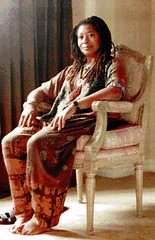
Lest We Forget: An Open Letter To My Sisters Who Are Brave

LEST WE FORGET, An Open Letter To My Sisters Who Are Brave

From Alice Walker

I have come home from a long stay in Mexico to find – because of the presidential campaign, and especially because of the Obama/Clinton race for the Democratic nomination - a new country existing alongside the old.

On any given day we, collectively, become the Goddess of the Three Directions and can look back into the past, look at ourselves just where we are, and take a glance, as well, into the future.

It is a space with which I am familiar. When I was born in 1944 my parents lived on a middle Georgia plantation that was owned by a white distant relative, Miss May Montgomery.

She would never admit to this relationship, of course, except to mock it. Told by my parents that several of their children would not eat chicken skin she responded that Of course they would not.

No Montgomerys would. My parents and older siblings did everything imaginable for Miss May.

They planted and raised her cotton and corn, fed and killed and processed her cattle and hogs, painted her house, patched her roof, ran her dairy, and, among countless other duties and responsibilities my father was her chauffeur, taking her anywhere she wanted to go at any hour of the day or night.

She lived in a large white house with green shutters and a green, luxuriant lawn: not quite as large as Tara of Gone With the Wind fame, but in the same style. We lived in a shack without electricity or running water, under a rusty tin roof that let in wind and rain. Miss May went to school as a girl.

The school my parents and their neighbors built for us was burned to the ground by local racists who wanted to keep ignorant their competitors in tenant farming. During the Depression, desperate to feed his hardworking family, my father asked for a raise from ten dollars a month to twelve.

Miss May responded that she would not pay that amount to a white man and she certainly wouldn't pay it to a nigger. That before she'd pay a nigger that much money she'd milk the dairy cows herself.

When I look back, this is part of what I see. I see the school bus carrying white children, boys and girls, right past me, and my brothers, as we trudge on foot five miles to school.

Later, I see my parents struggling to build a school out of discarded army barracks while white students, girls and boys, enjoy a building made of brick.

We had no books; we inherited the cast off books that "Jane" and "Dick" had previously used in the all-white school that we were not, as black children, permitted to enter.

The year I turned fifty, one of my relatives told me she had started reading my books for children in the library in my home town. I had had no idea – so kept from black people it had been – that such a place existed.

To this day knowing my presence was not wanted in the public library when I was a child I am highly uncomfortable in libraries and will rarely, unless I am there to help build, repair, refurbish or raise money to keep them open, enter their doors.

During my childhood it was necessary to address all white girls as "Miss" when they reached the age of twelve.

When I joined the freedom movement in Mississippi in my early twenties it was to come to the aid of sharecroppers, like my parents, who had been thrown off the land they'd always known, the plantations, because they attempted to exercise their "democratic" right to vote. I wish I could say white women treated me and other black people a lot better than the men did, but I cannot.

It seemed to me then and it seems to me now that white women have copied, all too often, the behavior of their fathers and their brothers, and in the South, especially in Mississippi, and before that, when I worked to register voters in Georgia, the broken bottles thrown at my head were gender free.

I made my first white women friends in college; they were women who loved me and were loyal to our friendship, but I understood, as they did, that they were white women and that whiteness mattered.

That, for instance, at Sarah Lawrence, where I was speedily inducted into the Board of Trustees practically as soon as I graduated, I made my way to the campus for meetings by train, subway and foot, while the other trustees, women and men, all white, made their way by limo.

Because, in our country, with its painful history of unspeakable inequality, this is part of what whiteness means. I loved my school for trying to make me feel I mattered to it, but because of my relative poverty I knew I could not.

I am a supporter of Obama because I believe he is the right person to lead the country at this time. He offers a rare opportunity for the country and the world to start over, and to do better.

It is a deep sadness to me that many of my feminist white women friends cannot see him. Cannot see what he carries in his being. Cannot hear the fresh choices toward Movement he offers.

That they can believe that millions of Americans –black, white, yellow, red and brown - choose Obama over Clinton only because he is a man, and black, feels tragic to me. When I have supported white people, men and women, it was because I thought them the best possible people to do whatever the job required. Nothing else would have occurred to me.

If Obama were in any sense mediocre, he would be forgotten by now. He is, in fact, a remarkable human being, not perfect but humanly stunning, like King was and like Mandela is. We look at him, as we looked at them, and are glad to be of our species. He is the change America has been trying desperately and for centuries to hide, ignore, kill.

The change America must have if we are to convince the rest of the world that we care about people other than our (white) selves. True to my inner Goddess of the Three Directions however, this does not mean I agree with everything Obama stands for.

We differ on important points probably because I am older than he is, I am a woman and person of three colors, (African, Native American, European), I was born and raised in the American South, and when I look at the earth's people, after sixty-four years of life, there is not one person I wish to see suffer, no matter what they have done to me or to anyone else; though I understand quite well the place of suffering, often, in human growth.

I want a grown-up attitude toward Cuba, for instance, a country and a people I love; I want an end to the embargo that has harmed my friends and their children, children who, when I visit Cuba, trustingly turn their faces up for me to kiss.

I agree with a teacher of mine, Howard Zinn, that war is as objectionable as cannibalism and slavery; it is beyond obsolete as a means of improving life. I want an end to the on-going war immediately and I want the soldiers to be encouraged to destroy their weapons and to drive themselves out of Iraq.

I want the Israeli government to be made accountable for its behavior towards the Palestinians, and I want the people of the United States to cease acting like they don't understand what is going on. All colonization, all occupation, all repression basically looks the same, whoever is doing it.

Here our heads cannot remain stuck in the sand; our future depends on our ability to study, to learn, to understand what is in the records and what is before our eyes. But most of all I want someone with the self-confidence to talk to anyone, "enemy" or "friend," and this Obama has shown he can do.

It is difficult to understand how one could vote for a person who is afraid to sit and talk to another human being. When you vote you are making someone a proxy for yourself; they are to speak when, and in places, you cannot. But if they find talking to someone else, who looks just like them, human, impossible, then what good is your vote?

It is hard to relate what it feels like to see Mrs. Clinton
(I wish she felt self-assured enough to use her own name) referred to as "a woman" while Barack Obama is always referred to as "a black man." One would think she is just any woman, colorless, race-less, past-less, but she is not.

She carries all the history of white womanhood in America in her person; it would be a miracle if we, and the world, did not react to this fact. How dishonest it is, to attempt to make her innocent of her racial inheritance. I can easily imagine Obama sitting down and talking, person to person, with any leader, woman, man, child or common person, in the world, with no baggage of past servitude or race supremacy to mar their talks.

I cannot see the same scenario with Mrs. Clinton who would drag into Twenty-First Century American leadership the same image of white privilege and distance from the reality of others' lives that has so marred our country's contacts with the rest of the world. And yes, I would adore having a woman president of the United States.

My choice would be Representative Barbara Lee, who alone voted in Congress five years ago not to make war on Iraq. That to me is leadership, morality, and courage; if she had been white I would have cheered just as hard. But she is not running for the highest office in the land, Mrs. Clinton is.

And because Mrs. Clinton is a woman and because she may be very good at what she does, many people, including some younger women in my own family, originally favored her over Obama. I understand this, almost. It is because, in my own nieces' case, there is little memory, apparently, of the foundational inequities that still plague people of color and poor whites in this country.

Why, even though our family has been here longer than most North American families – and only partly due to the fact that we have Native American genes – we very recently, in my lifetime, secured the right to vote, and only after numbers of people suffered and died for it.

When I offered the word "Womanism" many years ago, it was to give us a tool to use, as feminist women of color, in times like these. These are the moments we can see clearly, and must honor devotedly, our singular path as women of color in the United States. We are not white women and this truth has been ground into us for centuries, often in brutal ways.

But neither are we inclined to follow a black person, man or woman, unless they demonstrate considerable courage, intelligence, compassion and substance. I am delighted that so many women of color support Barack Obama -and genuinely proud of the many young and old white women and men who do.

Imagine, if he wins the presidency we will have not one but three black women in the White House; one tall, two somewhat shorter; none of them carrying the washing in and out of the back door. The bottom line for most of us is: With whom do we have a better chance of surviving the madness and fear we are presently enduring, and with whom do we wish to set off on a journey of new possibility?

In other words, as the Hopi elders would say: Who do we want in the boat with us as we head for the rapids? Who is likely to know how best to share the meager garden produce and water? We are advised by the Hopi elders to celebrate this time, whatever its adversities.

We have come a long way, Sisters, and we are up to the challenges of our time. One of which is to build alliances based not on race, ethnicity, color, nationality, sexual preference or gender, but on Truth. Celebrate our journey.

Enjoy the miracle we are witnessing. Do not stress over its outcome. Even if Obama becomes president, our country is in such ruin it may well be beyond his power to lead us toward rehabilitation.

If he is elected however, we must, individually and collectively, as citizens of the planet, insist on helping him do the best job that can be done; more, we must insist that he demand this of us. It is a blessing that our mothers taught us not to fear hard work.

Know, as the Hopi elders declare: The river has its destination. And remember, as poet June Jordan and Sweet Honey in the Rock never tired of telling us: We are the ones we have been waiting for.

Namaste;
And with all my love,

Alice Walker
Cazul
Northern California
First Day of Spring
March 21, 2008

Zimbabwe News Bulletin: ZANU-PF, MDC in Tight Contest; Country Remains Peaceful; etc.

Zanu-PF, MDC in tight contest

Herald Reporter

RESULTS from Saturday’s 2008 harmonised elections started trickling in yesterday morning and by last night the main contestants — Zanu-PF and the MDC Tsvangirai faction — were in a neck-and-neck contest in the House of Assembly official results announced by the Zimbabwe Electoral Commission.

By 10pm last night, the ruling party had won 31 seats, the Morgan Tsvangirai-led MDC faction 30 seats and the Arthur Mutambara-led MDC faction six seats out of the 67 House of Assembly seats announced.

The results were mostly from Matabeleland South, parts of Masvingo, Bulawayo, Harare, Manicaland, Mashonaland East, West and Central.

There were no results yet from the Presidential and Senate elections.

ZEC deputy chief elections officer Mr Utoile Silaigwana said more results would continue to be released late last night and today, after the usual verification process.

He said results that had been pasted outside polling stations were official though the electoral body was still in the process of verifying them by late last night. He said results for the Presidential race would be announced later, as ZEC was in the process of collating them.

"Results of councillors, House of Assembly representatives and Senators were announced at respective wards and these are now known, but we are still in the process of collating the Presidential ballot," Mr Silaigwana said in a telephone interview.

He advised that voting results were pasted on polling stations for the benefit of the electorate.

Supporters of contesting political parties are eagerly awaiting the outcome of the polls but ZEC chairman Justice George Chiweshe warned earlier on that the results had to be authenticated by a strict verification process to avoid mistakes.

He said unlike the last election where voters were selecting House of Assembly candidates, this time the electorate would have to bear with the time that would be taken as the polls involved four categories, hence the term harmonised.


March 29 polls democratic, fair — observer teams

Herald Reporter

THE African, Caribbean and Pacific and Zimbabwe Lawyers for Justice observer groups have separately described Saturday’s elections as democratic, fair and transparent while the Pan African Parliament team said conditions for free and fair elections were reflected in the polls.

The three observer groups also said the pre-election and voting periods as having been peaceful and conducive for free and fair elections.

In a statement in Harare yesterday at the end of its mission, the ACP group said voting procedures were followed to the letter and polling was done in an orderly manner.

"At all the polling stations visited, the ACP mission observed that polling material and facilities were in order and that the procedures were correctly followed in terms of the closure, sealing and layout of the ballot boxes, guiding of voters, stamping of ballot papers, secrecy of the ballot, etc.

"In all cases, agents of at least two of the contesting parties were present. The voting operations were conducted in an orderly manner at all eight polling stations where voting was observed," the ACP said.

It said in a few cases, voters could not cast their votes because their names were not on the voters’ roll of the particular polling station or because they did not have the proper identification documents.

"However, this only occurred in very few cases. The ACP observer mission observed no malpractice or irregularity at any of the stations visited.

"The ACP Election Observer Mission was particularly impressed by the calm and peaceful atmosphere that prevailed before, during and immediately after polling day. From what it observed, the mission views the conduct of the voting process as orderly, transparent, democratic and fair."

The ACP group was one of several observer missions that watched over Saturday’s polls and was mainly concerned with observing voting, counting of votes and attendant reconciliation of votes cast and unused ballots.

It visited four provinces and followed the voting process at various polling stations in different constituencies. In particular, it attended the opening and closing of the poll as well as the counting of ballots in one polling station in Mbare constituency.

"The mission also visited several polling stations in Harare and in rural areas with a view to assessing the state of technical preparedness of the polling centres a few hours ahead of the opening of polling stations."

Like all the other observer groups, the ACP had noted that the pre-election period was conducive for free and fair elections.

In its interim statement released yesterday, the Pan African Parliament team said campaigning took place in an environment of peace, order and high levels of tolerance while voting was conducted in a transparent and efficient manner.

The PAP mission said it was impressed by the legal provisions aimed at ensuring the independence, impartiality and transparency of the Zimbabwe Electoral Commission.

"It is the mission’s view that the irregularities that were detected were not so major as to compromise the flow of the electoral process.

"On the overall, the basic conditions of credible, free and fair elections as contained in the OAU/African Union Declaration on the Principles of Governing Democratic Elections in Africa of 2002 were reflected in the Zimbabwe Harmonised Elections, thus far," the PAP said, adding that the elections took place against positive constitutional and legislative reforms.

It also hailed police for their professional conduct saying they displayed a "high degree of professionalism on the voting day inside and outside the polling stations."

The PAP mission said certain allegations made by some stakeholders were proved to be unfounded and baseless.

However, it said it was concerned by delays in announcing results but had been assured by ZEC that they would be in announced as they came in.

Head of the mission Mr Marwick Khumalo said the results that ZEC had announced so far were accurate because none of the contesting parties — which he understood were collating their own results — had disputed them.

The Sadc observer group has also declared the polls as having been peaceful and a credible expression of the will of the people.

In a preliminary statement on Sunday, the Sadc group said vote counting at the polling stations was conducted "meticulously and lawfully".

The observers are expected to produce their reports on the elections soon.

ZLJ — a wholly Zimbabwean social justice and human rights activists’ organisation — was accredited to observe the harmonised elections.

ZLJ national co-ordinator Advocate Martin Dinha issued a statement commending the tranquil environment that prevailed before and during voting.

"The pre-election period was tranquil, peaceful and campaigning was conducted in accordance with Sadc principles and guidelines (on elections). Generally there were no major cases of violence, not a single election-related death or serious criminal case or conduct," he said.

Adv Dinha said players in the election enjoyed equal and clear reportage and access to both print and electronic media.

"In terms of democratic development, this election saw Zimbabwe rising higher in its democratic record, probably unparalleled in sub-Saharan Africa," said Adv Dinha.

He commended the Zimbabwe Electoral Commission for comprehensive voter education and managing the whole voting process with diligence.

However, he said some voters disadvantaged themselves as they produced wrong identification papers such as driver’s licences and birth certificates.

Adv Dinha said voters were accorded an opportunity to vote without fear, intimidation and influence.

He said the environment prevailing after the elections was cause for concern as there were cases of conduct and utterances that were likely to breach the peace, citing the MDC Press conference claiming victory.

The report also cited the Chitungwiza incident in which supporters of rival MDC factions fought each other as one of the regrettable cases of post-election violence.


Ndlovu applauds Zimbabweans for peace during polls

Bulawayo Bureau

THE Minister of Information and Publicity, Dr Sikhanyiso Ndlovu, yesterday applauded the people of Zimbabwe for the peace and tranquillity they showed during and after the voting in Saturday’s harmonised elections.

In an interview in Bulawayo, Dr Ndlovu said Zimbabweans had shamed Western countries that were trying to fuel violence in the country.

"Firstly, I really want to thank the nation for campaigning and voting peacefully, contrary to the whims of the foreign Press, the two factions of MDC and supporters of Makoni.

"Those have been trying to cause alarm and despondency among the people. The Western Press are prophets of doom whose countries thrive on crisis and imperialist mischief had predicted violence," said Dr Ndlovu.

He said the people of Zimbabwe did not have a culture of violence, unless it has been imported into the country.

"These people are predicting that during the announcement of results there would be chaos. They are saying the delay in announcing the results gives room to rigging, which is not true," he said.

Dr Ndlovu commended the Zimbabwe Electoral Commission for fulfilling its constitutional duties professionally as evidenced by the way it was verifying the results and giving out the correct version to the people.

"The process has been professional and ZEC should be left alone to do their job without any interference. They are doing a mammoth task in verifying the results, considering the number of voters and candidates who were being voted for.

"The announcement and verification is watertight," he said.

Dr Ndlovu dismissed claims of rigging and said those fuelling these lies were afraid of defeat.

"Where is rigging when at polling stations all parties are represented and sign that everything went on smoothly?

"Those ballot boxes would also be taken to the National Command Centre where every party is represented," he said.

On the alleged delay by ZEC in announcing the results, Dr Ndlovu said there was no delay since the electoral body was not given a deadline on when they should finish announcing the results.

"Those who want to interfere with ZEC are finding an excuse that the elections were not free and fair. These are alarmists who are afraid of losing. When they lose they cry foul but when they win they don’t denounce the process, why?" he said.

Dr Ndlovu said political parties should be mature and lose with dignity and also win with magnanimity.

"Any form of violence should not be tolerated. Our law enforcement agents are ready to quell any sponsored or non-sponsored violence.

"No Kenya style of violence will happen in the country like what was predicted by the MDC," he said.


Let’s accept final results, move forward

ZIMBABWE’S elections have passed the first test, a clear endorsement of the whole process by the regional, continental and international observer teams.

The most critical team was that sent by Sadc under treaties to which Zimbabwe has subscribed. All elections in Sadc countries now have to be meticulously observed by an observer team from the region. A clean bill of health has to be obtained.

We doubt that any Sadc country could sustain the results of a dubious election against a formal finding by the regional bloc that it was fatally flawed.

So far, no one in Sadc has had such an election, but the energetic action by the similar West African grouping a couple of years ago when it forced Togo to run a proper poll shows what can be done.

So the announcement by the Sadc team that Zimbabwe’s polls were a credible and peaceful expression of the people’s will was most welcome.

The Sadc team, and with 163 members it was an effective team as well as the largest observer mission, not only looked at the preparations but was able to visit a large number of polling stations on the day of voting.

It was also able to monitor counting at many stations and check the whole counting process.

It gave the whole election a clean bill of health and commended the Zimbabwe Electoral Commission.

It felt that in the highly polarised political atmosphere of Zimbabwe, and the sort of rumours that tend to fly around, that a more effective system was needed to deal with complaints and rumours. We agree.

Generating and spreading rumours is almost the national sport of Zimbabwe and the long process of verifying and announcing the count is not helping.

This is one area where Zimbabwe will need to do better next time, especially if, as is probably the case in this election, the results could be very close.

We appreciate that when every seat and every vote counts, ZEC has to be meticulous in ensuring that the final official results are perfect, and not open to endless dispute once issued. But it is also apparent that ZEC might need more resources and access to better communications in this final stage.

Chairman of the Sadc mission, Mr Jose Marcos Barrica of Angola, made a special plea for a continuation of the generally peaceful atmosphere.

With the exception of a house, belonging to a Zanu-PF candidate in Bulawayo, that was bombed on the eve of the poll and a tussle between supporters of the two main opposition parties in Chitungwiza when a result was announced, the polling process and its aftermath have been remarkably free of violence.

We need to keep it that way.

The ZEC has explained that the main reason for the long process in announcing results is the desire to ensure that these are perfect when given out.

Regional observers, and the neighbours have the best reasons of anyone to want credible elections in every Sadc country, have made it clear that the result will reflect the wishes of the people of Zimbabwe as a whole.

We all need the humility to accept the final results and then combine to take the country forward. We have shown we can organise a credible and complicated election.

This was not just the ZEC.

Thousands of party and candidate agents, the candidates themselves, and the incredible organisation that most major parties had to show, was a credit to all.

Now we need to turn to other areas and work together in the same spirit on our real problems.


Tsvangirai will never rule Zim

EDITOR — I wish to remind fellow Zimbabweans that the liberation struggle was not a one-day wonder.

It took many years and many lives were lost before we at last got our independence.

What had to follow was to ensure that the majority black people are economically empowered.

Land, a major reason for taking up arms to fight for liberation, had to be given back to its rightful owners — the black majority.

And when the Government embarked on the agrarian reform there were rigorous attempts to resist the programme, and then the MDC was born. The imperialists were furious and are still furious.

President Mugabe became the talk of the world and has been condemned for merely doing what is best for his people.

Tsvangirai globetrotted asking for sanctions and persuading the whole world to stop aid to Zimbabwe.

The economy was sabotaged, we have hit hard times, people are struggling to make ends meet, decent meals have disappeared from our tables and the future looks very uncertain.

Morgan Tsvangirai has been on cloud nine dreaming that the hardships will propel the electorate to turn to him as the Messiah.

We are not fools.

It pains us to hear Tsvangirai’s claims of having pioneered the land reform, when we know for certain that he was sponsored to reverse the programme.

We have also not forgotten a letter to Cde Kumbirai Kangai, the then Minister of Agriculture and Lands.

The letter came from Tsvangirai’s masters in 1997 — written by Clare Short — then foreign affairs minister in Blair’s government.

Short wrote in her letter that there was no way Britain was going to fund the redistribution of land, and she even went further to claim herself to be of Irish origin.

Finally to Tsvangirai, I say to you, you will never ever rule Zimbabwe.

Hamadziripi Bvopfo.

Norton.

Zimbabwe Elections Bulletin: VP Mujuru Wins Seat; MDC Claims Discredited; PAP Gives Approval; Security Tightened

VP Mujuru not defeated

By Mutongi Gava
03/31/2008 14:39:13

DOUBT was cast on election data provided by Zimbabwe’s opposition Movement for Democratic Change (MDC) on Monday night after it emerged that Vice President Joice Mujuru had in fact comfortably retained her parliamentary seats, quashing MDC claims she had been beaten.

On Sunday, MDC national chairman Lovemore Moyo claimed Mujuru was one of several ministers in President Robert Mugabe’s cabinet who had been defeated by opposition candidates in last Saturday’s general elections.

But official results released by the Zimbabwe Electoral Commission (ZEC) on Monday night showed Mujuru had scored a comprehensive 13 236 votes, leaving the MDC’s Gora Madzudzo trailing with 1792 votes in the rural Zanu PF fortress of Mt Darwin.

Another Zanu PF big hitter, Saviour Kasukuwere, claimed by the MDC to have been defeated, easily retained his seat, polling 9105 votes to beat the MDC’s Joel Mugariri with 3698 and Independent Taodzera Maxwell with 380 votes.

Higher Education Minister Stan Mudenge also won the Masvingo North constituency, the results showed.

The latest released results had Zanu PF ahead with 26 seats to the MDC’s 25, and a single seat for the Arthur Mutambara faction of the MDC from Bulilima East where Norman Mpofu edged it by a mere 76 votes.

Results continued to trickle in late Monday, over 36 hours after polls closed. The opposition MDC continued to make claims it had won the elections, accusing election officials of delaying results in order to rig, a charge the ZEC denies.

The results have already confirmed Justice Minister Patrick Chinamasa lost to an MDC candidate in Makoni Central. The MDC had also made significant inroads into what is traditionally Zanu PF strongholds – claiming Zaka West, Zaka East, Zaka Central, Mazoe Central and Chipinge East.

Chinamasa was trounced in Makoni Central by John Nyamande of the MDC. Chinamasa polled 4 050 to Nyamande’s 7 060 votes.

Another Zanu PF heavyweight who fell by the way side is Public Affairs Minister Chenhamo Chimutengwende who lost the Mazowe Central seat to the MDC.

The MDC was also won in Mashonaland West, Mugabe’s home province. They claimed the Kadoma Central seat with 8 180 votes compared to 2 738 for Zanu PF.

The MDC was also dominant in urban areas, although that is not much of a surprise.

But where Zanu PF is strong, like the hinterland Uzumba, they posted wide margins over opposition candidates which could be a key factor in the presidential election count. In Uzumba, Zanu PF polled 13 306 to the MDC’s 2 156. In Maramba-Pfugwe, which used to be joined with Uzumba, Zanu PF drew 14 916 votes to the MDC’s 1947.

Election results were expected to continue being announced late into Monday, and early Tuesday with analysts predicting the presidential election results could be further delayed.


More African monitors give qualified thumbs-up to Zimbabwe polls

By DPA
Mar 31, 2008, 18:34 GMT

Harare - A team of 19 monitors from the Pan-African Parliament (PAP) on Monday gave a qualified thumbs-up to Saturday's election in Zimbabwe, in which President Robert Mugabe's 28-year rule hangs in the balance.

The PAP election observation mission told a press conference in Harare it had noticed several irregularities but said these 'were not so major as to compromise the flow of the electoral process.'

'However, the mission is concerned that two days after the closure of the polls, the overall outcome of the elections remains unknown,' Marwick Khumalo, the chairman of the mission, said.

'The post-election phase, including the announcement of results, remains a concern and needs to be closely monitored,' he added.

Among the irregularities noted by the PAP observers were the handing out by Mugabe of tractors, ploughs and other gifts on the campaign trail.

'The timing of such generosity was unfortunate,' said Khulamo, who also decried statements by the country's security chiefs vowing they would not salute a Western 'puppet' - Mugabe's term for his two main opponents - MOrgan Tsvangirai of the Movement for Democratic Change (MDC) and former finance minister Simba Makoni.

'These statements violate the professional ethics of the security forces and goes against the spirit of the democratic electoral process by its intimidatory nature,' said Khumalo.

The Movement for Democratic Change has claimed an outright victory in the polls, but official results are still pending.


Riot police in Harare townships amid poll tensions

Mon Mar 31, 2008 6:25pm EDT
By Cris Chinaka

HARARE (Reuters) - Riot police in armored carriers deployed in two of Harare's opposition strongholds on Monday night as suspicions grew that President Robert Mugabe was trying to rig Zimbabwe's most important election since independence.

A resident of one of the townships said a convoy of riot police in about 20 vehicles moved through the vast area. "There are a lot of patrols here," said the resident, adding people had been told to stay off the normally teeming streets.

More than 48 hours after polls closed, only 66 of 210 parliamentary constituencies had been declared, showing the ruling ZANU-PF one seat ahead of the main opposition Movement for Democratic Change (MDC). Two of President Robert Mugabe's ministers lost their seats.

No results have been announced for the presidential vote, in which Mugabe faces the most formidable political challenge of his 28 years in power.

The opposition has accused the veteran leader of delaying the issuing of the results in a bid to steal the election, which Zimbabweans hoped would help rescue a country ravaged by an economic crisis.

"It is now clear that there is something fishy. The whole thing is suspicious and totally unacceptable," MDC spokesman Nelson Chamisa said.

An independent Zimbabwean election monitoring group forecast Morgan Tsvangirai, leader of the largest faction of the MDC, would win the most votes in the presidential poll but not by a big enough margin to avoid a second round.

The Zimbabwe Election Support Network (ZESN) said its projections giving him 49.4 percent were based on a random sample of 435 polling stations across the country's 10 provinces.

It predicted Mugabe would win 41.8 percent and ruling ZANU-PF party defector Simba Makoni would get 8.2 percent.

Seven European countries and the United States expressed concern over the delay, and called on Zimbabwe's Electoral Commission to quickly release the results, especially for the presidential election.

Electoral Commission chairman George Chiweshe said the slow pace was due to the complexity of holding presidential, parliamentary and local polls together for the first time.

"FAIR AND CREDIBLE"

Mugabe, 84, is under unprecedented pressure from a two-pronged attack by veteran MDC rival Tsvangirai and Makoni, who both blame him for Zimbabwe's ruin.

Zimbabweans are suffering the world's highest inflation of more than 100,000 percent, chronic shortages of food and fuel, and an HIV/AIDS epidemic that has contributed to a steep decline in life expectancy.

And although the odds seemed stacked against Mugabe, in power since independence in 1980, analysts believe his iron grip on the country and solid backing from the armed forces could enable him to ignore the results and declare victory.

He rejects vote-rigging allegations.

The U.S. State Department called on Zimbabwe's electoral commission to put aside "partisan sympathies" and "follow the letter and spirit of the law".

Marwick Khumalo, head of an observer group from the Pan-African parliament, said the elections themselves were free, fair and credible overall.

But he added: "The mission is concerned that two days after the closure of the polls, the overall outcome of the elections remains unknown."

Official results so far showed ZANU-PF with 31 seats, MDC with 30 and a breakaway MDC faction with five.

The MDC said its tally showed it had won 96 parliamentary constituencies out of 128 counted. Makoni had 10 percent of the unofficial presidential vote count.

The MDC said unofficial tallies showed Tsvangirai had 60 percent of the presidential vote, twice the total for Mugabe, with more than half the results counted. Private polling organizations also put Tsvangirai well ahead.

"In our view, as we stated before, we cannot see the national trend changing. This means the people have spoken, they've spoken against the dictatorship," MDC Secretary-General Tendai Biti said.

In his first public comments since the vote, Makoni criticized the way results were being announced. "We are very worried by the manner in which things are unfolding," he said.

Tsvangirai and some international observers accused Mugabe of stealing the last presidential election in 2002.

Justice Minister Patrick Chinamasa and Public Affairs Minister Chen Chimutengwende both lost their seats.

The government has warned that any early victory claim would be regarded as an attempted coup.

(Additional reporting by Stella Mapenzauswa, Nelson Banya and Muchena Zigomo, Paul Taylor in Brussels, by Tabassum Zakaria in Washington and Adrian Croft in London; James Mackenzie in Paris; editing by Michael Georgy and Mary Gabriel)