Tuesday, June 28, 2011

Book of Nelson Mandela Quotations Released

Book of Nelson Mandela quotations released

By DONNA BRYSON, Associated Press

JOHANNESBURG (AP) — A new Nelson Mandela book, slim, bound in black and set in eye-straining type, looks a bit like a bible or a prayer book.

That's fitting, because the editors of "Nelson Mandela By Himself" brought something close to religious zeal to the task of choosing and checking more than 2,000 quotations to ensure the world gets the anti-apartheid icon's words right. The book was released Monday — days after U.S. first lady Michelle Obama got an advance copy signed by Mandela when she met him during a visit to South Africa.

Editors Sello Hatang and Sahm Venter work for Mandela's foundation, which oversees charity and development work on his behalf and houses some of his archives. Hatang and Venter say the Nelson Mandela Foundation receives thousands of requests from researchers and others to confirm the accuracy of Mandela's quotes.

In an interview Monday, Venter said quotations frequently queried are among those collected in the book, along with others she hopes help show Mandela, a Nobel Peace Prize laureate and South Africa's first black president, as a full human being.

And "you had to get in all the iconic quotes that everybody knows him for," she said.

The editors turned to speeches, notebook entries, recorded conversations and other material, some until now unpublished, for the book.

Hatang and Venter say in their introduction: "We can all honor Nelson Mandela by quoting him correctly and accurately."

The apartheid government once declared it illegal to quote Mandela. He is now, according to Hatang and Venter, among the most quoted people in the world. But they say he often is misquoted.

For a book that would slip easily into a jacket pocket, "Nelson Mandela By Himself" has a daunting table of contents. There are 317 subject headings, from accountability to Zionism. "Prison" is divided into a further 26 headings, one short of the 27 years Mandela was incarcerated, with his musings on his release, visitors, even contemplating escape.

Victory is found between vengeance — "We had to refuse that our long sacrifice should make a stone of our hearts" — and violence — "Great anger and violence can never build a nation.

"We are striving to proceed in a manner and towards a result, which will ensure that all our people, both black and white, emerge as victors," from a 1990 speech to the European Parliament, is among eight victory quotations offered.

Hatang said his favorite quote is one in which Mandela speaks of learning from the silence of solitude while in prison "how precious words are and how real speech is in its impact on the way people live and die."

Hatang said Mandela "has taught us that before you say something, think. We can give life with what we say."

The book's emphasis on the uplifting and the pedagogical might lead some to draw parallels to Mao's little red book. But we also see Mandela questioning his choices:

"I have often wondered whether a person is justified in neglecting his own family to fight for opportunities for others."

And there are flashes of his famous, self-deprecating humor:

"If only to emphasize that I am human, and as fallible as anyone else, let me admit that ... accolades do flatter me."

The quotations are arranged chronologically within each category, allowing readers a sense of how Mandela's ideas developed over time — or in some cases held firm, as with his loyalty to regimes in Cuba and Libya that supported his African National Congress during the struggle against apartheid. His early observations on Africa suffering under imperialism evolve to more recent criticism of the continent's homegrown tyrants.

On AIDS, a disease that has devastated South Africa, he becomes increasingly blunt as his urgency grows.

Here he is in 1992: "Many of us find it difficult to talk about sex to our children, but nature's truth is that unless we guide the youth towards safer sex, the alternative is playing into the hands of a killer disease."

And, simply, in 2005: "My son has died of AIDS."

Donna Bryson can be reached on http://twitter.com/dbrysonAP

In Black Chiffon, Yinka Glows Even Brighter

In Black Chiffon, Yinka glows even brighter

Sunday, 26 June 2011 00:00 BY GREGORY AUSTIN NWAKUNOR Life Magazine
Nigerian Guardian

FEW days ago on the social network, the civil right activist, culture patron, Tony Uranta, declared, ‘Yinka just glowed on stage; she is great’. And in response to that declaration, the flutist, and very competent musician himself, Tee Mac, regretted that he missed the show. Muyiwa Majekodunmi — head house of the defunct happening jazz music club, Jazzville (which has translated to Praiseville), who had weaned many musicians through the club he ran for 11 years – kept lamenting: “But what is wrong with this country; when are we going to start appreciating genuine talent and not keep celebrating mediocrity in the name of music”. He wasn’t speaking to anybody in particular, but just musing loud enough for others soaking up the event in his corner of the hall to feel the depth of his pain.

Peter Fisher, the engineer bass guitarist — about the only one known in local music circuit who plays the bass with a left hand — appreciated Yinka’s performance, but he declared regretfully, “the bad sound from the guys at the console is ruining a very excellent performance’; and so he left in despair.

Patrick Doyle, easily described as a show impresario, sat mesmerised in a corner of the hall his head almost dancing off his head as he soaked it all in; just as the female football champion and financier, Princess Bola Jegede stated, “ Yinka is one of our very best, and we all need to give her all the support and applause’.

Soon, the comedy merchant, Ali Baba panted into the hall, and declared ‘if it is Yinka’s show I must give up every other thing to be there; I have had to abandon a show midway”. On his heel came yet another merchant of the laughter business,. Tunde Adewale, who said, ‘I have had a busy day today – four events in a row, but for Yinka, I must appear’.

The torrent of love and tributes to the prodigious talent of the singer and leader of the Five and Six band, was simply overwhelming… The night glowed as Yinka and her band rode the credo of repeated applauses and screaming by the gathering of distinguished audience that saw the show staged at the Oriental Hotel as produced by Heartlinks Venture, led by social worker, Kemi Otegbade; there was hardly anyone present, who did not celebrate the depth of Yinka’s artistry – her musicality, her singing, her performance which is robust with theatricality.

LAST Sunday’s show, which held at the African Bar, Lagos Oriental Hotel, Victoria Island, was part of activities to mark the World Sickle Cell Day.

The World Sickle Cell day is celebrated across the globe with special emphasis in African nations and Asia. The celebrations include, media campaigns, musical and talk shows, cultural activities and many other events by groups and non-governmental organisations that aim at creating awareness for the scourge.

Sickle cell disease is an inherited blood disorder that mostly affects people of African ancestry, but also occurs in other ethnic groups, including people who are of Mediterranean and Middle Eastern descent. It affects haemoglobin, the protein found in red blood cells (RBCs) that help carry oxygen throughout the body.

On December 22, 2008, the United Nations General Assembly adopted Resolution A/63/L63 that recognises sickle cell disease as a public health problem.

Among the objectives of the resolution was the celebration on June 19 of each year as a World-Day of Sickle Cell Disease.

ABOUT two months earlier, when Elfreda Yinka Davies appeared on stage at the Metropolitan Club, Lagos to formally introduce her recently released double CD, Black Chiffon, her music mesmerised her audience.

She entertained the impressive gathering of guests that included members of the diplomatic community, the entertainment industry, culture enthusiasts and her fans with tunes that celebrated her vocal prowess; and her garnered experience after years of hanging-in in the scene even when a musically gullible public gobbled up mostly substandard musical works that now rule the market.

The show, designed to mark the release of her second solo studio release, Black Chiffon, was a double-barrelled one of album listening party and autograph signing.

Before Black Chiffon, many had wondered what was happening to the artiste, whose musical narrative is an assemblage of different genres.

Did not releasing an album before now not give her concern?

“No,” she says. She motions to a companion, who adds, “all those years, she was summiting herself to the will of God.”

The lady, who’ll be 41 on July 17, talks with a lot of humour. In fact, for every word, she has what seems a funny answer.

“You see there are some goats, there are some stubborn goats and there are some real hard nuts. You have to decide who you are and you must come down! You must be totally and absolutely unreal to be what I am. It took me about 17 years and some months,” Yinka grins.

She says in a girlish good nature, “Biodun Olaku, the one that has gallery and Bisi Fakeye, they were the ones that sent me away to go and finish what I started; and I have finished what I started. They are like it’s taking me how many years from 1986 till now to get them something to say at l-a-s-t the woman has finished something! People believe that I’m totally incoherent, too lazy… what’s she doing after all and I think that is joy.”

Her feelings about the album listening and autograph signing?

Yinka snipes, “in 1986, my first experience on stage was joy and if you remove from that stage I will just find a way to kill you and run away.”

Yinka says, “that was the first show I did myself. All these while, I’d always been trying to get the feeling. I did all the run around and everything. Wow!... I’m just too happy.”

A broad, engaging smile is never far from Yinka’s lips. Little wonder many see her as eccentric.

Why did you decide to go underground?

“I have been running away from the music.”

Why has she been running away from music?

“Music is actually easy, music I love you, come and touch and the rest of it so easy, but there are more things to it. I had to actually take my consultation, what do I want to do? What do I want to achieve? And how do I want it explained?” She asks.

Has she now reinvented yourself?

“I haven’t, I’m only trying to get there; you see I try to do all, apala, I go there and come back, and all that mix up, is like that particular stage of life allowed me to do what I like and give it to you the way I like it so that you can appreciate what I do in everybody. Like you are black, white, green, yellow, so I now put all the colours together in my own view, can it fit those people? It’s for you to see how I see you. So, music for me is more than just sit me up, open the door and get back to my car, sort of a thing.”

SO, why the Black Chiffon?

She screams, “That’s is it! That’s exactly, what I want to try to say? People can’t think they don’t want to know where you are coming from; all they are interested in is to see you look good.”

How many months or years did it take you to get to the Black Chiffon?

“Like eight years,” she retorts.

Why did it take up to that?

“I will give you an idea; when I listen to songs, maybe Salawa Abeni or Baba’n Gani agba… when I hear such songs in my head, I ask myself, ‘is it blues or nothing else’. I always hear blues in every music I listen to. Someone once asked why I was ‘always hearing blues in something else and how do I combine these two things? The music is crazy, local and nothing more than local content; so, you want to bring your blues into the local content, so, he has to find a way to provide for me’.

“What is even more interesting is you know how we women fall in and out of love and guy now dumps you and you now say Olorun ma je ki Dada ni kan su le, what is the correlation of you not getting disappointed? You understand what I’m saying? For me, that is the Yoruba humour, there are so many things our society has missed out; the Northerners still have them, they still drink their tea, have tales by moonlight; all these are interwoven and that is what informed the Black Chiffon. It’s to give you something to talk about. You pretend that it did not happen, No, not exactly! It’s to appreciate the fact that it happened for if there is a sort of fall by the other side, you can tell exactly what happened by standing on the road and analysing what happened. It’s tasking and a lot of work, though.”

At that point in time, were you going through a period of philosophical recognition or do you just think that like goes on?

“No! I was being trained to become a person,” she laughs out.

BORN on July 16, 1970, her romance with the arts started from very early in her childhood.

At the age of nine, she found out that she was always singing and dancing to music. Her major encounter with the arts was in 1986 with a group called Troupe Africana at the National Arts Theatre Lagos, Nigeria.

She blossomed under the tutelage of Ms. Lizzy Hammond, an acclaimed choreographer, who brought out Yinka's performing abilities such as acting, dancing and singing.

Felix Okolo, a theatre director and Sam Ukuah, a well-known musician, further enhanced her talents for acting and singing.

In 1992, Bisade Ologunde (aka Lagbaja, the multi-talented instrumentalist/musician and ace saxophonist) introduced Yinka to the world of live music. This broke open her talents not only as a singer but also as a composer, lyricist and particularly as an arranger.

She was the female lead vocalist with Bisade's Colours Band and performed numerous live gigs with them; she also performed in the same capacity with Lagbaja.

Yinka has appeared as guest Artiste on the CDs of many Nigerian Artistes — Bisade & The Colours Band; Lagbaja (she was the exciting chantress in the debut of Lagbaja, Side by Side); King Sunny Ade; Esse Egesse Alex O; Timi Osikoya; Blackky; Francis Goldman; Femi Lasode's Afrika 'N Vogue etc.

On January 21, 1994, she had an accident whilst coming back from a rehearsal. A vehicle knocked her down, as she was trying to cross the road. She suffered a compound fracture on her left leg.

With the help of a charity call coordinated by Concerned Friends of the Arts, led by Femi Akintunde Johnson (FAJ), the late Wale Olomu and Jahman Anikulapo and others, an initiative, Save Yinka Davies Appeals Fund, she was able to be rehabilitated. She underwent a surgery to save her leg.

After her accident in the 90s, in which she suffered fracture on a leg and had to stayed for months in hospital, it seemed Yinka dumped theatre for music. Why?

“I didn’t. Though I have not gone on stage in a while, but I did two productions.”

YINKA, arguably a virtuoso in jazz and ballad within the Nigerian music space, has performed in major world cities such as Milan (Italy), Tunis and Sousse (Tunisia) and Johannesburg, South Africa.

In Milan, she performed at the 'Donna Africa' Concert, which was the highlight of the closing ceremony for the yearly African Film Festival.

In Tunisia, she performed at the famous castle - 'Maison du Baron d' Erlange Ennejma Ezzara' in Sidi bou Said, Carthage followed by another performance at the Spring Festival in Sousse.

She says Black Chiffon tells her story and God’s faithfulness to her, “I also hope that you would find listening to this CD a richly rewarding musical for you and for those that you may wish to share it wish.”

She adds, “I believe that this work will project Nigeria as a country with rich musical heritage and will be reference point for what music from Nigeria should sound like.”

Black Chiffon is a 17-track double CD collector’s item it is vintage Yinka in the fullness of her vocal power, vastness of her musical experiences and influences, her playful cheekiness, in her soulful glow and delivery; it is Yinka Davies just being herself and dragging you into her world of sheer musical joy,” as Iwhurie of 24 Media says. “If you like the African drums, if you like structured brass or wind instrument arrangement, if you like good harmony with a twist of the occasional minor notes, if you like the elements of surprise in your music, then you would love Black Chiffon.”

He continues, “The music takes you on a whirlwind expedition of sound with African and Diaspora African roots; the apala, the afrobeat, the jazz, the highlife, the soul, the blues and the fuji.

She appends her signature on all these genres the way only Yinka Davies can.

A percentage of proceeds from last Sunday’s show will go to the Sickle Cell Advocacy Initiative led by Ms Sola Adesola and promoted by Otegbade of Heartlinks.
Monday, June 27, 2011

Pentagon to Send More Military Equipment to US-backed Regimes Fighting on its Behalf in Somalia

US taps $45M in gear for terror fight in Somalia

By LOLITA C. BALDOR, Associated Press

WASHINGTON (AP) — The Pentagon is sending nearly $45 million in military equipment, including four small drones, to Uganda and Burundi to help battle the escalating terrorist threat in Somalia.

The latest aid, laid out in documents obtained by The Associated Press, comes as attacks intensify in Somalia against the al-Qaida-linked terror group al-Shabab, including an airstrike late Thursday that hit a militant convoy, killing a number of foreign fighters, according to officials there.

No nation immediately took responsibility for the latest airstrike, though U.S. aircraft have attacked militants in Somalia before.

U.S. officials, including incoming Pentagon chief Leon Panetta, have warned that the threat from al-Shabab is growing, and the group is developing stronger ties with the Yemen-based al-Qaida in the Arabian Peninsula. Panetta told lawmakers earlier this month that as the core al-Qaida leadership in Pakistan undergoes leadership changes, with the killing of Osama bin Laden, the U.S. needs to make sure that the group does not relocate to Somalia.

The Pentagon plan is aimed at helping to build the counterterrorism capabilities of Uganda and Burundi, two African Union nations that have sent about 9,000 peacekeeping forces to Somalia. The military aid includes four small, shoulder-launched Raven drones, body armor, night-vision gear, communications and heavy construction equipment, generators and surveillance systems. Training is also provided with the equipment.

In addition, the Pentagon will send $4.4 million in communications and engineering equipment to Uganda.

Somalia has not had a fully functioning government in two decades. The government had controlled just a small slice of the capital Mogadishu, but officials have said that the peacekeeping offensive is enabling them to wrest swaths of territory in the city and in southern Somalia from the insurgents.

The aid is part of a $145.4 million package that Pentagon officials approved and sent to Capitol Hill last week as part of a notification process before the equipment can be delivered.

Up to $350 million in military aid can be distributed this year to support counterterrorism operations in other countries. The Pentagon routinely releases the military aid in three or four installments each year, and the first package approved earlier this year was for about $43 million. So far, none of the assistance this year has gone to Yemen — which has been a top counterterrorism priority for the U.S.

Last year, the Pentagon allocated $155 million for aid to Yemen, and military leaders had proposed as much as $200 million for this year. But U.S. officials have become increasingly alarmed about the violent anti-government protests and unrest rocking the country.

Protesters are demanding that President Ali Abdullah Saleh's powerful sons and other members of his inner circle leave the country, even as Saleh remains in Saudi Arabia receiving treatment for injuries he suffered in an attack on his palace earlier this month.

Adm. Mike Mullen, chairman of the Joint Chiefs of Staff, has said that aid to Yemen has been interrupted by the chaos there, and once that ebbs the U.S. will consider what next steps to take. But U.S. officials consider AQAP in Yemen one of the most serious and immediate terrorist threats, fueled in part by radical American-born cleric Anwar al-Awlaki.

Al-Qaida in the Arabian Peninsula has been linked to a number of terror attacks in the U.S., including the Christmas Day 2009 attempted airliner bombing.

The Pentagon aid package also includes funding for a number of other North African countries, including several where there is a continuing terror threat from al-Qaida in the Islamic Maghreb. The plan includes:

—$22.6 million for Mauritania for a turbo prop aircraft for troop transport and surveillance, and necessary maintenance and training; and $8.1 million for airfield systems and construction and communications equipment to develop a forward operating base in the country.

—$17.7 million for an aircraft for Djibouti, where the U.S. has its only Africa military base.

—$12.1 million for helicopter upgrades and training for Kenya.

—$1 million for Mali for mine detector kits.

Also included in the aid package is $12 million for small boats and communications equipment for Maldives; $12 million for six patrol boats and trailers, body armor and communications equipment for Philippines; $8.4 million for communications equipment and weapons for Bangladesh; $900,000 for biometric data collection devices for Oman; and $850,000 for radar installation services for Malaysia.

There is also about $600,000 in the plan for human rights training in the countries.

South African President Zuma Rebukes COSATU Leader Vavi for Breaking Ranks

Zuma rebukes Vavi for breaking ranks

MATUMA LETSOALO | JOHANNESBURG, SOUTH AFRICA - Jun 27 2011 19:21

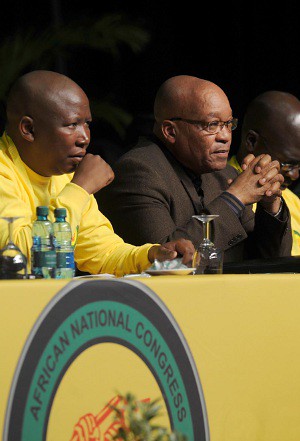
President Jacob Zuma on Monday launched a veiled attack on Cosatu general secretary Zwelinzima Vavi and other alliance leaders for continually criticising the ANC and government in public.

Zuma, whose leadership style has come under intense pressure in the past few months from the ANC's alliance partners -- particularly Cosatu, also warned delegates attending the labour federation's central committee at Gallagher Estate, not to interfere in ANC matters by discussing the party's succession plan ahead of its elective conference next year.

Cosatu has in the past few months complained about poor service delivery and increasing number of corruption cases in Zuma's government.

Vavi, together with other leaders within Cosatu, is pushing for a debate on ANC leadership, which could result in the federation not backing Zuma for re-election during the ANC conference in 2012. Cosatu played a key role in the election of Zuma as ANC president in 2007.

However, many within the federation have been unimpressed with Zuma's performance since he took over as president of the country in 2009.

Vavi is expected to present a hard-hitting report to the central committee this week, in which he questions Zuma's indecisiveness on policy and corruption issues.

Cosatu leaders are also expected to raise concerns regarding lucrative business deals involving Zuma's family and the Gupta family.

On Monday Zuma, who was given a lukewarm reception by the Cosatu delegates, made it clear he was not happy with the criticism levelled against him, the ANC and government.

"One of the challenges we are dealing with is the disappearance of respect and discipline within the organisation," he said. "Our culture has been to engage in dialogue in meetings among ourselves and convince one another on what we believe is the correct thing to do. We seem to be closing that space and have introduced a new culture of exchanging views within our organisations, and with the comrades who hold those views."

There was a tendency within the alliance of debating through the media issues that historically would have been discussed internally first.

"This may look good for us as individuals and put us in a particular standing in society and in the views of many, but organisationally, it erodes the standing of the organisation and the entire alliance," Zuma said.

"Without realising it, we introduce some debates prematurely before we have discussed them among ourselves and it creates a space for more disagreement in public on matters that could have discussed and agreed on internally and give leadership on as a united voice. We create this culture without realising we are undermining ourselves," said Zuma.

Zuma's views on Vavi and other alliance leaders are supported by some leaders within Cosatu, including its president Sdumo Dlamini and the general secretary of Cosatu's mining union [NUM], Frans Baleni.

Earlier in the day, Dlamini -- who has become a close ally of Zuma -- discouraged delegates from discussing ANC leadership at the central committee -- a move which is likely to put him on a collision course with Vavi and Irvin Jim, the general secretary of Cosatu's metalworkers' union. Vavi and Jim are believed to be behind the push for debates on ANC leadership.

"We must respect the ANC's request [not to discuss the succession]," said Dlamini.

He said that in the lead-up to Polokwane Cosatu went out of its way to discuss ANC leadership because of the conditions at the time.

"There were guidelines then," said Dlamini, "and we delivered the current leadership, under Jacob Zuma. We agreed to support this leadership. Now, we need to check if we are faced with similar conditions as those in 2007. When we do assessment, we must check prevailing circumstances."

Vavi is also expected to receive a lashing from the South African Communist Party secretary general Blade Nzimande, when he addresses the central committee on Tuesday.

Vavi and some leaders within Cosatu have been at loggerheads with SACP leaders after Cosatu publicly questioned Nzimande's dual role as SACP boss and Higher Education minister. The federation believe Nzimande's appointment has weakened the communist party and has demanded that he should return to the SACP position on a full time basis. -- AFP

Source: Mail & Guardian Online
Web Address: http://mg.co.za/article/2011-06-27-zuma-rebukes-vavi-for-breaking-ranks

COSATU, SACP Close Ranks Against What They Call the 'Pseudo-Left'

Cosatu, SACP close ranks against 'pseudo-left'

JOHANNESBURG, SOUTH AFRICA Jun 24 2011 15:18

The Congress of SA Trade Unions (Cosatu) and the South African Communist Party (SACP) will close ranks against the "right-wing demagogic populist mobilisation" apparent in South Africa, the pair said on Friday.

"Periods of capitalist crisis are also typically characterised by various forms of right-wing demagogic populist mobilisation acting on behalf of various capitalist strata in crisis, but often masked behind a pseudo-left rhetoric," said Cosatu's Patrick Craven and Malesela Maleka of the SACP in a joint statement.

The two prongs of the ruling alliance with the ANC were speaking after a bilateral meeting which took place in Johannesburg on Thursday.

Craven said the federation and the party were referring to a "tendency", caused by the capitalist system, and which some observers took as referring to the ANC Youth League. Julius Malema, the league's president, has reportedly accused the left of failing to lead workers.

"We believe that the same phenomenon is apparent in South Africa, finding a potential mass base among tens of thousands of unemployed and alienated youth in particular.

"However, behind this populism are often well-resourced business-people and politicians seeking to plunder public resources.

"We resolved as the SACP and Cosatu to close ranks and to expose the true agenda of these tendencies and their connections to corruption and predatory behaviour in the state."

Craven said it was clear that when a group emerged claiming the "mantle of the left" it was only natural for the "real left" to close ranks and defend itself.

At the same time, it was crucial that unemployment, poverty and inequality be addressed as they gave rise to this "phenomenon".

Different strokes

The SACP and Cosatu have been at loggerheads of late over the role of SACP general secretary and Higher Education Minister Blade Nzimande.

Cosatu believed that SACP office bearers should remain exlusively in their party positions to strengthen the party and not hold government posts.

The SACP disagrees.

The pair discussed the matter "frankly and in a comradely spirit".

"In regard to the deployment of SACP leaders, the party reaffirmed that this was a collective decision of the party based on the party's commitment to building working class hegemony in all sites of power, both within and outside of government.

"Cosatu did not disagree with this position in principle but believed that the two formations should continue to assess how best to achieve an effective balance between the SACP's mass mobilisational and state-related responsibilities."

Craven said this meant that the matter was in "review" and that Cosatu and the SACP "agreed to disagree" at this stage.

The SACP and Cosatu would meet again after the conclusion of the latter's central committee meeting next week to discuss a "more concrete programme of action".

The talks would include the fight against corruption, the living wage campaign, land reform and rural development, housing, national health insurance, education and public transport.

"The two formations reaffirmed their conviction that the unity in action of the SACP and Cosatu constituted the bed-rock for advancing, consolidating and defending the national democratic revolution -- itself the most direct path to a socialist SA based on meeting social needs and not private profits." -- Sapa

Source: Mail & Guardian Online
Web Address: http://mg.co.za/article/2011-06-24-cosatu-sacp-close-ranks-against-pseudoleft-youth-leaders

United Nations Security Council Sets Up Force for Disputed Abyei Area in Sudan

Security Council sets up UN security force for disputed Sudanese town of Abyei

United Nations Release

27 June 2011 –The Security Council today established, for an initial six months, a United Nations peacekeeping force for the area around the Sudanese town of Abyei, which is contested by both north and south and has been the scene of renewed fighting in recent weeks.
Violence and looting broke out in Abyei town after northern troops took control of the area last month, displacing tens of thousands of people, just weeks before Southern Sudan formally separates from the rest of the country, following a referendum held in January.

Last week representatives from the Government of Sudan and their counterparts from the Sudan People’s Liberation Movement (SPLM), representing Southern Sudan, reached an agreement that provides for temporary administrative arrangements for Abyei and the withdrawal of troops from both sides.

Sudanese troops will be replaced by the UN Interim Security Force for Abyei (UNISFA), which was set up by the Council today and will be made up of Ethiopian troops.

By the resolution adopted today, UNISFA is mandated to ensure that the area is demilitarized from any forces other than those of the UN and the Abyei Police Service, provide de-mining assistance, and facilitate the delivery of humanitarian aid and free movement of humanitarian personnel.

The Council took its decision “recognizing that the current situation in Abyei demands an urgent response and constitutes a threat to international peace and security,” according to the text.

The Force has been authorized – under Chapter VII of the UN Charter – to take “the necessary actions” to protect UN and UNISFA personnel, facilities, installations and equipment, protect civilians in Abyei under imminent threat of physical violence and protect the area from incursions by unauthorized elements, among other tasks.

The Council called on the Government of Sudan and the Government of Southern Sudan to urgently fulfil their commitments under the 2005 Comprehensive Peace Agreement – which ended the long-running north-south civil war – to peacefully resolve the final status of Abyei.

UN Deputy High Commissioner for Human Rights Kyung-wha Kang, who recently toured Abyei as part of her visit to Sudan, said some of the simple thatch-roofed houses in the area were still smouldering during her visit there, and looters still roamed among the ruins in the presence of the Sudanese Armed Forces (SAF).

“All the civilians are gone,” she told reporters in the national capital, Khartoum. “The utter devastation I saw in Abyei was a chilling warning of what might become of the border area.”

She urged all parties to agree to a ceasefire and make protection of civilians a priority, adding that they must do their utmost to facilitate access for humanitarian actors to assist those in need and for human rights officers to speak with victims.

“A military solution to the conflict in the border is not an option. The recent agreement regarding Abyei is encouraging, but a broader political solution will be necessary to stem the current conflict in South Kordofan and to prevent it from spreading further,” stated Ms. Kang.

UN officials have been calling for an immediate cessation of hostilities in South Kordofan state where northern and southern forces have also been engaged in fighting in recent weeks.

The UN Office for the Coordination of Humanitarian Affairs (OCHA) reported today that the information it has received indicates continued air strikes and artillery shelling by the SAF in South Kordofan.

Due to the security situation, the Office added, it is difficult to verify reports or properly assess the overall impact of the ongoing military operations on civilians. Estimates by UN agencies and aid groups suggest that at least 73,000 people have been displaced throughout the central and eastern parts of South Kordofan due to fighting.

Humanitarian partners are still unable to freely access civilians in Kadugli, the main town in South Kordofan, including the 7,000 people who were instructed by local authorities to return to the town after having sought refuge near the UN compound.

“Access to this group for monitoring and needs assessment continues to be denied, despite clear indications that authorities used coercion to expedite returns,” the Office said in an update.

The World Food Programme (WFP) and its local partners have distributed food to 42,000 vulnerable people in the area and are prioritizing distributions to locations that are expected to be inaccessible when the rainy season starts. In addition, the UN Children’s Fund (UNICEF) has provided essential medicines and supported mobile clinics in the area.

Zimbabwe Air Marshal Shiri Concerned With Situation in North Africa and the Middle East

Shiri concerned with situation in Arab world

Monday, 27 June 2011 01:00
Herald reporter

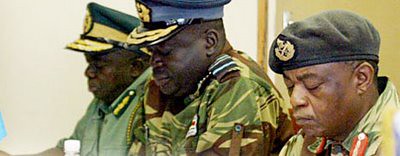
THE situation in the Middle East and North African countries is a major setback to development and peace on the continent and worldwide, Commander of the Air Force of Zimbabwe Air Marshal Perrance Shiri said yesterday.

In his speech at the Airforce of Zimbabwe Commander's shooting competition at Cleveland Rifle Range in Harare yesterday, Air Marshal Shiri, said the situation in the continent taught Zimbabwe the importance of protecting the country from foreign aggression.

"Destabilising events in the Middle East and North Africa are a setback to prosperity and tranquility in the world and the continent at large.

"But this inspires us as devoted Zimbabweans the importance of protecting one's country from foreign invasion.

"For peace to prevail in the country, we have to fight for it and the bullet shall be the last line in defence of our hard won peace. The peace currently prevailing in the country is a credit to the Zimbabwe Defence Forces although foreign detractors do not want to acknowledge that.

"With that peace, we are now witnessing investors from the world over seeking investment opportunities in our country and as part of the nation's defence forces, we should take pride in that," Air Marshal Shiri said.

He expressed optimism in the forthcoming election, adding the environment would be peaceful.

"It is the Airforce's hope that the coming elections will be conducted in a peaceful atmosphere.

"As Zimbabweans, we are all advised to maintain the high discipline and hoist the Zimbabwean flag through remaining vigilant as the enemy continues to devise new strategies to champion illegal regime change.

"The current atmosphere has realised an improvement in the life of a soldier although we continuously endeavour for welfare improvement.

"We shall remain committed to improve the welfare of a soldier during and after service despite the illegal sanctions imposed on the country," he said.

He lashed out at rogue elements that tended to abuse the experience they gained in the armed forces to commit crime.

"The marksman skills and shooting prowess displayed by participants will be used in productive and not counter productive manner.

"It would be disheartening to find our marksman being involved in criminal activities such as robberies or poaching as this would damage the image of the security forces," Air Marshal Shiri said.

He lauded the professionalism in the defence forces that had honoured them with invitations to peacekeeping operations across the globe.

The six-day event attracted shooting enthusiasts from the security forces, war veterans, private security companies, private shooting clubs and civilians.

Prices handed over in cash were worth more than US$10 110 of which the first male winner, Retired Staff Sergeant S Chokoto, walked away with US$190, a gold medal, a shield, a trophy and hotel accommodation.

The female winner, Sergeant Mildred Kurebwaseka from Air Force Headquarters, also walked away with US$190, a silver medal and a trophy.

Zimbabwe Agriculture Update: Seed Company Urges Boost in Food Production

Seed Co urges boost in food production

Friday, 24 June 2011 01:00
Zimbabwe Herald
Agriculture Reporter

SEED CO has encouraged farmers to maximise production to reduce the effects of looming global food shortages. A boost in food production will ensure the country's food security and reduce money spent on imports.

Speaking at a hand over ceremony of funds towards the Zimbabwe Commercial Farmers Union golf tournament, Seed Co public relations and communications manager Ms Majorie Mutemererwa said Zimbabwe was not immune to looming global food shortages. To this end, there was need for farmers to increase production.

"We feel that farmers play a vital role in the ensuring food security and also contribute towards the economy of the country. While farmers should work hard to feed the nation there is also need to find some time from the field and interact with each other," she said.

Ms Mutemererwa who handed over US$250 donation towards the tournament said functions like these were essential to facilitate a break and interaction of farmers with other stakeholders in the agriculture industry.

"While it may seem to be a sporting activity, some farmers may learn new business ideas from this golf tournament through interaction with their counterparts," she said.

Speaking at the same function, ZCFU secretary-general, Eng Adiel Karima said his organisation was willing to work with Seed Co and the seed company had always been forthcoming to the union's assistance.

"We hope to hold more business with the company, making sure that farmers will sustain this relationship by giving Seed Co continued business," he said.

Eng Karima encouraged farmers to attend social gatherings, as they are platforms of knowledge exchange.


More wheat planted this season

Wednesday, 22 June 2011 01:00
By Elita Chikwati

MORE than 9 700 hectares of wheat have been planted so far, an increase of 56 percent from last year's 6 222 hectares.

The crop is reported to be in good condition in most parts of the country.

The latest information from Agritex is that the planted wheat is at emergence stage while some of it is at the tilling stage and 27 percent is in the late vegetative stage.

Wheat production has been declining over the years as farmers continue to face problems of late availability of inputs, constant power cuts and lack of funding.

Consumers have recently encountered shortages of bread, attributed to flour scarcity. Zimbabwe requires 450 000 tonnes of wheat every year.

But it is currently producing less than 100 000 tonnes. As a result it is now a net importer of the cereal.

Mashonaland West has the biggest area under wheat at 3 130ha, compared with 1 761 last year.

Of the hectares planted, 20 percent is at emergence stage, 62 percent is at early vegetative and 18 at the tilling stage.

The crop in the province is reported to be in good condition, although persistent power cuts could affect the yield.

Mashonaland Central has 1 522ha under wheat, with 35 percent at emergence stage, 24 percent at early vegetative and 41 percent at tilling.

A hectare of wheat has been planted in Guruve representing a decrease from last year's 20ha.

At least 32ha of wheat have been planted in Muzarabani and the crop, which is at early vegetative and tilling stages, is reported to be in good condition.

Herbicides, pesticides and fungicides, though expensive, are available on the open market.

But power cuts are affecting irrigation and are likely to affect yields.

Mashonaland East has 1 436ha under wheat with 24 percent of the crop currently at emergence stage, 3 percent at early vegetative stage, 52 percent at tilling stage and 21 percent at late vegetative stage.

The crop is reportedly good in all the districts.

Although power cuts are also affecting irrigation cycles, there are no reports of severe moisture stress.

In Manicaland, 1 338ha have been planted, compared with 1 307ha planted during the same period last year.

Of the planted hectarage, 38 percent is at emergence stage, 48 percent at early vegetative and 14 percent at tilling stage.

In terms of provincial total, Nyanga district has planted 80ha, 73 percent less than last year's.

Chimanimani has 76ha compared with 180ha last year.

But Makoni district has registered an increase of 123 percent from last season's 186ha to 415ha this year. The crop is in "fair to good" condition.

Midlands province has doubled wheat production this season with 831ha planted this year from last season's 448ha.

Of the province's total for, Kwekwe has 623 ha, representing an increase from last year's 345 ha.

The crop is generally in good condition. although constant power cuts are threatening production.

Masvingo has so far planted 377ha, a decline from 533ha from last year.

The crop is in good condition with 98 percent of it at early vegetative stage and the remaining 2 percent at emergence stage.


Schemes to benefit 250 000 farmers

Friday, 24 June 2011 01:00
Agriculture Reporter

AT least 250 000-smallholder farmers will benefit from the revival of agro-dealership programmes meant to improve their access to technology and inputs.

This will ultimately improve productivity.

The farmers will be drawn from four of the country's 10 provinces.

Farmer unions, newly trained agro-dealers and a local non-governmental organisation are carrying out the agro-dealership revival programme throughout the country.

Under the scheme, agro-dealers will receive training and technical assistance in setting up their agro-dealerships as well as sponsorship for short-term credit from agriculture input supply companies in dry provinces such as Masvingo, Matebeleland North and South as well as the Midlands.

Zimbabwe Farmers Union president Mr Silas Hungwe said the perennial challenge facing local farmers in acquiring inputs in urban centres and high transport costs could be brought to an end by spreading agro-dealerships.

Outgoing programme director for the Agro-dealer Strengthening Programme in Zimbabwe Mr Raymond Waldron said the initiative should become long term to ensure farmers have access to inputs.

The agro-dealers strengthening programme anticipates to improve production by 35 percent and cash income by 23 percent for the farmers involved.

Support and training to agro-dealers is geared to bring agro-dealer services closer to the country's poorest farmers and revamp the market linkages between agro-suppliers and grassroots retailers.

In the recent past, countries in the Comesa grouping formed the Comesa Regional Agro Inputs Programme (COMRAP) designed to foster the emergence of improved financial packages aimed at smallholder farmers and agro-dealers.

Under the programme, Comesa will prepare banks to better assist smallholders and agro-dealers through organising training workshops where over 700 bank executives and front office staff and over 100 insurance officers will meet and interact with over 100 000 farmers.

The programme will contribute to increased access to structural financial services to farmers and reduce interest rates and increase the volume of loans to smallholders.

COMRAP programme is funded by the European Union and falls under the Common Market for East and Southern Africa and is being implemented by Comesa's specialised agency, the Alliance for Commodity Trade in Eastern and Southern Africa (ACTESA).

The programme is currently being implemented in eight Comesa countries.

Agro-dealerships had over the years disappeared owing to a number of challenges encountered during implementation.


Serbia to assist in agriculture

Friday, 24 June 2011 01:00
Agriculture Reporter

SERBIA has pledged to assist Zimbabwe in resuscitating the agriculture industry particularly in the department of mechanisation.

This will see the country getting assistance on agriculture machinery, implements and irrigation equipment.

Speaking after a meeting with the Serbian ambassador to Zimbabwe, Goran Vujicic, Agriculture Mechanisation and Irrigation Development Minister Joseph Made said the two parties had agreed to work together in different sectors of the agriculture industry.

He said the two parties agreed on the need to modernise agriculture to meet the increasing clientele of new farmers who came on board as a result of the land reform programme.

"The old and new farmers require support in terms of machinery and equipment. We will be considering tillage, tractive machinery, harvesting machinery and irrigation equipment," he said.

This will see Serbia partially manufacturing agriculture machinery and equipment in Zimbabwe.

"Serbia will be manufacturing 30 percent of machinery while the remaining 70 percent will be done in Zimbabwe,' he said.

Minister Made said this would give Zimbabwe the opportunity to resuscitate agriculture industry and lead to employment of many people.

The two parties also discussed on agro-processing as another way of co-operation.

Minister Made said while local farmers were capable of producing there was need for adequate knowledge on processing of the produced commodities according to market requirements.

Thus local farmers could take advantage of the vast knowledge and experience of agro-processing from Serbia.

"We agreed to work together so that we can have our processed agricultural commodities jointly put on the world market," he said.

To consolidate this the two parties agreed to sign a Memorandum of Understanding in the field of agriculture.

A cluster of companies visiting Zambia, Zimbabwe and South Africa will follow this.

A delegation from Zimbabwe is also expected to visit Serbia to look their agriculture activities.

Minister Made said Serbia was one of the strong countries in the world in terms of good machinery and reasonable prices.

Amb Vujicic said his country was ready to assist Zimbabwe to achieve a complete turn around in its agriculture sector.

"We would want to boost our relations with Zimbabwe in the filed of agriculture.

"We understand Zimbabwe has an economic crisis but we would want to do our best to bring the best assistance to the people of Zimbabwe," he said.

He expressed confidence that the exchange of delegations and signing of the MoU will see the revival of Zimbabwe's agriculture as the two countries co-operate in agriculture.

Zimbabwe's relationship with Serbia dates back to the liberation struggle.

Zimbabwe Cotton Farmers Earn $US140 Million

Farmers pocket US$140m

Monday, 27 June 2011 01:00
Zimbabwe Herald

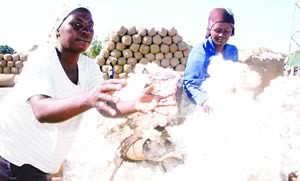
Cotton workers grade cotton at a depot in Sanyati

By George Chisoko

CLOSE to US$140 million has gone into the pockets of cotton farmers countrywide from the sale of 160 million kg of seed cotton, as the Zimbabwe Farmers' Union yesterday implored big ginners to emulate small players that are paying much more than the minimum price.

Ginners have been buying cotton at an average price of 85US cents per kg, which is almost a 183 percent increase on last season's price of 30 US cents per kg.

During the same period last year, farmers sold 92 million kg of seed cotton at an average price of 30 US cents/kg, earning them US$27,6 million.

Cotton Ginners Association chairman David Machingaidze, in an interview at the weekend said the increase in seed cotton sales and the direct cash windfall to rural areas bodes well for the future of seed cotton production.

President hails black farmers

"We are seeing growing interest in cotton production dovetailing well with our vision to see farmers producing 1 million tonnes of seed cotton. We have seen the livelihoods of cotton farmers generally improving on the back of high prices they are being paid for their seed cotton.

"There has indeed been massive economic empowerment of the rural farmers but we believe that going forward, farmers' need to increase yield levels to hedge against the eventuality of prices dropping as is the case at the moment.

"Farmers should always sell their crop early. The world lint price is continuing to drop, from 237 cents per pound at the start of the selling season to the current 145 cents per pound, which is a decrease of 40 percent.

"Although the minimum seed cotton price is down to 75 US cents/kg, as ginners we are still paying 85 US cents/kg, which shows that competitive forces are working in the farmers' favour. There are very strong market forces at play that have kept the price above the minimum,'' said Machingaidze, who is also the managing director of Cottco.

Zimbabwe Farmers' Union vice president Berean Mukwende said the union was happy with the price ginners were paying for the seed cotton, but admitted much more still needs to be done for farmers to get the true market value of their cotton.

"Yes, we are happy with the cash windfall into the rural areas but we believe the price being paid at the moment is not the final price.

We agreed with the ginners to review the price in November when they exported. There are some companies that are already paying between 90 US cents and US$1/kg and we want to urge big companies like Cottco and Cargill to also push their price up. Generally, we want to see both the farmers and merchants benefiting for the greater good of the industry, '' said Mukwende.

According to SA Cotton, prices in that country are ranging from US$1,40 to US$1,80 per kg while in Malawi ginners are buying at US$1,20/kg.

The Government has also gazetted a Cotton Development Levy that would be paid by ginners towards research and training. The major problems in the industry have not been pricing but yield levels.

There is need to bring yields up, since that is the quickest way of growing the crop. The crop volume should be increased from the existing hectarage and this is what the levy seeks to address. Yield levels range between 600 and 700 kg/hectare against the ideal yield levels of between 1 200 and 1 500 kg/hectare.

The current 300 000 tonnes fall short of meeting the installed gin capacity that stands at 700 000 tonnes. Ginners have thus been operating at 43 percent capacity.

Sunday, June 26, 2011

Case of the Cuban Five Censored in US media

Havana. June 24, 2011

Case of the Five censored in U.S. media

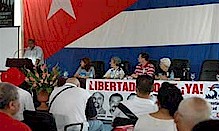
WASHINGTON, June 23.— The International Committee for the Freedom of the Cuban 5 today gave an example of U.S. media censorship in relation to the case of the Cuban anti-terrorists incarcerated in the United States.

A journalist from the CNN network was interested in covering Gerardo Hernandez's exhibit of cartoons he created in prison, Humor from my Pen and set up an interview, as a communiqué from the group notes, as reported by PL.

The interview took place on June 3 in the SPARC Gallery, a former prison in the city of Venice, with organizers from the International Committee for the Freedom of the Cuban 5 in both Spanish and English. The CNN journalist also interviewed the Executive Director of SPARC, Debra Padilla.

"We did not know just how much the journalist knew about the case of the Cuban 5 but after more than 3 hours she learned not only about the artistic talents displayed in Gerardo's cartoons but also about the deep injustice that he and his four brothers have been enduring for 13 years for defending their country, Cuba, against terrorism," the communiqué continues.

The journalist did not know how long it would take before the Committee would know if the interview was going to be aired but mentioned that her editor wanted to find someone with a different "point of view" to "balance" the story. Their surprise about the interview was even greater when they were told that the "balanced" segment was complete and going to be aired on a program of CNN called "Encuentro" on Wednesday, June 15 at 2pm PST.

However, it was not broadcast because of "an ’executive decision’ not to air the segment." This reveals the persistent attitude of the U.S. media in concealing the truth about the case of the Five.

The communiqué emphasizes, "So many times we hear about freedom in the United States with a free media that covers all points of views; but in the end it is those at the top of the media chain of command who will determine what is news and what isn't."

Where is this free media when it comes to covering the case of the Cuban 5?

Venezuelan Vice President Closes 4th Conference of African Descendants

Havana. June 23, 2011

Venezuelan Vice President closes
4th Conference of African Descendants

Participants to ask CELAC to recognize their contribution to nationality

CARACAS.—Vice President Elías Jaua made a call this Wednesday to break the structural conditions which generate exclusion and racial discrimination.

Jaua made this exhortation during the closing session of the 4th Conference of African Descendants and Revolutionary Transformations at the Alba Caracas Hotel, with the participation of approximately 600 delegates from the region and the African continent.

"We have to become more profound every day and accompany President Chávez, pushing time and time again until we effectively break the structural conditions which generate exclusion, which generate discrimination among our people," he said.

The Vice President highlighted the need to consolidate a broad-based popular force which will make possible, within the next decade, "the definitive construction of a society which is a space for everyone. That society has to be socialism."

The meeting approved a final statement which proposes that the Community of Latin American and Caribbean States (CELAC) recognize the contributions of Africans and their descendants "to the constitution of the nationality of our homelands and includes us in plans to respond to social needs," Aristóbulo Istúriz, first vice president of the Venezuelan National Assembly, noted.

The legislator recalled that the conference was organized in the context of the International Year for Peoples of African Descent and the Bicentenary of Venezuelan independence.

"Today, we reaffirm our proposal for the Decade of African Descendants, instead of one year. Moreover, our African-Venezuelan organizations are making a commitment to fight on the side of those who wish to conclude the independence process under the leadership of Hugo Chávez Frías, which implies our joining the Polo Patriótico," he stated. (AVN)

Translated by Granma International

U.S. Impunity and International Conflicts

Havana
June 23, 2011

U.S. impunity and international conflicts

HAVANA.—The United States, the principal violator of international law, will never appear before the International Criminal Court (ICC), in spite of its policy of aggression, interference and expansionism, stated Nicolás Fernández, member of the Cuban International Law Society, speaking at the 5th International Summer School, Havana 2011 and the 7th Humanitarian International Law Symposium.

Washington has signed 96 agreements with different countries to avoid its troops involved in conflicts being brought to trial at the ICC, he noted.

"At present, ways of arresting real criminals are nonexistent, and so we cannot try the former President George W. Bush, or former British Prime Minister Tony Blair," he said.

Both politicians were to a large extent responsible for unleashing a military conflict which cost the lives of thousands of civilians.

Impunity in the world is a given dating back to the very genesis of the United Nations, which was born with genetic flaws and whose functioning has now become complicated, the professor of Public International Law at the University of Havana noted.

"Impunity is the same as injustice and thus this negation of injustice promotes war criminals, crimes against humanity, genocide and forced disappearances," he added.

All the courts established to address the issue of impunity are adjusted to a concrete and personal norm, and do not try violations such as interference, thus it is justice of a selective nature, the expert emphasized.

"In practice, the law of impunity has emerged, which invalidates justice, manifested in amnesties, pardons, due disobedience and universal jurisdiction," Fernández explained.

"We could add that the International Criminal Court is not impartial, nor independent, that it is directed by the Security Council, which decides what proceedings to initiate and when they will end."

Today there is impunity in the so-called war in terrorism, and an alleged protection of persons and humanitarian missions mask what is interference. (PL)

Translated by Granma International

South African President Zuma Warns NATO Against Killing Libyan Leader

S. African President Zuma Warns NATO Against Killing Gadhafi

VOA News

South African President Jacob Zuma has warned NATO not to use its military power to kill Libyan leader Moammar Gadhafi.

Mr. Zuma spoke in Pretoria Sunday as a high-level African Union panel discussed ways of ending the four-month conflict between Mr. Gadhafi and eastern-based rebels.

Mr. Zuma said the U.N. resolution that authorized NATO action in Libya was to protect the Libyan people, not to pursue "regime change or political assassination."

NATO denied targeting Mr. Gadhafi after a May 1 airstrike that Libya's government said killed four members of the Gadhafi family. Russia at that time expressed doubts about the NATO denial.

Mr. Zuma said the AU believes any solution to the conflict must be political and "lies in the hands of the Libyan people."

He said the AU wants a cease-fire in Libya, to be followed by political reforms and elections that enable Libyans to freely choose their own leaders.

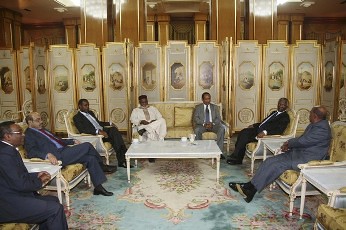
The African Union panel on Libya met to discuss peace and humanitarian aid efforts in the war-torn country. President Zuma hosted heads of state from Mauritania, Uganda and Mali at Sunday's meeting.

Mr. Zuma's office said the leaders would discuss efforts to secure a cease-fire and to bring about political reforms it says are needed to eliminate the causes of the Libyan conflict.

The AU has tried to broker peace between Mr. Gadhafi and the rebels, who control much of the country's east. Mr. Zuma met with Mr. Gadhafi May 30 in Tripoli in a failed attempt to reach a deal.

Find this article at:
http://www.voanews.com/english/news/AU-Panel-Discusses-Libya-Peace-Aid-Efforts-124560744.html

The ANCYL's Inverted Logic on South Africa

The ANCYL’s inverted logic

June 26 2011 at 07:01pm
By Joel Netshitenzhe
South Africa IOL

The global economic crisis has not helped this nations unemployment plight, but South Africas differ to other nations in the sheer scale of the problem, the low education and skills levels, the very high levels of inequality, as well as the historical and racial dimensions to the phenomenon of youth unemployment.

As the ANC Youth League delegates rose from their seats after their 24th congress, the slogan of “economic freedom in our lifetime” on their lips, the “lost generation” seemed to be returning the favour of generational stereotyping. We, the older lot in society, bemused by a misshapen movement taking root in spite of our apprehensions, had by some quirk of fate become the “bewildered generation”.

Mesmerised by the antics of individuals, irritated by the seeming immaturity of it all, and bedazzled by the media focus on palace politics, the historic nature of the moment seemed to escape us.

It is as if the 1976 youth uprising was playing itself out all over again.

Then, it fell to the youth of Soweto to become the outlet of the pressure cooker of apartheid oppression and repression. They threw down the gauntlet, openly articulating and acting out that which the older generations dared only whisper about behind closed doors.

In their impatience and enthusiasm, they did mangle the theory and concepts of liberation politics. And the older, wiser and politically conscious generations counselled caution, calling for the patient building of organisational capacity before radical mass action.

It was as if the 1976 youth were possessed by the spell of history to learn by doing and pay the price. And pay many of them did, in life and limb. Some among their leaders were lured by pro-apartheid global forces to try to set themselves up as an alternative to the established liberation movement; and they ended up marginal to the course of history.

But as a generation, they had seized the moment. Subconsciously, they had become the instrument of a historical epoch.

So it is with the call of today’s youth for “economic freedom in our lifetime”. The genie has been let out of the bottle. And there is no possibility of restoring it to its restful state.

Make no mistake. The sentiment of economic freedom enjoys the support of most young black people, rich and poor, employed and unemployed. Research by agencies confirms the feelings of marginalisation among the youth and their aspiration for radical economic change, though many disagree with some of the methods proposed.

That the youth of 1976 became a sterling generation in the history of struggle is in part because in time they were able to learn – from doing and from listening. Thus the appreciation dawned that they were not the first to defy the might of the apartheid state. Steadily, they came to learn about context and balance of forces. They also came to appreciate that, more often than not, there is wisdom in patience, and that a revolutionary phrase at an inappropriate moment can defeat a revolution!

This was not accidental. The older generations had marshalled the memory of experience to bring this wisdom to the restless youth of 1976. The liberation movement strained its capacities to bring the message of organised struggle into the maelstrom of the uprising. Structures outside the country welcomed the young people and provided political, military and academic training. In brief, a conscious effort was made by organised formations, communities and individuals to lend sense and effectiveness to spontaneity.

Do we have the capacity and the will today, as society, to embrace and translate a youthful impulse into purposeful action?

In its January 8 statement this year, the ANC asserts: “Political emancipation without economic transformation is meaningless. That is why we have to commit ourselves to economic freedom in our lifetime, and the ANC must continue to be in the forefront of that transformation.”

What indeed is “economic freedom” and how can it be attained? Is there a common and coherent storyline across society on the final destination and how to reach it?

This historical moment calls for serious societal debate. Imploring the ANC leadership to put its foot down and suppress the debate will not put the genie back in the bottle. Launching ideological missiles about who is more Left and the vanguard of workers, or speculating whether this campaign is a proxy for ANC palace politics, |will not smother the appeal of a sentiment.

It is no accident that this issue emerges in this stark form 17 years after the attainment of democracy. Having obliged Kwame Nkrumah’s injunction to “seek ye first the political kingdom”, post-liberation states on the continent and elsewhere had to come back to the issue of economic liberation.

The efforts sometimes resulted in success. In many other situations, failure by society to engage the issue honestly and rationally, poor policy choices on the part of leaders, and a brittle and corrupt state produced disastrous results. On the extreme, predatory elites used so-called economic liberation policies such as nationalisation, indigenisation, price controls and tariff barriers for self-enrichment.

It should be expected that youth in our country would be at the forefront of the economic freedom campaign. Just on access to economic opportunities: the employment ratio among 15- to 24-year-olds is 13.2 percent compared with 40 percent in Asia and Latin America; 48.2 percent of those available to work in the 20-24 age group are jobless; 86 percent of unemployed young people have not gone beyond Grade 12; and two-thirds of these have never worked. This has major macro-social implications, including crime and youth mortality, as well as an effect on socio-political stability, especially at local level. It is patently unsustainable.

It can be argued that this problem affects many countries. Besides the youth of the Arab Spring, there is concern in |Japan about the so-called freeters (freelance arbeiters), mileuristas in Spain and the UK’s Neets (not |in education, employment or training).

The irony that is not irrelevant to our own discourse on economic freedom is that in Spain, for instance, the youth’s “May 15 movement” of massive demonstrations led to the recent defeat of the Socialist Party in regional and local elections. According to the Financial Times (June 17), the right-wing Popular Party is expected to win the next general elections. And so, counterintuitively, socio-economic difficulties result in the rise of the right-wing, as the Left is unable to pose, and mobilise around, alternatives to the status quo. Under such circumstances, phenomena such as Louis Bonaparte’s lumpen proletariat in 19th century France, the Tea Party extremists in the US and the Green Bombers across the Limpopo river can gain prominence.

While there may be structural causes to youth marginalisation in many countries, a major contributor to the problem is the global economic crisis.

South Africa differs in the sheer size of the problem, the low education and skills levels, the very high levels of inequality and the historical and racial dimensions to the phenomenon of youth unemployment. In our situation it is systemic, manifesting even during high growth periods. As the National Planning Commission (NPC) points out in its Diagnostic Overview, the central problem in our country is that too few people are involved in economic activity.

If “economic freedom in our lifetime” is to have any meaning, it should address this fundamental challenge. The root causes of the problem, the NPC argues, relate to the structure of the economy, the quality of education, poorly located and inadequate infrastructure, a resource-intensive path dependency, and spatial economic and settlement patterns, among other things.

South Africa needs a growth storyline that addresses these issues and clearly describes:

--How we can use the infrastructure programme not only to crowd in the private sector, but also to build supplier industries that will absorb more labour.

--The competitive advantages that we need to forge to be able to manufacture many of the mass market goods that we import.

--A strategy to take advantage of our massive mineral endowments to exploit the commodities supercycle and, more critically, to build a mature industrial cluster around these endowments.

--How we can take advantage of these and other endowments and potential to build a green economy that is more than just cost-neutral.

--A clear strategy to take advantage of the high economic growth rates on the continent through regional integration and the pooling of sovereignty.

We should build “an economy in which cutting-edge technology, labour-absorbing industrial development, a thriving small business and co-operative sector, utilisation of information and communication technologies and efficient forms of production and management all combine to ensure national prosperity” (2007 ANC Strategy and Tactics document). This will ensure that we escape the middle-income country syndrome, where countries reach a level of development and then stagnate, unable to break out because of path dependency and sheer inertia.

However, the immediate challenge of unemployment, particularly among young people, cannot wait until high growth over five years starts to have qualitative impact. By then, the ticking time bomb may have gone off. As such, specific programmes to address this deficit need to be pursued.

Besides the public works programme, this should include measures such as massive artisanship training, learnerships, a school-to-work transition programme, job transition through the state and so on.

Programmes to address asset poverty including housing and land reform need to be intensified. And the approach to black economic empowerment should also focus on community trusts for youth and women as well as employee share ownership schemes.

With regard to land, policy and planning should take into account the reasons that measures such as the audit of state land, the Communal Land Rights Act, the Land Use Management Bill, revival of collapsed agricultural schemes and other support programmes in rural areas are taking so long fully to materialise.

It is this kind of methodology, first to identify the objective, and then the processes and mechanisms required to achieve it, that should inform the approach of the “economic freedom movement”.

An inverted logic is bound to lead to wrong conclusions. This is one major weakness in the youth league’s approach. Some of the “seven cardinal pillars of economic freedom” it identifies put the cart before the horse.

This applies for instance to “expropriation without compensation” and “nationalisation for industrialisation”.

Besides issues of constitutionality, the disadvantages of these actions in relation to sustainably building a prosperous and equitable society, and alternatives to them, are treated dismissively.

Thus, like in 1976, the youth impulse to sense and seize a historical moment is somewhat infused with the mangling of logic, impatience and a revolutionary phrase that can in fact defeat a revolution.

The campaign for economic freedom in our lifetime cannot be the preoccupation of one sector of society, inward-looking and posited to antagonise potential participants.

Among the youth and across society, serious discussion needs to take place about what we want to achieve, what contribution each sector of society can offer and, indeed, what sacrifices each can make to realise that objective. In such dialogue, even the privileged would come to appreciate that a prosperous and equitable society is in their self-interest.

This should include a campaign for the youth to value personal advancement from an honest day’s work, to uplift schools that perform poorly and are dysfunctional, to abhor corruption and campaign against it, and to eschew the conspicuous consumption that not only highlights our levels of inequality but also subtracts from the savings needed for a consistent and sustainable high growth rate.

Handled in this way, the economic liberation campaign will be embraced by society in a dynamic social compact, for the benefit of society.

*Joel Netshitenzhe is executive director of the Mapungubwe Institute (www.mistra.org.za), a member of the National Planning Commission and of the national executive committee of the ANC.

Israel Warns Media Against Travelling With Gaza Aid Flotilla

Israel warns media against travelling with Gaza flotilla

MARK WEISS in Jerusalem
Mon, Jun 27, 2011

ISRAEL SAYS foreign journalists accompanying the Gaza-bound flotilla, which is due to set sail this week, will be banned from entering Israel for 10 years.

Israel’s government press office warned editors that the Israel defence forces had been ordered to stop the maritime convoy reaching Gaza, and media representatives travelling with the flotilla would have their equipment impounded and face a 10-year travel ban.

The Foreign Press Association condemned the decision, saying journalists covering a legitimate news event should be allowed to do their jobs without threats and intimidation. The association issued a statement yesterday saying the move “sends a chilling message to the international media and raises serious questions about Israel’s commitment to freedom of the press”.

Israel believes about 10 ships will participate in the flotilla carrying humanitarian aid and about 500 activists, including Irish citizens. The flotilla is due to set sail from Greece tomorrow but the Greek authorities have refused permission for a number of the vessels, including American ship Audacity of Hope, to set sail.

Organisers received a significant blow when the biggest ship in the flotilla, the Turkish Mavi Marmara, pulled out earlier this month. Nine Turkish activists aboard the Mavi Marmara were killed in May of last year when Israeli commandos stormed the Gaza-bound vessel.

The Israeli forces are on high alert and have undergone months of training to stop the flotilla. Israel has promised that all humanitarian aid will be allowed to enter Gaza via land crossings.

Meanwhile, Dublin Labour councillor Richard Humphreys has appealed to the passengers and crew of the MV Saoirse , set to take part in the flotilla, to heed the warnings of the UN and President Barack Obama, and to stay at home.

“Ultra left politicians such as Dún Laoghaire Rathdown county councillor Cllr Hugh Lewis, and Paul Murphy MEP, would be fulfilling their duties better if they stayed at home and attended to their constituents, rather than heading off for this ill-advised Mediterranean cruise,” Mr Humphreys said.

“This is not just my opinion,” he added. “This flotilla is in defiance of the call by the secretary general of the UN, Ban Ki-moon, that such flotillas should be discouraged, and blocked by member states, as they may only provide a focus for violence.

“President Obama’s administration, and Hillary Clinton in particular, has made the same appeal to call off this flotilla.

“I fully support the call by Tánaiste Eamon Gilmore that all sides must avoid the completely unjustified violence associated with the last flotilla,” Mr Humphreys said.

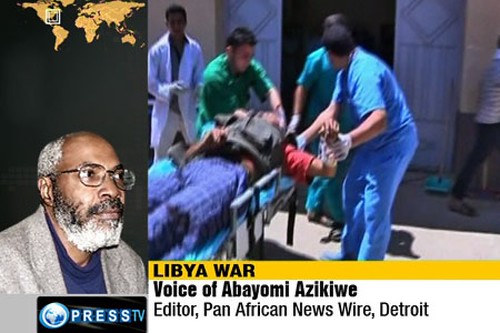
Abayomi Azikiwe, PANW Editor, Interview With Press TV: US House Fails to Authorize Libya War

House of Representative: No war in Libya

Interview with Abayomi Azikiwe, Editor of Pan African News Wire, Detroit, USA

Sat Jun 25, 2011 4:42PM
http://www.presstv.ir/detail/186207.html

The US House of Representative has turned down a republication motion to cut funding in the military operations in Libya, withholding President Obama's authority to continue the war for another year.

In this regard Press TV interviewed Abayomi Azikiwe, the editor of Pan African News Wire from Detroit. The following is a rush transcript of the interview:

Press TV: Now how do you reconcile first of all the Congress denying President Obama the authority to continue the war in Libya for a year, but turning down a motion to cut funding for the American military operations in Libya?

Azikiwe: Well thank you so much for having me. It sends a very mixed message not only to the people of the United States but also to the people in North Africa and in Libya, as well as people in the entire region. There was a no vote for authorization for the war, meaning that the majority of people in the US House of Representative, 435 members, the majority of them, voted no to authorize the war. This means that they do not agree with the mission, that the mission has not been adequately explained by the Obama administration or by the Department of Defense, but at the same time they voted to continue funding the war as it is.

Now this of course is a contradiction and I think this contradiction is going to come to a head in the next few days because it is not just discontent over the Obama administration's policy towards Libya, but there are also a lot of very very bad feelings about what is going on in Afghanistan as well.

The administration discussed earlier this week about possibly drawing down 30,000 troops from Afghanistan over a period of several months, and there are people who feel that too many troops are being drawn down and of course there are progressive forces inside the Congress who feel it is not going far enough and that the war should be brought to a conclusion as soon as possible. So I think the whole notion that the United States is entering another unending conflict in which there is no clear cut objectives, no clear cut boundaries in regards to what victory is, what defeat is, and I think this is the dilemma of the US Congress and is also the dilemma of the Obama Administration as well.

It's no secret that the majority of the people inside the United States oppose what the US government and military is doing in Libya. I think the vote is a reflection of that, at the same time they don't want to make it appear as if they have been defeated by the Libyan government, or that they are cutting and running from another war.

Press TV : That also brings into question the military operations and its definition as far as Libya goes. For those of us watching on the side lines it does seem like a war being waged by the US as well as NATO, but President Barack Obama seems to have found a loop hole, they are saying this is not in fact a war. Congress seems not to be getting to grips exactly what this military operation is.

Azikiwe: The administration is saying there is no “hostility” involved in this conflict. All we have to do is to read the reports that are emanating from Libya where people are being killed almost on a daily basis. There have been over 13,000 bombing missions flown over that country in North Africa. They have targeted the leadership of the country for assassination and [many] civilians are being killed including the family members of the government and military officials inside the country. There are also carrying out bombing operations against both sides, those who support the government and those who are fighting against the government--so it is clearly a hostile environment that has been created in Libya.

The administration is calling it a kinetic operation, meaning that it is just assisting or just providing tactical assistance to the NATO forces, but it's obvious that the US has supplied the majority of the military equipment, logistics and took the lead in this particular conflict at the same time they have spent over USD 700 million; we already know in this war it could extend way over a billion dollars by the conclusion of this summer.

Press TV: Taking a look at the price this war is bringing with it for the US taxpayers, wouldn't it have made sense considering the high unemployment rate, considering the America's economic growth, to cut funding for this war and put this budget to use elsewhere?

Azikiwe: I agree with you 100%. I think you are addressing the mass sentiment of people inside the United States from all different social classes and backgrounds. The US taxpayers are now putting over $700 billion annually into the military budget; also by adding in the domestic homeland security budget, it is well over a trillion dollars.

In regard to homeland security, as well as foreign and domestic military operations inside the United States, this is totally unsustainable. The people in the United States need money for jobs; they need money for education; the schools are closing; there are over 30milion people who are unemployed or underemployed.

The people in the States need money for housing because we still have a serious crisis of foreclosure and eviction that is affecting millions of people inside the United States. Also inside the country, nearly 50 million people do not have health insurance so if they show up in a hospital they are subjected to enormous bills and it can affect their living, quality of life. So I think yes, people in the United States need money for social needs and not money for war.